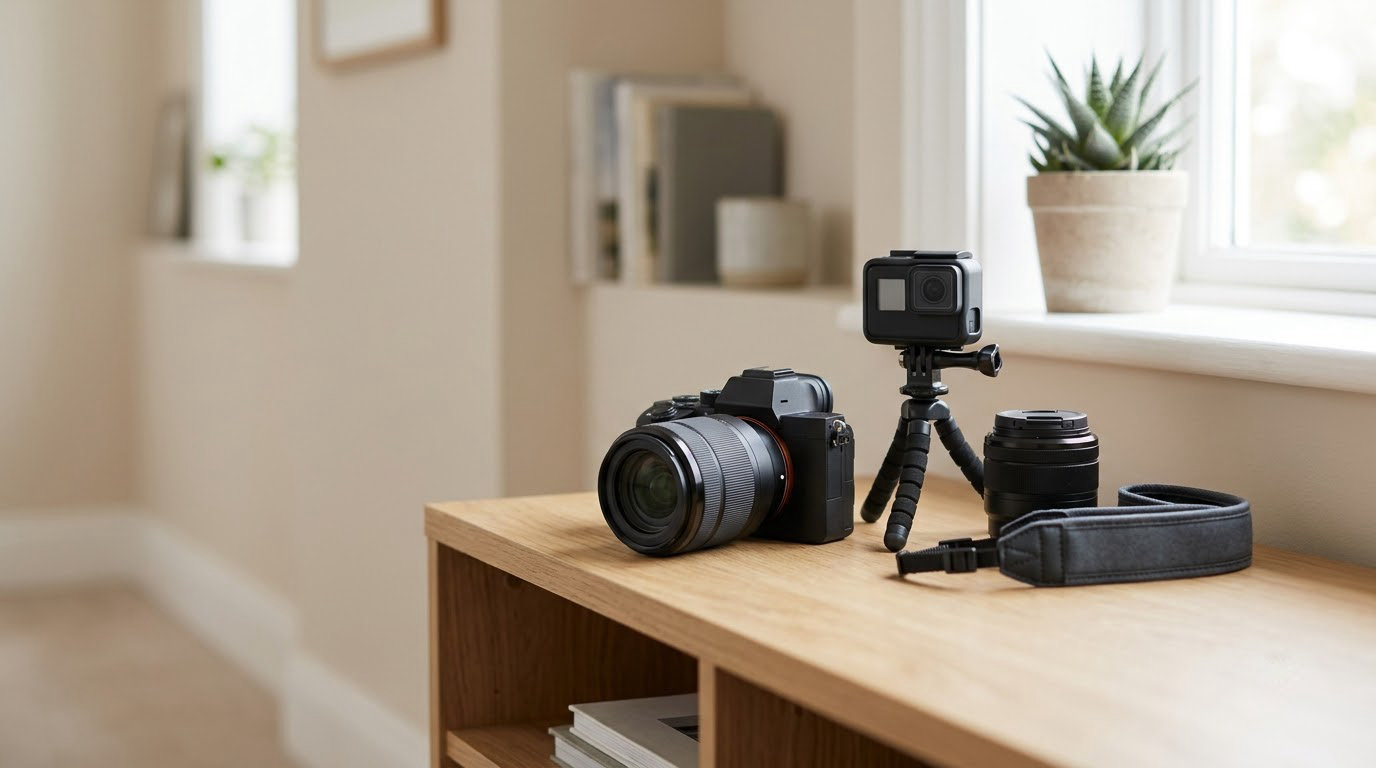
The Canon EOS RP Kit leads the picks worth watching for Amazon Prime Big Deal Days camera deals because it is the only entry here that pairs a full-frame 26.2 megapixel sensor with a stabilised 24-105mm zoom in the box, so nothing else needs buying on day one. Two alternatives suit different buyers: the Sony Alpha a6700 if video and subject-tracking autofocus come first, and the Nikon Z50 II Two-Lens Kit if you want every focal length from wide to telephoto without shopping for a second lens. Amazon’s Prime Big Deal Days event runs October 6-7, 2026, and most offers require a Prime membership.
Camera gear behaves differently from the rest of a Prime sale. Lenses, kits and accessories move more often than new bodies do, and a deal badge on a listing says nothing about whether the checkout price changed. Everything below is a pick worth watching, priced and checked against owner reviews rather than a promise about a discount.
Table of Contents
Our Top 3 Picks for Best Amazon Prime Big Deal Days Camera Deals in 2026

Canon EOS RP Kit
- Full frame 26.2MP
- 24-105mm stabilised zoom included
- 16 oz body
- Articulating touchscreen


Nikon Z50 II Two-Lens Kit
- APS-C 20.9MP sensor
- 16-50mm and 50-250mm included
- 231 AF points
- 2.4 lb kit
The EOS RP Kit wins on completeness. Everything else on this list asks you to add glass later or accept a narrower use case, and for a first full-frame kit that is the difference between a camera you use and a camera on a shelf.
Best Amazon Prime Big Deal Days Camera Deals Compared
| Product | Specifications | Action |
|---|---|---|
| Canon EOS RP Kit |
|
Check Deal Price |
| Sony Alpha a6700 |
|
Check Deal Price |
| Nikon Z50 II Two-Lens Kit |
|
Check Deal Price |
 Canon RF 100-400mm Canon RF 100-400mm |
|
Check Deal Price |
 Canon RF 50mm f/1.8 Canon RF 50mm f/1.8 |
|
Check Deal Price |
 Nikon Z 40mm f/2 Nikon Z 40mm f/2 |
|
Check Deal Price |
 Sony FE 50mm f/1.8 Sony FE 50mm f/1.8 |
|
Check Deal Price |
 Sony E PZ 18-105mm Sony E PZ 18-105mm |
|
Check Deal Price |
 Canon RF 24-105mm f/4L Canon RF 24-105mm f/4L |
|
Check Deal Price |
Every row is a fixed set of fields so you can scan across formats quickly. Bodies and kits are listed first, then the lenses that pair with each mount system.
How We Chose
We compared the specifications that actually separate these formats: sensor size and resolution, autofocus coverage, stabilisation, burst rate, aperture and weight, alongside owner reviews and Amazon ratings. Data was checked in October 2026.
The list is framed around sale-period picks worth watching rather than confirmed discounts, because camera pricing moves differently from the rest of Amazon and a deal badge alone proves very little.
1. Canon EOS RP Kit: Editor’s Choice Full-Frame Kit
Canon EOS RP Mirrorless Camera RF24-105mm Lens F4-7.1 is STM Lens Kit
Type: Mirrorless kit
Standout: 26.2MP full frame
Weight: 16 oz
Mount: Canon RF
Pros
- Full-frame sensor in a body most people carry all day
- Stabilised 24-105mm zoom covers almost every everyday situation
- Works as a webcam over USB
- Articulating touchscreen for low and high angles
Cons
- 5 fps burst is slow for moving subjects
- Single memory card slot
- Kit zoom is modest wide open and at long focal lengths
The pick that removes every second purchase from your cart.
The Canon EOS RP is a 26.2 megapixel full-frame body weighing 16 ounces, and this kit version pairs it with the RF 24-105mm f/4-7.1 IS STM. That lens covers 24mm at the wide end through a useful 105mm, with optical stabilisation rated at up to 5 stops, so the two together handle interiors, street work, family shots and holidays without a second lens.
Owners report the combination holding up as a travel or vlogging setup, largely because the autofocus is forgiving and the body stays small in a bag. It also runs as a webcam through EOS Utility Webcam Beta or a clean HDMI feed, which turns a photo body into something useful for calls between shoots.

Two limits shape who should skip it. Continuous shooting runs at 5 fps, so anything with fast action will outpace the buffer, and there is a single SD slot, which matters if you shoot paid events and want a redundant card. The bundled zoom is also a consumer-grade piece of glass: several reviews mention it softens in low light and at distance, which is exactly the gap the Canon RF 100-400mm later on this list fills.
Compared with the Nikon Z50 II Two-Lens Kit, you get a larger sensor and a much lighter body, but no built-in flash and a narrower aperture range. Compared with the Sony Alpha a6700, you get a lens in the box and a lower-resolution 4K mode, while the a6700 gives you 4K 60p 6K oversampled recording and no glass at all.

Good to know: the articulating rear screen swings out to the side, so vertical framing and self-recording do not need a separate flip screen. A UHS-II card is supported in the single slot, so buy the faster card rather than assuming any SD card will do.
2. Sony Alpha a6700: Best for Creator Video
Sony Alpha a6700 APS-C Mirrorless Camera Body 26MP 4K Black
Type: Mirrorless body only
Standout: 26MP APS-C
Weight: 14.5 oz
Mount: Sony E
Pros
- 759 phase-detect points with a dedicated AI processor
- 4K 60p 6K oversampled 10-bit 4:2:2 recording
- 4K 120p high frame rate mode
- 11 fps continuous shooting
Cons
- Sold as body only so a lens is a separate purchase
- APS-C crop costs low-light headroom versus full frame
Buy the a6700 when the video file matters more than the photo.
This is an APS-C body with a 26.0 megapixel back-illuminated Exmor R sensor, BIONZ XR processing and a dedicated AI processor driving real-time eye, face and subject recognition. Photographers rate it as a serious hybrid: the tracking holds people through a walk and the 759 phase-detect points cover most of the frame.
On the video side it records 4K 60p with 6K oversampling in 10-bit 4:2:2, and there is a 4K 120p high frame rate mode for slow motion. Recording runs to 120 minutes, and the 1.07x viewfinder is large enough to judge focus by hand. At 14.5 ounces it is one of the lighter pieces of gear in this list, and lighter than the Nikon Z50 II Two-Lens Kit by a wide margin.

Two practical notes. It is a body-only listing, so the cost of the camera and the cost of a usable setup are two separate numbers, and owners of APS-C bodies here mention the crop as the recurring low-light limit. Sensor-shift stabilisation helps, but it does not turn an APS-C sensor into a full-frame one after dark.
The Sony FE 50mm f/1.8 is the natural companion if you want the lightest possible pairing: 6.6 ounces, f/1.8, and it fits directly on this mount. If you would rather have reach in one piece of glass, the Sony E PZ 18-105mm covers 27-158mm equivalent with power zoom for video work.
Skip this body if you shoot mostly stills and want stabilisation in the lens rather than the body, or if you need a second card slot for paid work. Against the Canon EOS RP Kit, you gain the AI autofocus and 10-bit 4K but you lose the bundled zoom and the full-frame sensor.
Good to know: there is no built-in flash, so indoor and evening shoots need an off-camera light or a bounce card. The rest of the kit on this mount is covered by the Sony FE 50mm f/1.8 and the Sony E PZ 18-105mm.
3. Nikon Z50 II Two-Lens Kit: Best for Starter Kits
Nikon Z50 II with Two Lenses | Compact mirrorless Stills/Video Camera with Easy Color presets and Wireless Photo Sharing | USA Model
Type: Mirrorless two-lens kit
Standout: 20.9MP APS-C
Weight: 2.4 lb
Mount: Nikon Z
Pros
- 16-50mm and 50-250mm stabilised zooms both included
- Autofocus recognises nine subject types plus bird and airplane modes
- Built-in pop-up flash and fully articulated rear screen
- 31 built-in Picture Control presets
Cons
- Single included battery drains relatively quickly
- Kit zooms are serviceable but not as sharp as higher-tier NIKKOR Z glass
Two lenses, one box, no second purchase in week one.
The Z50 II kit ships with the NIKKOR Z DX 16-50mm f/3.5-6.3 VR and the NIKKOR Z DX 50-250mm f/4.5-6.3 VR, which together run from wide angle to a genuine 250mm telephoto equivalent. Owners moving up from an entry DSLR describe the jump in autofocus speed and the flexibility of an articulated screen as the two things they did not expect.
Autofocus handles nine subject types with dedicated bird and airplane modes, and video includes 4K UHD 60p, in-camera 120p slow motion in Full HD and electronic VR. The 31 built-in Picture Control presets plus downloadable Cloud Picture Controls mean you can pick a look without opening raw files, and SnapBridge handles wireless transfer to a phone.
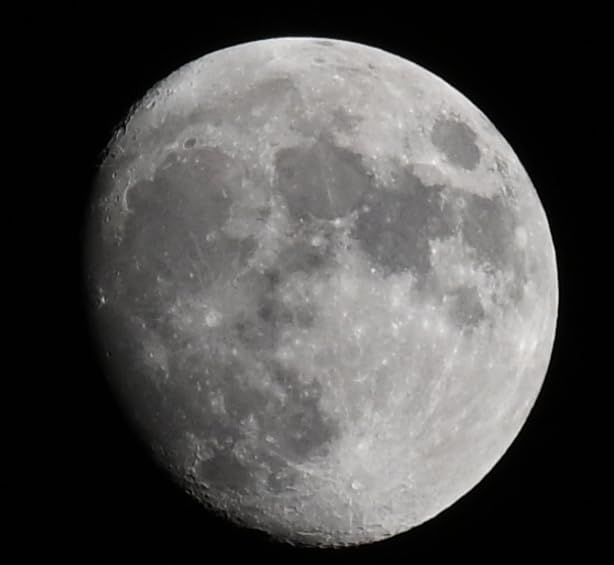
The trade-offs are honest ones. A single battery is included and reviewers note it drains relatively quickly, so a second one belongs in the basket. The kit zooms are serviceable rather than sharp, which is the normal ceiling for bundled glass.
There is no built-in viewfinder cover and no second card slot, and at 2.4 pounds this is the heaviest item here by a wide margin once both lenses are on the body. Compared with the Canon EOS RP Kit, you get far more focal range and a pop-up flash but a smaller sensor and no stabilised standard zoom with a constant aperture.
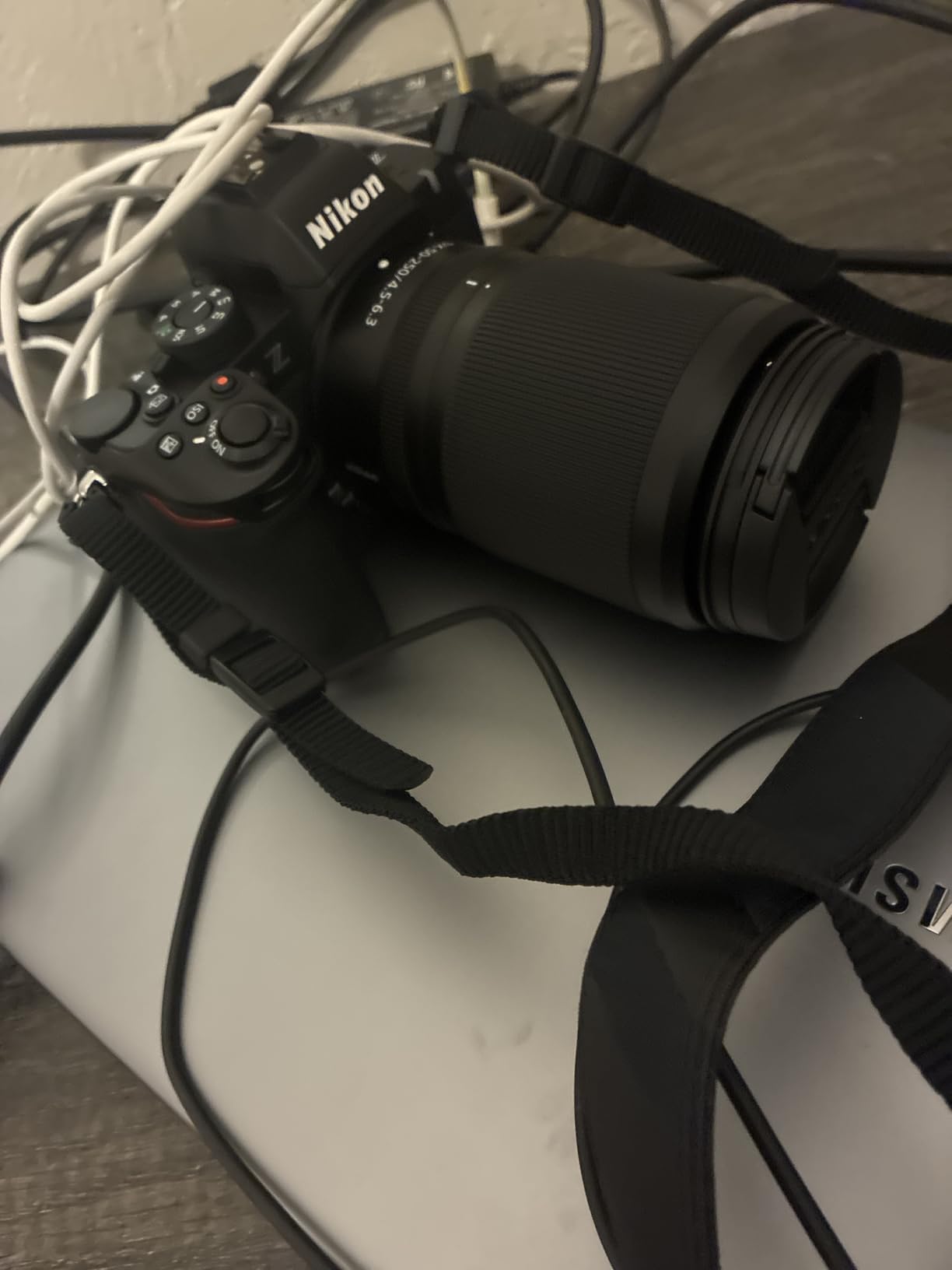
Good to know: if you later want a fast prime for this mount, the Nikon Z 40mm f/2 frames like a 60mm equivalent on DX bodies, which is a portrait length rather than a walkaround one.
4. Canon RF 100-400mm: Best for Wildlife
Canon RF100-400mm F5.6-8 is USM Lens
Type: Telephoto zoom lens
Standout: 100-400mm range
Weight: 816 g
Mount: Canon RF
Pros
- 100-400mm range covers wildlife and sports to portrait compression
- Compact and light for a 400mm telephoto
- 5.5 stops of optical stabilisation
- Quiet Nano USM autofocus
Cons
- Constant f/5.6-8 aperture needs high ISO in low light
- Not weather sealed
- Sharpness softens at the long end and wide open
The cheapest route into 400mm on the RF mount.
A 100-400mm at 816 g is unusually manageable for a super-telephoto, and owners treat it as the practical entry point for birds and field sports. The Nano USM focusing motor is fast and quiet enough to track movement without drawing attention.
Stabilisation is rated at up to 5.5 stops on its own, rising to 6 stops when paired with an IBIS-equipped EOS R body. Focusing is close: 2.89 feet at 200mm, with 0.41x maximum magnification at the 400mm end, so it handles smaller subjects better than its size suggests.
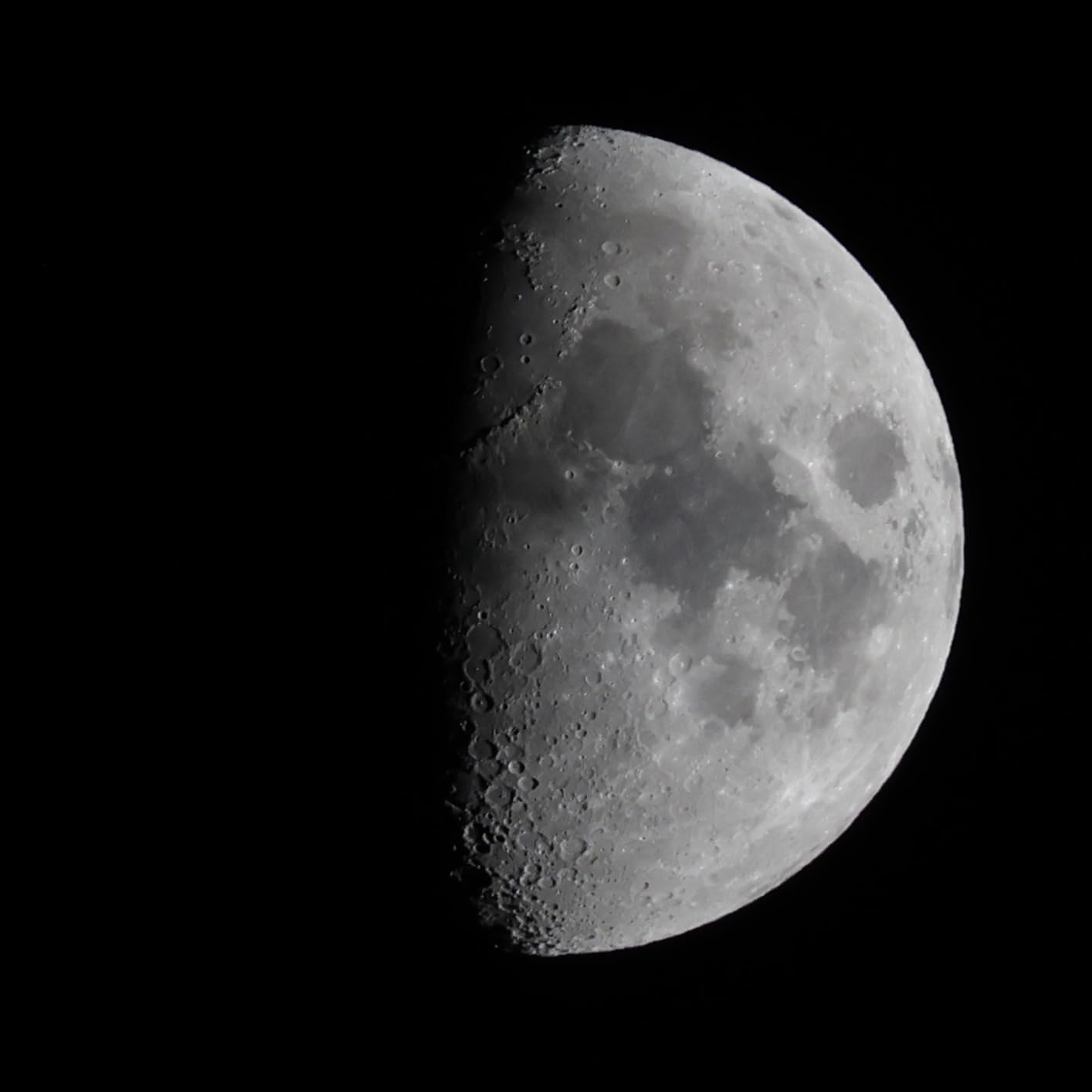
The constraint is the aperture. A constant f/5.6-8 means daylight shutter speeds need ISO pushed into the thousands once the light drops, and that is where the noise floor shows. Reviewers also note softness at the long end when wide open, and the barrel carries no weather sealing, so genuine rain needs a cover.
Pair it with the Canon RF 24-105mm f/4L as a two-lens full-frame kit: fast standard range for general work, reach for the field. The Canon EOS RP Kit already includes a stabilised 24-105mm, so this lens is the natural second purchase for anyone who bought that kit for travel and now shoots wildlife on the side.
If your light is indoor or evening, look at the Canon RF 50mm f/1.8 instead. Three stops of extra light is the difference between a usable file and a noisy one at a 400mm reach.
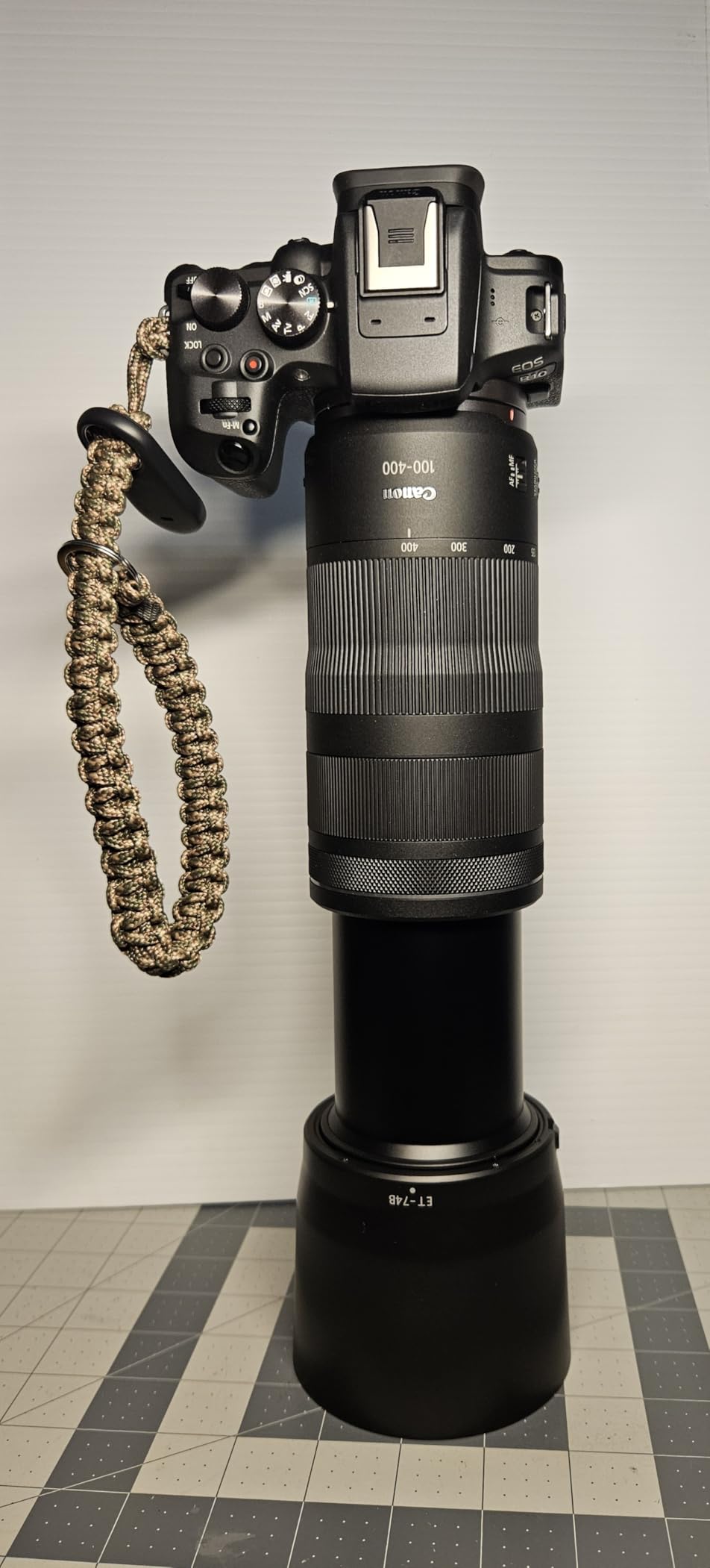
Good to know: this is a full-frame RF lens and does not fit APS-C RF bodies, so check your mount before anything else. Panning with a monopod rather than a tripod keeps the weight down at this focal length.
5. Canon RF 50mm f/1.8: Top Rated Full-Frame Prime
Canon RF50mm F1.8 STM Lens
Type: Prime lens
Standout: f/1.8 aperture
Weight: 5.6 oz
Mount: Canon RF
Pros
- Exceptionally sharp and clean wide open
- Attractive background blur for the price
- Quiet STM autofocus suits video
- Useful close-focusing despite not being a macro lens
Cons
- No stabilisation of its own
- Corner softness and some chromatic aberration wide open
- On APS-C bodies it frames like 75mm
More owner reviews than anything else on this list, and the reason is simple.
This is the default affordable RF prime: a 50mm at f/1.8 weighing 5.6 ounces, with a 43mm filter thread and a seven-blade diaphragm. Owners describe it as sharp and clean wide open with background blur that costs a fraction of what fast RF glass normally costs.
The gear-type STM motor focuses quietly and smoothly, which is why it turns up in video work as well as stills. Coatings and lens placement are optimised to control ghosting and flare, and a control ring lets you set changes directly.

Owners are also candid about the limits. There is no stabilisation in the lens, so a stabilised body or a slower shutter discipline matters. Wide open, some report corner softness, astigmatism and a little chromatic aberration. On an APS-C body the 50mm behaves like a 75mm equivalent, which is a portrait length and cramped indoors.
Compared with the Canon RF 24-105mm f/4L, this lens is lighter, brighter and much smaller, but it gives you a single focal length instead of a range. If you want both, the f/4L covers 24-105mm at a constant aperture and the 50mm prime is the low-light and portrait companion.
For people who shoot mostly indoors or at events, this is the pick on the list for the RF mount. Owners of the Canon EOS RP Kit often add exactly this lens as their second purchase.

Good to know: at 5.6 ounces and 43mm across the filter thread, this is the lens that fits a coat pocket instead of needing its own pouch. It pairs with every RF body in the list above it.
6. Nikon Z 40mm f/2: Best for Everyday Walkaround
Nikon NIKKOR Z 40mm f/2 | Large Aperture 40mm Prime Lens for Z Series mirrorless Cameras | Nikon USA Model
Type: Prime lens
Standout: Compact f/2
Weight: 6.08 oz
Mount: Nikon Z
Pros
- Smallest and lightest prime in the NIKKOR Z lineup
- Quiet fast autofocus that suppresses focus breathing
- Click-less control ring assigns to focus or exposure
- Works on both FX and DX bodies
Cons
- No image stabilisation
- Plastic barrel and mount
- Softer rendering than S-Line glass
A Nikon Z prime you will actually leave the house with.
At 6.08 ounces and roughly half the length of the Z 50mm, this lens exists to be carried. The f/2 aperture gives two stops more light than a kit zoom and a nine-blade rounded diaphragm for smooth, natural bokeh at 1/8000 second.
Users like the rendering. Reviews describe it as softer and less clinical than S-Line glass, which for many is a preference rather than a fault, especially for street and travel frames. The autofocus is quiet and fast, and it suppresses focus breathing so video pulls stay steady.

The click-less control ring is the sleeper feature. It can be reassigned to manual focus, aperture, ISO or exposure compensation, so you can drive exposure without taking your eye off the subject.
Two things to know. There is no stabilisation, so the body has to do that work on Z bodies that offer it. And on DX bodies it frames like a 60mm equivalent, which is a short portrait length indoors. If you want the Nikon Z50 II Two-Lens Kit as a walking kit, keep the 16-50mm on the body for wide work and carry this for the rest.

Good to know: because the aperture is fast and the lens is unstabilised, a body with in-body stabilisation makes a real difference at slow shutter speeds. On an FX body it frames like a 40mm, which is a natural everyday focal length.
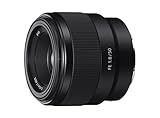
7. Sony FE 50mm f/1.8: Best Value Full-Frame Prime
Sony – FE 50mm F1.8 Standard Lens (SEL50F18F/2), Black
Type: Prime lens
Standout: f/1.8 aperture
Weight: 6.6 oz
Mount: Sony E
Pros
- Sharp wide open with smooth creamy circular bokeh
- Well-controlled flare and distortion
- Fast and accurate autofocus for the money
- Small enough to be an always-carried lens
Cons
- All-plastic barrel and mount with no weather sealing
- No focus hold switch on the barrel
- Focus motor is somewhat noisy for video
The lens most Sony E owners end up owning first.
A 50mm at f/1.8, 6.6 ounces, and the optical design does the work: an aspherical element controls spherical aberration and coma while a double-Gauss configuration keeps field curvature and distortion in check. That is why reviews single out well-behaved flare and vignetting at a price where most primes struggle.
The seven-blade circular aperture gives round highlights rather than the polygonal outlines you get from cheaper blades. Autofocus is fast and accurate for the money, and the small size makes it the lens you carry on days when you do not plan to shoot.
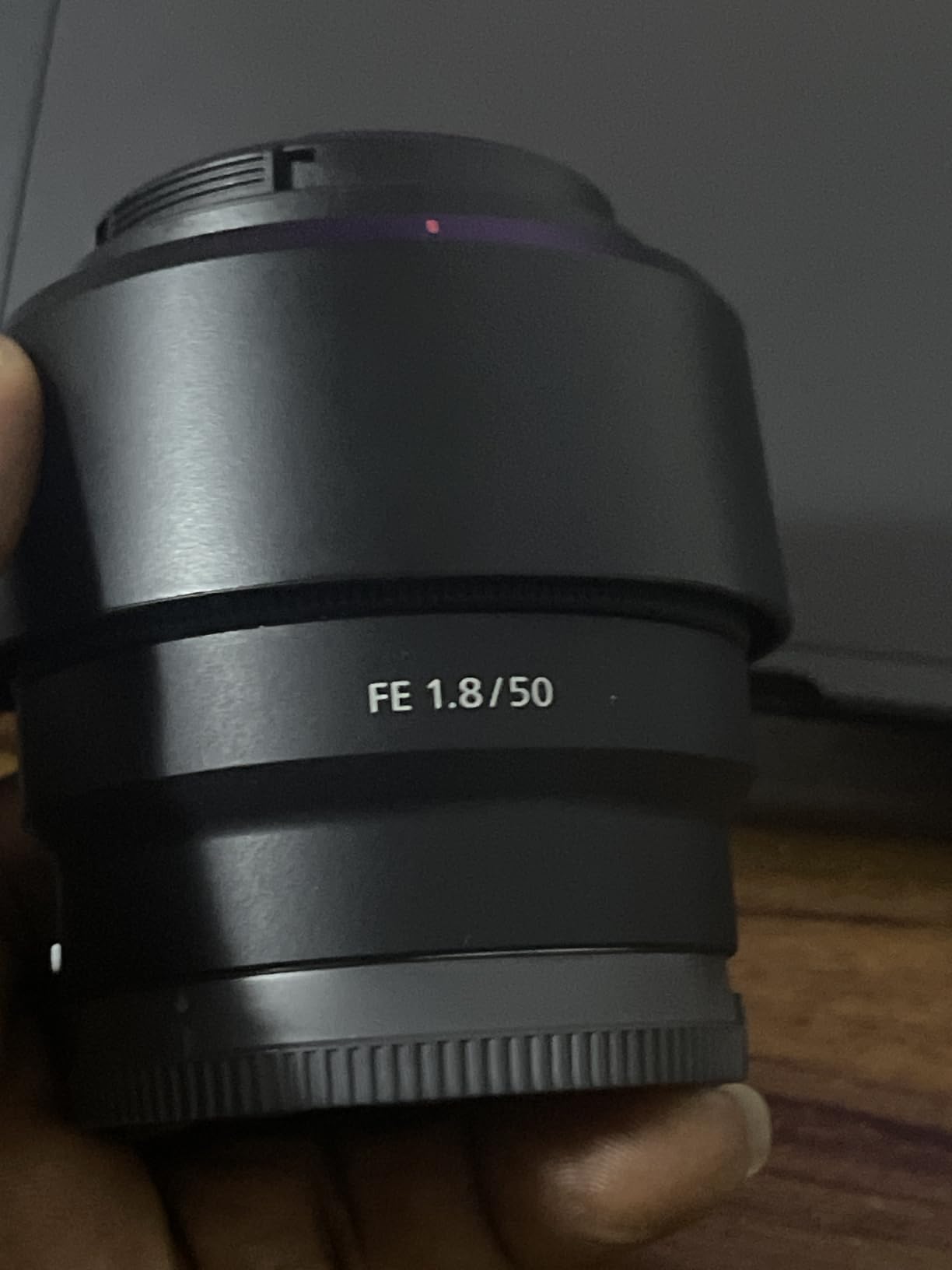
Owners keep pointing at the same three things. The barrel and mount are all plastic and carry no weather sealing, there is no manual focus hold switch on the barrel itself, and the motor is a little noisy on video, which matters if you are recording dialogue nearby.
On the Sony E mount, the choice is between a single fast prime and an all-rounder. This lens is the fast prime. The Sony E PZ 18-105mm is the all-rounder, and pairing them gives you both a walkaround zoom and a low-light lens without leaving the mount.
For Sony shooters the a6700 body pairs naturally with this glass, giving a creator a light setup with a bright normal lens. Choose the Sony Alpha a6700 if you need the video features, and this lens if you need the picture quality per gram.
Good to know: the 58mm filter thread is wide enough that a standard variable ND filter fits without vignetting at f/1.8. Given the unsealed barrel, this one lives in a padded compartment rather than on a damp shoulder strap.
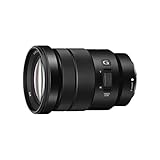
8. Sony E PZ 18-105mm: Most Versatile All-in-One Zoom
Sony E PZ 18-105mm f/4.0 G OSS Lens
Type: Standard zoom lens
Standout: Power zoom
Weight: 427 g
Mount: Sony E
Pros
- Constant f/4 across the whole 27-158mm equivalent range
- Smooth power zoom controlled from a phone or grip
- Internal focusing keeps the lens length constant
- Optical SteadyShot handles low light
Cons
- Sharpness trails fast primes at every focal length
- Focus breathes during slow video zoom pulls
- Needs good light because of the f/4 maximum
One lens that covers a trip and a video shoot.
The 18-105mm f/4 works out to a 27-158mm equivalent, and the aperture stays wide at f/4 across the entire range, which is unusual for a zoom at this focal length. Long-term owners treat it as the default Sony E all-rounder because the exposure does not shift when you zoom.
Power zoom is the feature that separates it. It is smooth, it can be driven from a phone or a grip, and combined with internal focusing the lens length stays constant while you frame. For anyone cutting video on location, that is worth more than a few stops of sharpness.

Owners are clear about what it does not do. Sharpness is average for a G-class lens and it trails the fast primes in this list at every focal length. Focus can breathe or pump during slow zoom pulls in video. At 427 g it is a substantial weight on an APS-C kit, and the f/4 maximum means good light is a requirement rather than a preference.
Against the Canon RF 24-105mm f/4L, the RF lens is a full-frame 24-105mm with 5 stops of optical stabilisation and sharper results across the frame, but it is heavier in the hand and costs considerably more to buy. The PZ is the value route to a single-lens setup.
Good to know: maximum magnification is 0.11x, so it focuses close enough for everyday detail work without being a close-focus or macro lens.
Good to know: because the aperture is fixed at f/4, adding one fast prime on this mount covers the low-light situations the zoom handles worst. The Sony FE 50mm f/1.8 is the natural pairing.
9. Canon RF 24-105mm f/4L: Best for Full-Frame Travel
Canon RF24-105mm f/4L is USM Lens
Type: L-series zoom lens
Standout: Constant f/4
Weight: 1.5 lb
Mount: Canon RF
Pros
- Sharp across every aperture with fast Nano USM autofocus
- Constant f/4 keeps exposure steady through the zoom
- Compact for an L-series standard zoom
- 5 stops of optical stabilisation and clean high-ISO files
Cons
- Barrel feels light for a premium L-series lens
- Autofocus can hunt against flat low-contrast scenes
- Not weather resistant and the lens extends when zooming
The workhorse that most full-frame shooters end up carrying.
A constant f/4 from 24mm to 105mm means your shutter speed and ISO do not change when you reframe, which is why professionals like it for paid work and long days out. Optical stabilisation gives up to 5 stops, and reviews note clean, low-noise rendering at higher ISO settings.
It is also the first L-series lens with Nano USM, and the autofocus is fast and quiet. The box includes the lens cap, a case, a dust cap and the EW-83N hood, so you are not buying accessories on day one.

Criticisms are about build and behaviour rather than image quality. The barrel feels light and plasticky for a premium L-series lens, it is not weather resistant, and the front extends during zooming, so the lock switch matters when it rides in a bag. Several reviews also mention autofocus hunting against low-contrast scenes such as an overcast sky or water.
It pairs with the Canon EOS RP Kit body, and it is the upgrade path for anyone who finds the bundled 24-105mm f/4-7.1 too slow. Add the Canon RF 50mm f/1.8 for low light and portraits, or the Canon RF 100-400mm for field work, and you have covered the three things a full-frame kit usually needs.

Good to know: this is the only lens here that ships with a hood and caps in the box, which saves a first-day accessory order. Budget for a padded compartment sized for an L-series zoom rather than a prime.
How to Choose Cameras During Prime Big Deal Days
The cheapest mistake during a camera sale is buying a body before deciding what the body is for. Work through these five factors in order and the format will choose itself.
Camera Type and Intended Use
Mirrorless kits suit beginners because the lens is included; action cameras suit movement; security and compact cameras serve fixed or casual shooting. If you are filming gym sessions with a phone and a secondary camera, our guide to cameras for CrossFit content covers the framing and frame-rate requirements that a normal body will not meet.
Match the format to the situation rather than to the marketing. A bird watcher and a portrait shooter have almost nothing in common, and neither should buy the other’s kit.
Image Quality, Stabilization and Low-Light Performance
Sensor size drives everything: a full-frame body like the Canon EOS RP holds up better at high ISO than any APS-C camera here, and APS-C bodies get a 1.5x crop that turns a 50mm into a 75mm equivalent. Stabilisation matters most at long focal lengths and slow speeds, and lens IS can add up to 5 to 5.5 stops on the telephotos in this list.
For dark skies, sensor choice matters more than resolution; our astrophotography cameras for beginners guide covers the tracking and high-ISO considerations. If you shoot handheld video rather than on a tripod, a camera gimbal changes what you need from in-lens stabilisation entirely.
Portability, Battery Life and Outdoor Readiness
Weight compounds fast: the Nikon Z50 II Two-Lens Kit at 2.4 lb feels very different from the 14.5 ounce Sony Alpha a6700 after a long day. If the camera goes near water, check the weather sealing before anything else, since several lenses here are explicitly not sealed.
People shooting in spray and glare have different priorities again; see cameras for watersports photography for the setup that survives a salt-heavy environment. Battery count matters too: the Z50 II kit ships with one, so a second belongs in the basket.
Connectivity, Audio and Creator Features
Wi-Fi transfer, app control and clean HDMI output decide how quickly files reach a phone or a laptop. The Sony Alpha a6700 records 4K 60p with 6K oversampling in 10-bit 4:2:2, which leaves room to grade, and the Sony E PZ 18-105mm power zoom can be driven from a phone during a take.
For anyone recording speech in a room, framing and audio settings differ from general video work, and our cameras for podcast recording guide covers the camera side of that setup.
How to Shop Camera Deals During the Sale
Check the model-year or generation code in the listing title before you compare anything, and confirm whether the price covers a body only or a kit with a lens. For third-party glass, the mount variant in the title is the thing that quietly voids compatibility if you buy the wrong one. Read who the seller is and who handles fulfilment, then add the item to the cart and check the total there, because owner reports repeatedly describe the cart price not matching the listing during past Prime camera events.
Renewed and refurbished units carry different warranty terms from new ones, and manufacturer refurbished stores often price a body better than a sale listing. Compare the renewal grade and the stated warranty length with the new-item terms before deciding which one is really the cheaper camera. Most Prime Big Deal Days offers require a Prime membership, and a free trial counts.
- Confirm body only versus kit before comparing prices.
- Match the lens mount and mount variant to your camera body.
- Check the cart total, not the listing price.
- Note who sells the order and who handles fulfilment.
- Read the warranty terms for renewed and refurbished units.
- Pair a body with a fast prime and a spare battery before checking out.
Frequently Asked Questions
When does Amazon Prime Big Deal Days 2026 run?
Amazon Prime Big Deal Days runs October 6-7, 2026, opening at 12:01 a.m. Pacific time on October 6 and closing at 11:59 p.m. Pacific time on October 7. Camera and photography offers are usually live for the whole window rather than appearing at a fixed hour, so checking early and again on the second day is worth the time.
Do I need Prime membership to use these Amazon Prime Big Deal Days camera offers?
Most offers during the event require a Prime membership, and a free trial counts toward it. A small number of listings run as general promotions without membership, but the event pricing on camera gear almost always sits behind the membership wall.
Are Amazon Prime Big Deal Days camera prices guaranteed to stay discounted?
No. Offers can change by the hour and pricing commonly reverts within a short window after the event closes. Treat every deal as time-limited, add the item to your cart early to check the real total, and complete the purchase while the offer is live rather than assuming it will still be there tomorrow.
How do I know whether a camera deal is the right generation?
Read the model code in the listing title and compare it with the camera you are considering. A single number often separates generations, and lens mount changes between some generations. If the title does not state the model clearly, treat the offer as unverified and check the manufacturer specification page before buying.
Should I buy a body-only camera or a bundle during the sale?
Buy the body only if you already own a compatible lens for that mount, otherwise a kit with a stabilised zoom is the better value for a first camera. A kit saves a second purchase and covers wide to short telephoto, while the body only number looks cheaper until you price the lens you still need.
Is Prime Big Deal Days or Black Friday better for camera gear?
Both events discount camera gear, and lenses and accessories move more often than new bodies in either one. Prime Big Deal Days arrives earlier in the year, so a buyer who needs a camera before autumn can act then rather than waiting, while patient buyers have the option to compare both events before deciding.
Final Verdict: Best Amazon Prime Big Deal Days Camera Deals
The Canon EOS RP Kit is the one most worth watching during the sale, because a stabilised 24-105mm and a full-frame body in a single purchase removes the decision that slows most first-camera buyers down. The Sony Alpha a6700 is the alternative when video and subject tracking lead your work, and the Nikon Z50 II Two-Lens Kit is the widest-reaching starter kit, giving you wide angle and 250mm from day one.
On lenses, the Canon RF 50mm f/1.8 is the budget-friendly entry, backed by the most owner reviews of anything here, and the Canon RF 24-105mm f/4L is the upgrade for anyone who outgrows the bundled zoom. Nikon Z owners should look at the Nikon Z 40mm f/2 for everyday carry and the Canon RF 100-400mm if field work is the goal. On Sony E, the Sony FE 50mm f/1.8 covers general shooting and the Sony E PZ 18-105mm covers everything else in one piece of glass.
Set your target number, watch the listing through the event, and confirm the cart total before you commit.