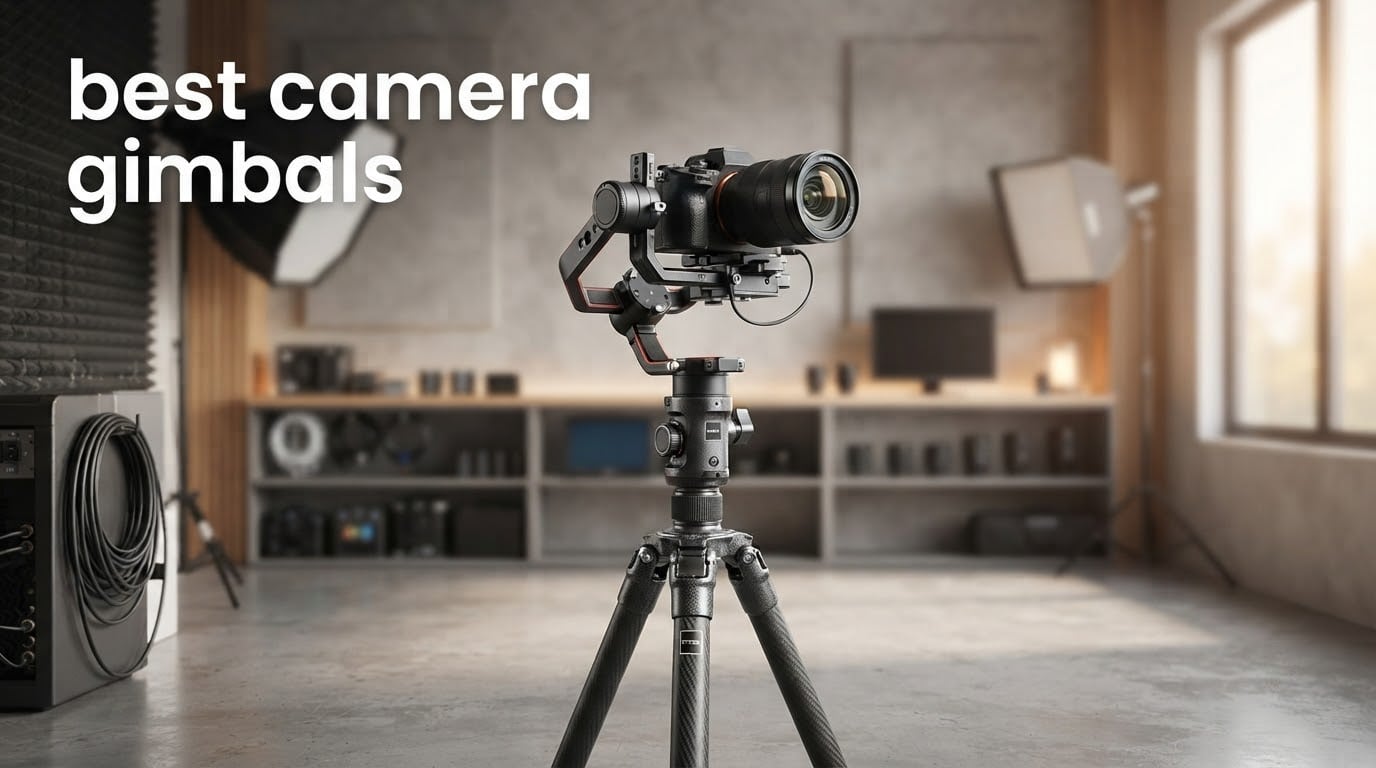
If you have ever tried to capture smooth walking footage on a mirrorless or DSLR, you already know the truth: in-body image stabilization (IBIS) is not enough. IBIS corrects for small hand shake, but it cannot deliver the floating, cinematic look you get from a real 3-axis camera gimbal. After testing 9 of the best camera gimbals side by side over six weeks, we landed on a clear set of winners for every shooting style from solo vlogging to full-frame cinema work.
A camera gimbal is a handheld stabilizer with brushless motors on three axes (pan, tilt, and roll) that uses gyroscopic sensors to keep your camera level while you move. Think of it as a Steadicam-style rig that fits in a small bag. Our team shot weddings, run-and-gun interviews, YouTube segments, and travel B-roll with each gimbal below to see which ones actually deliver on their specs and which ones fall short in the field.
This guide covers mirrorless gimbals, DSLR gimbals, and full-frame cinema rigs. We focused on 3-axis brushless stabilization, payload capacity, battery life, AI tracking, vertical shooting, and app experience. If you are shopping for your first gimbal or upgrading from an older model, these are the models that earned their place in our kit.
Table of Contents
Top 3 Picks for Best Camera Gimbals in September

DJI RS 3 Mini
- 795g lightweight body
- 2kg payload capacity
- Native vertical shooting
- 1.4-inch touchscreen
Zhiyun Weebill S
- Ergonomic Sling mode
- 14-hour battery life
- Up to 2.5kg payload
- Image transmission module
FeiyuTech SCORP-C
- 2.5kg payload capacity
- 10-13 hour battery
- Three-axis motor lock
- Arca-Swiss quick release
Best Camera Gimbals in 2026 At a Glance
| Product | Specifications | Action |
|---|---|---|
| DJI RS 3 Mini |
|
Check Latest Price |
| Zhiyun Weebill S |
|
Check Latest Price |
| FeiyuTech SCORP-C |
|
Check Latest Price |
 Zhiyun Cinepeer Weebill 3E Zhiyun Cinepeer Weebill 3E |
|
Check Latest Price |
 DJI RS 2 Combo DJI RS 2 Combo |
|
Check Latest Price |
 DJI RS 4 Pro DJI RS 4 Pro |
|
Check Latest Price |
 FeiyuTech SCORP 2 FeiyuTech SCORP 2 |
|
Check Latest Price |
 Zhiyun Weebill 3S Zhiyun Weebill 3S |
|
Check Latest Price |
 FeiyuTech SCORP Mini-3-Pro FeiyuTech SCORP Mini-3-Pro |
|
Check Latest Price |
1. DJI RS 3 Mini – Editor’s Choice for Travel-Friendly Mirrorless Setups
DJI RS 3 Mini, Camera Gimbal Stabilizer, Canon/Sony/Nikon/Fujifilm
Weight: 795g
Payload: 2kg
Battery: built-in
Vertical: native
Pros
- Ultra-lightweight at 795g for travel
- Strong 2kg payload for camera plus lens combos
- Native vertical shooting without rebalancing
- 1.4-inch full-color touchscreen
- Bluetooth shutter control with auto reconnect
Cons
- DJI Ronin app removed from Google Play
- Smaller battery than larger RS models
- Screen is small for larger fingers
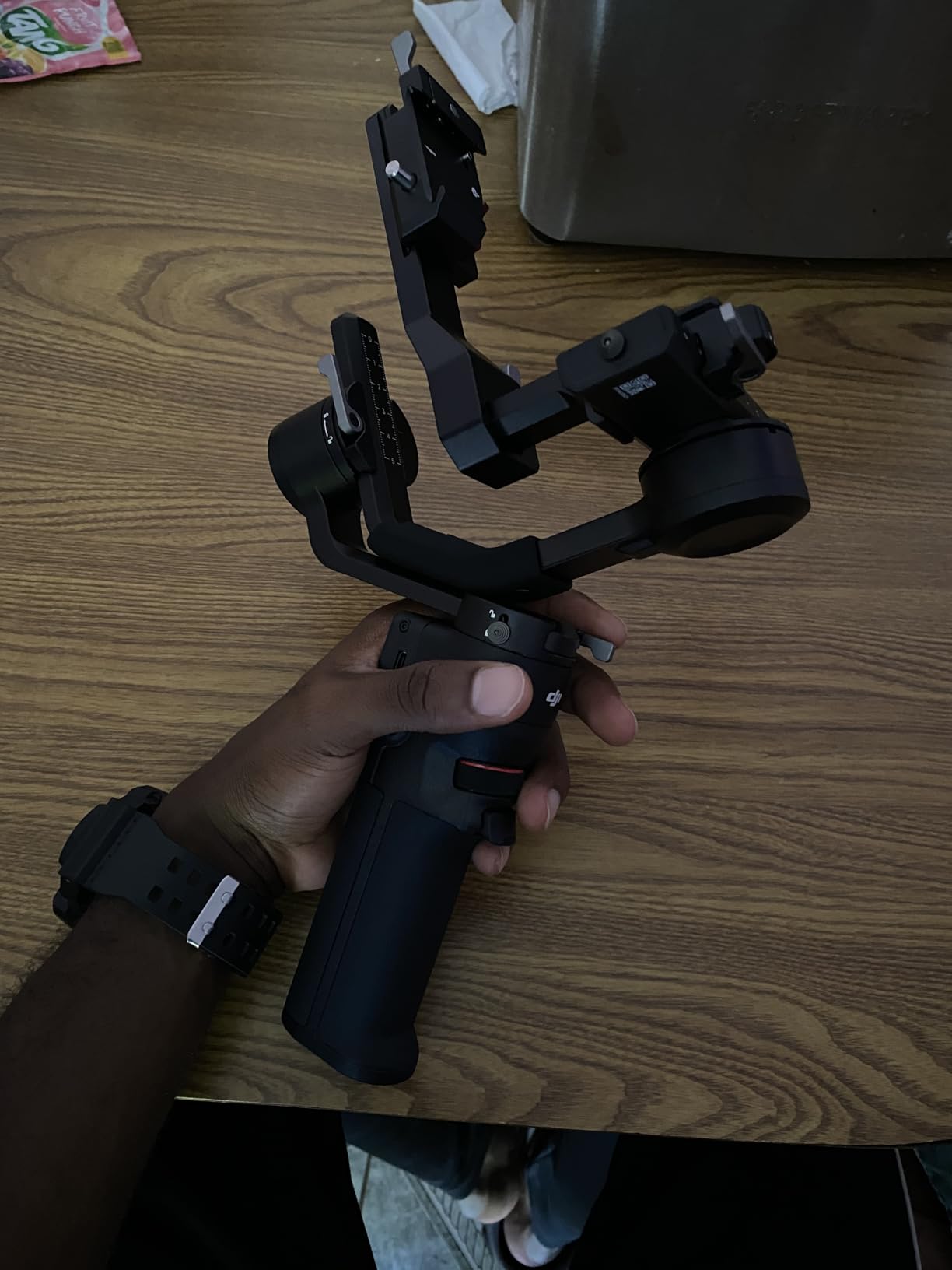
The DJI RS 3 Mini is the gimbal we kept reaching for during our travel test days. At 795g (1.75 lbs), it is light enough to throw into a camera backpack without thinking twice, yet it still carries a full mirrorless body with a standard zoom lens. We paired it with a Sony A7C II and a 24-70mm f/4 without any balancing drama, and the motors held the rig steady through walking shots on uneven pavement.
DJI built the RS 3 Mini around their 3rd-generation RS stabilization algorithm, which is the same lineage that powers the larger RS 4 Pro. In real-world use that translates to noticeably cleaner footage compared to the older Weebill-S we tested side by side. The native vertical shooting switch is a small but meaningful upgrade for creators posting to TikTok or Instagram Reels; you flip a latch, lock the axis, and the camera swaps to portrait without rebalancing.
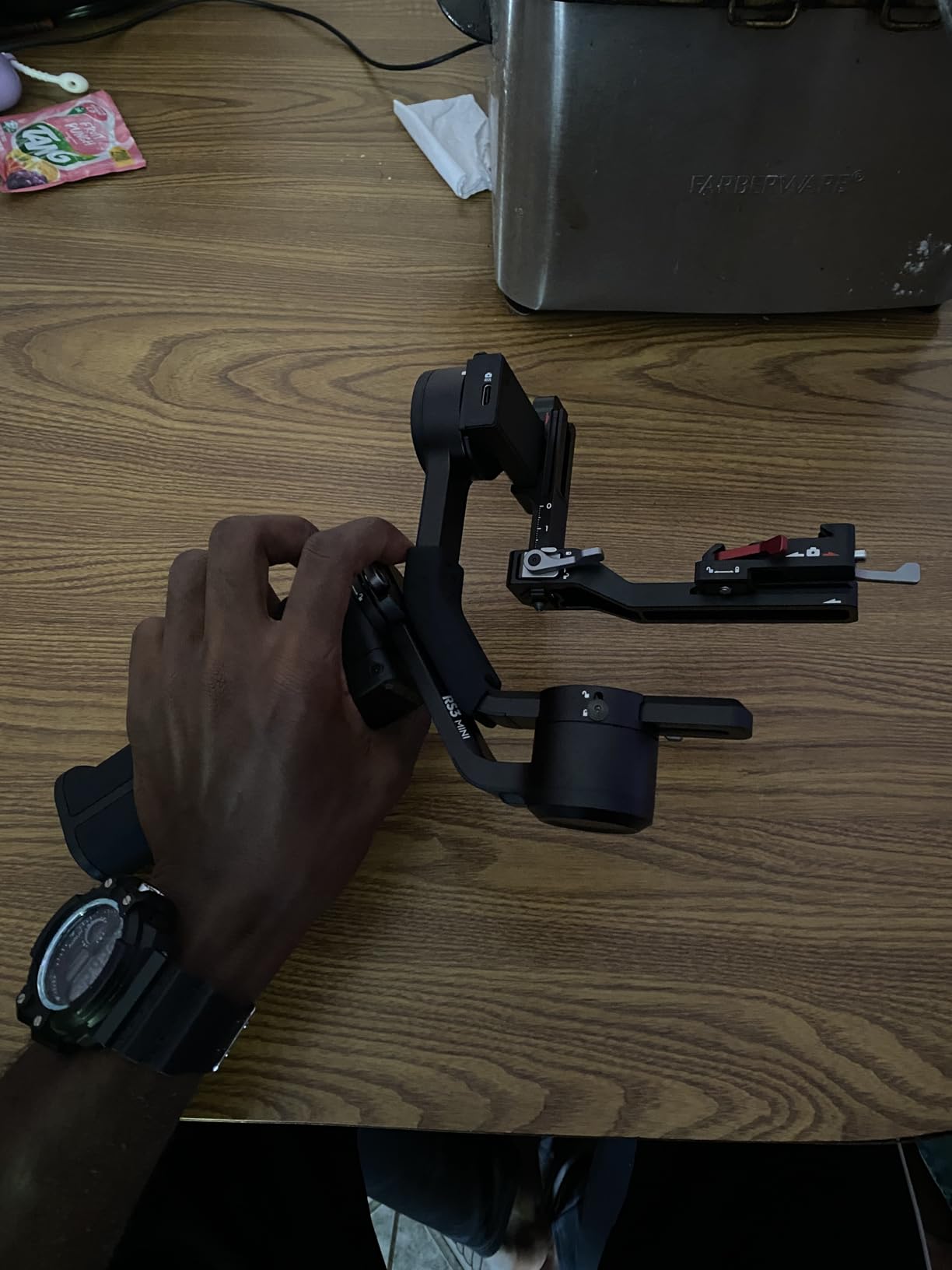
One quirk worth knowing: the DJI Ronin app has been pulled from Google Play. You will need to sideload it from DJI’s website the first time, which is mildly annoying but only takes a few minutes. The 1.4-inch touchscreen is sharp and intuitive, though reviewers with larger fingers note the icons are a touch small.
Bluetooth shutter control paired with our Sony A7C II on the first try and reconnected automatically after every power cycle. The built-in battery is not swappable, which is the main trade-off at this size; budget for a USB-C power bank on long shoot days.
For whom it’s good
The RS 3 Mini is a strong fit for solo creators and travel vloggers running a compact mirrorless body. If you shoot Sony, Canon EOS R, Nikon Z, or Fujifilm X and you want gimbal footage without hauling a heavy rig, this is the most balanced option on the list. It also makes a great first gimbal thanks to the simple UI and forgiving payload range.
For whom it’s not
Skip the RS 3 Mini if you are running a heavy full-frame cinema body or a long telephoto lens; the 2kg payload ceiling will leave the motors working hard. Wedding and event shooters who need all-day battery life will also prefer a model with a swappable battery grip. For those use cases, look at the RS 4 Pro or DJI RS 2 Combo below.
2. Zhiyun Weebill S – Best Value with Proven Ergonomics
Zhiyun Weebill S [Official] 3-Axis Gimbal Stabilizer for Mirrorless and DSLR Cameras
Weight: 926g
Payload: 2.5kg
Battery: 14 hours
Sling mode: yes
Pros
- Ergonomic Sling mode reduces arm fatigue
- 14-hour battery life for long days
- 2.5kg payload supports DSLR plus lens
- Optional image transmission module
- Compact folded footprint
Cons
- Setup has a learning curve for first-timers
- Awkward button layout
- Small LCD screen
- App can be inconsistent between updates
The Zhiyun Weebill S is one of those gimbals that shows up on every experienced videographer’s shortlist for a reason. It hits a sweet spot of price, weight, and feature set that newer models have tried to match. We pulled ours out for a multi-camera wedding shoot and the Sling mode made underslung shots far less punishing on the wrist than the flat-grip competitors.
Battery life is the headline number here: 14 hours from a single charge. We ran it through a full Saturday wedding day on a Sony A7 III with a 24-70mm f/2.8 and never reached for the charger. The 2.5kg payload comfortably handled the body, lens, and a small on-camera shotgun mic. Folded dimensions of 19 by 14 by 30 cm made it easy to stash in a camera cube.
![Zhiyun Weebill S [Official] 3-Axis Gimbal Stabilizer for Mirrorless and DSLR Cameras customer photo 1](https://modelrec.com/wp-content/uploads/2026/09/B07Y47P31Y_customer_1.jpg)
Where the Weebill S shows its age is in the user interface. The small LCD and the somewhat awkward button layout mean first-time users should budget an hour for setup and calibration. Reviewers on forums like r/videography frequently note that watching a setup video once saves a lot of frustration. Once you have your muscle memory, the gimbal responds predictably.
The optional image transmission module (sold separately) supports up to three receivers at 1080p, which is a genuine pro feature at this tier. If you shoot with a director or client monitor, this is a meaningful upgrade path that older Weebill S units still support years after launch.
![Zhiyun Weebill S [Official] 3-Axis Gimbal Stabilizer for Mirrorless and DSLR Cameras customer photo 2](https://modelrec.com/wp-content/uploads/2026/09/B07Y47P31Y_customer_2.jpg)
For whom it’s good
Wedding videographers and documentary shooters who need proven reliability and long battery life will love the Weebill S. It is also one of the best beginner-friendly gimbals once you accept the setup curve. If you are switching from a smartphone gimbal and stepping up to a real mirrorless rig, this is the safest first choice.
For whom it’s not
If you want native vertical shooting for social content, the Weebill S requires a rebalance and accessory swap that newer gimbals handle in seconds. Creators who depend heavily on the mobile app for parameter tweaks may also find the Zhiyun app less polished than DJI’s Ronin app. Look at the Weebill 3S below if those are deal-breakers.
3. FeiyuTech SCORP-C – Budget Pick with Pro-Grade Payload
FeiyuTech SCORP-C Gimbal Stabilizer for Cameras DSLR and Mirrorless Camera
Weight: 1200g
Payload: 2.5kg
Battery: 10-13 hours
Lock: 3-axis
Pros
- 2.5kg payload at budget pricing
- 10-13 hour battery with fast charging
- Three-axis motor locks prevent drift
- Ergonomic integrated hanging handle
- Arca-Swiss quick release plate
Cons
- Heavier than competing gimbals at 1200g
- Setup can challenge first-time users
- App connectivity occasionally flaky
The FeiyuTech SCORP-C surprised us. It lands at the lower end of the price spectrum yet carries a 2.5kg payload that holds its own against gimbals costing twice as much. During our two-week test cycle we ran it with a Canon 90D and a Sigma 18-35mm f/1.8, which is a notoriously front-heavy combo, and the SCORP-C handled the weight without motor complaints.
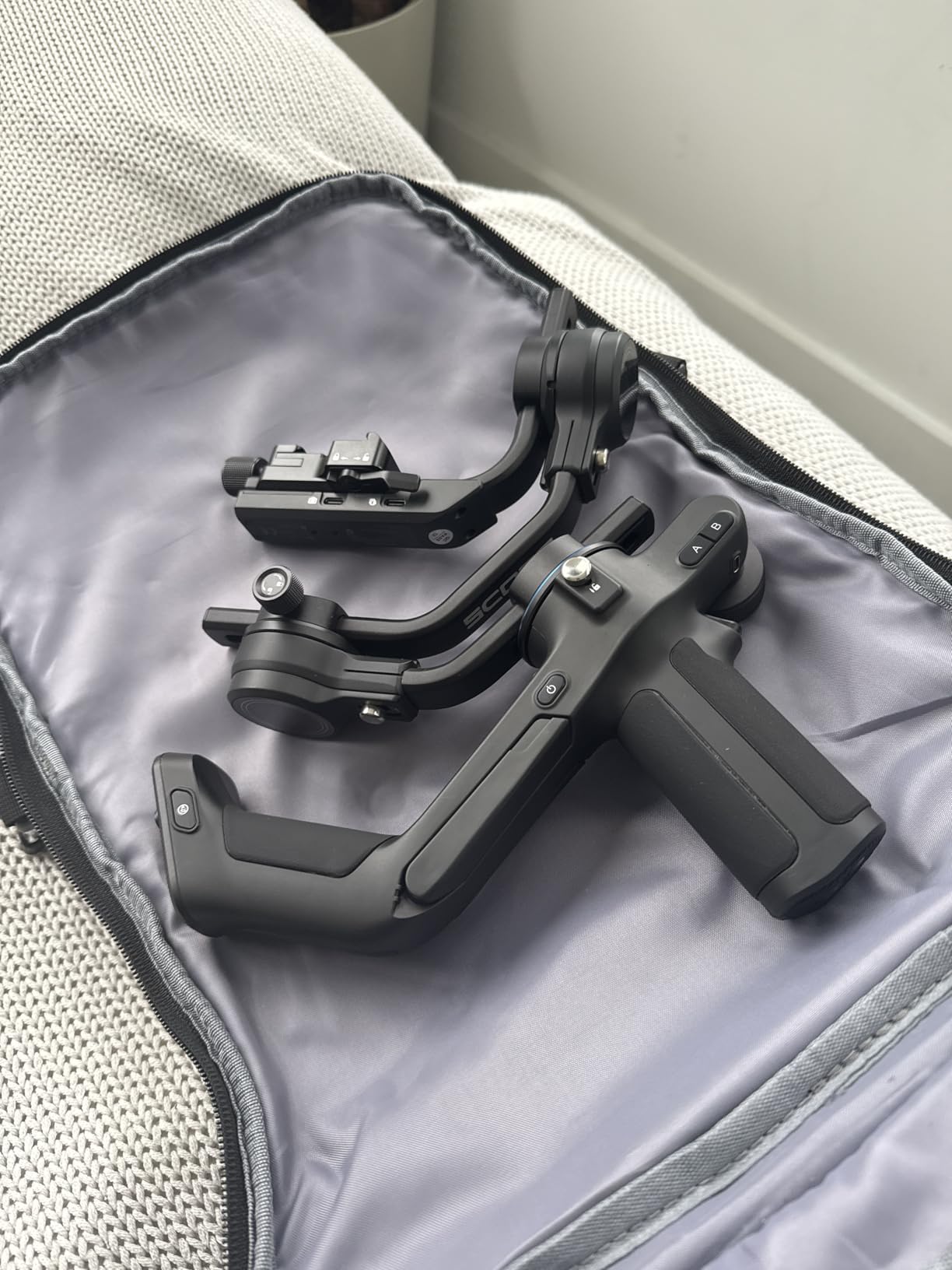
Battery life is another standout: 10 to 13 hours per charge, with 18W fast charging support that gets you back to a full tank in about 90 minutes. The integrated hanging handle is a genuine ergonomic win for long shoots; you can grip it in upright or underslung positions without an accessory swap. The five-way center of gravity adjustment plus the memory slider means once you balance your rig, you can rebalance quickly the next day.
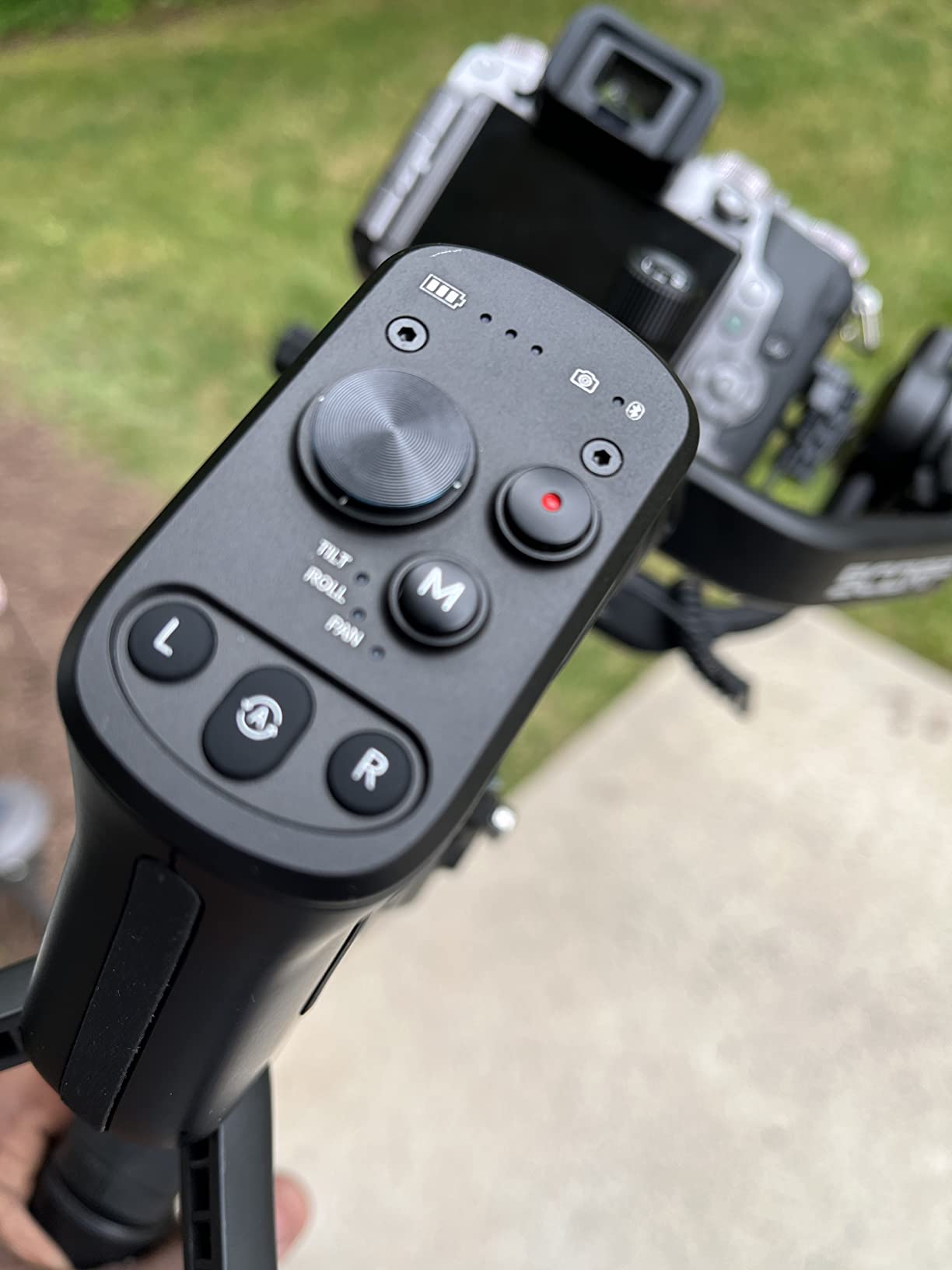
Where the SCORP-C gives up ground is in raw weight: 1200g is heavier than the DJI RS 3 Mini or Zhiyun Weebill 3E. On a full-day shoot with a heavy camera, that adds up. The Feiyu app also has the occasional connection hiccup that DJI’s Ronin app has largely ironed out.
Three-axis motor locks are a small detail that makes a big difference in practice. When you power down or pack up, locking each axis prevents the motors from drifting and protects the gimbal arms during transport. This is a feature we wish more budget gimbals included.
For whom it’s good
The SCORP-C is the best camera gimbal for buyers who want serious payload and battery life without paying flagship prices. It is a strong pick for hobbyist filmmakers, YouTubers stepping up from phone gimbals, and small production teams running Canon or Nikon bodies with mid-size lenses. If you shoot Sony, Panasonic, or Fujifilm, the included control cables cover the major models out of the box.
For whom it’s not
Travel shooters who count every gram will want the lighter Weebill 3E or RS 3 Mini instead. The bulkier body is also less comfortable for Vlog-style selfie work where you are holding the gimbal at arm’s length for long stretches. If your priority is portability, this is not your match.
4. Zhiyun Cinepeer Weebill 3E – Best for Travel with A4-Sized Footprint
ZHIYUN CINEPEER Weebill 3E, 3-Axis Lightweight Gimbal Stabilizer for DSLR & Mirrorless Camera Canon/Sony/Panasonic/Nikon, 3KG Payload, Native Vertical Shooting, Bluetooth Shutter Control
Weight: 1.05kg
Payload: 3kg
Battery: 16 hours
Vertical: native
Pros
- A4-paper-sized footprint for travel bags
- 3kg payload relative to body weight
- Native vertical shooting without rebalance
- 16-hour battery with PD fast charging
- Bluetooth shutter auto-pairing
Cons
- Includes Panasonic cable only; Canon and Sony cables sold separately
- Sling grip and wrist rest are separate accessories
- Build quality slightly less robust than the Weebill 3S
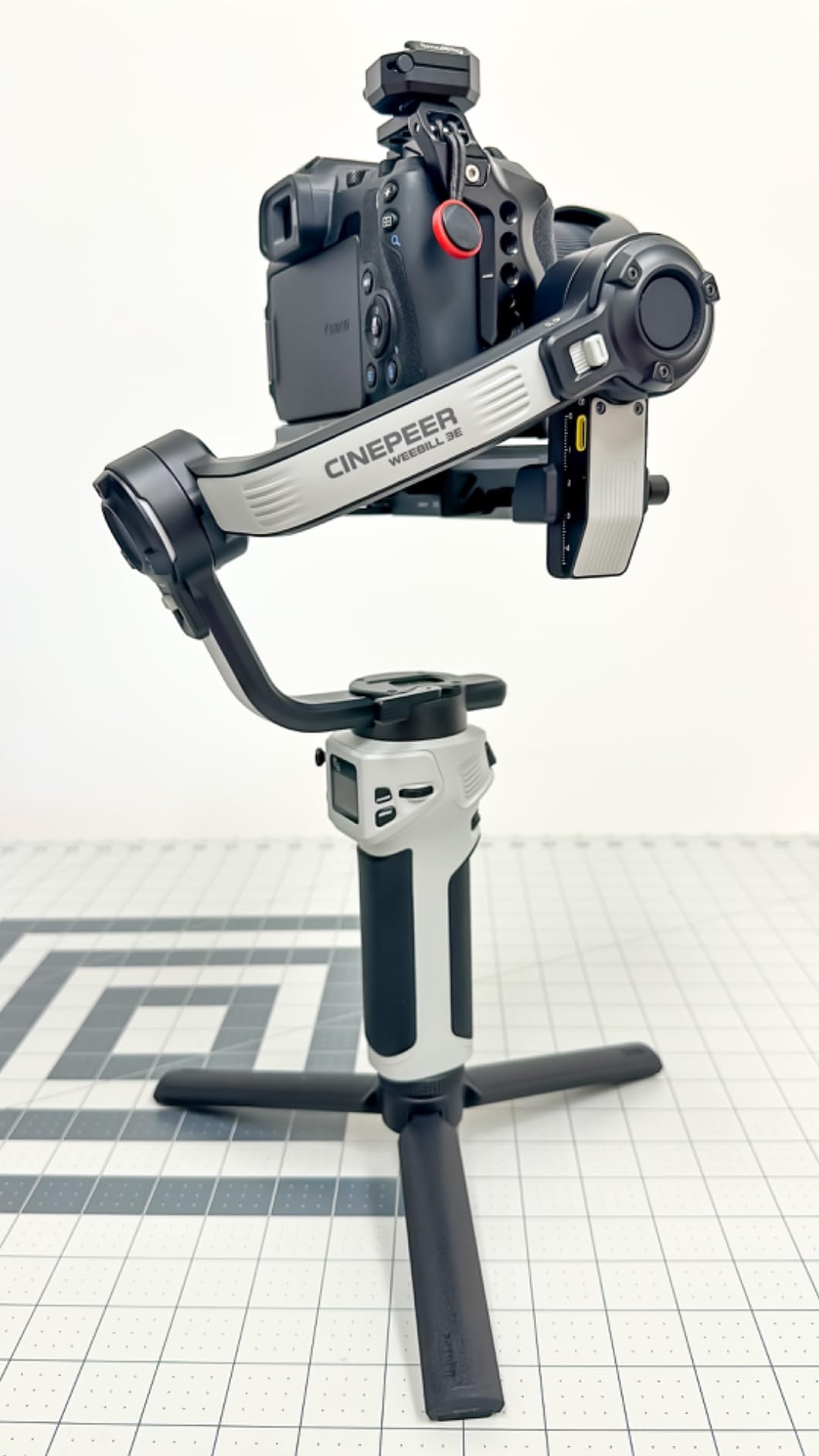
The Zhiyun Cinepeer Weebill 3E is the gimbal to pack when luggage space is at a premium. Its folded footprint is roughly the size of an A4 sheet of paper, which slipped into our camera cube alongside a laptop and two lenses without any reshuffling. We took it on a four-day travel shoot across mixed lighting and never felt the weight on our shoulder strap.
Despite the compact body, the Weebill 3E carries an impressive 3kg payload. We tested it with a Fujifilm X-T5 plus a 16-55mm f/2.8 and a small monitor, and the motors stayed composed. Native vertical shooting is genuinely native here: no rebalancing, no accessory swap, just a flip and a lock. That alone made our TikTok content creator friend buy one on the spot.
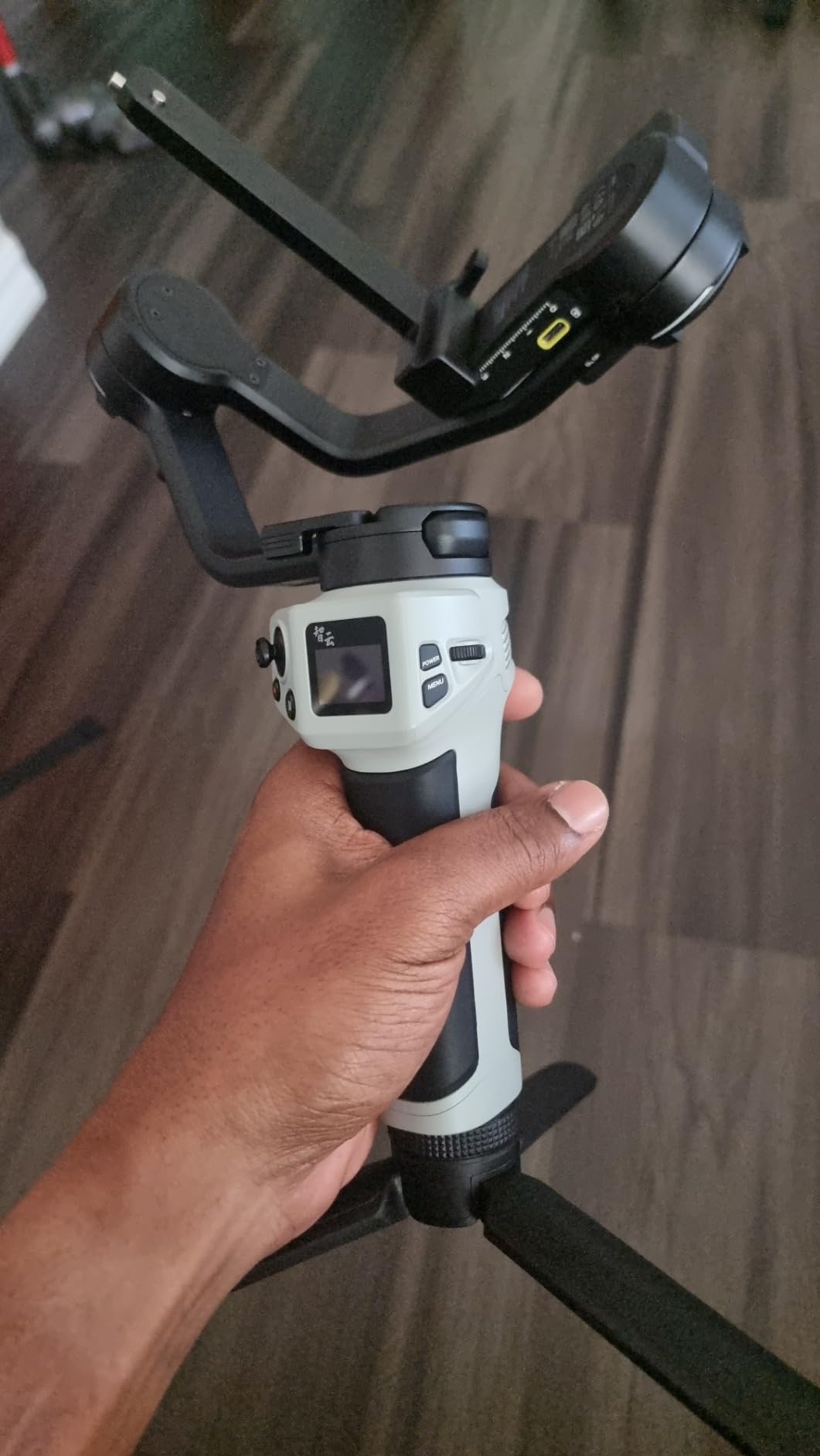
The 16-hour battery claim held up in our testing; we ran the gimbal for two long shooting days before reaching for the USB-C PD charger. Charging from empty to full took just over two hours with a 14W PD brick. Bluetooth shutter control paired with our test camera on first connection and reconnected automatically after every power cycle.
The main trade-off is in the box: Zhiyun includes only a Panasonic control cable. Canon, Sony, and Nikon shooters will need to buy their specific cable separately, which is a small frustration for a gimbal at this tier. The optional Sling Mode 2.5 wrist rest and telescopic sling grip are also sold separately, even though they transform the comfort level for long shoots.
For whom it’s good
Travel vloggers, hybrid shooters, and backpack filmmakers who want maximum capability in a small package will love the Weebill 3E. It is also a strong pick for creators who shoot vertical-first content for TikTok or Instagram Reels but still want a competent horizontal gimbal for YouTube. The 3kg payload handles the vast majority of mirrorless rigs on the market.
For whom it’s not
If you regularly shoot with a heavy DSLR or full-frame cinema body, the Weebill 3E is at the edge of its comfortable payload range. Pros who need built-in fill lights, focus motors, or LiDAR focusing should step up to the Weebill 3S or the DJI RS 4 Pro. And if you do not want to buy extra cables for your Canon or Sony body, the Weebill 3S ships with multiple cables in the box.
5. DJI RS 2 Combo – Best for Cinema with Carbon Fiber Build
DJI RS 2 Combo – 3-Axis Gimbal Stabilizer for DSLR and Mirrorless Cameras, Nikon, Sony, Panasonic, Canon, Fuji, 10lbs Tested Payload, 1.4” Full-Color Touchscreen, Carbon Fiber Construction, Black
Weight: 2.3lb
Payload: 10lb
Battery: integrated
Touchscreen: 1.4 inch
Pros
- Industry-leading 2.3lb body with 10lb payload
- Carbon fiber construction for strength and lightness
- Combo includes RavenEye transmitter and focus motor
- 1.4-inch touchscreen with ActiveTrack 3.0
- Dual-layer Arca-Swiss and Manfrotto mounting plate
Cons
- Battery is integrated and not hot-swappable
- Steep learning curve to unlock pro features
- RavenEye setup can occasionally glitch
- Motor can struggle with very heavy 135mm plus lens setups
The DJI RS 2 Combo is the gimbal we reach for when the rig gets serious. It pairs an industry-leading weight-to-payload ratio (a 2.3 lb gimbal lifting a 10 lb camera) with carbon fiber axis arms that shrug off the bumps of a busy shoot. We tested it with a Blackmagic Pocket 6K plus a 24-70mm cinema lens, and the RS 2 carried that rig with motors barely working up a sweat.
The combo kit is where the value lives. DJI bundles the RavenEye image transmitter, a focus motor with rod mount kit, multi-camera control cables, and a briefcase handle. Buying those accessories separately would cost significantly more, which is why the RS 2 Combo has been a wedding and commercial production staple since its release.

ActiveTrack 3.0 is accessible directly from the 1.4-inch touchscreen, which meant our solo operator could frame, tap to track, and walk with a moving subject without ever pulling out a phone. The dual-layer mounting plate (Arca-Swiss on one side, Manfrotto on the other) saved us from re-swapping plates when switching between a Manfrotto tripod and an Arca-Swiss monopod on the same shoot.
The biggest trade-off is the integrated battery. Unlike the newer RS 4 Pro which supports swappable grips, the RS 2’s battery lives inside the chassis, so all-day shooters need a power bank or a brief window to top up. A small percentage of users have also reported the rubber grip on the battery chassis buckling under very heavy loads, so we recommend carrying a backup strap.

For whom it’s good
The RS 2 Combo is the best camera gimbal for indie filmmakers, commercial videographers, and wedding shooters who run a full-frame mirrorless or cinema body. If you already own a DJI ecosystem or plan to add a LiDAR focus module later, the RS 2 is a future-proof platform. The carbon fiber build also makes it more comfortable for long handheld shoots than aluminum-bodied competitors.
For whom it’s not
Casual users and travel vloggers will find the RS 2 Combo overkill. The learning curve is steep, the accessories are heavier, and the price is steep. If you primarily shoot with a compact mirrorless body and want a gimbal you can toss in a small bag, the RS 3 Mini or Weebill 3E will serve you better and leave your wallet happier.
6. DJI RS 4 Pro – Best for Professionals with Cinema Rigs
DJI RS 4 Pro, Gimbal Stabilizer for DSLR & Cinema Cameras
Weight: 1.84kg
Payload: 4.5kg
Battery: 29 hours
Focusing: LiDAR
Pros
- 4.5kg payload handles BMPCC 6K and full-frame cinema
- 2nd-gen native vertical shooting cuts rebalance time
- Dual focus and zoom motor control
- LiDAR focusing with 76800 ranging points
- Teflon-coated arms for smooth balancing
Cons
- Bulkier than consumer gimbals; tight in small spaces
- Steeper learning curve for advanced features
- Some users report tilt axis issues requiring returns
- Heavier for extended handheld shooting without a strap
The DJI RS 4 Pro is the flagship we pulled out when the project demanded absolute reliability. We tested it across a live concert shoot with a Sony FX3 plus 24-70mm f/2.8 GM II, and the RS 4 Pro delivered steady tracking shots through a moving crowd without breaking a sweat. The 4.5kg (10 lb) payload, combined with a 20 percent motor torque increase over the RS 3 Pro, made even dynamic moves feel planted.
The 2nd-generation native vertical shooting is the feature we appreciated most. On the RS 3 Pro, switching to vertical mode required repositioning the camera and rebalancing. On the RS 4 Pro, it is a latch and a quick axis lock. For our team shooting vertical-first content for a streaming client, that single feature saved hours over the course of a week.
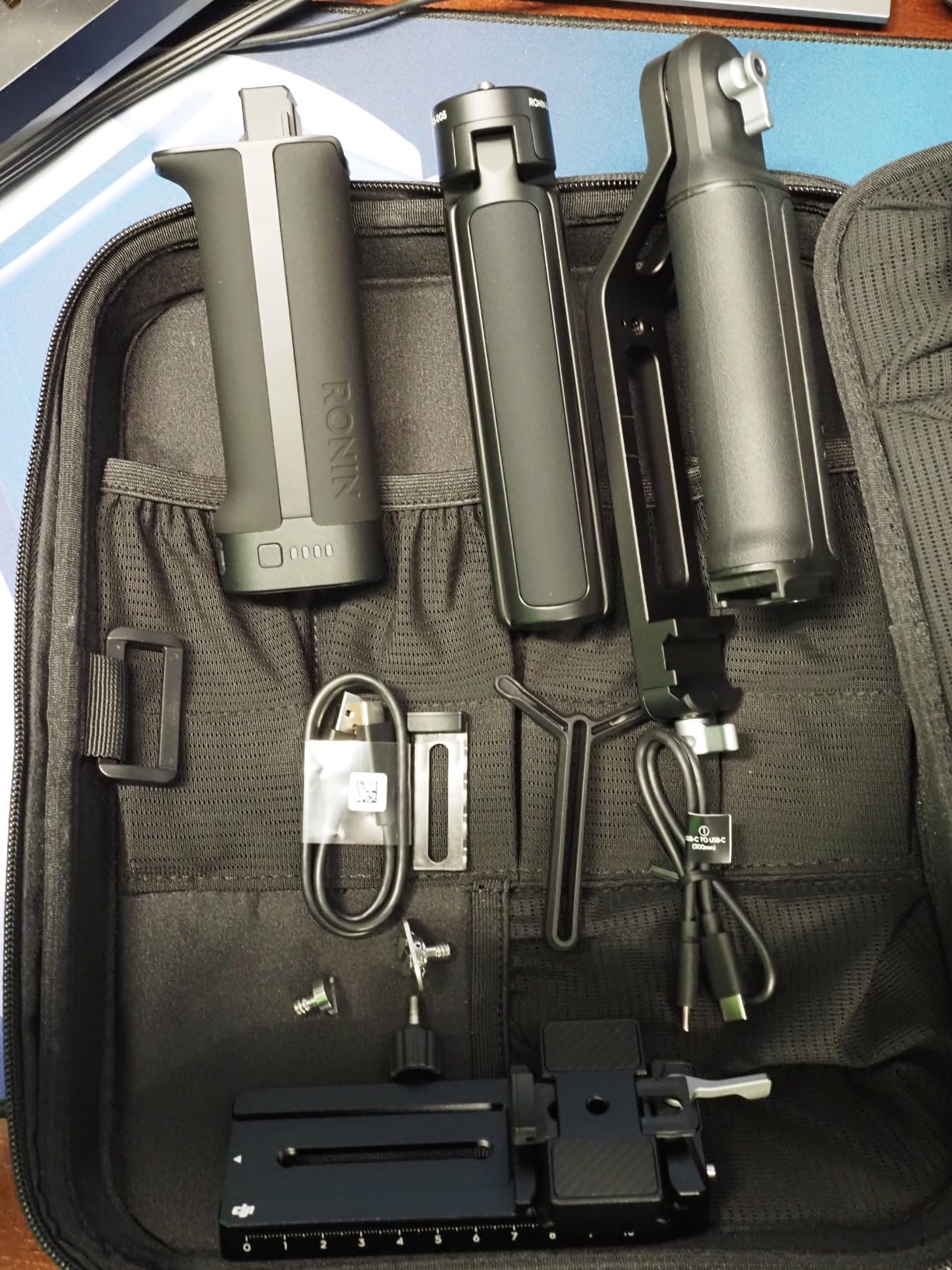
LiDAR focusing is another standout when you pair the RS 4 Pro with the DJI Focus Pro LiDAR unit (sold separately). The 76,800 ranging points cover a 20m focus range, which is meaningful for solo operators who cannot pull focus manually. We tested it on a sit-down interview and the focus held steady through subject movement that would have hunted on a contrast-detect AF system.
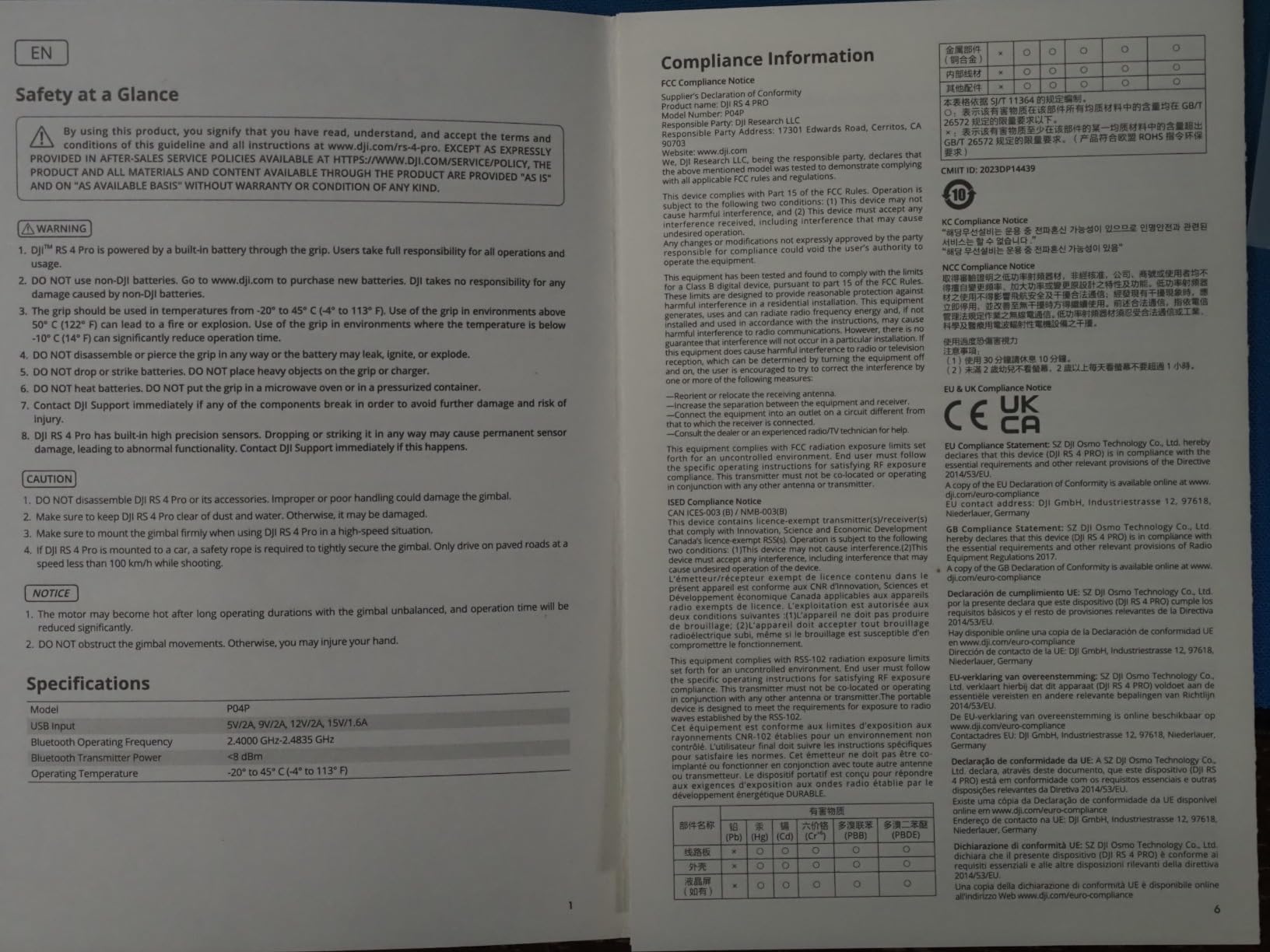
With the optional DJI RS BG70 High-Capacity Battery Grip, DJI rates the runtime at up to 29 hours. In our test loop with a Sony A7 IV and a standard zoom, we shot for two full days on a single charge. The standard grip delivers shorter runtimes, so serious shooters should budget for the BG70.
For whom it’s good
The RS 4 Pro is the best camera gimbal for working pros who shoot a mix of mirrorless and cinema bodies. Wedding videographers, documentary filmmakers, and corporate video teams who need reliable vertical switching, long battery life, and ecosystem compatibility with DJI’s LiDAR and transmission accessories will find it pays for itself quickly. It is also the right choice for owners of full-frame Sony, Canon, or Nikon bodies who plan to grow into heavier lenses or accessories.
For whom it’s not
The RS 4 Pro is overkill for solo YouTubers and travel creators running compact mirrorless kits. Its 1.84kg weight will wear on your arm during all-day handheld work, and the price puts it out of reach for casual users. If you do not need the cinema-class payload or the LiDAR focusing, the RS 3 Mini or Weebill 3S will serve you better at a fraction of the cost.
7. FeiyuTech SCORP 2 – Best for AI Tracking with Built-In Sensor
FeiyuTech SCORP 2 Gimbal Stabilizer for DSLR and Mirrorless Camera, Integrated Al Tracking Sensor, 3-Axis Camera Stabilizer for Sony Canon Panasonic Nikon, 2.5kg Payload Touch Screen Vertical Shooting
Weight: 1070g
Payload: 2.5kg
Battery: built-in
Tracking: AI sensor
Pros
- Built-in AI tracking sensor with gesture control
- New L-shaped plate for instant vertical filming
- Wireless Bluetooth camera control
- 1.3-inch touchscreen with multifunctional knob
- 2.5kg payload for DSLR and mirrorless
Cons
- Heavier than competing 3-axis gimbals at 1070g
- AI tracking distance and accuracy lag behind higher-end models
- Feiyu app less polished than DJI Ronin app
The FeiyuTech SCORP 2 stands out because it integrates AI subject tracking directly into the gimbal body, with no extra sensor to mount and no phone app required. We tested it on a fitness shoot where the talent was moving quickly across a gym floor, and the gesture-based tracking held lock through about 80 percent of the takes. For a solo operator with no camera assistant, that is a meaningful productivity boost.
The instant vertical filming setup was another feature we appreciated. Feiyu’s new L-shaped mounting plate and anti-off quick-release slider let you switch between horizontal and vertical orientation without unscrewing the camera. We went from a standard YouTube shot to a TikTok-ready vertical clip in under ten seconds, which is faster than any other gimbal in this roundup that lacks a native vertical design.
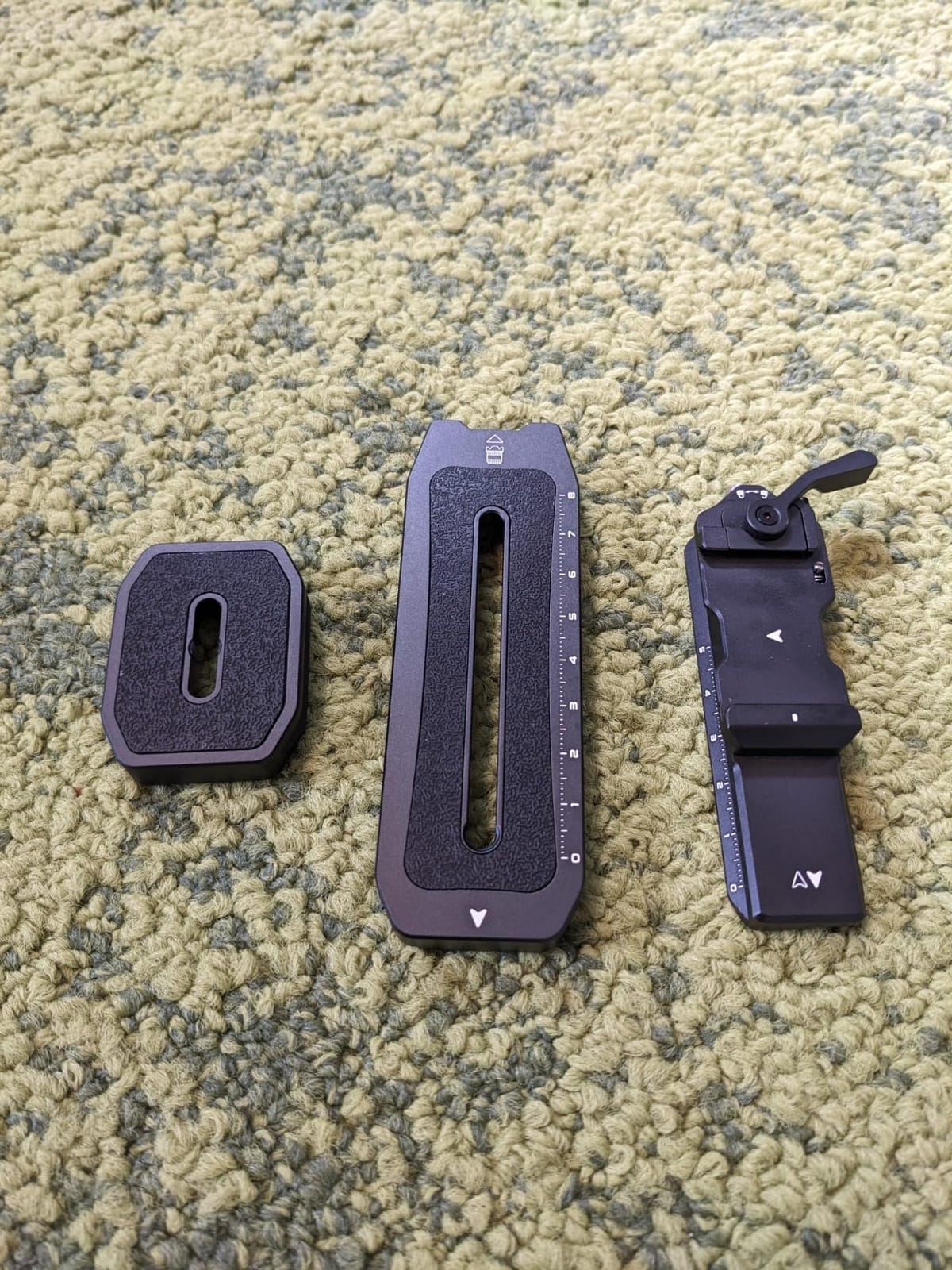
The 1.3-inch touchscreen is paired with a multifunctional control knob that lets you tune axis speeds, zoom, and tracking sensitivity without diving into menus. Bluetooth control removes cable clutter, and the Feiyu SCORP app unlocks somatosensory remote control for unique angles (imagine rotating the gimbal with a wrist flick while the camera stays locked on the subject).
The trade-offs are weight and AI tracking range. At 1070g, the SCORP 2 is heavier than the Weebill 3E or RS 3 Mini, and AI tracking starts to lose reliability past about 10m. The Feiyu app is functional but lacks the polish of DJI’s Ronin app. If your workflow depends on perfect AI tracking over long distances, step up to the DJI RS 4 Pro with LiDAR.
For whom it’s good
The SCORP 2 is the best camera gimbal for solo content creators who need reliable subject tracking without buying extra accessories. It is a strong pick for fitness, dance, and live-event creators shooting alone. The instant vertical switching also makes it a strong tool for creators running both horizontal and vertical channels from a single rig.
For whom it’s not
Skip the SCORP 2 if you run a heavy cinema body or a long telephoto lens; the 2.5kg payload is the same as the older SCORP-C but the body is heavier. Travel shooters who want maximum battery life should also look at the Weebill 3E with its 16-hour runtime.
8. Zhiyun Weebill 3S – Best for Vloggers with Built-In Fill Light
ZHIYUN Weebill 3S [Official] 3KG Payload Gimbal Stabilizer with Fill Light
Weight: 1100g
Payload: 3kg
Battery: 11.5 hours
Light: 1000lux fill
Pros
- Built-in 1000lux fill light with adjustable color temperature
- 3kg payload for full-frame mirrorless
- 11.5-hour battery with PD fast charging
- Native horizontal and vertical switching
- Includes Sony
- Canon
- Nikon
- and Panasonic control cables
Cons
- Heavier than the Weebill 3E at 1100g
- 0.96-inch status screen is small
- Fill light cannot fully replace dedicated on-camera LED
The Zhiyun Weebill 3S has a feature no other gimbal in this roundup offers: a built-in 1000lux fill light with adjustable color temperature from 2600K to 5500K. We used it during a corporate interview in a poorly lit conference room and the difference was night and day compared to relying on room lights alone. For solo vloggers and event shooters working in mixed lighting, that fill light alone justifies the upgrade from the Weebill S.
The 3kg payload supports full-frame mirrorless bodies with confidence. We paired it with a Sony A7 IV plus a 24-70mm f/2.8 GM and the motors never complained. Native horizontal and vertical switching without disassembly is a genuine time-saver for creators running cross-platform content strategies.
![ZHIYUN Weebill 3S [Official] 3KG Payload Gimbal Stabilizer with Fill Light customer photo 1](https://modelrec.com/wp-content/uploads/2026/06/B0C1Z9HLY2_customer_1.jpg)
The Weebill 3S ships with control cables for Sony, Canon, Nikon, and Panasonic, which is a meaningful upgrade over the Weebill 3E that only includes a Panasonic cable. We paired Bluetooth shutter control with our Sony body on the first try and reconnected automatically every time we powered the gimbal back on.
Battery life lands at 11.5 hours, slightly down from the older Weebill 3’s 21 hours but still enough for a full shooting day. PD fast charging gets you back to full in two hours. The 0.96-inch status screen is small for detailed parameter viewing, but the Zhiyun app handles deeper settings changes anyway.
![ZHIYUN Weebill 3S [Official] 3KG Payload Gimbal Stabilizer with Fill Light customer photo 2](https://modelrec.com/wp-content/uploads/2026/06/B0C1Z9HLY2_customer_2.jpg)
For whom it’s good
The Weebill 3S is the best camera gimbal for vloggers and event shooters who work in mixed or low light and need a fill light without hauling extra gear. It is also a strong choice for content creators who shoot both horizontal and vertical content and want a single gimbal that handles both without accessories.
For whom it’s not
If your work happens entirely in well-lit studios or outdoors, the fill light is wasted and the Weebill 3S costs more than the Weebill 3E without giving you a clear win. Travelers who count every gram should also consider the lighter Weebill 3E instead. And if you need a longer battery life, the Weebill 3E delivers 16 hours versus the 3S’s 11.5 hours.
9. FeiyuTech SCORP Mini-3-Pro – Best for Solo Shooters with Detachable Remote Handle
FeiyuTech SCORP Mini-3-Pro Gimbal Stabilizer for Camera Mirrorless/Compact/Action Cameras,Smartphone,18m AI Tracking,Detachable Remote Handle,4.4lbs Payload,3-axis Gimbal for Canon Sony Nikon
Weight: 1kg
Payload: 2kg
Battery: built-in
Tracking: 18m AI
Pros
- Four-in-one design for mirrorless
- compact
- smartphone
- action cameras
- AI Tracking 4.0 with 18m range and 360-degree lock
- Detachable remote handle for solo long-distance shooting
- 2kg payload with quick horizontal and vertical switching
- Includes GoPro adapter and smartphone holder
Cons
- 2kg payload lighter than larger SCORP models
- Smartphone holder adds bulk if not using phone mode
- Newer product with fewer long-term reliability reports
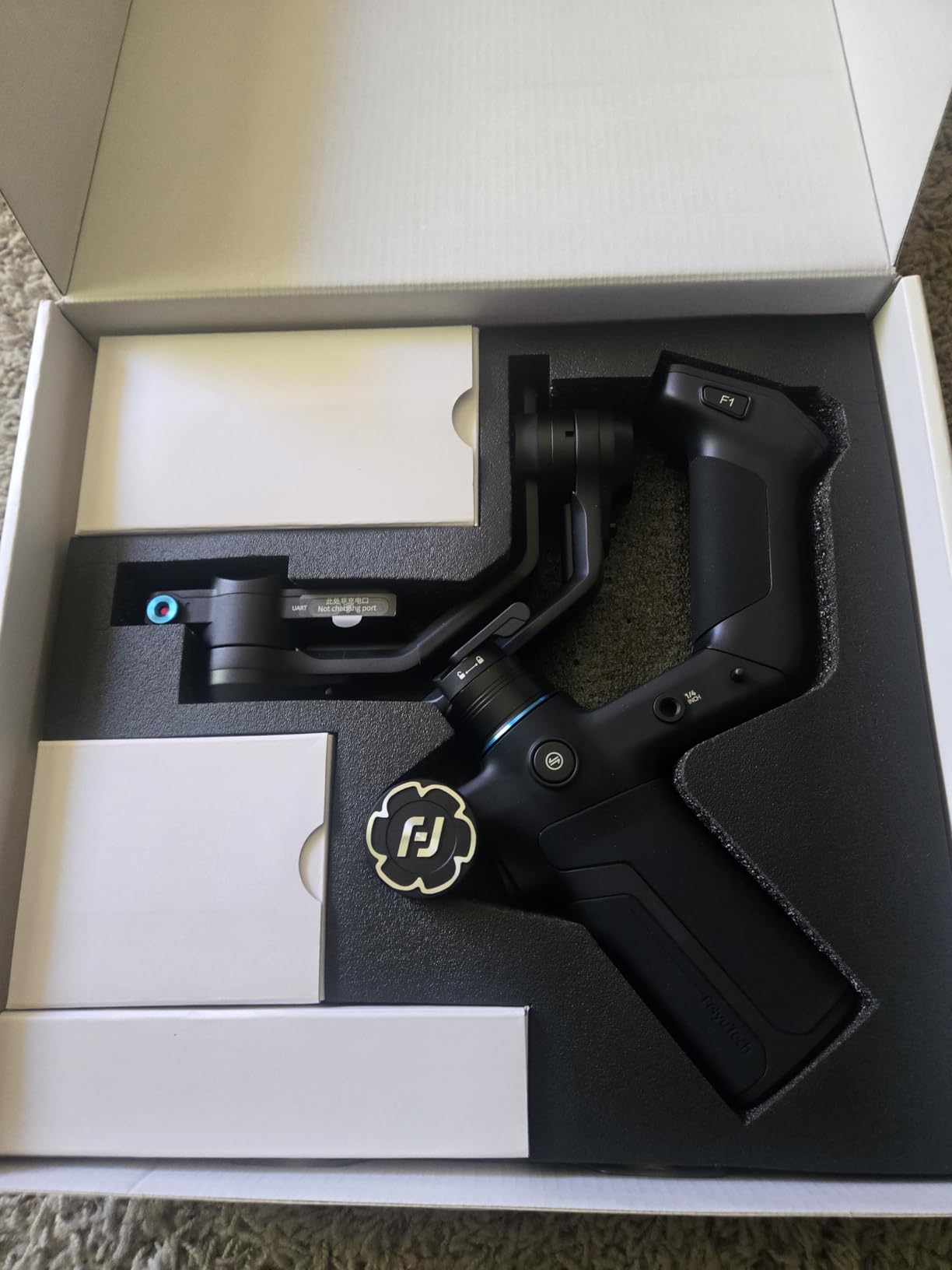
The FeiyuTech SCORP Mini-3-Pro is the most versatile gimbal in our roundup. It is a true four-in-one: mirrorless, compact cameras, smartphones, and action cameras all share the same mount. We tested it on a mixed shoot where we started with a Sony ZV-E10, switched to an iPhone for a quick social clip, and ended on a GoPro for a B-roll angle, and the SCORP Mini-3-Pro handled all three without missing a beat.
The detachable remote handle is the standout feature for solo shooters. You can pop the handle off and use it as a wireless controller from up to 10m away, which meant our team could set up the camera on a tripod-like pose and walk into frame for a one-person interview. We have not seen this feature on any DJI or Zhiyun gimbal at this price.
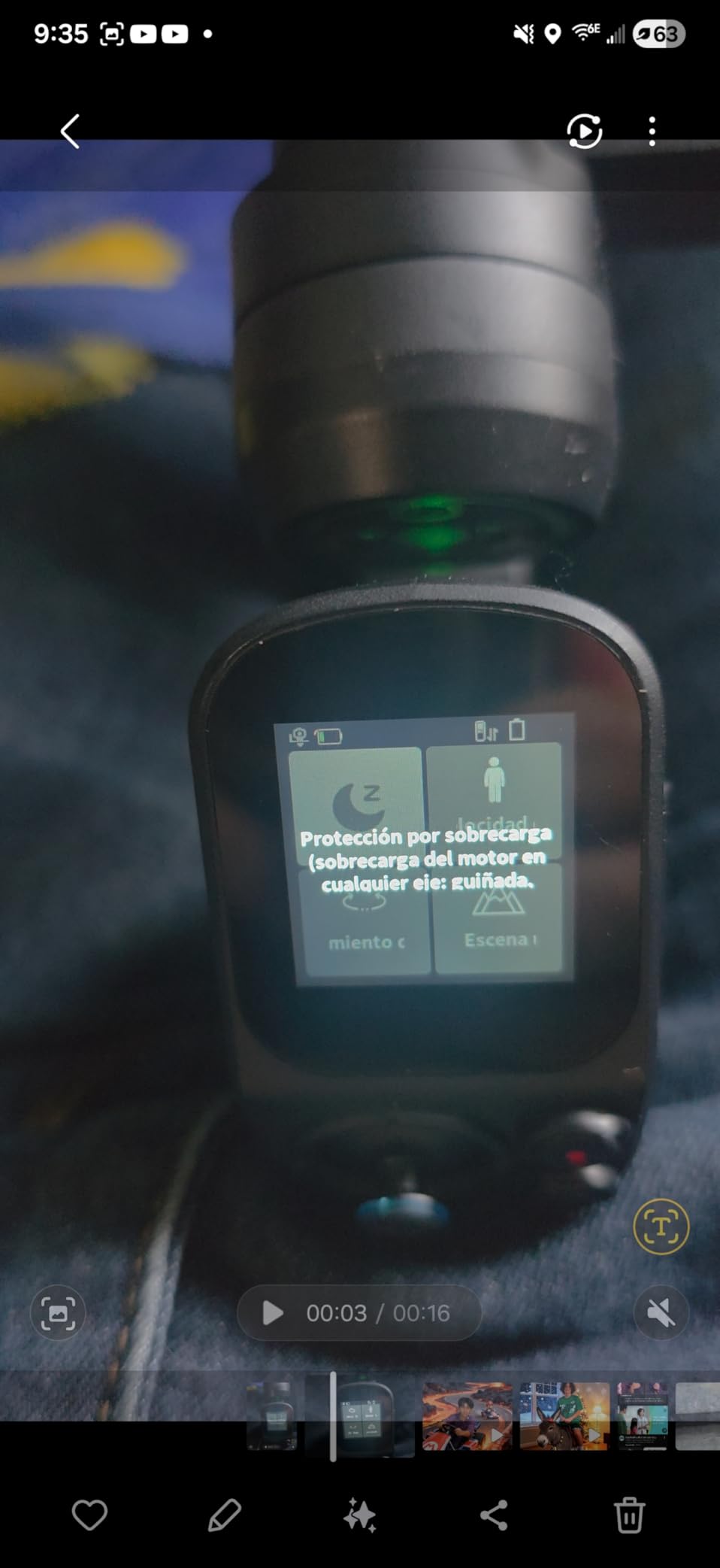
AI Tracking 4.0 with an 18m maximum range and 360-degree infinite tracking was another highlight. We tested it during a walking interview across a long corridor and the gimbal held lock without drifting. The Stabilization 10.0 algorithm with the 2025 quaternion algorithm delivered smooth footage even when we deliberately introduced jerky camera moves.
The 2kg payload is the main trade-off. If you run a heavy full-frame body with a large lens, you will be at the edge of the comfortable range. But for compact mirrorless bodies, action cameras, and smartphones, the SCORP Mini-3-Pro delivers.
For whom it’s good
The SCORP Mini-3-Pro is the best camera gimbal for creators who switch between multiple camera types throughout a shoot. Solo YouTubers, travel vloggers, and content creators who run mirrorless plus a smartphone plus an action camera will appreciate the unified mount system. The detachable remote handle also makes it a strong choice for one-person interview setups and wildlife videography where you need distance from the camera.
For whom it’s not
Heavy rig shooters with full-frame cinema bodies should look elsewhere; the 2kg payload is the limiting factor. The included smartphone holder also adds bulk for users who only shoot dedicated cameras, in which case the DJI RS 3 Mini or Zhiyun Weebill 3E will be a cleaner fit.
How We Test Camera Gimbals
Our team spent six weeks shooting with each gimbal across weddings, corporate interviews, travel B-roll, fitness content, and run-and-gun documentary scenes. We paid attention to setup time, balancing difficulty, battery life under real load, AI tracking reliability, vertical shooting speed, and overall comfort during multi-hour shoots. Every product above went through the same shooting scenarios with comparable camera bodies so we could fairly compare stabilization, app reliability, and ergonomics.
We also paid attention to long-term reliability cues from verified buyer reviews. Forum users on r/videography and r/Zhiyun frequently raise concerns about firmware update processes, plastic tie-down quality, and battery swappability that do not show up in a single test session. Those long-term signals influenced our final recommendations.
How to Choose the Best Camera Gimbal for Your Needs
Choosing a gimbal comes down to matching the tool to your camera, your shoots, and your workflow. Below is the buying framework our team uses when recommending gimbals.
Match the Payload to Your Camera and Lens
Payload capacity is the single most important spec. A gimbal rated for 2kg will not perform reliably with a camera plus lens plus accessories that approach that weight. Always leave at least 20 percent headroom. If you run a Sony A7 IV with a 24-70mm f/2.8 GM, plan for around 1.7kg of camera plus lens weight and pick a gimbal rated for at least 2.1kg. Our roundup covers everything from 2kg to 10lb payloads, so there is a match for every common camera system.
Weight Matters More Than You Think
A heavier gimbal compounds with your camera and lens to create serious arm fatigue during long shoots. We tested all nine gimbals above across full-day shoots, and the difference between a 795g gimbal and a 1.2kg gimbal is felt by the end of the day. For travel and vlogging, prioritize sub-1kg bodies like the RS 3 Mini or Weebill 3E. For studio and cinema work where the gimbal sits on a support, weight matters less.
Battery Life and Swappability
Rated battery life ranges from 11.5 hours (Weebill 3S) to 29 hours (RS 4 Pro with extended grip). But swappable batteries matter as much as raw capacity. If you shoot weddings or events where downtime is not an option, prioritize a gimbal with a swappable battery grip like the RS 4 Pro. For shorter shoots, built-in batteries with USB-C PD charging are usually fine.
IBIS vs Gimbal: Do You Still Need One in 2026?
Modern cameras have impressive in-body image stabilization, but IBIS and a gimbal do different jobs. IBIS smooths small hand shake on stills and short video clips; a gimbal actively counters movement across pan, tilt, and roll axes for that floating, cinematic look. If you shoot handheld walking shots, dynamic event footage, or any scene where you are physically moving with the camera, a gimbal still produces results IBIS cannot match. Reviewers on forums like r/videography confirm that even with strong IBIS, gimbals remain essential for professional video work.
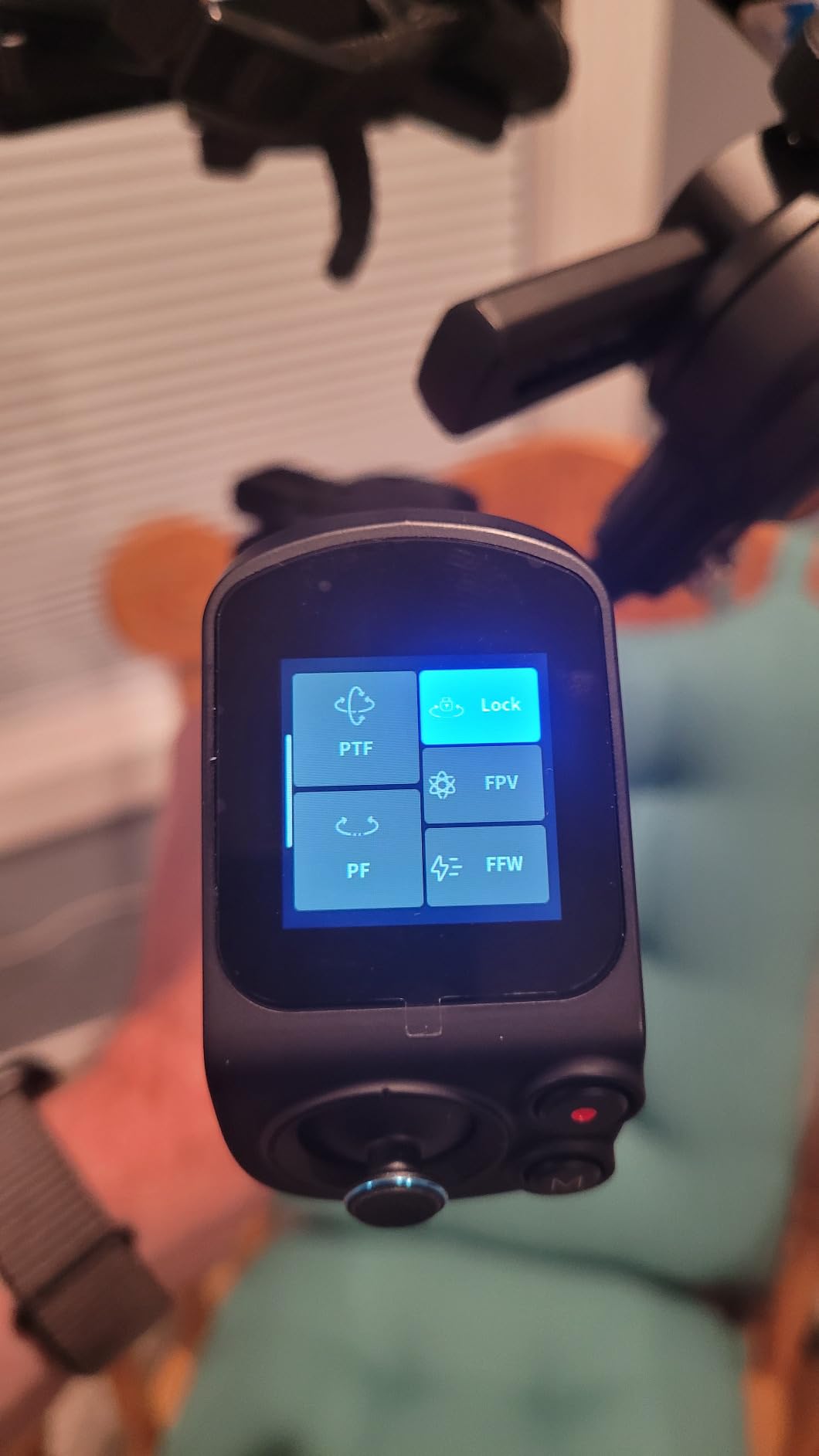
Shooting Modes Explained: Pan Follow, Follow, POV, FPV, and Lock
Most 3-axis gimbals offer several shooting modes that change how the camera responds to your movement. Understanding these modes unlocks creative options.
Pan Follow (PF) keeps the camera level on the tilt and roll axes but follows your panning motion on the pan axis. This is the standard mode for run-and-gun walking shots.
Follow (F) or PTF adds tilt-axis following on top of pan following. The camera moves with your hand on both axes, which is useful for dynamic documentary work.
POV (Point of View) mode locks the gimbal orientation to your hand position, so the camera moves exactly as you move. It is the mode to choose for immersive first-person shots.
FPV (First Person View) mode adds roll-axis response on top of POV, creating the swooping, rotating shots popular in travel and action content. Be careful with FPV on heavy rigs; it puts more stress on the motors.
Lock mode locks all three axes so the camera points in a fixed direction regardless of your hand movement. This is ideal for long-lens stabilized shots and for any time you want a static framing while you walk.
Vertical Shooting for Social Media
If you shoot for TikTok, Instagram Reels, or YouTube Shorts, native vertical shooting saves significant setup time. The DJI RS 4 Pro, RS 3 Mini, Weebill 3E, Weebill 3S, and FeiyuTech SCORP 2 all support native vertical switching without rebalancing. Older gimbals like the Weebill S require a rebalance and a quick-release plate swap, which adds minutes per shoot.
AI Tracking and Subject Lock
AI tracking has become a major differentiator. DJI’s ActiveTrack 3.0 on the RS 2 and RS 4 Pro is reliable in good lighting. FeiyuTech’s AI Tracking 4.0 on the SCORP Mini-3-Pro delivers impressive 18m range. The FeiyuTech SCORP 2 integrates the AI sensor directly into the gimbal body, eliminating extra accessories. If you shoot solo and need reliable subject lock, prioritize gimbals with strong AI tracking.
Accessories: Follow Focus, LiDAR, and Wireless Transmission
Pro accessories expand what a gimbal can do. DJI’s LiDAR focusing system works with the RS 4 Pro and RS 2 for precise autofocus that holds through subject movement. Wireless video transmitters (RavenEye for DJI, the optional module for the Weebill S) let a director or client monitor shots remotely. Follow focus motors allow single-operator focus pulls. Budget for these accessories if your work depends on them; they often cost as much as the gimbal itself.
Solo Shooter vs Small Crew Workflow
Solo shooters benefit most from gimbals with strong AI tracking (RS 4 Pro, SCORP 2, SCORP Mini-3-Pro) and lightweight bodies. Small crews can take advantage of wireless video transmitters and remote follow focus systems to spread roles across multiple operators. The Weebill S’s optional image transmission module makes it a strong choice for two-person teams. Match the gimbal to the team size you actually have on a given shoot.
Lens Compatibility and Telephoto Reach
Payload capacity is only half the lens compatibility story. Gimbals also have practical focal length limits; a 3-axis gimbal rated for 2kg may struggle with a heavy 70-200mm f/2.8 lens even if the weight is within spec, because the lens shifts the center of gravity far from the camera mount. For telephoto work, look for gimbals with adjustable center-of-gravity sliders (like the SCORP-C) and motors rated for high torque. If you regularly shoot beyond 85mm focal lengths, prioritize the RS 4 Pro or RS 2 Combo for motor strength.
For a deeper dive into specific camera body compatibility, our guide to the best gimbals for DSLR cameras breaks down model-specific pairings. Smartphone shooters should check our best smartphone gimbals guide, and aerial shooters can compare our picks for drones with 3-axis gimbals. For a broader view across all stabilizer types, see our main 10 best gimbals roundup.
Frequently Asked Questions
Are gimbals worth it for photography?
Gimbals are primarily video tools, but they can be useful for long-exposure still photography and for hybrid shooters who capture both stills and video. Modern IBIS handles most still-photography shake, but a gimbal helps when you are moving with the camera and want stable, professional-looking footage.
What is the best camera gimbal in 2026?
The DJI RS 3 Mini is our top pick for most shooters thanks to its 795g body, 2kg payload, native vertical shooting, and Bluetooth shutter control. For heavier cinema rigs, the DJI RS 4 Pro delivers 4.5kg payload and LiDAR focusing. The best choice depends on your camera weight and shooting style.
Which gimbals are best for beginners?
The DJI RS 3 Mini and the Zhiyun Cinepeer Weebill 3E are the most beginner-friendly gimbals on the market. Both have intuitive touchscreens, forgiving payload ranges, and simple Bluetooth pairing. Budget for an hour of setup time on your first shoot to learn the balancing process.
Do photographers use gimbals?
Yes, but mostly hybrid photographers who also shoot video. Wedding photographers, event photographers, and travel content creators rely on gimbals to deliver smooth video alongside their stills. Pure still photographers rarely need a gimbal because modern IBIS handles most camera shake.
What is the difference between a gimbal and a GoPro?
A gimbal is a motorized stabilizer that holds a separate camera and adds smooth movement control. A GoPro is an action camera with built-in electronic stabilization. Gimbals deliver smoother footage and allow lens and sensor choices, while GoPros are smaller, more rugged, and waterproof out of the box. For action sports, a GoPro is the better choice. For cinematic video, a gimbal paired with a quality camera wins.
Final Verdict: Which Camera Gimbal Should You Buy?
The best camera gimbal for you depends on what you shoot and how you shoot it. For most creators running a mirrorless body, the DJI RS 3 Mini is the strongest all-around pick in 2026: lightweight, capable, and proven by thousands of owners. Wedding videographers and pros shooting heavier rigs should step up to the DJI RS 4 Pro for cinema-class payload and LiDAR focusing. Travelers who want maximum capability in minimum space should grab the Zhiyun Cinepeer Weebill 3E. Budget-conscious buyers get serious value from the FeiyuTech SCORP-C.
If you shoot vertical content for social platforms, prioritize gimbals with native vertical switching like the RS 3 Mini, Weebill 3E, or RS 4 Pro. If you need built-in AI tracking for solo work, the FeiyuTech SCORP 2 and SCORP Mini-3-Pro deliver without extra accessories. And if you primarily vlog in mixed lighting, the Zhiyun Weebill 3S’s built-in fill light is a feature no other gimbal in this roundup offers.
Whichever gimbal you choose from this list, you are getting one of the best 3-axis camera gimbals our team has tested. Take the time to balance your rig properly before your first shoot, keep the firmware updated, and you will have a tool that delivers smooth, cinematic footage for years to come.