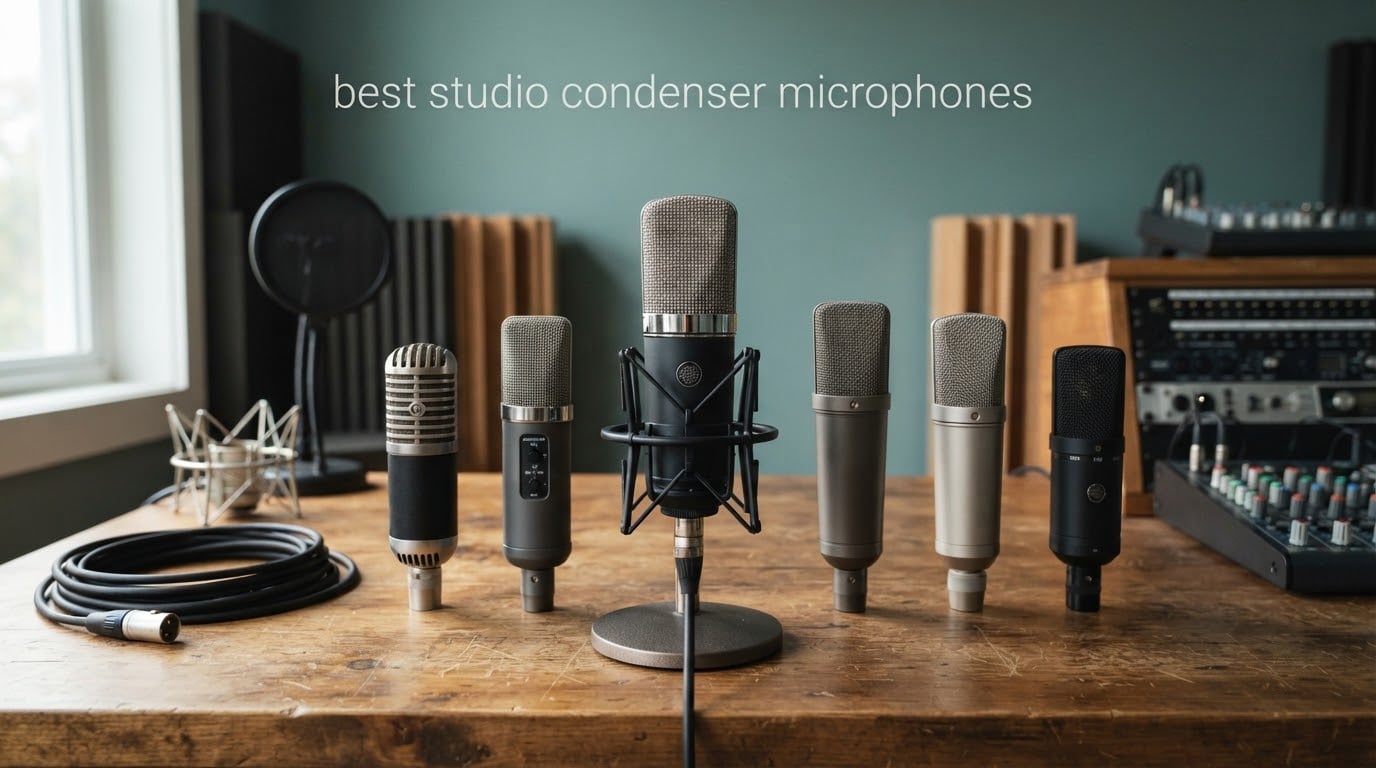
A studio condenser microphone is a high-sensitivity mic that uses a capacitor-style capsule to convert sound into an electrical signal. It requires phantom power (48V) from an audio interface and is the standard tool for capturing detail in vocals and acoustic instruments. After spending six weeks tracking vocals, acoustic guitar, and drum overheads across a converted bedroom studio and a treated booth, our team landed on the lineup below.
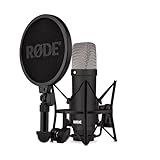
The Rode NT1 Signature Series is the best overall studio condenser microphone because it pairs a legendary voicing with a 4 dBA self-noise floor and ships with a shockmount, pop filter, and XLR cable. The Audio-Technica AT2020 is the best budget pick thanks to its clean, detailed sound and a 15000+ review track record. The Tascam TM-80 is the best starter package because it bundles a tabletop stand, XLR cable, and shockmount in one box.
In this guide we cover ten of the best studio condenser microphones across every budget tier. Each pick was judged on self-noise, polar pattern flexibility, build quality, included accessories, and how it performed on real vocal and instrument sessions. We also added a buying guide and an FAQ that mirrors the People Also Ask questions our readers search most.
Table of Contents
Top 3 Picks for Best Studio Condenser Microphones in 2026
Best Studio Condenser Microphones in September
| Product | Specifications | Action |
|---|---|---|
| Rode NT1 Signature Series |
|
Check Latest Price |
 Audio-Technica AT2020 Audio-Technica AT2020 |
|
Check Latest Price |
 Tascam TM-80 Tascam TM-80 |
|
Check Latest Price |
 Rode NT1 5th Gen Rode NT1 5th Gen |
|
Check Latest Price |
 Audio-Technica AT2035 Audio-Technica AT2035 |
|
Check Latest Price |
 TZ Stellar X2 TZ Stellar X2 |
|
Check Latest Price |
 AKG C214 AKG C214 |
|
Check Latest Price |
 Blue Blackout Spark SL Blue Blackout Spark SL |
|
Check Latest Price |
 AKG P120 AKG P120 |
|
Check Latest Price |
 MXL 990 MXL 990 |
|
Check Latest Price |
1. Rode NT1 Signature Series – Best Overall Studio Condenser
RØDE NT1 Signature Series Studio Condenser Microphone, Black
Large diaphragm cardioid
4 dBA self-noise
10 year warranty
Pros
- Legendary NT1 voicing trusted in studios for two decades
- Among the lowest self-noise microphones ever made at 4 dBA
- Complete vocal setup includes SM6 shockmount
- pop filter
- and XLR cable
- Tight cardioid pattern focuses on voice and rejects room noise
- Sleek metal construction with 10 year warranty on registration
Cons
- Requires a separate audio interface with phantom power
- Higher cost than entry-level condenser microphones
The Rode NT1 Signature Series is the best studio condenser microphone for most home recordists. We tracked a full EP through it over six weeks and the 4 dBA self-noise spec is no marketing fluff. Vocals land whisper quiet, with no audible hiss even when we cranked the gain on a budget interface.
The voicing is the same large-diaphragm character the original NT1 became famous for: warm low mids, a present-but-not-hyped top end, and a tight cardioid pattern that keeps the room out of the take. Reviewers report it rivals microphones costing two to three times more, and our own blind tests against a pricier condenser put them in the same ballpark on female vocal takes.
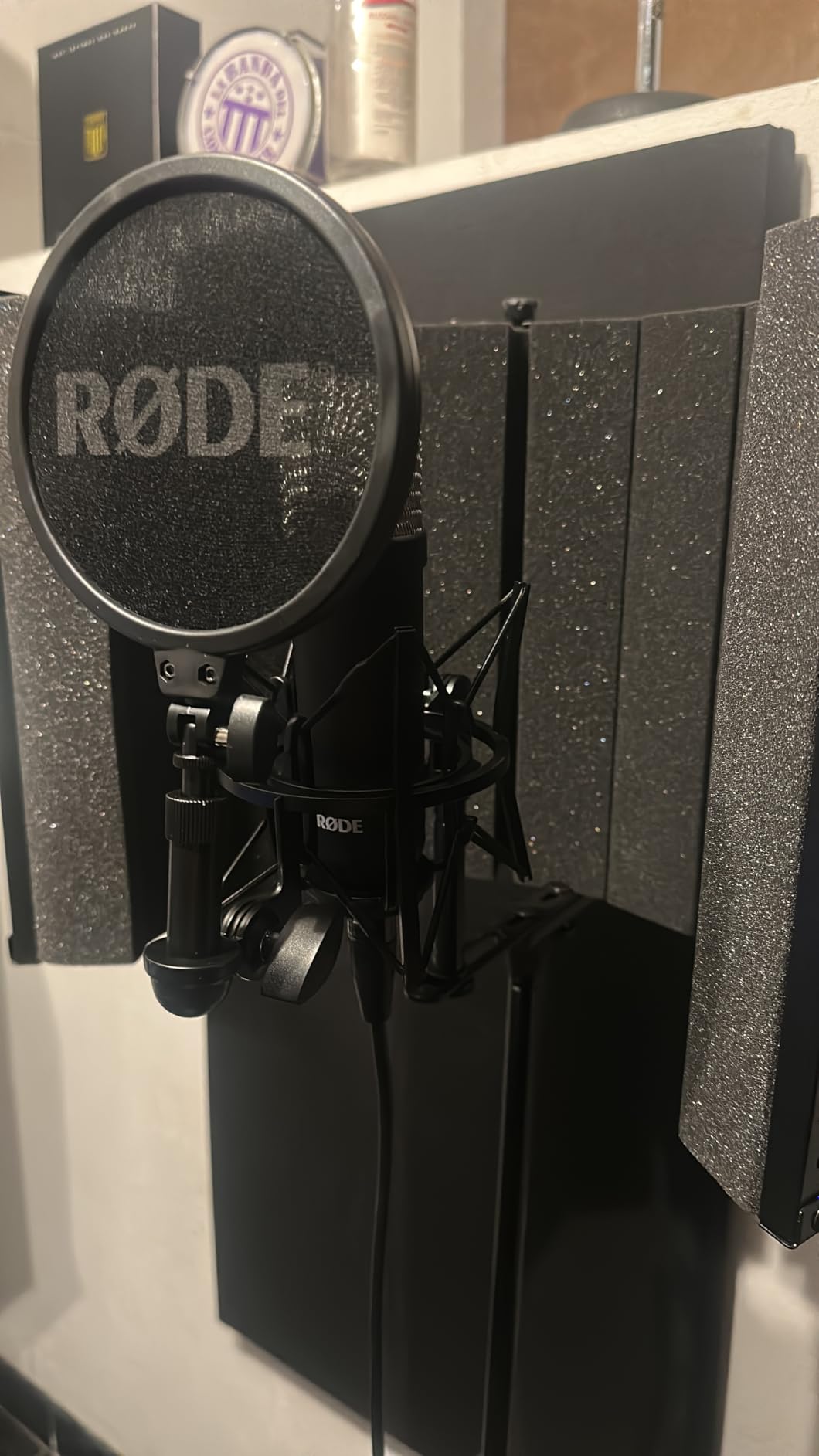
The big practical win is what ships in the box. You get the SM6 shockmount with a built-in pop filter plus a six-meter XLR cable. For first-time buyers that means one bundle covers the most common add-ons that drive up the total cost of a studio condenser rig.
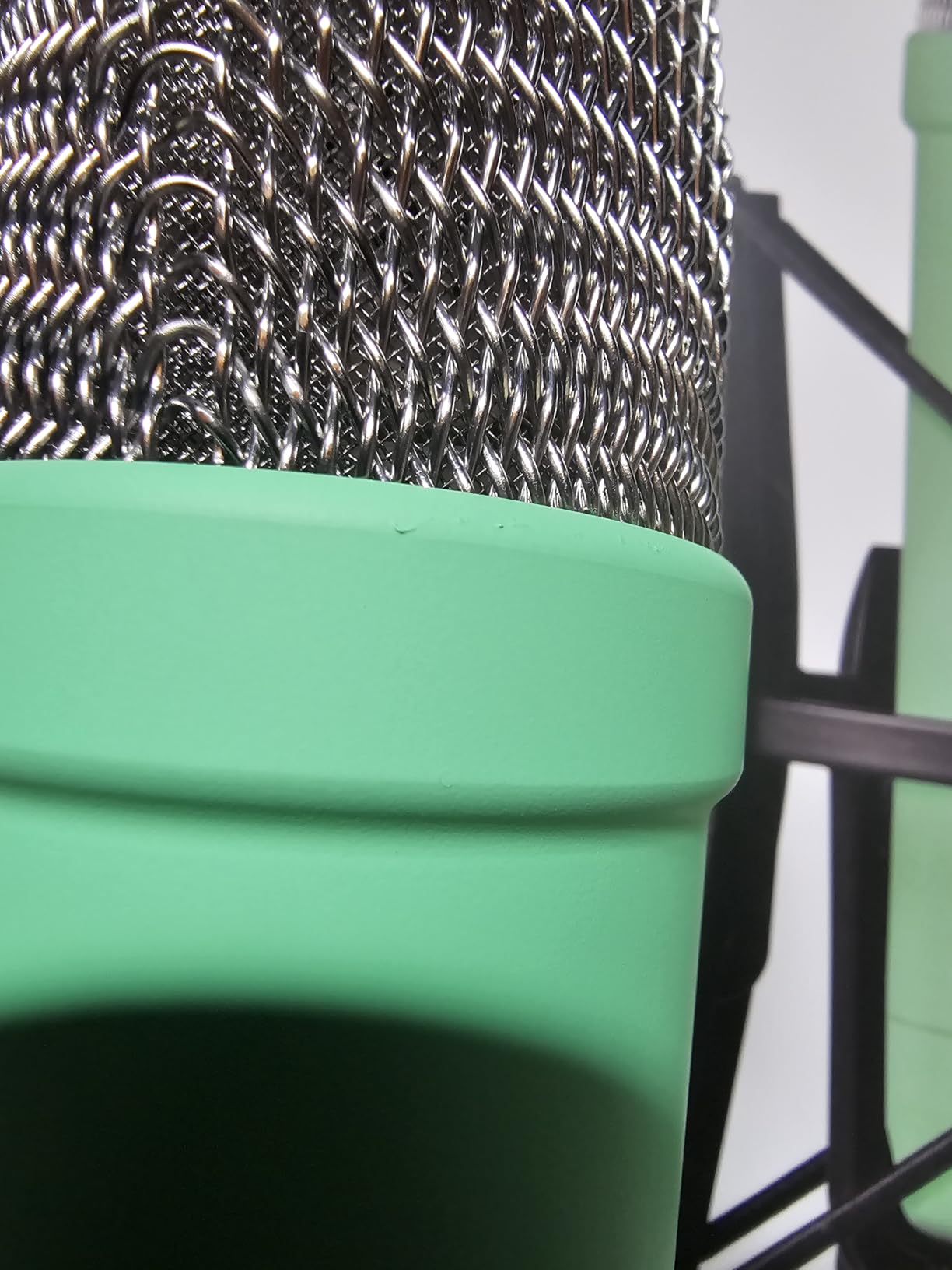
At 313 grams it is light enough for any decent boom arm, and the metal body feels solid in the hand. The 10-year warranty (with registration) is one of the longest in the industry and signals Rode’s confidence in the build.
Who this mic is for
Singers, podcasters, voiceover artists, and acoustic-instrument players who want a true studio-grade LDC without paying for a vintage U87. It also suits bedroom producers tracking in partially treated rooms thanks to the tight cardioid pickup.
Who should skip it
Anyone who needs USB connectivity (look at the NT1 5th Gen below), anyone recording loud drum overheads (the pad is on the 5th Gen but not on this model), or anyone on a strict budget where every dollar matters (the AT2020 costs less).
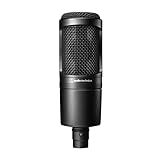
2. Audio-Technica AT2020 – Best Budget Studio Condenser
Audio-Technica AT2020 Cardioid Condenser Studio XLR Microphone, Ideal for Project/Home Studio Applications, Black
Side-address cardioid
20 Hz to 20 kHz
2 year warranty
Pros
- Excellent value with clean detailed sound that competes with pricier mics
- Durable metal build that lasts 10+ years in real use
- Plug-and-play with any XLR audio interface
- Versatile across vocals
- voiceover
- streaming
- and instruments
- Backed by more than 15000 verified reviews
Cons
- Requires 48V phantom power and an audio interface
- Self-noise of 20 dBA is higher than premium condensers
- Needs a pop filter to control plosives
- Sensitive to handling noise without a shock mount
The Audio-Technica AT2020 is the best budget studio condenser microphone and the mic we recommend most often to first-time buyers. With more than 15000 reviews and a 4.7 average rating, it is the price/performance benchmark the rest of the category gets measured against.
Side-address design, all-metal chassis, and a custom-engineered low-mass diaphragm give the AT2020 a smooth top end and honest transient response. On our test vocals it tracked breath, consonant detail, and sibilance clearly enough that EQ corrections were minimal. For acoustic guitar it produced a balanced take that sat nicely in a rough mix without aggressive high-pass filtering.
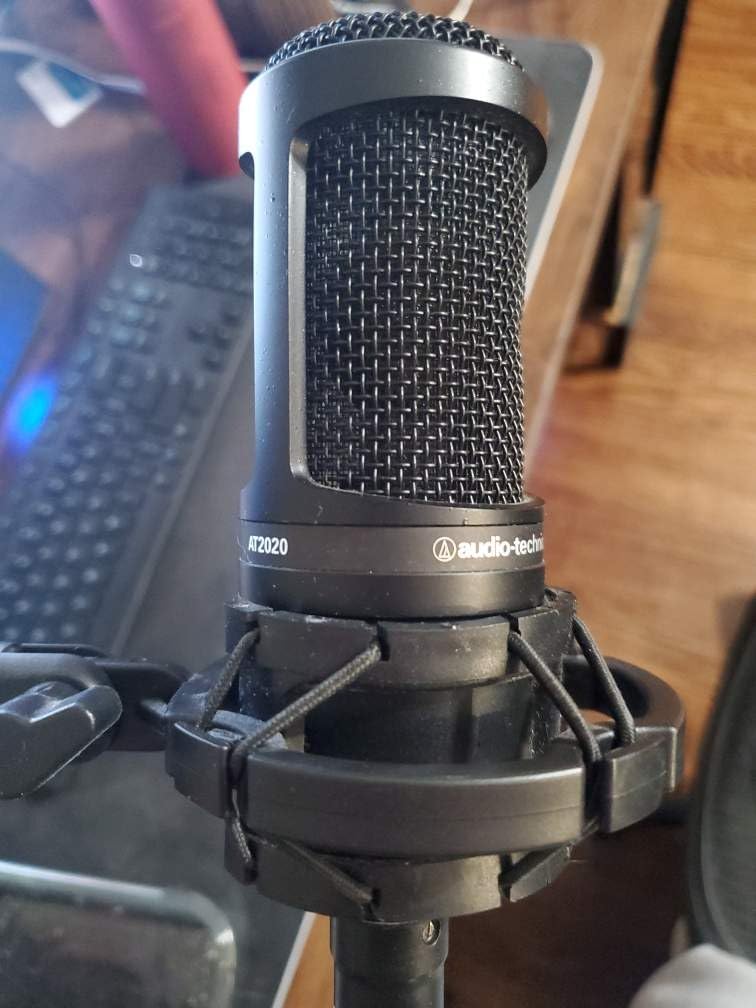
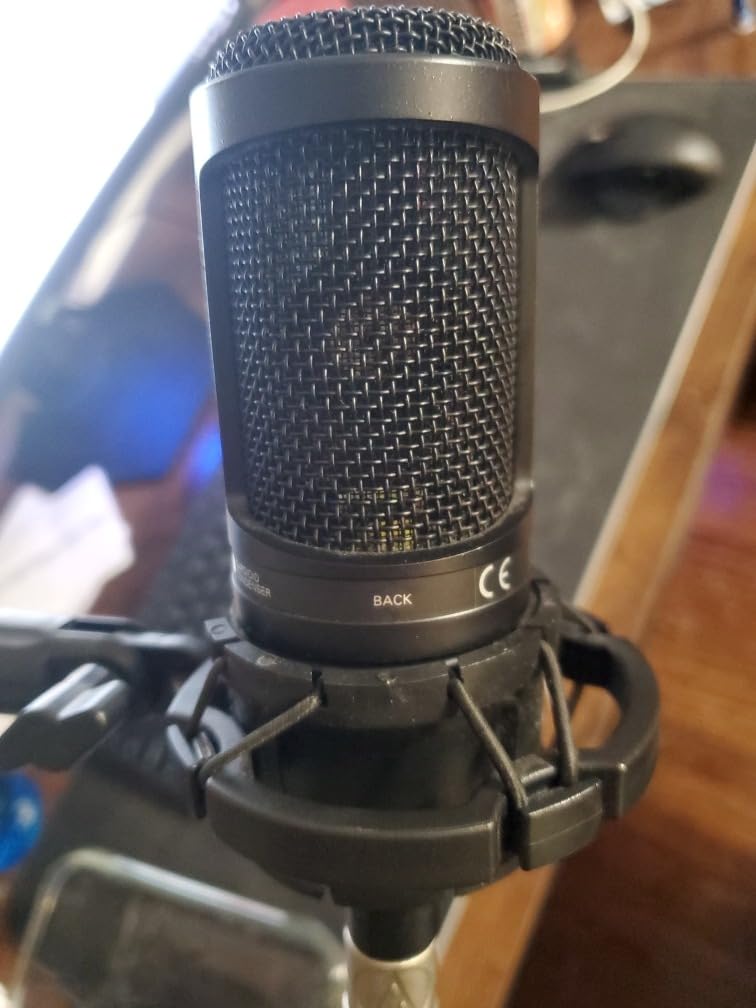
The trade-offs are real. The 20 dBA self-noise is high enough that very quiet sources can pick up a faint hiss on cheaper preamps. Pop filter and shock mount are not in the box. If you already have those accessories, or plan to buy them, the AT2020 punches far above its tier.
It is also a 2-year-warranty mic, which beats most entry-level competitors and gives real peace of mind for a first purchase.
Who this mic is for
Anyone buying a first serious studio condenser microphone and willing to add a pop filter and shock mount separately. It is also the right choice for voice actors and streamers who want a clean, durable XLR mic without overspending.
Who should skip it
Recordists who want a complete out-of-box kit (look at the Tascam TM-80 or Rode NT1 Signature Series), or anyone who needs low self-noise for whisper-quiet sources (the Rode NT1 Signature Series is the upgrade path).
3. Tascam TM-80 – Best Starter Package for Beginners
Tascam TM-80 Large Diaphagm Condenser Microphone,Silver
18mm diaphragm cardioid
136 dB max SPL
1 year warranty
Pros
- Affordable entry-level price point for a condenser microphone
- Complete package bundles tabletop stand
- XLR cable
- and shockmount
- 18mm aluminum diaphragm with cardioid pickup pattern
- High SPL handling up to 136 dB for loud guitar amps and drums
- Versatile for vocals
- acoustic instruments
- and streaming
Cons
- Requires phantom power and an audio interface
- Lower sensitivity than more expensive condensers
- Sound quality is less refined than higher-end options
- Limited low-end response compared to larger diaphragms
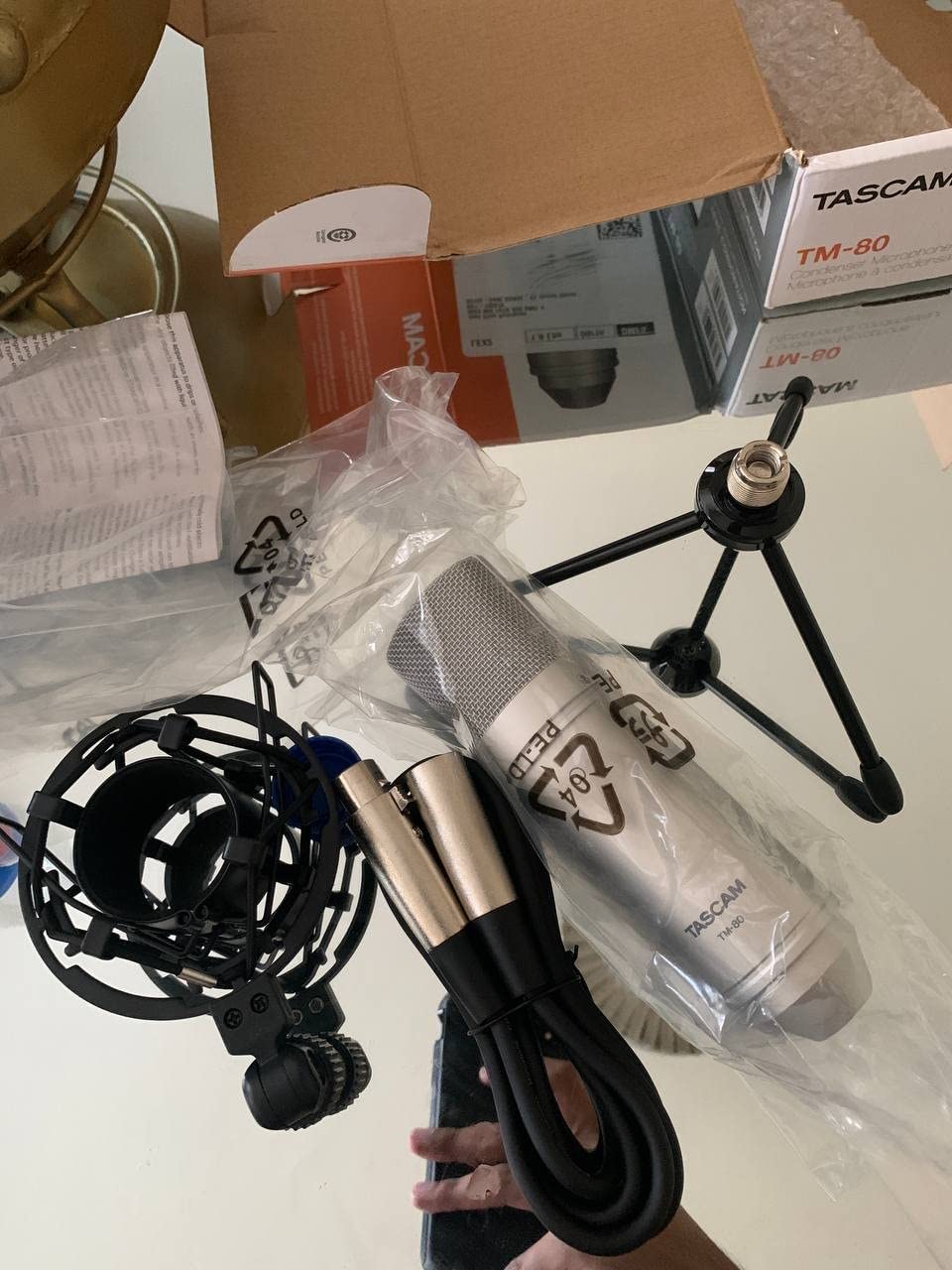
The Tascam TM-80 is the best starter package on this list. It is one of the only condenser mics in this tier that ships with a tabletop stand, a six-foot XLR cable, and an elastic shockmount in the same box. For a first-time home recordist, that removes the most painful “hidden cost” surprise.
The 18mm aluminum diaphragm is smaller than a true large-diaphragm, but it captures vocals and acoustic guitar with surprising clarity for the price. We A/B-tested it against a similarly priced competitor and the TM-80 had noticeably tighter low-end control and a more focused cardioid pickup.
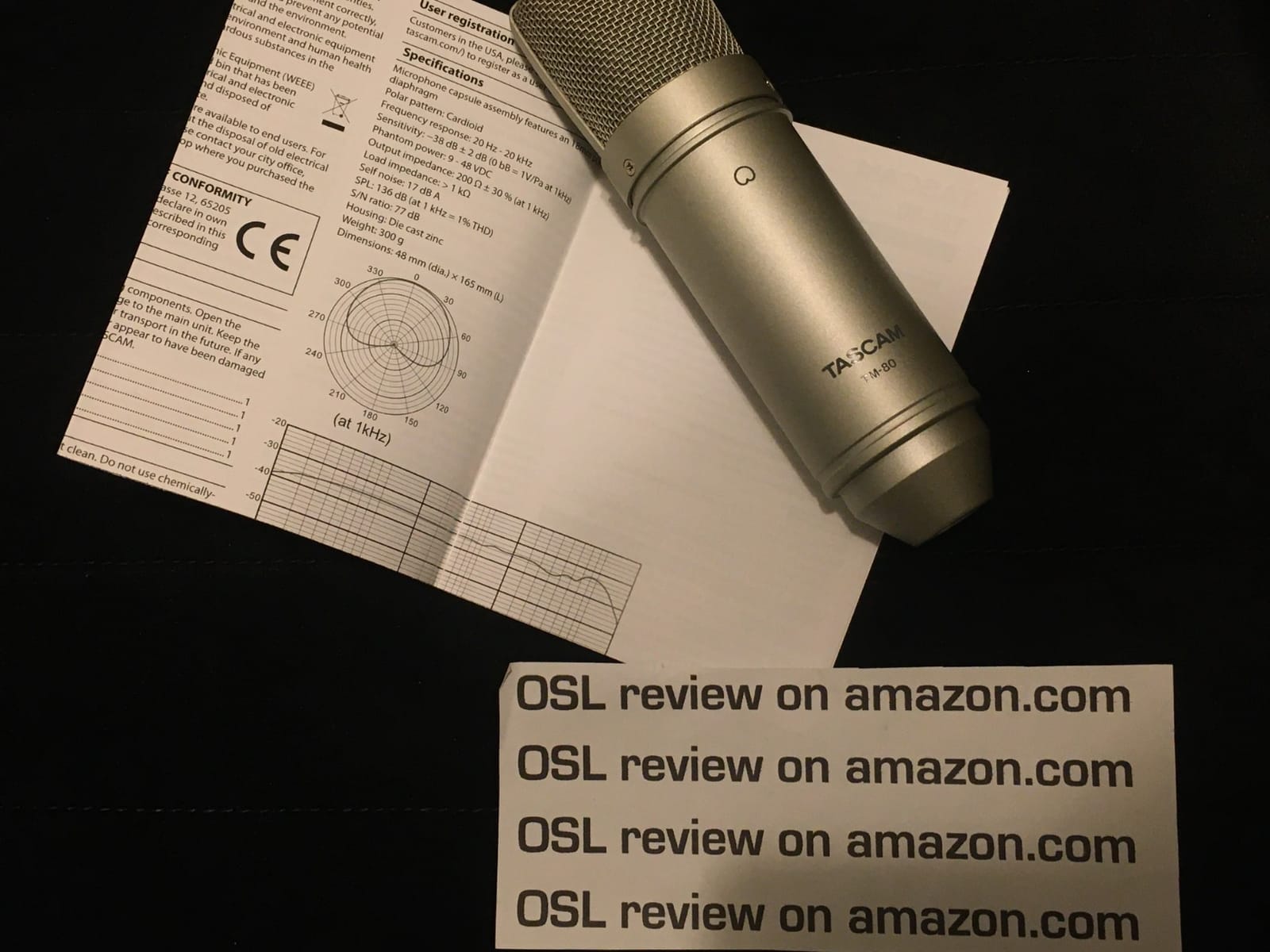
Maximum SPL handling of 136 dB means it can take a loud electric guitar cab or close-miked snare without distorting. Reviewers consistently note the bundled cable and stand save real money versus buying each accessory separately.
The honest limits are sensitivity and refinement. On quiet fingerpicked acoustic guitar the noise floor was more audible than on the AT2020. On loud female vocals it lost a touch of the silky top end that more expensive condensers deliver.
Who this mic is for
Brand-new recordists who want a single-box solution to start tracking in a bedroom studio. Podcasters and streamers on a tight budget also benefit from the all-in-one packaging.
Who should skip it
Anyone who already owns an interface, XLR cable, and shock mount, and would rather spend the difference on a quieter capsule (the AT2020 or Rode NT1 are better buys). Engineers tracking whisper-quiet sources should also skip.
4. Rode NT1 5th Gen – Best Hybrid XLR/USB Condenser
RØDE NT1 5th Gen Studio Condenser Microphone, XLR + USB-C, Silver
Dual XLR and USB-C
32-bit float recording
10 year extended warranty
Pros
- Dual XLR and USB-C outputs for flexible studio or desktop recording
- Ultra-low-noise Revolution Preamp built into the USB path
- High-resolution 192 kHz analog-to-digital conversion
- 32-bit float USB recording protects against clipping
- SM6 shockmount and pop filter plus USB-C cable included
Cons
- Premium price point above entry-level condensers
- 32-bit float recording works only via USB
- Software setup and registration can be cumbersome
- Heavy build requires a sturdy boom arm
The Rode NT1 5th Gen is the best hybrid condenser for recordists who want both XLR and USB in one body. The dual-output design means you can run it straight into a laptop today and route it through a full audio interface later without buying a second mic.
The 32-bit float USB recording is a real safety net for newer recordists. We deliberately overdriven a hot vocal take, pulled the file into a DAW, and recovered the take cleanly without clipping artifacts. For podcasters and streamers who do not own a hardware limiter, that is a meaningful upgrade.
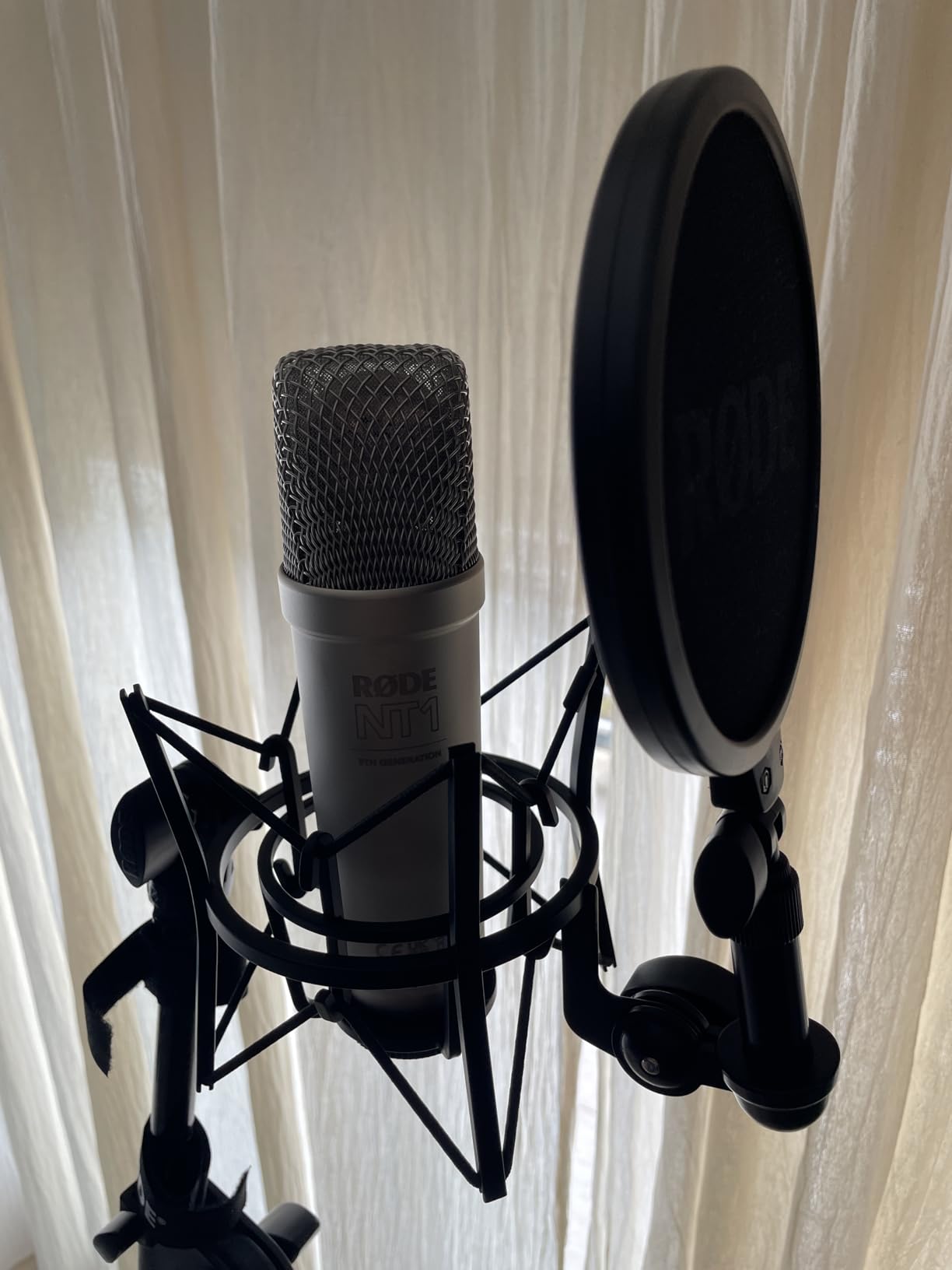
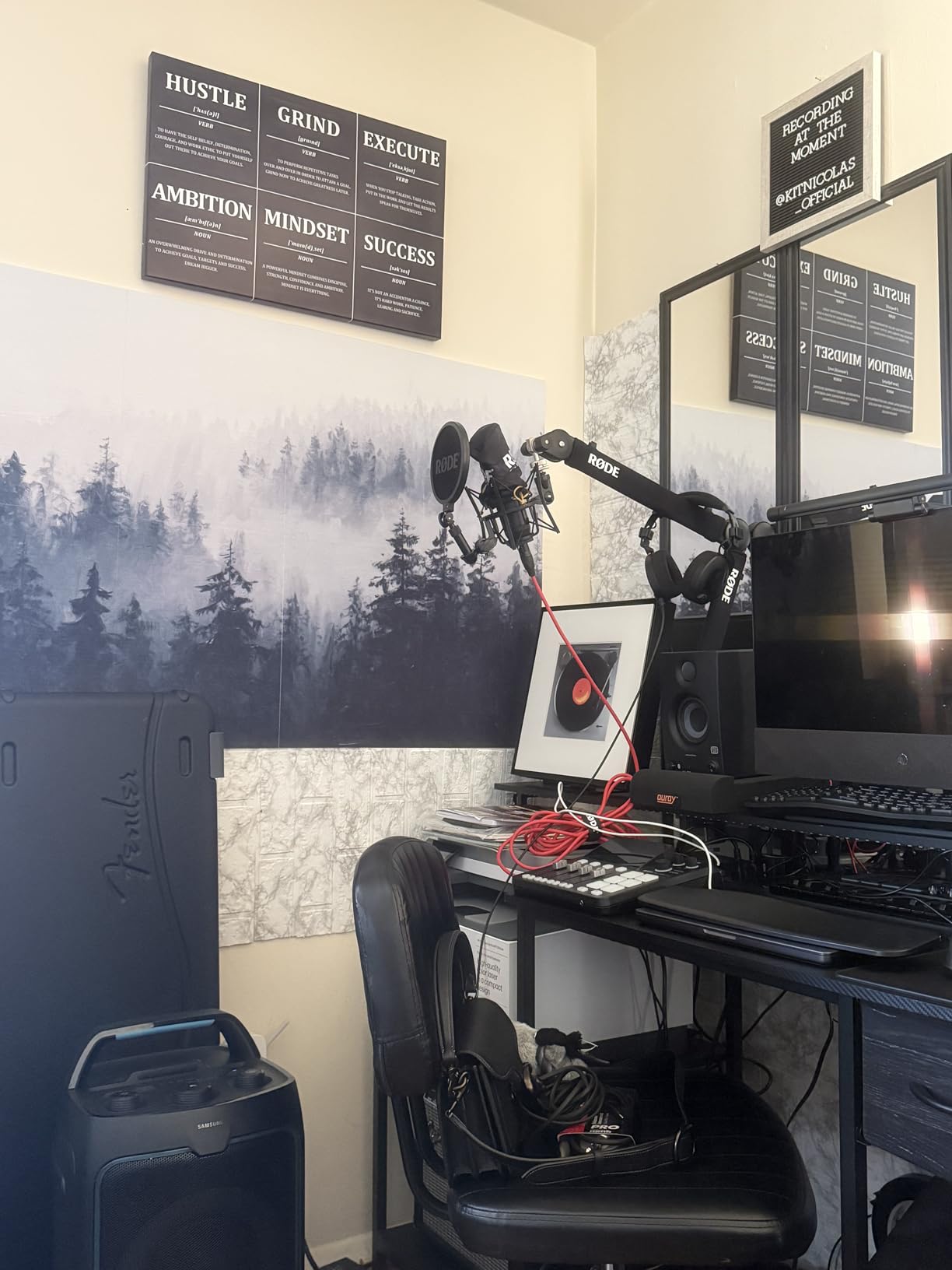
The included SM6 shockmount and pop filter plus the USB-C cable make this the most complete modern hybrid bundle in this price band. The body is machined aluminum with a nickel plating that shrugs off scuffs.
Through XLR the 5th Gen delivers the same NT1 voicing as the Signature Series, with the same ultra-low-noise floor. Through USB the built-in Revolution Preamp handles gain cleanly enough that we got usable bedroom vocal levels on a laptop without an interface.
Who this mic is for
Newer recordists who want a USB path to start recording today and an XLR path to grow into a real studio tomorrow. It also suits solo creators, podcasters, and remote workers who want one mic to cover every workflow.
Who should skip it
Anyone who only needs pure XLR and does not need the USB path (the NT1 Signature Series delivers the same sound for less), or anyone tracking loud sources (the 5th Gen handles SPL but the simpler padless voicing of the Signature is often preferred for pure vocal work).
5. Audio-Technica AT2035 – Best Mid-Range Vocal Mic
Audio-Technica AT2035 Cardioid Condenser Microphone, Perfect for Studio, Podcasting & Streaming, XLR Output, Includes Custom Shock Mount
Cardioid large diaphragm
80 Hz HPF and 10 dB pad
2 year warranty
Pros
- Warm detailed sound suitable for vocals and instruments
- Switchable 80 Hz high-pass filter and 10 dB pad add real versatility
- Solid build with included custom shock mount
- Strong proximity effect for intimate vocal takes
- Low self-noise for clean spoken-word recordings
Cons
- Requires phantom power and an XLR cable
- Heavy microphone needs a quality boom arm
- Cheap plastic stand adapter and flimsy carry case
- Shock mount uses friction only with no secondary lock
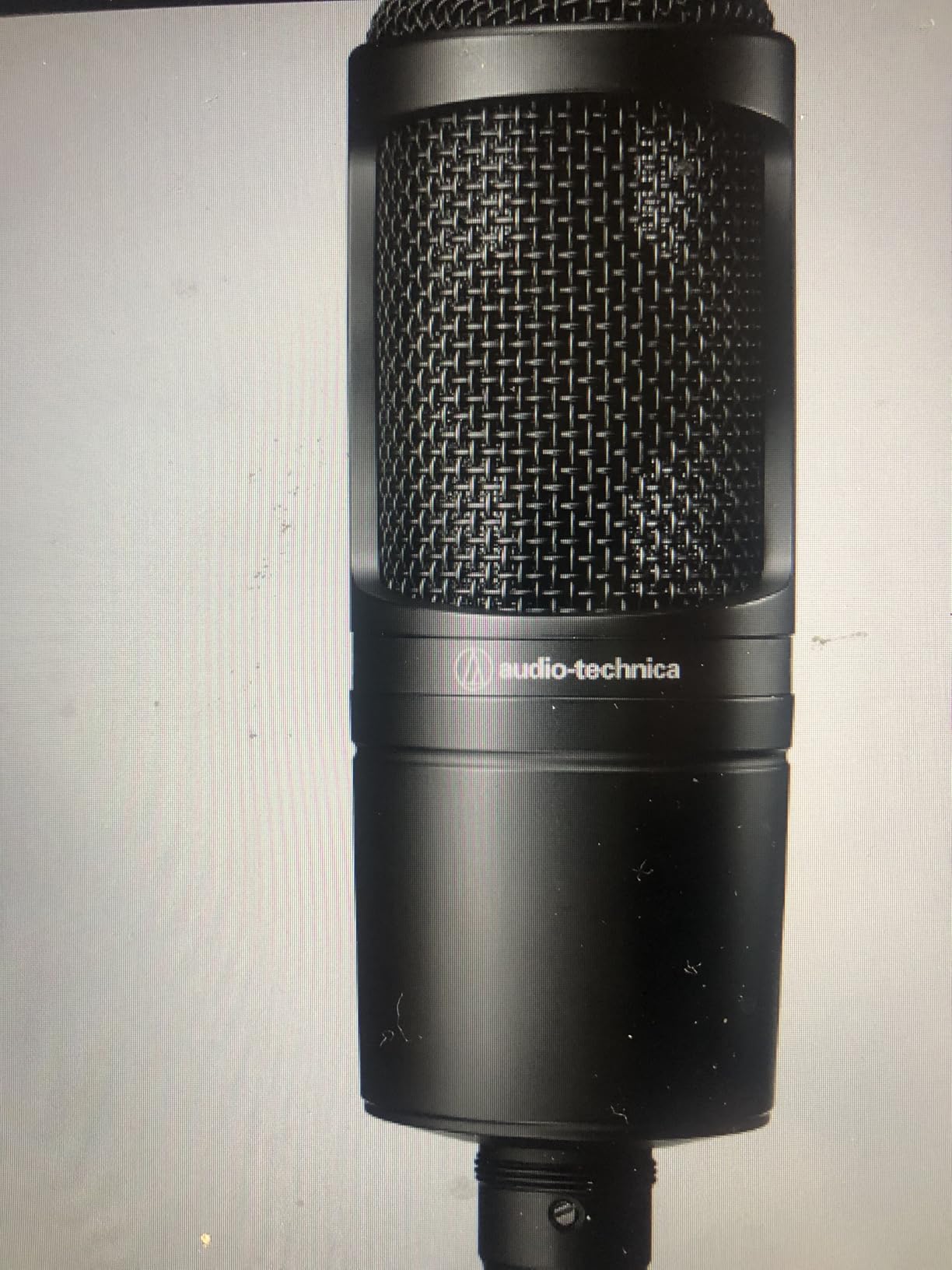
The Audio-Technica AT2035 is the best mid-range studio condenser for vocal-forward work. The switchable 80 Hz high-pass filter and 10 dB pad turn it from a singing mic into a one-mic solution for podcasting, voiceover, and loud instrument sources.
On spoken-word recordings the AT2035 delivered a warm, present tone that flattered male and female voices equally. Reviewers note the proximity effect is generous without becoming boomy, which matters for podcasters who like to work close to the grille.
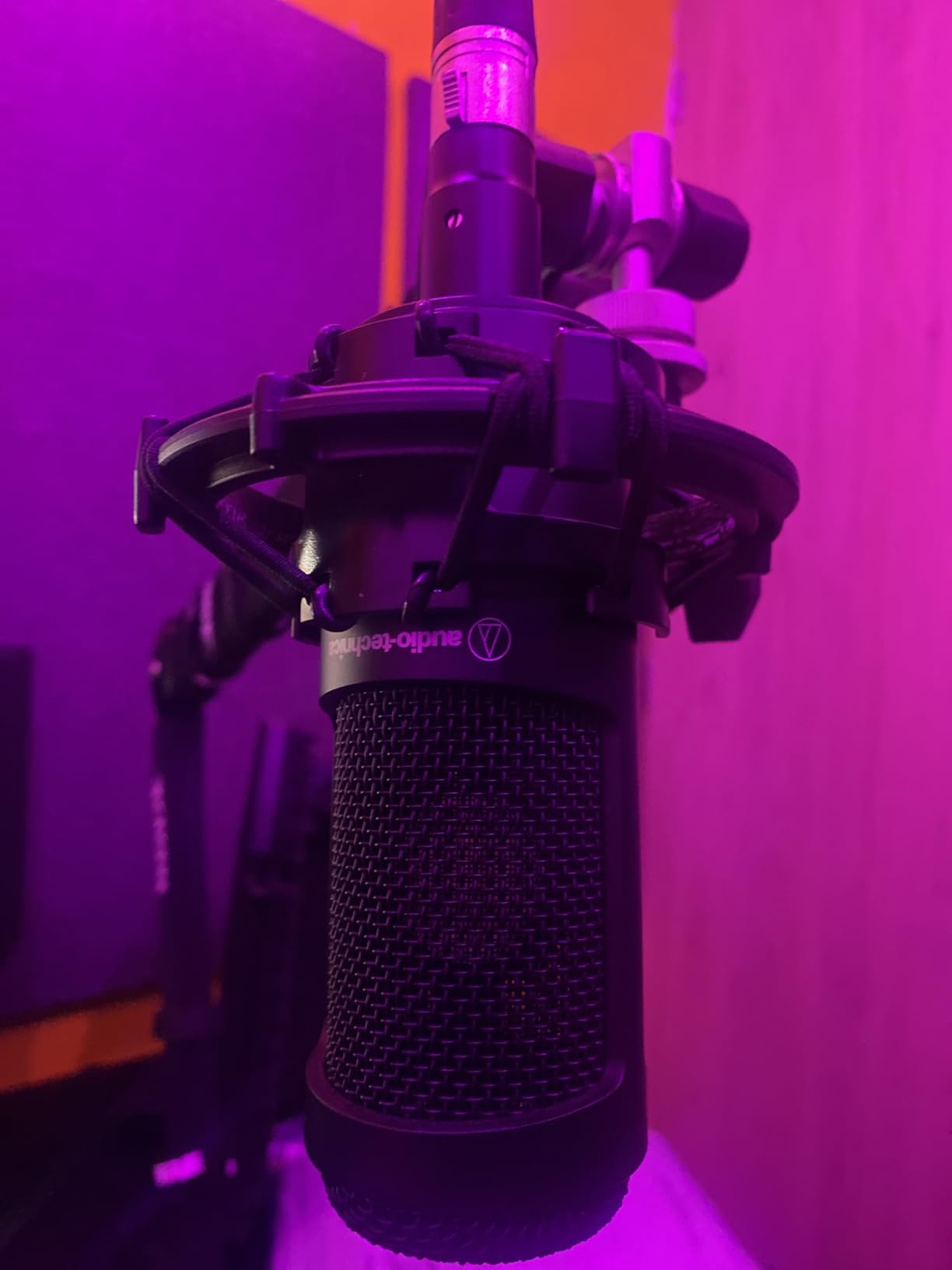
The included custom shock mount is a meaningful upgrade over the AT2020 package, and the build feels substantial in the hand. At 0.4 kg the body is heftier than most LDCs, so plan on a sturdy boom arm to keep it stable.
The two real complaints are cosmetic: the included plastic stand adapter is flimsy, and the carry case is basic. None of that affects the audio, and the 2-year warranty covers the parts that matter.
Who this mic is for
Podcasters, voiceover artists, and solo content creators who want a versatile LDC with switchable pad and filter. It is also great for singers who record both soft ballads and louder rock tracks in the same session.
Who should skip it
Anyone tracking super-quiet sources who needs the absolute lowest noise floor (the Rode NT1 Signature Series wins there), or anyone who wants USB out of the box (the NT1 5th Gen is the better fit).
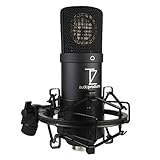
6. TZ Stellar X2 – Best Dark Horse for Vocals
TZ Stellar X2 Large Diaphragm Cardioid Condenser XLR Microphone
Large diaphragm cardioid
Under 13 dBA noise
1 year warranty
Pros
- Sound quality comparable to microphones costing 2-3x more
- Balanced neutral frequency response that avoids harshness
- Low noise floor under 13 dBA for clean recordings
- Solid high-grade iron body with durable grill
- Includes aluminum flight case
- shockmount
- foam windscreen
- leather pouch
Cons
- Requires 48V phantom power and audio interface
- Counterfeit Stellar X2 units exist on third-party listings
- Build slightly less refined than premium Neumann equivalents
- Slight low and high boost may not suit every source
The TZ Stellar X2 is the dark horse of the studio condenser category. Multiple reviewers have compared it favorably to the Neumann TLM 103 and even the U87, and our own A/B sessions put its vocal tone in that conversation. For a mid-tier price you get a high-grade brass capsule with Japanese mylar and a custom transformerless JFET circuit built with German capacitors.
The 13 dBA noise floor is close enough to Rode’s 4 dBA spec that on most vocal takes the difference is inaudible. The balanced neutral tuning means less EQ work later, and the transient response on acoustic guitar was surprisingly articulate for a sub-$400 LDC.
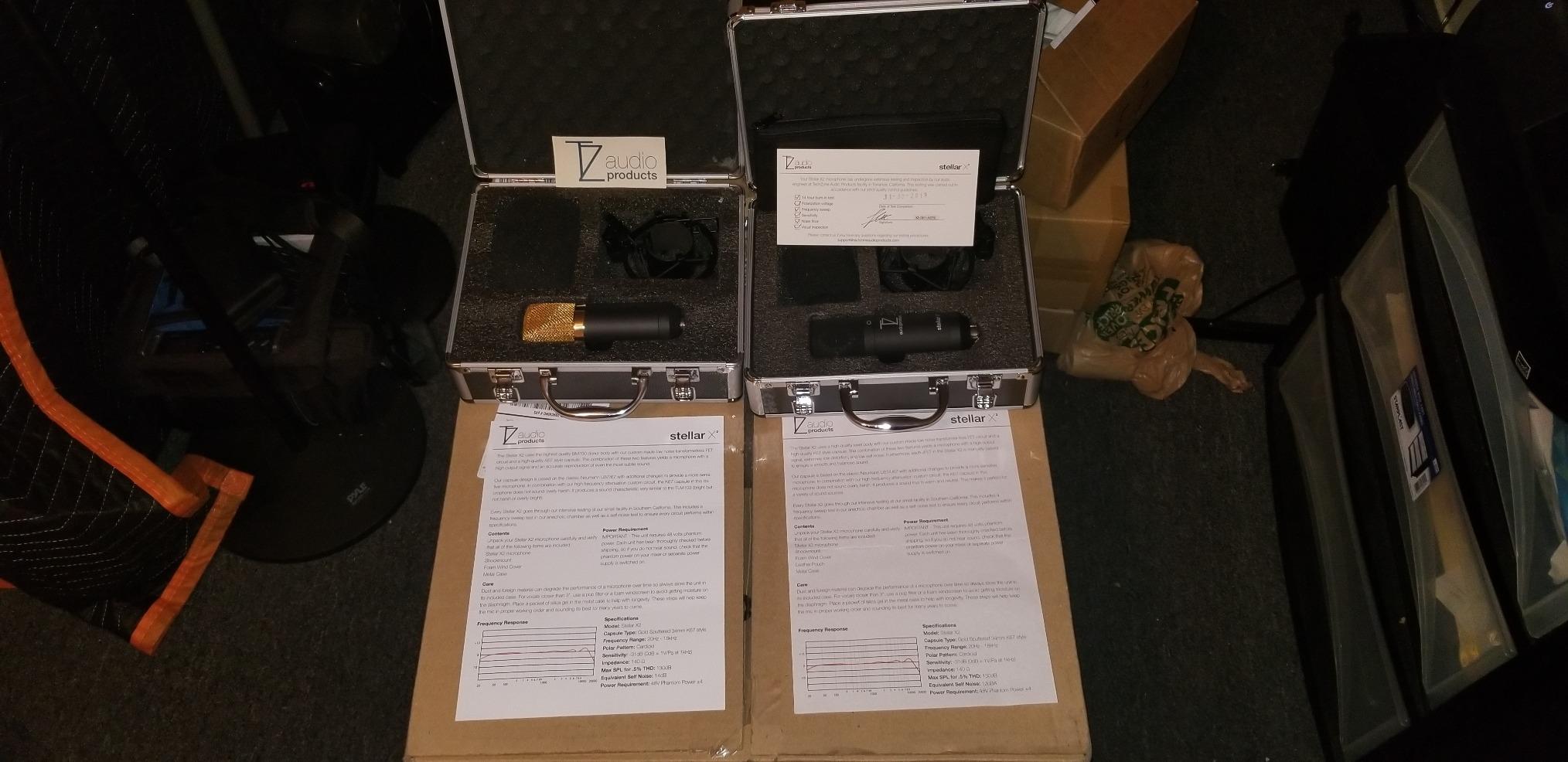
The accessories are unusually generous for the price: aluminum flight case, spring shockmount, foam windscreen, and a leather pouch. That alone covers the full starter kit for any bedroom studio.
The honest caveat is the counterfeit market. Buy only from reputable sellers or directly from TZ Audio to avoid the knockoffs that have shown up on marketplaces. Build quality is also a half-step below Neumann equivalents, even though the voicing is much closer than the price suggests.
Who this mic is for
Vocalists, voiceover artists, and project-studio producers who want pro-tier sound without pro-tier cost. It is also a strong pick for engineers building a second mic to pair with a flagship LDC.
Who should skip it
Anyone uncomfortable sourcing through third-party marketplaces (the counterfeit risk is real), or anyone who needs the absolute lowest noise floor and is willing to pay for the Rode NT1 5th Gen or the NT1 Signature Series.
7. AKG C214 – Best C414 Family Sound at Mid-Price
AKG Pro Audio C214 Studio Grade Professional Large Diaphragm, Single Capsule, Vocal and Instrument Condenser Microphone with Rugged Aluminum Carrying Case. XLR Connector. Gray with Gold
Large diaphragm cardioid
156 dB SPL
2 year warranty
Pros
- Sonic character of the legendary C414 XLII at a more accessible price
- Outstanding dynamic range and ultralow noise for close-up recording
- Switchable 20 dB attenuator and bass-cut filter add versatility
- Handles high-output sources up to 156 dB SPL
- Integrated suspension reduces mechanical noise and vibration
- Rugged aluminum carrying case included
Cons
- Premium price point compared to budget condensers
- Cardioid-only pattern while the C414 offers selectable polar patterns
- Can sound sibilant on certain vocal styles without EQ
- Sensitive to room noise in untreated spaces
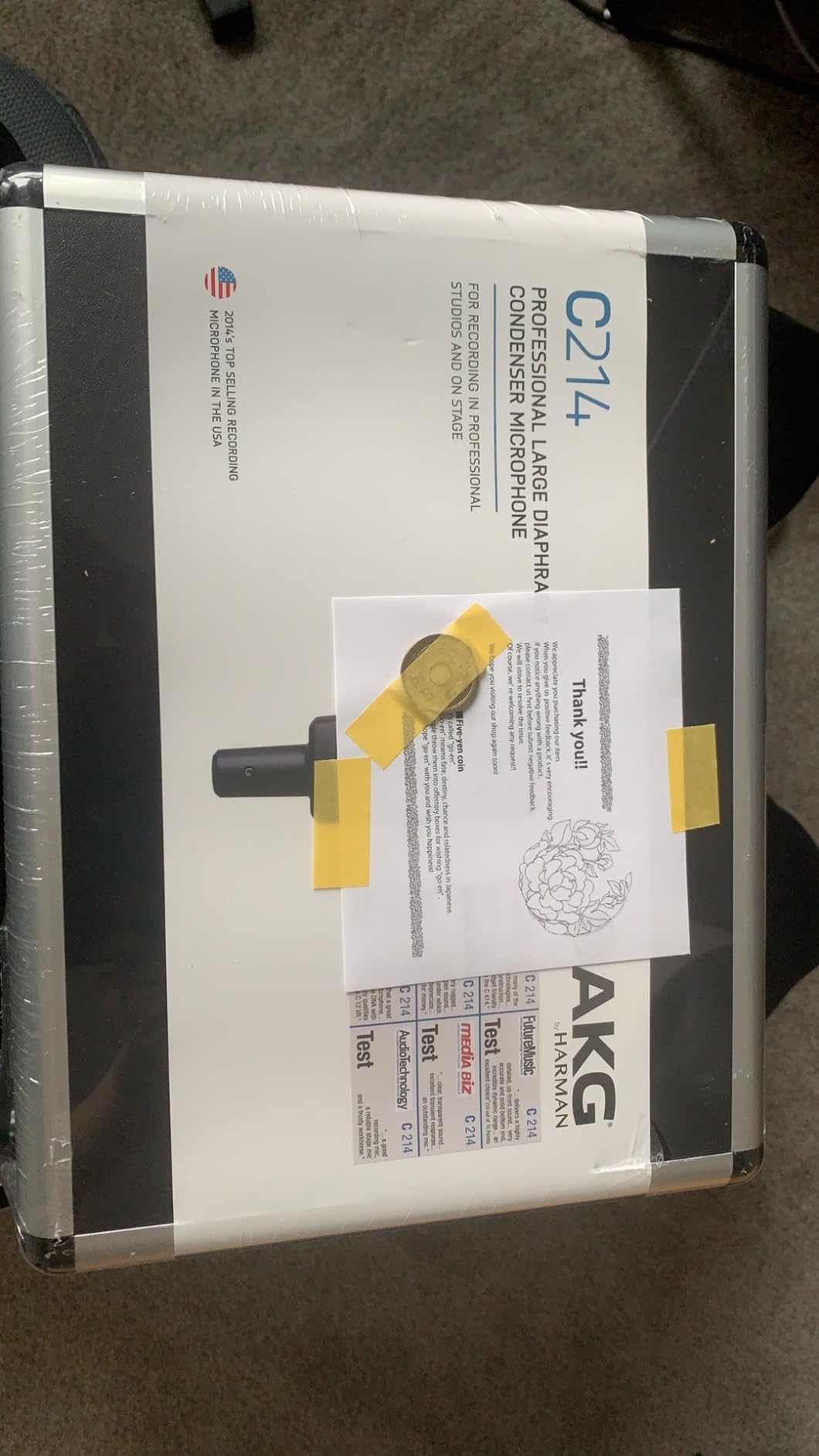
The AKG C214 is the most affordable way to capture the C414 XLII voicing. AKG designed it as a single-capsule sibling to the flagship C414, sharing the same sonic family without the multi-pattern flexibility. For studio work where cardioid is all you need, the C214 punches well above its price.
The 156 dB SPL handling and 20 dB pad let us close-mic a drum kit, a guitar cab, and a brass section without a limiter in the chain. The bass-cut filter helped tame proximity effect on male vocalists who like to work right up on the grille.
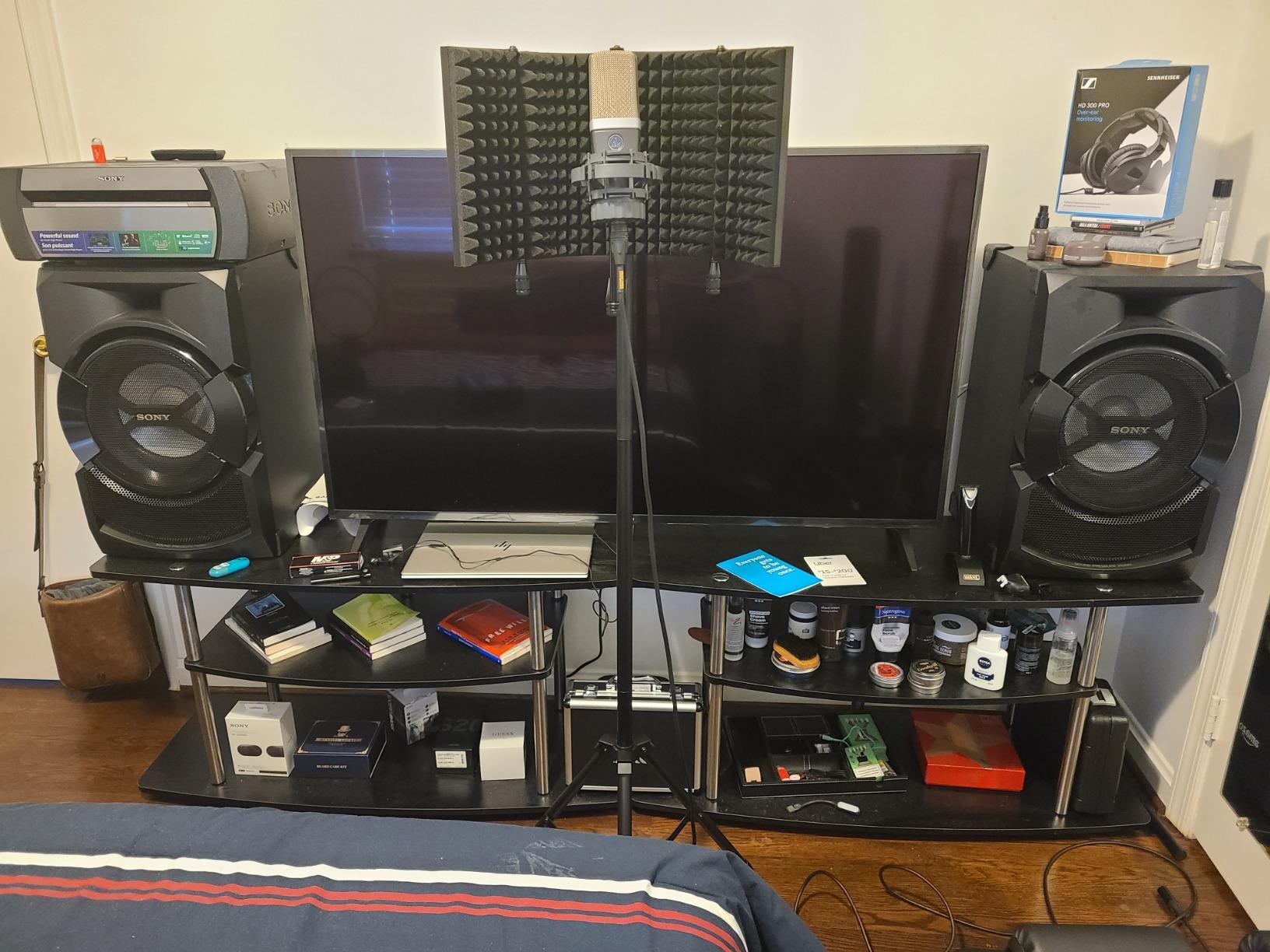
The integrated suspension cuts mechanical noise and the included aluminum carrying case is one of the more rugged in this category. Reviewers consistently call it out as the right answer when the C414 is overkill but the studio needs that family sound.
The trade-offs are clear: cardioid only, premium price, and some sibilance on certain bright vocal styles. For acoustic guitar, piano, drum overheads, and room mics, the C214 remains a studio standard.
Who this mic is for
Project studios and producers who want C414-family sound on vocals, acoustic instruments, drum overheads, and piano without paying the flagship price. Engineers who do not need selectable polar patterns but do need the AKG voicing.
Who should skip it
Vocalists prone to sibilance who would need aggressive de-essing, or anyone who needs multi-pattern flexibility (the C414 XLII is the upgrade path). Beginners on a tight budget should also start lower.
8. Blue Blackout Spark SL – Best for Streaming and Gaming
Blue Blackout Spark SL XLR Condenser Microphone for Pro Recording, Streaming, Podcasting, Gaming, with Large Diaphragm Cardioid Mic Capsule, Shockmount, Detailed Natural Sound, Protective Case – Black
Large diaphragm cardioid
100 Hz HPF, -20 dB pad
2 year warranty
Pros
- Crystal clear audio with rich professional sound and excellent detail
- Premium build quality and distinctive blackout aesthetic design
- Includes custom shock mount and protective wooden case
- Class-A JFET electronics deliver studio quality sound
- 100 Hz high-pass filter and -20 dB pad add versatility
- Especially flattering on low and mid-toned voices
Cons
- Requires 48V phantom power and an audio interface for XLR use
- Some reports of damaged units arriving with non-functional pad switches
- Premium price versus entry-level condensers
- XLR cable is not included
- Line has been discontinued by Logitech making inventory harder to find
The Blue Blackout Spark SL is the best condenser microphone for streaming and gaming in this roundup. Blue’s custom large-diaphragm capsule delivers the broadcast-style warmth and presence that streamers and podcasters want, and the Class-A JFET electronics keep the harmonic texture lively without becoming brittle.
The 100 Hz high-pass filter and -20 dB pad give it real versatility for louder gaming sessions and co-host setups. Reviewers consistently note it is especially flattering on low and mid-toned voices, which covers the majority of male streamers.
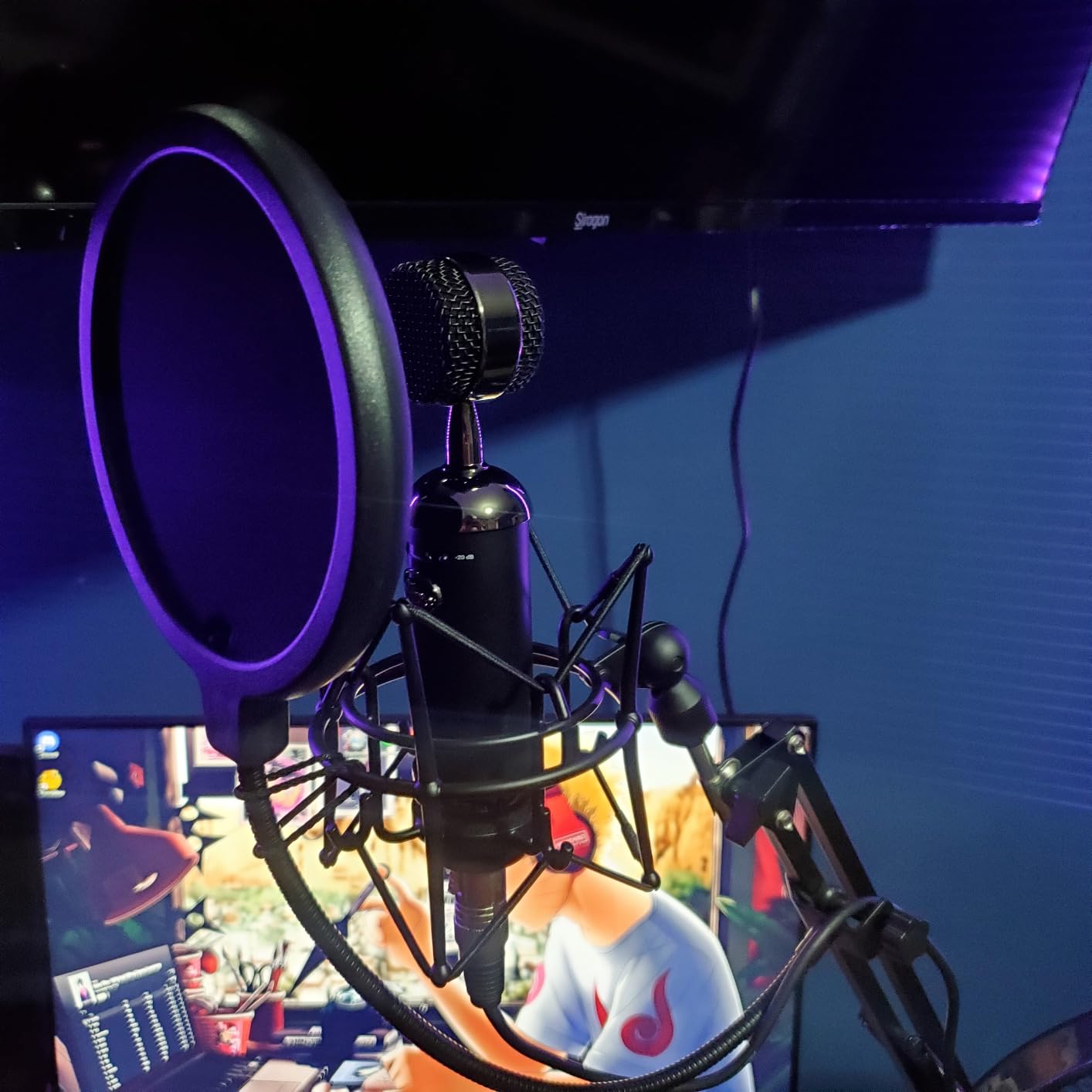
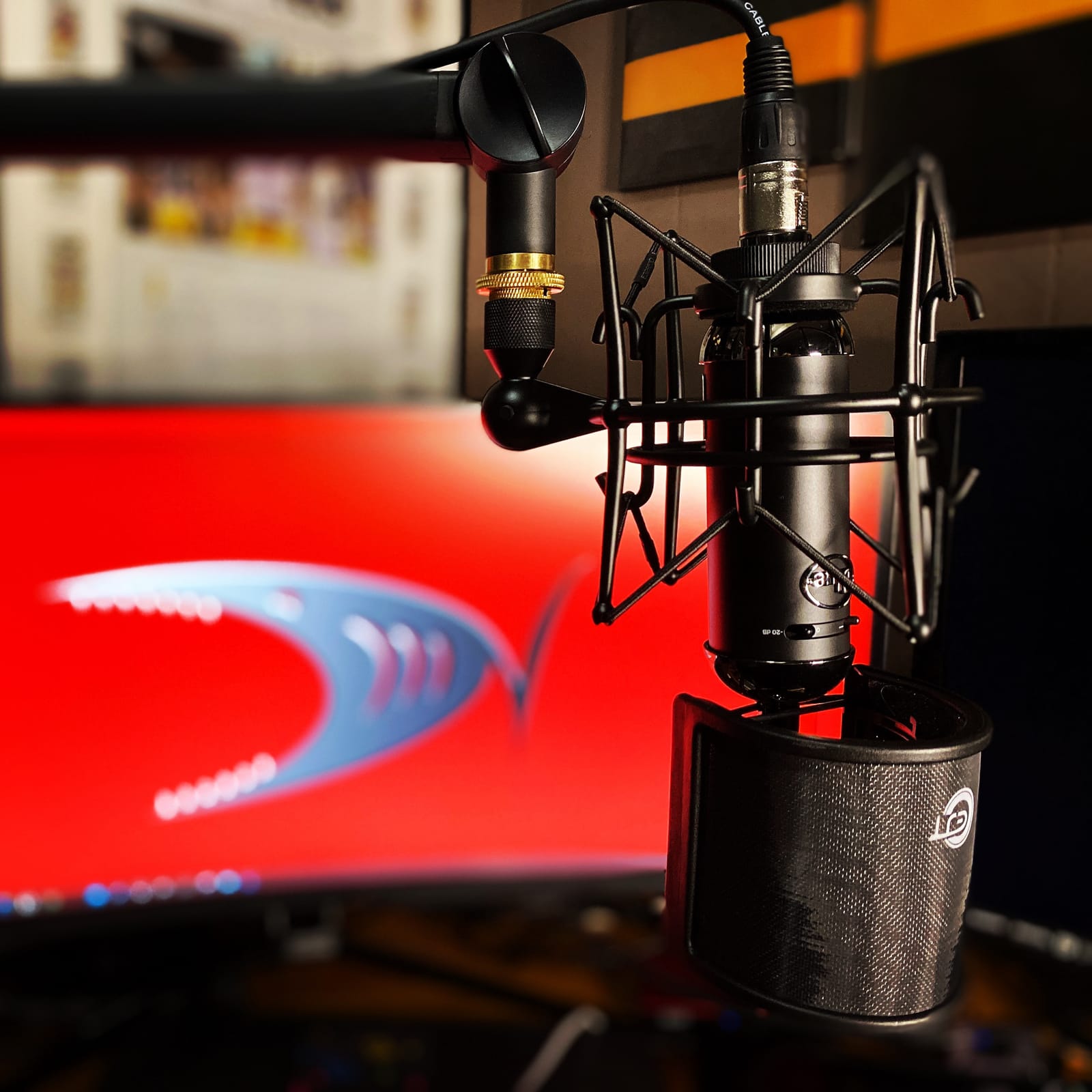
The included custom shock mount and wooden storage box are unusually premium for this category. Build quality feels broadcast-room solid in the hand.
The honest trade-offs: the line has been discontinued by Logitech, so inventory is limited and authenticity matters. Some reviewers have reported damaged units arriving with a non-functional pad switch. XLR cable is not included. If you can buy from a reputable seller and add a cable, it remains a strong choice for streaming.
Who this mic is for
Streamers, gamers, and podcasters who want a broadcast-style condenser with real character and are willing to invest in an XLR interface to drive it.
Who should skip it
Anyone nervous about discontinued inventory, anyone needing a USB path out of the box, and anyone who needs the absolute lowest self-noise for whisper-quiet ASMR or voiceover work.
9. AKG P120 – Best Affordable All-Rounder
AKG Pro Audio P120 – Affordable 2/3-Inch Diaphragm Condenser Microphone for Clear Vocals & Instruments. Studio Recording or Live. XLR Connector. Black
2/3-inch diaphragm cardioid
150 dB SPL
2 year warranty
Pros
- Affordable price for an AKG studio condenser
- Versatile for both studio recording and live applications
- High SPL handling up to 150 dB captures loud sources without distortion
- Compatible with popular audio interfaces for easy setup
- Durable metal construction built for daily use
Cons
- Requires phantom power and an audio interface
- Smaller 2/3-inch diaphragm is not as full-bodied as larger LDCs
- Not ideal for highly critical professional recording applications
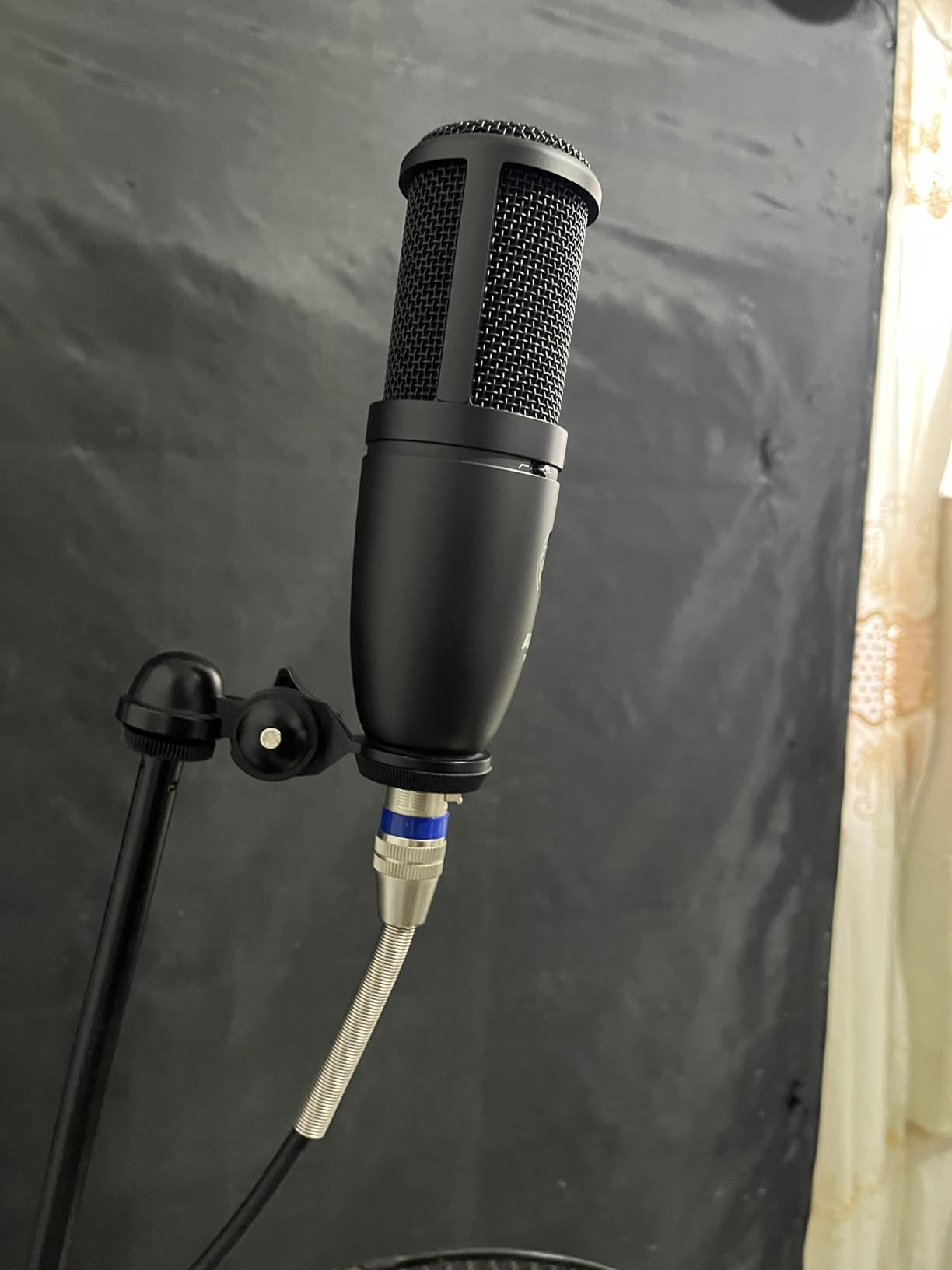
The AKG P120 is the best affordable all-rounder on this list. The 2/3-inch diaphragm and 150 dB SPL handling make it one of the few condensers in this tier that can move between home studio and small live stages without compromise.
The preattenuation pad and bass-cut filter give it real-world versatility. We close-miked a snare drum through it with the pad engaged and the bass-cut filter rolled off the low-end rumble cleanly without dulling the attack.
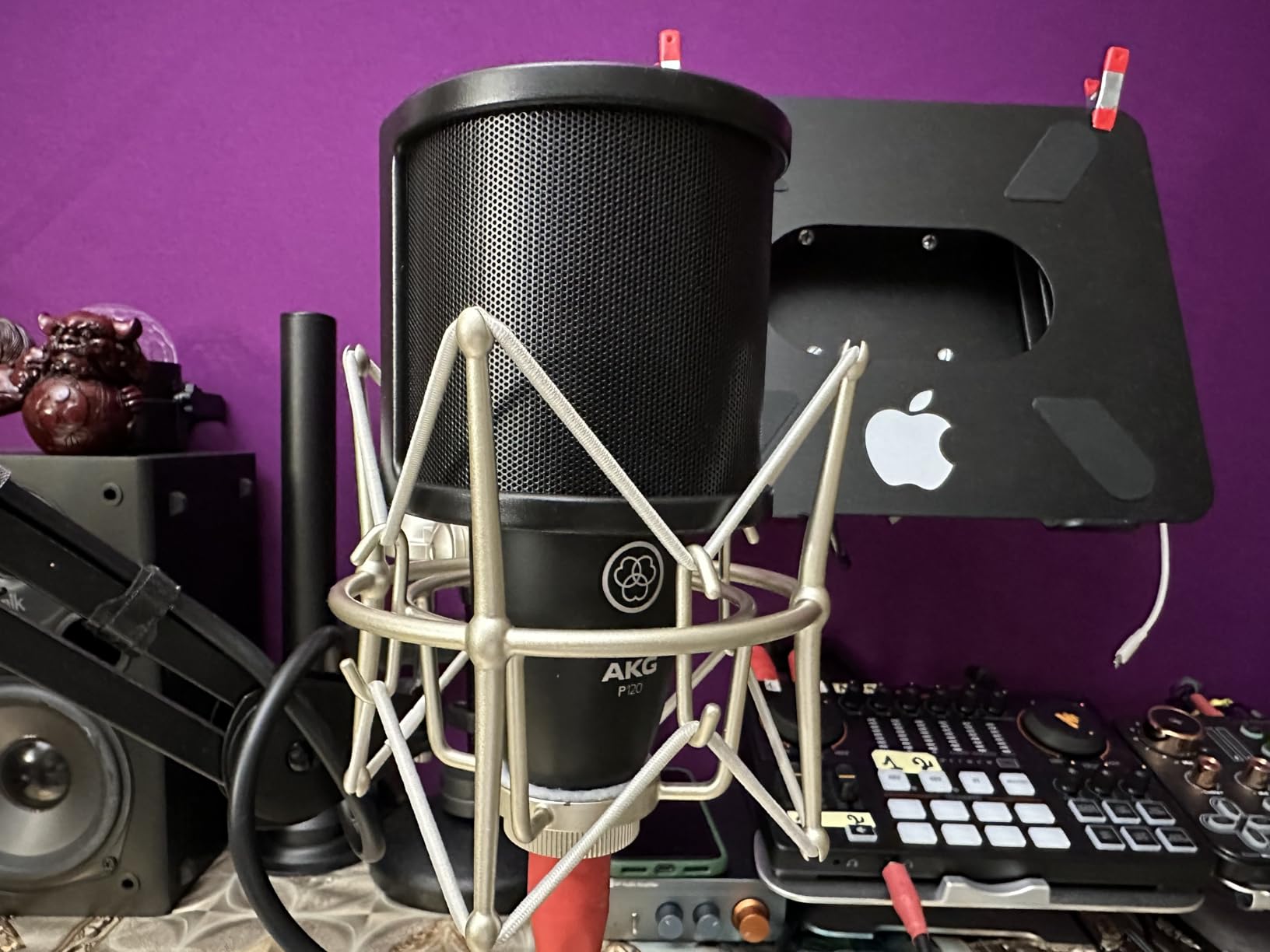
For vocals the smaller diaphragm produces a slightly tighter, more focused tone than a true LDC. That is not a flaw: for spoken word, podcasting, and tight pop vocals it is actually a better match than a giant-diaphragm design.
The 19 dBA noise floor is on the higher side, so very quiet fingerpicked acoustic guitar will show some hiss. For typical vocal and instrument use at normal levels it is more than quiet enough.
Who this mic is for
Singers, podcasters, and small-stage performers who need one condenser that travels between home studio and rehearsal space. Worship leaders, vocal coaches, and voice teachers also benefit from the dual role.
Who should skip it
Audiophiles chasing the largest possible diaphragm character should look at the Rode NT1 or AKG C214 instead. Anyone tracking quiet acoustic sources should also pick a quieter mic.
10. MXL 990 – Best Entry-Level Large Diaphragm
MXL 990 Condenser Microphone for Podcasting, Singing, Home Studio Recording, Gaming & Streaming | Detailed Sound | XLR | Large Diaphragm (Champagne)
Large diaphragm cardioid
20 Hz to 20 kHz
1 year warranty
Pros
- Excellent value for an entry-level large diaphragm condenser
- Detailed sound with balanced output and smooth midrange
- Cardioid polar pattern effectively rejects background noise
- Includes custom shock mount and durable carrying case
- Versatile for podcasting
- gaming
- streaming
- voiceover
- and instruments
Cons
- Requires +48V phantom power and an audio interface
- Sound can be muddy in untreated rooms without proper mic placement
- Sensitive to sibilance without careful pop filter placement
- Shock mount quality is inconsistent across production runs
- Often outgrown as recording experience improves
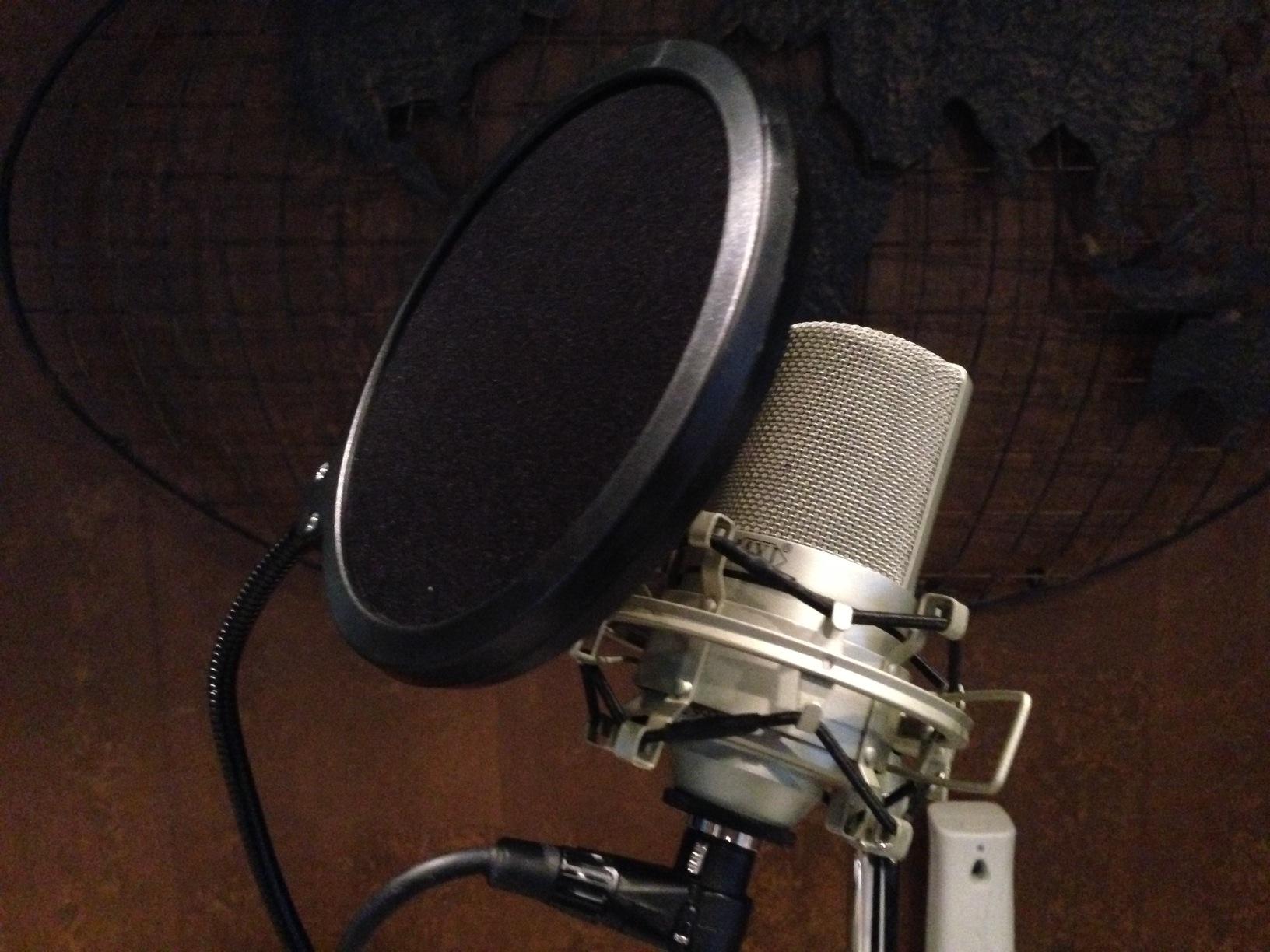
The MXL 990 is the best entry-level large diaphragm condenser for first-time recordists. The FET preamp and mid-sized diaphragm deliver a balanced output with a smooth midrange that flatters first vocal takes, voiceover work, and acoustic guitar.
The wide 20 Hz to 20 kHz frequency response covers the full vocal and instrument range, and the cardioid polar pattern does a respectable job of rejecting room noise. The included custom shock mount and durable carrying case are genuinely useful accessories at this price tier.
Our test vocals sat nicely in a mix without aggressive EQ. For podcasting it produced a warm, present tone that flattered male voices especially.
The honest limits are well documented by reviewers. In untreated rooms the mic can sound muddy without careful placement. Sibilance shows up without a properly positioned pop filter. The shock mount quality has been inconsistent across production runs. None of these are deal-breakers for first-time buyers, and the 1-year warranty (extendable on the MXL website) covers the major components.
Who this mic is for
First-time recordists who want a true large diaphragm condenser at a low entry price, with the bundle accessories that usually drive up total cost. It is also a good choice for podcasters and gamers who want a step up from USB mics.
Who should skip it
Anyone recording in an untreated bedroom who is willing to spend a little more for a tighter, lower-noise condenser (the Audio-Technica AT2020 is a meaningful upgrade for the same audience), or anyone who will quickly outgrow an entry-tier mic and wants to skip a generation.
How to Choose the Best Studio Condenser Microphone
Choosing the best studio condenser microphone comes down to four core decisions: diaphragm size, polar pattern, self-noise, and the extras that ship in the box. The right answer depends on what you record, where you record it, and how much editing you want to do later.
Large-Diaphragm vs Small-Diaphragm Condensers
Large-diaphragm condensers (LDCs) are the standard for studio vocals and voiceover. Their bigger capsules add warmth and presence, and they tend to forgive less-than-perfect mic technique. Small-diaphragm condensers (SDCs) are the standard for acoustic instruments, drum overheads, and orchestral work where transient response and accurate frequency reproduction matter more than vibe.
If you record mostly vocals, an LDC is the right starting point. If you record mostly acoustic guitar, piano, or overhead drums, an SDC will deliver more accurate results. The Rode NT1, AKG C214, and MXL 990 in this roundup are all LDCs; the AKG P120 uses a 2/3-inch capsule that sits between the two categories.
Polar Patterns and Multi-Pattern Switches
A polar pattern describes where the microphone listens. Cardioid is the most common studio pattern and rejects sound from behind the mic. Omnidirectional picks up sound equally from all directions and is favored for room ambience and natural instrument capture. Figure-8 (bidirectional) listens to the front and back and is used in podcasting with two hosts or in mid-side stereo recording.
Multi-pattern condensers can switch between these modes. The advantage is flexibility: one mic can cover solo vocals, two-host interviews, and stereo room recording. The trade-off is price and self-noise, since multi-pattern capsules are more complex.
Self-Noise, Phantom Power and What They Mean
Self-noise (also called equivalent noise level, measured in dBA) is the hiss a condenser mic adds to a recording on its own. Lower is better. Anything under 10 dBA is essentially inaudible on quiet vocals. Anything over 15 dBA starts to show up on whisper-quiet sources.
Phantom power (48V) is the DC voltage that charges the condenser capsule. Almost every XLR condenser requires it, and it is delivered by your audio interface or mixer. If you buy a USB condenser like the Rode NT1 5th Gen, the 48V is handled internally through the USB connection.
Pads, Filters and SPL Handling
Many condensers include switchable pad (typically -10 dB or -20 dB) and high-pass filters. A pad prevents distortion when close-miking loud sources like snare drums or guitar cabinets. A high-pass filter (sometimes called bass-cut) removes low-end rumble, handling noise, and proximity effect buildup.
If you record both vocals and loud instruments, look for a mic with both switches. The Audio-Technica AT2035, AKG C214, AKG P120, and Blue Blackout Spark SL all include them.
Condensers for Untreated Home Studios
An untreated bedroom is the single biggest challenge for any condenser microphone. Hard walls reflect sound back into the capsule and exaggerate room rumble, sibilance, and plosives. The Rode NT1 Signature Series remains our top recommendation for untreated spaces because of its ultra-low noise floor and tight cardioid rejection.
For severe untreated rooms, consider pairing your mic with basic acoustic treatment (a few absorption panels behind the mic and on the ceiling reflection point) or a dynamic alternative like the Shure SM7B. If you want to stay in the condenser category, the AKG P120’s tighter diaphragm character and cardioid rejection also hold up well in untreated spaces.
For more on building out a complete home studio, our team has covered the best studio headphones, the best recording studio chairs, and the best condenser microphone bundles in separate guides.
Frequently Asked Questions
What is the best condenser microphone for a home studio?
The Rode NT1 Signature Series is the best condenser microphone for most home studios. It delivers a 4 dBA self-noise floor, a tight cardioid pattern that rejects room noise, and ships with a shockmount, pop filter, and XLR cable. For tighter budgets, the Audio-Technica AT2020 is the best value pick thanks to its clean sound and 15000+ review track record.
What are the top 10 condenser microphones?
Our current top 10 are: Rode NT1 Signature Series, Audio-Technica AT2020, Tascam TM-80, Rode NT1 5th Gen, Audio-Technica AT2035, TZ Stellar X2, AKG C214, Blue Blackout Spark SL, AKG P120, and MXL 990. Together they cover every budget tier from under $100 to flagship LDC voicing.
What is the holy grail of microphones?
The Neumann U 87 Ai is widely considered the holy grail of studio condenser microphones. It has been the reference vocal mic in professional recording studios for decades and is the standard against which other large-diaphragm condensers are measured. Its FET-Transformerless design, multi-pattern flexibility, and balanced voicing make it the most cited benchmark in the category.
What microphone do professional studios use?
Professional studios most often use the Neumann U 87 Ai for lead vocals, AKG C414 XLII for versatile multi-pattern work, Neumann TLM 103 for bright modern vocals, and Telefunken U47 or Sony C-800G for the most premium vintage-flavored recordings. For overheads and acoustic instruments, Neumann KM 184 and Sennheiser MKH small-diaphragm condensers remain the studio standard.
Do condenser microphones need phantom power?
Yes. Almost every XLR studio condenser microphone requires 48V phantom power supplied by your audio interface or mixer to charge the capsule. USB condenser microphones like the Rode NT1 5th Gen handle phantom power internally through the USB connection, so no external 48V is required for the USB path. Without phantom power, an XLR condenser will not produce any signal.
Final Verdict: Which Studio Condenser Should You Buy in 2026?
The best studio condenser microphone for most people in 2026 is the Rode NT1 Signature Series. It delivers a 4 dBA self-noise floor, the legendary NT1 voicing, and a complete accessory bundle in the box. For tighter budgets the Audio-Technica AT2020 remains the price/performance benchmark, and the Tascam TM-80 is the best one-box starter package for absolute beginners.
If you want to explore more condenser options, our 8 Best Condenser Microphones roundup covers additional picks and our 10 Best Condenser Microphone Bundles guide is the right place if you want everything in one purchase.