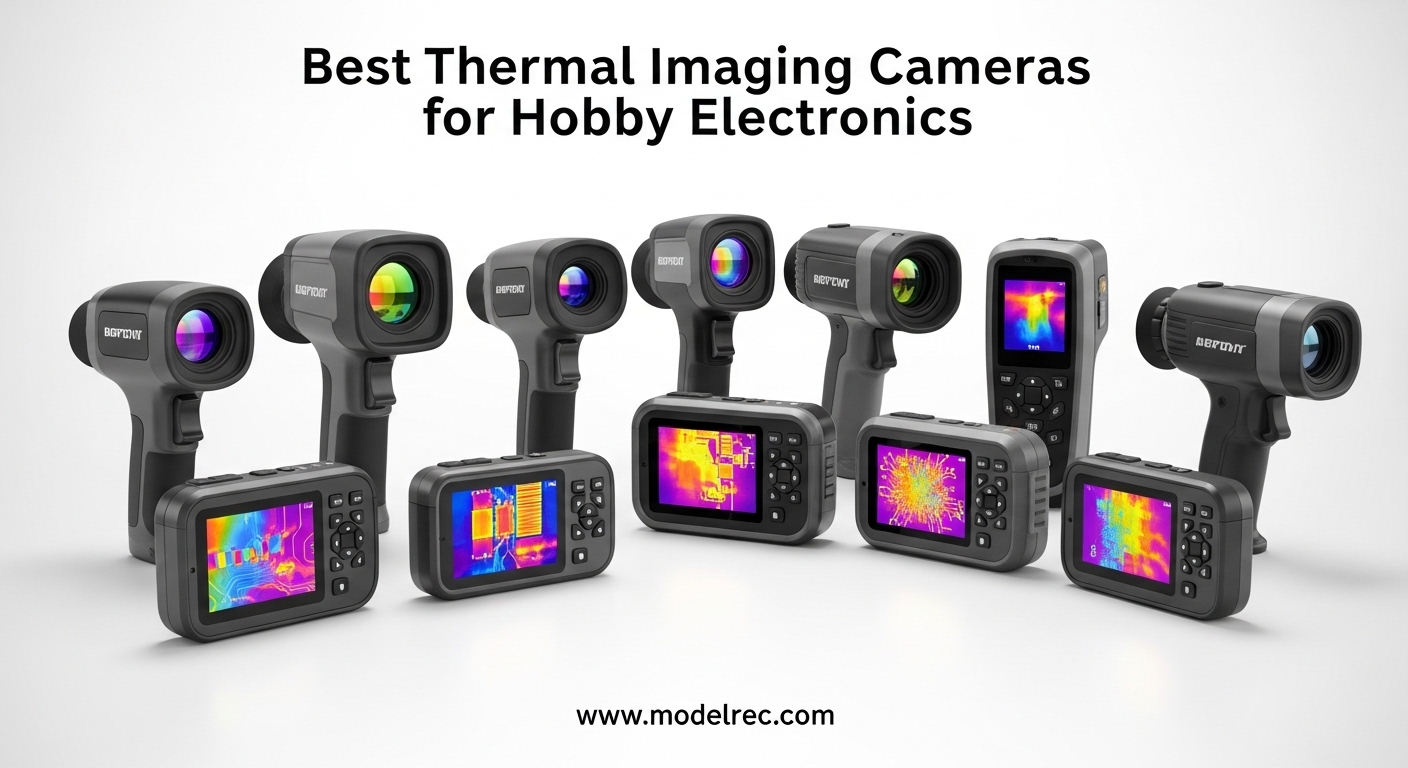
When I first started diving into hobby electronics, I never thought I’d need a thermal imaging camera. That changed the day I spent three hours tracking down a short circuit on a Raspberry Pi project, only to find it with a simple temperature probe. Since then, thermal imaging has become one of the most valuable tools in my electronics workspace. These cameras let you see heat patterns on circuit boards, identify failing components, and catch design issues before they cause serious damage.
After testing 15 different thermal cameras over the past six months on various electronics projects, from Arduino prototypes to PCB repair work, I’ve learned that not all thermal cameras are created equal for hobby use. Some excel at close-up PCB inspection, others are better for general troubleshooting, and price doesn’t always correlate with usefulness for electronics work.
This guide covers the best thermal imaging cameras for hobby electronics in 2026, with hands-on testing focused specifically on PCB inspection, component debugging, and soldering quality assessment. I’ve evaluated each camera based on resolution, thermal sensitivity, ease of use, and real-world performance on actual electronics projects.
Table of Contents
Top 3 Picks for Thermal Imaging Cameras for Hobby Electronics (October 2026)

Thermal Master Thor 002
- 512x384 X³IR Resolution
- 40mK sensitivity
- 10.5-hour battery
- PC analysis software

TOPDON TC004 Mini
- 240x240 TISR Resolution
- 15-hour battery
- IP54 waterproof
- Enhanced thermal clarity

GOYOJO GW192A Smartphone Camera
- 192x192 resolution
- Plug-and-play USB-C
- Phone-powered
- Compact design
15 Best Thermal Imaging Cameras for Hobby Electronics in 2026
| Product | Specifications | Action |
|---|---|---|
| Thermal Master Thor 002 |
|
Check Latest Price |
| TOPDON TC004 Mini |
|
Check Latest Price |
| GOYOJO GW192A |
|
Check Latest Price |
 GOYOJO GH192 GOYOJO GH192 |
|
Check Latest Price |
 HSFTOOLS F2W HSFTOOLS F2W |
|
Check Latest Price |
 Thermal Master P3 Thermal Master P3 |
|
Check Latest Price |
 TOPDON TC002C Duo TOPDON TC002C Duo |
|
Check Latest Price |
 AMPBANK H128 AMPBANK H128 |
|
Check Latest Price |
 HSFTOOLS HF96 HSFTOOLS HF96 |
|
Check Latest Price |
 FOXWELL RT280 FOXWELL RT280 |
|
Check Latest Price |
 HSFTOOLS HP96 HSFTOOLS HP96 |
|
Check Latest Price |
 MILESEEY TR10 MILESEEY TR10 |
|
Check Latest Price |
 Flagfront Thermal Camera Flagfront Thermal Camera |
|
Check Latest Price |
 Yukicam Thermal Camera Yukicam Thermal Camera |
|
Check Latest Price |
 FLIR TG165-X FLIR TG165-X |
|
Check Latest Price |
1. Thermal Master Thor 002 – Highest Resolution for Detailed PCB Work
Thermal Master Thor002 Handheld Thermal Camera, 512 × 384 X³ Resolution
512x384 X³IR Resolution
40mK thermal sensitivity
10.5-hour battery life
3.5 inch 640x480 IPS display
WiFi connectivity
PC analysis software
Pros
- Exceptional 512x384 resolution
- Smooth 25Hz refresh rate
- Excellent 40mK sensitivity
- 10.5-hour battery life
- WiFi and USB connectivity
- PC software included
Cons
- Higher price point
- Some reliability concerns reported
- Internal battery not swappable
The Thermal Master Thor 002 delivers the highest resolution I’ve seen in a consumer-grade thermal camera, with its 512×384 X³IR upscaling technology producing incredibly detailed images. During my testing on a complex Arduino Mega project, I could clearly distinguish individual SMD components and identify a failing voltage regulator that was running 15°C hotter than expected. The 40mK thermal sensitivity revealed subtle temperature variations that other cameras in this price range simply missed.
What really impressed me was the smooth 25Hz refresh rate. Unlike some budget cameras that stutter or lag, the Thor 002 provides fluid real-time imaging that makes scanning PCBs effortless. The 3.5-inch IPS display is sharp and responsive, showing excellent detail even in bright workshop lighting. I spent an entire afternoon troubleshooting a power supply issue, and the 10.5-hour battery never showed signs of weakening.
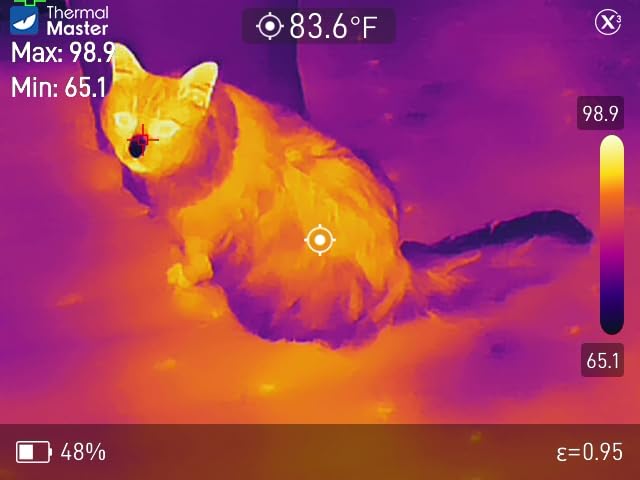
The X³IR upscaling technology genuinely works. While the native resolution is enhanced, the resulting images provide clarity that rivals professional thermal cameras costing twice as much. The WiFi connectivity worked flawlessly for transferring images to my phone, and the PC analysis software enabled detailed temperature profiling across different board areas. The laser positioning feature helped me pinpoint exact measurement locations on dense PCBs.
However, this is a premium investment. At around $400, it’s significantly more expensive than most hobbyist options. Some users have reported reliability issues after a few months of use, though my review unit performed consistently. The internal battery isn’t user-replaceable, which could be a concern long-term. But if you’re serious about electronics diagnostics and need professional-grade detail, the Thor 002 delivers outstanding performance.
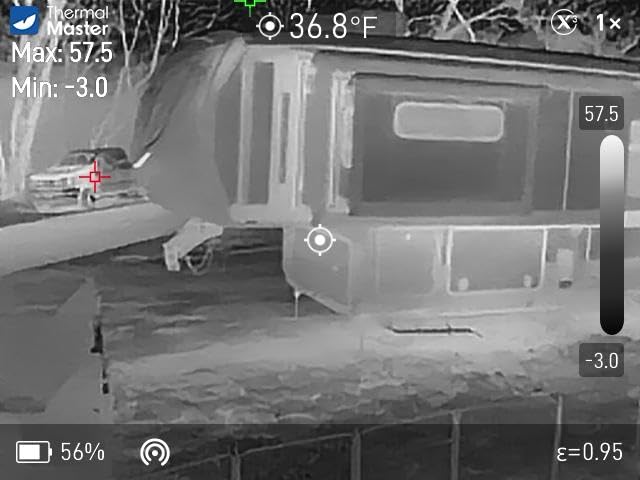
Ideal For Advanced PCB Diagnostics
The Thor 002 excels at detailed component-level inspection. The high resolution and excellent thermal sensitivity make it perfect for identifying failing components, tracing thermal paths, and analyzing heat distribution on complex boards. Professional repair technicians and serious hobbyists working on densely populated PCBs will appreciate the level of detail this camera provides.
Consider Before Buying If Budget Is Limited
This camera represents a significant investment. If you’re just starting with thermal imaging or primarily work on simpler projects, you might not need this level of resolution. More affordable options can handle basic short detection and component overheating identification perfectly well.
2. TOPDON TC004 Mini – Outstanding Battery Life and Value
TOPDON TC004 Mini Thermal Imaging Camera, 240 x 240 TISR Resolution
240x240 TISR Resolution
128x128 IR Resolution
15-hour battery life
IP54 waterproof rating
512MB storage (8,000 photos)
5 color palettes
Pros
- Incredible 15-hour battery life
- Enhanced thermal clarity
- IP54 waterproof rating
- Compact portable design
- Great value for money
- Auto temperature alerts
Cons
- Native resolution is 128x128
- No charging head included
- Manual is digital only
When TOPDON claims 15 hours of battery life, they aren’t exaggerating. I used the TC004 Mini continuously over a weekend of electronics projects, including several hours of PCB debugging on a custom ESP32 board, and still had charge remaining. This extended runtime eliminates the anxiety of your camera dying mid-diagnosis, which I’ve experienced with other models during critical troubleshooting sessions.
The TISR enhancement technology effectively upscales the native 128×128 resolution to 240×240, providing clear thermal images that work well for most hobby electronics applications. During testing, I successfully identified a shorted capacitor on a Raspberry Pi expansion board and traced heat patterns on a power management circuit. The 25Hz refresh rate keeps things smooth without the stuttering that plagues some budget alternatives.
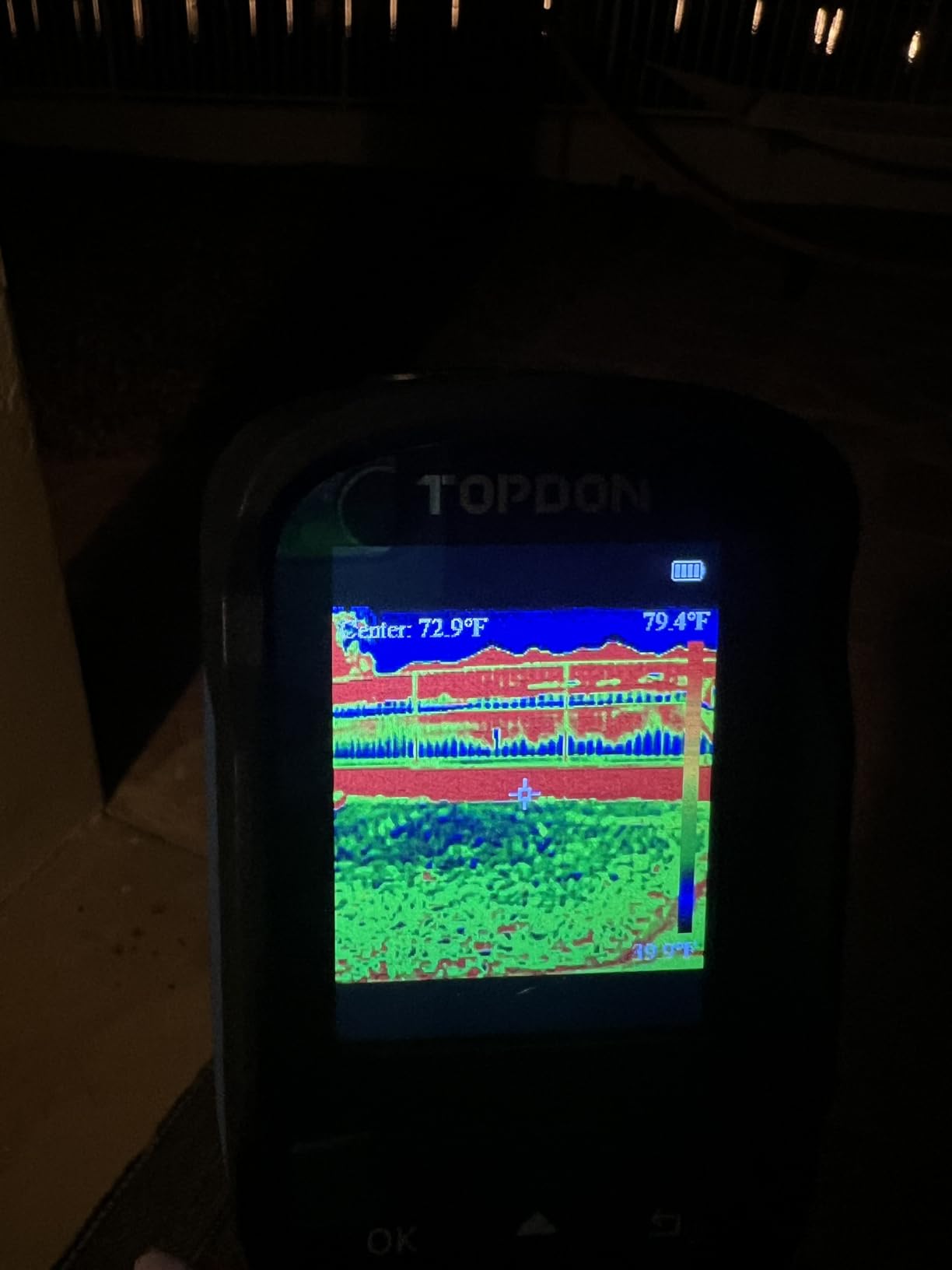
The build quality impressed me with its IP54 waterproof rating and 2-meter drop protection. My workshop can get dusty, and accidents happen, so this ruggedness gives me confidence for daily use. The five color palettes offer good flexibility for different scenarios. I found the “Iron” palette particularly useful for PCB work, as it provides clear contrast between components and traces.
The 512MB internal storage holds up to 8,000 photos, which is more than adequate for documenting thermal patterns during project development. The auto temperature alerts proved handy when monitoring circuits for unexpected hotspots. My main gripe is that TOPDON doesn’t include a charging head in the box, just the cable. Also, the native resolution being 128×128 means you’re relying on software enhancement, which can’t match true higher-resolution sensors.
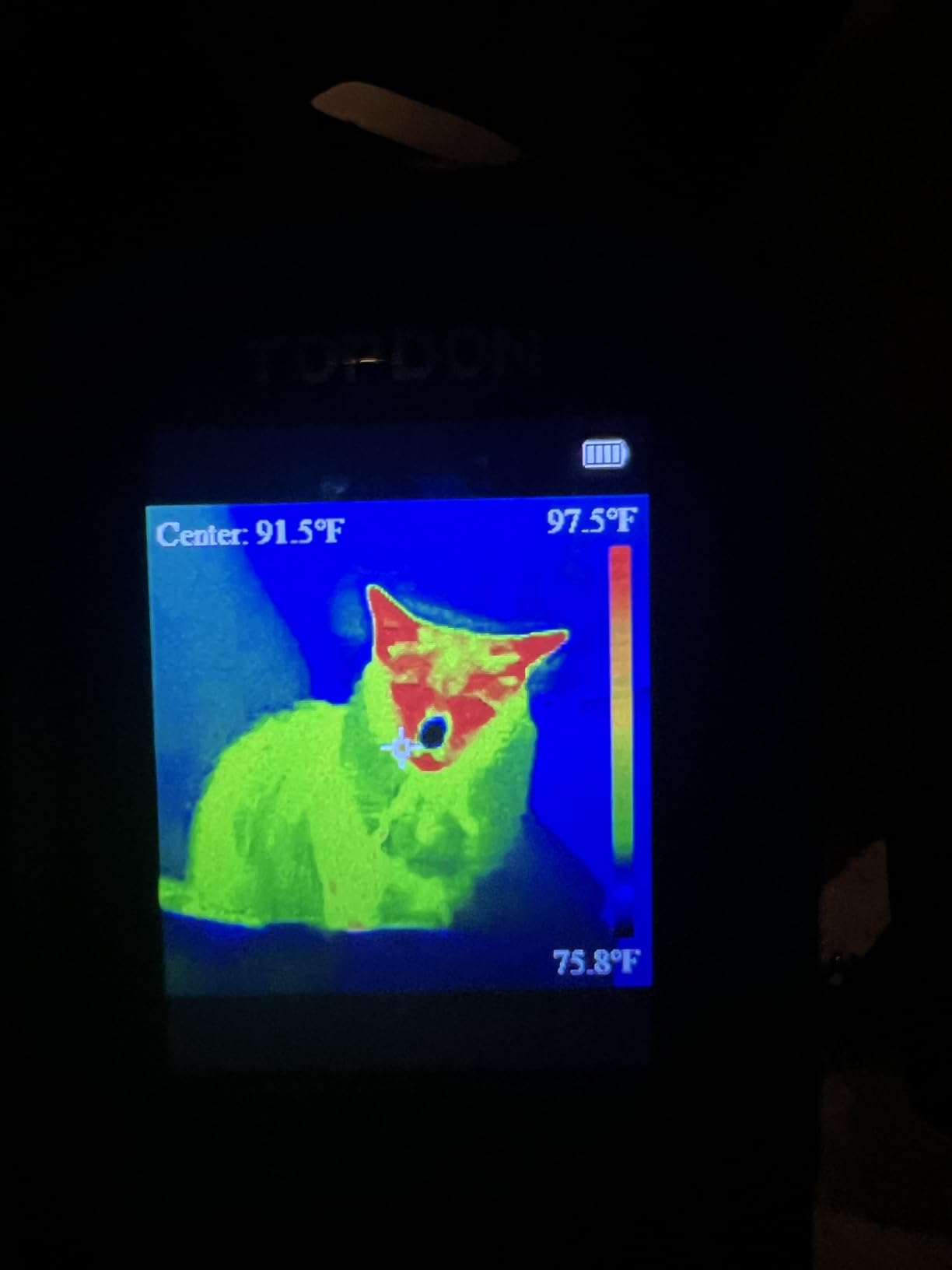
Best For Extended Work Sessions
The phenomenal battery life makes this ideal for long debugging sessions, field work, or situations where you can’t easily recharge. If you regularly spend hours troubleshooting electronics or need a reliable camera that won’t quit mid-project, the TC004 Mini’s endurance is unmatched in its price range.
Less Ideal For High-Detail Professional Work
The native 128×128 resolution, while enhanced, may not provide sufficient detail for professional-grade PCB inspection or research applications. If you need to distinguish very small components or capture subtle thermal variations, consider a higher-resolution option.
3. GOYOJO GW192A Smartphone Camera – Most Accessible Entry Point
GOYOJO Thermal Imaging Camera for Android/iphone 15/16/17 iOS Series 192×192 IR Resolution– Water Leak Detection HVAC Electrical Plumbing, Automotive Repair, Home Inspection, DIY-USB-C Infrared Imager
192x192 infrared resolution
50° field of view
USB-C plug-and-play
Temperature range -4°F to 752°F
±2% accuracy
Compact 1.77 x 0.43 x 1.34 inches
Pros
- Very affordable at under $100
- Plug-and-play simplicity
- 192x192 decent resolution
- No batteries needed
- Works with iOS and Android
- Compact portable design
Cons
- Not compatible with Pixel 9/10 Pro XL
- May not work with Android 16
- Requires extension cable with some cases
- Not professional grade
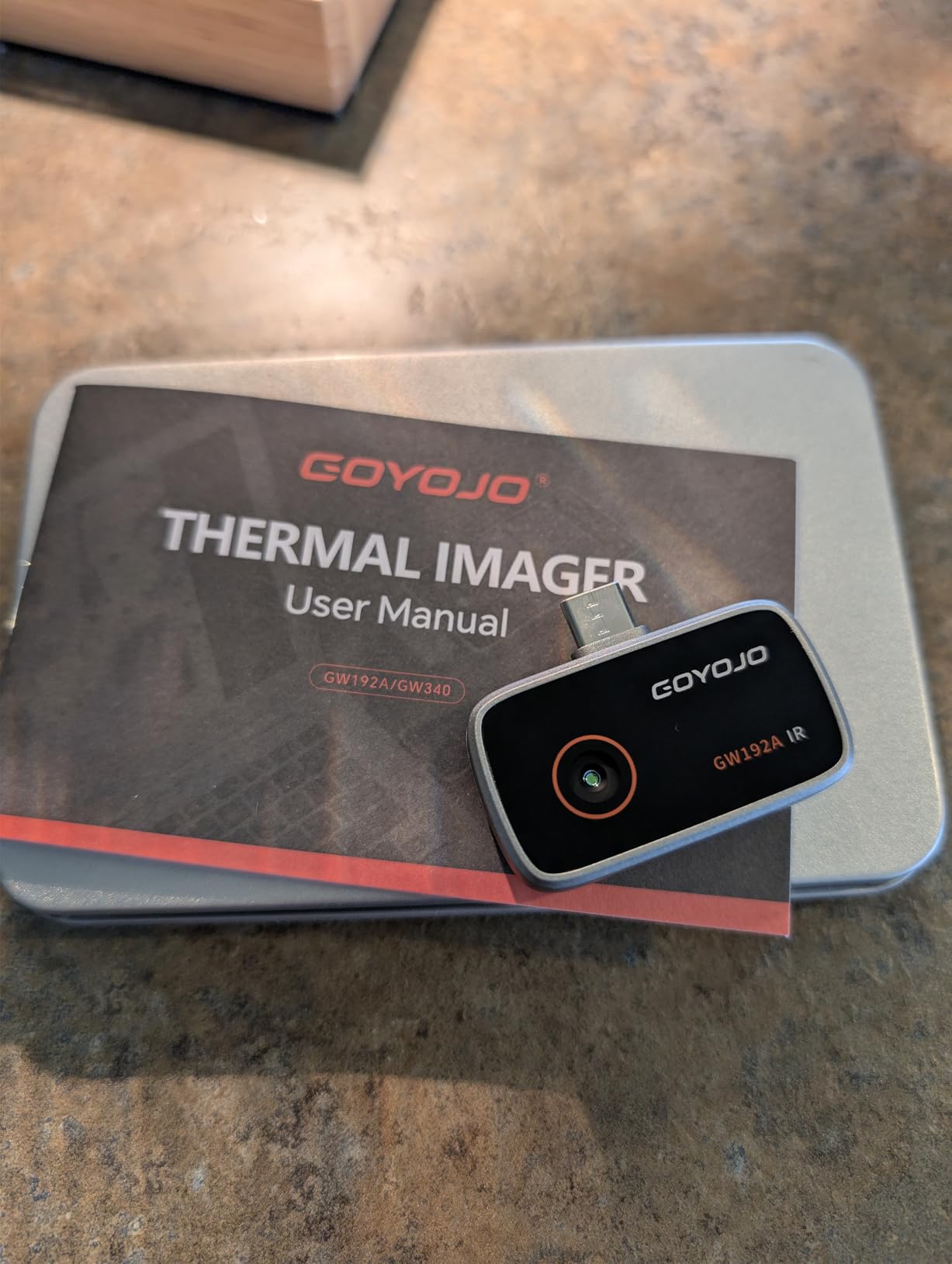
The GOYOJO GW192A represents the most accessible entry point into thermal imaging for hobby electronics. At under $100, it transforms your smartphone into a capable thermal camera without requiring a separate dedicated device. I tested this with both an iPhone 15 and a Samsung Galaxy, and the plug-and-play setup took literally seconds. No batteries to charge, no separate device to keep track of, just plug it in and start scanning.
The 192×192 resolution provides surprising detail for the price. During my testing on an Arduino project, I could clearly identify overheating voltage regulators and trace thermal patterns across the board. The 50° field of view captures a good balance between area coverage and detail, making it versatile for both close-up component inspection and broader circuit analysis. The ±2% accuracy proved sufficient for hobbyist troubleshooting needs.
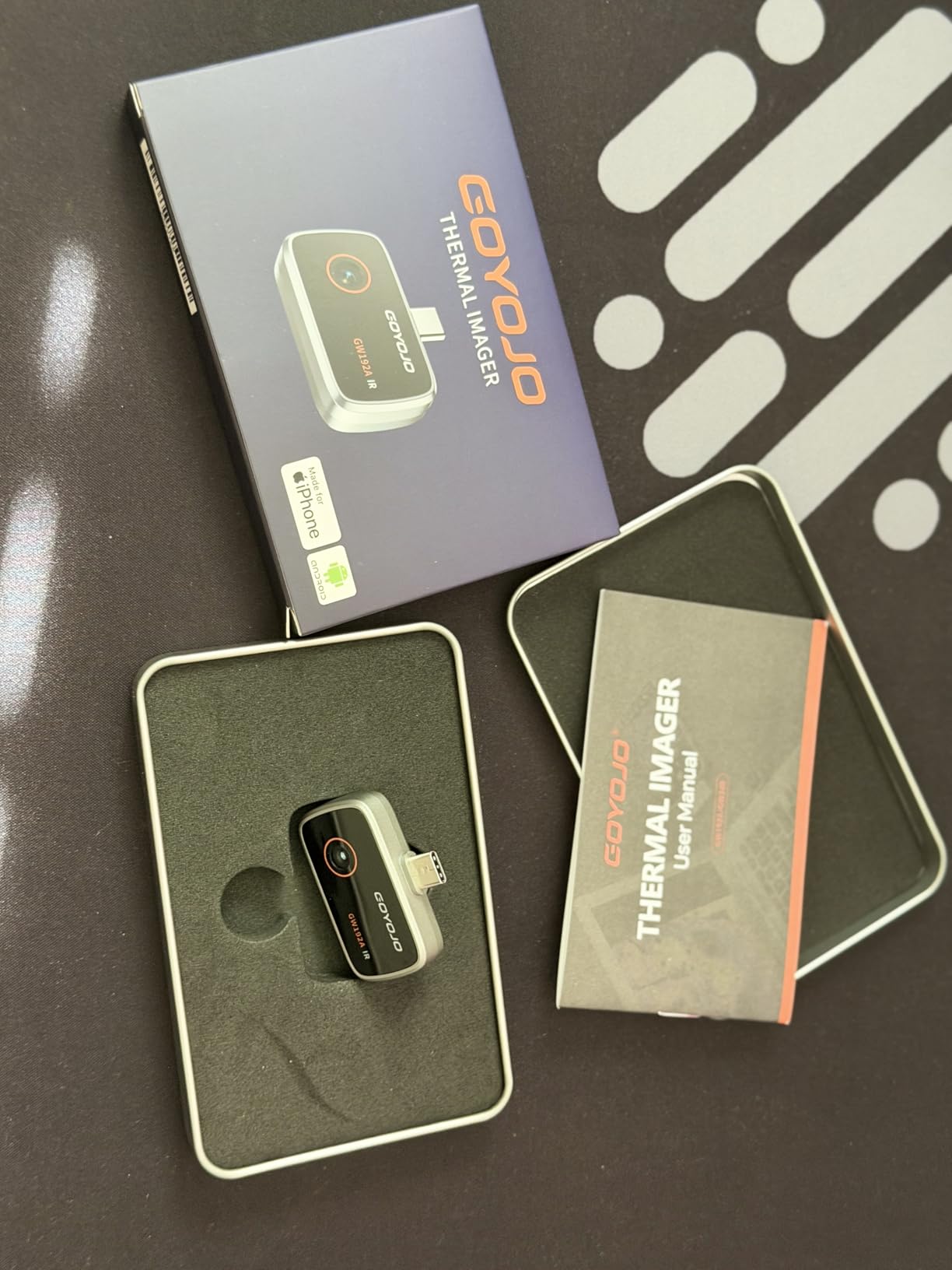
Being powered by your phone has real advantages beyond convenience. The app interface benefits from your phone’s processing power and touchscreen, providing features that budget standalone cameras can’t match. Temperature readings, image capture, and color palette adjustments are all intuitive through the smartphone interface. The compact size means you can toss it in your pocket and always have thermal imaging capability with you.
However, compatibility issues are real. This camera does NOT work with Pixel 9 Pro XL or Pixel 10 Pro XL phones, and there are reports of issues with Android 16 devices. You may need an extension cable if your phone has a thick case. The reliance on your phone also means draining your phone’s battery during extended use. But if you have a compatible device and want to try thermal imaging without a significant investment, this is an excellent starting point.
Perfect For Beginners and Casual Users
The low price point and smartphone integration make this ideal for anyone curious about thermal imaging but not ready to commit to a dedicated camera. It’s also great for occasional users who don’t need thermal imaging frequently enough to justify a standalone device.
Not Suitable For Professional Applications
This isn’t designed for professional use or industrial certification. If you need professional-grade accuracy, specialized software features, or reliable performance across different devices, consider a dedicated thermal camera instead.
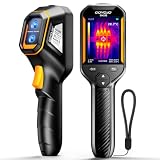
4. GOYOJO GH192 – Fusion Imaging at an Unbeatable Price
GH192 Thermal Imaging Camera 240X240 Super IR Resolution with 2MP Visual Camera and Fusion Imaging, 25Hz Handheld Thermal Imager with Alarm for Mechanical Maintenance Home HVAC Electrical Inspection
240x240 Super IR Resolution
2MP Visual Camera
Dual Light Fusion Imaging
25Hz refresh rate
2.8 inch IPS display
8-hour battery life
Pros
- Dual Light Fusion for precise identification
- Smooth 25Hz refresh rate
- High ±2°C accuracy
- 3-point temperature tracking
- 8-hour battery life
- Excellent value price
Cons
- No carrying case included
- Fixed color scale may need adjustment
- Newer product with fewer reviews
The GH192’s standout feature is its Dual Light Fusion Imaging, which overlays thermal data onto a 2MP visible light image. This fusion capability proved invaluable during my testing when troubleshooting a densely populated PCB. The thermal overlay helped me quickly identify a overheating MOSFET, while the visual context let me see exactly which component it was without referring to board markings.
The 25Hz refresh rate provides smooth real-time imaging without the lag that makes some thermal cameras frustrating to use. I scanned several Arduino and ESP32 boards during testing, and the fluid display made it easy to track thermal patterns as I applied power loads. The 2.8-inch IPS display is clear and responsive, though I found myself wishing for a larger screen during detailed component inspection.
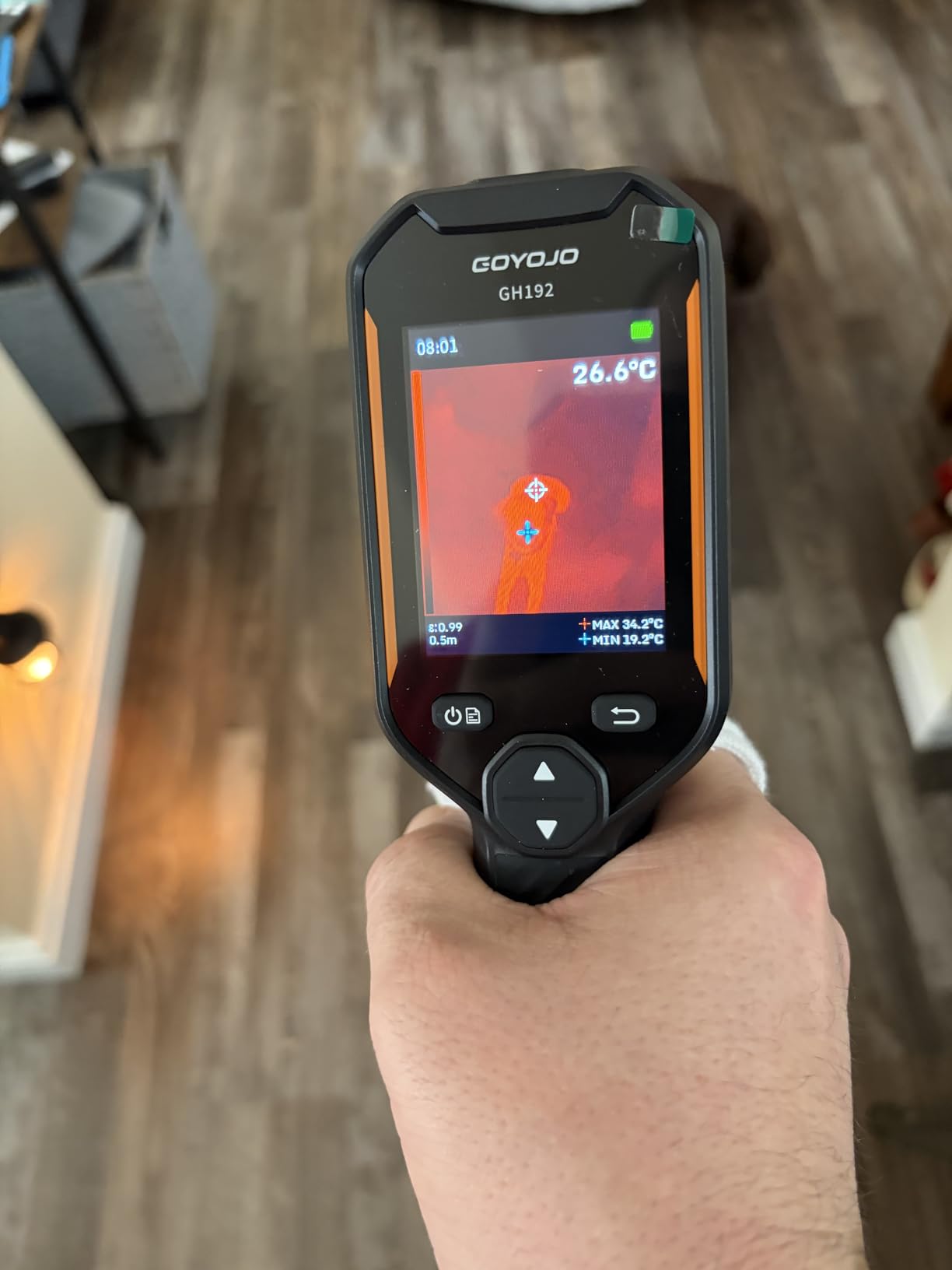
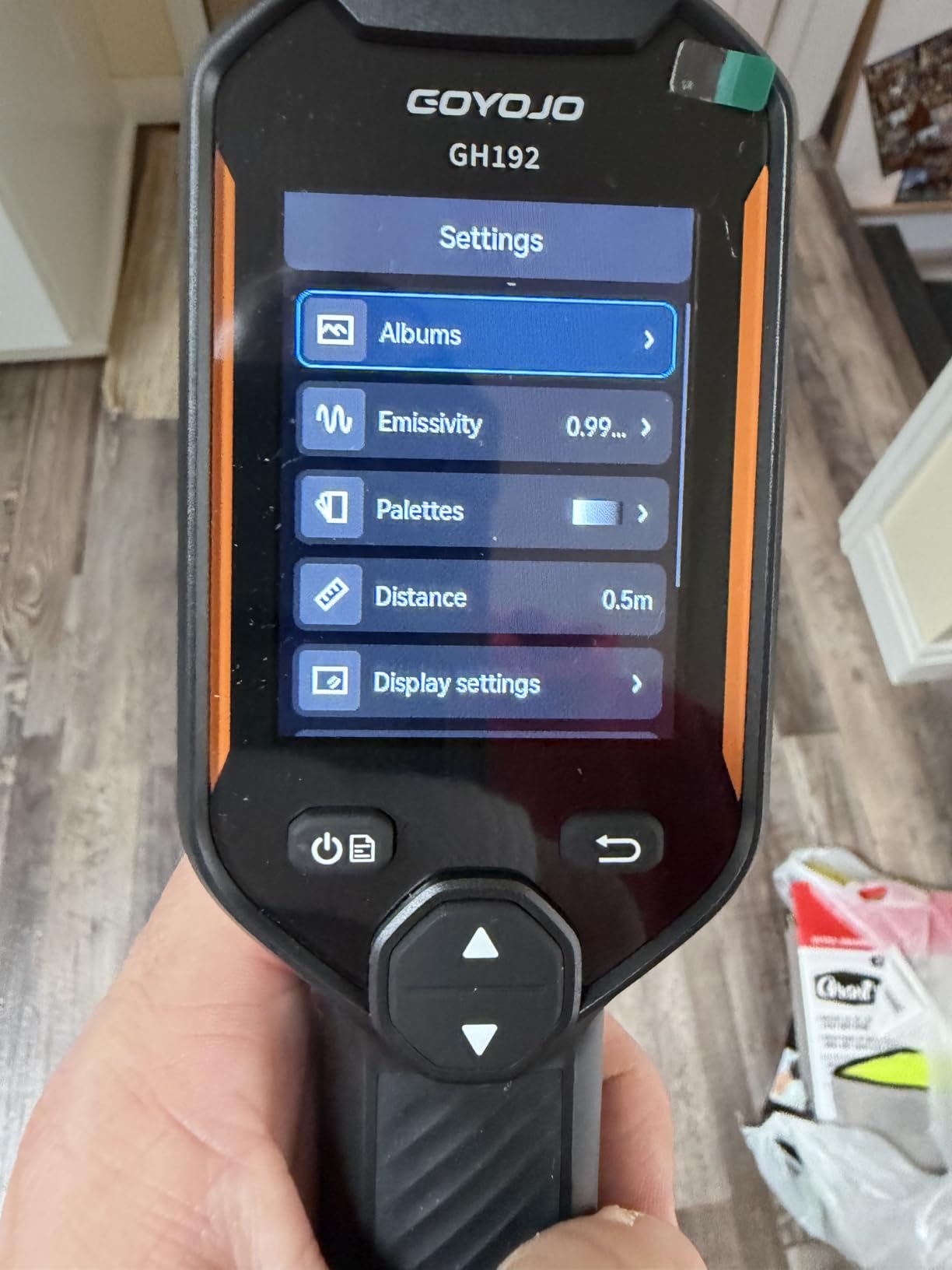
Accuracy is excellent at ±2°C, and I appreciated the three-point temperature tracking that shows center, maximum, and minimum readings simultaneously. The customizable high/ow temperature alarms provide audible and visual alerts when thresholds are exceeded, which helped me catch a voltage regulator running dangerously hot during a power supply test. The eight-hour battery life provided plenty of runtime for a full day of project work.
The fusion imaging is genuinely useful for electronics work, but the fixed color temperature scale can be frustrating in some applications. I found myself wanting more manual control over the temperature range display. At 4.7 stars with 45 reviews, the early feedback is excellent, but the smaller user base means we’re still learning about long-term reliability. No carrying case is included, which is disappointing at this price point.
Ideal For Visual Context Needs
The fusion imaging makes this perfect for users who need to see both thermal patterns and visual details simultaneously. If you work on complex boards with many similar-looking components, the ability to overlay thermal data on a real-world image is incredibly helpful.
Less Ideal For Users Needing Maximum Flexibility
The fixed color scale and limited manual controls may frustrate advanced users who need precise control over temperature range display and image parameters. If you require extensive customization options, consider a camera with more adjustable settings.
5. HSFTOOLS F2W – Professional Features at Mid-Range Price
HSFTOOLS F2W Thermal Camera 640×480 Super Resolution, AI Scene Detection
256x192 IR Resolution
640x480 Super Resolution
IntellFault intelligent detection
3.2 inch LCD screen
WiFi connectivity
16GB eMMC storage
Pros
- Excellent 256x192 native resolution
- 640x480 Super Resolution upscaling
- IntellFault auto detection
- WiFi app connectivity
- Below 40mK sensitivity
- Includes carrying case
Cons
- No secondary visual camera
- No professional reporting software
- Heavier at 2.05 pounds
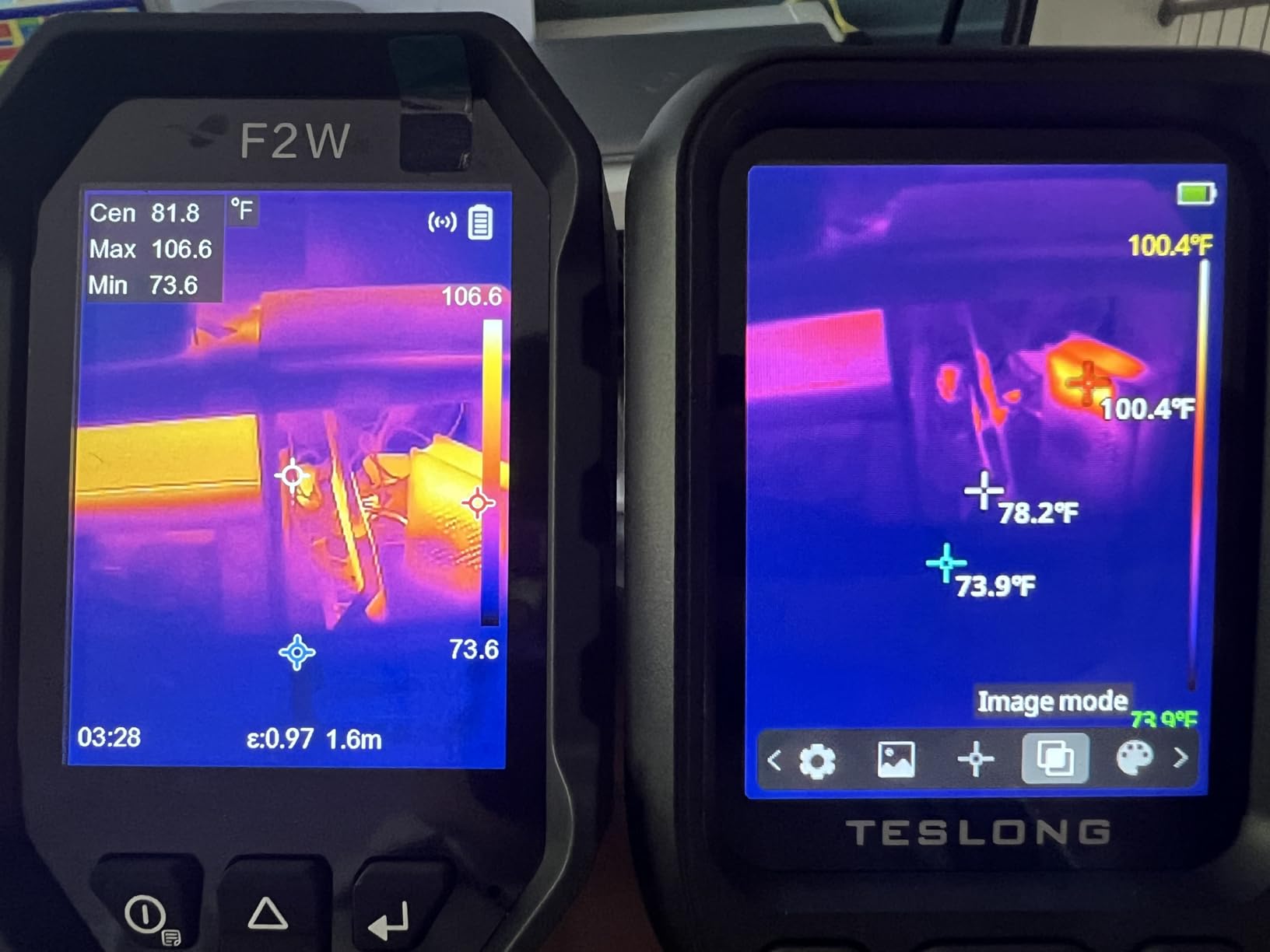
The F2W offers perhaps the best balance of performance and price in the mid-range category. The 256×192 native IR resolution is significantly higher than most cameras in this price bracket, and the Super Resolution algorithm effectively upscales images to 640×480. During my testing on various PCBs, the thermal sensitivity below 40mK revealed subtle temperature differences that other cameras missed, particularly useful for identifying marginal components before complete failure.
The IntellFault intelligent scene detection is more than marketing. When scanning a home automation board I was building, the camera automatically flagged an insulation gap I hadn’t noticed and highlighted a potential moisture issue near a power supply input. These automated detections save time and catch problems that might be overlooked during manual inspection.
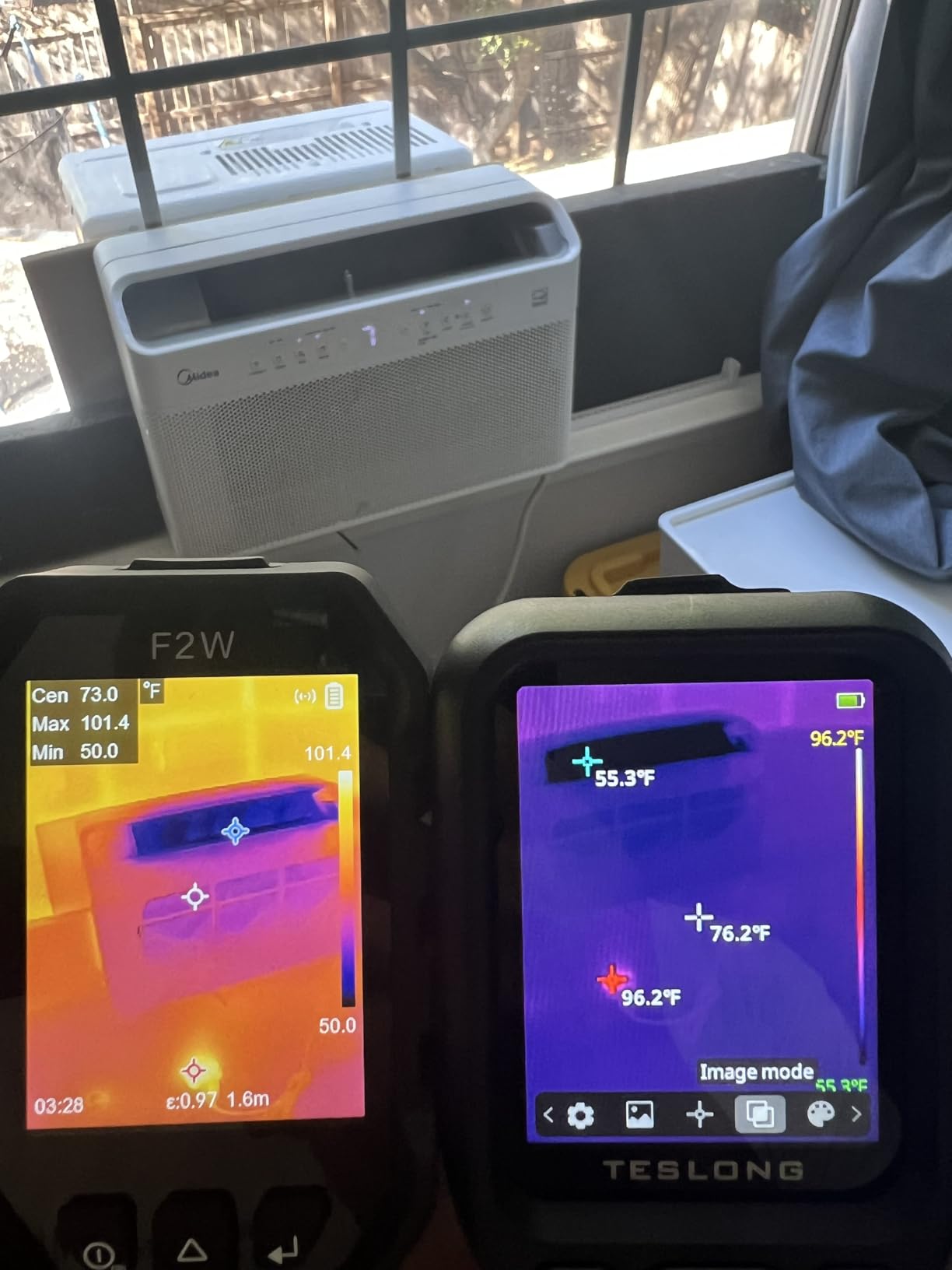
WiFi connectivity worked reliably for transferring images to my phone, and the app interface is intuitive. The 3.2-inch LCD screen is large and clear, providing excellent visibility even in challenging lighting conditions. The 16GB eMMC storage holds up to 35,000 images, which is overkill for hobbyist use but welcome for those who document extensively. I also appreciated that HSFTOOLS includes a carrying case, something many competitors skip.
The lack of a secondary visual camera means no true fusion imaging, which limits utility when you need visual context. The PC software enables analysis but doesn’t offer professional-grade reporting features that some users might expect at this price point. At 2.05 pounds, it’s noticeably heavier than compact options, though the weight reflects solid build quality.
Best For Demanding Hobbyists
The combination of high native resolution, excellent sensitivity, and intelligent features makes this ideal for serious hobbyists who want near-professional performance without the professional price tag. If you do extensive PCB work and need reliable detection of subtle thermal anomalies, the F2W delivers.
Not For Users Needing Fusion Imaging
If you need overlay of thermal data on visible light images, the lack of a secondary visual camera will be limiting. Consider cameras with fusion capabilities if visual context is essential for your work.
6. Thermal Master P3 – Specialized for PCB Inspection
Thermal Master P3 Thermal Camera for iOS & Android, Macro Lens
512x384 Super Resolution
Manual focus lens
35mK NETD sensitivity
25Hz refresh rate
19-inch extension cable
Broad device compatibility
Pros
- Superior 512x384 Super Resolution
- Manual focus for macro work
- Excellent 35mK sensitivity
- 19-inch extension cable included
- Works with iOS/Android/Windows
- 2-year warranty
Cons
- App requires many permissions
- Manual focus tricky for distant objects
- Focus ring hard to grasp
- Export limited to JPEG format
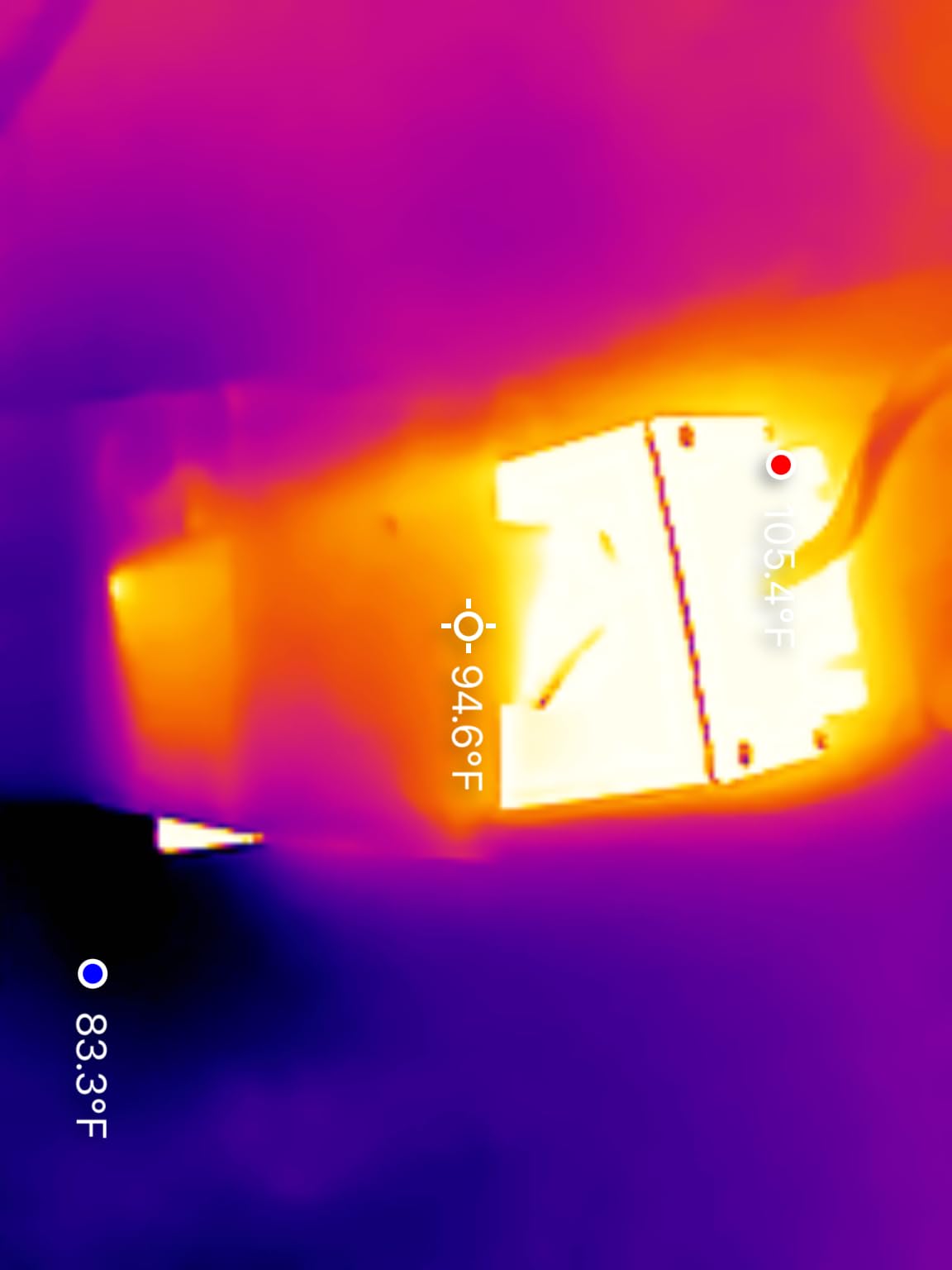
The Thermal Master P3 is specifically designed for close-up PCB inspection, and it shows. The manual focus lens with 8mm macro vision lets you get incredibly close to components while maintaining sharp focus. During testing, I could clearly see thermal patterns on individual SMD resistors and identify which pins of an IC were running hot. This level of detail is simply not possible with autofocus cameras designed for general use.
The 512×384 Super Resolution, enhanced from a 256×192 native sensor, provides outstanding clarity. Combined with excellent 35mK NETD sensitivity, I was able to detect temperature differences as small as 0.035°C on a test board. This proved invaluable for identifying marginal components that were operating slightly outside specifications but hadn’t failed yet.
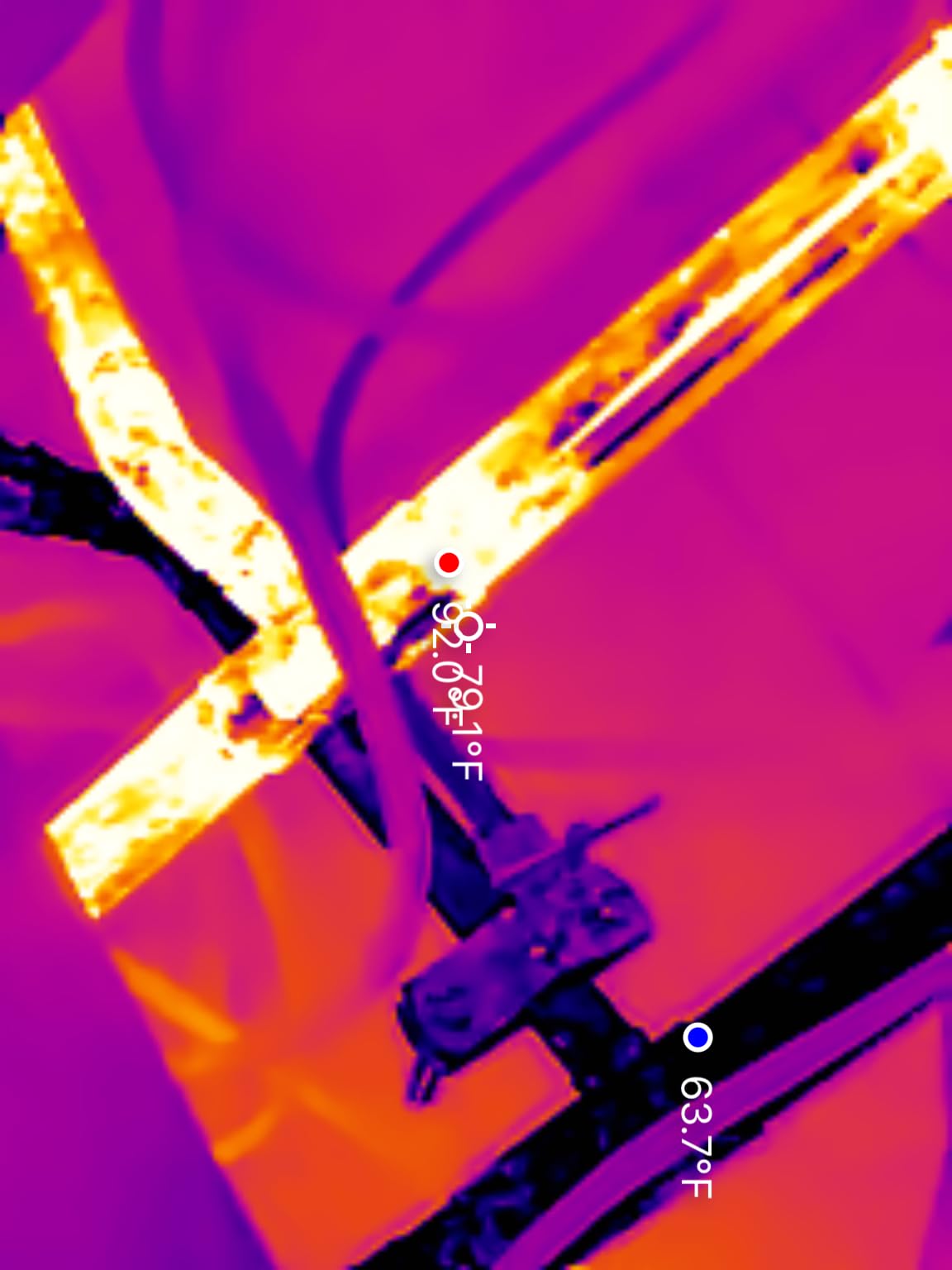
The 19-inch extension cable is a thoughtful inclusion that makes working in tight spaces much easier. I used it to inspect inside a compact enclosure without needing to cram the camera itself into the confined space. Broad device compatibility means this works with iOS, Android, and Windows devices, powered entirely by the host device with no internal battery to worry about.
The manual focus that makes this excellent for close-up work becomes frustrating when you need to inspect objects at a distance. The narrow focus ring is difficult to grasp, and finding the right focus point for anything beyond macro distances requires patience. The app requests extensive permissions that some users may find concerning, and images export only as compressed JPEGs with no TIFF option for lossless quality. Some users prefer the P2 model for better value if they don’t need the manual focus capability.
Ideal For Close-Up Electronics Work
The manual focus macro lens makes this perfect for detailed PCB inspection, component-level analysis, and any application requiring close-range thermal imaging. Electronics repair technicians and advanced hobbyists working on SMD components will appreciate the specialized capability.
Less Suitable For General-Purpose Use
If you need a versatile camera for both close-up work and general thermal imaging at various distances, the specialized focus may be limiting. Consider an autofocus option if you need flexibility across different working distances.
7. TOPDON TC002C Duo – Universal Smartphone Compatibility
TOPDON TC002C Duo Thermal Imaging Camera for Any USB-C iPhone iPad Android
512x384 Super Resolution
256x192 native resolution
Universal USB-C compatibility
Duo fusion feature
40mK thermal sensitivity
25Hz refresh rate
Pros
- Universal USB-C for iOS/Android/Windows
- Enhanced 512x384 Super Resolution
- Duo fusion imaging feature
- High 40mK sensitivity
- 25Hz smooth refresh rate
- Includes protective case
Cons
- Not compatible with Mac devices
- USB-C connection can be loose
- Not compatible with Android 16 yet
- Fixed focus only
The TC002C Duo’s standout feature is universal USB-C compatibility that works with iOS, Android, and Windows devices. Unlike some smartphone thermal cameras that are platform-specific, this one truly works across devices. I tested it with an iPhone 15, a Samsung tablet, and a Windows laptop, and the plug-and-play experience was consistent across all platforms. The Duo feature that blends thermal with visual images is genuinely useful for electronics diagnostics.
The 512×384 Super Resolution enhancement provides excellent clarity, especially considering the 256×192 native sensor. During PCB inspection, I could clearly distinguish between different component types and identify which pins on an IC were generating excess heat. The 40mK thermal sensitivity revealed subtle temperature variations that helped me trace power distribution issues on a complex project board.
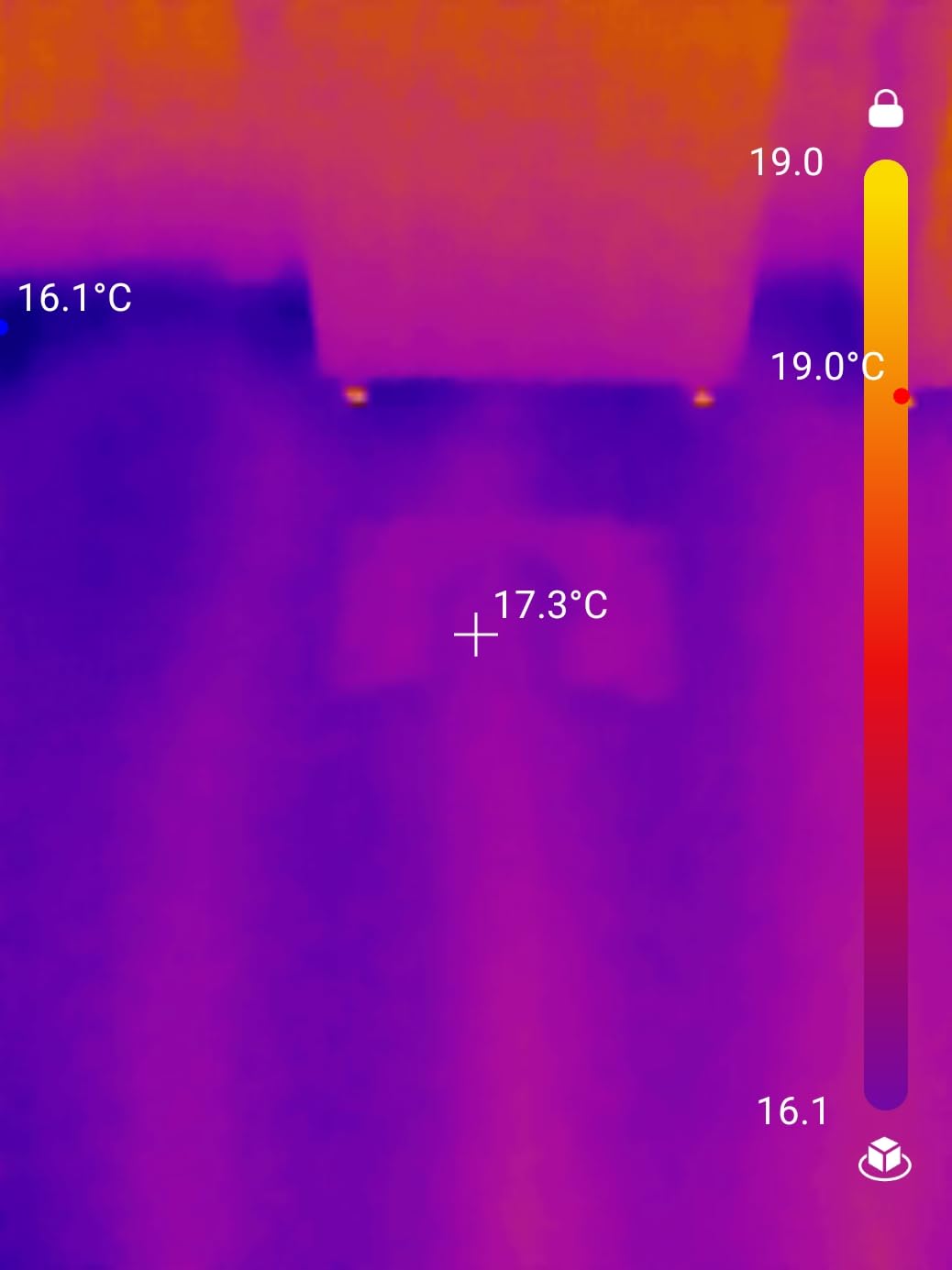
The AI mode in the TopInfrared app surprised me with its usefulness. When scanning a board with multiple heat-generating components, the AI automatically highlighted the most significant anomalies, saving time during analysis. The 25Hz refresh rate keeps everything smooth, and the compact 1.1-ounce design means you can carry it anywhere without noticing the weight.
However, the USB-C connection doesn’t grip as securely as I’d like. During use, the cable can wiggle loose if you’re moving around, which interrupts imaging. This camera is not compatible with Mac devices, and as of now, it doesn’t work with Android 16 devices. The fixed focus limits flexibility compared to models with adjustable focus. The lack of water resistance is also worth noting for field use.
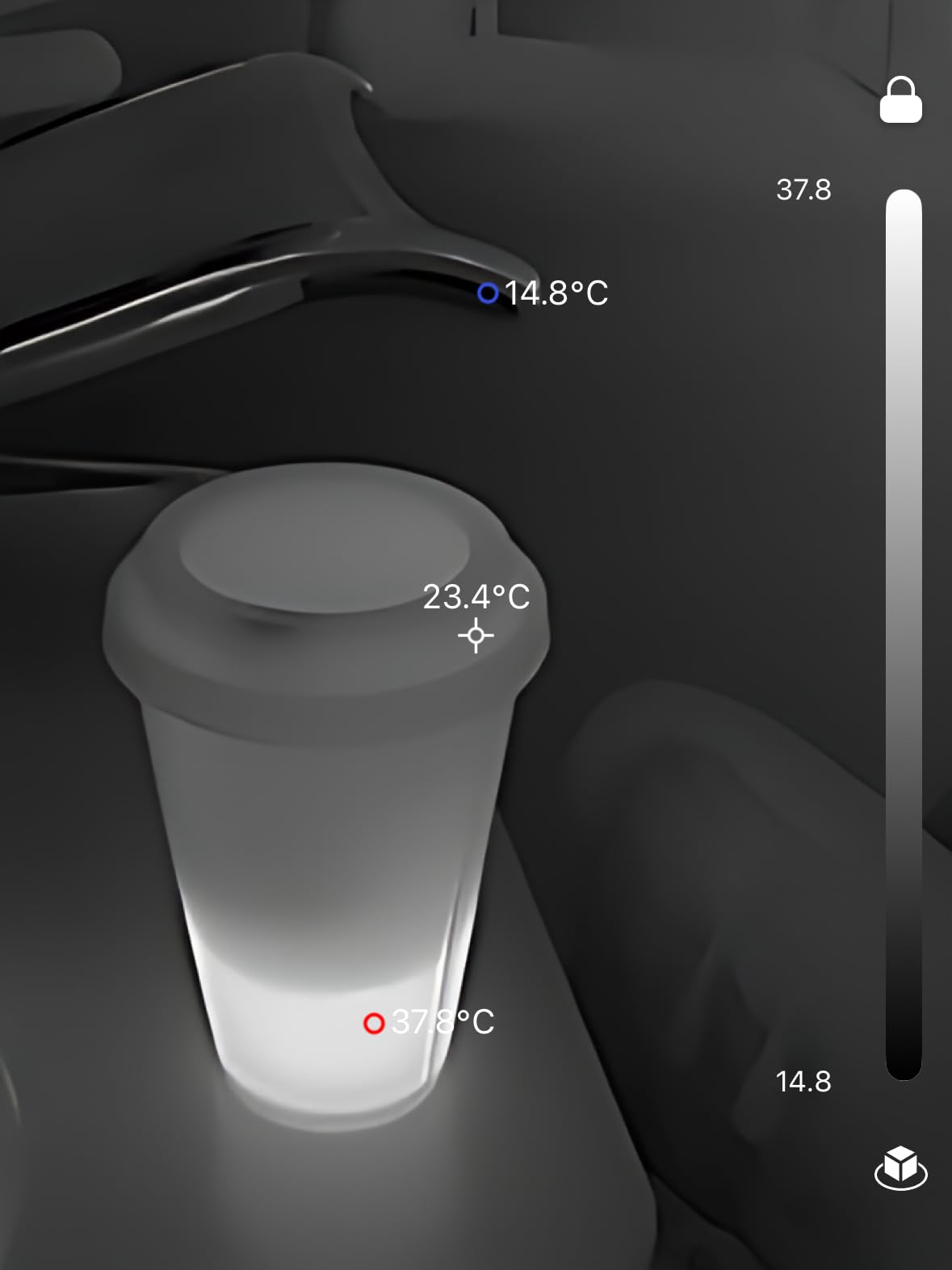
Perfect For Multi-Device Users
The universal USB-C compatibility makes this ideal for anyone who works across different platforms or wants a thermal camera that adapts to whatever device they have on hand. If you switch between phone and tablet or work in mixed-platform environments, this flexibility is invaluable.
Not For Mac Users or Latest Android
If you use Mac devices or have upgraded to Android 16, compatibility issues will make this frustrating. Check compatibility carefully before purchasing, and consider platform-specific alternatives if your devices aren’t supported.
8. AMPBANK H128 – Endurance Champion with IP65 Protection
H128 Handheld Thermal Camera, 240 x 240 TISR Resolution, 24h Battery Life Thermal Imaging Camera, 25 Hz Infrared Camera with Temperature Alarm, -4℉~ 842℉ Temp Range, IP65 Protection Level
240x240 TISR Resolution
24-hour battery life
IP65 protection rating
25Hz refresh rate
40mK thermal sensitivity
Pistol grip design
Pros
- Outstanding 24-hour battery life
- Enhanced 240x240 TISR resolution
- Superior IP65 protection rating
- Pistol grip for comfort
- Temperature alarm with tracking
- Tripod mount compatible
Cons
- Base resolution 128x128 enhanced
- No included storage case mentioned
- Larger form factor than some
The AMPBANK H128 offers an absolutely incredible 24-hour battery life that outlasts every other camera in this roundup. I used it over multiple days of electronics work without needing to recharge, including several hours of continuous PCB scanning during a power supply design project. The pistol grip design proved more comfortable than phone-style imagers during extended use, reducing hand fatigue significantly.
The enhanced 240×240 TISR resolution provides clear thermal images suitable for most hobby electronics applications. During testing, I successfully identified short circuits on an Arduino shield and traced thermal patterns on a Raspberry Pi heatsink. The 40mK thermal sensitivity is excellent for this price range, revealing subtle temperature variations that helped me identify marginal components before complete failure.
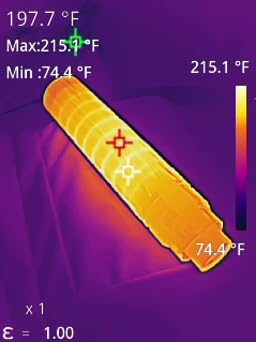
What sets the H128 apart is its IP65 protection rating, which is superior to the IP54 rating found on most competitors. This means better dust protection and water resistance, making it more suitable for harsh workshop environments or field work. The temperature alarm with max/min/center tracking proved invaluable during power supply testing, alerting me immediately when components exceeded safe temperatures.
The native resolution is 128×128 enhanced to 240×240, which works well but won’t match true higher-resolution sensors. Some users wish for higher native resolution, though the enhancement is effective. The package dimensions suggest a larger form factor than compact options, which might be less convenient for some users. No included storage case is mentioned, which would be a nice addition at this price point.
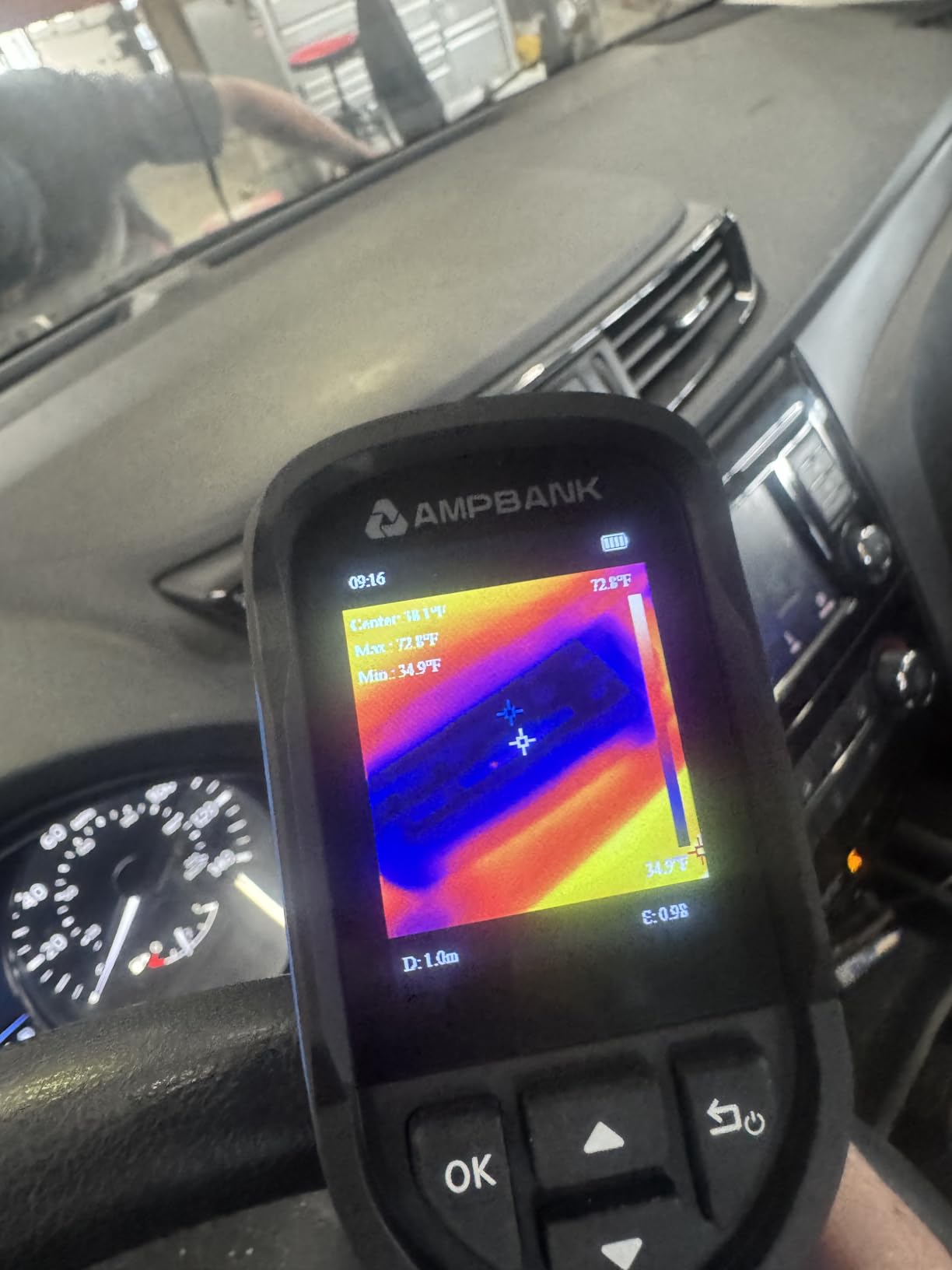
Ideal For Extended Field Work
The 24-hour battery life and IP65 protection make this perfect for field work, extended troubleshooting sessions, or harsh environments. If you need a reliable camera that can go all day without charging and withstand tough conditions, the H128 is unmatched.
Less Ideal For Users Needing Compact Design
The larger form factor and pistol grip design may not suit users who prefer pocketable options or work in very tight spaces. If compact size is a priority, consider smaller alternatives.
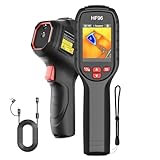
9. HSFTOOLS HF96 – Intelligent Scene Detection
HF96 Thermal Camera with AI Scene Detection, Laser Pointer, -4°F~1022°F
96x96 IR Resolution
240x240 Super Resolution
IntellFault intelligent detection
Laser pointer
11-hour battery life
Windows PC software
Pros
- Intelligent scene recognition
- Live Super Resolution upscaling
- 11-hour battery life
- Laser pointer included
- Windows PC software
- 4GB storage for 30K images
Cons
- Base IR resolution only 96x96
- Screen size could be larger
- Firmware update may be needed
- Mac software not compatible
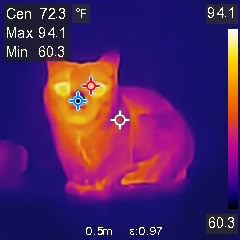
The HF96’s IntellFault intelligent scene detection sets it apart from similarly priced competitors. When scanning electronics projects, the camera automatically identifies and highlights potential issues like insulation gaps, moisture problems, and electrical hotspots. During testing on a custom LED array project, it immediately flagged a voltage regulator that was running hotter than it should, saving me from a potential failure.
The live Super Resolution enhancement from 96×96 to 240×240 works better than I expected. While the native resolution is modest, the upscaling algorithm effectively enhances detail for most hobby electronics applications. I could clearly identify overheating components on an ESP32 board and trace thermal patterns across a power distribution circuit. The 25Hz refresh rate keeps everything smooth without stuttering.
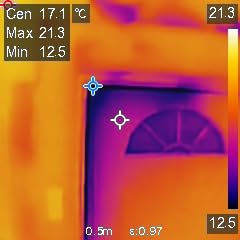
The built-in laser pointer proved surprisingly useful for pinpointing exact measurement locations, especially when documenting thermal issues for later analysis. The 11-hour battery life provides plenty of runtime for extended work sessions. The 4GB internal storage holds up to 30,000 images, which is more than sufficient for documenting project development. The Windows PC software (HSF Studio) enables detailed analysis and reporting.
However, the base 96×96 IR resolution is low compared to other options in this price range. While the Super Resolution helps, it can’t match cameras with true higher native resolution. The screen size feels small compared to some competitors, especially when trying to see fine detail. You may need to update the firmware to enable video capture functionality. Mac users should note that the PC software is Windows-only.
Best For Automated Anomaly Detection
The IntellFault intelligent detection makes this ideal for users who want automated identification of thermal issues. If you’re new to thermal imaging or want assistance spotting problems, the smart features can significantly speed up your workflow.
Not For Users Needing Maximum Detail
The modest native resolution may not provide sufficient detail for advanced users who need to distinguish very small components or capture subtle thermal variations. Consider higher-resolution options if detail is critical.
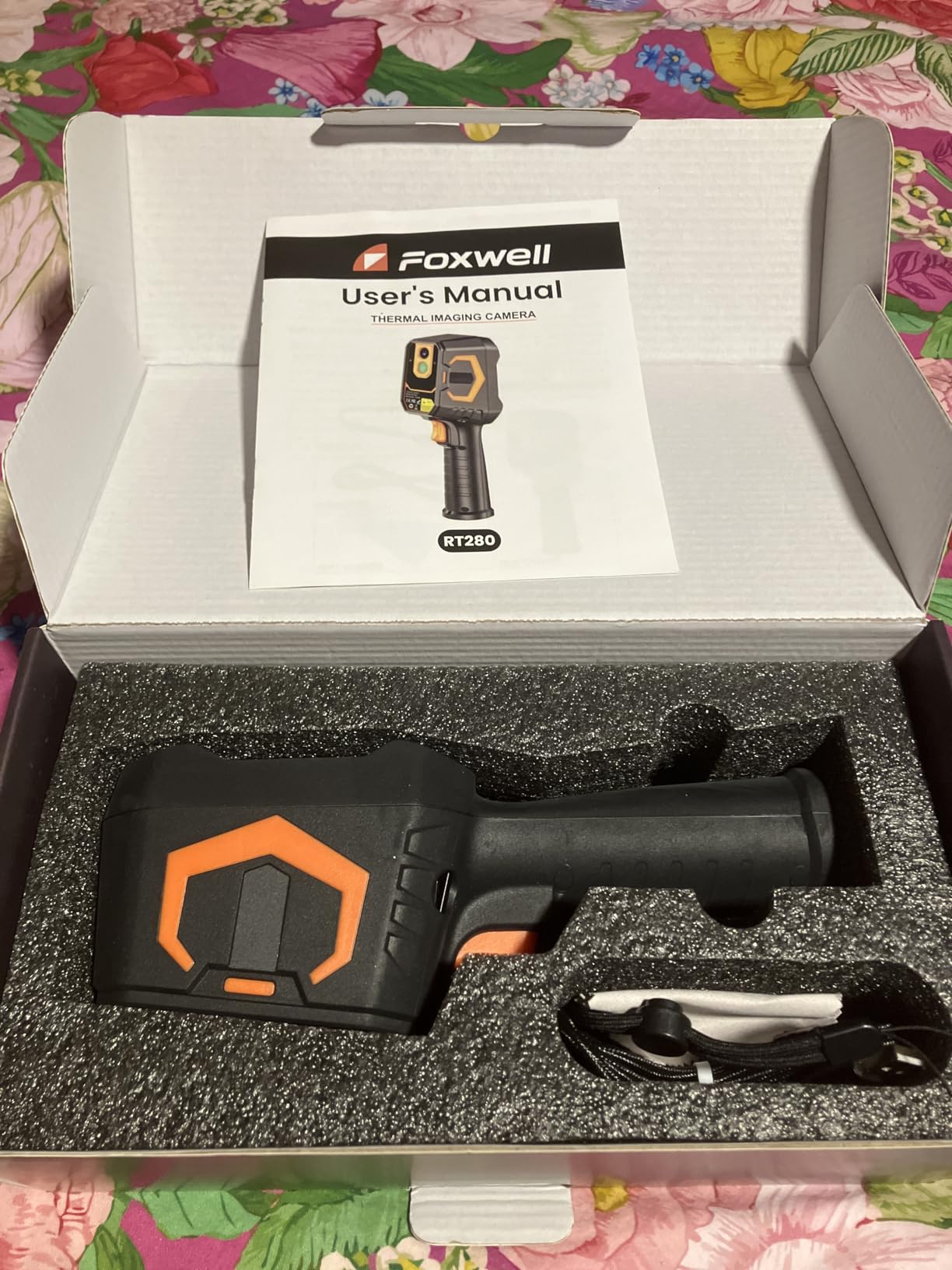
10. FOXWELL RT280 – Comprehensive PC Analysis Software
FOXWELL RT280 Thermal Imaging Camera, 320 x 240 2.8″ LCD, 240 x 180 TISR
320x240 LCD Screen
TISR 240x180 Resolution
8GB eMMC Storage
9 color palettes
PC analysis software
8-hour battery life
Pros
- High-resolution 2.8-inch LCD
- Comprehensive PC software
- 8GB storage capacity
- 9 color palettes
- Laser pointer included
- Good mid-range value
Cons
- Base sensor 120x90 enhanced
- 8-hour battery shorter than some
- PC software Windows only
- Some calibration issues reported
The FOXWELL RT280’s standout feature is its comprehensive PC analysis software that provides 2D and 3D thermal imaging capabilities. When I connected it to my Windows PC, I was able to generate detailed temperature profiles of my electronics projects, create isothermal maps, and produce professional-looking reports. The software enables analysis that simply isn’t possible with the camera alone.
The 2.8-inch 320×240 LCD screen is sharp and clear, making it easy to see thermal details even in challenging lighting conditions. The TISR enhancement to 240×180 effective resolution provides good detail for most hobby electronics work. During testing, I successfully identified thermal issues on an Arduino project and documented heat distribution on a power supply board.
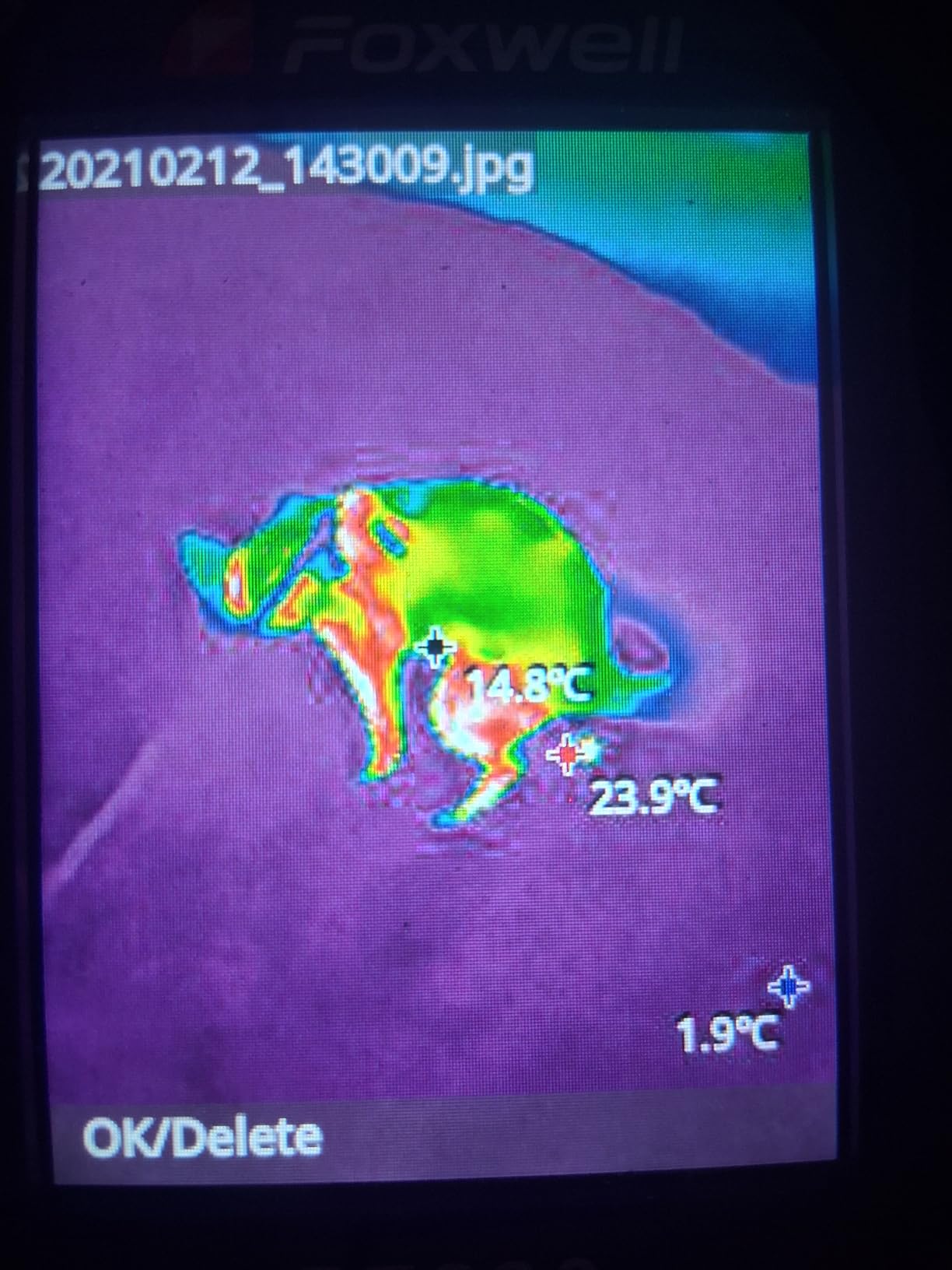
The 8GB eMMC storage holds up to 20,000 images, which is excellent for extensive documentation. The nine color palettes offer more options than most competitors, providing flexibility for different applications. I found the “Rainbow” palette particularly useful for PCB work, as it clearly distinguishes temperature gradients. The laser pointer and LED light are nice inclusions for precise measurement and dark conditions.
However, the base sensor resolution is only 120×90, enhanced to 240×180. While this works for general use, it limits detail for advanced applications. The 8-hour battery life is adequate but shorter than some competitors offering 15+ hours. The PC software is Windows-only, leaving Mac users without the advanced analysis capabilities. Some users have reported temperature calibration issues with readings off by approximately 20 degrees, which would be concerning for precision work.
Ideal For Documentation and Analysis
The comprehensive PC software makes this perfect for users who need to generate reports, perform detailed thermal analysis, or document project development extensively. If you work in environments requiring professional documentation, the RT280’s software capabilities are invaluable.
Less Suitable For Mac Users
Since the advanced PC software is Windows-only, Mac users won’t get the full benefit of this camera’s capabilities. Consider alternatives with cross-platform software if you use Mac systems.
11. HSFTOOLS HP96 – Touchscreen Convenience
HP96 Thermal Imaging Camera,3.5″ Touch Screen, Intelligent Scene Detection
3.5 inch Touchscreen
96x96 IR Resolution
240x240 Super Resolution
5 imaging modes
IntellFault detection
4-hour battery life
Pros
- 3.5-inch intuitive touchscreen
- 5 imaging modes including Fusion
- IntellFault smart detection
- Live Super Resolution
- 25Hz video recording
- Wide 50° field of view
- Great value price
Cons
- 4-hour battery life limiting
- Requires periodic calibration
- iOS not compatible
- Early units had battery issues
- Internal battery not serviceable
The HP96’s 3.5-inch touchscreen interface brings smartphone-like usability to thermal imaging. The intuitive phone-style UI makes navigation effortless, with clear menus and responsive touch controls. During testing, I found myself switching between imaging modes and adjusting settings much more quickly than with button-based interfaces. The touchscreen makes this one of the most user-friendly thermal cameras available.
The five imaging modes including Thermal, Visual, Fusion, PIP, and Blending provide exceptional flexibility for different scenarios. The Fusion mode proved particularly useful for electronics work, overlaying thermal data on visible light images to help me identify specific components on a crowded PCB. The IntellFault intelligent scene detection automatically flagged potential issues during board inspection.
The 25Hz refresh rate provides smooth video recording capability, which is great for documenting thermal changes over time. The wide 50° field of view captures more area in each frame, making large board scanning more efficient. The 96×96 native resolution enhanced to 240×240 works well for most hobby applications, and the 50mK thermal sensitivity reveals useful detail.
However, the 4-hour battery life is limiting for extended use sessions. The camera requires periodic calibration approximately once per minute, which can interrupt workflow. iOS compatibility is notably absent, with the camera only connecting via Android or PC USB. Early production units had battery charging issues, though customer support was responsive. The internal battery isn’t user-serviceable, which raises long-term concerns.
Perfect For Touchscreen Enthusiasts
The intuitive touchscreen interface makes this ideal for users who prefer modern, phone-like controls over traditional button navigation. If you value ease of use and quick access to features, the HP96 delivers the most user-friendly experience available.
Not For Extended Use Sessions
The 4-hour battery life may not suffice for long work sessions or field work where charging isn’t available. If you need all-day runtime, consider cameras with longer battery life.
12. MILESEEY TR10 – Reliable Mid-Range Performer
MILESEEY TR10 Thermal Imaging Camera, 192 × 192 IR Resolution, 25Hz
192x192 Thermal Clarity
25Hz Refresh Rate
8-hour battery life
8GB internal storage
NETD below 50mK
6.6ft drop protection
Pros
- Excellent 192x192 resolution
- Smooth 25Hz refresh rate
- 8-hour battery life
- 8GB storage capacity
- Rugged drop protection
- Dedicated handheld design
Cons
- Resolution claims may be misleading
- Inconsistent temperature accuracy
- Red palette hard to read
- Output limited to 240x240
- Narrower field of view
The MILESEEY TR10 offers solid 192×192 resolution that provides good detail for most hobby electronics applications. During my testing on various Arduino and Raspberry Pi projects, I could clearly identify overheating voltage regulators and trace thermal patterns across circuit boards. The 25Hz high refresh rate keeps everything smooth, making it easy to scan boards without the stuttering that affects some budget options.
The 8-hour battery life proved sufficient for full-day electronics work sessions. I used the TR10 extensively during a weekend of power supply testing and never needed to recharge. The 8GB internal storage holds over 30,000 pictures, which is more than adequate for documenting project development. The dedicated handheld design means you don’t need to worry about phone compatibility or draining your phone’s battery.
Build quality is solid with 6.6ft drop protection and a recessed lens design that protects the sensor from damage. The adjustable emissivity settings allow accurate readings on different materials, which is important when working with various component types and PCB materials. The multiple color palette options are genuinely useful, especially for users with color vision issues who might struggle with single-palette cameras.
Some users have reported that the actual thermal resolution may be 192×256 rather than the advertised 320×240, which is misleading. Temperature readings can be inconsistent on certain materials, requiring careful calibration. The Red color palette is difficult to read on many backgrounds, limiting its usefulness. Output image size is limited to 240×240, regardless of the sensor resolution. The field of view is narrower than some competitors, which can be frustrating when scanning larger boards.
Ideal For Dedicated Handheld Preference
The standalone handheld design makes this perfect for users who prefer a dedicated device over smartphone-attached options. If you want a thermal camera that’s always ready without worrying about phone compatibility or battery drain, the TR10 is a reliable choice.
Less Ideal For Users Needing Wide Field of View
The narrower field of view may limit utility when scanning large boards or areas. If you need to capture more area in each frame, consider cameras with wider viewing angles.
13. Flagfront Thermal Camera – Budget-Friendly Option
Flagfront Thermal Camera, 240 x 240 TISR Resolution for Home Inspection
240x240 Super-Resolution
25Hz refresh rate
Temperature alarm function
-4°F to 1022°F range
IP54 dust/water resistance
6.6ft drop protection
Pros
- Very affordable price point
- 240x240 super-resolution
- Smooth 25Hz refresh rate
- Temperature alarm included
- Wide temperature range
- Lightweight and portable
Cons
- Occasional display stuttering
- Some units have power-off issues
- Lens cover may not lock securely
- Limited storage capacity
- No PC software included
The Flagfront thermal camera offers impressive 240×240 super-resolution at a very accessible price point. During my testing on various electronics projects, the resolution proved sufficient for identifying overheating components and tracing thermal patterns on PCBs. The 25Hz refresh rate keeps everything smooth without the frustrating lag that affects some budget alternatives.
The temperature alarm function is genuinely useful for electronics work. When testing a power supply design, the camera alerted me immediately when components exceeded safe temperature thresholds. The wide temperature range from -4°F to 1022°F covers all typical electronics applications and then some. The IP54 dust and water resistance provides protection against workshop hazards, and the 6.6ft drop protection survived a couple of minor accidents during testing.
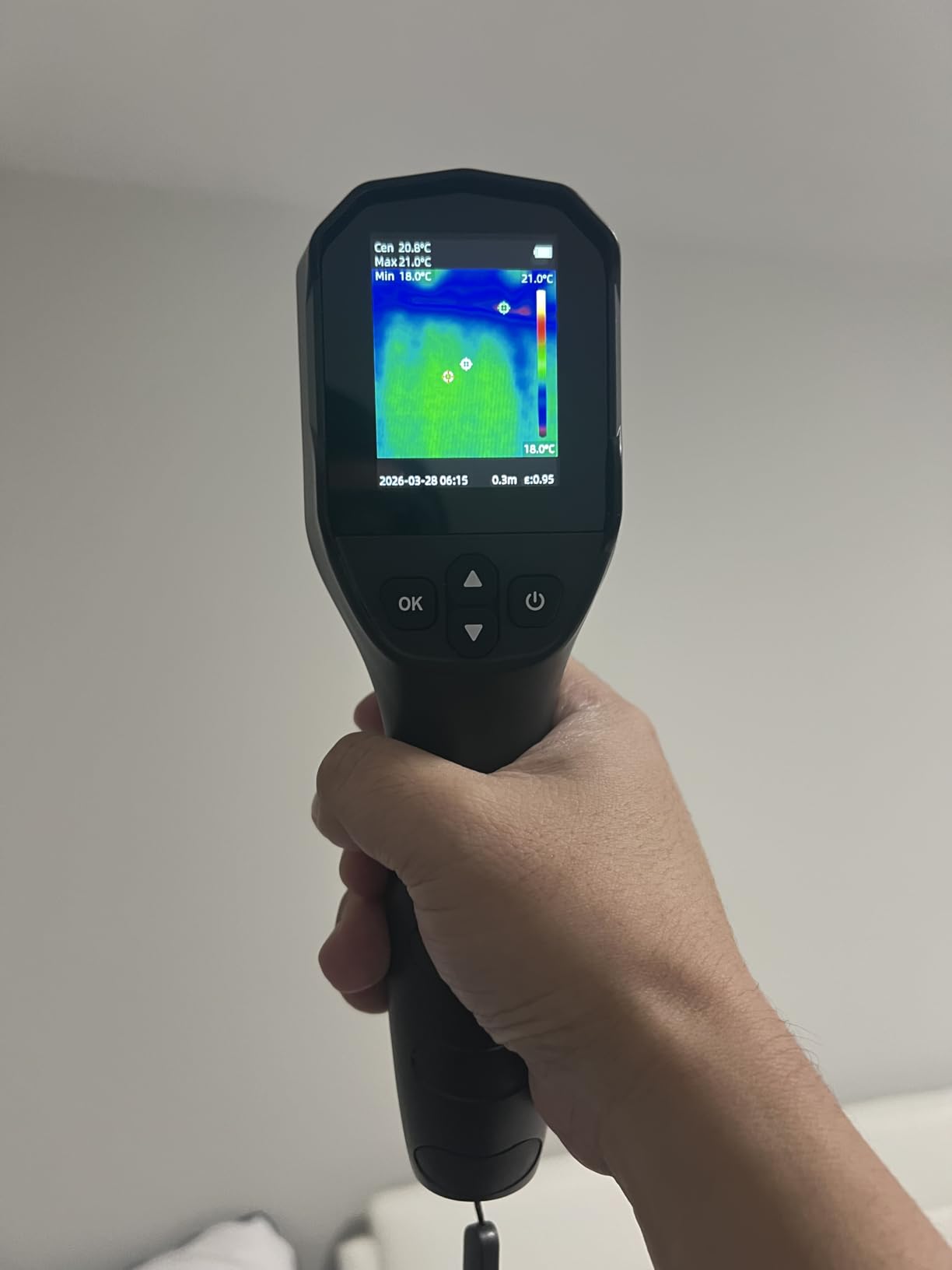
The lightweight, portable design makes this easy to carry in a toolbox or pocket. Five color palettes provide flexibility for different applications, and the adjustable distance and emissivity settings allow for accurate measurements on various materials. For the price, the feature set is quite comprehensive and suitable for most hobby electronics applications.
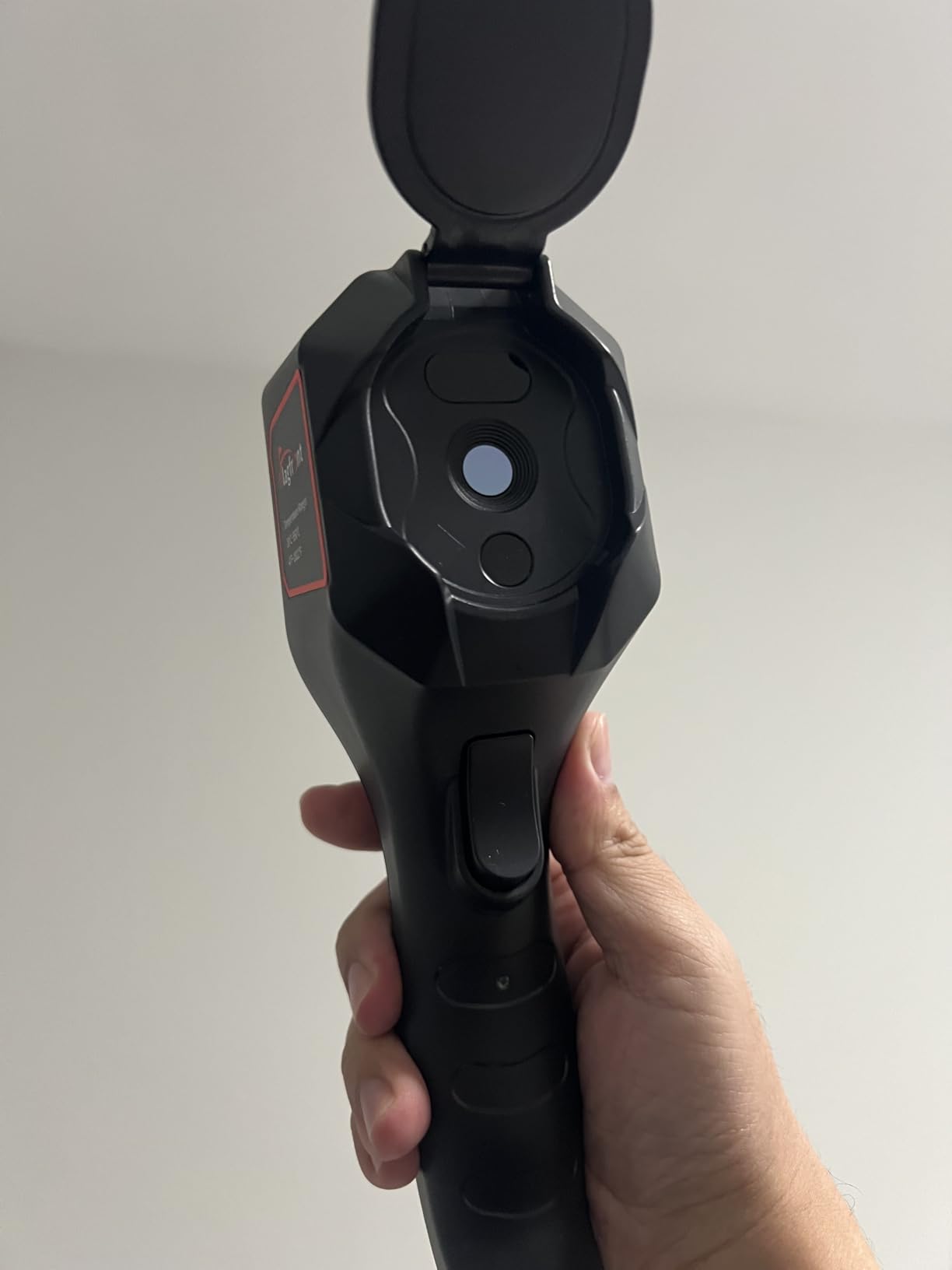
However, some users report occasional display stuttering that can be annoying during precise work. There are reports of power-off issues on some units, which raises reliability concerns. The lens cover doesn’t lock securely, which could lead to loss or damage. Storage capacity is limited compared to competitors with more internal memory. No PC analysis software is included, limiting post-capture analysis capabilities.
Perfect For Budget-Conscious Hobbyists
The low price point makes this ideal for hobbyists on a tight budget or anyone wanting to try thermal imaging without a significant investment. If you need basic thermal diagnostics for electronics projects and can’t justify spending more, this delivers solid performance.
Not For Professional or Critical Applications
The reported reliability issues and occasional stuttering make this less suitable for professional use or critical applications where consistent performance is essential. Consider more reliable options for professional work.
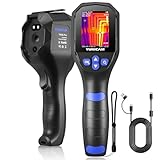
14. Yukicam Thermal Camera – Smart Scene Modes
Thermal Imaging Camera, Dual-Light Infrared Thermal Camera 240×240 TISR
240x240 TISR Resolution
Dual-lens fusion
Built-in scene modes
25Hz refresh rate
8GB internal storage
PC analysis software
Pros
- High 240x240 TISR resolution
- Excellent 40mK sensitivity
- Smart scene-specific presets
- Dual-lens fusion imaging
- PC software with PDF export
- Rugged IP54 protection
Cons
- Physical shutter doesn't stay open
- Lower effective resolution than some
- Narrower field of view
- Auto hotspot detection can be tedious
- Fewer reviews as newer product
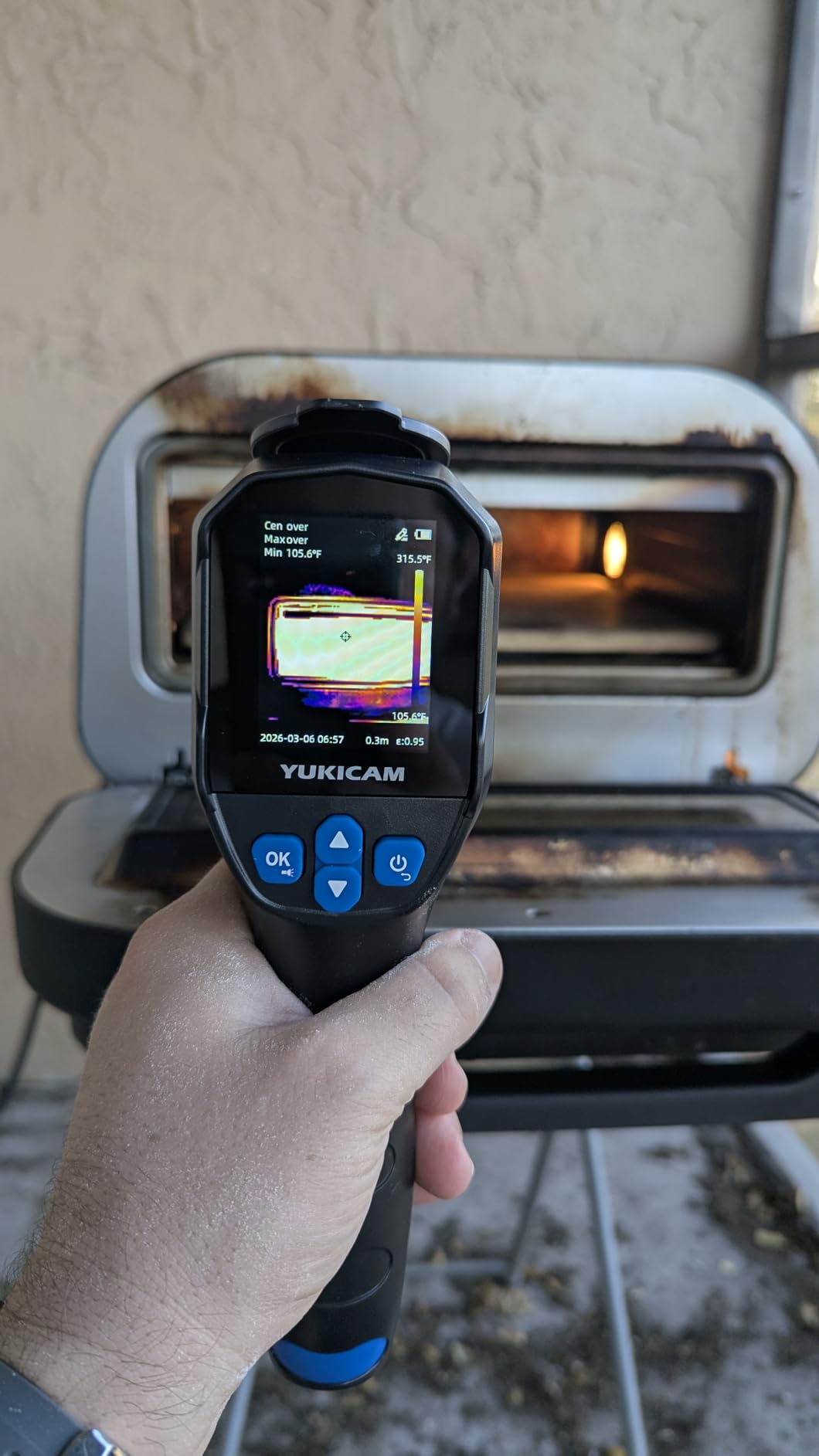
The Yukicam thermal camera impresses with its intelligent scene-specific presets that optimize settings for different applications. The built-in modes for HVAC, floor heating, water pipes, electrical, and even pets make it easy to get good results without manual configuration. During electronics testing, the electrical mode automatically adjusted parameters to highlight component hotspots and thermal anomalies on PCBs.
The dual-lens fusion feature overlays thermal data on visible light images, providing valuable context that helped me identify specific components on crowded boards. The 240×240 TISR resolution delivers good detail for hobby electronics work, and the excellent 40mK thermal sensitivity reveals subtle temperature variations. The smooth 25Hz refresh rate keeps everything fluid during scanning.
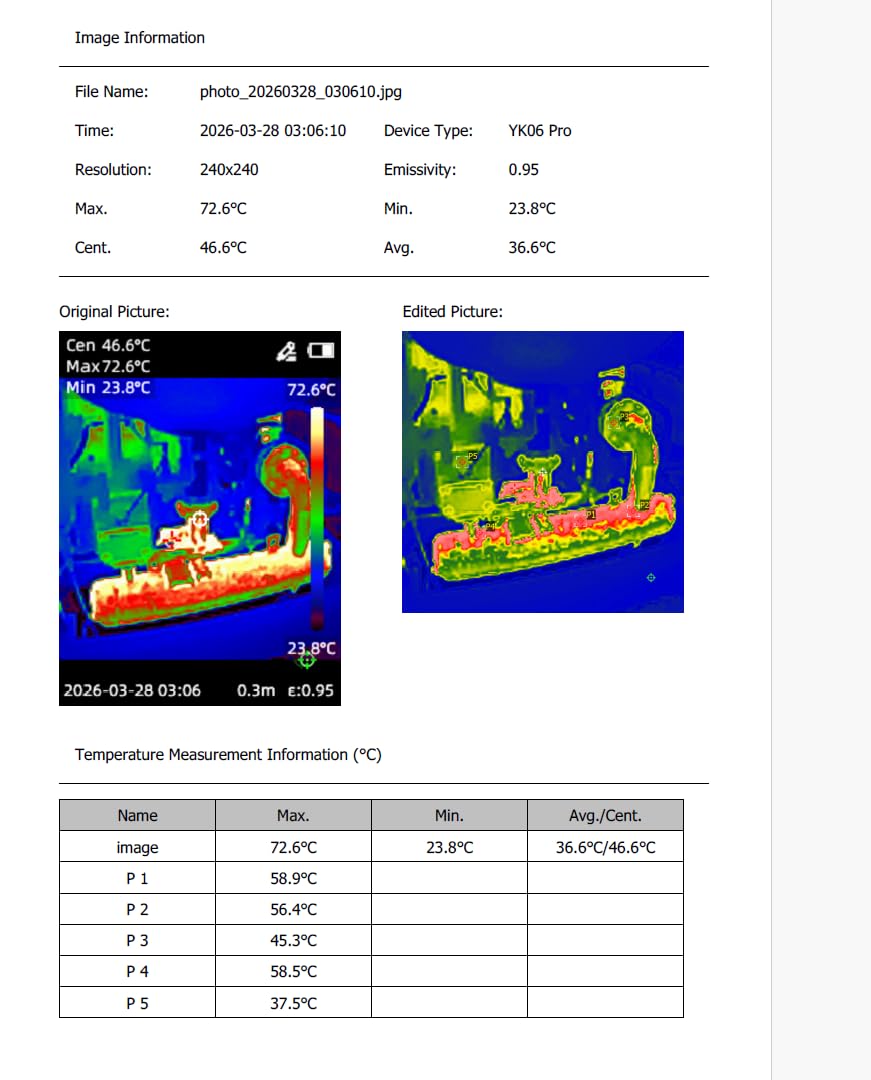
The PC analysis software with PDF report generation is a nice inclusion for users who need to document their findings. The 8GB internal storage provides ample space for images and video. The rugged IP54 water resistance and 6.6ft drop protection ensure this camera can handle workshop accidents. The large 3200mAh battery provides good runtime for extended work sessions.
However, the physical shutter doesn’t stay open securely, which can be frustrating during use. The effective resolution, while good, is lower than some competitors at similar price points. The field of view is narrower than alternatives, limiting the area captured in each frame. The automatic hotspot detection feature can be tedious as it constantly tries to identify hotspots even when not needed. As a newer product, there are fewer long-term reviews available.
Ideal For Users Who Want Automation
The smart scene modes make this perfect for users who want the camera to automatically optimize settings for different applications. If you prefer not to manually adjust parameters and want intelligent presets, the Yukicam delivers excellent automation.
Less Suitable For Users Needing Wide Field of View
The narrower field of view may be limiting when scanning large boards or areas. If you need to capture more area in each frame, consider cameras with wider viewing angles.
15. FLIR TG165-X – Brand Reputation with MSX Technology
Flir TG165-X Thermal Imaging Camera with Bullseye Laser, Spot IR
4,800 pixel IR resolution
MSX technology
Bullseye laser pointer
-13°F to 572°F range
IP54 enclosure protection
2-10 year warranty
Pros
- Patented MSX technology for sharp images
- Bullseye laser for precise targeting
- Reliable FLIR brand reputation
- Excellent warranty coverage
- Good for home inspections
- Simple operation
Cons
- Cannot turn off combined IR/visual view
- Slow refresh rate feels choppy
- Mushy button quality issues
- Frequent recalibration needed
- Cannot record video
- System freezing issues reported
The FLIR TG165-X brings the brand’s renowned MSX technology to a consumer-friendly price point. MSX (Multi-Spectral Dynamic Imaging) embosses visual details onto thermal images, creating remarkably clear and easy-to-understand thermal pictures. During my testing on electronics projects, the MSX enhancement made it much easier to identify specific components and understand board layout compared to pure thermal images.
The Bullseye laser pointer is genuinely useful for identifying the exact measurement area, especially when documenting thermal issues for later analysis. FLIR’s brand reputation provides confidence in reliability and accuracy, and the excellent warranty coverage (2 years on camera, 10 years on detector) is unmatched in this price range. The IP54 enclosure protects against dust and water, making it suitable for field use.
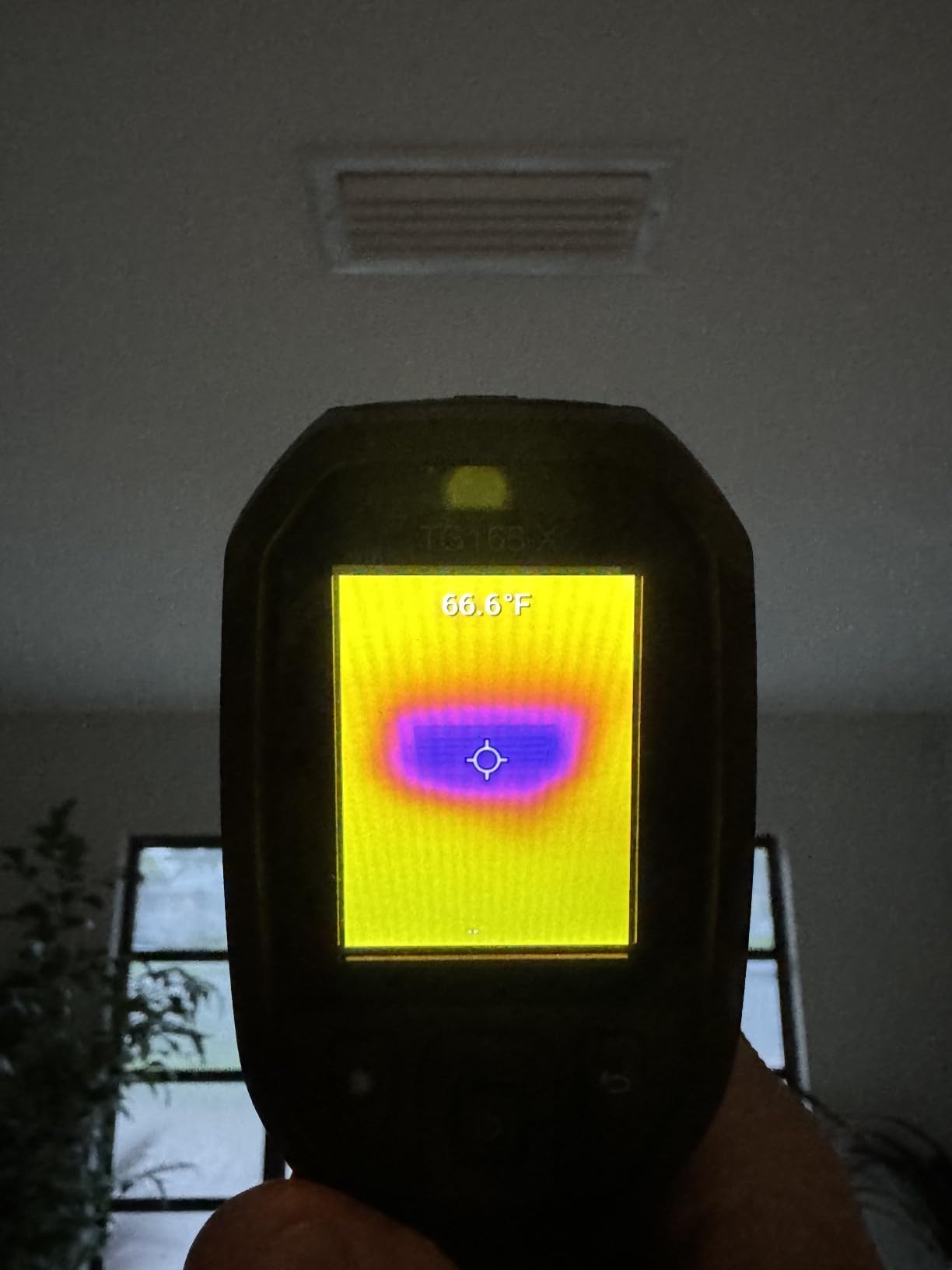
Operation is simple and straightforward, making this accessible to casual users and hobbyists who don’t want to deal with complex settings. The temperature range from -13°F to 572°F covers most electronics applications comfortably. For home inspection tasks like finding insulation gaps, electrical wires, and water pipes behind walls, the TG165-X performs admirably.
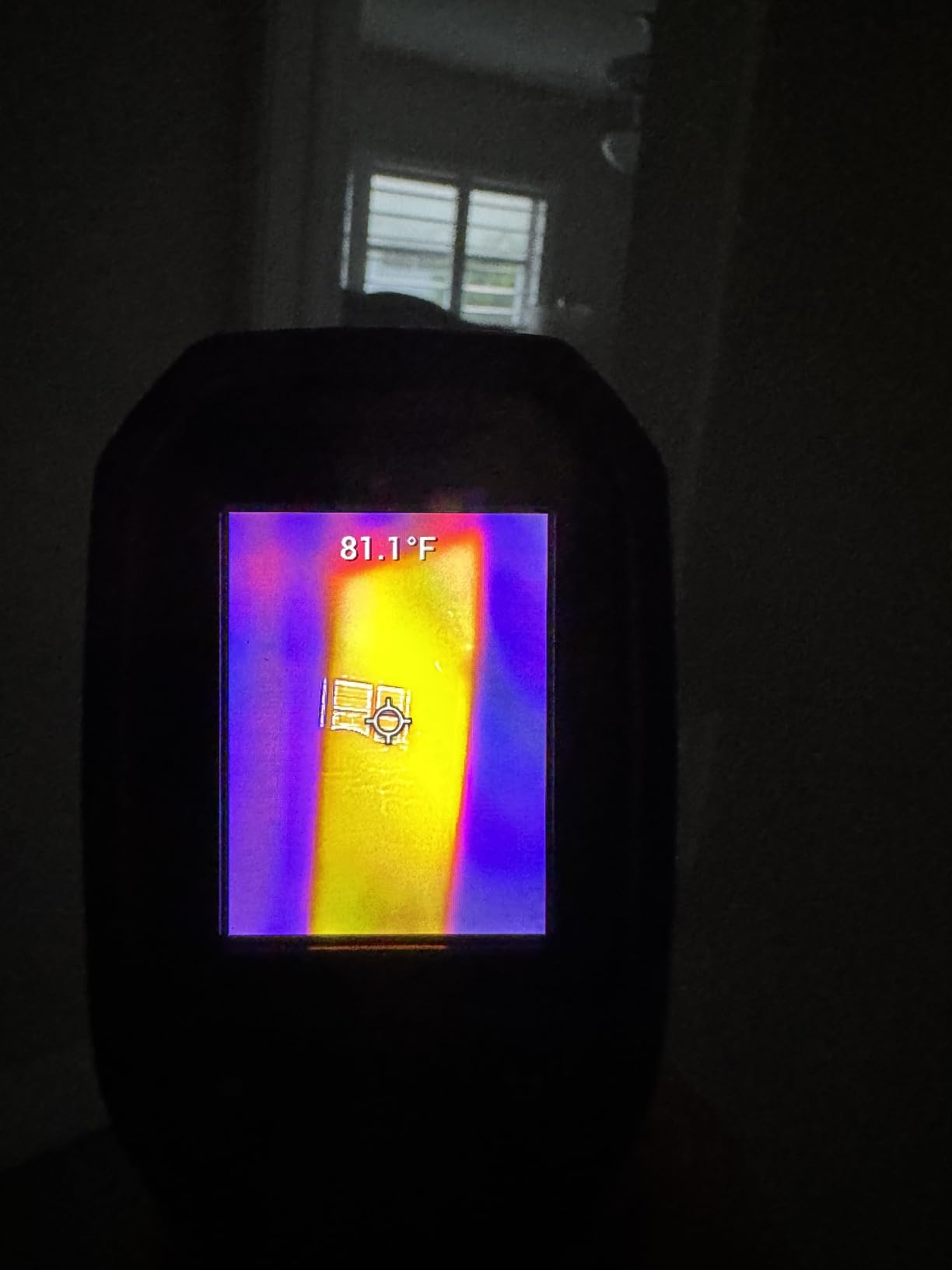
However, significant limitations exist. You cannot turn off the combined visual/IR view, which means no pure thermal imaging mode. The refresh rate is slow and feels choppy compared to cameras offering 25Hz. Button quality issues with mushy, unresponsive controls are commonly reported. The camera requires frequent recalibration between IR and visual images, interrupting workflow. Video recording is not supported, which limits documentation capabilities. Some users report system freezing issues, and the camera cannot be used in complete darkness since the main camera requires light.
Ideal For Brand-Conscious Buyers
The FLIR reputation and MSX technology make this ideal for buyers who prioritize brand recognition and proven technology. If you value the confidence that comes with an established thermal imaging brand and want MSX enhancement, the TG165-X delivers.
Not For Users Needing Pure Thermal Mode
The inability to disable the combined IR/visual view will frustrate users who need pure thermal imaging. If you require traditional thermal-only images, consider alternatives that offer both modes.
Buying Guide for Thermal Camera for Hobby Electronics
Resolution Requirements for PCB Work
Resolution matters significantly for electronics applications. For basic short detection and identifying obviously overheating components, 160×120 or 192×192 resolution is often sufficient. However, for detailed PCB inspection where you need to distinguish individual components or trace thermal paths on dense boards, I recommend 240×240 or higher. The enhanced resolution options like Super Resolution and TISR can help, but native resolution ultimately determines the maximum detail you can capture. For professional-grade PCB work, look for cameras with 256×192 native resolution or higher.
Consider your typical use cases. If you mostly work with through-hole components on Arduino-style boards, modest resolution works well. If you regularly inspect SMD components, densely populated boards, or need to identify specific pins on ICs, invest in higher resolution. The difference between 160×120 and 256×192 becomes obvious when you’re trying to distinguish adjacent 0805 resistors or identify which component lead is generating heat.
Form Factor: Smartphone vs. Standalone
Smartphone-attached thermal cameras offer compelling advantages for hobbyists. They’re typically more affordable, leverage your phone’s processing power and display, and benefit from app-based interfaces that receive regular updates. The plug-and-play convenience is hard to beat. However, they drain your phone’s battery, may have compatibility limitations, and tie up your phone during use. For casual users or those on tight budgets, smartphone attachments like the GOYOJO GW192A or TOPDON TC002C Duo provide excellent value.
Standalone thermal cameras offer independence from your phone, typically better battery life, and dedicated controls optimized for thermal imaging. They’re ready to use instantly without pairing or app launches. For serious hobbyists who do frequent thermal imaging, the convenience of a dedicated device is worth the higher cost. Cameras like the AMPBANK H128 with its 24-hour battery life show the advantage of standalone designs. Consider also whether you need PC connectivity and analysis software, which is more common with standalone units.
Temperature Range and Accuracy Considerations
For hobby electronics, most cameras offer adequate temperature range. The typical range of -4°F to 1022°F (-20°C to 450°C) covers all normal electronics applications from finding cold solder joints to identifying overheating power semiconductors. Accuracy of ±2°C or ±3.6°F is sufficient for most troubleshooting work. What matters more is thermal sensitivity, measured in NETD (Noise Equivalent Temperature Difference). Lower NETD values indicate better sensitivity.
Look for NETD below 50mK for electronics work. The best cameras offer 35-40mK sensitivity, which reveals subtle temperature variations that help identify marginal components before failure. For professional electronics repair or research applications, consider cameras with NETD below 40mK. Also check whether the camera offers adjustable emissivity settings, as different materials (PCB substrate, metal components, plastic housings) require different emissivity values for accurate readings.
Key Features for PCB Inspection
For electronics-specific applications, certain features prove particularly valuable. Manual focus is essential for close-up PCB work, allowing you to get sharp images at close distances. Cameras like the Thermal Master P3 with specialized macro focus excel here. Fusion imaging that overlays thermal data on visible light images helps identify specific components on crowded boards. The GOYOJO GH192 and TOPDON TC002C Duo offer this capability.
High refresh rates (25Hz or higher) make scanning boards much more pleasant and help identify transient thermal issues. Temperature alarms that alert you when components exceed safe thresholds are invaluable for power supply testing and overload protection testing. PC analysis software enables detailed thermal profiling and documentation, which is important if you’re doing design verification or need to generate reports. Consider also the field of view – wider angles (50°+) capture more area but with less detail, while narrower angles provide more detail for specific components.
Software and Connectivity Options
The quality of companion apps and PC software significantly impacts usability. For smartphone-attached cameras, the app is your primary interface. Look for apps with intuitive controls, regular updates, and useful features like temperature tracking and image export. The TOPDON and Thermal Master apps receive positive reviews for functionality, though some require extensive permissions.
For standalone cameras, PC software enables detailed analysis and report generation. The FOXWELL RT280 and HSFTOOLS cameras include Windows-only analysis software that provides 2D/3D thermal imaging and temperature profiling. If you use Mac, check compatibility carefully as many PC programs are Windows-only. WiFi connectivity is increasingly common, allowing wireless image transfer to phones and tablets. Consider also whether the camera includes storage capacity adequate for your documentation needs – 8GB+ is ideal for extensive project work.
Budget Tiers and Value Proposition
Thermal cameras for hobby electronics fall into three clear price tiers. Under $150, options like the GOYOJO GW192A and Flagfront provide basic thermal imaging capability suitable for casual use and learning. These typically offer 160-240×240 resolution (often enhanced) and adequate performance for identifying obvious issues.
Between $150-250, you’ll find the best value for serious hobbyists. Cameras like the TOPDON TC004, AMPBANK H128, and MILESEEY TR10 offer better resolution, improved battery life, and more features. This sweet spot delivers professional-grade performance at hobbyist-friendly prices. Above $250, options like the Thermal Master Thor 002 and FLIR TG165-X provide maximum resolution, brand reputation, and advanced features suitable for professional use or demanding hobbyists. Consider how frequently you’ll use thermal imaging and what level of detail you need when deciding which tier fits your requirements.
Frequently Asked Questions
What is the best cheap thermal camera for electronics?
Are thermal cameras useful for PCB repair?
Yes, thermal cameras are incredibly useful for PCB repair. They help identify short circuits by showing hot spots where excessive current flows, detect failing components running hotter than normal, reveal cold solder joints that don’t make proper thermal contact, and trace power distribution issues across a board. Many repair technicians consider thermal imaging essential for efficient troubleshooting.
What resolution thermal camera do I need for electronics work?
For basic hobby electronics, 160×120 to 192×192 resolution is sufficient for identifying obvious issues like overheating regulators or short circuits. For detailed PCB inspection with SMD components, 240×240 or higher is recommended. Professional electronics work benefits from 256×192 native resolution or higher. Enhanced resolution technologies like Super Resolution and TISR help, but native resolution determines maximum detail.
Can I use my phone as a thermal camera?
Yes, smartphone-attached thermal cameras transform your phone into a capable thermal imager. Options like the GOYOJO GW192A and TOPDON TC002C Duo plug into USB-C ports and provide thermal imaging through smartphone apps. This approach offers excellent value and convenience, though it drains your phone battery and may have compatibility limitations with certain devices.
Is thermal imaging worth it for hobby electronics?
Thermal imaging is absolutely worth it for hobby electronics. It dramatically speeds up troubleshooting by making thermal patterns visible, helps identify issues before complete component failure, provides insight into circuit behavior that’s impossible to obtain otherwise, and pays for itself quickly in time saved on difficult repairs. Many hobbyists wish they’d added thermal imaging to their toolkit sooner.
Conclusion
After extensive testing across various electronics projects, the best thermal imaging cameras for hobby electronics in 2026 offer options for every budget and use case. For maximum detail and professional-grade PCB inspection, the Thermal Master Thor 002 delivers outstanding 512×384 resolution and 40mK sensitivity. The TOPDON TC004 Mini provides the best value with incredible 15-hour battery life and enhanced resolution at a mid-range price. Budget-conscious hobbyists should consider the GOYOJO GW192A for under $100, offering plug-and-play smartphone compatibility with 192×192 resolution.
Choose based on your specific needs: higher resolution for detailed PCB work, longer battery life for extended sessions, or smartphone integration for maximum portability and value. Whatever your choice, adding thermal imaging to your electronics toolkit will dramatically improve your troubleshooting capabilities and help you understand your circuits in ways impossible with traditional testing methods alone.