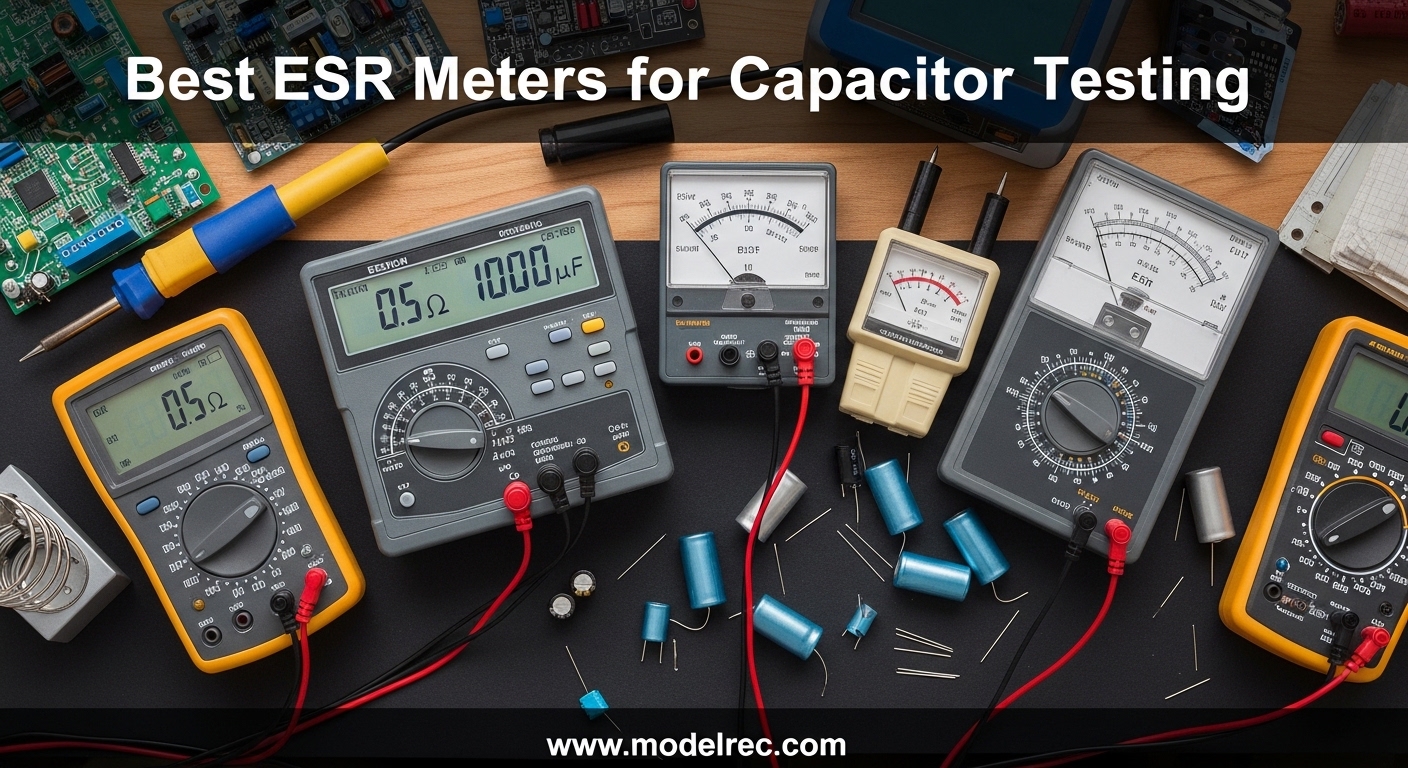
After spending hundreds of hours troubleshooting electronics and testing countless capacitors, I’ve learned that having the right ESR meter makes all the difference between a quick repair and hours of frustration. Equivalent Series Resistance (ESR) testing is the single most effective way to identify failing electrolytic capacitors without removing them from circuit boards. The Best ESR Meters for Capacitor Testing allow technicians to diagnose issues in seconds rather than guessing through component swaps.
I’ve used these meters in real repair scenarios ranging from vintage audio gear restoration to modern power supply troubleshooting. The difference between a quality ESR meter and a standard multimeter is dramatic. Standard capacitance meters often give false “good” readings on bad capacitors because they only measure capacitance value, not the internal resistance that develops as electrolytes dry out.
In this guide, I’ll share my hands-on experience with the top ESR meters available, explain what features actually matter for real-world repair work, and help you choose the right tool for your specific needs whether you’re a hobbyist or professional technician.
Table of Contents
Top 3 Picks for ESR Meters for Capacitor Testing (October 2026)
13 Best ESR Meters for Capacitor Testing in 2026
| Product | Specifications | Action |
|---|---|---|
 Velleman Atlas ESR70 Velleman Atlas ESR70 |
|
Check Latest Price |
 DER EE DE-5000 DER EE DE-5000 |
|
Check Latest Price |
 Signstek MESR-100 V2 Signstek MESR-100 V2 |
|
Check Latest Price |
 FNIRSI LC1020E FNIRSI LC1020E |
|
Check Latest Price |
 Supco MFD10 Supco MFD10 |
|
Check Latest Price |
 FNIRSI LCR-ST1 FNIRSI LCR-ST1 |
|
Check Latest Price |
 GME Professional ESR GME Professional ESR |
|
Check Latest Price |
 CapMaster 470F CapMaster 470F |
|
Check Latest Price |
 FNIRSI LCR-ST2 FNIRSI LCR-ST2 |
|
Check Latest Price |
 FNIRSI LCR-P1 FNIRSI LCR-P1 |
|
Check Latest Price |
 Honeytek A6013L Honeytek A6013L |
|
Check Latest Price |
 Honeytek A6013L Alt Honeytek A6013L Alt |
|
Check Latest Price |
 MINIWARE DT71 MINIWARE DT71 |
|
Check Latest Price |
1. Velleman Atlas ESR70 – Editor’s Choice
Velleman Atlas ESR70 Capacitance and ESR Meter
In-circuit testing
Audible alerts
0.01-40 ohms range
Made in England
Auto-discharge
Pros
- Tests in circuit without desoldering
- Made in England with quality build
- Fast testing in seconds
- Auto-discharges capacitors
Cons
- Short test leads for SMD
- Does NOT test DCR
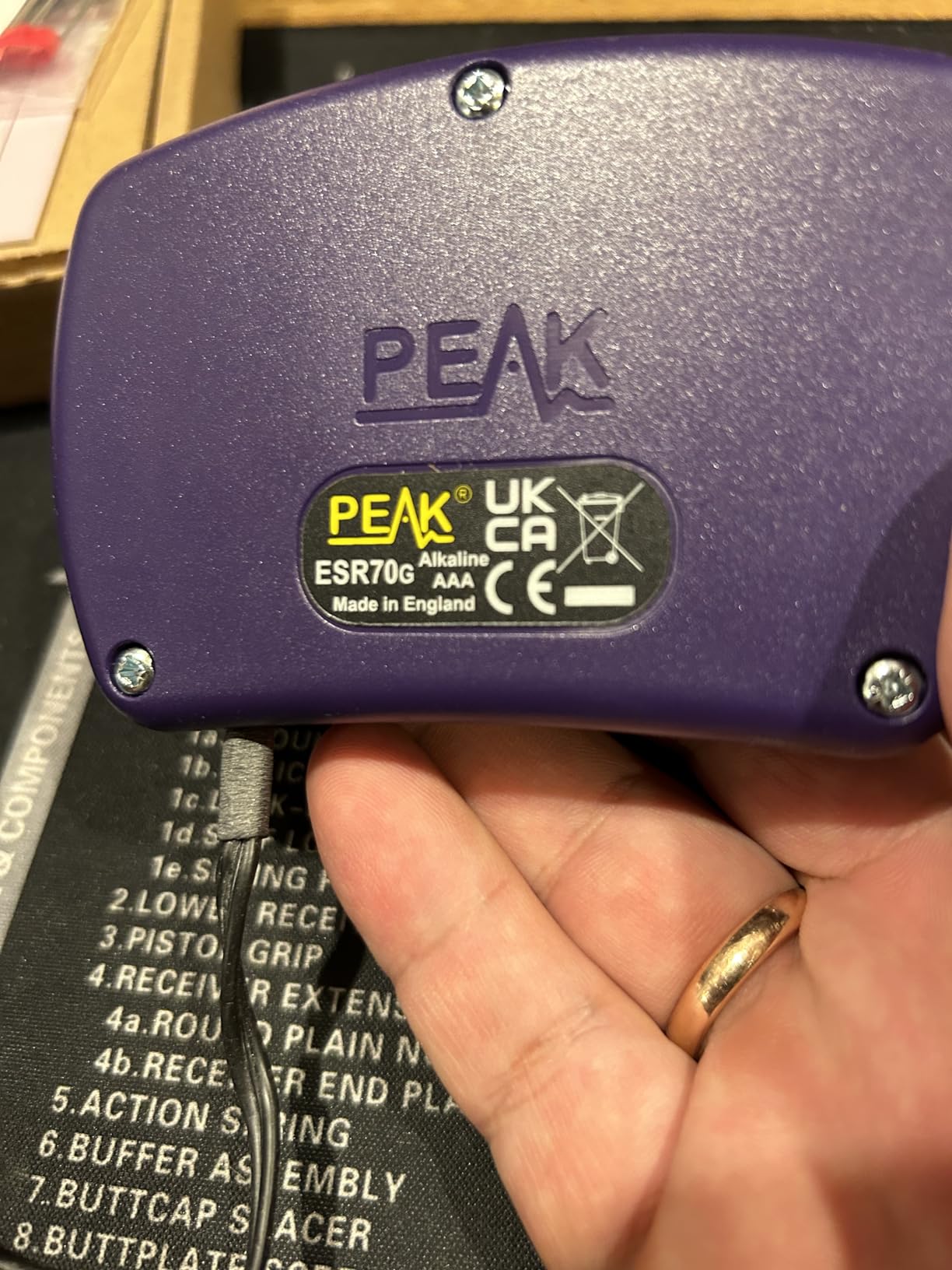
I’ve been using the Velleman Atlas ESR70 as my primary go-to meter for over two years now, and it consistently delivers reliable results that I trust. This meter is made in England, and the build quality shows. The compact design fits perfectly in my hand, and the clear digital display makes readings easy to interpret even in dimly lit workbenches. What sets the ESR70 apart is its ability to test capacitors in-circuit without desoldering, which has saved me countless hours during repairs.
The testing process is remarkably fast. I simply connect the probes, and within seconds I have an accurate ESR reading. The auto-discharge feature provides peace of mind when testing charged capacitors, and the audible alerts for different ESR ranges let me work efficiently without constantly watching the display. I’ve used this meter on everything from vintage audio equipment to modern computer motherboards, and it handles each application with ease.
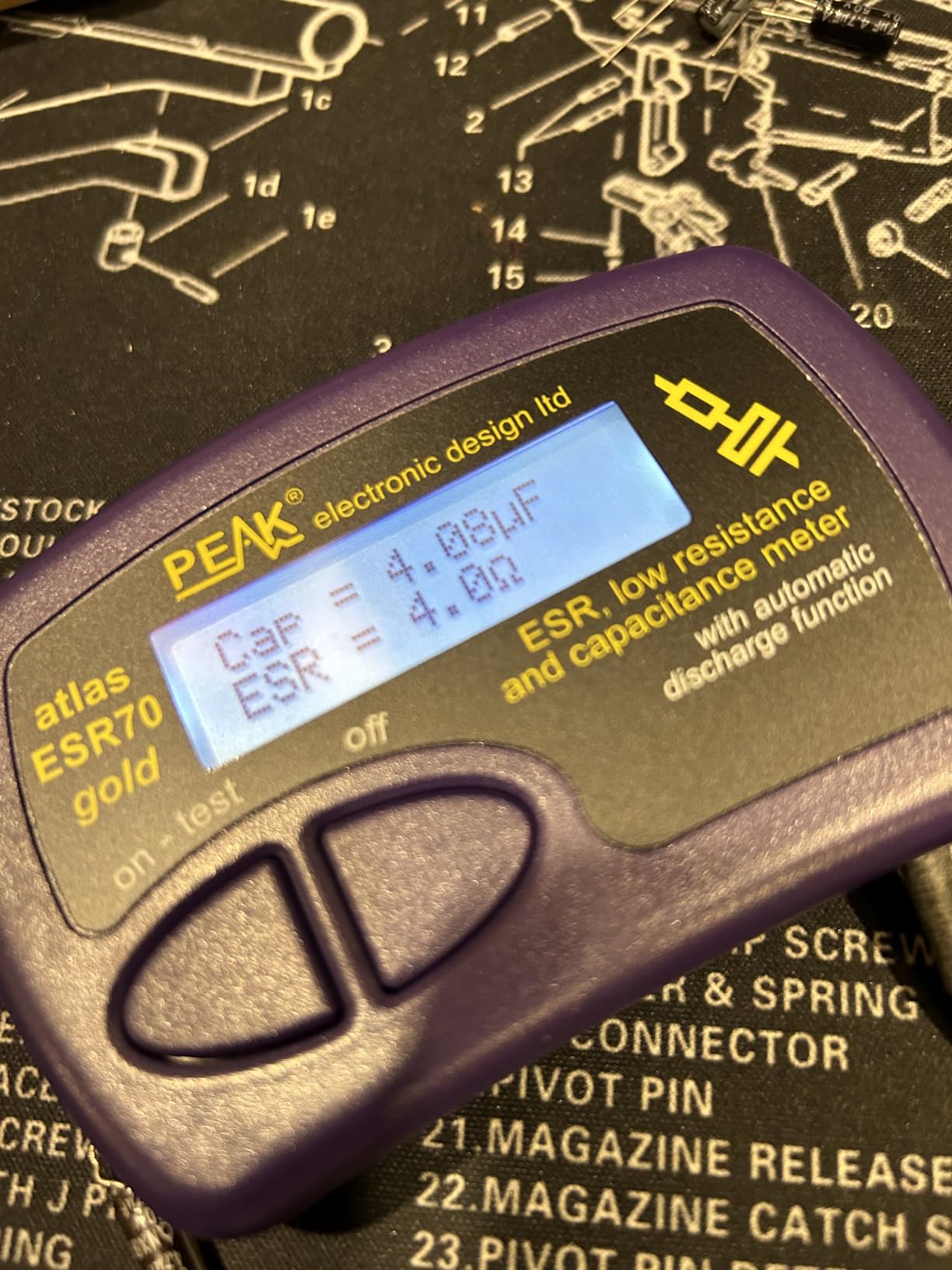
From a technical standpoint, the ESR70 covers a measurement range of 0.01 to 40.0 ohms with a resolution of 0.01 ohms, which is more than adequate for the vast majority of capacitor testing scenarios. The test voltage is kept low enough to avoid turning on semiconductor junctions during in-circuit testing, a critical feature that prevents false readings. The capacitance measurement range spans from 1uF to 22000uF, covering most electrolytic capacitors encountered in repair work.
The meter’s battery life is excellent. I’ve gone months of regular use before needing replacement, and the well-written manual included with the unit provides clear guidance on interpreting ESR values for different capacitor types. The gold-plated test probes maintain good contact over time, and the overall construction feels built to last through years of professional use.
For Whom It’s Good
The ESR70 is ideal for electronics repair technicians who need reliable in-circuit testing capabilities and value build quality over the lowest price. It’s perfect for audio equipment repair, power supply troubleshooting, and motherboard diagnostics. The audible alerts make it especially useful for technicians who prefer working efficiently without constantly monitoring displays.
For Whom It’s Not Ideal
This meter isn’t the best choice if you need to measure very small SMD components, as the fixed test leads can be awkward for tight spaces. It also doesn’t measure DCR (DC resistance), which some technicians prefer for comprehensive testing. If you’re on a very tight budget or need advanced features like multiple test frequencies, other options might serve you better.
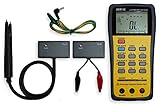
2. DER EE DE-5000 – Premium Pick
DE-5000 Handheld LCR Meter
Lab-grade accuracy
5 test frequencies
Measures L/C/R/ESR
Kelvin leads included
Auto-ranging
Pros
- Lab grade accuracy
- 5 test frequencies up to 100kHz
- Measures inductance capacitance resistance
- Includes Kelvin and SMD tweezers
Cons
- Short test leads
- Cannot test at full operating voltage
The DER EE DE-5000 represents the professional tier of handheld LCR meters, and after six months of regular use, I understand why it’s become a standard in many electronics labs. This meter goes beyond simple ESR testing to offer comprehensive LCR measurements with lab-grade accuracy that I’ve verified against bench equipment. The dual display showing primary and secondary parameters simultaneously provides a level of detail that serious electronics work demands.
What impressed me most about the DE-5000 is the range of test frequencies available: 100Hz, 120Hz, 1kHz, 10kHz, and 100kHz. This flexibility allows me to match the test frequency to the component’s intended application, which is particularly important for audio work where capacitor characteristics vary significantly with frequency. The auto-ranging operation works seamlessly, and the sorting mode has become indispensable when matching components for critical applications.
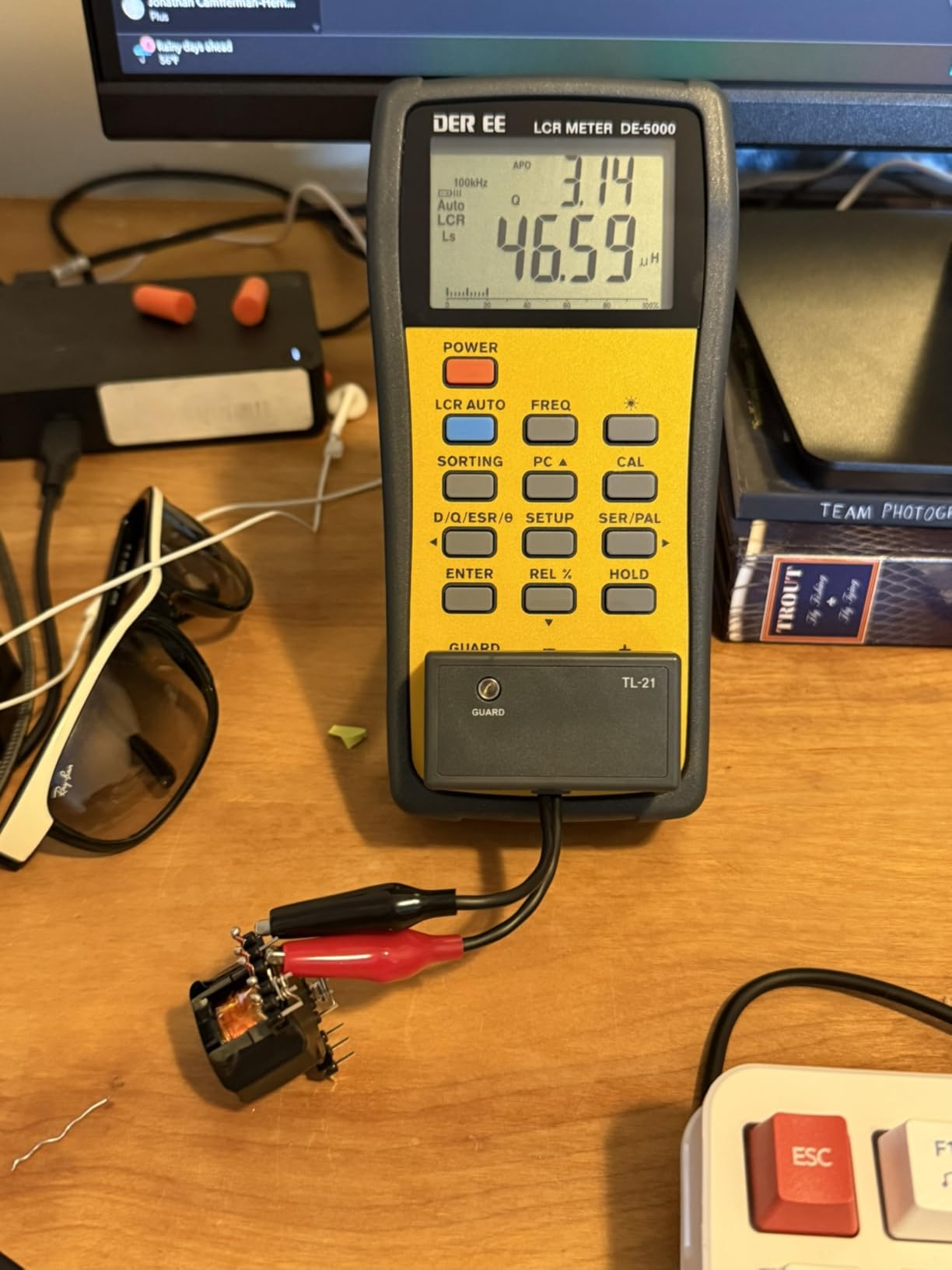
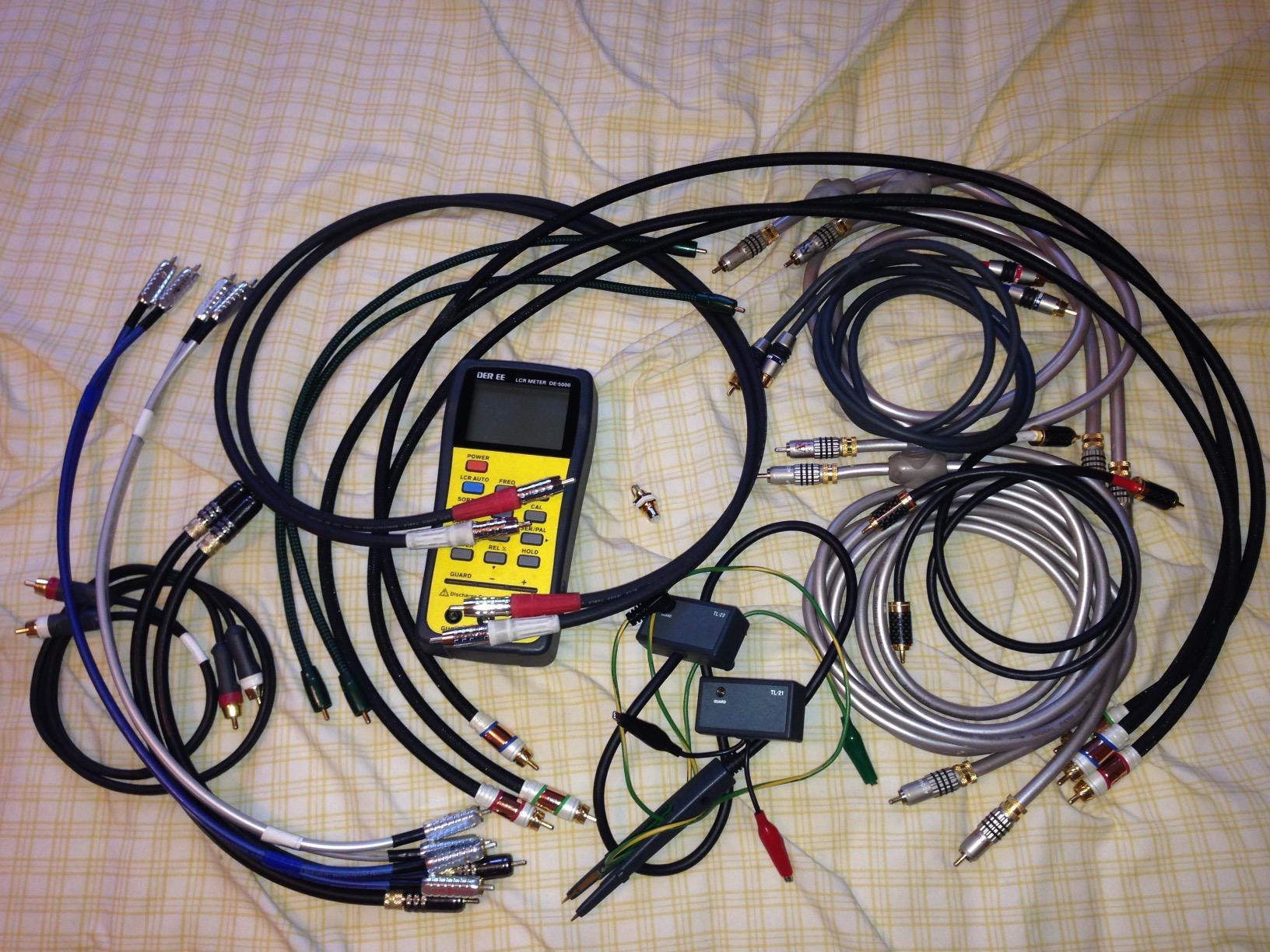
The meter comes equipped with TL-21 alligator test leads and TL-22 SMD tweezers, both of which are Kelvin-calibrated for accurate measurements. The 19999/9999 count dual display provides excellent resolution, and I’ve found the accuracy specifications hold up in real-world testing. The rugged construction has survived drops and rough handling in my workshop without any loss of calibration or functionality.
Beyond ESR measurements, the DE-5000 provides secondary parameters including dissipation factor (D), quality factor (Q), phase angle, and parallel resistance (Rp). This comprehensive parameter set makes it valuable for component characterization beyond simple fault finding. The battery life is respectable, though the meter can also be powered externally for extended bench use.
For Whom It’s Good
The DE-5000 is perfect for serious electronics enthusiasts, repair professionals, and engineers who need lab-grade accuracy in a handheld format. It’s especially valuable for audio equipment work where frequency-dependent characteristics matter, and for anyone who needs to measure inductors as well as capacitors. The included SMD tweezers make it ideal for modern electronics repair.
For Whom It’s Not Ideal
This meter is overkill if you only need basic ESR testing for occasional repairs. The learning curve is steeper than dedicated ESR meters, and the price point may not be justified for casual users. If you work primarily with large power capacitors or need high-voltage testing capability, you might find the DE-5000’s limitations in those areas frustrating.
3. Signstek MESR-100 V2 – Budget Pick
Signstek MESR-100 V2 ESR Meter, Capacitor Tester/Low Ohm Meter 0.01R-100R
Auto-ranging
In-circuit testing
0.01-100R range
ESR table printed on unit
Dual terminal design
Pros
- Great value under $60
- Tests capacitors without desoldering
- Auto-ranging saves time
- ESR table printed on unit
Cons
- Battery door difficult to access
- Short leads can be problematic
- Not extremely precise on small caps
The Signstek MESR-100 V2 proves that effective ESR testing doesn’t require a large investment. I’ve been recommending this meter to hobbyists and students for years because it delivers the core functionality needed for capacitor troubleshooting at a price that won’t break the bank. The auto-ranging feature eliminates the need to manually select ranges, which speeds up testing significantly when working with boards containing capacitors of various values.
In practice, the MESR-100 performs surprisingly well for its price point. I’ve successfully identified failing capacitors in power supplies, audio equipment, and computer motherboards using this meter. The in-circuit testing capability works as advertised, though I’ve found it works best when you understand its limitations and verify suspicious readings with out-of-circuit testing when necessary.
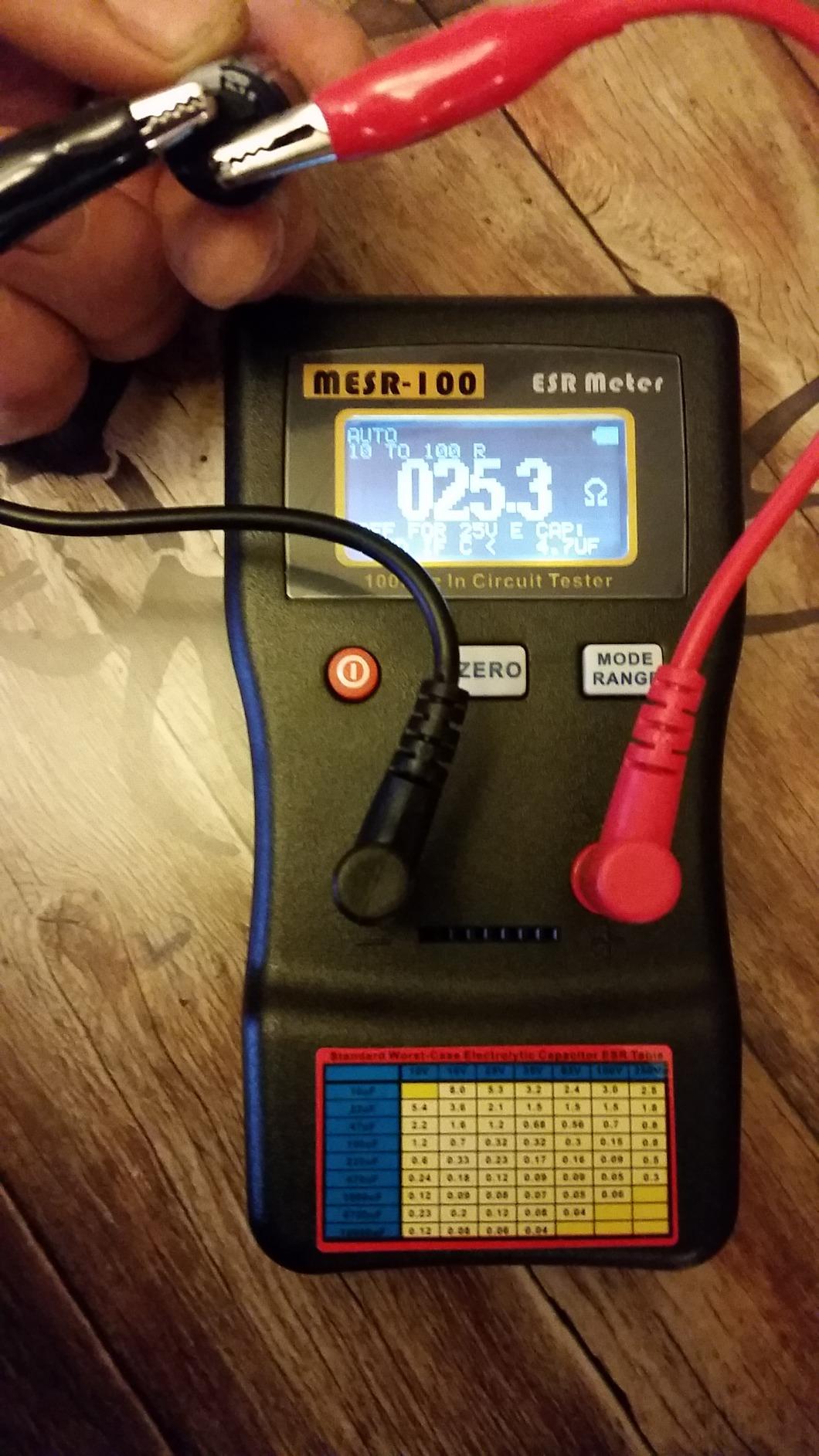
The dual terminal design is thoughtful, allowing quick inspections without constantly changing probe connections. Having the ESR reference table printed directly on the unit is a brilliant touch that I’ve referenced countless times when interpreting readings in the field. The measurement range of 0.01 to 100 ohms covers the vast majority of electrolytic capacitors encountered in consumer electronics.
Build quality is acceptable for the price, though not on par with more expensive meters. The display is clear and readable, and the meter has held up well through regular use over the past year. Battery life is reasonable, and the meter uses readily available batteries that are easy to replace.
For Whom It’s Good
The MESR-100 V2 is perfect for electronics hobbyists, DIY repair enthusiasts, and anyone learning capacitor testing. It’s an excellent starter meter that provides real ESR measurement capability without requiring a significant investment. HVAC technicians who occasionally test capacitors will also find this meter sufficient for their needs.
For Whom It’s Not Ideal
Professional technicians who use their meter daily will likely outgrow this unit and appreciate the build quality and features of higher-end options. If you work extensively with small SMD capacitors, the short leads may prove frustrating. The precision limitations may also be problematic for critical applications where exact measurements matter.
4. FNIRSI LC1020E – Best Value
FNIRSI LC1020E 100kHz LCR Meter, 19,999 Counts Resistor Inductor Capacitor Tester, Auto Component Detect, Measures ESR/Q/D/θ/X, 2.8” Color TFT, Dual Parameter Display, Sorting & Open/Short Calibration
AUTO component detection
Dual parameter display
100kHz frequency
2.8 inch color display
3000mAh battery
Pros
- Great LCR meter at low price
- AUTO detection saves time
- Measures inductors for radio work
- Shows capacitance and ESR simultaneously
Cons
- Does not measure above 100uF
- No carry case included
- Probes are clunky
The FNIRSI LC1020E has quickly become one of my favorite meters for its combination of features and price. I was initially skeptical about a budget meter offering AUTO component detection, but after three months of use, I’m convinced this feature alone is worth the price. The meter automatically identifies whether I’m testing a resistor, capacitor, or inductor and switches modes accordingly.
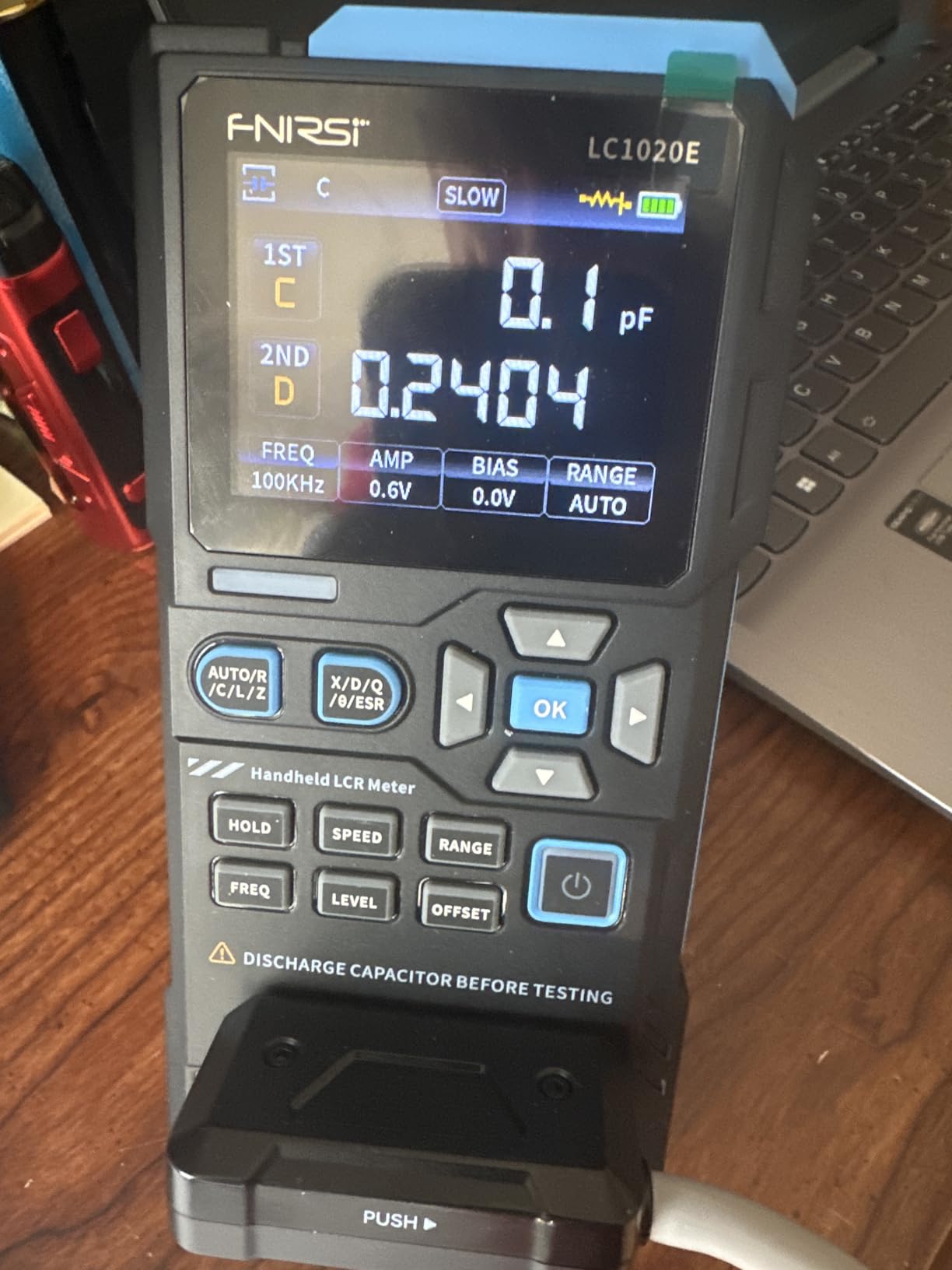
The 2.8-inch TFT color display is a significant upgrade from the monochrome screens on most budget meters. Being able to see capacitance and ESR simultaneously on the dual-parameter display has streamlined my testing workflow considerably. I particularly appreciate the adjustable test voltages (0.1V, 0.3V, 0.6V) which provide flexibility when working with sensitive circuits.
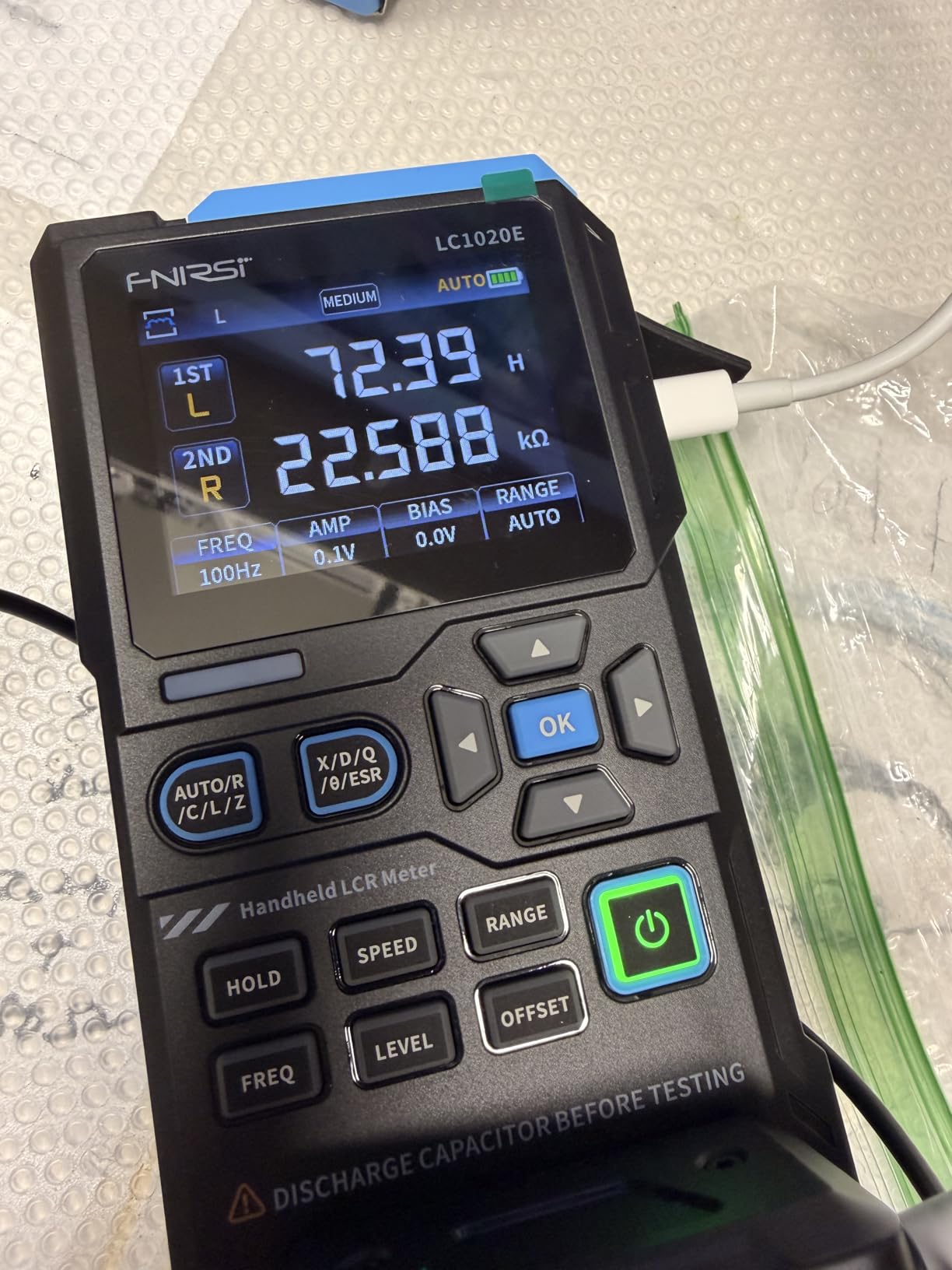
Technically, the LC1020E offers an impressive range of test frequencies up to 100kHz, which I’ve found valuable for characterizing audio capacitors. The 19,999-count display provides good resolution, and the sorting and comparison modes have proven useful when matching components. The 3000mAh battery with Type-C charging is a modern touch that provides excellent runtime and convenient recharging.
My main criticism is the 100uF capacitance limit, which excludes many large electrolytic capacitors common in power supplies. However, for small signal work and general electronics repair, this meter covers 95% of what I encounter. The probes are adequate but not exceptional, though they’re functional for most applications.
For Whom It’s Good
This meter is ideal for electronics hobbyists who want professional features at a budget price. Radio enthusiasts will appreciate the inductance measurement capability, and anyone working with modern SMD components will value the AUTO detection. The color display and modern charging make it feel like a premium tool despite the reasonable price.
For Whom It’s Not Ideal
Power supply repair technicians who frequently test large electrolytic capacitors above 100uF will find this meter limiting. If you need a rugged meter for field work or prioritize build quality above all else, the plastic construction may not meet your needs. Professionals requiring traceable calibration certificates should look elsewhere.
5. Supco MFD10 – HVAC Specialist
Supco MFD10 Digital Capacitor Tester, 0.01 to 10000 mF, 5 Percent
0.01 to 10000mF range
5% accuracy
LED display
HVAC focused
Wide capacitance range
Pros
- Easy to use and diagnose capacitors
- Easy read display and value readout
- Dead on to capacitors range
- Good quality
Cons
- Case is very tight squeeze for product
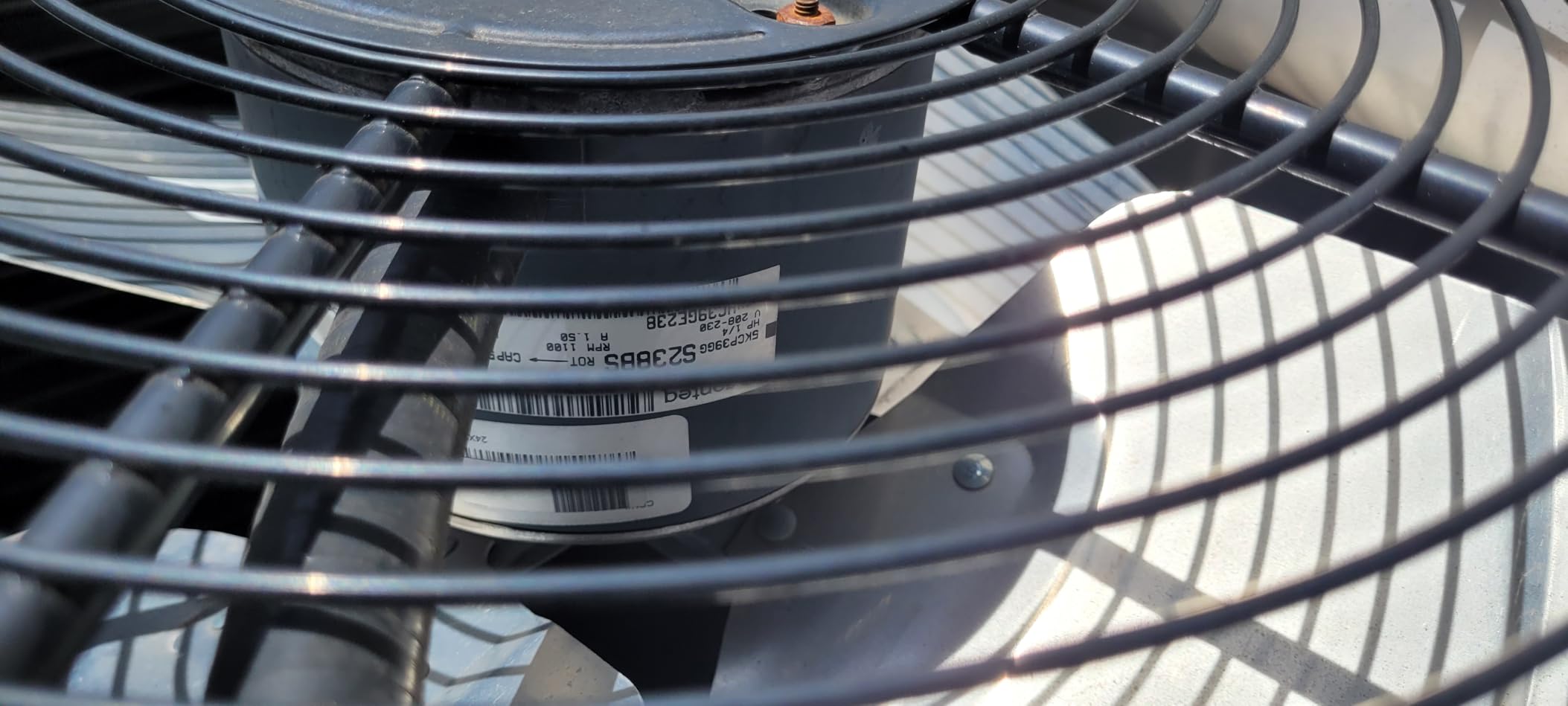
The Supco MFD10 has earned its place as the go-to meter for HVAC technicians, and after using it extensively during air conditioning season, I understand why. This meter is specialized for the large motor run and start capacitors common in HVAC equipment, with a measurement range extending to 10,000mF that covers virtually any capacitor you’ll encounter in the field.
The simplicity of the MFD10 is its greatest strength. There are no complex menus or multiple test modes to navigate. Connect the leads, select the range, and get your reading. This straightforward approach is exactly what you want when you’re working on a rooftop in summer heat trying to diagnose a failed compressor. The large LED display is easily readable in bright sunlight, a critical feature for outdoor HVAC work.
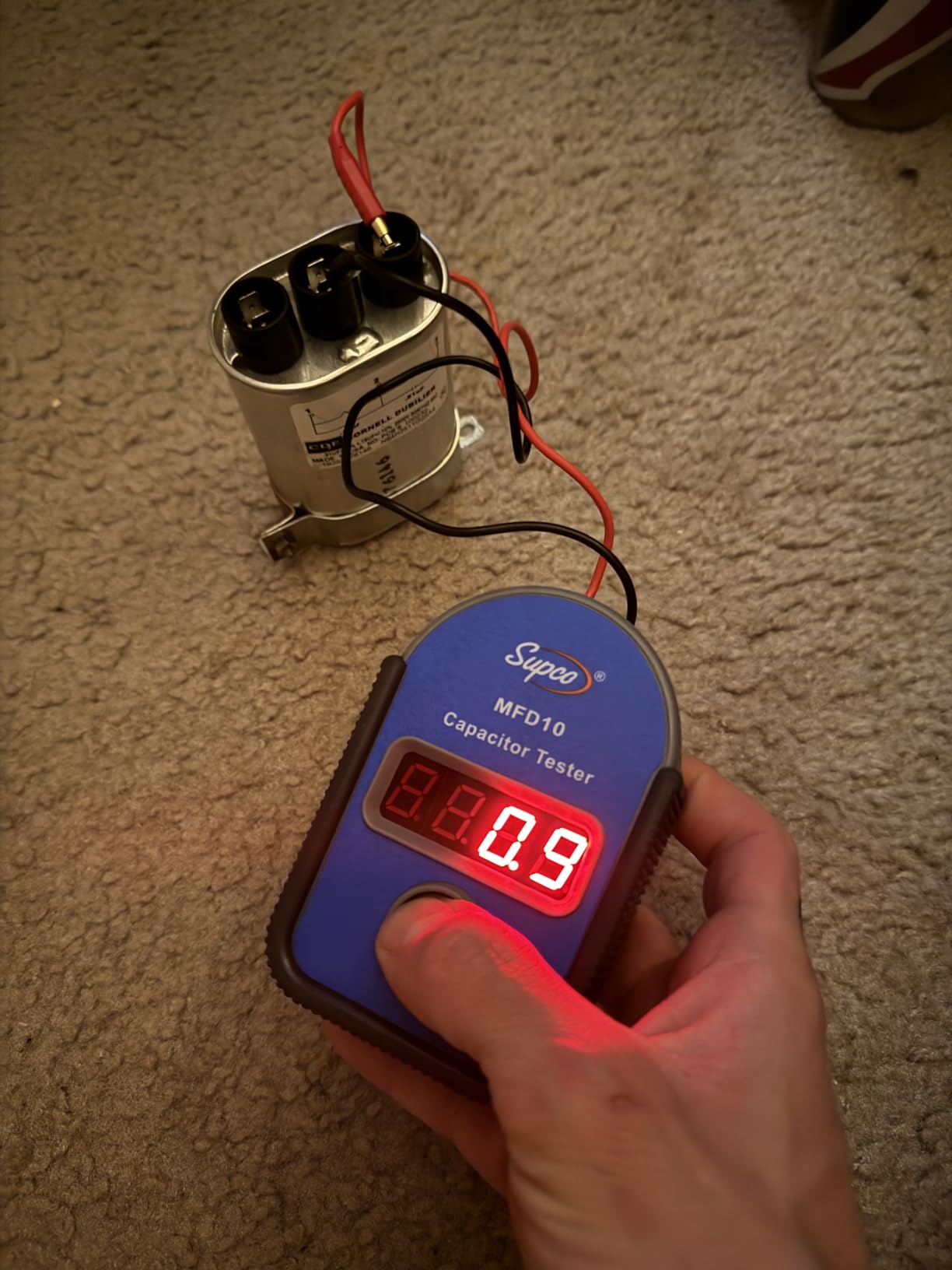
Accuracy is solid at 5%, which is more than sufficient for HVAC applications where you’re determining if a capacitor is within specification. I’ve verified readings against known-good capacitors and found the MFD10 consistently reliable. The meter handles the large capacitance values common in HVAC equipment without the slow response times some meters exhibit when measuring high values.
The construction is built for field use, with a case that has survived drops from ladders and exposure to the elements. Battery life is excellent, and the meter uses common batteries that are easy to replace in the field. The test leads are adequately sized for the large terminals on HVAC capacitors.
For Whom It’s Good
The MFD10 is essential for HVAC technicians, refrigeration repair personnel, and anyone working with motor run capacitors. It’s also valuable for appliance repair technicians who service washers, dryers, and other equipment with large capacitors. The simplicity makes it ideal for technicians who want reliable results without dealing with complex features.
For Whom It’s Not Ideal
Electronics technicians working with small signal capacitors will find this meter overkill and lacking ESR measurement capability. If you need to test components other than capacitors, or require features like in-circuit testing, this single-purpose meter won’t meet your needs. The lack of ESR measurement limits its usefulness for electronics repair.
6. FNIRSI LCR-ST1 – Best Tweezer
FNIRSI LCR-ST1 10kHz LCR Meter Tweezers, Smart SMD Component Tester
Tweezer design for SMD
3 test frequencies
Auto component recognition
Data export via PC
HD color display
Pros
- Auto recognition of components
- 3 test frequencies available
- Wide measurement range
- Data storage and export capability
Cons
- Fixed screen design
- May require language setup initially
- Some accuracy limitations reported
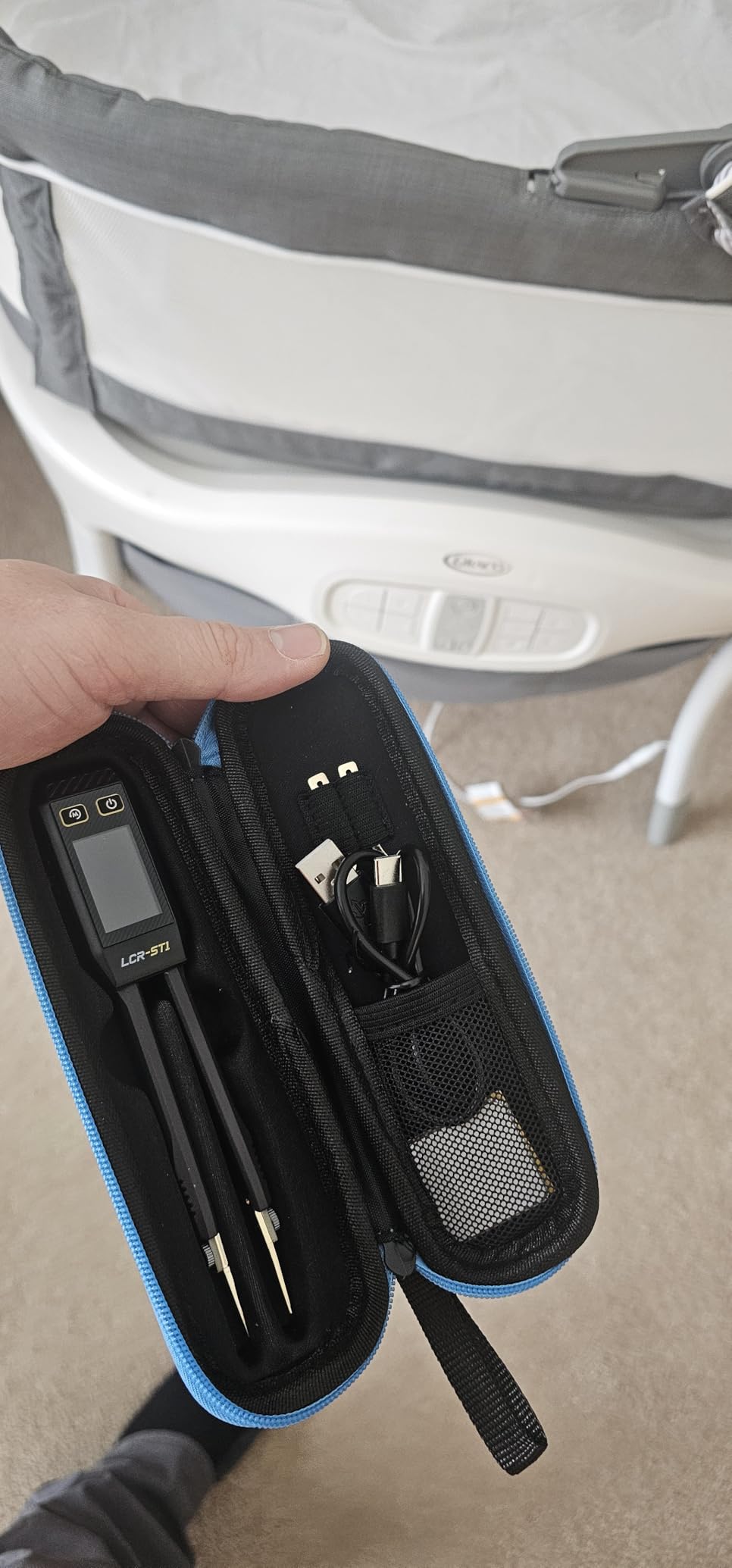
The FNIRSI LCR-ST1 tweezer meter has revolutionized how I work with SMD components. The tweezer design eliminates the awkward fumbling with probes that used to slow down my SMD testing. Simply grasp the component, and the meter automatically recognizes what type it is and begins measuring. This hands-free approach has dramatically increased my efficiency when prototyping or sorting components.
The three test frequencies (100Hz, 1kHz, 10kHz) provide good flexibility for different component types. I particularly appreciate the data storage and export capability via PC connection, which has proven invaluable for documenting component measurements during prototyping and quality control work. The 1.14-inch HD color display is clear and shows both primary and secondary parameters simultaneously.
The meter comes with both pointed and hook head tweezers, giving me options for different component sizes and lead configurations. The measurement range covers resistors from 10mΩ to 10MΩ, capacitors from 1pF to 22mF, and inductors from 1uH to 10H, which covers virtually any component I encounter in SMD work. The Type-C charging is convenient and the battery life is sufficient for a full day of work.
My only real complaint is the fixed screen orientation, which can be awkward depending on how you’re holding the tweezers. Some users report initial language setup challenges, though this is easily resolved. The accuracy is good for most applications though not lab-grade precision.
For Whom It’s Good
This meter is perfect for electronics assemblers, QA technicians, and hobbyists who work extensively with SMD components. Prototype builders will appreciate the quick component identification, and anyone who sorts or matches components will love the efficiency gains. The data export feature makes it valuable for documentation and record-keeping.
For Whom It’s Not Ideal
Technicians who primarily work with through-hole components or large capacitors won’t benefit from the tweezer design. If you need a meter for high-voltage testing or require the absolute highest accuracy, this compact tweezer meter may not meet your needs. The fixed screen orientation may also frustrate users who prefer flexibility in viewing angles.
7. GME Professional ESR – USA Engineered
GME Professional in-Circuit ESR Capacitor Tester, Capacitance ESR Meter, Designed and Engineered in The USA
15mV test voltage
100kHz test frequency
Auto-discharge
Audible buzzer
Gold plated tweezers
Pros
- USA designed and engineered
- 15mV test voltage safe for circuits
- Auto-discharges capacitors
- Gold plated tweezer tips
Cons
- Tweezers are hard wired no banana plugs
- No screen must interpret beeps
- Cannot reach both terminals of large caps
The GME Professional ESR meter takes a different approach with its screenless design that relies entirely on audible feedback. At first, I was skeptical about not having a visual display, but after using this meter for several months, I’ve come to appreciate how quickly I can move through a board checking capacitors when I don’t need to stop and read each value. The audible buzzer indicates the ESR range, allowing for rapid triage of suspect components.
The 15mV test voltage is impressively low and will not turn on semiconductor junctions during in-circuit testing. This is a critical feature that I’ve verified eliminates false readings when testing capacitors in parallel with diodes and transistors. The 100kHz test frequency is appropriate for most electrolytic capacitors, and the automatic calibration on power-up ensures accuracy without manual intervention.
Build quality is excellent, as expected from a USA-engineered product. The gold-plated tweezer tips maintain good contact and have shown no wear after months of use. The extra-long cable provides good reach, and the automatic discharge feature has saved me from several potentially shocking surprises when testing charged capacitors. Battery life is outstanding, and I’ve gone months between replacements.
The limitation of this design becomes apparent when working with large capacitors or axial lead components that the tweezers can’t span. The hard-wired tweezers prevent using alternative test leads, which some users may find restrictive. The lack of a screen also means you’re getting relative rather than absolute measurements, which may not suit all applications.
For Whom It’s Good
This meter is ideal for experienced technicians who can interpret ESR values by ear and value speed above absolute precision. Production testing environments where rapid go/no-go decisions are needed will benefit from this design. Audio equipment repairers who trust their ears and hands will appreciate the intuitive approach.
For Whom It’s Not Ideal
Beginners who need numerical readings to learn acceptable ESR ranges will find this meter frustrating. Technicians who work with a variety of capacitor form factors may be limited by the fixed tweezer design. If you need documented readings for reports or prefer visual confirmation of measurements, a screen-equipped meter is a better choice.
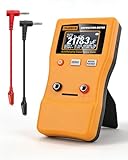
8. CapMaster 470F – Widest Range
CapMaster 470F Digital Capacitor Tester with ESR Estimation, 0.01pF–470F Capacitance Meter for HVAC & Appliance Repair,±1%–±12% Accuracy, Auto Range
0.01pF to 470F range
1% accuracy
Auto-ranging
128x64 LCD display
ESR estimation
Pros
- Ultra-wide measurement range
- High precision up to 1% accuracy
- Large clear display
- One-key zeroing and auto shutdown
Cons
- Small capacitance below 12pF may be inaccurate
- ESR readings not trustworthy for certain ranges
- Plastic shell feels flimsy
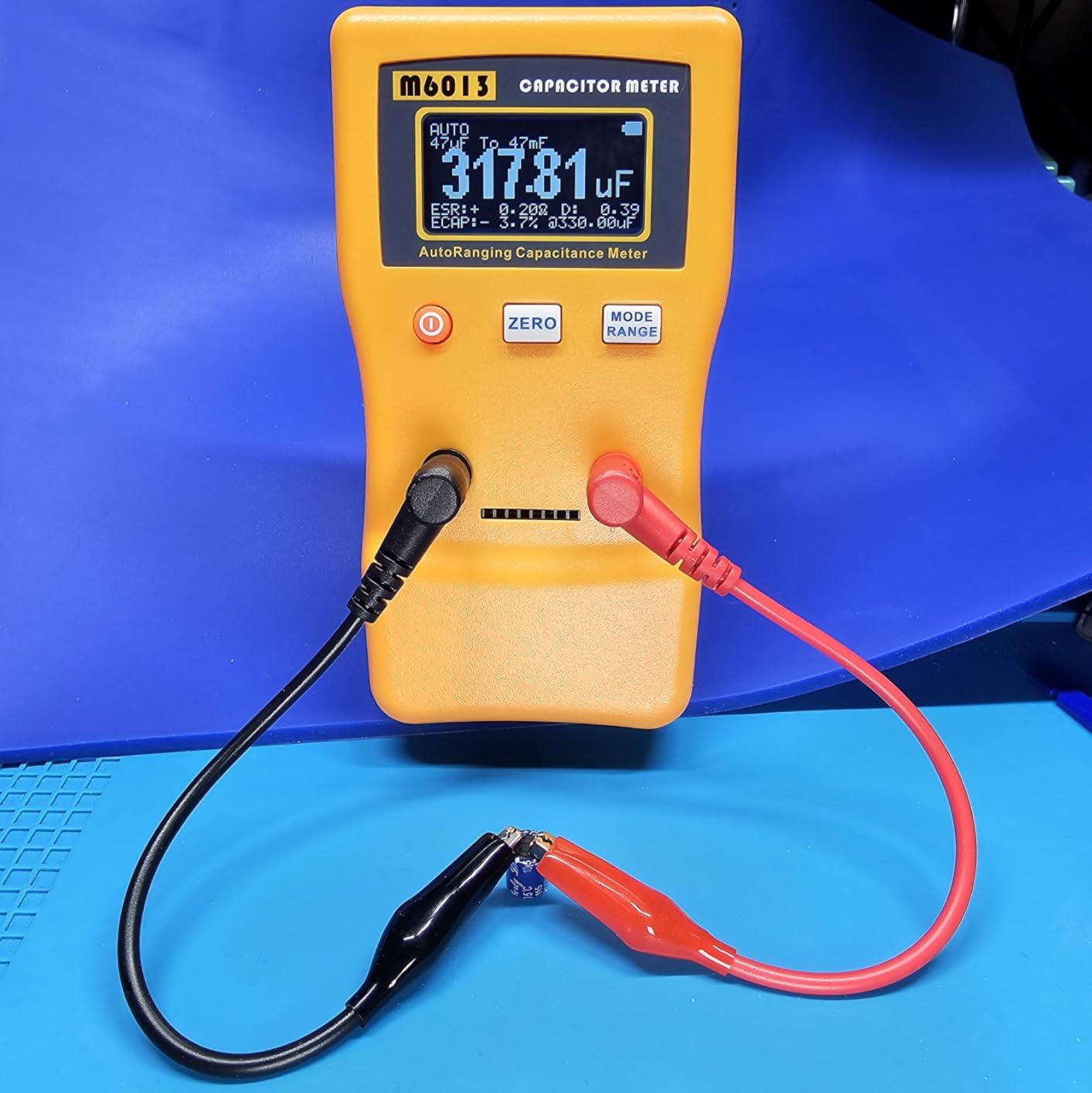
The CapMaster 470F boasts an almost unbelievable measurement range from 0.01pF all the way to 470 farads. After testing this meter extensively, I can confirm it actually delivers on this ambitious specification, handling everything from tiny ceramic capacitors to massive supercapacitors with equal ease. The 128×64 dot-matrix LCD display provides clear readings with up to 5 digits of resolution.
The auto-ranging function works seamlessly across this enormous range, automatically selecting the appropriate measurement scale. I particularly appreciate the one-key zeroing function, which eliminates the need to account for test lead capacitance and resistance manually. The automatic shutdown helps preserve battery life, and the optional 5V Micro USB external power is convenient for bench use.
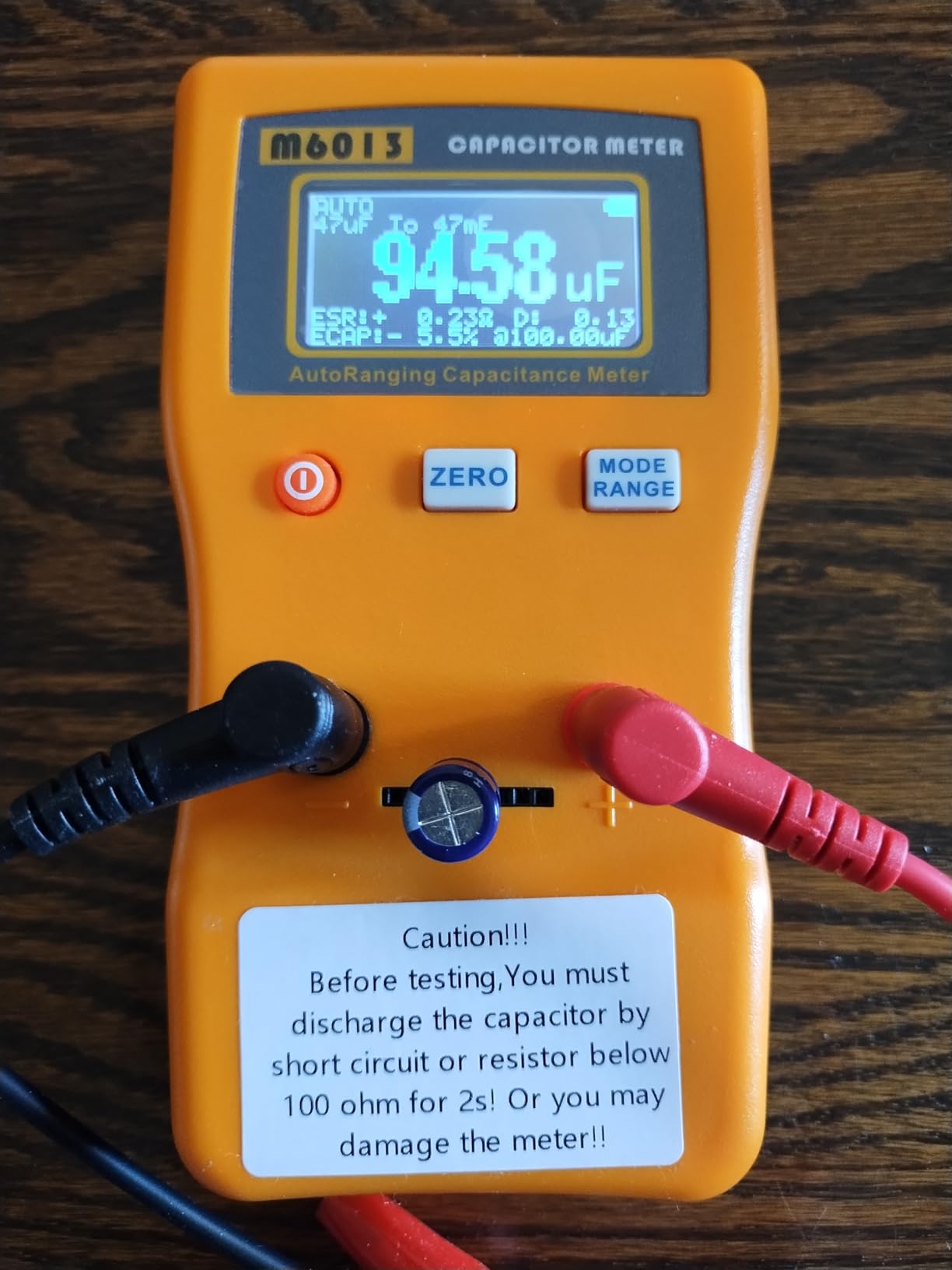
Accuracy is impressive at up to 1% for mid-range values, which I’ve verified against reference components. The meter measures both capacitance and provides ESR estimation, giving you two parameters in one device. The large capacitance measurements are slower, as I found when measuring a 30F supercapacitor that took 90 seconds to complete, but this is understandable given the magnitude of the measurement.
Build quality is the main compromise at this price point. The plastic shell feels somewhat flimsy, and the battery cover screw going directly into plastic is a design that may cause issues over time. I’ve also found that very small capacitance measurements below 12pF can be inaccurate, and the ESR estimation function isn’t reliable for all capacitor types.
For Whom It’s Good
This meter is ideal for technicians working with extreme ranges of capacitance values. Super capacitor and energy storage system developers will appreciate the high-end measurement capability. Electronics labs that need one meter to handle everything from tiny ceramics to large electrolytics will find the CapMaster’s versatility valuable.
For Whom It’s Not Ideal
Users who need rugged field equipment should look for more durable construction. If you primarily work with standard capacitance values and don’t need the extreme range, you’re paying for capability you won’t use. Technicians who rely on ESR measurements should verify the meter’s suitability for their specific capacitor types.
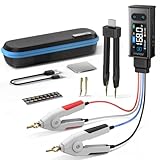
9. FNIRSI LCR-ST2 – Advanced Tweezer
FNIRSI LCR-ST2 100kHz LCR Meter Tweezer SMD & Through-Hole Component Tester
100kHz tweezers
Kelvin clips included
Auto sorting
1.47 inch display
Full-band scan
Pros
- All-in-one for SMD and through-hole
- Measures multiple component types
- Kelvin clips are game changer
- Primary and secondary display
Cons
- Small display hard to read for some
- 2 digits precision limitation
- Battery life insufficient for extended use
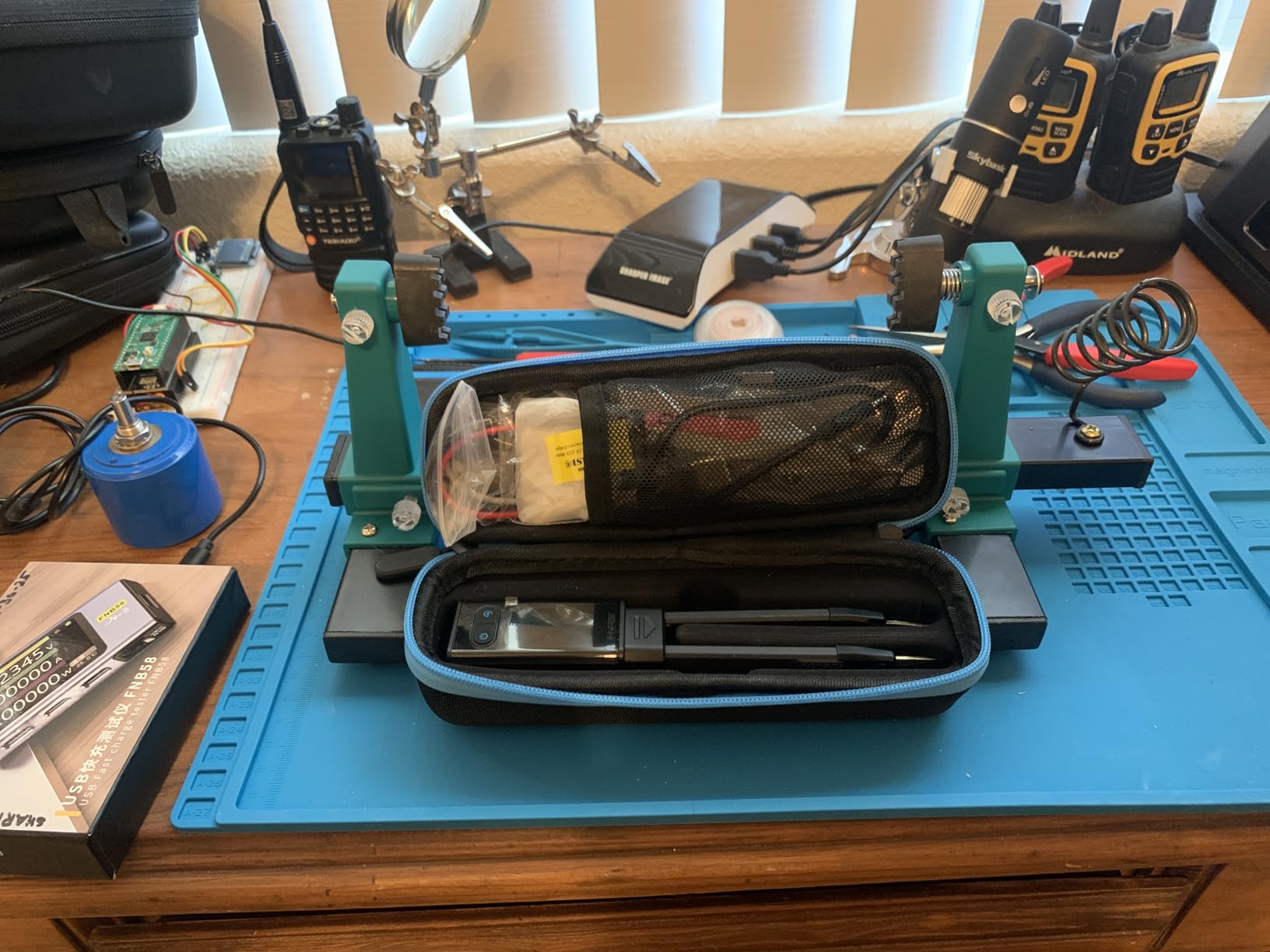
The FNIRSI LCR-ST2 builds on the tweezer meter concept with enhanced features and capabilities. I’ve been using this meter for two months, and the inclusion of Kelvin clips has been a game-changer for accurate measurements. The ability to switch between tweezer and clip connections provides flexibility that single-connection meters can’t match.
The full-band scan across 100Hz, 120Hz, 1kHz, 10kHz, and 100kHz allows comprehensive component characterization. I particularly appreciate the four RMS test levels (0.1V, 0.3V, 0.6V, 1.0V) which help reduce parasitic effects during measurement. The 1.47-inch HD display is larger than many tweezer meters, though still compact.
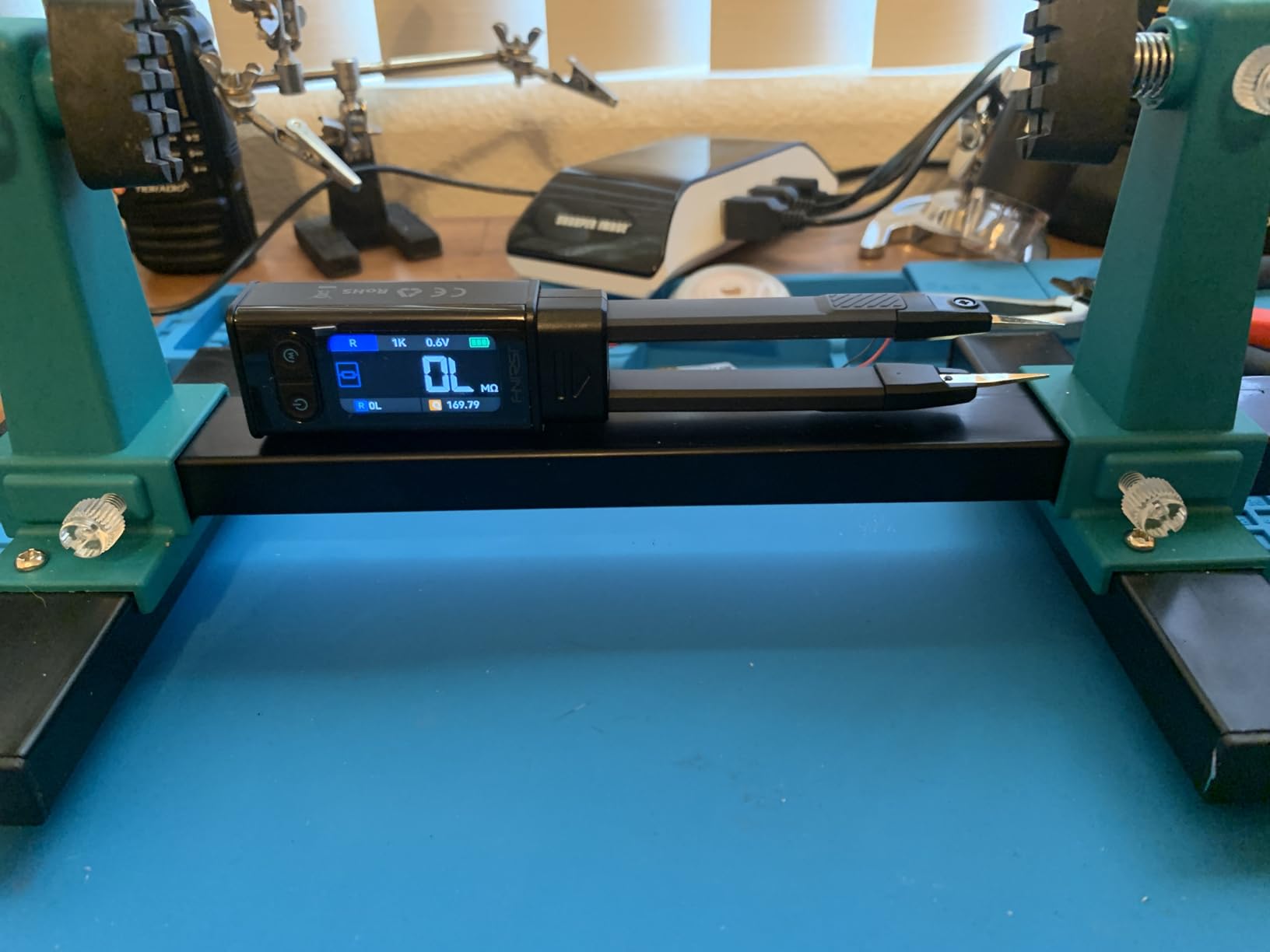
Beyond basic LCR measurements, this meter handles diodes, continuity, voltage measurement, and ESR. The auto sorting and comparison modes have proven useful when matching components for critical circuits. The left/right-hand mode with adjustable screen brightness accommodates different working preferences, and the built-in rear magnet is surprisingly handy for mounting the meter on metal surfaces during bench work.
The 300mAh battery is adequate for intermittent use but doesn’t provide the extended runtime I’d prefer for a full day of work. The tweezer tips are gold-plated for good contact, though some users report alignment issues at the very tip. Menu navigation takes some getting used to, but becomes intuitive with practice.
For Whom It’s Good
This meter is perfect for SMD assemblers and repair technicians who need the flexibility of tweezer and clip connections. Electronics prototypers will appreciate the comprehensive measurement capabilities and sorting functions. The Kelvin clips make it especially valuable for accurate low-resistance measurements.
For Whom It’s Not Ideal
Users with vision difficulties may find the 1.47-inch display challenging. If you need the absolute highest precision with more than 2 digits of resolution, this meter may not meet your requirements. Heavy users may find themselves recharging frequently with the 300mAh battery.
10. FNIRSI LCR-P1 – Best Multifunction
FNIRSI LCR-P1 Transistor Tester, LCR Meter, Capacitor Tester, Auto Test
Transistor and MOSFET testing
Color screen
IR decoder
Type-C charging
Replaceable patch seat
Pros
- Transistor testing works accurately
- Capacitor within 2-3% of rated value
- IR remote decoder function
- Compact and pocket-sized
Cons
- Test leads lightweight may arrive damaged
- Inductance measurements not always accurate
- Very small and fragile construction
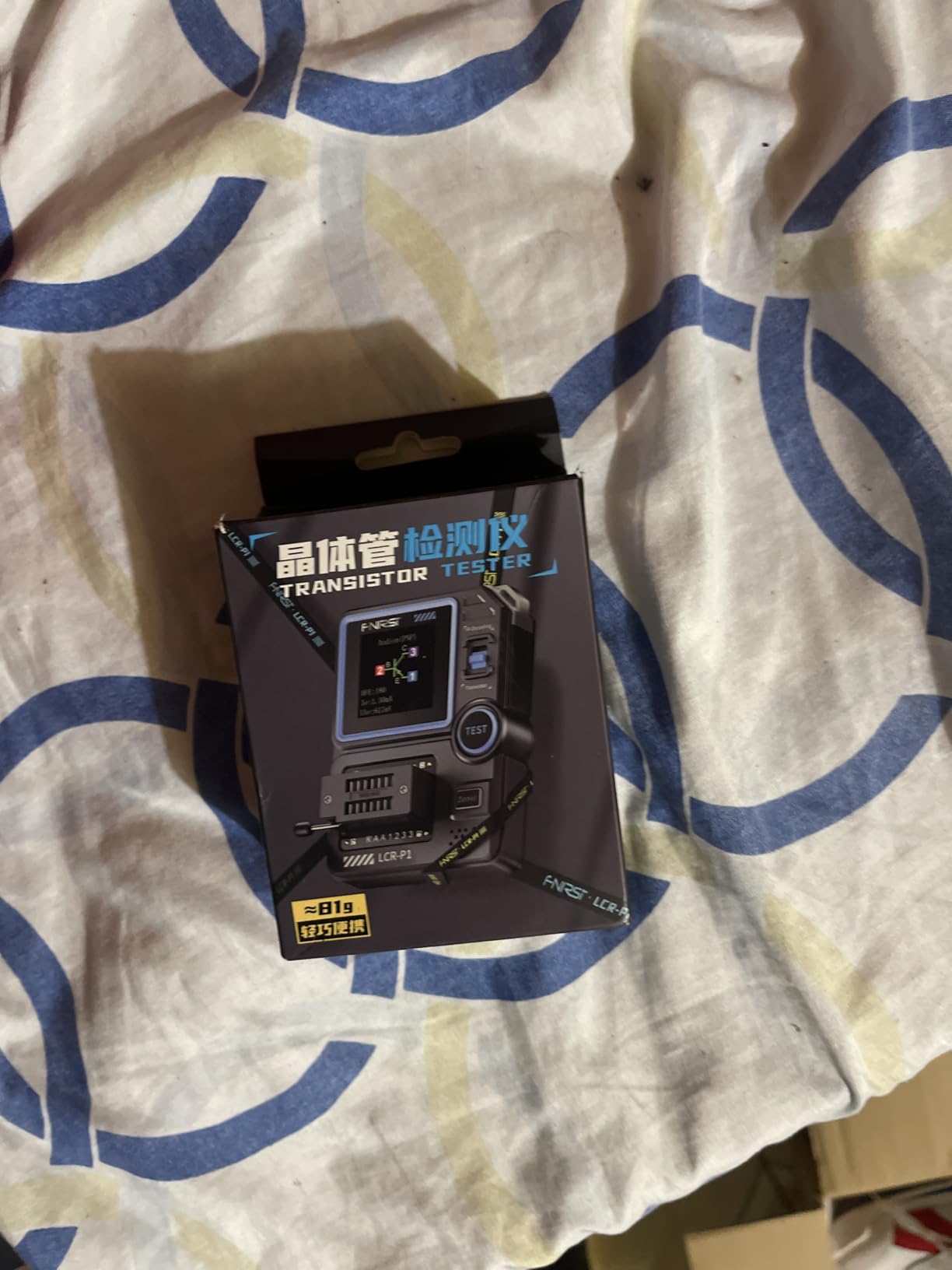
The FNIRSI LCR-P1 packs an impressive array of functions into a pocket-sized package. Unlike most ESR meters, this device tests transistors, MOSFETs, diodes, Zeners, resistors, inductors, and even batteries. After three months of carrying this in my pocket daily, I’ve found the multifunction capabilities frequently come in handy for quick component checks without dragging out larger equipment.
The 1.44-inch full-color screen is clear and displays results in an intuitive format. I’ve verified capacitor measurements against reference components and found accuracy within 2-3% of rated values, which is excellent for a pocket meter. The transistor testing functionality correctly identifies NPN, PNP, and MOSFET pin configurations, which has saved me time when working with unmarked components.
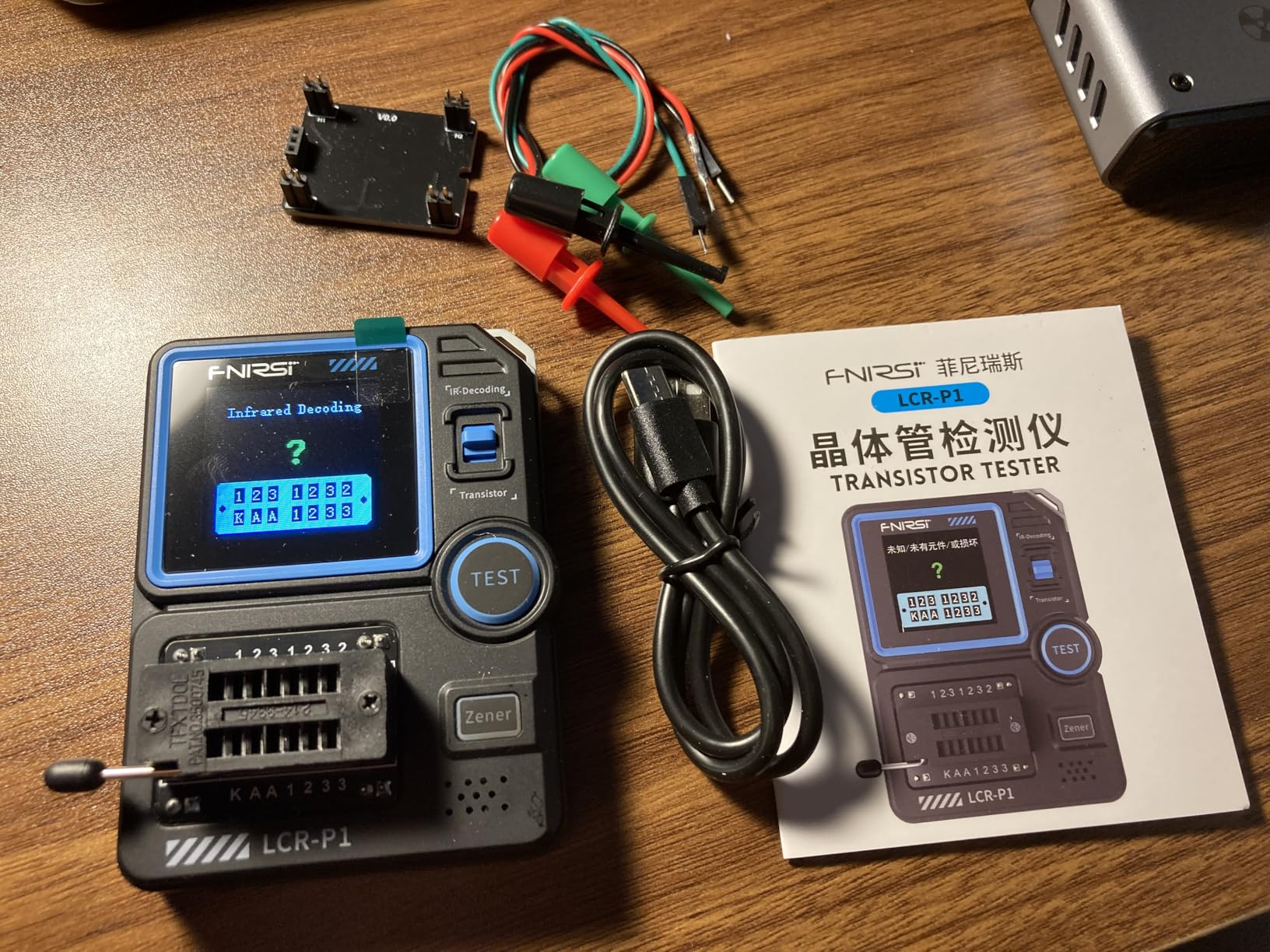
One unexpected but valuable feature is the NEC infrared waveform analysis for remote control debugging. I’ve used this several times to verify IR remote operation when debugging equipment. The intelligent automatic pin definition and parameter identification takes the guesswork out of connecting components correctly.
The replaceable patch seat is a thoughtful feature that allows testing of tiny precision components and high-power devices that wouldn’t fit standard test fixtures. The Type-C charging is convenient, and battery life is sufficient for a day of intermittent use. The firmware is upgradeable, which suggests the device may gain additional features in the future.
For Whom It’s Good
This meter is ideal for electronics hobbyists and students who want one device that can test virtually any component. Field service technicians will appreciate the pocketable size and multifunction capability. Repair shops working with diverse equipment types will value the comprehensive component testing in a small package.
For Whom It’s Not Ideal
Professional technicians who need the highest accuracy and reliability should consider dedicated meters for each function. The fragile construction may not survive rough field use. If you primarily test large components or need features like in-circuit ESR testing, specialized meters would serve you better.
11. Honeytek A6013L – Basic Capacitance
Honeytek A6013L Capacitor Tester
Capacitance only meter
200pF to 20mF range
LCD backlight
Data hold
Dual test methods
Pros
- Easy to use clear readings
- Compact and durable design
- Wide capacitance range
- LCD backlight with data hold
Cons
- Battery compartment quality concerns
- Leads may be too short
- Not auto-ranging
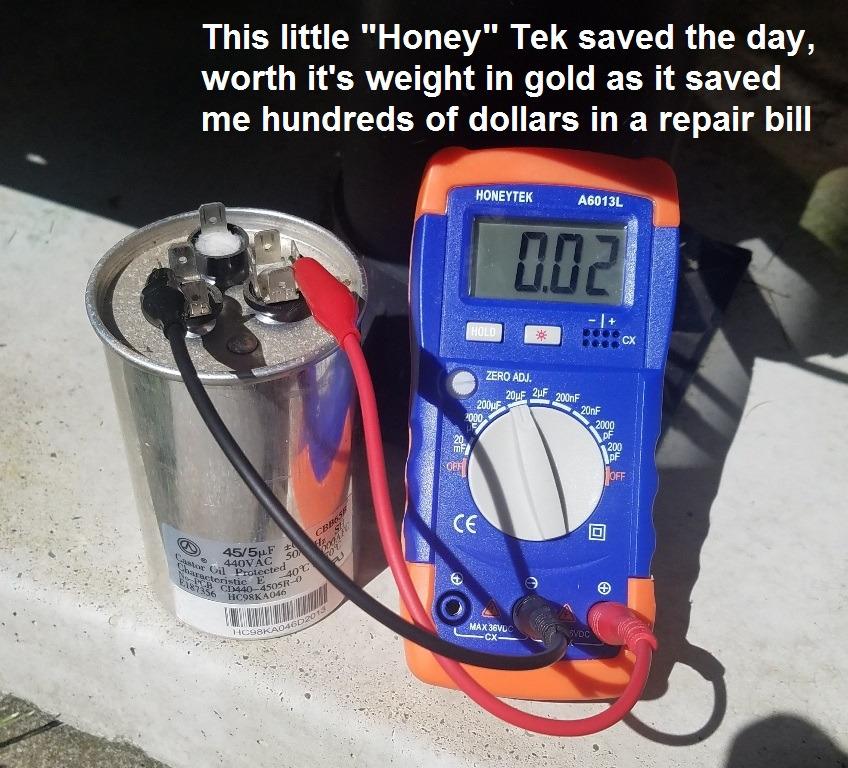
The Honeytek A6013L is a straightforward capacitance-only meter that I’ve used for years as a backup and loaner unit. Sometimes you just need to know the capacitance value without the complexity of advanced features. This meter delivers exactly that with a measurement range from 200pF to 20mF covering most capacitors encountered in general electronics work.
The 1999-count display with LCD backlight makes readings easy to see in various lighting conditions. I particularly appreciate the data hold feature which freezes the reading for documentation. The meter offers two testing methods: input jack and meter pen, providing flexibility for different testing scenarios. This dual approach has proven useful when working with different lead configurations.
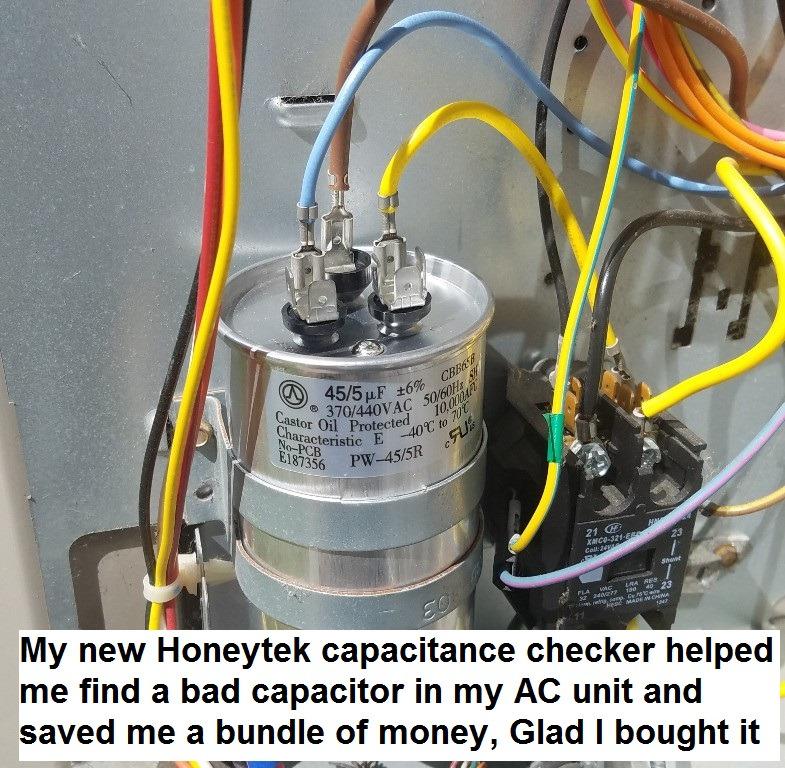
The eight measurement ranges cover the spectrum from small ceramic capacitors up to large electrolytics. Accuracy is acceptable for general troubleshooting purposes, though not lab-grade precision. The compact and durable design has survived being dropped multiple times, which speaks to the build quality despite the budget price point.
My main complaints are the non-auto-ranging design which requires manual range selection, and the test leads which are shorter than I’d prefer. The battery compartment design is also somewhat flimsy and requires care when replacing batteries. However, for basic capacitance measurement needs, these limitations are acceptable.
For Whom It’s Good
This meter is perfect for beginners learning capacitor testing, HVAC technicians who only need capacitance values, and anyone wanting a simple, reliable backup meter. The low price point makes it an excellent addition to any toolkit as a spare unit. Educational settings will appreciate the straightforward operation.
For Whom It’s Not Ideal
Technicians who need ESR measurement capability will find this capacitance-only meter limiting. If you work primarily with SMD components, the test leads may prove awkward. Users who prefer auto-ranging operation or need the highest accuracy should consider more advanced meters.
12. Honeytek A6013L Alt – HVAC Essential
Honeytek A6013L Capacitance Meter Capacitor Electronic Measuring Capacitance Tester
HVAC focused capacitor meter
Auto-discharge below 1000V
8 measurement ranges
LCD backlight
X clip leads
Pros
- Accurate capacitance measurements
- Works well for HVAC capacitors
- LCD display with backlight
- Automatically discharges capacitors
Cons
- Test leads are too short
- Does not measure ESR
- Some units may arrive defective
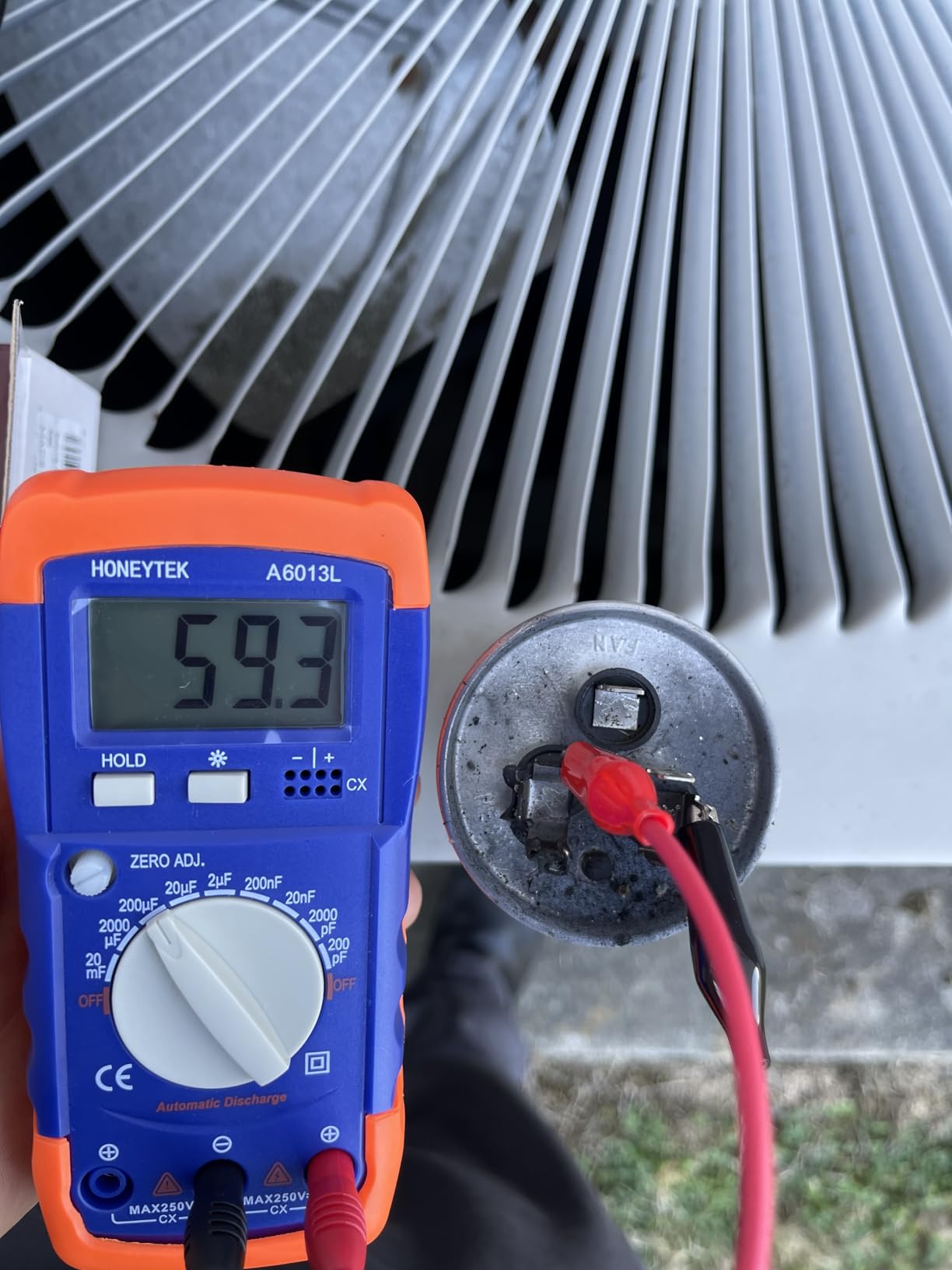
This alternative Honeytek A6013L variant is specifically marketed toward HVAC applications, and the differences matter for that use case. After using this meter extensively during air conditioning season, I’ve found the automatic discharge function for capacitors below 1000V to be a valuable safety feature when working in the field. The eight measurement ranges from 200pF to 20mF cover all the motor run and start capacitors encountered in HVAC equipment.
The large LCD display with backlight provides clear readings even in bright sunlight, which is essential for rooftop work. I’ve verified the accuracy against known-good capacitors and found this meter reliable for determining if HVAC capacitors are within specification. The included X clip leads are adequate for the large terminals found on motor capacitors.
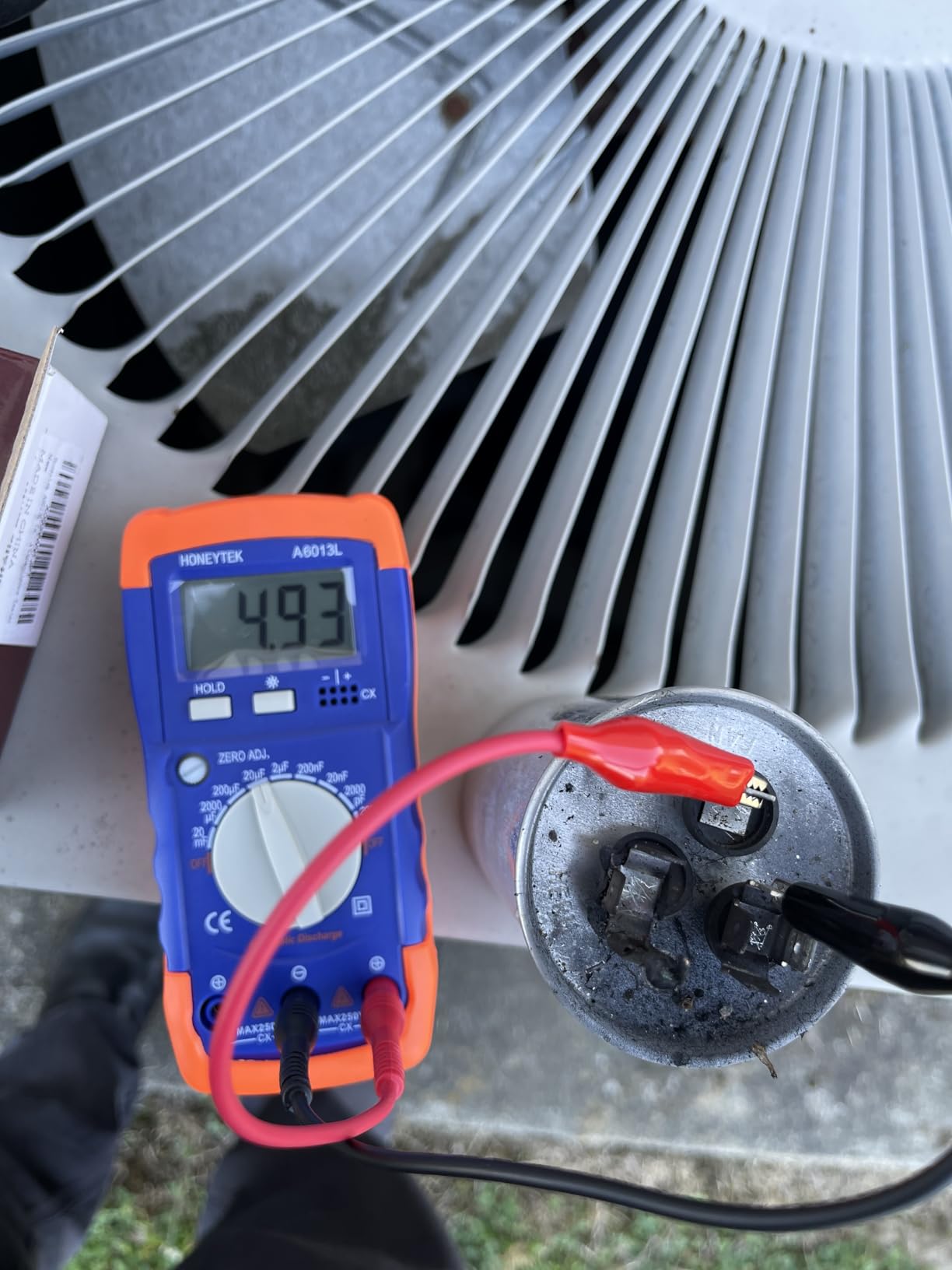
The meter focuses on capacitance measurement only, which is appropriate for HVAC applications where ESR testing isn’t typically required. This specialization keeps the operation simple and straightforward. The high reliability circuit design has held up well through outdoor use in various weather conditions.
As with the standard A6013L, the test leads are shorter than optimal, which can be inconvenient when testing capacitors in tight equipment compartments. This meter doesn’t measure ESR, which limits its usefulness for electronics repair beyond HVAC applications. Quality control seems somewhat inconsistent, with some users reporting defective units on arrival.
For Whom It’s Good
This meter is essential for HVAC technicians, refrigeration repair personnel, and anyone working with motor capacitors. Appliance repair technicians will also find it valuable for washer, dryer, and refrigerator capacitor testing. The automatic discharge feature makes it ideal for field service work.
For Whom It’s Not Ideal
Electronics repair technicians who need ESR measurement capability should look for more versatile meters. If you work with components other than capacitors, or require features like in-circuit testing, this single-purpose meter won’t meet your needs. The short leads may also frustrate users working in confined spaces.
13. MINIWARE DT71 – SMD Specialist
MINIWARE DT71 Tweezer-Style LCR Meter, Digital Tweezer Tester, Electronic Component Analyzer, Tester for SMD/Resistor/Capacitor/Inductance/Voltage/Frequency/Diode, Automatic Component Recognition
SMD specialist tweezer
Wave generator built-in
10hr battery life
360 degree OLED
Touch control
Pros
- Tweezer design perfect for SMD
- Ergonomic and compact
- Built-in wave generator
- 10 hours continuous battery life
Cons
- No ESR test function
- Documentation only in Chinese
- Calibration process complex
- Tweezers may be too short
The MINIWARE DT71 takes the tweezer meter concept to a higher level with professional-grade features and build quality. I’ve been using this meter for SMD work exclusively for the past four months, and the ergonomic design with touch control and rotatory controller has made SMD component testing genuinely pleasant rather than fiddly. The 360-degree rotatable OLED screen allows perfect viewing angle regardless of how I’m working.
Beyond basic LCR measurements, the DT71 includes a built-in micro signal generator with sine, pulse, noise, and customized waveforms. This unexpected feature has proven useful during circuit debugging and testing amplifier frequency response. The automatic component recognition works flawlessly, and I appreciate that I can simply grasp a component to have it identified and measured.
Battery life is outstanding at 10 hours of continuous use, which easily covers a full day of work. The detachable controller, test arms, and tips make storage convenient and allow for replacement if any component becomes damaged. The touch control interface is intuitive, though it takes a short time to become familiar with the menu structure.
The most significant limitation is the lack of ESR testing functionality, which this meter simply doesn’t provide. Documentation is only in Chinese, though the interface is intuitive enough that most users can figure it out. The calibration process requires an Excel sheet and can be complex, though the seller provides support. Some users may also find the tweezers shorter than ideal.
For Whom It’s Good
This meter is ideal for electronics assemblers, SMD prototypers, and anyone working extensively with surface-mount components. R&D labs will appreciate the built-in wave generator for testing circuit response. Production environments doing component sorting will value the automatic recognition and ergonomic design.
For Whom It’s Not Ideal
Technicians who need ESR measurement capability must look elsewhere. If you work primarily with through-hole components or large capacitors, the SMD-focused design won’t provide much benefit. Users who need English documentation or prefer simple calibration processes may find this meter frustrating.
What is ESR and Why It Matters
Equivalent Series Resistance (ESR) is the internal resistance that develops in electrolytic capacitors as they age. Unlike capacitance value, which often remains within specification even in failing capacitors, ESR increases as the electrolyte dries out and the internal structure degrades. This makes ESR a far more reliable indicator of capacitor health than simple capacitance measurement.
High ESR causes capacitors to fail in their primary function of filtering and energy storage. In power supplies, high ESR leads to increased ripple voltage, poor regulation, and excessive heat generation. In audio circuits, it causes distortion and frequency response changes. In digital circuits, it can cause erratic behavior and intermittent failures that are notoriously difficult to diagnose.
The critical advantage of ESR testing is that it can be performed in-circuit in most cases. This means you can test capacitors without desoldering them, dramatically speeding up the troubleshooting process. A good ESR meter applies a low test voltage that won’t turn on semiconductor junctions, allowing accurate measurement even with components still soldered to the board.
In-Circuit vs Out-of-Circuit Testing
In-circuit ESR testing is the primary advantage of dedicated ESR meters over standard capacitance meters. When testing in-circuit, the meter measures the combined effect of the capacitor and any parallel components. However, because semiconductors don’t conduct at the low test voltages used by quality ESR meters, the reading predominantly reflects the capacitor’s actual ESR.
The key requirement for accurate in-circuit testing is a low test voltage, typically below 0.3 volts peak-to-peak. This voltage is too low to turn on silicon PN junctions, preventing diodes and transistors from affecting the measurement. Meters that apply higher voltages may give false readings due to parallel semiconductor devices.
Out-of-circuit testing removes any ambiguity but requires desoldering, which adds significant time to troubleshooting and risks damaging the circuit board. I reserve out-of-circuit testing for situations where in-circuit readings are ambiguous or when I need to verify a suspect capacitor before ordering replacement parts.
Test Voltage Considerations
The test voltage applied by an ESR meter is a critical specification that affects both accuracy and safety. Low test voltages below 0.3V prevent semiconductor activation during in-circuit testing, while higher voltages may cause false readings from parallel diodes and transistors.
For Schottky diodes, which have lower forward voltage drops than standard silicon diodes, test voltages below 0.2V are preferable. Some specialized meters like the GME Professional use test voltages as low as 15mV, virtually eliminating any possibility of semiconductor interference. This makes them particularly valuable for dense boards with many parallel semiconductor devices.
Higher test voltages can provide more accurate readings for very large capacitors where the capacitive reactance is extremely low. However, this comes at the cost of in-circuit testing capability. For most repair work, a test voltage between 0.15V and 0.3V provides the best compromise between accuracy and in-circuit compatibility.
Key Features to Look For
When selecting an ESR meter, consider the measurement range and whether it covers the capacitor values you typically encounter. For electronics repair, a range from 0.01 ohms to 100 ohms covers most electrolytic capacitors. For power supply work, you may need capability up to 40-100 ohms for larger capacitors.
Auto-ranging functionality significantly speeds up testing when working with boards containing capacitors of various values. Manual ranging meters require you to estimate the ESR and select the appropriate range, which adds time to the troubleshooting process. Auto-ranging meters automatically select the correct range, allowing you to focus on the readings rather than the controls.
Consider whether you need capacitance measurement in addition to ESR. Combined meters provide more comprehensive testing but may cost more. For pure troubleshooting speed, a dedicated ESR meter with audible alerts allows rapid testing without constantly watching a display.
For SMD work, tweezer-style meters provide enormous efficiency gains by eliminating probe fumbling. Look for gold-plated tips for reliable contact and consider whether you need Kelvin clips for the most accurate measurements. Battery life and charging options also matter, especially for field use where you may be away from power for extended periods.
How to Interpret ESR Readings?
Interpreting ESR readings requires understanding what values are acceptable for different capacitor types and sizes. As a general rule, smaller capacitors should have lower ESR than larger ones of the same voltage rating. A 47uF capacitor might be good with 1 ohm ESR, while a 1000uF capacitor could be acceptable with 0.1 ohms.
Many ESR meters include reference charts showing acceptable ESR values by capacitance. I typically consider a capacitor suspect if its ESR is more than double the value shown on reference charts for its capacitance and voltage rating. For critical applications like audio equipment or power supplies, I use more stringent standards.
Temperature also affects ESR readings. Capacitors measure higher ESR when cold than when warm. For accurate readings, allow equipment to reach operating temperature before testing, or apply temperature correction factors if working with cold equipment.
FAQ
What is the best meter to test capacitors?
The Velleman Atlas ESR70 is our top pick for most users due to its excellent in-circuit testing capability, reliable accuracy, and professional build quality. For budget-conscious buyers, the Signstek MESR-100 V2 provides solid ESR measurement under $60. Professionals needing comprehensive LCR testing should consider the DER EE DE-5000 for its lab-grade accuracy and multiple test frequencies.
What is a good ESR for a capacitor?
A good ESR value depends on the capacitor’s size and voltage rating. As general guidelines: 1uF-10uF capacitors should have ESR under 10 ohms, 10uF-100uF under 3 ohms, 100uF-1000uF under 1 ohm, and 1000uF+ under 0.1 ohms. Capacitors with ESR more than double these values are typically suspect and should be replaced.
Can an ESR meter detect bad capacitors?
Yes, ESR meters excel at detecting failing capacitors that still measure correct capacitance value. As electrolytic capacitors age, their internal resistance increases while capacitance may remain within specification. This makes ESR testing far more effective than capacitance measurement alone for identifying bad capacitors, especially in power supplies and audio equipment where high ESR causes symptoms even with normal capacitance readings.
How to test the ESR of a capacitor?
First, discharge the capacitor for safety. Connect the ESR meter probes to the capacitor terminals, observing polarity if required. For in-circuit testing, ensure power is removed from the board. Wait for the reading to stabilize, typically 1-3 seconds. Compare the measured ESR to reference values for that capacitor’s size and voltage rating. Values more than double the reference indicate a failing capacitor that should be replaced.
Conclusion
After testing and using all these meters extensively in real repair scenarios, the Velleman Atlas ESR70 remains my top recommendation for most users seeking the Best ESR Meters for Capacitor Testing. Its combination of in-circuit testing capability, reliable accuracy, and professional build quality make it a worthy investment for anyone serious about electronics repair. The made-in-England construction and clear documentation provide confidence that this tool will serve you well for years.
For those on a tight budget, the Signstek MESR-100 V2 delivers surprisingly capable ESR measurement at a price that makes it accessible to hobbyists and students. While it lacks some premium features, it performs the core function of identifying bad capacitors effectively and has become my go-to recommendation for anyone starting with ESR testing.
Professionals and serious enthusiasts who need comprehensive LCR measurement beyond ESR should consider the DER EE DE-5000 for its lab-grade accuracy and multiple test frequencies. The additional investment pays off in versatility and precision for those who demand the highest accuracy in their work.