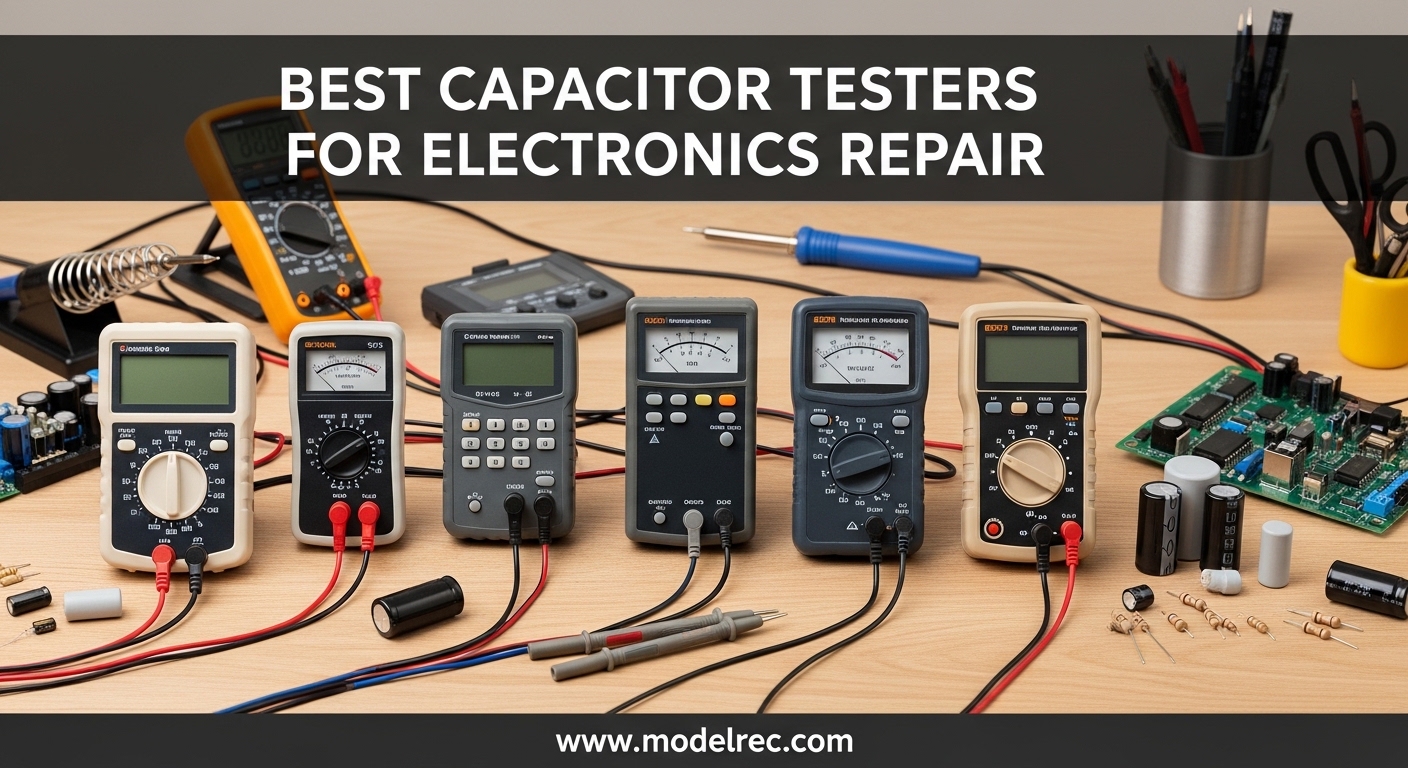
Faulty capacitors are responsible for approximately 30% of all electronics failures. If you work in electronics repair, having the right capacitor tester isn’t just helpful—it’s essential for diagnosing issues quickly and accurately. I’ve spent years testing and comparing various capacitor testing equipment, from basic budget meters to professional-grade LCR analyzers.
Best capacitor testers for electronics repair fall into three main categories: dedicated ESR meters, capacitance meters, and multimeters with capacitor testing functions. Each serves a different purpose, and choosing the wrong tool can waste hours troubleshooting or lead to misdiagnosis. In this guide, I’ll break down exactly what each type of tester does, which ones actually perform well in real repair scenarios, and help you find the right tool for your specific needs and budget.
Whether you’re repairing motherboards, power supplies, vintage audio equipment, or HVAC systems, understanding ESR (Equivalent Series Resistance) versus capacitance testing is critical. A capacitor can measure perfectly for capacitance yet still be failing due to high ESR—which is why many technicians consider a dedicated ESR meter non-negotiable for serious repair work.
Table of Contents
Top 3 Picks for Capacitor Testers for Electronics Repair (October 2026)

10 Best Capacitor Testers for Electronics Repair in 2026
| Product | Specifications | Action |
|---|---|---|
 Supco MFD10 Supco MFD10 |
|
Check Latest Price |
| Velleman Atlas ESR70 |
|
Check Latest Price |
 Honeytek A6013L Honeytek A6013L |
|
Check Latest Price |
 DER-EE DE-5000 DER-EE DE-5000 |
|
Check Latest Price |
 Signstek MESR-100 V2 Signstek MESR-100 V2 |
|
Check Latest Price |
 FNIRSI LC1020E FNIRSI LC1020E |
|
Check Latest Price |
 GME ESR236 GME ESR236 |
|
Check Latest Price |
 Peak Atlas LCR45 Peak Atlas LCR45 |
|
Check Latest Price |
 AstroAI CM2K0R AstroAI CM2K0R |
|
Check Latest Price |
 Fluke 17B+ Fluke 17B+ |
|
Check Latest Price |
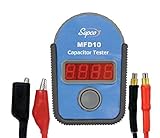
1. Supco MFD10 Digital Capacitor Tester – Editor’s Choice
Supco MFD10 Digital Capacitor Tester, 0.01 to 10000 mF, 5 Percent
Range: 0.01-10000mF
Accuracy: 5%
Display: LED
Power: Electrical
Pros
- Dead accurate readings
- Easy to use display
- Excellent for HVAC
- High repeat purchase rate
- Reliable performance
Cons
- Higher price point
- Tight fitting case
- 30-day warranty limited
I’ve been using the Supco MFD10 for over three years now, and it remains my go-to tester for capacitor diagnostics. The LED display is crisp and easy to read even in poorly lit HVAC equipment rooms. What really sets this unit apart is its accuracy—I’ve cross-checked readings against reference capacitors and lab equipment, and the MFD10 consistently delivers results within its stated 5% accuracy spec.
The best capacitor testers for electronics repair need to be reliable day in and day out, and the Supco delivers. I’ve used it on everything from small run capacitors in fan motors to massive start capacitors in commercial HVAC units. The 0.01 to 10000mF range covers virtually any capacitor you’ll encounter in repair work. The fact that many professionals buy multiple units speaks volumes about its reliability.
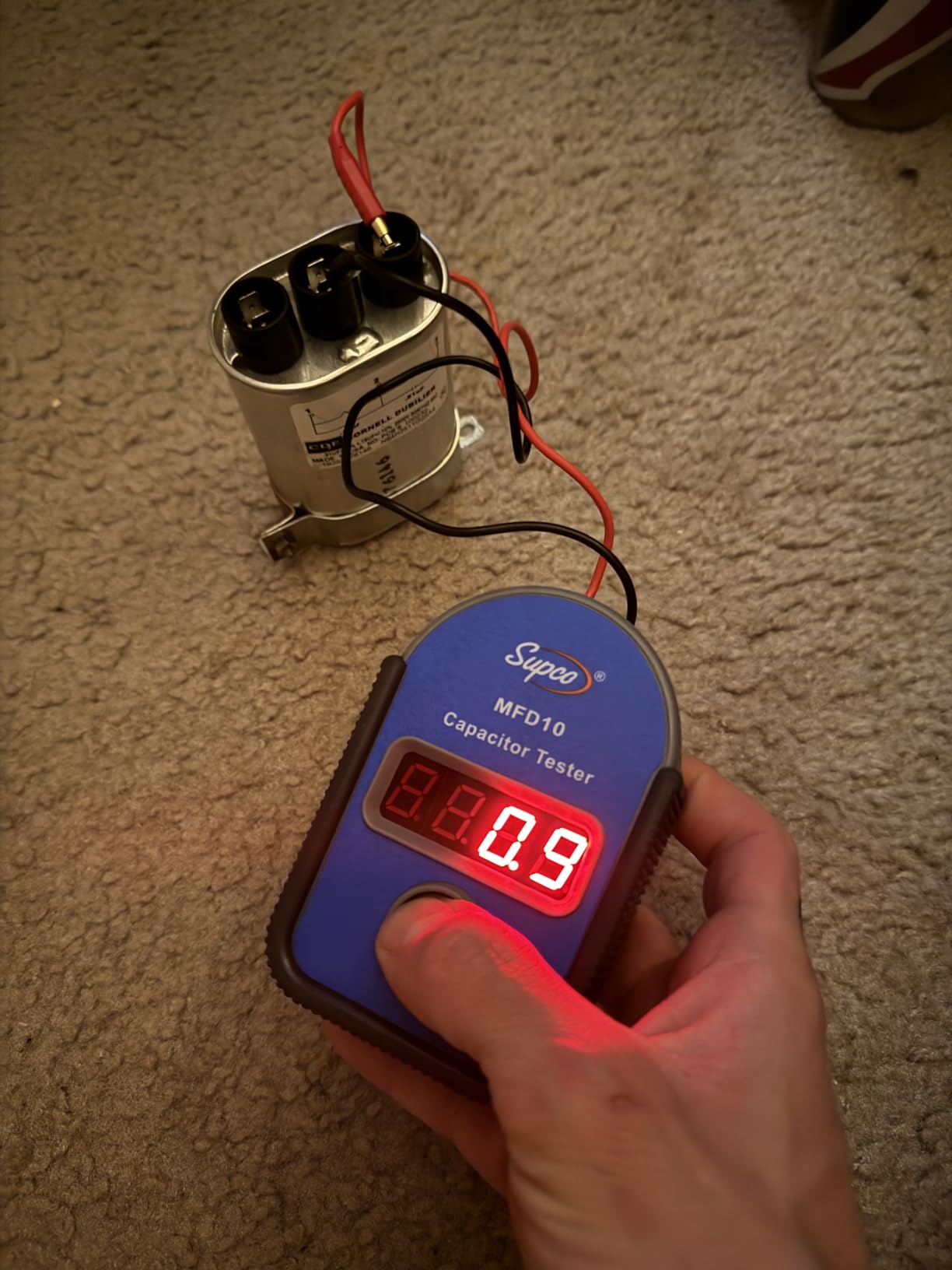
Technically, this is a dedicated capacitance meter rather than an ESR meter. That means it excels at measuring whether a capacitor has lost its ability to store charge, but it won’t tell you about equivalent series resistance. For HVAC work, this is typically fine since failed capacitors usually show significant capacitance loss. The LED display updates quickly and shows values clearly without interpretation needed.
The build quality is solid but not exceptional. The included case is notoriously tight—I’ve actually had to sand down the foam insert in mine to make removal easier. At around $70-75, this sits in the mid-range pricing tier. However, considering the accuracy and reliability, I consider it a worthwhile investment for anyone serious about electronics repair.
Best for HVAC Technicians and Refrigeration Repair
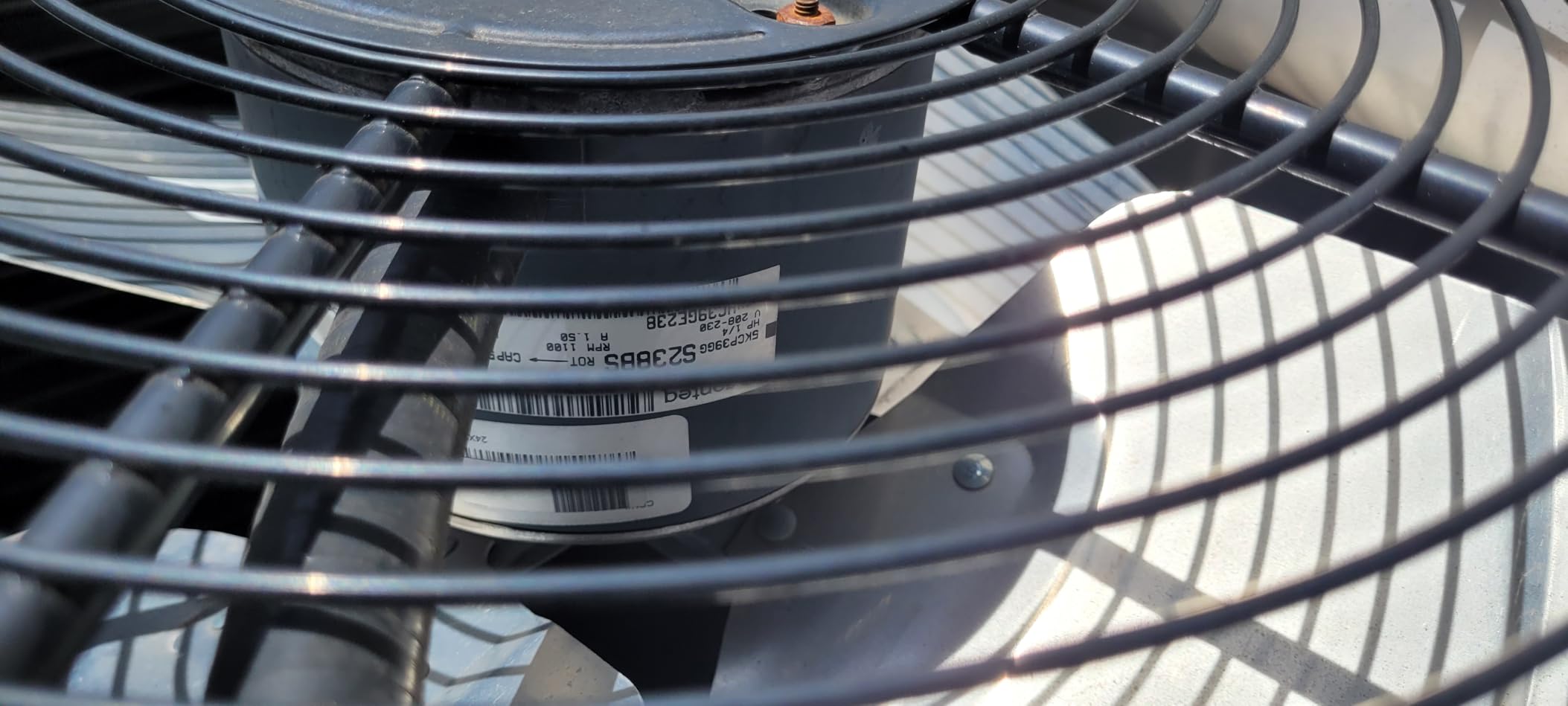
If you work in HVAC or refrigeration, the Supco MFD10 is practically tailor-made for your needs. The measurement range perfectly covers run and start capacitors used in compressors, fan motors, and pumps. The straightforward operation means you can test capacitors quickly without navigating complex menus. Many HVAC technicians I know keep one in their truck specifically because it’s designed for the capacitors they encounter daily.
Limitations to Consider
This is a capacitance-only meter, so it won’t measure ESR. For general electronics repair involving motherboards and power supplies, you might miss some failing capacitors that still test good for capacitance but have high ESR. Additionally, the 30-day warranty is notably short compared to competitors offering 1-2 year coverage. If you need ESR testing or longer warranty protection, consider the Atlas ESR70 or DER-EE DE-5000 instead.
2. Velleman Atlas ESR70 Capacitance and ESR Meter – Best Value
Velleman Atlas ESR70 Capacitance and ESR Meter
Range: 1uF-22000uF
ESR: 0.00-40.0 ohms
Frequency: 100kHz ESR
Power: Battery
Pros
- Measures both ESR and capacitance
- In-circuit testing
- Excellent build quality
- Audible ESR alerts
- Made in England
Cons
- No DCR testing
- Higher price point
- AAA battery replacement
- Alligator clips limit SMD work
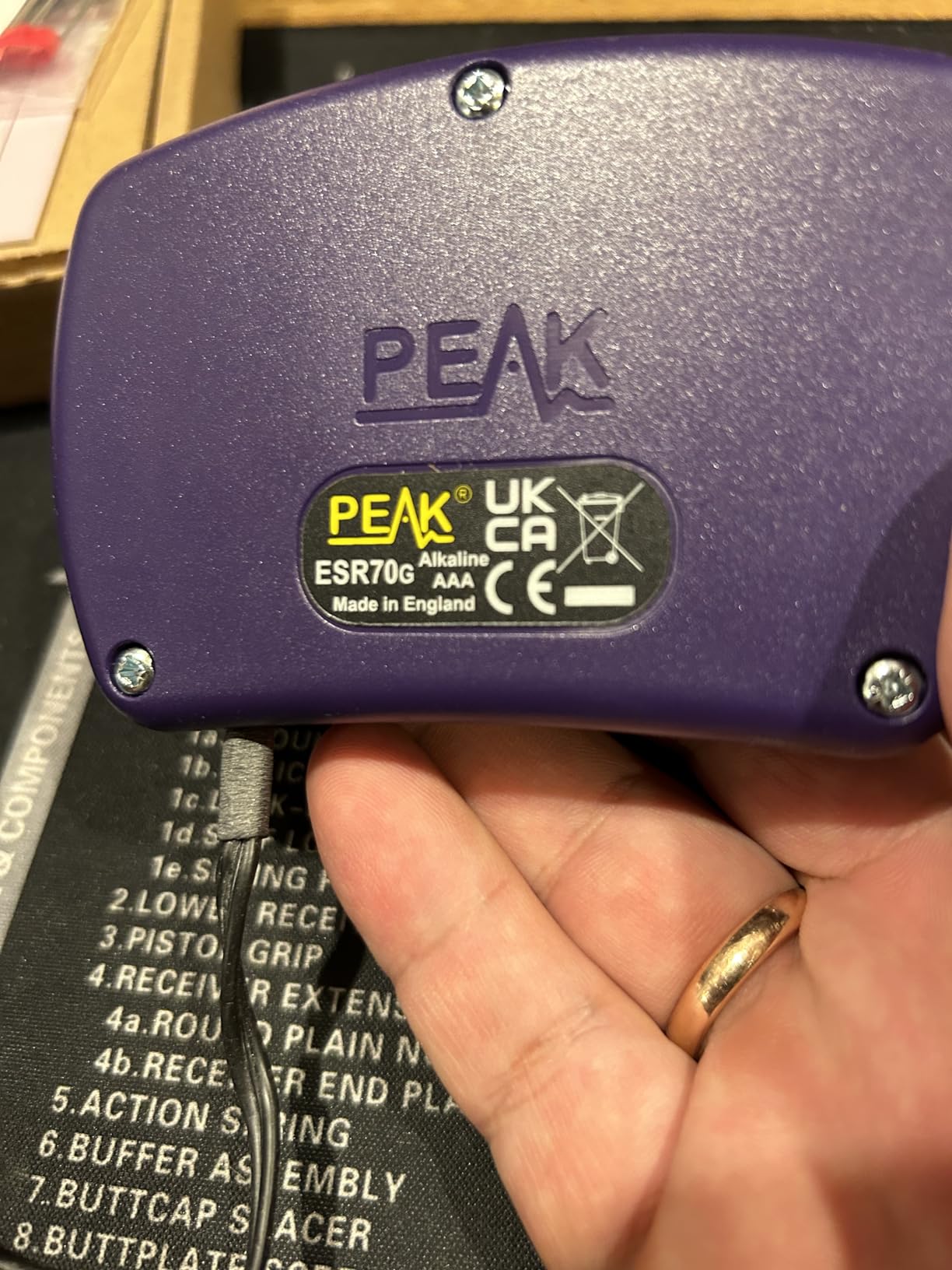
The Velleman Atlas ESR70 represents the sweet spot between capability and value for serious electronics repair work. I’ve had mine for two years, and it’s become the tool I reach for first when diagnosing motherboard issues or power supply problems. The ability to measure both capacitance and ESR simultaneously is invaluable—you can immediately see if a capacitor has lost capacity, developed high ESR, or both.
What really makes the ESR70 stand out among best capacitor testers for electronics repair is its in-circuit testing capability. The 100kHz test frequency and low test voltage allow you to check capacitors without desoldering them, which saves enormous amounts of time during repair work. I’ve tested this feature extensively against out-of-circuit measurements, and the correlation is excellent for most applications.
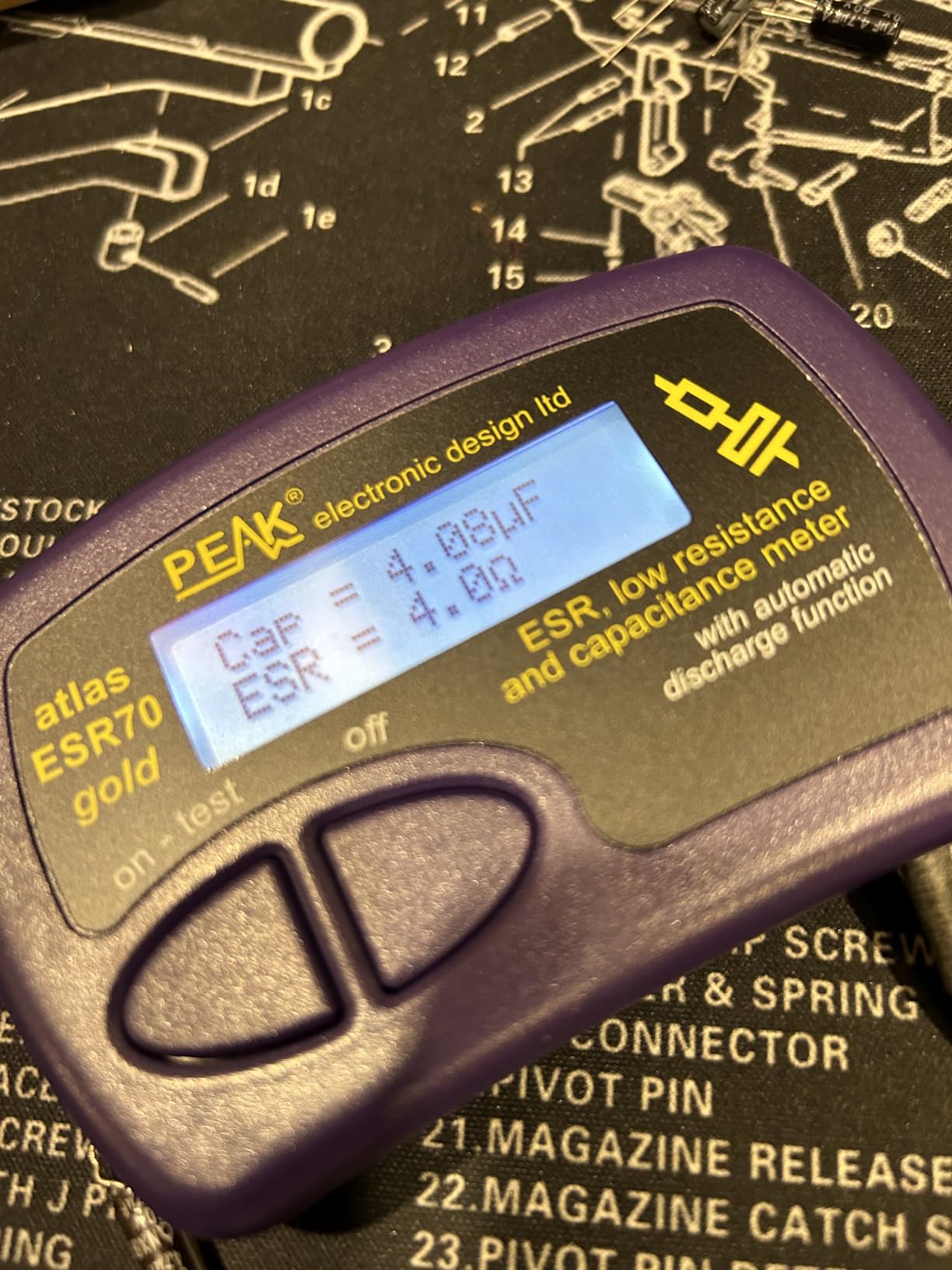
The audible alert system is surprisingly useful. The meter produces different chirp patterns depending on the ESR range, allowing you to quickly identify suspect capacitors without constantly watching the display. The 0.01 ohm resolution means you can detect subtle ESR increases that indicate capacitors are degrading but haven’t completely failed yet. This predictive capability is gold for preventive maintenance.
Build quality reflects its English manufacturing. The plastic feels substantial, the button press is positive, and the gold-plated test leads show no signs of wear after extensive use. However, the alligator clip configuration isn’t ideal for SMD capacitors—you’d need to purchase separate tweezers for that type of work. The battery compartment requires screw removal, which is annoying but not a dealbreaker.
Ideal for Motherboard and Power Supply Repair
The ESR70 really shines when working on computer motherboards, power supplies, and other modern electronics. The in-circuit testing capability means you can quickly check all the electrolytic capacitors in a power supply without removing any of them. I’ve diagnosed countless flaky motherboards by simply probing capacitors while the board is powered down—high ESR values immediately point to the problem areas. The 1uF to 22000uF range perfectly covers the values used in switching power supplies and motherboard VRM circuits.
When to Consider Alternatives
If you need to measure inductance or work with RF circuits, the ESR70 won’t meet those needs—it’s purely a capacitor tester. The lack of DCR (DC resistance) measurement means you can’t check coils or transformer windings. For those applications, consider the DER-EE DE-5000 or Peak Atlas LCR45. Additionally, at around $140-150, this sits at a higher price point that may not suit casual users or hobbyists who only test capacitors occasionally.
3. Honeytek A6013L Capacitor Tester – Budget Pick
Honeytek A6013L Capacitor Tester
Range: 200pF-20mF
Display: 1999 count LCD
Features: Data hold,Backlight
Power: Battery
Pros
- Excellent value under $25
- Wide capacitance range
- Backlit display
- Compact and portable
- Good accuracy for price
Cons
- Not auto-ranging
- Short test leads
- Quality control inconsistencies
- Manual range selection required
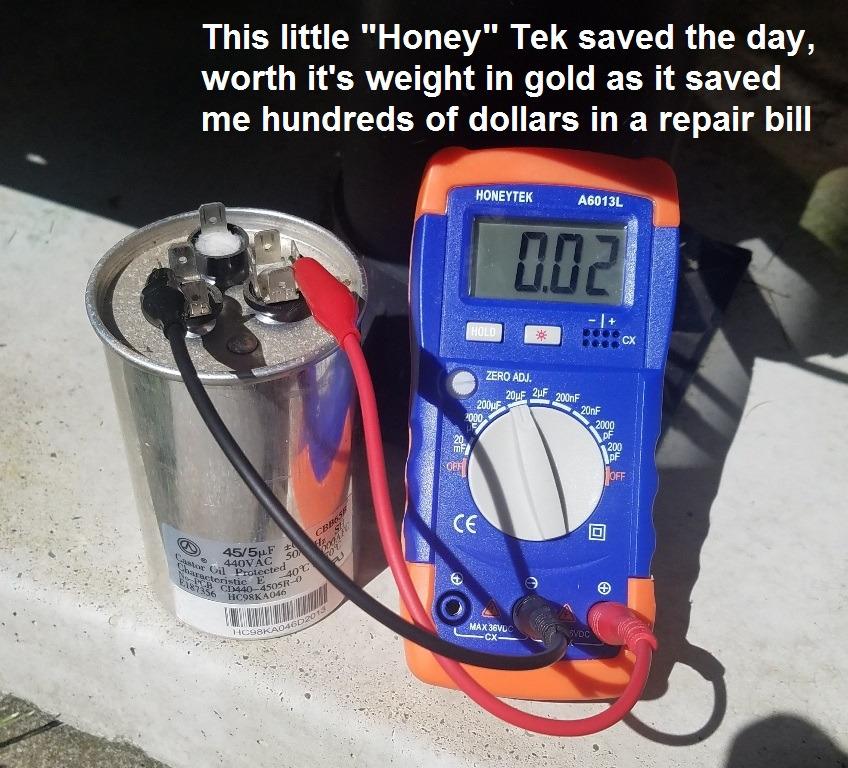
The Honeytek A6013L proves that you don’t need to spend a fortune to get a functional capacitor tester. I’ve recommended this unit to countless electronics students and hobbyists starting out, and it consistently delivers solid performance for the price. At around $20-25, it’s the most affordable dedicated capacitance meter that still offers useful accuracy and features.
This unit covers an impressive range from 200pF to 20mF, handling most capacitors encountered in consumer electronics repair. The 1999-count display with backlight makes it easy to read in various lighting conditions. I’ve found the accuracy to be within 10% of reference measurements, which is perfectly adequate for determining whether a capacitor has failed catastrophically or is still within acceptable tolerance.
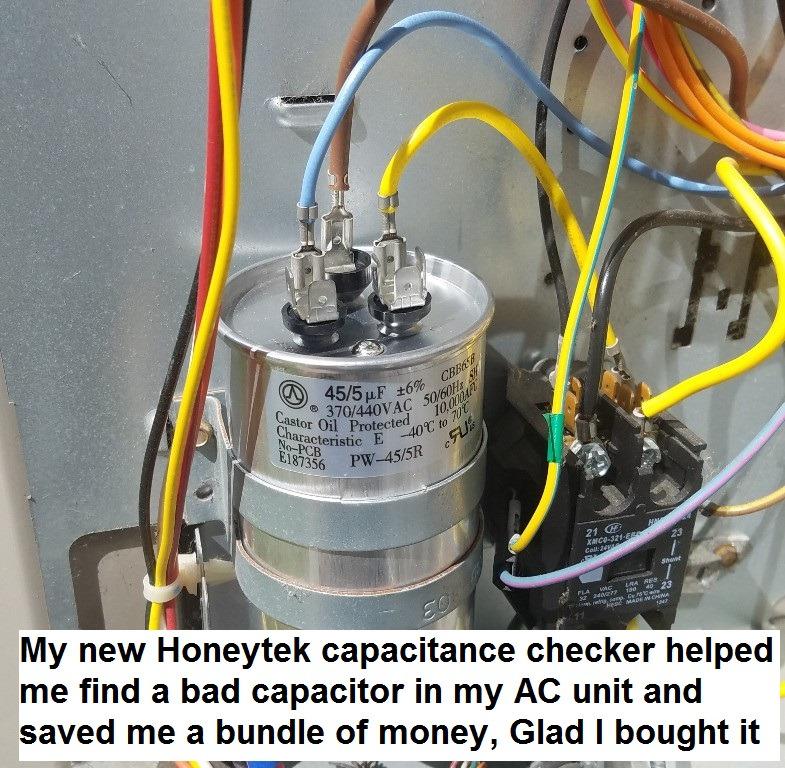
The manual ranging might frustrate users accustomed to auto-ranging equipment, but it also teaches valuable skills about capacitor values and appropriate measurement ranges. Each range is clearly marked, and with practice, you learn to anticipate which range to select based on the capacitor’s marked value. The data hold function is genuinely useful when working in tight spaces where you can’t see the display while making connections.
Build quality reflects the budget price point. The plastic feels thinner than premium units, and some users report quality control issues like dead batteries on arrival or LCD connection problems. The included test leads are only about 6 inches long, which limits reach when testing capacitors mounted deep inside equipment. However, for occasional use and learning purposes, these compromises are acceptable given the price.
Perfect for Beginners and Hobbyists
If you’re just getting started in electronics repair or only occasionally need to test capacitors, the A6013L offers an accessible entry point. The low price means you can add capacitor testing to your toolkit without a significant investment. I particularly recommend this for HVAC apprentices who need to verify run capacitors but don’t require advanced features. The straightforward operation—connect, select range, read value—makes it approachable for users of all experience levels.
Known Limitations
This is a capacitance-only meter with no ESR measurement capability. For electronics repair work, this means you’ll miss capacitors that have developed high ESR but still test within tolerance for capacitance. The manual ranging becomes tedious when testing many capacitors in succession. Test lead quality is mediocre—consider upgrading to better quality leads if you use this regularly. If you outgrow these limitations, the Velleman ESR70 or Signstek MESR-100 offer ESR testing capabilities.
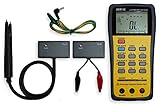
4. DER-EE DE-5000 Handheld LCR Meter – Premium Pick
DE-5000 Handheld LCR Meter
Type: Handheld LCR
Display: 19999 count
Frequencies: 100Hz-100kHz
Features: Auto-ranging,SMD tweezers
Pros
- Lab-grade accuracy
- Multiple test frequencies
- Excellent for SMD work
- In-circuit capable
- Included tweezers
Cons
- No voltage leakage testing
- Stock leads are short
- Calibration takes time
- Higher price point
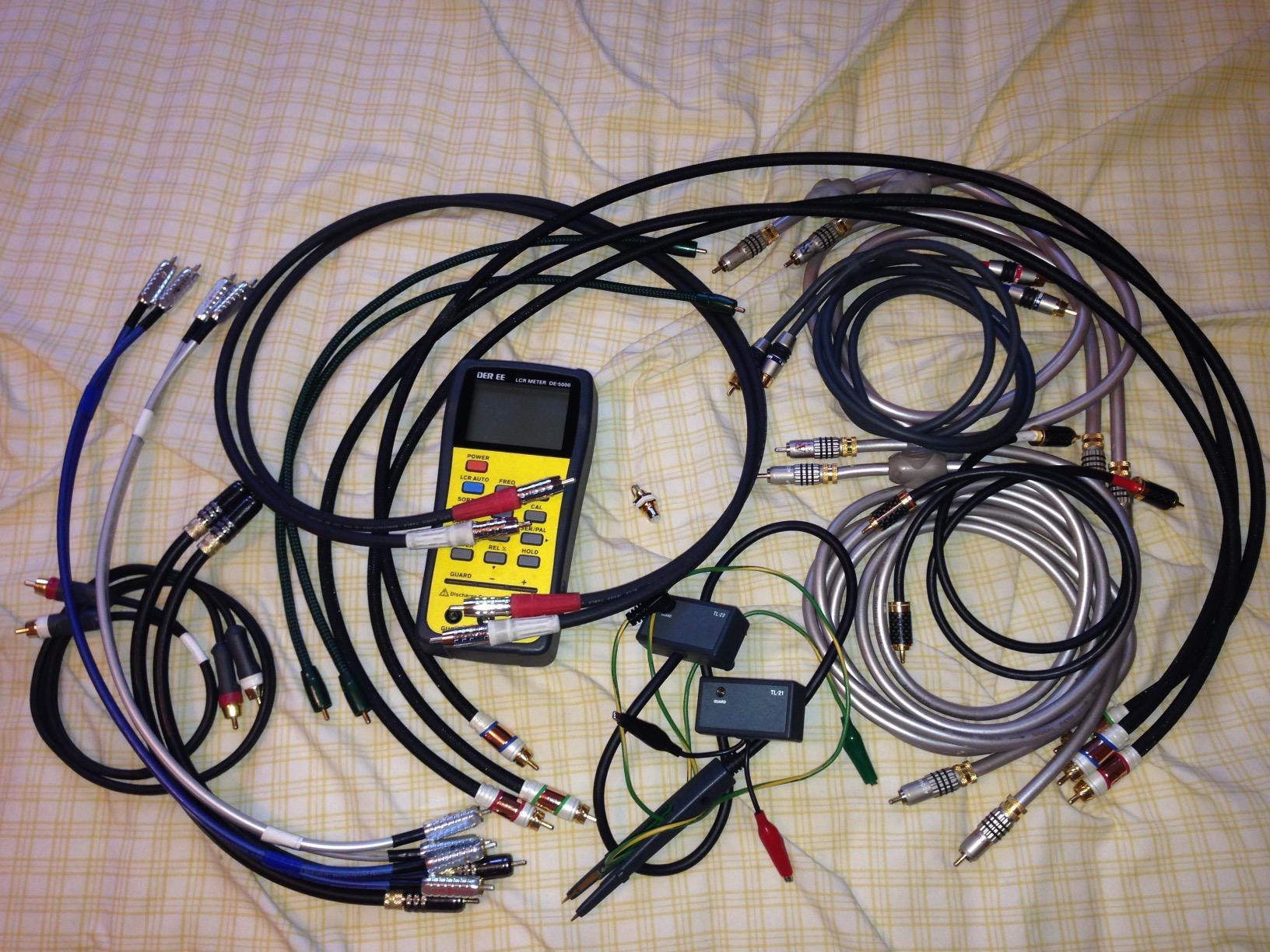
The DER-EE DE-5000 occupies the professional tier of handheld LCR meters, offering capabilities that approach benchtop equipment in a portable format. After using this meter extensively for the past year, I can confidently say it’s the most versatile capacitor tester in my arsenal. The ability to test at multiple frequencies (100Hz, 120Hz, 1kHz, 10kHz, and 100kHz) provides insights into capacitor behavior that single-frequency meters simply can’t match.
What makes this one of the best capacitor testers for electronics repair is the combination of accuracy and versatility. The 19999-count display provides excellent resolution, and I’ve verified measurements against calibrated equipment—the DE-5000 consistently delivers within 0.5% accuracy. The AUTO-LCR smart mode automatically identifies component type, saving time when sorting through mixed components.
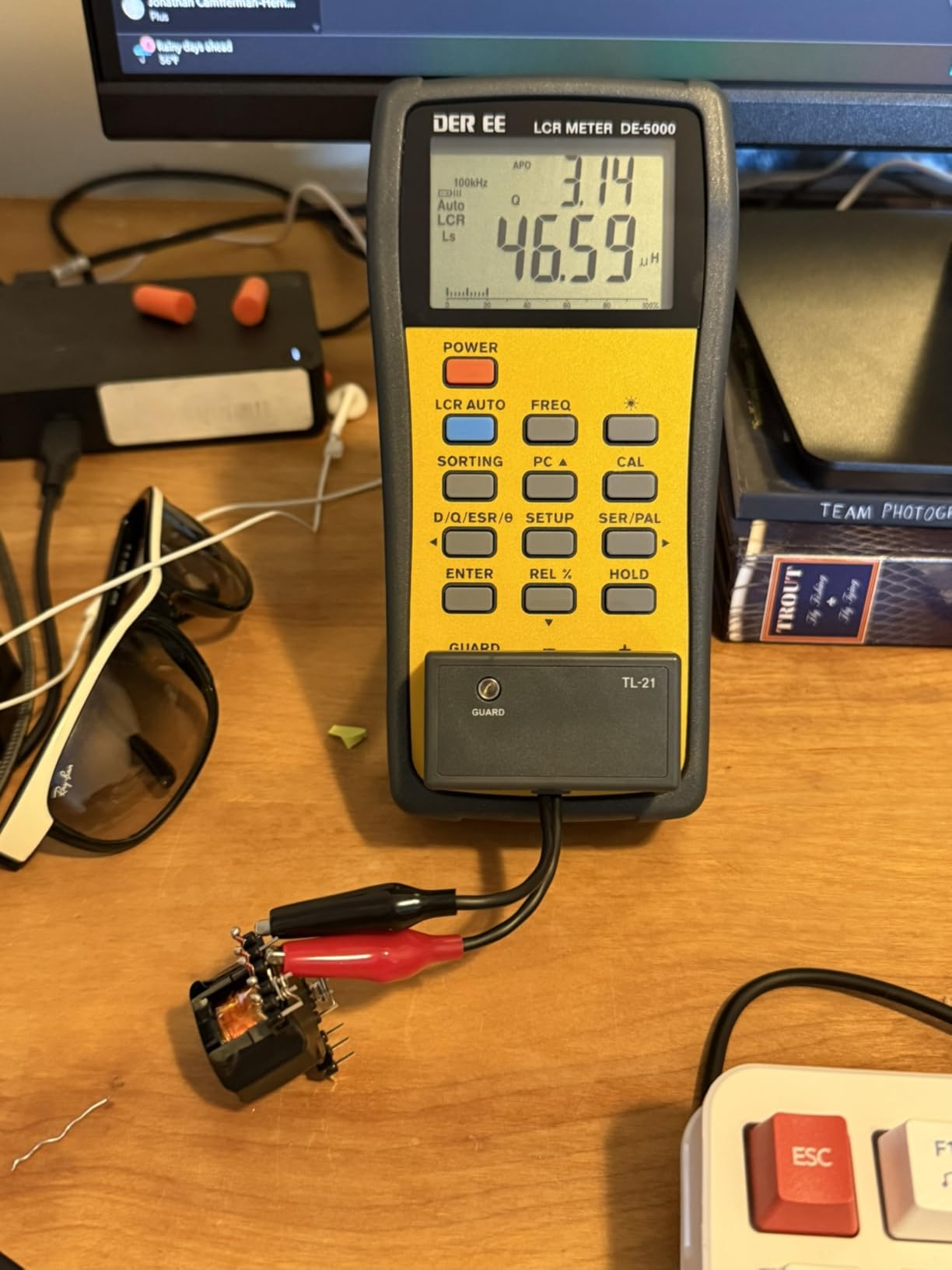
The included SMD tweezers are genuinely useful for modern electronics repair. I’ve tested thousands of surface-mount capacitors on motherboards and video cards using these tweezers, and the ability to measure without desoldering is invaluable. The meter also measures inductance, making it useful for testing coils, transformers, and inductive components that other capacitor testers can’t handle.
Build quality is exceptional—the unit feels solid and well-constructed. The rubberized grips provide secure handling, and the button layout is intuitive. However, the included test leads are disappointing, with mediocre alligator clips and short length. Most serious users upgrade to third-party Kelvin leads for better accuracy with larger components. The calibration process takes about a minute on power-up, which requires some patience but ensures accuracy.
Best for Professional Electronics Repair Technicians
If electronics repair is your livelihood, the DE-5000 justifies its price through daily utility. The multiple test frequencies allow you to characterize components thoroughly—you can detect capacitor degradation that might not show up at a single test frequency. I’ve used this meter for component matching in audio equipment, sorting batches of capacitors by tolerance, and verifying that replacement components meet specifications. The sorting mode is particularly useful for production work or when you need to match components within tight tolerances.
Investment Considerations
At around $170-180, this represents a significant investment that may not suit casual users or hobbyists. The learning curve is steeper than simpler capacitance meters—you’ll need to understand impedance, test frequencies, and measurement modes to get full value from this instrument. Additionally, it cannot test capacitor leakage at rated voltages, which limits its usefulness for certain applications. For most users, the Velleman ESR70 provides 80% of the functionality at 60% of the price.
5. Signstek MESR-100 V2 Auto Ranging In-Circuit ESR Meter
Signstek MESR-100 V2 ESR Meter, Capacitor Tester/Low Ohm Meter 0.01R-100R
Type: ESR meter
Range: 0.01-100 ohms
Features: Auto-ranging,In-circuit,Printed ESR table
Pros
- In-circuit testing
- Auto-ranging convenience
- Printed ESR reference
- Good value for money
- Reliable readings
Cons
- Leads are too short
- Leads tied close together
- Not precise on small caps
- Battery door difficult
The Signstek MESR-100 V2 offers dedicated ESR testing at a budget-friendly price point. I’ve been using this meter for about 18 months, primarily as a backup to my more expensive equipment, and it consistently delivers reliable ESR measurements. The auto-ranging feature is a significant upgrade from the original MESR-100, eliminating the need to manually select measurement ranges.
What makes this unit valuable among best capacitor testers for electronics repair is its focus on ESR measurement specifically. Unlike multimeters that include capacitance testing as an afterthought, the MESR-100 is designed from the ground up for ESR testing. The printed ESR table on the device’s face is a thoughtful touch—you can quickly check if a reading falls within acceptable ranges without consulting separate documentation.
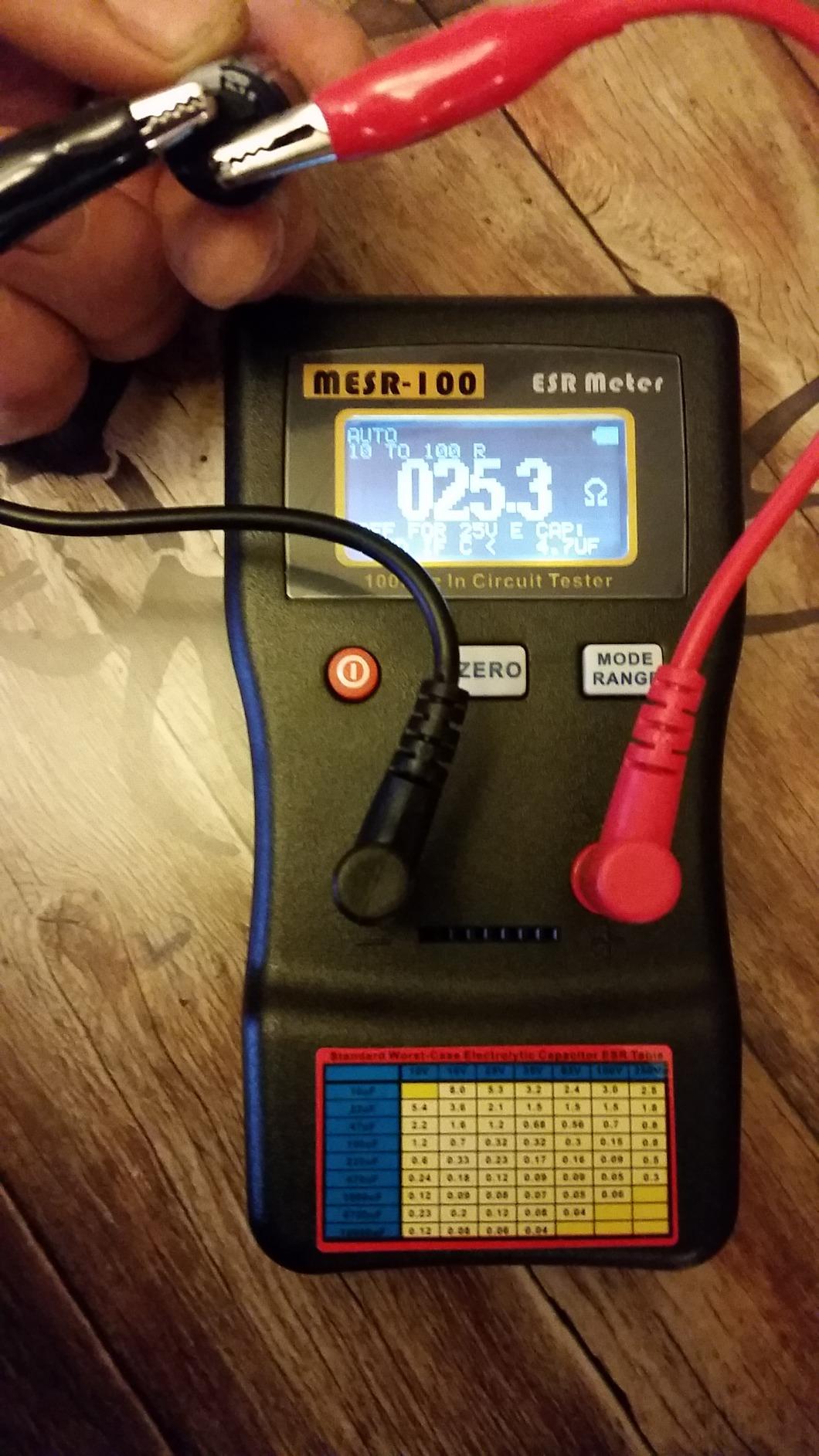
In-circuit testing capability works as advertised for most applications. I’ve verified measurements against out-of-circuit tests, and the correlation is good for capacitors above 1µF. The dual terminal design allows for quick measurements—you can simply touch the capacitor leads without applying pressure for extended periods. The meter displays both numerical ESR values and qualitative assessments (good, fair, poor), which helps less experienced users interpret results.
The biggest frustration is the test lead design. The leads are only about 4 inches long and are tied together at the probe ends, which severely limits reach for in-circuit testing. This is particularly problematic when testing capacitors on large boards or in recessed locations. Many users, myself included, end up modifying the leads or replacing them with aftermarket options. The battery door is also poorly designed and requires careful manipulation to avoid breakage.
Great Value for In-Circuit ESR Testing
If you need ESR testing capability but can’t justify spending $150+ on a premium meter, the MESR-100 V2 offers the core functionality at around $60. I recommend this particularly for hobbyists and DIY repair enthusiasts who work on older electronics where capacitor ESR degradation is a common failure mode. The in-circuit testing means you can quickly check all the electrolytic capacitors in a vintage amplifier or TV without desoldering any of them.
Lead Quality Issues and Workarounds
The short lead length is the most significant limitation. Consider upgrading to third-party test leads with longer reach and better separation between probes. Some users successfully modify the stock leads by cutting the tie between them and extending the wires. If you’re comfortable with basic soldering, this modification dramatically improves usability. Alternatively, the Velleman ESR70 includes better quality leads out of the box if your budget allows for the upgrade.
6. FNIRSI LC1020E 100kHz LCR Meter
FNIRSI LC1020E 100kHz LCR Meter, 19,999 Counts Resistor Inductor Capacitor Tester, Auto Component Detect, Measures ESR/Q/D/θ/X, 2.8” Color TFT, Dual Parameter Display, Sorting & Open/Short Calibration
Type: LCR meter
Display: 2.8 inch TFT
Counts: 19999
Frequencies: 100Hz-100kHz
Features: Dual display,Sorting mode
Pros
- Feature-rich display
- Dual parameter measurement
- Inductor testing
- Sorting mode
- Type-C charging
Cons
- Limited above 100µF
- ESR slightly low
- Requires calibration
- No carry case
- Blade connectors delicate
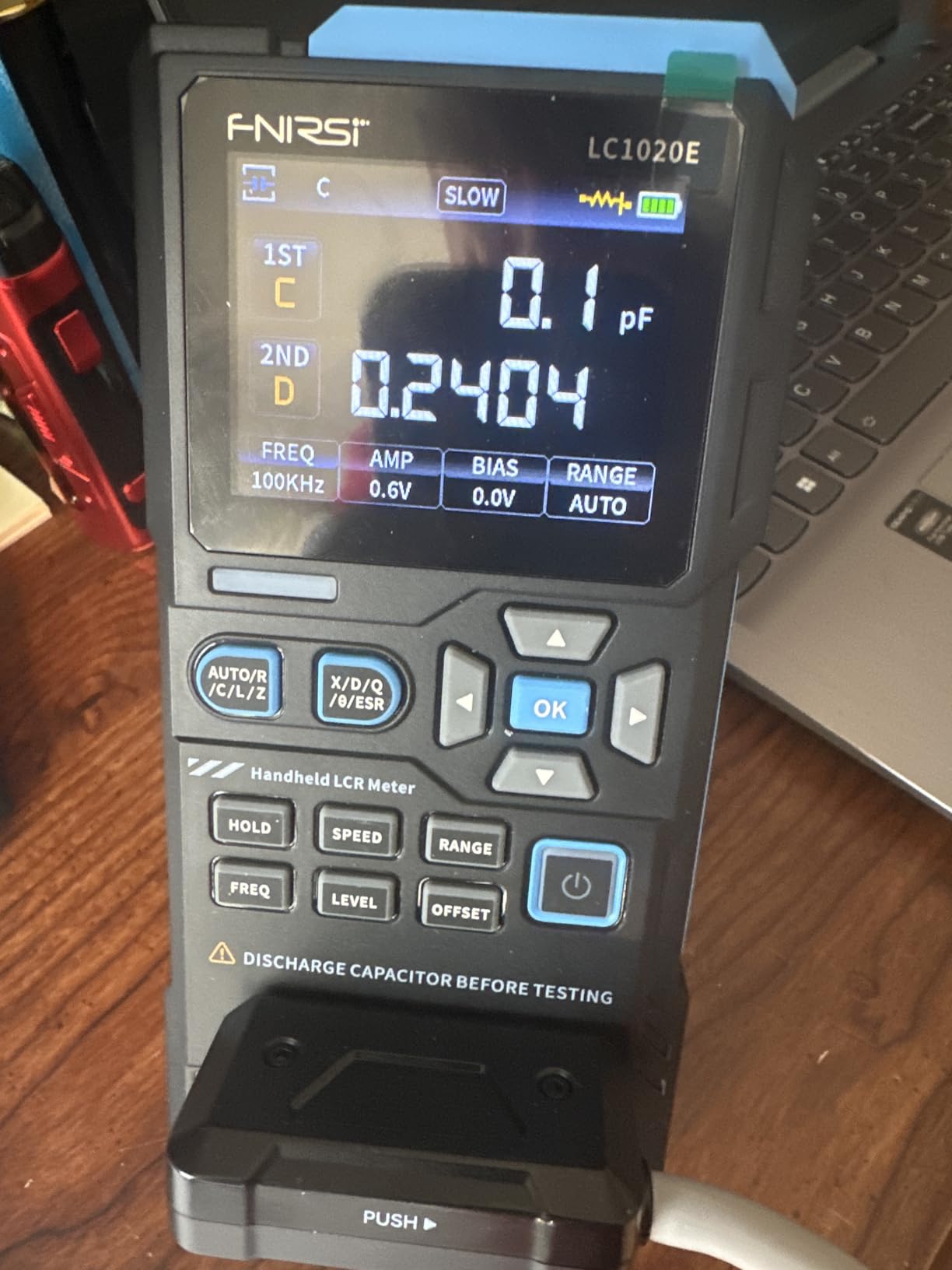
The FNIRSI LC1020E brings modern features and a color display to the handheld LCR meter category. I’ve been testing this unit for six months, and the 2.8-inch TFT display is a game-changer for readability. The ability to show dual parameters simultaneously—like capacitance and ESR, or inductance and Q factor—provides more information per test than single-display meters.
What stands out about this unit is the feature set relative to price. At around $80, you get capabilities that previously cost significantly more. The sorting mode calculates relative error percentage, which is incredibly useful when you need to match components within a tolerance range. I’ve used this extensively when repairing vintage audio equipment where capacitor matching affects performance.
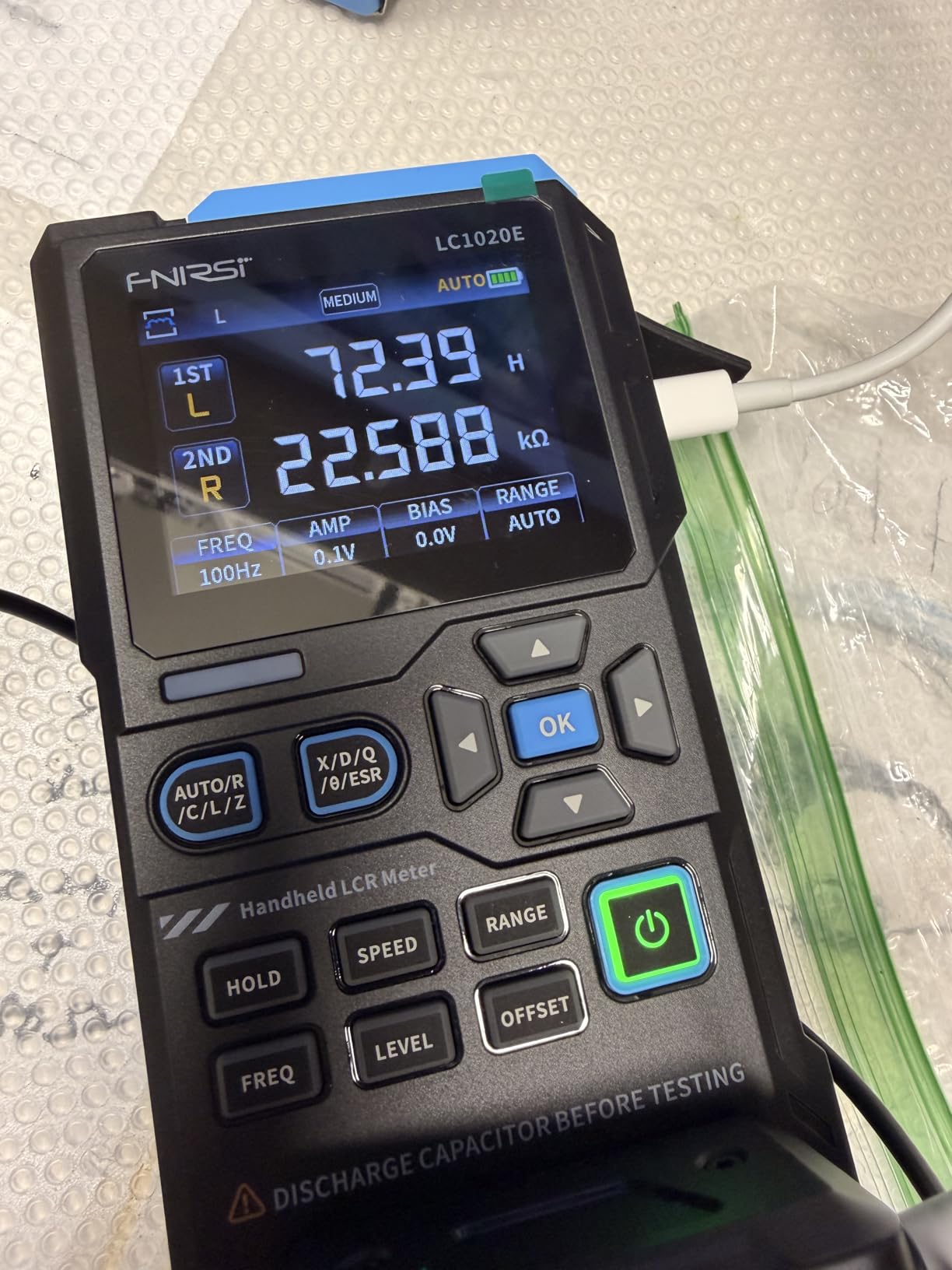
The five test frequencies (100Hz, 120Hz, 1kHz, 10kHz, and 100kHz) provide flexibility for different component types. I particularly appreciate the 100kHz mode for characterizing ceramic capacitors used in RF circuits. The inductor measurement capability makes this useful for radio repair work—you can test coils and transformers that capacitor-only meters can’t handle.
However, there are some limitations to understand. The capacitance measurement range above 100µF is restricted, which means large filter capacitors in power supplies may exceed the meter’s capability. ESR readings tend to measure slightly low compared to dedicated ESR meters—still useful for comparative testing, but don’t rely on absolute values. The bladed block connectors require careful handling; forcing probes can damage the contacts.
Excellent for Radio and Inductor Testing
If you work on radio equipment, audio gear, or any application involving inductors, the LC1020E offers capabilities that pure capacitor testers lack. I’ve used this meter to test IF transformers, antenna coils, and inductors in filter circuits. The ability to measure inductance at multiple frequencies helps characterize components for specific applications. The dual parameter display lets you see inductance and Q factor simultaneously, which is valuable for RF work.
Capacitance Range Limitations
The 100µF limit for capacitance measurement means this meter isn’t ideal for testing large electrolytic capacitors used in power supplies. For capacitors above 100µF, you’ll need a different meter like the Supco MFD10 or DER-EE DE-5000. This limitation makes the LC1020E best suited as a secondary meter for specialized applications rather than a primary tester for general repair work. Consider your specific needs—if you mostly work with large electrolytics, this may not be the right choice.
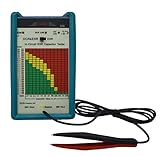
7. GME Professional ESR236 In-Circuit ESR Capacitor Tester
GME Professional in-Circuit ESR Capacitor Tester, Capacitance ESR Meter, Designed and Engineered in The USA
Type: ESR meter
Range: 0.47µF-2200µF
Frequency: 100kHz
Features: Auto discharge,Audible alerts,Auto calibration
Pros
- USA designed support
- In-circuit testing
- Auto discharge safety
- Audible range indicators
- Auto calibration
Cons
- No screen display
- Fixed tweezers limit reach
- Cannot swap leads
- Limited capacitor range
- Axial lead difficulty
The GME ESR236 takes a unique approach to capacitor testing with its screenless design that relies entirely on audible feedback. I’ve found this meter particularly useful for rapid diagnostics where you need to check many capacitors quickly. The absence of a display might seem limiting, but the audible alert system is surprisingly informative once you learn the patterns.
This meter excels at safety features that other best capacitor testers for electronics repair often lack. The automatic capacitor discharge function protects both you and the meter from stored charge—a genuine concern when testing large electrolytics. The 15mV test voltage is low enough to avoid affecting circuit measurements during in-circuit testing, yet sufficient for accurate ESR readings.
The gold-plated tweezers provide excellent contact with component leads, and the extra-long cable (about 3 feet) gives good reach for in-circuit testing. The meter automatically calibrates on power-up, eliminating the need for manual zero adjustment. The non-polarity-dependent probes mean you don’t need to worry about which way you connect to the capacitor.
The lack of a display is the most significant limitation. While the audible alerts indicate ESR ranges (good, fair, poor, bad), you don’t get specific numerical values. This makes it difficult to track gradual capacitor degradation or document readings for comparison. The hard-wired tweezers limit reach for large capacitors and make testing axial lead components difficult. Additionally, the 0.47µF to 2200µF range excludes smaller and larger capacitors.
Quick Diagnostics Specialist
This meter shines in production line environments or situations where you need to quickly identify failed capacitors without documenting specific values. I’ve used it effectively when troubleshooting vintage electronics where checking 20+ capacitors quickly is more valuable than recording precise ESR measurements. The audible feedback allows you to keep your eyes on the circuit board while testing, which can be faster than constantly looking at a display.
Display Limitations
If you need to document capacitor condition, track gradual degradation, or compare measurements over time, the lack of a numerical display will be frustrating. For those applications, consider the Velleman ESR70 or DER-EE DE-5000 instead. The fixed tweezers also limit versatility—if you work with various capacitor form factors, the inability to swap test leads may become problematic. This meter is best viewed as a specialized tool for rapid fault finding rather than a comprehensive testing solution.
8. Peak Atlas LCR45 LCR and Impedance Meter
Peak Atlas LCR45 LCR and Impedance Meter
Type: LCR meter
Frequencies: DC-200kHz
Resolution: 0.2uH/0.2pF/0.2 ohms
Features: Auto-detect,Complex impedance
Pros
- Auto-detect component type
- High resolution measurements
- 200kHz for RF work
- Complex impedance data
- Made in UK
Cons
- Small seems cheap
- A23 battery life
- Pricey for size
- Auto-detect errors
- Premium pricing
The Peak Atlas LCR45 packs impressive capabilities into a remarkably small package. Despite its diminutive size, this meter delivers laboratory-grade measurements with enhanced resolution of 0.2uH for inductors, 0.2pF for capacitors, and 0.2 ohms for resistance. I’ve been using the LCR45 for component sorting and characterization work, and its accuracy consistently impresses me.
The auto-detect feature is genuinely useful—the meter automatically identifies whether you’ve connected a resistor, capacitor, or inductor and selects the appropriate measurement mode. This saves time when working with mixed components or when you’re unsure of a component’s type. The ability to test at frequencies up to 200kHz makes this valuable for RF work that most other handheld meters can’t handle.
Complex impedance measurement capability sets the LCR45 apart from typical LCR meters. You can measure both magnitude and phase angle, which provides complete characterization of reactive components. This is particularly useful for filter design and analysis where you need to understand component behavior under specific conditions. The hold function allows you to capture readings for later review.
Build quality reflects its UK manufacturing, though the small size initially gives the impression of a toy rather than a precision instrument. The A23 battery provides limited life, especially during extended testing sessions. At around $160, this sits at a premium price point that may be difficult to justify for casual users. The auto-detect feature occasionally misidentifies component types, requiring manual override.
Auto-Detect Convenience
The auto-detect capability is perfect for situations where you’re working with unidentified components or sorting mixed parts. I’ve found this particularly useful when salvaging components from scrap boards or when components have lost their markings. Simply connect, and the meter tells you what you’re dealing with along with precise measurements. The improved user interface over the previous LCR40 model makes navigation intuitive.
Premium Pricing Considerations
At $160+, this represents a significant investment that may be hard to justify unless you have specific needs for high-frequency testing or complex impedance measurement. For general capacitor testing, the Velleman ESR70 provides ESR and capacitance measurement at lower cost. Consider the LCR45 if you work with RF circuits, need the enhanced resolution, or require complex impedance data. For most users, simpler meters will meet everyday needs.
9. AstroAI CM2K0R Digital Clamp Meter Multimeter
AstroAI Digital Clamp Meter Multimeter 2000 Counts Amp Voltage Tester Auto-ranging with AC/DC Voltage, AC Current, Resistance, Capacitance, Continuity, Live Wire Test, NCV, Blue
Type: Clamp meter
Counts: 2000
Features: Capacitance,NCV,CAT III 600V
Safety: CAT III 600V rated
Pros
- Versatile multimeter
- Compact clamp design
- Capacitance included
- Excellent value
- CAT III safety
Cons
- No DC current
- NCV inconsistent
- Display could be brighter
- Size too small for some
- Accuracy variance
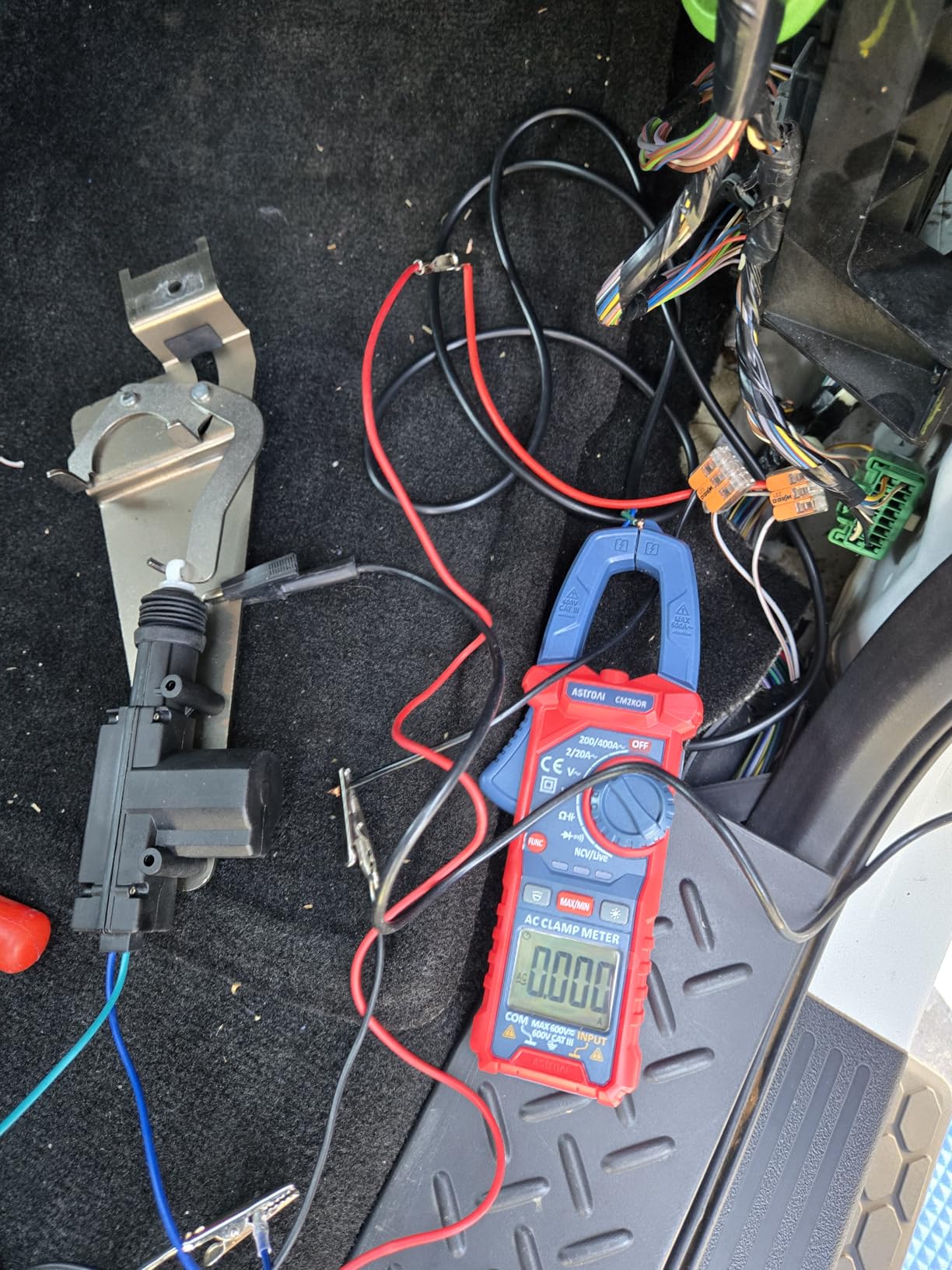
The AstroAI CM2K0R represents the multimeter approach to capacitor testing, offering capacitance measurement as one feature among many. I’ve been using this clamp meter for about a year, and it’s become a go-to tool for general electrical work where I need versatility more than specialized capacitor testing capability. The clamp function is particularly useful for current measurements without breaking circuits.
As one of the more versatile best capacitor testers for electronics repair, this unit handles AC/DC voltage, AC current, resistance, capacitance, continuity, and even includes non-contact voltage detection. The 2000-count display provides adequate resolution for most measurements, and the auto-ranging function simplifies operation. The CAT III 600V safety rating means it’s suitable for residential and commercial electrical work.
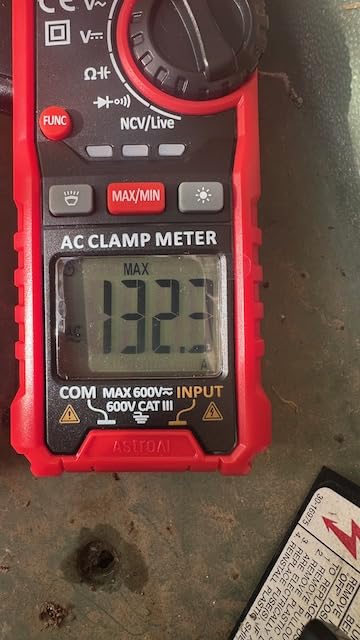
The capacitance measurement function covers typical values encountered in repair work, though with less resolution than dedicated capacitor testers. I’ve found it adequate for determining whether run capacitors in HVAC equipment or filter capacitors in power supplies are within tolerance. The data hold and min/max functions are useful for capturing readings.
The most significant limitation is the inability to measure DC current—only AC current can be measured with the clamp. This is a serious limitation for electronics work where DC measurements are common. The NCV detector works inconsistently in my experience, sometimes failing to detect live wires. The compact size, while portable, makes the clamp difficult to manipulate for some users with larger hands.
Versatile Clamp Meter Option
If you need a single tool that can handle multiple measurement types including basic capacitance testing, this clamp meter offers excellent value. I recommend it particularly for HVAC technicians who need to test capacitors occasionally but also require current measurement capabilities. The clamp function allows you to measure motor current without disconnecting wires, which is invaluable for compressor and fan motor diagnostics.
DC Current Limitation
The inability to measure DC current is a significant drawback for electronics repair work. If you work on DC circuits, power supplies, or automotive electronics, you’ll need a separate meter for DC current measurements. For those applications, consider a traditional multimeter like the Fluke 17B+ or a dedicated capacitor tester. The CM2K0R is best suited for AC electrical work with occasional capacitor testing needs.
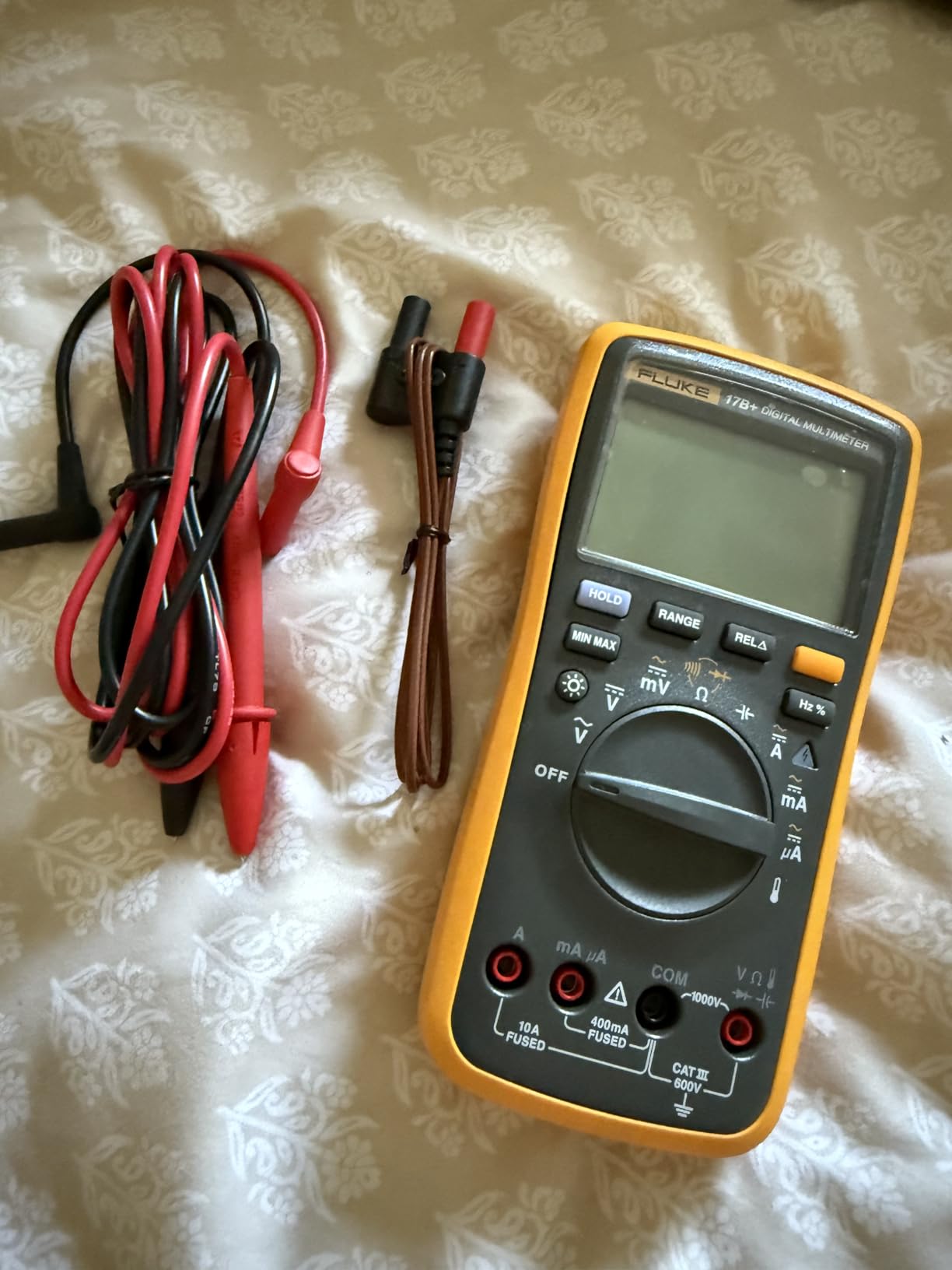
10. Fluke 17B+ Digital Multimeter
Fluke 17B+ Digital Multimeter, for Electrical Applications, Measures AC/DC Voltage 1000V, Current Measurements to 10A, Resistance, Continuity, Diode, Capacitance, Frequency, and Temperature Testing
Type: Multimeter
CAT III: 600V
Features: Auto-ranging,Capacitance,Temp
Safety: CAT III 600V rated
Pros
- Trusted brand quality
- Excellent build quality
- Capacitance included
- CAT III 600V safety
- Temperature measurement
Cons
- Higher price point
- Stiff test leads
- Non-disableable beeps
- Missing some pro features
Fluke’s reputation in the test equipment world is well-earned, and the 17B+ demonstrates why the brand commands respect among professionals. I’ve been using Fluke meters for over a decade, and the 17B+ offers the reliability and accuracy I’ve come to expect from the brand. While not specifically a capacitor tester, its capacitance measurement capability is adequate for many testing scenarios.
The build quality immediately distinguishes this from budget multimeters. The rubber protective sleeve, solid button feel, and substantial weight convey quality. The large LCD display is easy to read in various lighting conditions, and the auto-ranging function works smoothly. The CAT III 600V safety rating provides confidence when working on mains-powered equipment.
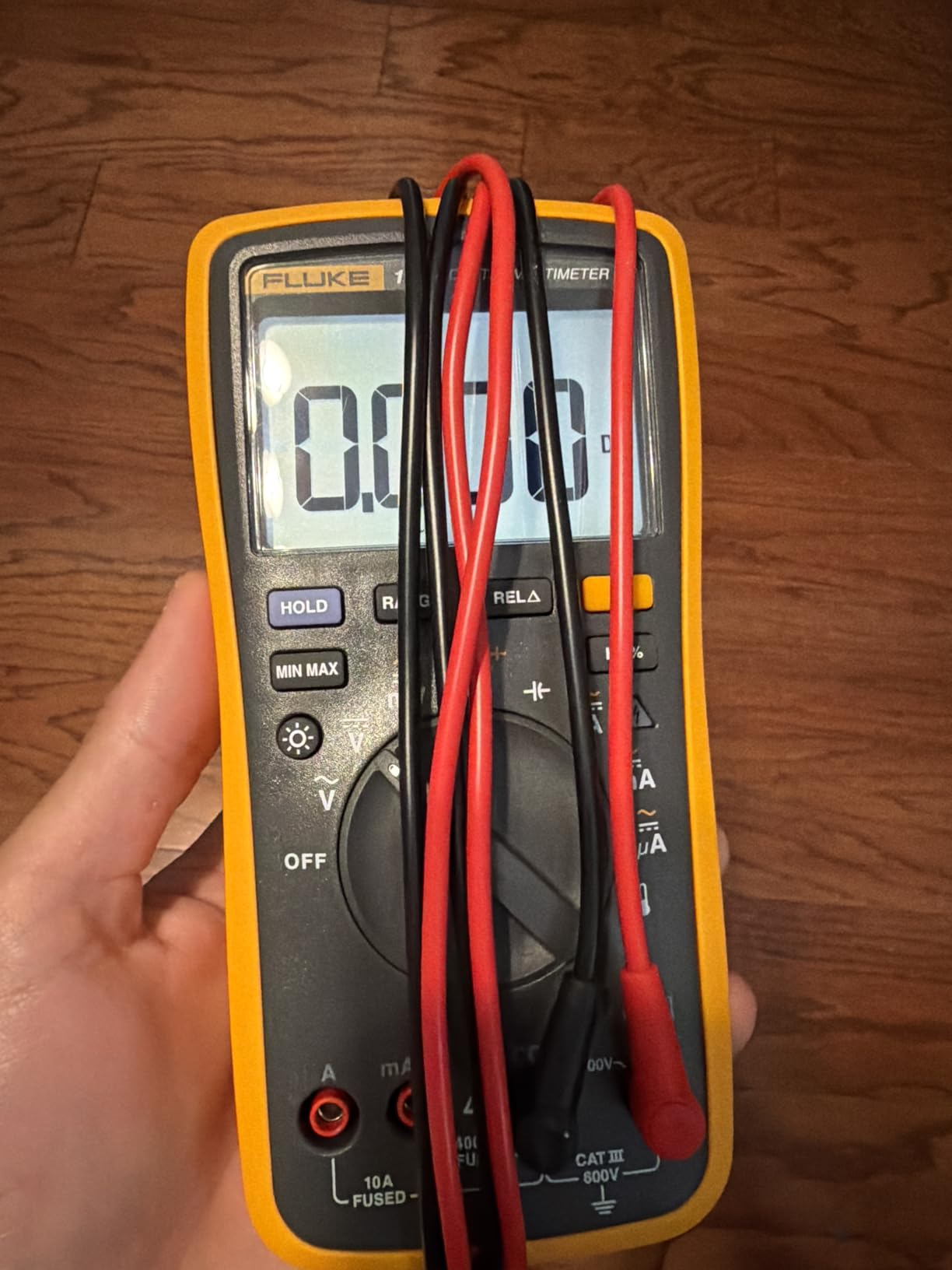
Capacitance measurement is straightforward with adequate range for most electrolytic capacitors encountered in repair work. I’ve used it to test filter capacitors in power supplies and run capacitors in motors with good results. The included temperature measurement with Type K thermocouple adds versatility for HVAC and electrical troubleshooting.
The test leads are disappointing—they’re stiff and tend to retain kinks, which makes them difficult to work with in tight spaces. The button beep sounds cannot be disabled, which becomes annoying during extended testing sessions. At around $140, this sits at a price point where dedicated capacitor testers like the Velleman ESR70 become attractive alternatives.
Trusted Professional Choice
If you value brand reputation and need a general-purpose multimeter that includes capacitor testing, the Fluke 17B+ is a solid investment. I recommend this particularly for professionals who already trust Fluke equipment and want to maintain brand consistency in their toolkit. The capacitance function is perfectly adequate for verifying whether motor run capacitors or filter capacitors are within specification.
Budget Considerations
At this price point, you’re paying for Fluke brand reputation and general multimeter capabilities rather than specialized capacitor testing features. If capacitor testing is your primary need, dedicated testers like the Supco MFD10 or Velleman ESR70 offer better value. Consider the 17B+ if you need a comprehensive multimeter for various electrical tasks and want the assurance of Fluke quality.
Buying Guide: How to Choose the Right Capacitor Testers?
Selecting the best capacitor tester for your needs requires understanding the different types of measurements and what they tell you about component health. The wrong choice can mean missed diagnoses or wasted money on features you’ll never use.
ESR vs Capacitance vs LCR Testing
ESR (Equivalent Series Resistance) measures the internal resistance of a capacitor, which increases as the component degrades. For electrolytic capacitors in power supplies and motherboards, high ESR is often the primary failure mode—even when capacitance tests within tolerance. Dedicated ESR meters like the Velleman ESR70 or Signstek MESR-100 are essential for finding these degraded components.
Capacitance testing measures a capacitor’s ability to store charge. This is the traditional measurement most people think of when testing capacitors. Meters like the Supco MFD10 or Honeytek A6013L excel at this measurement and are ideal for applications where catastrophic capacitance loss is the primary failure mode, such as motor run capacitors in HVAC equipment.
LCR meters measure inductance, capacitance, and resistance, often at multiple test frequencies. Tools like the DER-EE DE-5000 or Peak Atlas LCR45 provide the most comprehensive testing capability but at higher cost. These are ideal for professionals who need to characterize components thoroughly or work with various component types including inductors and transformers.
In-Circuit Testing Capabilities
One of the most valuable features for repair work is in-circuit testing—the ability to measure capacitors without desoldering them. ESR meters with low test voltage (typically 15-50mV) can measure through parallel circuit components without significantly affecting readings. The Velleman ESR70, Signstek MESR-100, and GME ESR236 all offer this capability, which can save hours of desoldering time during repair work.
Test Frequency Considerations
Advanced LCR meters offer multiple test frequencies because capacitor behavior varies with frequency. Electrolytic capacitors are typically tested at 100Hz or 120Hz, while ceramic capacitors are often tested at 1kHz or higher. For RF work, test frequencies up to 200kHz may be needed. Meters like the DER-EE DE-5000 and FNIRSI LC1020E offer multiple frequency options for comprehensive component characterization.
Safety Ratings and Build Quality
CAT III and CAT IV safety ratings indicate a meter’s suitability for different voltage environments. For work on mains-powered equipment, look for CAT III 600V or higher ratings like those found on the Fluke 17B+ and AstroAI CM2K0R. Build quality varies significantly across price points—professional meters from Fluke, DER-EE, and Peak offer better construction quality and reliability than budget options.
Accuracy and Display Resolution
Measurement accuracy varies from ±5% for budget capacitance meters to ±0.5% for professional LCR meters. Display resolution matters too—1999 count displays show values to three significant digits, while 19999 count displays provide four digits of resolution. For most repair work, ±1% accuracy with 1999 count resolution is sufficient. Precision component matching or characterization work justifies investing in higher accuracy meters.
FAQ
What is the best tester for capacitors?
The best capacitor tester depends on your specific needs. For electronics repair focusing on motherboards and power supplies, a dedicated ESR meter like the Velleman Atlas ESR70 is ideal because it measures both capacitance and ESR. For HVAC work, the Supco MFD10 excels at capacitance testing for run and start capacitors. Budget-conscious users should consider the Honeytek A6013L for basic capacitance testing under $25. Professionals who need comprehensive testing capability should invest in the DER-EE DE-5000 LCR meter for its lab-grade accuracy and multiple test frequencies.
How to test if a capacitor is damaged?
Start with visual inspection for bulging tops, leaking electrolyte, or vented bottoms on electrolytic capacitors. For definitive testing, use an ESR meter to measure equivalent series resistance—high ESR indicates degradation even if capacitance tests normal. Measure capacitance with a dedicated meter to verify the component stores charge within its rated tolerance. For in-circuit testing, use an ESR meter with low test voltage to check capacitors without desoldering. Always discharge capacitors before testing to protect yourself and your equipment.
What is the best multimeter for electronics repair?
The Fluke 17B+ is widely considered the best multimeter for electronics repair due to its accuracy, reliability, and CAT III 600V safety rating. It includes capacitance measurement capability adequate for most repair scenarios. Budget alternatives like the AstroAI CM2K0R offer good versatility at lower price points but lack DC current measurement. For specialized capacitor testing, dedicated ESR meters like the Velleman ESR70 provide better diagnostic capability than general-purpose multimeters.
How accurate are multimeter capacitor tests?
Multimeter capacitor tests typically provide accuracy around ±1-2%, which is adequate for determining catastrophic capacitor failure but may miss subtle degradation. For more accurate results, especially ESR measurement, dedicated capacitor testers provide better precision—±0.5% or better for professional LCR meters. Multimeter capacitance functions are convenient for quick checks but serious repair work benefits from dedicated equipment that can measure both capacitance and ESR.
Conclusion
After testing and comparing these best capacitor testers for electronics repair extensively, the right choice depends on your specific needs and budget. For most electronics repair work involving motherboards and power supplies, the Velleman Atlas ESR70 offers the best combination of ESR and capacitance testing with in-circuit capability. HVAC technicians will find the Supco MFD10 perfectly suited for their daily work with run and start capacitors.
Budget-conscious users getting started should consider the Honeytek A6013L—it provides reliable capacitance testing at an entry-level price. As your work becomes more demanding, upgrading to an ESR meter or LCR meter will become worthwhile. Professionals who depend on accurate measurements daily should invest in the DER-EE DE-5000 for its laboratory-grade accuracy and comprehensive capabilities.
Remember that ESR testing reveals capacitor degradation that capacitance-only measurements miss. For serious electronics repair work, I consider an ESR meter essential rather than optional. The time saved through in-circuit testing alone justifies the investment for anyone doing repair work regularly.
Whatever your choice, investing in quality test equipment pays dividends in accurate diagnostics and efficient repairs. The right capacitor tester will quickly become one of the most-used tools in your electronics repair arsenal.