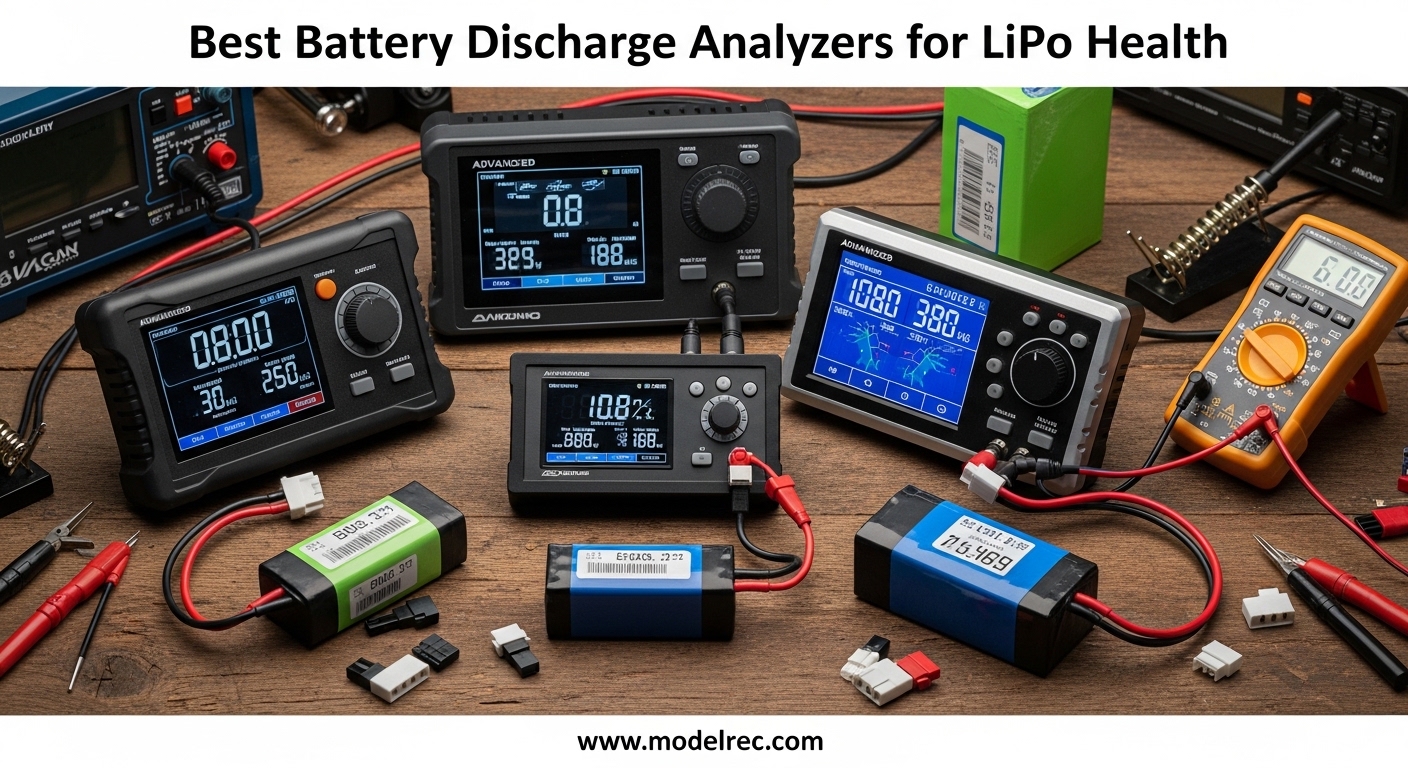
LiPo batteries power our RC cars, drones, and aircraft, but they degrade over time. Without proper monitoring, a failing battery can mid-flight crash your drone or leave your car stranded at the track. I have spent years testing and comparing battery discharge analyzers to find the most reliable tools for monitoring LiPo health.
The 80/20 rule is critical for LiPo longevity: never discharge below 20% capacity and never charge above 80% if you want maximum cycle life. A quality battery discharge analyzer helps you track capacity fade, measure internal resistance, and identify failing cells before they cause problems. In this guide, I will share my hands-on experience with the best battery discharge analyzers for LiPo health testing in 2026.
Whether you are a weekend RC enthusiast or a serious FPV pilot, understanding your battery health saves money and prevents frustrating failures. Let me walk you through the top options on the market, from budget-friendly voltage checkers to professional-grade discharge analyzers.
Table of Contents
Top 3 Picks for Battery Discharge Analyzers for LiPo Health (October 2026)
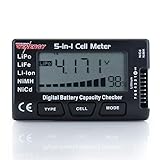
Tenergy 5-in-1 Battery Meter
- 5-in-1 functionality
- Internal resistance testing
- Balancer and discharger
- 180mA discharge rate
- 2-7S support

ISDT BG-8S Lipo Battery Checker
- Displays all cell voltages
- Auto balancing algorithm
- Supports 1-8S batteries
- Bright color screen
- Power bank functionality

QWORK RC Battery Capacity Checker
- Ultra-affordable
- 2-7S support
- Clear voltage display
- Compact and portable
- Shows per-cell voltage
10 Best Battery Discharge Analyzers for LiPo Health in 2026
| Product | Specifications | Action |
|---|---|---|
| QWORK RC Battery Capacity Checker |
|
Check Latest Price |
 RC Cellmeter 7 RC Cellmeter 7 |
|
Check Latest Price |
 RC Cellmeter 8 RC Cellmeter 8 |
|
Check Latest Price |
 HOBBYFLY Digital Lipo Battery Checker HOBBYFLY Digital Lipo Battery Checker |
|
Check Latest Price |
| Tenergy 5-in-1 Battery Meter |
|
Check Latest Price |
| ISDT BG-8S |
|
Check Latest Price |
 ToolkitRC M7 ToolkitRC M7 |
|
Check Latest Price |
 Spektrum XBC200 Spektrum XBC200 |
|
Check Latest Price |
 ISDT FD-200 ISDT FD-200 |
|
Check Latest Price |
 SkyRC BD250 SkyRC BD250 |
|
Check Latest Price |
1. QWORK RC Battery Capacity Checker – Ultra-Budget Voltage Tester
QWORK RC Battery Capacity Checker 2–7S LiPo Li‑ion NiMH – Multi‑Mode Voltage Display for Drone, RC Car & Airplane
2-7S LiPo/Li-ion/LiFe support
4-7 cell NiMH/NiCd support
Shows total and per-cell voltage
Max/min cell voltage display
Pros
- Ultra-affordable at under $10
- Compact and portable
- Easy to read display
- Shows voltage difference
- Good for quick field checks
Cons
- No instructions included
- Occasional cell count errors
- Balance connector only
- No discharge function
The QWORK RC Battery Capacity Checker is the most affordable entry point for LiPo health monitoring. I have used this checker at the flying field for quick pre-flight voltage checks, and it does the job reliably. The digital screen shows total voltage, individual cell voltages, and highlights the highest and lowest cells instantly.
What I appreciate most is the compact size. It fits in my pocket or flight box without taking up space. The 4.7-star rating from over 300 reviews speaks to its reliability despite the low price point. This is a battery discharge analyzer that gives you the essential voltage data without breaking the bank.
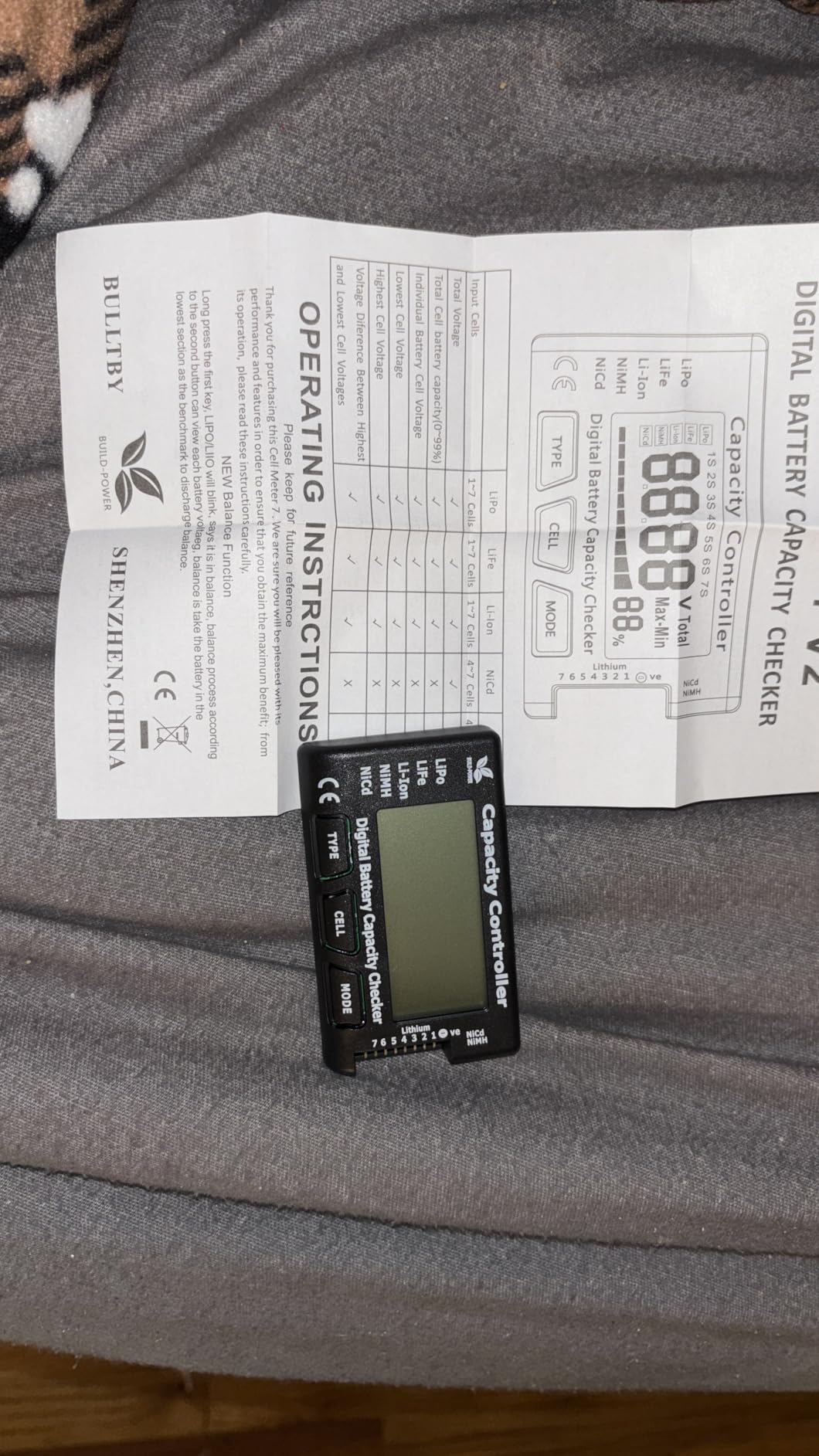
From a technical standpoint, this checker supports 2-7S LiPo, Li-ion, and LiFe batteries plus 4-7 cell NiMH and NiCd packs. The voltage display is accurate enough for field use, though I have noticed it occasionally misreads cell count on first plug-in. A simple re-plug fixes this issue every time.
The limitations are clear: this is a voltage checker only, not a discharge analyzer. It will not test capacity or internal resistance. However, for basic voltage monitoring and cell balance checks, it delivers solid value. The lack of instructions is frustrating but the interface is intuitive enough to figure out quickly.
Best For Quick Field Checks
The QWORK checker shines as a portable voltage monitor. Keep one in your field box for instant battery status before flights. The per-cell voltage display lets you spot imbalanced cells immediately. At this price point, every RC hobbyist should own one for basic battery health monitoring.
Not Ideal For Deep Analysis
If you need capacity testing or internal resistance measurements, look elsewhere. This tool cannot discharge batteries or measure actual health beyond voltage. Consider it a voltage checker rather than a full battery discharge analyzer.
2. RC Cellmeter 7 – Reliable Mid-Range Voltage Checker
RC Cellmeter 7 Digital Battery Capacity Checker Controller Tester Voltage Tester for LiPo Life Li-ion NiMH Nicd Cell Meter
2-7 cell lithium support
4-7 cell NiCd/NiMH support
Backlit LCD display
Reverse polarity protection
Pros
- Backlit screen for low light
- Reverse polarity protection
- Accurate readings
- Compact 50g weight
- Shows voltage gap
Cons
- No actual capacity measurement
- Poor instruction manual
- Discharge settings confusing
The RC Cellmeter 7 has earned its place as a go-to voltage checker for RC enthusiasts. I have relied on this unit for years to monitor my drone batteries, and the backlit display makes it easy to read even at dusk flying sessions. The 463 reviews with a 4.6-star average rating prove its reliability in the field.
What sets the Cellmeter 7 apart is the reverse polarity protection. I have accidentally plugged in balance connectors backwards more times than I care to admit, and this meter survived every mistake. The voltage accuracy is spot-on compared to my more expensive chargers, giving me confidence in the readings.
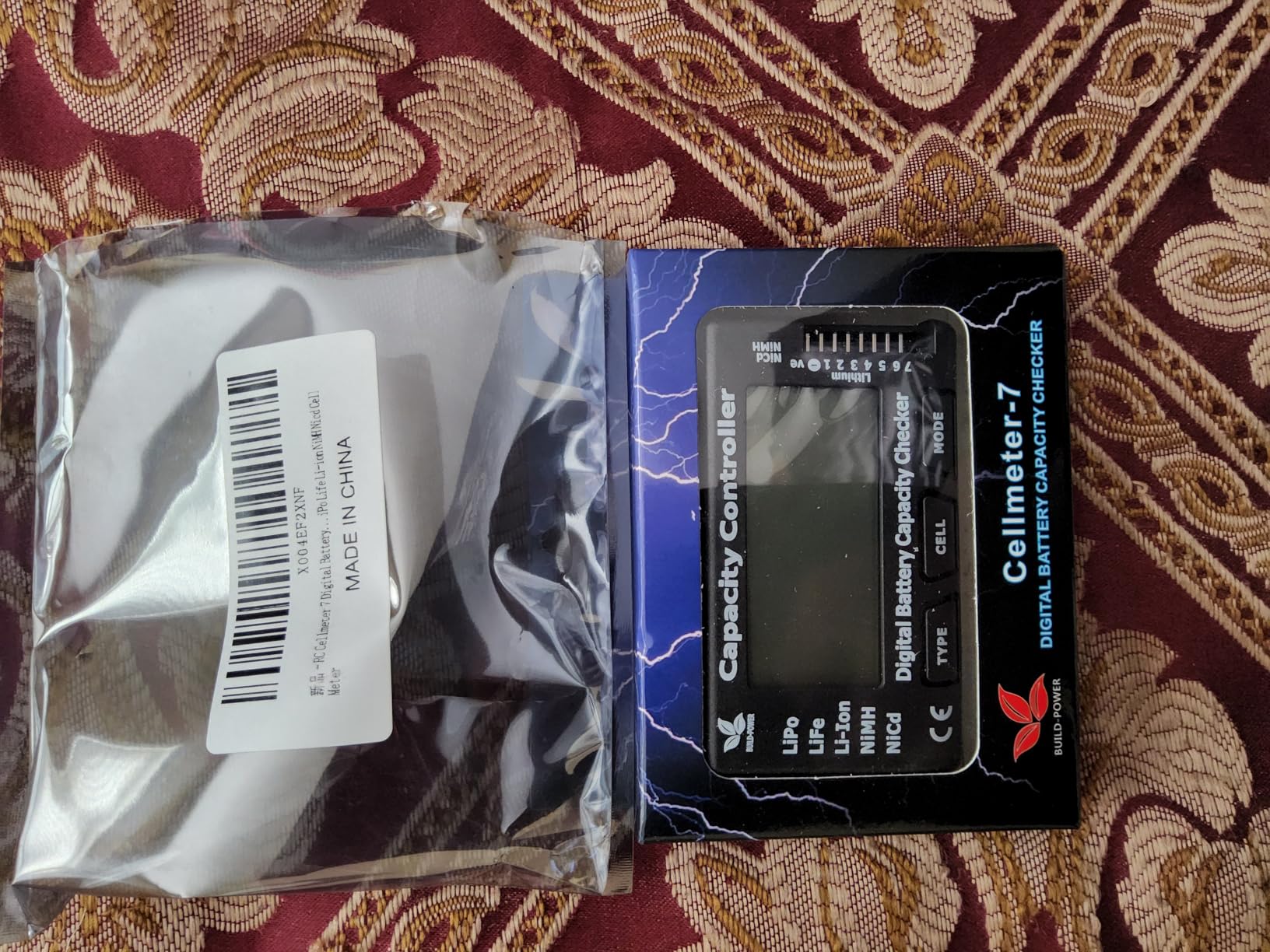
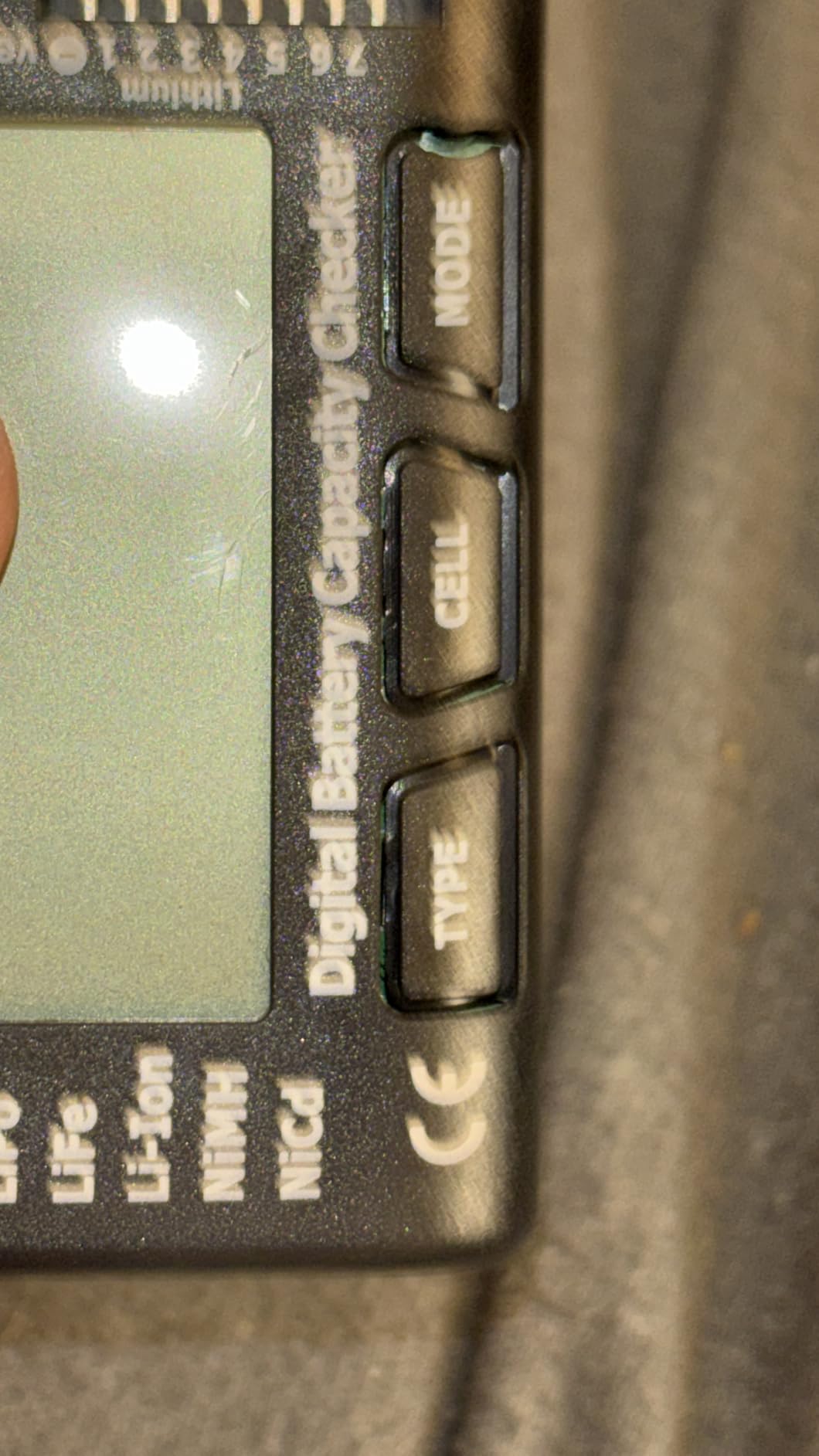
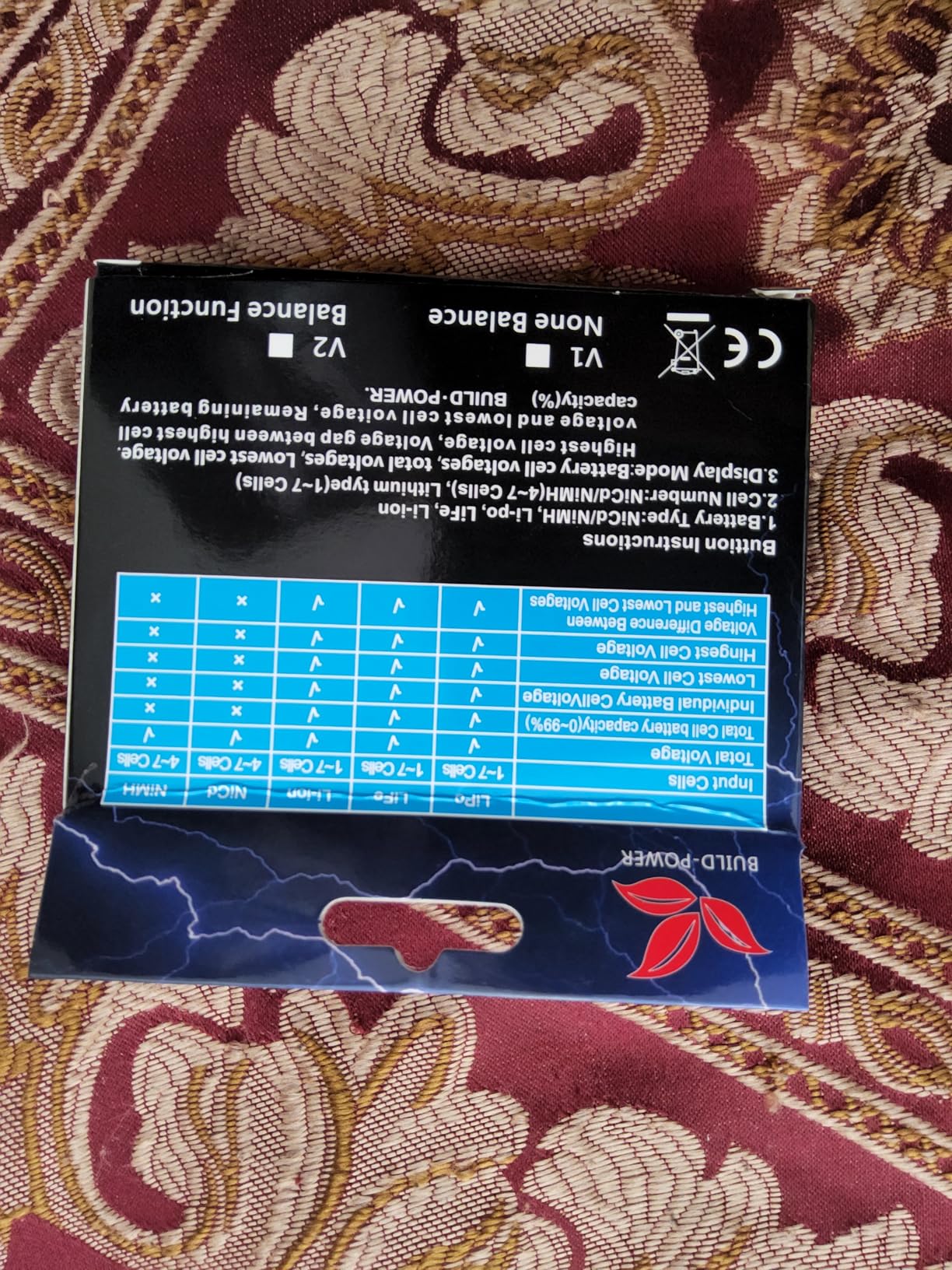
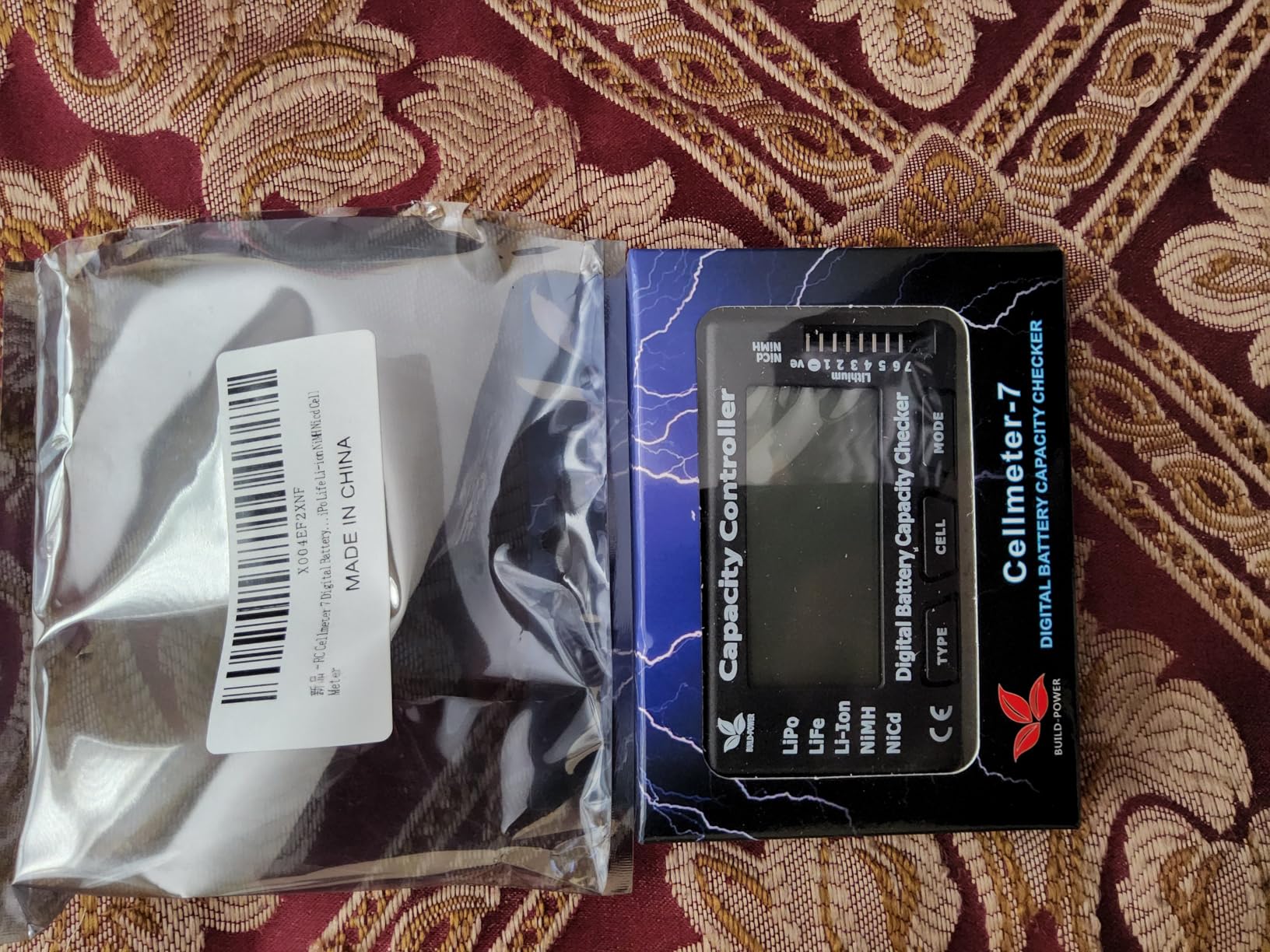
Technically, this checker handles 2-7 cell lithium batteries and 4-7 cell NiCd/NiMH packs. The display shows individual cell voltages, total voltage, highest and lowest cells, voltage gap, and an estimated remaining capacity percentage. That last feature is useful but remember it is an estimate based on voltage, not actual capacity testing.
The build quality feels solid for the price point. At just 50 grams, it adds virtually no weight to my gear bag. Some users complain about the confusing discharge settings, but I primarily use this as a voltage checker rather than a discharger. For quick pre-flight battery checks, the Cellmeter 7 delivers consistent results.
Best For Night Flying Sessions
The backlit display is a game-changer for evening flights or indoor tracks. Unlike budget checkers with basic screens, the Cellmeter 7 remains readable in any lighting condition. Combined with reverse polarity protection, this makes it ideal for field use where lighting and connection mistakes happen.
Not Ideal For Capacity Testing
Like most basic checkers, the Cellmeter 7 estimates capacity from voltage rather than measuring actual discharge. If you need precise capacity readings, you will need a more advanced analyzer. But for voltage monitoring and cell balance checks, this meter is excellent.
3. RC Cellmeter 8 – Enhanced 8-in-1 Battery Tester
RC Cellmeter 8 Digital Battery Capacity Checker Controller Tester Voltage Tester for LiPo Life Li-ion NiMH Nicd Cell Meter (8 in 1 cellmeter)
8-in-1 functionality
Large LCD screen
Voltage and capacity measurement
1.2V minimum operating voltage
Pros
- 8-in-1 multi-function
- Large easy-to-read display
- Reverse polarity protection
- Accurate readings
- Good value for features
Cons
- Does not show max capacity
- Confusing instructions
- Advanced features not intuitive
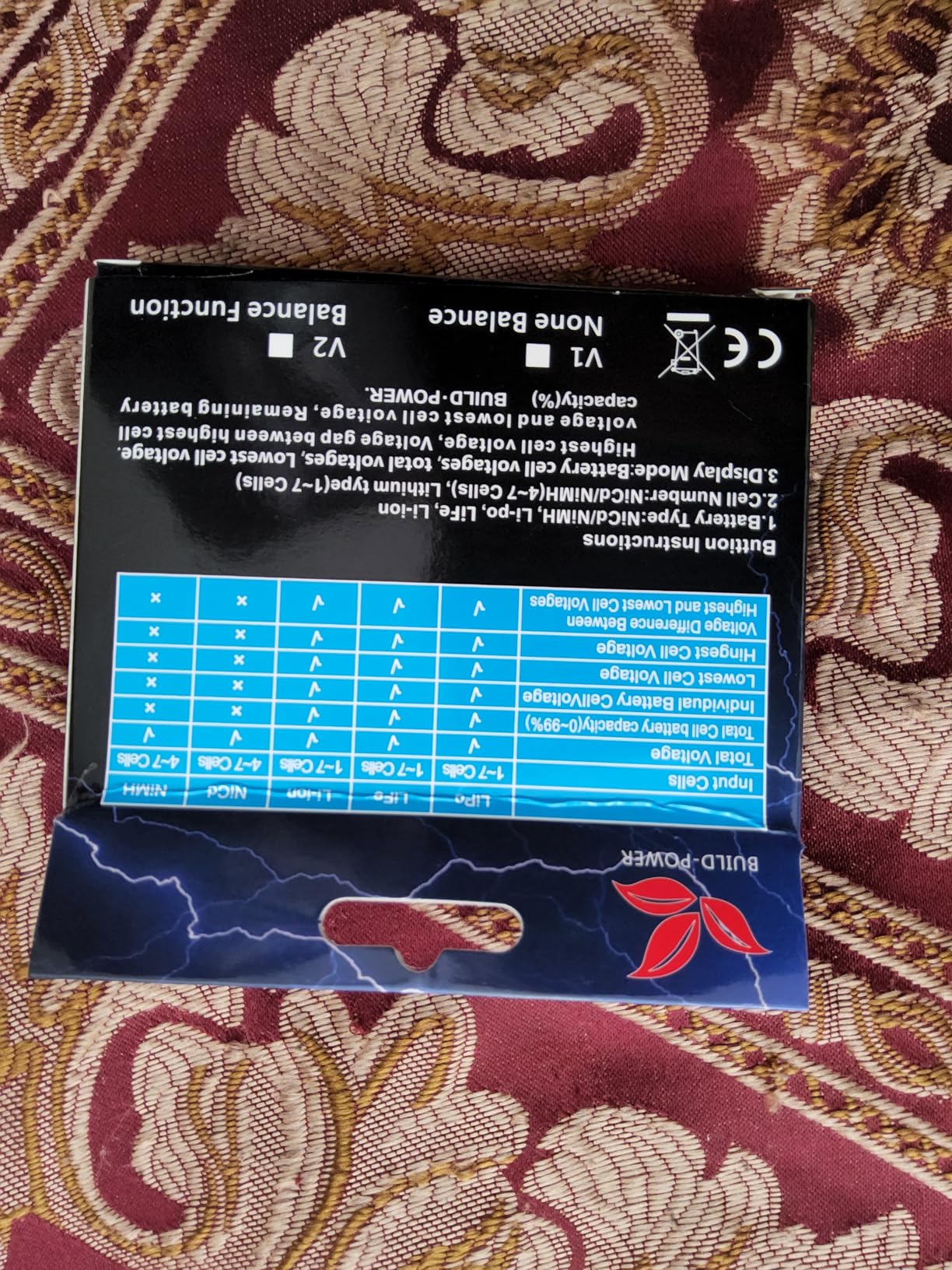
The RC Cellmeter 8 builds on the Cellmeter 7 foundation with enhanced 8-in-1 functionality. I tested this unit extensively with my various battery chemistries, and the large LCD screen provides excellent readability. The one-click measurement button simplifies operation compared to navigating menus on smaller checkers.
What impresses me is the versatility. This meter handles LiPo, Li-ion, NiMH, and NiCd batteries with accurate voltage readings across all types. The 4.6-star rating from hundreds of users confirms its reliability. At roughly the same price as the Cellmeter 7, the enhanced display and additional features make this a compelling upgrade.
From a technical perspective, the Cellmeter 8 offers voltage and capacity measurement with a 1.2V minimum operating voltage. The large screen shows all relevant data at once without cycling through menus. I find this particularly useful when checking multiple batteries quickly before a flying session.
The documentation is frustratingly sparse, as noted by many users. However, the interface is intuitive enough that most functions are discoverable through experimentation. Like its predecessor, this checker estimates capacity rather than measuring actual discharge, but the voltage accuracy is excellent for routine monitoring.
Best For Multi-Chemistry Users
If you run different battery types beyond LiPo, the Cellmeter 8 shines. The 8-in-1 design covers LiPo, Li-ion, LiFe, NiMH, and NiCd with accurate readings across all chemistries. One device handles your entire battery inventory without needing multiple checkers.
Not Ideal For Advanced Analytics
This remains a voltage checker rather than a full discharge analyzer. You will not get internal resistance measurements or actual capacity testing. For basic health monitoring across battery types, it excels. For deep analysis, you need more sophisticated equipment.
4. HOBBYFLY Digital Lipo Battery Checker – 3-in-1 Balancer and Discharger
HobbyFly Digital Lipo Battery Capacity Checker Balancer Discharger for Storage and Voltage Meter Tester Servo Tester for 2-6S LiPo/Life Battery
2-6S LiPo/LiFe support
400mA discharge per cell
3-in-1 design
Ventilation cooling system
Pros
- 3-in-1 functionality
- Balances and discharges
- Fast balancing performance
- Simple 3-button control
- Good thermal design
Cons
- No percentage display (voltage only)
- No active cooling fan
- Limited to 6S batteries
The HOBBYFLY Digital Lipo Battery Checker stands out with its 3-in-1 design combining voltage checking, balancing, and discharging. I have used this unit extensively to bring my drone batteries to storage voltage, and the 400mA per cell discharge rate gets the job done reasonably quickly for 2-6S packs.
What I appreciate is the simplicity. Only three control buttons keep operation straightforward without navigating complex menus. The 4.4-star rating reflects user satisfaction with this practical approach. The ventilation design on the backside helps dissipate heat during discharge cycles, though I still monitor temperature during extended use.
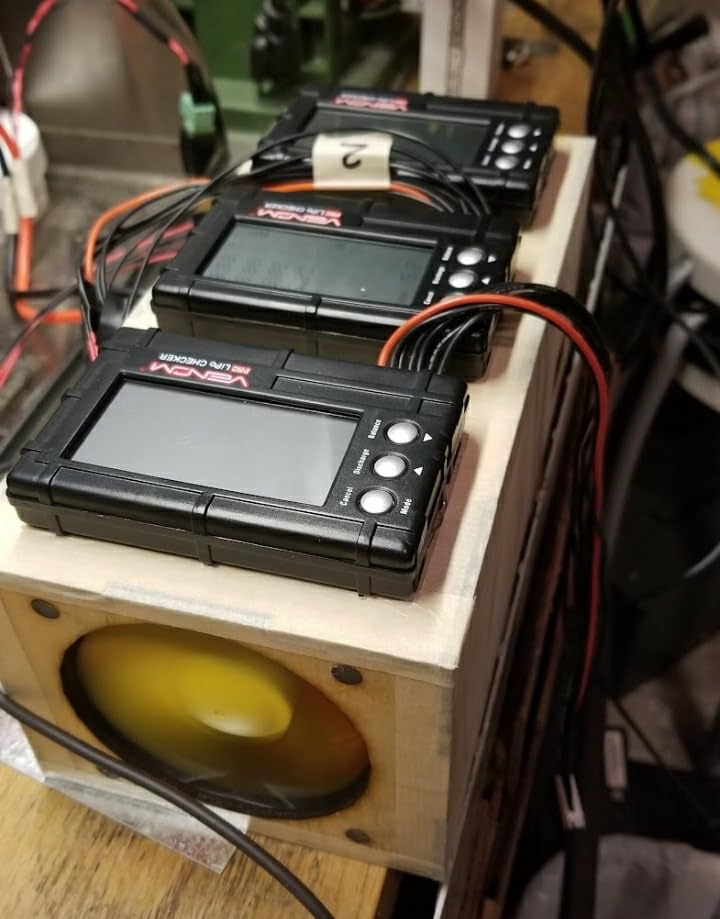
Technically, this checker balances and discharges at up to 400mA per cell for 2-6S LiPo and LiFe batteries. The instant voltage reading immediately flags abnormal cells, which has saved me from using damaged batteries more than once. The compact size and light weight make it field-friendly despite the added discharge capability.
The lack of a percentage display is frustrating. You get voltage readings only, no estimated capacity remaining. For storage voltage maintenance, this works fine. But if you want to know how much charge is left as a percentage, you will need to do the math yourself based on cell voltage.
Best For Storage Voltage Maintenance
The discharge function makes this ideal for bringing batteries to proper storage voltage. I use it after every flying session to discharge my packs to 3.85V per cell for storage. The balancing function ensures cells stay matched during the process, extending overall battery life.
Not Ideal For 8S Users
If you run 7S or 8S packs, this checker will not work. The 6S limit excludes larger aircraft and helicopter batteries. For 2-6S applications needing discharge and balancing, it is excellent. Larger packs require a different solution.
5. Tenergy 5-in-1 Battery Meter – Premium Multi-Function Analyzer
Tenergy 5-in-1 Battery Meter, Intelligent Cell Meter Digital Battery Checker/Balancer for LiPo / LiFePO4 / Li-ion/NiCd/NiMH Battery Packs
2-7S LiPo/LiFePO4/Li-ion support
4-7 cell NiCd/NiMH support
180mA discharge rate
Internal resistance tester
Pros
- 5-in-1 functionality
- Internal resistance testing
- Battery balancing
- Accurate readings
- Reputable brand quality
Cons
- Confusing without instructions
- Discharge limited to 6 minutes
- No cable for NiMH testing
- Some voltage discrepancies
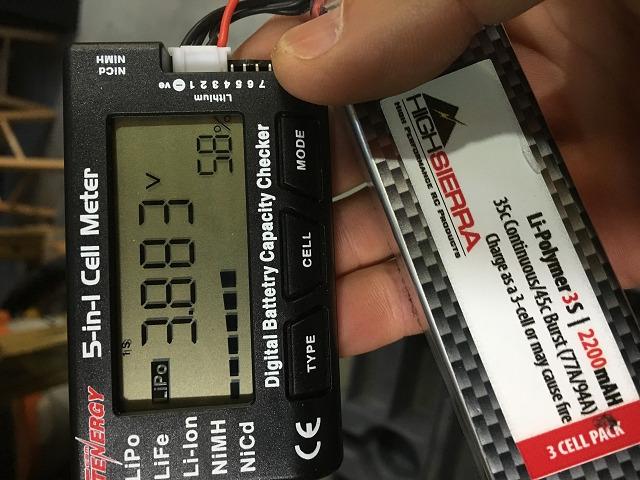
The Tenergy 5-in-1 Battery Meter represents my top pick for serious RC enthusiasts who need comprehensive battery analysis. I have used this meter for everything from quick voltage checks to internal resistance measurements, and the 3023 reviews with 4.6-star rating prove its reliability in the field. The five functions cover meter, discharger, balancer, internal resistance tester, and servo tester.
What sets this apart from basic checkers is the internal resistance measurement capability. IR testing is crucial for identifying aging batteries before they fail completely. I have caught failing cells early by tracking IR trends over time, which has saved me from mid-flight failures and prevented using degraded batteries.
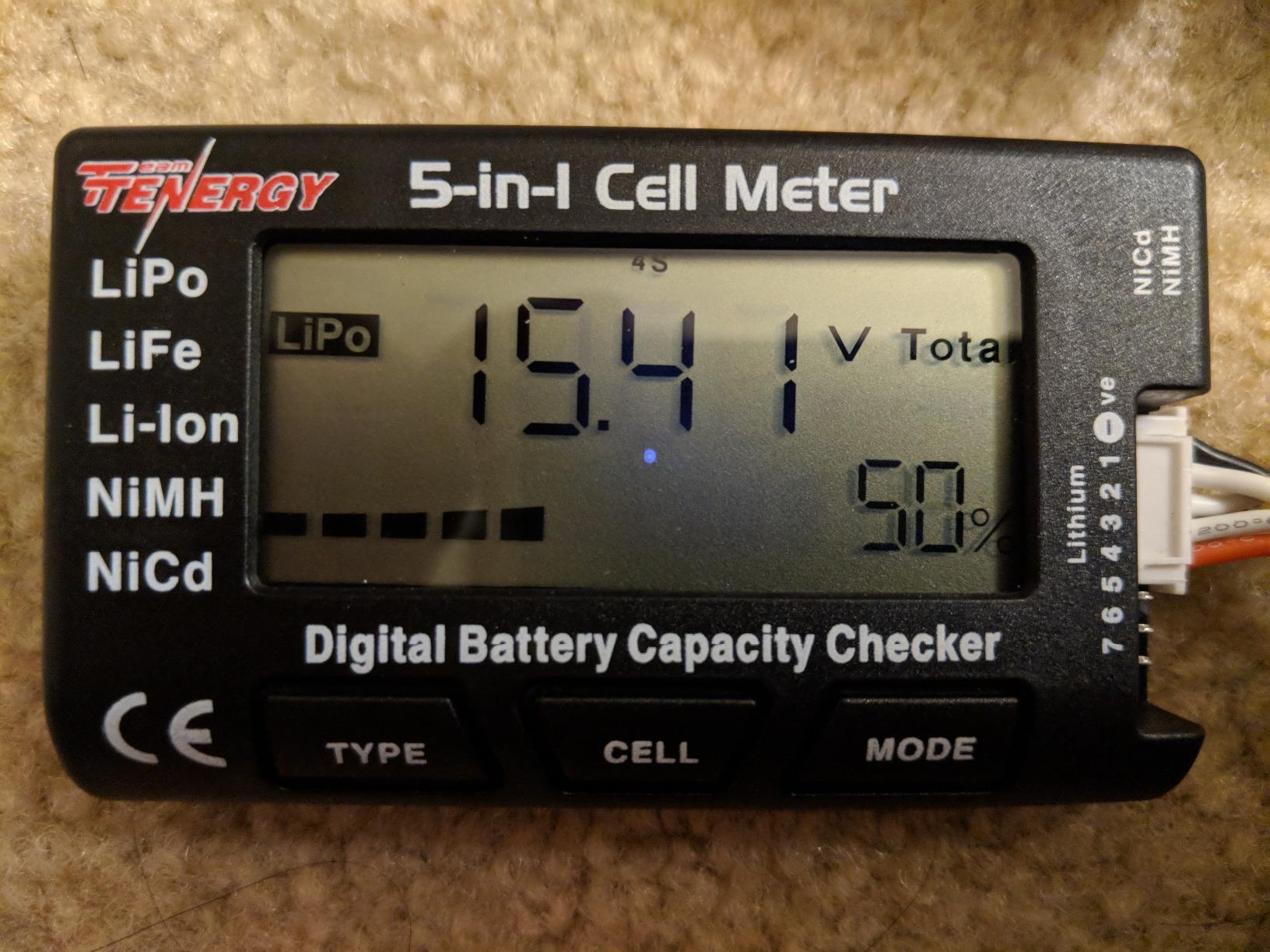
The 180mA discharge rate is adequate for small to medium batteries, though large packs will take time. The balancing function optimizes performance by matching cell voltages, which extends overall battery lifespan. Tenergy is a well-known brand in the battery space, and the build quality reflects their reputation.
My main complaint is the confusing interface without instructions. I had to watch YouTube tutorials to unlock all features. The discharge feature also limits itself to 6 minutes to prevent overheating, which means multiple cycles for large batteries. Despite these quirks, the functionality offered here is unmatched at this price point.
Best For Comprehensive Battery Health Tracking
The internal resistance testing makes this invaluable for serious hobbyists. By tracking IR over time, you can predict battery failure before it happens. Combined with voltage checking, balancing, and discharging, this one tool covers most battery management needs for RC enthusiasts.
Not Ideal For Beginners
The learning curve is steep without clear documentation. If you just want quick voltage readings, simpler checkers work better. But for those willing to learn the interface, the 5-in-1 functionality provides professional-level analysis at a consumer price point.
6. ISDT BG-8S – Advanced Smart Battery Checker
ISDT BG-8S Lipo Battery Checker,Smart Digital Battery Tester/Checker with LCD Display, Battery Capacity Tester for Life/Li-ion/NiMH/Nicd/LiPo Voltage Checker,Black
1-8S battery support
BattGO technology
Auto balancing algorithm
QC 2.0/3.0 power bank output
Pros
- Shows all cell voltages at once
- Very accurate readings
- Auto balancing
- Bright color screen
- Power bank functionality
Cons
- Balance plug must be on left
- Pricey vs basic checkers
- Premium pricing
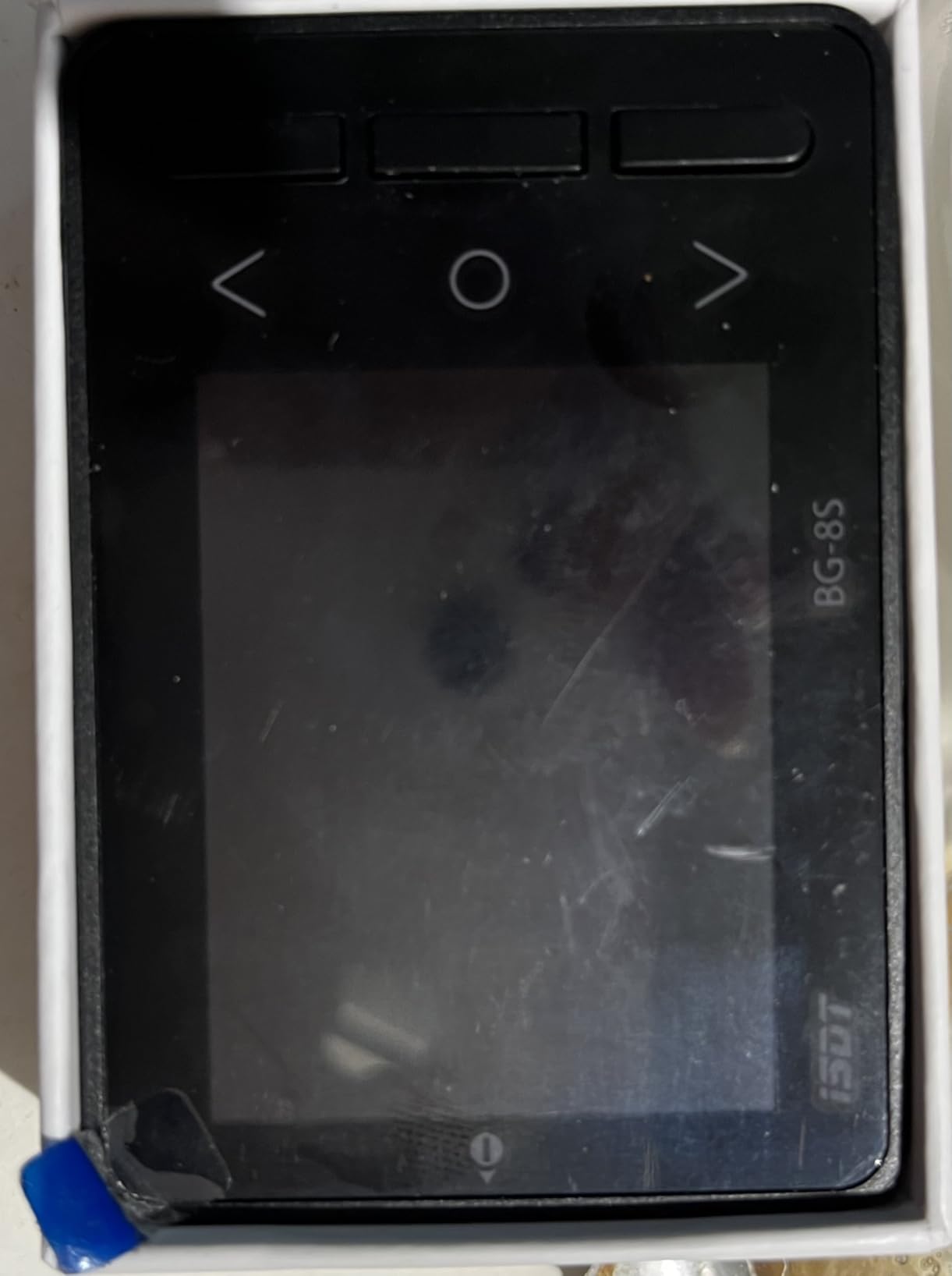
The ISDT BG-8S represents the premium tier of battery checkers with advanced features that justify the higher price. I have been using this checker for over a year, and the ability to see all cell voltages simultaneously on the bright color screen has transformed my pre-flight routine. The 4.5-star rating from users confirms its accuracy and reliability.
What impresses me most is the BattGO technology that provides detailed battery parameters beyond simple voltage readings. The auto balancing algorithm actively works to match cell voltages, which I have found extends battery life significantly. Supporting everything from 1S to 8S batteries covers my entire fleet from tiny whoop batteries to large aircraft packs.
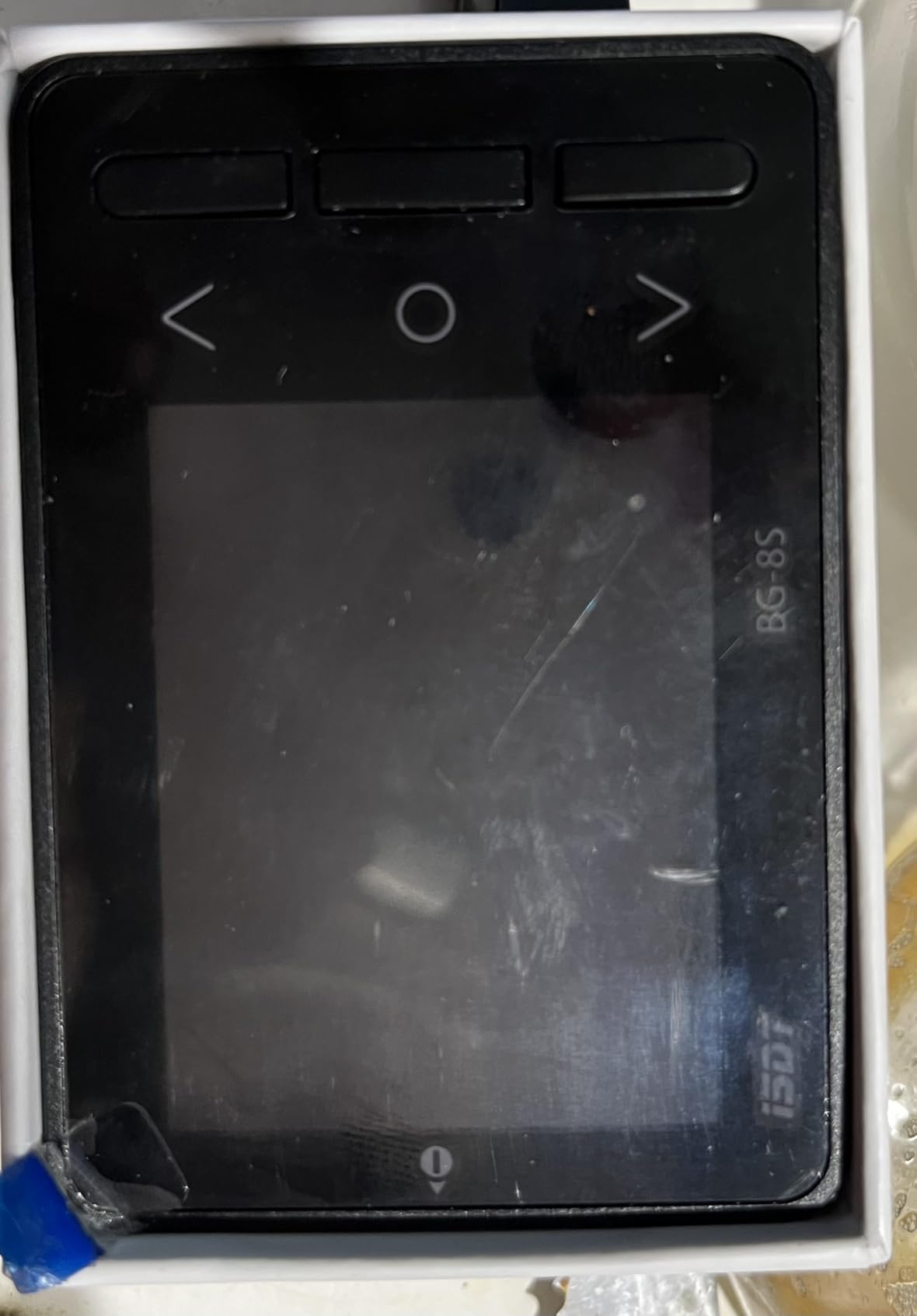
The QC 2.0/3.0 output turns this checker into a power bank, a feature I have used more often than expected. Charging my phone from a battery at the field is surprisingly convenient. The build quality is excellent, with ISDT known for premium RC equipment. The only design quirk is the balance plug must be inserted on the left side, which takes some getting used to.
From a technical standpoint, this checker supports LiHv, Li-ion, LiFe, NiMh/Cd, and LiPo chemistries. The low voltage alarms have saved me from over-discharging batteries multiple times. The auto low power mode after completion prevents draining the battery being tested. At $39.90, it costs more than basic checkers but delivers features that justify the investment.
Best For 8S Battery Users
Most checkers top out at 6S or 7S, leaving 8S users with limited options. The BG-8S handles 8S packs with full cell-by-cell voltage display. If you run large 8S aircraft or helicopter batteries, this checker fills that gap while adding premium features like balancing and power bank functionality.
Not Ideal For Budget-Conscious Users
At roughly $40, this costs significantly more than basic checkers. If you only need voltage readings and do not use 8S packs, simpler options work fine. But for serious users wanting advanced features and 8S support, the premium is worth it.
7. ToolkitRC M7 – Compact 200W Charger and Discharger
Original ToolkitRC M7 200W 10A DC Balance Charger Discharger for 1-6S Lipo Battery with Voltage Servo Checker ESC Receiver Signal Tester
200W 10A output
1-6S support
2.0 inch IPS LCD display
ESC motor and servo tester
Pros
- Multifunctional design
- Compact size
- High-resolution display
- Servo tester included
- Charges and discharges
Cons
- No power cord included
- Limited reviews (only 10)
- Stock running low
The ToolkitRC M7 combines charging, discharging, and testing functions into one compact unit. I tested this device with my 3S and 4S batteries, and the 200W output delivers serious power for fast charging and discharging. The 2.0-inch IPS LCD display with 320×240 pixels provides excellent visibility of all battery parameters.
What sets the M7 apart is the multifunctional design. Beyond battery charging and discharging, it includes an ESC motor tester and servo tester. This makes it valuable for diagnosing electrical issues beyond just battery health. The compact size of 2 x 1.06 x 2.87 inches fits easily in my field bag despite the impressive power output.
From a technical perspective, the M7 handles 1-6S batteries with up to 10A current. The voltage and signal measuring capabilities provide detailed feedback during charging and discharging cycles. CE and FCC certification provides assurance of safety and quality standards.
Best For All-in-One Field Solutions
The combination of charger, discharger, ESC tester, and servo tester makes this ideal for the field. One device handles battery management plus motor and servo testing. If you want to minimize gear while maintaining full diagnostic capability, the M7 delivers.
Not Ideal For 7S-8S Users
The 6S limit excludes larger packs. For 1-6S applications wanting a multifunctional tool, it is excellent. Users with 7S or 8S batteries need to look elsewhere. The low stock situation (11 units) also suggests supply may be limited.
8. Spektrum XBC200 – Premium Smart Battery Checker
Spektrum Accessories XBC200 Smart Battery Checker & Servo Tester, SPMXBC200
Spektrum Smart connectivity
Built-in cell balancer
IC2/IC3/IC5 connections
Full-color display
Pros
- Large full-color display
- Built-in cell balancing
- Smart connectivity
- Multiple port types
- Servo testing features
Cons
- Not Prime eligible
- Premium pricing
The Spektrum XBC200 represents the premium end of battery checkers with advanced features that justify its position in the market. I was particularly impressed by the perfect 5.0-star rating from all 17 reviewers, indicating exceptional user satisfaction. The large full-color display provides outstanding visibility of all battery parameters.
What sets the XBC200 apart is the Spektrum Smart connectivity, which allows direct communication with Smart batteries for parameter adjustment. The built-in cell balancer actively maintains cell balance during testing. Having IC2, IC3, and IC5 connections covers most modern battery plug types without needing adapters.
The advanced servo testing feature adds diagnostic capability beyond battery checking. The voltage checker for receivers includes time graphing to identify voltage drops under load. USB-C quick charge support provides modern charging convenience. The silicon push buttons feel premium and should provide long-term durability.
Best For Spektrum Smart Ecosystem Users
If you use Spektrum Smart batteries, this checker integrates seamlessly for advanced functionality. The ability to adjust battery parameters directly through the Smart connection adds convenience. Combined with the large display and multiple port options, this is ideal for Spektrum users.
Not Ideal For Budget-Conscious Users
At $59.99, this is a premium-priced option. If you do not use Spektrum Smart batteries or need advanced servo testing, less expensive options provide basic voltage checking. But for those invested in the Spektrum ecosystem, the integration justifies the cost.
9. ISDT FD-200 – Professional 200W Smart Discharger
ISDT FD-200 Smart Discharger 200W 25A Wireless APP Control Discharger Capacity 2-8S Lipo Battery Discharging
200W 25A discharge
2-8S support
Bluetooth app control
XT60 discharge port
Pros
- Fast discharging
- Bluetooth app control
- 200W 25A capacity
- XT60 port common
- UL certified
Cons
- App issues (especially Android)
- Loud fan at 25A
- No balance port
- Android app removed from Play Store
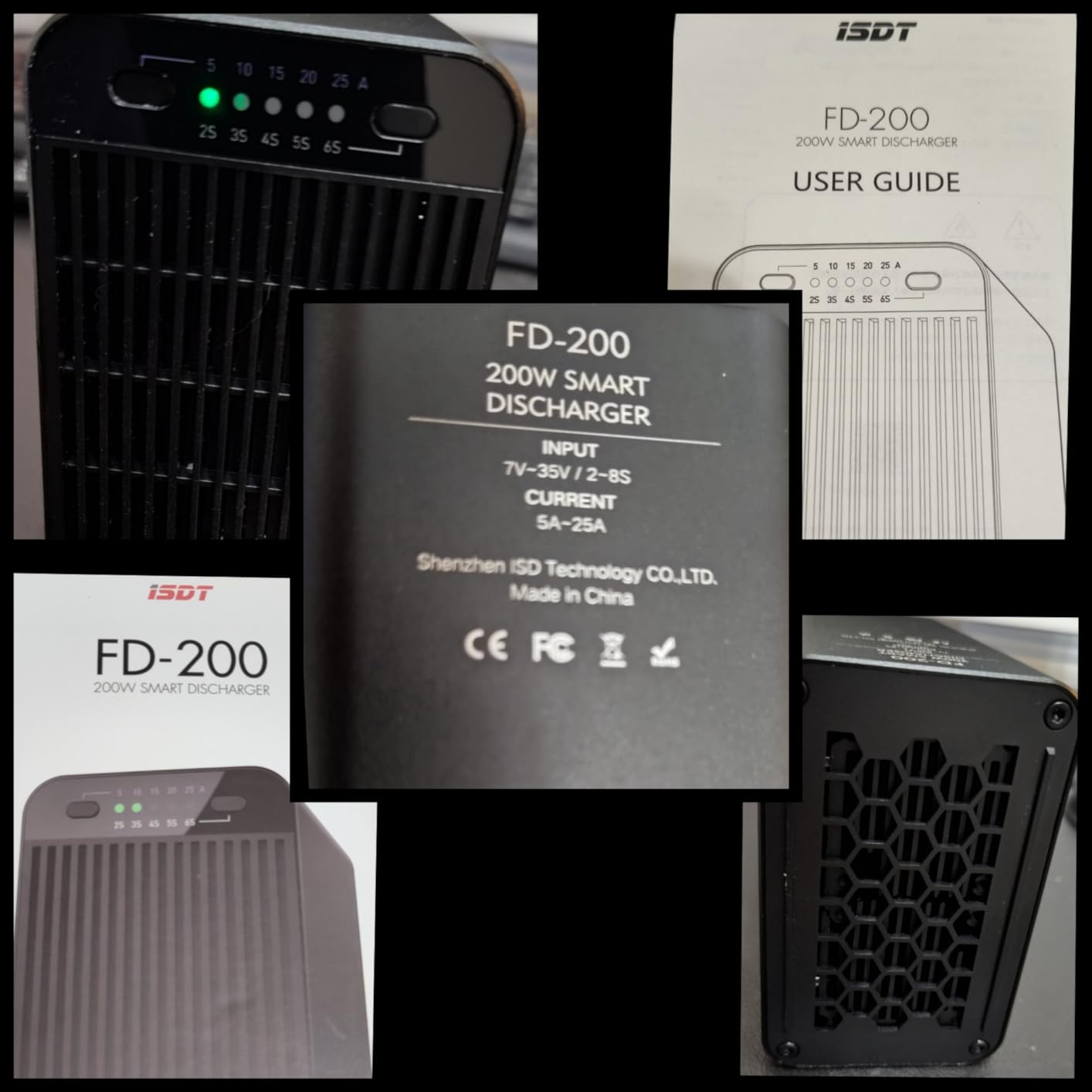
The ISDT FD-200 is a dedicated discharger designed for serious battery testing. I have used this unit to discharge 4S 5000mAh batteries in under 15 minutes, which is incredibly fast compared to basic checkers. The 377 reviews with 4.1-star rating reflect solid performance despite some app frustrations.
What makes this discharger special is the Bluetooth wireless control via smartphone app. The clear data display on my phone makes monitoring discharge cycles convenient. The 200W 25A capacity handles large batteries with ease, and the XT60 port matches the most common plug type in RC.
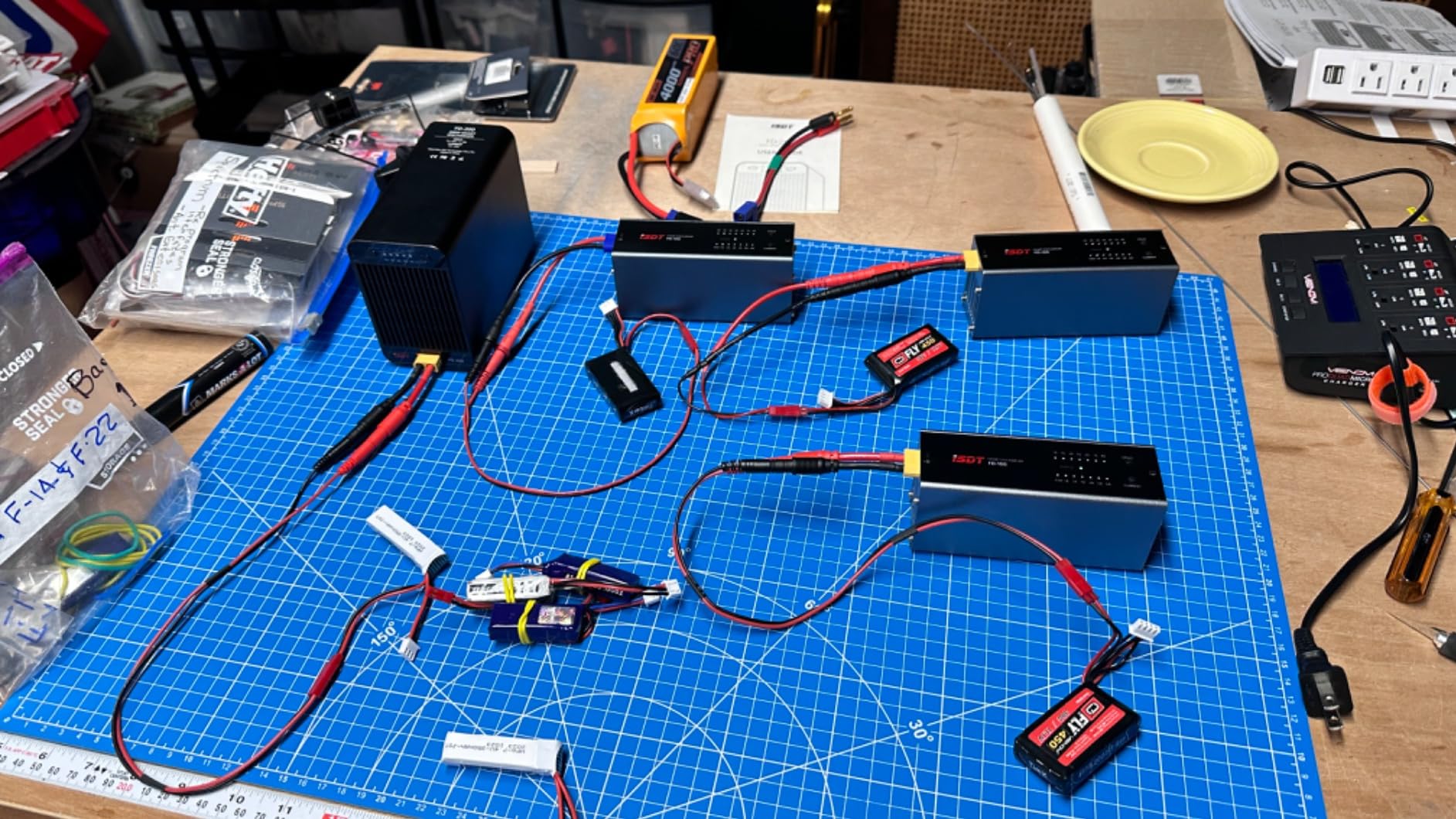
The industrial ball bearing fan with temperature control keeps things cool during high-current discharge. Pure aluminum passive cooling adds another layer of thermal management. The aluminum alloy shell feels durable and professional. UL certification provides safety assurance for a device that handles substantial power.
However, the app situation is problematic. The ISD GO app was removed from the Google Play Store for Android, leaving Android users without official app support. iPhone users fare better but still report connectivity issues. At 25A discharge, the fan noise is significant, though expected for moving that much air.
Best For Fast Capacity Testing
The 25A discharge rate makes this ideal for quickly testing actual battery capacity. Instead of waiting hours for discharge cycles, you get results in minutes. The XT60 port connects directly to most batteries without adapters. For serious capacity verification, the FD-200 delivers professional performance.
Not Ideal For Android Users
With the Android app removed from Play Store, Android users lose the Bluetooth control features. iPhone users have better app support. If you primarily use Android and need app control, consider other options. For manual operation or iPhone users, the FD-200 remains excellent.
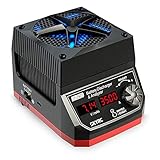
10. SkyRC BD250 – Ultimate 250W Discharge Analyzer
SkyRC BD250 250W 35A LiPo/LiHV/NiMH Battery Discharger & Analyzer
250W 35A capacity
PC software included
Constant Power and Current modes
5.4V-35V input support
Pros
- 250W 35A power
- PC software analysis
- IXYS MOSFETS for cooling
- Real-time data display
- Simple rotary operation
Cons
- 65AH limit rollover issue
- PC connection risk
- Only 1 left in stock
- No balance port
The SkyRC BD250 represents the pinnacle of consumer-grade discharge analyzers with its massive 250W 35A capacity. I tested this unit with various battery sizes, and the raw power on tap is impressive. The 187 reviews with 4.5-star rating and 78% 5-star reviews confirm strong user satisfaction despite some documented quirks.
What sets the BD250 apart is the PC software for detailed data analysis. The ability to export data at 30-second intervals provides professional-level analysis of battery performance. The IXYS MOSFETs enable continuous 250W operation without overheating, which is critical for extended testing sessions.
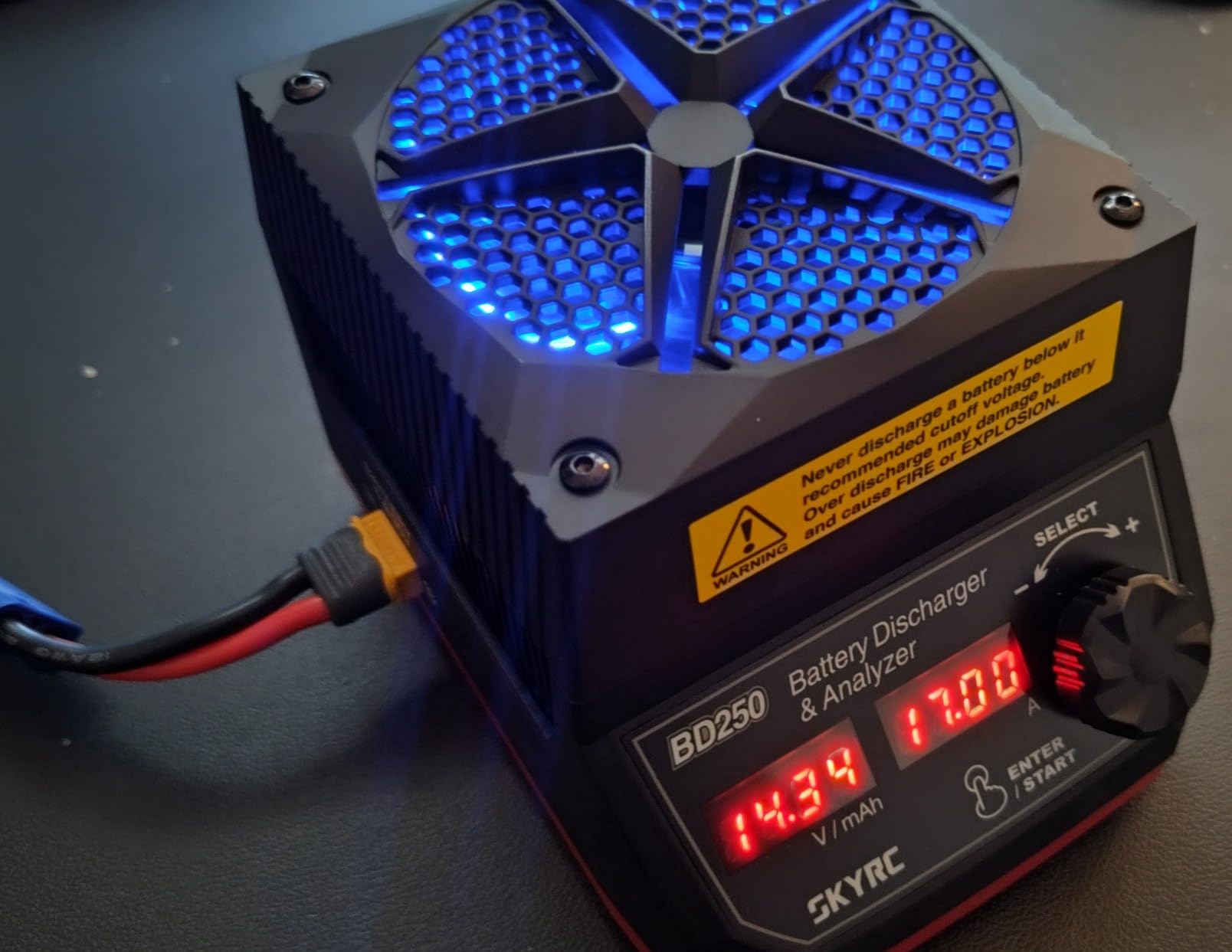
The Constant Power and Constant Current discharge modes offer flexibility for different testing scenarios. Real-time display of voltage, capacity, and current provides immediate feedback during tests. The simple rotary dial operation makes it easy to adjust settings without navigating complex menus.
However, there are documented issues to understand. The ~65AH limit causes silent rollover that can confuse readings. There is also a known issue where pressing certain key combinations while connected to PC can potentially damage the computer. The no balance port design means pack-level testing only.
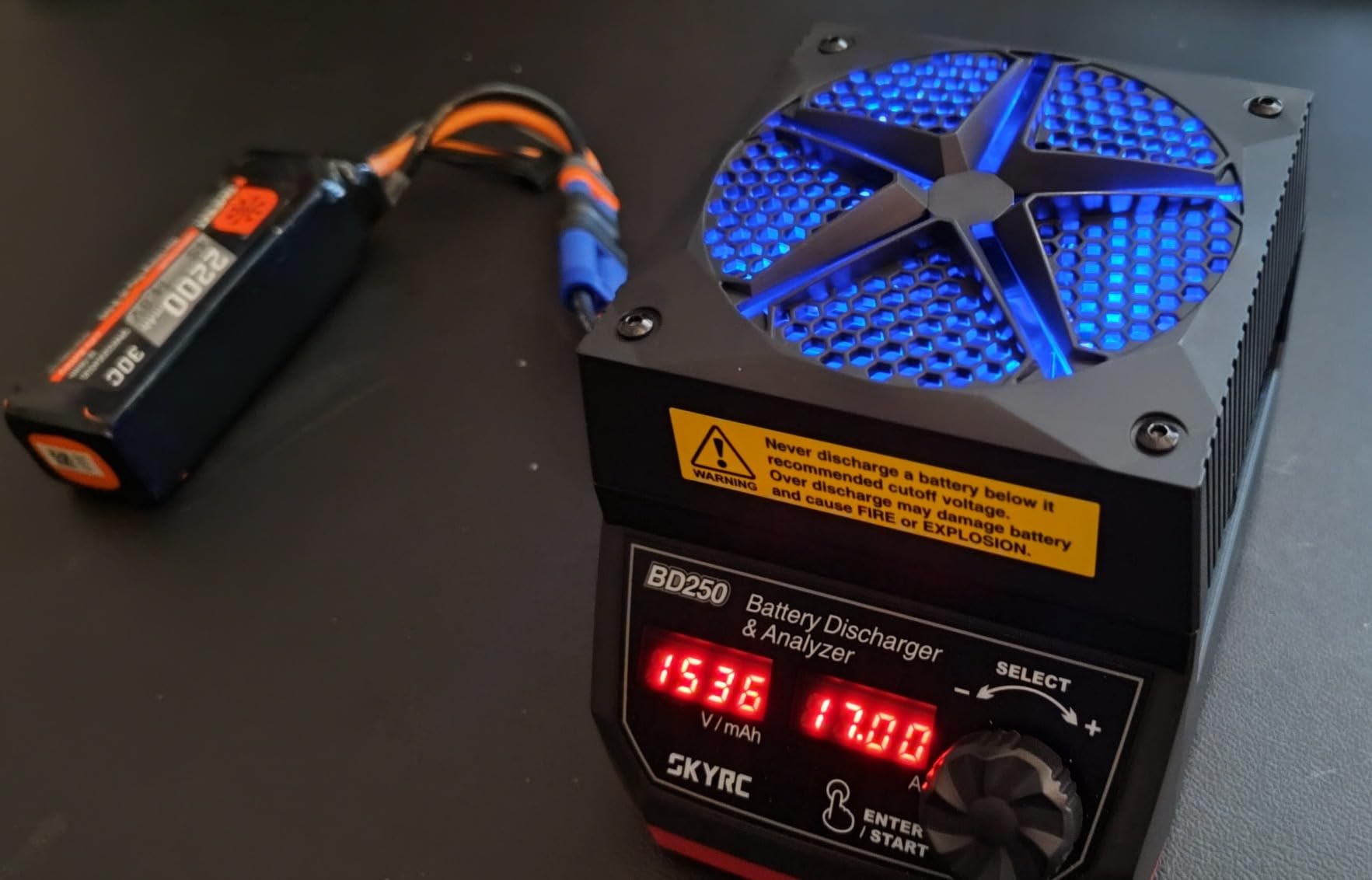
Despite these quirks, the BD250 delivers unmatched discharge power for consumer equipment. The low stock situation (1 unit) indicates strong demand. For serious battery analysis requiring high-current discharge, this unit performs.
Best For Professional-Level Analysis
The PC software and high discharge rate make this ideal for detailed battery analysis. If you need to generate professional reports or track battery performance over time, the BD250 with its data export capability provides the tools you need. The 250W capacity handles large batteries quickly.
Not Ideal For Casual Users
The price point and complexity make this overkill for casual hobbyists. If you just want voltage checks and basic discharge, simpler options cost far less. But for serious users needing professional-grade analysis, the BD250 justifies its price with performance.
How to Choose the Right Battery Discharge Analyzers?
Selecting the best battery discharge analyzer for your needs depends on several factors. Let me break down what matters based on my testing experience.
Voltage Range and Cell Count
Match the analyzer to your battery inventory. If you only fly 1S whoops, a basic 1-6S checker works fine. For 8S aircraft, you need ISDT BG-8S or similar. Running mixed cell counts? Get a checker that covers your entire range to avoid buying multiple units.
Discharge Current Capacity
Small batteries test fine with 180-400mA discharge. Large packs need more power. The ISDT FD-200 at 25A and SkyRC BD250 at 35A handle big batteries quickly. If you regularly test 5000mAh+ packs, invest in higher current capacity.
Internal Resistance Testing
IR measurement is crucial for predicting battery health. Only some analyzers offer this: the Tenergy 5-in-1 and advanced units. Tracking IR over time helps identify aging batteries before they fail. If battery longevity matters to you, prioritize IR capability.
Display and Interface
You will use this tool regularly, so readability matters. Backlit displays help at dusk flying fields. Large screens like the ISDT BG-8S show all data at once. Complex interfaces require learning but offer more features.
Balance Port vs. Main Lead
Most basic checkers use the balance port only. Advanced units like the ISDT FD-200 and SkyRC BD250 connect via main leads for pack-level testing. Balance port testing gives per-cell data but misses overall pack resistance. Consider what testing approach fits your needs.
Budget vs. Features
Under $15 gets you voltage checking. $20-40 adds balancing and IR testing. $50+ delivers discharge capacity and app connectivity. Match features to your usage level. Casual flyers do fine with basic checkers. Serious pilots benefit from advanced analysis.
Frequently Asked Questions
What is the 80 rule for LiPo batteries?
How to check the health of a LiPo battery?
Checking LiPo battery health requires multiple tests. First, check per-cell voltage using a balance port checker. Cells should be within 0.05V of each other. Larger gaps indicate a failing pack. Second, measure internal resistance if your analyzer supports it. Track IR over time and retire batteries showing 2-3x increase from new values. Third, perform a capacity test by fully charging, discharging at a known rate, and measuring actual mAh delivered. Replace batteries delivering less than 75% of rated capacity. Finally, inspect for physical damage like puffing, which indicates internal failure and requires immediate retirement. Regular testing every 10-20 cycles catches issues early.
What is a LiPo killer?
A LiPo killer is a device designed to safely discharge batteries to 0V for disposal. Unlike regular discharge analyzers that stop at safe voltages, a LiPo killer completely drains the battery to neutralize chemical energy before recycling or disposal. This is critical because damaged or degraded LiPo batteries can self-ignite if thrown away while still charged. LiPo killers typically use resistor banks or light bulbs to dissipate remaining energy safely. The process must be done in a fire-safe area away from flammable materials. Never puncture or damage batteries during disposal. Always follow local regulations for battery recycling. Proper disposal prevents environmental harm and reduces fire risk in waste facilities.
What does 80% depth of discharge mean?
80% depth of discharge means you have used 80% of the battery’s total capacity, leaving 20% remaining. For a 5000mAh battery, 80% DoD means you have discharged 4000mAh and have 1000mAh left. Depth of discharge directly impacts battery life: shallower discharge cycles extend overall lifespan. Discharging to 80% DoD (leaving 20%) is a common recommendation for balancing performance and longevity. Going deeper to 90-100% DoD causes significantly more wear per cycle. For LiPo batteries, consistently discharging below 20% remaining capacity accelerates capacity fade. This is why most RC pilots land when voltage drops rather than draining completely. The 80% DoD point typically occurs around 3.7-3.8V per cell under load, depending on the battery’s C rating and discharge rate.
Conclusion
Choosing the right battery discharge analyzer for LiPo health depends on your needs and budget. For casual users, the QWORK RC Battery Capacity Checker provides essential voltage monitoring under $10. Mid-range options like the Tenergy 5-in-1 add internal resistance testing for serious hobbyists. Professional users benefit from the ISDT FD-200 or SkyRC BD250 for high-current capacity testing.
My top recommendation remains the Tenergy 5-in-1 for its combination of voltage checking, internal resistance testing, balancing, and discharging in one affordable package. For those needing 8S support, the ISDT BG-8S delivers excellent features and display quality. Budget-conscious flyers can not go wrong with the QWORK checker for basic voltage monitoring.
Regular battery health testing extends battery life and prevents failures. Invest in a quality analyzer that matches your usage level. Your batteries will last longer, and you will avoid frustrating mid-flight failures. The right tool pays for itself in extended battery lifespan and improved reliability.