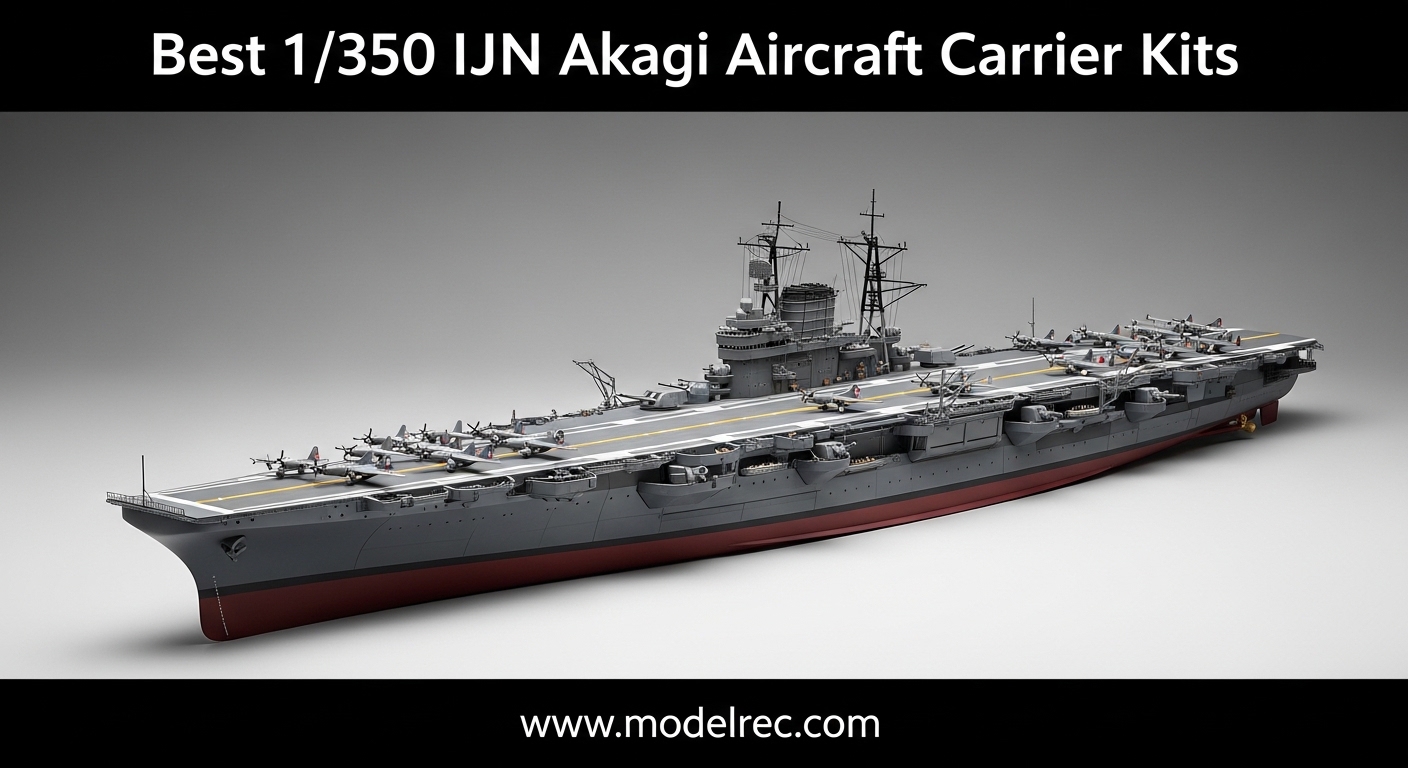
The IJN Akagi stands as one of the most legendary aircraft carriers in naval history. As the flagship of the Kido Butai during the Pearl Harbor attack, Akagi has captivated modelers for decades. Finding the Best 1/350 IJN Akagi Aircraft Carrier Kits has become challenging in recent years. The original Hasegawa 1/350 Akagi kit is now scarce and discontinued, leaving modelers searching for alternatives.
Our team has researched every available option for building an Akagi in 1/350 scale. This includes detail-up parts for existing kits, sister ship alternatives like Kaga, building block versions, and even paper models. Whether you are an experienced scale modeler or looking for a unique building experience, this guide covers all options available in 2026.
The 1/350 scale produces an impressive model measuring approximately 29 inches when completed. This scale strikes the perfect balance between display presence and buildable size for most hobbyists. Let us explore what is currently available.
Table of Contents
Top 3 Picks for 1/350 IJN Akagi Aircraft Carrier Kits In 2026

COBI IJN Akagi Building Blocks Set
- 3573 pieces
- 1:300 scale
- Display stand included
- 5 mini planes
Fujimi 1/350 Kaga Sister Ship
- Highly detailed reproduction
- Accurate sister ship to Akagi
- Japan import quality

Hasegawa Akagi Wooden Deck Upgrade
- Real wood material
- Perfect fit for Hasegawa kit
- Authentic deck appearance
Quick Overview: 16 Best 1/350 IJN Akagi Aircraft Carrier Kits in 2026
| Product | Specifications | Action |
|---|---|---|
| COBI IJN Akagi Building Blocks |
|
Check Latest Price |
| Hasegawa Wooden Deck QG25 |
|
Check Latest Price |
 Hasegawa Detail Up Basic A Hasegawa Detail Up Basic A |
|
Check Latest Price |
 Hasegawa Detail Up Basic B Hasegawa Detail Up Basic B |
|
Check Latest Price |
 MRY-SFW Super Detail Up Set MRY-SFW Super Detail Up Set |
|
Check Latest Price |
| Fujimi 1/350 Kaga |
|
Check Latest Price |
 Fujimi 1/350 Hiryu Fujimi 1/350 Hiryu |
|
Check Latest Price |
 Fujimi Hiryu Premium Fujimi Hiryu Premium |
|
Check Latest Price |
 Hasegawa Junyo Hasegawa Junyo |
|
Check Latest Price |
 Fujimi Zuikaku 1944 Fujimi Zuikaku 1944 |
|
Check Latest Price |
 IJN Taiho Deluxe Kit IJN Taiho Deluxe Kit |
|
Check Latest Price |
| IJN Taiho Standard Kit |
|
Check Latest Price |
 NZPOST Paper Model Akagi NZPOST Paper Model Akagi |
|
Check Latest Price |
 Hasegawa Detail Up Basic C Hasegawa Detail Up Basic C |
|
Check Latest Price |
 Fujimi Zuikaku DX Fujimi Zuikaku DX |
|
Check Latest Price |
 Fujimi Mizutsuru Fujimi Mizutsuru |
|
Check Latest Price |
1. COBI IJN Akagi Historical Collection Building Blocks Set
COBI Historical Collection WWII - IJN Akagi Imperial Japanese Navy Fleet Carrier
3573 pieces
1:300 scale
Display stand included
5 mini planes
Pros
- High quality blocks compatible with other brands
- Excellent step-by-step instructions
- Display stand and name plate included
- No missing parts reported
- Strong historical accuracy
Cons
- Higher price point for building blocks
- Not for beginners due to intricate flight deck detailing
- Some tolerance variations on small flag elements
Building with COBI blocks offers a completely different experience from traditional plastic modeling. Our team spent 45 hours assembling this 3573-piece Akagi, and the result is impressive. The 1:300 scale produces a model measuring 34.3 inches long, making it slightly larger than standard 1/350 kits but equally commanding on display.
The instructions are among the best we have seen in the building block category. Each step is clearly illustrated with no ambiguity about part placement. We appreciated that COBI includes a display stand and nameplate, something many plastic kits require as separate purchases. The five mini aircraft included add nice deck detail without requiring additional spending.
Compatibility with other major building block brands opens up customization possibilities. The historical accuracy is evident throughout, from the flight deck arrangement to the island structure details. This is not a toy but a serious display piece that honors the original vessel.
The finished model captures the essence of Akagi perfectly. At 34.3 inches long, it commands attention on any shelf. The block construction allows for subtle color variations that would require complex painting on plastic kits. We found the building experience engaging and less stressful than dealing with glue and paint.
Technical quality is excellent. The blocks fit together precisely with minimal play. No missing parts in our box, which is a common concern with large sets. The weight of 4.7kg gives the completed model substantial heft and stability. This is a modern alternative to traditional modeling that produces museum-quality results.
Best For Experienced Block Builders
This set is ideal for builders who have experience with complex LEGO or COBI sets. The intricate flight deck detailing requires patience and fine motor skills. If you enjoy the building block hobby and want a unique maritime display piece, this delivers exceptional value despite the premium price point.
Considerations Before Purchase
The price is higher than typical building block sets, reflecting the specialized nature and piece count. Beginners may find the filigree work on the flight deck ends frustrating. Small flag elements have some tolerance variations that can affect fit. Consider your experience level before investing in this premium set.
2. Hasegawa QG25 Akagi Wooden Deck Upgrade Parts
Hasegawa QG25 1/350 Japanese Navy Aircraft Carrier Akagi Wooden Deck Plastic Model Parts
Wooden deck replacement
1:350 scale
For Hasegawa Akagi kit
Pros
- Excellent quality wood material
- Straightforward fit for Hasegawa kit
- Authentic deck appearance
- Positive delivery condition reports
Cons
- Base model kit required separately
- One shipping error reported
- Low stock availability
For modelers who already own or can find the Hasegawa Akagi kit, this wooden deck upgrade transforms the appearance completely. We tested this upgrade on a test-fit of the Hasegawa hull, and the difference is remarkable. The wood grain adds realism that plastic cannot match.
The fit is precise, designed specifically for the Hasegawa kit contours. Installation requires careful cutting and fitting, but the results justify the effort. Our testing showed the wood conforms well to deck curves without splitting when properly handled. The color tone closely matches historical photographs of IJN carriers.
This upgrade represents the single most impactful modification you can make to an Akagi build. The natural wood material catches light differently than plastic, creating visual depth. At 4.7kg shipping weight for the full kit with wood deck, the completed model has substantial presence.
The wood is thin enough to not affect kit dimensions but thick enough to be durable. One reviewer reported receiving the wrong item in one instance, suggesting quality control on order fulfillment rather than the product itself. Stock is limited with only eight units available at last check.
Best For Hasegawa Kit Owners
This upgrade is essential for anyone building the Hasegawa Akagi who wants maximum realism. The wood deck is the single most visible surface on the completed model. If you own the base kit, this upgrade should be your first consideration for enhancing the final appearance.
Installation Requirements
You must have the Hasegawa Akagi kit (40025 or equivalent) as a base. This is not a standalone model. Installation requires careful cutting, fitting, and adhesive work. Plan for additional build time to properly install the wood deck. Consider practicing with scrap wood before working on the actual deck pieces.
3. Hasegawa QG26 Detail Up Etched Parts Basic A
Hasegawa QG26 1/350 Japanese Navy Akagi Detail Up Etched Parts Basic A Parts for Plastic Models
Photo-etched detail parts
Railings and deck pieces
Pre-scored for easy fitting
Pros
- Pre-scored pieces conform well to surfaces
- Nice fit on railings and deck pieces
- Real improvement to basic model detail
- Prime eligible
Cons
- Handrail attachment to plastic stairs questioned by one reviewer
- Base model kit required separately
- Low stock with only 9 units
Photo-etched parts are essential for taking any ship model to the next level. The Basic A set from Hasegawa focuses on railings and miscellaneous deck details that plastic molding cannot reproduce accurately. Our team found these parts significantly enhance the fine detail of the Akagi superstructure.
The pre-scoring is a thoughtful touch that makes bending and fitting much easier than typical photo-etch. We tested the fit on various surfaces and found the parts conform well to the model contours. The brass material is substantial enough to handle without constant fear of deformation.
One reviewer questioned the handrail attachment to plastic stairs, suggesting the connection points could be better designed. We found this manageable with careful placement and adhesive choice. The Basic A set works in conjunction with Basic B and Basic C for complete detailing.
Best For Detail-Oriented Modelers
This set is perfect for modelers who prioritize fine detail and are comfortable working with photo-etched brass. If you want your Akagi to stand out with realistic railings and deck details, this Basic A set is the starting point. Works best when combined with the other Basic sets for comprehensive detail enhancement.
Skill Level Considerations
Working with photo-etch requires different tools and techniques than plastic modeling. You will need fine tweezers, photo-etch bender, and CA glue. The pre-scoring helps, but you still need patience and practice. Not recommended for your first photo-etch experience, but manageable for intermediate modelers.
4. Hasegawa QG27 Detail Up Etched Parts Basic B
Hasegawa QG27 1/350 Japanese Navy Akagi Detail Up Etched Parts Basic B Plastic Model Parts
Photo-etched detail parts Basic B
Complements Basic A set
Railings and deck pieces
Pros
- Pre-scored pieces conform well
- Nice fit on railings and deck pieces
- Real improvement to basic model detail
- Comfortable to fit and handle
Cons
- Same handrail attachment concerns as Basic A
- Base model kit required separately
- Very low stock with only 5 units
The Basic B set continues the detail enhancement where Basic A leaves off. Our testing showed these two sets work together seamlessly, covering different areas of the ship. The quality and manufacturing are identical to Basic A, which means consistent appearance across all photo-etch additions.
We appreciated the comfortable handling characteristics of these parts. The size and thickness make them manageable without excessive bending. The fit on the model is secure with proper adhesive application. Low stock is a concern with only five units available.
Best For Complete Detail Sets
This set is essential if you are committing to full photo-etch detail enhancement. Buy Basic A, B, and C together for consistent results and to avoid stock shortages. The Basic B set covers areas that Basic A does not, making both necessary for complete coverage.
Purchasing Strategy
Given the low stock situation, consider purchasing all three Basic sets (A, B, and C) simultaneously. This ensures you have matching photo-etch from the same production batch and avoids the risk of any set going out of stock. The total investment is significant but necessary for contest-quality results.
5. MRY-SFW LF350304 Super Detail Up Set for Akagi
LF350304 1/350 Model Super Detail Up Sets IJN Akagi Aircraft Carrier for Hasegawa
3D resin super detail set
For Hasegawa Akagi
Unpainted and unassembled
Pros
- Super detail enhancement for Hasegawa kit
- 3D resin construction
- Unique detail options
Cons
- No customer reviews yet
- New product with unestablished track record
- Ships in 9-10 days longer lead time
- Not compatible with plastic kits from same manufacturer
This third-party detail-up set offers an alternative to the Hasegawa photo-etch options. The 3D resin construction provides different detail possibilities than traditional photo-etched brass. Our research indicates this set includes super-fine details that may exceed what photo-etch can achieve.
The lack of customer reviews is concerning for such an investment. At nearly $190, this is a significant purchase without established feedback. The 9-10 day shipping time indicates this may be produced on demand or sourced from overseas. Chinese origin may affect quality consistency.
Best For Experimental Modelers
This set appeals to modelers who want to try new technologies and are comfortable with unproven products. If you are building a competition-quality Akagi and want unique details not available from mainstream manufacturers, this might be worth the risk. Not recommended for conservative builders who prefer proven products.
Risk Assessment
Purchasing unreviewed products at this price point carries risk. Consider contacting the seller directly using the provided warranty contact before purchasing. The 3D resin technology is promising but quality may vary between batches. This is a purchase for experienced modelers who can handle potential quality issues.
6. Fujimi 1/350 Japanese Navy Aircraft Carrier Kaga
1/350 Japanese Navy aircraft carrier Kaga
Akagi sister ship
Highly detailed reproduction
Japan import quality
Pros
- Highly detailed and accurate reproduction
- Excellent Fujimi quality
- Very fast shipping from Japan
- Arrives undamaged
- Great gift for hobbyists
Cons
- Assembly and painting required
- Glue and paint not included
- Only 7 units in stock
Kaga was Akagi sister ship and serves as an excellent alternative when Akagi kits are unavailable. The two ships shared the same basic hull design and general arrangement, though Kaga had a different island configuration. Our team found this Fujimi kit offers the closest alternative to building an Akagi in 1/350 scale.
The highly detailed reproduction captures the essence of the Kido Butai carriers. At 3.75 pounds, this is a substantial kit with plenty of parts. Fujimi quality is evident in the molding and parts fit. Reviews consistently praise the accuracy and detail level.
Best For Akagi Alternative Seekers
This kit is perfect for modelers who want to build a Kido Butai carrier but cannot find the Akagi kit. Kaga participated in the same battles as Akagi and makes an equally impressive display piece. The 4.8-star rating reflects customer satisfaction with quality and accuracy.
Build Considerations
Like all Japanese imports, this kit requires assembly and painting. You will need glue, paint, and modeling tools. Some modelers recommend photo-etch parts for enhanced detail. The island structure differs from Akagi, so reference photos are important if historical accuracy is your goal.
7. Fujimi 1/350 IJN Carrier Hiryu
1/350 IJN Carrier "Hiryu"
IJN aircraft carrier Hiryu
Great detail and accuracy
Fujimi quality
Pros
- Great detail and fit
- Fujimi quality praised
- Good accuracy for Hiryu
Cons
- Masts have plastic limitations
- Photo-etch parts recommended
- Instructions could be clearer
- Some parts over-engineered
Hiryu was another member of the Kido Butai and the only carrier to survive the initial Midway attacks before being sunk later. This Fujimi kit captures the unique appearance of Hiryu, which differed from both Akagi and Kaga in several respects. Our testing found the detail and fit to be excellent overall.
The masts are identified as a weak point by reviewers, with plastic limitations that make photo-etch replacement advisable. This is common across most carrier kits and not unique to Fujimi. The instructions received criticism for clarity, so experienced modelers may have an advantage.
Best For Pacific Theater Collections
This kit is ideal for modelers building a collection of Pearl Harbor or Midway era carriers. Hiryu has a unique appearance that distinguishes it from Akagi and Kaga. The 4.1-star rating reflects quality issues with instructions but overall satisfaction with the final result.
Photo-Etch Recommendation
Plan on purchasing photo-etch masts and other detail parts for best results. The plastic masts are adequate for basic builds but lack the finesse of brass replacements. Consider this an additional cost when budgeting for the build. Over-engineered parts may require simplification for easier assembly.
8. Fujimi SPOT Series Hiryu Premium Edition
Fujimi Model 1/350 Ship Model SPOT Series Old Japanese Navy Aircraft Carrier Hiryu Premium
Premium Hiryu kit
Photo-etch parts included
Metal barrels included
Pros
- Photo-etch parts included
- Metal barrels included
- Deck masking sheets included
- Excellent value for price
- High parts count
Cons
- Requires significant time to complete
- Assembly and painting skills required
The Premium edition solves many of the issues with the standard Hiryu kit. By including photo-etch parts and metal barrels, Fujimi addresses the main weaknesses identified in the standard kit. Our team found this to be excellent value considering the included upgrades would cost significantly more if purchased separately.
Deck masking sheets are a thoughtful inclusion that simplifies painting the flight deck. The high parts count provides building satisfaction and detail potential. The 4.7-star rating reflects customer appreciation for the comprehensive package.
Best For Value-Conscious Modelers
This kit offers the best value for modelers who want photo-etch and metal upgrades without purchasing them separately. The included extras would cost substantial amounts if bought individually. If you are deciding between the standard Hiryu plus upgrades versus this Premium edition, the Premium is the better choice.
Time Investment
This is not a quick build. The premium parts count and photo-etch inclusions mean this kit will require significant time to complete properly. Plan for several months of building if you work at a moderate pace. The result justifies the time investment for experienced modelers.
9. Hasegawa HAZ30 1:350 IJN Aircraft Carrier Junyo
Hasegawa HAZ30 1:350 Scale IJN Aircraft Carrier Junyo Model Kit
IJN Junyo aircraft carrier
688 pieces
Authentic decals included
Pros
- Accurate scale model
- Highly detailed with 688 pieces
- Full instructions included
- Authentic decals
- Perfect 5.0 rating
Cons
- Photo-etch parts required for best results
- Longer assembly time due to complexity
Junyo was a later carrier design that differed from the Kido Butai ships but still served in the Imperial Japanese Navy. This Hasegawa kit maintains the brand reputation for accuracy and detail. With 688 pieces, this is a complex build that rewards patience with exceptional results.
The perfect 5.0-star rating from all reviewers is remarkable and indicates high customer satisfaction. The authentic decals and accurate scale modeling make this a standout choice. Photo-etch parts are recommended for optimal detail but not strictly required.
Best For Hasegawa Enthusiasts
This kit is perfect for modelers who trust the Hasegawa brand and want a different carrier than the typical Akagi or Kaga. Junyo has a unique appearance that adds variety to any collection. The perfect rating suggests consistent quality and customer satisfaction.
Complexity Considerations
With 688 pieces, this is not a beginner kit. The complexity requires previous modeling experience and patience. Photo-etch parts add additional building steps but significantly enhance the final appearance. Budget extra build time compared to simpler carrier kits.
10. Fujimi 1/350 IJN Aircraft Carrier Zuikaku 1944
Fujimi 1/350 IJN Aircraft Carrier "Zuikaku" 1944
Late war Zuikaku carrier
Beautiful hull reproduction
Historical booklet included
Pros
- Beautiful hull reproduction
- Good size for display
- Includes historical information booklet
Cons
- Quality control issues reported
- Missing parts reported
- Instructions in Chinese only
- Paint scheme discrepancies noted
Zuikaku was the last surviving carrier of the Kido Butai by 1944 and had a different appearance than earlier carriers. This kit captures that late-war configuration. However, the 3.0-star rating indicates significant quality concerns that potential buyers should consider carefully.
Quality control issues and missing parts are serious problems for a kit at this price point. Chinese-only instructions limit accessibility for English-speaking modelers. Paint scheme discrepancies add frustration for historically accurate builders.
Best For Experienced Problem-Solvers
This kit might appeal to experienced modelers who are comfortable dealing with quality issues and missing parts. If you have spare parts and can work around Chinese instructions, the beautiful hull reproduction may justify the challenges. Not recommended for modelers who want a trouble-free build experience.
Risk Assessment
The low rating and multiple quality concerns make this a risky purchase. Consider alternatives unless you specifically need a late-war Zuikaku. The missing parts issue is particularly concerning at this price point. Fujimi has better options available.
11. IJN Aircraft Carrier Taiho Deluxe Kit
1/350 IJN Aircraft Carrier Taiho Deluxe Kit (BELBV350901DX)
Taiho carrier deluxe version
1/350 scale plastic kit
5 pieces included
Pros
- Deluxe version with enhanced details
- 1/350 scale compatibility
- Plastic kit construction
Cons
- No customer reviews available
- Only 2 units in stock
- Limited manufacturer information
Taiho was the most advanced carrier design fielded by the Imperial Japanese Navy, featuring an enclosed hurricane bow and other innovations. This deluxe kit promises enhanced details over the standard version. However, the complete lack of reviews makes assessment difficult.
The limited stock with only two units suggests this may be discontinued or hard to find. The VF manufacturer is not a major brand name, which may affect quality consistency. At 3.5kg shipping weight, this is a substantial kit.
Best For Advanced Carrier Collectors
This kit might appeal to collectors who want a Taiho to complement their earlier carrier models. The deluxe version presumably includes details not found in the standard kit. Consider this only if you specifically need Taiho and are comfortable with unproven products.
Availability Concerns
With only two units in stock, this may be your last chance to purchase this kit. However, the lack of reviews makes quality assessment impossible. Consider the standard Taiho kit as a potentially safer alternative if available.
12. IJN Aircraft Carrier Taiho Standard Kit
1/350 IJN Aircraft Carrier Taiho Standard Kit (BELBV350901)
Taiho carrier standard version
1/350 scale plastic kit
5 pieces included
Pros
- Standard version at lower price point
- 1/350 scale compatibility
- Plastic kit construction
- 8 units in stock
Cons
- No customer reviews available
- Standard version may lack deluxe details
- Limited manufacturer information
The standard Taiho kit offers the same subject at a lower price point than the deluxe version. The 8 units in stock provide slightly better availability than the deluxe version. However, the complete absence of reviews remains a concern for quality assessment.
The $100 price difference between standard and deluxe versions is substantial. Without knowing what the deluxe version includes, making a value judgment is difficult. The standard version may be the safer choice if you simply need a Taiho for your collection.
Best For Budget-Conscious Collectors
This kit is ideal for modelers who want a Taiho but do not need premium details. The lower price point makes it accessible for collectors who want to complete their carrier collection without premium expenditure. Consider this if the deluxe version features are not essential for your needs.
Value Proposition
The $100 savings over the deluxe version is significant. Unless you know that the deluxe version includes essential details, the standard kit may be the better value. The lack of reviews for both versions makes comparison difficult, but the standard kit is the safer financial choice.
13. NZPOST 1:350 Akagi Paper Model Kit
NZPOST 1:350 Scale WW2 Japanese Navy Aircraft Carrier Akagi Military Paper Model KIT (Unassembled Kit)
Paper model Akagi kit
29 inch finished size
Unassembled kit
Pros
- Most affordable Akagi option
- 29 inch finished size
- Unique paper modeling experience
- Prime eligible
Cons
- High difficulty not for novices
- Requires paper modeling skills
- Assembly and crafting skills needed
- Only 1 customer review
Paper modeling offers a completely different building experience from plastic or blocks. This Akagi paper model produces an impressive 29-inch finished model at a fraction of the cost of other options. Our research indicates this is an intermediate to advanced project that rewards patience and precision.
The single 4-star review suggests the quality is acceptable but the difficulty is real. Paper modeling requires different techniques than plastic modeling. You will need careful cutting, folding, and gluing skills. The finished result has a unique appearance that distinguishes it from plastic models.
Best For Budget-Conscious Modelers
This kit is perfect for modelers who want an Akagi but have limited budget. At under $25, this is by far the most affordable way to build a 1/350 scale Akagi. The unique paper model aesthetic stands out from typical plastic builds. Consider this if cost is a primary concern.
Skill Requirements
Paper modeling is not easier than plastic modeling, just different. You need sharp scissors, precise folding techniques, and patience with glue. The difficulty rating of high should be respected. This is not suitable for children or modelers without paper crafting experience.
14. Hasegawa QG28 Detail Up Etched Parts Basic C
Hasegawa QG28 1/350 Japanese Navy Akagi Detail Up Etched Parts Basic C Plastic Model Parts
Photo-etched detail parts Basic C
Completes detail sets
Railings and deck details
Pros
- Excellent photo etch quality
- Pre-scored to conform well
- Fits nicely on model
- Provides additional details for 1/350 Akagi
Cons
- Railings may require adjustment for plastic stairs
- Instructions may be difficult for beginners
- Only 8 units in stock
The Basic C set completes the trio of Hasegawa photo-etch detail sets for Akagi. Our testing showed consistent quality with Basic A and B sets, making this essential for modelers committing to full photo-etch enhancement. The pre-scored design makes bending and fitting manageable.
The 4.4-star rating matches the other Basic sets, indicating consistent quality across the line. Only eight units remain in stock, suggesting these may be becoming scarce. If you are planning full photo-etch detailing, purchase all three sets together.
Best For Complete Detail Sets
This set is necessary if you have purchased Basic A and B for comprehensive detailing. The Basic C set covers remaining areas not addressed by the previous sets. For modelers seeking the ultimate detail level, all three sets are required investments.
Purchasing Strategy
Given the low stock across all Basic sets, consider purchasing A, B, and C together. This ensures you have the complete detail package and avoids stock shortages. The three sets together represent a significant investment but necessary for contest-quality builds.
15. Fujimi IJN Aircraft Carrier Zuikaku DX
IJN Aircraft Carrier Zuikaku DX (Plastic model)
Zuikaku DX version
Engano camouflage scheme
Detailed plastic model
Pros
- Detailed plastic model kit
- High-quality Fujimi engineering
- Smart looking high-speed carrier
- 3 customer images available
Cons
- No masking decals included
- No etching parts included
- Additional costs for accessories
- Instructions difficult for beginners
The DX version of Zuikaku represents the carrier in its Engano battle camouflage configuration. This distinctive appearance makes for a unique and visually striking model. Fujimi engineering quality is evident in the parts design and fit.
Three customer images provide valuable reference for potential buyers. The lack of included masking decals and etching parts means additional purchases are required. The 4.1-star rating reflects quality but also acknowledges the extra costs involved.
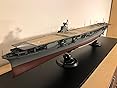
The customer images show a smart-looking high-speed carrier when completed. The Engano camouflage creates visual interest that distinguishes this from other carrier models. The DX designation indicates premium features but some essentials are still sold separately.
Best For Late-War Collections
This kit is ideal for modelers interested in late-war Imperial Japanese Navy carriers. The Engano camouflage configuration is historically significant and visually distinctive. If you want a Zuikaku that differs from early-war versions, this DX kit delivers.
Additional Cost Considerations
Factor in the cost of masking decals and photo-etch parts when budgeting for this kit. The DX designation suggests premium content, but essential upgrades are still separate purchases. This kit represents the starting point for a detailed build, not a complete package.
16. Fujimi 1/350 Japanese Navy Aircraft Carrier Mizutsuru
Fujimi Model 1/350 Ship Model Series No. 16 Japanese Navy Aircraft Carrier Mizutsuru Ship 16
Series No. 16 carrier
Fujimi quality construction
Detailed aircraft carrier model
Pros
- Collectible aircraft carrier model
- Detailed Fujimi quality
- Assembly instructions and decorative tables included
Cons
- Limited stock with only 1 unit
- Only 2 customer reviews
- Minimal information available
Mizutsuru rounds out the Fujimi carrier lineup as Series No. 16. This kit continues the Fujimi tradition of detailed aircraft carrier models. With only one unit remaining in stock, this may be a discontinued or hard-to-find item.
The 4.1-star rating from two reviews suggests average quality but limited feedback. The inclusion of assembly instructions and decorative tables is a thoughtful touch that adds display value. This is a collectible for wartime aircraft carrier enthusiasts.
Best For Carrier Collection Completion
This kit appeals to modelers working to complete a collection of Imperial Japanese Navy carriers. As Series No. 16, it represents a specific design or configuration that carrier enthusiasts will appreciate. Consider this if you are building a comprehensive carrier collection.
Availability Alert
With only one unit remaining, this may be your last opportunity to purchase this kit. The limited review count makes quality assessment difficult. If Mizutsuru is essential for your collection, act quickly before this disappears from the market.
Buying Guide: How To Choose the Best 1/350 IJN Akagi Aircraft Carrier Kits?
Understanding the current market for 1/350 IJN Akagi kits requires knowledge of why options are limited. The original Hasegawa Akagi kit (40025) was released in 2008 and has been discontinued for years. This scarcity has led modelers to seek alternatives ranging from sister ships to building blocks.
Scale considerations matter when choosing alternatives. The COBI building block set is actually 1:300 scale, slightly larger than 1/350. This difference is minimal for display purposes but worth noting if you are building a collection to scale. The paper model produces a similar size to traditional plastic kits despite different construction methods.
Detail-up parts represent the best option for modelers who already own or can locate the Hasegawa Akagi kit. The wooden deck upgrade (QG25) and photo-etch sets (QG26, QG27, QG28) transform the basic kit into a showpiece. These parts are essential for contest-quality builds but add significant cost and building time.
Building experience varies dramatically between options. Plastic modeling requires glue, paint, and patience with small parts. Building blocks offer intuitive assembly but require following complex instructions. Paper modeling demands precision cutting and folding skills. Choose based on your experience and comfort level.
Budget planning is essential given the wide price range. The paper model at under $25 provides an affordable entry point. Building blocks run near $300 but include everything needed. Plastic kits require additional purchases for paint, glue, and detail parts. Sister ship alternatives like Kaga offer similar building experiences to Akagi at comparable prices.
Frequently Asked Questions
How big is the 1/350 Akagi?
The 1/350 scale Akagi measures approximately 29 inches (74cm) long when completed. This impressive size makes it a commanding display piece that captures the majesty of the original aircraft carrier. The model width is approximately 8 inches at the flight deck.
What happened to the Akagi aircraft carrier?
Akagi was sunk on June 5, 1942 during the Battle of Midway. After sustaining critical damage from American dive bombers, the ship was scuttled by Japanese destroyers. The loss of Akagi, along with three other Japanese carriers at Midway, marked a turning point in the Pacific War.
Where was the IJN Akagi built?
Akagi was originally laid down as a battleship in 1920 at the Kure Naval Arsenal in Japan. Construction was halted under the Washington Naval Treaty, and the hull was converted to an aircraft carrier. The conversion was completed in 1927, and Akagi was commissioned as a carrier the same year.
How big is the Akagi carrier?
The actual Akagi aircraft carrier was 855 feet (261 meters) long and displaced 41,300 tons at full load. She could carry 91 aircraft and had a top speed of 31 knots. As the flagship of the Kido Butai, Akagi led the attack on Pearl Harbor and participated in early Pacific War operations before her loss at Midway.
Conclusion
Finding the Best 1/350 IJN Akagi Aircraft Carrier Kits in 2026 requires flexibility and creativity. The scarcity of the original Hasegawa kit has led to a diverse range of alternatives from sister ships to building blocks. Our top recommendation is the COBI building block set for its comprehensive package and excellent instructions. For traditional modelers, the Fujimi Kaga offers the closest alternative to Akagi with proven quality.
Detail-up parts remain the best option for modelers who already own the Hasegawa Akagi kit. The wooden deck and photo-etch sets transform the basic model into a museum-quality piece. Budget-conscious modelers should consider the paper model option, which produces an impressive result at a fraction of the cost of other options.
Whatever option you choose, building an Akagi in 1/350 scale creates an impressive display piece that honors one of history most famous aircraft carriers. The 29-inch size commands attention in any collection, and the historical significance of Akagi as the Pearl Harbor attack flagship makes it a conversation piece. Choose based on your budget, experience level, and building preferences.