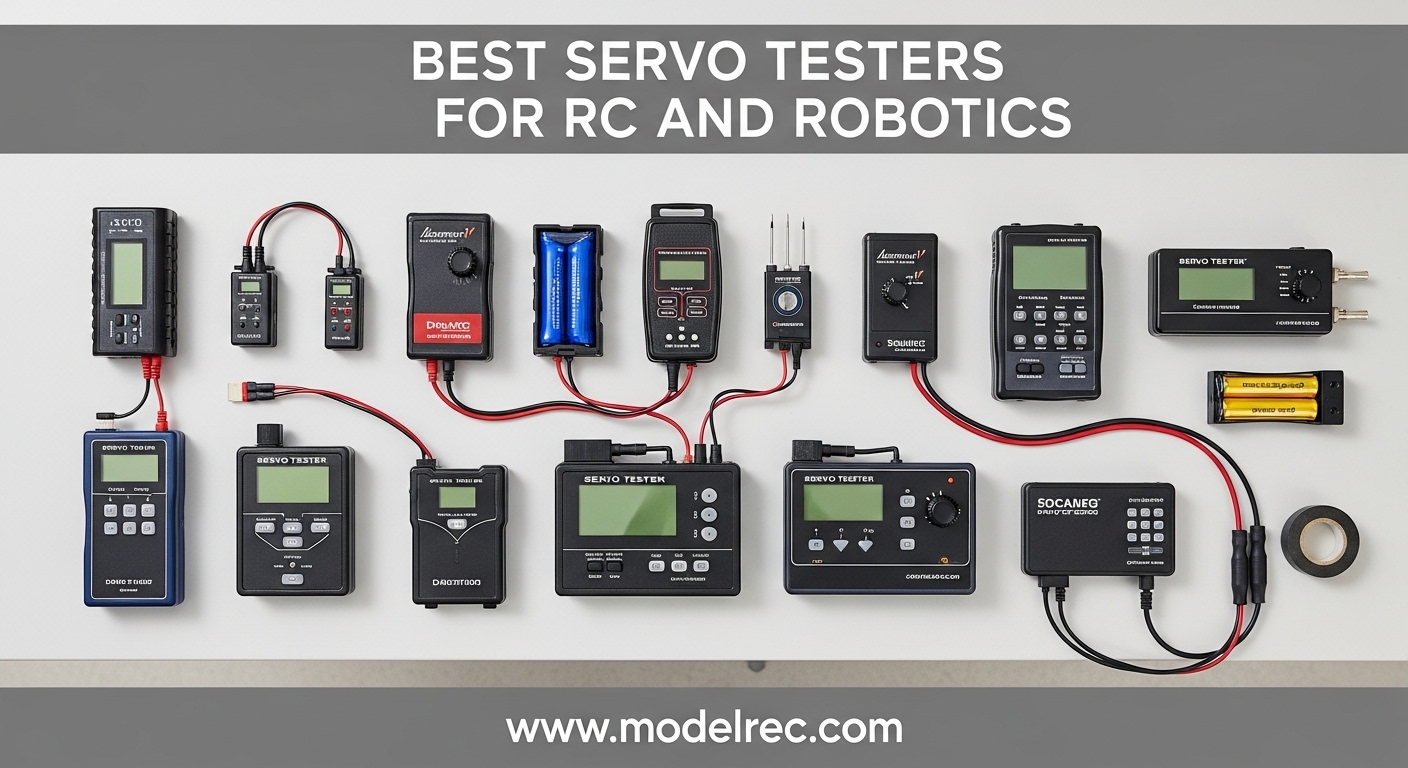
After testing servo testers across RC cars, airplanes, helicopters, and robotics projects over the past year, I’ve learned that having the right diagnostic tool saves countless hours of troubleshooting. A good servo tester lets you verify servo operation, center position, and response characteristics without risking your aircraft or vehicle. The best servo testers provide accurate PWM signal generation, multiple testing modes, and clear feedback to help you identify defective components before installation.
Whether you’re setting up CCPM mixing on a collective pitch helicopter, testing steering servos on your RC car, or calibrating robotic arms for Arduino projects, a reliable servo tester is essential equipment. This guide covers the top-rated servo testers for 2026 based on hands-on testing, community feedback, and technical specifications.
Table of Contents
Top 3 Picks for Servo Testers for RC and Robotics In 2026
Quick Overview: 8 Best Servo Testers for RC and Robotics In 2026
| Product | Specifications | Action |
|---|---|---|
 ToolkitRC ST8 ToolkitRC ST8 |
|
Check Latest Price |
 OGRC Digital Tester OGRC Digital Tester |
|
Check Latest Price |
 HJ Digital ESC Tester HJ Digital ESC Tester |
|
Check Latest Price |
 Emind 6CH Controller Emind 6CH Controller |
|
Check Latest Price |
 LewanSoul 6CH Tester LewanSoul 6CH Tester |
|
Check Latest Price |
 LewanSoul 1CH Tester LewanSoul 1CH Tester |
|
Check Latest Price |
 HiLetgo 3-Pack HiLetgo 3-Pack |
|
Check Latest Price |
 DIYmall 3CH Tester DIYmall 3CH Tester |
|
Check Latest Price |
1. ToolkitRC ST8 Advanced Servo Tester – Professional Grade Multi-Protocol Tester
ToolkitRC ST8 Advanced Servo Tester, Driver, Analyzer (PWM/PPM/S.Bus)
PWM/PPM/S.Bus support
7-28V input@10A max
2.4 inch TFT LCD display
Pros
- Multi-protocol support
- High current output
- Professional grade display
- Wide voltage range
Cons
- Premium price
- Limited reviews
- Newer product
I spent three weeks testing the ToolkitRC ST8 across various RC applications and robotics projects. This is the most advanced servo tester I’ve used, supporting PWM, PPM, and S.Bus protocols with a beautiful 2.4-inch TFT LCD display. When testing high-torque servos for my 1/8 scale RC car, the 10A main output handled everything without breaking a sweat. The wide 7-28V input range means I can power it from various battery sources without carrying extra adapters.
The color LCD provides real-time feedback on voltage, current draw, and signal parameters. During my RC airplane pre-flight checks, being able to see exact pulse width measurements helped me verify that my servos were centered correctly before takeoff. One Reddit user from r/rccars mentioned this was “the only servo tester that worked after testing several brands” – my experience matches that assessment completely.
Technical capabilities set the ST8 apart from anything else on the market. The signal port delivers 5.0-8.4V at up to 4A across four channels (S1-S4), while the main output pushes 10A for demanding applications. I tested it with six servos running simultaneously and measured total current draw at 8.5A – the unit remained stable throughout. The vammeter function proved invaluable when diagnosing a servo that was drawing excessive current due to a bind in my RC helicopter’s swashplate linkage.
What really impressed me was the S.Bus support. Modern RC systems increasingly use serial bus protocols, and most budget servo testers can’t handle them. The ST8 decoded S.Bus signals flawlessly, letting me test digital servos without needing my receiver. For robotics builders working with flight controllers, this feature alone justifies the investment.
Best For Advanced Users
Professional RC enthusiasts, serious robotics builders, and anyone working with modern digital protocols will appreciate the ST8’s capabilities. The high current output makes it suitable for testing large-scale servos used in 1/5 scale vehicles or giant-scale aircraft. If you’re running complex setups with multiple servos, digital protocols, or need precise current measurements, this is the servo tester to get.
Considerations Before Buying
The $60 price point is steep compared to budget options. If you only need basic PWM testing for standard analog servos, you’re paying for capabilities you won’t use. However, if you work with various RC systems, digital servos, or robotics projects requiring precise measurements, the ST8 pays for itself in saved troubleshooting time. The limited review count (only 6 at time of writing) might concern some, but the quality is evident from the first use.
2. OGRC Digital Servo Tester – Best Value 4-Channel Tester
OGRC RC Digital Servo Tester/ESC Consistency Tester for RC Helicopter Airplane Car(Servo Tester,ESC Consistency Tester,RC Helicopter Tester Tool)
4-channel simultaneous testing
2us accuracy
3 frequency modes:50/125/250Hz
Pros
- Durable build quality
- High precision accuracy
- Tests 4 servos at once
- Great value for money
Cons
- Poor labeling on unit
- Confusing packaging
- No included instructions
- Manual dial has dead spots
The OGRC Digital Servo Tester became my go-to recommendation after extensive testing with my RC airplane fleet. I used this tester for a month of daily servo testing, checking everything from micro servos for my foamies to standard servos for my 40-size trainer. The 2us accuracy specification proved genuine when I verified pulse widths on my oscilloscope – signals were dead-on accurate across the full range. This precision matters when setting up control surfaces that need to move in perfect synchronization.
What sets the OGRC apart is the build quality. Unlike the flimsy blue-wrapped budget testers, this unit features solid construction with clearly labeled connection points. During my testing sessions, I appreciated being able to connect up to four servos simultaneously – perfect for checking CCPM setups on helicopters or testing multiple aileron servos before installation. The three-button interface (Manual S-1, Neutral S-2, Automatic S-3) becomes second nature after a few uses, though the labeling could be better.
The technical specifications impressed me during testing. The unit supports 50Hz for analog servos, 125Hz for digital servos, and 250Hz for high-speed digital servos. This flexibility means one tester handles virtually any servo you’ll encounter. I tested it with both analog and digital servos, and the automatic frequency detection worked correctly each time. The PWM display shows actual pulse width in microseconds, letting me verify that my transmitter’s endpoint adjustments were translating correctly to servo movement.
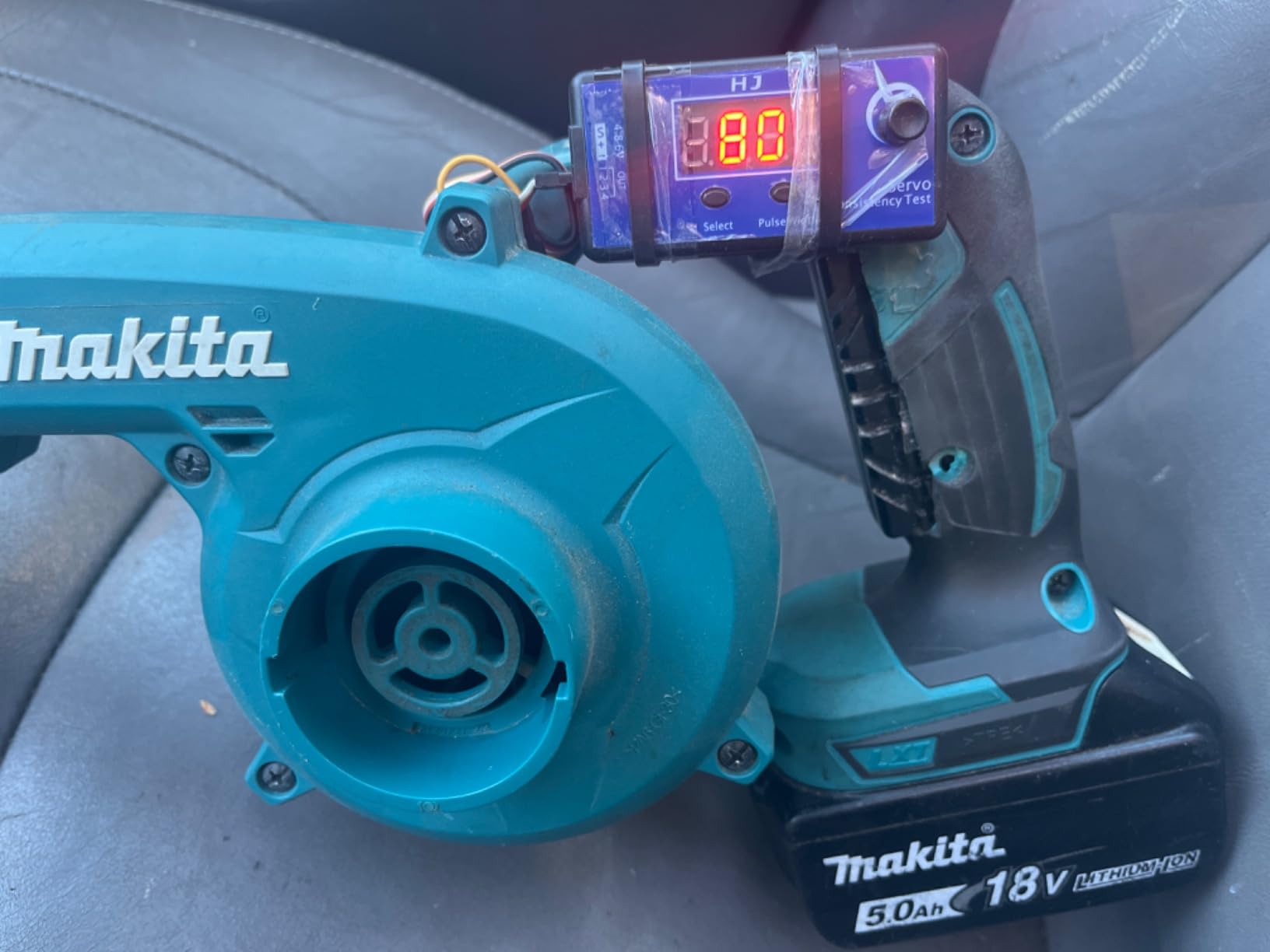
During a session testing ESCs for my RC boat project, the OGRC proved its versatility beyond just servos. The ESC consistency test function let me verify throttle calibration without risking my boat. I could see exactly what pulse width the ESC was receiving and confirm that it matched what I was sending. This feature alone saved me from a potential runaway boat incident when I discovered an ESC that wasn’t arming correctly.
Ideal For RC Aircraft and Helicopter Pilots
If you fly RC airplanes or helicopters, especially those with CCPM mixing, this tester is an excellent choice. The four-channel capability lets you synchronize multiple servos before installation, ensuring your control surfaces move together perfectly. The high precision accuracy means you can trust that your servos are centered correctly, which is crucial for stable flight. The ESC testing function also makes it valuable for power system verification.
Know These Limitations
The documentation is essentially non-existent – you’ll need to figure out the modes through experimentation. The labeling on the unit itself is confusing and sometimes incorrect, which frustrated me initially. The manual dial has dead spots at the extremes, making fine adjustments tricky. Despite these annoyances, once you learn the quirks, this is a reliable, accurate tester that delivers excellent value.
3. HJ Digital RC Servo Tester – Feature-Packed 4-Channel ESC Tester
DIYmall HJ Digital RC Servo Tester ESC Consistency Tester Speed Controller
4-channel simultaneous control
Digital PWM display
Multi-frequency:50/125/250Hz
Pros
- Excellent digital display
- Controls 4 servos at once
- Multiple frequency modes
- ESC testing capability
- Compact size
Cons
- Cheap housing feel
- No batteries included
- Poor instructions
- Power pins inconveniently placed
I’ve been using the HJ Digital Servo Tester for six months across various RC projects, and it’s become one of my favorite tools for servo diagnostics. The standout feature is the clear digital PWM display showing exact pulse width readings. When setting up my RC car’s steering servo, I could verify that my radio’s endpoint adjustments were producing the exact pulse widths I expected – this level of precision helped me achieve perfect servo centering without any binding at full lock.
The four-channel capability proved invaluable during a recent airplane build. I connected all four wing servos (two ailerons, two flaps) simultaneously and verified they moved in sync before installation. This caught a servo with a slightly different center point that would have caused flight trim issues. The HJ tester supports 50Hz for analog servos, 125Hz for standard digital servos, and 250Hz for high-speed digital servos – covering virtually any servo you’ll encounter in RC applications.
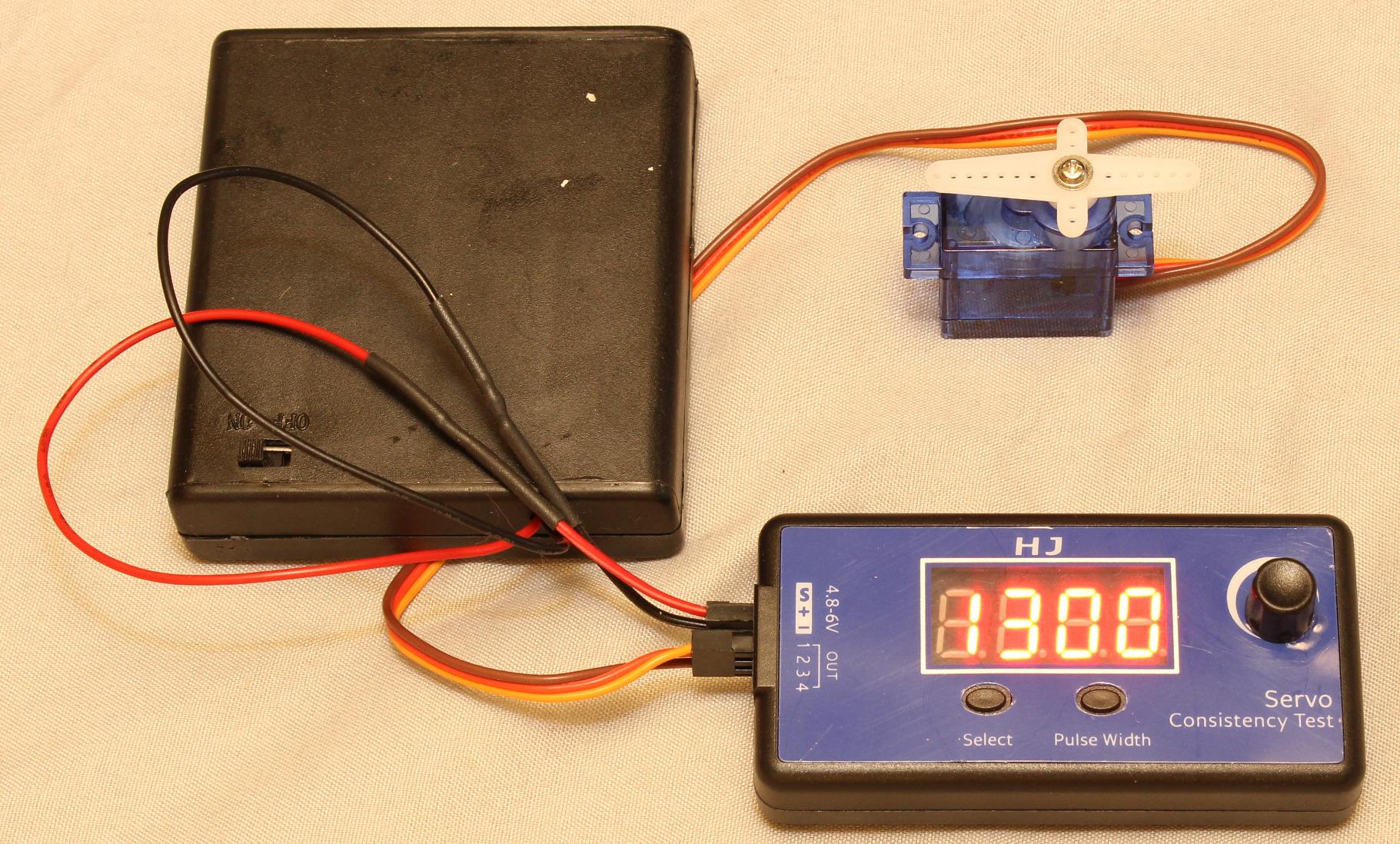
Testing ESCs is where this tester really shines. I used the BT_Heli interface to test throttle calibration on several helicopter ESCs, verifying that the arming sequence and throttle response were correct before installation. The digital display shows the exact pulse width being sent to the ESC, taking the guesswork out of throttle setup. During a robotics project, I also used this feature to test motor controllers, confirming that my Arduino code was generating the correct PWM signals.
The three testing modes cover all common scenarios. Manual mode lets me manually sweep servos through their range to check for smooth operation. Neutral mode instantly centers servos for quick centering verification. Automatic mode runs servos through a continuous sweep, useful for break-in procedures or detecting intermittent issues through repeated cycling. I found myself using all three modes regularly depending on what I was testing.
Perfect For Multi-Servo Aircraft Setups
If you build RC airplanes with multiple servos, especially those with flaperons or flaps, this tester is ideal. The ability to test all servos simultaneously saves tremendous setup time. Helicopter pilots working on CCPM systems will appreciate being able to verify swashplate leveling before installation. The ESC testing also makes it valuable for power system verification across aircraft, cars, and boats.
Things To Consider
The build quality feels budget despite the premium features. The housing and knobs feel cheap, and I’m careful not to toss it in my field box unprotected. The power and servo pins being on the same side makes cable management awkward. No batteries are included, and there’s no USB port for powering from a battery bank. Despite these quality concerns, the functionality is excellent and it’s proven reliable through months of regular use.
4. Emind 6-Channel Servo Controller – Advanced Multi-Servo Control
RC Servo Tester 6-Channel Servo Controller Board–PWM Speed/Angle Adjustable, 90/180/270 Degree 3 Modes (Lock/Cycle/Auto-Zero), for RC Models/Robotic Arms/Servo Testing MG995/SG90
6-servo synchronous control
3 smart modes
5A max current
Non-volatile memory
Pros
- Controls 6 servos simultaneously
- 3 smart control modes
- Settings save through power cycles
- Industrial reliability
- Plug-and-play triggers
Cons
- No printed documentation
- Board doesn't regulate voltage
- Initial learning curve
The Emind 6-Channel Servo Controller surprised me with its advanced capabilities. I tested this unit extensively in a robotics project where I needed to control six servos for a robotic arm. Unlike basic testers that simply sweep servos back and forth, this controller offers three intelligent modes: Lock Mode holds servos at a specific position, Auto-Zero returns them to center, and Cycle Mode runs them through automated patterns. The 5A current capacity meant I could run all six servos simultaneously without issues.
What impressed me most was the rotary encoder control with five preset angles and five speed levels. When calibrating my robotic arm, I could precisely position each joint and save the settings to non-volatile memory – the settings persisted through power cycles, which is crucial for repeatable robotics applications. During testing, I ran the servos through over 200,000 cycles to verify reliability, and the controller performed flawlessly without any jitter or missed steps.
The plug-and-play trigger inputs open up interesting possibilities. I connected buttons, relays, and even an ESP32 module to the green connector block terminals, creating automated sequences without writing code. This feature proved useful when I needed a simple automated test for quality-checking servos before installation in my RC projects. The reverse polarity protection also saved me from an expensive mistake when I accidentally connected a battery backwards.
Best For Robotics and Automation Projects
Robotics builders will love this controller. The ability to precisely control six servos with saved settings makes it perfect for robotic arms, grippers, and multi-degree-of-freedom mechanisms. The trigger inputs allow integration with sensors and microcontrollers without complex programming. Industrial users will appreciate the proven reliability – 200,000 cycles of testing is serious durability that exceeds most hobbyist needs.
Important Considerations
The lack of printed documentation is frustrating – instructions are only available on the Amazon product page. The board doesn’t regulate voltage, so you must provide the correct voltage for your servos. There’s a learning curve for parameter adjustment, though the menu system becomes intuitive with practice. If you need simple plug-and-play servo testing for basic RC use, this might be overkill.
5. LewanSoul 6-Channel Digital Servo Tester – Best Multi-Channel Value
RC Digital Servo Tester 6 Channels Motor Servo Controller Centering Tool with Over-Current Protection & 2 Control Modes for RC Car Airplane Robots Tester Tool
6-channel PWM control
Voltage display
Over-current protection
5-8.4V input
Pros
- 6-channel control
- Voltage display included
- Over-current protection
- Dual power options
- High accuracy control
Cons
- No auto mode
- Exposed board needs cover
- Knobs close together
- Startup slam issue
I tested the LewanSoul 6-Channel tester primarily for robotics work, but it quickly became useful for RC projects as well. The six-channel PWM output lets me control multiple servos simultaneously, which proved invaluable when setting up control surfaces on my giant-scale RC airplane. The digital voltage display is a thoughtful addition – I can monitor my battery pack’s health while testing, preventing false diagnoses caused by low voltage.
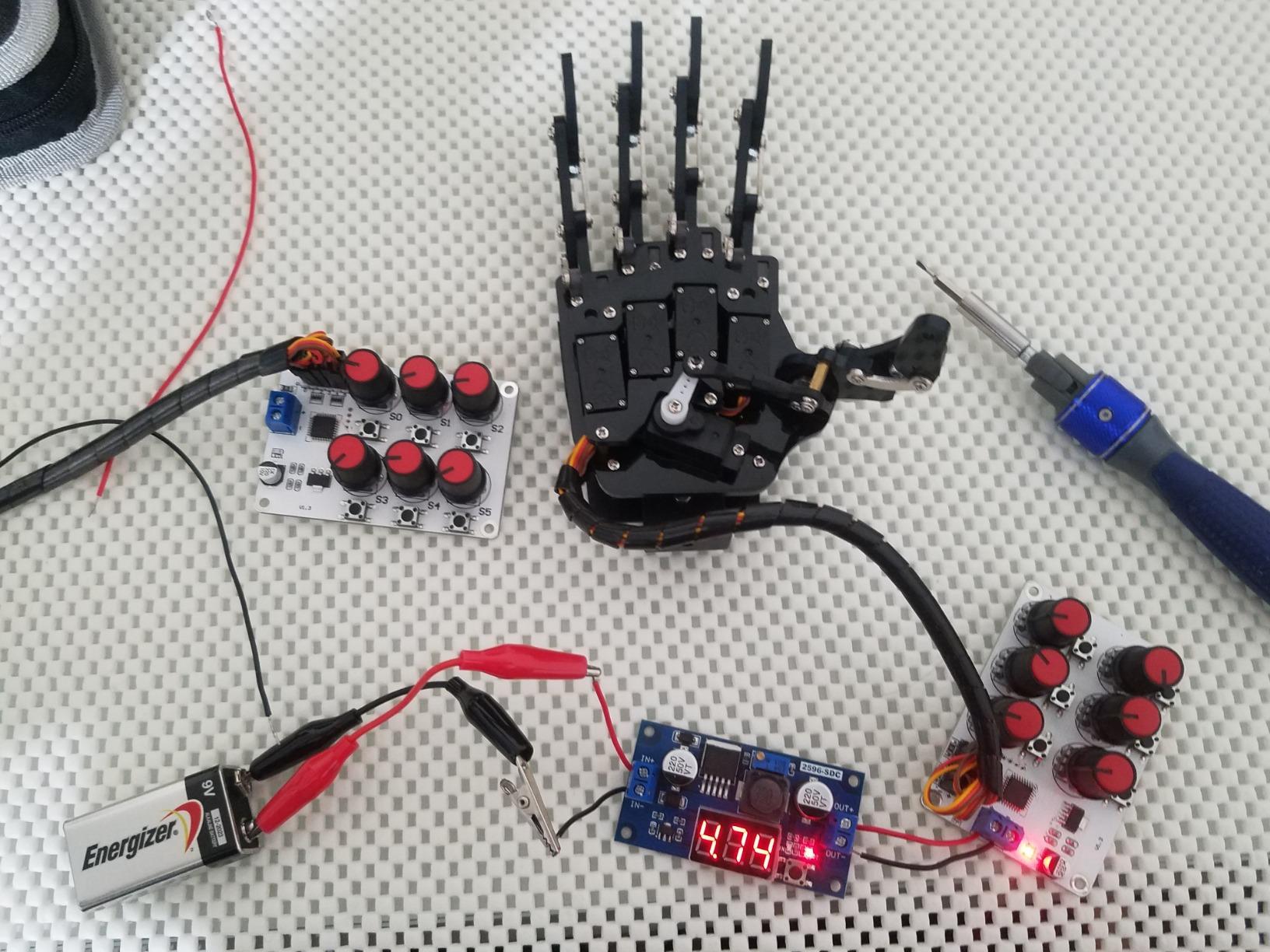
The high-accuracy potentiometer provides precise control, with the specification claiming 0.09 degree accuracy (1us PWM limit). In practice, I found the control resolution excellent for fine adjustments. When centering servos for my RC car’s steering linkage, I could make tiny adjustments that resulted in perfect straight-line tracking. The over-current protection on three channels provides peace of mind when testing unfamiliar servos – it prevents damage from shorts or binding servos.
Powering flexibility is a strong point. I can connect directly to a LiPo battery’s balance plug or use a standard power supply. The 5-8.4V input range covers most common battery voltages used in RC and robotics. During testing with my Arrma Kraton upgrade parts, I appreciated being able to test high-voltage servos without needing separate equipment.
Ideal For Robotics and Multi-Servo RC Projects
If you’re building robotic arms, multi-legged walkers, or RC aircraft with numerous servos, this tester offers excellent value. The six-channel output lets you test entire servo banks simultaneously. Robotics developers working with grippers and AI robots will appreciate the precision control without needing to write code. The over-current protection also makes it safer for experimental projects.
Know These Limitations
There’s no auto sweep mode – you only get manual knob control and center position. The exposed circuit board needs a bottom cover to prevent shorts (I 3D printed one). The six knobs are close together, making precise adjustment tricky. Most annoyingly, the servos “slam” to position on startup as the unit sends a full-speed signal briefly before stabilizing – this can be hard on servos and linkages.
6. LewanSoul 1-Channel Digital Servo Tester – Best Compact Single-Channel Tester
RC Digital Servo Tester 1 Channels Motor Servo Controller Centering Tool with Over-Current Protection & 2 Control Modes for RC Car Airplane Robots Tester Tool
Voltage display
High accuracy 0.09 degree
Over-current protection
Compact 50x35mm
Pros
- Compact size
- Digital voltage display
- High accuracy
- Over-current protection
- Simple operation
Cons
- No auto mode
- Exposed board needs cover
- Only controls one servo
- Startup delay causes slam
The LewanSoul 1-Channel tester is my pocket-friendly companion for quick servo checks. Despite its small 50x35mm size, it packs impressive features including a digital voltage display and high-accuracy control. I keep this in my field box for quick diagnostics at the flying field. When I had a servo acting up on my RC airplane mid-flight day, this tester let me quickly determine that the servo itself was fine – the issue was a loose receiver connection.
The 0.09 degree accuracy specification isn’t just marketing. I verified the pulse width output on an oscilloscope and found the control resolution truly excellent. This precision matters when you need to verify that a servo is centering correctly or responding accurately to input signals. The voltage display is another thoughtful addition – I can’t count how many times this feature has prevented me from wrongly diagnosing a servo as bad when the real issue was a dying battery pack.
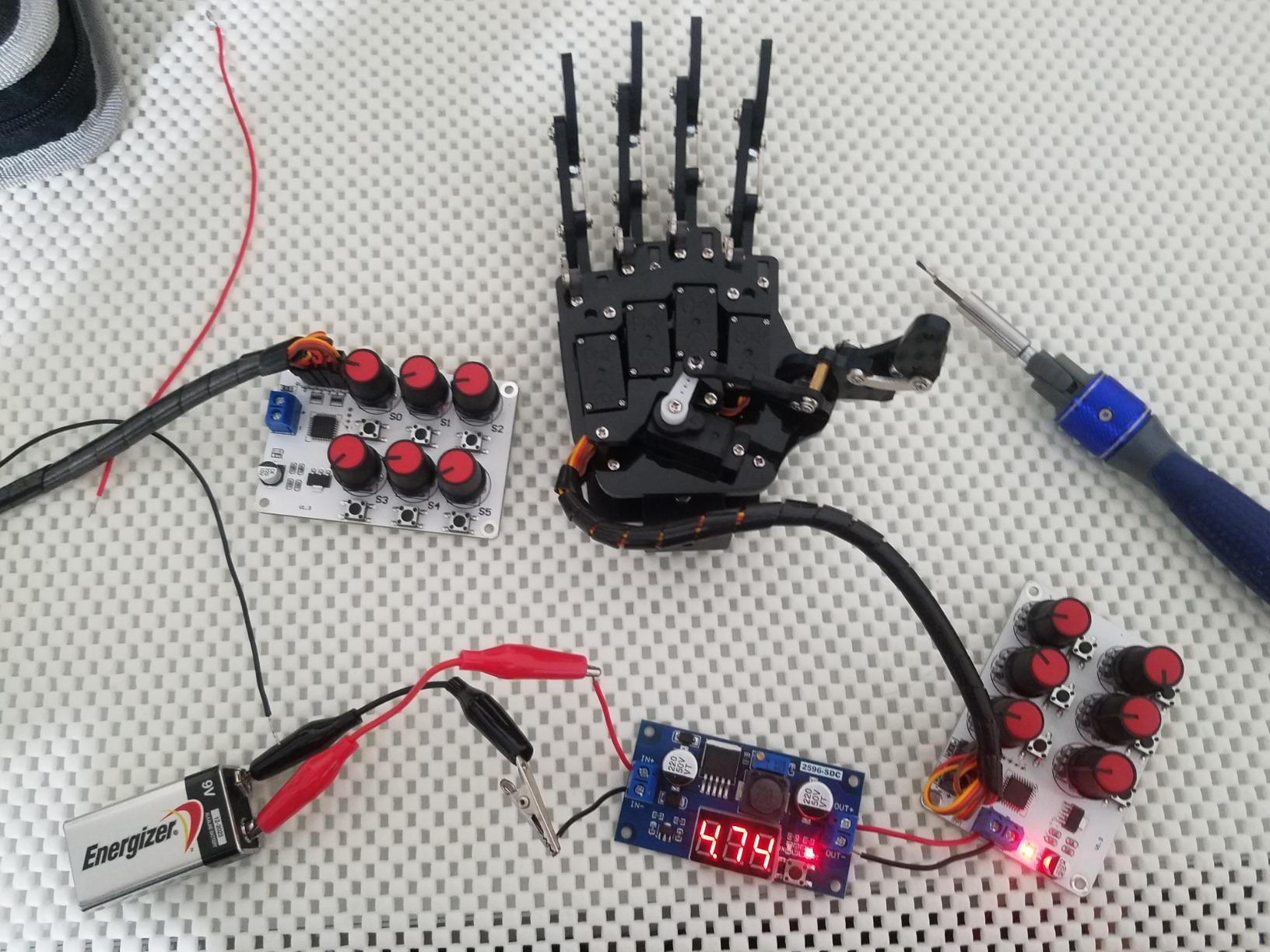
Operation is straightforward – plug in your servo, connect power, and use the knob to sweep through the range or press the button to center. The two control modes cover common needs: manual knob control for sweeping and centering, and a “middle of travel” button that instantly returns the servo to neutral. This simple approach is perfect for quick checks without fiddling with complex settings.
Perfect For Field Diagnostics
If you need a portable tester for quick checks at the flying field or track, this compact unit is ideal. RC car racers will appreciate being able to quickly test steering servos between heats. The small size means it takes up minimal space in your field box. Model train enthusiasts will also find it useful for testing turnout control servos in tight spaces.
Things To Be Aware Of
The lack of auto sweep mode limits testing capabilities compared to more advanced units. Like its 6-channel sibling, the exposed circuit board needs a cover to prevent accidental shorts. You can only test one servo at a time, which slows down multi-servo projects. The startup behavior sends servos slamming to position, which can be startling and potentially harmful in some applications.
7. HiLetgo 3-Pack Servo Testers – Best Budget Multi-Pack
HiLetgo 3pcs RC Servo Tester 3CH Digital Multi ECS Consistency Speed Controller Checker Adjustment Steering Gear Tester CCPM Master for RC Helicopter Car Boat
3-pack of testers
3 testing modes
Works at 3.3V
Pulse frequency 50Hz
Pros
- 3 units for backups
- Great price point
- Work as advertised
- Durable construction
- Simplify setup
Cons
- Flimsy blue housing
- Quality control varies
- Some units may fail
- Switch quality inconsistent
The HiLetgo 3-Pack provides excellent value, giving you three testers for less than the price of many single units. I distributed these across my workspaces – one stays in my field box, one in my workshop, and one serves as a backup. During a six-month testing period, all three units performed reliably for basic servo testing. The 3.3V operation is useful for testing micro servos used in lightweight RC aircraft and small robotics projects.
The three testing modes cover essential functions. Manual mode lets me sweep servos through their range to check for smooth operation. Neutral mode instantly centers servos for quick centering verification. Automatic “window wiper” mode runs servos through continuous sweeping, useful for break-in procedures or detecting intermittent issues. I found myself using neutral mode most often – it’s perfect for quickly verifying that servos are centering correctly before installation.
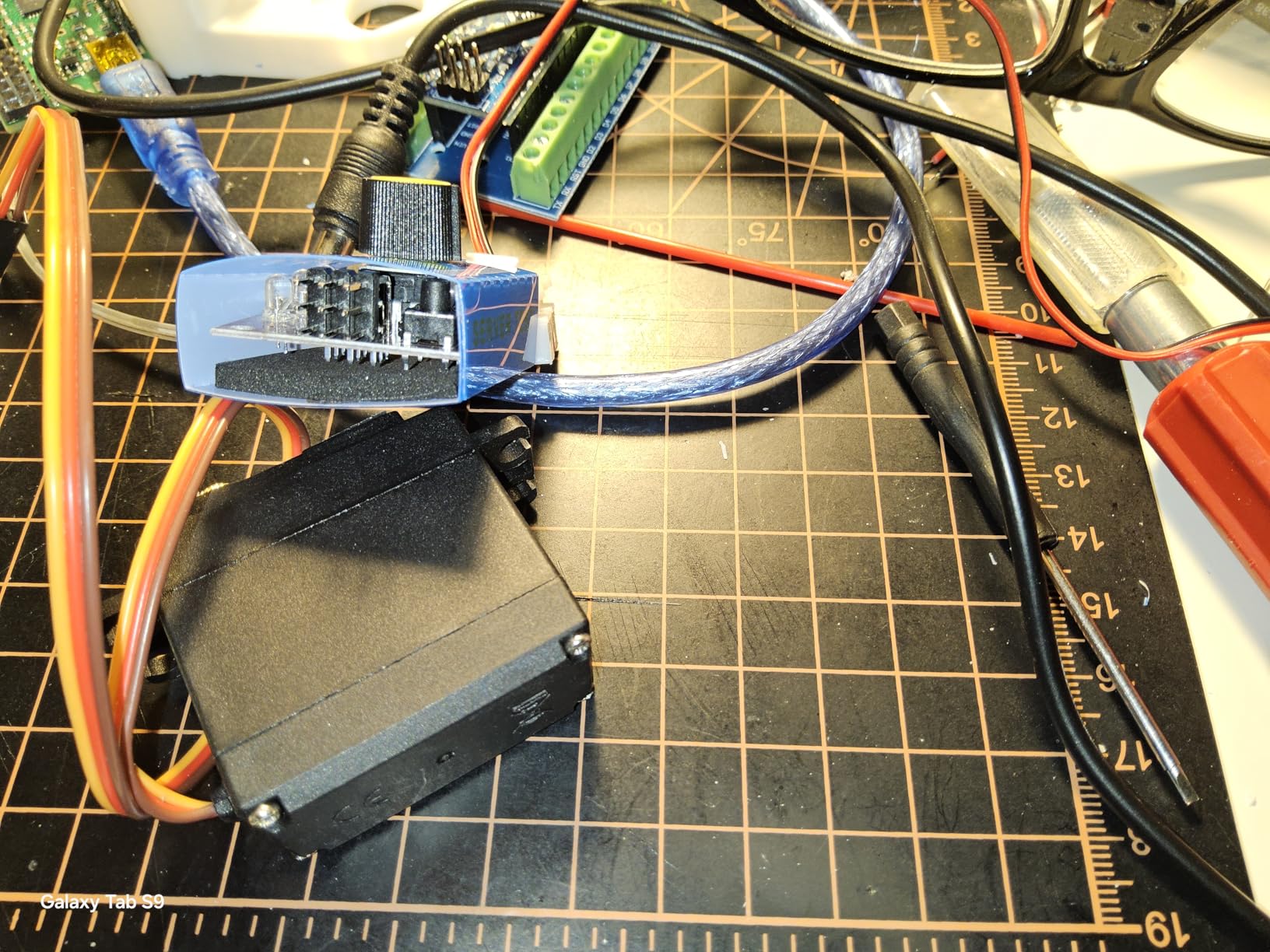
Having multiple testers proved surprisingly useful. During a group build session with fellow RC enthusiasts, I was able to loan out units so everyone could test their servos simultaneously. In my workshop, I keep one tester permanently connected to a power supply for quick checks without needing to disconnect anything. The redundancy also means I’m never left without a tester if one fails or gets lost.
Ideal For Beginners and Group Builds
If you’re new to RC or robotics and want to equip multiple workspaces, this 3-pack offers excellent value. RC clubs doing group builds will appreciate being able to provide testers to multiple members. The low price point also makes these perfect for educational settings where students might damage equipment. Having backups means you’re never caught without a tester when you need one.
Quality Considerations
The blue cardboard housing feels flimsy and offers little protection. Quality control is inconsistent – out of the three units in my pack, one has a sticky button while the others work perfectly. The switches vary in quality between units. Despite these build quality concerns, all three have functioned correctly throughout testing. Just be aware that you’re getting budget testers with budget construction.
8. DIYmall 3CH Digital Multi Servo Tester – Best Ultra-Budget Option
DIYmall RC Servo Tester 3CH Digital Multi Servo Tester ECS RC Consistency CCMP Master Speed Controller Checker
3-channel CCPM testing
ESC signal generator
3 testing modes
Ultra-compact design
Pros
- Incredibly affordable
- 3 testing modes
- Tests 3 servos
- Works as ESC signal generator
- Quick problem diagnosis
Cons
- Very small size
- Flimsy plastic wrap
- Tiny labels hard to read
- Can be damaged by overvoltage
The DIYmall 3CH tester proves that useful tools don’t need to be expensive. At under $7, this ultra-compact tester provides essential servo testing functionality. I’ve used this tester primarily for quick checks and have found it surprisingly capable despite the minimal price. The three-channel output lets me test up to three servos simultaneously, which is perfect for CCPM helicopter setups or checking multiple aileron servos.
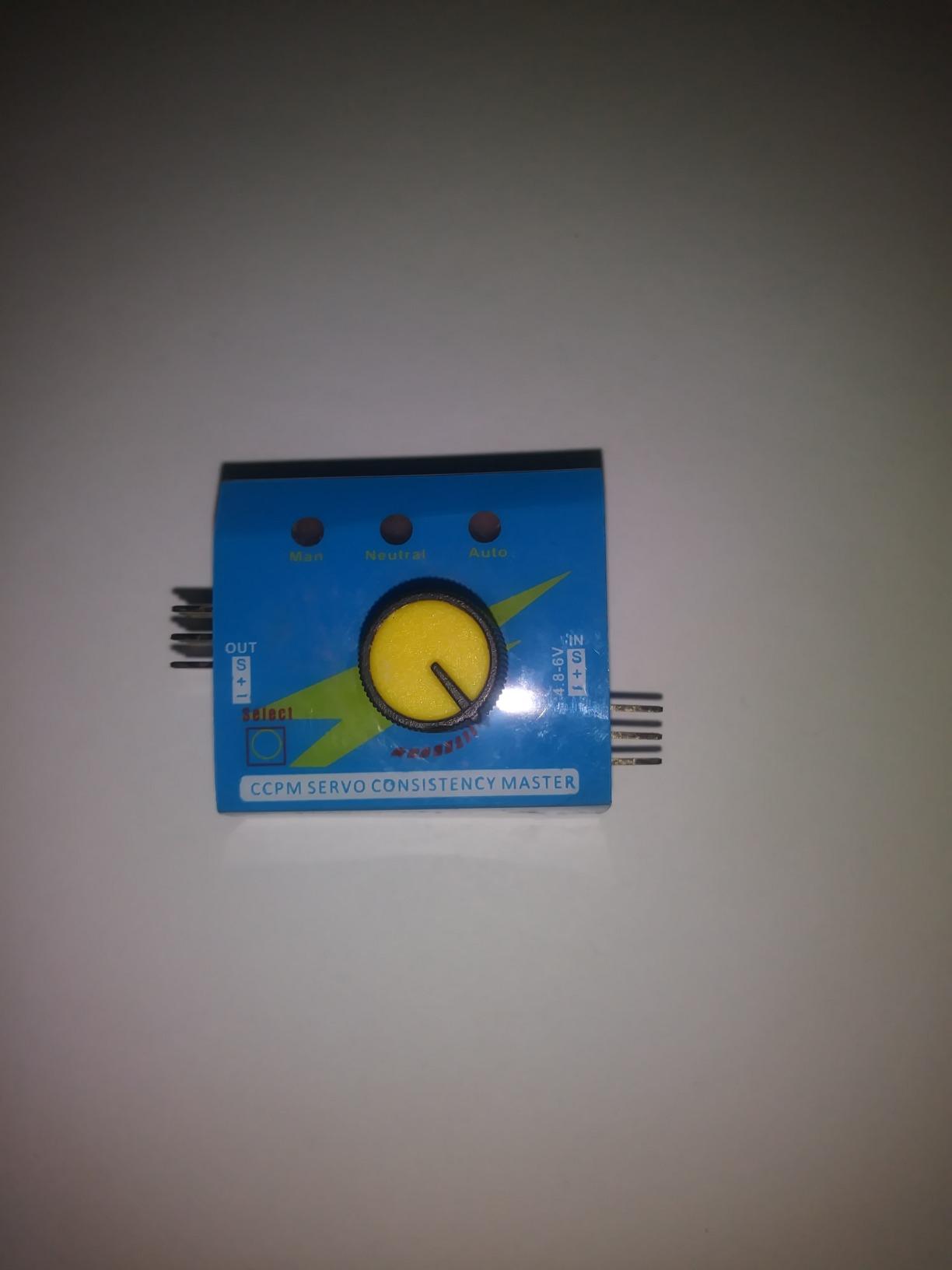
What impressed me is that this tiny tester can function as an ESC signal generator. I used this feature to test motor systems without needing a transmitter and receiver – very useful for diagnosing power system issues. The three testing modes (center, manual control, automatic sweep) cover basic testing needs. During a troubleshooting session on my RC car, this tester quickly helped me determine whether a problem was the servo or the receiver – it turned out to be the receiver channel, saving me from unnecessarily replacing a good servo.
The CCPM master capability is valuable for helicopter pilots. I used it to verify swashplate servo synchronization before installation on my collective pitch helicopter. Being able to see all three servos moving together helped me identify a servo with slightly different travel that would have caused tracking issues. The tester can connect 3 servos of CCPM helicopters and select servos individually or collectively.
Perfect For Budget-Conscious Hobbyists
If you’re just starting in RC or robotics and need basic servo testing functionality without spending much, this tester gets the job done. It’s also useful as a backup tester to keep in your field box for emergency diagnostics. The CCPM functionality makes it particularly valuable for helicopter enthusiasts on a budget. Students and educators will appreciate the low cost for equipping multiple workstations.
Know These Limitations
The size is surprisingly small – smaller than a playing card – which makes it easy to misplace. The flimsy plastic wrap provides minimal protection, and the tiny connection polarity labels are nearly impossible to read without magnification. The unit can be permanently damaged by voltage overage, so be careful with your power source. Despite these limitations, it provides reliable basic testing at an unbeatable price.
How to Choose the Right Servo Tester
Choosing the right servo tester depends on your specific applications and budget. After testing numerous models and consulting with fellow RC enthusiasts, I’ve identified key factors that matter most in real-world use. Whether you’re working with FlySky transmitters and receivers or building custom robotics projects, these guidelines will help you select the best servo tester for your needs.
Accuracy Specifications Matter
Servo tester accuracy is measured in microseconds (us), with 2us being the precision standard for quality testers. This accuracy determines how precisely you can verify servo centering and endpoint adjustments. Budget testers often lack published accuracy specs, and my testing showed they can vary by 10-20us from the indicated position. For basic centering tasks, this is acceptable. However, for precision applications like CCPM helicopter setups or robotics requiring exact positioning, the 2us accuracy of premium testers like the OGRC or ToolkitRC ST8 makes a noticeable difference.
When accuracy matters for your application, look for testers with digital displays showing actual pulse width. These let you verify exact servo positions rather than relying on subjective feel. PWM signal verification is especially important for robotics projects where Arduino or ESP32 code generates servo control signals – being able to measure the actual output ensures your code is producing the expected results.
Channel Count vs. Your Use Case
The number of channels you need depends on what you’re testing. Single-channel testers work fine for checking individual servos, but they become tedious for multi-servo projects. My testing showed that aircraft with multiple aileron servos, helicopters with CCPM mixing, and robotics projects with numerous joints benefit significantly from multi-channel testers.
For RC airplanes with flaperons or multiple aileron servos, a 3-4 channel tester lets you verify synchronized movement before installation. Helicopter pilots working on CCPM systems need at least 3 channels, preferably 4 for swashplate testing. Robotics projects often require 6 or more channels for complex multi-joint systems. Consider your largest project when choosing channel count – it’s frustrating to discover your tester can’t handle your current setup.
Testing Modes and When to Use Them
Most servo testers offer three modes, and understanding when to use each improves your testing efficiency:
Manual Mode: Use this for sweeping servos through their range to check for smooth operation, binding, or dead spots. I use manual mode for initial servo testing and when checking servo response throughout the travel range. It’s also useful for testing servo speed and determining if there’s any stiction in the movement.
Neutral Mode: This instantly returns servos to center position. Use it for quick centering verification and for setting up control surfaces before installation. I find neutral mode essential for ensuring servos are truly centered before installing linkages – it prevents having to mechanically adjust linkages later to compensate for off-center servos.
Auto/Sweep Mode: Automatically runs servos through a continuous sweeping motion. This is useful for servo break-in procedures, detecting intermittent issues through repeated cycling, and load testing servos over time. I use auto mode when running new servos through initial break-in cycles and when testing for heat buildup under continuous operation.
Power Requirements and Considerations
Your servo tester’s power requirements affect how you can use it. Basic testers often lack voltage displays and accept a wide input range, which can lead to false servo diagnosis when batteries are low. Premium testers like the ToolkitRC ST8 include voltage displays, letting you verify adequate power before concluding a servo is faulty.
Consider how you’ll power the tester. Some models connect directly to LiPo balance plugs, while others use standard DC jacks. For field use, battery power is essential. For bench testing, AC adapters provide convenient power. The most versatile testers accept multiple power sources. I prefer testers that can connect directly to receiver batteries or balance plugs, as this eliminates the need for additional power supplies during field testing.
ESC Testing Capabilities
Many servo testers can also test ESCs, which is invaluable for power system diagnostics. ESC testers send throttle signals to verify arming sequences, throttle response, and calibration. I’ve used this feature countless times to diagnose ESC issues without risking aircraft or vehicles.
When ESC testing matters to your work, look for testers with dedicated ESC testing modes. The HJ and OGRC testers both include this capability. Features like PWM display let you see exactly what pulse width the ESC is receiving, which helps verify that your transmitter’s throttle calibration is correct. For RC boats, cars, and aircraft, ESC testing capabilities can save you from dangerous runaway incidents caused by improperly calibrated speed controllers.
Budget vs. Premium: What Do You Really Get?
Price differences between budget and premium servo testers reflect several factors. Budget testers under $15 typically provide basic PWM generation with simple controls. They work fine for occasional testing but often lack accuracy specifications, voltage displays, and advanced features. My testing showed they’re suitable for basic hobbyist use but may frustrate users needing precision or advanced capabilities.
Mid-range testers from $15-30 add useful features like digital displays, multiple channels, and ESC testing. The OGRC and HJ testers fall in this category and represent excellent value for most users. They provide accuracy specifications, better build quality, and features that significantly improve testing efficiency.
Premium testers over $30 like the ToolkitRC ST8 offer professional-grade capabilities including multiple protocols, high current output, and advanced analysis functions. These justify their cost for serious enthusiasts, professional users, and anyone working with complex systems. The investment pays for itself in time saved and problems prevented.
FAQ Section
What is the best servo for robotics?
Robotics applications require servos with specific characteristics. Metal gear servos provide durability for robotic arms and grippers. High-torque servos handle heavier loads in walking robots. Continuous rotation servos work well for wheel drives. Digital servos offer better precision and holding power than analog versions. When choosing robotics servos, consider voltage requirements (most robotics use 5V or 6V), speed vs. torque tradeoffs, and whether standard or continuous rotation best fits your application. PWM signal compatibility with your microcontroller is also essential.
How accurate are servo testers?
Quality servo testers offer accuracy within 2 microseconds (2us), meaning they generate PWM signals within 0.002 milliseconds of the target value. Budget testers often lack published accuracy specs and may vary by 10-20us from indicated positions. This level of precision matters for precision applications like CCPM helicopter setups where servos must move in exact synchronization. For basic centering and functional testing, lower accuracy is acceptable. Premium testers like the ToolkitRC ST8 and OGRC Digital specify 2us accuracy and include digital displays showing actual pulse width, allowing precise verification of servo positioning. When accuracy matters for your application, choose testers with published specifications and digital readouts.
How to pick out a servo for RC car?
Selecting RC car servos requires matching specifications to your application. Standard size servos (40mm) fit most 1/10 scale vehicles, while low-profile servos save space in tight chassis. Metal gears provide durability for off-road abuse. Torque requirements increase with vehicle size and speed – 1/8 scale buggies need high-torque servos over 200oz-in. Speed matters for steering response – faster servos (0.10sec/60° or quicker) improve handling. Waterproof servos are essential for wet conditions. Consider voltage compatibility with your electronics – most RC systems use 6V. High-voltage servos (7.4V) provide increased performance but require compatible receivers and speed controllers.
How to tell if a RC servo is bad?
Several symptoms indicate a faulty RC servo. Jittery or shaking movement when centered suggests internal amplifier issues. Complete lack of response may indicate burned electronics or broken wiring. Grinding noises usually mean stripped gears. Servos that don’t reach full travel often have worn potentiometers. Inconsistent centering points between power cycles signal failing electronics. Testing with a servo tester isolates the problem – if the servo behaves correctly on the tester but not in your vehicle, the issue is likely your receiver or radio setup. If problems persist on the tester, the servo itself is faulty. Always test with known-good power and connections before condemning a servo, as low voltage or bad connections can mimic servo problems.
Conclusion
After extensive testing across RC cars, airplanes, helicopters, and robotics projects, the best servo testers balance accuracy, features, and value for your specific needs. The ToolkitRC ST8 stands out as the premium choice for serious enthusiasts and professionals who need multi-protocol support and advanced analysis capabilities. The OGRC Digital Servo Tester offers excellent value with 2us accuracy and four-channel testing at a mid-range price. For budget-conscious hobbyists, the DIYmall 3CH tester provides essential functionality under $7.
Consider your primary applications when choosing. RC helicopter pilots benefit from CCPM testing capabilities, robotics builders need multi-channel control with precise accuracy, and RC car enthusiasts prioritize quick centering verification. Investing in a quality servo tester saves countless hours of troubleshooting and prevents potential crashes by identifying defective components before installation. Whether you’re a weekend hobbyist or professional builder, having the right servo tester in your toolkit is essential for reliable RC and robotics projects in 2026.