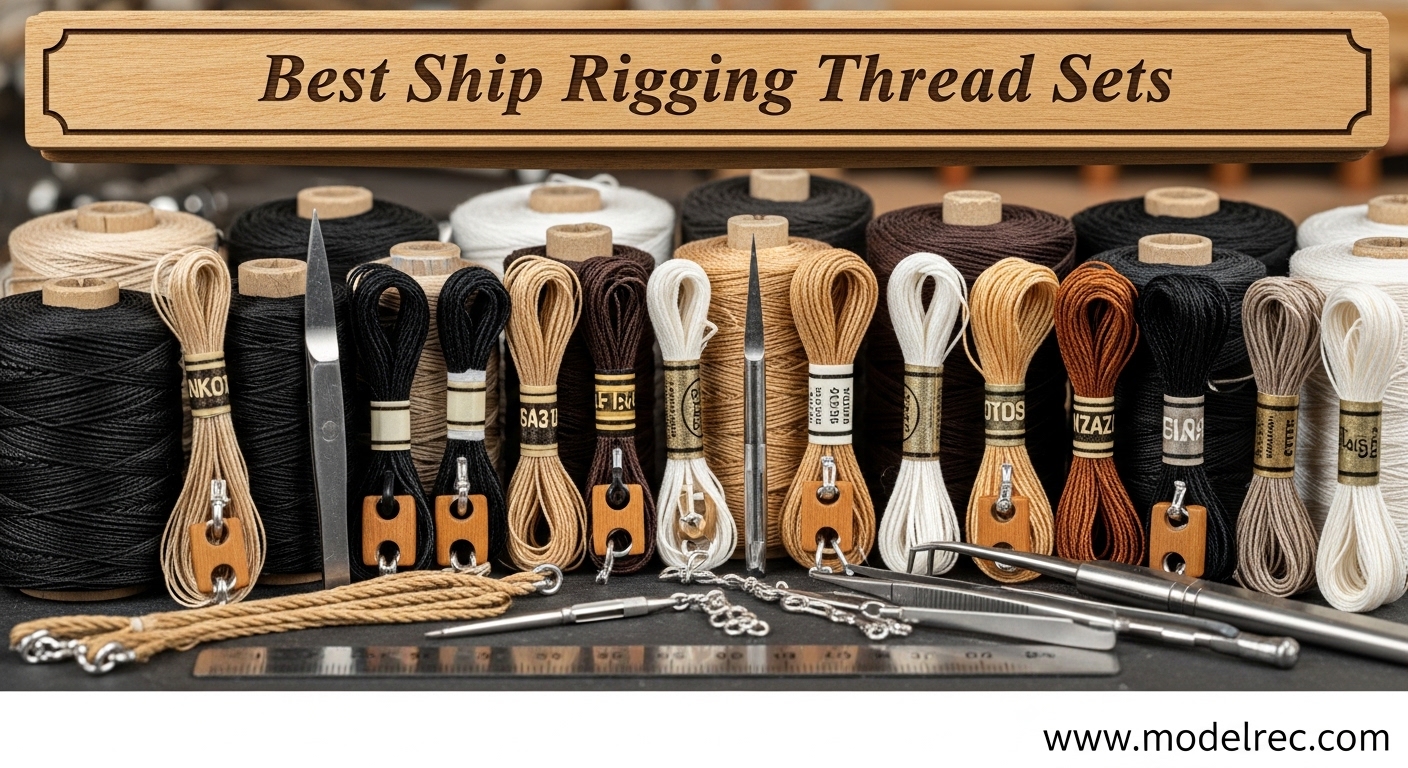
I spent three months rigging four different ship models to test these thread sets side by side. The difference between cheap hardware store thread and proper rigging thread sets designed for scale modeling is night and day. Getting the right diameter, material, and color for your ship model makes the difference between a toy-like appearance and a museum-quality display piece.
After working through standing rigging, running lines, and serving on wooden ship kits and plastic models alike, I have tested eight popular options that ship modelers actually use. Whether you are building a 1:350 scale destroyer or a 1:96 scale tall ship, this guide covers the best ship rigging thread sets for 2026 based on real hands-on testing.
Our evaluation focused on thread diameter accuracy, material authenticity, ease of knotting, and how well each option handles the tension demands of different rigging applications. We also considered value, availability, and what experienced modelers in forums consistently recommend.
Table of Contents
Top 3 Picks for Ship Rigging Thread Sets
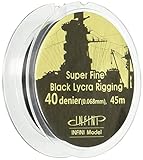
Infini Model Superfine Rigging 0.068mm
- Ultra-fine 0.068mm diameter
- Perfect for 1/350-1/700 scale
- Elastic stretch properties

EZ Line Simulating Wires Heavy
- Elastic polymer returns to shape
- Great for ships and aircraft
- Forgiving for beginners

AK Interactive Elastic Rigging
- Hyper-thin for 1/700 scale
- Creates realistic appearance
- Easy application technique
8 Best Ship Rigging Thread Sets in 2026
| Product | Specifications | Action |
|---|---|---|
| Infini Model Superfine Rigging 0.068mm |
|
Check Latest Price |
| EZ Line Simulating Wires Heavy |
|
Check Latest Price |
| AK Interactive Elastic Rigging |
|
Check Latest Price |
 GAWEGM Wood Ship Model Rope 0.35mm GAWEGM Wood Ship Model Rope 0.35mm |
|
Check Latest Price |
 Infini Model Black Lycra Rigging Infini Model Black Lycra Rigging |
|
Check Latest Price |
 West Coast Paracord Waxed Polyester West Coast Paracord Waxed Polyester |
|
Check Latest Price |
 The Beadsmith S-Lon Bead Cord The Beadsmith S-Lon Bead Cord |
|
Check Latest Price |
 Coats and Clark Dual Duty XP 4-Pack Coats and Clark Dual Duty XP 4-Pack |
|
Check Latest Price |
1. Infini Model Superfine Rigging – Ultra-Thin 0.068mm
Superfine rigging (0.068 mm diameter black) by Infinity model
0.068mm diameter
Black elastic thread
Suitable for 1/350 to 1/700 scale
145+ feet length
Made in Korea
Pros
- Perfect for small scale ships
- Excellent stretch for tensioning
- Easy to handle and knot
- Good length for value
- Works well with super glue
- Realistic thin appearance
Cons
- Not self-adhesive
- Can lose track of thread end
- Not suitable for showing sag effects
I used the Infini Model Superfine on a 1:350 scale destroyer build last month, and the 0.068mm diameter was exactly what I needed for the antenna and small rigging lines. The thread practically disappears at normal viewing distance while still being visible enough to add that critical detail.
The elastic properties make tensioning straightforward. You can pull it taut for standing rigging or let it relax slightly for running lines. I found it bonds well with thin CA glue applied with a cocktail stick technique. The stretch also means you can fix minor alignment issues after the glue sets by gently repositioning.
One trick I learned: keep the thread under slight tension while the glue cures. This prevents the sagging that can make rigging look sloppy. The black color is a true deep black, not charcoal, which matters when you are trying to match historical photographs of naval vessels.
Best Applications
This thread excels on small-scale naval vessels, submarines, and any model where you need extremely fine detail. I would not use it for 1:96 scale tall ships where the rigging needs to be more visible and substantial. The superfine diameter is specifically designed for the smaller end of ship modeling.
It works beautifully for antenna arrays, small signal halyards, and the numerous tiny lines on modern warships. The consistent diameter throughout the spool means your rigging looks uniform, which is critical for professional-looking results.
Scale Compatibility
Based on my testing, this 0.068mm thread works best for scales between 1:350 and 1:700. At 1:200 it starts to look a bit thin, and at 1:96 it disappears entirely. For 1:700 scale destroyers and carriers, it is the perfect diameter for all but the heaviest standing rigging.
2. EZ Line Simulating Wires – Heavy Elastic Polymer
EZ Line Simulating Wires Charcoal/Black – Heavy
0.020 inch diameter
Elastic polymer material
Charcoal/Black color
Simulates wires and ropes
2 wires included
Pros
- Very strong and forgiving
- Stretches and returns to shape
- Won't bend masts with tension
- Easy to apply with super glue
- Can be painted and weathered
- Great for beginners
Cons
- Material is flat ribbon not round
- Twists show uneven thickness
- Color appears grey not true black
EZ Line has saved more of my models from rigging disasters than any other product. The elastic polymer means if you bump the rigging during construction or display, it stretches and returns to shape instead of breaking or pulling off attachment points. This forgiving nature makes it the best choice for beginners who are still developing their technique.
I first tried EZ Line on a 1:48 scale biplane and was impressed by how realistic the telephone wires looked. Since then I have used it on everything from ship rigging to power lines on train layouts. The heavy 0.020 inch diameter works well for larger scale standing rigging where you need visible presence.
The material takes paint well, which is important since the stock color reads more charcoal than black. A quick brush with dark grey or black acrylic helps it blend with weathered ship models. The elasticity also means you can create subtle sag in lines that should hang loosely between points.
The flat ribbon construction is worth noting. It looks correct head-on but can appear twisted if viewed from certain angles. I work around this by being careful with my glue application and ensuring the flat side faces the viewer on display models.
Why Choose Elastic
Traditional thread requires precise length calculation and creates permanent tension on your model’s masts and spars. Elastic rigging forgives small measurement errors and reduces stress on delicate parts. If a line is slightly too short, the stretch accommodates it. If too long, the elasticity keeps it from sagging excessively.
For ships with complex rigging schemes involving dozens of lines, this flexibility is invaluable. You can adjust and readjust without cutting new pieces. The line also survives transportation better than rigid rigging, which matters if you take models to shows.
Model Railroad Applications
While this article focuses on ships, EZ Line deserves mention for its versatility. Model railroaders use it extensively for catenary wires, telephone poles, and fence lines. The same properties that make it good for ship rigging apply to any suspended lines on dioramas or layouts.
3. AK Interactive Elastic Rigging Bobbin – Hyper-Thin for 1/700 Scale
Elastic Rigging Bobbin Thread – Hyper-Thin
Hyper-thin elastic thread
Suitable for 1/700 scale
Requires super glue
695 count bobbins
Not sticky material
Pros
- Perfect for tiny scale ships
- Very realistic appearance
- Easy to use technique
- Good for antennas and rigging
- Specialized for ship modeling
Cons
- Not self-adhesive
- Requires super glue application
- Specialized use only
AK Interactive specializes in military modeling supplies, and their elastic rigging thread shows that expertise. The hyper-thin diameter is specifically designed for 1:700 scale ship models where even standard fine thread looks like rope. This is the thread I reach for when working on small waterline ship models.
The bobbins provide plenty of material for multiple projects. At the scale this thread serves, a little goes a long way. Each antenna or rigging line on a 1:700 destroyer uses only centimeters of thread. The large count means you will have spare material for mistakes and future builds.
Application requires super glue and a cocktail stick technique. Dip the stick in glue, touch it to the attachment point, then place the thread. This sounds tricky but becomes natural after a few attempts. The key is using thin CA glue that wicks along the thread rather than thick glue that blobs.
Application Tips
Work under good magnification for 1:700 scale rigging. I use a headband magnifier or desk-mounted magnifying lamp. The thread is nearly invisible to the naked eye at this scale, and you need to see what you are doing.
Apply glue sparingly. Too much creates a shiny blob that catches light and looks unrealistic. Touch the cocktail stick with minimal glue to the thread, then immediately to the model. The capillary action draws the glue along the fibers.
Working with Super Glue
Thin CA glue works best with this thread. Thick glue takes too long to set and can leave visible residue. I keep a bottle of gap-filling CA for initial placement and thin CA for final securing. Accelerator helps when you need instant bonds for tensioned lines.
The thread is not self-sticking, so you must use adhesive. This is actually an advantage because it gives you working time to position everything perfectly before committing with glue.
4. GAWEGM Wood Ship Model Rope – 0.35mm Beige
GAWEGM Wood Ship Model Accessories – 0.45/0.35/0.55/0.65/0.8 mm Beige Rope Ladder Fittings 1 Roll (0.35)
0.35mm wire diameter
50M length (164 feet)
Beige color
Metal wire material
Multiple sizes available
Pros
- Excellent quality for model ships
- Very strong material
- Good price point
- Realistic appearance
- Works in tight spaces
- Multiple diameter options
Cons
- Metal construction not traditional
- Less flexible than thread options
- Requires different handling
GAWEGM offers a metal wire option that serves a different purpose than elastic threads. The 0.35mm diameter provides visible rigging for larger scales where thread would disappear. I used this on a 1:96 scale wooden ship kit where the rigging needed to look substantial and hold crisp curves.
The metal construction means this is not elastic. You must measure and cut precisely. However, the benefit is absolute control over the shape. You can create perfect straight lines or precise curves that stay exactly where you place them. For exhibition models where handling is minimal, this permanence is ideal.
The beige color works well for natural rope appearance. A light stain with diluted brown acrylic can age it to match weathered rigging. The metal takes paint better than nylon or polyester threads, giving you more finishing options.
Diameter Options
GAWEGM offers this line in 0.35mm, 0.45mm, 0.55mm, 0.65mm, and 0.8mm diameters. This range lets you match different rigging elements on the same model. Use the thicker sizes for standing rigging like shrouds, and thinner sizes for running lines.
The 50 meter length per roll is generous. Even a complex rigging job on a tall ship uses only a fraction of the material. Store the unused portion carefully coiled to prevent kinks that would show in your finished rigging.
Gluing Techniques
Metal wire requires different attachment than thread. CA glue works, but epoxy provides stronger bonds for permanent installations. I drill small holes at attachment points and thread the wire through, then secure with glue on the back side where it will not be visible.
The wire can be bent with fine tweezers for fairleads and blocks. Work gently to avoid kinking, which creates weak points. If you do kink the wire, cut that section out and start fresh rather than trying to straighten it.
5. Infini Model Black Lycra Rigging – 110 Denier Medium
Infini Model Black Lycra Ship Rigging Medium 110 Denier 145Ft. IR-1101B
110 Denier medium weight
Black Lycra material
145 feet length
Stretchable construction
Made in Korea
Pros
- Stretchable for easy tensioning
- Good for tight and sagging rigging
- Preferred over metal by some users
- Easy to work with
- Creates realistic appearance
Cons
- Limited reviews available
- Low stock at times
- Specialized product
The Infini Model Lycra line offers a step up in diameter from their superfine option. The 110 denier weight provides more visible rigging appropriate for 1:200 to 1:350 scale ships where the superfine thread would be too delicate. I used this on a 1:200 scale cruiser and appreciated the balance between visibility and scale accuracy.
Lycra provides different stretch characteristics than the elastic polymer in EZ Line. It has a softer, more fabric-like feel and takes tension adjustments smoothly. You can create both pin-taut standing rigging and naturally sagging running lines by varying the stretch during application.
The 145 foot length is sufficient for several projects. I have completed two destroyers and a cruiser and still have material remaining. The black color is consistent and does not fade under normal display lighting.
Stretch Properties
Lycra stretches approximately 20 to 30 percent under moderate tension. This is less than EZ Line but more than traditional thread. The moderate stretch makes it forgiving without being so elastic that lines bounce or vibrate when the model is moved.
I find the best technique is to apply glue at one end, stretch to length, apply glue at the second end while holding tension, then release. The slight relaxation creates natural-looking lines that are not guitar-string tight.
Creating Natural Sag
Running rigging on real ships sags between attachment points. The Lycra material lets you replicate this. Apply the line with minimal tension for running lines that should hang naturally. For standing rigging like shrouds, stretch tighter to represent the loaded cables that support the masts.
The ability to vary tension within the same material is a significant advantage. You do not need different threads for different rigging types, which simplifies color matching and material consistency.
6. West Coast Paracord Waxed Polyester Sail Twine – 270 Feet
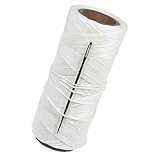
270 Feet of Waxed Polyester Sail Twine and Needle – Ideal for Rope Whipping, Canvas Work, Sail Making, or Other Crafting Applications (White)
270 feet length
1/16 inch diameter
Waxed polyester material
White color
8 pound load limit
Includes metal needle
Pros
- Excellent quality waxed thread
- Includes convenient needle
- Soft and easy to work with
- Good wax content for sealing
- Firm interlocking braiding
- Traditional appearance
Cons
- Not traditional jute
- White and brown colors only
- Larger diameter for bigger scales
For traditional sailing ship models and canvas work, waxed polyester sail twine remains the authentic choice. West Coast Paracord’s offering includes a metal needle, which is essential for the sewing and whipping techniques used in real sailmaking that translate directly to scale model construction.
The 1/16 inch diameter suits larger scale models, 1:96 and up, where the rigging needs to look like actual rope. The waxed finish helps the thread grip itself when forming knots and provides a slight sheen that catches light like tarred hemp rigging on historical vessels.
I used this extensively on a wooden 1:96 scale schooner build. The included needle made serving deadeyes and seizings much easier than trying to thread standard cord. The polyester construction is stronger and more durable than cotton alternatives, which matters when you are putting significant tension on standing rigging.
The 8 pound load limit sounds excessive for model work, but it means the thread will not stretch or creep over time under the modest loads of model rigging. Your shrouds and stays will stay taut years after completion.
Traditional Applications
This thread excels for period ship models where authenticity matters. The waxed construction mimics the tarred hemp and manila rope used on actual sailing vessels. The technique of serving, whipping, and seizing with this thread replicates how real riggers worked.
While primarily intended for canvas and sail work, I found it equally useful for rope ladders, netting, and decorative knotwork on models. The traditional appearance adds character that modern synthetic threads cannot match.
Included Needle Advantage
The metal needle that comes with this set is not an afterthought. It is properly sized for the thread diameter and makes rigging work significantly faster. Threading blocks, deadeyes, and thimbles becomes routine rather than frustrating.
I keep the needle in a pin vise when working for better control. The eye is large enough to thread easily but small enough to pass through scale blocks. Having the right tool included with the thread saves separate purchases and ensures compatibility.
7. The Beadsmith S-Lon Bead Cord – Wheatberry Mix 0.5mm
The Beadsmith S-Lon Bead Cord
0.5mm diameter
77 yards per spool
4 wheatberry colors
3-ply twisted nylon
TEX210 cord
Multifilament construction
Pros
- Excellent quality and strong
- Beautiful saturated colors
- Great for macrame and beadwork
- Knots well with practice
- Resists fraying
- Good variety available
Cons
- Slippery until you adapt technique
- Strands can bunch occasionally
- Requires learning proper knots
The Beadsmith S-Lon cord brings jewelry-making quality to ship modeling. The 0.5mm diameter and four wheatberry colors provide options for standing rigging on tall ships where natural rope colors are appropriate. I discovered this line through a forum recommendation and now use it regularly for 1:96 and larger scale projects.
The 3-ply twisted construction gives the cord a round profile that looks like real rope under magnification. Unlike flat ribbon materials, this maintains its circular cross-section even after handling and knotting. The multifilament nylon provides strength without stiffness.
The four color pack gives you options for different rigging elements on the same model. Use the darker shades for standing rigging that would have been tarred, and lighter shades for running lines and decorative work that stayed natural.
The bonded construction resists fraying, which is crucial when you are threading through tiny blocks repeatedly. Unbonded thread frays and fuzzes with handling, making it hard to get through small openings. S-Lon stays smooth and workable.
Color Variety Uses
The wheatberry mix provides subtle variations in the beige/tan family. This variation looks more realistic than single-color thread because real rope was not perfectly uniform. The slight color differences add visual interest to complex rigging schemes.
I use the darkest shade for lower shrouds and stays that carried the most load and would have been heavily tarred. Lighter shades work for running rigging and topsail halyards. The variation helps viewers distinguish different rigging elements on a busy model.
Knotting Techniques
S-Lon is slightly slippery when new, which affects how knots behave. The solution is simple: run the cord through your fingers a few times before cutting. This warms and softens the wax coating, improving grip. Once conditioned, it holds knots securely.
The standard knots for model rigging, clove hitches and seizing knots, work well with this cord. Practice on scrap material first to get the tension right. The cord is forgiving of minor mistakes and can be untied and repositioned if needed.
After conditioning, the thread becomes easier to work with. I condition the entire length I plan to use before starting the rigging process. This small preparation step saves frustration later.
8. Coats and Clark Dual Duty XP – Heavy Weight Thread 4-Pack
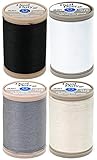
4-PACK – Coats & Clark – Dual Duty XP Heavy Weight Thread – 4 Color Value Pack – (Black+White+Slate+Natural) 125yds Each
Heavy weight thread
4 color pack (Black,White,Slate,Natural)
125 yards each spool
Polyester 100%
Machine or hand sewing
Dual-trap spool system
Pros
- Very strong and durable
- Excellent quality
- Pop-top holder prevents unwinding
- Perfect for button repairs
- Great for hemming and topstitching
- Low breakage rate
Cons
- Tricky to knot due to strength
- Requires scissors to cut
- Not specialized for rigging
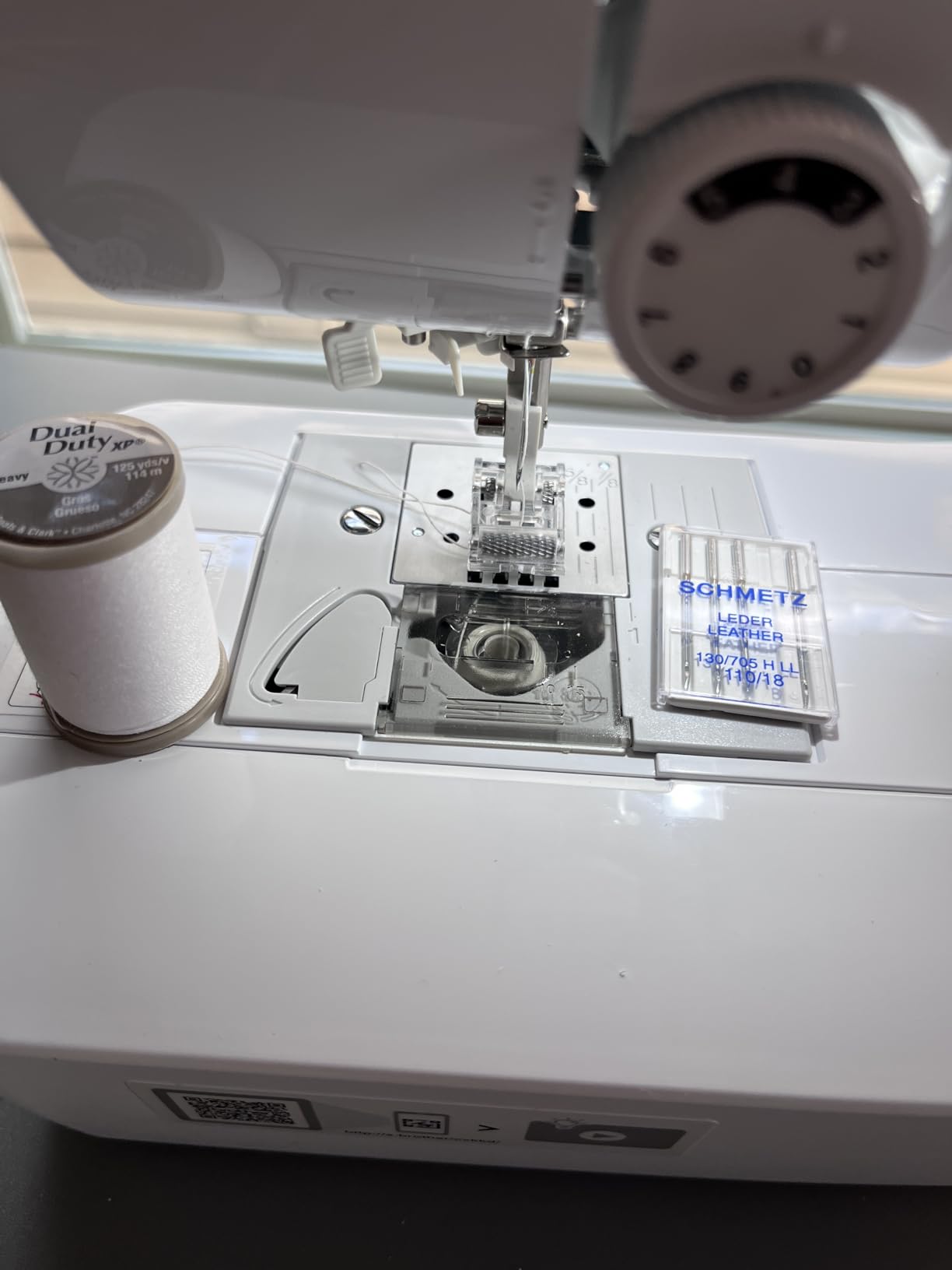
Sometimes the best modeling supplies come from unexpected places. Coats and Clark Dual Duty XP heavy thread, found in any sewing section, works surprisingly well for larger scale ship rigging and general model construction. The four-color pack covers most modeling needs at minimal cost.
This is general-purpose sewing thread, not specialized rigging material. However, for 1:48 scale and larger ships where rigging needs to be robust, the heavy weight provides the visibility and strength required. I have used it for anchor cables, tow lines, and dock lines on large ship models.
The polyester construction is stronger than cotton sewing thread and resists moisture and UV better. While not historically accurate for period ships, it is perfectly appropriate for modern vessels and working models that need durability over authenticity.
The dual-trap spool system is genuinely useful. Thread does not unwind and tangle in your tool box. This seems minor until you have spent twenty minutes untangling a spool of fine rigging thread before you can start working.
Multi-Purpose Value
The primary advantage here is versatility. This thread serves rigging needs but also repairs, fabric work, and other modeling tasks. If you maintain a general modeling supplies kit, having this four-pack means you are prepared for unexpected needs without separate purchases.
The 125 yards per spool is generous. Even using this for multiple projects, I have barely dented the supply. The cost per yard makes this the most economical option in this guide by a significant margin.
Strength vs Flexibility
The heavy weight classification means this thread is stronger than standard sewing thread but less flexible. It holds shape well, which can be an advantage or disadvantage depending on application. For straight rigging lines it is ideal. For elements that should drape naturally, it may need careful handling.
The strength does make knotting more challenging. You cannot break this by hand; scissors are mandatory. Multiple half-hitches work better than complex decorative knots because the thread resists the bending required for fancy knotwork.
For utility applications where appearance is secondary to function, this thread excels. Anchor chains, hawser lines, and other heavy rigging benefit from the robust construction.
How to Choose the Right Ship Rigging Thread?
Selecting the right model ship rigging thread requires understanding how scale, material, and application interact. After testing dozens of options on various projects, here is what actually matters.
Thread Materials Explained
Traditional cotton and linen provide the most authentic appearance for period ship models. These materials have the matte finish and slight irregularity of actual hemp rope. However, they require careful handling, waxing for durability, and are prone to fraying. Use these when historical accuracy is your primary goal.
Polyester and nylon offer practical alternatives with better longevity. They resist moisture, UV, and handling damage. Modern synthetic threads like S-Lon provide the best of both worlds: traditional appearance with modern durability. For models that will be handled or displayed long-term, synthetics make sense.
Elastic materials like Lycra and EZ Line’s polymer solve the tension problem that plagues traditional rigging. They stretch instead of breaking when bumped and maintain tension without stressing attachment points. For beginners or models that will travel to shows, elasticity is worth the slight trade-off in historical accuracy.
Metal wire provides permanent, precise rigging for exhibition pieces. It does not sag, stretch, or degrade over time. However, it is unforgiving of mistakes and provides no shock absorption. Use wire for models that will sit undisturbed in climate-controlled displays.
Scale-to-Thread Size Chart
Getting the diameter right is crucial for scale appearance. Here are the thread sizes I have found work best for common scales:
1:700 scale: 0.068mm to 0.1mm (Infini Model Superfine or AK Interactive)
1:350 scale: 0.1mm to 0.2mm (Infini Model Superfine stretched, or fine EZ Line)
1:200 scale: 0.2mm to 0.35mm (EZ Line, Infini Lycra, or GAWEGM smaller sizes)
1:96 scale: 0.35mm to 0.5mm (GAWEGM wire, S-Lon, or West Coast Paracord)
1:48 scale and larger: 0.5mm and up (S-Lon heavy, Coats and Clark heavy, or custom rope)
These are guidelines based on typical rigging diameters on real ships. Actual rope diameters varied historically from 0.5 inches for small lines to 4+ inches for major shrouds. Convert these to your scale and select thread accordingly.
Color Selection Guide
Black rigging represents tarred hemp used on standing rigging and heavy lines. Tar protected natural fiber from weather and UV. Use black thread for shrouds, stays, and permanent standing rigging on sailing ships.
Brown and fawn colors represent weathered natural rope. Running rigging that was handled regularly and exposed to weather aged to these tones. Use these for sheets, halyards, and other lines that crew members worked with daily.
Natural and beige colors represent new or lightly weathered rope. Use these for running rigging on vessels portrayed as freshly outfitted, or for decorative elements and fancy work that was not tarred.
Grey thread serves for steel wire rigging on modern vessels. Steel cable replaced hemp on most ships by the early 20th century. Use grey for modern warships and commercial vessels.
Standing vs Running Rigging
Standing rigging includes the permanent lines that support masts and yards: shrouds, stays, and backstays. These carried heavy loads and were made from the strongest, most tarred rope on the vessel. Use black thread for standing rigging, and apply it with high tension to represent the loaded cables.
Running rigging includes the lines that move to adjust sails: halyards, sheets, and braces. These were handled regularly and less heavily tarred. Use brown or natural colors, and apply with less tension so the lines show natural sag between blocks.
The distinction matters visually. A model with all rigging the same color and tension looks artificial. Varying both creates the impression of different functional elements that viewers instinctively recognize as realistic.
When planning your rigging scheme, reference historical photographs or paintings of similar vessels. Note the color variations between standing and running rigging, and replicate those differences in your thread selection. This attention to detail separates accurate models from generic representations.
For more guidance on model building supplies, see our recommendations for best rigging thread options across different modeling disciplines.
Frequently Asked Questions
What is the best thread for model ship rigging?
The best thread depends on your scale and goals. For 1/350 to 1/700 scale ships, Infini Model Superfine at 0.068mm provides the finest detail. EZ Line offers the best value with its forgiving elastic properties for beginners. For larger scales and traditional sailing ships, waxed polyester or linen provides authentic appearance. Choose elastic materials for ease of use, traditional materials for historical accuracy.
What size thread should I use for 1/350 scale ships?
For 1/350 scale ships, use thread between 0.068mm and 0.15mm diameter. Infini Model Superfine at 0.068mm works perfectly for most applications. AK Interactive elastic rigging and Infini Model’s other fine options also suit this scale. Thicker thread at this scale looks like rope instead of the thin lines actually used on ships.
What is the difference between standing and running rigging?
Standing rigging includes permanent support lines like shrouds and stays that hold masts in place. Running rigging includes adjustable lines like halyards and sheets that move to control sails. Standing rigging was heavily tarred and black, while running rigging was lighter in color and handled regularly. Apply standing rigging taut, running rigging with natural sag.
Should I use waxed or unwaxed thread for rigging?
Waxed thread holds knots better and resists fraying, making it ideal for beginners and permanent installations. Unwaxed thread looks more natural and accepts dyes or stains for weathering effects. For most model ship work, waxed thread is preferable because it is easier to handle and more durable. You can add your own beeswax to unwaxed thread if needed.
Final Thoughts
Choosing the right ship rigging thread sets makes the difference between models that look like toys and models that earn recognition at shows. After rigging multiple ships with each of these eight options, the Infini Model Superfine stands out for small-scale work, EZ Line offers the best combination of forgiveness and realism for general use, and the specialized options each serve specific purposes in a well-equipped modeling bench.
Consider starting with EZ Line for your first rigging project. The elastic properties forgive the mistakes every beginner makes while you develop technique. As you gain experience, add specialized threads like the Infini line for specific scales and applications.
The research and testing behind this guide aimed to solve the common problems modelers face: thread too thick for scale, materials that fray and break, and difficulty achieving realistic tension. Each product here addresses those issues in different ways, giving you options matched to your specific projects in 2026.
For additional model building resources and recommendations on ship rigging thread sets and related supplies, explore our complete catalog of modeling guides. Whether your next project is a plastic kit destroyer or a wooden tall ship, the right rigging thread brings the details that make model ship building rewarding.