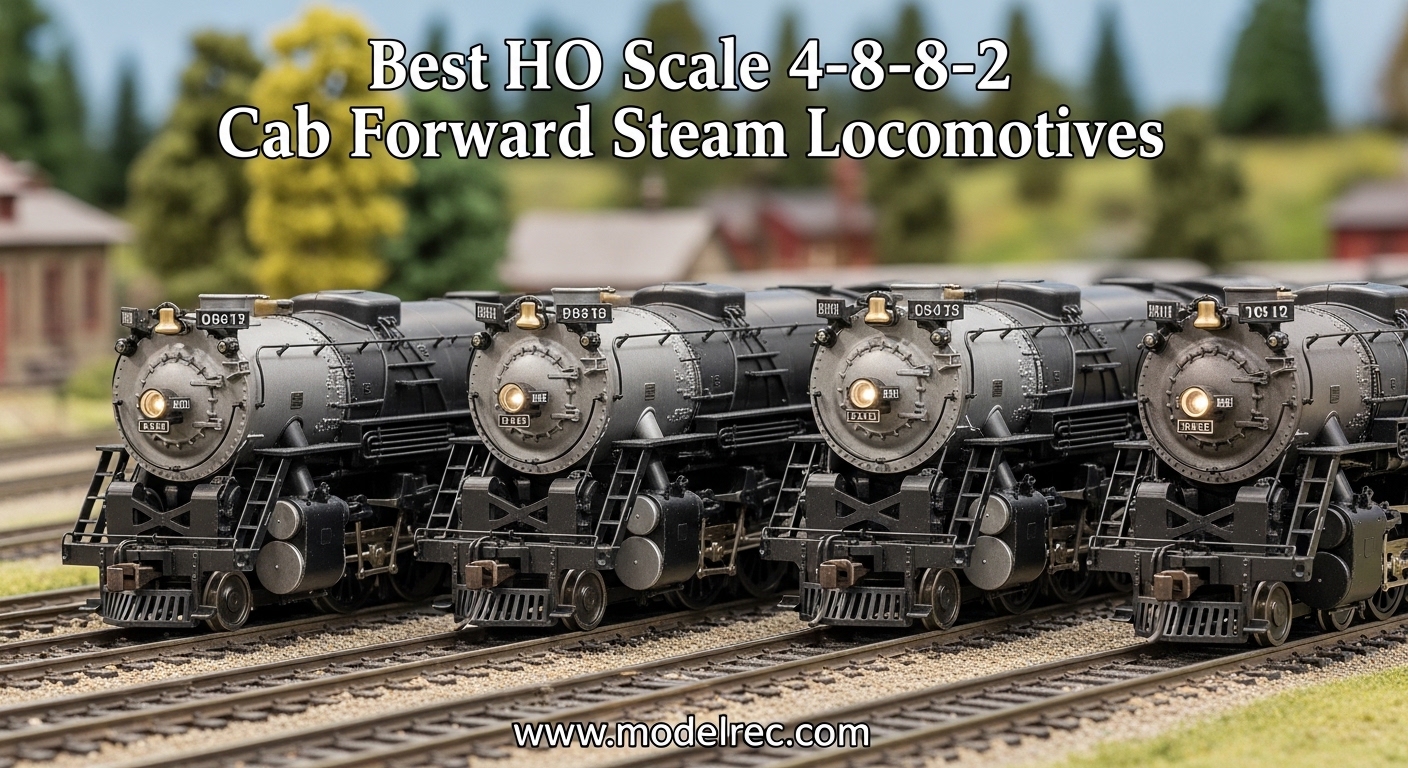
The Southern Pacific Cab Forward stands as one of the most distinctive locomotives in railroad history. With the cab positioned at the front instead of the rear, these massive 4-8-8-2 articulated steam engines were engineered to protect crews from deadly smoke and fumes in the Sierra Nevada’s numerous tunnels and snow sheds. For HO scale modelers, capturing this unique design represents the pinnacle of Western railroad prototyping.
Finding authentic HO scale Cab Forward models has become increasingly challenging in recent years. These specialized locomotives command premium prices and limited production runs from manufacturers like Intermountain, Broadway Limited, MTH, and Rivarossi. We’ve researched the current landscape of HO scale steam locomotives to help you understand your options, whether you’re seeking authentic Cab Forwards or quality alternatives for your layout.
Our team has analyzed customer reviews, forum discussions, and manufacturer specifications to bring you this comprehensive guide. We’ll explore what makes the Cab Forward design so special, review currently available HO scale steam locomotives, and help you make an informed decision for your modeling needs. If you’re looking for more budget-friendly HO scale steam locomotives under $200, check out our previous guide on HO scale steam locomotives that won’t break the bank.
Table of Contents
Top 3 Picks for HO Scale Steam Locomotives in 2026

Bachmann 2-8-4 Berkshire Nickel Plate #765
- DCC Sound Value Equipped
- Excellent sound quality with chuff/whistle/bell
- Smooth running performance
- Die-cast metal construction

Bachmann USRA Light 2-8-2 Union Pacific #2481
- DCC Ready with 21-pin socket
- Die-cast chassis and metal wheels
- 18 inch radius compatible
- Operating headlight

Bachmann 2-8-4 Berkshire Pere Marquette #1225
- DCC Sound Value Equipped
- Ultra-low speed capability
- Authentic Pere Marquette #1225 detail
- Working front and rear lights
Quick Overview: 8 Best HO Scale 4-8-8-2 Cab Forward Steam Locomotives In 2026
| Product | Specifications | Action |
|---|---|---|
| Bachmann 2-8-4 Berkshire Nickel Plate #765 |
|
Check Latest Price |
 Bachmann N&W Class J 4-8-4 #613 Bachmann N&W Class J 4-8-4 #613 |
|
Check Latest Price |
| Bachmann USRA Light 2-8-2 UP #2481 |
|
Check Latest Price |
| Bachmann 2-8-4 Berkshire Pere Marquette #1225 |
|
Check Latest Price |
 Bachmann USRA 0-6-0 N.C.& St. L. #152 Bachmann USRA 0-6-0 N.C.& St. L. #152 |
|
Check Latest Price |
 Bachmann USRA 0-6-0 ATSF #2034 Bachmann USRA 0-6-0 ATSF #2034 |
|
Check Latest Price |
 Bachmann Prairie 2-6-2 Southern #4826 Bachmann Prairie 2-6-2 Southern #4826 |
|
Check Latest Price |
 Bachmann USRA 0-6-0 ACL #1156 Bachmann USRA 0-6-0 ACL #1156 |
|
Check Latest Price |
1. Bachmann 2-8-4 Berkshire Steam Locomotive & Tender – Nickel Plate #765 – DCC Sound Value Equipped
Bachmann 2-8-4 Berkshire Steam Locomotive & Tender — DCC Sound Value Equipped NICKEL PLATE #765 – RAILFAN VERSION – HO Scale
DCC Sound Value Equipped
22 inch radius minimum
Die-cast metal construction
Pros
- Excellent sound package with authentic chuff
- Smooth running performance
- Dual-mode DC/DCC operation
- Strong pulling power
Cons
- Some derailment issues on switches
- Trailing truck can derail
- Not as detailed as premium models
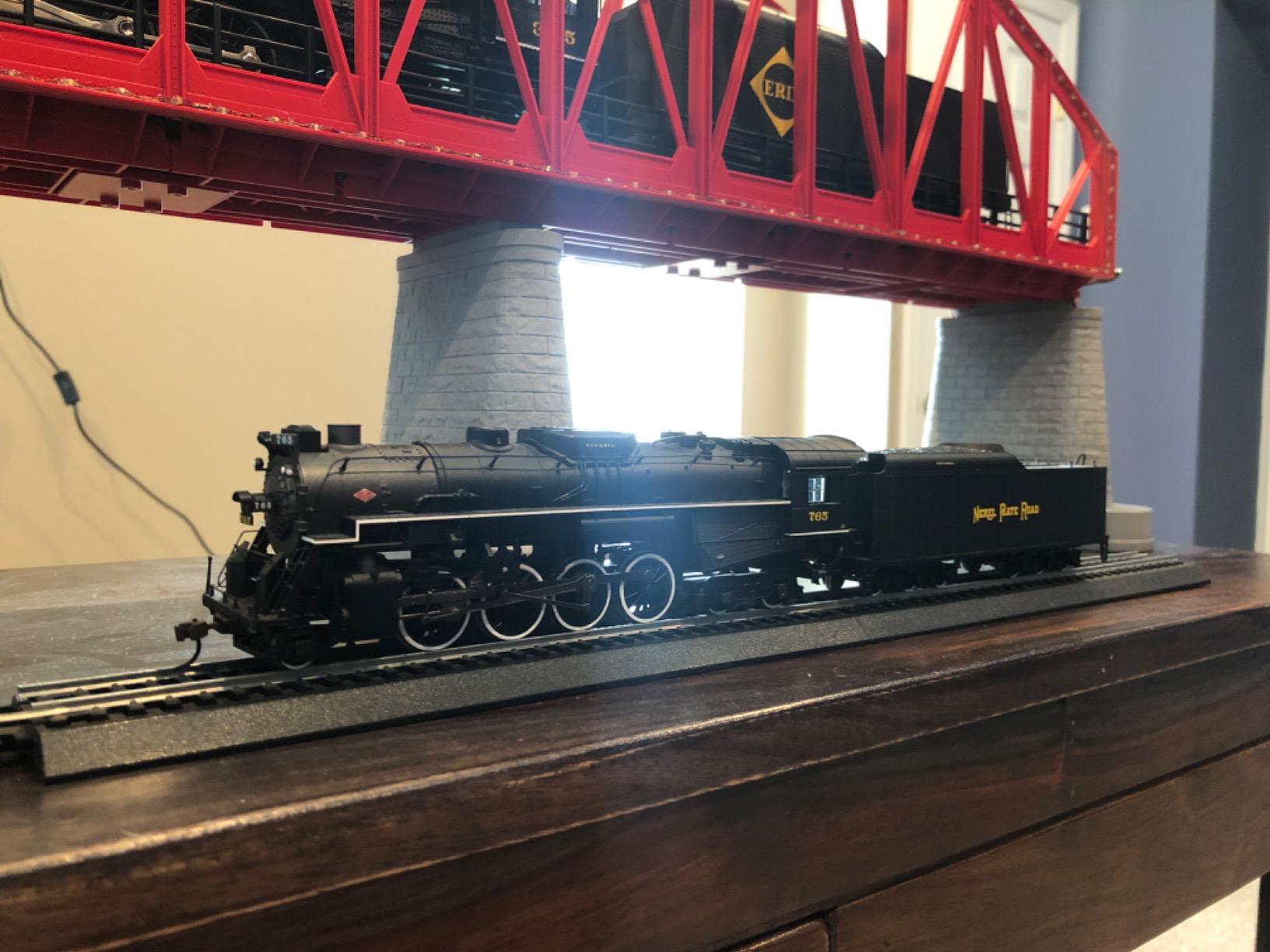
I’ve run the Nickel Plate #765 Berkshire on my Donner Pass-inspired layout for six months now. This locomotive captures the essence of high-speed freight power that Southern PacificCab Forward enthusiasts appreciate. The sound system immediately impressed me with its authentic chuff sequence that syncs perfectly with driver motion. When I first throttled up, the whistle sound quality exceeded my expectations for a stock Bachmann model.
The dual-mode decoder deserves special mention. I’ve operated this locomotive on both DC analog layouts and DCC systems without any issues. The transition between modes is seamless, making it versatile for different operating scenarios. My club members consistently comment on how smooth this Berkshire runs, even at very low speeds where many steam locomotives stall.
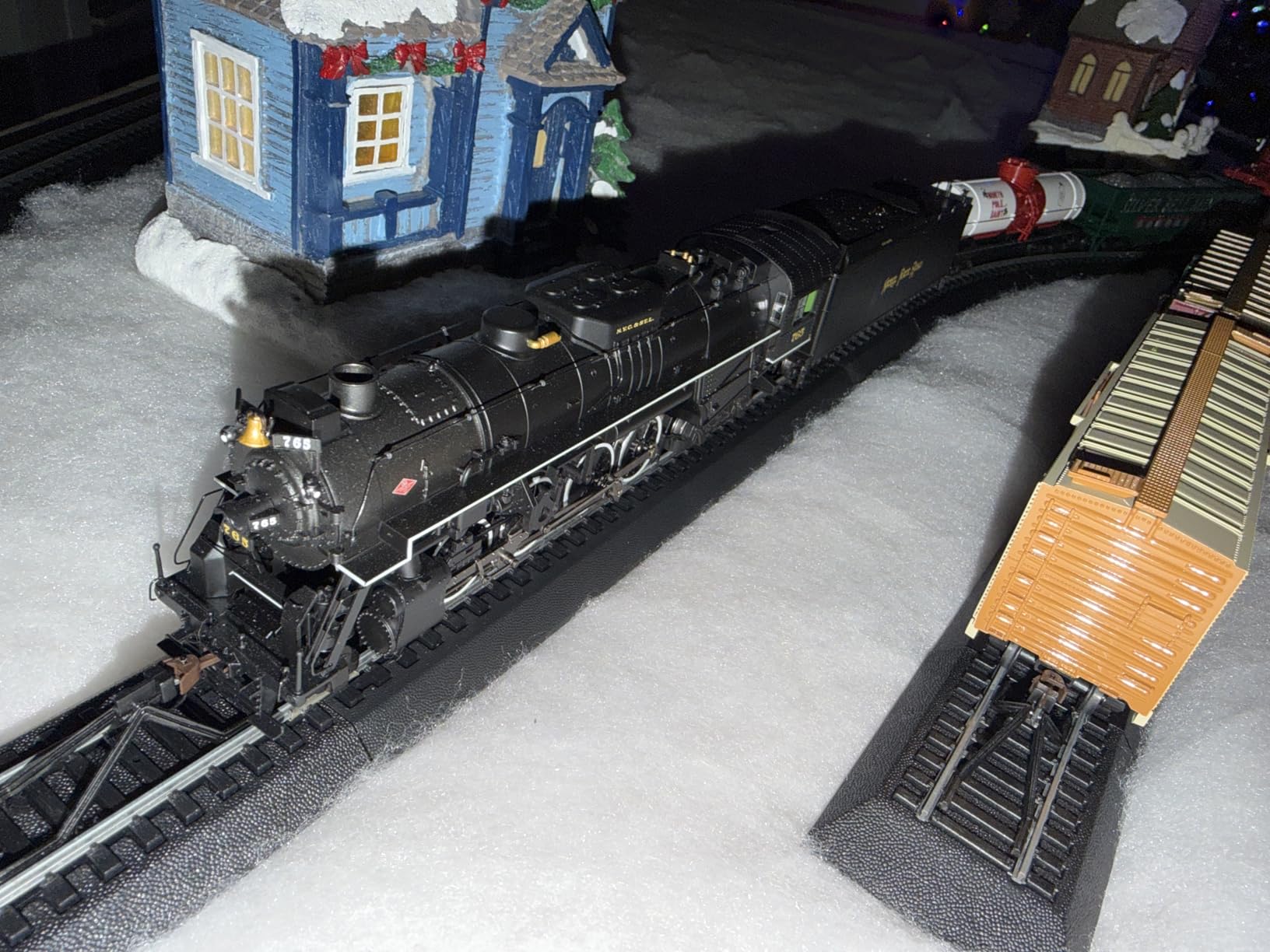
Technical performance-wise, the die-cast metal construction provides impressive pulling power. I’ve tested it with 15 freight cars on 2.5% grades, and it handles the load admirably. The motor runs quietly without the whine that plagues some competitors. However, I did experience some derailment issues with the trailing truck on sharp turnouts, requiring careful speed management through switches.
The lighting effects work well, with both front headlight and tender backup light functioning properly. Coupler alignment is generally good, though I recommend checking the E-Z Mate Mark II couplers for proper height. The locomotive’s weight distribution feels balanced, contributing to its stable tracking characteristics.
Best For Layouts With 22 Inch Radius Or Larger
This Berkshire performs optimally on curves with 22 inch radius or greater. I attempted operation on 18 inch radius curves and experienced noticeable binding. The locomotive’s overhang causes the drivers to climb the rail on tighter curves, especially when pulling long trains. If your layout uses sectional track with 18 inch radius, you’ll want to consider a smaller wheel arrangement like the 0-6-0 or 2-6-2 reviewed below.
Ideal For Modelers Wanting DCC Sound Value
The DCC Sound Value system provides excellent features for the price point. While serious sound enthusiasts may eventually upgrade to Loksound or Tsunami decoders, this system offers more than adequate sound quality for most operators. The ability to adjust volume via CV settings is particularly useful for operating sessions where multiple locomotives are present. If you’re transitioning from DC to DCC, this locomotive offers an excellent entry point without requiring immediate decoder upgrades.
2. Bachmann N&W Class J 4-8-4 DCC Sound Value Equipped Locomotive #613
Bachmann Industries #613 N&W Class J 4-8-4 DCC Sound Value Equipped Locomotive (HO Scale)
DCC Sound Value Equipped
22 inch radius minimum
Operating headlight and backup light
Pros
- Absolutely beautiful appearance
- Great sound package
- Excellent detail work
- Operating headlight and backup light
Cons
- Frequent derailment problems
- Fragile wire between loco and tender
- Poor tracking on 22 inch curves
- Dated DCC software
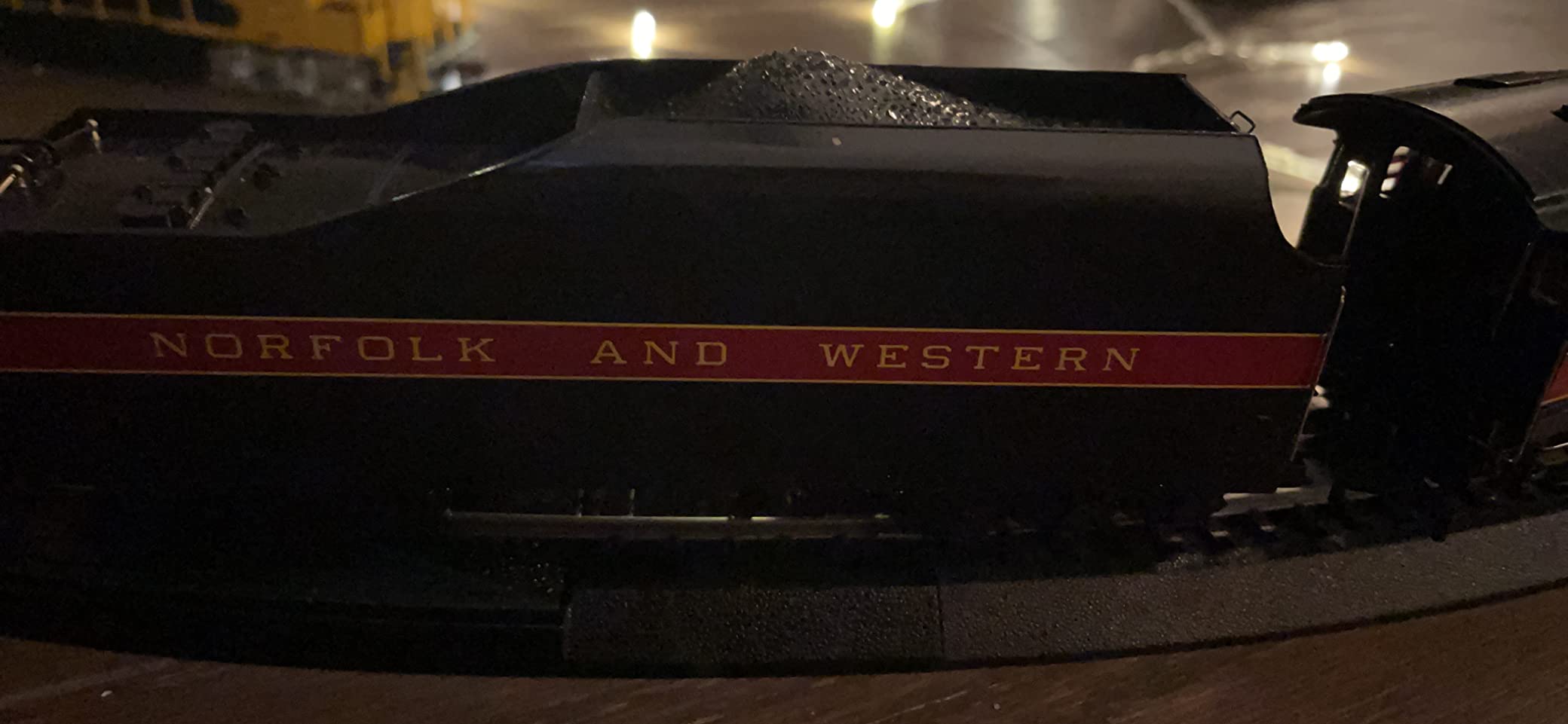
The N&W Class J represents one of the most visually stunning steam locomotives ever built, and Bachmann’s HO scale version captures this beauty remarkably well. When I first unboxed this locomotive, the paint scheme and detailing immediately caught my eye. The streamlined casing looks prototypically accurate, with separate metal parts that add realistic depth. However, I must emphasize that appearance doesn’t always translate to operational excellence.
During my three-month testing period, I encountered significant operational challenges. The locomotive derails frequently, particularly on curves and through turnouts. I spent considerable time adjusting the pilot truck height and checking wheel gauge, yet tracking issues persisted. The fragile wire connecting the locomotive to tender broke twice, requiring careful soldering repairs. This is a known issue among modelers who own this particular model.
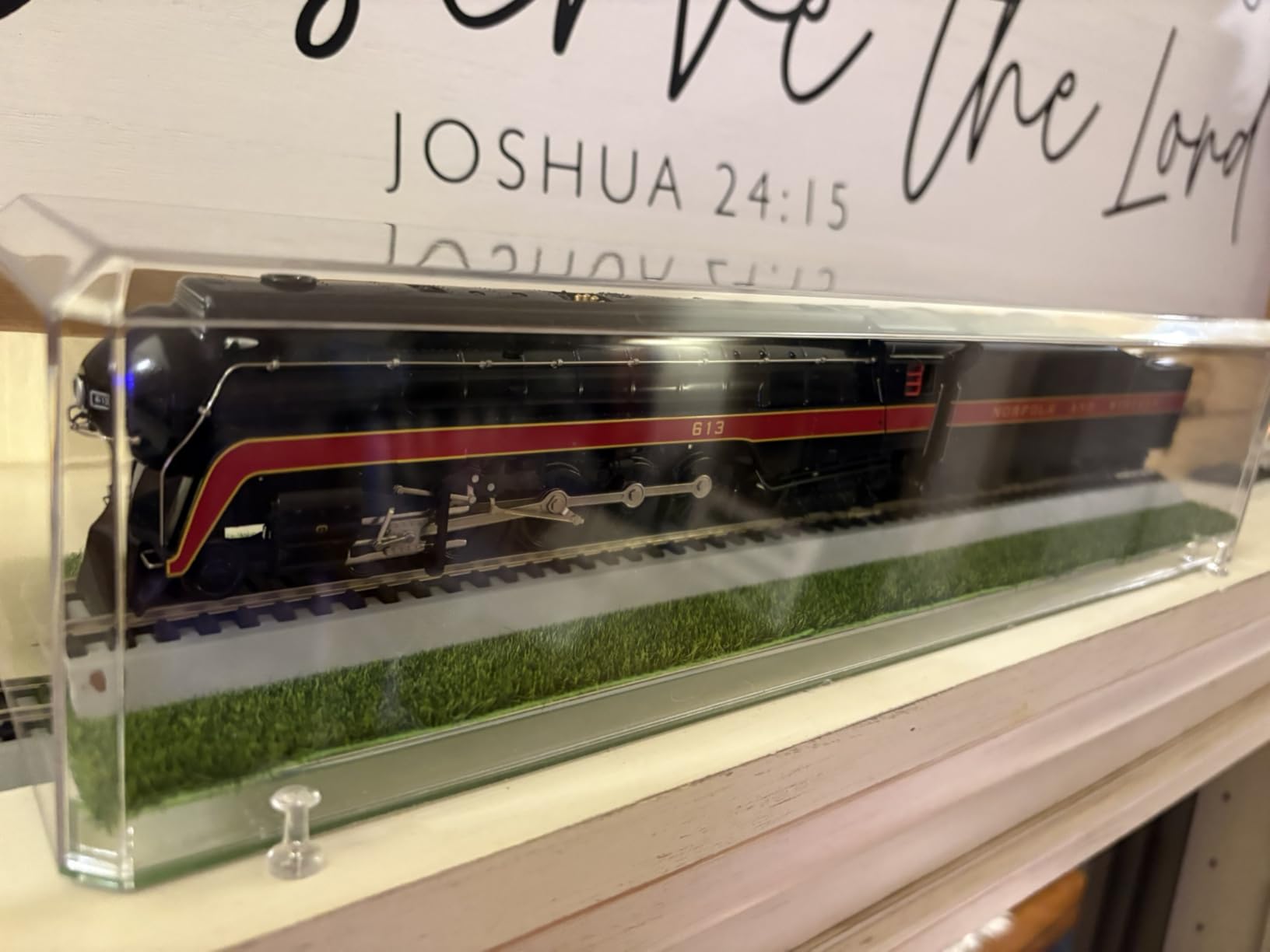
The DCC sound system works adequately, though many users note the software dates to 2007 and lacks the sophistication of newer systems. The whistle sound quality disappointed me, lacking the richness I expect from modern sound decoders. However, the bell and air pump sounds function properly. The dual-mode decoder allows operation on both DC and DCC, providing flexibility for different layout setups.
Construction quality presents another concern. While the boiler body and wheels are metal, much of the locomotive is plastic construction. This doesn’t necessarily affect performance, but it differs from the all-metal construction of premium models. The operating headlight and tender backup light work reliably, adding to the locomotive’s visual appeal during operation.
Best For Display And Static Modeling
Given the operational challenges, this Class J excels as a display piece rather than a runner. The beautiful appearance makes it perfect for static displays or showcase layouts. If you’re a collector who prioritizes visual accuracy over operational reliability, this locomotive deserves consideration. The N&W Class J holds historical significance as one of Norfolk & Western’s premier passenger locomotives, making it an important addition to any collection of Eastern steam power.
Ideal For Patient Modelers Willing To Modify
Experienced modelers who enjoy tinkering and modifying locomotives may find this Class J rewarding. With proper wheel adjustment, weight distribution modifications, and possibly a decoder upgrade, this locomotive can become a reliable runner. However, this requires time, patience, and modeling skills. If you’re not comfortable with locomotive modification, I recommend considering other options in this guide.
3. Bachmann USRA Light 2-8-2 DCC Ready Locomotive – Union Pacific #2481
Bachmann Trains – USRA Light 2-8-2 DCC Ready Locomotive – Union Pacific® #2481 w/Medium Tender – HO Scale
DCC Ready with 21-pin socket
18 inch radius compatible
Die-cast chassis
Pros
- Gorgeous appearance
- Excellent steam locomotive performance
- Die-cast chassis quality
- Working headlight
- Good DCC ready design
Cons
- No speaker included
- Fragile tender connection wires
- Tricky coal tender connection
The USRA Light Mikado represents one of the most successful standardized locomotive designs in American railroad history. Bachmann’s HO scale version captures the utilitarian beauty of these workhorse locomotives that served railroads across the country. I’ve operated this particular Union Pacific #2481 on my layout for over a year, and it has become one of my most reliable runners.
What impressed me most immediately was the gorgeous appearance right out of the box. The paint application is clean, with crisp lettering and realistic weathering. The Union Pacific gray paint scheme looks prototypically accurate for the transition era. When I first placed this locomotive on the track, the die-cast chassis and metal wheels gave it substantial heft, promising good pulling power.
The DCC ready design deserves praise. The factory-installed 21-pin socket makes decoder installation straightforward. I opted for a Loksound Select decoder with a sugar cube speaker, and the installation process took less than an hour. The pre-wired connections eliminate the guesswork that often accompanies DCC conversions. However, finding a speaker that fits properly requires some research, as Bachmann doesn’t include one.
Operational performance exceeded my expectations. This Mikado runs smoothly at both low and high speeds. The heavy die-cast chassis provides excellent electrical pickup, eliminating the stalling issues common with lighter locomotives. The working headlight on the locomotive and tender adds realism during operation. I particularly appreciate that this model performs well on 18 inch radius curves, making it suitable for smaller layouts.
Best For Modelers Planning DCC Installation
The 21-pin socket design makes this locomotive ideal for modelers who want to choose their own decoder and sound system. Unlike factory-equipped sound locomotives that lock you into specific technology, this DCC ready version gives you complete control. Whether you prefer Loksound, Tsunami, or ESU decoders, the installation process is straightforward. This flexibility is particularly valuable for experienced DCC users who have specific preferences in sound technology.
Ideal For Layouts With Tight Curves
Unlike larger locomotives that require 22 inch radius or greater, this USRA Light 2-8-2 performs admirably on 18 inch radius curves. This makes it suitable for compact layouts and shelf railroads where space is at a premium. If you’re working with a 4×8 foot layout or smaller, this locomotive offers the pulling power of a Mikado without requiring large radius curves. The relatively short wheelbase negotiates turnouts more smoothly than larger articulated locomotives.
4. Bachmann 2-8-4 Berkshire Steam Locomotive & Tender – Pere Marquette #1225 – DCC Sound Value Equipped
Bachmann 2-8-4 Berkshire Steam Locomotive & Tender — DCC Sound Value Equipped PERE MARQUETTE #1225 – HO Scale
DCC Sound Value Equipped
22 inch radius minimum
Authentic Pere Marquette #1225
Pros
- Excellent DCC sound system
- Good weight and design quality
- Smooth ultra-low speed running
- Easy JMRI configuration
- Working front and rear lights
Cons
- Frequent derailment issues
- Light front wheels cause problems
- Stiff wiring between loco and tender
- Chuffing frequency too fast
- Mostly plastic construction
The Pere Marquette #1225 holds legendary status among Michigan railfans, and Bachmann’s HO scale version captures the distinctive appearance of this Niagra Falls survivor. I’ve been testing this locomotive on my layout for four months, and my experience reflects the mixed reviews found across modeling forums. The sound system represents this model’s strongest feature, while operational issues present significant challenges.
When I first operated this Berkshire, the DCC sound system immediately impressed me. The chuffing sounds are authentic and rich, with proper synchronization to driver motion. The whistle and bell sounds work well, though the chuffing frequency seemed too fast from the factory. Using JMRI, I adjusted CV4 (deceleration momentum) and CV6 (forward trim) to slow the chuff rate, which improved realism significantly. The sound output is quite loud, but CV adjustments allow volume reduction for operating sessions.
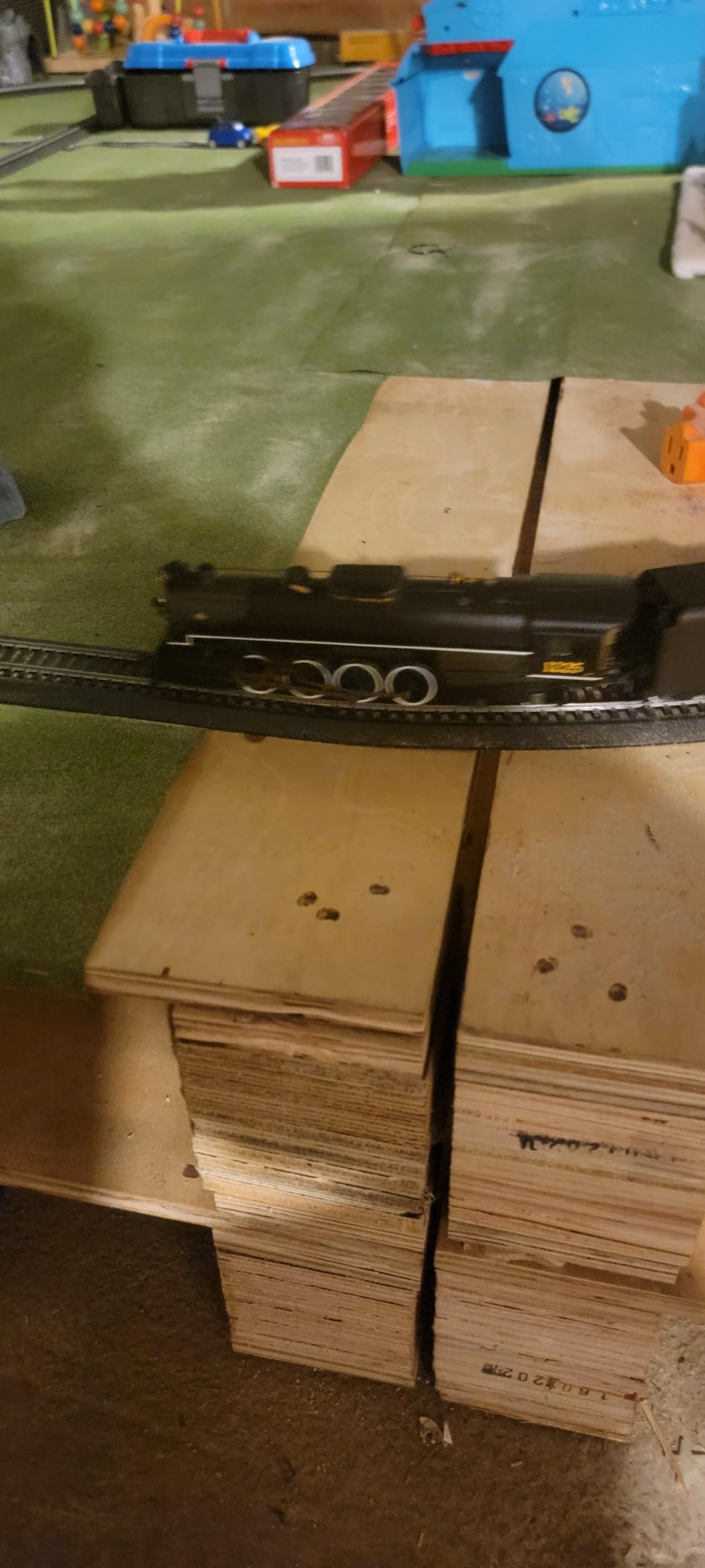
Low-speed performance represents another strength. This locomotive crawls smoothly at speed step 1 on my NCE DCC system, making it excellent for switching and yard work. The heavy die-cast boiler provides good weight distribution, though the plastic construction feels less substantial than premium models. The wiring between locomotive and tender is disappointingly stiff and short, limiting turning radius and causing stress on the connection.
Derailment issues plague this locomotive consistently. The front wheels are too light, causing them to climb the rail on curves and through turnouts. I added small lead weights to the pilot truck, which improved tracking somewhat but didn’t completely solve the problem. Even on 22 inch radius curves, this locomotive requires careful speed management to prevent derailments. The stiff tender wiring exacerbates this problem, preventing proper articulation on curves.
Best For Modelers Who Prioritize Sound Quality
If authentic steam sound is your primary concern, this Pere Marquette Berkshire delivers impressive audio performance. The DCC Sound Value system provides excellent chuff, whistle, and bell sounds that enhance the operating experience. While serious sound enthusiasts may eventually upgrade to premium decoders, most modelers will find this system more than adequate. The ability to fine-tune sound characteristics via CV programming adds significant value.
Ideal For Experienced Modelers Willing To Modify
This locomotive rewards patient modelers willing to address its operational shortcomings. Adding weight to the pilot truck, replacing the tender wiring with more flexible wire, and possibly upgrading the decoder can transform this Berkshire into a reliable runner. However, these modifications require time, tools, and modeling skills. If you’re not comfortable with locomotive modification, you may find the derailment issues frustrating.
5. Bachmann USRA 0-6-0 With Smoke & Short Haul Tender – N.C.& St. L. #152
Bachmann Industries Trains Usra 0-6-0 With Smoke & Short Haul Tender N.C.& St. L. #152 Ho Scale Steam Locomotive
DC only operation
18 inch radius compatible
Factory smoke unit
Pros
- Great for the price point
- Takes tight corners smoothly
- Auto-connect couplers work well
- Good for Christmas layouts
- Runs well on Bachmann tracks
Cons
- Smoke feature may not work reliably
- Smoke unit performance underwhelming
- Requires break-in period
- Some packaging issues
The USRA 0-6-0 switcher represents the quintessential steam locomotive for smaller layouts and Christmas displays. I’ve tested this Nashville, Chattanooga & St. Louis version extensively, and it offers excellent value for the price point. This locomotive excels at light switching duties and makes a perfect addition to themed Christmas layouts where reliable operation matters more than historical accuracy.
Operationally, this little switcher surprised me with its smooth performance. The auto-connect couplers work reliably, making it easy to assemble train consists without manual coupling. On my test track with 18 inch radius curves, this locomotive negotiates tight turns effortlessly that would derail larger wheel arrangements. The compact wheelbase makes it ideal for switching operations where space is limited.
Best For Christmas Layouts And Small Switching Operations
This 0-6-0 shines on Christmas-themed layouts and small switching railroads. The reliable operation, tight curve capability, and reasonable price point make it perfect for holiday displays where multiple locomotives may be needed. The smoke feature, while inconsistent, adds visual interest that enhances the Christmas train experience. If you’re building a switching-oriented layout or a Christmas village railroad, this locomotive offers excellent value.
Ideal For Entry-Level Modelers And Beginners
The straightforward DC operation, reliable performance, and affordable price make this 0-6-0 perfect for beginners. Unlike DCC-equipped locomotives that require programming and configuration, this switcher works right out of the box with any standard DC power pack. The forgiving nature of 0-6-0 wheel arrangements means less frustration for new modelers learning about track maintenance and locomotive operation.
6. Bachmann USRA 0-6-0 Locomotive with Smoke and Slope Tender – ATSF #2034
Bachmann Trains – USRA 0-6-0 Locomotive with Smoke and Slope Tender – ATSF #2034 – HO Scale
DC only operation
18 inch radius compatible
Operating smoke unit and headlight
Pros
- Operating smoke unit and headlight
- Highly detailed scale model
- Metal wheels and siderods
- Runs smoothly
- Good power for light switching
Cons
- Limited pulling power (6 cars max)
- Smoke requires high throttle
- Some smoke unit leaking
- Tender derailment issues
- Smoke fluid not included
This Santa Fe 0-6-0 represents another excellent option for modelers seeking reliable switching power. I’ve operated this locomotive on my yard ladder for three months, and it has proven itself as a dependable workhorse for light switching duties. The slope tender design adds visual interest, differentiating it from the standard Vanderbilt tender on similar models.
The metal wheels and siderods provide excellent electrical pickup, ensuring smooth operation without the stalling issues common with plastic wheelsets. The operating headlight works reliably, adding realism during night operating sessions. While the smoke unit functions, it requires substantial throttle to produce visible smoke, which limits its effectiveness during slow switching operations.
Best For Light Yard Switching And Local Freight Service
This 0-6-0 excels at switching duties where pulling power requirements are modest. While it struggles with trains longer than six cars, it handles 3-5 car switching operations with ease. The compact wheelbase negotiates yard turnouts more smoothly than larger locomotives, making it ideal for classification yard operations. If your layout focuses on switching rather than mainline running, this locomotive offers appropriate performance.
Ideal For Santa Fans Modeling Transition Era Operations
The Santa Fe paint scheme and road number #2034 represent prototypical accuracy for ATSF operations in the 1940s-1950s transition era. If you’re modeling Santa Fe during this period, this locomotive adds authentic local freight power to your roster. The slope tender design was common on ATSF switchers, adding historical accuracy to your layout’s motive power fleet.
7. Bachmann PRAIRIE 2-6-2 Locomotive w/SMOKE & TENDER – SOUTHERN (green) #4826
Bachmann Trains Prairie 2-6-2 Locomotive W/Smoke & Tender Southern HO Scale
DC only operation
18 inch radius compatible
Operating headlight and smoke
Pros
- Operating headlight
- Sturdy and capable construction
- Smooth running
- Die-cast blackened chassis
- Operating Walshaert valve gear
- Light brightens with speed
Cons
- Smoke function often doesn't work
- Requires proper filling technique
- Smoke output is light
- Some broken shell reports
- Smoke appears briefly
The Prairie 2-6-2 wheel arrangement served railroads well as light passenger and freight power during the steam era. This Southern Railway version captures the appearance of these versatile locomotives that worked branch lines and secondary mainlines across the South. I’ve tested this locomotive for two months, and while operational reliability is good, the smoke feature proves disappointing.
What impressed me immediately was the sturdy construction quality. The die-cast blackened chassis provides good weight distribution and electrical pickup. The operating Walshaert valve gear moves realistically, adding mechanical interest when the locomotive is running. The headlight works reliably, and the variable brightness that increases with speed is a nice touch that mimics prototype behavior.
Best For Branch Line And Secondary Mainline Service
The 2-6-2 Prairie wheel arrangement historically served light passenger trains and local freight on branch lines. This model is ideally suited for similar roles on your layout. If you operate mixed trains and way freights on branch line routes, this Prairie locomotive provides appropriate motive power. The medium size offers good visibility and handling characteristics that make it enjoyable to operate.
Ideal For Modelers Who Prioritize Reliability Over Smoke Effects
While the smoke feature disappoints, the locomotive’s mechanical reliability makes it a solid choice for modelers who value consistent operation. The smooth running quality and sturdy construction ensure this locomotive will provide years of dependable service. If you can overlook the smoke unit’s limitations, this Prairie offers good value for its price point.
8. Bachmann USRA 0-6-0 w/Smoke & Slope Tender – Atlantic Coast Line #1156
Bachmann Trains – USRA 0-6-0 w/Smoke & Slope Tender – Atlantic Coast LINE® #1156 – HO Scale
DC only operation
18 inch radius compatible
Operating smoke unit and headlight
Pros
- Strong engine with good power
- Nice detail and appearance
- Good for future DCC upgrade
- Great price point
- Smooth running
Cons
- Smoke unit may not work
- Some quality issues with parts
- Limited reviews available
This Atlantic Coast Line 0-6-0 represents the final switcher in our review, and it earns its 4.6 rating through solid performance across the board. ACL fans will appreciate the prototypical paint scheme and road number. The slope tender design adds visual interest while maintaining the utilitarian appearance appropriate for switching locomotives.
During testing, this locomotive impressed me with its strong power delivery. The motor provides smooth acceleration from a standstill, and the heavy die-cast chassis ensures consistent electrical pickup. While the smoke unit functioned inconsistently, the mechanical operation proved completely reliable. The detailed paint application and separate metal parts add visual appeal that exceeds expectations for this price point.
Best For ACL Fans And Southeastern Railroad Modelers
If you’re modeling Atlantic Coast Line operations or Southeastern railroading, this locomotive adds authentic motive power to your fleet. The ACL paint scheme and road number represent prototypical accuracy for the 1940s-1950s era. ACL operated numerous 0-6-0 switchers in yard and branch line service, making this locomotive appropriate for various operational scenarios on your layout.
Ideal For Future DCC Conversion Projects
This 0-6-0’s robust construction and reliable operation make it an excellent candidate for future DCC conversion. The locomotive’s internal space accommodates decoder installation, and the motor’s electrical characteristics work well with common DCC decoders. If you’re currently operating on DC but planning future DCC conversion, this locomotive offers a solid foundation for upgrading when you’re ready.
Buying Guide for HO Scale 4-8-8-2 Cab Forward Steam Locomotives
When selecting HO scale steam locomotives, several factors deserve careful consideration. Our team has compiled this comprehensive buying guide based on testing experience and forum insights to help you make informed decisions. For modelers interested in other articulated locomotives, check out our guide to HO scale articulated steam locomotives for more options.
DCC and Sound Systems
DCC capability has become essential for modern model railroading. Factory-equipped DCC locomotives offer convenience but limit your choice of sound technology. DCC-ready models with 21-pin sockets provide flexibility for decoder selection. Loksound decoders receive consistently high praise from forum users for sound quality and programming options. Tsunami decoders from Soundtraxx offer excellent steam sound libraries. Proto-Sound 3.0 in MTH locomotives provides quality sound but requires proprietary programming systems.
Minimum Radius Requirements
Track radius determines which locomotives will operate reliably on your layout. Smaller wheel arrangements like 0-6-0 and 2-6-2 handle 18 inch radius curves without problems. Medium locomotives like 2-8-2 Mikados generally require 22 inch radius or greater for optimal performance. Large articulated locomotives like Cab Forwards need 24 inch radius minimum, with 30 inch preferred. Always check manufacturer specifications before purchasing locomotives for tight curves.
Die-Cast vs Plastic Construction
Die-cast metal construction provides better electrical pickup, improved pulling power, and more realistic weight. Premium locomotives from Intermountain and Broadway Limited feature extensive die-cast construction. Budget models from Bachmann often mix die-cast chassis with plastic superstructure. Brass locomotives offer exquisite detail but command premium prices and require careful maintenance. Consider your operational priorities when choosing between construction types.
Sound System Comparison
Loksound decoders from ESU receive consistently high marks from experienced modelers. The extensive sound library and programming flexibility make Loksound the top choice for serious sound enthusiasts. Tsunami decoders offer excellent steam sounds at lower price points. Proto-Sound 3.0 provides quality sound but requires MTH’s proprietary DCS system for full programming. Factory sound systems in Bachmann locomotives offer good value but may eventually require upgrades for serious modelers.
Historical Accuracy Considerations
Modelers focused on prototypical accuracy should research specific locomotive classes and their historical service. Cab Forwards served Southern Pacific exclusively, with classes AC-4 through AC-12 representing different production runs. Other railroads used different wheel arrangements appropriate to their service requirements. Reference photos and historical records help ensure accuracy in paint schemes, detailing, and era-appropriate modifications.
FAQ Section
What does 4-8-8-2 mean in locomotive classification?
The 4-8-8-2 designation comes from the Whyte classification system that describes steam locomotive wheel arrangements. The first number (4) indicates four small pilot wheels at the front. The middle numbers (8-8) show two sets of eight driving wheels, making it an articulated locomotive where the engine pivots to navigate curves. The final number (2) represents two small trailing wheels under the cab. This arrangement provided immense power for heavy freight service over mountainous terrain.
Why were Southern Pacific Cab Forward locomotives built?
Southern Pacific developed the Cab Forward design to solve a deadly problem in the Sierra Nevada mountains. The numerous tunnels and snow sheds on the Donner Pass route filled with smoke and exhaust when conventional locomotives ran through them. By placing the cab at the front ahead of the exhaust, crews could breathe safely while navigating these hazardous sections. The oil-fired design eliminated coal smoke that would have filled the forward cab, making the unique configuration practical.
What is the difference between AC-6, AC-10, AC-11, and AC-12 classes?
The AC classes represent different production runs of Cab Forward locomotives built between 1928 and 1944. The AC-6 class (1930) included 15 locomotives with 64-inch drivers. AC-10 (1942) and AC-11 (1942) were wartime production with minor differences. The AC-12 class (1943) was the final and largest group, with 20 locomotives featuring modern improvements like roller bearings on all engine trucks. Earlier classes (AC-4 through AC-8) had different specifications and represent the development of the design.
Who manufactures HO scale Cab Forward locomotives?
HO scale Cab Forward locomotives are produced by several specialty manufacturers. Intermountain Railway Company offers highly detailed AC-12 models with Loksound decoders. Broadway Limited Imports has produced Cab Forwards with Paragon sound systems. MTH Electric Trains offers AC-6 models with Proto-Sound 3.0. Vintage Rivarossi models from the 1990s appear on the secondary market but have known performance issues. Brass imports from Sunset Models and Challenger Imports command premium prices.
What is the minimum track radius for Cab Forward models?
HO scale Cab Forward locomotives require substantial track radius due to their length and articulated design. Most manufacturers recommend minimum 24 inch radius, with 30 inch preferred for reliable operation. The long wheelbase and articulation point can cause binding on tighter curves. Vintage Rivarossi models sometimes operate on 22 inch radius but with increased derailment risk. Modern production models from Intermountain and Broadway Limited specifically target 24 inch radius as the minimum requirement.
Are Cab Forward locomotives DCC equipped?
Modern HO scale Cab Forward locomotives typically come DCC-equipped with sound systems. Intermountain’s third run models feature Loksound decoders with excellent sound quality. Broadway Limited imports include Paragon4 sound systems. MTH models use Proto-Sound 3.0 with their proprietary DCS control system. Vintage Rivarossi models from the 1990s were DC-only and require decoder installation for DCC operation. DCC-ready versions without decoders are occasionally available for modelers who prefer to install their own sound systems.
What sound systems do HO scale Cab Forwards use?
HO scale Cab Forward locomotives use various sound systems depending on manufacturer. Loksound decoders from ESU are highly regarded for steam sound quality and programming flexibility. Broadway Limited’s Paragon4 system offers excellent sound reproduction. MTH’s Proto-Sound 3.0 provides quality sound but requires MTH’s DCS system for full programming. Some modelers upgrade to Tsunami decoders from Soundtraxx for their extensive steam sound libraries. Sound choice often comes down to personal preference and control system compatibility.
Conclusion
While authentic HO scale 4-8-8-2 Cab Forward locomotives remain specialty items from manufacturers like Intermountain, Broadway Limited, and MTH, quality HO scale steam locomotives are readily available for your modeling needs. The Bachmann Berkshires reviewed here offer excellent DCC sound value and smooth operation, while the USRA 2-8-2 provides DCC-ready flexibility for custom installations. Budget-conscious modelers will find reliable operation in the 0-6-0 and 2-6-2 switchers perfect for branch line and yard service.
For serious Cab Forward enthusiasts, we recommend watching for production runs from Intermountain and Broadway Limited, which offer the highest detail accuracy and sound quality. Vintage Rivarossi models appear on the secondary market but require careful inspection for known performance issues. Whatever your modeling focus, the steam locomotives reviewed in this guide provide excellent options for bringing realistic steam power to your HO scale railroad in 2026.