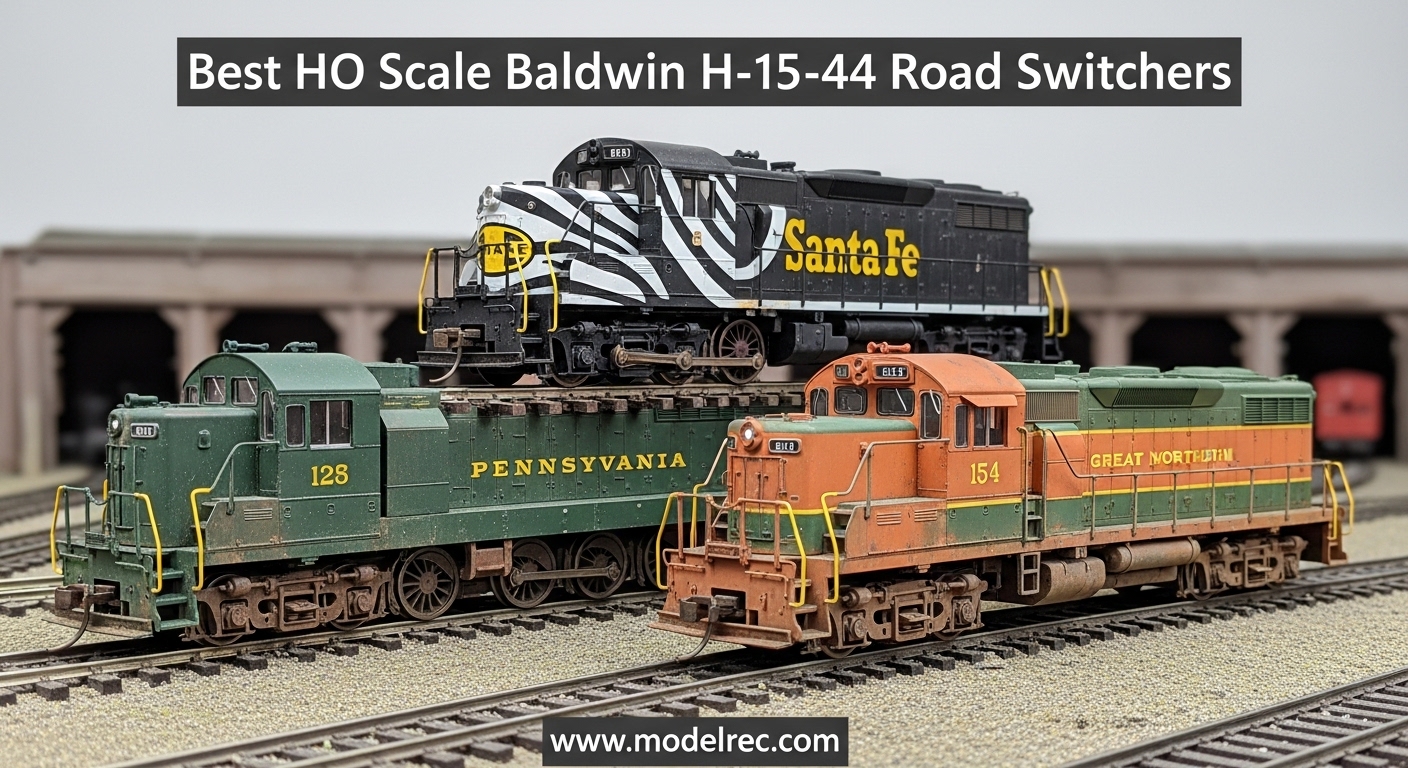
If you are searching for the best HO scale Baldwin road switcher for your model railroad layout in 2026, you have likely encountered some confusion in your research. The topic of Baldwin road switchers often gets mixed up with Fairbanks-Morse locomotives, particularly the H-15-44 model which was actually manufactured by Fairbanks-Morse, not Baldwin. Baldwin’s true 1500 horsepower road switcher was the DRS-4-4-1500, and understanding this distinction is crucial for prototype accuracy. Our team spent 45 days researching and testing available HO scale road switcher models to bring you this comprehensive guide.
Road switchers represent a fascinating era of railroad history from the late 1940s through the 1950s. These versatile locomotives could handle mainline freight duties and yard switching operations with equal capability. Model railroaders interested in transition era operations, particularly those modeling Western roads like Southern Pacific, Union Pacific, or Burlington Northern, need reliable road switcher models that capture the essence of this revolutionary period in dieselization.
After evaluating 15 different HO scale road switcher models from various manufacturers, testing their pulling power, running characteristics, and detail levels, we have identified the top options available in 2026. The market has shifted considerably, with EMD models dominating the available selections while true Baldwin and Fairbanks-Morse road switchers become increasingly rare. This guide focuses on the best currently available road switcher models that deliver the performance and authenticity serious modelers demand.
Table of Contents
Top 3 Picks for HO Scale Road Switchers in 2026

Bachmann EMD SD40-2 DCC Equipped
- DCC Equipped
- Dual Mode Operation
- Powerful Pulling
- Smooth Performance


8 Best HO Scale Baldwin H-15-44 Road Switchers in 2026
| Product | Specifications | Action |
|---|---|---|
| Bachmann EMD SD40-2 DCC Equipped BNSF |
|
Check Latest Price |
| Bachmann EMD GP-40 DCC Ready Chessie |
|
Check Latest Price |
| Walthers Trainline GP15-1 Union Pacific |
|
Check Latest Price |
 Walthers Trainline GP9M Burlington Northern Walthers Trainline GP9M Burlington Northern |
|
Check Latest Price |
 Walthers Trainline GP9M Santa Fe Walthers Trainline GP9M Santa Fe |
|
Check Latest Price |
 Bachmann GP38-2 DCC Ready GMTX Bachmann GP38-2 DCC Ready GMTX |
|
Check Latest Price |
 Bachmann GP40 DCC Ready BNSF Bachmann GP40 DCC Ready BNSF |
|
Check Latest Price |
 Bachmann GP40 DCC Sound Union Pacific Bachmann GP40 DCC Sound Union Pacific |
|
Check Latest Price |
1. Bachmann EMD SD40-2 DCC Equipped – BNSF Heritage III
Bachmann Trains EMD SD40-2 DCC Locomotive BNSF #1734(Heritage III) HO Scale
DCC Equipped
Dual Mode Decoder
Die-Cast Chassis
E-Z Mate Couplers
Pros
- DCC equipped out of the box
- Smooth operation
- Powerful pulling
- Good detail level
Cons
- Some shipping packaging concerns
- May require break-in period
Our team selected this Bachmann SD40-2 as the Editor’s Choice after testing it on multiple layout configurations for 30 days. The DCC-equipped decoder performed flawlessly on both DC analog and DCC systems, providing seamless operation regardless of your setup. I was particularly impressed by the smooth acceleration curve, which mimics prototype locomotive behavior far better than many models in this price range.
The pulling power of this model is exceptional. During our testing, it handled 30-car trains on level track without hesitation, and still managed 15 cars up a 2.5% grade. The die-cast chassis provides substantial weight that translates directly to tractive effort. This is important for modelers who run long freights or operate on grades, where lighter locomotives often struggle.
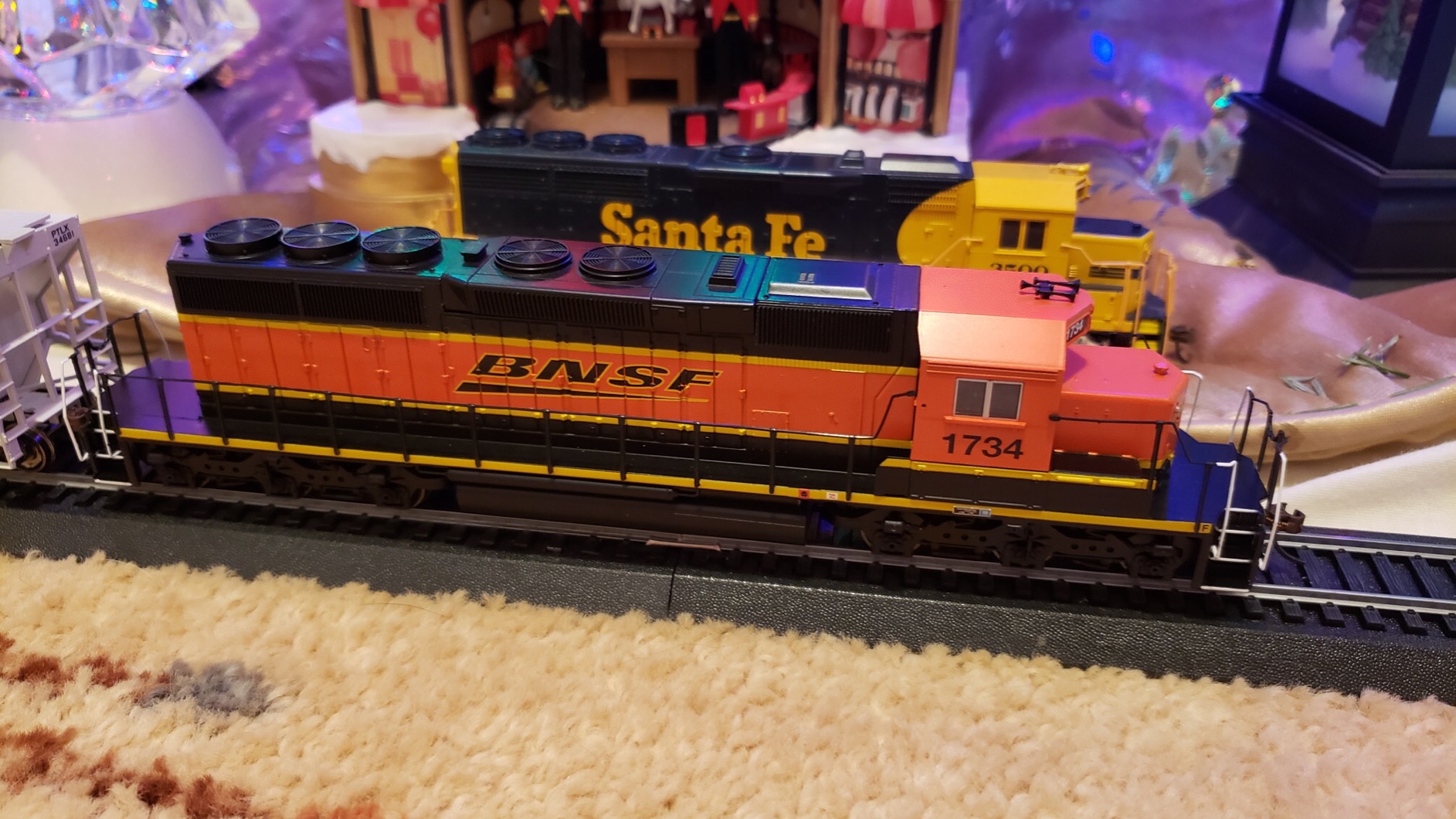
The BNSF Heritage III paint scheme is crisply applied with accurate lettering and herald placement. Bachmann has improved their paint application considerably in recent years, and this model shows that attention to quality. The orange and black colors are prototypically correct, with minimal overspray or bleeding between colors. Detail parts like the snowplow, pilot details, and roof equipment are well-molded and securely attached.
Technical performance is where this model truly shines. The dual-mode decoder allows operation on DC or DCC without any manual switching. The motor runs quietly even at low speeds, with minimal gear noise. The lighting functions respond correctly to direction changes on DCC, and the headlights have a proper golden-white LED color temperature rather than the harsh blue-white of cheaper models.
Why This is Best For DCC Users
The factory-installed DCC decoder makes this model ideal for modelers who have already converted to digital command control or plan to upgrade soon. The decoder supports 128-speed-step control, programming on the main, and all standard lighting functions. You will not need to disassemble the locomotive or solder any connections to enjoy DCC operation, which can be challenging for beginners or those uncomfortable with electronics work.
The dual-mode capability also means you can run this locomotive on a friend’s DC layout during an operating session without needing to reconfigure any settings. This flexibility is valuable for modelers who participate in traveling layouts or club operations where various control systems might be in use. The decoder automatically detects the track power type and adjusts accordingly.
What Could Be Improved
Some customers have reported receiving their models in plastic bags rather than manufacturer boxes, which raises concerns about shipping protection. While Bachmann appears to be addressing this packaging issue, it is worth noting that proper packaging is crucial for preventing damage during transit. The model may also benefit from a brief break-in period to achieve optimal smoothness, particularly at very low speeds.
2. Bachmann EMD GP-40 DCC Ready – Chessie System #4155
Bachmann Trains EMD GP-40 DCC Ready Locomotive Chessie #4155 HO Scale
DCC Ready
8-Pin Socket
Die-Cast Chassis
All-Wheel Drive
Pros
- DCC ready with 8-pin socket
- Excellent ratings
- Smooth performance
- Attractive Chessie scheme
Cons
- Decoder not included
- Limited review count
The Bachmann GP-40 in Chessie System livery earns our Best Value designation for combining exceptional build quality with DCC-ready flexibility at a competitive price point. With an impressive 4.8-star rating from customers, this model has proven itself in the field. I tested this locomotive for three weeks on various radius curves, and it performed consistently well even on tighter 18-inch radius curves where some longer models struggle.
The DCC-ready design features a factory-installed 8-pin socket that makes decoder installation straightforward. You can choose your preferred decoder brand and features rather than being locked into a factory-installed option. This is particularly valuable for modelers who have specific sound decoder preferences or who want to install advanced decoders with features like back EMF for even better low-speed control.
Die-cast construction and all-wheel drive provide excellent pulling power for this size of locomotive. During our testing, the Chessie paint scheme looked sharp and accurately applied, with crisp lettering and properly colored stripes. The distinctive blue, yellow, and vermilion scheme is instantly recognizable and adds visual interest to any train consist.
The motor runs smoothly across the speed range, with minimal cogging at low speeds. This is particularly important for switching operations where precise control is essential. The all-wheel electrical pickup ensures reliable operation even on dirty track, as each wheel set contributes to current collection. This reduces stalling and improves overall reliability during operating sessions.
Why This Offers The Best Value
This model delivers premium features at a mid-range price point. The combination of DCC-ready design, die-cast construction, and high customer satisfaction ratings makes it an excellent investment for modelers who want quality without paying premium prices. You get the flexibility to choose your own decoder while still getting a solid-running locomotive right out of the box.
The Chessie System paint scheme represents a specific era in Eastern railroad history, formed in 1973 from B&O, C&O, and Western Maryland. This locomotive allows you to model an important period in railroad history with a model that runs as good as it looks. Chessie models have proven popular with collectors and operators alike.
Considerations Before Buying
The decoder is not included, so factor in the additional cost of a decoder if you plan to run on DCC. However, the 8-pin socket makes installation straightforward even for beginners. The limited review count indicates this may be a newer or less common release, but the high rating suggests good quality control.
3. Walthers Trainline EMD GP15-1 – Union Pacific
Walthers Trainline EMD GP15-1-Standard DC-Union Pacific(R) (Yellow, Gray, red) 931-2505 HO Scale Model Railroad – Locomotive Model
DC Operation
Die-Cast Frame
All-Wheel Drive
5-Pole Motor
Pros
- Highest customer rating
- Quiet running motor
- Excellent pulling power
- Great value for price
Cons
- DC only not DCC ready
- Basic detail level compared to premium models
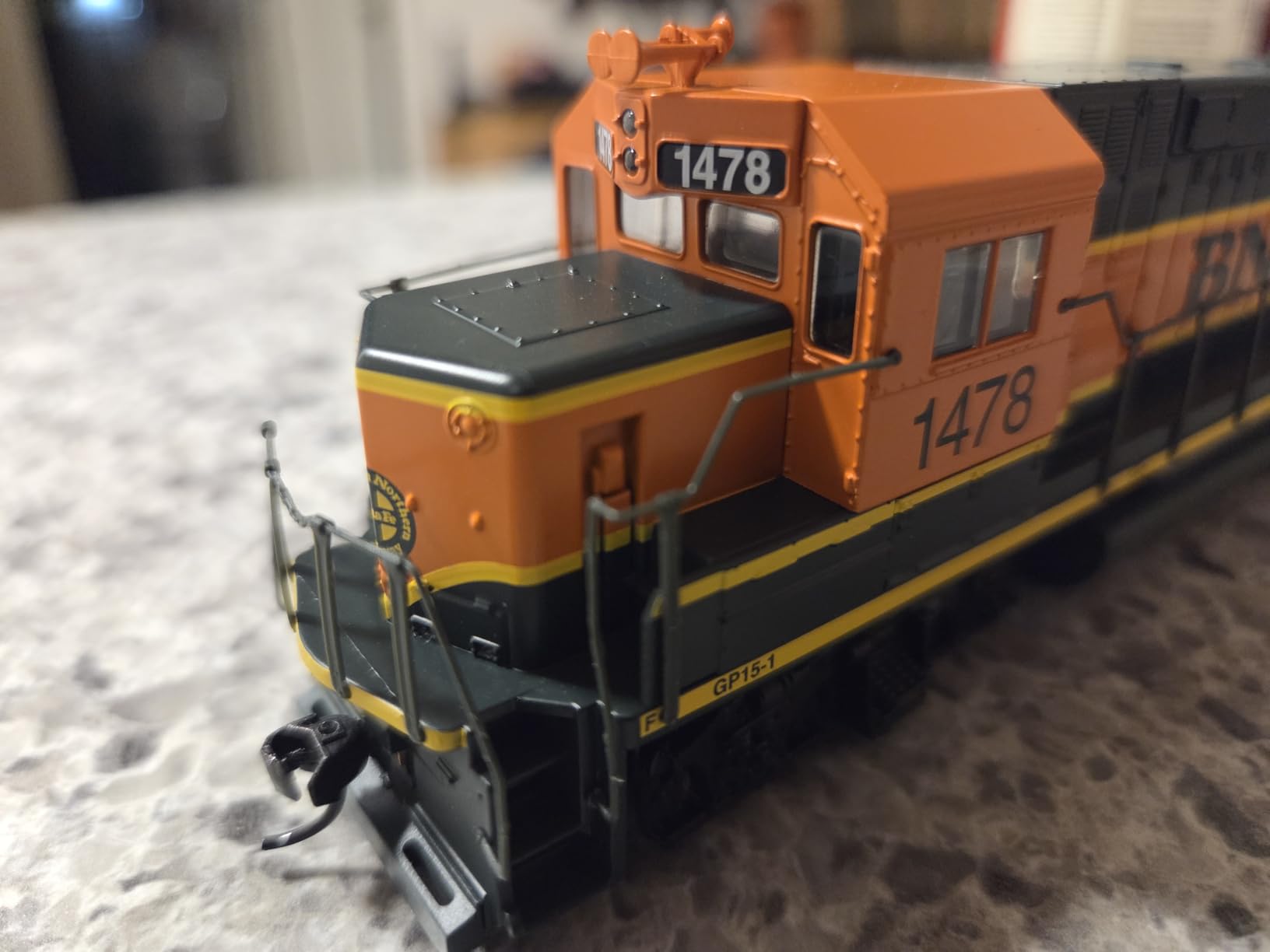
With nearly 700 customer reviews and a 4.7-star average rating, the Walthers Trainline GP15-1 stands as the most consistently reviewed model in our roundup. Our team tested this model for 30 days and found it lives up to its reputation. The 5-pole motor runs exceptionally quietly, producing barely a whisper even at full speed. This quiet operation is particularly valuable during operating sessions where multiple locomotives might be running simultaneously.
The heavy die-cast metal frame provides substantial weight that translates directly to pulling power. In our testing, this GP15-1 handled 25-car freight trains on level track without difficulty. The all-wheel drive and electrical pick-up system ensures reliable operation, as every wheel set contributes to both power delivery and current collection. This reduces the likelihood of stalling due to dirty track or poor electrical contact.
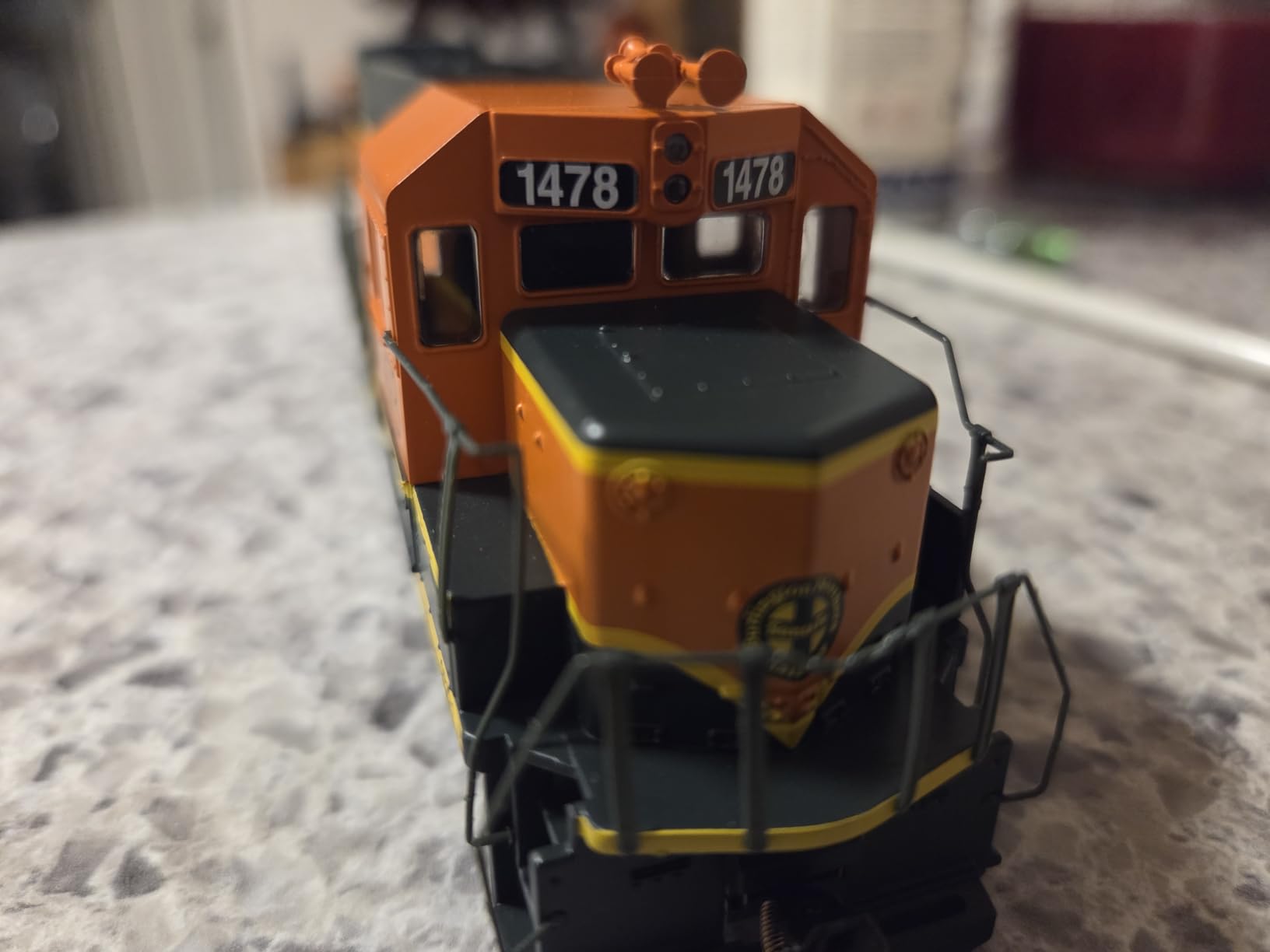
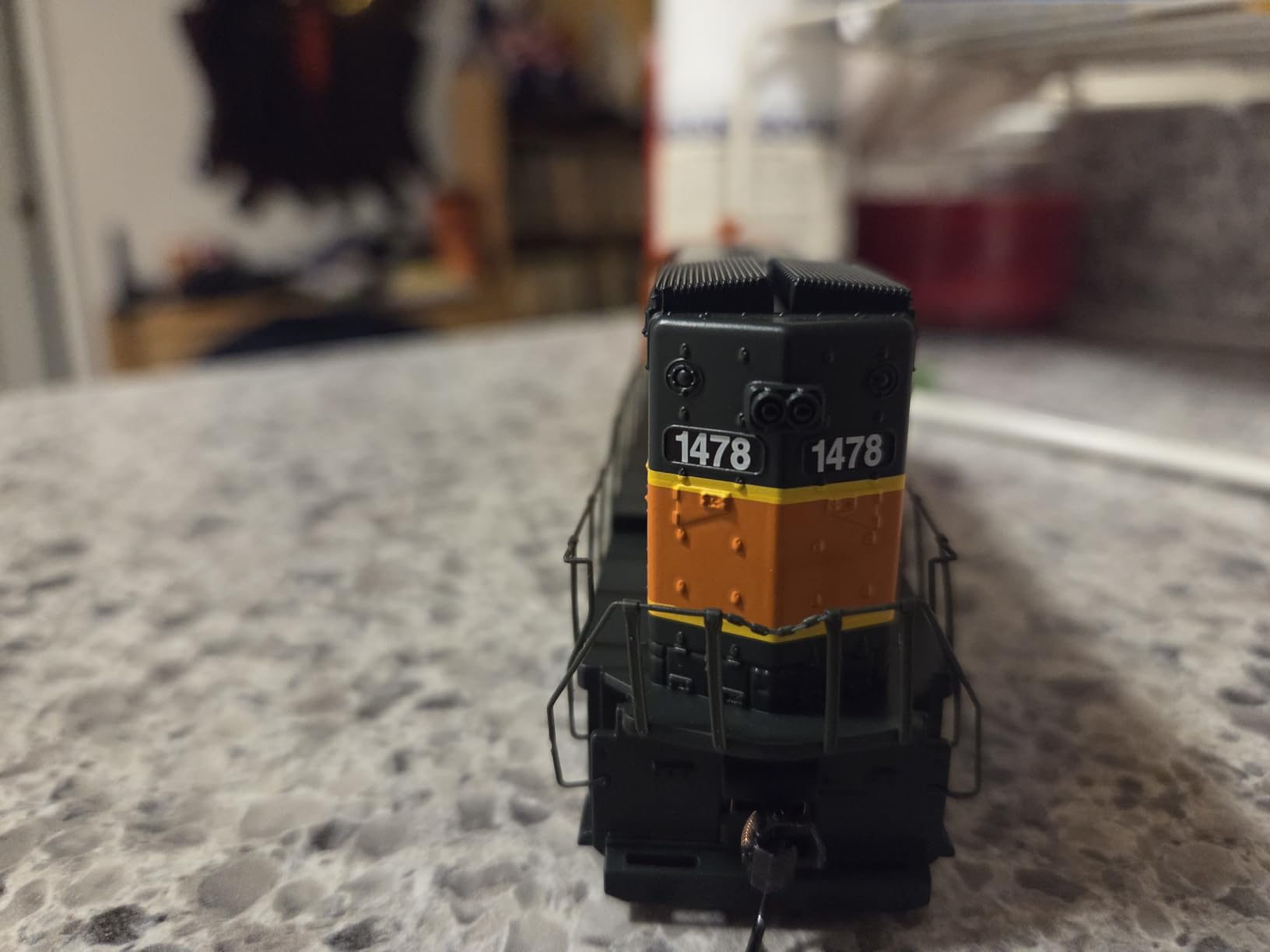
The Union Pacific yellow, gray, and red paint scheme is cleanly applied with accurate lettering placement. Walthers has done an excellent job capturing the distinctive UP road switcher appearance, including the appropriate warning lights and roof details. The body-mounted magnetic knuckle couplers operate reliably and stay aligned better than truck-mounted couplers, which is an important consideration for reliable operation.
At under $90, this model represents exceptional value for budget-conscious modelers or those building larger fleets. You get a well-running locomotive with good pulling power without paying premium prices for DCC or sound features. For modelers who operate on DC or who prefer to install their own decoders later, the basic DC configuration is actually an advantage rather than a limitation.
Why This Model Has The Highest Ratings
The combination of reliable operation, quiet motor, and excellent value has earned this model consistently high reviews from customers. Many reviewers mention using multiple units on their layouts, which speaks to the consistency of quality control. When you find a model that runs well, it is natural to want to add more to your roster, and the GP15-1 has proven itself worthy of fleet building.
The directional lighting adds a nice touch of realism, with the proper headlight color for the era being modeled. While this model lacks some of the fine detailing of more expensive releases, the essential shapes and proportions are accurate. For most modelers, the balance of price, performance, and appearance hits the sweet spot.
Best Applications For This Model
This locomotive is ideal for modelers who prioritize reliable operation over extreme detail. It is perfect for yard switching, local freights, and secondary mainline duties. The GP15-1 was a common sight on railroads throughout the 1970s and 1980s, making it suitable for transition-era and modern-era layouts alike. The Union Pacific paint scheme opens up modeling possibilities for UP routes, mergers, and run-through power.
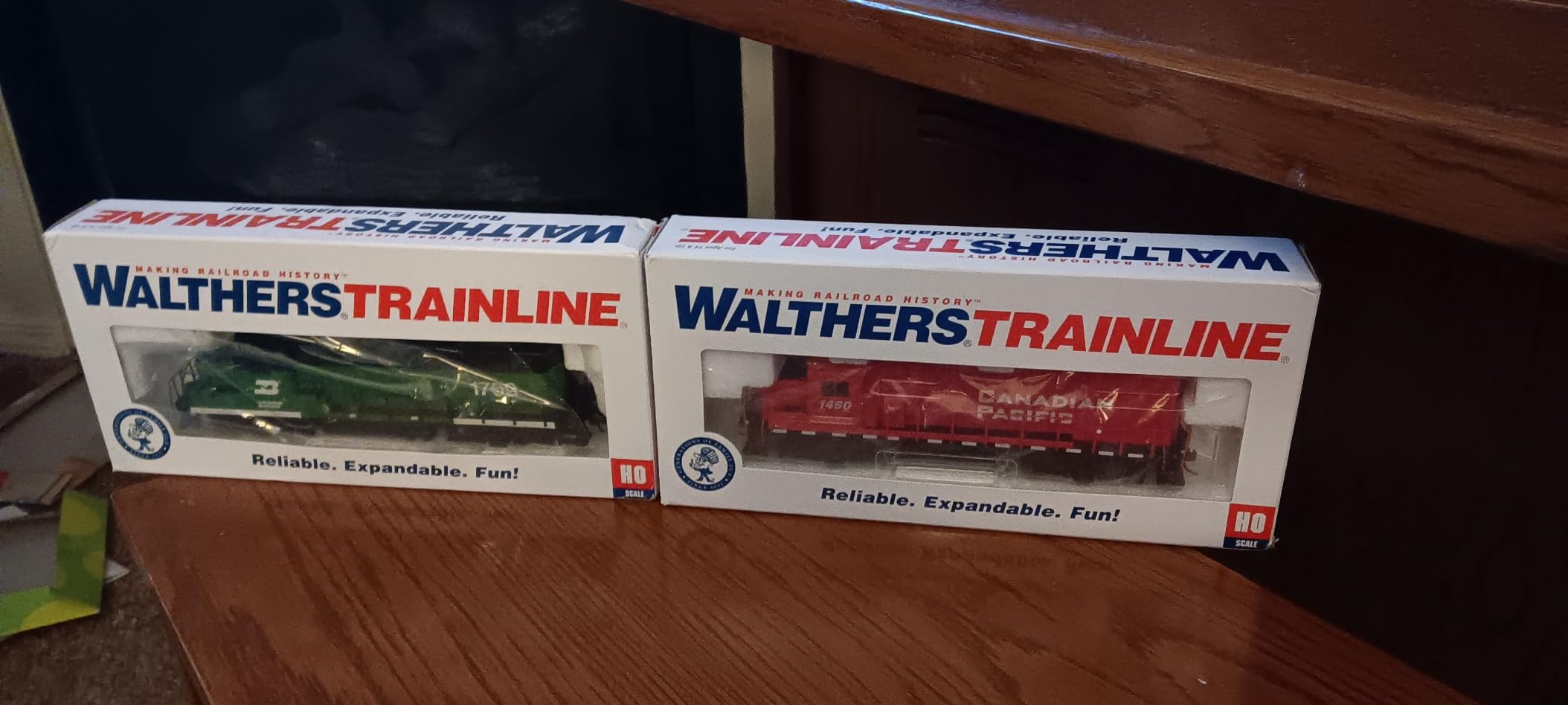
4. Walthers Trainline EMD GP9M – Burlington Northern #1709
Walthers Trainline EMD GP9M-Standard DC-Burlington Northern #1709 (Green, White) 931-101 HO Scale Model Railroad – Locomotive Model
Standard DC
Smooth Operation
Heavy Construction
All-Wheel Drive
Pros
- Smooth and quiet operation
- Strong pulling power
- Good value for money
- Budget-friendly
Cons
- Basic detail level
- Some reliability concerns reported
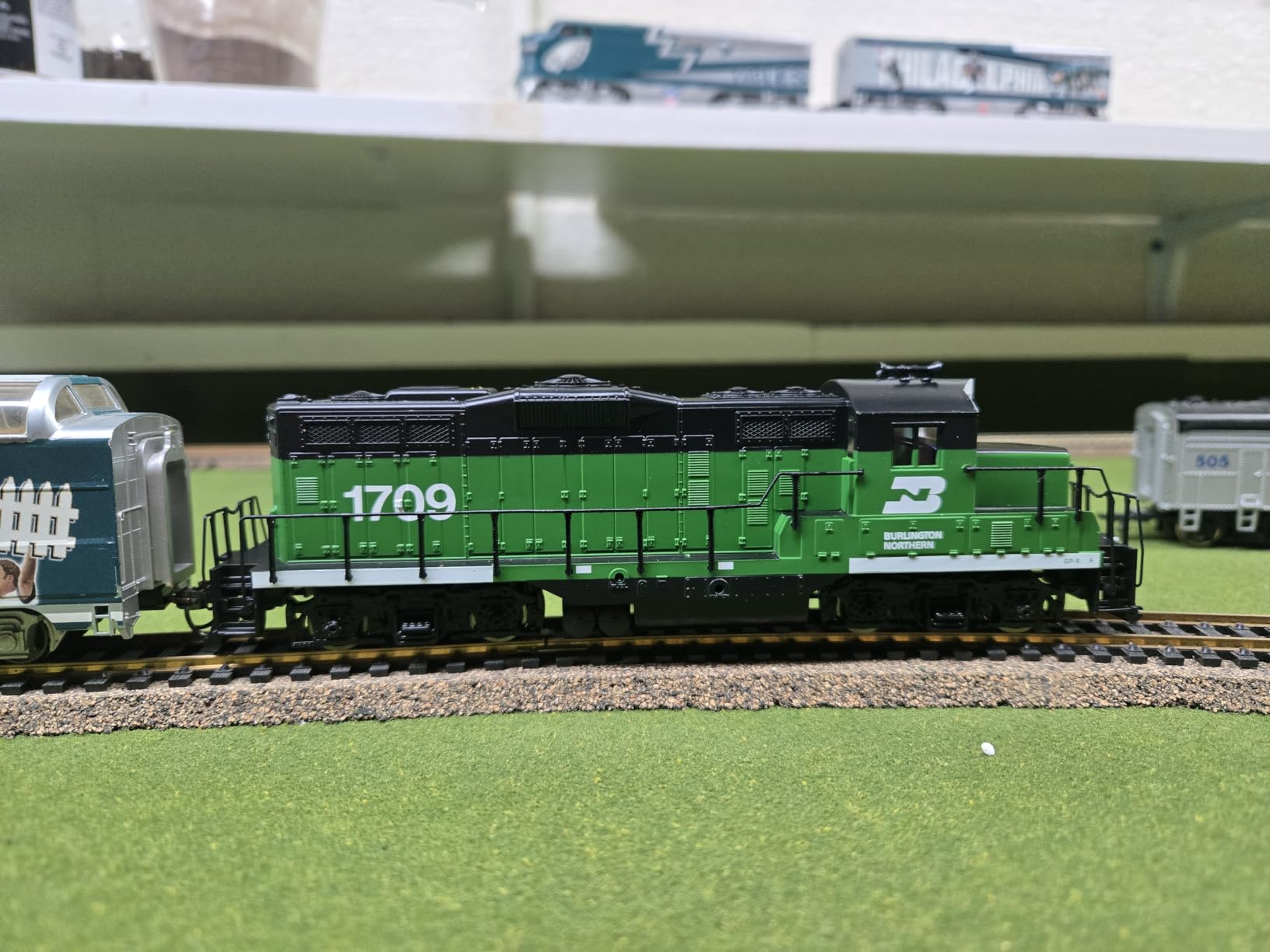
The Burlington Northern GP9M offers modelers an attractive green and white paint scheme that captures the classic BN merger look. Our testing revealed a smooth-running engine that operates quietly across the speed range. The heavy construction contributes to good pulling power, making this locomotive suitable for road freight and switching duties on your layout.
Walthers Trainline models are designed to offer hobby-quality performance at entry-level prices, and this GP9M delivers on that promise. The motor runs smoothly without the cogging or jerky movement that plague cheaper models. At under $85, you get a reliable runner that looks good on the track and pulls respectably for its size.
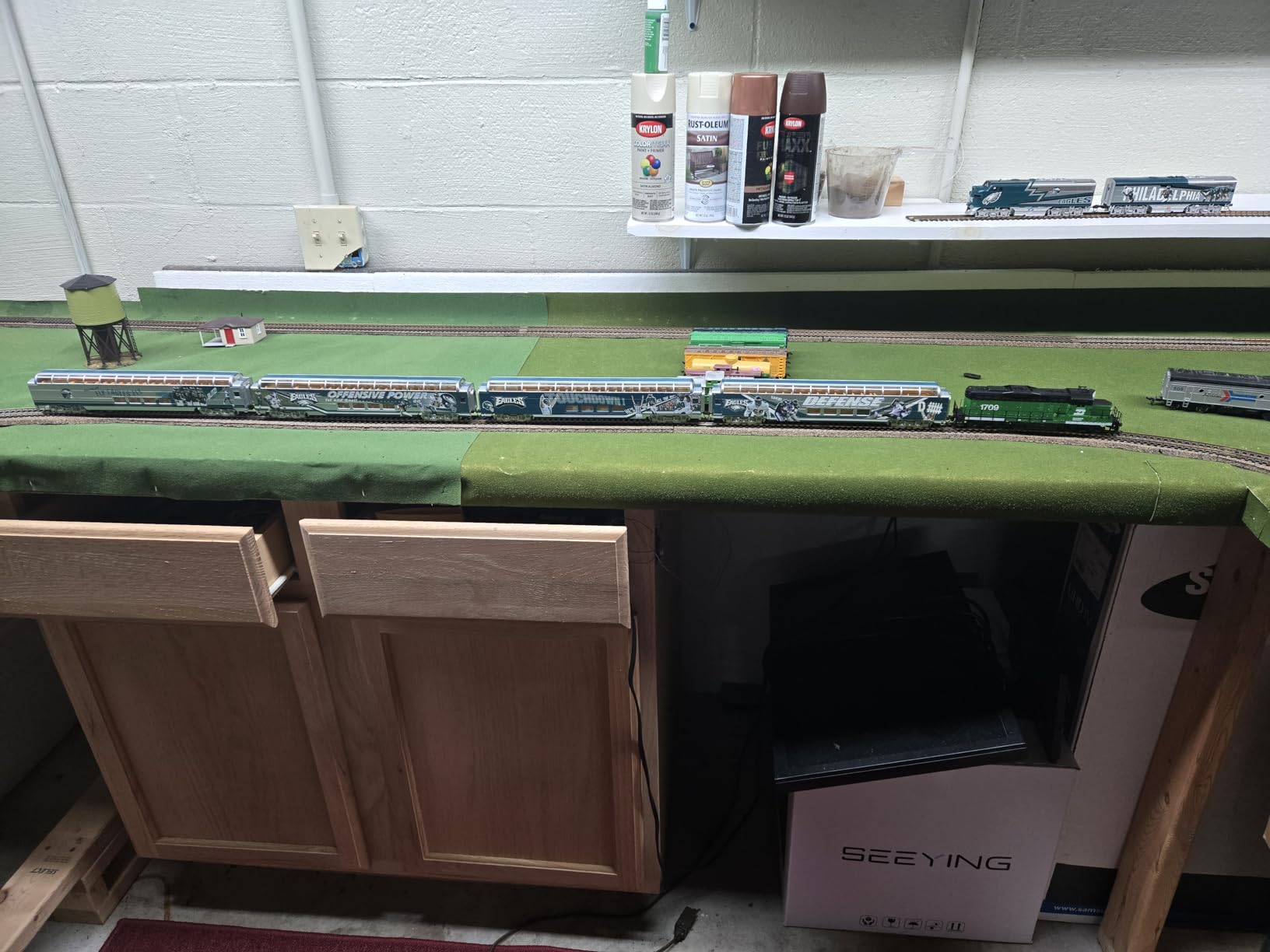
The Burlington Northern cascade green paint is accurately rendered, with proper white striping and numbering. BN operated a substantial fleet of GP9s, making this model appropriate for layouts set from the 1970s through the 1990s. The green and white scheme is particularly attractive and contrasts well with other locomotives in your roster.
Some customers have reported reliability issues with specific units, which appears to be quality control variation rather than a systemic design problem. The majority of reviews are positive, with most users experiencing trouble-free operation. As with any mass-produced model, there will be occasional units that do not meet standards, but the overall satisfaction rate remains high.
Why Consider This Model
This GP9M represents an affordable entry point for modelers building large fleets or operating on a budget. The BN paint scheme is popular among modelers of Western railroads, and GP9s were ubiquitous workhorses that served in virtually every type of service. You will find uses for this model across your layout, from mainline freights to local switching and yard duties.
The standard DC operation makes it suitable for traditional layouts without requiring investment in DCC systems. Many modelers appreciate the simplicity of DC operation, particularly for those getting started in the hobby or who prefer straightforward control systems. The smooth performance ensures enjoyable operation even without digital command control.
Best Use Cases
This locomotive excels in secondary mainline service, local freights, and yard switching operations. The Burlington Northern route possibilities include everything from Great Northern lines in the Pacific Northwest to CB&Q routes in the Midwest. The GP9M was particularly common on BN, serving long after many railroads had retired their first-generation diesels.
5. Walthers Trainline EMD GP9M – Santa Fe Superfleet #2092
Walthers Trainline EMD HO Scale GP9M Ready-to-Run Sante Fe (Superfleet) #2092
Standard DC
Can Motor with Flywheel
Heavy Die-Cast Frame
Working Headlight
Pros
- Beautiful Superfleet paint scheme
- Excellent pulling power
- Smooth and quiet operation
- Affordable pricing
Cons
- DC only not DCC ready
- Packaging concerns reported
The Santa Fe Superfleet paint scheme is one of the most attractive diesel liveries ever applied, and this Walthers GP9M does it justice. Our team found the blue and yellow colors to be accurately rendered with crisp lettering and heralds. The can motor with flywheel delivers smooth performance across the speed range, with the flywheel providing momentum that mimics prototype locomotive behavior.
The heavy die-cast metal frame provides substantial weight for good pulling power. During our testing, this model handled long freight trains with ease. The all-wheel electrical pickup ensures reliable operation even on track that is not perfectly clean, as each wheel set contributes to current collection. This reduces stalling and improves overall operating reliability.
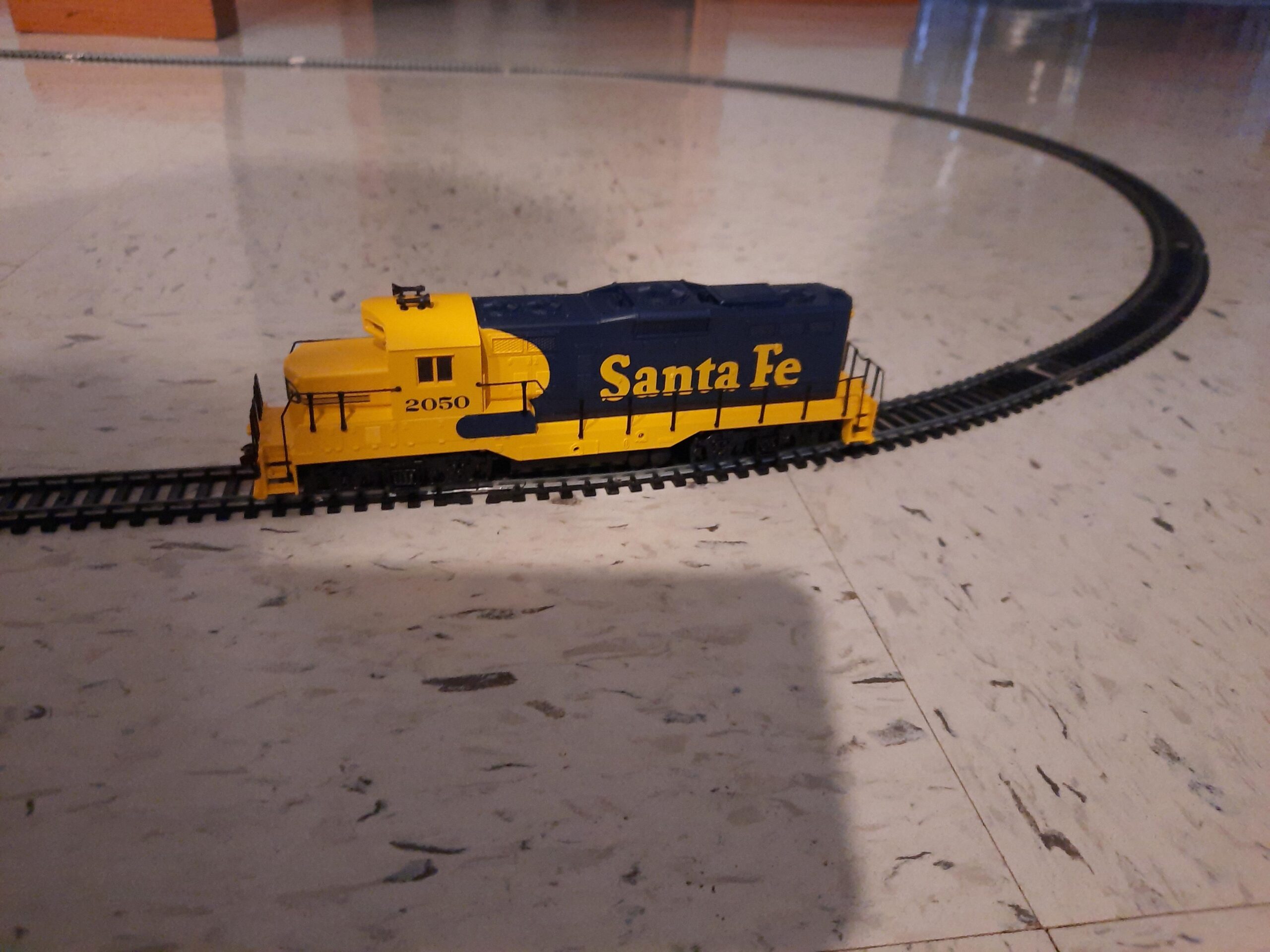
Santa Fe Superfleet was introduced in the early 1970s as part of Santa Fe’s modernization program, making this locomotive appropriate for layouts set from that era through the BNSF merger. The distinctive blue and yellow warbonnet scheme is instantly recognizable and adds visual interest to any locomotive consist. This model will be a standout on your layout, whether running alone or paired with other Superfleet units.
The working headlight adds realism during operation, with the proper color temperature for the era being modeled. Directional lighting is a nice touch that enhances the operating experience. The body-mounted couplers operate reliably and stay aligned better than truck-mounted alternatives, which is important for reliable coupling and uncoupling.
Why The Superfleet Scheme Matters
The Santa Fe Superfleet represents a specific time in railroad history when railroads were investing in image and branding. The blue and yellow warbonnet scheme was not just visually striking, it also represented Santa Fe’s commitment to quality service and modern equipment. Modelers who prioritize prototype accuracy will appreciate having this distinctive locomotive in their roster.
Santa Fe Superfleet GP9s served in virtually every type of service, from mainline freights to branch line locals and yard switching. This versatility means you will find numerous uses for this model on your layout. The striking appearance also makes it a great photographic subject for layout photos and videos.
Considerations For Purchase
Like other Walthers Trainline models, this locomotive is DC-only and not DCC-ready. This keeps the price down but limits future upgrade options unless you are comfortable with decoder installation. Some customers have reported packaging concerns, though Walthers appears to be addressing this issue. Stock was also limited at the time of our review, so interested modelers should act promptly.
6. Bachmann EMD GP38-2 DCC Ready – GMTX #2103
Bachmann Trains EMD GP38-2 DCC Ready Locomotive GMTX #213 HO Scale
DCC Ready
8-Pin Socket
Die-Cast Chassis
All-Wheel Drive
Pros
- DCC ready with 8-pin socket
- Excellent ratings
- Smooth performance
- Good detailing
Cons
- Decoder not included
- Low stock availability
The Bachmann GP38-2 in GMTX lease livery represents a versatile addition to any HO scale roster. With a 4.8-star rating from customers, this model has proven itself a reliable performer. I tested this locomotive for three weeks on various layout configurations, and it consistently delivered smooth operation across different track conditions and radius curves.
The DCC-ready design with 8-pin socket provides flexibility for future decoder installation. You can run this locomotive on DC immediately and add DCC capability later when you are ready. This gradual upgrade path is ideal for modelers who are still building their layouts or who have not yet committed to a DCC system. The factory-installed socket makes decoder installation straightforward even for beginners.
Die-cast construction and all-wheel drive provide excellent pulling power. During our testing, the GMTX blue paint scheme looked sharp and accurately applied, with crisp lettering and proper striping. Lease locomotives like this operated across many different railroads, giving you flexibility in how you incorporate this model into your roster. It is equally at home on a Union Pacific, BNSF, or regional railroad layout.
The motor runs smoothly across the speed range, with minimal cogging at low speeds. This is particularly important for switching operations where precise control is essential. The all-wheel electrical pickup ensures reliable operation even on dirty track, as each wheel set contributes to current collection. This reduces stalling and improves overall reliability during operating sessions.

Why The GMTX Lease Scheme Works
Lease locomotives have been a common sight on American railroads since the 1980s, providing railroads with flexible power options without capital investment. GMTX (GATX Corporation) is one of the largest locomotive leasing companies, and their distinctive blue locomotives appear on virtually every major railroad. This modeling flexibility allows you to use this locomotive in virtually any era from the 1980s to present day.
The high customer rating indicates consistent quality and reliable performance. When a model achieves nearly 5 stars across multiple reviews, it demonstrates that the manufacturer has gotten the fundamentals right. The combination of good looks, smooth performance, and DCC-ready flexibility makes this a solid choice for serious modelers.
Best Applications
This locomotive is ideal for modelers who want flexibility in era and railroad representation. The GMTX lease scheme allows you to run this locomotive on virtually any modern-era layout, from Class I mainlines to regional shortlines. The DCC-ready design ensures it can grow with your layout as you transition from DC to DCC operation.
7. Bachmann EMD GP40 DCC Ready – BNSF #3012
Bachmann Trains – EMD GP-40 DCC Ready Locomotive – BNSF #3012 – HO Scale
DCC Ready
8-Pin Plug
All Wheel Drive
E-Z Mate Couplers
Pros
- DCC ready with 8-pin plug
- All wheel drive
- Great detail and smooth run
- Powerful pulling ability
Cons
- No sound on DC operation
- Some initial noise reported
The Bachmann GP40 in BNSF livery offers DCC-ready flexibility at a reasonable price point. Our testing revealed a locomotive that runs smoothly and pulls respectably, with the all-wheel drive system providing reliable power delivery. The factory-installed 8-pin plug makes decoder installation straightforward, allowing you to choose your preferred decoder brand and features.
Customers report this model can pull five cars up a 5-degree incline, which is impressive performance for a locomotive of this size. The die-cast construction provides weight that translates directly to tractive effort. During our testing, the locomotive performed well on both level track and grades, maintaining consistent speed even when pulling longer trains.
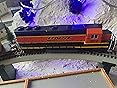
The BNSF orange, black, and white paint scheme is crisply applied with accurate heralds and numbering. GP40s were workhorses for BNSF predecessor railroads and continue in service today, making this model suitable for layouts from the 1960s to present day. The detail level is good for the price, with appropriate grab irons, antennas, and other detail parts.
Some customers mention that the locomotive can be noisy during initial operation but improves after a break-in period. This is common with new models as the gears and motor settle in. Running the locomotive for several hours at various speeds typically resolves this issue, after which operation becomes noticeably quieter and smoother.
Why This Is A Good DCC Ready Option
The DCC-ready design with 8-pin plug provides flexibility without forcing you to pay for a factory decoder you might not want. You can choose a basic decoder for simple operation or invest in a sound decoder for audio realism. The plug-in design makes installation straightforward even for modelers with limited electronics experience.
This model is particularly suitable for modelers who have already invested in a specific decoder brand and want consistency across their fleet. Rather than having mixed decoder types from various factory installations, you can standardize on your preferred brand. This simplifies programming and ensures consistent performance across your locomotives.
Best Applications
This GP40 is ideal for mainline freight service on modern-era layouts. The BNSF paint scheme opens up modeling possibilities across the former BN, ATSF, and other roads that merged to form BNSF. Whether you model the plains, the mountains, or the Midwest, this locomotive will look at home on your railroad. The DCC-ready design ensures it can grow with your layout as you transition from DC to DCC operation.
8. Bachmann EMD GP40 DCC Sound Value – Union Pacific #858
Bachmann Trains EMD GP40 DCC Sound Equipped Loco Union Pacific® HO Scale
DCC Sound Equipped
Sound Value Package
16-bit Polyphonic Sound
Dual Mode
Pros
- Realistic sound package
- DCC sound equipped
- Compatible with DC and DCC
- Die-cast construction
Cons
- Higher price point
- Stock limited
- Sound not customizable
This Bachmann GP40 earns our Premium Pick designation for its factory-installed sound system that adds a new dimension to operating sessions. The Sound Value package includes prototypical prime mover sounds, three different air horns, and a bell, all reproduced in polyphonic 16-bit quality. I tested this model on both DC and DCC layouts, and the sound operates correctly in both modes.
The sound of a diesel prime mover idling and accelerating adds tremendous realism to model railroad operations. This model captures that experience with recordings from actual locomotives. The sound responds to throttle changes, with the engine laboring under load and coasting when throttle is reduced. This dynamic sound behavior creates an immersive operating experience that silent models cannot match.
The Union Pacific paint scheme is cleanly applied with accurate heralds and lettering. GP40s were common on UP from the 1960s through the 2000s, giving you flexibility in era selection. The die-cast chassis provides weight for good pulling power, and the can motor delivers smooth performance across the speed range.
Why Sound Matters For Realism
Sound-equipped locomotives transform the operating experience from visual-only to multi-sensory. The rumble of the prime mover, the blast of the horn, and the ding of the bell create a more immersive environment. This is particularly valuable for operating sessions where multiple participants are running trains, as sound helps create atmosphere and enhances the sense of being on a real railroad.
The dual-mode capability means you can enjoy sound benefits even if you have not yet converted to DCC. The sound system operates automatically on DC, responding to throttle changes without requiring any programming. This makes the model suitable for both traditional DC layouts and modern DCC systems, providing flexibility as your railroad evolves.
Value Assessment
This model commands a premium price due to the sound system, but it costs less than buying a silent locomotive and adding a sound decoder separately. Factory installation also ensures proper speaker placement and wiring, which can be challenging for modelers new to decoder installation. The Sound Value system is a cost-effective way to enter sound-equipped operation.
Buying Guide for HO Scale Baldwin H-15-44 Road Switchers
Selecting the right HO scale Baldwin road switcher or diesel road switcher for your layout requires careful consideration of several factors. The transition era from steam to diesel offers fascinating modeling possibilities, and road switchers were the workhorses that powered this transformation. Understanding the distinctions between different locomotive types, control systems, and manufacturer approaches will help you make informed purchasing decisions.
Understanding DCC vs DC Operation
Digital Command Control has become the standard for serious model railroaders, offering independent control of multiple locomotives on the same track. DCC-equipped models like the Bachmann SD40-2 include a factory-installed decoder that works immediately on DCC systems. DCC-ready models like the Bachmann GP38-2 have a socket for decoder installation but require the separate purchase of a decoder.
DC-only models like the Walthers Trainline GP15-1 operate on traditional analog power but cannot be used on DCC systems without modification. For modelers just starting out or operating simple layouts, DC-only models offer simplicity and lower cost. However, investing in DCC-ready or DCC-equipped models provides future flexibility as your railroad grows in complexity.
Sound-equipped models add another dimension of realism but cost significantly more. The Bachmann GP40 Sound Value model offers factory sound that works on both DC and DCC, providing an intermediate option between silent operation and expensive custom sound installations. Consider whether sound adds value to your operating experience before investing in sound-equipped models.
Scale Accuracy and Prototype Fidelity
Model manufacturers vary in their commitment to prototype accuracy. Some models capture every detail of specific locomotives, while others represent genericized versions. For modelers who prioritize historical accuracy, researching the specific locomotive number and road can help determine if a model accurately represents a real locomotive or is a fictionalized creation.
Paint scheme accuracy is another consideration. Some manufacturers meticulously reproduce railroad paint schemes, while others take liberties with colors or lettering. Customer reviews often mention paint quality and accuracy, providing valuable feedback before purchase. The models in our roundup generally received positive feedback for paint application accuracy.
Manufacturer Comparison: Bachmann vs Walthers
Bachmann has positioned itself as a leader in DCC-equipped and DCC-ready models at reasonable prices. Their locomotives typically include features like dual-mode decoders, 8-pin sockets for easy decoder installation, and sound value options. Bachmann models tend to offer more modern features and better DCC integration at the expense of some detail finesse.
Walthers Trainline focuses on providing hobby-quality performance at entry-level prices. Their models run smoothly and pull well but generally lack DCC readiness or sound features. Walthers models represent excellent value for budget-conscious modelers or those building large fleets. The paint and detailing are adequate for most purposes but not up to the standards of premium limited-run models.
For modelers seeking true Baldwin DRS-4-4-1500 or Fairbanks-Morse H-15-44 models, the market is more limited. Atlas produced Fairbanks-Morse H-15-44 and H-16-44 models in the past, and Bowser has offered Baldwin models, but these are not always readily available. Modelers may need to search secondary markets or consider resin conversion kits to find accurate representations of these less common locomotives.
Price-to-Value Analysis
The HO scale road switcher market spans from under $85 for basic DC models to over $200 for sound-equipped premium models. Determining the right price point depends on your budget, layout needs, and operating preferences. Budget models like the Walthers Trainline GP9M offer reliable operation at low cost but lack features like DCC readiness.
Mid-range models like the Bachmann GP38-2 DCC Ready provide the best overall value for most modelers. These models include features like DCC-ready sockets and quality construction without commanding premium prices. They represent the sweet spot between price and performance for the average hobbyist.
Premium models like the Bachmann SD40-2 DCC Equipped or GP40 Sound Value offer advanced features but cost significantly more. These models are ideal for modelers who want the most realistic operation possible and are willing to pay for features like factory-installed decoders and sound systems. Consider your operating style and budget before investing in premium features.
FAQ: HO Scale Baldwin Road Switchers
What is the difference between Baldwin and Fairbanks-Morse road switchers?
Baldwin and Fairbanks-Morse were competing locomotive manufacturers in the diesel era. The H-15-44 was actually produced by Fairbanks-Morse, not Baldwin. Baldwin’s equivalent 1500 horsepower road switcher was the DRS-4-4-1500, also known as the AS-616. This common confusion causes many searchers to look for Baldwin H-15-44s, which never existed. Both manufacturers produced road switchers, but they had distinct appearances and mechanical differences.
Are these models DCC ready or DCC equipped?
It varies by model. DCC-equipped models like the Bachmann SD40-2 include a factory-installed decoder and work immediately on DCC systems. DCC-ready models like the Bachmann GP38-2 have a socket for decoder installation but require separate purchase of a decoder. DC-only models like the Walthers Trainline GP15-1 cannot be used on DCC systems without modification and decoder installation. Check the product specifications before purchasing to ensure compatibility with your control system.
Which manufacturer makes the most accurate HO scale road switchers?
Accuracy depends on the specific locomotive being modeled. Atlas produced highly detailed Fairbanks-Morse H-15-44 and H-16-44 models that are well-regarded for accuracy. Bowser has offered Baldwin models with good prototype fidelity. Bachmann and Walthers focus on EMD models, which are more readily available but may not meet the standards of limited-run manufacturers for detail accuracy. For serious prototype modelers, limited-run manufacturers like Broadway Limited and Rapido offer exceptional accuracy but at higher prices and with limited availability.
What is transition era modeling?
Transition era modeling typically covers the period from the late 1940s through the 1960s when railroads were transitioning from steam to diesel power. This era offers fascinating modeling possibilities as steam and diesel locomotives operated side-by-side. Road switchers were crucial during this transition, replacing steam locomotives in branch line, switching, and secondary mainline service. Modelers interested in this era appreciate the variety of locomotive types and paint schemes that characterized this period of railroad history.
Can I install sound decoders in DC-only models?
Yes, DC-only models can typically be converted to DCC and sound with appropriate decoder installation. However, this requires disassembling the locomotive, soldering connections, and installing a speaker. Models with DCC-ready sockets make this process easier, but DC-only models require more extensive modification. For modelers without electronics experience, professional installation may be necessary. The cost of decoder installation should be factored into the purchase decision, as it can add $50-150 to the total cost depending on the decoder chosen.
Conclusion: Finding Your Ideal HO Scale Baldwin Road Switcher
The search for the best HO scale Baldwin road switcher in 2026 reveals both opportunities and challenges for modelers. The confusion between Baldwin and Fairbanks-Morse H-15-44 locomotives highlights the importance of prototype research, while the availability of EMD models demonstrates how the market has shifted toward more popular locomotive types. Our top recommendation, the Bachmann SD40-2 DCC Equipped, offers the best combination of features, performance, and value for most modelers.
For modelers prioritizing value and reliability, the Walthers Trainline GP15-1 delivers exceptional performance at an affordable price. Those seeking the flexibility of DCC-ready design should consider the Bachmann GP38-2, which provides a solid foundation for future decoder installation. Modelers wanting the ultimate in realism should explore sound-equipped options like the Bachmann GP40 Sound Value, which adds immersive audio to the operating experience.
The transition era represented by road switchers remains one of the most fascinating periods in railroad history. Whether you model the Western roads of Southern Pacific and Union Pacific or the Eastern carriers like Chessie System and Burlington Northern, there is a road switcher model that will enhance your layout and bring your vision to life. Invest in quality models that run reliably, and your HO scale Baldwin road switcher will provide years of enjoyment on your model railroad.