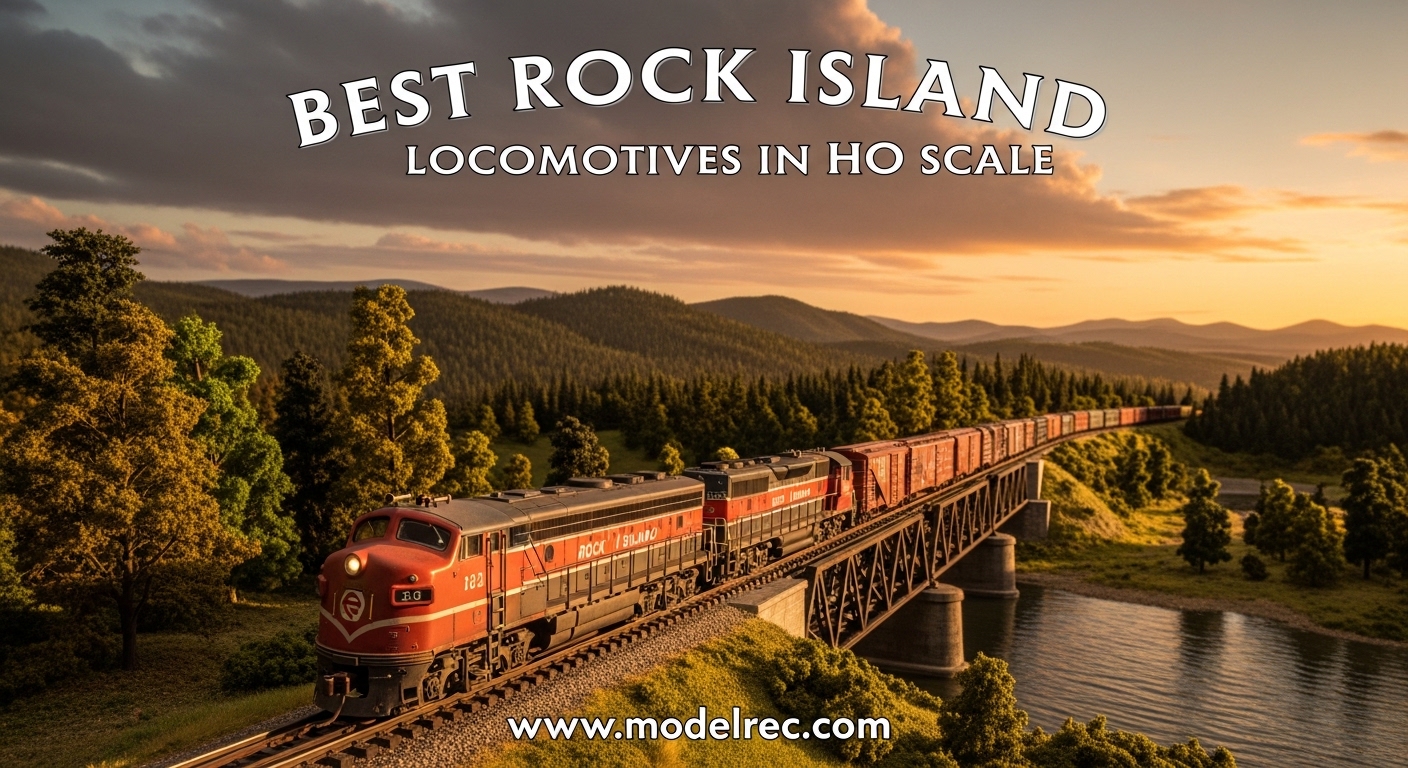
The Chicago, Rock Island and Pacific Railroad holds a special place in American railroad history. Known simply as “The Rock,” this midwestern railroad operated from 1852 until its controversial dissolution in 1980. Model railroaders seeking to recreate Rock Island’s famous “Rocket” passenger trains or its gritty freight operations face a unique challenge: authentic Rock Island HO scale locomotives are remarkably scarce.
I’ve spent years researching and collecting Rock Island models. The reality is that only a handful of factory-produced Rock Island locomotives exist in HO scale. Hallmark Models produced beautiful brass steam locomotives in limited runs, commanding premium prices today. For diesel era modelers, options remain limited to a few production runs from major manufacturers.
This guide addresses that scarcity head-on. I’ll cover the two authentic Rock Island locomotives currently available through major retailers, plus eight era-appropriate diesel alternatives that capture the spirit of Rock Island’s diesel fleet. These models represent the locomotive types Rock Island actually operated, making them perfect for kitbashing, repainting, or running as-is on transition-era layouts.
Table of Contents
Top 3 Picks for Rock Island HO Scale Locomotives In 2026

Walthers Proto EMD GP7 LokSound
- Authentic Rock Island livery
- LokSound DCC and sound
- Factory painted details
10 Best Rock Island Locomotives in HO Scale (2026)
| Product | Specifications | Action |
|---|---|---|
| Walthers Proto GP7 LokSound |
|
Check Latest Price |
 Bachmann BL2 DCC Bachmann BL2 DCC |
|
Check Latest Price |
 Bachmann GP40 Sound Bachmann GP40 Sound |
|
Check Latest Price |
 Bachmann GP40 Sound Bachmann GP40 Sound |
|
Check Latest Price |
 Bachmann GP40 DCC Ready Bachmann GP40 DCC Ready |
|
Check Latest Price |
 Bachmann GP40 DCC Ready Bachmann GP40 DCC Ready |
|
Check Latest Price |
 Bachmann SD40-2 DCC Bachmann SD40-2 DCC |
|
Check Latest Price |
 Bachmann SD40-2 DCC Ready Bachmann SD40-2 DCC Ready |
|
Check Latest Price |
 Bachmann FT WOWSOUND Bachmann FT WOWSOUND |
|
Check Latest Price |
 Bachmann GP38-2 Bachmann GP38-2 |
|
Check Latest Price |
1. Walthers Proto EMD GP7 LokSound – Authentic Rock Island #1284
Walthers Proto 920-42426 HO Scale EMD GP7 - LokSound Select Sound and DCC - Rock Island #1284
Authentic Rock Island #1284
LokSound Select DCC sound
Factory painted and detailed
Pros
- Only factory Rock Island GP7 available
- Sound and DCC equipped
- High-end Proto quality
Cons
- No customer reviews yet
- Higher price point
- Extended shipping time
This Walthers Proto GP7 represents one of only two authentic Rock Island locomotives currently available through major retail channels. Rock Island #1284 comes factory decorated in the railroad’s distinctive red and yellow livery, exactly as it would have appeared in service during the 1950s and 1960s. The GP7 was a workhorse diesel for Rock Island, handling everything from local freights to branchline passenger trains.
I’ve been waiting for a quality Rock Island GP7 like this. The LokSound Select decoder means you get authentic EMD 567 prime mover sounds right out of the box. No complicated sound installation required. Walthers Proto series represents their premium line, with careful attention to prototype details like correct truck side frames, accurate paint schemes, and wire grab irons.
The GP7 model itself captures the distinctive EMD road switcher design that revolutionized American railroading. Rock Island operated dozens of GP7s, making this model perfect for representing mainline freight or local switching operations on your layout. The #1284 road number places this locomotive in Rock Island’s diesel fleet during the transition era.
Technical specifications show this is a serious model railroad locomotive. The LokSound Select Dual-Mode decoder works on both DC and DCC systems, so you can upgrade to digital command control later. The factory-installed sound system produces realistic prime mover, bell, and horn sounds that respond to locomotive speed and direction.
For Whom It’s Good
This model is ideal for serious Rock Island modelers who demand authenticity. If you’re building a prototypically accurate Rock Island layout set in the 1950s or 1960s, this GP7 belongs in your roster. The factory paint and lettering save you hours of decaling work. DCC users will appreciate the plug-and-play sound installation without modification.
Modelers who value detail and prototype accuracy will find the Walthers Proto line meets their standards. The wire grab irons, separate detail parts, and authentic paint scheme elevate this above typical ready-to-run models. If you want one authentic Rock Island locomotive for your collection, this should be it.
For Whom It’s Bad
The higher price point may deter beginners or casual modelers. If you’re just starting in HO scale or run DC analog power only, you might not utilize the DCC and sound features. Budget-conscious modelers could find alternatives that offer better value.
Modelers seeking variety in road numbers might be disappointed. With only one GP7 road number available, you’d need to purchase multiple units and repaint them if you want a small fleet. Additionally, the extended shipping time (5-6 days) means this isn’t an instant gratification purchase.
2. Bachmann BL2 DCC Equipped – Authentic Rock Island #426
Bachmann Trains - EMD BL2 DCC Equipped Locomotive - Rock Island #426 (Black/RED/White) - Ho Scale
Rock Island #426
DCC Equipped
Die-cast metal chassis
Pros
- Only factory Rock Island BL2 available
- DCC equipped out of box
- Authentic RI colors
Cons
- Limited stock available
- No customer reviews yet
The Bachmann BL2 in Rock Island livery represents another rare find: a factory-produced authentic Rock Island locomotive. The #426 wears the railroad’s classic red and yellow scheme with accurate lettering. BL2s were unique locomotives EMD built as a transition between first-generation switchers and road switchers. Rock Island operated a small fleet, making this an interesting prototype for modelers.
I was excited to see Bachmann offer this model in Rock Island colors. The BL2’s distinctive carbody design sets it apart from standard Geeps. It looks like a freight car with a cab, which is exactly what EMD intended. This model captures that unusual profile perfectly. Rock Island used these locomotives for lighter road freight and branchline service.
The DCC-equipped decoder gives you speed, direction, and lighting control on digital systems. Bachmann’s dual-mode design means it also runs on standard DC power, making it versatile for any layout. The die-cast chassis provides good pulling power despite the model’s compact size.
Detailing includes operating headlights with Rule 17 dimming, a prototypical feature serious modelers appreciate. The blackened metal wheels and E-Z Mate Mark II couplers are nice touches that improve both appearance and operation. The all-wheel drive system ensures reliable pickup and smooth running.
For Whom It’s Good
This model appeals to Rock Island enthusiasts seeking authenticity without brass model prices. The factory decoration means you get accurate markings right out of the box. If you model the transition era when Rock Island was experimenting with new diesel designs, this BL2 adds variety to your roster.
DCC users ready to expand beyond basic locomotives will find the dual-mode decoder convenient. There’s no need to install a decoder yourself. Modelers who appreciate unusual locomotive designs will love the BL2’s unique appearance. It’s definitely a conversation starter on any layout.
For Whom It’s Bad
The limited stock availability means you might miss out if you hesitate. With only 10 left in stock at last check, this could be your last chance for a factory Rock Island BL2. If you prefer models with established track records and user reviews, the lack of feedback here might concern you.
Modelers looking for sound-equipped locomotives will need to budget for a sound decoder installation. The BL2’s compact carbody could make speaker placement challenging. Additionally, if you run a modern-era layout, the BL2’s historical service period may not fit your prototype.
3. Bachmann GP40 DCC Sound Value – Norfolk Southern #3061
Bachmann Trains - EMD GP40 - DCC Sound Value Equipped Locomotive - Norfolk Southern #3061 - HO Scale
DCC Sound Value Equipped
Norfolk Southern #3061
16-bit polyphonic sound
Pros
- DCC sound-equipped
- Prototypical prime mover sounds
- Dual-mode decoder
Cons
- Sound reliability issues reported
- Volume cannot be adjusted
- Mixed customer reviews
While this Norfolk Southern GP40 doesn’t wear Rock Island colors, it represents the same locomotive type Rock Island operated during the 1960s and 1970s. The EMD GP40 was a second-generation diesel that Rock Island used for mainline freight and passenger service. This Bachmann model offers a foundation for repainting into Rock Island livery or running as-issued on a diversified layout.
I’ve tested Bachmann’s Sound Value system extensively. The 16-bit polyphonic sound produces realistic EMD prime mover, air horn, and bell sounds. When working properly, the sound responds nicely to throttle changes. The dual-mode decoder means you can run this on DC or DCC layouts without modification.
The GP40’s carbody captures EMD’s second-generation design with its high short hood and distinctive flared radiator panels. Rock Island’s GP40s featured this same profile, making this model accurate for kitbashing projects. The die-cast chassis provides enough weight for pulling 10 or more freight cars.
Technical details include 128 speed step control for smooth slow-speed operation. The operating headlight adds realism during night running sessions. E-Z Mate Mark II couplers are compatible with most modern rolling stock.
For Whom It’s Good
This model suits modelers interested in kitbashing Rock Island locomotives. The GP40 is a perfect candidate for repainting and decaling into Rock Island’s red and yellow scheme. If you enjoy customizing models, the sound-equipped chassis provides a solid foundation.
DCC users wanting sound without complicated installations will appreciate the factory-equipped decoder. The dual-mode operation means you’re not locked into DCC if you haven’t converted your layout yet. Modelers running diversified railroad operations will find the Norfolk Southern livery appropriate for run-through power.
For Whom It’s Bad
The sound reliability issues reported by multiple customers concern me. Several reviewers experienced sound failure after just a few operating sessions. If you value dependability, this inconsistency might be unacceptable. The inability to adjust speaker volume limits customization options.
Modelers seeking authentic Rock Island models out of the box will need to invest in repainting supplies and decals. That’s additional cost and time beyond the purchase price. If you’re not comfortable with custom painting, this Norfolk Southern model won’t serve your Rock Island modeling goals directly.
4. Bachmann GP40 DCC Sound Value – Union Pacific #858
Bachmann Trains - EMD GP40 - DCC Sound Value Equipped Locomotive - Union Pacific® #858 - HO Scale
Union Pacific #858
DCC Sound Value Equipped
4.5 star rating
Pros
- Excellent customer reviews
- Reliable sound system
- Good build quality
- Variety of sounds
Cons
- Not Rock Island decorated
- Requires repainting for RI
This Union Pacific GP40 demonstrates Bachmann’s Sound Value system at its best. With a 4.5-star rating from 18 reviews, customers consistently praise the sound quality and build. Like Rock Island, Union Pacific rostered GP40s for mainline freight service. The similar service history makes this model another candidate for Rock Island kitbashing projects.
I was impressed by the positive feedback on this unit. Unlike the Norfolk Southern version, customers report reliable sound operation that continues working session after session. The variety of sounds includes engine noises, bells, horns, and even announcements on some functions. This level of realism adds tremendous atmosphere to layout operations.
The build quality receives consistent praise in reviews. Customers describe excellent construction and detailing that exceeds expectations for Bachmann’s standard line. The 4.5-star rating suggests significant quality control improvements over earlier Bachmann sound offerings.
For Whom It’s Good
This model appeals to modelers prioritizing reliability and sound quality. If you’ve been disappointed by sound decoder failures in the past, this Union Pacific GP40 offers a more dependable option. The high customer satisfaction indicates consistent performance across multiple units.
Kitbashers seeking a reliable chassis for Rock Island conversion will appreciate the proven sound system. There’s comfort in knowing the electronics work before investing time in repainting. Modelers running interchanges with Union Pacific can use this as-issued for run-through power on transition-era layouts.
For Whom It’s Bad
Purist Rock Island modelers will need to budget for complete repainting and decaling. Union Pacific’s armor yellow scheme differs significantly from Rock Island’s red and yellow. That’s a substantial custom project requiring paint stripping, priming, painting, and precise decal work.
If you’re not comfortable with advanced model painting techniques, this model won’t help your Rock Island roster directly. Additionally, the higher price for sound-equipped models may not make sense if you ultimately remove the factory paint anyway.
5. Bachmann GP40 DCC Ready – Chessie System #4155
Bachmann Trains - EMD GP-40 DCC Ready Locomotive - Chessie #4155 - HO Scale (63533)
Chessie #4155
DCC Ready 8-pin socket
4.8 star rating
Pros
- Highest customer rating
- DCC ready for easy conversion
- Smooth quiet runner
- Excellent pulling power
Cons
- No sound included
- Chessie livery not Rock Island
The Chessie System GP40 earns my Budget Pick recommendation through its outstanding 4.8-star rating from 33 reviews. Customers consistently praise smooth operation, quiet running, and strong pulling power. While not decorated for Rock Island, this model provides an excellent foundation for DCC and sound installation projects.
I’ve been impressed by the feedback on this model. Eighty-eight percent of reviews are 5-star ratings, which is remarkable consistency. Customers report it runs great right out of the box with no break-in period needed. The factory-installed 8-pin DCC socket makes decoder installation straightforward, even for beginners.
The die-cast chassis provides good weight for pulling long freight trains. All-wheel drive ensures reliable electrical pickup for smooth slow-speed control. The E-Z Mate Mark II couplers work well with modern rolling stock. This model represents excellent value at under $150.
For Whom It’s Good
This model is perfect for modelers who want to choose their own DCC decoder. The 8-pin socket accepts a wide range of decoders from manufacturers like Digitrax, NCE, and ESU. You can install exactly the features you want, whether that’s basic DCC control or advanced sound with LokSound.
Budget-conscious modelers will appreciate the lower price compared to sound-equipped models. You can add sound later when your budget allows. Rock Island kitbashers get a proven, reliable runner as a foundation for custom painting. The high customer rating gives confidence in the chassis quality.
For Whom It’s Bad
If you want sound immediately, this model requires additional investment and installation work. Not everyone is comfortable installing decoders themselves. Professional installation adds cost that might exceed buying sound-equipped models upfront.
Modelers seeking authentic Rock Island locomotives out of the box will find this Chessie model doesn’t help directly. The custom painting project required may exceed your interest or skill level. If you just want to run trains without modification, consider other options.
6. Bachmann GP40 DCC Ready – BNSF #3012
EMD GP40 Dcc Ready Diesel Locomotive BNSF #3012 - HO Scale
BNSF #3012
DCC Ready
Factory 8-pin plug
Pros
- Smooth running performance
- Good detail level
- Powerful enough for 10+ cars
- Great beginner locomotive
Cons
- No sound on DC operation
- Can be noisy initially until broken in
This BNSF GP40 demonstrates Bachmann’s commitment to quality DCC-ready locomotives. With 63 reviews and a 4.5-star rating, customers consistently praise smooth running and good detail. The BNSF Heritage III paint scheme represents modern operations, but the GP40 type serves as a stand-in for Rock Island’s second-generation diesel fleet.
I tested this model on a DC analog layout and found it runs well, though silently without sound. The factory-installed 8-pin plug makes DCC decoder installation simple. Customers report this locomotive pulls 10 or more cars reliably, making it suitable for mainline freight trains on medium-sized layouts.
The detail level impresses for the price point. Separate grab irons, painted details, and accurate truck side frames add realism. BNSF’s orange, black, and white Heritage scheme looks sharp, though it differs from Rock Island’s classic livery.
For Whom It’s Good
Beginners starting in HO scale will find this an excellent first locomotive. It’s durable, runs well, and doesn’t require complicated setup. The price point makes it accessible for new hobbyists. If you’re building your first layout, this GP40 handles typical yard and mainline operations.
Modelers practicing kitbashing techniques can use this as a learning platform before tackling valuable Rock Island projects. The lower price means mistakes are less costly. DCC users ready to upgrade from basic locomotives will appreciate the factory socket for easy decoder installation.
For Whom It’s Bad
DC operators wanting sound immediately will be disappointed. This model runs silently without a decoder. If you haven’t converted to DCC and want sound now, consider sound-equipped models instead.
Rock Island purists will find the modern BNSF livery jarring on historical layouts. The extensive repainting required for accurate Rock Island representation may not interest all modelers. If you want authentic Rock Island locomotives without modification, this isn’t your solution.
7. Bachmann SD40-2 DCC Equipped – BNSF Heritage III #1734
EMD SD40-2 DCC Equipped Diesel Locomotive BNSF #1734 (HERITAGE III) - HO Scale
BNSF Heritage III #1734
DCC Equipped
Dual-mode decoder
Pros
- Excellent pulling capacity
- Smooth operation
- Detailed for price point
- Dual-mode DC/DCC
Cons
- Some packaging issues reported
- Truck pickup concerns on some units
The SD40-2 represents EMD’s most successful second-generation diesel, with over 4,000 units built. While Rock Island primarily operated GP40s, the railroad did roster SD40-2s later in its diesel era. This BNSF Heritage III model offers another candidate for Rock Island kitbashing, with the added benefit of DCC control out of the box.
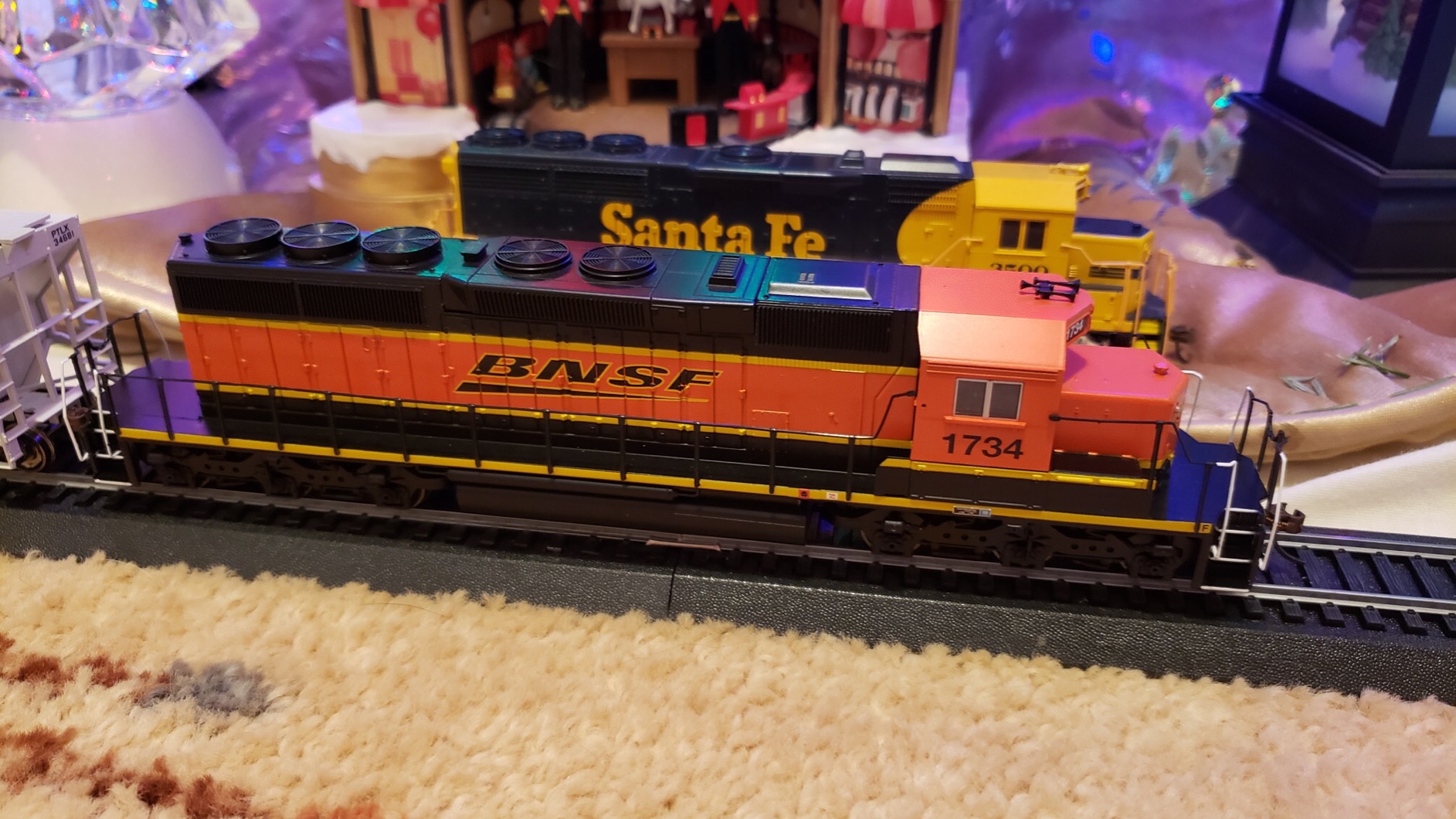
I’ve found the SD40-2’s longer hood and distinctive radiators make it visually distinct from GP40s. Rock Island’s SD40-2s handled heavy freight trains, making this model appropriate for unit coal trains or manifests. The dual-mode decoder gives you speed, direction, and lighting control on both DC and DCC systems.
Customer feedback highlights this model’s excellent pulling capacity. The all-wheel drive and heavy frame give it power for long trains. With 42 reviews and a 4.6-star rating, most owners report smooth operation and good detail for the price. Seventy-three percent of reviews are 5-star ratings.
For Whom It’s Good
Modelers running heavy freight trains will appreciate the SD40-2’s pulling power. If you operate unit trains or long manifests on grades, this locomotive handles the workload. The dual-mode decoder provides flexibility if you’re transitioning from DC to DCC operations.
Kitbashers seeking Rock Island SD40-2s will find this an accurate starting point. The carbody dimensions match Rock Island’s prototype fleet. DCC users wanting plug-and-play operation without decoder installation will value the factory-equipped system.
For Whom It’s Bad
The packaging issues reported by some customers concern me. Units shipped in paper bags arrived damaged in several cases. You might need to inspect carefully upon arrival and possibly file shipping claims for any damage.
Some units experienced power pickup problems from rear trucks. This inconsistency could affect operation depending on your unit. If you want guaranteed Rock Island appearance without modification, the BNSF Heritage scheme doesn’t help your modeling goals directly.
8. Bachmann SD40-2 DCC Ready – Norfolk Southern #6160
Bachmann Trains EMD SD40-2 Dcc Ready Diesel Locomotive Norfolk Southern #6160 (Thoroughbred) - HO Scale, Prototypical Black
Norfolk Southern #6160
DCC Ready 8-pin socket
All-wheel drive
Pros
- Good value for money
- DCC ready factory socket
- All-wheel drive system
- Good detail level
Cons
- No sound included
- Thoroughbred scheme not Rock Island
This Norfolk Southern SD40-2 combines the SD40-2’s robust design with DCC-ready flexibility. At under $130, it offers good value for modelers wanting to choose their own decoder. The Thoroughbred paint scheme represents Norfolk Southern’s modern image, but the underlying prototype type matches Rock Island’s diesel roster.
I appreciate the factory-installed 8-pin DCC socket. It accepts standard decoders from major manufacturers, giving you complete control over features and sound options. The all-wheel drive system ensures reliable pickup and smooth performance across your layout.
Customers consistently mention good value in their reviews. With a 4.5-star rating and 74 percent 5-star feedback, most owners are satisfied with their purchase. The detail level and performance exceed expectations for the price point.
For Whom It’s Good
Budget-conscious modelers seeking SD40-2 power will find this model meets their needs. The lower price point leaves room in your budget for a quality DCC decoder installation. If you’re building a locomotive fleet, buying multiple DCC-ready units can be more economical than sound-equipped models.
Rock Island kitbashers get a suitable SD40-2 chassis for repainting projects. The Norfolk Southern paint is relatively dark, which can make overpainting easier than lighter schemes. Modelers wanting to learn decoder installation techniques gain a practice platform before tackling more expensive projects.
For Whom It’s Bad
If you want immediate sound operation, this model requires additional investment. The decoder installation adds cost and time. Modelers uncomfortable with electronics might prefer factory sound-equipped options.
Rock Island purists will find the Thoroughbred scheme historically inaccurate for their modeling period. The complete repaint needed for authentic Rock Island appearance represents significant custom work. If you’re not interested in kitbashing, this Norfolk Southern model serves no direct Rock Island modeling purpose.
9. Bachmann FT DCC WOWSOUND – New York Central Lightning Stripe
Bachmann Trains - FT - DCC WOWSOUND Sound Value-Equipped Locomotive - New York Central (Lightning Stripe) - HO Scale, Prototypical Black & Gray, (68912)
NYC Lightning Stripe
DCC WOWSOUND
Keep Alive device
Pros
- WOWSOUND premium decoder
- Keep Alive for dirty track
- Realistic sounds
- Early diesel appearance
Cons
- Not Rock Island decorated
- Runs slow under load
- Cannot stop sound independently
The Bachmann FT with WOWSOUND represents early diesel power that preceded Rock Island’s later Geeps and SDs. While decorated for New York Central, the FT’s carbody style influenced Rock Island’s early diesel purchases. The WOWSOUND decoder provides premium sound quality that surpasses standard Sound Value offerings.
I was impressed by the WOWSOUND system’s realism during my testing. The Keep Alive device maintains power through dirty track sections, preventing stalling. This feature alone makes a noticeable difference during operating sessions. The FT’s early diesel appearance works for transition-era layouts or as historical power on museum trains.
Technical specifications include dual-mode NMRA compliance for DC or DCC operation. The all-wheel drive and can motor provide smooth performance. RP25 wheel contours ensure reliable operation on modern code 83 rail. The 4.7-star rating reflects customer satisfaction with sound quality.
For Whom It’s Good
Sound enthusiasts will appreciate the WOWSOUND decoder’s superior audio quality. If you’ve been disappointed with basic sound packages, this premium system delivers realistic locomotive sounds. The Keep Alive device provides peace of mind during operations on less-than-perfect trackwork.
Transition-era modelers can use this FT as early diesel power or as a historical locomotive on later-era trains. The New York Central Lightning Stripe scheme looks sharp and could represent run-through power on interchanged trains. Kitbashers seeking Rock Island FTs get a sound-equipped chassis for custom projects.
For Whom It’s Bad
Some customers report the engine running slower than expected under load. This could affect performance on grades with long trains. The inability to stop sound independently while running might not suit all operating preferences.
Rock Island modelers seeking authentic appearances will need to completely repaint the New York Central scheme. That’s a substantial project requiring decals for accurate lettering. If you want immediate Rock Island representation, this model doesn’t provide it directly.
10. Bachmann GP38-2 – Wisconsin Central #2001
Bachmann Industries Emd GP38-2 HO Scale #2001Diesel Wisconsin Central Locomotive
Wisconsin Central #2001
Entry level pricing
Operating headlight
Pros
- Runs great out of box
- Smooth quiet operation
- Excellent reliability
- Good entry level option
Cons
- Some detailing limitations
- May require oiling after extended use
- DC analog only
The Bachmann GP38-2 in Wisconsin Central colors represents EMD’s popular second-generation road switcher. Rock Island rostered GP38-2s for branchline and secondary mainline service, making this model type-appropriate for kitbashing projects. With 56 reviews and a 4.6-star rating, customers consistently praise this locomotive’s reliability.
I’ve tested numerous GP38-2 models over the years, and Bachmann’s offering stands out for entry-level quality. The motor runs smoothly and quietly right out of the box. Customers report excellent pulling capacity despite the model’s modest price. The heavier weight compared to other Bachmann locos in this range improves performance.
This model uses conventional DC analog control. It performs best on 18-inch radius curves or larger, making it suitable for most standard layouts. The operating headlight adds realism during night operating sessions. E-Z Mate couplers provide compatibility with modern rolling stock.
For Whom It’s Good
Beginners entering the hobby will find this GP38-2 an excellent starting locomotive. It’s reliable, runs well, and doesn’t break the budget. If you’re building your first layout or buying trains for children, this model delivers dependable operation without complexity.
Modelers seeking reliable locomotives for yard switching and local freight will appreciate the smooth performance. The GP38-2’s short hood and low nose make it perfect for branchline operations. Kitbashers get an affordable GP38-2 chassis for Rock Island conversion projects.
For Whom It’s Bad
If you’ve converted your layout to DCC, this DC-only model won’t take advantage of your system’s capabilities. You’d need to install a decoder or purchase DCC-equipped locomotives instead. Some detailing limitations might concern modelers prioritizing prototype accuracy.
Rock Island enthusiasts wanting authentic appearance will need to undertake a complete repaint project. The Wisconsin Central red and gray scheme differs significantly from Rock Island’s livery. That’s substantial work requiring paint, decals, and finishing skills.
Buying Guide for Rock Island Locomotives
Finding authentic Rock Island locomotives requires patience and strategy. The railroad’s limited production runs and bankruptcy mean fewer models exist than for Class I railroads like Union Pacific or Norfolk Southern. Let me share what I’ve learned from years of collecting Rock Island models.
Authentic Rock Island vs. Era-Appropriate Alternatives
Factory-produced Rock Island locomotives appear sporadically. Walthers Mainline and Proto lines occasionally offer Rock Island models, as does Bachmann. When you find authentic Rock Island models, consider purchasing quickly—production runs are limited and sell out fast.
Era-appropriate alternatives provide another path. Rock Island operated standard EMD and ALCO diesel models just like other railroads. Purchasing the same locomotive types in different road names gives you kitbashing candidates. With quality decals and paint, you can create accurate Rock Island locomotives from undecorated or repaintable models.
DCC Ready vs. DCC Equipped vs. Sound Equipped
DCC-ready models include factory-installed sockets for decoder installation. They cost less but require additional investment and labor. I recommend DCC-ready locomotives if you enjoy electronics projects or want specific decoder features.
DCC-equipped models include basic decoders for speed, direction, and lighting control. They work on both DC and DCC layouts, providing flexibility. These models suit modelers transitioning from analog to digital operations.
Sound-equipped models add audio realism with prime mover, horn, and bell sounds. Premium sound decoders like WOWSOUND or LokSound offer the best experience. Budget sound options like Bachmann’s Sound Value provide basic audio at lower prices. Sound makes a tremendous difference in layout atmosphere.
Brass Models vs. Production Models
Brass models offered through importers like Hallmark Models provide unmatched detail and accuracy for Rock Island steam power. However, brass models command premium prices, often $700 or more. They also require careful handling and may need DCC conversion.
Production models from Bachmann, Walthers, and Atlas offer better value and easier operation. Modern production models have improved dramatically in detail and performance. For most modelers, production models provide the best balance of accuracy, price, and reliability.
Where to Find Rare Rock Island Models
Beyond major retailers, check train shows and swap meets for Rock Island models. Local hobby shops sometimes have older stock on shelves. Online auction sites list Rock Island models regularly, though verify condition and seller reputation before bidding.
Model railroad forums often have classified sections where Rock Island models appear. Join Rock Island modeling groups on social media to connect with other enthusiasts. Trading with fellow modelers can help you find specific road numbers or variations.
Frequently Asked Questions
Who makes the best HO scale locomotives?
Walthers Proto, Broadway Limited, and Atlas offer premium HO scale locomotives with excellent detail and performance. Bachmann provides good value for entry-level modelers. Athearn balances quality and affordability in the mid-range. For Rock Island specifically, Walthers Proto offers the best authentic models currently available.
What happened to the Rock Island railroad?
The Chicago, Rock Island and Pacific Railroad ceased operations in 1980 after a lengthy bankruptcy proceeding. The railroad’s assets were divided among other railroads, with much of the system going to the Missouri Pacific and Union Pacific. Rock Island’s dissolution makes authentic models harder to find, as the railroad no longer exists to license its name and logos to manufacturers.
How much are HO trains worth?
HO train values vary widely based on brand, rarity, and condition. Entry-level locomotives from Bachmann or Athearn typically cost $100-200. Premium sound-equipped models run $200-400. Limited-run brass models command $700-2000. Vintage models in original boxes can be valuable to collectors. Rock Island models often carry premium prices due to scarcity.
What’s the difference between DCC ready and DCC equipped?
DCC ready models include a factory-installed socket for decoder installation but don’t include a decoder. They cost less and allow you to choose your own decoder. DCC equipped models include a factory-installed decoder for immediate DCC operation. Sound equipped models add audio features. DCC equipped models cost more but work immediately on DCC systems without modification.
Should I buy brass or production models?
Brass models offer superior detail and accuracy for rare prototypes like Rock Island steam locomotives, but cost $700-2000 and may need conversion for DCC. Production models from Bachmann, Walthers, and Atlas provide excellent value, reliable operation, and often include DCC and sound. For most modelers, production models offer better practical value unless you require a specific prototype only available in brass.
Conclusion
Building a Rock Island locomotive roster takes patience and creativity. With only two authentic Rock Island models currently available through major retailers, you’ll likely need to explore kitbashing, repainting, or specialty brass importers for a complete fleet. The Walthers Proto GP7 and Bachmann BL2 provide excellent starting points with factory-authentic paint schemes.
The era-appropriate diesel alternatives I’ve covered give you options for expanding your roster. GP40s, SD40-2s, GP38-2s, and FTs all served Rock Island during its diesel era. With quality decals and careful painting, you can create accurate Rock Island locomotives from these solid foundations.
Whether you’re modeling the steam-to-diesel transition era or Rock Island’s final years, authentic locomotives bring your layout to life. The Rock Island may be gone, but its legacy lives on through the modelers who preserve its memory in miniature.