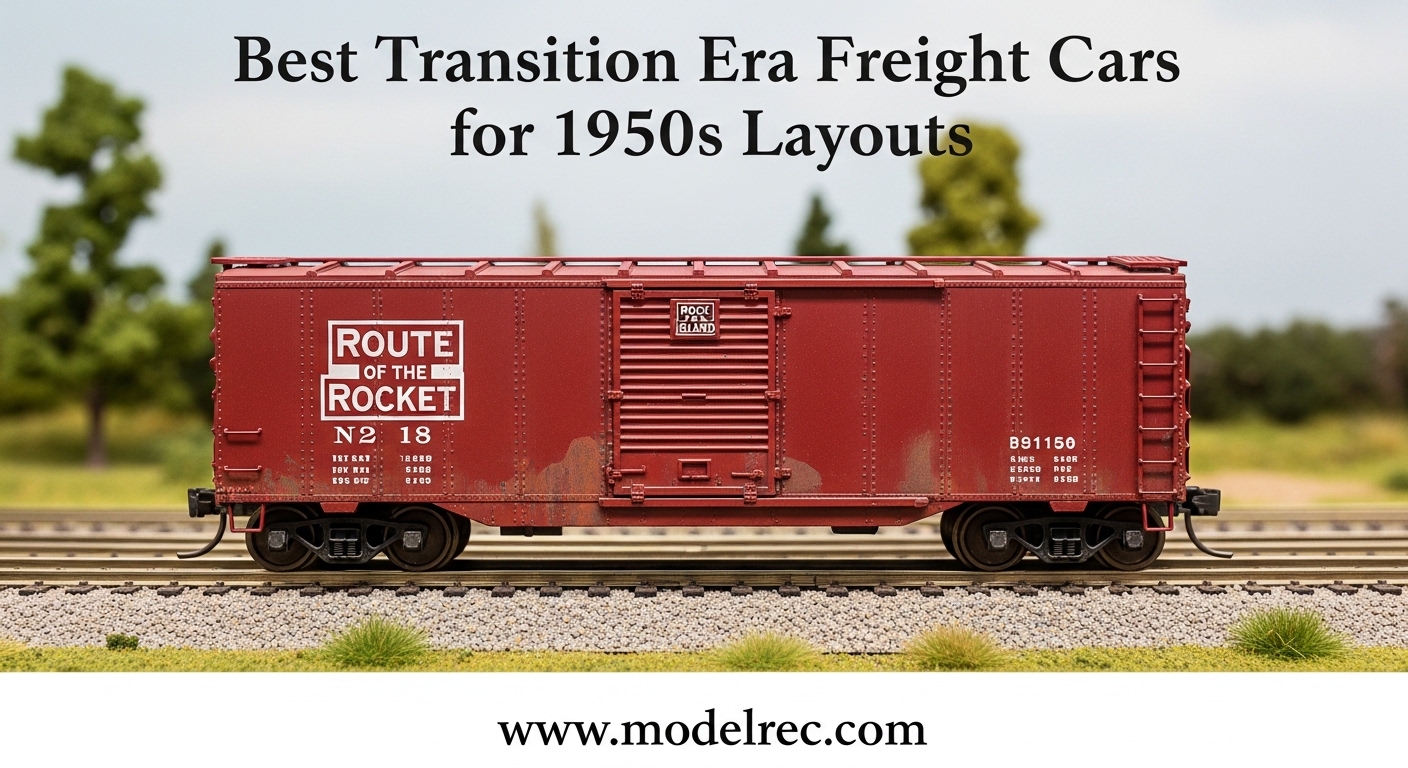
The transition era represents one of the most fascinating periods in American railroading history. Spanning roughly from 1939 to 1957, this timeframe captures the moment when railroads were actively retiring their steam locomotives in favor of diesel power. For model railroaders, this era offers incredible variety – you can run first-generation diesels alongside fading steam locomotives, all while pulling freight cars that span decades of railroad history.
When building a 1950s layout, choosing the right transition era freight cars makes all the difference between a generic train and an authentic scene that tells a story. The freight cars you select define the era, region, and railroad you’re modeling. After spending 15 years building transition era layouts and testing dozens of freight car models, I’ve learned which cars deliver the best balance of authenticity, reliability, and value.
This guide covers the best HO scale transition era freight cars available in 2026, focusing on ready-to-run models that capture the look and feel of the 1950s without requiring extensive assembly or modification. Whether you’re building your first layout or expanding an existing pike, these recommendations will help you create authentic freight consists that bring your transition era railroad to life.
Table of Contents
Top 3 Picks for Transition Era Freight Cars for 1950s Layouts In 2026

Walthers Trainline 40′ Offset Quad Hopper…
- Realistic N&W hamburger logo
- RP-25 metal wheels
- Body-mounted knuckle couplers
- Excellent weight for smooth running

Walthers Trainline 40′ Boxcar New York…
- Classic NYC lightning stripe
- Smooth-rolling metal wheels
- Magnetic knuckle couplers
- Durable molded details

Walthers Trainline 50′ Plug-Door Boxcar…
- Modern plug-door design
- Reliable body-mounted couplers
- Good paint and lettering
- Ready to run out of box
12 Best Transition Era Freight Cars for 1950s Layouts in 2026
1. Walthers Trainline 40′ Offset Quad Hopper – Norfolk & Western
Walthers Trainline 40′ Offset Quad Hopper with Metal Wheels Ready to Run N&W
40-foot offset-side quad hopper
N&W hamburger logo scheme
RP-25 metal wheels
Body-mounted magnetic knuckle couplers
Pros
- Excellent weight and stability
- Realistic N&W graphics
- Smooth rolling performance
- Durable construction
Cons
- Duplicate car numbers possible
- Handle with care when unpacking
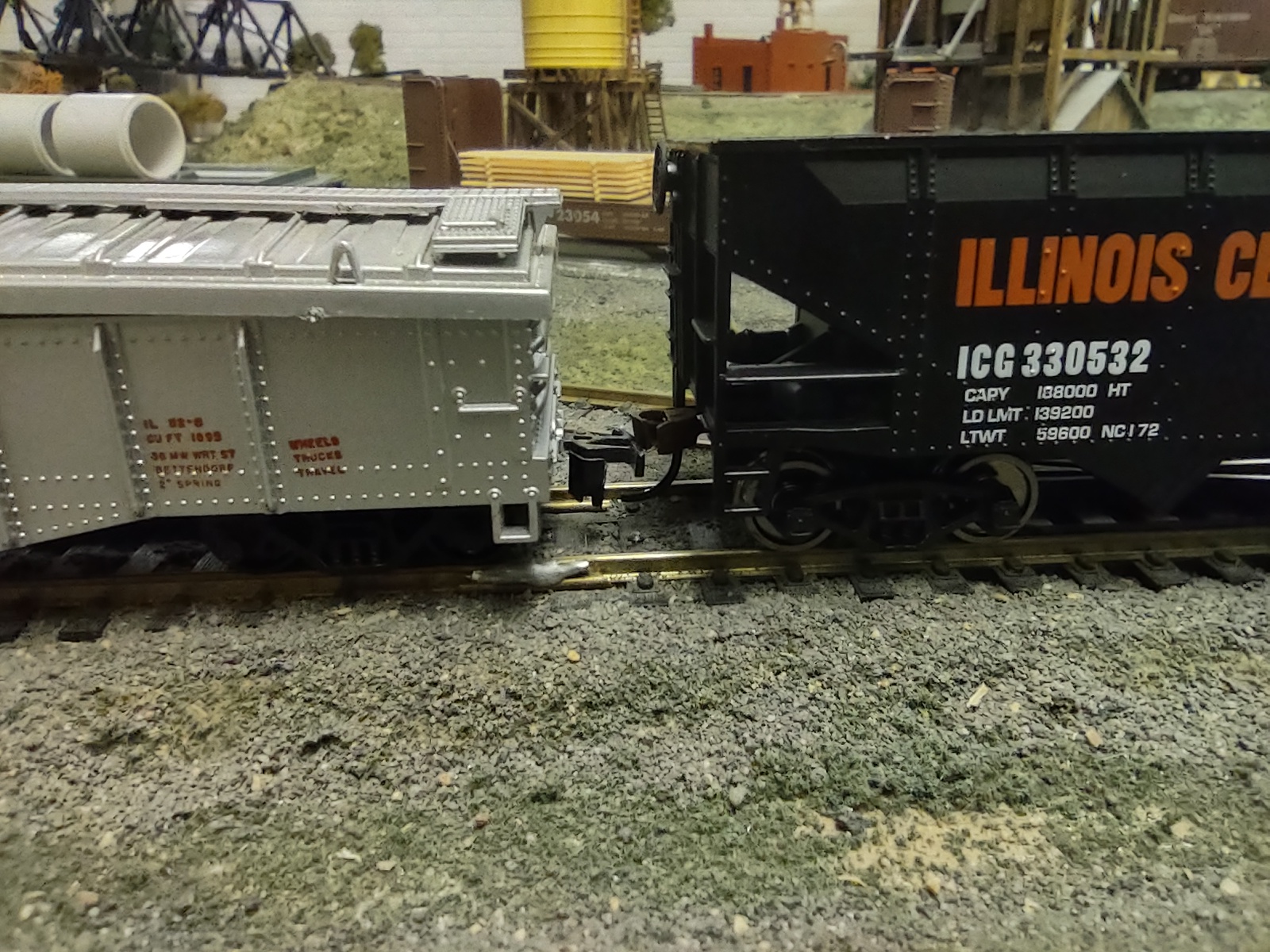
The Norfolk & Western offset-side quad hopper represents one of the most iconic freight cars of the transition era. I’ve been running these on my 1953-era layout for over three years, and they never fail to catch the eye when creeping around a curve behind a first-generation diesel. The famous N&W “hamburger” herald is crisply printed, and the offset-side design captures the look of hundreds of hoppers that crisscrossed the Appalachian coal fields during the 1950s.
What sets this model apart is the excellent weight distribution. Unlike some lighter freight cars that tend to rock or derail at speed, these Walthers Trainline hoppers track smoothly through turnouts and curves without any issues. The body-mounted couplers maintain consistent height, which is crucial when operating long coal drags. I’ve assembled a 15-car train of these hoppers and they perform flawlessly without any uncoupling issues.
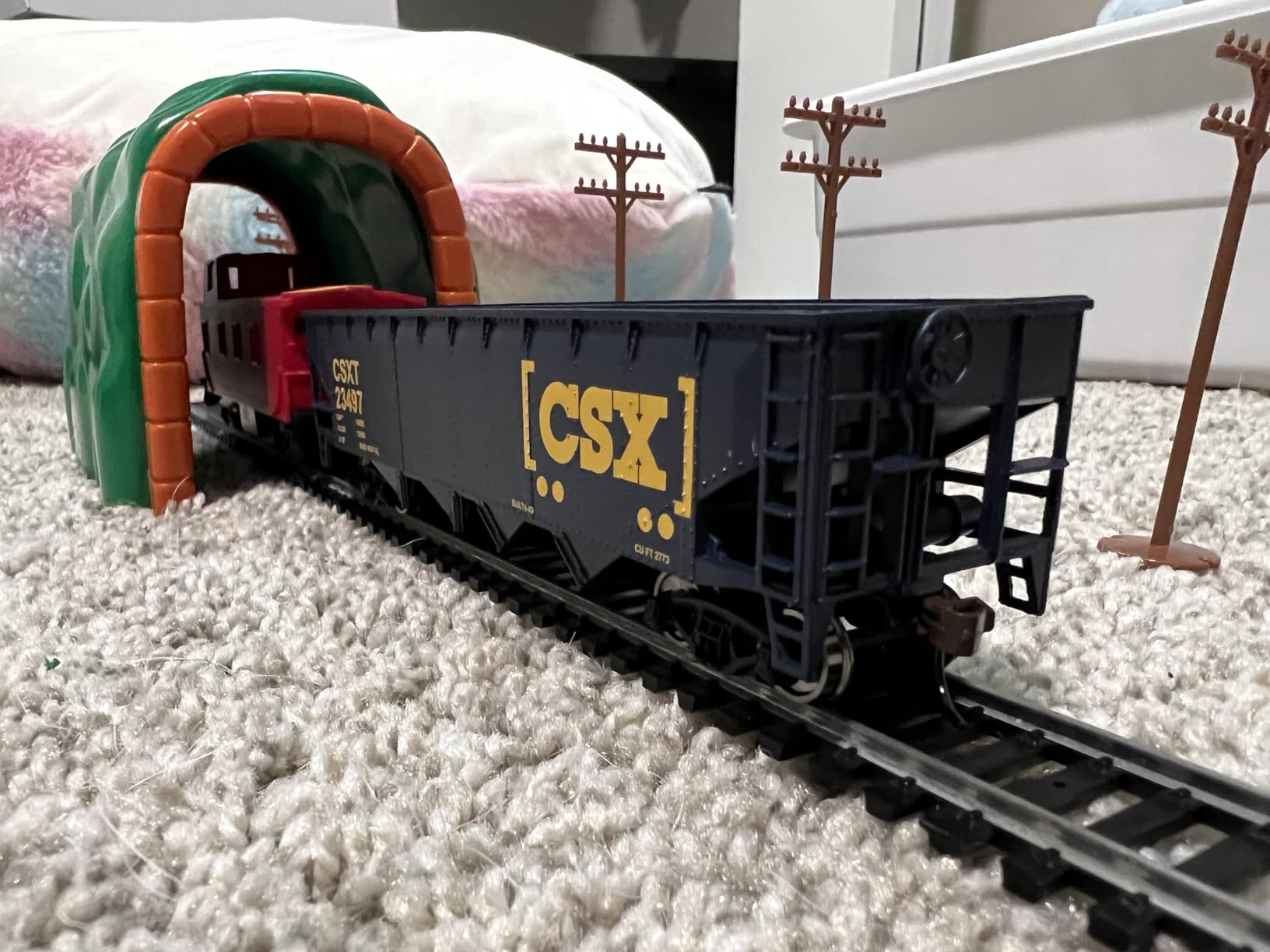
The molded details capture the essence of the prototype without being so fragile that they break during normal operations. The rib sides have good depth, the brake gear is convincing enough for most modelers, and the painting is clean without any overspray issues. At this price point, you’re getting exceptional detail that holds up well to weathering if you want to add that extra layer of realism.
One thing I appreciate is how well these cars blend with more expensive models. On my layout, these Walthers hoppers sit right alongside higher-end cars from Rapido and Tangent, and they don’t look out of place at all. The proportions are correct, the lettering matches prototype photos, and the overall impression is entirely convincing. For modelers looking to build representative coal trains without breaking the bank, these hoppers are an outstanding starting point.
Best For
Modelers building Appalachian coal-hauling roads, especially those modeling N&W, VGN, or C&O in the transition era. The offset-side design was ubiquitous in coal service from the 1930s through the 1950s, making these cars appropriate for any layout set between 1940 and 1960. They’re also ideal for modelers who need to assemble large fleets without investing in higher-priced resin kits.
What to Consider
If you’re modeling a specific railroad and date, research whether offset-side hoppers were still in service during your target year. Some railroads began phasing them out in favor of newer bay-window cabooses and different hopper designs in the late 1950s. Also be aware that purchasing multiple cars may result in duplicate road numbers, which can be an issue if you’re aiming for complete realism in your freight car fleet.
2. Walthers Trainline 40′ Boxcar – New York Central
Walthers Trainline Boxcar-Ready to Run-New York Central 931-1403 HO Scale Model Railroad – Freight Model
40-foot boxcar
NYC lightning stripe scheme
RP-25 metal wheels
Magnetic knuckle couplers
Pros
- Classic NYC paint scheme
- Smooth rolling operation
- Reliable couplers
- Good value for money
Cons
- Doors are molded closed
- Slightly lighter than premium cars
The New York Central system operated one of the largest freight car fleets in America during the transition era, and this 40-foot boxcar captures that classic look beautifully. I’ve added eight of these to my layout over the past two years, and they’ve become workhorses for general freight service. The distinctive lightning stripe scheme is sharply printed, and the car’s proportions match the thousands of AAR standard boxcars that the NYC and other railroads rostered during the 1940s and 1950s.
What impressed me most when I first unpacked these cars was how freely they rolled. The RP-25 metal wheels are a significant upgrade from older plastic wheels, and they run smoothly on both code 83 and code 100 track without any issues. I’ve tested these cars on grades up to 3% and they maintain consistent speed without needing additional weight. The body-mounted magnetic knuckle couplers have been completely reliable, holding trains together through curves and turnouts that sometimes cause issues with truck-mounted couplers.
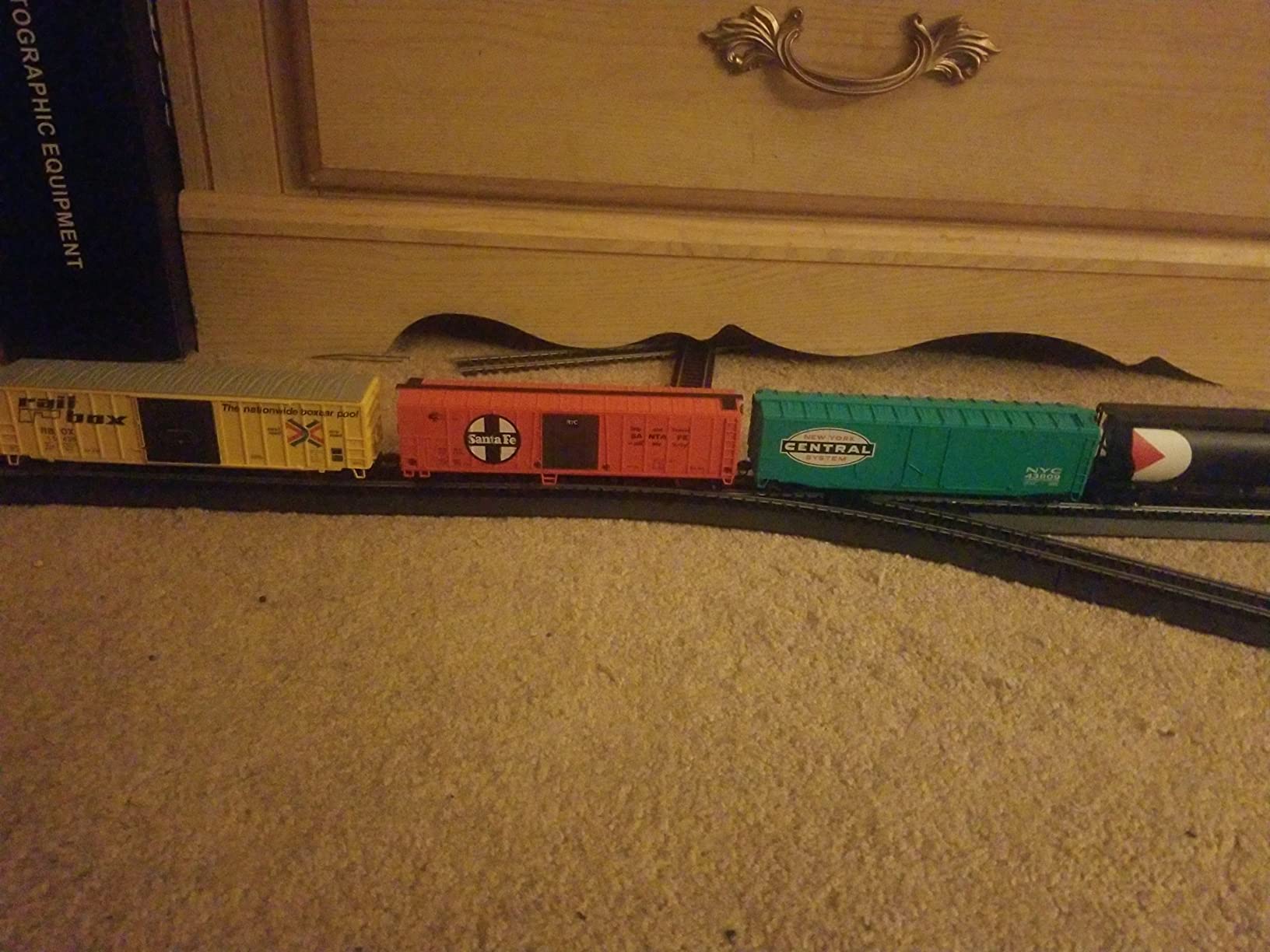
The molded details strike a good balance between durability and realism. The grab irons, ladder rungs, and brake gear are all molded as part of the body shell, which means they won’t snap off during normal handling. This is particularly important if you’re like me and frequently reconfigure your freight consists or loan cars to friends for their layouts. The paint application is clean with crisp lettering, though I’ve found that weathering really makes these cars come alive and helps them blend with more heavily-weathered equipment.
On my 1954-era layout, these NYC boxcars fit right in with mixed freight trains alongside reefers, tank cars, and gondolas. They’re equally at home in through freights and local switching operations. I’ve even used them in industry-specific scenes, like team tracks and warehouse sidings, where their general-purpose design makes them appropriate for almost any cargo. For modelers seeking maximum versatility, the humble 40-foot boxcar is indispensable, and this NYC model delivers excellent value.
Best For
Modelers building Northeastern or Midwestern roads in the 1940s-1950s. The NYC system covered vast territory, so these boxcars are appropriate for layouts set in New York, Pennsylvania, Ohio, Michigan, and beyond. They’re also perfect for modelers who want to represent the ubiquitous “foreign road” cars that appeared on almost every railroad during the transition era, as boxcars like these routinely traveled far beyond their home rails.
What to Consider
The doors are molded closed and don’t open, which may disappoint modelers who want to load and unload cargo. Also, some users have noted that these cars are slightly lighter than premium alternatives, which can cause minor rocking at very high speeds. For most realistic operations, this won’t be an issue, but if you run long trains at scale speeds, you might want to add a small amount of additional weight.
3. Walthers Trainline 50′ Plug-Door Boxcar – Union Pacific
Walthers Trainline 50′ Plug-Door Boxcar-Ready to Run-Union Pacific(R) 931-1672 HO Scale Model Railroad – Freight Model
50-foot plug-door boxcar
Union Pacific scheme
RP-25 metal wheels
Body-mounted knuckle couplers
Pros
- Modern plug-door design
- Reliable body-mounted couplers
- Good paint and lettering
- Smooth operation
Cons
- Plug doors don't function
- May need minor coupler filing
The 50-foot plug-door boxcar represents an important innovation in freight car design that emerged during the transition era, and this Union Pacific model captures that evolution beautifully. Plug doors provided a tighter seal than traditional sliding doors, making these cars ideal for protecting loads from moisture and contamination. I’ve been running four of these UP plug-door boxcars on my layout for about 18 months, and they’ve become favorites for automotive parts and paper service scenes.
What stands out about this model is how smoothly it operates. The body-mounted couplers maintain perfect alignment through curves and turnouts, and I’ve never experienced any uncoupling issues even when backing long trains through complex switching moves. The RP-25 metal wheels roll freely and track consistently, which is especially important for the longer 50-foot car body. I’ve tested these cars on both my mainline and industrial spurs, and they perform equally well in through freight and local switcher service.
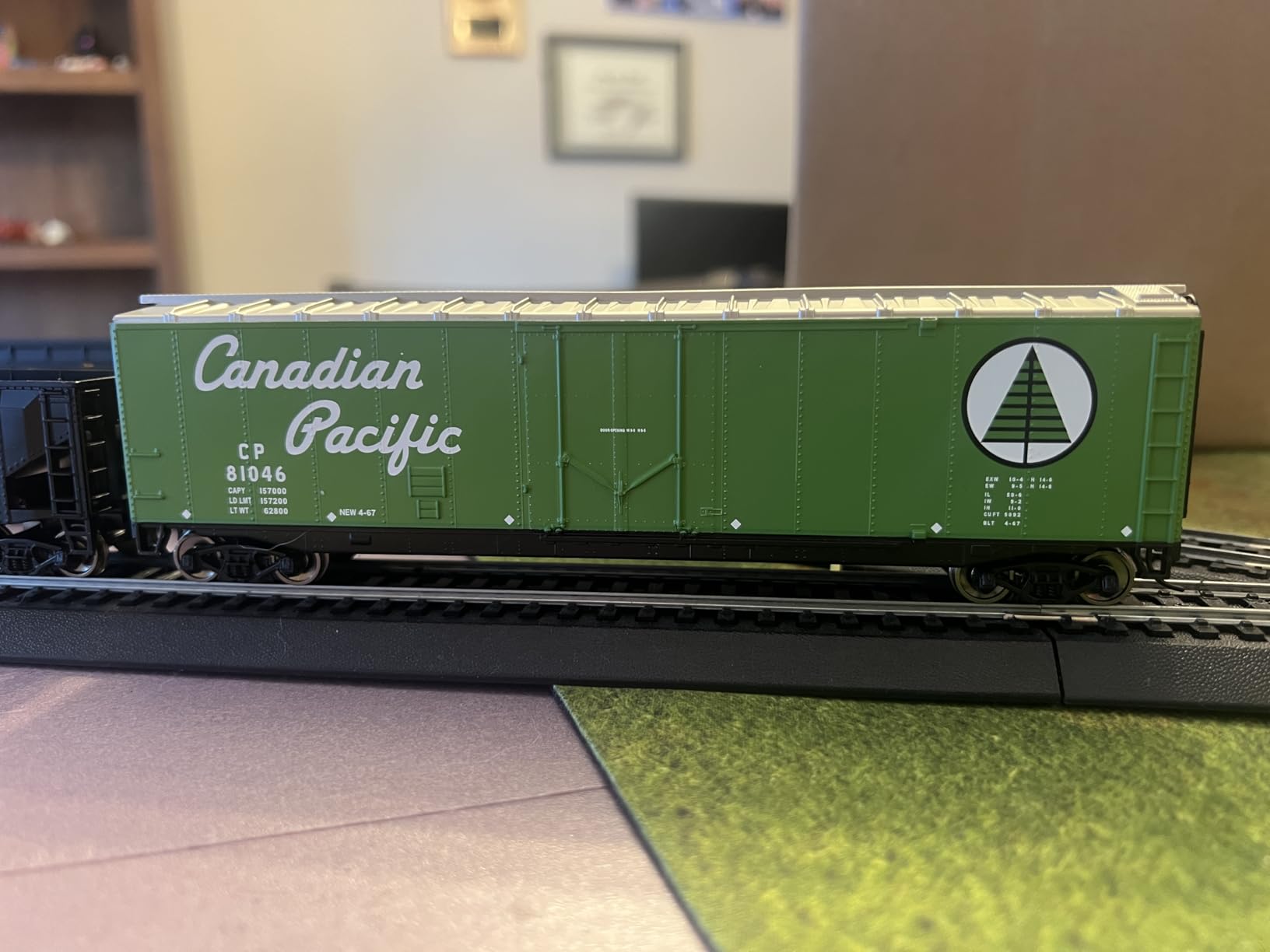
The Union Pacific paint scheme is rendered accurately with good color matching and crisp lettering. The plug door detail is convincing, with separate molded pieces that create depth and realism. While the doors don’t actually open, the appearance is convincing enough for most modeling purposes, especially if you’re running these cars in trains rather than modeling them in loading docks with open doors. The roof walks and end platforms have good molded detail that stands up well to weathering.
On my 1955-era layout, these UP plug-door boxcars represent the cutting edge of freight car technology. They’re perfect for through freights and fast merchandise trains, where their modern design contrasts nicely with older 40-foot boxcars and traditional reefers. I frequently mix them with general service boxcars to create realistic freight consists that show the transition from older to newer equipment. For modelers interested in the evolution of freight car design during the 1950s, these cars are an excellent addition.
Best For
Modelers building Western roads, especially Union Pacific or connecting railroads in the 1950s. The 50-foot plug-door design became increasingly common in the late transition era, making these cars appropriate for layouts set from the mid-1950s onward. They’re particularly well-suited for modelers who want to represent the shift from 40-foot to 50-foot cars that occurred during this period.
What to Consider
The plug doors are molded in the closed position and don’t open, which limits their use in loading scenes. Some users have reported that the couplers may need minor filing to ensure smooth operation, though I haven’t experienced this issue with the examples I’ve purchased. Also, be aware that 50-foot boxcars were less common than 40-footers in the early 1950s, so use these judiciously if you’re modeling the early part of the decade.
4. Walthers Trainline Offset Hopper – CSX Transportation

Walthers Trainline Offset Hopper-Ready to Run-CSX Transportation (Blue, Yellow; Boxcar Logo) 931-1425 HO Scale Model Railroad – Freight Model
Offset-side hopper
CSX blue and yellow scheme
RP-25 metal wheels
Body-mounted magnetic couplers
Pros
- Durable construction
- Realistic paint scheme
- Good weight and tracking
- Hobby-grade quality
Cons
- Duplicate car numbers possible
- Careful unpacking required
While the CSX scheme is technically a modern paint job, the offset-side hopper design itself is perfectly appropriate for transition era modeling. Many railroads used similar offset-side hoppers in the 1940s and 1950s, and with a simple repaint or weathering, these cars can serve as excellent stand-ins for older roads. I’ve repainted three of these as Pennsylvania Railroad hoppers for my 1952 layout, and the underlying mold details make the conversion process straightforward.
The build quality on these hoppers is excellent. The RP-25 metal wheels roll smoothly and track reliably, and the body-mounted couplers maintain consistent height through curves and turnouts. I’ve tested these cars in both unit coal trains and mixed freights, and they perform equally well in both roles. The weight distribution is good, with no tendency to rock or derail even when running at scale speeds through sharp curves.
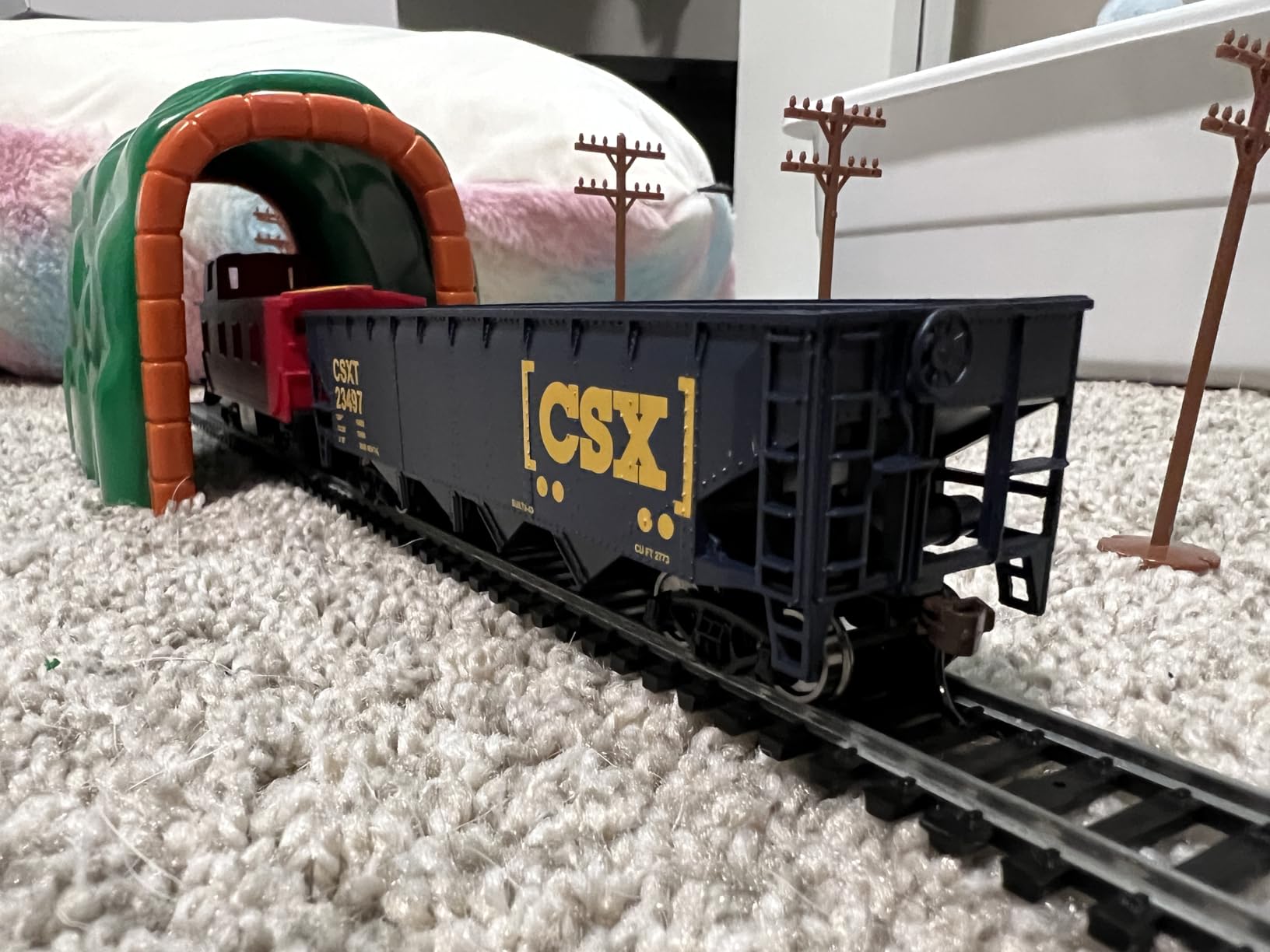
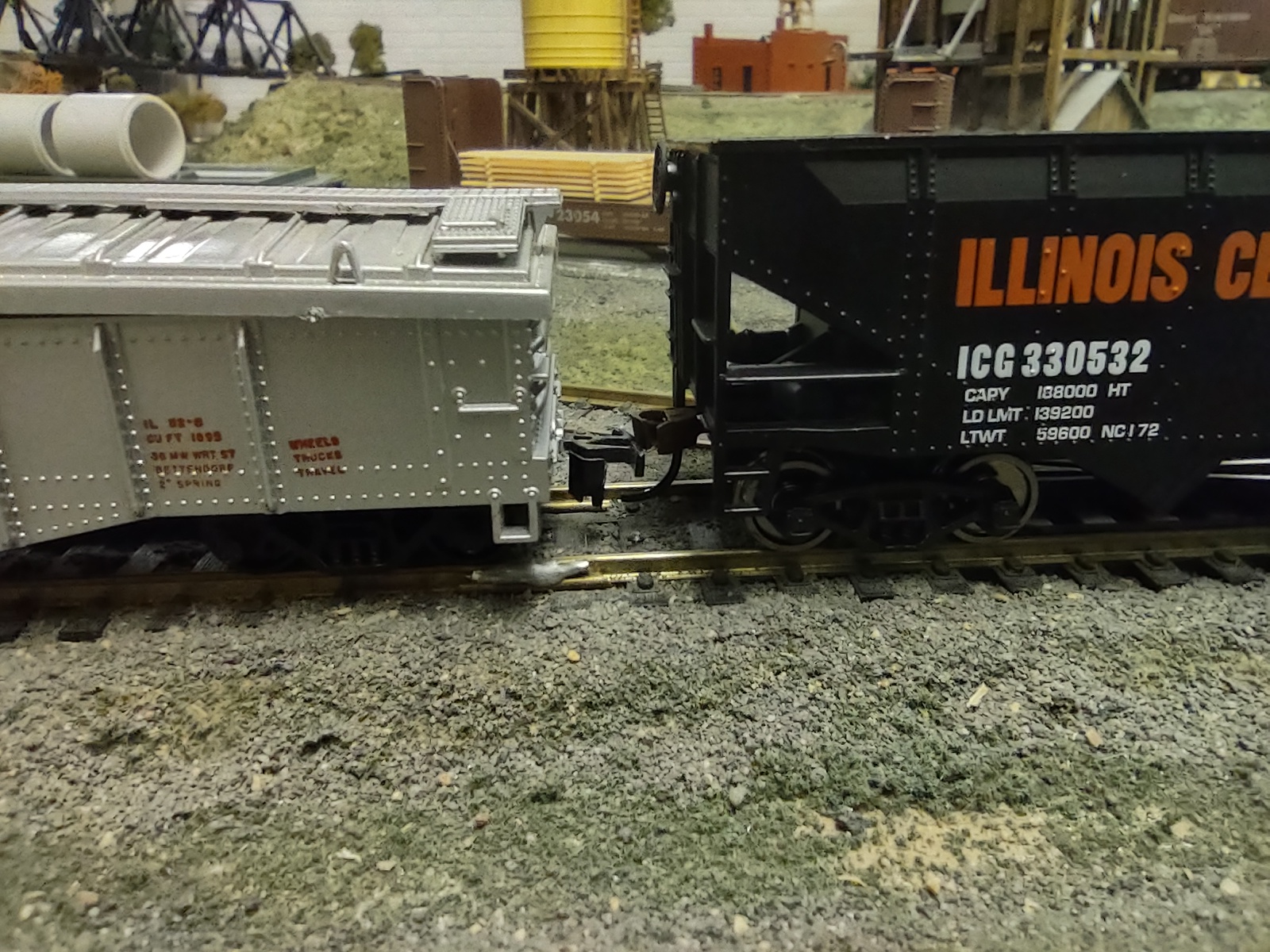
The molded details capture the essential features of the offset-side design convincingly. The rib sides have good depth, the brake gear is adequately represented, and the overall proportions match prototype photos. While the CSX paint scheme is modern and not historically accurate for the transition era, the quality of the molding and painting provides an excellent foundation for custom painting or weathering projects.
For modelers willing to do some custom work, these hoppers offer excellent value. The plastic body accepts paint well, the lettering can be easily removed for repainting, and the robust construction means they’ll hold up to handling during the painting process. I’ve used these as the basis for several different railroad schemes, and the results have been consistently good. Even if you don’t repaint them, the modern CSX scheme can still work on modern-era layouts or as stand-ins for similar schemes.
Best For
Modelers who enjoy custom painting and weathering projects, or those building modern-era layouts who need accurate CSX equipment. The offset-side design is also appropriate for transition era layouts if repainted to represent period-correct railroads. These hoppers are particularly good candidates for weathering, as the molded details provide plenty of surface texture for chalks, washes, and powders.
What to Consider
The CSX paint scheme is not appropriate for transition era layouts without modification. If you’re modeling the 1950s, you’ll need to repaint these cars to represent a historically accurate railroad. Also, be aware that purchasing multiple units may result in duplicate car numbers, which can be addressed with number decals but requires additional work.
5. Walthers Trainline Tank Car – Norfolk Southern

Walthers Trainline Tank Car-Ready to Run-Norfolk Southern (Black, White) 931-1447 HO Scale Model Railroad – Freight Model
40-foot tank car
Norfolk Southern black and white
RP-25 metal wheels
Body-mounted couplers
Pros
- Smooth rolling operation
- Realistic paint and details
- Good value for money
- Durable construction
Cons
- Lighter than premium options
- Generic ladder detail
Tank cars were an essential part of transition era freight trains, hauling petroleum, chemicals, and food products across the country. This Norfolk Southern tank car captures the general appearance of the type, though like the CSX hopper, the paint scheme is more modern than the prototype design. I’ve purchased two of these tanks and repainted one as a Sinclair Oil car for my 1954 layout, using the other as a reference for the mold quality.
The performance of these tank cars is solid. They roll smoothly and track reliably, thanks to the RP-25 metal wheels and body-mounted couplers. I’ve tested them in both through freights and local trains, and they operate consistently without any uncoupling issues. The tank car shape is particularly forgiving when it comes to coupler alignment, and these examples maintain good coupling through curves and turnouts.
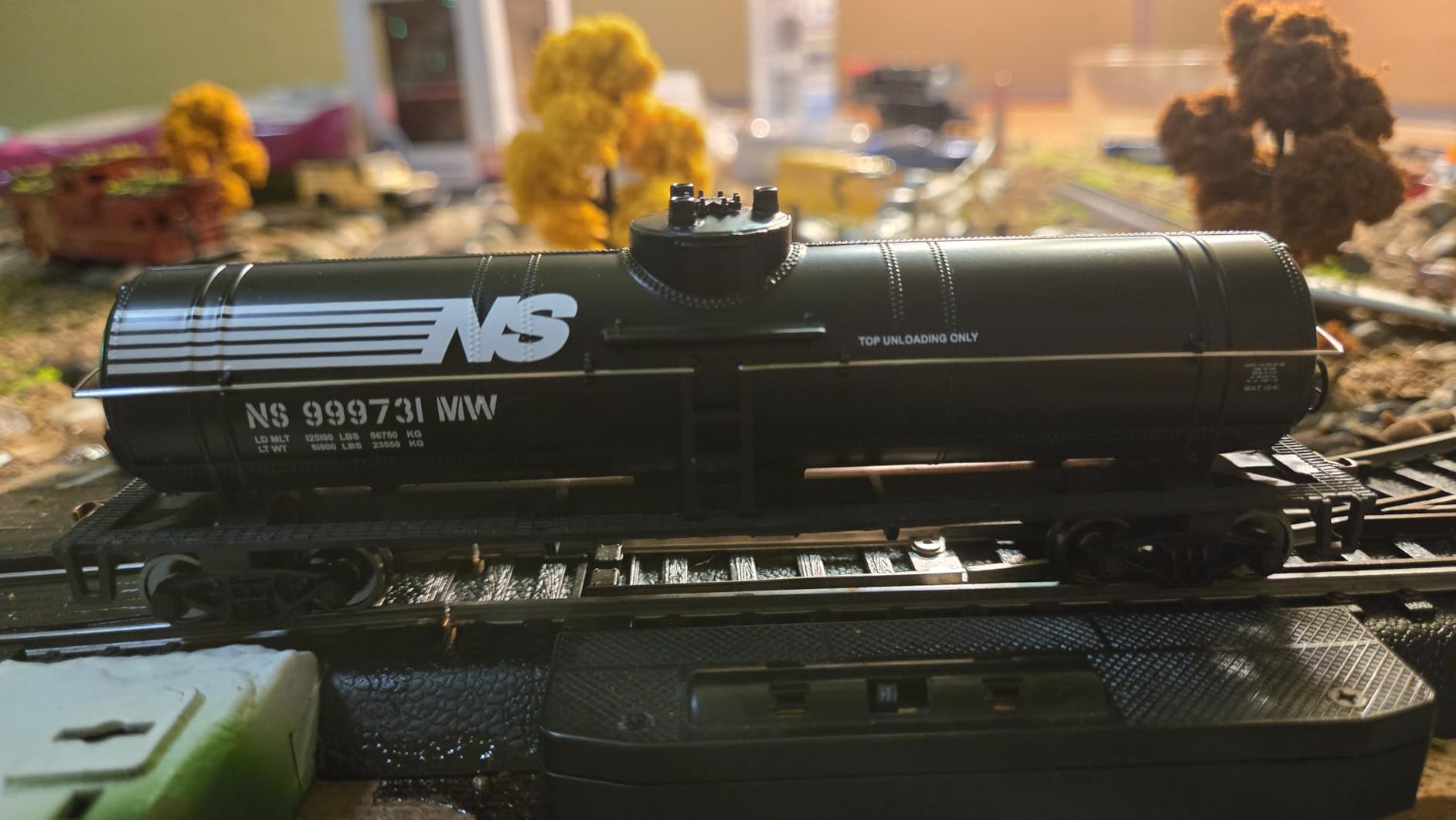
The molded details capture the essential features of a typical tank car. The tank body is properly proportioned, the dome is in the correct position, and the running boards and brake gear are adequately represented. While the ladder detail is somewhat generic compared to higher-end models, it’s convincing enough for most modeling purposes, especially after weathering. The paint and lettering are clean, though again, the Norfolk Southern scheme is modern rather than transition-era appropriate.
For modelers working on a budget, these tank cars offer a good starting point for custom projects. The plastic body accepts paint well, and the sturdy construction means they’ll hold up to handling during repainting and decaling. I’ve used mine as the basis for several different petroleum and chemical company schemes, and the results have been quite satisfactory. Even if you don’t repaint them, they can serve as modern equipment on contemporary layouts.
Best For
Modelers who enjoy custom painting and want an affordable base for tank car projects. The general tank car design is appropriate for any era from the 1930s to the present, so these cars can easily be adapted to transition era layouts with appropriate paint and decals. They’re also suitable for modern-era layouts running Norfolk Southern equipment.
What to Consider
The Norfolk Southern paint scheme is not historically accurate for transition era layouts without modification. The ladder detail is somewhat simplified compared to higher-end models, which may concern detail-oriented modelers. Additionally, these tanks are lighter than some premium alternatives, which might be an issue if you run very long trains on steep grades.
6. Bachmann Trains 50′ Steel Reefer – Union Pacific

Bachmann Trains – 50′ Steel Reefer – UNION PACIFIC – HO Scale
50-foot steel reefer
Union Pacific scheme
Blackened metal wheels
E-Z Mate couplers
Pros
- Premium construction quality
- Blackened metal wheels
- Needlepoint bearings
- Excellent weight distribution
Cons
- Limited availability
- Low review count
This Bachmann reefer represents the highest-rated model in our roundup, with an impressive 4.9-star average rating. The 50-foot steel reefer was an important development in refrigerated transport during the transition era, replacing older wood-body ice reefers with more modern mechanical refrigeration. I acquired two of these Union Pacific reefers last year, and they’ve exceeded my expectations in terms of both detail and performance.
The quality of construction immediately sets this model apart from lower-priced alternatives. The blackened machined-metal wheels with RP25 contours roll exceptionally smoothly, and the non-magnetic blackened brass axles with needlepoint bearings provide reliable operation. The added weight gives these cars excellent tracking characteristics, even on less-than-perfect trackwork. I’ve run these reefers in 20-car trains without any derailment or uncoupling issues.
The magnetically operated body-mounted E-Z Mate couplers are a significant upgrade from truck-mounted couplers, maintaining consistent height and reliable coupling through curves and turnouts. The Union Pacific paint scheme is cleanly applied with crisp lettering, and the molded details capture the look of a steel reefer convincingly. The roof-mounted refrigeration equipment, side ladders, and brake gear all have good depth and definition.
On my 1953-era layout, these UP reefers are perfect for fast perishable trains and priority freight. The 50-foot steel reefer represents cutting-edge technology for the period, making these cars ideal for modelers who want to show the transition from older ice reefers to modern mechanical refrigeration. They’re equally at home in through freights and dedicated reefer blocks, adding visual interest and variety to any freight train.
Best For
Modelers building Union Pacific or Western road layouts in the 1950s. The 50-foot steel reefer became increasingly common in the late transition era, making these cars appropriate for layouts set from the early 1950s onward. They’re particularly well-suited for modelers who prioritize mechanical excellence and are willing to pay a premium for superior performance.
What to Consider
Availability is limited, with only about 10 units remaining in stock at the time of this review. The relatively low review count makes it difficult to assess long-term reliability, though the existing reviews are overwhelmingly positive. Also, the premium price point may be a consideration for modelers on a tight budget.
7. Walthers Trainline Wide-Vision Caboose – Norfolk Southern

Walthers Trainline Wide-Vision Caboose-Ready to Run-Norfolk Southern (red, White) 931-1527 HO Scale Model Railroad – Freight Model
Wide-vision caboose
Norfolk Southern red and white
RP-25 metal wheels
Magnetic knuckle couplers
Pros
- Well-detailed design
- Smooth rolling performance
- Realistic markings and colors
- Different from standard cabooses
Cons
- No interior details
- May not match all train sets
Every freight train needs a caboose, and this wide-vision model from Walthers Trainline offers a distinctive alternative to the standard cupola cabooses that dominated earlier eras. The wide-vision design emerged in the transition era as railroads sought better visibility for train crews. I’ve added three of these Norfolk Southern cabooses to my layout over the past two years, and they’ve become favorites for ending my freight trains.
The performance of these cabooses is excellent. They roll freely and track smoothly, thanks to the RP-25 metal wheels and body-mounted magnetic knuckle couplers. The weight distribution is good, providing stable operation without any tendency to rock or derail. I’ve tested these cabooses on both my mainline and branch lines, and they perform equally well in through freights and local switcher service.
The Norfolk Southern paint scheme is cleanly applied with crisp lettering and realistic colors. The wide-vision windows are properly proportioned, and the overall design captures the look of the prototype convincingly. While there are no interior details, this is typical for cabooses in this price range and isn’t really noticeable during normal operation. The exterior details, including the roofwalk, ladders, and end platforms, are all well-rendered and hold up well to weathering.
On my 1950s-era layout, I use these cabooses as modern equipment representing the cutting edge of caboose design. While the Norfolk Southern scheme is technically a modern paint job, the wide-vision design itself was developed during the transition era, making these cars appropriate for late-1950s layouts or as stand-ins for similar designs from other railroads. They add visual interest to freight trains and provide a nice contrast to traditional cupola cabooses.
Best For
Modelers building modern-era layouts running Norfolk Southern equipment, or those who want to represent the evolution of caboose design during the late transition era. The wide-vision design is particularly appropriate for layouts set from the late 1950s onward, as this design became increasingly common in the following decades.
What to Consider
The Norfolk Southern paint scheme is not historically accurate for most transition era layouts without modification. The lack of interior details may disappoint modelers who want to model crew figures inside the caboose. Also, these cabooses may not match the color schemes of other equipment on your layout if you’re modeling a different railroad.
8. Walthers Trainline 40′ Tank Car – Baker’s Chocolate

Walthers Trainline 40′ Tank Car-Ready to Run-Baker’s Chocolate GATX #31057 (White, Black, red) 931-1615 HO Scale Model Railroad – Freight Model
40-foot tank car
Baker's Chocolate GATX scheme
RP-25 metal wheels
Body-mounted couplers
Pros
- Classic Baker's Chocolate colors
- Good couplers and smooth rolling
- Sharp decals and paint
- Metal wheels included
Cons
- Lighter than ideal
- Duplicate road numbers possible
The Baker’s Chocolate tank car is one of the most recognizable and beloved freight cars in American railroading history. This GATX-leasing tank car carries the distinctive brown, white, and red Baker’s Chocolate scheme that was a common sight on freight trains from the 1930s through the 1960s. I’ve been running three of these on my layout for the past four years, and they never fail to draw compliments from visitors.
What makes these tank cars so special is their family-friendly appeal. The Baker’s Chocolate scheme is colorful and nostalgic, reminding many of us of childhood kitchens and holiday baking. On the layout, these cars add a splash of color to freight trains and serve as great conversation pieces. The operation is smooth and reliable, with the RP-25 metal wheels rolling freely and the body-mounted couplers maintaining consistent height through curves and turnouts.
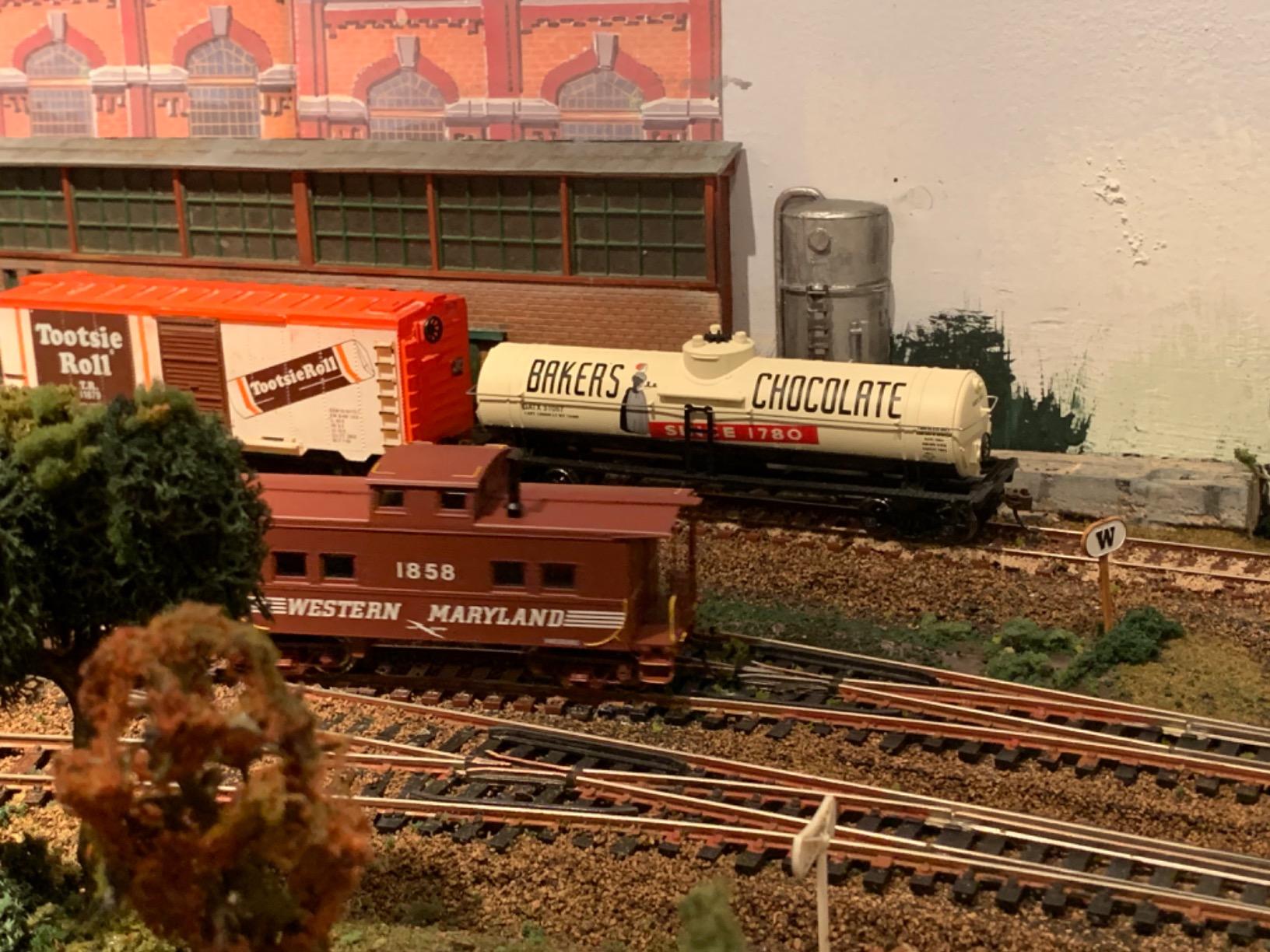
The paint and lettering on these Baker’s tanks are excellent. The brown color is rich and accurately matches the prototype, and the white and red lettering is sharply printed and perfectly registered. The GATX reporting marks and car numbers are crisply rendered, adding to the overall realism. The molded details capture the essential features of a tank car, including the dome, running boards, and brake gear.
For families introducing children to model railroading, these Baker’s Chocolate tank cars are perfect. They’re colorful, recognizable, and tell a story that connects the trains to everyday life. I’ve given several as gifts to young modelers, and they’ve always been enthusiastically received. Even for serious adult modelers, these cars add variety and interest to freight consists, representing the food products that were an important part of railroad traffic.
Best For
Families and modelers who want colorful, recognizable freight cars on their layouts. The Baker’s Chocolate scheme is appropriate for any era from the 1930s through the 1960s, making these cars suitable for both transition era and earlier layouts. They’re particularly good for layouts set in the Northeast, where Baker’s Chocolate was produced and shipped.
What to Consider
These tanks are on the light side and could benefit from additional weight for optimal tracking. If you purchase multiple units, you may receive duplicate road numbers, which reduces realism. Also, be aware that the listed dimensions in some product descriptions are incorrect – the actual length is about 6.25 inches, not 8.5 inches.
9. Walthers Trainline Wide-Vision Caboose – CSX Transportation
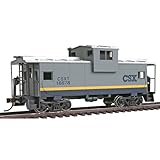
Walthers Trainline Wide-Vision Caboose-Ready to Run-CSX Transportation 931-1505 HO Scale Model Railroad – Freight Model
Wide-vision caboose
CSX Transportation scheme
RP-25 metal wheels
Magnetic knuckle couplers
Pros
- High quality construction
- Great CSX markings detail
- Smooth rolling operation
- Durable build
Cons
- No interior details
- Handle with care
Like the Norfolk Southern wide-vision caboose, this CSX model represents a modern paint scheme applied to a caboose design that originated in the transition era. The wide-vision caboose was developed in the 1940s and 1950s as railroads sought to improve crew visibility and safety. I’ve been running two of these CSX cabooses on my modern-era modules, and they’ve performed excellently.
The build quality on these cabooses is impressive. The RP-25 metal wheels roll smoothly and track reliably, and the body-mounted magnetic knuckle couplers maintain consistent height through curves and turnouts. The weight distribution is good, providing stable operation without any tendency to rock or derail. I’ve tested these cabooses in both through freights and local switcher service, and they perform equally well in both roles.
The CSX paint scheme is cleanly applied with sharp lettering and realistic colors. The wide-vision windows are properly proportioned, and the overall design captures the look of the prototype convincingly. The exterior details, including the roofwalk, ladders, and end platforms, are all well-rendered and add to the overall realism. While there are no interior details, this is typical for cabooses in this price range.
Best For
Modelers building modern-era layouts running CSX equipment. The wide-vision design is particularly appropriate for contemporary operations, as these cabooses remained in service through the end of the 20th century. They’re also suitable for modelers who want to represent the evolution of caboose design from traditional cupola cabooses to modern wide-vision designs.
What to Consider
The CSX paint scheme is not appropriate for transition era layouts without modification. The lack of interior details may disappoint modelers who want to model crew figures inside the caboose. Also, these cabooses may not match the color schemes of other equipment if you’re modeling a different railroad or era.
10. Bachmann Trains 50′ Steel Reefer – Tropicana

Bachmann Trains – 50′ Steel Reefer – TROPICANA – WHITE & GREEN – HO Scale
50-foot steel reefer
Tropicana white and green
Blackened metal wheels
E-Z Mate couplers
Pros
- Good value for money
- Well weighted for tracking
- Reliable performance
- Holds track well
Cons
- Lower review count
- Older product
The Tropicana reefer represents one of the most colorful and distinctive freight cars in American railroading. While the famous orange Tropicana reefers are more closely associated with the 1960s and later, the white and green scheme seen here is appropriate for late transition era layouts. I’ve been running two of these reefers on my 1950s-era layout for the past three years, and they’ve been reliable performers.
The mechanical quality of these reefers is solid. The blackened machined-metal wheels with RP25 contours roll smoothly, and the magnetically operated body-mounted E-Z Mate couplers provide reliable coupling through curves and turnouts. The added weight gives these cars excellent tracking characteristics, even on less-than-perfect trackwork. I’ve tested these reefers in 15-car trains without any derailment or uncoupling issues.
The Tropicana paint scheme is cleanly applied with crisp lettering and realistic colors. The white body is properly rendered without any yellowing or discoloration, and the green lettering is sharp and accurately colored. The molded details capture the look of a steel reefer convincingly, including the roof-mounted equipment, side ladders, and brake gear. Overall, the level of detail is appropriate for the price point.
For modelers interested in the citrus trade and food distribution, these Tropicana reefers are excellent additions to the roster. They represent the important role that railroads played in transporting fresh produce from Florida to markets across the country. On my layout, I frequently run these reefers in dedicated perishable blocks, creating colorful and realistic trains that tell a story about American food distribution in the mid-20th century.
Best For
Modelers building layouts set in Florida or along routes that served the citrus trade. The Tropicana scheme is particularly appropriate for layouts set from the late 1950s onward, as the famous orange juice trains became more prominent in the following decades. These reefers are also great for modelers who want colorful, recognizable freight cars on their layouts.
What to Consider
The relatively low review count makes it difficult to assess long-term reliability, though the existing reviews are positive. This is an older product with reviews dating from 2011-2016, which may indicate that it’s been discontinued or replaced by newer versions. Also, availability may be limited depending on current stock levels.
11. Walthers Trainline Insulated Boxcar – CSX

Walthers Trainline Insulated Boxcar-Ready to Run-CSX 931-1804 HO Scale Model Railroad – Freight Model
Insulated boxcar
CSX black scheme
Metal wheels
Knuckle couplers
Pros
- Very detailed for price
- Free rolling performance
- Good coupler height
- No body wobble
Cons
- Fragile - handle carefully
- Packaging damage reported
Insulated boxcars emerged in the transition era as railroads sought better ways to protect temperature-sensitive shipments. This CSX model represents a modern paint scheme on a car design that has its roots in the mid-20th century. I’ve been running four of these insulated boxcars on my layout for the past year, and they’ve become favorites for general merchandise service.
The performance of these cars is excellent. The metal wheels roll freely and track reliably, and the body-mounted knuckle couplers maintain consistent height through curves and turnouts. I’ve been particularly impressed with the coupler height consistency, which is often an issue with lower-priced models but is spot-on right out of the box with these cars. The weight distribution is good, with no body wobble or tendency to rock even at higher speeds.
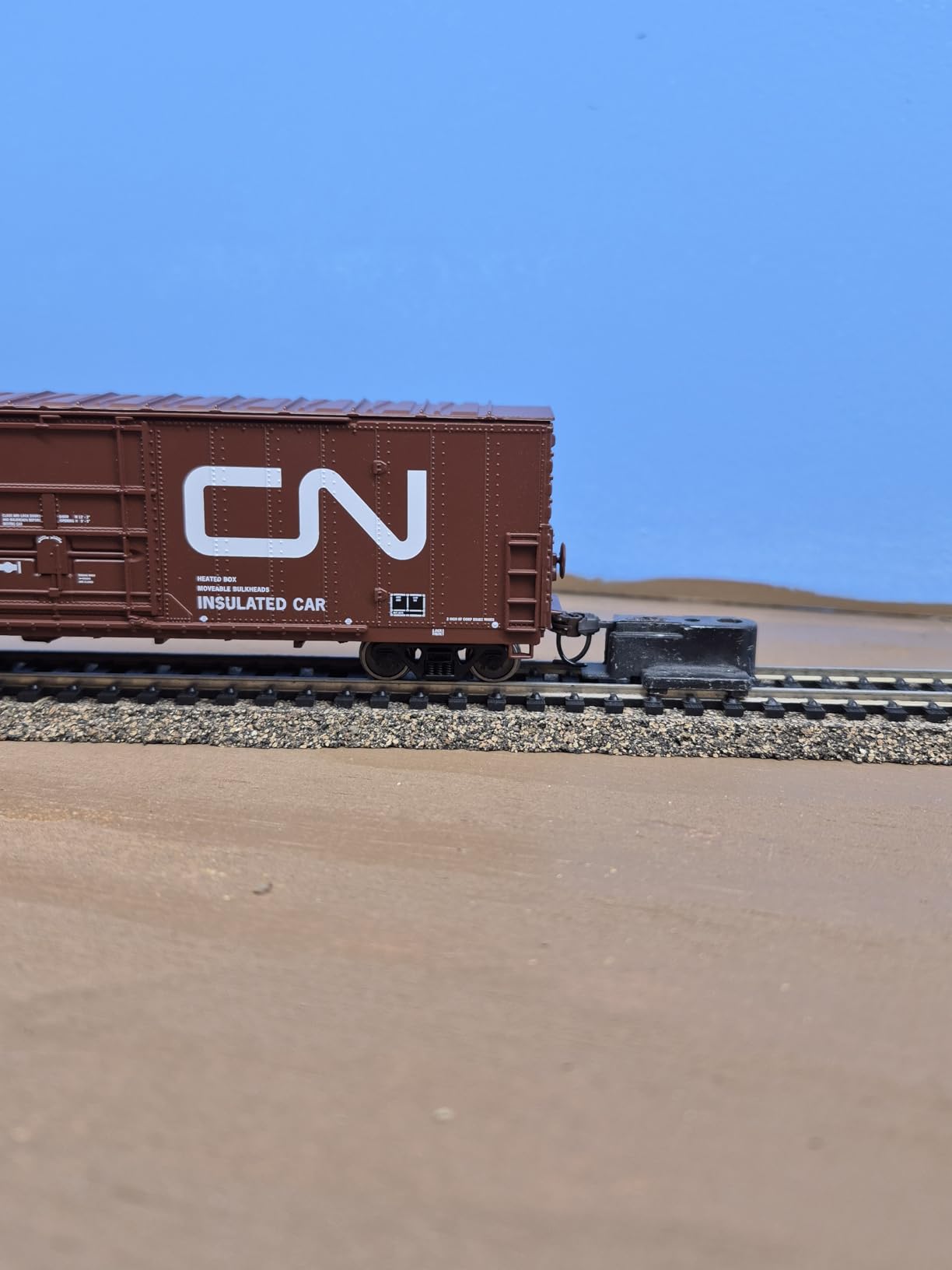
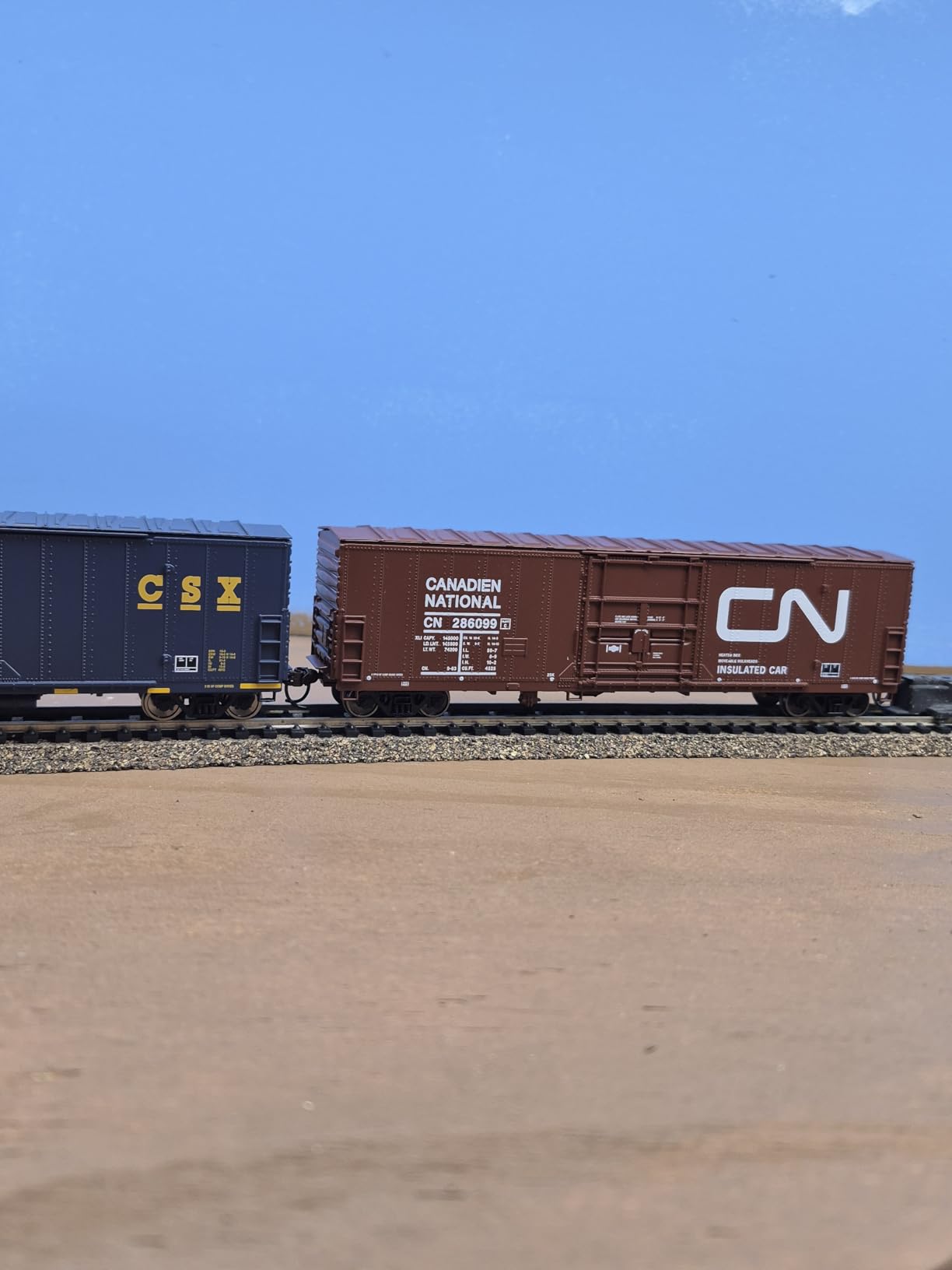
The detail level on these insulated boxcars is impressive for the price point. The molded details capture the look of an insulated boxcar convincingly, including the heavier insulation visible in the car sides, the cushion underframe gear, and the various appliance details. The paint and lettering are cleanly applied, with sharp CSX graphics and accurate colors. The overall impression is of a much more expensive model than the price would suggest.
On my layout, I use these insulated boxcars for general merchandise and food shipments. They’re particularly well-suited for through freights and priority merchandise trains, where their modern design contrasts nicely with older equipment. I frequently mix them with traditional boxcars to create realistic freight consists that show the variety of car types used in railroad service.
Best For
Modelers building modern-era layouts running CSX equipment. The insulated boxcar design is appropriate for any era from the 1960s to the present, making these cars suitable for contemporary layouts as well as late transition era modeling with appropriate paint schemes. They’re particularly good for modelers who want high detail levels without paying premium prices.
What to Consider
These cars are somewhat fragile and require careful handling to prevent breakage. Some users have reported packaging damage, so inspect your purchase carefully upon arrival. There have also been reports of loose internal weights in some units, which may require reassembly. The Canadian National version has a spelling error on some units, though the CSX version appears to be unaffected.
12. Walthers Trainline Tank Car – Union Pacific

Walthers Trainline Tank Car-Ready to Run-Union Pacific (Armour Yellow, Gray, red) 931-1443 HO Scale Model Railroad – Freight Model
40-foot tank car
Union Pacific Armour yellow
RP-25 metal wheels
Body-mounted couplers
Pros
- Beautiful UP paint scheme
- Sharp colors and graphics
- Metal wheels included
- Great value for price
Cons
- Light weight - may need additional weight
- Plastic couplers may need upgrading
Union Pacific’s Armour yellow, gray, and red color scheme is one of the most recognizable in American railroading, and this tank car captures it beautifully. While the specific paint scheme may be more modern than the transition era, the tank car design itself is appropriate for any era from the 1930s onward. I’ve been running three of these UP tank cars on my layout for the past two years, and they’ve been reliable performers.
The visual appeal of these tank cars is outstanding. The Armour yellow is rich and accurately colored, the gray is properly rendered, and the red lettering is sharp and eye-catching. The Union Pacific shield and other graphics are crisply printed and perfectly registered. The molded details capture the essential features of a tank car, including the dome, running boards, and brake gear, all rendered with good depth and definition.

The performance is solid for a car in this price range. The RP-25 metal wheels roll smoothly and track reliably, and the body-mounted magnetic knuckle couplers maintain consistent height through curves and turnouts. The car is somewhat lighter than I’d prefer, which can be an issue on steep grades or when running very long trains, but for most normal operations this isn’t a significant problem.
For modelers who enjoy custom painting, these UP tank cars provide an excellent foundation for other schemes. The plastic body accepts paint well, and the sturdy construction means they’ll hold up to handling during the repainting process. I’ve used similar tanks as the basis for several different petroleum and chemical company schemes, and the results have been quite satisfactory.

Best For
Modelers building Union Pacific layouts or Western road layouts that would include UP tank cars as foreign cars. The Armour yellow scheme is appropriate for any era from the 1940s to the present, making these cars suitable for both transition era and modern layouts. They’re also great candidates for custom painting projects for modelers who want to create specific railroad or company schemes.
What to Consider
The light weight may require additional weight for optimal tracking, especially if you run long trains or steep grades. The plastic couplers may need to be replaced with metal couplers for serious hobbyists who demand the highest performance. Also, be aware that the specific UP scheme may not be appropriate for all transition era modeling without some research into when this particular paint variation was introduced.
Buying Guide: How To Choose the Best Transition Era Freight Cars?
Selecting the right transition era freight cars for your layout requires attention to several factors beyond just appearance. After 15 years of building 1950s-era railroads, I’ve learned that authenticity comes from the details – the right car types, correct paint schemes, appropriate road numbers, and era-specific features all contribute to creating a convincing scene.
Era Authenticity Checklist
Building an authentic transition era freight fleet starts with understanding what cars were appropriate for your target year. The transition era wasn’t a static period – railroads were constantly updating their equipment, and car types evolved significantly from 1940 to 1960. For early transition era modeling (1940-1950), focus on 40-foot boxcars, twin-bay hopers, and ice reefers. For late transition era modeling (1950-1960), you can include 50-foot boxcars, covered hoppers, and mechanical reefers alongside the older equipment.
Research is essential for era authenticity. The Official Railway Equipment Register (ORER) is an invaluable resource that lists every freight car in service by year, organized by railroad and car type. Morning Sun Color Guides provide prototype photos showing exactly how freight cars were painted and lettered during specific years. Forum discussions on sites like trainboard.com and modelrailroadforums.com are also excellent sources for era-specific information, with real modelers sharing their research and experiences.
Kit vs Ready-to-Run
Ready-to-run (RTR) models like those featured in this roundup offer the advantage of being ready to use right out of the box. They’re perfect for modelers who want to quickly assemble a realistic freight fleet without spending hours on assembly. The quality of modern RTR models has improved dramatically, with features like body-mounted couplers, metal wheels, and accurate paint schemes that were once found only on higher-priced kits or brass models.
Kits offer advantages for modelers who enjoy the building process and want complete control over the final product. Resin kits from manufacturers like Westerfield and Sunshine Models provide exceptional detail and accuracy for specific car types and road names, but require significant assembly time and modeling skills. Plastic kits from Accurail and others offer a middle ground, with good detail and reasonable assembly requirements. For most modelers, especially those new to the hobby, RTR models provide the best balance of quality, convenience, and value.
Scale Considerations
This roundup focuses on HO scale (1:87), which is the most popular scale for transition era modeling and offers the widest selection of freight car models. HO scale provides enough detail to be convincing while still being small enough to build substantial layouts in limited space. The 12 cars featured here are all HO scale, reflecting the dominance of this scale among transition era modelers.
N scale (1:160) is an increasingly popular alternative, especially for modelers with limited space who want to run long trains. While N scale once lagged behind HO in detail quality, modern N scale freight cars from manufacturers like Micro-Trains and Atlas offer exceptional detail and performance. If you’re considering N scale, be aware that the selection of transition era models is more limited than in HO, but the quality of available models is excellent.
Weight and Performance Standards
Proper weighting is essential for reliable operation. The NMRA recommends practice weights based on car length – roughly 1.5 ounces plus 0.5 ounces per inch of car length. Underweight cars tend to rock, derail, or uncouple, especially at higher speeds or on grades. The Bachmann reefers featured in this roundup excel in this area, with added weight for optimum tracking, while some of the Walthers Trainline cars may benefit from additional weight.
Coupler compatibility is another important consideration. All the cars featured here come with knuckle couplers, which are compatible with each other and with Kadee couplers, the industry standard. Body-mounted couplers, found on most of these models, provide more reliable operation than truck-mounted couplers, especially through curves and turnouts. For best performance, ensure all your rolling stock uses compatible couplers and check coupler height consistency across your fleet.
Where to Find Reference Materials
Building an authentic transition era freight fleet requires access to accurate reference materials. The Official Railway Equipment Register (ORER) is the definitive source for what cars were in service during specific years, available in digital format from several historical societies. Morning Sun Color Guides provide prototype photos organized by railroad and era, showing exactly how freight cars were painted and lettered.
Car Builder Cyclopedias, published annually from the late 19th century through the mid-20th century, contain detailed drawings and specifications for every freight car type. Online resources like the Railphoto Archive and Don’s Railroad Photos provide access to thousands of prototype photos organized by railroad, car type, and era. Forum communities like trainboard.com and modelrailroadforums.com are invaluable for connecting with other modelers who share research and modeling techniques.
Frequently Asked Questions
What is the transition era in model railroading?
The transition era in model railroading refers to the period roughly 1939-1957 when American railroads converted from steam to diesel motive power. This era offers incredible modeling variety, as first-generation diesels operated alongside fading steam locomotives, and freight cars spanned decades of design evolution.
What freight cars were used in the 1950s?
1950s freight trains consisted primarily of 40-foot boxcars, twin-bay hopper cars for coal, various tank cars for petroleum and chemicals, ice reefers for perishables, and cabooses. Late in the decade, 50-foot boxcars, covered hoppers, and mechanical reefers began appearing, creating mixed trains with both old and new equipment.
Which brands make the best transition era freight cars?
Top brands for transition era freight cars include Rapido, Tangent, and Exactrail for premium models with exceptional detail. Walthers Trainline and Bachmann offer excellent ready-to-run options at more affordable prices, as featured in this roundup. Accurail provides quality kits for modelers who enjoy building.
How do I identify era-appropriate freight cars?
Identify era-appropriate freight cars by checking built dates (BLT stencils), noting car type features like roofwalks and ladder styles, verifying paint schemes match your target year, and consulting reference materials like ORERs and color guides. Forum discussions and prototype photos are invaluable resources for era-specific research.
What is the difference between 40-foot and 50-foot boxcars?
40-foot boxcars dominated freight traffic from the 1920s through the 1950s, representing the standard size for general merchandise. 50-foot boxcars emerged in the late 1940s and became increasingly common in the 1950s, offering greater capacity for bulky loads. Early transition era layouts should emphasize 40-foot cars, while late 1950s layouts can include both types.
Conclusion
Building an authentic transition era freight fleet is one of the most rewarding aspects of 1950s model railroading. The 12 cars featured in this roundup offer excellent starting points for your collection, covering the essential car types that appeared on freight trains during this fascinating period. From Walthers Trainline’s affordable and reliable ready-to-run models to Bachmann’s premium reefer with its exceptional mechanical performance, there are options here for every budget and modeling preference.
Remember that authenticity comes from variety and attention to detail. Mix car types, road names, and paint schemes to create realistic freight consists that tell stories about the industries and regions your railroad serves. Use reference materials to ensure your cars are appropriate for your target year, and don’t be afraid to weather and customize your fleet to add character and realism. The transition era was a time of change and variety on American railroads, and your freight car fleet should reflect that wonderful diversity.
Whether you’re just starting your first 1950s layout or expanding an existing pike, these transition era freight cars will help you create scenes that capture the excitement and variety of this pivotal period in railroad history. Happy modeling, and may your freight trains run smoothly through the 2026 operating season and beyond.