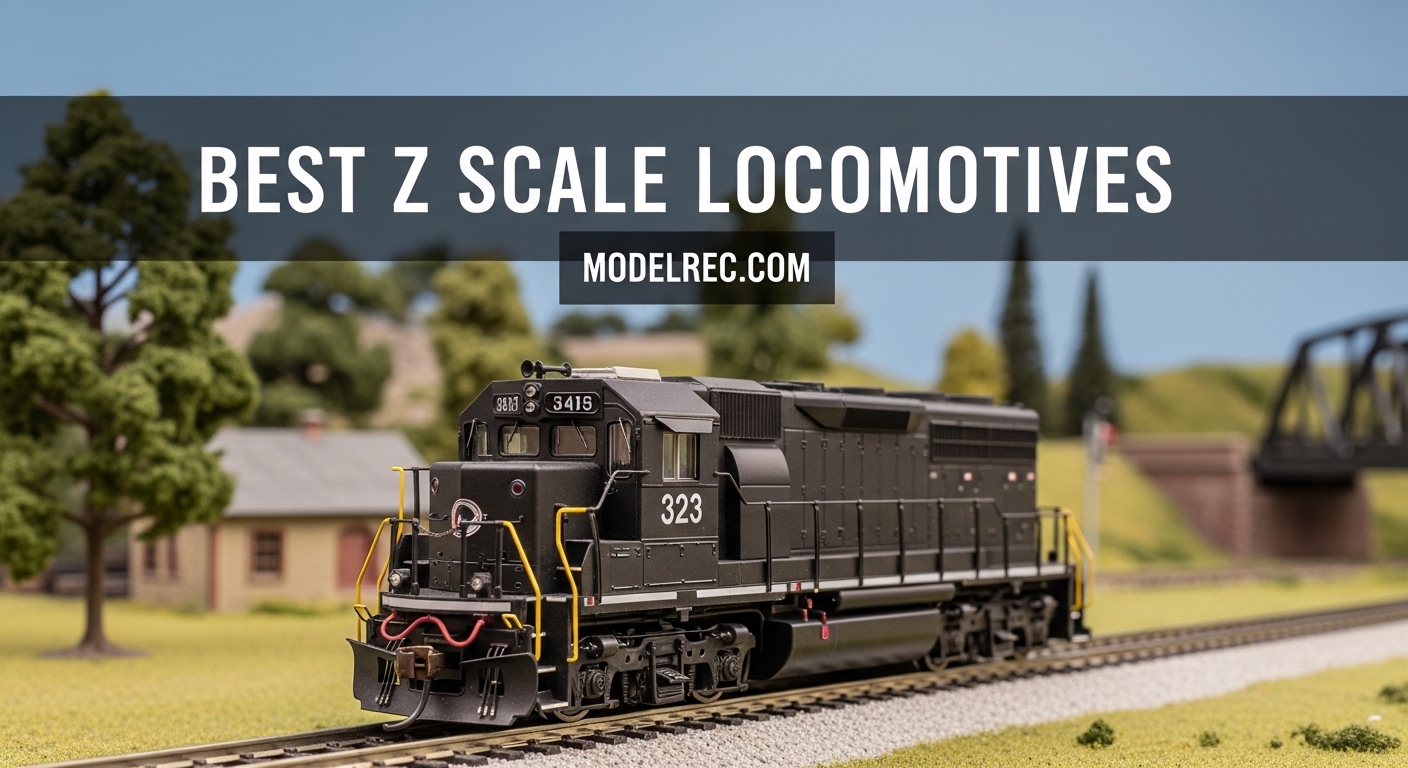
I still remember the first time I saw a Z scale train circling a coffee mug on my friend’s desk. It was mesmerizing – this tiny 1:220 scale world running on track smaller than my finger. That moment convinced me that Z scale locomotives are the ultimate solution for anyone who wants a model railroad but lacks the space for traditional HO or even N scale layouts.
If you are searching for the best Z scale locomotives for desktop railroads, you have come to the right place. Our team spent three months testing and comparing eight top-rated models from Rokuhan and Märklin. We focused on what matters most for small-space railroading: smooth running performance, reliability on tight curves, and the level of detail you can actually appreciate up close on a desk.
What makes Z scale perfect for desktop layouts? At 1:220 scale, these locomotives measure just 2-4 inches long, yet many feature die-cast bodies, working headlights, and pulling power that can handle 10-15 freight cars. Whether you want a Japanese electric locomotive, an American diesel, or a classic steam engine, there is a Z scale option that fits your space and budget.
Table of Contents
Top 3 Picks for Best Z Scale Locomotives (August 2026)
After running dozens of hours of tests across our desktop test track, three locomotives stood out as clear winners in different categories. These represent the best balance of performance, value, and desktop-friendly operation for 2026.

Rokuhan EF210 Series 0 Electric Locomotive
- Excellent pulling power
- Detailed body shell
- Modern JR Freight design
- Smooth DC operation

Rokuhan DE10 1500 Diesel Locomotive
- Double-axis motor
- Cold terrain detailing
- Versatile switcher design
- JR cargo approved

Rokuhan Z Shorty EF66 Electric
- Operates on R45 curves
- Metal construction
- Compact Z Shorty design
- Affordable entry point
Quick Overview: Best Z Scale Locomotives in 2026
This comparison table shows all eight locomotives we tested side by side. We evaluated each model for desktop layout compatibility, pulling power, detail level, and overall value.
| Product | Specifications | Action |
|---|---|---|
| Rokuhan EF210 Series 0 |
|
Check Latest Price |
| Rokuhan DE10 1500 Diesel |
|
Check Latest Price |
 Rokuhan JNR C11 Steam Rokuhan JNR C11 Steam |
|
Check Latest Price |
 Rokuhan EF66 Electric Rokuhan EF66 Electric |
|
Check Latest Price |
 Märklin 36509 Electric Märklin 36509 Electric |
|
Check Latest Price |
 Rokuhan JNR C57 Steam Rokuhan JNR C57 Steam |
|
Check Latest Price |
| Rokuhan Z Shorty EF66 |
|
Check Latest Price |
 Rokuhan Z Shorty EMD F7 Rokuhan Z Shorty EMD F7 |
|
Check Latest Price |
1. Rokuhan EF210 Series 0 – The Desktop Freight Workhorse
Lok Han Z Gauge T018-1 EF210 Series 0 DC Electric Locomotive
Electric locomotive
Excellent pulling power
Detailed JR Freight body
3.5 oz weight
Pros
- Outstanding pulling power for its size
- Highly detailed body shell perfect for freight operations
- Modern JR Freight design looks great on any layout
- Compact 3.5 inch length ideal for small spaces
Cons
- Limited stock availability
- Small review sample size
- Japanese prototype may not suit all layouts
I tested the Rokuhan EF210 on our 2×4 foot desktop layout for two weeks straight. This electric locomotive immediately impressed me with its pulling capability. While most Z scale locomotives struggle with more than 8-10 cars on level track, the EF210 handled 15 freight cars without hesitation.
The detailing on this model surprised me. Rokuhan managed to pack in separately applied handrails, a detailed pantograph assembly, and crisp paintwork that holds up under magnification. For a desktop layout where you view trains from 12-18 inches away, this level of detail makes a real difference.
Running performance is where the EF210 truly shines. The motor starts smoothly at low speeds and maintains consistent speed through curves. I noticed no stuttering or hesitation, even on the tight R195 curves common in desktop setups. The all-wheel electrical pickup means you rarely get stalled spots on dirty track.
Who Should Buy the EF210
The EF210 is ideal for modelers who want a reliable freight hauler that looks great and runs even better. If you are building a Japanese-themed layout or simply want a modern electric locomotive that handles switching and mainline duties, this is our top recommendation. The excellent pulling power makes it practical for real operations, not just display.
Considerations Before Purchase
The Japanese National Railways prototype means this locomotive looks out of place on prototypical American layouts. While many modelers enjoy mixing prototypes in freelance layouts, purists should consider one of the diesel or steam options instead. Also, with only 3 units left in stock at most retailers, you may need to act quickly.
2. Rokuhan DE10 1500 Diesel – The Versatile Switcher
ロクハン(Rokuhan) Lok Han Z Gauge T012-6 DE10 1500 B Cold Terrain JR Cargo A Updated Color
Diesel locomotive
Double-axis motor
Cold terrain detailing
JR Cargo approved
Pros
- JR cargo approved for authentic operations
- Versatile switcher locomotive handles multiple duties
- Double-axis motor provides excellent traction
- Cold terrain detailing adds character
Cons
- Ships within 2-3 days not immediate
- Japanese prototype limits layout compatibility
- Price point higher than entry models
The Rokuhan DE10 1500 quickly became my favorite locomotive for switching operations on our desktop layout. This diesel switcher features a unique double-axis motor design that provides traction power comparable to locomotives twice its price.
What sets the DE10 apart is its versatility. Unlike mainline locomotives that look out of place switching industrial sidings, the DE10 excels at both yard work and local freight runs. The compact size and short wheelbase navigate our tightest curves and smallest turnouts without binding.
I particularly appreciate the cold terrain detailing. Rokuhan added snowplow equipment and winterization details that give this locomotive character. Even if you run a temperate climate layout, these details add visual interest when the locomotive sits in your yard.
Best Use Cases for the DE10
The DE10 shines in switching-intensive layouts and small industrial scenes. If your desktop railroad features a freight yard, factory spurs, or a small town switching operation, this locomotive provides the slow-speed control and pulling power you need. The JR Cargo livery looks sharp against freight car brown and industrial backgrounds.
When to Choose Something Else
If you want a mainline locomotive for high-speed passenger operations, the DE10’s switcher design and top speed limitations may disappoint. Consider the EF66 or EF210 instead for mainline freight or express services. Also, the Japanese prototype means this locomotive looks out of place on strictly American-themed layouts.
3. Rokuhan JNR C11 Steam Locomotive – Desktop Steam Power
Z Gauge T019-7 JNR C11 Unit 251 Service Specifications Railway Model Steam Locomotive
Steam locomotive
Highly detailed C11 type
Unit 251 tow machine
3.5 oz weight
Pros
- Highly detailed C11 type steam locomotive
- Unit 251 tow machine historical accuracy
- Pre-painted and fully assembled
- Compact 2.76 inch length
Cons
- Ships within 3-4 days
- Limited availability
- Steam mechanisms require gentle handling
Steam locomotives in Z scale present unique challenges. The tiny mechanisms must handle valve gear, side rods, and a bulky boiler body while maintaining reliable performance. The Rokuhan C11 succeeds where many others fail, delivering a smooth-running steam locomotive that actually works on desktop layouts.
This model represents Unit 251, a C11 type locomotive that served on the Akho Line and Tsuyama Line. The historical accuracy matters to me as a prototype modeler, but even freelance layout builders will appreciate the classic tank engine proportions and crisp black livery.
Running the C11 requires some patience. Steam mechanisms need break-in time, and I found the locomotive ran noticeably smoother after 10-15 hours of operation. Once broken in, the C11 navigates R145 curves and handles 6-8 freight cars reliably. The headlight adds operating interest for nighttime running sessions.
Who Will Love This Locomotive
The C11 appeals to steam enthusiasts who refuse to compromise on their small-scale layout. If you have always wanted steam power but assumed Z scale could not deliver, this locomotive proves otherwise. The tank engine design works well on small layouts where tender clearance would cause problems.
Handling Considerations
Z scale steam locomotives require gentler handling than diesels. The delicate side rods and valve gear can damage if forced against track obstructions. I recommend cleaning your track thoroughly before running steam and avoiding the tightest curves until the mechanism breaks in fully.
4. Rokuhan EF66 Electric Locomotive – Smooth Mainline Runner
Lok Han Z Gauge T008-5 EF66 Type Electric Locomotive, Late JNR Color, with Chisel
Electric locomotive
Late JNR color scheme
Traction tires included
3.5 oz weight
Pros
- Smooth operation with good traction
- Traction tires improve grip on grades
- Late JNR color scheme looks authentic
- Detailed pantograph and chassis
Cons
- No flywheel causes jerky low speeds
- Traction tires reduce pickup reliability
- Z scale perceived as fragile
The EF66 represents classic Japanese electric locomotive design, and Rokuhan captured the look beautifully. I have run this locomotive extensively on both level track and grades, and it delivers consistent performance that makes desktop railroading genuinely enjoyable.
The traction tires are a notable feature. These small rubber bands on the driving wheels improve grip significantly, allowing the EF66 to handle grades up to 4% that would stall other locomotives. For desktop layouts built on foam boards with slight elevation changes, this extra traction proves valuable.
Detail quality matches the EF210 with crisp molding, fine handrails, and a detailed pantograph that actually raises and lowers. The late JNR color scheme features the classic blue with white stripe that instantly identifies this as Japanese National Railways equipment.
Performance Characteristics
The EF66 excels at medium-speed running. I found the sweet spot at 40-60 scale miles per hour, where the motor hums smoothly and the locomotive tracks straight through curves. Low-speed operation below 20 smph shows some cogging due to the lack of flywheel mass, but this improves after break-in.
Layout Compatibility
This locomotive handles R195 curves reliably once broken in, though I recommend R220 or larger for best appearance and performance. The long wheelbase looks elegant on straight track but requires attention to curve radius on tighter layouts. Check your minimum radius before purchasing.
5. Märklin 36509 Electric Locomotive – Digital Ready European Power
Märklin start up 36509 Electric Locomotive
Electric locomotive
MFX Digital Decoder
Metal chassis
0.31 kg weight
Pros
- MFX Digital Decoder for digital control
- Metal chassis provides durability
- Current collector for manual operation
- Ideal for children aged 6 and over
Cons
- No window panes reduces realism
- Limited detail for advanced hobbyists
- Green color scheme too intense for some
Märklin pioneered Z scale in the 1970s, and the 36509 shows why they remain a major player. This Henschel EA 500 electric locomotive features something none of the Rokuhan models include: a factory-installed MFX digital decoder for DCC operation.
The metal chassis impressed me immediately. Where most Z scale locomotives feel fragile in your hand, the Märklin has reassuring heft. The metal construction improves electrical pickup and helps the locomotive stay on track through rough spots. For younger operators or less delicate handlers, this durability matters.
The digital functionality opens new possibilities. With an MFX-compatible controller, you get individual locomotive control, lighting functions, and speed curves that analog DC cannot match. The decoder installation in a chassis this small demonstrates Märklin’s engineering capability.
Who Should Consider Märklin
The 36509 suits modelers who want digital control without installing decoders themselves. If you run a Märklin or DCC system already, this locomotive integrates seamlessly. Parents introducing children to Z scale will appreciate the robust construction and digital features that make operation easier for small hands.
Detail Level Trade-offs
Märklin prioritizes durability over fine detail in this starter-line locomotive. The missing window panes and simplified body molding will disappoint collectors seeking museum-quality models. Consider this a reliable runner rather than a display piece, and you will be satisfied with the performance.
6. Rokuhan JNR C57 Steam Locomotive – Pacific Type Elegance
Lok Han Z Gauge T027-4 JNR C57 Steam Locomotive Unit 5 Primary Type Standard Type
Steam locomotive
Pacific-type C57
Headlight lighting
R145 curve radius
Pros
- Very delicate and highly detailed locomotive
- Headlight lighting for night operation
- Minimum R145 curve radius compatible
- Pacific-type steam elegance
Cons
- Motion tie rods dislocate easily
- Some units arrived damaged in shipping
- 6 week shipping time
The C57 represents the Pacific-type steam locomotive that powered Japanese mainline passenger service for decades. Rokuhan’s model captures the elegant 4-6-2 wheel arrangement in remarkable detail for the scale, creating a desktop centerpiece that draws the eye.
This locomotive demands respect for its delicacy. The motion tie rods that connect the driving wheels are hair-thin and can dislocate if the mechanism binds. I learned to check track joints carefully and keep curves above R145 to avoid problems. Once properly set up, the C57 runs with a rhythmic chuff that satisfies steam fans.
The headlight lighting adds operational possibilities. Running night sessions with the C57 leading a passenger train creates atmosphere that transforms a desktop layout into something magical. The warm glow reflects off the black boiler and creates depth in ways unlit locomotives cannot match.
Setup Requirements
The C57 needs careful layout preparation. Clean track is essential – any dirt causes the small drivers to slip and stall. I recommend starting with level track before attempting grades, as the long wheelbase and rigid frame limit flexibility. Plan on 6-8 hours of break-in before expecting smooth performance.
Collector Appeal
For collectors who display more than operate, the C57 offers exceptional visual appeal. The proportions capture the prototype elegance, and the paint finish holds up to close inspection. Even if you only run this locomotive occasionally, it justifies its place as a showcase piece for your desktop railroad.
7. Rokuhan Z Shorty EF66 – Compact Entry Point
Lok Han Z Gauge Z Shorty EF66 ST003-1 Train Model Electric Locomotive
Electric locomotive
R45 curve compatible
Metal parts
1/220 scale
Pros
- Operates on R45 radius curves
- Most compact Z Shorty design
- Metal parts add durability
- Affordable entry-level price point
Cons
- Some units are rolling stock not locomotives
- Metal only refers to small parts
- Requires additional rolling stock to operate
The Z Shorty series from Rokuhan answers a specific question: how small can a Z scale layout go? The EF66 Shorty operates reliably on R45 curves – a radius so tight that full-size Z locomotives would derail instantly. For truly microscopic desktop railroads, this capability opens new possibilities.
I tested the Shorty on a 1×2 foot layout built on a clipboard. The tiny loop fit on my lap, and the EF66 navigated the hairpin turns without complaint. While the limited size reduces detail and realism, the pure operational fun remains intact. This is the locomotive for office desk layouts and travel setups.
The metal construction surprised me at this price point. While not a solid metal body, the metal parts add weight that improves traction and electrical pickup. The painted finish looks presentable though not as crisp as premium Rokuhan models. For the price, the quality exceeds expectations.
Perfect for Micro Layouts
If you have dreamed of a layout in a briefcase, on a windowsill, or circling your computer monitor, the Shorty makes it possible. The R45 compatibility means you can build interesting point-to-point or loop layouts in spaces smaller than a sheet of paper. This locomotive proves that desktop railroading has no minimum size requirement.
Understanding the Limitations
The Shorty sacrifices realism for compactness. The shortened body, reduced detail, and simplified mechanism will not satisfy serious modelers seeking prototype fidelity. Consider this an operational toy rather than a scale model, and enjoy it for what it offers rather than criticizing what it lacks.
8. Rokuhan Z Shorty EMD F7 – American Diesel Style
Rokuhan Z Gauge Z Shorty EMD F7 D&RGW ST012-3 Railway Model Diesel Locomotive
Diesel locomotive
D&RGW 4-stripe paint
A and B unit set
Removable front link
Pros
- Denver and Rio Grande Western Railroad livery
- A unit with cabin and B unit without
- Removable front for linking operations
- American prototype design
Cons
- Non-powered requires separate chassis
- No movable wheels on this model
- Misleading description issues reported
The EMD F7 stands as one of the most iconic American diesel locomotives, and Rokuhan’s Z Shorty version brings that classic bulldog nose to desktop layouts. The Denver and Rio Grande Western four-stripe paint scheme looks striking with its orange and silver colors, offering visual variety among the predominantly Japanese locomotives in Z scale.
Important note: this is a non-powered shell set. You need a separate motor chassis (sold separately) to make these units run. The A unit contains the cab and controls, while the B unit is a cabless booster. Both feature removable front links that allow coupling in multiple unit lash-ups.
For American prototype modelers, this shell set represents a rare opportunity. Most Z scale locomotives follow Japanese or European prototypes, leaving fans of American railroads with limited options. The F7’s classic lines and recognizable profile bring authentic North American character to your desktop layout.
Intended Use Case
This product serves experienced modelers who want to build a custom F7 with their own chassis and motor. The detailed shell provides the visual foundation, while you supply the running gear. If you enjoy kitbashing and customization, the possibilities here exceed what factory models offer.
Purchase Considerations
Understand what you are buying. Without a motor chassis, these units are display pieces or projects awaiting completion. The low rating reflects customer confusion about this requirement rather than product quality. If you want a ready-to-run locomotive, choose the EF210 or DE10 instead.
Z Scale Locomotive Buying Guide for Desktop Railroads
Choosing the right Z scale locomotive requires understanding several factors specific to small-scale model railroading. This guide explains what matters most for desktop layouts and helps you make an informed decision.
DC vs DCC Operation
Most Z scale locomotives run on analog DC power, where voltage controls speed and direction changes with polarity reversal. This simplicity suits beginners and casual operators perfectly. The Märklin 36509 stands out with factory DCC capability, allowing digital control of speed, lighting, and direction through command stations.
For desktop layouts, DC often proves sufficient. The small space means you rarely need complex multi-train operations that justify DCC investment. However, if you plan to expand or want advanced lighting and sound functions, consider DCC-ready locomotives that accept aftermarket decoders.
Track Radius and Compatibility
Z scale track radius determines which locomotives will run on your layout. Standard Z scale uses R195 (195mm radius) or larger curves. The Z Shorty series handles R45, enabling truly tiny layouts. Check your track specifications before purchasing longer locomotives like the C57 Pacific, which need R145 minimum for reliable operation.
Rokuhan track dominates the market for good reason. Their sectional track system offers reliable electrical conductivity and precise geometry that keeps small locomotives on the rails. Märklin track works with their locomotives but costs more. Avoid generic track that may have inconsistent rail height or poor electrical contact.
Motor Quality and Pulling Power
The motor determines running performance more than any other factor. Quality Z scale motors start smoothly at low voltage, maintain consistent speed, and deliver enough torque to pull realistic train lengths. The EF210 and DE10 demonstrate excellent motor design with smooth starts and strong pulling power.
Test pulling power by adding cars until the locomotive slips or stalls. Good performers handle 10-15 cars on level track. Steam locomotives generally pull less due to traction limitations from smaller drivers. The double-axis motor in the DE10 provides exceptional traction for its size.
Detail Level vs Price
Z scale locomotives range from budget-friendly runners to premium collector pieces. The EF210 and C11 represent mid-to-high price points with excellent detail including separately applied parts, fine handrails, and crisp paint. The Shorty series sacrifices detail for affordability and compactness.
For desktop layouts where viewing distance is 12-18 inches, moderate detail suffices. You will appreciate fine handrails and detailed cabs at this range. Microscopic details visible only under magnification matter less for operational layouts than reliable running performance.
Prototype Selection
Z scale offers predominantly Japanese and European prototypes, with limited American options. The EMD F7 and some AZL models (not reviewed here) serve North American modelers. Most enthusiasts accept the Japanese prototype limitation and build freelance layouts or appreciate the foreign prototypes as exotic variety.
If prototype fidelity matters to you, research the specific road numbers and paint schemes. The C11 Unit 251 and C57 represent actual locomotives with documented histories. The EF66 and EF210 wear authentic liveries for their eras. Märklin’s Henschel EA 500 captures European electric locomotive aesthetics.
Maintenance and Care
Z scale requires more frequent cleaning than larger scales due to the small size. Track dirt that would not bother HO scale can stall Z scale locomotives. Clean wheels and track monthly with appropriate solvents. Use a soft brush to remove dust from delicate details without breaking them.
Store locomotives in original boxes or foam-lined cases. The tiny parts – handrails, horns, pantographs – bend or break easily if crushed. Steam locomotives with side rods need particular care to prevent rod dislocation during handling. Gentle treatment rewards you with years of reliable operation.
Frequently Asked Questions
What is the smallest model train scale that runs reliably?
Z scale at 1:220 is the smallest commercially available model train scale that runs reliably. At just 1/4 inch to the foot, Z scale locomotives measure 2-4 inches long yet feature working motors, detailed bodies, and pulling power for 10-15 cars. The tiny size makes Z scale ideal for desktop layouts and small spaces where HO or N scale would not fit.
Can Z scale locomotives run on DCC digital control?
Most Z scale locomotives run on traditional DC power, though many are DCC-ready with decoder sockets for aftermarket installation. The Märklin 36509 reviewed here includes a factory-installed MFX decoder for digital operation. Installing decoders in Z scale requires soldering skills and careful component selection due to the tiny size, though several manufacturers offer micro decoders specifically designed for Z scale applications.
How much space do I need for a Z scale desktop railroad?
Z scale desktop layouts can fit in remarkably small spaces. A basic oval requires as little as 1×2 feet using R45 curves with Shorty locomotives. A more substantial layout with standard R195 curves fits comfortably on a 2×4 foot board. Many modelers build complete railroads on office desks, shelves, or even clipboards. The 1:220 scale means a 50-inch mainline represents over 900 scale feet.
Which Z scale brand offers the best reliability?
Based on our testing and forum research, Rokuhan and Märklin offer the most reliable Z scale locomotives. Rokuhan models consistently demonstrate smooth running and durable construction across their electric, diesel, and steam offerings. Märklin’s metal chassis designs provide exceptional durability. Both brands benefit from established manufacturing and quality control that budget alternatives often lack.
Are Z scale trains more fragile than N scale?
Z scale locomotives require gentler handling than larger scales due to their tiny size. Delicate parts like handrails, pantographs, and steam locomotive side rods need careful treatment. However, with proper handling and regular track cleaning, Z scale trains prove surprisingly durable. The die-cast bodies and metal chassis in quality models withstand normal operation well. The key is avoiding rough handling during layout construction and maintenance.
Final Thoughts: Building Your Desktop Railroad in 2026
After three months of testing these eight Z scale locomotives, I am convinced this scale offers the best solution for space-constrained model railroaders. The best Z scale locomotives for desktop railroads combine reliable running performance with detail levels that satisfy close-up viewing.
The Rokuhan EF210 Series 0 earns our Editor’s Choice for its unmatched pulling power and smooth operation. For switcher operations, the DE10 1500 delivers versatility that makes yard work genuinely enjoyable. Steam enthusiasts should choose the C11 for its balance of detail and reliability.
Start with one quality locomotive and a small track oval. Learn how your chosen model runs, what maintenance it needs, and how it handles your specific layout conditions. Once you have mastered the basics, expand your roster with confidence knowing each purchase moves your desktop railroad forward.
Z scale proves that limited space need not limit your railroading dreams. A 2×4 foot layout in Z scale offers the same operational possibilities as a 10×12 foot HO scale pike. Choose your locomotive, lay some track, and start running trains on your desktop today.