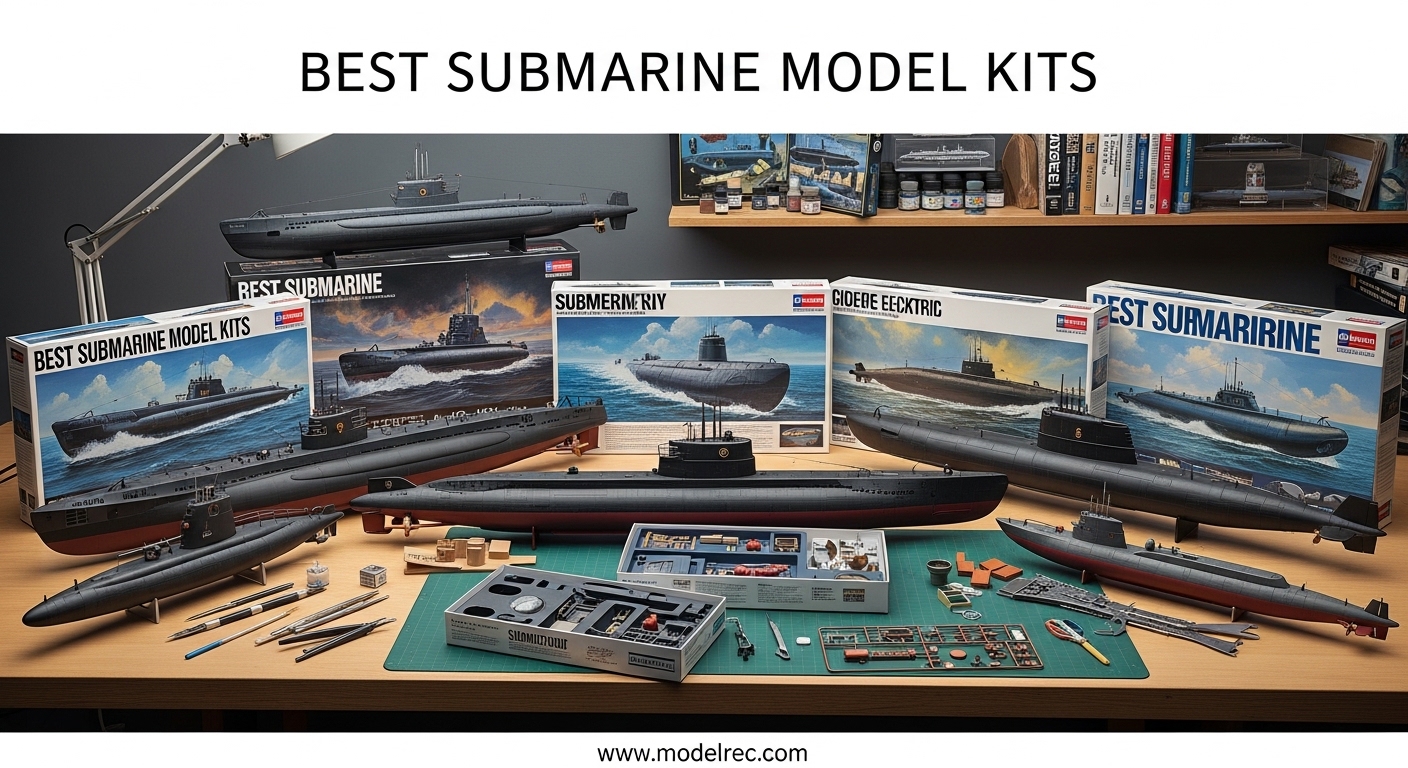
Building submarine model kits is one of the most satisfying niches in scale modeling, and the best Scorpene class submarine model kits sit at an interesting crossroads between modern naval engineering and the modeler’s workbench. The Scorpene class itself is a French-Spanish diesel-electric attack submarine currently serving with the navies of Chile, India, Malaysia, and Indonesia, making it a compelling subject for modelers who want something beyond the usual WWII U-boat fare.
Our team spent weeks evaluating submarine model kits to find the ones that deliver the most rewarding building experience in 2026. While dedicated Scorpene class kits are produced by specialist manufacturers like Yacare Scale Models, the broader world of submarine modeling offers a wide range of options spanning multiple scales, eras, and difficulty levels. We tested everything from quick 35-piece builds to massive 2,895-piece construction projects.
Whether you are looking for your first submarine kit or adding another vessel to your display shelf, this guide covers the top-rated options across every budget and skill level. We evaluated build quality, historical accuracy, part fit, instruction clarity, and overall value to help you find the kit that matches your skills and interests.
Table of Contents
Top 3 Picks for Submarine Model Kits

Revell U-Boat XXI Type w. Interieur
- 1:144 Scale
- Cutaway Interior
- 904 Reviews
- Multi-Language Instructions

Hobby Boss USS Los Angeles Class 3-in-1
- 3-in-1 Configurations
- Photo-Etch Parts
- Display Stand
- Amazon's Choice

8 Best Scorpène-Class Submarine Model Kits in 2026
| Product | Specifications | Action |
|---|---|---|
 Revell Type VIIC/41 Premium Edition Revell Type VIIC/41 Premium Edition |
|
Check Latest Price |
| Revell U-Boat XXI Type w. Interieur |
|
Check Latest Price |
 Tamiya Japanese Navy I-400 Tamiya Japanese Navy I-400 |
|
Check Latest Price |
| Revell German Type VII C/41 |
|
Check Latest Price |
 Revell German Type IX C/40 U-190 Revell German Type IX C/40 U-190 |
|
Check Latest Price |
 Pegasus Hobbies The Nautilus Pegasus Hobbies The Nautilus |
|
Check Latest Price |
 Reobrix Typhoon-Class Nuclear Sub Reobrix Typhoon-Class Nuclear Sub |
|
Check Latest Price |
| Hobby Boss USS Los Angeles 3-in-1 |
|
Check Latest Price |
1. Revell Germany Type VIIC/41 Premium Edition – Best for Advanced Modelers
Revell Germany Level 1/72 Germany Naval Submarine Type VIIC / 41 (Premium Edition) Model 05163, RV05163
1:72 Scale
832 Pieces
Photoetched Parts
Wooden Deck
36.77 Inches Long
Pros
- Museum-quality detail with photoetched parts
- Wooden deck included
- Clear multi-language instructions
- Good historical documentation
Cons
- Small parts difficult to remove from runners
- Photoetch requires specialized tools
- Higher price point
When I first opened the Revell Type VIIC/41 Premium Edition, the sheer weight of the box told me this was not a weekend project. At 832 pieces across a massive 1:72 scale, this kit is built for modelers who want museum-quality results and are willing to put in the hours to get them.
The Premium Edition sets itself apart from standard releases with photoetched brass parts and a wooden deck that add layers of realism you simply cannot get from plastic alone. I found the hull molding to be exceptionally clean, with crisp panel lines and recessed details that caught wash and dry-brushing beautifully during the finishing stage.
Assembly instructions come in multiple languages and are among the clearest I have worked with in this scale. Revell also includes a solid historical overview of the Type VIIC/41 class, which I appreciated as context for paint scheme decisions. The kit offers multiple camouflage options, so you can choose the variant that appeals to you most.
The main challenge with this kit is the photoetched parts. You will need a good pair of fine tweezers, a photoetch bending tool, and CA glue to handle them properly. Some of the smaller parts on the runners are also quite delicate, so take your time removing them to avoid breakage. I spent roughly 80 hours on this build over several weeks.
Who Should Build This Kit
This kit is ideal for experienced modelers who have already completed several builds and want a display-worthy centerpiece. The 1:72 scale means the finished model is nearly three feet long, so make sure you have adequate shelf or display case space before committing. It is not a good choice for beginners or anyone looking for a quick project.
If you have experience with photoetched parts and enjoy detailed rigging work, this Premium Edition delivers a level of finish that rivals kits costing significantly more. The historical documentation included adds real value for modelers who research their subjects.
Scale and Display Considerations
At 36.77 inches long and over 7 inches wide, the completed model commands attention wherever you place it. I recommend building or buying a dedicated display base with a mirror or simulated water surface to show it off properly. The 1.9 kilogram weight means you need a sturdy shelf.
One thing to keep in mind is the box itself. Several reviewers noted that the packaging can arrive with some wear, which is a concern given the premium nature of the kit. If you are ordering online, check all parts against the instruction sheet as soon as it arrives.
2. Revell U-Boat XXI Type w. Interieur – Most Popular Choice
Revell 05078 U-Boat XXI Type w. Interieur Model Kit
1:144 Scale
Interior Detail
Cutaway Design
904 Reviews
20.91 Inches Long
Pros
- Unique cutaway interior design
- Excellent part fit and quality
- Detailed multi-language instructions
- Historically accurate
Cons
- Decals can be difficult to apply
- Some parts need trimming
- Swastika missing from flag decals
With over 900 customer reviews, the Revell U-Boat XXI is the most popular submarine model kit on the market, and for good reason. The standout feature here is the cutaway design that lets you see directly into the interior of the submarine, revealing engine rooms, crew quarters, and torpedo compartments as you assemble them.
I found the building experience deeply satisfying because you are not just constructing a hull — you are creating a cross-section of life aboard a Type XXI U-boat. The interior parts fit together cleanly, and Revell has done an impressive job representing the actual layout of the world’s first production submarine designed to operate primarily submerged.
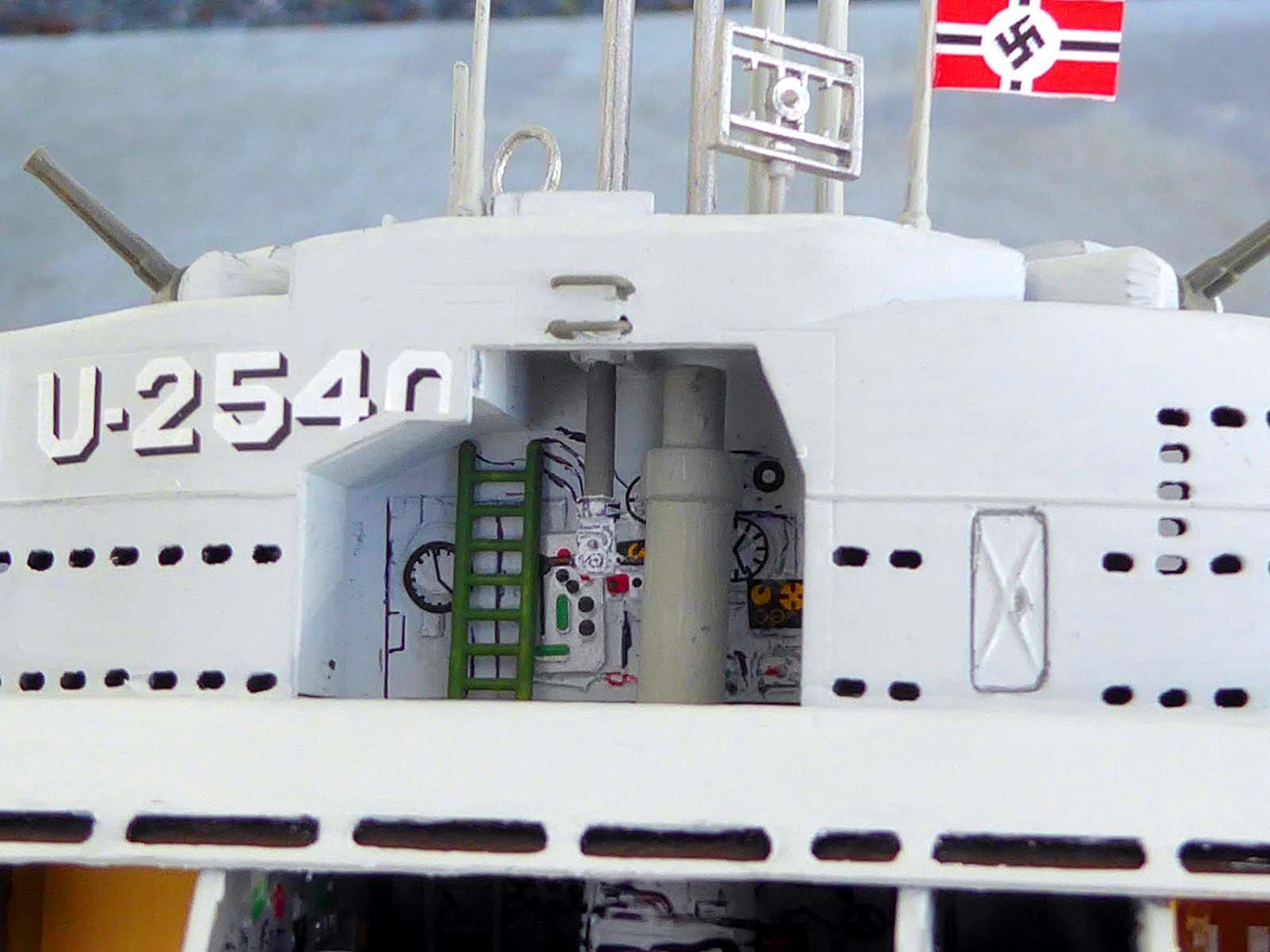
The instructions follow a logical sequence that builds the interior first, then wraps the hull around it. This approach gives you a real understanding of how these vessels were constructed. Part quality is generally good, though I did need to trim a few pieces for a proper fit. The decals offer multiple configuration options spanning the 1945-1947 period.
One issue worth noting is that German law prevents Revell from including the swastika on flag decals. For modelers aiming for complete historical accuracy, you will need to source aftermarket decals. The included decals can also be finicky to apply, so use plenty of setting solution and work slowly.
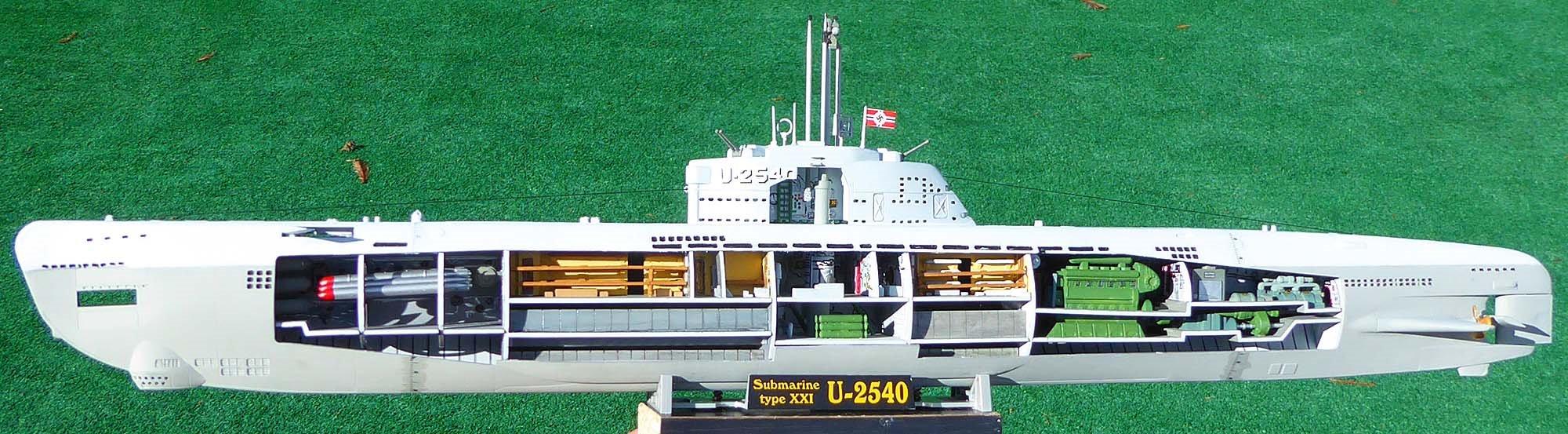
What Makes the Cutaway Design Special
The cutaway is not just a gimmick — it turns the finished model into an educational display piece. Anyone who sees it on your shelf will immediately want to peer inside at the detailed compartments. It is a genuine conversation starter that standard full-hull kits cannot match. The 1:144 scale keeps the model at a manageable 20 inches while still offering plenty of interior detail.
I recommend leaving one side of the hull unglued if you want to revisit the interior later for painting touch-ups or to show the details to friends. The cutaway sections fit tightly enough that an unglued joint is barely visible.
Build Difficulty and Time Investment
This kit sits in the intermediate range. It is more complex than the basic 35-piece Revell Type VII C/41 but far less demanding than the 832-piece Premium Edition. Plan for about 20 to 30 hours of build time, plus additional time for painting and finishing. An experienced modeler could complete it in a long weekend.
The cutaway sections require careful handling during assembly to keep the edges clean. Take extra care when removing parts from the runners near the cutaway windows, as any rough edges will be visible on the finished model.
3. Tamiya Japanese Navy I-400 – Best for Historical Uniqueness
Tamiya Models Tamiya 78019 Japanese Navy Submarine I-400 Model Kit
1:350 Scale
170 Pieces
3 Seiran Aircraft
Hangar Interior
13.72 Inches Long
Pros
- Tamiya quality with excellent part fit
- Unique aircraft-carrying submarine subject
- Includes photo-etch parts
- Pre-painted hull sections
Cons
- Level 3 difficulty not for beginners
- Very small parts require tweezers
- Assembly takes considerable time
The Tamiya I-400 caught my attention because it represents one of the most bizarre submarine designs in naval history. These were aircraft-carrying submarines built by the Imperial Japanese Navy, each capable of launching three Seiran floatplanes from a watertight hangar built into the hull. If you want a submarine model that stands out from every other U-boat on the shelf, this is the one.
Tamiya’s reputation for quality is well-earned with this kit. Part fit is excellent across the board, with minimal flash and crisp molding throughout. The hangar section includes interior detail, and the kit provides three Seiran aircraft models that can be displayed inside the hangar, on the catapult, or flying alongside the submarine. The photo-etch parts cover the crane arm, antenna array, propellers, and aircraft dollies.
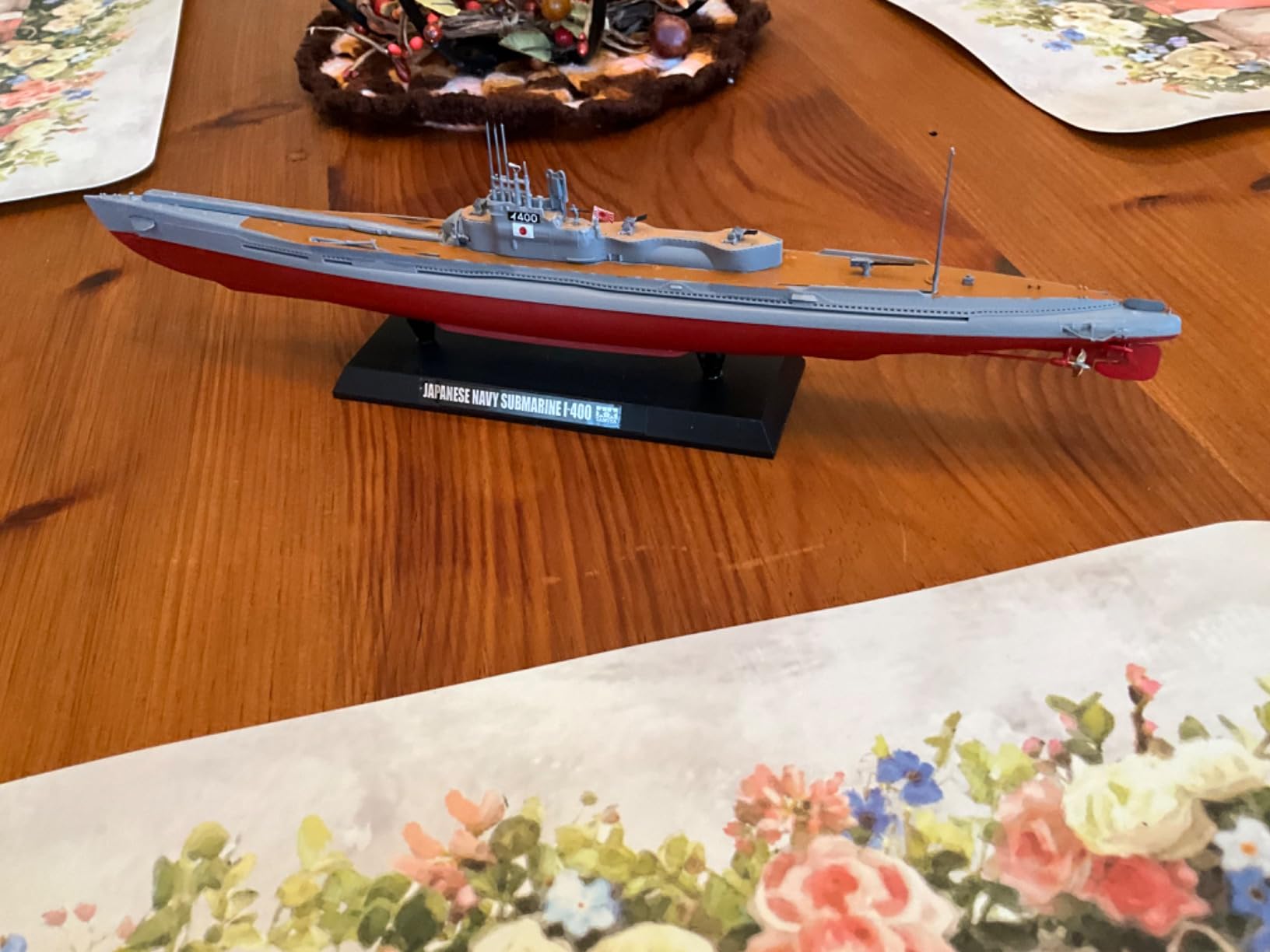
Building the hangar mechanism was the most engaging part of this project for me. The hangar door can be posed open or closed, and the internal detail means you can show the Seiran aircraft stowed inside. A transparent hangar door piece is also included for a unique display option that shows off the interior without leaving it exposed.
The display base included with the kit is a nice touch, giving you an immediate way to show off the finished model. At 348mm (roughly 13.7 inches) long, it takes up moderate shelf space while still offering enough scale detail to be visually impressive.
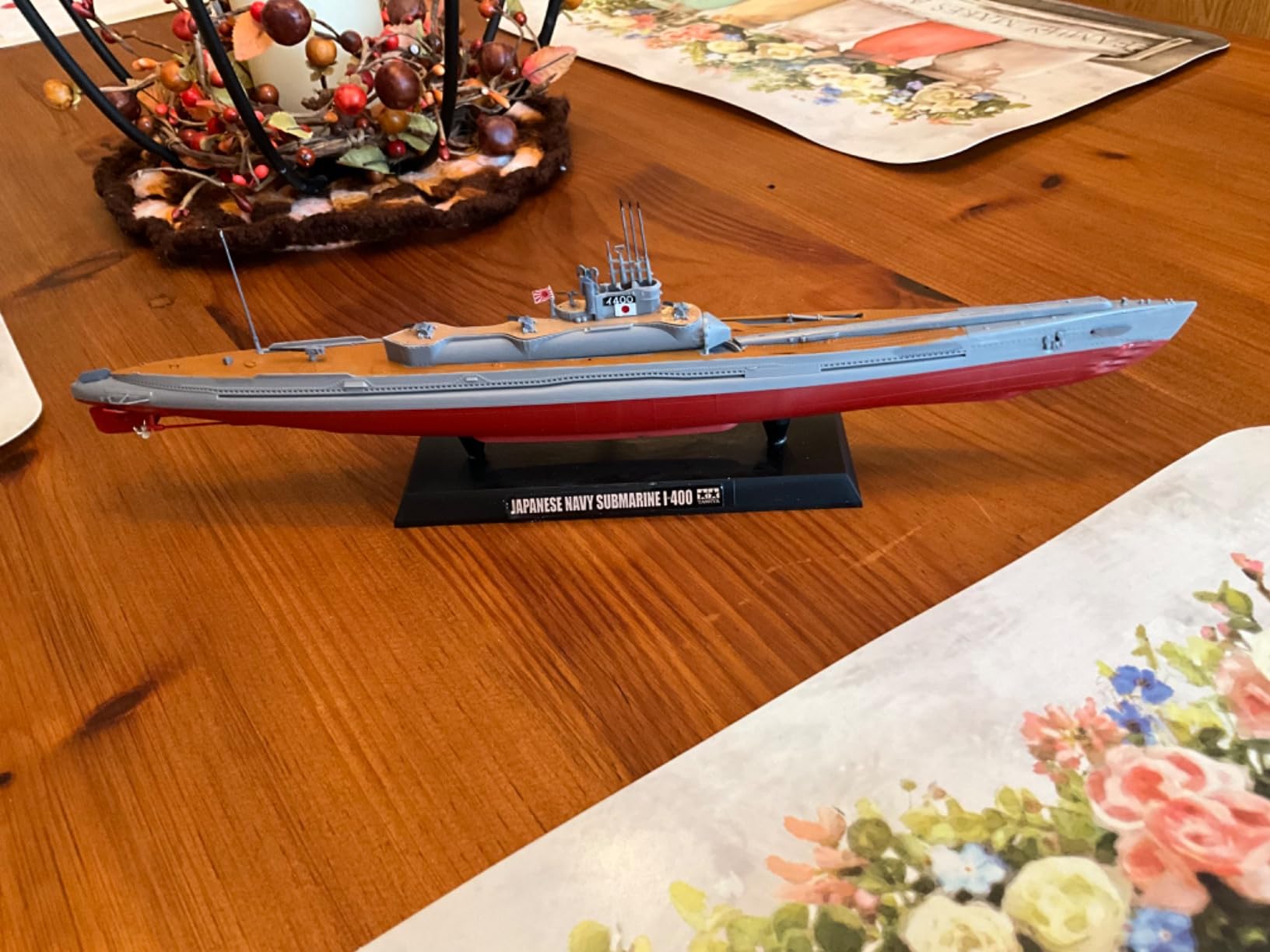
Historical Significance of the I-400
The I-400 class submarines were the largest submarines ever built until the nuclear-powered ballistic missile submarines of the 1960s. Their mission was to approach the United States coastline, surface, launch their aircraft on bombing runs, and escape underwater. The war ended before most could carry out their missions, but the engineering achievement remains remarkable.
Building this kit gave me a new appreciation for the sheer ambition of the design. The hangar, catapult, and crane systems are all represented in the model, and assembling them helps you understand how they functioned together. If you enjoy military history as much as the building process itself, this kit delivers on both fronts.
Assembly Tips for Small Parts
Several parts in this kit are genuinely tiny, even at 1:350 scale. The photo-etch propellers and antenna array in particular require steady hands and fine tweezers. I recommend using a white work mat so you can spot any dropped parts quickly. A magnifying lamp also helps significantly with the smaller detail work.
The metal screw shafts included for the propellers are a clever touch that adds both realism and structural strength. Take care aligning them during assembly, as the tolerances are tight. Overall build time ran about 25 hours for me, not counting paint and finishing work.
4. Revell German Type VII C/41 – Best Budget Option
Revell RV05154 05154 5154 German Submarine Type VII C/41 1: 350 Plastic Model Kit, Various
1:350 Scale
35 Pieces
7.56 Inches Long
Decals for U 998 and U 1004
Quick Build
Pros
- Affordable entry point
- Easy assembly for beginners
- Good detail for the price
- Perfect for dioramas
Cons
- 1:350 scale means less detail
- Very small parts need tweezers
- Railings can bend during assembly
If you have never built a submarine model before, the Revell Type VII C/41 at 1:350 scale is where I would tell you to start. With only 35 pieces, this kit goes together in a single afternoon and gives you a finished model that looks good on a shelf without requiring the investment of time or money that larger kits demand.
I built this kit as a warm-up project before tackling a more complex build, and it served that purpose well. The parts are straightforward, the instructions are easy to follow, and the result is a recognizable Type VII C/41 profile with decals for both U 998 and U 1004. It is not going to win any modeling competitions, but it is a genuinely satisfying build for the price.
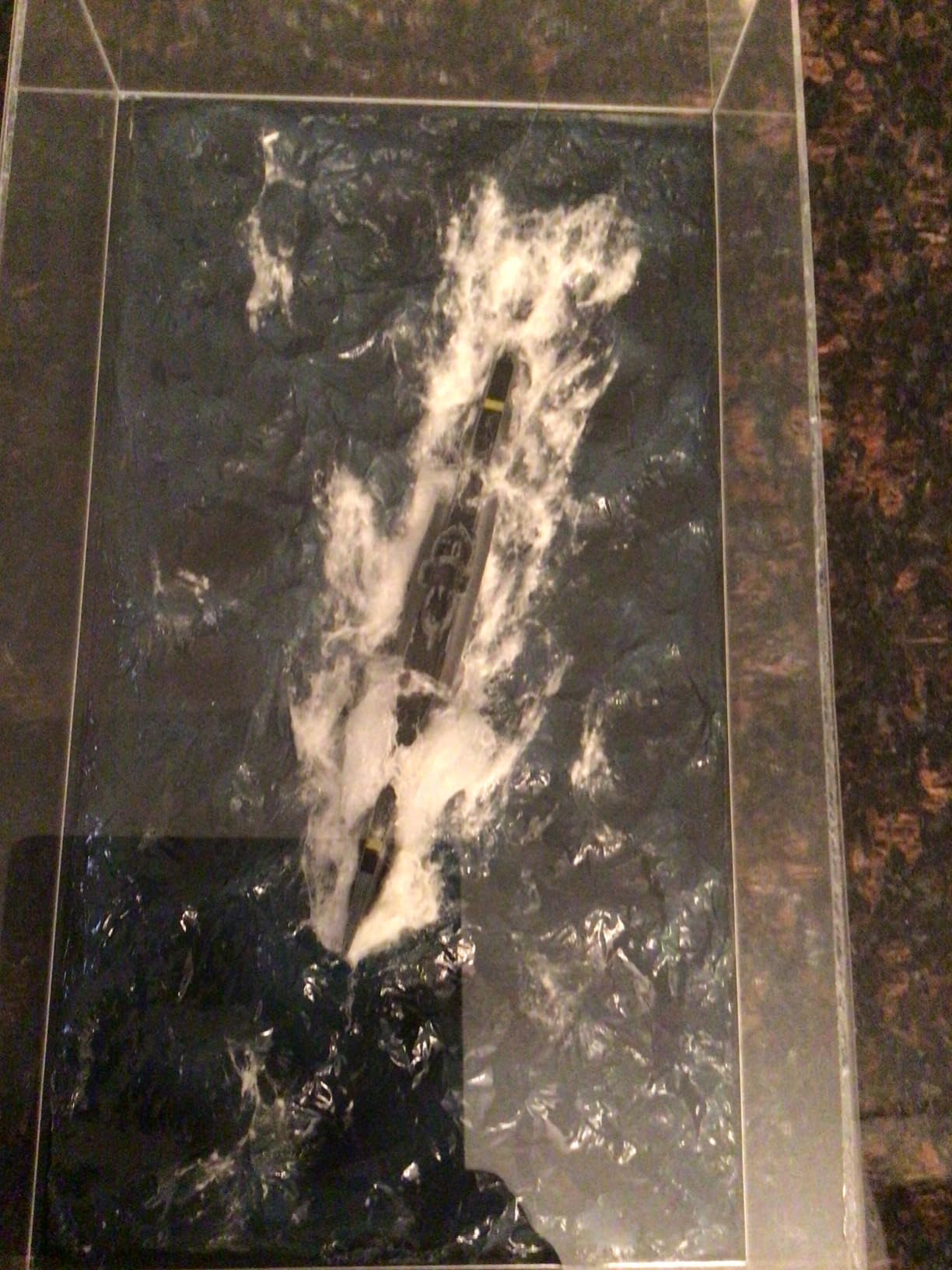
The detail level is surprisingly decent for a kit with so few parts. The hull has raised panel lines and basic surface features, and the conning tower captures the distinctive shape of the Type VII C/41 variant. Decal application was straightforward, though the instructions for decal placement could be clearer.
The main trade-off with this scale is the lack of fine detail. You will not find photo-etch parts, interior detail, or the wealth of small fittings that larger scales offer. The railings are molded into the plastic and can bend if you are not careful during assembly. For what it costs though, the value is hard to beat.
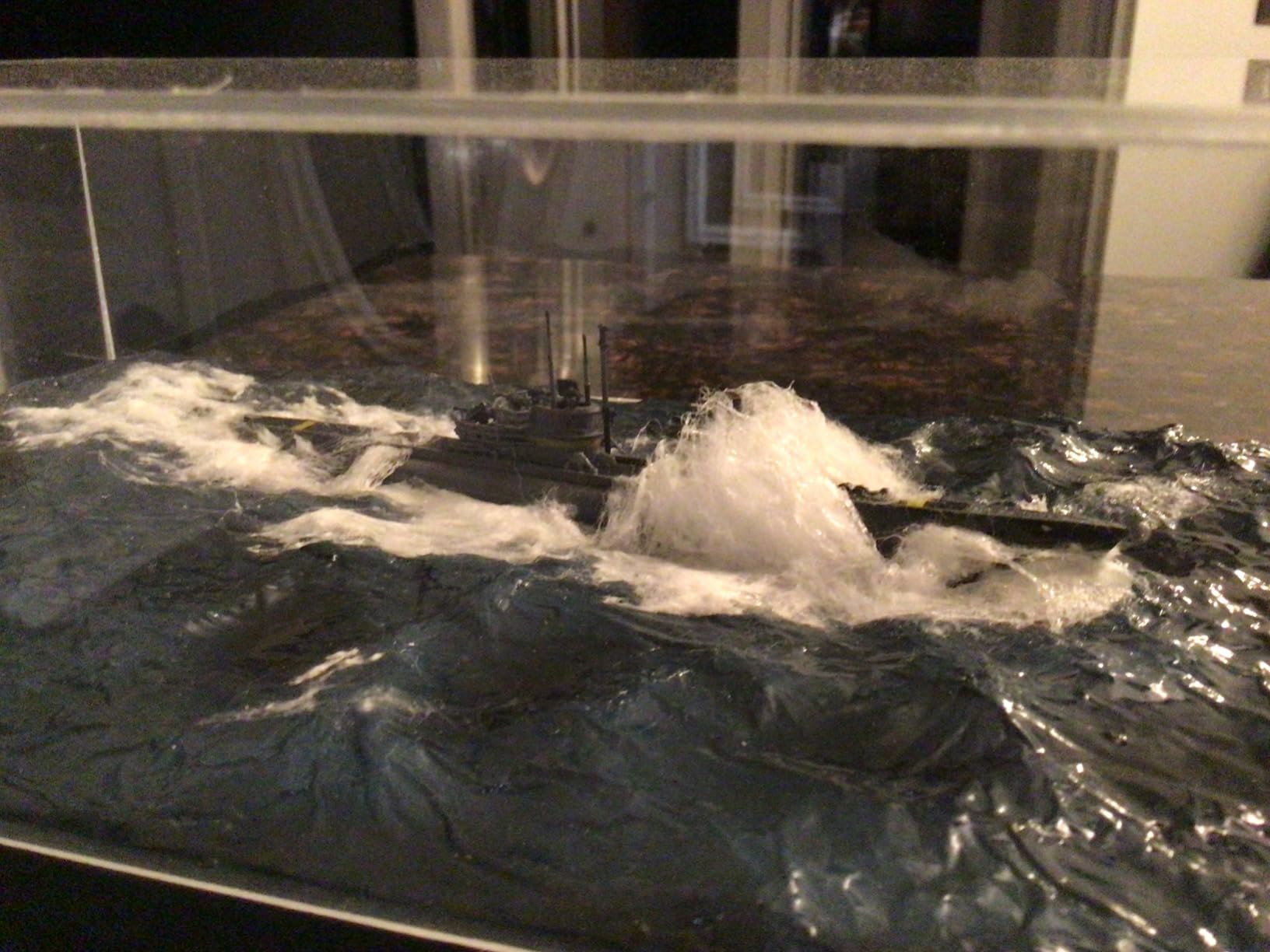
Ideal First Submarine Kit
This kit earns my recommendation as a starter submarine for three reasons: the low piece count means quick results, the simple construction teaches basic techniques like cement application and decal placement, and the finished model looks good enough to motivate you toward more ambitious projects. Many experienced modelers I know started with kits exactly like this one.
It is also a great option if you want to practice painting techniques before committing them to an expensive kit. Try different washes, weathering methods, or color schemes on this one first. At this price, the stakes are low and the learning potential is high.
Display and Diorama Potential
Where this kit really shines is in diorama settings. The compact 1:350 scale makes it easy to create a waterline scene with other 1:350 scale naval models. I have seen builders create impressive North Atlantic convoy dioramas featuring this submarine alongside destroyers and merchant ships. The small size actually works to your advantage here, since you can fit more elements into a reasonable display area.
If you decide to build multiple submarine kits over time, this one pairs well with the Hobby Boss USS Los Angeles at the same scale for a modern-vs-WWII display concept.
5. Revell German Type IX C/40 (U-190) – Best for WWII History Buffs
Revell RV05167 Kit 1:144-German Submarine Type IX C/40 (U190), Unpainted
1:144 Scale
115 Pieces
53cm Length
Schnorkel Included
Late-War Features
Pros
- Large 20-inch finished model
- Highly detailed for the scale
- Historical U-190 subject
- Two decal variants included
Cons
- Very small parts require patience
- Shipping damage concerns reported
- Not suitable for beginners
The Revell Type IX C/40 representing U-190 hits a sweet spot between the quick budget build and the marathon Premium Edition. At 115 pieces in 1:144 scale, it delivers a substantial 20-inch finished model with enough detail to satisfy experienced builders without the overwhelming complexity of the 832-piece kit.
What drew me to this kit was the historical subject matter. U-190 was a Type IX C/40 long-range patrol boat that operated late in WWII, and the kit includes the schnorkel (Schnelltauchvorrichtung) that allowed these submarines to run their diesel engines while submerged at periscope depth. The late version with the large Wintergarten anti-aircraft gun platform is accurately represented.
Detail throughout is impressive for this price range. The Flak guns, radar arrays, periscopes, and railings are all present and well-molded. Two decal options let you build either the German configuration from 1945 or the British-captured version from 1945-1947, which gives you an interesting historical narrative to choose from.
The main challenge with this kit is the sheer number of very small parts relative to the scale. Some of the mast and antenna components are genuinely tiny and require patience and fine tweezers to position correctly. I would not recommend this as a first submarine build, but for anyone with a couple of kits under their belt, it is a rewarding project. Plan for 25 to 35 hours of build time.
Historical Accuracy and Detail
Revell has done a commendable job representing the specific features of the late-war Type IX C/40 variant. The Wintergarten platform with its array of anti-aircraft guns is a distinctive feature of these boats, and the kit captures the cluttered, desperate look of a submarine trying to defend itself against increasingly lethal Allied air attacks in 1944-1945.
The schnorkel head valve is represented as a separate part, which allows you to pose it in either the raised or lowered position. This is the kind of detail that matters to history-focused modelers, and Revell gets it right here.
Kit Complexity vs Reward
At 115 pieces, this kit occupies a comfortable middle ground. You get enough parts to feel engaged throughout the build process, but not so many that it becomes tedious. The 20-inch finished length is impressive enough to command attention on a shelf, and the level of surface detail holds up well under close inspection.
One concern raised by multiple reviewers is shipping damage. The box is relatively large and can arrive with dented corners. I recommend checking all parts against the instruction sheet when the kit arrives and contacting Revell for replacements if anything is damaged. Stock is limited on this kit, so ordering sooner rather than later is advisable.
6. Pegasus Hobbies The Nautilus – Best Fantasy Submarine Kit
Pegasus Hobbies 1:144 Scale The Nautilus Submarine Model Kit
1:144 Scale
50 Pieces
Photoetch Brass Parts
Octopus Display Stand
LED-Ready Interior
Pros
- Incredible detail on every rivet and hull plate
- Photoetch brass parts included
- Unique octopus display stand
- Room for LED lighting installation
Cons
- Windows not clear enough to see interior
- Photoetch parts challenging to glue
- Manufacturer customer service reported as poor
Sometimes you want to build something that exists outside the bounds of military history, and the Pegasus Hobbies Nautilus delivers exactly that. Based on Jules Verne’s iconic submarine from 20,000 Leagues Under the Sea, this 1:144 scale kit is packed with Victorian-era detail that makes it unlike anything else in your collection.
The level of craftsmanship in the molding caught me off guard. Every rivet, hull plate, and surface texture is represented with care. The photoetch brass fret includes railings, cleats, cables, and vents that elevate the detail well beyond what the base kit offers. Applying them takes patience, but the result is worth the effort.
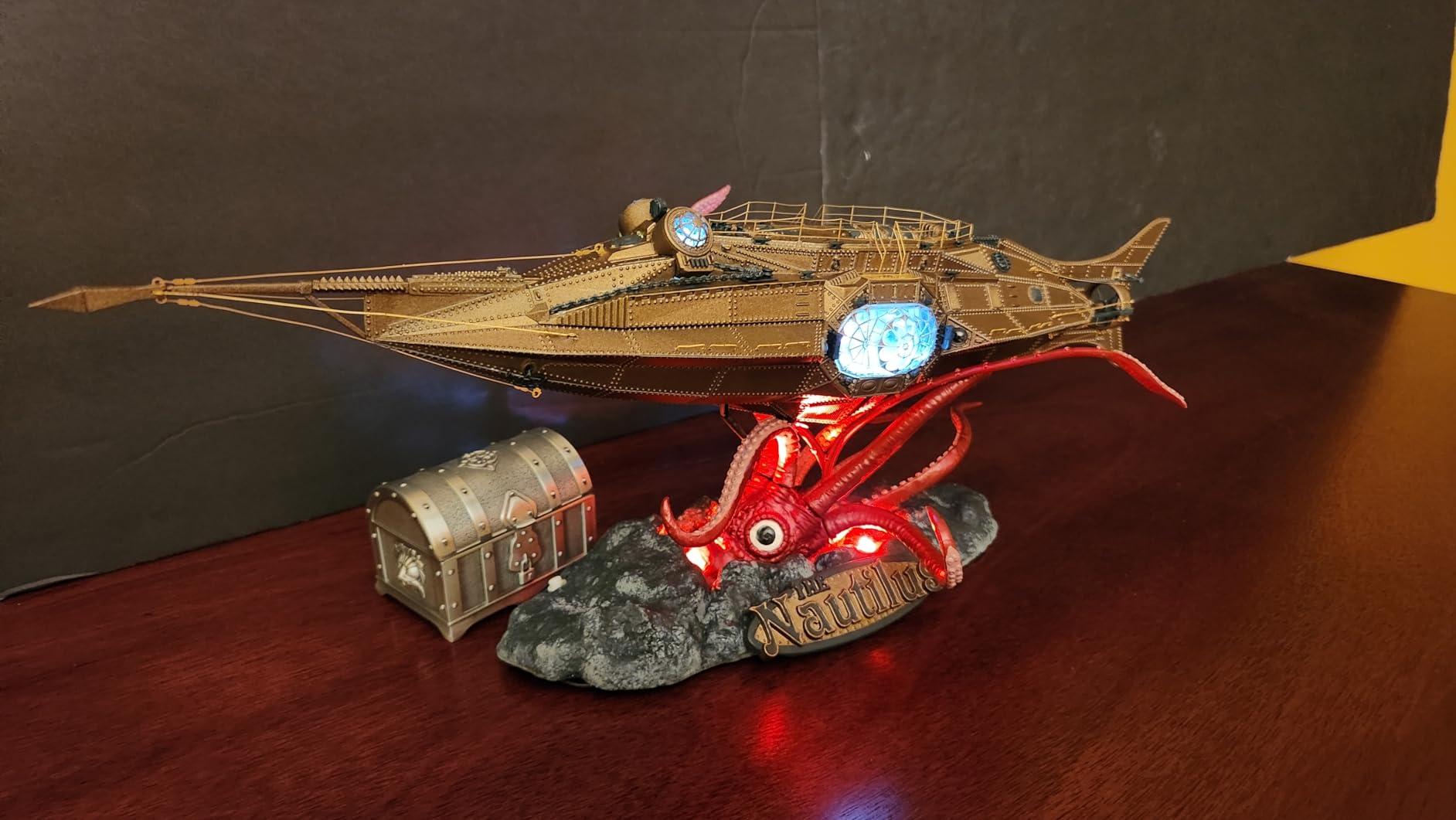
The standout feature for me was the octopus display stand. It is a molded squid-like creature that cradles the submarine, creating a presentation that looks like something from a museum exhibit. The era-appropriate logo plaque included with the kit ties the whole display together beautifully.
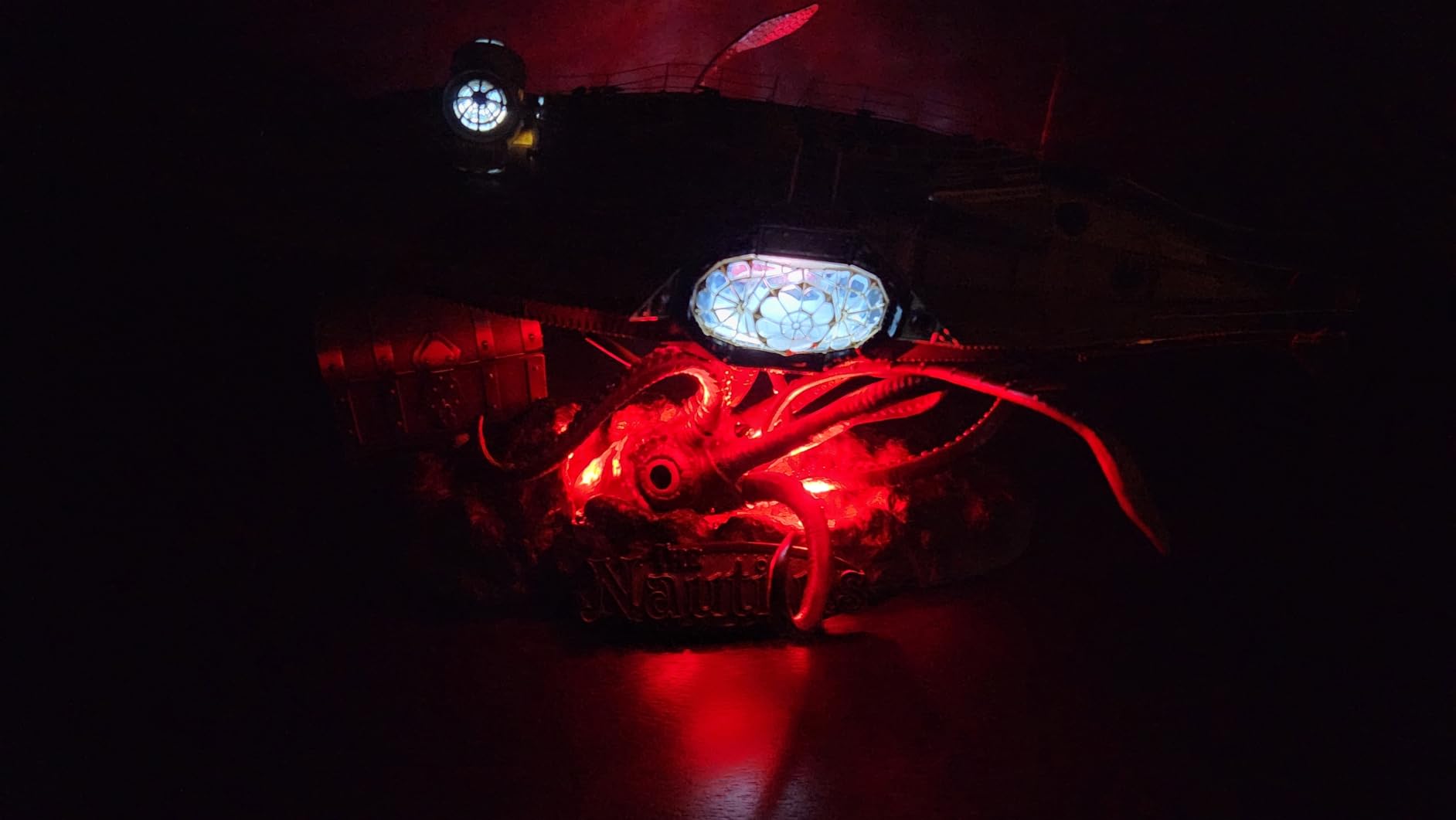
One of the most exciting possibilities with this kit is adding LED lighting to the interior. The parlor behind the side windows is detailed enough to be worth illuminating, though the windows themselves are not perfectly clear. Window masking is included to help you paint the surrounding hull without getting paint on the glass.
Display Options and Customization
The octopus stand alone makes this kit worth considering, but the display potential goes further. Several builders have created underwater dioramas featuring the Nautilus, using clear resin to simulate water and LED strips for dramatic lighting effects. The 1:144 scale keeps it manageable while still offering enough surface detail to be visually striking from across a room.
If you plan to add LED lighting, I suggest planning your wiring before you begin assembly. The interior parlor is the obvious focal point, but you could also light the wheelhouse windows. Leave access holes during construction so you can route wires to a battery compartment in the stand.
What to Know Before Building
The photoetch brass parts are a genuine challenge to attach. Standard plastic cement will not work on brass, so you need cyanoacrylate glue and a steady hand. I recommend using a toothpick to apply tiny dots of CA glue rather than trying to squeeze it directly from the tube. The window masking included helps with painting, but take care not to let paint seep underneath.
Some reviewers have noted difficulty getting replacement parts from the manufacturer, so check your kit carefully upon arrival. The vinyl stand that supports the submarine can also be finicky, so you may want to add some additional support if you plan to display it long-term.
7. Reobrix Typhoon-Class Nuclear Submarine – Best Building Block Set
Reobrix Nuclear Submarine Building Sets Typhoon-Class Nuclear Submarine Toy
2895 Pieces
Building Block Set
Detachable Missiles
Opening Hatches
Display Stand Included
Pros
- Massive nearly 3000-piece build
- Excellent interior and exterior detail
- Detachable missile compartments
- Dedicated display stand
Cons
- Some pieces difficult to fit together
- Instructions can be misleading
- Many stickers required
- Quality control varies
The Reobrix Typhoon-Class Nuclear Submarine takes a completely different approach from traditional model kits. Instead of glue and paint, you are working with nearly 3,000 interlocking building blocks to create one of the most impressive submarine models available at any scale. At 3.62 kilograms and over 16 inches long, this is a serious display piece.
What sets this apart from standard building block sets is the level of functional detail. The missile compartments on both sides and the top of the hull are detachable, revealing the internal weapons bay. Side hatches open to expose a detailed lounge area and control room. These are not static display features — they are meant to be opened, explored, and shown off.
I found the build process to be genuinely challenging but satisfying. The 2,895 pieces took me roughly 40 hours spread over two weeks, and the result is a model that draws attention from everyone who sees it. The red and black color scheme is striking, and the included display stand gives it a proper presentation.
The main frustrations I encountered were with piece fit and instruction clarity. Some pieces required significant pressure to connect, and a few steps in the instruction guide were ambiguous enough that I had to backtrack and rebuild sections. The large number of stickers is also worth noting — if you dislike applying stickers to building block models, this one will test your patience.
Building Block vs Traditional Model Kit
This is fundamentally a different experience from assembling a plastic or resin model kit. There is no painting involved, no glue, and no specialized tools required. The trade-off is that you are working with standard building block tolerances rather than the precision-molded parts you get from Tamiya or Revell. If you enjoy the process of clicking pieces together and watching a structure emerge, this format has its own kind of satisfaction.
The Reobrix kit works well as a gift for military enthusiasts who may not have traditional model building experience but enjoy construction sets. The difficulty level is rated 5 out of 7 by the manufacturer, which feels accurate for an adult builder.
Display Impact and Size
At nearly 17 inches long and weighing over 3.6 kilograms, this model makes a statement on any shelf. The display stand is sturdy and well-designed, and the combination of size, color, and functional compartments means it holds visual interest from multiple angles. This is not a model you build and forget about — people will pick it up, open the hatches, and explore the interior.
Keep in mind that because this is a building block set, the finished model has visible seams between blocks that you would not see on a painted plastic kit. Some modelers embrace this aesthetic, while others find it distracting. Consider what matters more to you: the building process or the final display finish.
8. Hobby Boss USS Los Angeles Class 3-in-1 – Best Value Multi-Configuration Kit
Hobby Boss USS Los Angeles Class SSN-688/VLS/688I 3-in-1 Boat Model Building Kit
1:350 Scale
60 Pieces
3-in-1 Configurations
Photo-Etch Parts
12.3 Inches Long
Pros
- Three submarine variants in one box
- Photo-etch parts included
- Display stand with nameplate
- Excellent value for money
Cons
- Parts almost impossibly small
- Directions not overly clear
- Minor accuracy issues
- Tedious assembly at times
The Hobby Boss USS Los Angeles Class 3-in-1 kit offers something no other kit on this list can match: the ability to build three different submarine configurations from a single box. You can choose between the SSN-688 USS Los Angeles, SSN-721 USS Chicago with vertical launch system, or SSN-755 USS Miami in the improved 688I configuration. For modelers interested in modern US Navy submarines, this is an outstanding value.
What impressed me most about this kit is the engineering. Hobby Boss includes alternate upper hulls, different sail configurations, and optional bow planes so you can accurately represent each variant. The slide-molded one-piece sail has excellent surface detail, and the photo-etch parts cover the propellers with both styrene and brass options. A display stand with cradles and nameplate is also included.
The color painting guide is helpful for getting the right finish on these modern nuclear submarines. Unlike WWII U-boats with their complex camouflage patterns, the Los Angeles class wears a relatively simple scheme, but getting the subtle shade differences correct matters for realism. Decals are provided for all three submarine versions.
My main complaint is the size of some parts at 1:350 scale. The photo-etch screws and various antennas are genuinely tiny and tested my patience more than once. The directions are adequate but could be clearer, especially when differentiating between the three configurations. Take time to study the instructions carefully before starting assembly.
Three Submarines in One Box
The 3-in-1 concept adds real value because you get enough alternate parts to build any of the three variants. Some ambitious modelers buy multiple kits and build all three for a class display. The SSN-688 represents the original Los Angeles class, the VLS variant adds the vertical launch system for Tomahawk missiles, and the 688I includes the improved sonar and quieter propulsion of the later boats.
Each variant has distinct visual differences that are accurately captured in the kit. The sail shapes differ, the bow planes are in different locations, and the deck fittings change between versions. Hobby Boss has done their research here, and the result is a kit that rewards careful attention to which variant you are building.
Skill Level and Assembly Time
Despite having only 60 pieces, this kit is rated as moderately challenging because of the small scale and fine detail work. Expect 10 to 15 hours of assembly time, plus additional time for painting. The photo-etch propellers are the most challenging individual component, and I recommend practicing on a scrap piece of photo-etch before committing to the real parts.
The display stand is a welcome inclusion that elevates the finished model. The nameplate adds a professional touch, and the cradle design holds the submarine securely. At 12.3 inches long, the completed model is a good size for a desk or bookshelf display without dominating the space.
How to Choose the Right Submarine Model Kits?
Picking the right submarine model kit comes down to understanding a few key factors that determine whether you will enjoy the building process or end up frustrated. I have built kits across every scale and difficulty level, and these are the considerations that matter most.
Scale: What Size Do You Want to Build?
Scale is the single biggest factor in your building experience. Here is what to expect at each common scale. At 1:72, you get maximum detail and large parts that are easier to handle, but the finished model is massive and the build takes weeks. At 1:144, you get a good balance of detail and manageable size, typically between 15 and 21 inches long. At 1:350, the model is compact and quick to build, but the parts are very small and fine detail is limited.
For beginners, I generally recommend starting at 1:350 scale. The Revell Type VII C/41 or the Hobby Boss USS Los Angeles are both excellent entry points. Once you are comfortable with basic techniques, move up to 1:144 scale for the Revell U-Boat XXI or Type IX C/40. Reserve 1:72 for when you have several builds under your belt.
Skill Level: Match the Kit to Your Experience
Most manufacturers rate their kits on a difficulty scale. Pay attention to these ratings because they reflect the real complexity of the build. A Level 1 or 2 kit like the Revell Type VII C/41 can be completed by anyone who can follow basic instructions. Level 3 and above require experience with small parts, photo-etch work, and advanced painting techniques.
If you have never built a model kit of any kind, start with something under 50 pieces. The Revell Type VII C/41 at 35 pieces or the Pegasus Nautilus at 50 pieces are both approachable. The 832-piece Revell Premium Edition is firmly in the experienced-builder territory.
Kit Type: Plastic, Resin, or Building Blocks
Traditional injection-molded plastic kits from Revell, Tamiya, and Hobby Boss are the most common and the easiest to work with. Parts are consistent, instructions are clear, and replacement parts are usually available. Resin kits from specialist manufacturers like Yacare Scale Models offer unique subjects like the Scorpene class submarine model kits but require more cleanup and specialized tools. Building block sets like the Reobrix Typhoon are a completely different experience that requires no painting or glue.
For your first few submarine builds, I recommend sticking with plastic injection-molded kits. They offer the best combination of accessibility, value, and support resources. Once you know what you enjoy, branch out into resin or alternative formats.
Tools You Will Need
At minimum, you need a sprue cutter, a hobby knife, plastic cement, and sandpaper in various grits. For kits with photo-etch parts, add fine tweezers, a photo-etch bending tool, and cyanoacrylate glue. A cutting mat, magnifying lamp, and paint brushes round out the basic toolkit. Most of these items are inexpensive and will last through dozens of builds.
For painting, acrylic paints are the most beginner-friendly option. They clean up with water, dry quickly, and produce good results with basic brush techniques. Once you gain experience, consider investing in an airbrush for smoother finishes on larger models like the 1:72 Revell Premium Edition.
Display Planning
Think about where you will display the finished model before you buy the kit. A 36-inch 1:72 submarine requires dedicated shelf space, while a 7-inch 1:350 model fits almost anywhere. If you plan to build a diorama, choose a scale that matches your other models and available display space. The kits with included display stands, like the Tamiya I-400 and Hobby Boss USS Los Angeles, have an advantage here.
Frequently Asked Questions
How good is Scorpene submarine?
The Scorpene class is considered one of the most capable modern diesel-electric attack submarines in the world. It features advanced stealth characteristics, 533mm torpedo tubes capable of launching Exocet anti-ship missiles, and an optional air-independent propulsion (AIP) system that extends underwater endurance. Multiple navies including Chile, India, Malaysia, and Indonesia operate Scorpene class vessels, which speaks to the confidence these naval forces have in the platform’s combat capabilities.
How much is a Scorpene class submarine?
A full-size Scorpene class submarine costs approximately $300 to $500 million USD per unit depending on the configuration and any technology transfer agreements involved in the purchase. Model kit versions are far more accessible, with resin Scorpene kits from manufacturers like Yacare Scale Models ranging from approximately $32 to $105 depending on the scale selected.
How long can Scorpene submarines stay submerged?
Scorpene class submarines can stay submerged for approximately 50 days using their conventional diesel-electric propulsion system. Versions equipped with the MESMA air-independent propulsion (AIP) system can extend this underwater endurance further by generating power without surfacing or using a snorkel. The exact duration depends on operational conditions, speed, and crew requirements.
What makes the Scorpene submarine unique?
The Scorpene class stands out because it combines French and Spanish naval engineering expertise into a single platform designed specifically for littoral and open-ocean operations. Its stealth-focused hull design reduces acoustic signatures, the modular construction allows customization for different operator requirements, and it can be configured with either conventional diesel-electric propulsion or an AIP system. The Scorpene was designed to operate effectively in both warm tropical waters and colder deep-ocean environments, making it versatile enough for the diverse naval needs of its operators across South America, South Asia, and Southeast Asia.
Final Thoughts on Submarine Model Kits in 2026
Finding the best Scorpene class submarine model kits opens the door to a fascinating corner of the modeling world. Whether you start with the budget-friendly Revell Type VII C/41, dive into the popular cutaway Revell U-Boat XXI, or tackle the massive 832-piece Premium Edition, submarine modeling offers a building experience unlike any other genre in the hobby.
Our top recommendation for most builders is the Revell U-Boat XXI with its unique cutaway interior design and over 900 positive reviews. For beginners looking to test the waters, the Revell Type VII C/41 at 35 pieces is the perfect starting point. And if you want something truly unique, the Tamiya I-400 with its aircraft-carrying design delivers a build experience you will not find anywhere else.
Whatever kit you choose, take your time, enjoy the process, and remember that every model on your shelf started as a pile of parts on a workbench. Happy building in 2026.