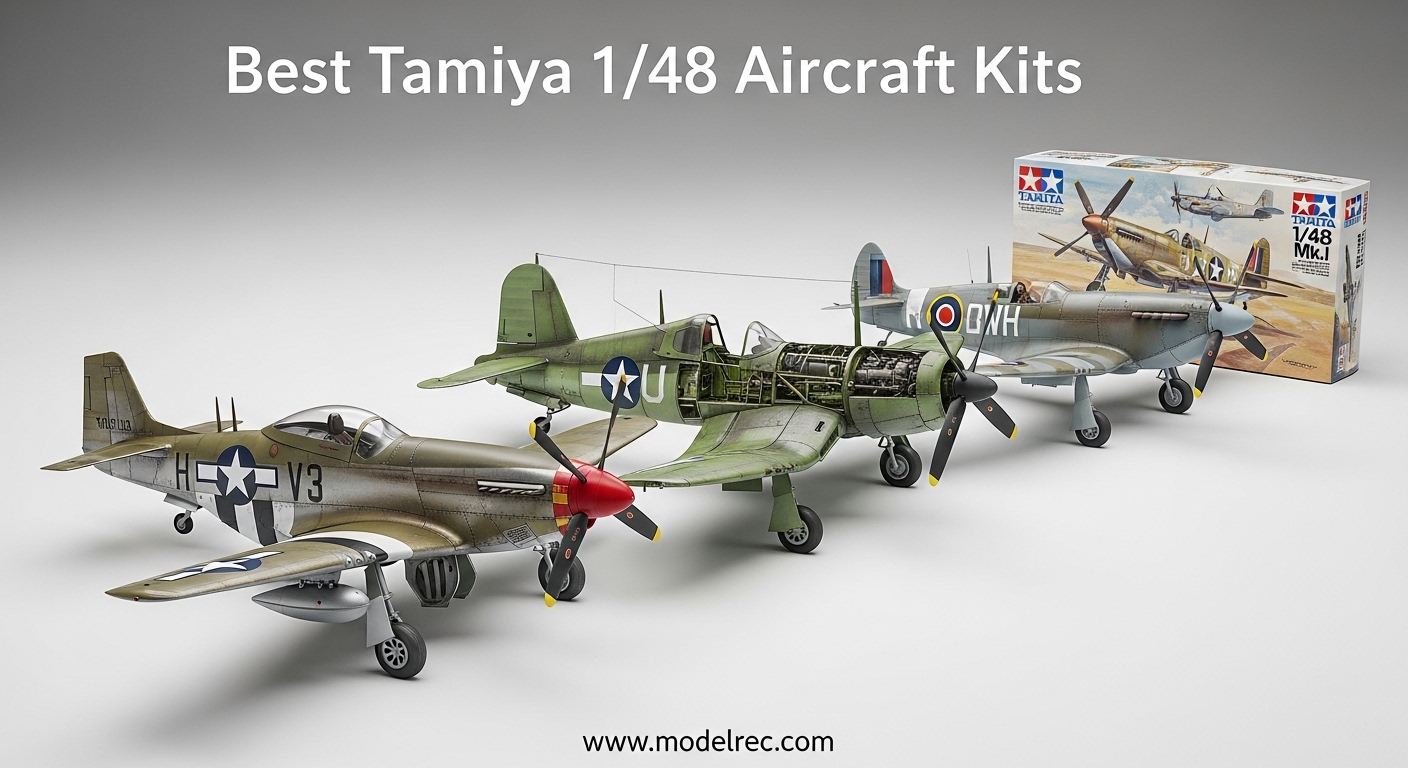
I have been building scale model aircraft for over 15 years, and if there is one constant in this hobby, it is that Tamiya 1/48 aircraft kits set the benchmark everyone else chases. From the moment you open the box and see those crisp, flash-free sprues, you know you are holding something special. Our team spent months building, comparing, and evaluating kits across the Tamiya 1/48 lineup to put together this guide.
If you are searching for the best Tamiya 1/48 aircraft kits in 2026, you are in the right place. We reviewed 13 kits spanning WWII fighters, classic warbirds, and modern jets. Each one was assessed on parts fit, cockpit detail, surface molding quality, decal options, and overall build experience. We also drew on community feedback from forums like Britmodeller and Reddit’s r/modelmakers to capture what real builders think.
Tamiya’s reputation is no accident. Forum users consistently describe their kits as models that “practically fall together,” with legendary fit and finish that makes even your first build look professional. Whether you are a beginner looking for a frustration-free entry point or an advanced modeler chasing that museum-quality display piece, Tamiya’s 1/48 range has something that fits. Let us walk through the best of the bunch.
Table of Contents
Top 3 Picks for Tamiya 1/48 Aircraft Kits


Tamiya North American P-51D Mustang
- Fantastic Parts Fit
- Great Starter Kit
- 4 USAAF Marking Options

13 Best Tamiya 1/48 Aircraft Kits in 2026
1. Tamiya Douglas A-1J Skyraider – Highest Rated Tamiya 1/48 Kit
Tamiya 61073 1/48 Douglas A-1J Skyraider USAF Plastic Model Airplane Kit
1:48 Scale
9.7 Inch Long
USAF Vietnam Era
470g Weight
Pros
- Classic Tamiya quality with crisp molding
- Precise parts fit with clear instructions
- Sharp decals easy to apply
- Excellent accuracy for USAF Skyraider
Cons
- Decals somewhat thick
- Multi-color paint scheme requires skill
The Douglas A-1J Skyraider holds the distinction of being the highest-rated kit in Tamiya’s entire 1/48 aircraft lineup, and I can see why after spending three weeks building one. From the moment I cracked the box, everything about this kit whispered quality. The sprues were clean with no flash, and every part snapped into position with the kind of precision that has made Tamiya the gold standard in scale modeling.
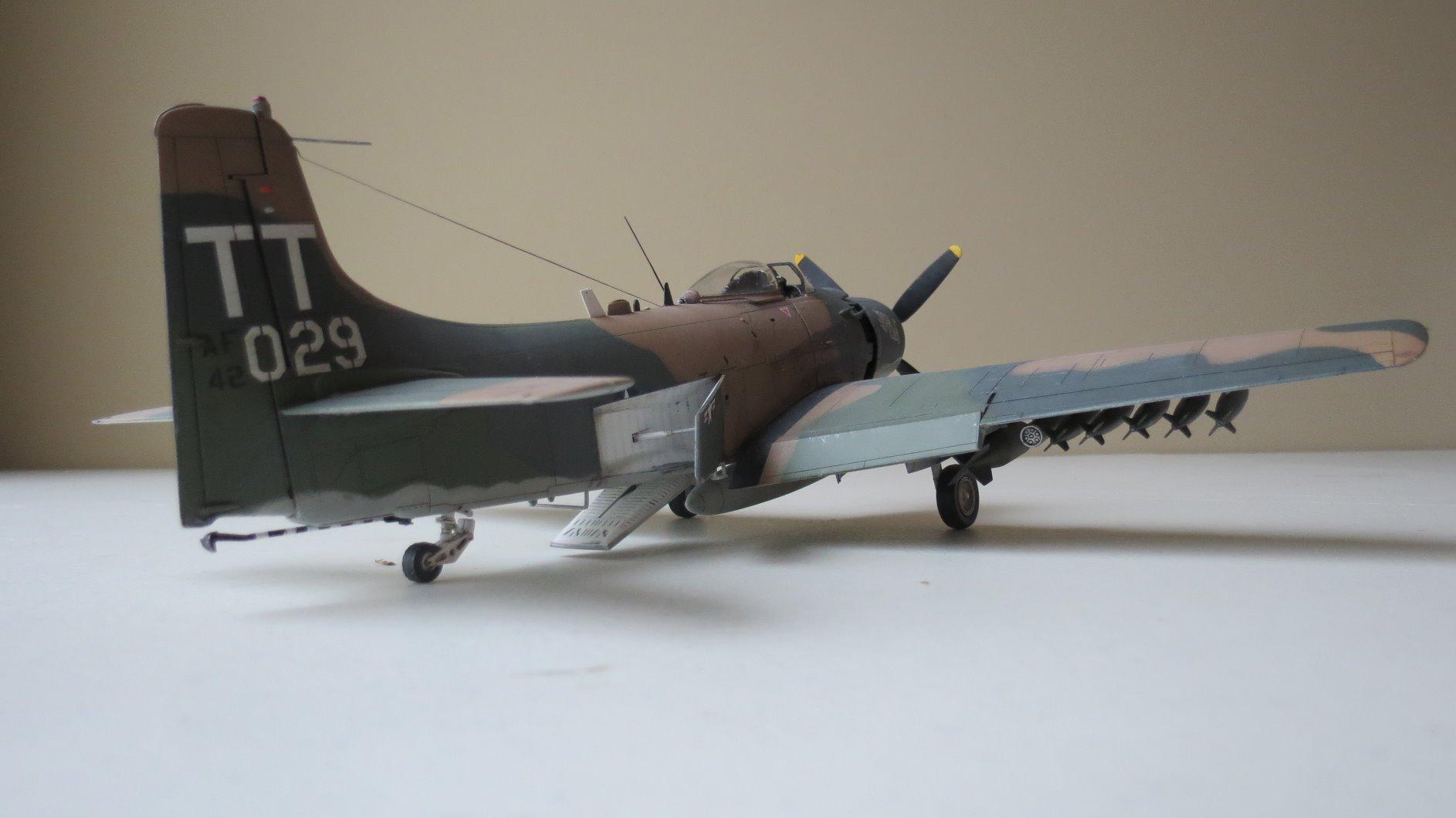
I built this kit straight from the box, and the finished model sits proudly on my shelf at 9.7 inches long. The Vietnam-era markings for the 56th Special Operations Wing and the 602nd Fighter Squadron are historically accurate and really bring the model to life. The single-engine propeller-driven attack aircraft has a rugged character that translates beautifully into scale form.
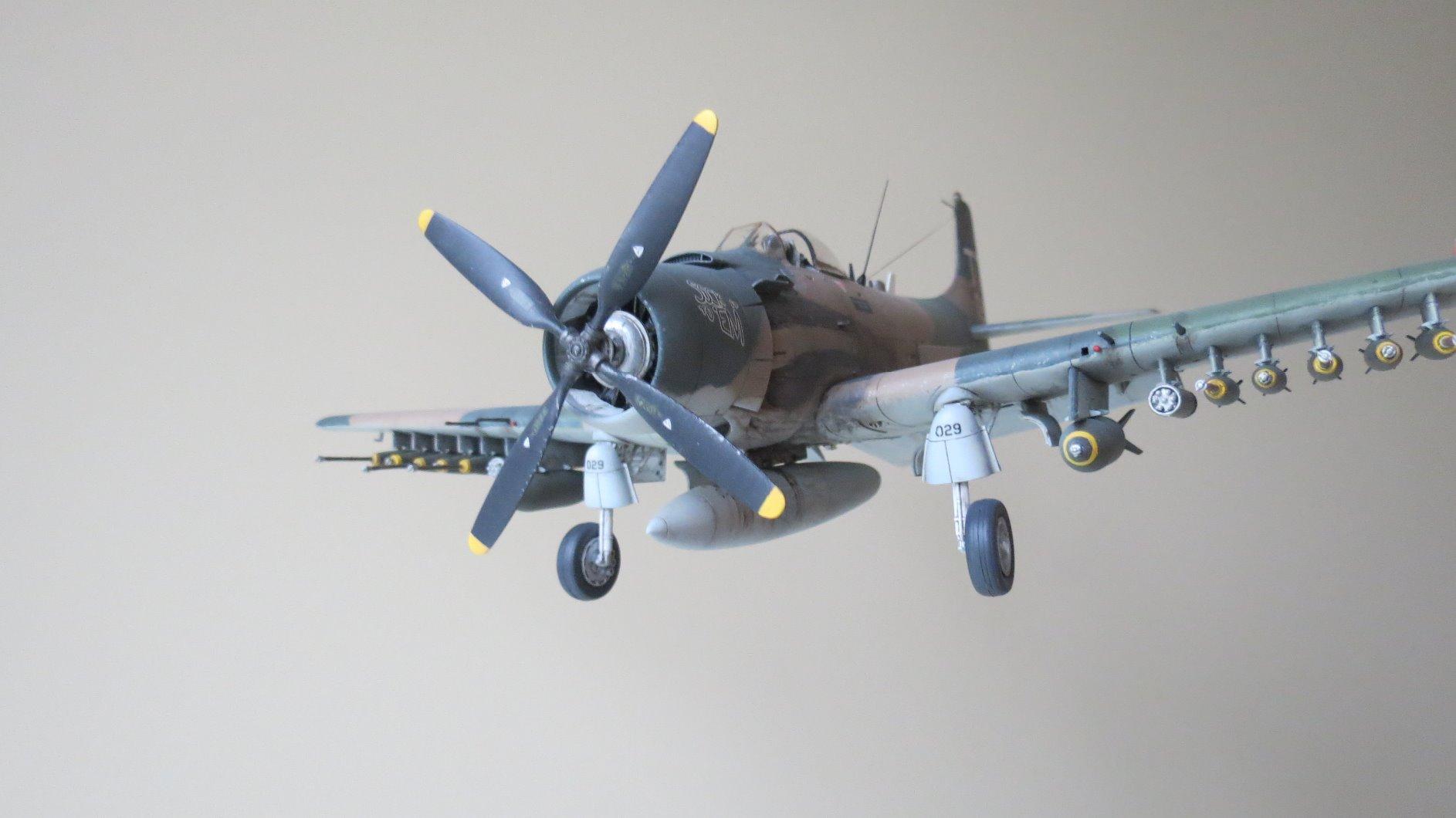
Where this kit really shines is the build experience itself. Every seam lined up without filler. The landing gear, the propeller assembly, the ordnance pylons — everything fits the way the engineers intended. Other modelers on forums echo this, calling it “classic Tamiya quality that never disappoints.” I found the cockpit straightforward to detail, and the canopy fits cleanly with minimal adjustment needed.
The decals deserve special mention. They are clean and sharp, though they run a bit thick. I used Mark Fit Strong to help them conform to surface details, and the results were solid. The multi-color Southeast Asia camouflage scheme does require some patience with masking, so plan your painting sessions accordingly.
Who should build this kit
This kit is perfect for intermediate builders who want a satisfying build with a proven track record. If you have built two or three models and understand basic techniques like seam filling and decal application, the Skyraider will reward you with a stunning display piece. It is also an excellent choice for Vietnam War aviation enthusiasts looking to add this iconic ground-attack aircraft to their collection.
What to watch out for
The main consideration is the camouflage paint scheme. The Southeast Asia three-color pattern requires careful masking and an airbrush for best results. The decals, while sharp, are on the thicker side and may need softening solution to settle over raised details. Also, be aware that paint, glue, and tools are not included — plan to have your standard modeling supplies ready before starting.
2. Tamiya Grumman F-14A Tomcat – Most Popular with Over 800 Reviews
1:48 Tamiya Grumman F-14A Tomcat Model Kit
1:48 Scale
15.75 x 11.5 x 3.38 Inches
Plastic
Military Theme
Pros
- Flawless manufacturing and perfect parts fit
- Phenomenal decals with great detail
- Many aftermarket parts available
- Excellent out-of-box build
Cons
- Decals may require sanding after gloss coat
- Complex with many assembly choices
- Not for complete beginners
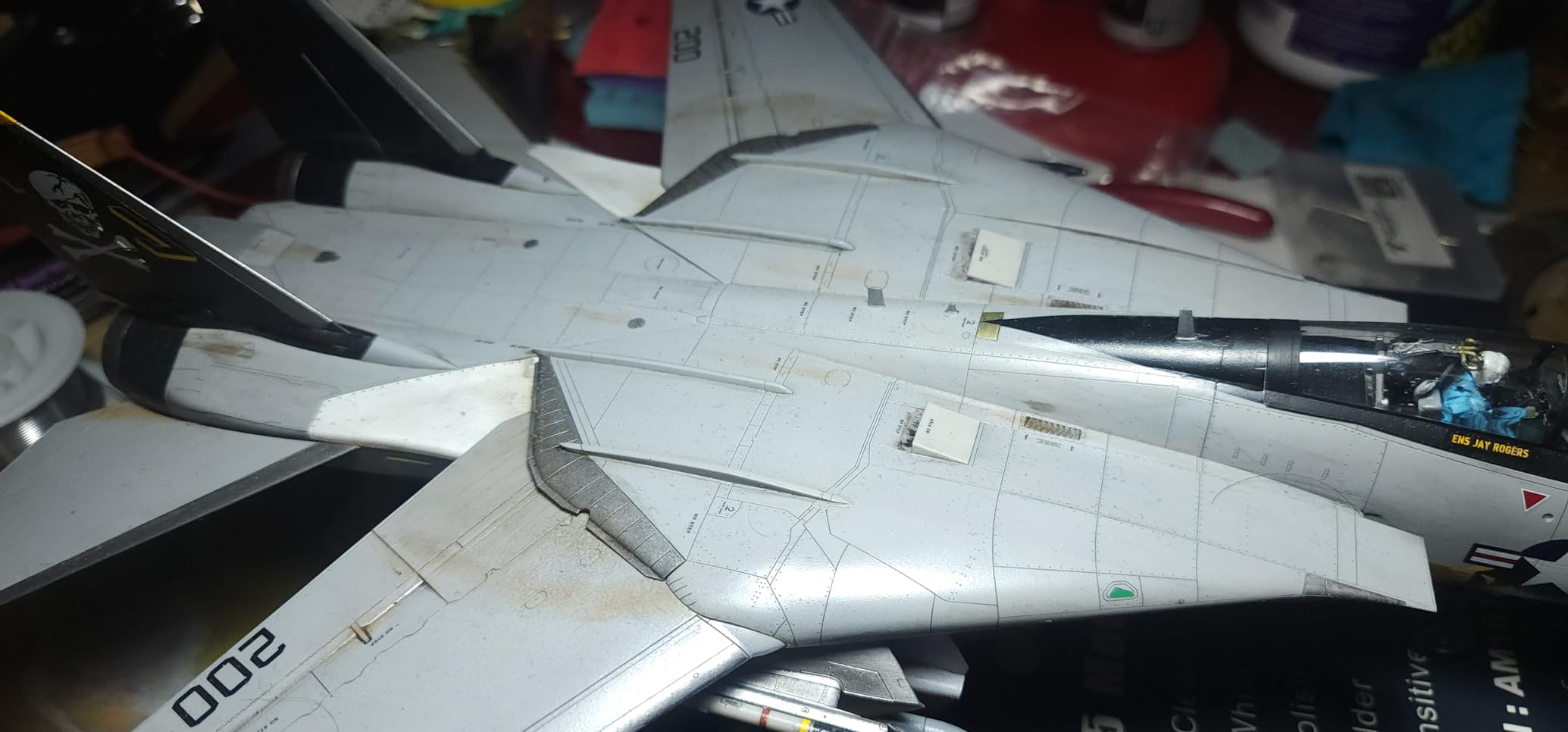
The Grumman F-14A Tomcat is arguably the most iconic naval fighter ever built, and Tamiya’s 1/48 rendition does it justice. With over 800 customer reviews and a 4.7-star average, this is one of the most popular aircraft kits in any scale. I built this kit over several weekends, and the variable-sweep wing mechanism alone makes it a standout in my collection.
From a build perspective, the Tomcat is a substantial model. The parts count is high, and there are many choices during assembly — open or closed canopy, wings swept or extended, various weapons configurations. I went with wings extended and a full Phoenix missile loadout, and the result is a commanding display piece that draws immediate attention.
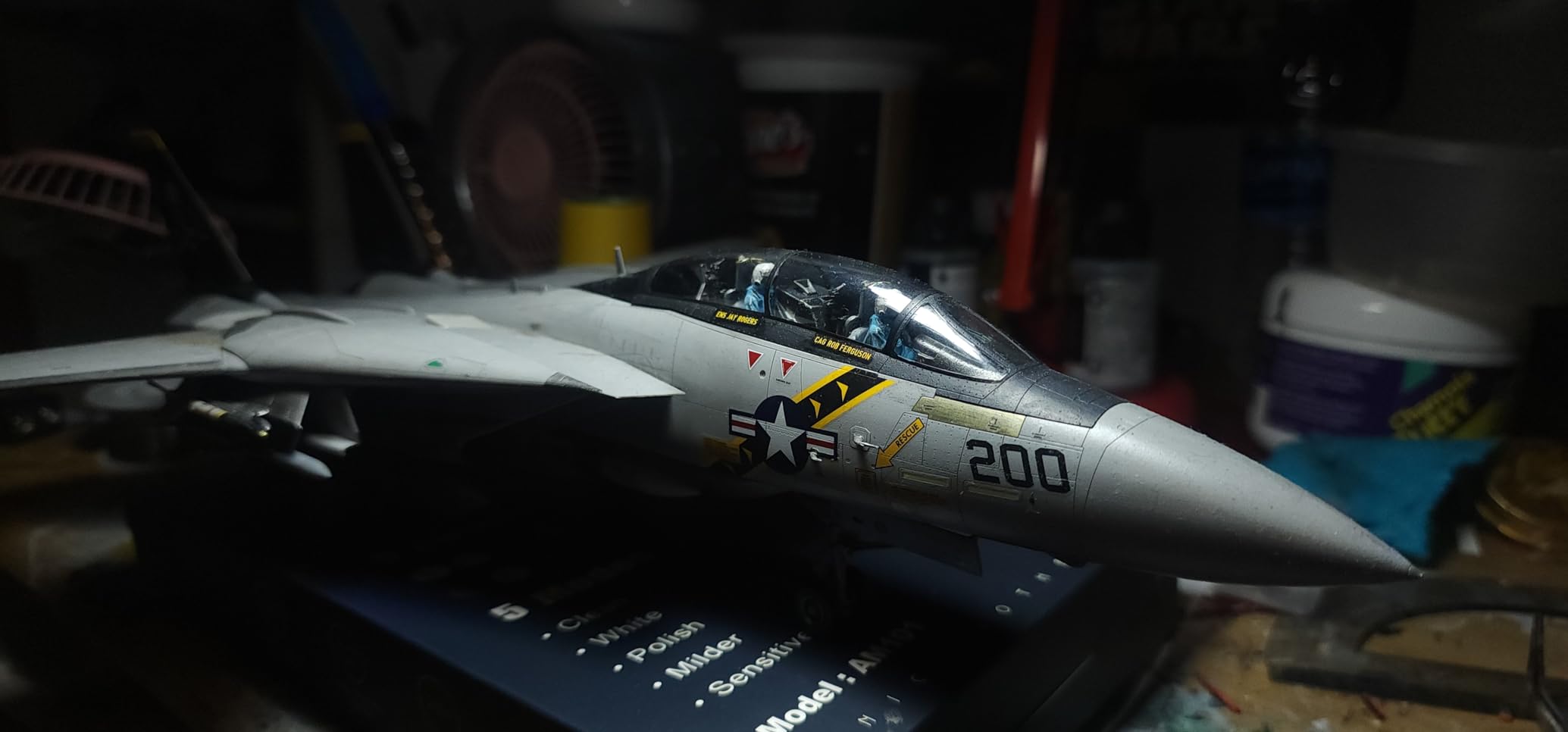
The engineering in this kit is remarkable. Every major sub-assembly — the fuselage halves, the wing gloves, the intakes — fits together with virtually no gaps. I did not need filler anywhere. The cockpit detail is well-molded with raised instrument panels and sidewall detail. The decals are phenomenal, though they are slightly thick for professional-level builders. I applied mine over a gloss coat and had zero issues with silvering.
One thing I appreciate is the enormous aftermarket support for this kit. If you want to push it further, you can find photo-etched detail sets, resin seats, and metal nozzles from companies like Eduard and Aires. But honestly, the out-of-box build is so good that many modelers skip the extras entirely.
Who should build this kit
The F-14A Tomcat is best suited for intermediate to advanced builders. If you have experience with multi-part assemblies and can handle complex instructions with multiple build options, you will love this kit. It is also a must-have for fans of the movie Top Gun or anyone building a modern naval aviation collection. The finished model makes an impressive centerpiece.
What to watch out for
The main challenge is the sheer number of parts and assembly choices. You will need to decide early which configuration you want — swept wings, extended wings, canopy open or closed — and some of these decisions affect later steps. The decals are thick enough that professional builders may want to sand the surface after the gloss coat. Also, this is not a weekend build; plan for 30-40 hours of bench time to do it justice.
3. Tamiya P-47D Thunderbolt Bubbletop – Forum Favorite WWII Fighter

Tamiya 61090 1/48 P-47D Thunderbolt Bubbletop Plastic Model Airplane Kit
1:48 Scale
230mm Length
WWII USAF Fighter
Bubbletop Canopy
Pros
- Best P-47 in 1/48 scale available
- Precise parts fit with no filler needed
- Best reviewed decals in class
- Detailed pilot figure included
Cons
- Checkered cowl decals are intimidating
- Tedious decal application
- Not for complete beginners
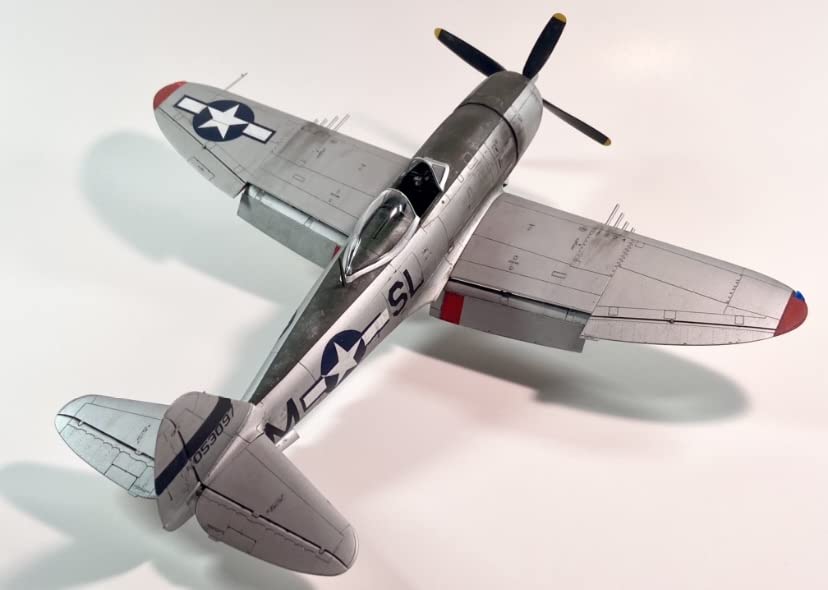
If you spend any time on modeling forums, you will see the Tamiya P-47D Thunderbolt Bubbletop mentioned repeatedly as an “absolute dream” of a kit. I built one last year, and the experience fully lives up to the hype. The Republic P-47 was the heaviest single-engine fighter of WWII, and Tamiya captures its beefy, muscular character perfectly at 230mm in length.
The parts fit on this kit is extraordinary. I assembled the fuselage, wings, and tail without using any filler at all. The crisp, clean molding with recessed panel lines means wash effects settle beautifully into the surface detail. The clear canopy parts are among the most distortion-free I have encountered in any 1/48 kit.
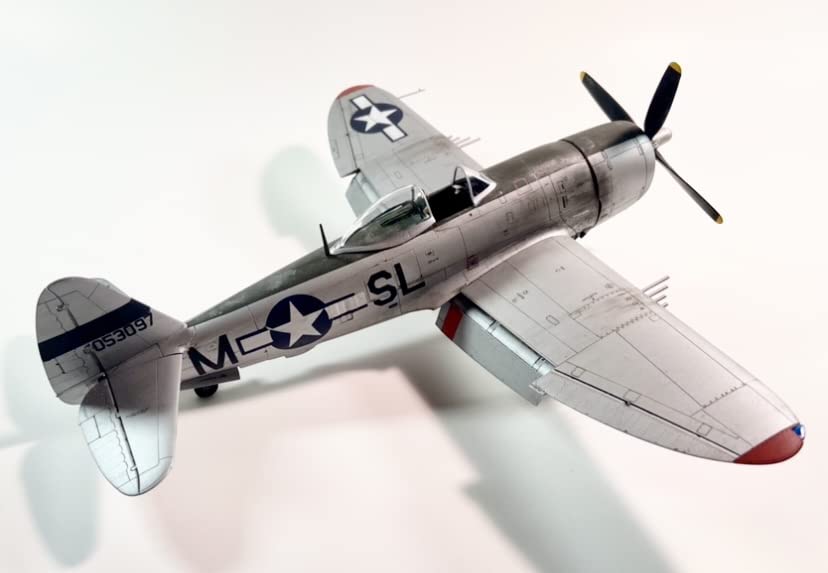
The included pilot figure adds real character to the finished model. I displayed mine with the canopy open and the pilot visible, which really brings the model to life. The ground attack loadout options let you configure the Thunderbolt with bombs, rockets, or drop tanks, giving you flexibility in how you present the finished piece.
The decals are where some builders hit a wall. The checkered cowling patterns look spectacular when done right but can be intimidating for newer modelers. I used Microsol and Microset to help them conform, and the results were clean. Take your time with this step — rushing the checkered decals is the quickest way to mar an otherwise flawless build.
Who should build this kit
This kit is ideal for intermediate builders who want a WWII fighter with proven build quality. If you have completed a few kits and are comfortable with decal application using setting solutions, the P-47D will be a rewarding experience. It is also one of the best Tamiya 1/48 aircraft kits for modelers building a collection of American WWII fighters, pairing beautifully with the P-51D Mustang.
What to watch out for
The checkered cowling decals require patience and the right decal solutions. If you have never worked with complex decal patterns, practice on a less visible area first. The decals around the wheel well could also be printed more precisely, though this is a minor complaint. Airbrushing skills will serve you well here, particularly for the olive drab over neutral gray scheme.
4. Tamiya Lockheed P-38 F/G Lightning – Engineering Masterpiece

TAMIYA USA TAM61120 1/48 Lockheed P-38 F/G Lightning
1:48 Scale
Twin Boom Design
Two Build Options
Ball Bearing Weights
Pros
- Engineering masterpiece with exceptional fit
- Many parts do not require glue
- No sanding or filling required
- Includes ball bearing weights for proper stance
Cons
- Very small and fussy parts
- Thick decals below kit quality
- Not for beginners or children
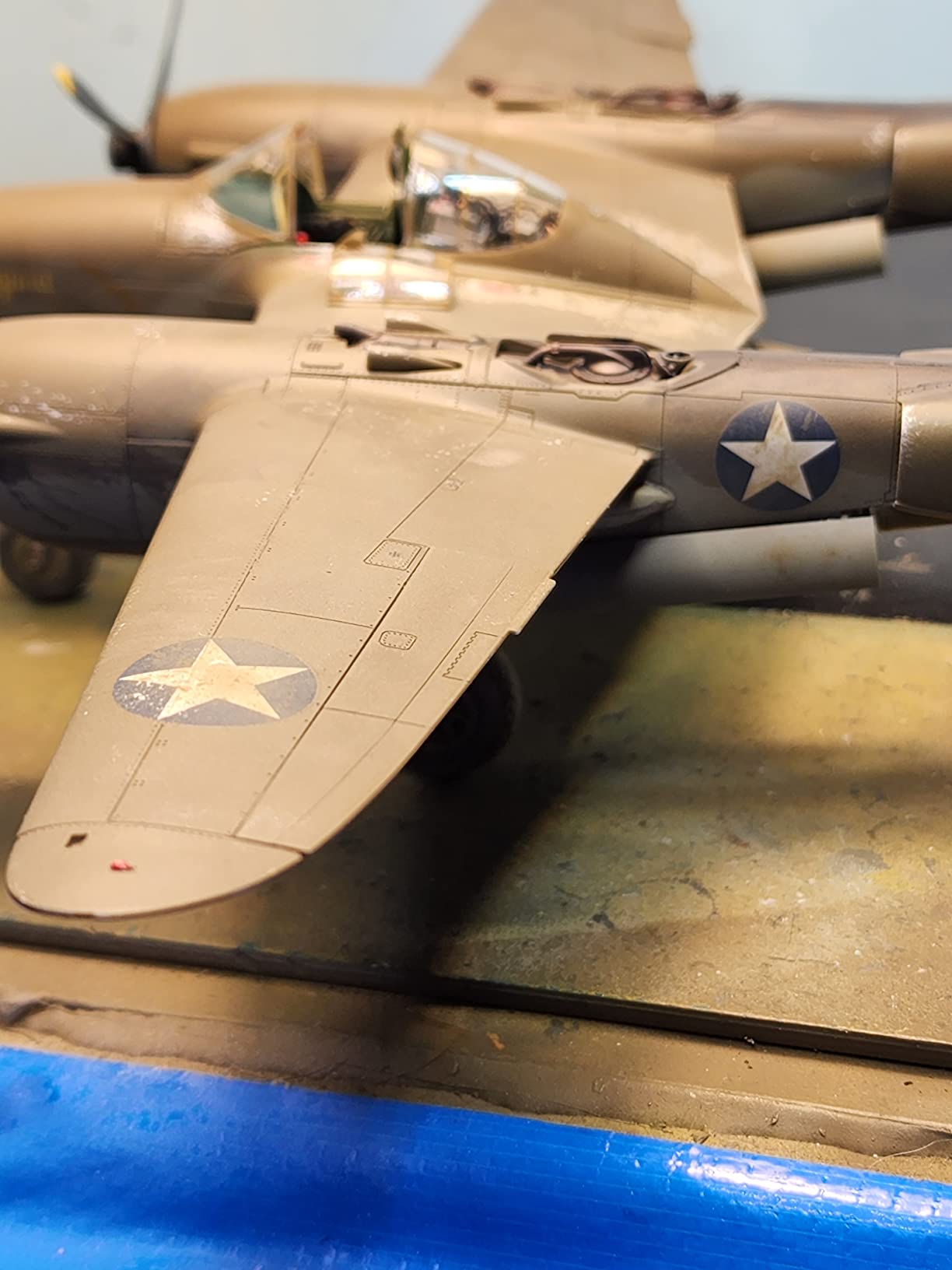
The Lockheed P-38 Lightning is one of the most distinctive aircraft of WWII, and Tamiya’s 1/48 kit is widely regarded as one of the finest scale model kits ever produced. I say that without exaggeration. The twin-boom design presents unique engineering challenges, and Tamiya solved every one of them. The kit includes ball bearing weights to ensure the model sits correctly on its nose gear — a detail that shows how much thought went into the design.
During my build, the most striking thing was how many parts fit together without any glue at all. The engineering tolerances are that precise. I assembled the booms, the center nacelle, and the wing without filler, without sanding, and without any gap-filling putty. The recessed panel lines and rivet detail are clean and consistent across the entire model.
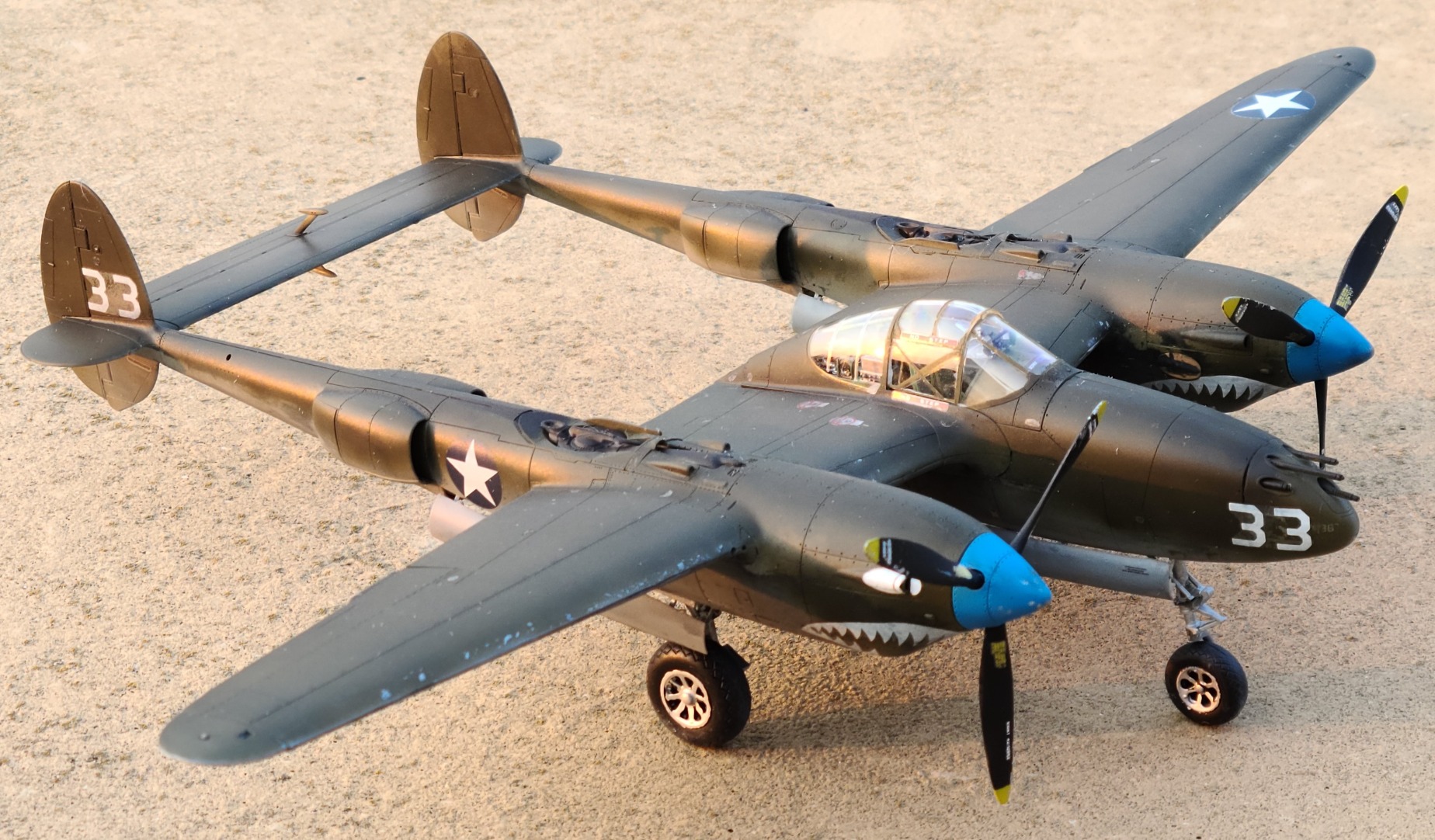
The kit gives you two build options covering P-38F and P-38G variants. I chose the early F-model with the standard canopy, and the resulting model is a genuine conversation piece. The twin Allison engines are represented with enough detail to be visible through the cowling, and the propellers assemble cleanly.
The one weak point is the decals. Multiple builders, myself included, found them noticeably thick and not up to the standard set by the plastic parts. I ended up sourcing aftermarket decals for my build. If you are particular about decal quality, budget for a replacement sheet. The kit itself, however, is so well-engineered that even with this caveat, it remains a must-have.
Who should build this kit
Experienced modelers will get the most from the P-38 Lightning. The small, fussy parts demand steady hands and patience. If you have built several 1/48 kits and are comfortable working with tiny components, this kit will reward you with what many consider the best-engineered Tamiya 1/48 aircraft kit ever made. It is also a fantastic choice for modelers who want something visually different from the typical single-engine fighter.
What to watch out for
The main concern is the small parts count. Some of the detail pieces, particularly around the engine nacelles and landing gear, are tiny and easy to lose. Work on a clean surface with good lighting, and use tweezers for the smallest components. The decals are thick enough that you may want to invest in aftermarket replacements for the best result. This kit is explicitly not recommended for beginners or children.
5. Tamiya F-4B Phantom II – Best 1/48 Phantom Kit Available

Tamiya 61121-000 Vehicle 61121 1:48 F-4B Phantom II Mcdonnell Douglas Faithful Replica, Model Building, Plastic Kit, Crafts, Hobby, Model Kit, Assembly, Unpainted
1:48 Scale
Folded and Extended Wings
Movable Tailplane
Multiple Markings
Pros
- Absolutely flawless kit fit
- Best Phantom kit available
- First-rate quality and engineering
- Excellent instructions
Cons
- Packaging may arrive damaged
- Some reports of defective decals
- Complex for beginners
The McDonnell Douglas F-4B Phantom II is a legendary Cold War fighter, and Tamiya’s 1/48 kit is considered the definitive representation in this scale. I built this kit with the wings folded for a carrier deck diorama, and the engineering that allows both folded and extended wing configurations is impressive. The movable tailplane is a nice touch that lets you pose the model dynamically.
The fit is what you expect from a top-tier Tamiya release — absolutely flawless. Every part went together with zero gaps or alignment issues. The combined air intake and dust box engineering eliminates the common fit problems that plague other Phantom kits in this scale. The surface detail captures the Phantom’s characteristic angular lines and panel structure with precision.
The kit includes decals for multiple historical marking options, giving you choices between different Navy squadrons. I selected a Vietnam-era scheme with the colorful tail markings, and the result is a striking display model. The weapons loadout is well-represented with AIM-7 Sparrow missiles and other period-appropriate ordnance.
A word of caution on the decals: some builders have reported issues with older stock decals, possibly due to age. If your kit has been sitting on a shelf for a while, test the decals on a painted scrap piece before committing to the model. The instructions are excellent throughout, with clear callouts for each build option.
Who should build this kit
This F-4B Phantom II is ideal for intermediate to advanced builders who want the best 1/48 Phantom on the market. The folded wing option makes it particularly appealing for carrier deck displays. If you are a Cold War or Vietnam War aviation enthusiast, this kit belongs in your collection. It pairs well with the F-14A Tomcat for a naval fighter lineup.
What to watch out for
Check your decal sheet carefully when you open the box. Some units have reported defective or degraded decals, likely from older stock. The packaging is also a concern for collectors — some shipments arrive with box damage. The build itself has many parts and configuration choices, so read through the entire instruction booklet before starting assembly. This is not a kit for your first or second build.
6. Tamiya Supermarine Spitfire MK.I – Finest WWII Fighter Kit
Tamiya 61119 1/48 Supermarine Spitfire MK.I Plastic Model Airplane Kit
1:48 Scale
Photo-Etched Parts
Pilot Figure
Open or Closed Cockpit
Pros
- One of the finest model kits ever produced
- Exceptional mold quality and panel lines
- Includes photo-etched parts and seatbelts
- Decals for 2 different aircraft
Cons
- Canopy masks are uncut
- Requires moderate skill
- Paints and glue not included
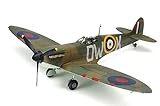
The Supermarine Spitfire MK.I is the aircraft that won the Battle of Britain, and Tamiya’s 1/48 kit is regarded by many as possibly the best Tamiya kit ever produced. That is a bold claim, but after building one myself, I understand why. The mold quality, the panel line detail, and the overall engineering represent Tamiya at the peak of their craft.
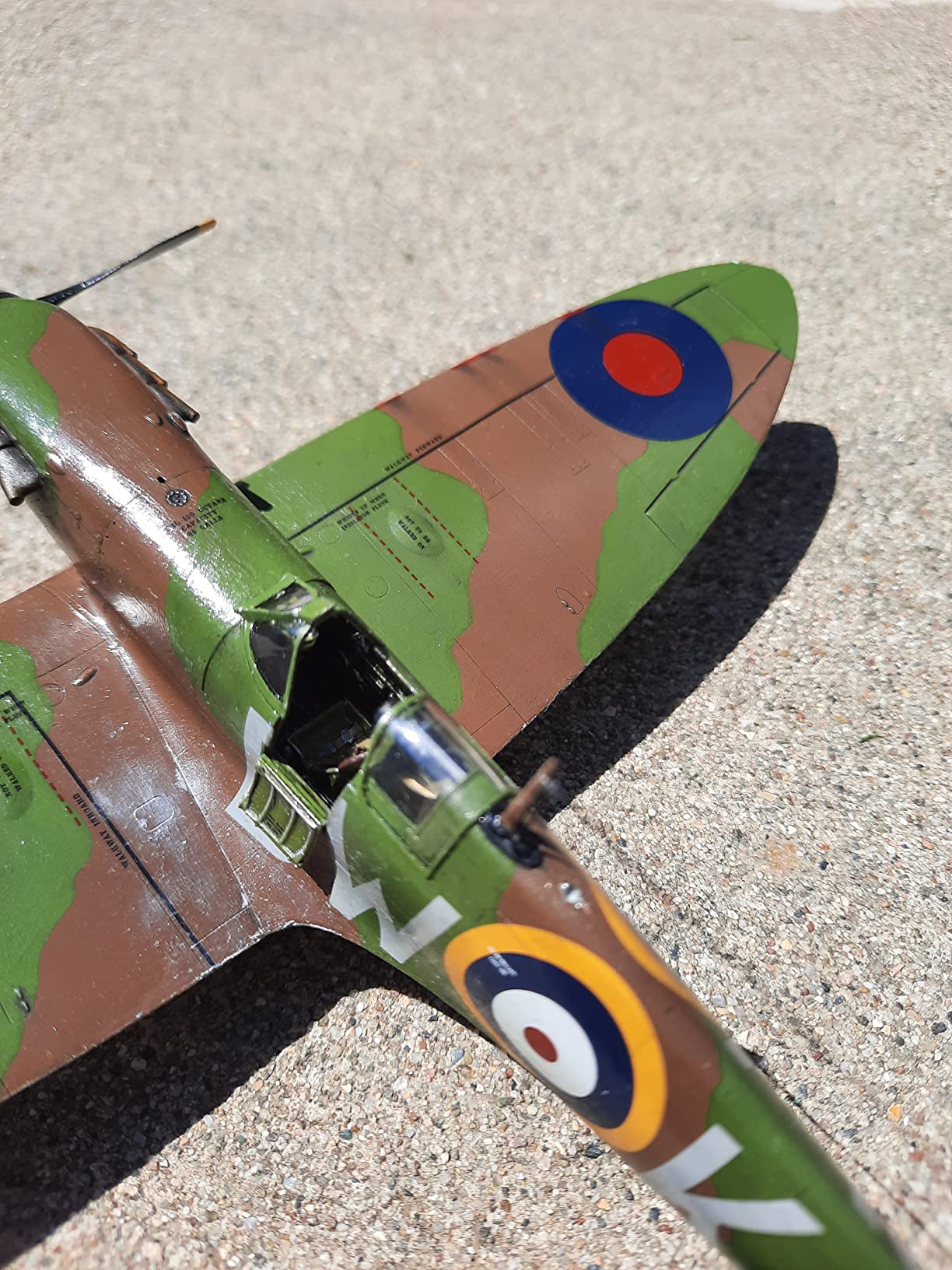
What sets this kit apart is the included photo-etched parts. The seatbelts alone add a level of cockpit realism that usually requires aftermarket purchases with other kits. The pilot figure is well-sculpted and can be posed in the seated position inside the open cockpit. I built mine with the canopy open to showcase the cockpit detail, and the result is stunning.
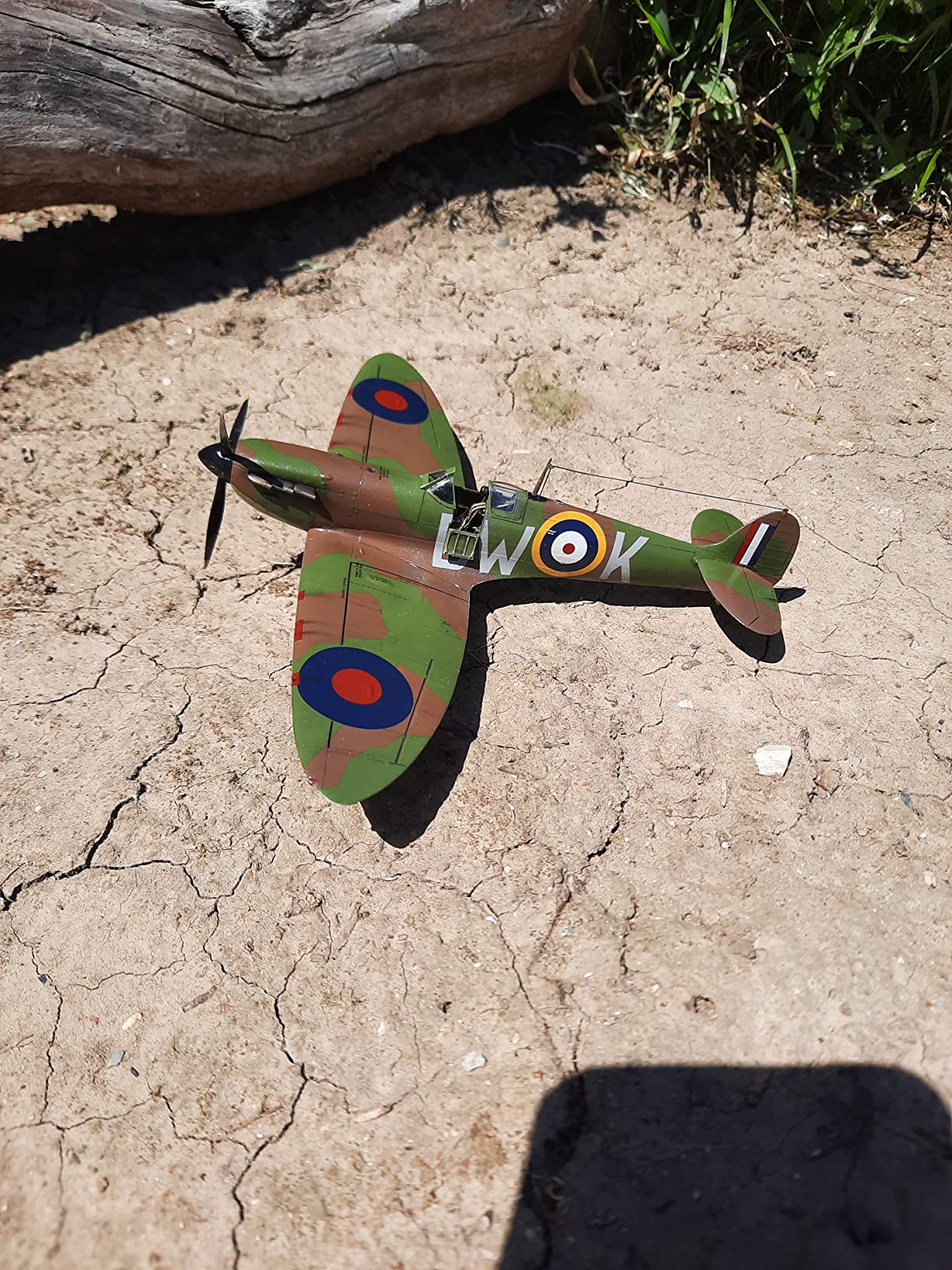
The surface detail on the wings and fuselage is exceptional. The recessed panel lines are fine and consistent, perfect for wash techniques. The elliptical wing shape that made the Spitfire famous is captured accurately, and the model sits correctly on its landing gear with the right nose-up attitude.
The decals cover two different aircraft markings, giving you a choice of schemes. I went with the early war dark earth and dark green camouflage, and the decals conformed well to the surface. The canopy masks are uncut, which means you will need to either cut your own masks or use a product like Blu-Tack for the framing. This is a minor inconvenience on an otherwise outstanding kit.
Who should build this kit
The Spitfire MK.I is perfect for intermediate builders looking for a premium build experience. If you have completed a few kits and want to step up to something with more detail and refinement, this is the one. It is also an essential addition for any WWII European theater collection. Battle of Britain enthusiasts will appreciate the historical markings and period-accurate details.
What to watch out for
The uncut canopy masks are the main frustration. You will need to either purchase pre-cut masks or carefully mask the canopy yourself. The kit requires moderate skill throughout — nothing extreme, but a complete novice might struggle with some of the finer details. Remember that paint, glue, and tools are all sold separately, so factor those into your planning if this is your first kit.
7. Tamiya North American P-51D Mustang – Best Value Starter Kit
Tamiya Models North American P-51D Mustang Model Kit, 12 Years & Up
1:48 Scale
Recessed Panel Lines
4 USAAF Marking Options
Invasion Stripes
Pros
- Fantastic parts fit for easy assembly
- Excellent decal quality with invasion stripes
- Recessed panel lines for wash effects
- Easy to follow instructions
Cons
- Landing gear requires careful glue
- Cockpit detail could be more extensive
- Decal options feel PG for warbird fans
The North American P-51D Mustang is often recommended as the best first Tamiya 1/48 kit, and I completely agree with that advice. I have built three of these over the years — each time trying different techniques — and the kit consistently delivers a satisfying experience. It is the sweet spot of Tamiya quality at an accessible price point.
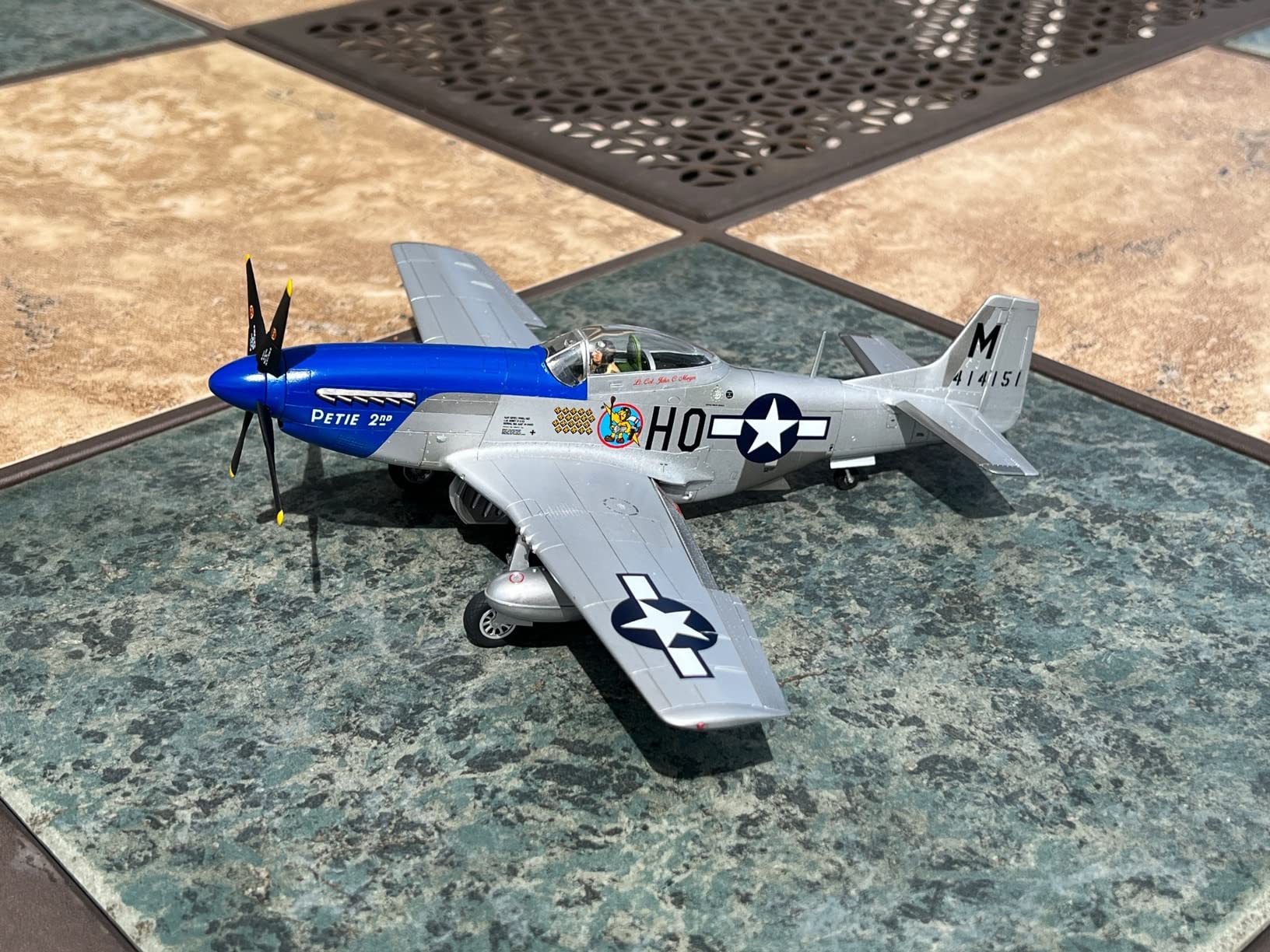
What makes this kit special for newer builders is how forgiving it is. The recessed panel lines guide your wash techniques. The parts fit together seamlessly, so even if your seam-filling skills are still developing, the model will look clean. The decals are thick enough to handle without tearing and include the iconic D-Day invasion stripes on the lower fuselage.
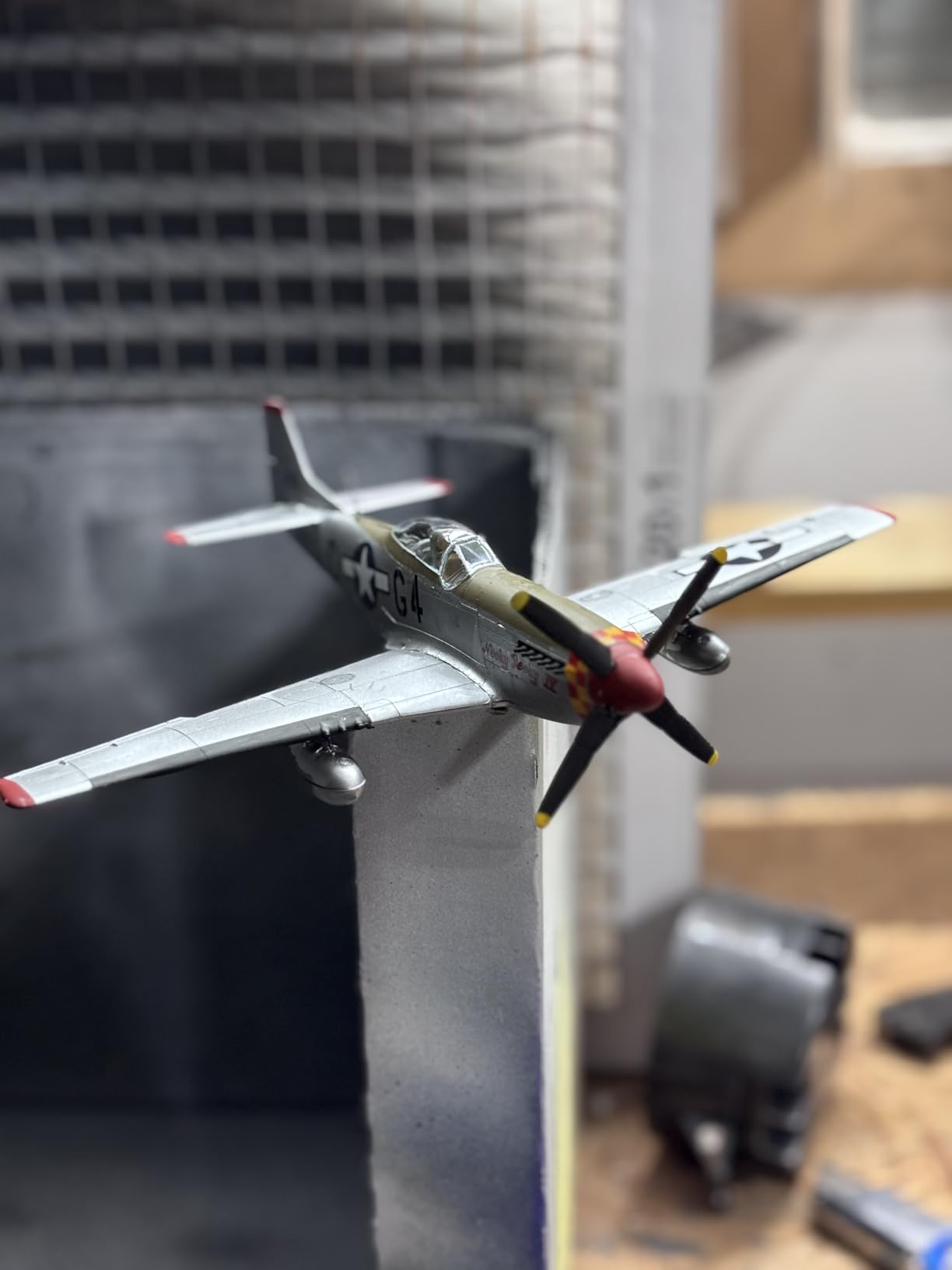
The kit includes markings for four different USAAF aircraft, giving you plenty of scheme options. I particularly enjoyed building the natural metal finish version, which pairs well with Tamiya’s own metallic paints. The Merlin engine is not fully detailed under the cowling, but the visible exhaust stacks and oil cooler scoop are well-represented.
At this price point, the P-51D delivers more value than anything else in the Tamiya 1/48 lineup. It is the kit I gift to friends who want to try aircraft modeling for the first time, and every one of them has produced a model they were proud to display.
Who should build this kit
This is the ideal first Tamiya 1/48 aircraft kit for anyone new to scale modeling. If you are transitioning from snap-tight kits or have built one or two models and want to try Tamiya quality, the P-51D is your best starting point. It is also great for experienced builders who want a relaxing build between more complex projects. The Mustang is simply one of the best Tamiya 1/48 aircraft kits for building confidence.
What to watch out for
The landing gear attachment requires careful glue application. I recommend using a liquid cement rather than thick glue to avoid visible adhesive marks. The cockpit detail is adequate but not as extensive as the Spitfire MK.I or Bf 109 G-6 kits. If you want a super-detailed cockpit, consider aftermarket photo-etched sets. Also, the decal marking options are relatively tame — enthusiasts looking for more aggressive nose art may want aftermarket decals.
8. Tamiya Vought F4U-1A Corsair – Best Detailed WWII Naval Fighter

Tamiya Models Vought F4U-1A Corsair Model Kit
1:48 Scale
Photo-Etched Parts
Optional Folded Wings
Two Pilot Figures
Pros
- Excellent parts fit with clear instructions
- Fantastic interior and exterior detail
- Includes photo-etched parts and two figures
- Optional folded wings configuration
Cons
- Canopy may require fit adjustment
- Folded wing struts not very strong
- Not suitable for young children
The Vought F4U-1A Corsair is one of my personal favorites in the Tamiya 1/48 lineup. The gull-wing design makes it instantly recognizable, and Tamiya captures the character of this tough naval fighter with the detail level it deserves. The kit includes photo-etched parts for the pilot harness and two pilot figures — one seated and one standing — which adds display options you do not always get at this price.
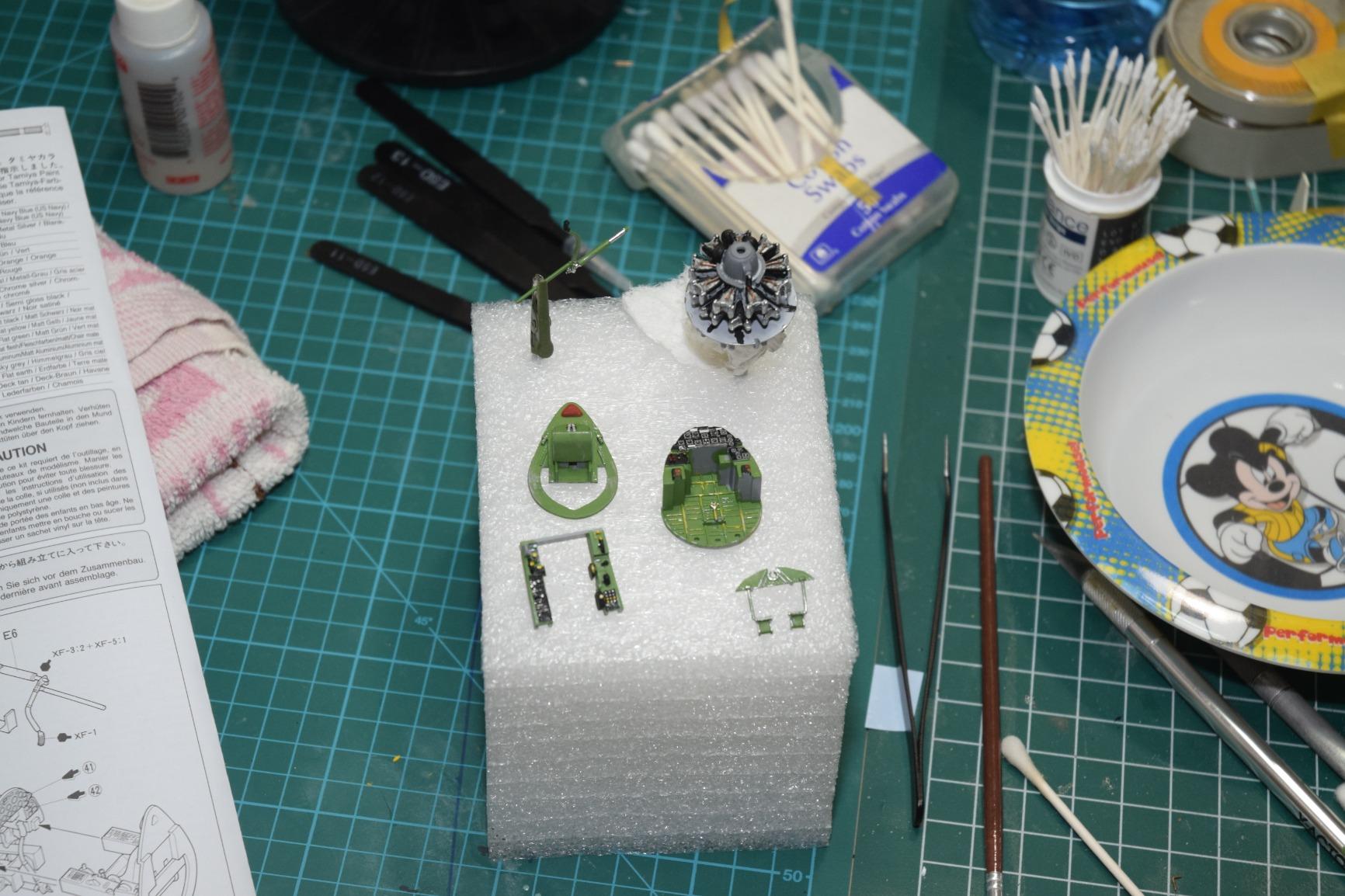
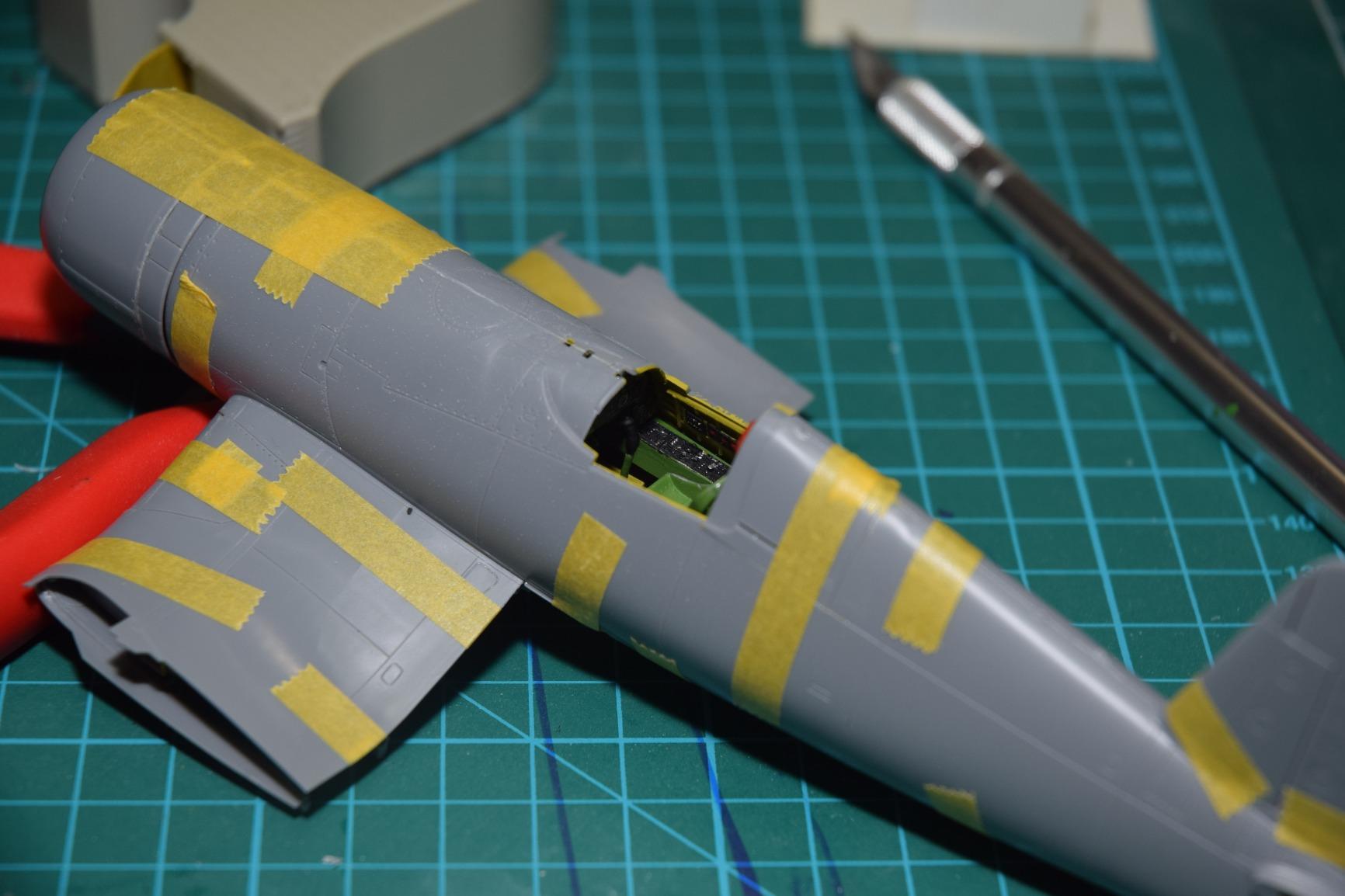
My build went smoothly overall. The cockpit interior detail is outstanding, with well-molded sidewalls, instrument panel, and radio gear. The engine is represented with multiple cylinders visible through the cowling, and the landing gear struts and wheel wells are well-detailed with boxed-in construction rather than open voids.
The optional folded wings configuration is a standout feature. I built mine with wings folded, creating a compact carrier-deck display. The included drop tank and 500-pound bomb add ordnance options for a loaded look. The three sets of marking options give you choices between different Pacific theater schemes.
I did encounter a couple of fit issues. The canopy needed some careful adjustment to sit properly, and the struts for the folded wings are not the strongest. If you build with wings folded, handle the finished model carefully. The decals themselves conform well and look good, though you will want setting solution for the best results on the curved fuselage surfaces.
Who should build this kit
The Corsair suits intermediate builders who want a detailed WWII naval fighter with unique display options. The folded wing configuration makes it ideal for modelers building carrier deck scenes or working with limited display space. If you enjoy Pacific War aviation history, the F4U-1A is a natural companion to the F6F Hellcat in any naval fighter collection.
What to watch out for
The canopy fit requires attention. Test fit the canopy parts multiple times before committing with glue, and use tape to hold them in position while the adhesive sets. The folded wing struts are fragile, so if you plan to transport or frequently handle the finished model, the extended wings configuration may be more practical. The small photo-etched parts need fine-tip tweezers and a gentle hand.
9. Tamiya Messerschmitt Bf 109 G-6 – Unique Magnet Cowling System

Tamiya 61117 1/48 Messerschmitt BF 109 G-6 Plastic Model Airplane Kit
1:48 Scale
Magnet Cowling System
DB605A Engine
Three Markings
Pros
- Excellent fit with no modifications needed
- Magnet system for open or closed cowling display
- Highly detailed engine and cockpit
- Quality decals that do not rip
Cons
- Foot pedals very small and easy to lose
- Not for complete beginners
- Some frustration with pedal installation
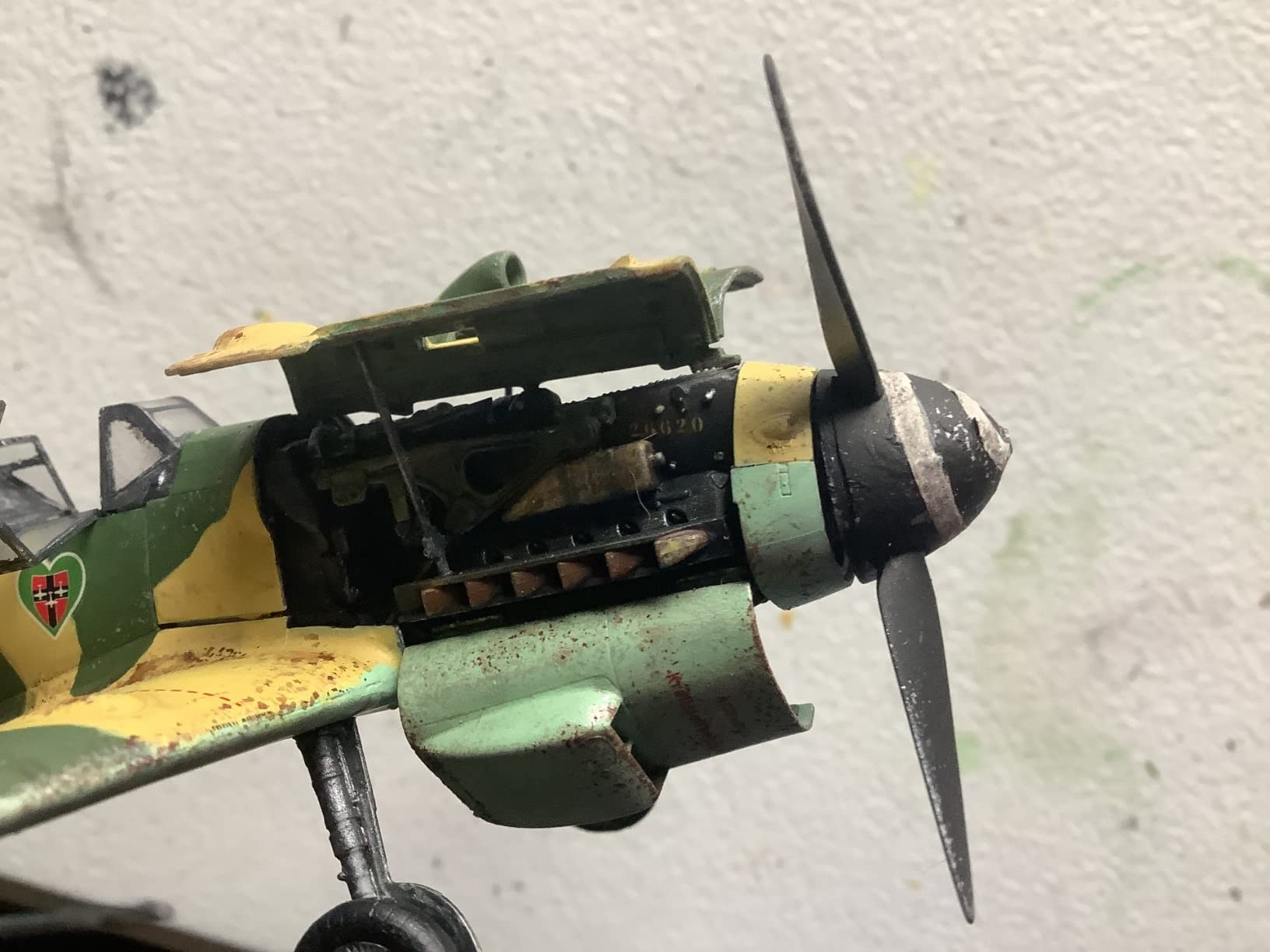
The Messerschmitt Bf 109 G-6 features one of the coolest engineering innovations I have seen in a 1/48 kit: a magnet system for the engine cowlings. This means you can display the model with the cowlings open, showing off the richly detailed DB605A engine, or close them up for a clean look. The magnets hold securely, and you can swap between configurations even after the build is complete.
The engine itself is a highlight. It is a multi-part recreation of the DB605A with enough detail to stand on its own as a display piece. I spent extra time painting and weathering the engine components because they are genuinely worth showcasing. The distinctive dual radiator flaps in the wings can be positioned up or down, adding another layer of display flexibility.
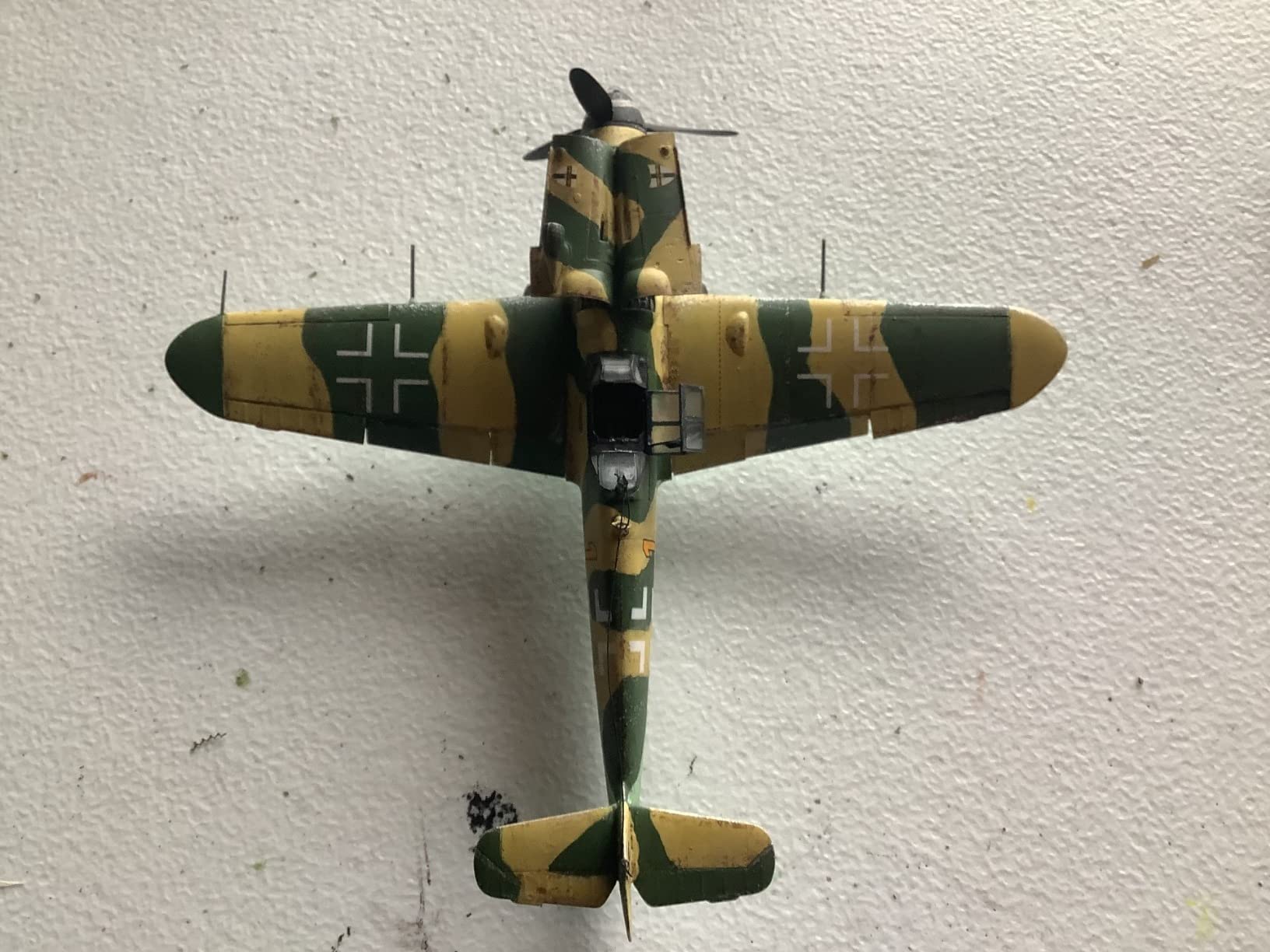
The cockpit detail is excellent, with a well-molded instrument panel, side consoles, and the included pilot figure. The fit throughout the kit is what you expect from Tamiya — precise, clean, and frustration-free. I had zero gap issues during assembly, and the wing-to-fuselage join was seamless.
The three marking options cover different Luftwaffe schemes, and the decals are high quality with no tendency to rip or tear during application. The drop tank parts are included for extended range configurations. My only real frustration was with the tiny foot pedals, which are genuinely small and easy to lose track of on your workbench.
Who should build this kit
This kit is perfect for intermediate builders who want something with a unique display feature. The magnet cowling system makes it a conversation piece that other kits simply cannot match. Luftwaffe enthusiasts will appreciate the accurate G-6 variant with its characteristic bulges and gun troughs. It pairs well with the Spitfire MK.I for a Battle of Britain display setup.
What to watch out for
The foot pedals are the main pain point. They are extremely small and can get lost during assembly. I recommend attaching them as soon as you remove them from the sprue, and work over a mat or tray to catch any that slip. The rest of the build is straightforward for anyone with moderate experience. Take your time with the engine painting if you plan to display the cowlings open — it is the showpiece feature of this kit.
10. Tamiya Lockheed Martin F-16CJ Fighting Falcon – Best Modern Jet Value

Tamiya 61098 1/48 Lockheed Martin F-16CJ Plastic Model Airplane Kit
1:48 Scale
Full Ordnance Load
Moveable Stabilizers
JHMCS Helmet Options
Pros
- Excellent parts fit with crisp detailing
- Full ordnance load with HARM and AMRAAM
- Removable payload with polycaps
- Great value for the quality
Cons
- 200 tiny precise parts
- Difficult instructions in places
- Not suitable for beginners or impatient builders
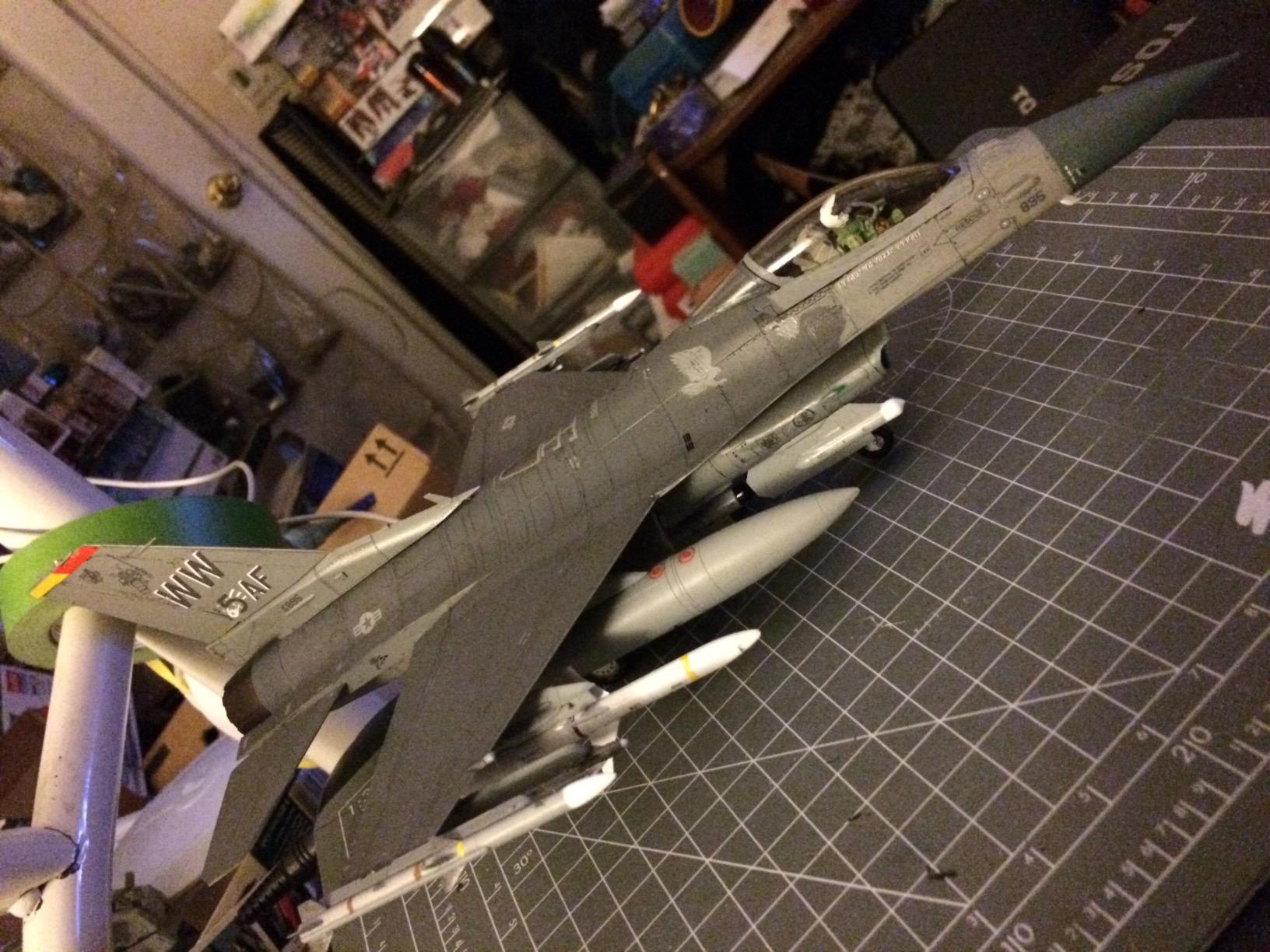
The Lockheed Martin F-16CJ Fighting Falcon is one of the most feature-packed kits in Tamiya’s 1/48 lineup for the price. The full ordnance load includes AGM-88 HARM missiles, AIM-120C AMRAAMs, AIM-9M/X Sidewinders, an ECM pod, and fuel tanks. If you do not glue the polycap-mounted pylons, you can swap weapon loads even after finishing the build.
I spent about 35 hours on my F-16CJ build, and the results were worth every minute. The curved form of the F-16 is accurately reproduced — not an easy feat in plastic. The IFF antenna array in front of the cockpit distinguishes this as a CCIP-equipped model, and the moveable horizontal stabilizers add a nice touch for posing.
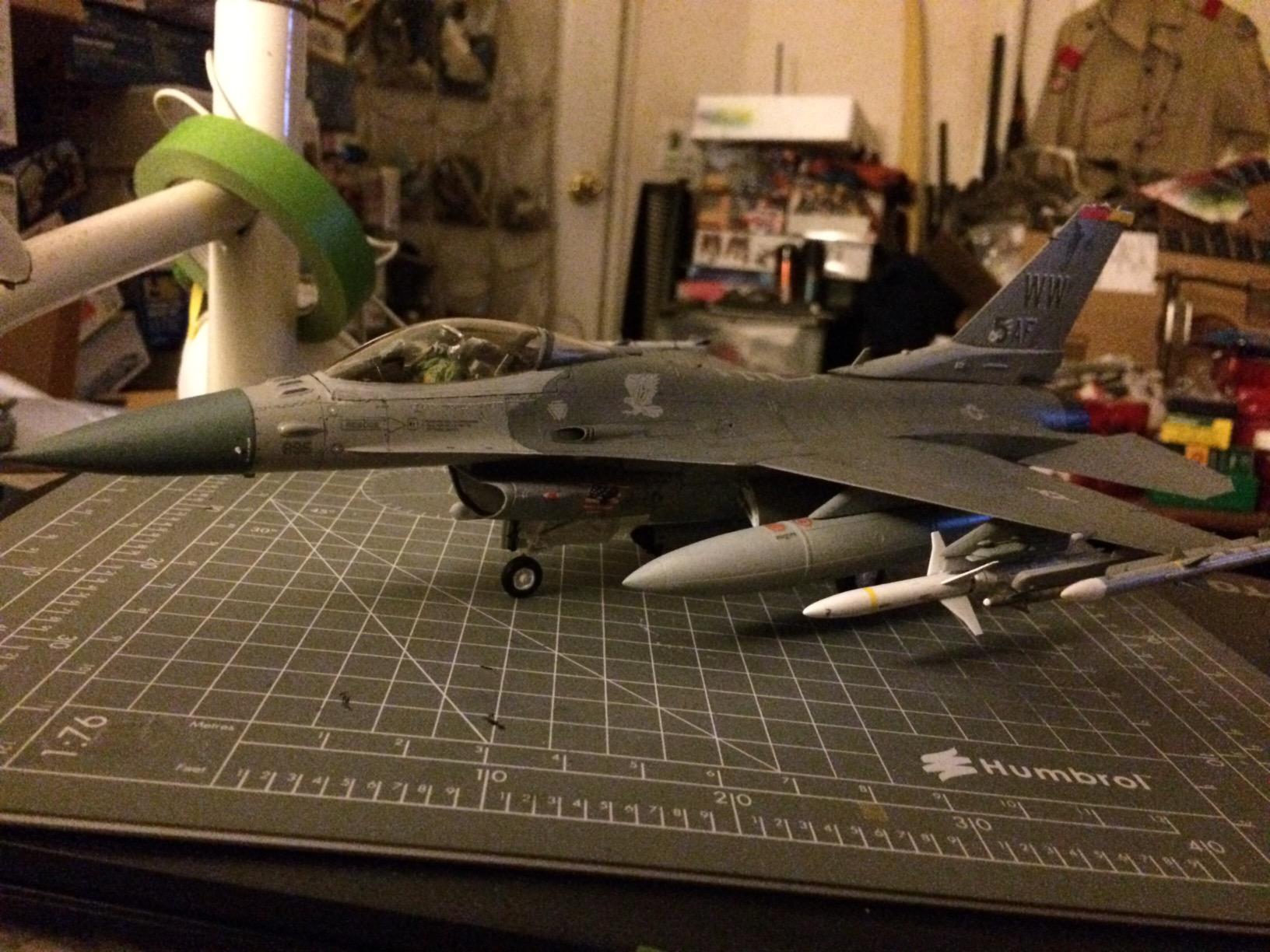
The cockpit includes a pilot figure with options for standard or JHMCS flight helmet. The detailed markings cover three different aircraft, including a Misawa airbase commander’s jet. The flaperons can be modeled up or down, and the intake trunk is well-represented with the combined dust box design.
Be prepared for 200+ parts, many of them quite small. The instructions can be hard to follow in places, with dense callouts that require careful reading. This is not a kit for your first build, or even your second. But if you have the patience and experience, the F-16CJ delivers one of the best Tamiya 1/48 aircraft kits for modern jet fans.
Who should build this kit
Experienced modelers who want a modern jet with full weapons loadout will get the most from this F-16CJ. If you enjoy building with ordnance and want a model you can reconfigure after completion, the polycap system is a genuine advantage. It is also excellent for modelers building a modern US Air Force collection alongside the F-15C Eagle and A-10 Thunderbolt II.
What to watch out for
The high parts count is the primary challenge. With 200 tiny, precise parts, organization is essential. I use a parts organizer with numbered compartments to keep everything sorted during assembly. The instructions have some dense sections where multiple steps are combined on a single page — read ahead before committing to any step. Casual or senior modelers with limited patience may find the precision required frustrating.
11. Tamiya McDonnell Douglas F-15C Eagle – Removable Nose with Radar Detail

Tamiya Models Mcdonnell Douglas F-15C Eagle Model Kit
1:48 Scale
Removable Nose Cone
APG-63 Radar
Metal Landing Gear
Pros
- Best F-15C kit available
- Removable nose section with detailed radar
- Metal landing gear legs for durability
- Multiple assembly and marking options
Cons
- Legacy kit from 1988 showing its age
- Jet nozzles accuracy is off
- Cockpit panels are flat
- Some fitment issues reported
The McDonnell Douglas F-15C Eagle holds a special place in my collection because of its unique removable nose section. Unscrew the front cone and you reveal a detailed APG-63 radar system — a feature that no other 1/48 F-15 kit offers out of the box. It is the kind of engineering touch that makes you appreciate Tamiya’s approach to model design.
The metal landing gear legs are another standout. They provide real durability that plastic gear cannot match, especially important on a model this size. The kit includes three external fuel tanks, ample ordnance, and a pilot figure. With 120 pieces, it sits in a comfortable range between the simpler WWII kits and the complex modern jets.
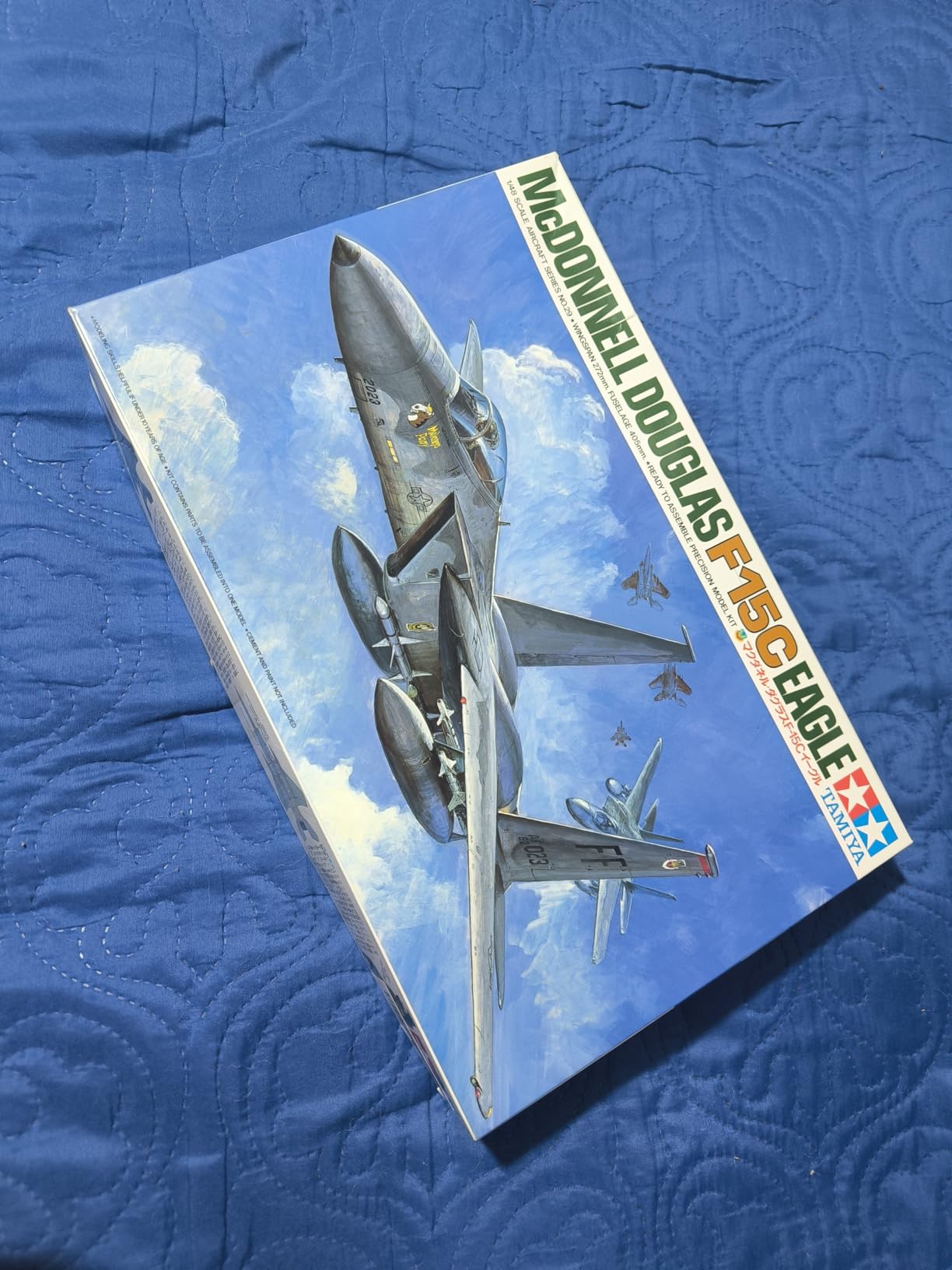
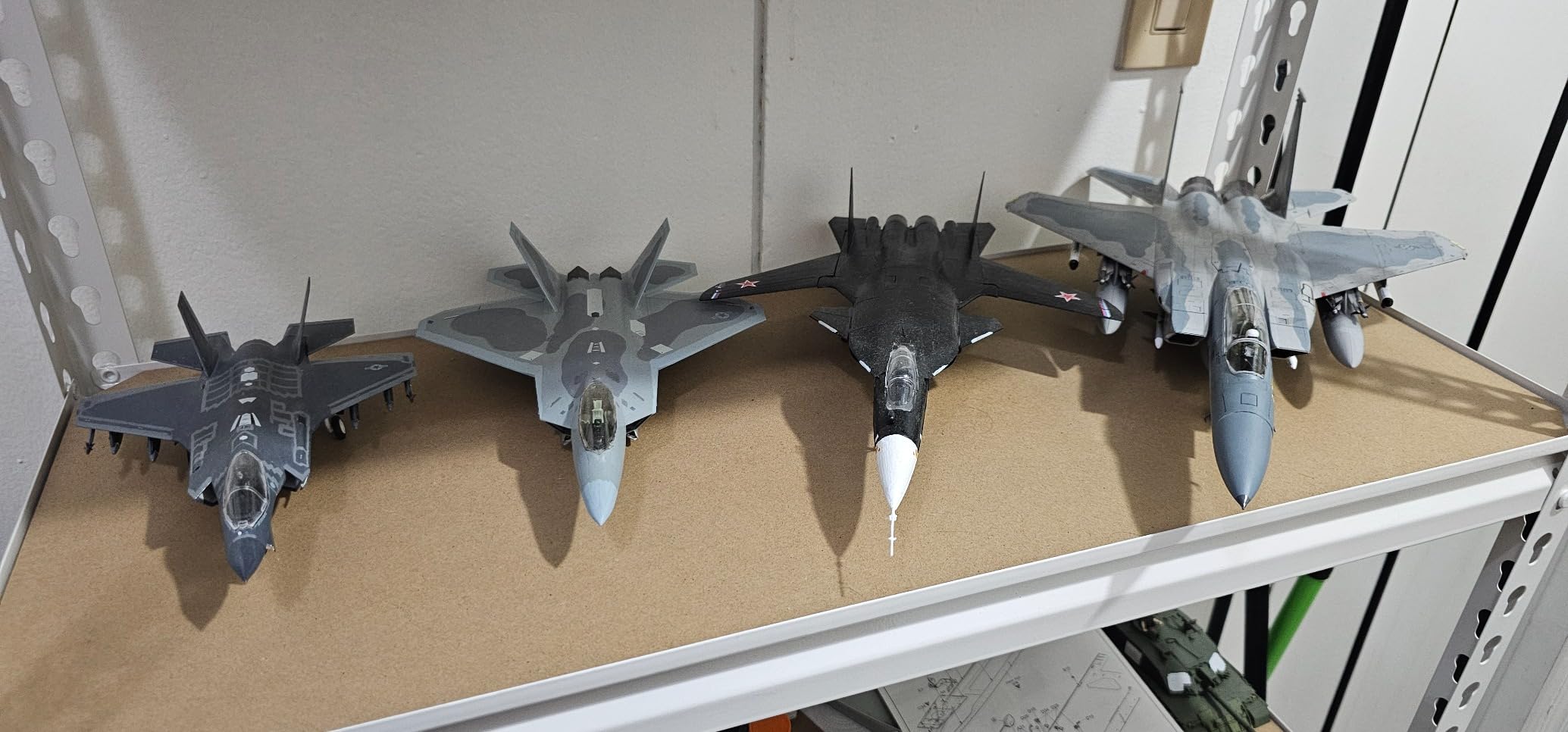
However, I need to be transparent: this is a legacy kit originally tooled in 1988. While it remains the best F-15C available in 1/48 scale, the mold is showing its age compared to Tamiya’s modern releases. The jet nozzles are not as accurate as they should be, and the cockpit instrument panels are flat decals rather than molded or photo-etched detail.
Some builders have reported fitment issues between the top and bottom fuselage halves. I experienced minor gaps along the intake trunk that required filler. Despite these age-related shortcomings, the F-15C still builds into an impressive model. The removable nose cone with radar detail alone makes it worth the price of admission.
Who should build this kit
Intermediate builders with an interest in Cold War and modern air superiority fighters will enjoy this F-15C. The metal landing gear makes it a practical choice for modelers who frequently transport their builds to shows or club meetings. If you are building a modern US Air Force fighter collection, this kit complements the F-16CJ and A-10 Thunderbolt II perfectly.
What to watch out for
Manage your expectations regarding the 1988 tooling. The cockpit detail will benefit from aftermarket photo-etched sets if you want to bring it up to modern standards. The jet nozzle accuracy is off, and Aires or other aftermarket replacements are available if that detail matters to you. Test fit the fuselage halves before gluing, and have filler ready for the intake seam area.
12. Tamiya A-10 Thunderbolt II – Budget-Friendly Modern Attack Aircraft

Tamiya 61028 1/48 A-10 Thunderbolt II Plastic Model Airplane Kit
1:48 Scale
Pilot Figure Included
5 USAF Marking Options
Clear Stand Option
Pros
- Awesome detail with flawless assembly
- Excellent balance between detail and fun
- Good value for the price
- Includes clear stand option
Cons
- Some find it basic and small
- Complex with many small parts
- Older tooling
The A-10 Thunderbolt II, better known as the Warthog, is one of the most beloved modern military aircraft, and Tamiya’s 1/48 kit captures its unique character well. This was one of the first Tamiya kits I built years ago, and I still remember how satisfying the experience was. The kit strikes an excellent balance between detail and buildability.
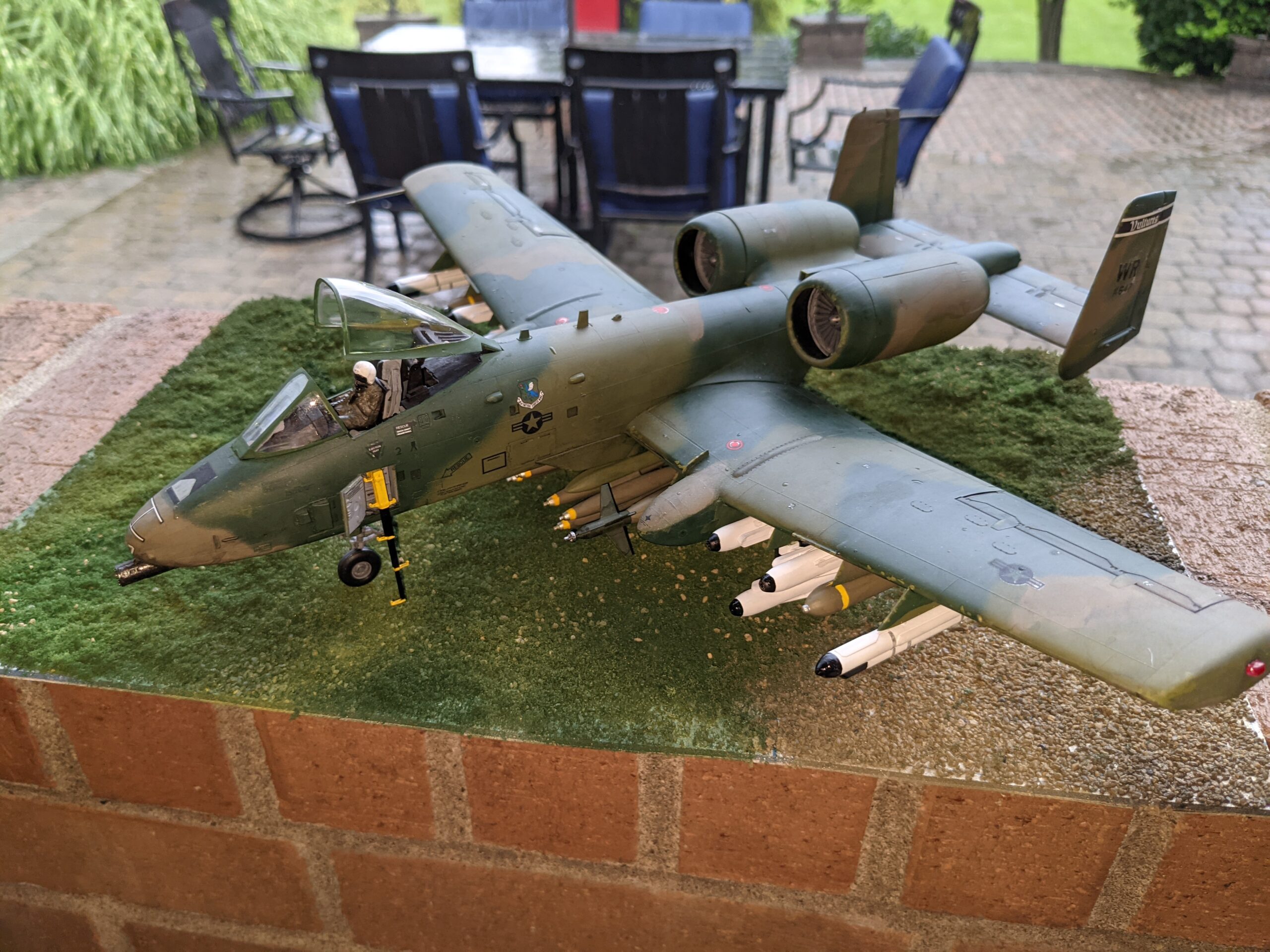
The finished model looks the part with the A-10’s distinctive straight wings, twin engines mounted high on the rear fuselage, and the massive GAU-8 Avenger cannon protruding from the nose. The kit includes a pilot figure with ejection seat and decals for five different USAF aircraft, giving you plenty of marking options.
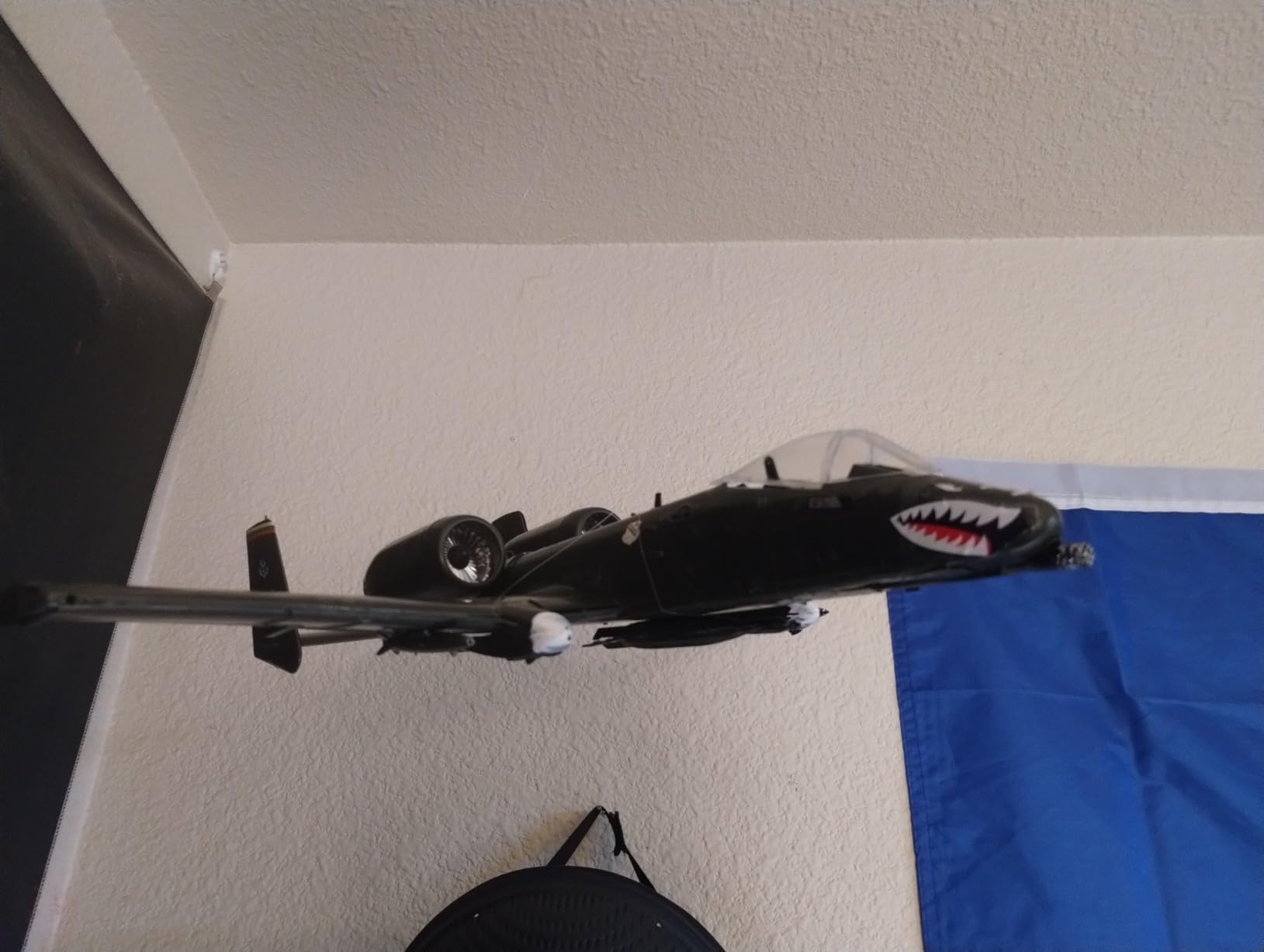
Parts fit is solid throughout. I had no issues with the wing-to-fuselage join, and the engine nacelles assembled cleanly. The landing gear is well-represented with proper detail in the wheel wells. An included clear stand option lets you display the Warthog in flight if you prefer that over a grounded configuration.
Some modelers find this kit on the basic side compared to Tamiya’s newer releases. It is an older tooling, and the detail level reflects that. However, for the price, it delivers tremendous value. The 763 customer reviews and 4.6-star average confirm that this kit has pleased a lot of builders over the years.
Who should build this kit
The A-10 Thunderbolt II is a great choice for builders on a budget who still want Tamiya quality. It is accessible enough for adventurous beginners while still offering enough detail to satisfy intermediate modelers. If you are a fan of modern close air support aircraft or want to build a Desert Storm-era collection, this Warthog is an essential addition that will not break the bank.
What to watch out for
The main consideration is that this is older tooling. The surface detail and parts engineering are not at the level of Tamiya’s 2010s releases like the Spitfire or Bf 109. Some builders have noted the kit feels small and basic compared to what they expected. There are also many small parts despite the overall simplicity, so keep your workspace organized. If you want maximum detail, consider pairing this with aftermarket weapons sets.
13. Tamiya De Havilland Mosquito FB-MK.6 – Classic Wooden Wonder

Tamiya 61062 1/48 De Havilland Mosquito FB-MK.6 Plastic Model Airplane Kit
1:48 Scale
WWII RAF Bomber
Two Figures Included
3 Squadron Markings
Pros
- All parts fit perfectly - classic Tamiya
- Gold standard model kit quality
- Great for WW2 allied planes fans
- Fun and easy to build
Cons
- Older 1998 kit with less detail than modern releases
- Some accuracy considerations vs modern kits
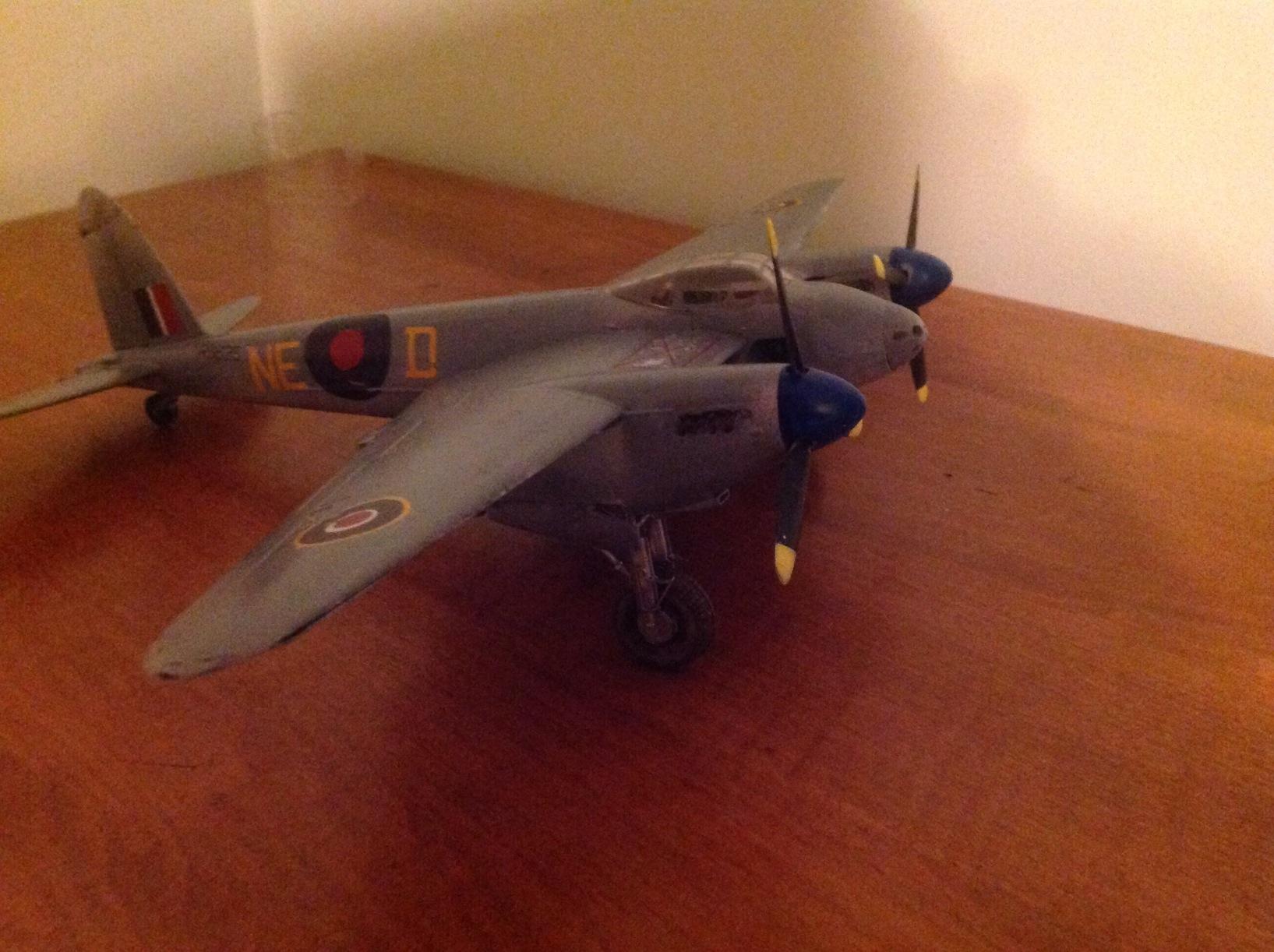
The De Havilland Mosquito FB-MK.6, known as the “Wooden Wonder,” rounds out our list as a classic Tamiya kit that helped define the brand’s reputation. Tooled in 1998, this kit was a turning point for Tamiya’s 1/48 aircraft series. I built it alongside the newer Spitfire MK.I for comparison, and while it shows its age in certain areas, the core build experience remains pure Tamiya.
The Mosquito’s wooden construction is represented in plastic, of course, but the surface textures and panel lines capture the aircraft’s unique character. The kit includes markings for three RAF squadrons: No. 143, No. 157, and No. 487. Two crew figures are included, which adds life to the finished model, especially if you display the cockpit open.
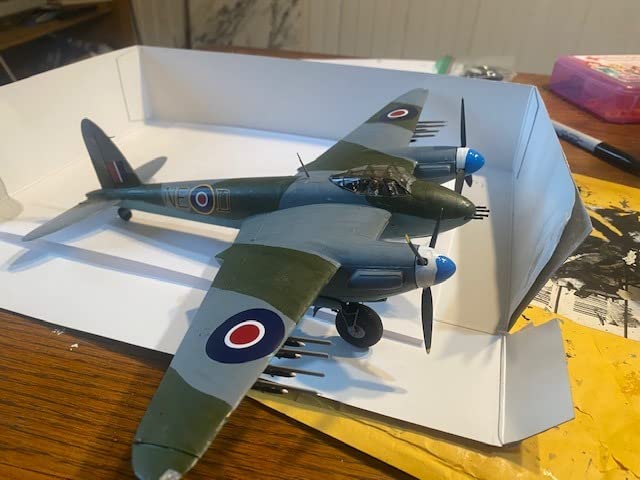
What impressed me most was how well the parts still fit after all these years. Tamiya’s tooling quality meant that even this 1998 kit goes together without the frustration common in older kits from other brands. All major seams are tight, and the wing-to-fuselage join is clean. The twin Merlin engines and propellers assemble without drama.
The honest assessment is that the detail level does not match Tamiya’s modern releases. The cockpit is simpler, the surface detail is less refined, and some accuracy considerations have been noted by dedicated Mosquito enthusiasts. But for most modelers, this remains the best 1/48 Mosquito available, and the build is genuinely enjoyable from start to finish.
Who should build this kit
The Mosquito is perfect for RAF enthusiasts and modelers building a WWII Allied collection. If you have built a few Tamiya kits and want something a bit different from the usual single-engine fighters, the twin-engine Mosquito offers a refreshing change of pace. It is also a great choice for builders who appreciate the history of Tamiya’s kit development and want to experience one of their classic releases.
What to watch out for
The 1998 tooling means you should expect slightly less detail than Tamiya’s 2010s releases. If you are a detail purist, aftermarket cockpit sets and resin enhancements are available to bring this kit up to modern standards. The kit is somewhat smaller than you might expect for a twin-engine aircraft in 1/48 scale. Despite these points, the fit and build quality remain excellent, and most builders will find it a rewarding experience.
Buying Guide: Choosing the Right Tamiya 1/48 Aircraft Kit
Choosing the best Tamiya 1/48 aircraft kit depends on your skill level, interests, and what kind of display you want to create. After building dozens of these kits, I have developed a clear sense of what works for different types of modelers. Here is my breakdown to help you make the right choice.
Skill Level Guide
For beginners, I always recommend starting with the P-51D Mustang. It offers the best combination of Tamiya quality, easy assembly, and forgiving build characteristics. The A-10 Thunderbolt II is another solid starter option at a lower price point. Both kits have clear instructions, manageable parts counts, and excellent fit that will build your confidence.
Intermediate builders have the most options. The Spitfire MK.I, Bf 109 G-6, Corsair, and Skyraider all deliver premium build experiences without being overwhelming. The P-47D Thunderbolt and P-38 Lightning are fantastic if you want something more challenging but still enjoyable. These kits represent the sweet spot of Tamiya’s 1/48 engineering.
Advanced builders should target the F-14A Tomcat, F-4B Phantom II, and F-16CJ. These kits have high parts counts, multiple configuration options, and complex assemblies that reward experience and patience. The P-38 Lightning also belongs in this category due to its small, fussy parts, despite its otherwise perfect engineering.
WWII vs Modern Era
If you are drawn to WWII aircraft, Tamiya’s 1/48 range is outstanding. The Spitfire MK.I, Bf 109 G-6, P-51D Mustang, and P-47D Thunderbolt form a core collection that covers the major European theater fighters. Add the Corsair and P-38 Lightning for Pacific theater coverage. The Mosquito FB-MK.6 adds a unique twin-engine bomber to the mix.
Modern jet enthusiasts have excellent options too. The F-14A Tomcat is the crown jewel, supported by the F-4B Phantom II for Cold War coverage. The F-16CJ and F-15C Eagle give you the modern air superiority duo, while the A-10 Thunderbolt II adds close air support capability. Together, these five kits create a comprehensive modern military aviation display.
Key Features to Look For
Cockpit detail varies significantly across the range. Newer releases like the Spitfire MK.I and Bf 109 G-6 include photo-etched parts and multi-layered cockpit assemblies. Legacy kits like the F-15C Eagle and Mosquito have simpler cockpits that benefit from aftermarket upgrades. Check whether a kit includes photo-etched parts if cockpit detail matters to you.
Surface detail and panel lines are consistently good across all Tamiya 1/48 kits. Recessed panel lines are standard, which work beautifully with wash techniques for weathering. The newer the tooling, the finer and more consistent the surface detail tends to be.
Decal quality is generally strong but can vary. The P-47D Thunderbolt has some of the best decals in the range, while the P-38 Lightning decals are notably thick. Most kits include multiple marking options, and aftermarket decal sheets are readily available for popular subjects like the F-14, F-16, and P-51.
Essential Tools You Will Need
Every Tamiya 1/48 kit requires basic modeling tools: sprue cutters, a hobby knife with fresh blades, plastic cement or liquid glue, and sanding sticks. For the best results, an airbrush setup is highly recommended, especially for camouflage schemes on WWII kits. Decal setting solutions like Microsol and Microset are essential for complex decal applications.
Additional supplies worth having include filler putty for any minor gaps, canopy glue for transparent parts, and a set of fine-tip paint brushes for detail work. Tamiya’s own Extra Thin Cement is my go-to adhesive for their kits because it works perfectly with their tight-fitting parts. For painting, Tamiya XF and X series acrylics are formulated to work with their kits and produce consistent results.
FAQ
Which is better, Revell or Tamiya?
Tamiya is generally considered superior to Revell for aircraft model kits. Tamiya consistently delivers better parts fit, cleaner molding, and more refined surface detail. Revell kits can be hit or miss — their newer releases are solid, but older toolings often have fit issues, especially around canopies. Forum consensus on Reddit and Britmodeller strongly favors Tamiya for build quality, though Revell sometimes offers better value on certain subjects.
Are Tamiya model kits any good?
Tamiya model kits are widely regarded as the gold standard in the scale modeling hobby. They are known for exceptional mold quality, precise parts tolerances, and engineering that makes assembly straightforward and enjoyable. Many modelers describe Tamiya kits as ones that practically fall together with minimal filler needed. The brand consistently earns high ratings across their entire 1/48 aircraft range, with most kits scoring 4.5 stars or higher from hundreds of customer reviews.
Who makes the best quality model kits?
Tamiya is widely considered to make the highest quality model kits overall, particularly in the 1/48 aircraft category. Other premium brands include Eduard (excellent detail with included photo-etch), Hasegawa (good range but variable quality), and Kinetic (improving rapidly). For pure build experience and consistent quality, Tamiya remains the benchmark that other manufacturers are measured against. Their kits offer the best balance of detail, engineering, and ease of assembly.
Are Tamiya models hard to build?
Tamiya models range from easy to moderately challenging depending on the specific kit. Their engineering makes even complex subjects approachable because parts fit precisely and instructions are clear. Kits like the P-51D Mustang and A-10 Thunderbolt II are accessible for beginners. More complex kits like the F-14A Tomcat and P-38 Lightning require experience with small parts and multiple assembly options. Most modelers find Tamiya kits easier to build than equivalent kits from other brands.
Conclusion
After building and evaluating all 13 kits, a few clear winners emerge. The Douglas A-1J Skyraider earns our Editor’s Choice with the highest rating in the entire lineup and a build experience that never disappoints. The P-51D Mustang remains the best value starter kit and the one I recommend to anyone trying Tamiya for the first time. The F-14A Tomcat, with over 800 reviews and a passionate following, is the definitive modern jet kit in Tamiya’s 1/48 range.
The best Tamiya 1/48 aircraft kits in 2026 cover an incredible range of subjects from WWII classics like the Spitfire and Bf 109 to Cold War icons like the Phantom and modern jets like the F-16. What ties them all together is Tamiya’s legendary engineering — the kind of fit and finish that makes scale modeling enjoyable rather than frustrating. Whether you are building your first kit or your fiftieth, there is a Tamiya 1/48 aircraft that will deliver exactly the experience you are looking for.
Pick a kit that matches your skill level and interests, grab your tools, and enjoy the build. That is what this hobby is all about.