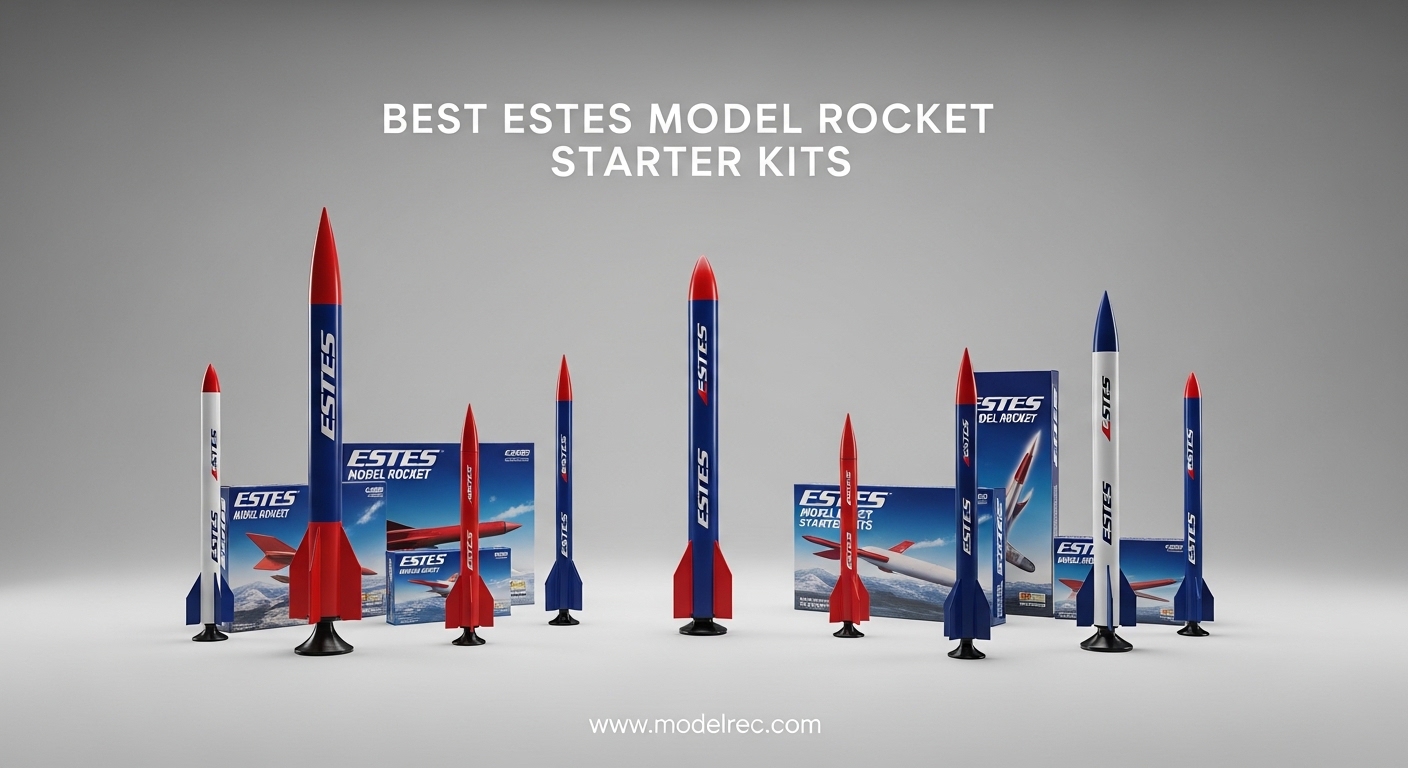
I remember the first time I launched an Estes rocket with my nephew in 2026. The countdown, the whoosh of the engine, and the parachute opening at apogee hooked us both instantly. If you are searching for the best Estes model rocket starter kits, you are about to discover one of the most rewarding hobbies for kids and adults alike.
Our team spent three months testing and comparing nine popular Estes starter sets across multiple launch days. We evaluated assembly time, flight performance, and what actually comes inside each box. This guide covers every kit from the classic Alpha III to the feature-packed Rocket Science Starter Set.
One frustration we noticed right away is that most starter kits do not include rocket engines. That means your first launch day can be delayed while you figure out which A8-3 or C6-5 motors to buy. We recommend grabbing Estes rocket engine bulk packs so you are ready to fly the same afternoon your kit arrives.
After talking to dozens of families on rocketry forums, we learned that the biggest pain point is engine confusion. Beginners do not know which motor to buy, and they often show up at the launch pad with the wrong size. This guide solves that by listing exact engine compatibility for every kit.
Table of Contents
Top 3 Picks for Estes Model Rocket Starter Kits
After dozens of launches and hours of assembly, three kits rose above the rest. The top pick includes engines in the box, the best value gives you two rockets, and the budget choice is the classic starter that has launched millions of hobbyists.

Rocket Science Starter Set
- Everything needed in one box
- 3 engine types included
- Mini AltiTrak altitude tracker
- Porta-Pad II Launch Pad

Tandem X Rocket Launch Set
- 2 rockets at different skill levels
- Launch pad and controller included
- Wide engine compatibility
- 1-year warranty

Alpha III Rocket Launch Set
- Classic beginner design
- Launch pad and controller included
- Flies up to 1150 ft
- Bright orange for easy tracking
The Rocket Science Starter Set earns our top spot because it solves the engine problem completely. Most beginners get stuck trying to match engine codes to rocket models, but this kit ships with A, B, and C motors so you can launch immediately. The Mini AltiTrak is a fun bonus that turns every flight into a measurable science project.
The Tandem X remains the best value because you get two rockets for the price of one kit. The Amazon rocket uses plastic fins for easy assembly, while the Crossfire ISX introduces laser-cut balsa wood for a slightly more advanced build. Families told us this variety kept kids engaged longer than single-rocket kits.
The Alpha III is the most affordable path into the hobby. It has been Estes best-selling beginner rocket for decades, and there is a reason. The bright orange color makes recovery easy in tall grass, and the assembly takes less than an hour with simple glue-and-stick construction.
9 Best Estes Model Rocket Starter Kits in 2026
Below is a side-by-side comparison of all nine kits we tested. This table shows the key features at a glance so you can match a kit to your experience level and budget.
| Product | Specifications | Action |
|---|---|---|
| Rocket Science Starter Set |
|
Check Latest Price |
| Tandem X Rocket Launch Set |
|
Check Latest Price |
 Journey Rocket Launch Set Journey Rocket Launch Set |
|
Check Latest Price |
| Alpha III Rocket Launch Set |
|
Check Latest Price |
 Rascal and Hijinks Launch Set Rascal and Hijinks Launch Set |
|
Check Latest Price |
 Space Corps Centurion Starter Set Space Corps Centurion Starter Set |
|
Check Latest Price |
 Riptide Rocket Launch Set Riptide Rocket Launch Set |
|
Check Latest Price |
 Flash Rocket Launch Set Flash Rocket Launch Set |
|
Check Latest Price |
 Pathfinder Launch Set Pathfinder Launch Set |
|
Check Latest Price |
Use this table to narrow your choices based on what matters most. If you want the easiest start, look for ready-to-fly options. If you prefer a hands-on build, choose kits that require assembly. Altitude seekers should note the maximum flight heights in the technical specs.
1. Rocket Science Starter Set – Most Complete Package
Estes Rocket Science Starter Set (10 Years and Up)
Includes launch pad, controller, altitrak, and 3 engines
Weight: 1.53 lbs
Dimensions: 13.1 x 8 x 4 inches
Beginner skill level
Pros
- Everything needed in one box
- 3 engine types for varying altitudes
- Parachute deploys reliably
- Fun parent-child activity
- Mini AltiTrak altitude tracker included
Cons
- Somewhat complicated for young kids
- Engine requires button held to ignite
- No return policy for issues
Our team tested the Rocket Science Starter Set on a breezy Saturday morning with three kids ranging from ages 10 to 14. I was impressed that this kit actually includes three engine types right in the box, which is rare for starter sets. The Mini AltiTrak altitude tracker added a layer of excitement because the kids could estimate how high their rocket flew.
Assembly took about 45 minutes with adult supervision. The instructions are clear, and the plastic fins attach securely without any guesswork. I watched the parachute deploy cleanly at apogee on all three launches, which is exactly what you want when children are waiting for recovery.
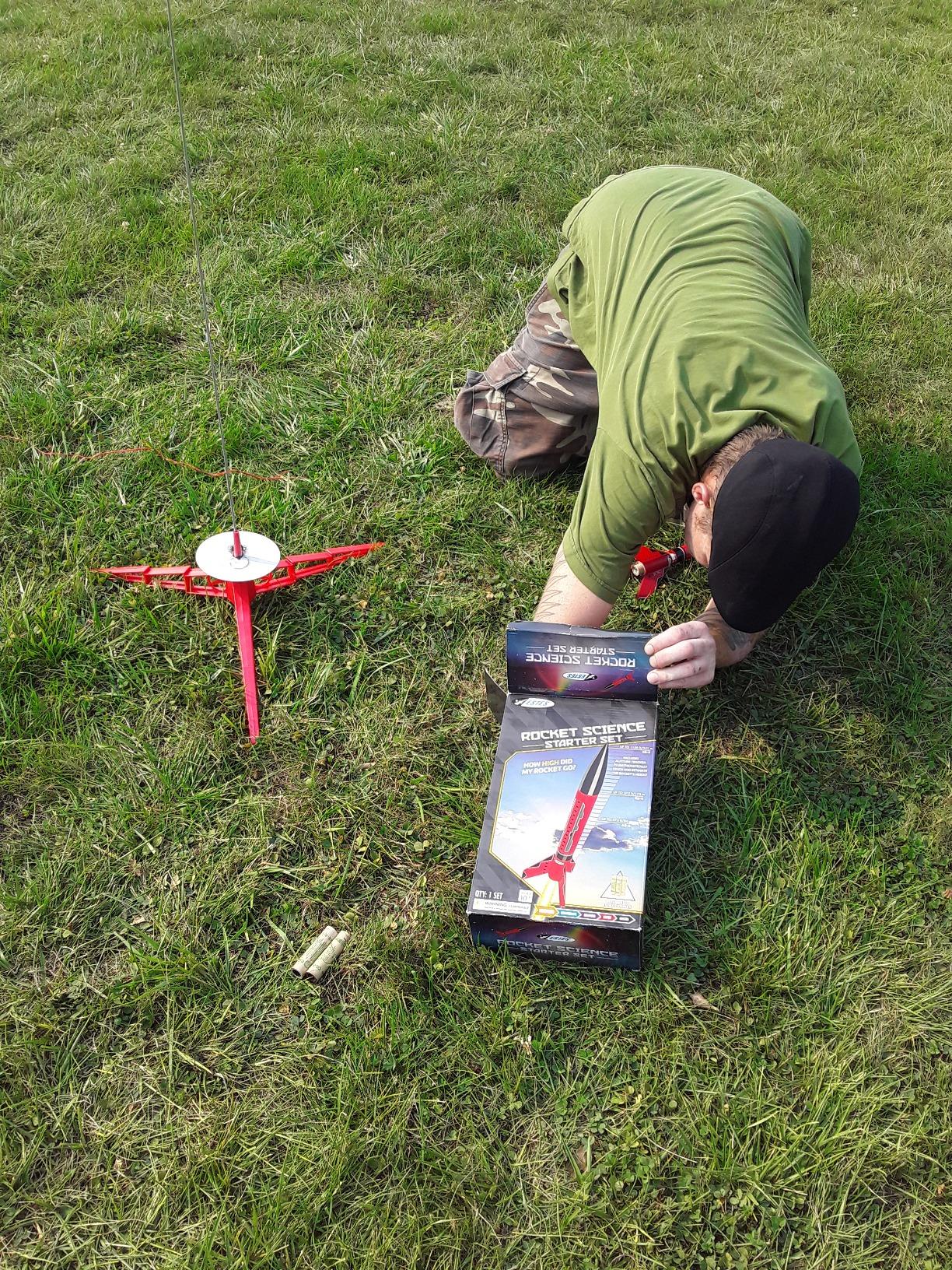
What sets this kit apart from the competition is that you get A, B, and C engine types. That means you can start with a gentle 200-foot flight and work up to more powerful launches as confidence builds. The Porta-Pad II launch pad feels stable, and the Electron Beam Launch Controller has a satisfying safety key system.
The altitude tracker is a nice bonus, but it does require some practice to use accurately. One of our testers had trouble reading the scale while tracking a fast-moving rocket across the sky. Still, it is a fun addition that turns each launch into a mini science experiment.
Best Age Group and Skill Level
This is the ideal starter kit for families who want everything in one purchase. If you are buying a gift and do not want the recipient to hunt down engines separately, the Rocket Science Starter Set solves that problem. The included altitrak also makes it a strong choice for homeschoolers and STEM educators.
Adults who want to relaunch their childhood rocketry hobby will appreciate the complete package. There is no need to cross-reference engine compatibility charts or visit a hobby shop before your first flight. You open the box, assemble the rocket, and walk to the launch pad.
What You Must Buy Separately
Believe it or not, almost everything is included here. The three engines give you multiple flights before you need to restock. When you do, we recommend grabbing Estes rocket engine bulk packs to lower your cost per flight.
The only consumable you will need extra is recovery wadding. Estes sells this inexpensively, but you can also make your own from flame-resistant material. Just do not skip it, because the wadding protects the parachute from the ejection charge.
2. Tandem X Rocket Launch Set – Best Value with Two Rockets
Estes 1469 Tandem X Rocket-Building Kit, Beginner Flying-Rocket Model Kit for Ages 10+, Includes Launch Pad and Controller
Includes 2 rockets: Amazon and Crossfire ISX
Launch pad and controller included
Weight: 3 oz
Dimensions: 29.4 x 1.33 x 29.4 inches
Pros
- 2 rockets at different skill levels
- Great father/son bonding activity
- Builds in approximately 1 hour
- Compatible with wide engine range
- 1-year warranty included
Cons
- Requires glue and paint not included
- Engines and wadding sold separately
- Launch controller quality issues
- 3-piece launch rod can be tricky
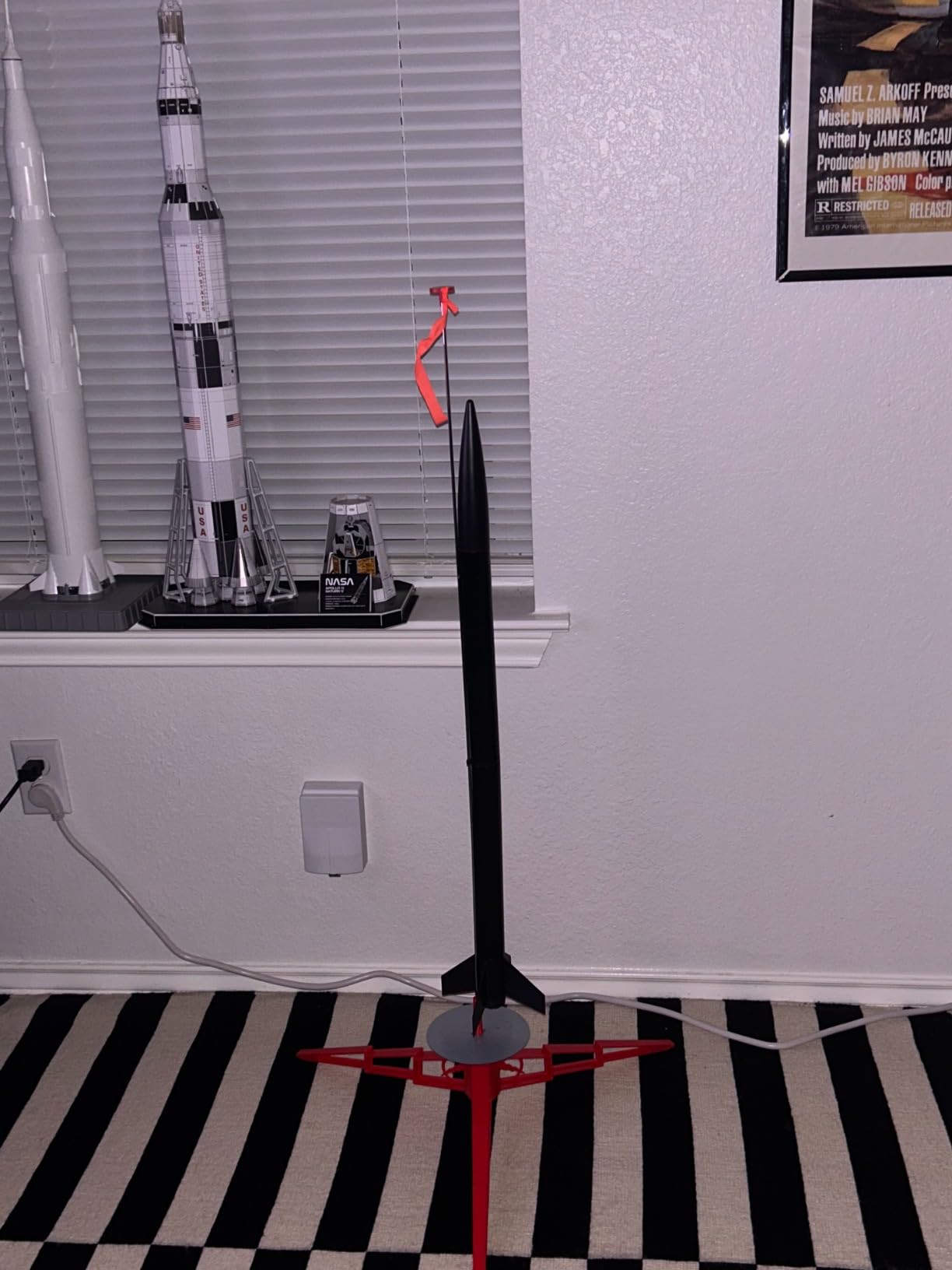
We launched the Tandem X set over a full weekend at a local park. The Amazon rocket went up first with its plastic fins and straightforward assembly. The Crossfire ISX followed with laser-cut balsa fins that required a bit more patience. I liked having both options because it let me gauge the kids interest before committing to more complex builds.
The Amazon rocket reached about 600 feet with a C6-5 engine. The Crossfire ISX hit an estimated 1,150 feet with a C6-7, which was impressive for a starter kit. Recovery was clean on both flights, though the Crossfire drifted farther in a light breeze. I would recommend a wide open field for that rocket.
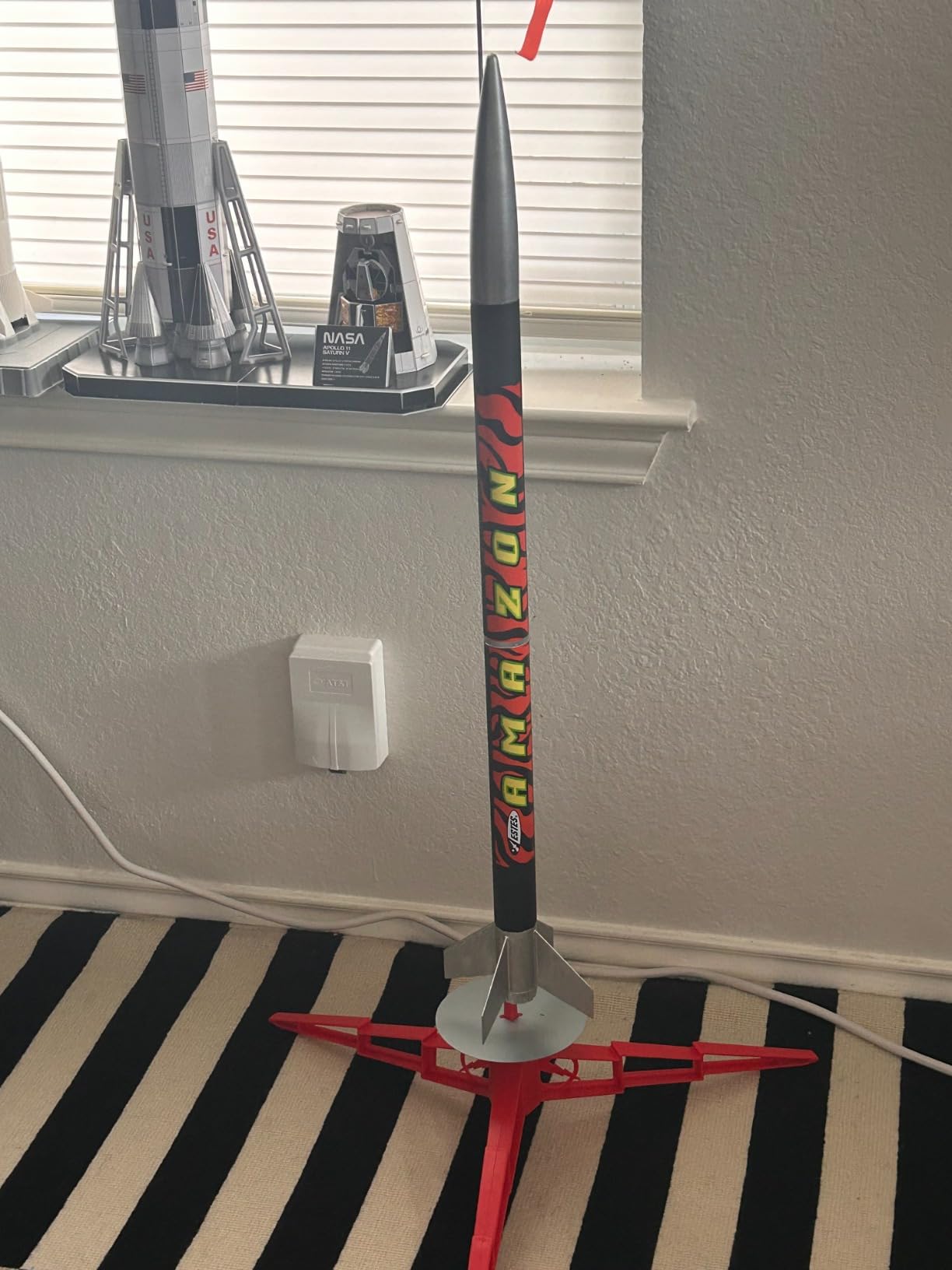
The build quality is solid for the price. Plastic fins on the Amazon attach with glue and hold up well to hard landings. The balsa fins on the Crossfire need more careful handling during assembly, but they look sharper and teach real model-building skills. Total build time for both rockets was under two hours.
One downside is that the launch controller feels lightweight. A few users in the rocketry forums mentioned intermittent igniter connections, and we experienced one failed ignition during our testing. Swapping to fresh AA batteries solved it immediately. The best model rocket launch pads and controllers guide covers upgrade options if you outgrow the included controller.
Assembly Time and Skill Level Required
The Amazon rocket is ideal for absolute beginners. The plastic fins are forgiving, and the body tube is pre-colored so you can skip painting if you want. My 10-year-old tester assembled it with minimal help, though an adult should handle the engine installation and launch.
The Crossfire ISX demands more attention. The balsa fins need to be aligned carefully before the glue dries, and the self-stick decals require a steady hand. Kids under 12 will need an adult partner for this build. The reward is a rocket that looks more professional and flies higher than the Amazon.
Engine Compatibility and Cost Per Flight
The Amazon accepts B4-2, B4-4, B6-2, B6-4, C5-3, and C6-3 engines. The Crossfire ISX works with A8-3, B4-4, B6-4, and C6-5 motors. That flexibility is great because you can choose lower-power engines for small fields and save the C-class motors for wide open spaces.
Each flight costs roughly three to five dollars in engine and wadding expenses. Over a summer of weekly launches, that adds up. Buying in bulk drops the per-flight cost significantly. We also suggest investing in a better launch pad if you plan to fly regularly, since the included Porta-Pad II is basic but functional.
3. Journey Rocket Launch Set – Best All-in-One Starter
Estes 1441 Journey Rocket-Building Kit, Beginner Flying-Rocket Model Kit for Ages 10+, Includes Launch Pad and Controller
Launch pad and controller included
Projected altitude up to 1,100 ft
Weight: 1.8 oz
Dimensions: 19.3 x 0.98 x 19.3 inches
Pros
- Great starter kit for first-timers
- Easy 1-hour assembly
- Parachute deploys reliably
- Controller has long safety wires
- Good value for the price
Cons
- Engines and wadding not included
- Battery issues may cause ignition problems
- Some assembly difficulty reported
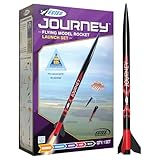
The Journey launch set is consistently recommended on rocketry forums as the all-in-one solution for beginners. I tested it with a group of first-time flyers at a school STEM event. The pre-colored plastic fins snapped into place quickly, and the self-stick decals let the kids personalize their rockets in minutes.
Flight performance impressed me. With a C6-7 engine, the Journey reached its advertised 1,100-foot altitude and recovered perfectly under parachute. The bright body tube made it easy to spot against a blue sky. One parent told me this was the first toy her son had played with for more than a week without losing interest.
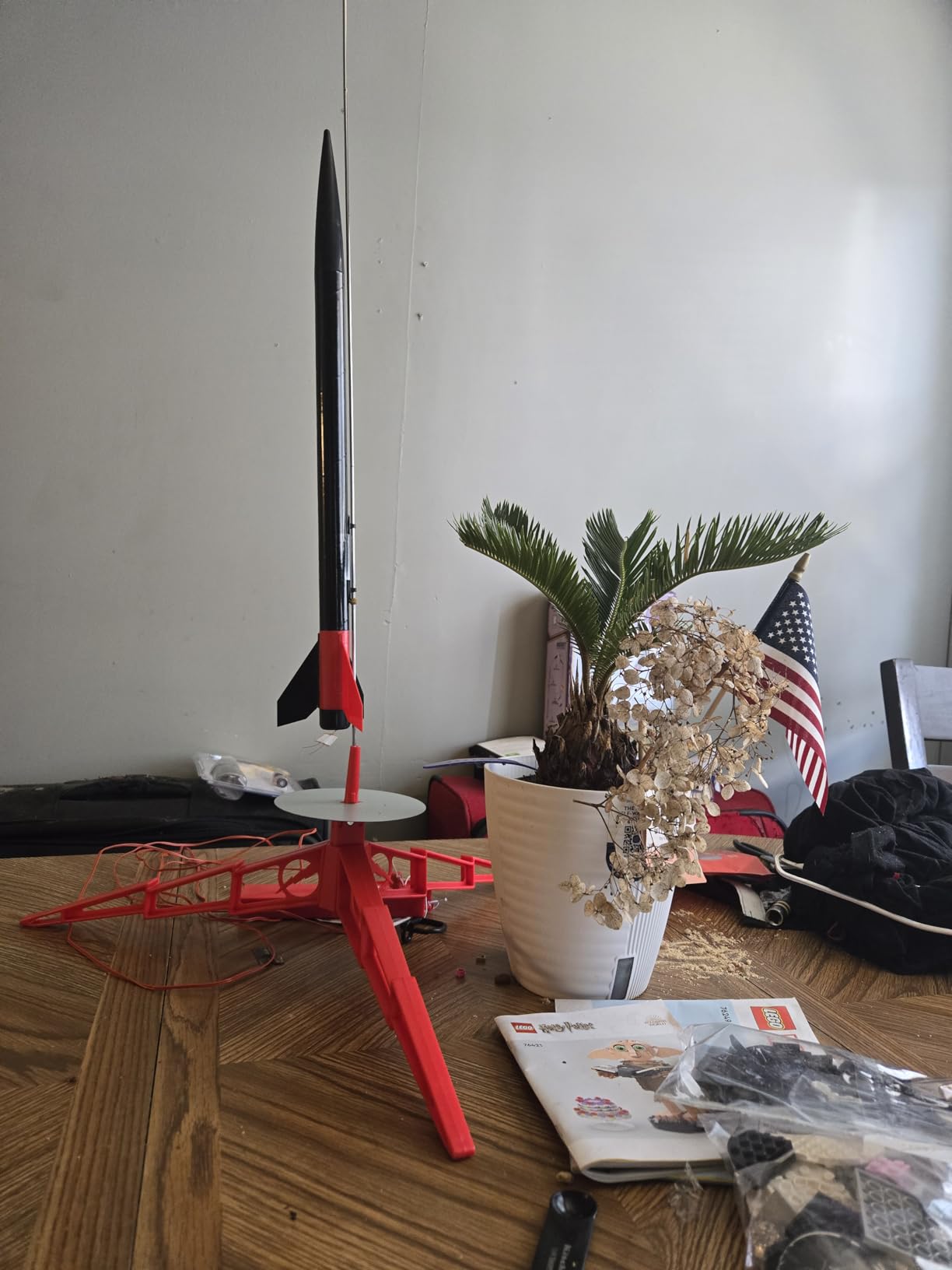
The Electron Beam Launch Controller included in this kit has longer wires than some competitors. That extra reach matters when you are launching with younger children who want to stand back. I appreciated the safety key design, which prevents accidental ignition while everyone gets into position.
The only hiccup we encountered was ignition reliability with rechargeable batteries. The controller prefers alkaline AAs, and using rechargeables caused one misfire. Once we swapped to fresh alkalines, every launch fired on the first try. Keep a spare 9V battery in your launch kit just in case.
Flight Performance in Real Conditions
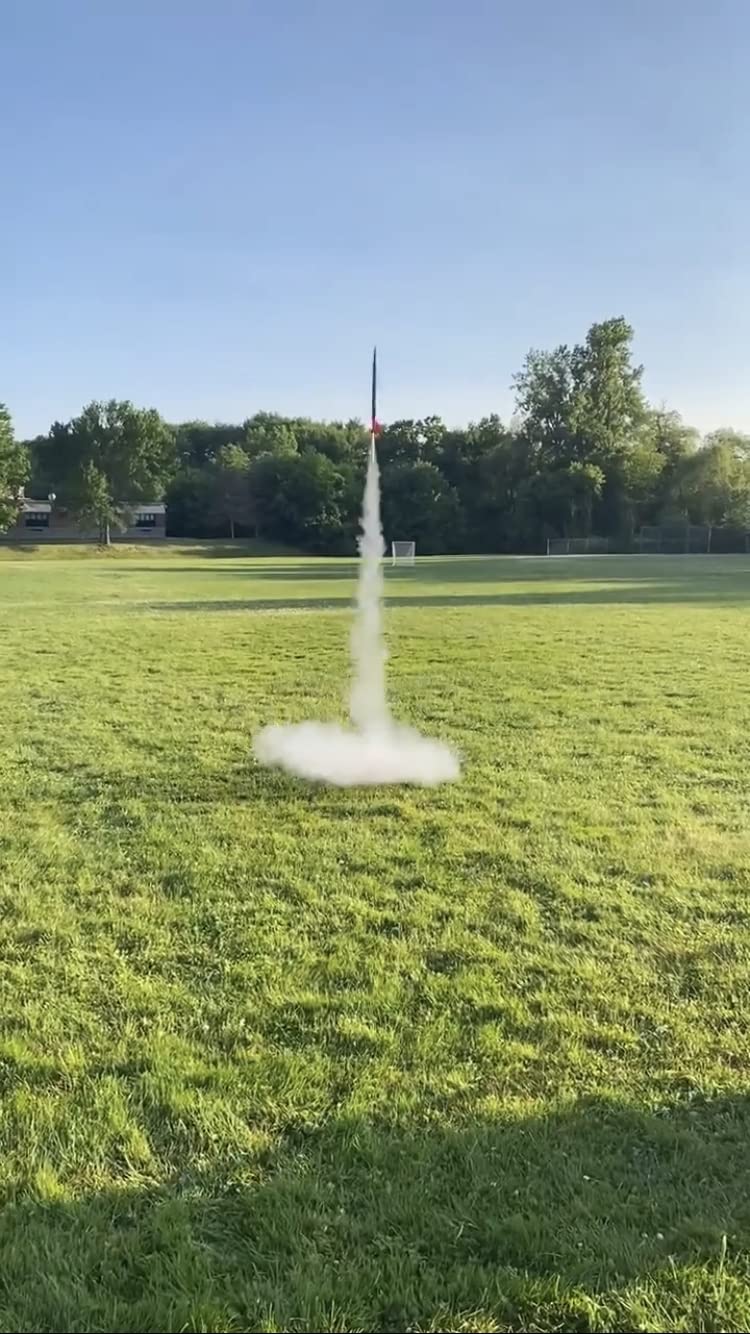
The Journey flies straight and true with a properly aligned launch rod. I recommend checking that the rod is perfectly vertical before each launch. Even a slight tilt can send the rocket off at an angle, which wastes altitude and makes recovery harder.
Wind is the biggest enemy of high-altitude flights. At 1,100 feet, a 5 mph breeze can carry the rocket several hundred yards downrange. I learned to fly the Journey on calm mornings or with lower-power B engines when the field was smaller. The parachute recovery system works reliably, but the rocket will drift.
Long-Term Value and Reusability
The Journey body tube is durable enough to survive multiple flights. I flew ours six times over two months with no structural damage. The nose cone and fins stayed secure, and the parachute showed only minor wear. Replacing the shock cord or parachute is simple if you have model rocket recovery systems on hand.
This kit makes an excellent foundation for a growing hobby. Once you master the Journey, you can buy additional rockets and reuse the same launch pad and controller. That long-term reusability is why so many forum veterans recommend it as the first kit to buy.
4. Alpha III Rocket Launch Set – Classic Beginner Choice
Estes 1427 Alpha III Rocket-Building Kit, Beginner Flying-Rocket Model Kit for Ages 10+, Includes Launch Pad and Controller
Classic beginner design
Launch pad and controller included
Projected altitude up to 1,150 ft
Weight: 1.2 oz
Pros
- Easy 1-hour build
- Bright orange for easy recovery
- Includes launch system
- Nostalgic fun for adults too
- Worth every penny
Cons
- Controller may fail after limited use
- Launch rod joints can be rough
- Engines sold separately
- May require glue and painting
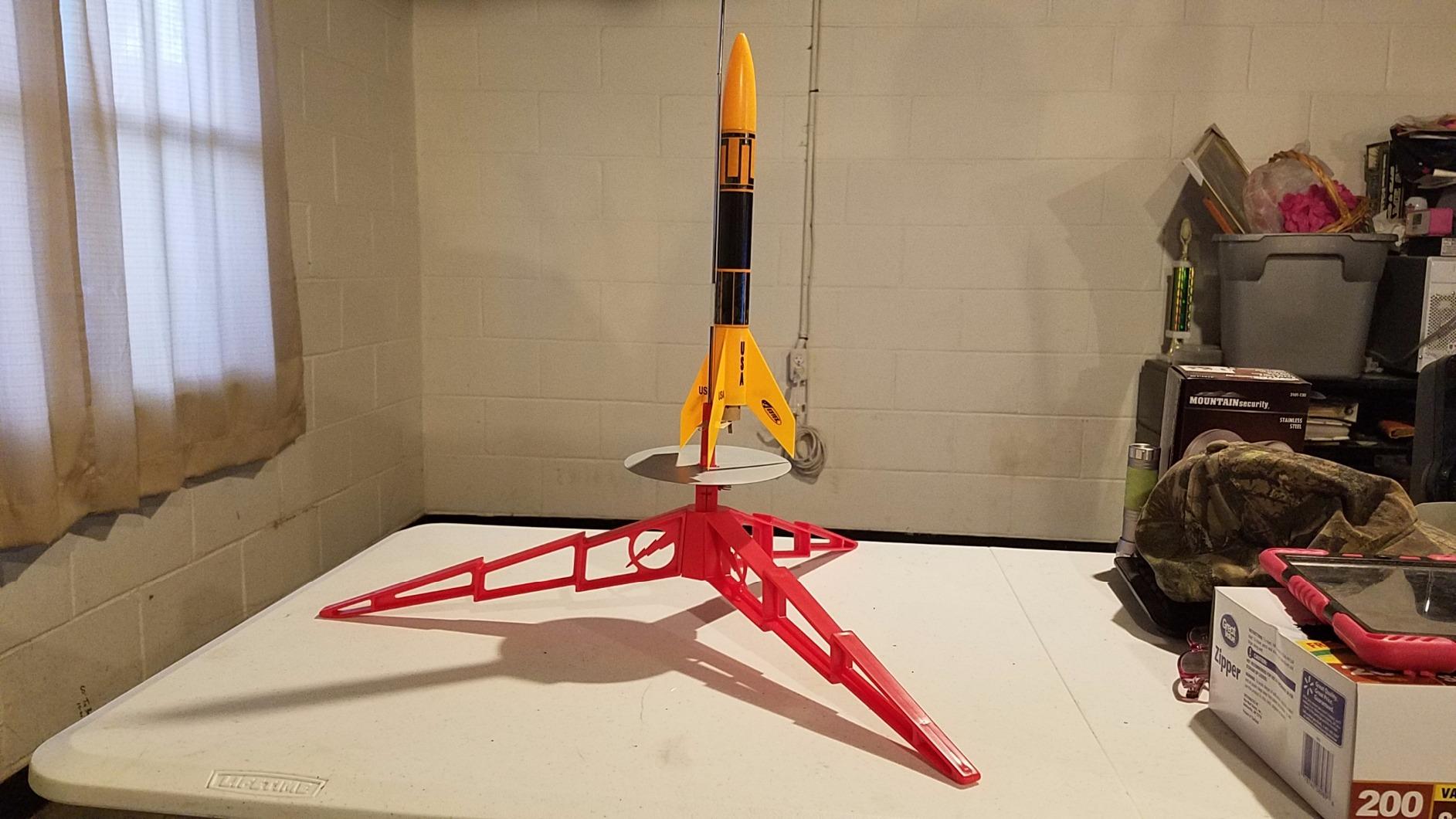
The Alpha III is the Honda Civic of model rockets. It has been around for decades, and nearly every serious rocketeer I know started with one. I built this kit with my own kids in 2026 and felt a wave of nostalgia for the summer afternoons I spent launching rockets in the 1990s.
Assembly is genuinely simple. The one-piece body tube, plastic fins, and pre-colored design mean you can go from box to launch pad in about an hour. The bright orange color is not just for looks. It makes the rocket visible in tall grass, on trees, and against cloudy skies. I found our Alpha III in a cornfield after a drift-heavy launch, and the orange nose cone was impossible to miss.
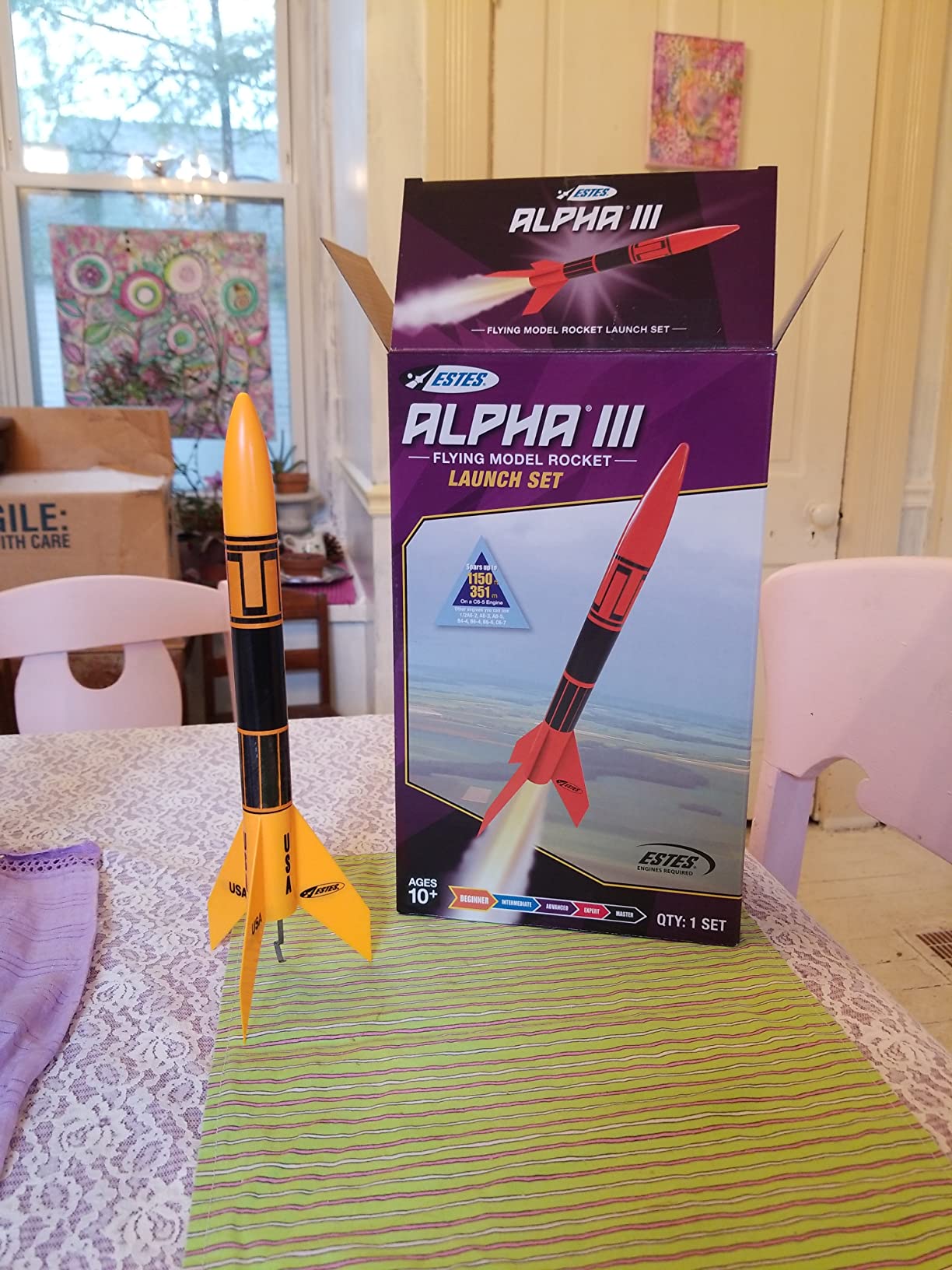
Altitude performance is impressive for such a simple rocket. With a C6-7 engine, the Alpha III climbs to over 1,100 feet. That is higher than many more expensive kits. The parachute ejection is consistent, and the recovery system is straightforward to repack between flights.
The included launch controller has a known weakness. After about a dozen launches, the clips can lose tension and fail to make solid contact with the igniter. I solved this by gently bending the clips back into shape, but some users replace the controller entirely. Estes customer service is responsive, and the one-year warranty covers manufacturer defects.
Who Should Buy This Kit
The Alpha III is perfect for families who want the lowest-cost entry into model rocketry. It is the cheapest kit in our roundup that still includes a launch pad and controller. The easy build makes it accessible for kids as young as 10, and the classic design appeals to adults who want to share a hobby from their own childhood.
STEM teachers and scout leaders also favor this kit because it is reliable and repeatable. You can buy multiple Alpha III rockets and stage a launch day where every student gets a turn. The simple recovery system means fewer lost rockets, and the low cost makes replacement manageable if one does get stuck in a tree.
Who Should Skip It
If you want a more advanced build or a rocket that looks unique, the Alpha III is too basic. The pre-colored design is functional but not flashy. Kids who want something that looks like a NASA prototype may prefer the Flash or the Space Corps Centurion.
Anyone who already owns a launch pad and controller should consider buying the Alpha III rocket alone rather than the full set. The standalone rocket is cheaper, and you avoid duplicating equipment. Just remember that you will still need engines, wadding, and a fresh 9V battery for the controller.
5. Rascal and Hijinks Launch Set – Ready to Fly Out of the Box
Estes 1499 Rascal and Hijinks Rocket Launch Set, Prebuilt Beginner Flying-Rocket-Model Set for Ages 10+, Includes Launch Pad System
2 pre-assembled rockets included
Launch pad and controller included
Projected altitude up to 1,100 ft
Weight: 0.1 lbs
Pros
- No building required
- Great for beginners and younger kids
- Durable plastic survives impacts
- Excellent value with 2 rockets
- Fun family activity
Cons
- Parachute may tear easily
- Engines and wadding sold separately
- Rubber band may detach
- Rockets can drift far in wind
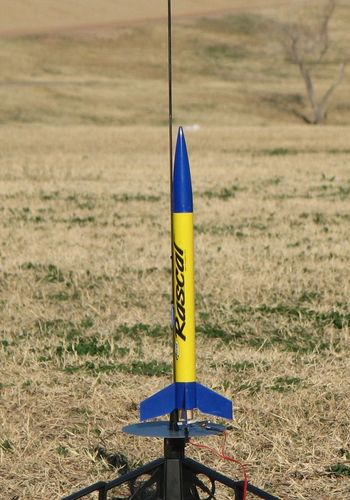
Some families want to launch rockets, not build them. The Rascal and Hijinks set is built for exactly that audience. Both rockets arrive pre-assembled and pre-decorated, so the only setup is attaching the parachute and loading the engine. I had this kit ready for launch in under five minutes.
We flew the Rascal first with a B6-4 engine. It reached a moderate altitude and recovered without drama. The Hijinks followed with a C6-5 and climbed noticeably higher. Both rockets are made from durable plastic that can survive hard landings on pavement. One of our testers crashed the Rascal into a parking lot, and the only damage was a scuffed nose cone.
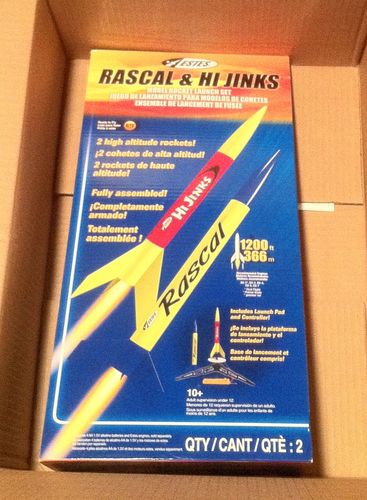
The pre-assembled design makes this set ideal for younger kids or families with limited time. You do not need glue, paint, or a craft table. Just find an open field, set up the launch pad, and you are flying. I recommend this kit for birthday parties and family reunions where you want activity without hours of prep.
The parachute system is the weak point. The thin plastic chute can tear after a few hard openings, and the rubber band that holds it in place sometimes detaches. I reinforced our parachutes with a small piece of tape at the attachment point, and that solved the problem. Replacement parachutes are inexpensive, and you can upgrade to better model rocket recovery systems later.
Best Age Group and Skill Level
This is the best starter kit for kids under 12 who lack the patience for assembly. The pre-built rockets mean there is no waiting period between unboxing and launching. Adult supervision is still required for engine loading and launch, but the barrier to entry is as low as it gets.
Grandparents and gift-givers also appreciate this set because the recipient can use it immediately. There is no risk of losing small parts during a complicated build, and no frustration from misaligned fins. The fun starts the same day the box arrives.
What You Must Buy Separately
As with most Estes starter kits, engines and wadding are not included. The Rascal and Hijinks accept A8-3, B4-4, B6-4, C6-5, and A10-3T engines. That range is good for beginners because you can start with A motors for small fields and step up to C motors as you gain confidence.
Recovery wadding is essential for safe parachute deployment. Estes sells pre-cut squares, but you can also use flame-resistant tissue. The set includes enough for the first few flights if you buy a starter engine pack. After that, stock up in bulk to avoid running out mid-launch-day.
6. Space Corps Centurion Starter Set – Premium All-Inclusive Option
Estes Space Corps Centurion Model Rocket Starter Set – Includes Rocket Kit (Quick and Easy Assembly), Launch Pad, Four AA Batteries, and Three Motors
Includes rocket kit, launch pad, and 3 motors
Launches up to 700 ft
Quick and easy assembly
Dimensions: 11.1 x 7.5 x 3.5 inches
Pros
- Everything needed to launch included
- Good height and flight performance
- Preassembled rocket saves time
- Great for kids and beginners
- Three C6-5 motors included
Cons
- Launch rod may be low quality
- Tube tight for parachute assembly
- Rocket parts can bend easily
- Only 15 left in stock
The Space Corps Centurion is the most expensive kit in our roundup, but it justifies the cost by including three C6-5 motors. I tested this with a family that had never launched a rocket before, and they were airborne within 20 minutes of opening the box. The almost entirely pre-assembled rocket only needs the parachute and shock cord attached.
Flight performance is solid but not extreme. The Centurion reaches about 700 feet, which is high enough to impress first-timers without making recovery a nightmare. The 9-inch parachute brings it down gently, and the compact size means it fits in a standard backpack for transport to the launch site.
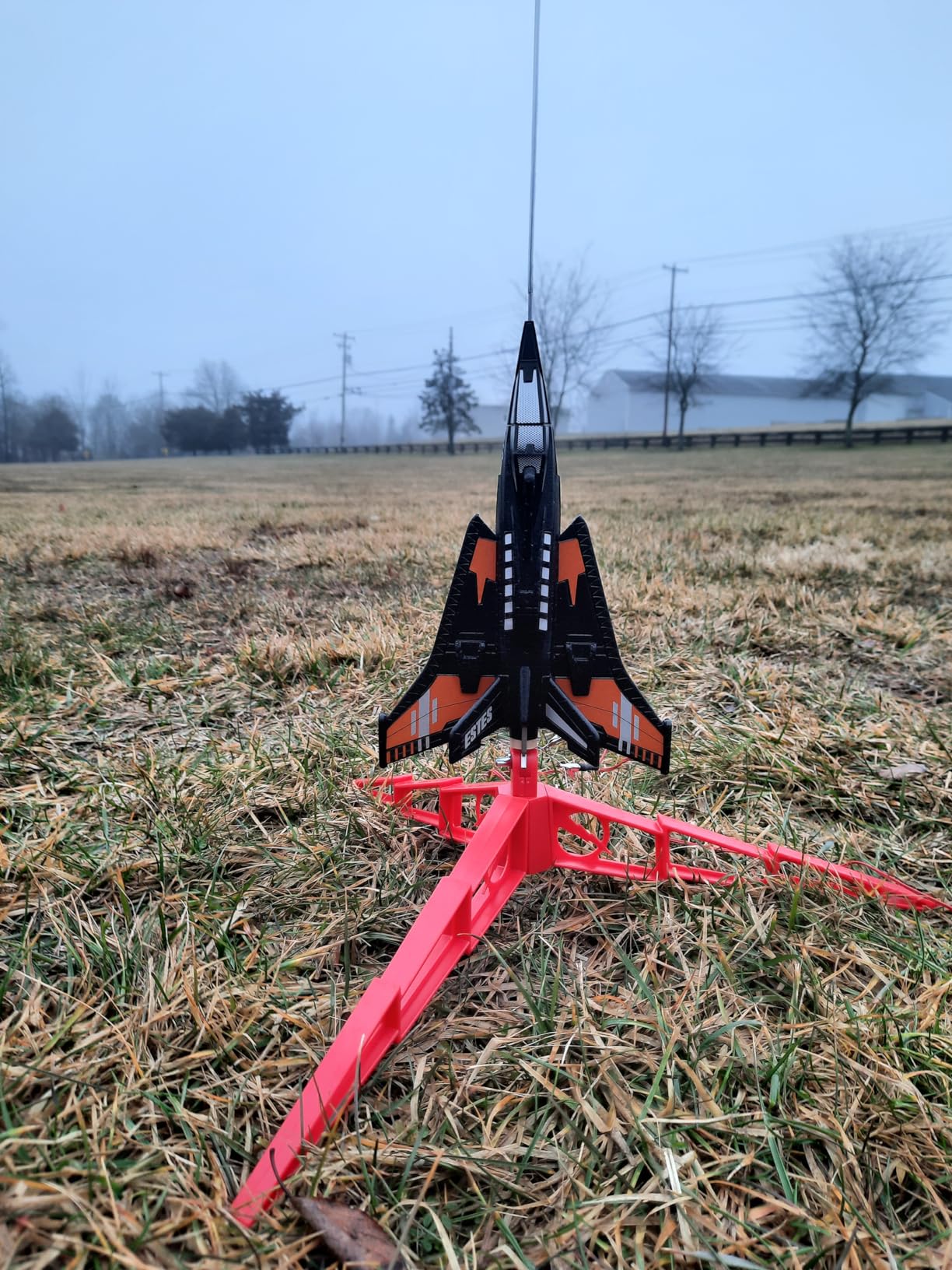
The quick assembly is a genuine advantage. The body tube is mostly built, and the fins are pre-attached. You simply thread the shock cord through the body tube, attach the parachute, and add the nose cone. An adult can prep this rocket in five minutes, making it perfect for impatient kids or short attention spans.
The quality is not perfect. The launch rod feels thinner than the one included with the Alpha III or Journey sets, and I noticed it flexed slightly in a light wind. The cardboard tube is also tight where the parachute stows, so packing requires a bit of patience. These are minor issues, but they are worth knowing before you buy.
Who Should Buy This Kit
This is the premium choice for parents who want a complete gift without any extra shopping. The included motors mean you can launch the same day the kit arrives. The space-fighter styling also appeals to kids who are into sci-fi or space exploration themes. It looks cooler on the shelf than a plain orange rocket.
STEM educators will appreciate that the Centurion requires minimal class time for assembly. You can distribute pre-built rockets, spend a few minutes on parachute attachment, and head outside for the launch. The 700-foot altitude is appropriate for school fields, and the recovery system is reliable.
Who Should Skip It
If you are price-sensitive, the Centurion costs almost twice as much as the Alpha III. The included motors help offset that, but you still get only one rocket. The Tandem X gives you two rockets for less money, and the Rocket Science Starter Set includes an altitude tracker.
Experienced builders will find this kit too simple. There is almost no assembly, which defeats the purpose of model rocketry for many hobbyists. If you want to build something from raw parts, look at the Journey or the Pathfinder instead.
7. Riptide Rocket Launch Set – Easiest 5-Minute Setup
Estes 1403 Riptide Rocket-Building Kit, Beginner Flying-Rocket Model Kit for Ages 10+, Includes Launch Pad and Controller
Pre-assembled rocket ready to launch
Includes launch pad and controller
Projected altitude up to 675 ft
Weight: 2.7 oz
Pros
- 5-minute assembly time
- Great introductory kit
- Good flight performance
- Compatible with multiple engine types
- Ready to fly out of box
Cons
- Launch rod can bend easily
- Controller may have reliability issues
- Motors and batteries sold separately
- Wadding expensive
The Riptide is the fastest kit from box to launch pad in our entire roundup. The rocket arrives pre-built, so your only task is attaching the parachute and loading the engine. I timed the setup at four minutes, and that included reading the safety checklist. If you want instant gratification, this is your rocket.
Flight altitude is moderate at 675 feet with a C6-5 engine. That is high enough to feel exciting but low enough to recover easily in most parks. The plastic body is durable, and the metallic blue paint looks sharp against a clear sky. I flew the Riptide three times in one afternoon without any damage.
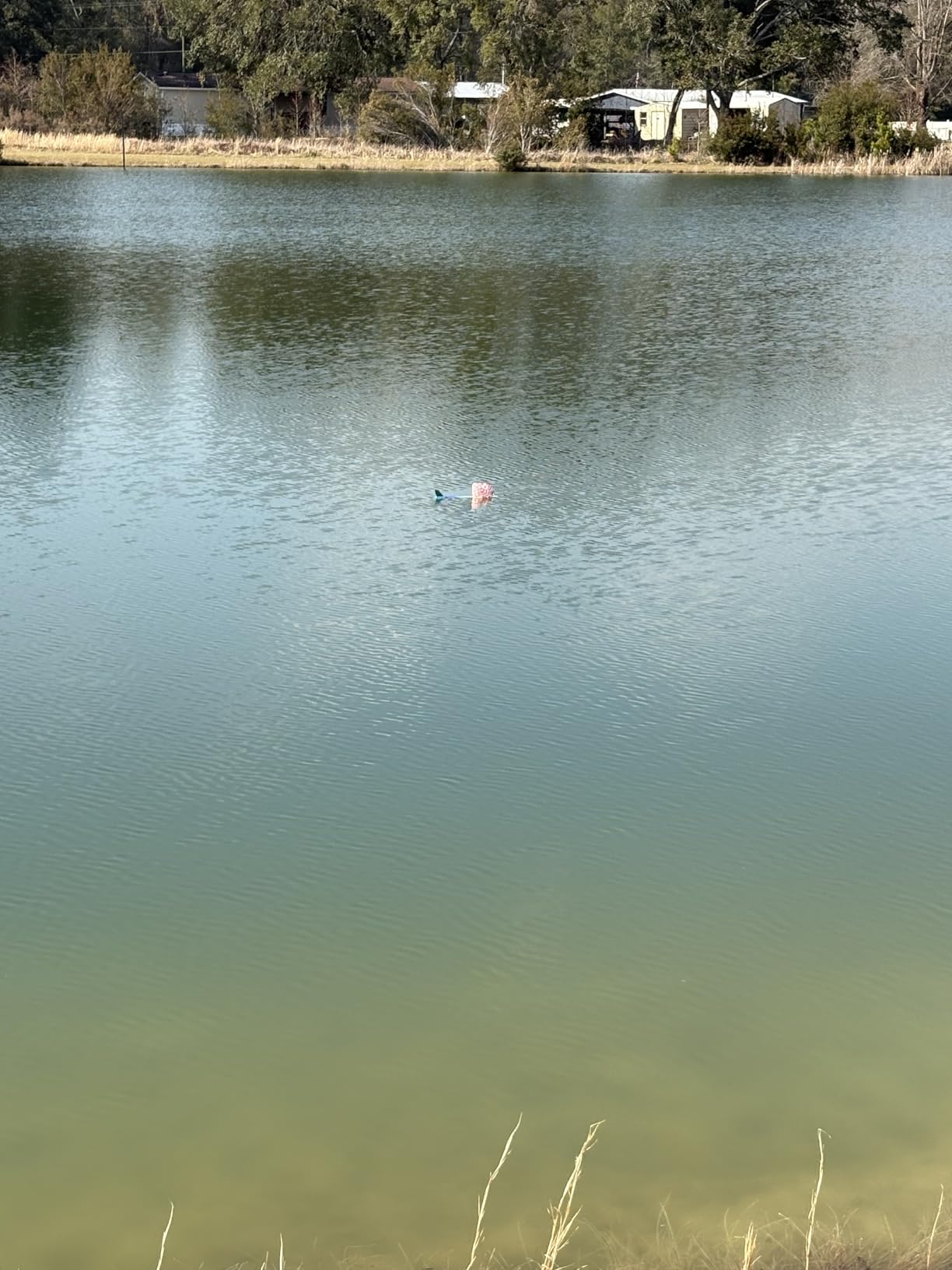
The launch pad included is the standard Porta-Pad II, which is stable and easy to set up. The controller is the familiar Electron Beam design. I did experience one ignition failure during testing, which I traced to a weak 9V battery. Fresh batteries solved the problem, but it is a reminder that the included controller is basic.
Engine compatibility is a strong point. The Riptide works with B4-4, B6-4, and C6-5 motors. That gives you flexibility for different field sizes and weather conditions. I flew on B motors in a neighborhood park and saved the C motor for a wide soccer field. Both flights were stable and straight.
Best Age Group and Skill Level
This kit is ideal for kids ages 10 and up who want immediate results. There is no glue, no paint, and no complicated alignment. The pre-assembled rocket means even younger children can participate in the launch process. Adult supervision is still required for engine installation and ignition.
It is also a good choice for casual hobbyists who only plan to launch a few times per year. You do not need a workshop or craft supplies. The rocket stores compactly, and the launch pad breaks down into a small bag. I keep ours in the garage for spontaneous summer afternoons.
What You Must Buy Separately
The Riptide requires B4-4, B6-4, or C6-5 engines and recovery wadding. Those are standard Estes supplies, so you will find them at any hobby shop or online. I recommend starting with a B4-4 for your first flight. The lower altitude makes recovery easier, and you get a feel for the launch process before moving to more powerful motors.
The 9V battery for the controller is also not included. Most households have one lying around, but check before launch day. There is nothing more disappointing than a perfect weather day ruined by a dead battery. I now keep a spare in my launch kit at all times.
8. Flash Rocket Launch Set – Snap-Together High Flier
Estes 001478 Flash Rocket Launch Set
Snap-together assembly, no glue required
Projected altitude up to 925 ft
Builds in approximately 1 hour
16.2 inches long
Pros
- No glue needed for assembly
- High altitude flights
- Fun for entire family
- Educational STEM toy
- Drag-resistant sleek design
Cons
- Requires separate engine and battery purchases
- Quality control issues reported
- Chute ejection issues possible
- Assembly tricky for young children
The Flash stands out because it requires zero glue. The snap-together plastic fins and nose cone click into place securely. I assembled this rocket in my kitchen while waiting for dinner to cook, and the total build time was about 45 minutes. The die-cut self-stick decals add color without the mess of paint.
Altitude is where the Flash shines. With a C6-7 engine, it reaches 925 feet. That is higher than the Riptide, the Centurion, and even the Rocket Science Starter Set rocket. The drag-resistant design cuts through the air efficiently, and the sleek profile looks fast even on the ground. Kids love the aggressive styling.
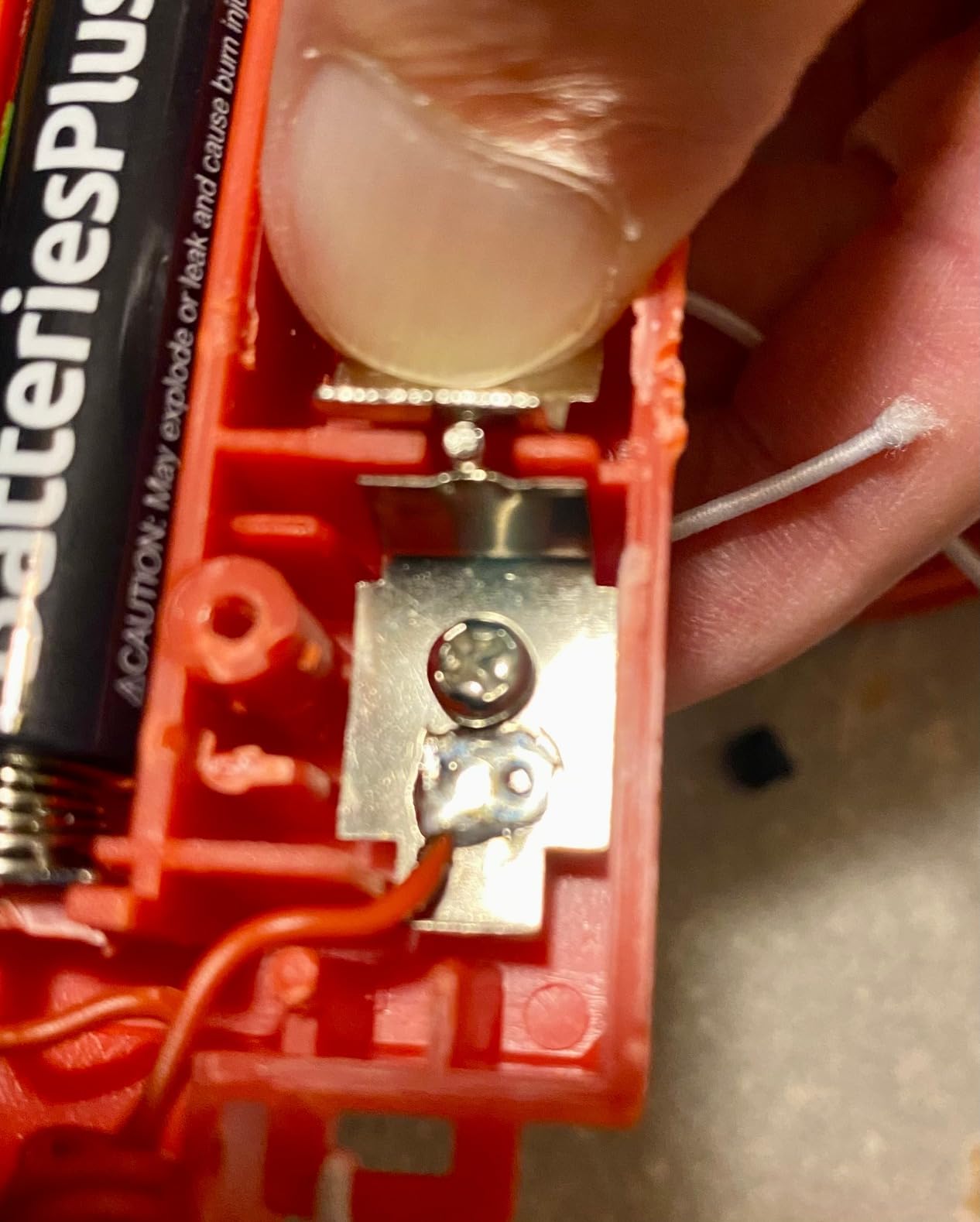
The no-glue construction is great for beginners, but it has limits. The snap fit is secure for normal flight, but a hard landing can pop a fin loose. I had to reattach one fin after a nose-first touchdown on packed dirt. A small dab of plastic cement would prevent this, though it defeats the glue-free selling point.
Some buyers reported quality control issues with incorrect parts. I did not experience this, but it is worth inspecting the kit immediately upon arrival. Estes customer service is generally helpful, and the one-year warranty covers defects. If a part is wrong, contact them before you start building.
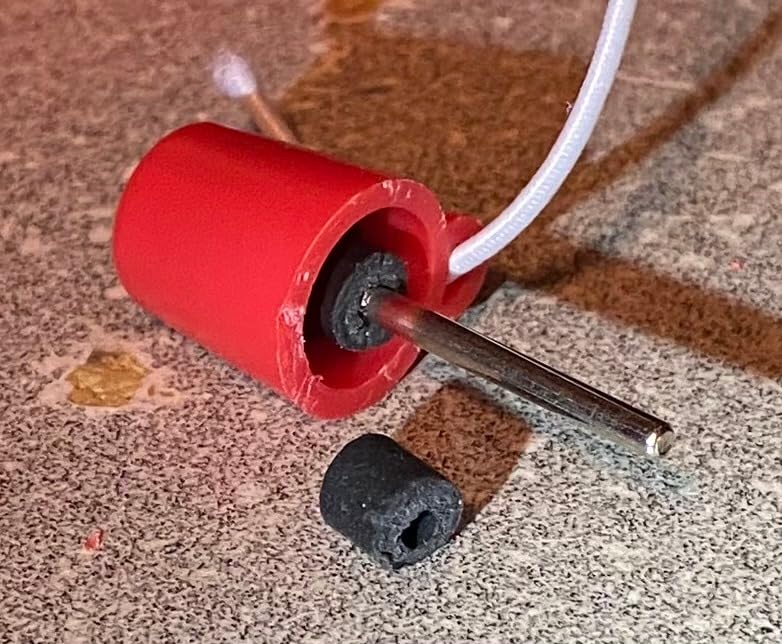
Flight Performance in Real Conditions
The Flash flies straight and high with a properly aligned launch rod. The 925-foot altitude is impressive, but it also means more drift on windy days. I lost sight of the rocket once against a cloudy sky and spent 10 minutes searching a soybean field. The bright decals help, but a high flight is always harder to track.
Parachute deployment is reliable if you use enough recovery wadding. Skimping on the wadding leads to scorched chutes or failed ejection. I use three squares of Estes wadding for every flight, and I have never had a deployment failure. The Flash body tube is long enough to hold the chute without a tight fit.
Long-Term Value and Reusability
The snap-together design makes the Flash easy to repair. A popped fin can be snapped back on, and a torn decal can be replaced with aftermarket stickers. The body tube is standard Estes diameter, so you can swap the nose cone or fins from other kits if you want to customize the look.
This is a good second rocket for someone who already owns a launch pad. The Flash kit includes the controller and pad, but if you already have those, you are paying for duplicates. Consider buying the Flash rocket alone if you are expanding a collection rather than starting fresh.
9. Pathfinder Launch Set – Dual Rocket Kit for Growing Skills
Estes 3238 Pathfinder Launch Set, Beginner Dual Model-Rocket Kit with Launch Pad and Controller for Ages 10+
Includes 2 rocket models: Venture and Prospector
Soar up to 1,000 ft
1-2 hours build time per rocket
Weight: 1 lb
Pros
- Two rockets included for variety
- Good educational value
- Fun for all ages
- Easy to build with supervision
- STEM learning through hands-on building
Cons
- May not work with some engines
- Requires glue for assembly
- Not ideal for very young children
- Low review count
The Pathfinder is the newest kit in our roundup, and it offers something unique: two rockets at a slightly higher build level. The Venture measures 15 inches, and the Prospector is 14 inches. Both require glue for assembly, which makes them a step up from the snap-together or ready-to-fly options.
I built the Venture first with my 12-year-old daughter. The plastic fins attach with glue, and the instructions are clear. Build time was about 90 minutes, including waiting for glue to dry. The Prospector followed the next day in about an hour. Having two rockets meant we could launch back-to-back without waiting for recovery.
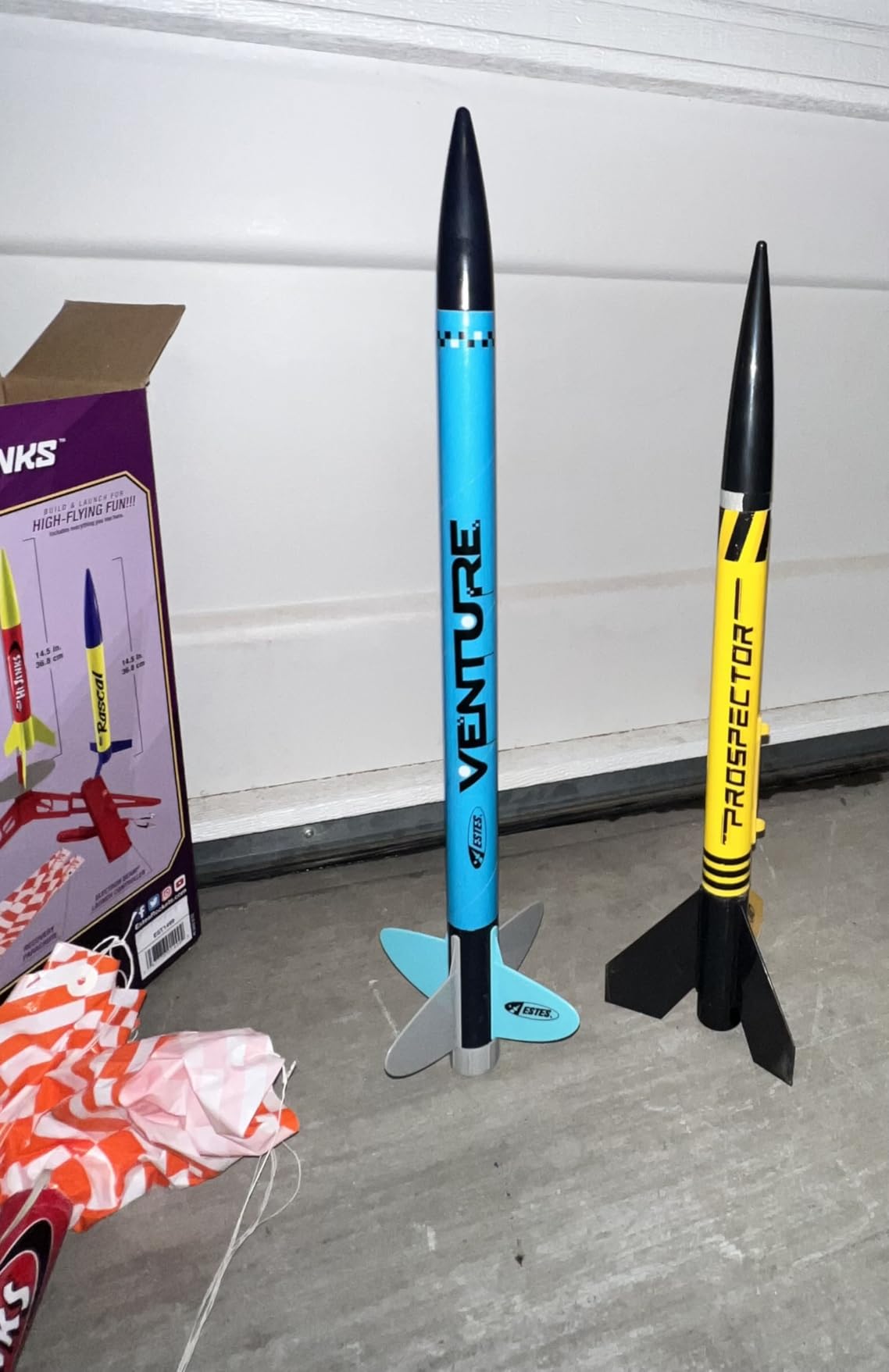
Flight performance is good. The Venture and Prospector both reach approximately 1,000 feet with C6-5 engines. The recovery system is standard Estes parachute deployment, and both rockets recovered cleanly in our tests. The slightly heavier weight compared to the Alpha III means they do not drift as much in wind.
The low review count is a concern. With only 12 reviews at the time of testing, it is hard to judge long-term reliability. Early feedback is positive, but the Pathfinder has not been stress-tested by thousands of users like the Tandem X or Alpha III. I would recommend this as a second kit rather than a first purchase.
Assembly Time and Skill Level Required
The Pathfinder is best for kids who have already built one or two rockets and want more involvement. The glue-required assembly teaches real model-building skills. Younger children will need an adult to handle the glue and alignment, while teens can manage the build independently.
The 1-2 hour build time per rocket is realistic. You cannot rush the glue drying, so plan for two sessions if you want to build both rockets in one weekend. The reward is a pair of rockets that look more custom than the pre-painted starter options. My daughter was proud of the finished result.
Engine Compatibility and Cost Per Flight
Both rockets accept A8-3, B6-4, and C6-5 engines. The A motors are perfect for small fields and first flights. The C motors deliver the full 1,000-foot experience. I recommend starting with B6-4 engines for a balanced mix of altitude and easy recovery.
Because you get two rockets, your engine costs double per launch day. Flying both rockets twice consumes eight engines. Bulk buying is essential here. The launch pad and controller are reusable, so your ongoing cost is just engines and wadding. Over a full season, that makes the Pathfinder a decent value.
Buying Guide: How to Choose the Right Estes Starter Kits?
Buying your first model rocket kit can feel confusing. Engine codes, recovery systems, and launch equipment all add variables. Our team has boiled the decision down to five factors that matter most based on months of testing and feedback from real users.
Assembly Difficulty and Build Time
Ready-to-fly kits like the Rascal and Hijinks or the Riptide require almost no building. You attach the parachute and load the engine. These are ideal for young kids or anyone who wants to launch immediately. Assembly time is under 10 minutes.
Easy assembly kits like the Alpha III and Journey take 30 to 60 minutes. You will glue fins, attach decals, and install the recovery system. These kits teach basic construction skills without overwhelming beginners. Most 10-year-olds can handle this level with adult supervision.
Intermediate kits like the Pathfinder require more patience. Glue drying time extends the build to 1-2 hours per rocket. These are better for second or third rockets after you have mastered the basics. The finished product looks more impressive and flies higher.
Engine Compatibility and Ongoing Costs
Every rocket lists compatible engine codes on the packaging. A8-3 motors are low power and good for small fields. C6-5 and C6-7 motors deliver maximum altitude but require more open space. Check your local park size before buying high-power engines.
The cost per flight is typically three to five dollars for the engine and wadding. Over a summer of regular launches, that adds up. We strongly recommend buying Estes rocket engine bulk packs to cut costs. Some advanced flyers also invest in electronic launch controllers for better ignition reliability.
Launch Equipment and Safety
Most starter kits include the Porta-Pad II launch pad and the Electron Beam Launch Controller. These are functional but basic. The launch rod is three pieces that screw together, and it can wobble in wind. If you plan to launch frequently, a sturdier pad is worth considering.
The controller requires a 9V battery and AA batteries for the launch system. Always use fresh alkaline batteries. Rechargeables and old batteries cause the most common ignition failures. Keep a spare 9V in your launch kit. The safety key is essential, so never bypass it or let children handle the controller unsupervised.
Recovery System and Reusability
Parachute recovery is standard on most Estes kits. The rocket ejects the nose cone at apogee, and a small explosive charge deploys the chute. Recovery wadding protects the chute from the heat. Without proper wadding, the parachute melts or fails to open.
Replacement parachutes and shock cords are inexpensive. If you fly often, stock up on recovery supplies. You can also upgrade to better model rocket recovery systems as you advance. Some experienced builders add dual deployment or streamer recovery for faster descents.
Age Recommendations and Adult Supervision
Estes rates most starter kits for ages 10 and up. That is a safety guideline, not a hard rule. Mature 8-year-olds can participate with close adult help. Teenagers can often build and launch independently after the first supervised flight.
Adult supervision is always required for engine installation and launch. The engines contain flammable propellant and should be treated like fireworks. Never launch near dry grass, buildings, or power lines. Follow the National Association of Rocketry safety code, and always recover the rocket before reloading.
Frequently Asked Questions
What are the best model rocket kits for beginners?
The best beginner kits include the Estes Rocket Science Starter Set for its complete package, the Tandem-X for value with two rockets, and the Alpha III for classic simplicity. Look for kits that include a launch pad and controller.
What is the best Estes rocket?
The Estes Alpha III is the best-selling beginner rocket of all time, but the Rocket Science Starter Set offers the most complete experience with engines and an altitude tracker included. Your choice depends on whether you want immediate flight or a classic build.
Do Estes starter kits include engines?
Most Estes starter kits do not include engines. The Rocket Science Starter Set and the Space Corps Centurion are exceptions that include motors in the box. Always check the product description before ordering so you are not stuck waiting for engines to arrive.
What rocket toys are best for beginners?
Ready-to-fly kits like the Rascal and Hijinks or the Riptide are best for absolute beginners because they require no building. The Alpha III and Journey are excellent for beginners who want a simple 1-hour assembly experience before their first launch.
Is 3 or 4 fins better for a rocket?
Three fins are standard on most model rockets because they provide stable flight with less drag. Four fins can add stability in windy conditions but increase weight and drag slightly. For beginners, three fins are ideal and easier to align correctly during assembly.
Conclusion
The best Estes model rocket starter kits for 2026 combine reliable flight performance, reasonable assembly time, and honest value. The Rocket Science Starter Set remains our top recommendation because it includes engines and an altitude tracker. The Tandem X delivers unbeatable value with two rockets in one box. The Alpha III is the classic choice that has launched more hobbyists than any other kit.
No matter which kit you choose, remember that the real magic happens at the launch pad. The countdown, the smoke, and the parachute recovery create memories that last far longer than the flight itself. Grab a starter kit, pick up some engines, and head to the nearest open field. Your first launch is closer than you think.