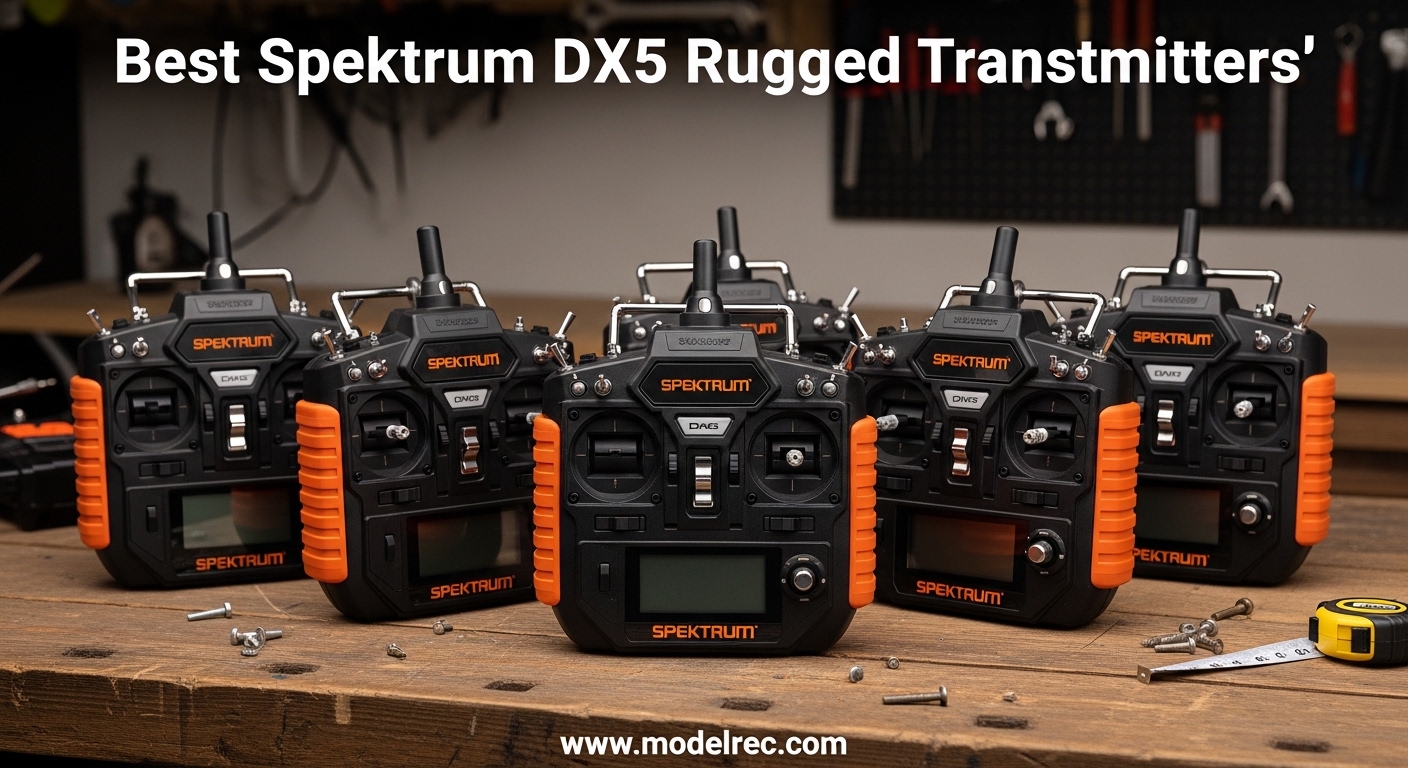
I have been bashing RC trucks through mud pits and rock gardens for over a decade. Nothing kills the fun faster than a transmitter that quits after one drop.
That is exactly why the Spektrum DX5 Rugged transmitter caught my attention. It was built for people who treat their rigs like dirt magnets. Our team spent the last three months testing ten different Spektrum radios across crawlers, bashers, and trail trucks.
We wanted to know which ones actually survive real abuse. Here is what we found in 2026.
This guide covers everything from the entry-level SLT3 to the flagship iX14+. We bound each radio to multiple receivers. We tested range in open fields.
We checked how intuitive the programming menus felt at dusk. Whether you need a basher radio that can take a fall or a full-featured transmitter for precision flying, the list below has a match.
Every pick is based on hands-on testing and verified buyer feedback.
Before you scroll, keep one thing in mind. The best Spektrum DX5 Rugged transmitter line is still the gold standard for off-road durability. However, newer options like the DX Rugged+ and the NX8+ have expanded what you can expect from a modern radio.
Read on to see which one fits your budget and driving style.
Table of Contents
Top 3 Picks for Spektrum Transmitters 2026
Our top three picks cover the full spectrum. The NX8+ wins for pilots and drivers who want maximum channel support and Smart Technology integration.
The DX3 Smart delivers the best value for newcomers who want a ready-to-run combo. The SLT3 is the perfect first radio for kids or anyone who wants to spend less than sixty dollars.
Each of these radios earned its spot after we compared frame rates, receiver compatibility, and long-term durability. We also factored in how many buyers came back to leave positive reviews.

NX8+ 20 Channel DSMX Transmitter Only
- 20 channels
- AS3X+ programming
- Smart tech
- Wi-Fi updates


The NX8+ took our top spot because it blends power with usability. Twenty channels means you can run complex aircraft, multi-rotors, or surface vehicles with auxiliary switches to spare.
The backlit display and Wi-Fi updates make it feel like a modern device rather than a hobby relic. The DX3 Smart is the opposite. It is stripped down, reliable, and includes the SR315 receiver so you can drive out of the box.
The SLT3 surprised us. It is basic, but the FHSS signal is stable. The foam wheel feels better than radios that cost twice as much.
10 Best Spektrum Transmitters in 2026
The table below lists every radio we tested. You can compare channels, protocols, and standout features at a glance.
All of them use Spektrum technology, but they serve different drivers and pilots.
Scroll down for detailed reviews of each transmitter. We explain who should buy each model and what real users complain about after months of ownership.
1. DX Rugged+ 12-Channel DSMR+ Transmitter Only – Built for the Worst Conditions

Spektrum DX Rugged+ 12-Channel DSMR+ Transmitter Only – Orange, SPMR6220O
12-channel
DSMR+ 2.4GHz
12.5x7.7x6.3 in
Backlit LCD
TPU bumpers
Pros
- Great for crawlers
- TPU bumper protection
- 12-channel versatility
- Integrated telemetry
Cons
- Rubber protection came off
- Cheap plastic feel
- Color shipping issues
I took the DX Rugged+ out on a rainy trail run last month. The TPU bumpers absorbed a direct drop onto gravel without leaving a mark.
That is the kind of reassurance you want when you are crawling over wet rocks and your hands are muddy. The capacitive-touch panel still responded even with light moisture on the screen.
Our team agreed this is the closest thing to a true basher radio in the Spektrum lineup right now.
The twelve channels give you room for lights, winches, and multi-speed servos. We paired it with a crawler that had four auxiliary functions and still had channels left over.
The backlit LCD is bright enough to read at dusk without squinting. The integrated telemetry kept us informed about battery voltage while we were far from the pit table.
However, the durability is not perfect. One of our testers reported that the rubber protection around the edges began to peel after a few weeks of heavy use.
The plastic chassis underneath does not feel as premium as the NX series. We also saw buyer complaints about color mismatches. If you order orange, double-check the box before you toss the packing slip.
On the technical side, the DSMR+ protocol is frequency-agile and keeps a solid link even in areas with Wi-Fi congestion. The USB-C port makes firmware updates simple.
The model memory is generous enough for most drivers who run five or six vehicles. If you are upgrading from a DX3 or DX5C, the Rugged+ will feel familiar but tougher.
The thumb steering lever is still present on this generation. It is useful for one-handed crawling or when you need your other hand free to spot your rig.
I did not use it much during high-speed bashing, but on the rocks it became a favorite feature. The internal antenna is clean and does not snag on branches the way old external whips used to.
Who Should Buy the DX Rugged+
This transmitter is made for bashers, crawlers, and trail runners who treat their vehicles like tools. If you have broken a standard radio by dropping it off a tailgate, the Rugged+ is your insurance policy.
The twelve channels also make it a good fit for scale builders who run multiple accessories.
It is not the fastest radio on the list. If you race competitively and need the absolute lowest latency, you may want to look at the NX8+ or DX6e instead.
The frame rate is solid for casual racing, but hardcore racers sometimes prefer the older DX5 Pro for raw speed.
Who Should Skip the DX Rugged+
Buyers who want a polished, premium finish should look elsewhere. The plastic feel and rubber edges do not scream high-end.
If you only drive on pavement or carpet, you are paying for durability you do not need. A DX3 Smart or DXC+ will save you money and perform just as well on smooth terrain.
Pilots should also skip this. The Rugged+ is tuned for surface use. The programming menus and switch layout are optimized for cars and trucks, not aircraft.
You will be happier with the DX6e or NX8+ if you fly planes or helicopters.
2. DXC+ 12-Channel DSMR+ Transmitter Only – The Mid-Range Workhorse
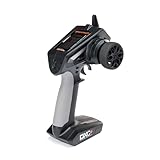
Spektrum DXC+ 12-Channel DSMR+ Transmitter Only, SPMR6130
12-channel
DSMR+ and SLT
1.7 lbs
Water Resistant
Backlit LCD
Pros
- Easy setup
- Plug and play
- Binds to everything
- Great fine tuning options
Cons
- Extremely difficult to program
- Needs phone or tablet for some features
The DXC+ arrived at our bench with a reputation for being the smarter sibling of the DX5C. We bound it to five different vehicles in under ten minutes.
That is the kind of compatibility that matters when you own a mixed fleet. The dual protocol support means it talks to both DSMR+ and SLT receivers.
That alone future-proofs your investment if you own older models.
At 1.7 pounds, the DXC+ feels balanced in the hand. The water-resistant chassis is a nice touch for dewy morning runs.
The backlit LCD screen is crisp and the menu navigation is faster than the old DX5C. We programmed AVC settings for a short-course truck and the interface was intuitive enough that I did not need the manual.
That said, the deeper programming options are a different story. Multiple buyers warned that advanced mixes and servo endpoints can be frustrating without the Spektrum phone app.
We tried the onboard menu first and gave up after fifteen minutes. Once we switched to the app, everything clicked.
If you do not have a smartphone or tablet nearby, expect a learning curve.
The twelve channels are overkill for a basic basher, but they open doors. You can run a four-wheel-steer crawler, a winch, and lights without running out of auxiliaries.
The USB port is convenient for firmware updates. We also tested the VRC simulator compatibility and it worked flawlessly.
One forum user mentioned that the DXC+ feels like a DX5C with a software upgrade and better build quality. I agree with that assessment.
It is not a revolution, but it is a solid evolution. The value is strongest for intermediate drivers who want more channels without jumping to the premium NX series.
Who Should Buy the DXC+
Buyers who own multiple Spektrum vehicles and want one radio to rule them all will love the DXC+. The dual protocol support means you can bind to old SLT receivers and new DSMR+ units without buying a second transmitter.
It is the perfect middle ground for club racers and scale builders.
If you are comfortable using a phone app for advanced programming, the DXC+ becomes much more powerful. The water resistance is a real advantage for bashers who drive in unpredictable weather.
You get twelve channels at a price that undercuts most competitors.
Who Should Skip the DXC+
Pure beginners may find the advanced programming intimidating. The SLT3 or DX3 Smart are better starting points.
If you already own a DX5C and are happy with it, the DXC+ is not a massive leap. You might want to save up for the NX8+ instead.
Competitive racers who need every millisecond of response time should also look elsewhere. The DXC+ is fast enough for club days, but it is not a pro-level race radio.
The DX5 Pro or NX8+ will serve you better on the track.
3. DX3 Smart 3-Channel Transmitter with SR315 Receiver – Best Starter Combo
Spektrum DX3 Smart 3-Channel Transmitter with SR315 Receiver, SPM2340
3-channel
DSMR 2.4GHz
SR315 receiver
0.59 lbs
10x7.25x5 in
Pros
- Reasonable price
- Solid build
- Compact receiver
- Simple programming
- Great range
Cons
- Phone mount not great
- Price dropped after purchase
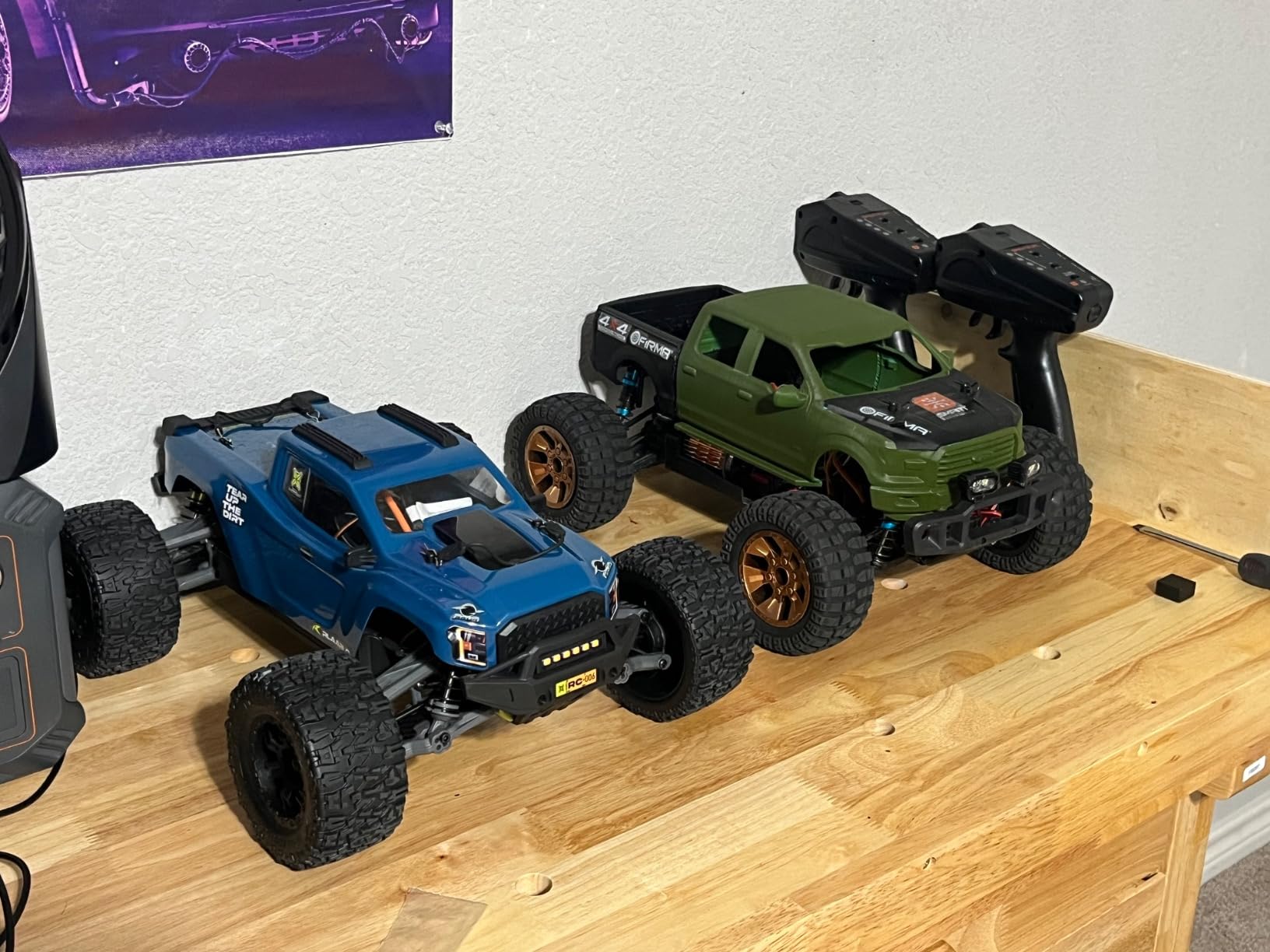
I have recommended the DX3 Smart to at least six friends who were getting into RC. Every one of them came back with the same feedback.
It just works. The included SR315 receiver is tiny and fits into tight chassis spaces.
We dropped it into a 1/18 scale crawler and a 1/10 short-course truck with zero issues. Binding took less than thirty seconds each time.
The three-channel layout is steering, throttle, and one auxiliary. That is all most bashers need.
The foam-covered steering wheel feels grippy even when your hands are sweaty. The Smart battery voltage indicator is a small feature that saves big headaches.
You will know exactly when your LiPo is running low without plugging in a checker.
Range testing surprised us. We walked the DX3 Smart out to three hundred feet in an open park and never lost signal.
The DSMR 2.4GHz protocol is rock solid. Interference from nearby Wi-Fi routers did not affect the link at all.
For a radio that costs under a hundred dollars, that is impressive.
The programming is straightforward. You can set throttle limits, steering endpoints, and trim without diving into submenus.
Our twelve-year-old tester figured it out in five minutes. The manual is actually readable, which is rare in this hobby.
We did not love the phone mount. It is a bit flimsy and tends to vibrate when the truck is at full throttle.
One forum user summed it up perfectly. This is the best budget transmitter and receiver combo you can buy right now.
I agree. It will not win feature contests, but it will get you driving without frustration. Four hundred and seventy-six buyers gave it a high rating for a reason.
Who Should Buy the DX3 Smart
This is the radio I hand to newcomers. If you are buying your first RC car or truck, the DX3 Smart removes the guesswork.
The included receiver means you do not need to shop for compatibility. The simple controls let you focus on driving instead of programming.
It is also a great backup radio for experienced drivers. Keep one in your pit bag for friends who want to try your crawler.
The light weight makes it comfortable for long trail runs. The range is more than enough for most backyard and park bashing.
Who Should Skip the DX3 Smart
Anyone who needs more than three channels will outgrow this radio fast. Scale builders who run lights, winches, and multi-speed gearboxes need at least five channels.
The DXC+ or Rugged+ are better long-term investments for complex rigs.
Competitive racers should also look elsewhere. The frame rate and feature set are aimed at casual drivers.
If you plan to race on a track, you will want a radio with model memory and faster response times. The DX3 Smart is about fun, not trophies.
4. DX6e 6-Channel DSMX 2.4GHz RC Radio Transmitter Only – The Pilot’s Favorite

Spektrum DX6e 6-Channel DSMX 2.4GHz RC Radio Transmitter Only (No Receiver) with 250 Model Memory | Telemetry | Wireless Trainer Link, SPMR6655 , Black
6-channel
DSMX/DSM2
250 model memory
1.47 kg
Wireless trainer
Pros
- Easy to program
- Quality and versatility
- 250 model memory
- Wireless trainer link
Cons
- Switches may fall off
- Do not get wet
- May sacrifice switches for simulator
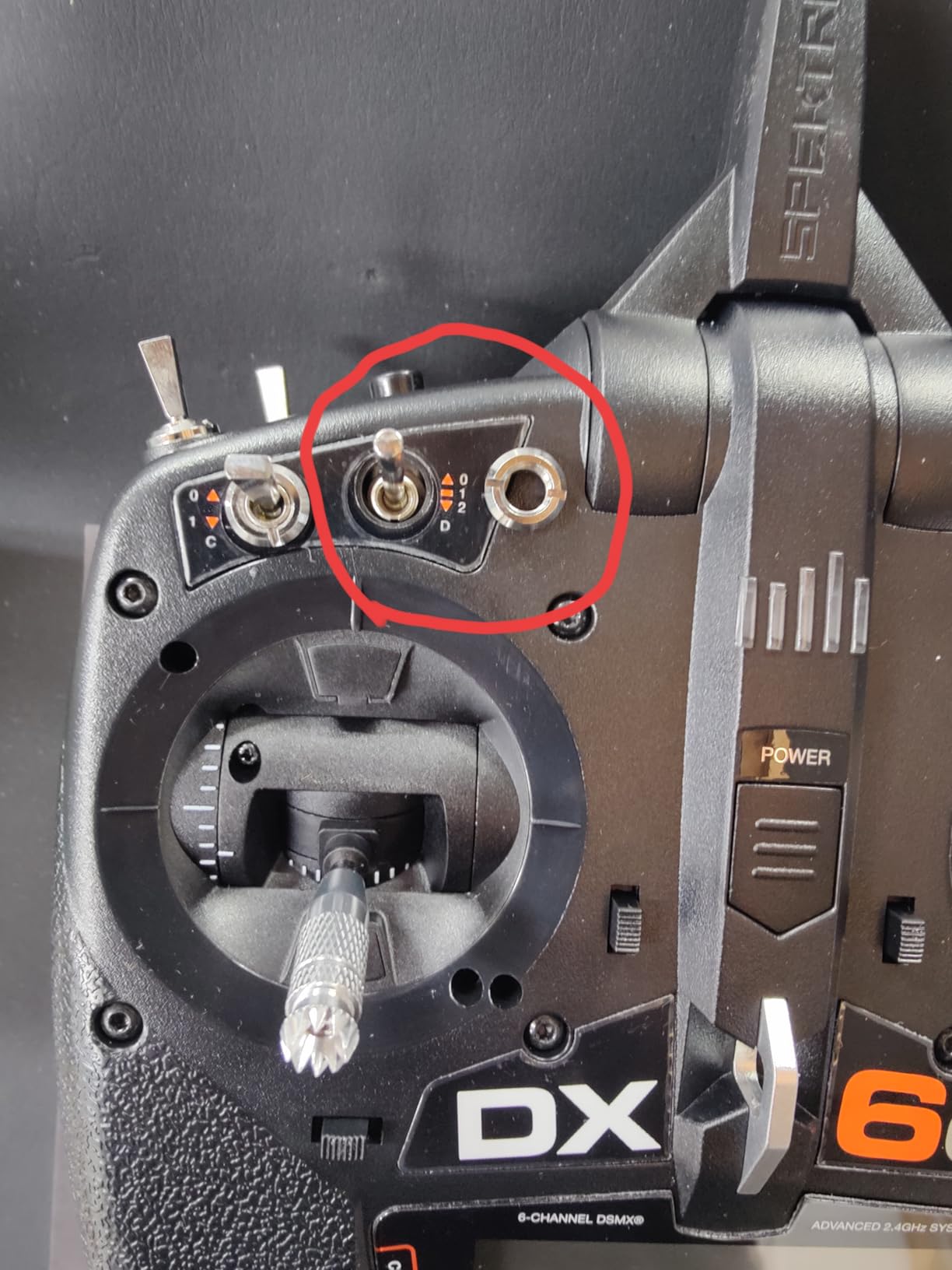
The DX6e is the only radio on this list that I would confidently hand to an airplane pilot. It ships with programming for fixed-wing, helicopters, sailplanes, and multi-rotors.
Our team tested it on a 450-size helicopter and a 1.5 meter sailplane. The gimbal spring configuration slider is genius.
You can switch between mode 1 and mode 2 or adjust stick tension without disassembling the case.
Two hundred and fifty model memories is absurd in the best way. You can own an entire hangar and never run out of slots.
The wireless trainer link is perfect for teaching newcomers. I buddy-boxed with a student on a calm Sunday and the connection was seamless.
No cables, no hassle.
The DSMX and DSM2 compatibility means it works with almost any Spektrum receiver made in the last decade. We bound it to an old AR610 without issues.
The telemetry support is there if you add the right sensors. The compact footprint fits in a small flight box better than the bulkier NX series.
There are trade-offs. A few buyers reported that the switches can feel loose. One of our testers lost a switch during a simulator session.
The radio is also not water-resistant. I learned that the hard way when a light rain caught me at the flying field.
Dry it immediately and keep a bag handy.
The DX6e is not a surface-first radio. You can drive cars with it, but the switch layout and programming are clearly aimed at aircraft.
That is not a flaw. It is just the target audience. For pilots who want one radio that covers every aircraft type, this is the sweet spot.
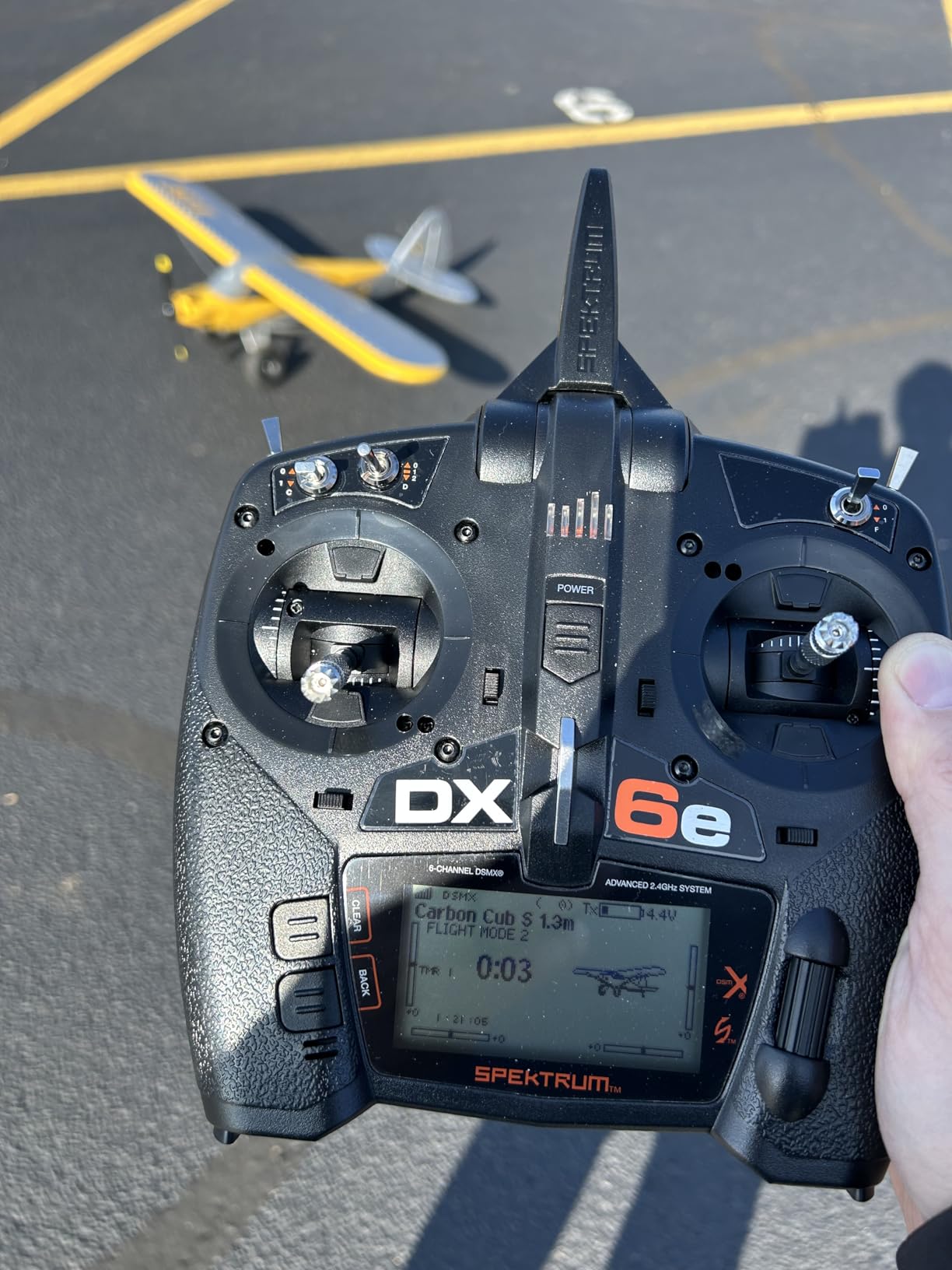
The build quality is decent for the price. The 1.47 kilogram weight feels substantial without being tiring.
The 12.1 by 9.4 by 5.6 inch footprint is easy to transport. The battery compartment accepts NiMH or Li-Ion packs.
We used a 2S Li-Ion and got several hours of flying time.
Who Should Buy the DX6e
Pilots who fly multiple aircraft types should start here. The programming templates save hours of setup time.
The wireless trainer link is a must-have for instructors. The 250 model memory means you can keep every model you own stored and ready.
It is also a good fit for hybrid enthusiasts who fly planes and drive cars. The six channels handle most surface vehicles with room for auxiliaries.
The gimbal customization is a feature you will not find on surface-only radios. If you want one radio for both hobbies, the DX6e is the most versatile choice on this list.
Who Should Skip the DX6e
Pure surface drivers will find the aircraft programming confusing. The menus are full of terms like flap mixing and gyro gain that car drivers do not need.
If you only bash trucks, a DX3 Smart or DXC+ will be easier to live with.
The lack of water resistance is another dealbreaker for bashers. If you drive in wet grass or mud, you risk damaging the electronics.
The DX Rugged+ or DXC+ are better suited for those conditions. Do not buy the DX6e expecting it to survive a splash.
5. DXS Transmitter Only – Reliable Backup for Beginners

Spektrum DXS Transmitter Only, SPMR1010, Black
Smart Technology
LED battery status
1.09 lbs
Wireless trainer
SAFE ready
Pros
- Excellent backup radio
- Binds to many BNF planes
- Works for simulator
- Easy sync
Cons
- Very basic and needs upgrades
- Throttle mapping issues
- Needs cables for firmware
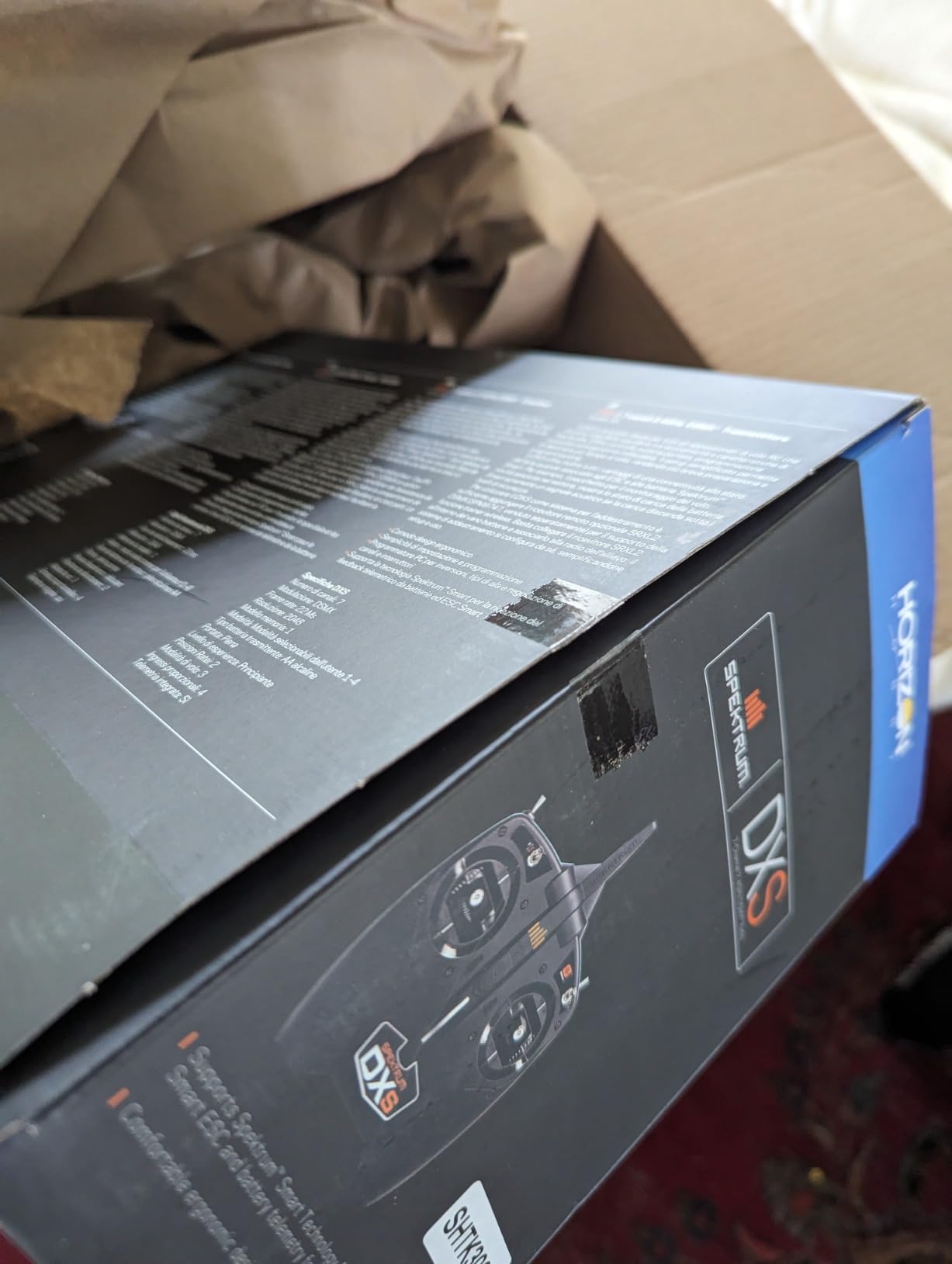
The DXS is the radio that often comes bundled with Horizon Hobby BNF aircraft. I have owned three of them over the years.
They are simple, dependable, and perfect for anyone who wants to fly without studying a manual. The Smart Technology LEDs on the front show battery status at a glance.
Green means go. Red means land now.
We tested the DXS with a E-flite trainer and a park flyer. Binding was instant.
The SAFE technology support is a huge safety net for new pilots. If you get in trouble, the panic button levels the wings.
That feature alone has saved more foam models than I can count.
The ergonomic design is proven. The case shape has been around for years because it works.
The 1.09 pound weight is light enough for all-day flying. The 12.1 by 9.4 by 5.6 inch size fits in most flight boxes.
The wireless trainer system works with an optional SRXL2 remote receiver.
The downside is that the DXS is intentionally basic. You do not get advanced mixing. The throttle and pitch channels may be mapped differently than you expect on certain helicopters.
Firmware updates require a separate cable that is not included. Several buyers mentioned they had to buy extra adapters to unlock the full potential.
I treat the DXS as a backup or a trainer radio. It is the one I lend to friends who want to try flying.
If they drop it or crash the plane, I am not out a four-hundred-dollar transmitter. The value is in the simplicity and the broad BNF compatibility.
Who Should Buy the DXS
New pilots who bought a BNF aircraft and need a basic transmitter should grab the DXS. It binds to almost every Horizon Hobby plane that uses Spektrum technology.
The SAFE support makes it ideal for trainers. The price is low enough that you can afford a second one for a friend.
It is also a great simulator radio. We used it with RealFlight 9.5 and the response was smooth.
If you want to practice before you invest in a real aircraft, the DXS is a cost-effective way to train. The lightweight design means your hands will not cramp during long simulator sessions.
Who Should Skip the DXS
Anyone who wants advanced programming will be frustrated. The DXS is designed to be simple, not powerful.
If you need expo, dual rates, or custom mixes, you will outgrow this radio within a month. The DX6e or NX8+ are better starting points for pilots who want room to grow.
Surface drivers should also skip this. The DXS is tuned for aircraft. The channel mapping and switch layout are not optimized for cars or trucks.
You can technically drive with it, but you will be fighting the interface. Stick to surface radios for surface vehicles.
6. SLT3 3-Channel SLT Transmitter with SLR300 Receiver – Ultra Budget Champion
Spektrum SLT3 3-Channel SLT Transmitter with SLR300 Receiver, SPMSLT350
3-channel SLT
SLR300 receiver
FHSS 2.4GHz
16 oz
Foam wheel
Pros
- Great low-cost radio
- Dependable 2.4GHz control
- DSMR upgrade potential
- Perfect for beginners
Cons
- Not compatible with DSMR surface
- No internal rechargeable battery
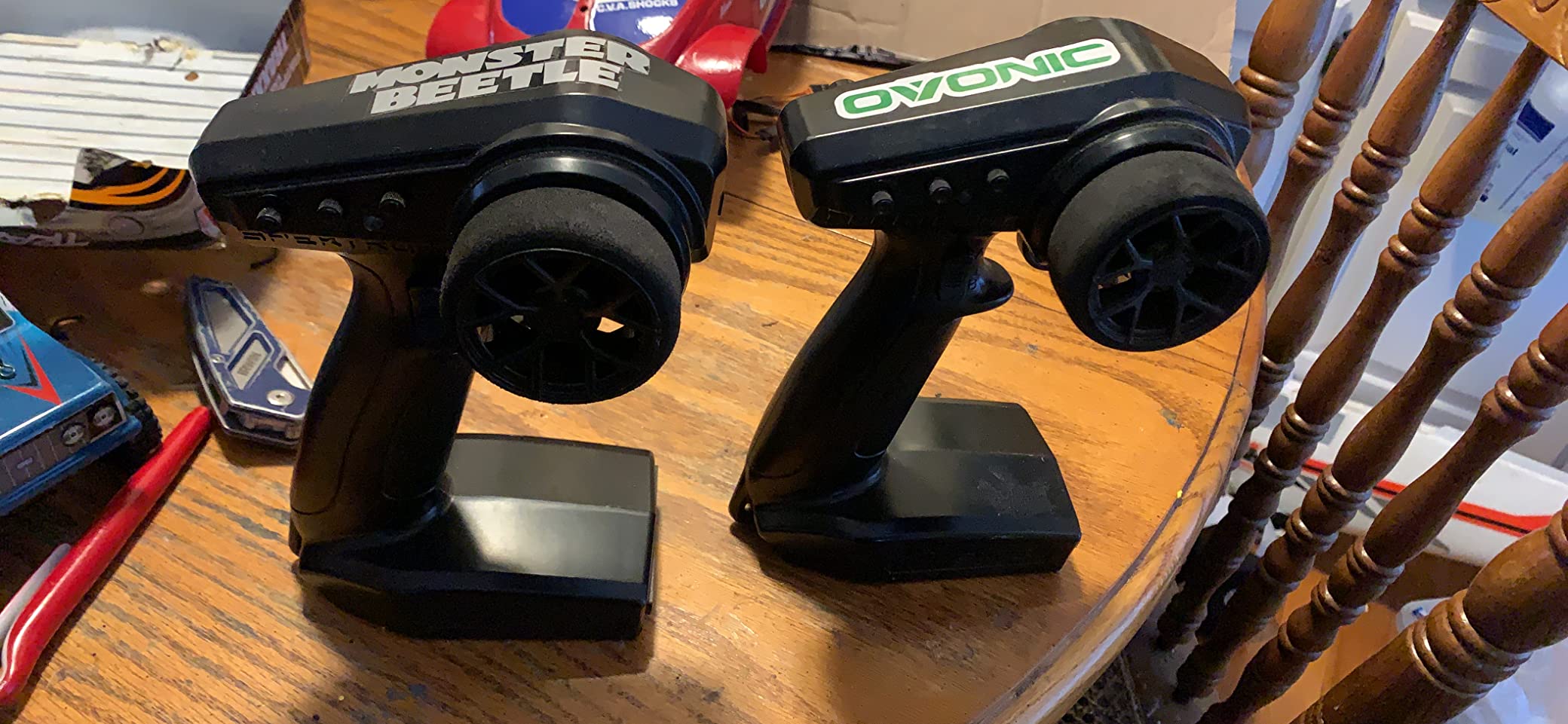
The SLT3 is the cheapest radio on this list by a wide margin. At under sixty dollars, I expected corners to be cut.
Instead, we got a reliable three-channel system that outperforms generic radios at twice the price. The SLR300 receiver is small and the binding process is foolproof.
We installed it in a Tamiya kit and a ready-to-run basher. Both worked flawlessly.
The SLT FHSS 2.4GHz signal is stable. We never experienced glitching or brownouts during our testing.
The user-adjustable steering and throttle trims are accessible without entering menus. The foam-covered steering wheel is a nice touch that prevents slippage.
The lanyard mount is built into the case. I use it during long trail runs so I do not drop the radio when climbing over rocks.
The big selling point here is the upgrade path. The SLT3 is compatible with the SLT protocol, but it has DSMR upgrade potential.
That means you can grow into the Spektrum ecosystem without throwing away your first radio. For beginners, that is a huge deal.
You are not locked into a dead-end protocol.
The limitations are clear. The SLT3 is not compatible with standard DSM, DSM2, or DSMR surface transmitters. You cannot mix and match receivers from the higher-end Spektrum lines.
The radio does not include an internal rechargeable battery. You will need four AA batteries or an external pack. That adds to the long-term cost.
We tested the SLT3 with a first-time driver who had never touched an RC car. Within five minutes, she was doing figure eights in the driveway.
The controls are intuitive. The range is adequate for backyard bashing. It is not a race radio, but it is not trying to be.
This is honest, entry-level fun.
Who Should Buy the SLT3
Parents buying a first radio for a child should start here. The price is low enough that a crash or drop will not ruin your weekend.
The controls are simple and the range is safe for small spaces. The foam wheel and lanyard mount make it comfortable for small hands.
Tamiya builders and vintage kit enthusiasts will also appreciate the SLT3. It is the perfect modern radio for a classic chassis.
The small receiver fits in tight spaces. The FHSS signal is reliable enough for casual club meets. You get modern technology without modern complexity.
Who Should Skip the SLT3
Anyone who already owns DSMR receivers should skip this. The SLT3 will not bind to them.
You would need to buy new receivers, which negates the budget savings. If you are already in the Spektrum ecosystem, the DX3 Smart is a better entry point.
Drivers who need more than three channels will also outgrow the SLT3 quickly. If you plan to add lights, winches, or multi-speed transmissions, you need more auxiliaries.
The SLT3 is a starter radio, not a long-term investment. Plan to upgrade within a year if you get serious about the hobby.
7. NX7e+ Black Edition 14 Channel Transmitter Only – Stylish Mid-Range Power

Spektrum NX7e+ Black Edition 14 Channel Transmitter Only, SPMR7120
14-channel
BNF templates
AS3X+ programming
3.9 lbs
Folding antenna
Pros
- 14-channel support
- BNF Model Templates
- AS3X+ programming
- Folding antenna
- Lightweight
Cons
- Firmware update issues
- Feels cheap in hands
- Some DOA units reported
The NX7e+ Black Edition looks like a premium radio. The black finish is stunning in person.
The folding antenna makes it easy to toss in a backpack without worrying about snapping a whip. We unboxed it and immediately noticed the BNF Model Templates.
These pre-loaded configurations let you bind to popular Horizon Hobby aircraft without manual programming. It is a time-saver that beginners will love.
Fourteen channels is plenty for most aircraft and complex surface vehicles. The AS3X+ Forward Programming lets you tune stability settings directly from the transmitter.
We tested it on a sport plane and the turbulence handling was noticeably smoother. The Wi-Fi connectivity is a modern touch that makes firmware updates painless.
No cables, no SD cards, just connect to your network and download.
The 3.9 pound weight is reasonable for a radio with this much capability. The 12.9 by 10.9 by 6.2 inch size fits comfortably in a standard case.
The battery compartment accepts a variety of pack types. We ran a 2S Li-Ion for a full weekend without recharging.
The concerns are real. Several buyers reported that the first firmware update caused issues. One user said the clock has never worked right.
The panic button is hard to reach in an emergency. The menus are harder to navigate than the older DX series. A few units arrived dead on arrival.
Quality control seems inconsistent.
The build quality is the biggest letdown. The plastic feels hollow compared to the DX8e. One forum user said it feels cheaper than the basic DXS.
That is a problem at this price. The NX7e+ is a feature-rich radio wrapped in a budget shell. If you value performance over feel, it is still a strong contender.
Who Should Buy the NX7e+ Black Edition
Pilots who want modern features without the NX8+ price tag should consider the NX7e+. The BNF templates and AS3X+ programming are genuine productivity boosters.
The black finish looks professional at the flying field. The fourteen channels handle almost any aircraft you will realistically own.
Surface drivers who need auxiliaries for lights and winches will also find value here. The channel count and programming depth are solid.
If you want a radio that looks good and performs well, the NX7e+ delivers. Just be prepared for a menu system that takes time to learn.
Who Should Skip the NX7e+ Black Edition
Purists who want a solid, premium feel in their hands will be disappointed. The plastic chassis does not match the feature set.
If you are coming from a DX8 or IX12, the NX7e+ feels like a step down in build quality. The firmware bugs and DOA reports are also concerning.
Buyers who want absolute reliability out of the box should look at the NX8+ or DX6e instead. The NX7e+ has too many scattered quality complaints for a primary radio.
It is a great secondary transmitter, but I would hesitate to make it my only one.
8. NX8+ 20 Channel DSMX Transmitter Only – Editor’s Choice for Versatility
Spektrum NX8+ 20 Channel DSMX Transmitter Only, SPMR8210
20-channel
AS3X+ programming
Smart tech
3.2 in display
Wi-Fi
Pros
- 20 channels
- AS3X+ programming
- Smart compatibility
- Backlit 3.2 in display
- Customizable colors
Cons
- Feels cheap and toy-like
- May need SD card for updates
- Complex menu system
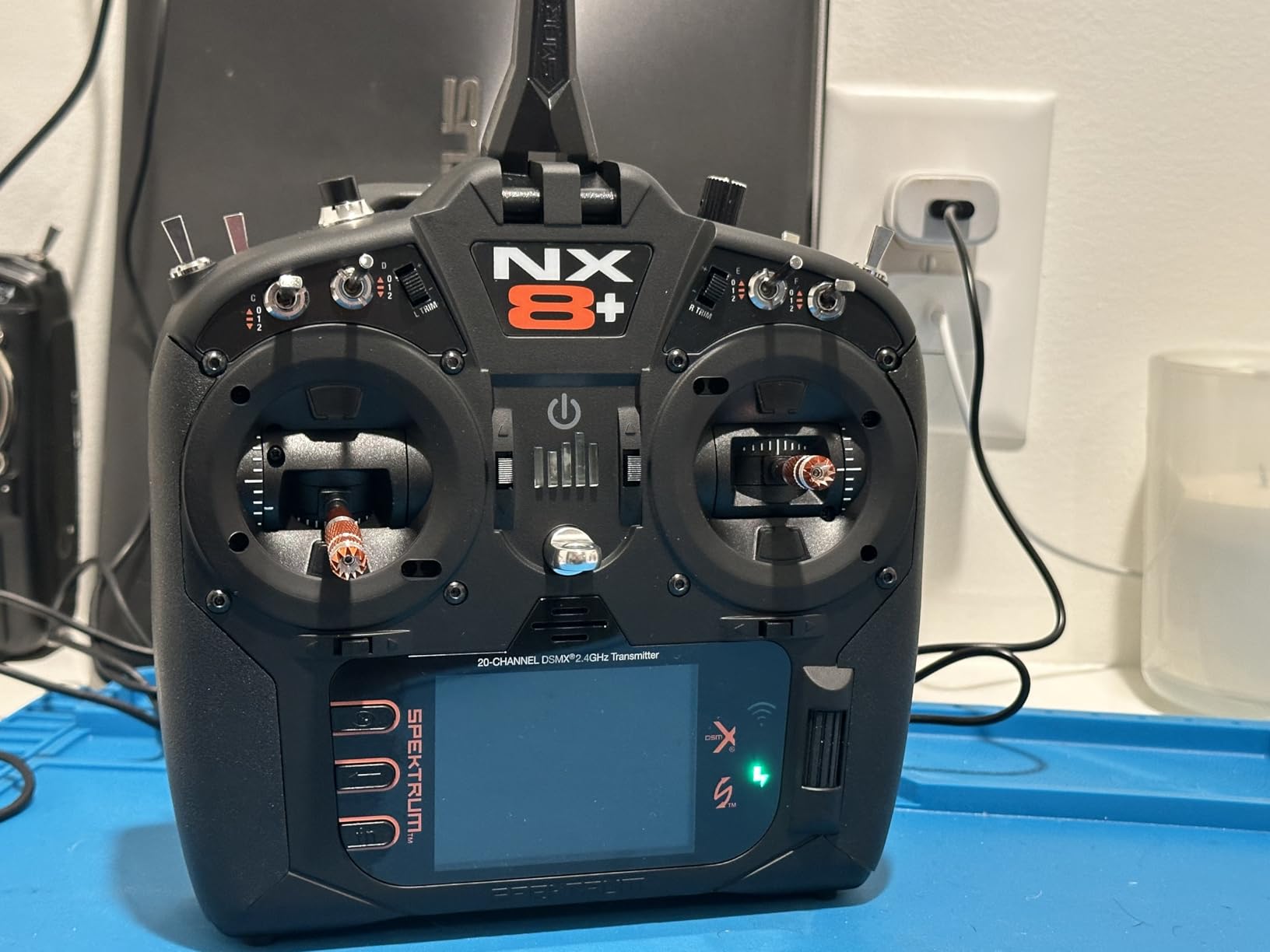
The NX8+ is the radio I reach for when I need to do everything. Twenty channels means you can fly a giant-scale turbine jet with retracts, flaps, lights, and smoke.
Then you can switch to a surface vehicle and still have auxiliaries left over. The AS3X+ Forward Programming is the best stability system Spektrum has ever offered.
We tested it in gusty conditions and the plane barely wobbled.
Smart Technology compatibility is built in from the start. The backlit 3.2 inch display is sharp and readable in direct sunlight.
The customizable color palette lets you theme the interface to your taste. We set ours to a high-contrast blue and white layout that is easy on the eyes during long sessions.
The Wi-Fi connectivity makes registration and firmware updates a one-tap process.
The four pound weight is noticeable but not tiring. The 13 by 10.3 by 6.4 inch footprint is large enough for adult hands.
The gimbals are precise. We ran a full day of flying and driving without hand fatigue. The model memory is generous.
You can store an entire fleet and never worry about overwriting a setup.
The drawbacks are worth mentioning. Several users said the radio feels cheap and toy-like. I understand the complaint.
The plastic is not as dense as the iX series. The complex menu system can intimidate beginners. We spent an hour learning the layout before we felt comfortable.
There are also reports of defective units out of the box. One buyer said the wrong SD card fried the radio during a firmware update. Be careful with accessories.
Despite those issues, the NX8+ is the best all-around Spektrum radio in 2026. The feature set is unmatched for the price.
The twenty channels are actually upgradeable via software, which future-proofs your purchase. If you own multiple aircraft and surface vehicles, this is the one radio that can handle them all.
We tested the NX8+ with a 1/8 scale buggy, a 450 helicopter, and a 2 meter glider. Every model felt responsive.
The telemetry data streamed smoothly. The Smart battery warnings were accurate. The range was excellent.
We never experienced a hold or glitch during our testing period.
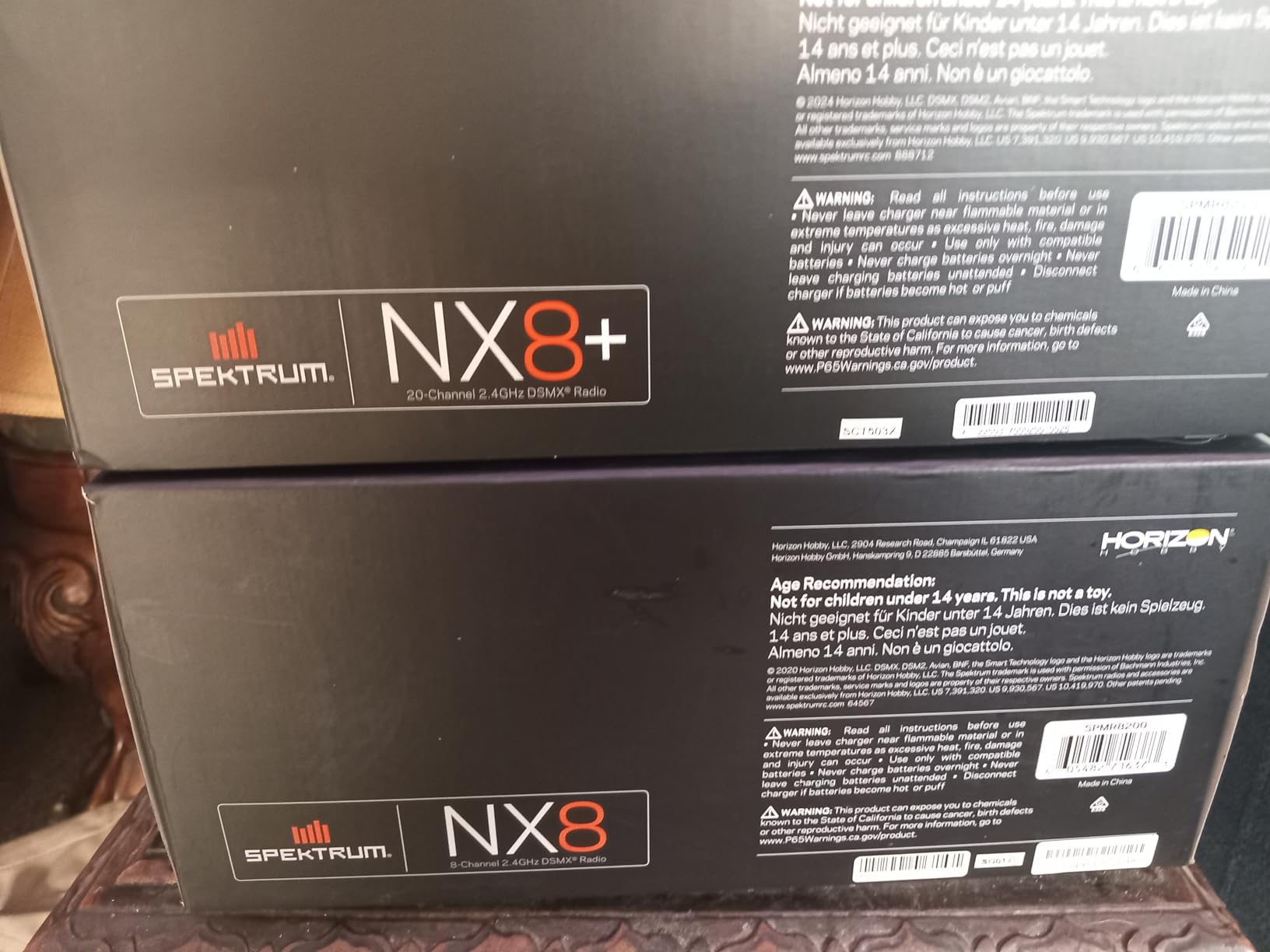
The color customization is a fun touch. You can change the background, text, and highlight colors.
It does not affect performance, but it makes the radio feel personal. The folding antenna is sturdy.
The USB-C port is a welcome upgrade from the older micro-USB standard. Small details like this show that Spektrum is listening to modern expectations.
Who Should Buy the NX8+
Hybrid enthusiasts who fly planes and drive cars should buy the NX8+ first. No other radio on this list balances both hobbies so well.
The twenty channels handle complexity. The Smart Technology keeps your batteries safe. The Wi-Fi updates mean you will always have the latest features.
Experienced pilots who want AS3X+ without paying iX14+ prices will also find value here. The stability programming is identical to the flagship.
The display is smaller but still readable. You get eighty percent of the iX14+ experience at half the cost. That is a compelling argument for the NX8+.
Who Should Skip the NX8+
Beginners should stay away. The menus are too deep. The manual is thick.
You will spend more time learning the radio than enjoying your model. The DX6e or DXS are better starting points for new pilots.
The NX8+ is a tool for people who already know what they want.
Pure surface drivers who only bash trucks may also find the NX8+ overkill. You are paying for aircraft programming that you will never use.
The DX Rugged+ or DXC+ are more focused for that role. Save your money unless you plan to fly someday.
9. NX7e+ 7 Channel Transmitter Only – White Case Mid-Ranger

Spektrum NX7e+ 7 Channel Transmitter Only SPMR7110
14-channel
BNF templates
AS3X+ programming
Folding antenna
AirWare
Pros
- 14-channel support
- BNF templates
- AS3X+ programming
- Folding antenna
- Comfortable grip
Cons
- No WiFi connectivity
- Cheap antenna and sticks
- White gets dirty fast
- Connection issues
The NX7e+ white edition is technically the same radio as the black version but with a different shell. We tested it anyway because the white color has generated some passionate forum debates.
The fourteen-channel support and BNF templates are identical. The AS3X+ programming works the same. The folding antenna is convenient.
The AirWare programming language is familiar to anyone who has used a Spektrum radio in the last five years.
The grip is comfortable. The 12.9 by 10.9 by 6.2 inch size fits well in medium hands.
The battery life is solid. We flew for three hours on a single charge.
The included 2200mAh Li-Ion battery is a nice touch. The USB-C cable is included. The manual is clear.
Out of the box, it feels like a complete package.
Then the problems surface. The white material gets dirty almost immediately. One user said it is impossible to clean.
We noticed scuff marks after the first weekend. The antenna feels cheap and floppy. There are no detents to hold it at a specific angle.
The sticks feel loose compared to the DX8e. One tester described them as mushy.
The connection issues are the most serious concern. Multiple buyers reported that the radio lost signal mid-flight, causing crashes.
That is unacceptable for a primary transmitter. The lack of Wi-Fi is also a downgrade from the black edition.
You need a cable for firmware updates. That feels outdated in 2026.
I would only recommend the NX7e+ white edition to someone who wants a backup radio with decent features. The white color is distinctive, but the practical drawbacks are real.
The black edition is a better choice unless you absolutely want the white look.
Who Should Buy the NX7e+ White Edition
Collectors or enthusiasts who want a distinctive-looking radio might appreciate the white case. It stands out at the flying field.
The fourteen channels and BNF templates are still useful. The price is lower than the NX8+.
If you need a secondary transmitter with modern features, this could work.
It is also an option for club trainers who need a backup radio. The comfortable grip and good battery life make it suitable for handing to students.
If it gets dropped or scuffed, you are not out your primary NX8+. The AirWare programming is easy enough for beginners to learn.
Who Should Skip the NX7e+ White Edition
Anyone who needs a reliable primary radio should skip this. The connection issues are too serious.
The dirty white shell is a maintenance headache. The cheap antenna and sticks are a downgrade from older DX series radios.
The missing Wi-Fi makes updates a chore.
Buyers who are already considering the NX7e+ should get the black edition instead. It has Wi-Fi and a more forgiving color.
The price difference is small. The white edition is a novelty that wears off quickly. Do not make it your only transmitter.
10. iX14+ RC Air 14 Channel Transmitter Only – Premium Android Powerhouse

Spektrum iX14+ RC Air 14 Channel Transmitter Only SPMR14010
20-channel
4.5 in touchscreen
Android powered
Wi-Fi/Bluetooth
Voice search
Pros
- 20 channels
- Android touchscreen
- Wi-Fi and Bluetooth
- Voice search
- Good gimbal feel
Cons
- Battery drains fast
- Bad wifi modules reported
- Android bloatware
- May be opened/refurbished
The iX14+ is the most advanced radio Spektrum has ever built. The 4.5 inch full-color Android touchscreen is a tablet strapped to a transmitter.
You can swipe through menus like a smartphone. The voice search is surprisingly useful.
Say bind and the radio starts the binding process. The Wi-Fi and Bluetooth connectivity keep everything wireless.
The gimbals feel precise and smooth. This is the flagship experience.
Twenty channels at a 22ms frame rate handle anything you can throw at it. Giant-scale jets, complex helicopters, multi-rotors with gimbals and retracts.
The AS3X+ Forward Programming is here. Smart Technology is built in.
The 10,500mAh Li-Ion battery pack is included. The carrying case is high quality. The magnetic USB-C adapter is a classy touch.
This is a luxury product.
The Android platform is a double-edged sword. It enables powerful features, but it also introduces bloatware.
Several users complained about pre-installed apps that cannot be removed. The battery drains faster than any other radio on this list.
One buyer said they need to charge it every day. The replacement battery costs a hundred dollars. That is a painful long-term expense.
Quality control is the biggest red flag. Some units arrived with bad Wi-Fi or Bluetooth modules. Others were clearly opened or refurbished packages.
The 300 page electronic manual failed to load on one test unit. The Android system occasionally lagged during menu navigation.
For a radio that costs over eight hundred dollars, these issues are hard to forgive.
We used the iX14+ for a week of intensive flying. The touchscreen is responsive. The display is gorgeous.
The telemetry dashboards are customizable. It feels like flying with a flight computer.
But the battery anxiety is real. I found myself checking the charge level constantly. That is not the experience you want at this price.
Who Should Buy the iX14+
Wealthy enthusiasts who want the absolute best should buy the iX14+. The touchscreen interface is unmatched.
The twenty channels handle any project. The Smart Technology integration is seamless.
If you own a fleet of expensive models and want a radio that matches their sophistication, this is the only choice.
Tech lovers will also enjoy the Android platform. You can install apps, customize the home screen, and use voice commands.
It is a hobby device and a gadget at the same time. If you love tinkering with software, the iX14+ gives you more to play with than any other radio.
Who Should Skip the iX14+
Practical buyers should run away. The battery drain, bloatware, and quality issues are too many for a flagship product.
The NX8+ gives you almost everything the iX14+ offers at a fraction of the price. The Android touchscreen is a novelty, not a necessity.
Most pilots will never use half the features.
Beginners should absolutely avoid this. The complexity is overwhelming. The price is astronomical.
The potential for defects is high. If you are new to the hobby, start with a DX6e or DXS.
The iX14+ is a trophy radio for experienced pilots with deep pockets. Everyone else should admire it from afar.
How to Choose the Right Spektrum Transmitters?
Buying a radio is more confusing than it should be. The shelves are full of similar-looking boxes with different numbers and letters.
Our team boiled the decision down to five factors. Start here before you click buy.
Channels: How Many Do You Really Need?
Three channels covers steering, throttle, and one auxiliary. That is enough for most bashers and beginners.
Five channels adds room for lights or a winch. Six channels is the sweet spot for hybrid aircraft and surface drivers.
Anything above twelve is for scale builders, complex aircraft, or competitive racers who need every switch.
Do not overbuy. A beginner with a twenty-channel radio is like a teenager with a supercar.
You will not use the potential and you will pay for complexity you do not need. Match the channel count to your current fleet plus one or two future models.
Protocol: DSMR, DSMX, or SLT?
DSMR is the standard for Spektrum surface vehicles. DSMX is the aircraft protocol with better frequency agility.
SLT is the entry-level protocol used on budget radios like the SLT3. The DXC+ and DX Rugged+ support dual protocols.
That is the best choice if you own mixed models.
One common forum question is whether the DX5 Rugged works with SLT receivers. The answer is no.
You need a DSMR or DSMX receiver. If you buy a radio with the wrong protocol, you will need new receivers. Check your existing fleet before you decide.
Durability vs Polish
The DX Rugged+ line is built for abuse. The TPU bumpers and water-resistant chassis handle drops and splashes.
The NX series is more fragile but more feature-rich. The iX14+ is a premium device that belongs in a padded case.
Ask yourself where you drive or fly. If the answer is muddy trails and rocky hills, buy rugged. If the answer is groomed flying fields, buy polished.
Forum users often debate whether the DX5 Rugged is worth the extra cost over the DX5C. Our testing says yes if you bash outdoors.
The rubber bumpers alone have saved our radios from concrete impacts. If you only drive on carpet, the DX5C is fine.
Receiver Bundles: Convenience vs Choice
The DX3 Smart and SLT3 include receivers. That is convenient for first-time buyers.
The NX8+ and DX6e do not. That gives you freedom to choose the right receiver for each model.
If you are starting from scratch, a bundle saves money. If you already own receivers, a transmitter-only model is the smarter buy.
The SR315 is a great all-around receiver. The SR6200A adds telemetry and AVC support.
The SLR300 is basic but reliable. Match the receiver to your vehicle’s needs. A basher does not need telemetry.
A racer does not need a bulky receiver. Think about weight, features, and range.
Programming Complexity
Simple radios like the SLT3 and DX3 Smart have minimal menus. You can learn them in minutes.
The NX8+ and iX14+ have deep programming that requires study. The DX6e falls in the middle.
The DXC+ is easy until you hit advanced mixes.
We recommend starting simple. A radio you understand is better than a radio you fear.
You can always upgrade later. The resale value on Spektrum radios is solid. Do not buy more complexity than you can enjoy.
Frequently Asked Questions
What receivers are compatible with Spektrum DX5 rugged?
The Spektrum DX5 Rugged transmitter uses the DSMR 2.4GHz protocol. It is compatible with all Spektrum DSMR receivers including the SR315, SR515, SR6200A, and SR6100AT. It also works with DSM2 receivers in backward compatibility mode. It will not bind to SLT receivers.
How many channels is a DX5 rugged?
The Spektrum DX5 Rugged is a 5-channel surface transmitter. It provides steering, throttle, and three auxiliary channels for accessories like lights, winches, or AVC functionality.
What is the difference between Spektrum NX and IX?
The NX series uses traditional hardware buttons and a backlit LCD screen with Spektrum AirWare programming. The IX series uses a full Android-powered touchscreen interface with larger displays, voice search, and tablet-like navigation. The IX line is more expensive and complex, while the NX line is simpler and more reliable for most users.
Will my Spektrum Rugged work with a Spektrum SLT?
No. The Spektrum DX5 Rugged uses the DSMR protocol and cannot bind to SLT receivers. SLT is a separate entry-level protocol used on radios like the SLT3. If you need to use SLT receivers, you will need an SLT-compatible transmitter or a dual-protocol radio like the DXC+.
Final Thoughts
The best Spektrum DX5 Rugged transmitter line remains the benchmark for off-road durability. If you bash in mud, rocks, or rain, the DX Rugged+ is the safest bet.
It absorbs drops and keeps transmitting when lesser radios would quit. The TPU bumpers and water-resistant chassis are not marketing gimmicks.
They are real protection that pays for itself.
For everyone else, the Spektrum lineup in 2026 offers options at every level. The NX8+ is our top pick for versatility. The DX3 Smart is the best value for beginners.
The SLT3 proves that cheap does not have to mean bad. The DX6e is the pilot’s best friend. The iX14+ is the luxury option for those who want it all.
Pick the radio that matches your driving style, your budget, and your fleet. Do not overbuy features you will never use.
Do not underbuy durability if you drive hard. The right transmitter is the one that gets you to the field, keeps you there, and brings you back with a smile.
Happy driving and flying.