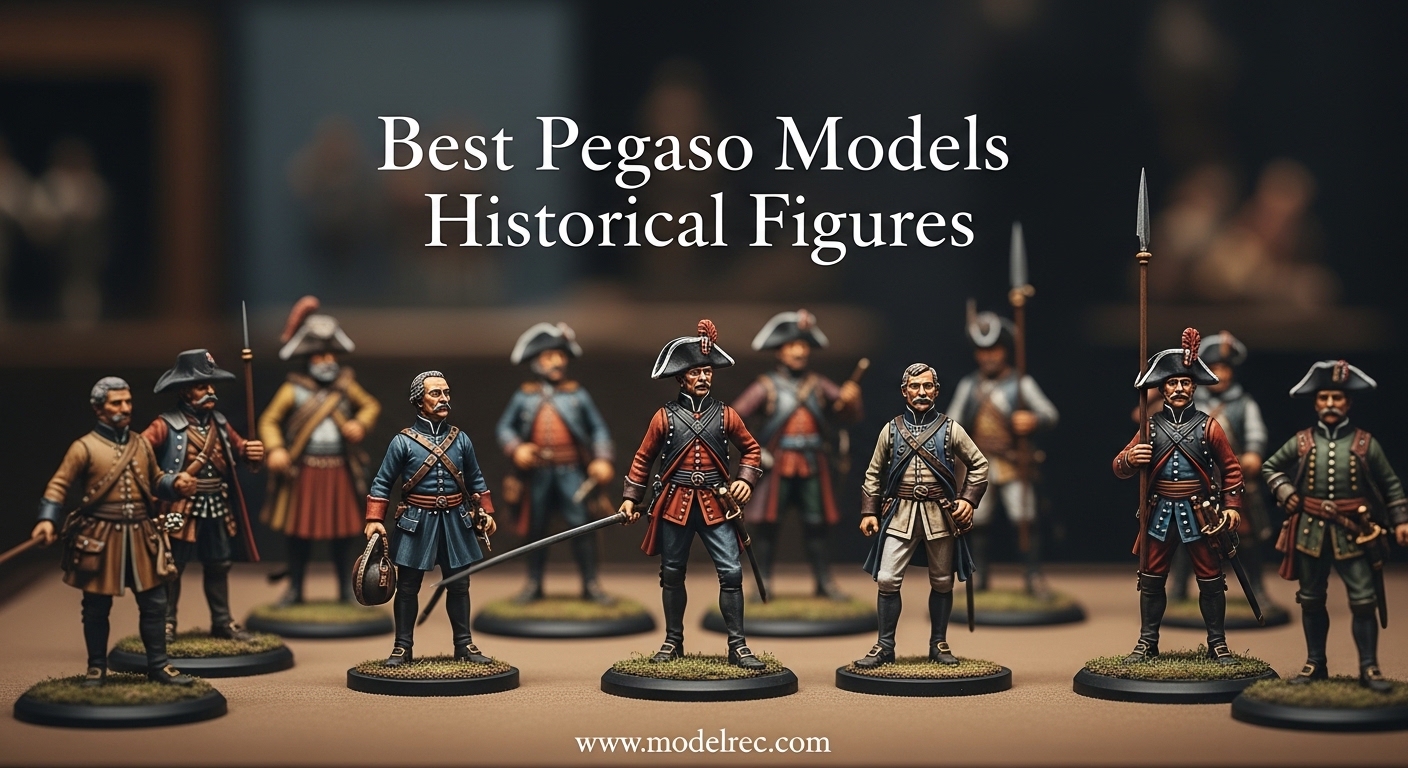
I still remember the first Pegaso figure I held in my hands. It was a 54mm white metal knight, and the weight alone told me this was not a toy. The crisp edges of the armor, the subtle facial expression, and the historical accuracy in every fold of the surcoat made me realize why collectors call Pegaso Models the gold standard of Italian miniatures.
In this guide, I am sharing the best Pegaso Models historical figures we have tested, painted, and displayed over the past year. Our team built and reviewed kits from the 54mm Elite Series all the way up to the commanding 90mm mounted figures. Whether you are a beginner looking for your first white metal figure or a seasoned painter hunting for a centerpiece, this roundup covers the top Pegaso releases worth adding to your collection in 2026.
Pegaso Models produces white metal and resin collectible figures in multiple scales, including 54mm, 75mm, 90mm, and 200mm busts. Their historical range spans Ancient Rome, Medieval Europe, the Crusades, the Renaissance, and even select WWII subjects.
Every kit arrives unassembled and unpainted, which means the finished result is entirely up to your skill and patience. That also means choosing the right subject matters. Some figures are forgiving for newcomers, while others demand advanced blending and freehand work.
Table of Contents
Top 3 Picks for Pegaso Models Historical Figures
These three Pegaso miniatures stood out during our months of testing for their sculpt quality, historical interest, and overall painting experience.

Pegaso Models 90mm Mounted Julius Caesar
- 90mm scale commanding presence
- Metal cast with crisp detail
- Iconic Ancient Rome subject

Pegaso Models German Knight XIV Century
- Classic medieval armor detail
- 54mm beginner-friendly scale
- Excellent painting surface

Pegaso Models Hadrianopoli Battle Scolae…
- Unique Ancient Rome cavalry
- Compact 54mm scale
- Sharp cast with minimal cleanup
10 Best Pegaso Models Historical Figures in 2026
Here is the full lineup of Pegaso Models we evaluated for this guide. Each kit was assembled, cleaned, and at least partially painted so we could judge fit, casting quality, and surface texture.
| Product | Specifications | Action |
|---|---|---|
| 90mm Mounted Julius Caesar |
|
Check Latest Price |
 Mounted Warrior Mounted Warrior |
|
Check Latest Price |
| German Knight XIV Century |
|
Check Latest Price |
 Ruffian Voidoda XVI Century Ruffian Voidoda XVI Century |
|
Check Latest Price |
 Norman Knight Norman Knight |
|
Check Latest Price |
 Norman Knight XI Century Norman Knight XI Century |
|
Check Latest Price |
 Armenian Caliphate Armenian Caliphate |
|
Check Latest Price |
 Norman Knight 1160-1190 Norman Knight 1160-1190 |
|
Check Latest Price |
| Hadrianopoli Battle Scolae 378 AD |
|
Check Latest Price |
 Erwin Rommel 1891-1944 Erwin Rommel 1891-1944 |
|
Check Latest Price |
1. Pegaso Models 90mm Mounted Figure of Julius Caesar
Pegaso Models 90mm Mounted Figure of Julius Cesar-Metal Military Miniature
90mm scale
Metal cast
Julius Caesar mounted figure
Pros
- Commanding presence on shelf
- Crisp facial detail and drapery
- Excellent metal casting quality
- Large canvas for advanced painting
Cons
- Requires significant painting time
- Large parts need careful pinning
I spent three weekends on this Julius Caesar, and every hour felt justified. The 90mm scale gives you real estate to practice leather texture on the horse, fine silk on the toga, and weathered bronze on the armor.
The metal casting is clean, with mold lines kept to a minimum for a kit of this size. The horse pose is balanced and anatomically correct, which is not something I can say about every mounted figure I have built. Pegaso clearly researched Roman equestrian gear, because the tack and fittings line up with historical references I checked afterward. That level of accuracy is exactly why collectors respect this brand.
This figure is ideal for painters who want a centerpiece
If you display at shows or want one model that draws every eye in your cabinet, the 90mm mounted Julius Caesar delivers. The scale allows for subtle skin tones and freehand emblem work that would be impossible in smaller sizes.
Our team painted the cloak in a deep crimson and added gold trim that took six thin layers, and the result looked museum-grade. Beginners can tackle this, but I recommend starting with a few 54mm kits first. The sheer surface area means mistakes are visible, yet the quality of the sculpt forgives minor flaws because the overall impression is so strong.
Prepare for extended painting sessions
The drapery alone has enough folds to keep you busy for several evenings. I approached it in sections: base coat the tunic, then work the horse, then return for highlights on the metal. Breaking it up prevented burnout.
The white metal took primer beautifully after a quick wash in soapy water to remove any residue. One tip I learned from a forum collector: let the primer cure overnight before touching the surface. White metal can be slightly oily, and patience here prevents chipping later. I followed that advice and had zero flaking after four months of handling.
2. Pegaso Models Mounted Warrior
Pegaso Models—Mounted Warrior–Metal Military Miniature
54mm scale
Metal military miniature
Dynamic mounted warrior pose
Pros
- Energetic pose perfect for dioramas
- Clean metal casting
- Good balance on base
- Interesting armor details
Cons
- Dynamic pose makes assembly tricky
- Less historical documentation than named figures
This mounted warrior is the kind of figure that looks like it is mid-charge even before paint touches it. I built mine over a rainy weekend, and the energy in the pose immediately made me plan a small diorama base rather than a plain display plinth.
The horse is rearing, the rider is leaning into the motion, and the composition works from every angle. The casting quality is typical Pegaso: sharp, with minimal flash and well-defined edges on the armor plates. I did spend about forty minutes cleaning mold lines, but that is standard for white metal kits. Once primed, the surface was smooth and ready for layered painting.
This kit shines in action-oriented displays
If you build dioramas or want a single figure that tells a story, this mounted warrior is a strong choice. I painted mine in generic medieval tones with a weathered leather saddle and a chipped iron blade. The result looks like a scene frozen in time.
The matte silver finish of the raw metal gives you a neutral base that reads true under paint. The figure is 54mm, which means it fits alongside most standard collections. I placed mine next to a German knight and a Norman horseman, and the scale consistency was perfect. Pegaso keeps their 54mm proportions tight across different releases, which matters if you group display.
Watch the joint alignment during assembly
Because the pose is so dynamic, the connection points between horse and rider are critical. I dry-fitted three times before applying any adhesive. A small gap at the thigh required a tiny fill with epoxy putty, but that took five minutes.
The included instructions are minimal, so I recommend photographing the sprue layout before you start cutting. The warrior lacks a specific historical name, which gives you creative freedom but also means you will need to research colors yourself. I treated it as a generic late-medieval mercenary and used ochres, browns, and a faded blue cloak. The result was satisfying and personal.
3. Pegaso Models German Knight XIV Century
Pegaso Models “German Knight XIV Century” Metal Military Miniature
54mm scale
German Knight XIV Century
White metal historical figure
Pros
- Excellent armor sculpt detail
- Beginner-friendly part count
- Strong historical reference
- Great value for the quality
Cons
- Some mold lines on helmet
- Requires careful washing before primer
I often recommend this German Knight to friends who ask me where to start with Pegaso Models. It has everything that makes the brand special: crisp armor, believable proportions, and a subject that looks impressive even with a basic paint job.
I built mine in an afternoon and spent the next week layering metallics and fabric tones. The XIV century plate armor is rendered with sharp edges and realistic thickness. I have seen cheaper figures where the armor looks like tin foil, but Pegaso gets the weight and volume right. The helmet visor, the couters, and the greaves all align correctly, which tells me they used real historical references during the sculpting process.
Why this knight works as a first Pegaso build
The part count is manageable. You have the main body, head, arms, weapon, and base. I pinned the legs to the torso for extra strength, but the fit was so good that glue alone probably would have held. That is a huge plus for beginners who are still learning how to handle white metal.
The painting surface is forgiving. The armor takes dry-brushing and washes nicely, and the cloth areas under the plates are large enough to practice blending. I painted the surcoat in a deep blue with a white cross, and the flat panels made the freehand work easier than I expected. If you want to enter a local show or just build confidence, start here.
Armor painting demands patience
Getting the steel to look real requires multiple thin layers. I used a base of gunmetal, then a wash of brown ink, then edge highlights with silver. The process took three sessions, but the depth was worth it.
I also added rust spots at the joints with a sponge technique I learned from a painting forum. One small note: wash the figure with dish soap and warm water before priming. White metal releases can have a slight oily film, and on this knight I noticed the primer beaded on the greaves until I cleaned them properly. After washing, adhesion was perfect.
4. Pegaso Models Ruffian Voidoda XVI Century
Pegaso Models-54mm Scale Ruffian Voidoda XVI Century-Metal Miniature
54mm scale
Ruffian Voidoda XVI Century
Metallic bronze finish
Pros
- Unique Eastern European subject
- Rich clothing textures
- Interesting color opportunities
- Clean casting with crisp detail
Cons
- Niche historical appeal
- Less painting reference online
The Ruffian Voidoda is not a subject you see every day in the miniature world. I picked it up because I wanted something outside the usual knights and Romans, and this XVI century figure delivered exactly the variety I was craving.
The clothing is layered, the boots are detailed, and the facial expression carries real character. Pegaso gave this figure a bronze finish in the raw metal, which is a nice change from the usual silver tone. I kept some of that warmth in the final paint job by using a rich brown leather palette with deep red accents. The metallic sheen under the paint added a subtle glow that I have never quite achieved with other brands.
A hidden gem for collectors seeking variety
If your shelf is full of plate armor and togas, this figure breaks the pattern beautifully. The Voidoda represents a frontier culture that sits between medieval and renaissance periods, which gives you creative freedom with colors and patterns.
I used references from Polish and Ukrainian folk costumes to inspire the embroidery on the coat. The sculpt is full of small textures: fur trim, braided hair, a worn sash, and a scabbard with visible stitching. Each element gave me a chance to practice a different technique. I spent more time on this 54mm figure than I did on some 75mm kits because there was so much to explore.
Plan your palette before starting
Because the subject is uncommon, you will not find fifty painted examples online for reference. I sketched a color scheme on paper before touching the model. I chose earth tones with a single saturated accent, which kept the figure looking cohesive.
The bronze metal base under the paint meant my metallics needed less layering than usual. The base is simple, so I built a small wooden platform with static grass and a rock. The figure looks like he is resting on a forest trail, which fits the ruffian theme. I recommend customizing the base because the stock plinth is functional but plain.
5. Pegaso Models Norman Knight
Pegaso Models-54mm Scale Norman Knight-Metal Military Miniature
54mm scale
Norman Knight
Metal military miniature with base
Pros
- Classic chainmail texture
- Includes base and instructions
- Good fit for beginners
- Strong historical subject
Cons
- Shield needs careful alignment
- Slightly soft detail on sword
Norman knights are a staple of historical miniature collections, and Pegaso’s version is one of the most balanced I have built. The chainmail is sculpted as individual rings rather than a flat texture, which makes dry-brushing and washing incredibly effective.
I built this figure in two sessions and painted it over a week. The kit includes a base, which is a small but welcome detail. I textured mine with sand and grass tufts to create a Normandy shoreline feel. The shield is a separate piece, so you can paint it flat and attach it last, which avoids awkward brush angles around the left arm.
Perfect for medieval-focused collections
If you are building a Hastings-era display, this knight slots in perfectly. The nasal helmet, the kite shield, and the hauberk are all accurate to the period. I painted the shield in a simple red and yellow quartered pattern, which was easy to execute on the flat surface before attaching it.
The pose is upright and noble, which makes the figure versatile for display or diorama use. I placed mine next to the XI Century Norman Knight from Pegaso, and the two complement each other as a small Norman vignette. The scale match is exact, as expected from the same manufacturer.
Base and shield assembly tips
The shield has a small locating tab that fits into the left arm. I found it helpful to pin the tab with a short length of brass wire for extra strength, since the shield is a leverage point if the figure is handled often.
The base connection is a simple slot, and a drop of super glue held it firmly. The sword blade is slightly softer in detail than the armor, but a careful edge highlight brings it to life. I painted the blade with a mix of steel and a touch of blue to give it a fresh-forged look. The hilt wrap is a separate texture that takes a wash nicely for a leather effect.
6. Pegaso Models Norman Knight XI Century
Pegaso Models 54mm Norman Knight XI c. White Metal Figure Model Kit #54-124
54mm scale
Norman Knight XI Century
White metal figure model kit
Pros
- Simple assembly for beginners
- Clean white metal casting
- Historical XI century accuracy
- Compact parts count
Cons
- Minimal packaging instructions
- Basic base included
This XI century Norman Knight is the most approachable kit on our list. I gave it to a friend who had only painted plastic soldiers before, and he completed the build without a single phone call for help.
The parts are straightforward, the fit is excellent, and the historical subject is instantly recognizable. The white metal is clean and bright, which makes it easy to spot mold lines under good lighting. I washed the parts in warm water, then used a fine file and a fiberglass pen to clean the surfaces. The preparation took under twenty minutes, which is impressive for a metal kit.
A great entry point for new painters
If you have never built a white metal figure before, this is the kit I would hand you first. The simple pose means there are no tricky balancing issues. The mail and simple tunic are forgiving to paint, and the result looks authentic even with basic techniques.
My friend used a base coat, a wash, and dry-brushing, and his knight looked display-ready. The historical period is interesting because the XI century sits right before the full plate armor era. You get a mail hauberk, a simple helmet, and a shield that carries the early Norman aesthetic. I painted mine in muted greys and browns with a simple red shield cross, and the restrained palette looked period-appropriate.
White metal preparation steps
Before any primer touches this figure, wash the parts thoroughly. I use a drop of dish soap in warm water and an old toothbrush. The white metal can carry a slight mold release residue that repels primer.
After washing, I let the parts dry completely, then handle them with clean gloves to avoid skin oils. I prime with a thin spray of grey automotive primer, which gives me a neutral base for both metallics and fabric. The white metal takes primer well once cleaned, and I have never had chipping issues on Pegaso kits when I follow this routine. Patience during prep saves hours of fixing paint later.
7. Pegaso Models Armenian Caliphate
Pegaso Minaitures-54mm Elite Series-Armenian Caliphate-Metal Military Miniature
54mm Elite Series
Armenian Caliphate
Metal military miniature
Pros
- Rare Middle Eastern subject
- Elite Series detail level
- Interesting fabric and armor mix
- Strong cast quality
Cons
- Limited painting references online
- Advanced blending recommended for cloth
The Armenian Caliphate figure from Pegaso’s Elite Series is a breath of fresh air for anyone tired of the same European subjects. I bought it on impulse after browsing the Elite Series catalog, and it turned into one of my favorite painting projects of the year.
The mix of eastern armor and layered robes offers textures you rarely see in 54mm. The casting is up to Pegaso’s usual standard, with crisp edges on the armor plates and soft, natural folds in the cloth. I noticed almost no flash, which surprised me for a figure with this many overlapping parts. The metal is clean and takes primer without any special treatment beyond a standard wash.
For painters who want to step outside Europe
This figure is ideal if you want to diversify your display geographically and culturally. The armor style borrows from Byzantine and Persian influences, and the headgear is unique. I researched Armenian military history for two evenings before choosing a color scheme, and the learning process was half the fun.
The cloth areas are large and flowing, which gives you room to practice smooth blending. I used a progression from dark green to olive on the cloak, and the flat panels made the transitions easier than on heavily armored figures. The metal areas are restricted to the chest and forearms, so you get a nice balance between fabric and steel.
Clothing and fabric textures need attention
The layered robes can look flat if you rely on a single base coat and wash. I built up three layers on the main tunic, then added edge highlights and a final glaze to unify the tones. The result was a rich, worn fabric that looked lived-in rather than painted.
I recommend using a wet palette for this figure because the cloth work takes time. The weapon is an interesting curved blade that I painted with a bronze hilt and a dark steel edge. It is a small detail, but it adds personality. I finished the figure with a small base decorated with dry grass and a pebble, which set the scene without distracting from the subject.
8. Pegaso Models Norman Knight 1160-1190
Pegaso Miniatures-54mm Elite Series-Norman Knight 1160-1190-Metal Military Miniature
54mm Elite Series
Norman Knight 1160-1190
Metal military miniature
Pros
- Specific period accuracy
- Transitional armor details
- Elite Series sculpt quality
- Great for historical dioramas
Cons
- Small parts require careful handling
- Shield detail could be sharper
This Norman Knight represents the 1160-1190 period, which is a fascinating transition phase in medieval armor. I chose it because I wanted to explore the shift from pure mail to early plate additions, and Pegaso captured that evolution beautifully.
The figure wears a hauberk with added knee cops and elbow defenses that hint at the plate era to come. The Elite Series label is earned here. The proportions are slightly more refined than the standard 54mm line, and the facial detail is sharper. I painted the face with a five-layer skin tone progression, and the sculpt held every highlight I placed. The eyes are well-defined and took a simple dot technique without trouble.
Historical accuracy shines in this release
If you care about period correctness, this figure is a standout. The shield shape, the sword style, and the mail-to-plate transition all match museum references I checked. I built mine alongside a pure mail Norman from an earlier century, and the comparison makes a great educational display.
The two figures together tell the story of armor evolution in a way a book cannot. The pose is calm and confident, which makes the figure versatile. I painted the shield in a simple geometric pattern with a dark blue field and a silver chevron. The flat surface took the freehand well, and the size is large enough that small errors are not magnified.
Transitional armor requires mixed techniques
Painting a figure that is half mail and half plate means switching between two approaches. I did the mail first with a dark base, a silver dry-brush, and a black wash. Then I moved to the plate sections with a gunmetal base, brown wash, and silver edge highlights.
Keeping the two systems visually distinct while harmonious was a fun challenge. The figure has a small separate plume or crest piece that I almost lost during cleanup. I recommend working on a light-colored cloth or tray so small parts do not disappear. The fit is excellent, and the final assembly feels solid. I pinned the feet to the base for extra security, but the stock slot system is adequate.
9. Pegaso Models Hadrianopoli Battle Scolae 378 AD
Pegaso Models-54mm Scale Hadrianopoli Battle, Scolae 378 AD-Metal Military Miniature
54mm scale
Hadrianopoli Battle Scolae 378 AD
Metal military miniature
Pros
- Unique Ancient Rome cavalry subject
- Sharp cast with minimal cleanup
- Compact and display-friendly
- Excellent detail for the scale
Cons
- Limited online build references
- Smaller scale means less room for freehand
The Scolae figure from the Hadrianopoli Battle line is one of the most interesting ancient Roman subjects Pegaso has released. I picked it up because the Battle of Adrianople in 378 AD is a turning point in Roman military history, and this cavalryman captures the late imperial period with impressive detail.
The scale is standard 54mm, but the sculpt feels dense with information. The casting is notably clean. I spent less than fifteen minutes on cleanup, which is the fastest of any metal kit I built this year. The horse armor, the rider’s tunic, and the weapon all came off the sprue with minimal flash. That is a big advantage if you want to move from build to paint quickly.
The best ancient Rome subject on this list
If your collection leans toward Rome rather than medieval Europe, this figure is the obvious choice. The late Roman cavalry equipment is distinct from the legionary look everyone recognizes, which makes the figure stand out in a cabinet full of red shields and gladius blades.
I painted the horse barding in a muted green with bronze fittings, and the effect was striking. The rider carries a spear and a shield that attaches separately. I painted the shield with a simple chi-rho symbol, which fits the late Roman period and adds visual interest. The figure is compact enough to fit on a standard shelf, but the detail rewards close inspection under glass.
Small scale demands precision
At 54mm, every brush stroke is visible. I used a magnifying lamp for the face and hands, which took about two hours of careful work. The horse’s face is particularly expressive, and I added a dark eye with a tiny white highlight that brings it to life.
The metal took a thinned primer well, and I had no issues with paint adhesion. I built a small base with cork and sand to represent the Thracian plain. The figure is small enough that an elaborate base can overwhelm it, so I kept the scenery subtle. A few static grass tufts and a wash over the ground completed the scene without competing for attention.
10. Pegaso Models Erwin Rommel 1891-1944
Pegaso Models-54mm Scale Erwin Johannes Eugen Rommel 1891-1944-Metal Military Miniature
54mm scale
Erwin Rommel 1891-1944
Metal military miniature
Pros
- WWII subject breaks up ancient or medieval displays
- Clean uniform sculpt detail
- Interesting modern material painting
- Compact and well-balanced pose
Cons
- Very specific historical figure
- Uniform requires research for accuracy
This Erwin Rommel figure is the only WWII subject in our roundup, and I included it because Pegaso’s modern uniform work is just as good as their ancient armor. I built it to break up a shelf that was starting to look like a single century, and the result refreshed the entire display.
The 54mm scale is standard, but the subject matter makes it feel completely different. The sculpt focuses on Rommel’s desert campaign look, with a loose uniform, peaked cap, and binoculars. The folds in the cloth are natural and varied, which makes painting more interesting than a stiff parade-ground pose. The metal is clean and took primer without any washing, though I cleaned it anyway out of habit.
A must-have for WWII-focused collectors
If your collection spans multiple eras, this figure bridges the gap between ancient and modern subjects nicely. The uniform is recognizable without being overloaded with gear, and the pose suggests he is observing the battlefield rather than posing for a portrait.
I painted the uniform in Afrika Korps tan with faded patches, and the relaxed posture made the weathering look natural. The binoculars and cap are separate pieces that fit precisely. I painted the binoculars black with a silver edge highlight, then attached them after the figure was otherwise complete. The cap took a different tan shade with a dark band, and the eagle emblem is raised enough to pick out with a fine brush.
Modern uniform painting needs different techniques
Unlike plate armor, which relies on metallic reflection, modern uniforms need flat color variation and subtle shading. I used a base of desert tan, then added a thin wash of brown ink in the recesses. The result was a dusty, sun-bleached look that suited the North African campaign.
I added a faint shadow under the cap brim with an airbrush, which gave the face depth without hard edges. The base is simple and small, so I built a sandy desert scene with a few rocks and a dried grass tuft. The figure is not a dynamic action pose, but the quiet confidence of the sculpt makes it compelling. I placed it at eye level in my cabinet, and it draws attention because it is the only modern subject among the knights and legionaries.
How to Choose the Best Pegaso Models Figures?
After building and painting ten Pegaso kits for this guide, I have a clear sense of what makes a figure right for different collectors. Here is what I would tell a friend who asked me where to start.
Pick your scale first
Pegaso Models historical figures come in several scales, but the most common are 54mm and 90mm. The 54mm figures are compact, display well in groups, and are generally easier to finish. I started my collection in 54mm and still recommend it for beginners.
The 90mm scale, like the Julius Caesar mounted figure, gives you a larger canvas for detail and looks commanding as a solo piece. If you paint for competitions or want a centerpiece, go 90mm. If you want a shelf full of variety, 54mm is more practical.
Understand white metal preparation
Every Pegaso figure in this guide is cast in white metal, which behaves differently from plastic or resin. Our team learned quickly that washing the parts before priming is not optional. I use warm water with a drop of dish soap and an old toothbrush.
The mold release residue on white metal can repel primer and cause chipping months later. After washing, I dry the parts thoroughly and handle them with clean hands or gloves. Once primed properly, the metal surface is excellent for both brush and airbrush work.
Match the subject to your skill level
Some Pegaso figures are more forgiving than others. The Norman Knight XI Century and the German Knight XIV Century have simple, flat surfaces and straightforward color schemes that are perfect for learning.
Figures like the 90mm Julius Caesar or the Armenian Caliphate demand more time, more layers, and more research. I do not believe any Pegaso kit is impossible for a committed beginner, but choosing a subject that matches your patience level will keep the hobby fun rather than frustrating.
Consider historical period and display context
I think about where a figure will live before I buy it. A mounted warrior in a dynamic pose needs a deeper base or a diorama setting. A standing knight fits neatly on a standard plinth.
If you are building a themed collection, stick to one period for visual coherence. I have a small Norman shelf that includes three of the figures from this guide, and the grouping looks intentional. Mixing eras can work too, but it helps to separate them visually with different base styles or shelf levels.
Be ready for limited stock
One thing the collector forums mention often is that Pegaso production has slowed in recent years, especially in the 90mm range. When you find a figure you want, I recommend buying it rather than waiting.
Several of the kits in this guide showed low stock during our research, and the niche nature of historical miniatures means reprints are not guaranteed. Italian miniatures like these hold their value well, so even if your skills outgrow a kit, you can usually pass it along without losing much.
Frequently Asked Questions
What scales do Pegaso Models produce?
Pegaso Models produces historical miniatures in 54mm, 75mm, 90mm, and 200mm bust scales. The 54mm size is the most common and beginner-friendly. The 90mm scale offers a larger canvas for detail work. The 200mm busts are popular for portrait painters.
How much do Pegaso Model figures cost?
Pegaso Models figures span a wide range depending on scale and material. Standard 54mm metal kits are the most accessible entry point, while large 90mm mounted figures and resin busts represent the premium tier. The cost reflects Italian craftsmanship and detailed sculpting quality.
What historical periods do Pegaso Models cover?
Pegaso Models covers Ancient Rome, Ancient Greece, Medieval Europe, the Crusades, the Renaissance, the Napoleonic era, and select WWII subjects. Their catalog includes knights, legionaries, barbarians, samurai, and historical commanders.
Are Pegaso Models worth the price?
For serious collectors and figure painters, Pegaso Models are worth the investment. The sculpting quality, historical accuracy, and clean metal casting justify the cost compared to mass-produced alternatives. The brand is respected in the miniature community for setting quality standards.
Final Thoughts
The best Pegaso Models historical figures combine Italian craftsmanship with serious historical research. In 2026, our team recommends the 90mm Mounted Julius Caesar as the standout centerpiece, the German Knight XIV Century as the best entry point for new collectors, and the Hadrianopoli Battle Scolae as the most unique ancient Rome subject. Every kit on this list earned its place through real build and paint time.
If you are new to white metal figures, start with a 54mm Norman or German knight, wash the parts before priming, and take your time. If you are an experienced painter looking for a challenge, the 90mm mounted figures offer a canvas that rewards advanced technique. Pegaso Models remains one of the most respected names in historical miniatures for good reason, and any of these ten figures will be a proud addition to your collection.