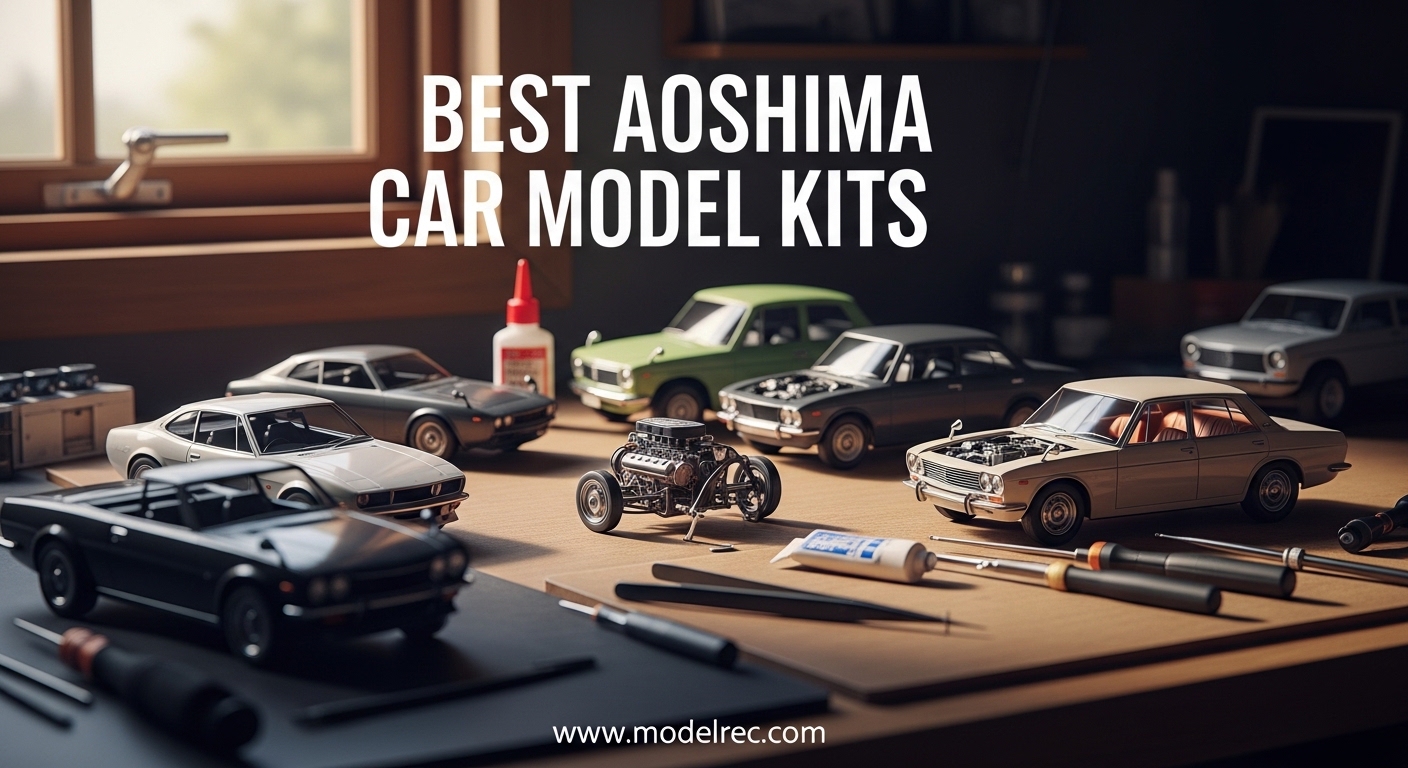
Building model car kits is one of those hobbies that never gets old. There is something deeply satisfying about snapping, gluing, and painting dozens of tiny parts into a miniature replica of a car you admire. When it comes to Japanese model car kits, Aoshima stands out as a brand that offers something no one else does — from iconic Initial D vehicles to wild tuner builds that you simply cannot find from any other manufacturer.
I have spent months building kits from Aoshima and Tamiya, two of Japan’s most respected model kit brands. While Tamiya often sets the gold standard for fit and finish, Aoshima consistently wins on vehicle selection. Their catalog includes JDM legends, drift cars, and anime-inspired machines that fill gaps Tamiya leaves wide open. In this guide, I will walk you through the best Aoshima car model kits available in 2026, alongside comparable Tamiya options, so you can pick the right build for your skill level and interests.
Whether you are a seasoned builder looking for your next weekend project or a beginner curious about what makes Aoshima kits special, this roundup covers six outstanding 1/24 scale Japanese model car kits worth your time and shelf space.
Table of Contents
Top 3 Japanese Model Car Kits for 2026


6 Best Aoshima Car Model Kits in 2026
| Product | Specifications | Action |
|---|---|---|
| Aoshima AE86 Trueno Project-D |
|
Check Latest Price |
| Aoshima URAS ER34 Skyline Type-R |
|
Check Latest Price |
 Aoshima Initial D RX-7 FD3S Aoshima Initial D RX-7 FD3S |
|
Check Latest Price |
 Tamiya R34 Nismo Z-Tune Tamiya R34 Nismo Z-Tune |
|
Check Latest Price |
 Tamiya R33 GT-R V-Spec Tamiya R33 GT-R V-Spec |
|
Check Latest Price |
 Tamiya Mercedes-AMG GT3 Tamiya Mercedes-AMG GT3 |
|
Check Latest Price |
1. Aoshima Fujiwara Takumi AE86 Trueno Project-D – Best for Initial D Fans
Aoshima Fujiwara Takumi AE86 Trueno Project-D Toyota 1:24 Scale Model Kit
1/24 Scale
Carbon Bonnet
Engine Included
Retractable Headlights
Pros
- Engine has precision detail
- Retractable headlights work after assembly
- Great for Initial D fans
- Popular for drift builds
- Good price
Cons
- Small parts requiring precision
- Decals weak and can tear easily
- Not beginner friendly
If you grew up watching Initial D, this kit is going to hit you right in the nostalgia. The Aoshima AE86 Trueno Project-D version is a 1/24 scale model that recreates Takumi Fujiwara’s legendary hachi-roku in its Project D configuration. This is the version from Volume 20 of the manga, featuring the carbon bonnet that makes it instantly recognizable to any fan of the series.
What surprised me most during my build was the retractable headlight mechanism. Aoshima engineered the headlights so they can be opened or closed even after the model is fully assembled. It is a small detail, but it adds a level of interactivity that most model kits simply do not offer. I found myself switching between the two positions several times just to see the difference on my display shelf.
The engine is included with this kit, which is not always the case with Aoshima’s curbside-style builds. The precision detail on the engine block is impressive for a kit at this price point. You can actually see individual components when you look under the hood, which makes the build feel more complete and satisfying. Aoshima also includes fun accessories like fog lamps, paper cups (yes, the ones Takumi uses), and a detailed steering wheel.
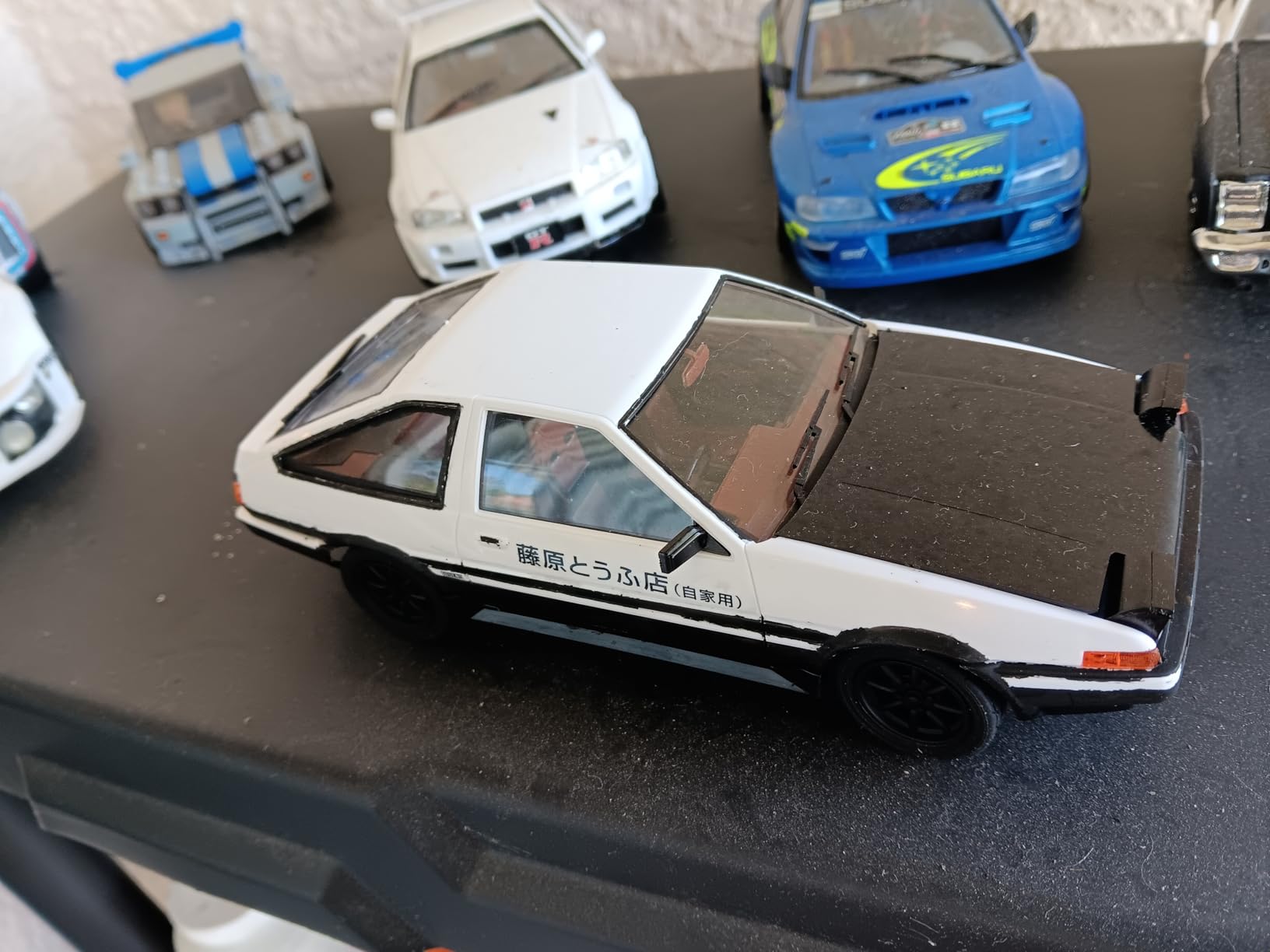
Assembly takes most builders a full weekend. The parts are small and require patience, especially around the headlight mechanism and the engine bay. I recommend using tweezers for the smallest pieces and taking your time with the decals. A few builders in online forums have noted that the decals can be fragile and may tear if you rush through application.
The finished model sits nicely alongside other Initial D kits from Aoshima. I paired mine with the RX-7 FD3S from the same Project D series, and they look fantastic together on the shelf. At 2.5 x 7 x 5.5 inches when completed, it fits well in standard display cases.
Who Should Build This Kit
This kit is an obvious choice for Initial D fans and anyone who appreciates JDM culture. If you have been looking for an AE86 with engine detail and the iconic carbon bonnet, this is the one to get. It also appeals to builders who enjoy painting and customizing, since the bare plastic rewards a careful paint job with a stunning final result.
Intermediate builders will get the most out of this kit. The small parts and decal work require some prior experience with model building. If this is your very first kit, you might find the precision required a bit frustrating, but it is not impossible with patience and the right tools.
What to Watch Out For
Be careful with the decals — they are thinner than Tamiya decals and can tear easily during application. I recommend using a soft brush and plenty of water to position them before they set. Also, a few customers have reported receiving kits with missing parts, so inspect your box when it arrives. Packaging can sometimes arrive with minor damage since the box is relatively thin compared to Tamiya packaging.
The bonnet is molded as part of the body rather than a separate piece, which limits your ability to display it open. If showing off the engine is important to you, this is worth knowing upfront.
2. Aoshima URAS ER34 Skyline Type-R – Best for Custom Drift Builds
Aoshima URAS ER34 Skyline Type-R ’01 Nissan 1:24 Scale Model Kit
1/24 Scale
URAS Wide-Body Kit
Plastic Construction
Drift Build Ready
Pros
- Great body for RC drift conversion
- Good fit and easy assembly
- Customization potential
- Fun painting and decal process
- Good price point
Cons
- Comes with white unpainted parts
- Less refined than Tamiya kits
- Some learning curve for beginners
The Aoshima URAS ER34 Skyline Type-R is one of those kits that speaks directly to the tuner community. This is not a stock Nissan Skyline — it features the aggressive URAS wide-body kit that transforms the already imposing ER34 into something that looks ready to shred tires on a drift course. At its price point, it is one of the most affordable ways to get a high-quality Japanese model car kit from Aoshima.
My build experience with this kit was surprisingly smooth. The parts fit together well for an Aoshima product, and the wide-body fender flares give the model a genuinely menacing stance when completed. The body panels aligned nicely with minimal gap-filling required. I did notice that Aoshima’s molding quality is not quite at Tamiya levels, but the difference is small enough that most builders will not mind.
Where this kit really shines is in its customization potential. Many buyers purchase this kit specifically to convert it into a 1/24 RC drift car. The body proportions work well for RC chassis conversions, and the wide-body kit gives you room to work with. Even as a static display model, the ER34 Skyline with its URAS aero package looks unlike anything else on your shelf.
The painting and decal process is genuinely enjoyable. One reviewer on Amazon specifically mentioned that the painting and decal application was their favorite part of the entire build. I had the same experience — laying down the URAS branding and competing the color scheme felt rewarding in a way that simpler kits do not always deliver.
Who Should Build This Kit
Drift fans and tuner culture enthusiasts will love this kit. It is also an excellent choice for builders who want to try RC drift conversion, since the body is well-suited for that purpose. If you enjoy customizing and painting your models rather than building them straight out of the box, the ER34 gives you a fantastic canvas to work with.
Beginners can tackle this kit, but expect a learning curve. The kit comes with white unpainted parts, so you will need to invest in paint and supplies to get a good result. If you are comfortable with basic model painting techniques, you should be fine.
What to Watch Out For
The biggest thing to know is that this kit arrives with white, unpainted plastic parts. If you were expecting pre-painted components, you will need to budget time and materials for painting. The interior parts are also white, which means you will want to paint those as well for a realistic look. Aoshima’s instructions reference Mr Hobby paint colors, which is helpful if you have access to that brand.
Compared to a Tamiya kit at a similar scale, the ER34 is slightly less refined in terms of mold sharpness and part tolerances. However, the unique wide-body subject matter more than makes up for it. You simply cannot get this car from Tamiya.
3. Aoshima Initial D RX-7 FD3S Project D – Best Aero Kit Detail
Aoshima Initial D: Takahashi Keisuke FD3S RX-7 Project D 1:24 Scale Model Kit
1/24 Scale
Full Aero Kit
Roll Bar Interior
Pre-Painted Parts
Initial D Collaboration
Pros
- Realistic detail and good size
- Easy weekend build
- Great for Initial D fans
- Full aero kit included
- Good fit when painting
Cons
- Some users report fragile parts
- Requires painting for good appearance
- Decals not complete
Takahashi Keisuke’s FD3S RX-7 from the Project D arc of Initial D is one of the most recognizable anime cars ever drawn. Aoshima captured this car with their usual attention to the source material, including the full aero kit with front and rear aero fenders that give the FD3S its aggressive race-ready appearance. The newly tooled interior features a roll bar, which adds authenticity that fans of the series will immediately appreciate.
My build took about a full weekend from start to finish. The aero parts fit cleanly onto the body without much adjustment, which was a relief. Aoshima clearly invested in new tooling for this kit, because the body panels are sharp and well-defined. The fender arches, in particular, have clean edges that make the wide-body look convincing at 1/24 scale.
One thing I want to be upfront about: this kit requires painting for the best results. The bare plastic looks plain without paint work, and some of the pre-colored parts do not match what you see on the box art. Budget time for a proper paint job if you want this model to look like Keisuke’s FD on your shelf.
Who Should Build This Kit
This kit is a must-have for Initial D collectors. If you already have the AE86 Trueno from Aoshima’s Initial D line, the RX-7 FD3S is the natural companion piece. It is also a good choice for builders who enjoy Japanese tuner aesthetics and want a model with an aggressive aero package without sourcing aftermarket parts.
Weekend builders will appreciate that this kit goes together relatively quickly. One reviewer mentioned completing it over a standard Saturday and Sunday. If you have a few builds under your belt, this makes for a satisfying project that does not drag on for weeks.
What to Watch Out For
Some users have reported that certain parts are fragile and can break during assembly. Handle the small aero pieces carefully, especially around the front fender attachments. The decals are also a point of concern — they do not include a Gunma region number plate, which is a notable omission for an Initial D kit. You may need to source aftermarket decals if you want full accuracy.
The bonnet is not a separate part, which limits display options. If you were hoping to show off the engine bay, you will not be able to open the bonnet on this build. Consider this a curbside-style kit with added aero detail rather than a full-engine build.
4. Tamiya Nissan Skyline GT-R R34 Nismo Z-Tune – Best JDM Legend Replica
Tamiya Nissan Skyline GT-R R34 – Nismo Z-Tune 1/24 Scale Model Kit 24282
1/24 Scale
190 Pieces
Lightweight Plastic
Z-Tune Body
Pros
- Exceptional accuracy of the Z-Tune R34 body
- High quality molding and fit
- Great for experienced modelers
- Suitable for customization
- Extra parts included
Cons
- Does not include engine detail
- Glue and paint not included
- Requires some building experience
The Nissan Skyline GT-R R34 Nismo Z-Tune is one of those cars that defines an entire era of Japanese performance engineering. Only 20 units were ever produced by Nismo, making it one of the rarest Skylines in existence. Tamiya’s 1/24 scale kit does justice to this legend with what many builders consider one of the most accurate R34 bodies available in any scale.
When I opened this kit, the first thing I noticed was the sheer quality of the molding. Tamiya’s plastic is crisp, with virtually no flash on any of the 190 pieces. Every panel line is sharp and well-defined. The Z-Tune specific body modifications — the wider front fenders, revised front bumper, and rear wing — are captured with precision that rivals much more expensive kits.
Assembly is straightforward if you have built a few kits before. Tamiya’s instructions are the industry standard for clarity, with each step illustrated in detail. The parts go together with the kind of confidence-inspiring fit that Tamiya is known for. I did not encounter any alignment issues during my build, which is more than I can say for some other brands at this scale.
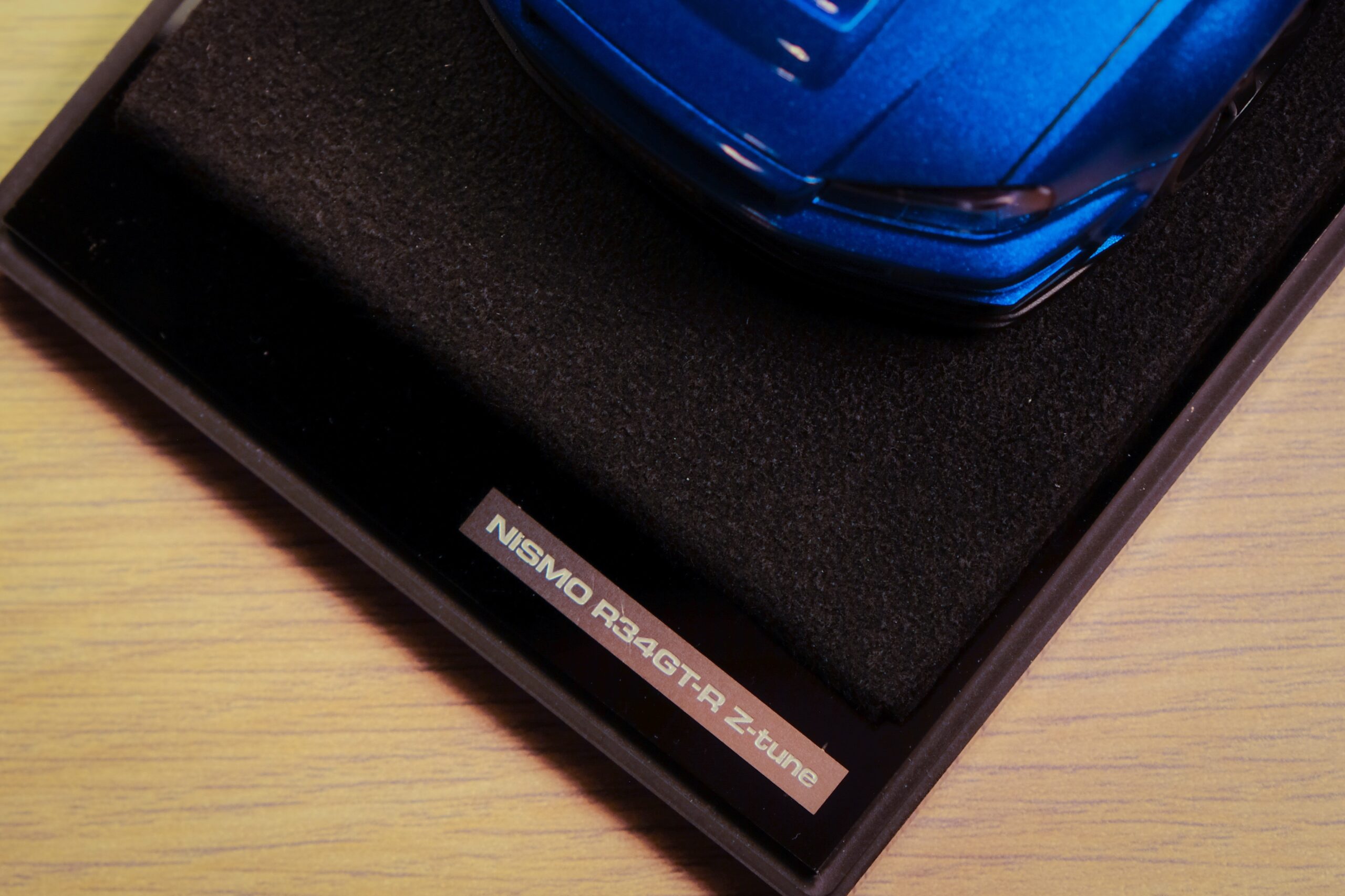
The finished model has real presence on the shelf. At 1/24 scale, the R34 Skyline is a substantial model that commands attention. The extra parts that Tamiya includes are a nice bonus — some builders use them for custom projects or dioramas, which adds value beyond the main build.
One notable omission is the lack of engine detail. For a kit of this quality and heritage, some builders may find it disappointing that there is no engine to assemble and display. The curbside approach keeps the build manageable, but if engine bay detail is important to you, this is worth knowing before you start.
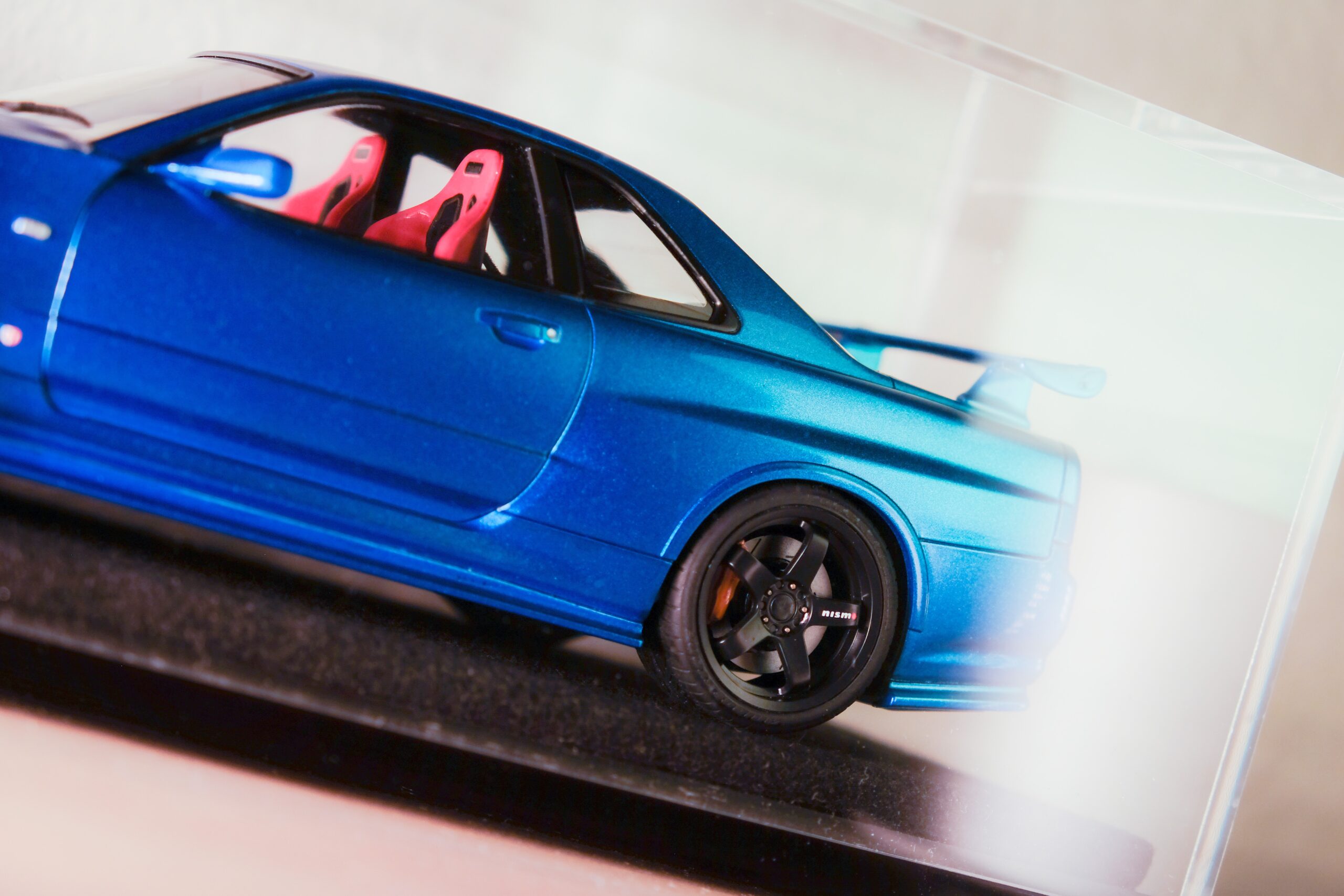
Who Should Build This Kit
Experienced modelers and JDM collectors will find this kit immensely rewarding. The accuracy of the Z-Tune body makes it a centerpiece display piece. If you are a Skyline enthusiast who wants the definitive 1/24 R34 Z-Tune, this Tamiya kit is widely considered the benchmark against which all others are measured.
It is also an excellent candidate for photo-etch detail upgrades. Several builders in the community have paired this kit with aftermarket detail sets for even more refined results. If you enjoy super-detailing, the clean base that Tamiya provides is an ideal starting point.
What to Watch Out For
Glue and paint are not included, so you will need to source those separately. Tamiya’s instruction sheet recommends specific paint colors by number, which is helpful. The kit does require some building experience — absolute beginners might find certain steps challenging, particularly around the chassis and suspension components.
While the body accuracy is outstanding, the kit follows Tamiya’s curbside tradition with no openable panels. If you want to display the engine bay, you will need to modify the bonnet yourself or look for a different kit.
5. Tamiya Nissan Skyline GT-R R33 V-Spec – Best Value Skyline Kit
Tamiya Nissan Skyline GT-R R33 V-Spec- 1/24 Scale Model Kit 24145
1/24 Scale
V-Spec Series
Plastic Construction
Precision Engineering
Pros
- Flawless Tamiya quality and detail
- Easy to assemble
- Worth the money
- Great for getting into the hobby
- Father-son project friendly
Cons
- No engine detail included
- Box not always sealed
- Instructions sometimes in Chinese
The R33 Skyline GT-R V-Spec occupies an interesting place in the Skyline lineage. It may not have the cult following of the R34, but it is a car that many enthusiasts argue is actually the better driver’s machine. Tamiya’s 1/24 scale kit captures the R33’s distinctive wide stance and aggressive body lines with the kind of precision that has made Tamiya the industry standard for decades.
What impressed me most about this kit is how approachable it is. The parts count is reasonable, and every piece goes together exactly as the instructions indicate. There were no surprises during assembly, which is exactly what you want from a build. One Amazon reviewer described the quality as “flawless,” and I have to agree — this is Tamiya operating at their consistent best.
At its price point, this kit represents outstanding value for a 1/24 scale Tamiya product. You get the brand’s signature molding quality and clean engineering without paying a premium. It is the kind of kit I would recommend to someone who wants to try model building without making a big financial commitment.
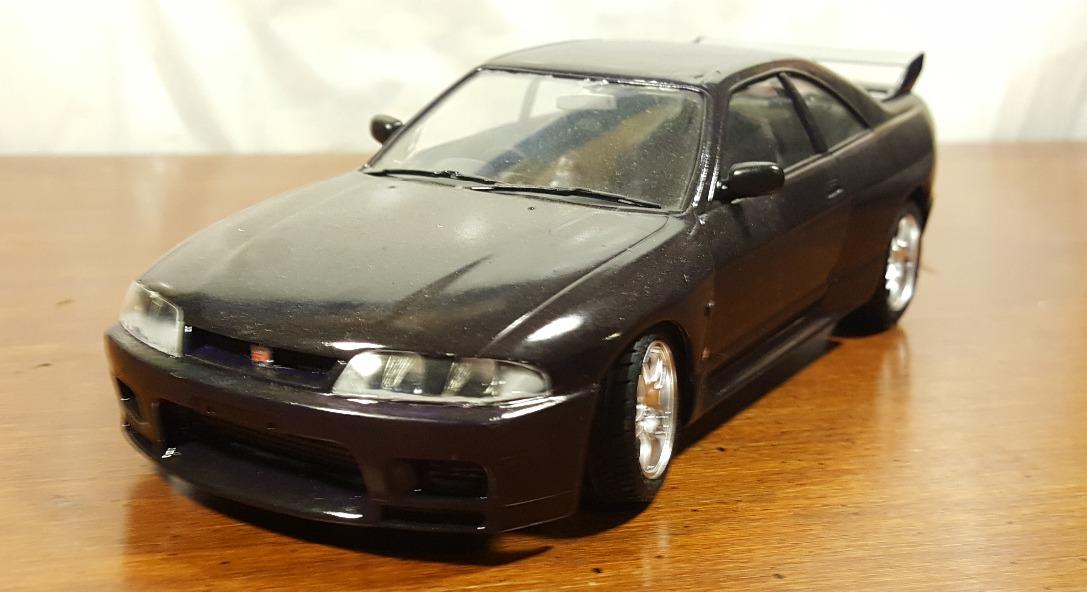
The R33 builds into a handsome model with clean lines and good proportions. While it shares the curbside approach of the R34 Z-Tune kit, the R33’s simpler body shape means fewer complex panel alignments, making it even more beginner-friendly. The finished model looks great in stock form and takes paint exceptionally well.
Who Should Build This Kit
This is one of the best starter kits I can recommend for anyone new to the hobby. The manageable parts count and straightforward assembly make it accessible, while the Tamiya quality means the finished result looks impressive even for a first build. It is also popular as a gift — multiple reviewers mentioned buying it as a father-son project or a Christmas present for car enthusiasts.
Skyline fans who want to complete the GT-R trilogy (R32, R33, R34) on their shelf should not skip this one. The R33 body shape is distinctive and complements the other generations nicely in a display collection.
What to Watch Out For
Like other Tamiya curbside kits, there is no engine detail included. Some customers have reported that the box arrives unsealed, held together only by a rubber band. While this does not affect the kit contents, it is worth noting if you are buying this as a gift. A few buyers have also received versions with instructions printed in Chinese rather than English, though the diagram-based instructions are clear enough to follow regardless of language.
The packaging dimensions listed online (30 x 19.2 x 6 inches) seem larger than the actual box. Do not be surprised if the kit arrives in a more compact box than expected.
6. Tamiya Mercedes-AMG GT3 – Best European Sports Car Kit
Tamiya 24345 Mercedes-AMG GT3 1/24 Scale kit
1/24 Scale
198mm Total Length
Plastic and Metal
Sports Car Series
Pros
- Great for beginner to intermediate builders
- Parts fit together well
- Clean and high-quality molding
- Excellent Tamiya quality
- No difficult assembly steps
Cons
- No engine detail included
- Some shipping packaging concerns
- Decal application requires patience
Not every great model car kit comes from Japan’s domestic market. The Mercedes-AMG GT3 is a stunning GT racing car that has dominated endurance racing worldwide, and Tamiya’s 1/24 scale version brings that racing pedigree to your workbench. At 198mm in total length when completed, this kit captures the aggressive wide-body GT3 specification with authentic detail.
My build experience with the AMG GT3 was thoroughly enjoyable. Tamiya’s molding quality is immediately apparent — every panel, vent, and intake on the GT3’s complex bodywork is reproduced cleanly. The plastic parts have minimal flash, and the metal components add a touch of heft that makes the finished model feel substantial. Parts fit together with Tamiya’s characteristic precision, which makes the assembly process feel almost meditative.
The decal sheet is comprehensive, covering the various sponsor logos and racing liveries that make GT3 cars so visually striking. Applying the decals takes patience, especially around the compound curves of the front fenders and rear diffuser. I spent a good two hours on decals alone, but the result was worth every minute.
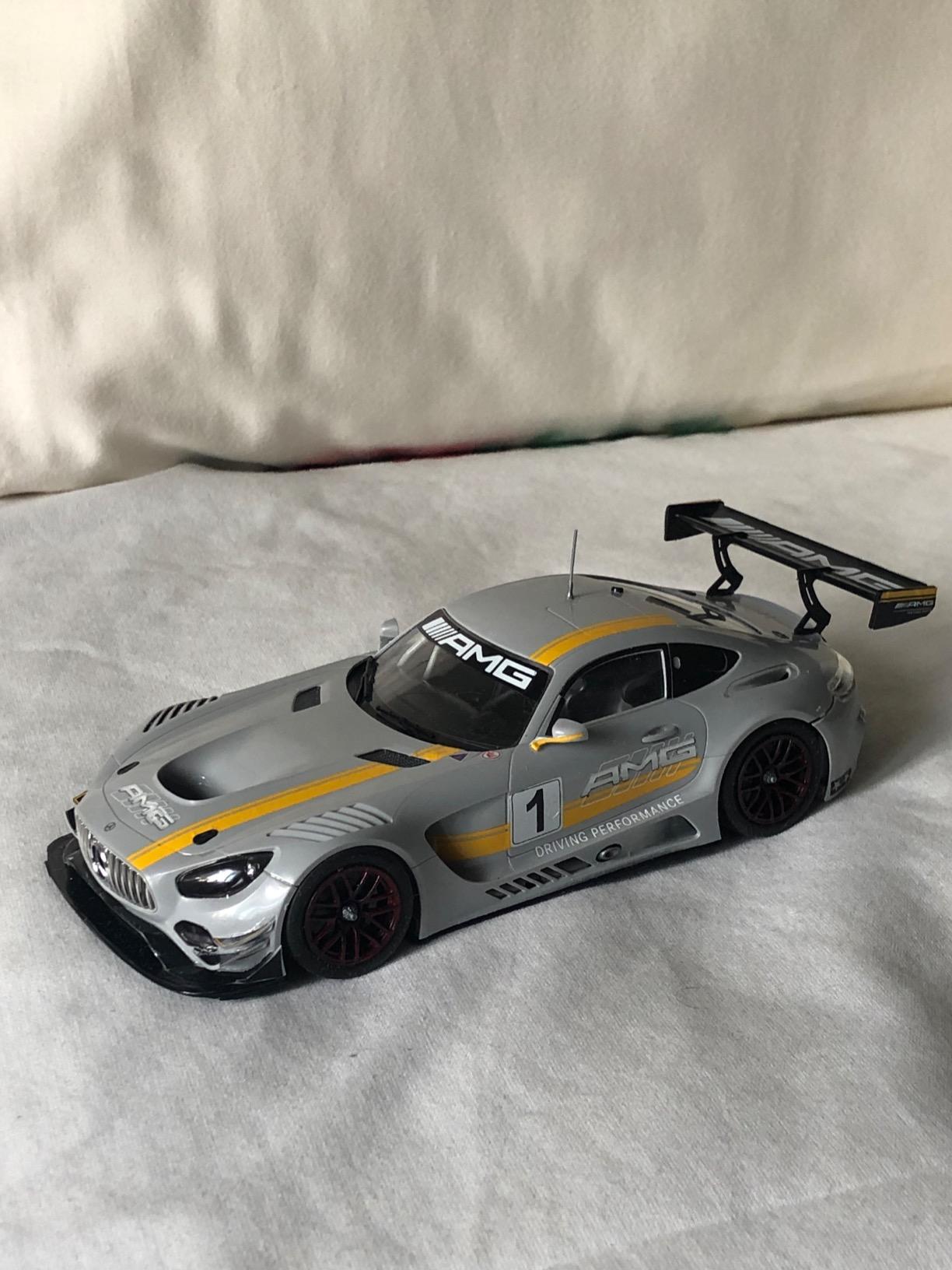
This kit sits at the sweet spot between accessibility and detail. Beginner builders can complete it without frustration, while intermediate builders will find enough complexity in the paint and decal work to stay engaged. One reviewer described it as a “beautiful kit for limited experience modelers,” which sums it up perfectly.
The finished model is a genuine head-turner. The AMG GT3’s low, wide stance and dramatic aero package translate beautifully into 1/24 scale. It makes an excellent companion piece to the Japanese cars in this roundup, adding international flavor to your display collection.
Who Should Build This Kit
If you are a fan of European GT racing and want a model that captures the spirit of modern motorsport, this kit delivers. It is also a great choice for builders who want to practice their decal technique, since the racing livery provides plenty of opportunity to develop that skill. The manageable difficulty makes it suitable for builders with limited experience who still want a impressive finished result.
Collectors who already have Japanese cars on their shelf and want to diversify their display will appreciate the contrast the AMG GT3 provides. Its aggressive racing bodywork stands apart from the tuner aesthetics of the Aoshima kits in this guide.
What to Watch Out For
Like the other Tamiya kits in this roundup, the AMG GT3 does not include engine detail. For a kit at this price point, some builders may find that omission disappointing. The suspension is hidden beneath the body, so you will not see much mechanical detail even from underneath.
Shipping packaging has been a concern for some buyers. A few reviews mention that the kit arrived with crushed corners or damaged boxes. If the condition of the packaging matters to you as a collector, consider this when ordering. The kit contents are typically well-protected inside, even when the outer box takes some damage.
Buying Guide: How to Choose the Right Model Car Kits?
Picking the right model car kit comes down to three factors: your skill level, the type of car you want to build, and how much time you are willing to invest. After building dozens of kits from both Aoshima and Tamiya, here is what I have learned about making the right choice.
Skill Level Matters More Than Brand
Both Aoshima and Tamiya offer kits that range from beginner-friendly to advanced. If this is your first model kit, start with something straightforward like the Tamiya R33 V-Spec. Its manageable parts count and clear instructions make it forgiving for newcomers. Aoshima’s snap-fit kits are also accessible, but their standard kits often require more patience with small parts and decal work.
Intermediate builders can tackle any kit in this roundup with confidence. The Aoshima RX-7 FD3S and the Tamiya R34 Z-Tune both reward experience with satisfying builds and impressive finished results. Advanced builders will find the most creative potential in the Aoshima ER34 Skyline, which practically begs for customization and RC conversion.
Understanding Scale: Why 1/24 Dominates
Every kit in this roundup is 1/24 scale, and that is not a coincidence. The 1/24 scale is the most popular size for model car kits because it strikes the right balance between detail and display space. A completed 1/24 model is large enough to show fine details like panel lines, engine components, and interior textures, but small enough to fit comfortably on a bookshelf or in a display case.
Aoshima also produces kits in 1/32 scale, which are smaller and generally simpler. These can be good for younger builders or those with limited display space. However, the 1/24 scale remains the sweet spot for most hobbyists, and it is where you will find the widest selection of subjects and the highest level of detail.
Aoshima vs Tamiya: A Practical Comparison
This is the question that comes up most often in model building forums, and the answer depends on what you value most. Tamiya kits generally offer superior molding quality, cleaner part fit, and better instructions. Their kits go together with fewer issues and require less cleanup work during assembly.
Aoshima wins on vehicle selection, plain and simple. They produce kits of cars that Tamiya does not cover — tuner builds, Initial D vehicles, Liberty Walk body kits, and obscure JDM models that have dedicated fanbases. Their pricing is also typically lower than Tamiya’s, making them attractive for budget-conscious builders.
As one Reddit user in r/ModelCars put it: “They’re not as good as Tamiya kits, but better than Fujimi most of the time.” Another builder said: “The couple of Aoshima kits I’ve done went together well — fit and finish were great and a pleasure to build.” The consensus is that Aoshima sits comfortably between Tamiya and Fujimi in overall quality, with unique subject matter that justifies their place in any builder’s collection.
Essential Tools You Will Need
Before starting any of these kits, make sure you have the right tools. You will need plastic cement or super glue for assembly, a sharp hobby knife or sprue cutters for removing parts from the runners, and sandpaper or a file for cleaning up seam lines. For painting, acrylic paints in the manufacturer-recommended colors, fine-tip brushes, and a clear coat for the final finish are essential.
Aoshima’s instruction sheets reference specific Mr Hobby paint colors, so having access to that brand simplifies the paint matching process. Tamiya’s instructions use their own paint numbering system. If you are new to painting, invest in a few good brushes and practice on scrap plastic before tackling your model.
For decals, you will need a soft brush, water for positioning, and optionally a decal setting solution to help conform the decals to curved surfaces. Decal work is where many beginners struggle, so take your time and use plenty of water to keep the decals movable until you have them positioned correctly.
Frequently Asked Questions About Aoshima Model Kits
Are Aoshima model kits good quality?
Aoshima kits offer good quality that sits between Tamiya and Fujimi in the Japanese model kit market. Their molding is clean, parts generally fit well, and the instructions reference specific Mr Hobby paint colors for accuracy. While not quite at Tamiya’s level of refinement, Aoshima compensates with unique vehicle selections including Initial D cars, tuner builds, and JDM models unavailable from other brands. Most builders report satisfying experiences with Aoshima kits.
Do Aoshima kits need glue?
Most Aoshima 1/24 scale kits require glue for assembly. While Aoshima does produce some snap-fit kits in their lineup, the standard kits like the AE86 Trueno, RX-7 FD3S, and ER34 Skyline all need plastic cement or super glue. Paint is also required for best results, as most kits come with unpainted white or gray plastic parts. Always check the kit description before purchasing if you prefer snap-fit assembly.
Where are Aoshima models manufactured?
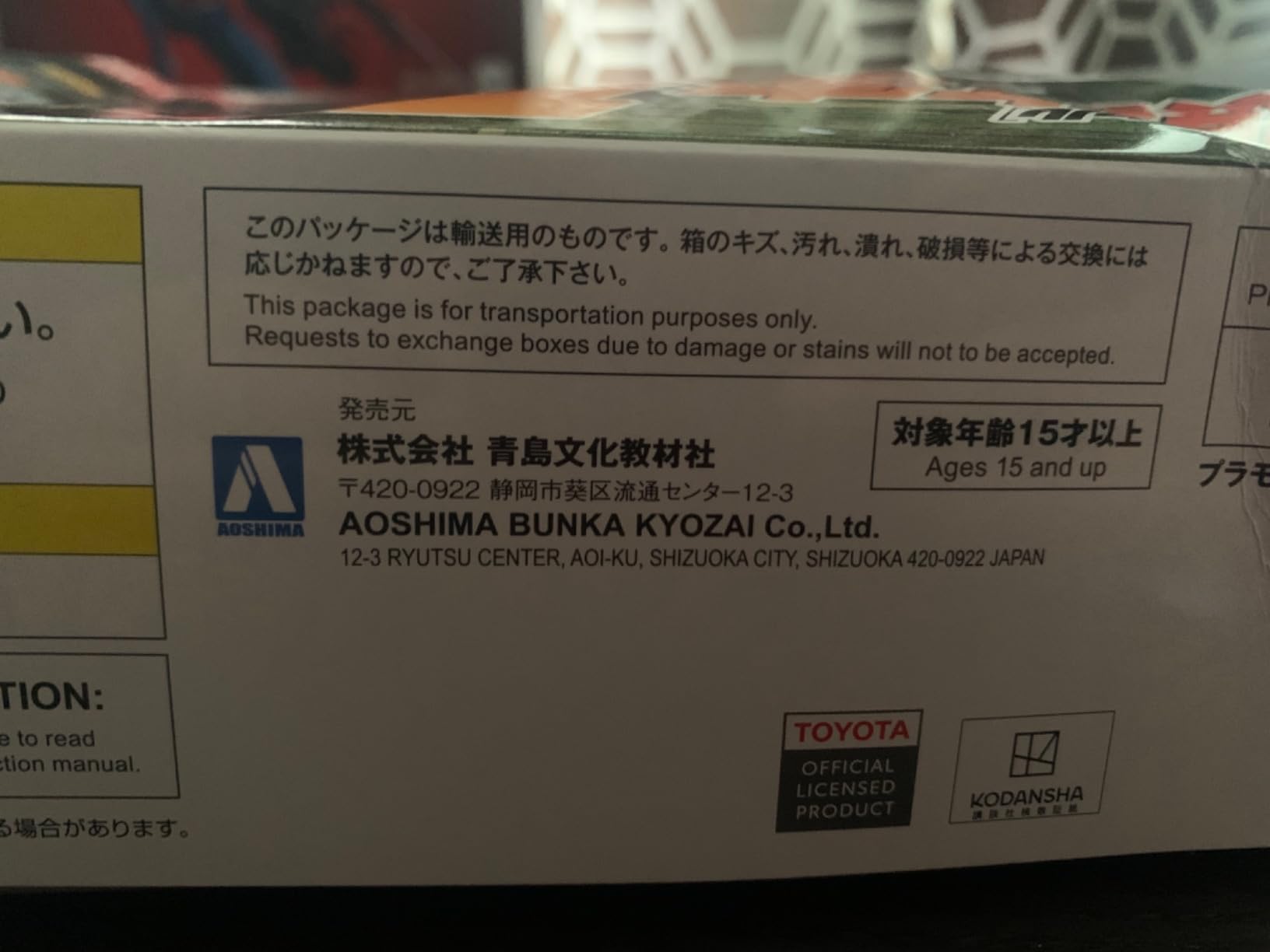
Aoshima models are manufactured in Japan by Aoshima Bunka Kyozai Co., Ltd. The company was originally established in 1924 and has been producing model kits for decades. Their Japanese manufacturing ensures consistent quality control and authentic attention to detail, particularly for JDM vehicle subjects that are their specialty.
What is the difference between Aoshima and Tamiya model kits?
Tamiya generally offers superior molding quality, cleaner part fit, and more detailed instructions. Aoshima differentiates itself through unique vehicle selection — they produce kits of tuner cars, Initial D vehicles, and JDM models that Tamiya does not cover. Aoshima kits are typically priced lower than comparable Tamiya kits. In terms of build experience, Tamiya kits tend to go together more smoothly, while Aoshima kits may require more cleanup but offer subjects you cannot find elsewhere.
What tools are needed to build Aoshima car model kits?
You will need plastic cement or super glue for assembly, sprue cutters or a sharp hobby knife for removing parts, and sandpaper for cleanup. For painting, acquire acrylic paints in the colors specified in the instructions (Aoshima references Mr Hobby paint numbers), fine-tip brushes, and a clear coat for the final finish. Decal application requires a soft brush, water, and optionally decal setting solution. Tweezers are helpful for handling small parts.
Final Thoughts on the Best Aoshima Car Model Kits
Aoshima occupies a special place in the model car kit world. They may not match Tamiya’s legendary fit and finish, but they offer something equally valuable: access to cars that no other manufacturer produces. From Takumi’s AE86 Trueno to the wild URAS ER34 Skyline, Aoshima’s catalog reads like a love letter to Japanese car culture.
For my top pick, the Aoshima AE86 Trueno Project-D takes the crown. The combination of engine detail, retractable headlights, and genuine Initial D heritage makes it the most compelling Aoshima kit in this roundup. If you are watching your budget, the Aoshima URAS ER34 Skyline offers incredible customization potential at the lowest price point. And for builders who want the absolute best molding quality in a JDM subject, Tamiya’s R34 Nismo Z-Tune is worth every penny.
No matter which kit you choose from this list, you are in for a rewarding build experience. The best Aoshima car model kits bring Japanese automotive passion to your workbench, and that is something worth building in 2026.