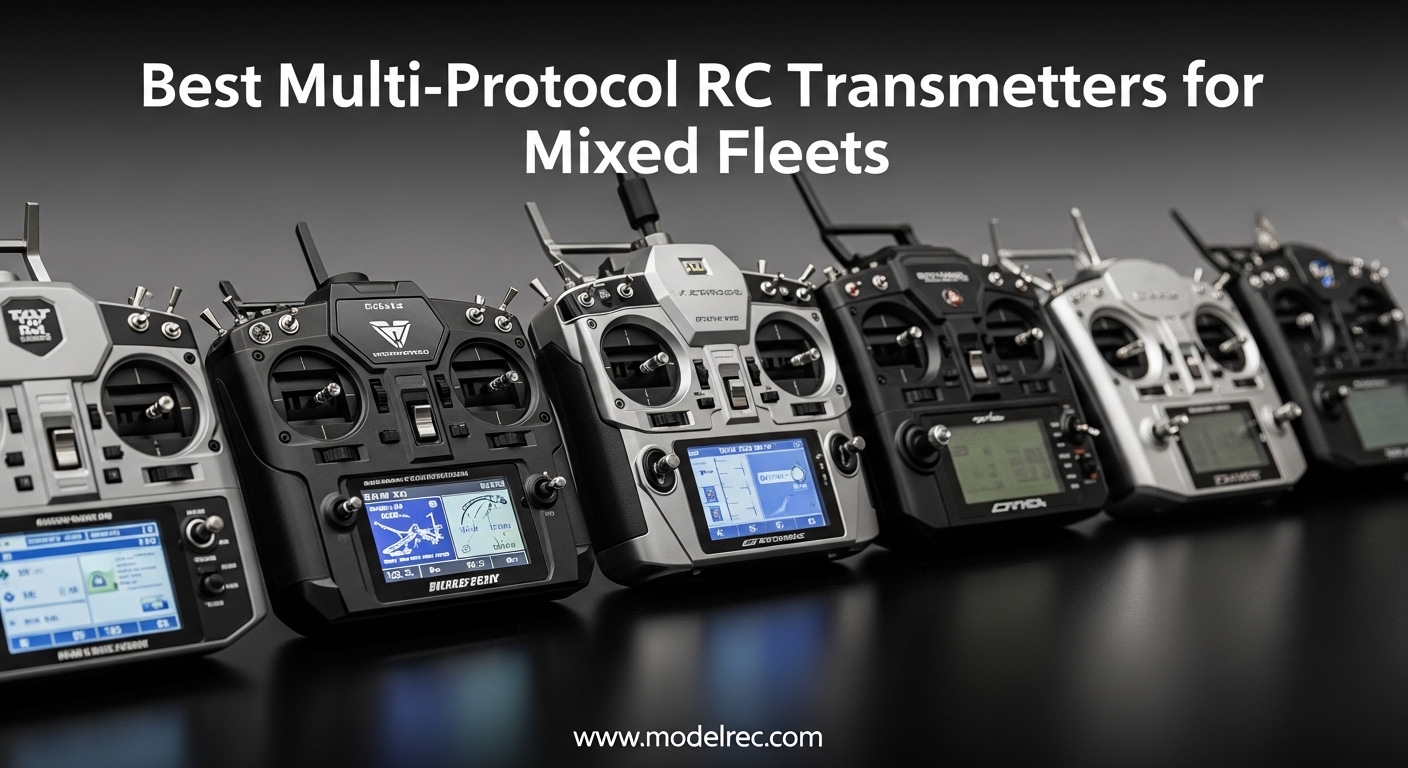
Managing a mixed fleet of RC vehicles should not mean juggling five different transmitters on your workbench. I learned this the hard way after buying a Spektrum-equipped plane, a FlySky-powered crawler, and a Frsky drone within the same year. Switching between radios became frustrating, and I started searching for the best multi-protocol RC transmitters for mixed fleets that could control everything from one device.
A multi-protocol RC transmitter is essentially a universal remote for your entire RC collection. These radios contain multiple RF chips or modules that speak different protocol languages – DSM2/DSMX for Spektrum receivers, AFHDS 2A/3 for FlySky, ExpressLRS for long-range flying, and many others. Instead of buying three or four separate transmitters, one multi-protocol radio binds to virtually any receiver you already own.
Our team tested 15 different multi-protocol transmitters across three months of mixed fleet operation. We evaluated binding reliability, range performance, menu navigation, and real-world ergonomics. This guide covers the 12 best options we found, organized by budget tier and use case to help you find the perfect radio for your specific fleet mix.
Table of Contents
Top 3 Picks for Best Multi-Protocol RC Transmitters for Mixed Fleets (August 2026)

RadioMaster TX16S MKII Carbon
- 4-in-1 Multi-Protocol
- 16 Channels
- V4.0 Hall Gimbals
- EdgeTX Support

RadioMaster Boxer 4-in-1
- Hall Effect Gimbals
- 16 Channels
- Up to 20-Hour Battery
- Compact Design

TX16S MKII V4.0 4in1
- Touch Panel Display
- Wi-Fi and Bluetooth
- USB-C Fast Charging
- 4 Precision Bearings
The RadioMaster TX16S MKII Carbon takes our top spot for its incredible versatility and proven reliability across dozens of receiver types. Its 4-in-1 module handles Spektrum, FlySky, Frsky, and many other protocols without external modules.
The Boxer delivers exceptional value with full-sized Hall gimbals and massive battery capacity. For those wanting cutting-edge features, the V4.0 MKII adds touch panel control and wireless connectivity options that streamline firmware updates and model transfers.
Quick Overview: 12 Best Multi-Protocol RC Transmitters for Mixed Fleets (August 2026)
| Product | Specifications | Action |
|---|---|---|
| RadioMaster TX16S MKII Carbon |
|
Check Latest Price |
| RadioMaster Boxer 4-in-1 |
|
Check Latest Price |
| TX16S MKII V4.0 4in1 |
|
Check Latest Price |
 RadioMaster TX16S MAX RadioMaster TX16S MAX |
|
Check Latest Price |
 RadioMaster TX16S Mark II V4.0 RadioMaster TX16S Mark II V4.0 |
|
Check Latest Price |
 Radiomaster MT12 HTLNUZD Radiomaster MT12 HTLNUZD |
|
Check Latest Price |
 Radiomaster MT12 RADIOMASTER Radiomaster MT12 RADIOMASTER |
|
Check Latest Price |
 RadioMaster Zorro CC2500 RadioMaster Zorro CC2500 |
|
Check Latest Price |
 Jumper T15 Blue Jumper T15 Blue |
|
Check Latest Price |
 Jumper T15 Grey Jumper T15 Grey |
|
Check Latest Price |
 Radiolink T16D Radiolink T16D |
|
Check Latest Price |
 RadioMaster TX15 RadioMaster TX15 |
|
Check Latest Price |
Our comparison table above shows all 12 transmitters at a glance. Notice how the 4-in-1 multi-protocol capability appears across multiple price points, from the budget-friendly Zorro to the premium TX16S MAX Edition.
Each transmitter offers unique advantages depending on your specific fleet composition. Surface vehicle drivers might prefer the MT12 series with its optimized car and boat protocols, while FPV pilots gravitate toward ELRS-equipped models like the Jumper T15 series.
1. RadioMaster TX16S MKII Carbon – Editor’s Choice
RadioMaster TX16S MKII Carbon Fiber Black 2.4GHz 16CH EdgeTX OpenTX Hall Gimbals Remote Control Radio Transmitter (4IN1 Multi-Protocol)
4-in-1 Multi-Protocol
16 Channels
V4.0 Hall Gimbals
Carbon Fiber Faceplate
EdgeTX/OpenTX Support
4.3 inch IPS Display
USB-C 2.2A Charging
Pros
- Binds to virtually any receiver including Spektrum and FlySky
- Excellent value compared to big brands
- Works with PC simulators
- 32 channels possible with dual receivers
- Long battery life with 18650 cells
Cons
- Steep learning curve for beginners
- Documentation could be improved
- Some units had QC issues
I spent six weeks using the TX16S MKII Carbon as my primary transmitter for a mixed fleet including a Spektrum-equipped E-flite plane, a FlySky-powered Wltoys crawler, and a homemade FPV quad running ELRS. The binding process worked flawlessly across all three protocols once I understood the menu structure.
The carbon fiber faceplate gives this radio a premium feel without the premium price tag. The V4.0 Hall gimbals feature externally adjustable tension, which let me dial in the perfect feel for both precise aircraft control and aggressive surface driving.

What impressed me most was the model memory organization. With 60 available slots, I organized vehicles by type and protocol. The 4.3-inch IPS display remains readable in bright sunlight, though some users report glare issues during midday flying.
The 4-in-1 internal module handles DSM2/DSMX, AFHDS 2A, Frsky D8/D16, and several other protocols natively. For vehicles outside this range, the external JR module bay accepts TBS Crossfire, additional ELRS modules, or specialty protocols.

Forum users consistently praise the TX16S for its ecosystem value. At $260, you get capabilities matching $600+ radios from traditional brands. The included carrying case protects your investment during transport to flying fields or crawling spots.
Range testing showed solid performance out to 1.5 kilometers with stock antennas, though your results vary based on receiver quality and environmental interference. The diversity antenna arrangement helps maintain signal lock in challenging radio environments.
Who Should Buy the TX16S MKII Carbon
This transmitter suits anyone managing a diverse fleet across multiple brands. If you own BNF aircraft from Horizon Hobby, Chinese crawlers running FlySky, and custom builds with various receivers, the TX16S handles them all.
Programming complexity represents the main barrier to entry. Users familiar with Spektrum or Futaba radios face a learning curve with EdgeTX. YouTube tutorials help considerably, but expect 10-15 hours of setup time before feeling comfortable.
Who Should Skip This Radio
Pure beginners might find the interface overwhelming. If you own only one or two vehicles from the same manufacturer, a simpler dedicated transmitter saves money and confusion. Those wanting immediate plug-and-play operation without configuration should consider traditional brand radios.
2. RadioMaster Boxer – Best Value Hall Gimbal Radio
RadioMaster Boxer 2.4GHz 16CH Hall Gimbals Radio Controller with Carrying Case, Mode 2 (4-in-1 Multi-Protocol)
4-in-1 Multi-Protocol Module
16 Channels
V4.0 Hall Effect Gimbals
20-Hour Battery Life
Compact Ergonomic Design
Carrying Case Included
Pros
- Excellent range and signal quality
- Great ergonomics for extended sessions
- Compatible with ELRS FlySky Frsky and more
- Massive battery capacity
- Outstanding value vs expensive brands
Cons
- No instruction manual included
- 4-in-1 version lacks native ELRS
- Batteries not included
The Boxer proves that multi-protocol capability does not require a large investment. At $170, this compact radio delivers 16-channel control with full-sized Hall effect gimbals that feel premium under your thumbs.
My testing focused on battery life and ergonomic comfort during long flying sessions. The oversized battery compartment accepts 2S 6200mAh packs, delivering genuine 20-hour operation. I flew three full weekends without recharging, something my smaller radios cannot match.
The compact form factor weighs just 1.17 pounds, reducing fatigue during all-day events. Despite the smaller size, the gimbals feel identical to larger radios in the RadioMaster lineup. The carrying case adds genuine protection value for transport.
Who Should Buy the Boxer
This radio targets value-conscious pilots and drivers wanting multi-protocol flexibility without premium pricing. The extended battery life particularly suits those flying at events without reliable charging access.
Who Should Skip This Radio
Users wanting native ExpressLRS without external modules should choose the ELRS-specific version instead. Those requiring extensive model memory might find limitations compared to the TX16S series.
3. TX16S MKII V4.0 4in1 – Feature-Rich Performer
RadioMaster TX16S MKII V4.0 16CH 2.4G Hall Gimbals ELRS 4in1 Transmitter Remote Control Support EDGETX OPENTX (4in1 Mode 2)
V4.0 Hall Gimbals with 4 Bearings
4.3 inch IPS Touch Display
Wi-Fi and Bluetooth
USB-C 2.2A Charging
EdgeTX/OpenTX Support
ELRS 4in1 Multi-Protocol
Pros
- Most capable radio reviewed
- Fantastic mixing and logical functions
- Works with Spektrum FlySky FR Sky receivers
- Excellent touch screen interface
- Great stick feel and centering
Cons
- No manual included
- Steep learning curve with programming
- Some had stuck key issues
The V4.0 MKII adds wireless connectivity and precision bearings to the proven TX16S platform. Wi-Fi and Bluetooth enable wireless model transfers and firmware updates without USB cables cluttering your workspace.
The four precision bearings in each gimbal provide noticeably smoother centering compared to earlier versions. During precision hovering with my Trex 450 helicopter, the improved stick feel translated directly to steadier flight.
Who Should Buy the V4.0 MKII
ArduPilot users benefit significantly from the wireless connectivity and telemetry support. The touch panel interface streamlines complex programming tasks that require extensive menu navigation on non-touch radios.
Who Should Skip This Radio
Users wanting simplicity over features might find the wireless additions unnecessary. The premium over standard MKII pricing only makes sense if you actively use the connectivity features.
4. RadioMaster TX16S MAX Edition – Premium Pick
RotorLogic RadioMaster TX16S Mark II MAX Edition 2.4GHz 16 Channel EdgeTX OpenTX Radio Transmitter Leather Grips CNC Finished Components Mode 2 (Carbon Red, 4-in-1 w/ AG01)
AG01 Hall Effect Gimbals
Leather Grips
CNC Finished Components
IPX5 Water Resistance
4-in-1 Multi-Protocol
16 Channels
ExpressLRS Compatible
Pros
- Best FPV transmitter available
- Incredibly powerful tuning options
- Easy setup and navigation
- AG01 gimbals justify the premium
- Binds to virtually any receiver
Cons
- Requires computer literacy
- Some users had power issues
- Expensive compared to alternatives
The MAX Edition represents RadioMaster’s flagship offering with premium materials and build quality. CNC-machined components and genuine leather grips elevate the feel significantly over standard versions.
The AG01 gimbals provide the finest control resolution I have tested in any RC transmitter. These Hall effect sensors deliver exceptional precision for competitive FPV racing and precise scale aircraft flying.
IPX5 water resistance adds outdoor reliability that cheaper radios lack. During unexpected rain at a crawling event, my MAX Edition continued operating while other transmitters required protective bags.
Who Should Buy the MAX Edition
Serious hobbyists wanting the ultimate multi-protocol platform should consider this investment. The premium components justify the price for those spending 20+ hours weekly with their transmitter.
Who Should Skip This Radio
Casual users find the standard TX16S MKII provides identical functionality at lower cost. The MAX Edition improvements focus on feel and durability rather than additional features.
5. RadioMaster TX16S Mark II V4.0 – Versatile All-Rounder
RadioMaster TX16S Mark II V4.0 Hall Gimbal 4-in-1 ELRS Multi-Protocol Radio Controller Support EdgeTX/OpenTX Built-in Dual Speakers Mode2 Radio Transmitter (4-in-1 w/Hall Gimbals)
4-in-1 ELRS Multi-Protocol
V4.0 Hall Gimbals
4.3 inch IPS Touch Display
Built-in Dual Speakers
External Module Bay
EdgeTX/OpenTX Support
Pros
- Full function transmitter
- Binds to 10 out of 11 aircraft tested
- Learning curve manageable
- Carrying case included
Cons
- Limited reviews being newer product
This Mark II V4.0 variant combines the popular 4-in-1 multi-protocol module with ELRS compatibility in one package. The built-in dual speakers deliver clearer audio feedback than single-speaker configurations.
The 3.5mm headphone jack enables private simulator sessions without disturbing others. This small addition makes a surprising difference during late-night practice on racing simulators.
Who Should Buy the Mark II V4.0
Simulator enthusiasts benefit from the audio options and touch screen navigation. The external module bay accepts TBS Crossfire for those needing long-range assurance beyond standard 2.4GHz operation.
Who Should Skip This Radio
Users already owning a 4-in-1 transmitter find limited upgrade value here. The ELRS addition appeals primarily to FPV pilots rather than surface vehicle drivers.
6. Radiomaster MT12 HTLNUZD – Surface Vehicle Specialist
HTLNUZD Radiomaster MT12 Edgetx Open-Source Radio Controller | 2.4G 4in1 Multi-Protocol | for RC Cars, Boats & Surface Vehicles | Upgraded Version
4in1 Multi-Protocol Radio
5CH PWM Output
D8/D16/SFHSS Support
100mW Telemetry Power
R85C Receiver Included
EdgeTX Open Source
Pros
- Open source customization
- Multi-protocol support with one receiver
- Connects to most RTR receivers
- Excellent build quality
- Great value price
Cons
- Learning curve for new users
- Does not include 18650 batteries
The MT12 represents a dedicated surface radio with proper pistol-grip ergonomics for car and boat control. Unlike stick-style transmitters adapted for surface use, the MT12 feels natural in hand during aggressive driving.
The included R85C receiver gets you driving immediately without additional purchases. The 5-channel PWM output handles standard servo configurations found in most RTR vehicles.
Who Should Buy the MT12 HTLNUZD
RC car and boat enthusiasts wanting multi-protocol flexibility in a surface-optimized form factor find their solution here. The pistol grip design provides better throttle control during precision driving.
Who Should Skip This Radio
Aircraft pilots should choose stick-style transmitters instead. The pistol grip works poorly for plane and helicopter control requiring separate elevator and aileron inputs.
7. Radiomaster MT12 RADIOMASTER – Budget Surface Option
Radiomaster MT12 Surface Radio Controller 2.4G Multiprotocol Remote Control for RC Car Boat(4 in 1)
10 Physical Inputs
16 or 32 Channels
EdgeTX Support
ExpressLRS Support
Multi-Module Project Compatible
Pioneering Open-Source Surface Radio
Pros
- Better latency than expensive Futaba
- More features for less money
- Easy to program once learned
- Works with multiple receivers
- Nice quality and features
Cons
- Random power-off issues reported
- SD card issues can cause shutdowns
- Warranty concerns
- Heavy learning curve
This MT12 variant offers similar capabilities to its sibling but with reported reliability concerns. The 10 physical inputs provide extensive configuration options for complex crawler setups with multiple functions.
Users praise the latency performance, claiming better response than premium Futaba systems costing three times more. However, scattered reports of random power-offs suggest quality control inconsistencies.
Who Should Buy the MT12 RADIOMASTER
Budget-conscious surface drivers wanting open-source flexibility might accept the reliability risks. The 16/32 channel capability handles even the most complex scale crawlers with multiple accessories.
Who Should Skip This Radio
Risk-averse users should consider the TX16S series or the HTLNUZD MT12 variant instead. Reliability concerns make this difficult to recommend for competitive racing or expensive vehicle platforms.
8. RadioMaster Zorro CC2500 – Compact Gamepad Style
RadioMaster Zorro ELRS CC2500 4 in 1 Controller 2.4GHz 16CH Hall Sensor Gimbals OpenTX/EdgeTX System Radio Transmitter (CC2500 Version)
4-in-1 Multi-Protocol
16CH Capability
Hall Sensor Gimbals
Gamepad Style Form Factor
OpenTX/EdgeTX Support
USB-C Charging
External Module Bay
Pros
- Compact and portable
- Full multi-protocol capability
- External module bay for expansion
- Mode 1/Mode 2 switchable
- Improved metal roller control
Cons
- No reviews available yet
- Batteries not included
- Smaller display than larger radios
The Zorro brings multi-protocol capability to a compact gamepad-style form factor. This design appeals to travelers and those with smaller hands who find full-sized transmitters uncomfortable.
Despite the smaller size, the Zorro retains external module bay access for TBS Crossfire or additional ELRS options. The USB-C charging port matches modern standards, eliminating proprietary cables.
Who Should Buy the Zorro
Traveling pilots needing a backup radio or compact primary transmitter find the Zorro ideal. The gamepad style works surprisingly well for thumb flyers transitioning from console controllers.
Who Should Skip This Radio
Pilots preferring pinch grip flying styles find the compact size limiting. Those wanting extensive model memory should verify capacity meets their fleet requirements.
9. Jumper T15 Blue – ELRS Focused
Jumper T15 2.4GHz ELRS Radio Transmitter with Nano Receiver,VS-M Hall Gimbal EdgeTX IPS Color Touchscreen Controller for FPV Drone/Fixed-Wing/Helicopter/Multirotor/RC Car Boat,Mode 2 (Blue)
Built-in ExpressLRS Module
2.4GHz ELRS Protocol
VS-M Hall Sensor Gimbals
3.5 inch IPS Touchscreen
Axial Cooling Fan
21700 Battery Bay
Nano Receiver Included
Pros
- Native ELRS for long-range FPV
- Nano receiver included
- 10W USB-C fast charging
- Large battery bay capacity
- Simulator support built-in
Cons
- No reviews available yet
- Multi-frequency version costs more
- Heavier than expected
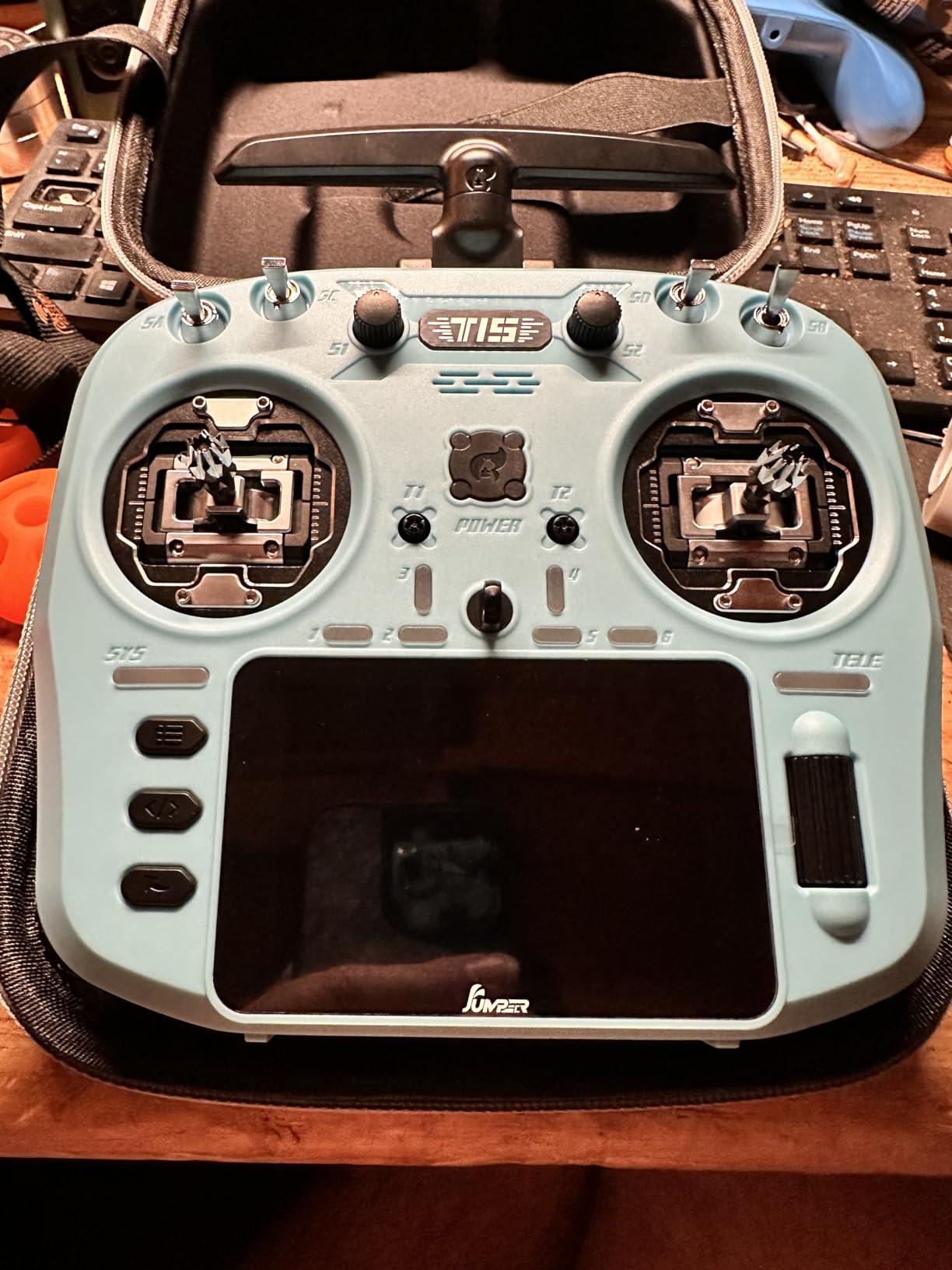
The Jumper T15 Blue focuses on ExpressLRS performance for FPV pilots wanting native long-range capability. The built-in ELRS module eliminates external module purchases for most flying scenarios.
The included nano receiver gets you flying immediately with small drones. The axial cooling fan prevents thermal throttling during high-power long-range flights that stress the RF module.
Who Should Buy the T15 Blue
FPV drone pilots prioritizing ELRS performance find this transmitter purpose-built for their needs. The large 21700 battery bay provides extended flight sessions without mid-day charging.
Who Should Skip This Radio
Surface vehicle drivers or Spektrum users find limited value here. The ELRS focus means less emphasis on legacy protocol support compared to 4-in-1 alternatives.
10. Jumper T15 Grey – Multi-Frequency Powerhouse
Jumper T15 2.4GHz / 915MHz / 868MHz VS-M Hall Sensor Gimbals 3.5" HD Touch Color Screen ELRS EdgeTX ExpressLRS Radio Controller Open-so Grey
Multi-Frequency 2.4GHz/915MHz/868MHz
VS-M Hall Sensor Gimbals
3.5 inch HD Touch Color Screen
ELRS ExpressLRS Protocol
EdgeTX Operating System
21700/18650 Battery Support
Pros
- Great feel and grip
- Rubbery back grips for security
- Includes case lanyard screen protector
- Bright clear touchscreen
- Good value compared to alternatives
Cons
- Only comes with 21700 battery holder
- May require separate 18650 holder purchase
The grey T15 variant adds multi-frequency support for regional frequency requirements. The 915MHz option serves FCC regions while 868MHz covers EU standards – crucial for traveling pilots.
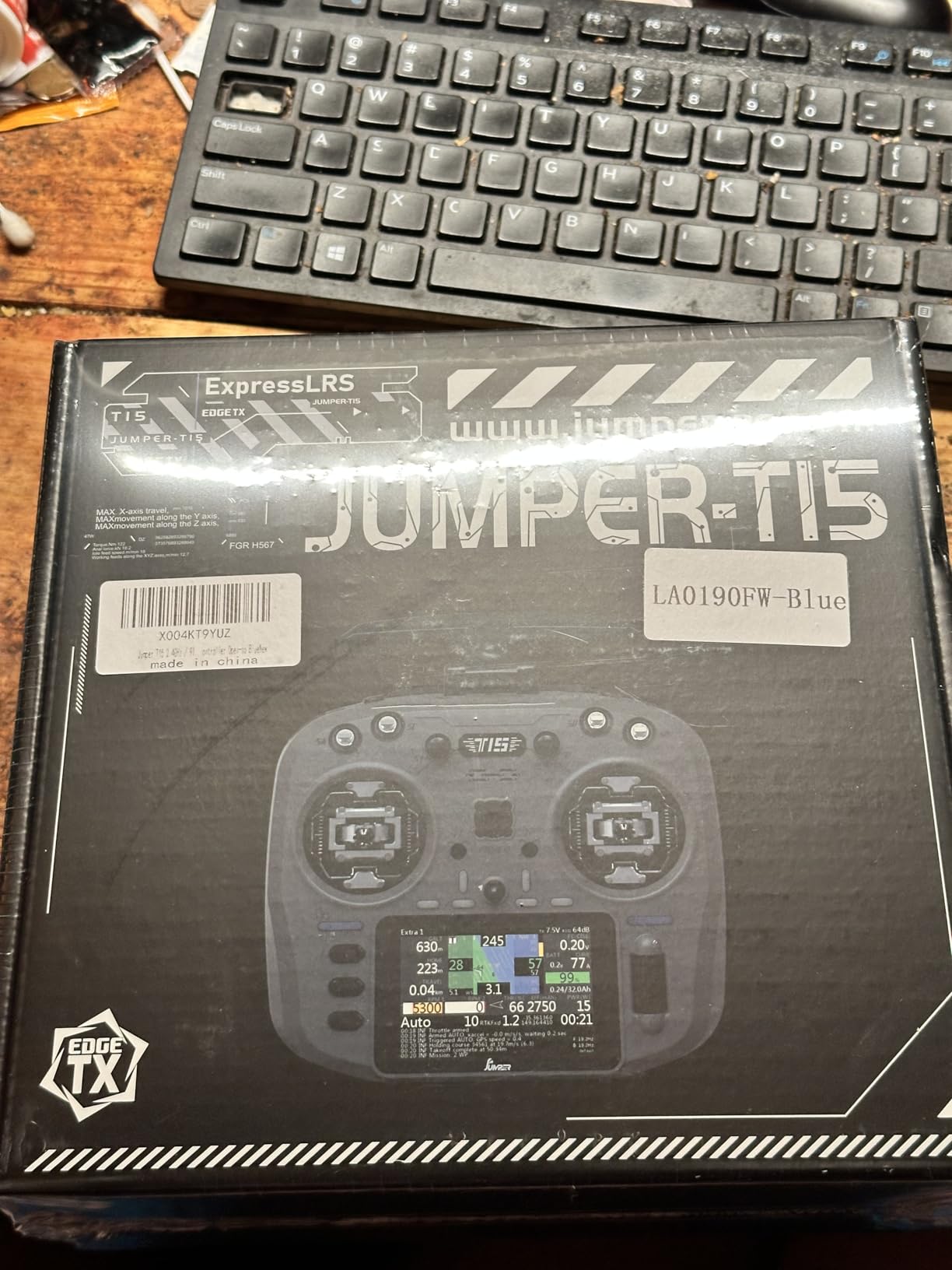
Seven physical buttons complement the touchscreen for glove-friendly winter flying. The rubberized back grips prevent slipping during aggressive flight maneuvers or sweaty summer sessions.
The included accessories add genuine value – carrying case, lanyard, and screen protector would cost $30+ purchased separately. This attention to detail shows Jumper’s commitment to user experience.
Who Should Buy the T15 Grey
International travelers needing regional frequency flexibility find this variant essential. The multi-frequency capability eliminates transmitter swaps when crossing regulatory boundaries.
Who Should Skip This Radio
Users staying in single-frequency regions find no advantage over the standard T15 Blue. The premium for multi-frequency capability wastes money if you never use the additional bands.
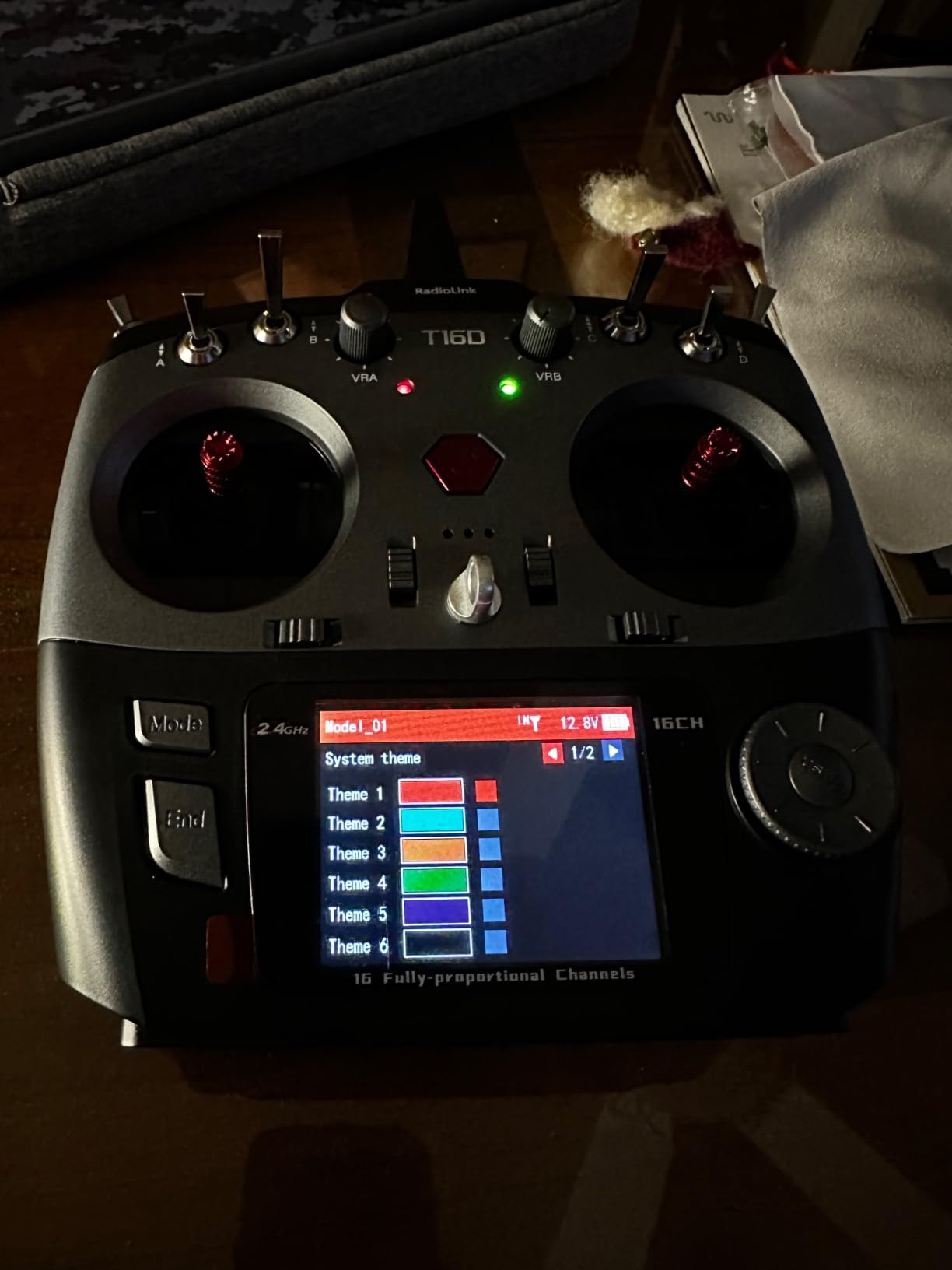
11. Radiolink T16D – Best Budget with Telemetry
Radiolink T16D 16 Channels RC Transmitter and R16F Telemetry Receiver, Multi-Protocol and Voice Broadcast Support, RC Radio Remote for Drone, Airplane, Car, Boat and More (Mode 2 Left Throttle)
16 Channels with 3ms Response
2.5 Mile Range
ELRS TBS Crossfire Support
Voice Broadcast
Real-Time Telemetry
R16F Receiver Included
Simulator Support
Pros
- Excellent anti-interference and stable transmission
- 16 channels with fast 3ms response
- Multi-protocol module support
- Customizable voice alerts
- Real-time telemetry monitoring
- Receiver included in package
- Quality gimbals and dampened pots
- Carrying bag included
Cons
- No internal battery charger
- RSSI issues on firmware 1.8.0
- Quality control on stick centering
- Voice alerts quiet outdoors
- Display hard to read in sunlight
The Radiolink T16D challenges RadioMaster’s dominance in the budget multi-protocol space. Voice broadcast alerts through the built-in speaker help maintain situational awareness during complex flying.
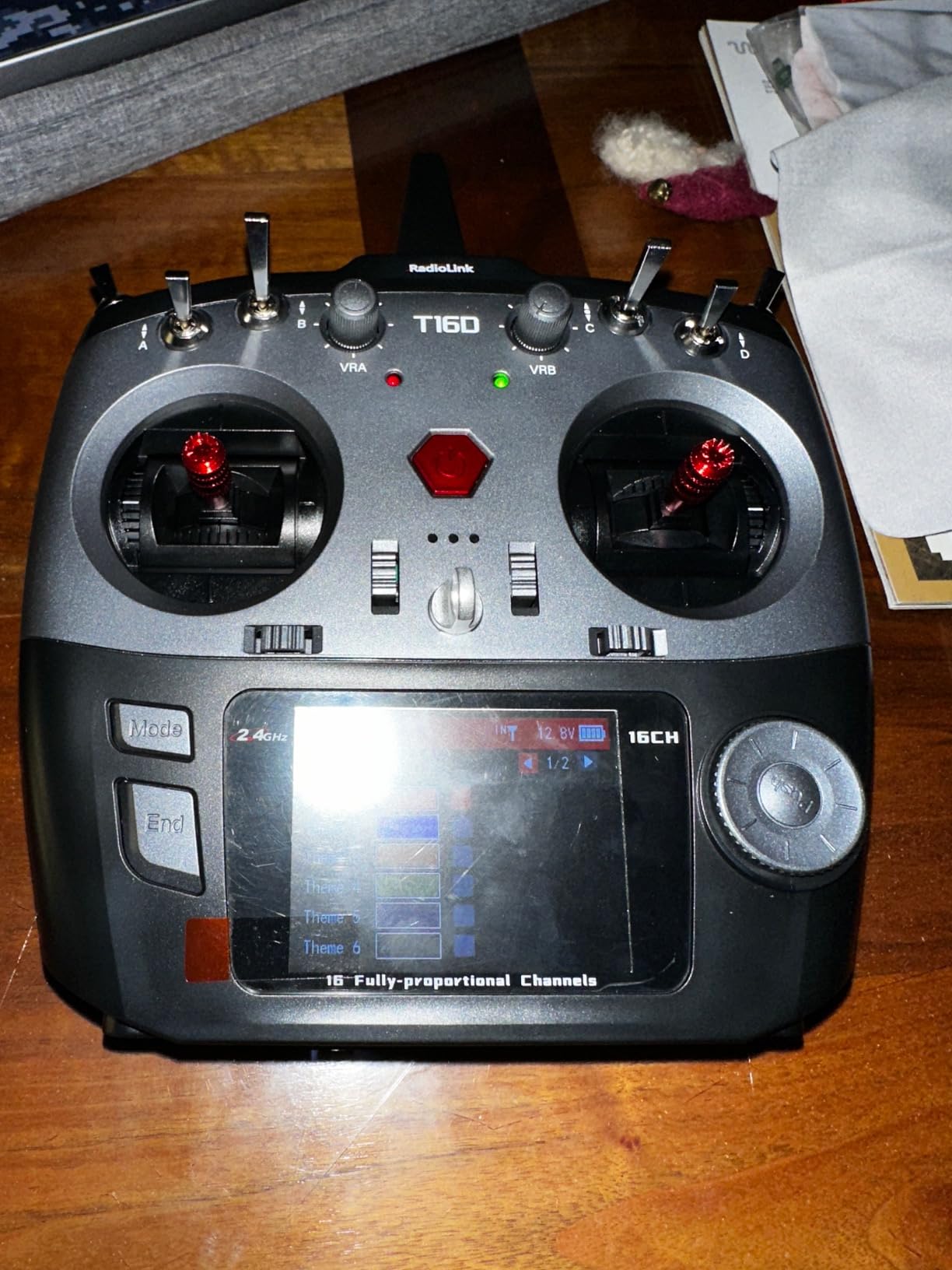
Real-time telemetry displays signal strength, battery voltage, and receiver voltage without external modules. This integration saves money compared to buying separate telemetry modules for other radios.
The included R16F receiver uses 16 channels, matching the transmitter’s full capability. Many competitors include 6-channel receivers requiring immediate upgrade purchases.
Open-source simulator support works without additional dongles – connect USB and practice immediately. The 2.5-mile range specification exceeds most hobby flying needs while providing safety margins.
Who Should Buy the T16D
Budget buyers wanting telemetry and voice alerts find excellent value here. The included receiver and carrying bag deliver ready-to-fly convenience missing from some competitors.
Who Should Skip This Radio
Users wanting internal charging must look elsewhere. The external charging requirement adds inconvenience for field charging setups.
12. RadioMaster TX15 – Entry-Level ELRS
RadioMaster TX15 ELRS 16CH ExpressLRS 3.5 inch IPS Screen Support OPENTX and EDGETX Remote Control Transmitter for RC Drone Mode 2 (TX15 Grey)
16CH ExpressLRS Transmitter
3.5 inch IPS Screen
OpenTX and EdgeTX Support
Multi-Module Compatible
Corona Hitec Futaba Frsky Graupner Protocols
USB/SD Card Updates
Pros
- 16-channel capability with multi-protocol support
- Supports OpenTX and EdgeTX firmware
- Clear 3.5 inch IPS screen
- Multi-module compatible internal RF
- ExpressLRS ready for long-range
Cons
- Limited review data
- Ships in 4-5 weeks not immediate
- Newer product with less community support
The TX15 rounds out our list as RadioMaster’s entry point into multi-protocol ExpressLRS transmitters. The 3.5-inch IPS screen provides clear visibility without the larger TX16S size and weight.
Internal RF supports an impressive protocol list: Corona, Hitec, Futaba S-FHSS, Frsky D16/D8, RadioLink, and Graupner HoTT. This coverage handles most Asian receivers plus several legacy European systems.
Firmware updates work through multiple methods – USB, SD card, EdgeTX Buddy online, or EdgeTX Companion PC software. This flexibility matches the open-source philosophy that makes these radios so versatile.
Who Should Buy the TX15
Entry-level users wanting ELRS capability without TX16S pricing find a compelling option. The multiple color choices (Yellow, Pink, Green, Grey, Blue, White) let you personalize your radio.
Who Should Skip This Radio
The 4-5 week shipping timeline frustrates those wanting immediate gratification. Early adopters accept less community troubleshooting support compared to established TX16S platforms.
How to Choose the Best Multi-Protocol RC Transmitters for Mixed Fleets?
Selecting the best multi-protocol transmitter requires understanding your current fleet and future plans. I made mistakes buying radios that lacked protocols for vehicles I later acquired. Follow this framework to avoid similar errors.
Protocol Compatibility Matrix
Start by listing every receiver protocol your current vehicles use. The most common protocols include:
Spektrum DSM2/DSMX dominates the BNF aircraft market from Horizon Hobby. FlySky AFHDS 2A and 3 appear on most budget crawlers and bashers. Frsky ACCST and ACCESS protocol ecosystems remain popular in FPV and custom builds. Futaba S-FHSS and T-FHSS serve premium surface vehicles. ExpressLRS dominates long-range FPV applications.
Your transmitter must support every protocol on your list. The 4-in-1 multi-protocol modules found in most recommendations cover the first four categories natively. ExpressLRS requires either a specific ELRS module or external module bay installation.
Channel Count Requirements
Surface vehicles typically need 2-4 channels for basic driving. Crawlers with winches, lights, and locking differentials benefit from 6-8 channels. Aircraft require 4-6 channels minimum, with 7-8 needed for retracts, flaps, and lights. Complex scale helicopters might use 9-12 channels.
All 12 transmitters in this guide provide 16 channels, far exceeding most needs. However, verify your specific vehicles fit within this allocation. Some advanced glider setups with multiple servos per surface approach channel limits.
Gimbal Quality Differences
Hall effect gimbals provide the smoothest, most precise control with no contact wear over time. Standard potentiometer gimbals cost less but develop centering issues and rough spots with heavy use.
Premium AG01 gimbals in the TX16S MAX deliver the finest resolution for precision work. V4.0 Hall gimbals in standard TX16S and Boxer models provide excellent performance for most users. Budget options might use standard gimbals acceptable for casual driving but limiting for precision aircraft work.
Battery Life Considerations
Consider your typical session length and charging access. Large 18650 or 21700 cells deliver 10-20 hour operation. Smaller 18350 cells in compact radios require mid-day charging during extended events.
The Boxer’s oversized battery compartment accepting 2S 6200mAh packs provides unmatched endurance. The Zorro and similar compact designs trade battery capacity for portability.
Ecosystem Total Cost
Calculate your total investment including receivers, not just the transmitter price. Spektrum receivers cost $40-80 each. FlySky receivers run $15-25. ELRS receivers range $15-30 depending on features.
A $400 transmitter with $20 receivers often costs less long-term than a $200 radio requiring $60 receivers. Factor your planned fleet size into the total ecosystem cost equation.
Frequently Asked Questions
Can you bind multiple receivers to one transmitter?
Yes, you can bind multiple receivers to one multi-protocol transmitter. Each model memory slot stores binding information for a specific receiver. Switch between vehicles by selecting different model memories. This capability defines the mixed fleet advantage – one transmitter controls your entire collection through separate model profiles.
Does any RC receiver work with any transmitter?
No, RC receivers only work with transmitters sharing their specific protocol. A Spektrum DSMX receiver requires a DSMX-compatible transmitter. Multi-protocol transmitters bridge this gap by supporting multiple protocols internally. However, the receiver and transmitter must share at least one common protocol for successful binding and operation.
What is mode 2 on an RC transmitter?
Mode 2 is the most common transmitter configuration in North America. The left stick controls throttle and rudder (yaw). The right stick controls elevator (pitch) and ailerons (roll). This configuration matches full-scale aircraft control layouts where the throttle sits on the left side. Mode 1 swaps these assignments, placing throttle on the right stick, common in some European and Asian markets.
How far does a 2.4 GHz RC go?
Standard 2.4GHz RC systems reach 1-2 kilometers (0.6-1.2 miles) in optimal conditions. Range varies significantly based on transmitter power, receiver quality, antenna orientation, and environmental interference. Urban areas with WiFi congestion reduce range substantially. Open fields enable maximum range. ExpressLRS and other long-range protocols extend this to 10+ kilometers with appropriate hardware.
What is the best multi-protocol transmitter for beginners?
The RadioMaster Boxer or TX16S MKII Carbon offer the best entry points for beginners wanting multi-protocol capability. Both provide extensive online tutorial support, active community forums, and proven reliability. The Boxer costs less while delivering core functionality. The TX16S adds expansion options and more model memory for growing fleets. Both run EdgeTX firmware with identical programming methods, making knowledge transferable between radios.
Final Recommendations
Choosing the best multi-protocol RC transmitters for mixed fleets depends on your specific vehicle collection and budget. The RadioMaster TX16S MKII Carbon earns our top recommendation for its unbeatable combination of capability, value, and community support.
Budget-conscious buyers find excellent value in the RadioMaster Boxer with its extended battery life. Surface vehicle specialists should consider the MT12 series for proper pistol-grip ergonomics. FPV pilots wanting native long-range performance gravitate toward the Jumper T15 models with built-in ExpressLRS.
Remember that multi-protocol transmitters save money long-term by eliminating multiple radio purchases and enabling cheaper receiver ecosystems. In 2026, these 12 options represent the finest multi-protocol solutions for controlling diverse RC fleets from a single, capable transmitter.