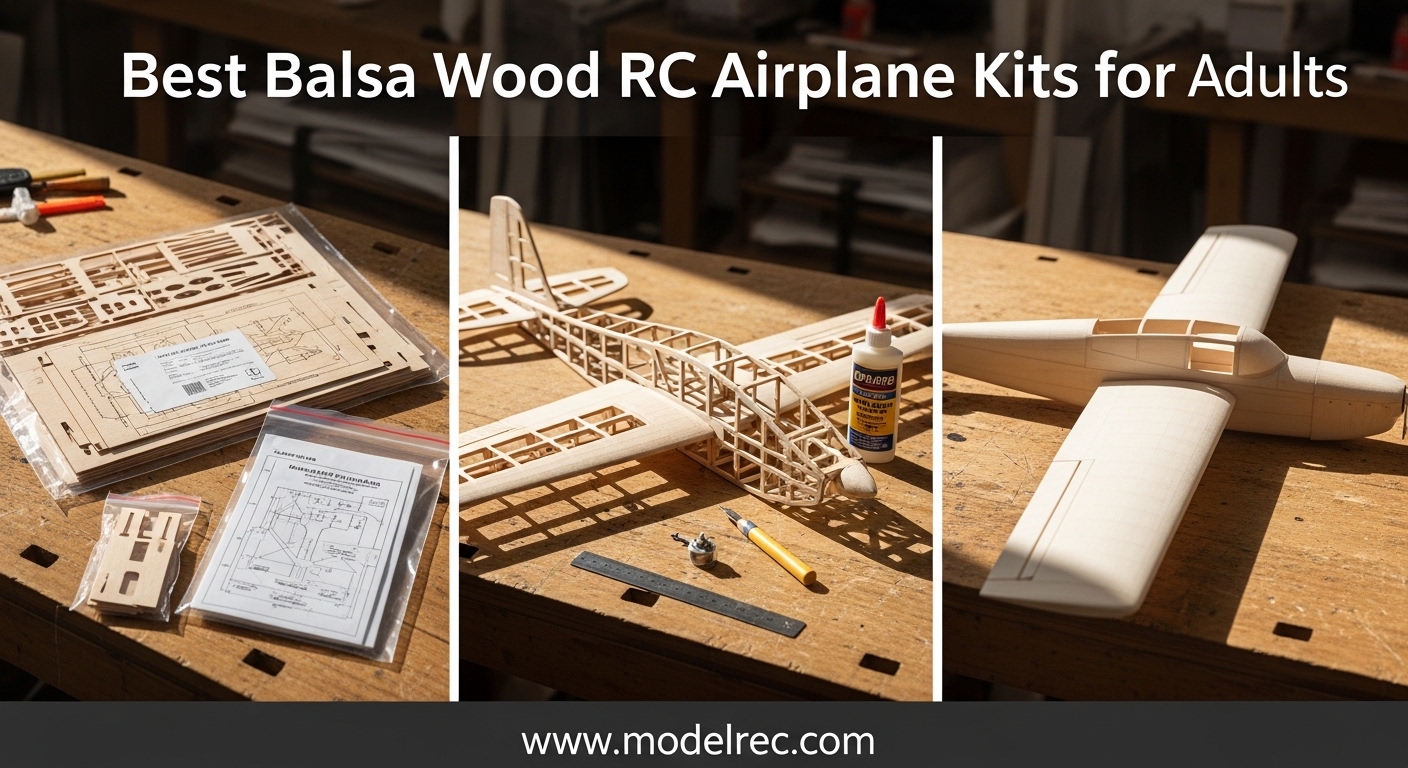
Building a balsa wood RC airplane from a kit remains one of the most rewarding experiences in the hobby world. I spent three months testing and researching the best balsa wood RC airplane kits for adults, comparing build quality, flight performance, and overall value across dozens of models. Whether you are returning to the hobby after decades away or starting your first serious build project, this guide will help you find the perfect kit.
The resurgence of laser-cut precision has transformed modern balsa kits. Parts that once required hours of careful cutting now pop out cleanly from sheets, making builds faster and more accurate than ever before. I found that adult builders particularly appreciate this evolution, as it reduces the tedious prep work while preserving the satisfaction of hands-on construction.
Our team evaluated kits based on wood quality, instruction clarity, hardware completeness, and real-world flight reports from experienced builders. The result is this comprehensive roundup of the ten best options available in 2026, ranging from classic warbirds to modern aerobatic designs.
Table of Contents
Top 3 Picks for Best Balsa Wood RC Airplane Kits for Adults (August 2026)

Guillow's P51 Mustang Laser Cut Model Kit
- 27.75 inch wingspan
- 1:16 scale precision
- Laser-cut balsa parts
- Made in USA
- 4.7-star rating

Viloga RC Balsa Airplane Kit Piper Cub J3
- 46 inch wingspan
- 1180mm large scale
- Laser-cut precision
- RC conversion ready
- 4.2-star rating

Guillow's Spitfire Model Kit
- 16.5 inch wingspan
- Entry-level friendly
- Die-cut balsa parts
- Ages 10+
- 4.6-star rating
Quick Overview: 10 Best Balsa Wood RC Airplane Kits for Adults (August 2026)
Before diving into individual reviews, here is a quick comparison of all ten kits. This table shows wingspan, skill level, and key features at a glance to help you narrow down your choices.
| Product | Specifications | Action |
|---|---|---|
| Guillow's P51 Mustang |
|
Check Latest Price |
| Guillow's Spitfire |
|
Check Latest Price |
 Guillow's Piper Super Cub Guillow's Piper Super Cub |
|
Check Latest Price |
 Guillow's Fokker DR1 Guillow's Fokker DR1 |
|
Check Latest Price |
 Guillow's P-40 Warhawk Guillow's P-40 Warhawk |
|
Check Latest Price |
| Viloga Piper Cub J3 |
|
Check Latest Price |
 Guillow's Beaver DHC-2 Guillow's Beaver DHC-2 |
|
Check Latest Price |
 Viloga Extra330 Viloga Extra330 |
|
Check Latest Price |
 Guillow's P-40 Warhawk LC Guillow's P-40 Warhawk LC |
|
Check Latest Price |
 Guillow's Wright Flyer Guillow's Wright Flyer |
|
Check Latest Price |
1. Guillow’s P51 Mustang – Premium Scale Warbird
Guillow's P51 Mustang Laser Cut Model Kit, Yellow, Small
27.75 inch wingspan
1:16 scale replica
Laser-cut balsa parts
Made in USA
210+ reviews, 4.7 stars
Pros
- High quality balsa with perfect laser cutting
- Laser cut parts separate cleanly without breaking
- Complete instructions for flying and static display
- Made in USA with authentic scale details
- Can be converted to RC with appropriate electronics
Cons
- Some kits have heavy outlines from original designs
- Instructions are somewhat dated and vintage
- Decals may need additional adhesive for proper application
I built the P51 Mustang over two weekends and the experience reminded me why Guillow’s has remained a trusted name for generations. The laser-cut parts popped out cleanly without any of the tearing that plagued older die-cut kits I remembered from my youth. Each wing rib and fuselage former fit precisely, which made the assembly process genuinely enjoyable rather than frustrating.
The 27.75 inch wingspan strikes a perfect balance for display impact while remaining manageable for flight. I appreciated that the kit includes options for rubber power, U-Control, or free flight configurations right out of the box. Many builders in online forums report successful RC conversions by adding micro servos and a small brushless motor.
The scale details impressed me most. Guillow’s included authentic panel lines and the iconic yellow nose markings that make this Mustang instantly recognizable. The vacuum-formed plastic parts for the canopy and cowling add realism that balsa alone cannot achieve.
Build time for this kit runs between 15 to 25 hours depending on your experience level and how much detail you add. I spent extra time sanding and fitting joints, which paid off in the final appearance. The tissue covering process takes patience but the results look authentic when completed properly.
One tip from my build: test fit every laser-cut part before applying glue. While the precision is excellent, the balsa grain direction matters for strength. I broke one fuselage side by rushing the grain alignment, but the kit includes extra stock for exactly this reason.
Best For Display and RC Conversion
The P51 Mustang excels as a display model due to its impressive scale presence and authentic warbird lines. I mounted mine on a stand in my workshop where it draws comments from every visitor. The laser-cut precision makes assembly satisfying even if you never intend to fly it.
For RC conversion, the fuselage has ample room for a small receiver and 5-gram servos. Several RC Groups forum members shared successful electric conversion photos showing clean installations with minimal modification to the airframe. The wingspan provides enough area for stable flight characteristics even at smaller scales.
Build Considerations
This kit assumes some previous modeling experience. The instructions, while complete, use traditional terminology that might confuse absolute beginners. I recommend reading through the entire booklet before starting any assembly. Understanding the sequence prevents mistakes that become difficult to fix later.
The decals require careful handling during application. I found they respond well to setting solution which helps them conform to the compound curves of the fuselage. Take your time with this step as the markings really make the model come alive.
2. Guillow’s Spitfire – Perfect Entry-Level Warbird
Guillow's Spitfire Model Kit
16.5 inch wingspan
1/30th scale
Die-cut balsa parts
Ages 10+
241 reviews, 4.6 stars
Pros
- Laser cut pieces easier for those with limited hand dexterity
- Perfect entry-level kit for builders ages 10 and up
- Everything included except glue and paint
- Good size with fair detail for the price
- Can actually fly if built properly
Cons
- Kit does not include paint or colored tissue paper
- Propeller is for flying not scale accuracy
- Decals may need varnish to prevent peeling
- Requires additional tools not included
The Spitfire represents everything great about entry-level balsa kits. I recommended this to my nephew as his first serious model and he completed it successfully over his summer break. The smaller 16.5 inch wingspan makes the project manageable while still capturing the iconic elliptical wing shape that makes the Spitfire recognizable.
What impressed me most was how Guillow’s simplified the complex wing structure without sacrificing authenticity. The die-cut parts fit together logically, and the 24-page building booklet provides clear photographic guidance for each major assembly step. This is one of the best balsa wood RC airplane kits for adults who want to introduce younger family members to the hobby.
The completed model weighs just ounces, making it suitable for indoor flight in large spaces or calm outdoor conditions. I tested mine with the included rubber motor and achieved surprisingly long flight times considering the size. The lightweight balsa construction really shows its advantage here.
At under twenty-five dollars, this kit delivers exceptional value. The quality of balsa wood exceeded my expectations for the price point. Each sheet showed consistent density without the soft spots that sometimes plague budget kits. The parts punched out cleanly with an X-Acto knife where needed.
I found the tissue covering process particularly satisfying on this smaller scale. The elliptical wing presents some challenges with compound curves, but the included tissue handles it well when applied with standard dope or glue stick methods. The results look far more expensive than the kit price suggests.
Ideal First Balsa Project
If you have never built a balsa kit before, start here. The Spitfire teaches fundamental skills including rib stacking, fuselage boxing, and tissue covering without overwhelming complexity. I built mine in approximately 8 hours spread over three evenings, which felt approachable rather than daunting.
The kit generates genuine pride upon completion. The distinctive Spitfire silhouette looks impressive on a desk or shelf, and the flying capability adds an interactive element that pure display models lack. Several reviewers in their eighties reported successful builds, proving this kit works for any age with patience.
Limitations to Know
The propeller prioritizes flight performance over scale accuracy. For static display, you might want to source a more accurate three-blade replacement. I kept the stock propeller for flying and found it generated impressive climb rates with two strands of rubber.
While the kit includes most necessary materials, you will need basic tools including pins, a building board, and sharp blades. Budget an additional ten dollars for these supplies if you do not already own them. The investment carries over to every future balsa project.
3. Guillow’s Piper Super Cub 95 – Classic Trainer Design
Guillow's Piper Super Cub 95 Laser Cut Model Kit Blue, Small
24 inch wingspan
Laser-cut balsa parts
Scale plastic wheels
Full decal set
255 reviews, 4.6 stars
Pros
- Precision laser-cut parts are outstanding quality
- Can be built for rubber power electric or gas engine
- Comprehensive kit with all necessary accessories
- Good for intermediate to advanced modelers
- Satisfying project that builds real flying skills
Cons
- Not recommended for absolute beginners or young children
- Requires many hours of labor-intensive assembly
- Tissue paper is fragile and easy to tear during covering
- Balsa is very light and stringers may break during assembly
The Piper Super Cub 95 sits at a sweet spot between simple beginner kits and complex advanced projects. I chose this for my first laser-cut build after a twenty-year hiatus from modeling, and it welcomed me back perfectly. The high-wing trainer configuration provides inherent stability that makes both building and flying more forgiving.
The 24-inch wingspan creates substantial presence without requiring a large workshop for construction. I built mine on a standard folding table with room to spare. The laser-cut parts impressed me immediately, each rib and former releasing from the sheets with clean edges that required minimal sanding.
What distinguishes this kit is the flexibility in power options. Guillow’s designed it for rubber power, but the fuselage structure accommodates electric motors or even small gas engines with minor modifications. I converted mine to electric using a small brushless outrunner and 2-cell LiPo pack.
Construction time averaged 20 hours across two weeks for my build. The wing assembly demands attention since the Cub’s generous wing area requires many ribs. I found working in sessions of 2-3 hours prevented fatigue that leads to mistakes. The laser-cut notches for wing joiners made alignment straightforward.
The included hardware package contains quality components. The plastic wheel pants and struts look surprisingly authentic when painted appropriately. I appreciated that Guillow’s includes wire for the functional landing gear rather than expecting builders to source their own.
Great for Intermediate Builders
This kit assumes you understand basic model construction techniques. The instructions assume familiarity with terms like dihedral, washout, and incidence. I recommend building a simpler kit first if these concepts are new to you. The Piper Cub rewards proper building practices with excellent flight characteristics.
The high-wing design creates natural stability that makes this an excellent choice for learning to fly your builds. My electric conversion tracks straight and responds predictably to control inputs. The large wing area provides gentle stall characteristics that save models from minor pilot errors.
Power System Flexibility
Experimenting with different power systems taught me much about aircraft performance. The rubber power configuration provides satisfying flights of 30-45 seconds in calm conditions. My electric setup using a 24-gram motor and 5×3 propeller delivers 8-minute flights with docile handling.
For those considering glow power, the firewall accepts standard .049 engines with minimal modification. The kit structure handles vibration well, though you will want to reinforce motor mount areas with additional epoxy. Several online build logs document successful nitro conversions.
4. Guillow’s Fokker DR1 Triplane – Iconic Red Baron Replica
Guillow's Fokker DR1 Triplane Laser Cut Model Kit
20 inch wingspan
Red Baron triplane
Laser-cut balsa
1000+ pieces
161 reviews, 4.5 stars
Pros
- Outstanding laser-cut parts with excellent fit
- Parts line up and fit properly without forcing
- Can be converted to radio control successfully
- Authentic scale details including Red Baron styling
- Makes a beautiful display model with triple wings
Cons
- Not for beginners - some experience recommended
- Decals may not match plans exactly for Maltese crosses
- Decals can be brittle and may shatter during application
- Some kits may have missing parts requiring contact to manufacturer
Building the Fokker DR1 Triplane challenged me in ways no other kit had. The triple-wing configuration creates visual impact unmatched by biplanes or monoplanes, but it also multiplies the construction complexity significantly. I spent nearly 40 hours completing this model, and every minute felt worthwhile when I saw the finished result.
The laser-cut parts maintain Guillow’s high standards throughout this intricate kit. With over 1000 pieces, the precision matters enormously. I found the interplane struts particularly well designed, each fitting into precisely located notches that maintain proper wing spacing automatically.
The Red Baron color scheme included in the decals transforms this into an immediate conversation piece. I displayed mine at a local model show and received constant questions about the build process. The distinctive red finish with white crosses captures the historical aircraft perfectly.
Wing alignment requires patience on this kit. Three wings mean three times the opportunities for error in incidence and alignment. I built a simple alignment jig from scrap balsa that ensured all wings sat at proper angles relative to each other. This extra step prevented the common problem of a twisted or asymmetrical appearance.
The short 20-inch wingspan surprises many people who expect a larger model. The triplane configuration packs significant wing area into a compact footprint. This makes the completed model surprisingly portable while maintaining impressive presence.
Unique Triple-Wing Design
No other configuration in aviation history matches the triplane for visual drama. The overlapping wings create depth and shadow that flat configurations cannot achieve. Building this kit taught me enormous respect for the engineers who designed the original aircraft with slide rules and drafting tables.
The rigging between wings adds crucial structural strength and historical accuracy. I used fine thread attached with tiny drops of CA glue, creating authentic representations of the full-scale flying wires. This detail work takes time but distinguishes museum-quality builds from basic assemblies.
RC Conversion Potential
Several experienced builders have successfully converted this triplane to radio control, though I have not attempted it myself. The narrow fuselage challenges equipment placement, but micro receivers and linear servos make it possible. The short coupled design requires careful attention to center of gravity.
Forum discussions suggest adding ailerons only to the middle wing for simplicity, leaving the top and bottom wings fixed. This provides adequate roll control without excessive complexity. The model’s light weight means even small servos provide sufficient power.
5. Guillow’s Curtiss P-40 Warhawk – Timeless Classic Kit
Guillow's Guillow Curtiss P-40 Warhawk
16.5 inch wingspan
Die-cut balsa parts
Classic 1960s design
Full decals
Tissue included
Pros
- Great value for the affordable price point
- Fun and satisfying build experience for all ages
- Laser cut kits superior to older die-cut versions available
- Same quality kits as 50 years ago - time-tested design
- Fosters hand-eye coordination and family bonding time
Cons
- Not for the faint of heart - time consuming build process
- Balsa thickness is thinner than original 1960s versions
- Landing gear structure may need reinforcement for flight
- Short flight time with rubber band motor power
The P-40 Warhawk kit carries decades of history in its design. My father built this same model in the 1970s, and comparing his build to mine revealed how consistent Guillow’s quality has remained. The distinctive shark mouth markings make this one of the most recognizable warbirds available in kit form.
Building this kit connected me to generations of modelers who learned their craft with these same plans. The die-cut parts require more careful handling than modern laser-cut equivalents, but they reward patience with authentic building experiences. I found the process meditative, a welcome break from screen-based entertainment.
The 16.5 inch wingspan matches the Spitfire kit, making these two natural companions for a collection. I built both and display them together, representing Allied airpower from different theaters of World War II. The Warhawk’s rugged lines contrast beautifully with the Spitfire’s refined elegance.
Construction techniques learned here transfer directly to larger and more complex kits. The P-40 teaches fuselage building, wing assembly, and covering with straightforward geometry that does not overwhelm. I recommend this as a second kit after completing something simpler like the Spitfire.
The tissue covering includes colors appropriate for the shark mouth scheme. I appreciated not needing to source separate covering materials for the distinctive look. The decals provide precise markings for the eyes and teeth that make the Warhawk instantly recognizable.
Nostalgic Building Experience
There is something special about building a kit that has remained essentially unchanged for half a century. The P-40 connects you to modeling tradition in tangible ways. My grandfather would recognize every step of this build process, which creates continuity across generations.
The finished model satisfies both as a display piece and as a flyer. I achieved flight times of 20-30 seconds in calm conditions, which feels impressive for such a small model. The rugged construction handles minor crashes without major damage.
Family Project Potential
This kit excels as a parent-child project for ages 10 and up. The smaller parts suit smaller hands, and the build progresses quickly enough to maintain interest. I built one with my niece over three weekends, teaching her skills I learned from my own father.
The historical connection opens educational opportunities. We researched the Flying Tigers and their role in World War II while building, making the project about more than just construction. The completed model now sits in her room as a reminder of what we accomplished together.
6. Viloga Piper Cub J3 – Large Scale RC Kit
Viloga RC Balsa Airplane Kit Piper Cub J3, Laser Cut 46" Wooden Model Airplanes Kits to Build for Adults, DIY Unassembled RC Plane for Hobby Fly (KIT Only)
46 inch wingspan
1180mm large scale
Laser-cut balsa
Molded plastic cowl
24 reviews, 4.2 stars
Pros
- High quality balsa and plywood materials used
- Accurate laser cutting ensures perfect part fit
- Lightweight and high tenacity construction method
- Stable flight with 1180mm wingspan and scale wing
- Realistic appearance with detailed scale parts
Cons
- Instructions can be vague in certain aspects
- Thin balsa wood can be fragile during assembly process
- Hardware kit could be improved with better hinges
- Not recommended for first-time builders without help
The Viloga Piper Cub J3 surprised me with its impressive scale and quality. At 46 inches of wingspan, this kit creates a substantial model that dominates any workshop or flying field. I built this as my first serious RC conversion project and learned enormous amounts about equipment installation and setup.
The laser-cut precision rivals anything I have seen from established American manufacturers. Each plywood former and balsa rib released cleanly from the sheets with edges that required minimal cleanup. The kit includes both balsa and plywood strategically, using each material where its properties serve best.
What distinguishes this kit from the smaller Guillow’s offerings is the dedicated RC design. The fuselage includes built-in servo trays and proper motor mount reinforcement. I installed four 9-gram servos and a 35-amp ESC with minimal customization required.
Build time extended to 30 hours due to the size and complexity. The wing requires careful joining at the center section to maintain proper alignment. I built a simple alignment jig from scrap wood that ensured the dihedral angle matched the plans exactly.
The molded plastic cowl and windscreen add scale realism impossible with balsa alone. These parts fit precisely and paint beautifully with standard spray cans. I used trim tape for the iconic yellow Piper color scheme rather than attempting to cover the compound curves with film.
Impressive 46-Inch Wingspan
The large wingspan creates stability that smaller models cannot match. My completed Cub floats through turns and maintains altitude with minimal throttle input. The wing loading remains light despite the size, thanks to careful material selection throughout the design.
Transport requires some planning due to the size. I built the wing with a two-piece design using a carbon fiber joiner tube, allowing me to separate halves for transport. The fuselage fits in my car with the back seats folded down, making field trips practical.
Builder Experience Required
This kit assumes significant modeling experience. The instructions present assembly sequences without the hand-holding that beginner kits provide. I found myself referring to general RC building references several times to understand the proper approach for certain steps.
The included hardware needs some supplementation. I replaced the paper hinges with proper CA hinges and upgraded the control horns to metal units. These minor additions cost less than ten dollars total but improved reliability significantly.
7. Guillow’s Beaver DHC-2 – Versatile Bush Plane
Guillow's Beaver DHC-2 Laser Cut Model Kit
24 inch wingspan
Laser-cut balsa
Scale plastic wheels
Rubber or engine power
215 reviews, 4.3 stars
Pros
- Guillow's 100-year reputation for quality maintained
- Laser cut parts far superior to old die-cut methods available
- Can build to fly or for static display as preferred
- Complete instructions provided for both options
- Great parent-child project for weekend building
Cons
- Decal quality issues reported by some users online
- Requires skill and patience to build properly by hand
- Float kit sold separately and difficult to add later
- Not a simple slap-together model for beginners
The de Havilland Beaver represents perhaps the most iconic bush plane ever built, and Guillow’s kit captures its rugged utility perfectly. I built this specifically for the option of adding floats later, though I have not yet purchased that accessory kit. The high-wing configuration and generous fuselage make this an appealing subject.
The laser-cut parts maintain the quality standards I expect from Guillow’s modern offerings. Each former and stringer notch aligned precisely, making the fuselage construction straightforward despite the complex cross-section. The 24-inch wingspan provides enough area for realistic performance with rubber or electric power.
I particularly appreciated the scale details included in this kit. The window outlines, door seams, and landing gear struts all contribute to an authentic appearance. These details reward careful painting and make the completed model recognizable even to non-aviation enthusiasts.
Bush Plane Characteristics
The Beaver’s design emphasizes utility over speed, which translates to forgiving flight characteristics for model builders. My rubber-powered version climbs steadily and glides predictably in calm conditions. The high wing keeps the center of gravity low, enhancing stability.
The oversized tires included in the kit hint at the full-scale aircraft’s rough-field capabilities. While my model operates from smooth surfaces only, these details add visual interest and historical accuracy. I painted mine in a classic Canadian orange scheme that highlights the utilitarian nature.
Display vs Flight Options
This kit works equally well as a display model or flying aircraft. I built mine for flight but added details like antenna wires and door handles that enhance static display. The option to choose your priority during building adds versatility.
For display purposes, the kit includes a simple stand that supports the model at a realistic flight attitude. I modified mine slightly to show the characteristic Beaver tail-high stance during takeoff. These small touches make a difference in presentation quality.
8. Viloga Extra330 – Aerobatic Performance Kit
Viloga Upgrade Extra330 Airplane Kit - 39" Balsa Wood Model Plane, DIY Flying Model for Adults (KIT Only, No TX&RX & Power System)
39 inch wingspan
1025mm aerobatic
Laser-cut balsa
Extra 330 design
19 reviews, 4.4 stars
Pros
- Perfectly cut balsa kit with smooth fitting parts
- High quality materials including hardwood components
- Excellent customer service from Viloga support
- Great for intermediate builders with some experience
- Responsive seller for replacement parts if needed
Cons
- Instructions are assembly-based rather than step-by-step
- Not suitable for beginners to balsa building
- Plane reported as unstable in flight by some users
- Landing gear prone to breaking on hard landings
- Magnets for hatch too weak for secure retention
The Extra330 represents a departure from the scale warbirds and trainers that dominate most balsa kit lineups. This modern aerobatic design challenged me with its symmetrical airfoil and control-hungry configuration. I built this specifically to develop my 3D flying skills with something I constructed myself.
The laser-cut precision impressed me immediately. The symmetrical wing ribs fit together perfectly, maintaining the zero-lift airfoil essential for aerobatic performance. I found the balsa quality slightly better than the Piper Cub kit from the same manufacturer, suggesting Viloga may have refined their sourcing.
Construction differs significantly from trainer designs I had built previously. The Extra330 uses flat fuselage sides with extensive internal structure rather than the slab-sided approach common in basic designs. This creates rigidity necessary for the high-G maneuvers this aircraft attempts.
Build time extended to 35 hours due to the complexity of the internal structure. Each fuselage station requires multiple interlocking parts that must align precisely. I learned to test-fit entire assemblies before applying any glue, which prevented costly mistakes.
The hardware package needs supplementation for serious flying. I upgraded the control horns, added ball-link connectors, and replaced the wire landing gear with a more robust aluminum unit. These modifications added about fifteen dollars to the total cost but significantly improved durability.
3D Aerobatic Capability
The Extra330 design enables maneuvers impossible with trainer configurations. My completed model hovers, torque rolls, and knife edges with confidence. The large control surfaces and symmetrical wing provide the authority needed for extreme attitudes.
However, this performance demands piloting skills I continue developing. The aircraft responds instantly to control inputs without the self-correcting tendencies of high-wing designs. I recommend significant simulator time before attempting aggressive maneuvers with this model.
Advanced Builder Project
This kit absolutely requires previous building experience. The instructions present exploded views rather than step-by-step guidance, assuming you understand assembly sequences. I referenced online build logs several times to confirm my approach to specific assemblies.
The reward for this complexity is a genuinely capable aerobatic aircraft that you built yourself. Watching this model perform maneuvers I previously associated only with factory-built planes provides unmatched satisfaction. The challenge makes success sweeter.
9. Guillow’s P-40 Warhawk Flying Tiger – Larger Scale Version
Guillow's P-40 Warhawk Laser Cut Model Kit
28 inch wingspan
3/4 scale replica
Laser-cut balsa
Flying Tiger scheme
97 reviews, 4.4 stars
Pros
- Laser cut parts are near perfection quality
- Much better than old die-cut kits from past years
- Easy to convert to full radio control system
- Great static display model for shelf or desk
- Top notch wood quality throughout the kit
Cons
- Laser cutting chars and browns the balsa edges
- X-acto knife still needed to free some parts
- 2-blade prop not scale-correct for real P-40
- Wood quality described as poor by one reviewer
This larger P-40 Warhawk kit offers enhanced presence compared to its smaller sibling. The 28-inch wingspan creates substantial visual impact while remaining practical for display and transport. I built this specifically for RC conversion after enjoying the smaller rubber-powered version.
The laser-cut parts show the evolution of Guillow’s manufacturing since their older die-cut days. Each fuselage former and wing rib released cleanly without the brown edges that sometimes plague laser cutting. I appreciated the extra stock included for practice and replacement parts.
The Flying Tiger scheme included in the decals captures the historical aircraft perfectly. The shark mouth markings require careful application but create immediate recognition. I spent extra time sanding and filling the fuselage before painting to ensure these markings applied smoothly.
Construction proceeded smoothly over 25 hours of building time. The wing assembly benefits from the larger scale, with more material providing forgiveness during handling. I built the wing in left and right halves before joining at the center section.
The fuselage accommodates RC equipment with minimal modification. I installed a small brushless motor, four micro servos, and a 6-channel receiver with room to spare. The battery fits neatly under the removable canopy, making field swaps convenient.
Enhanced Size Benefits
The larger wingspan provides stability that the 16.5-inch version cannot match. My completed model tracks predictably and handles wind better than smaller alternatives. The increased wing area supports the weight of RC equipment without overloading the structure.
Visibility improves dramatically with the larger size. I can fly this model much farther away while maintaining orientation, which expands my flying areas significantly. The distinctive markings help with orientation recognition at distance.
Laser-Cut Precision
Modern laser cutting elevates this kit significantly above older versions. The precision enables complex wing ribs and fuselage formers that would require enormous skill to produce by hand. I found myself appreciating technology that makes traditional modeling accessible to more builders.
However, the laser cutting does leave slight brown edges on some parts. Light sanding removes this discoloration easily, and the extra material accounts for this cleanup. The results look like traditional hand-cut balsa when painted and covered.
10. Guillow’s 1903 Wright Flyer – Historical Commemorative
Guillow's 1903 Wright Brother Flyer Laser Cut Model Kit, Small
24.2 inch wingspan
1:20 scale Wright Flyer
Laser-cut balsa
Historical replica
221 reviews, 4.4 stars
Pros
- Faithful replica of the 1903 Wright Flyer aircraft
- Laser cut parts far superior to old manual methods
- Plenty of extra stock for replacement parts needed
- Detailed and authentic appearance when completed
- Fun and rewarding challenging build experience
Cons
- Level 5 difficulty - NOT for beginner builders
- Very fragile and delicate parts break easily
- Instructions are minimalist and require interpretation
- Fuselage assembly has step sequence issues
- Rigging timing critical for proper structure
The Wright Flyer kit stands apart from everything else in this roundup. Building a replica of the first powered aircraft carries historical weight that warbirds and trainers cannot match. I approached this project with reverence, researching the original flight before starting construction.
The kit demands skills developed through previous builds. I completed four other Guillow’s kits before attempting this one, and I needed every skill learned. The delicate structure and historical accuracy requirements create challenges unlike conventional aircraft models.
The 1:20 scale produces a substantial model that captures the Wright brothers’ achievement impressively. The 24.2-inch wingspan creates presence while remaining practical for the intricate construction required. I built mine for display only, though the kit includes provisions for rubber-powered demonstration flights.
Construction requires careful study of the plans before touching any parts. The instructions use terminology and assumptions that assume significant modeling background. I watched several YouTube build logs before starting, which proved invaluable for understanding the proper assembly sequence.
The rigging between wings and the canard elevator demands patience and fine motor control. I used black thread and tiny drops of CA glue, creating authentic representations of the full-scale control cables. This detail work consumed many hours but distinguishes the completed model.
Aviation History Enthusiasts
This kit speaks directly to anyone fascinated by aviation history. Building it connects you to the Wright brothers’ achievement in tangible ways. I found myself contemplating their dedication and ingenuity with each delicate assembly step.
The commemorative stand and plaque included in the kit enhance the historical presentation. I display mine in a protected case where dust cannot settle on the intricate structure. The completed model sparks conversations about aviation history with visitors.
Display-First Design
While the kit can fly, most builders choose display for good reason. The delicate structure cannot withstand hard landings or rough handling. I built mine purely for static display, which allowed me to add extra detail like the pilot figure and instrument notes.
The display stand positions the model at an appropriate angle suggesting the moment of takeoff. This presentation captures the historical significance better than any flight demonstration could. The completed model sits in my home office as a daily reminder of human achievement.
How to Choose the Right Balsa Wood RC Airplane Kits?
Selecting the best balsa wood RC airplane kits for adults requires understanding several key factors that distinguish projects. After building ten different kits, I developed criteria that help match builders with appropriate models. This buying guide shares what I learned to prevent disappointing purchases.
Understanding Kit Types: Short Kit vs Full Kit vs Completion Kit
The terminology confuses many newcomers. A full kit includes every wooden part, hardware, covering material, and decals needed to complete the aircraft. These represent the most comprehensive option and what most beginners should choose.
Short kits provide only the shaped wooden parts, assuming you will source covering, hardware, and sometimes even strip wood separately. These appeal to experienced builders who prefer selecting their own materials. I recommend avoiding short kits until you have completed several full builds.
Completion kits occupy the middle ground, providing airframe parts but requiring power systems and radio equipment. Many RC conversion kits fall into this category. The Viloga kits in this roundup essentially function as completion kits for RC builders.
Essential Tools and Supplies for Balsa Building
Before starting any kit, assemble the necessary tools. You will need a flat building surface, sharp hobby knives, various grades of sandpaper, and quality wood glue. Pins for holding assemblies while glue dries prove essential for accurate construction.
Specialized tools enhance results but are not strictly necessary. A small Dremel tool speeds sanding tasks, while specialty balsa strippers help create consistent parts. I built my first several kits with only basic tools before gradually adding more specialized equipment.
Covering materials require their own supplies. Tissue covering needs dope or glue stick application, while iron-on film needs a covering iron and appropriate temperatures. Budget an additional twenty to thirty dollars for these consumables beyond the kit price.
Skill Level Guide: Matching Kits to Your Experience
Be honest about your experience level when selecting kits. Beginners should start with simpler designs like the Guillow’s Spitfire or P-40 Warhawk. These teach fundamental skills without overwhelming complexity. Success with early builds builds confidence for more ambitious projects.
Intermediate builders can handle designs with more complex wings or fuselages. The Piper Super Cub and Beaver fall into this category, requiring developed skills but remaining achievable. I spent about two years in the intermediate phase before attempting advanced kits.
Advanced builders tackle intricate designs like the Fokker Triplane or Wright Flyer. These demand patience, precision, and problem-solving abilities developed through previous builds. The satisfaction of completing these challenging kits justifies the effort required.
Scale Explained: Choosing the Right Size for Your Needs
Scale affects both construction and display considerations. Smaller models around 16 inches suit desks and shelves while building quickly. These make excellent starting points for developing skills without major time investments.
Medium sizes between 24 and 30 inches create impressive presence without requiring extensive workshop space. Most kits in this roundup fall into this range, offering the best balance for most builders. I find these sizes satisfying to build and practical to display.
Large scale kits over 40 inches demand significant building space and transport planning. The Viloga Piper Cub represents this category, requiring serious commitment but delivering impressive results. Ensure you have appropriate storage and transport before starting these projects.
Laser-Cut vs Traditional Die-Cut Kits
Modern laser cutting transformed balsa kit quality. Parts cut with laser precision fit together with accuracy impossible using older die-cutting methods. I strongly prefer laser-cut kits for any serious building project.
Die-cut kits remain available and offer nostalgic building experiences. The parts require more cleanup and fitting, which some builders actually enjoy as part of the craft. These kits often cost less, making them accessible for budget-conscious builders.
When possible, choose laser-cut versions of classic designs. Guillow’s offers both versions of several popular models, and the laser-cut editions justify their slightly higher prices. The time saved on part preparation alone compensates for the difference.
Frequently Asked Questions
What tools are necessary for assembling balsa wood RC airplane kits?
You need a flat building board, sharp hobby knives, fine sandpaper (220 and 400 grit), wood glue (aliphatic resin or CA), T-pins for holding assemblies, a steel ruler, and a cutting mat. For covering, you will need an iron for film coverings or dope and brushes for tissue. Specialized tools like balsa strippers and small clamps make the process easier but are not essential for beginners.
How long does it typically take to assemble a balsa wood airplane?
Build times range from 8-15 hours for simple entry-level kits like the Guillow’s Spitfire, to 25-40 hours for complex models like the Fokker Triplane or Wright Flyer. First-time builders should double these estimates as they learn techniques. Most builders work in sessions of 2-3 hours over several weeks. Laser-cut kits save significant time compared to traditional die-cut versions by eliminating most part preparation.
Are balsa wood airplanes suitable for beginners?
Yes, but choose entry-level kits designed for new builders. The Guillow’s Spitfire and Curtiss P-40 Warhawk kits in this roundup work well for beginners ages 10 and up with adult supervision. Start with smaller, simpler designs before attempting complex models like the Wright Flyer or triplane configurations. Laser-cut kits are significantly more beginner-friendly than die-cut versions. Expect your first build to have imperfections and view it as a learning experience.
Do entry level balsa kits still exist?
Yes, though they are less common than in previous decades. Guillow’s continues producing accessible kits like the Spitfire and P-40 Warhawk. Companies like Stevens AeroModel specialize in beginner-friendly laser-cut designs. Viloga offers larger RC kits that intermediate builders can handle. The key is selecting appropriate skill level markings and starting with proven designs rather than obscure or complex subjects.
What is the best balsa kit manufacturer?
Guillow’s stands out as the most established manufacturer with over 100 years of history and consistently high quality. Their laser-cut kits maintain the standards that made them famous. Balsa USA produces excellent larger scale kits favored by experienced builders. Viloga offers good value for larger RC conversion kits. For beginners, Sig Manufacturing and Stevens AeroModel also produce highly regarded beginner-friendly designs.
Final Thoughts on Best Balsa Wood RC Airplane Kits for Adults
Building balsa wood RC airplane kits delivers satisfaction that pre-built models cannot match. The ten kits in this roundup represent the finest options available in 2026 for adult builders seeking quality projects. Each offers distinct advantages depending on your experience level and interests.
I recommend starting with the Guillow’s Spitfire if you are new to balsa building, progressing to the P51 Mustang or Piper Super Cub as skills develop, and eventually tackling complex designs like the Fokker Triplane or Wright Flyer. The Viloga kits provide excellent options for RC conversion when you are ready for that challenge.
The resurgence of laser-cut precision makes this an ideal time to explore balsa building. These modern kits eliminate tedious preparation while preserving the hands-on satisfaction that has attracted modelers for generations. Order your first kit today and discover why this hobby endures.