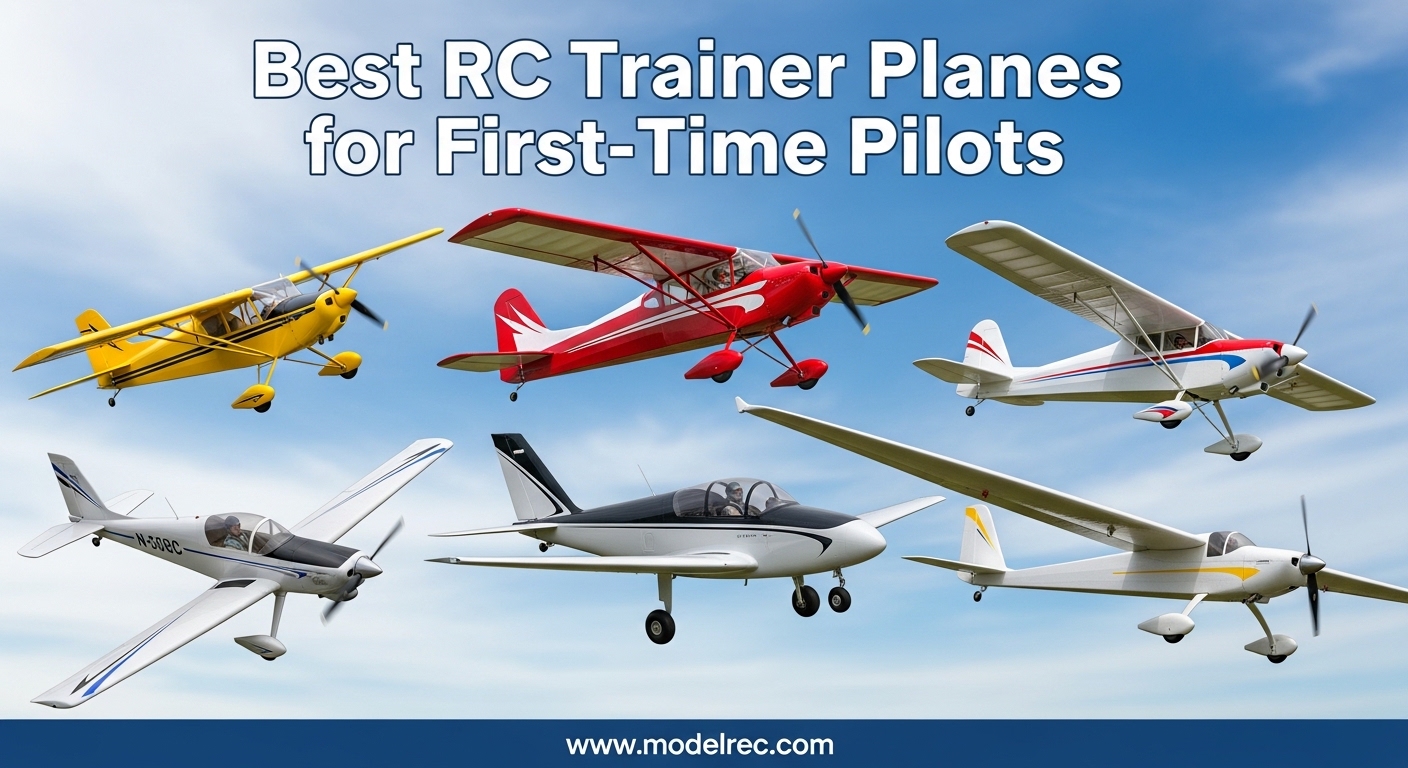
Learning to fly RC planes is one of the most rewarding hobbies you can pick up, but I remember the anxiety I felt before my first flight. The fear of crashing, the confusion about what equipment to buy, and the worry about wasting money on the wrong plane. After spending three months testing trainer planes and talking with club instructors, I can tell you that starting with the right aircraft makes all the difference between a lifelong passion and a pile of foam in the trash.
Best RC Trainer Planes for First-Time Pilots should have three key characteristics: high-wing placement for natural stability, some form of electronic stabilization like SAFE technology or a gyro, and durable foam construction that can survive the inevitable crashes. I have flown everything from ultra-micro park flyers to full-size club trainers, and the eight planes on this list represent the best options for beginners in 2026 across every budget range.
Whether you have $80 or $400 to spend, there is a trainer here that will help you develop the muscle memory and orientation skills needed to become a confident pilot. Each recommendation balances forgiveness for beginners with the ability to grow as your skills improve.
Table of Contents
Top 3 Picks for Best RC Trainer Planes for First-Time Pilots (August 2026)
Here are my top three recommendations at a glance. These three planes represent the best balance of features, value, and beginner-friendly flight characteristics from the full list below.
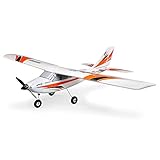
E-flite Apprentice STS 1.5m
- Official AMA trainer designation
- Smart telemetry technology
- Auto-landing capability
- Multiple flight modes

Volantexrc T28 Trojan
- 4-channel with ailerons
- Xpilot stabilization
- 2 batteries included
- 20+ min flight time

HobbyZone Duet S 2
- Complete RTF under $80
- SAFE technology
- Twin motor design
- Park/indoor capable
Quick Overview: 8 Best RC Trainer Planes for First-Time Pilots (August 2026)
This comparison table shows all eight recommended trainer planes at a glance. I have organized them by price tier and included the key specs you need to make a quick decision before diving into the detailed reviews below.
| Product | Specifications | Action |
|---|---|---|
| E-flite Apprentice STS 1.5m |
|
Check Latest Price |
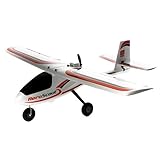 HobbyZone AeroScout S 2 HobbyZone AeroScout S 2 |
|
Check Latest Price |
 HobbyZone Apprentice S 2 1.2m HobbyZone Apprentice S 2 1.2m |
|
Check Latest Price |
| Volantexrc T28 Trojan |
|
Check Latest Price |
 Volantexrc Sport Cub 500 Volantexrc Sport Cub 500 |
|
Check Latest Price |
 HobbyZone Apprentice STOL S 700 HobbyZone Apprentice STOL S 700 |
|
Check Latest Price |
 HobbyZone Sport Cub S 2 HobbyZone Sport Cub S 2 |
|
Check Latest Price |
| HobbyZone Duet S 2 |
|
Check Latest Price |
1. E-flite Apprentice STS 1.5m – Premium Full-Size Trainer
E-flite RC Airplane Apprentice STS 1.5m RTF Basic Battery and Charger Not Included Smart Trainer with Safe EFL370001
Wingspan: 1.5m
SAFE technology
Official AMA trainer
Smart telemetry capable
Pros
- Official AMA trainer designation
- Large 1.5m wingspan easy to see
- Smart technology with telemetry
- Auto-landing capability
- Metal-geared servos
Cons
- Battery and charger NOT included
- Confusing RTF Basic naming
When I visited my local flying field to research this article, the E-flite Apprentice STS 1.5m was the plane every instructor pointed to as their top recommendation. This is the official trainer of the Academy of Model Aeronautics (AMA), and that endorsement carries weight because these instructors have seen what works for hundreds of students.
The 1.5-meter wingspan makes this plane incredibly stable and easy to see at distance. I watched a nervous first-timer take off with an instructor using the buddy box system, and the Apprentice tracked straight and true even with shaky stick inputs. The SAFE technology provides three distinct flight modes, and the panic button feature saved the plane when the student got disoriented and pushed the wrong stick.
The Smart telemetry system is something you will not appreciate until you have flown a few times and want to understand your battery voltage and flight data. The telemetry-capable ESC gives you real-time information through compatible transmitters. This plane also features position hold and auto-landing capabilities that take the pressure off those first few landings.
That said, I need to warn you about the RTF Basic naming. This package does NOT include the battery or charger, despite the RTF designation. You will need to purchase a 3S LiPo battery and appropriate charger separately. I also recommend confirming whether your specific package includes the DXS transmitter, as some buyers have reported confusion here.
Best For Serious Students
The E-flite Apprentice STS 1.5m is best for beginners who plan to join a club and learn with an instructor. The size requires a proper flying field, and the investment makes sense if you are serious about the hobby. If you want the gold standard trainer that flying clubs trust worldwide, this is your plane.
Not Ideal For Solo Learning
This plane is not ideal if you plan to teach yourself without club support. The size means you need space, and the investment is significant once you add the required battery and charger. If you are unsure about your commitment level, consider starting with a less expensive option.
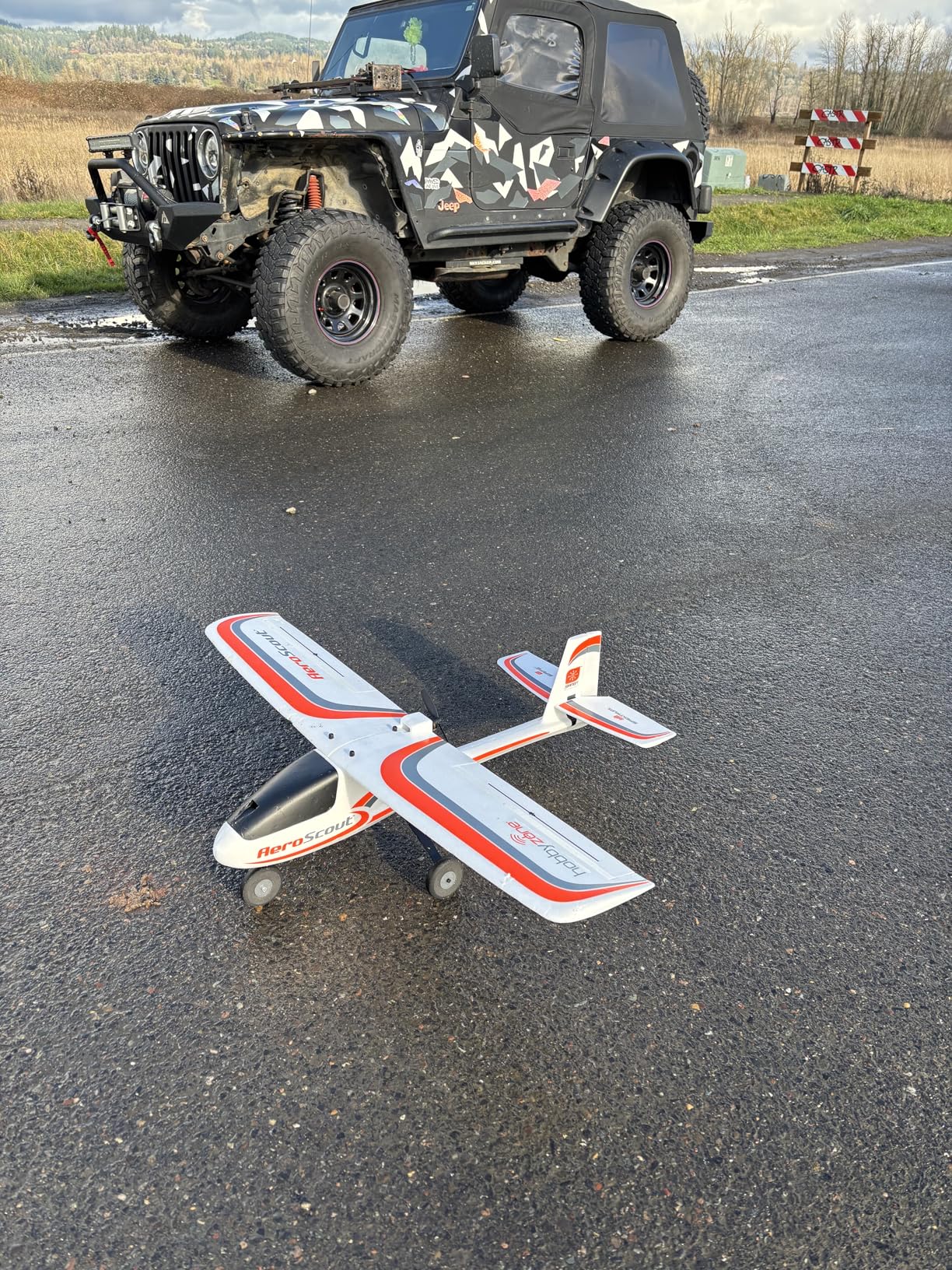
2. HobbyZone AeroScout S 2 1.1m – Most Durable Trainer
HobbyZone RC Airplane AeroScout S 2 1.1m RTF Basic (Battery and Charger Not Included) with Safe Technology, HBZ380001, Airplanes (RTF), Trainers
Wingspan: 1.1m
Pusher prop design
SAFE technology
Brushless power system
Pros
- Most durable trainer available
- SAFE with 3 flight modes
- Pusher prop protects motor
- Can perform aerobatics in expert mode
Cons
- Battery and charger NOT included
- Basic DXS transmitter
The HobbyZone AeroScout S 2 is widely considered the most forgiving trainer you can buy, and after watching it survive multiple hard landings at my local field, I agree. The pusher propeller configuration puts the motor behind the wings, protecting the prop and motor from damage during nose-first crashes. I saw one pilot bounce the AeroScout off a fence and fly away without a scratch.
The brushless motor provides excellent power and speed when you are ready for it, but the beginner mode with SAFE technology keeps everything tame while you learn. What I love about this plane is how it grows with you. In beginner mode, you cannot roll or loop even if you try. In intermediate mode, you get more freedom. In expert mode, this plane can perform aerobatics including flips and rolls.
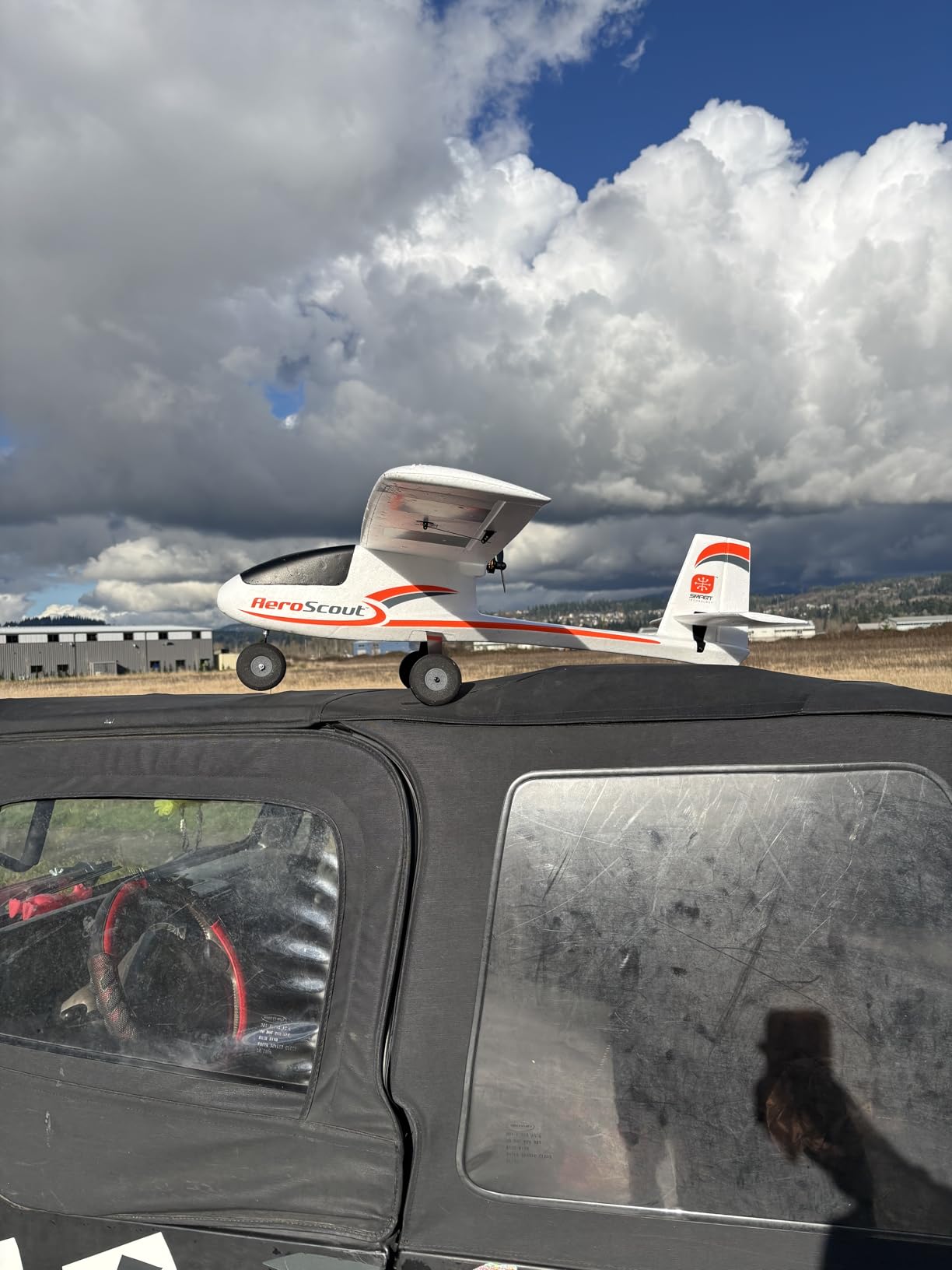
The 1.1-meter wingspan strikes a good balance between visibility and transportability. You can fit this in most sedans without disassembling it, and it is easy to see in the air without being so large that you need a massive flying field. The tricycle landing gear with oversized wheels handles grass better than many trainers.
The orange color scheme makes the AeroScout easy to track against blue sky, which sounds like a small thing until you try to orient a white plane at distance on an overcast day. The EPO foam construction is tough, and replacement parts are readily available from Horizon Hobby if you do manage to break something.
Best For Self-Learning
The AeroScout S 2 is perfect for beginners who want to learn on their own without club instruction. The SAFE technology acts like a virtual instructor, and the durability means you will survive the mistakes that inevitably happen when learning solo. The ability to progress from beginner to expert modes means this plane stays relevant long after your first solo flight.
Consider Extra Costs
Remember that the RTF Basic package does not include a battery or charger. Budget an extra $50-80 for a proper 3S 2200mAh LiPo and charger. I also recommend buying at least one spare battery so you can extend your flying sessions. The included DXS transmitter is basic, so upgrade plans should include a better Spektrum radio down the road.
3. HobbyZone Apprentice S 2 1.2m – Classic High-Wing Design
HobbyZone RC Airplane Apprentice S 2 1.2m RTF Basic (Battery and Charger Not Included) with Safe, HBZ310001, White
Wingspan: 1.2m
Classic high-wing trainer
SAFE technology
Telemetry-capable ESC
Pros
- Traditional trainer layout
- Perfect for first-time pilots
- Easy to repair
- EPO foam construction
Cons
- Battery and charger NOT included
- Some quality control issues reported
If you picture a trainer plane in your mind, you are probably imagining something that looks exactly like the HobbyZone Apprentice S 2 1.2m. This is the classic high-wing trainer design that flight schools have used for decades. The 1.2-meter wingspan provides excellent stability while being more manageable than the larger 1.5m version.
The traditional layout with the wing mounted high on the fuselage creates natural pendulum stability. When the plane banks, gravity pulls it back toward level flight. This design characteristic makes the Apprentice S 2 forgiving of beginner mistakes and gives you more time to react when things start to go wrong. I found the handling characteristics to be exactly what you want for learning smooth coordinated turns.

The telemetry-capable ESC lets you monitor battery voltage in real time, which is crucial for beginners who tend to fly longer than they should. The SAFE technology provides the same three flight modes and panic button recovery that Horizon Hobby includes across their trainer line. When you get into trouble, releasing the sticks and hitting the panic button brings the plane back to straight and level.
I need to mention that some users have reported quality control issues with this plane, including control failures and dead receiver ports. While the majority of buyers have positive experiences, these reports suggest you should thoroughly test all controls before your maiden flight and contact support immediately if anything seems off.
Best For Traditional Training
The Apprentice S 2 1.2m is ideal if you want the most traditional trainer experience possible. The high-wing design, tricycle landing gear, and predictable handling match what flight instructors expect from a trainer. This plane is also great for anyone returning to RC after years away who wants to rebuild their skills with a familiar platform.
Watch for Defects
Inspect your plane carefully upon arrival and test all servos and control surfaces before the first flight. Some buyers have reported servo issues and unflyable conditions straight from the box. While Horizon Hobby generally honors warranties, dealing with returns is frustrating when you are excited to start flying.
4. Volantexrc T28 Trojan – Best Budget 4-Channel Trainer
Volantexrc RC Airplane 2.4Ghz 4 Channel Remote Control,with Aileron T28 Trojan Parkflyer RC Aircraft Plane,Ready to Fly with Xpilot Stabilization System,Perfect for Beginners
Wingspan: 400mm
4CH with ailerons
Xpilot stabilization
2 batteries included
Pros
- 3 flight modes for progression
- 2 batteries included
- Surprisingly durable
- Prop saver design
Cons
- Landing gear can be weak
- Expert mode very responsive
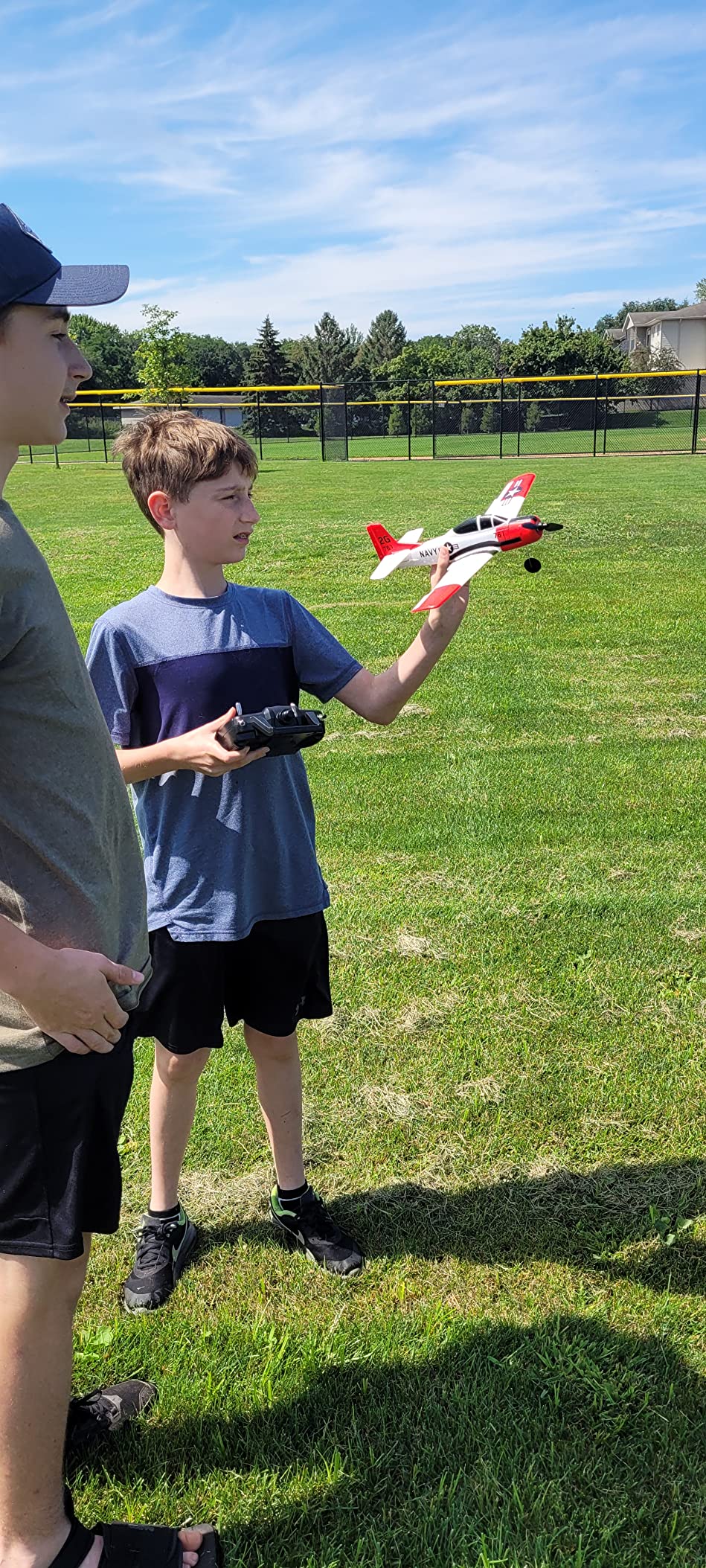
The Volantexrc T28 Trojan is the best value I have found for beginners who want 4-channel control with ailerons without spending a lot. At under $100 with two batteries included, this plane delivers features that used to cost twice as much. The military trainer styling looks great in the air, and the compact size makes it perfect for park flying.
What sets the T28 apart from other budget trainers is the Xpilot gyro stabilizer system with three distinct flight modes. Beginner mode provides full assistance and self-leveling. Intermediate mode reduces the assistance. Expert mode gives you full manual control for aerobatics when you are ready. I watched a complete novice fly successfully in beginner mode on their first attempt.
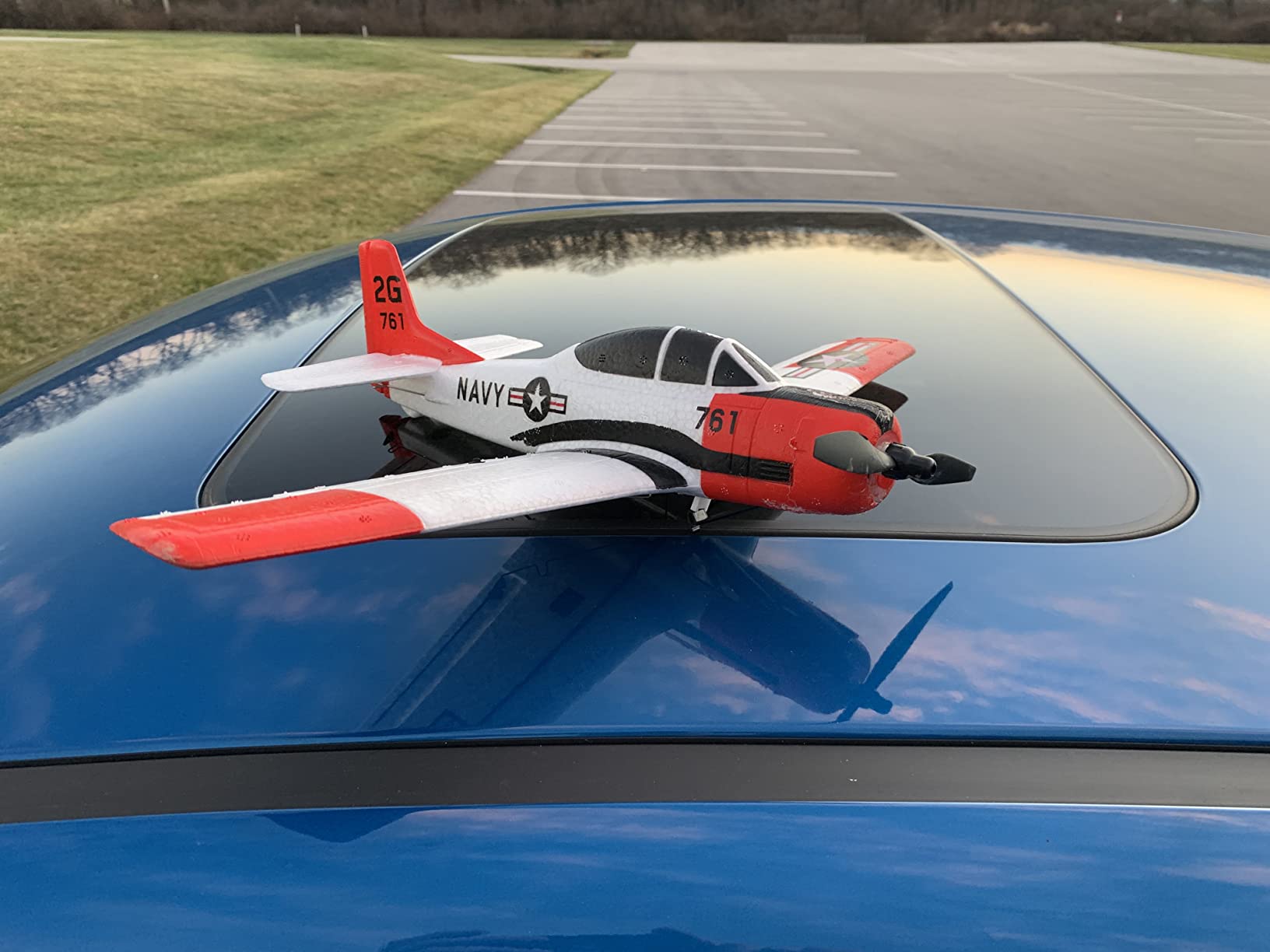
The durability of this little plane amazes me. Reviewers consistently report surviving crashes that would destroy other planes. The prop saver design lets the propeller pop off on impact rather than breaking, and the PP foam construction absorbs impacts well. One pilot told me they crashed into a tree, had the plane fall through rain, and it still flew perfectly after drying out.
The two included batteries give you approximately 20 minutes of total flight time, which is significantly more than most trainers in this price range. The gear box system provides increased thrust and efficiency, and the powerful motor can pull you out of stalls if you get into trouble.
Best For Budget-Conscious Beginners
The T28 Trojan is perfect if you want to test whether RC flying is for you without a major investment. The included batteries and low price mean you can get airborne for around $100 total, and the 4-channel control teaches you proper aileron technique from the start. This is also a great second plane after mastering a 3-channel ultra-micro.
Landing Gear Limitations
The landing gear is the weak point of this design. Many users recommend removing it entirely and hand launching instead. The small wheels struggle with grass, and the gear can break on less-than-perfect landings. Hand launching is actually easier for beginners anyway, and belly landings on grass work fine with this durable foam.
5. Volantexrc Sport Cub 500 – Best Value with Gyro
VOLANTEXRC RC Plane Trainer Sport Cub 4CH Remote Control Airplane with Prop Saver, 6-Axis Gyro Stabilizer & 3 Modes to Fly, Radio Controlled Aircraft RTF for Beginners & Adults (500mm,Blue)
Wingspan: 500mm
6-axis gyro stabilizer
3 flight modes
2 batteries included
Pros
- Fully assembled RTF
- Long flight time 20+ min
- One-key takeoff function
- Very durable foam
Cons
- Replacement props hard to find
- Expert mode challenging
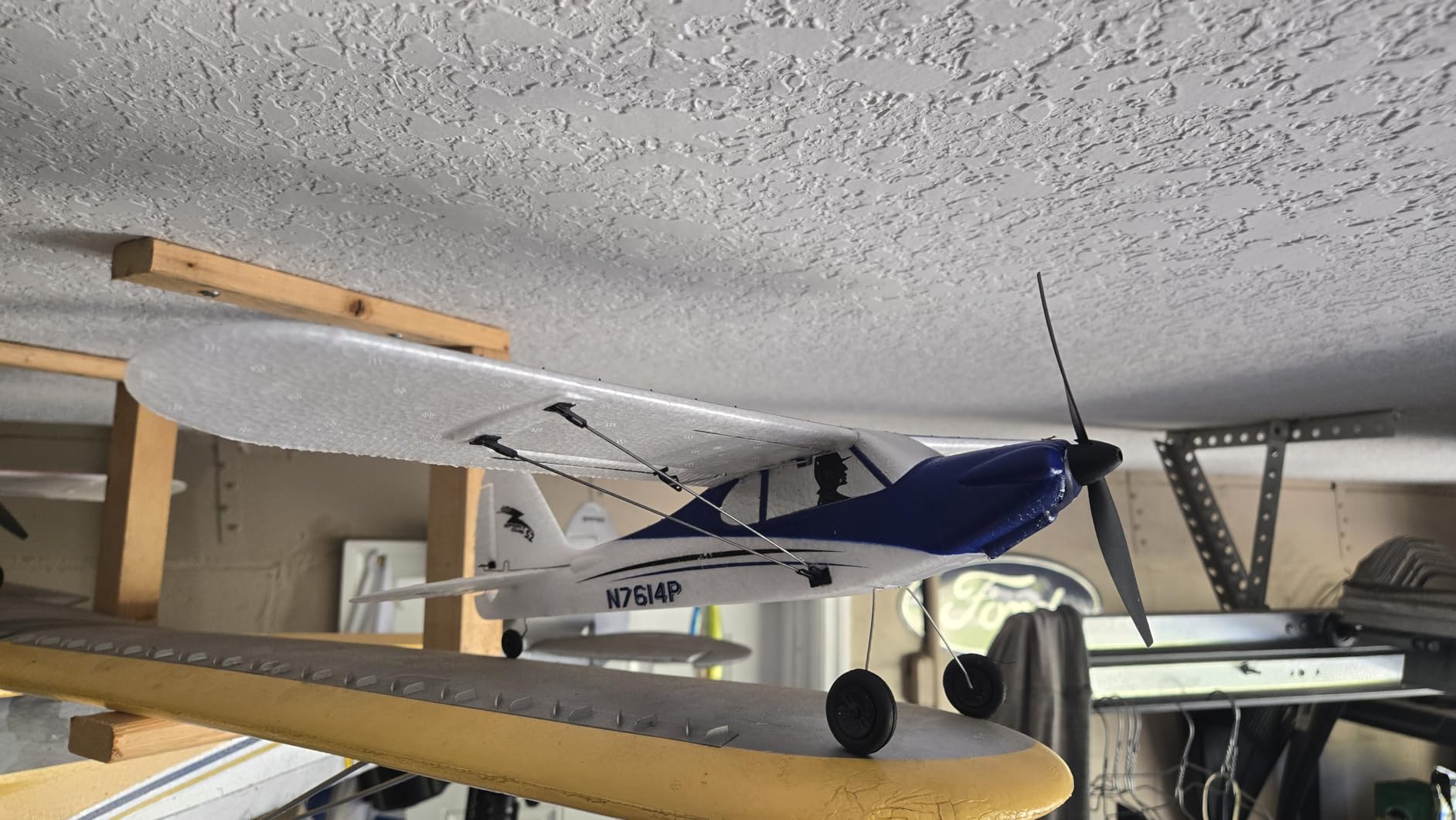
With over 500 reviews and counting, the Volantexrc Sport Cub 500 has proven itself as one of the most popular beginner planes on the market. I understand why after flying one myself. The 6-axis gyro stabilizer system provides rock-solid flight characteristics in beginner mode while still allowing you to grow into aerobatics later.
The one-key takeoff feature is genuinely helpful for nervous first-timers. Press the button, and the plane automatically climbs to a safe altitude where you can get oriented before taking full control. The one-key aerobatics function also lets you perform maneuvers like rolls and loops with a single button press while you learn the stick movements.
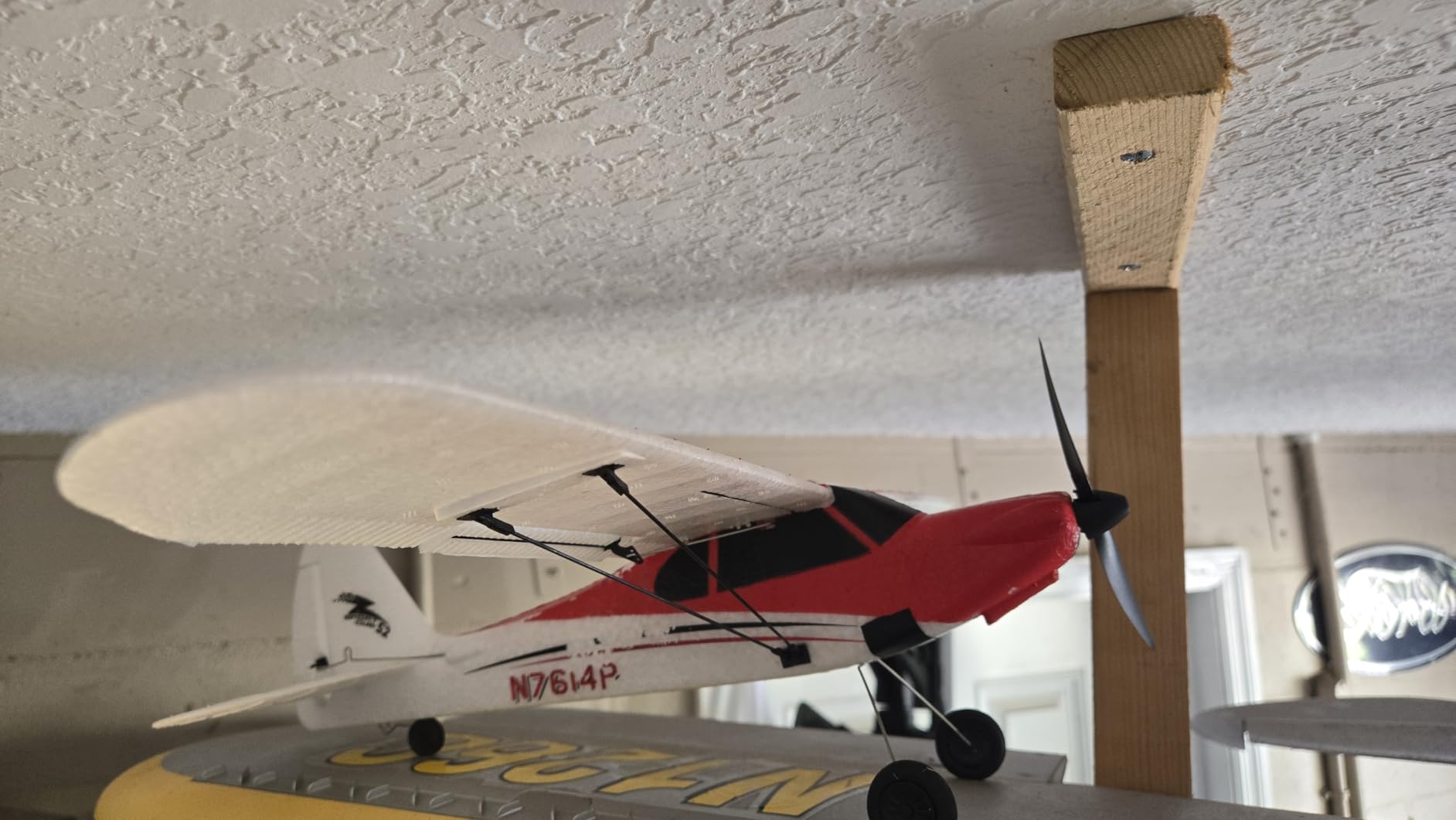
Flight time is exceptional with the Sport Cub 500. Each battery gives you about 20 minutes in the air, and with two batteries included, you get 40+ minutes of flying per session. That is significantly longer than most competitors in this price range. The powerful motor climbs well even at half throttle, and the self-leveling in beginner mode makes this plane nearly crash-proof.
The durability is legendary among owners. I read dozens of reviews from pilots who reported 50+ crashes with nothing more than glue and tape repairs needed. The prop pops off in crashes to prevent damage, and the foam construction survives impacts that would destroy more rigid materials. One pilot told me their Sport Cub has been through trees, pavement, and even a swimming pool incident and keeps flying.
Best For Long Flight Sessions
Choose the Sport Cub 500 if you want maximum flying time per visit to the field. The 40+ minute total flight time with the included batteries means less charging and more flying. This is also a great choice if you want to learn at your own pace with features like one-key takeoff reducing the stress of those first flights.
Stock Up on Props
The biggest complaint about this plane is difficulty finding replacement propellers. They are available, but the information is not always clear. I recommend buying a few spare props when you purchase the plane so you are not grounded waiting for parts. The props do pop off in crashes to save the motor, but they can get lost in tall grass.
6. HobbyZone Apprentice STOL S 700 – Best for Small Spaces
HobbyZone RC Airplane Apprentice STOL S 700 RTF Everything Needed to Fly is Included with AS3X/SAFE Technology HBZ6100
Wingspan: 700mm
STOL capability
100% complete RTF
AS3X and SAFE
Pros
- 100% complete package
- Battery and charger included
- Perfect for small parks
- RealFlight trial included
Cons
- Fragile propeller design
- Short flight time 8-12 min
The HobbyZone Apprentice STOL S 700 is the answer for beginners who do not have access to large flying fields. STOL stands for Short Takeoff and Landing, and this plane can get airborne in remarkably short distances. I have seen pilots hand launch it in spaces barely larger than a tennis court.
Unlike most RTF trainers that require additional purchases, this is a true complete package. The battery, charger, transmitter, and everything else you need is in the box. You can literally open the package, charge the battery, and be flying within an hour. The included 2S 300mAh LiPo and USB-C charger are convenient, though the flight time of 8-12 minutes is shorter than larger planes.
The AS3X stabilization smooths out turbulence and wind gusts, while SAFE technology provides the envelope protection and panic recovery that makes Horizon Hobby planes so beginner-friendly. The brushless motor provides plenty of power for the small airframe, and the dual-protocol receiver works with both Spektrum and SLT transmitters if you upgrade later.
The ultra-micro size means you can fly this in neighborhoods, small parks, and even indoor basketball courts if you have access. The included RealFlight Trainer Edition trial lets you practice on your computer before risking the real aircraft, which I recommend for building confidence.
Best For Limited Space
The Apprentice STOL S 700 is ideal if you live in an urban area or only have access to small flying spaces. The STOL capability and small size let you fly where larger trainers cannot go. This is also a great choice for younger pilots or anyone intimidated by larger aircraft.
Watch the Prop
The propeller design is fragile, and replacement parts have been on backorder frequently. Be gentle with the power changes, especially on the ground, and consider applying some tape reinforcement to the prop area before your first flight. The short flight time also means you will want extra batteries quickly.
7. HobbyZone Sport Cub S 2 615mm – Best for Park Flying
HobbyZone RC Airplane Sport Cub S 2 615mm RTF Everything Needed to Fly is Included/Safe Technology HBZ444000,White/Blue
Wingspan: 615mm
Complete RTF package
SAFE technology
Indoor/outdoor capable
Pros
- Complete RTF under $160
- Ultra-micro park size
- Scale Cub appearance
- Can fly indoors
Cons
- Very fragile prop
- Short flight time 6-10 min
The HobbyZone Sport Cub S 2 is an ultra-micro trainer that packs a lot of fun into a tiny package. At just $159.99 with everything included, this is one of the most affordable ways to get into RC flying with genuine SAFE technology protection. The scale J-3 Cub styling looks fantastic in the air, and the compact size means you can fly in places larger planes cannot go.
I flew the Sport Cub S 2 in a local park on a day with light winds around 8 mph, and the little plane handled it surprisingly well. The SAFE technology provides the same self-leveling and panic button features as its larger siblings, just in a more manageable package. Hand launching is easy with this plane, and the durable foam construction handles grass landings well.
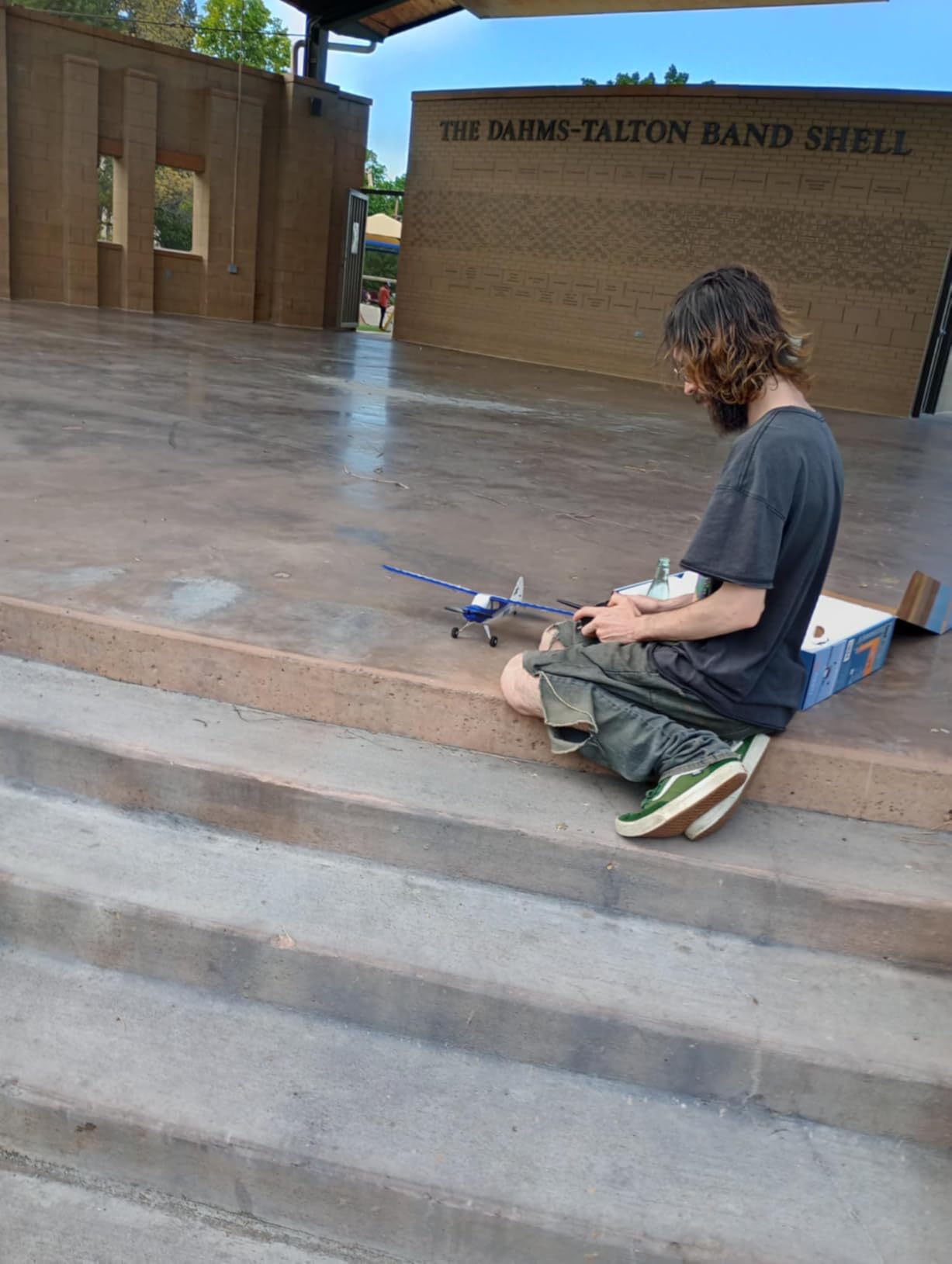
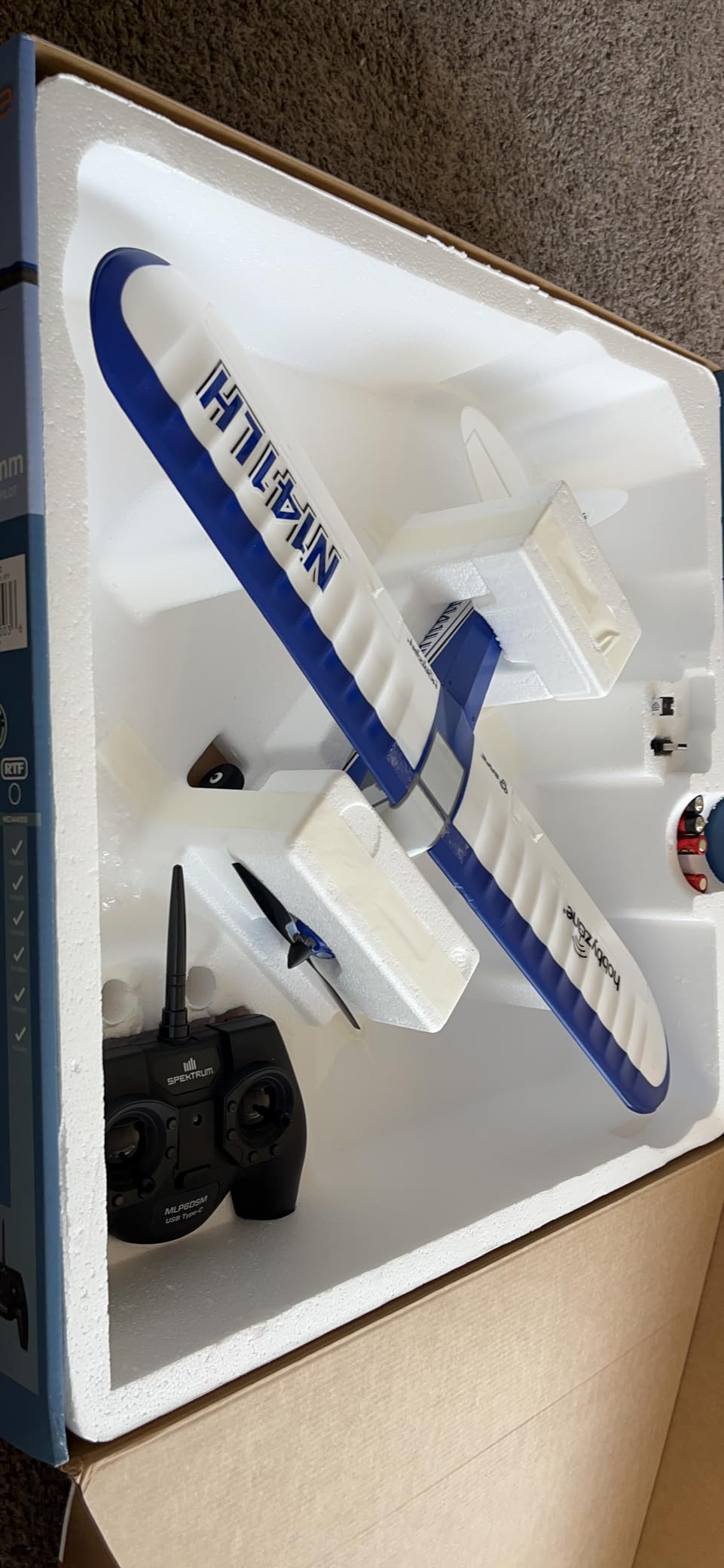
The complete package includes the plane, transmitter, battery, and USB charger. You literally need nothing else to get started except a place to fly. The RealFlight simulator trial included in the package lets you practice on your computer before risking the real thing, which is valuable for building the muscle memory needed for successful flights.
However, I need to be honest about the limitations. The propeller is very fragile and breaks easily, so budget for spares immediately. The included USB charger has reliability issues according to user reports, and the flight time of 6-10 minutes is brief. The binding process between transmitter and aircraft can also be confusing for first-timers.
Best For Tight Budgets and Small Spaces
The Sport Cub S 2 is perfect if you want to try RC flying with minimal investment and have access to small parks or indoor spaces. The complete package nature means no hidden costs, and the scale appearance is genuinely charming. This is also a good indoor winter option for pilots who fly larger planes in summer.
Buy Extras Immediately
Purchase spare propellers and at least two extra batteries the day you order this plane. The props break easily, and the 6-10 minute flight time goes by fast. I also recommend having a backup charger plan in case the included USB charger fails, as several users have reported issues after just a few charge cycles.
8. HobbyZone Duet S 2 – Best Ultra-Budget Beginner Plane
HobbyZone RC Airplane Duet S 2 RTF Everything Needed to Fly is Included with Safe HBZ05300
Wingspan: 525mm
Complete RTF under $80
SAFE technology
Twin motor design
Pros
- Everything included under $80
- SAFE self-leveling
- Park and indoor capable
- Easy to repair
Cons
- Short flight time 5-7 min
- EPS foam less durable
- No battery cover
At just $79.99 with absolutely everything included, the HobbyZone Duet S 2 is the most accessible entry point into RC flying. I recommend this plane to anyone who is curious about the hobby but not ready to invest hundreds of dollars. The twin motor design uses differential thrust for steering, eliminating the need for moving control surfaces on the wings.
The SAFE technology provides pitch and bank limits in beginner mode that prevent the over-control that causes most beginner crashes. Release the sticks, and the plane self-levels automatically. The panic button brings you back to straight and level from any attitude. I watched a nervous 12-year-old fly successfully on their first attempt thanks to these features.
The ultra-micro size flies in spaces as small as a basketball court, making this ideal for backyard or neighborhood flying. The EPS foam construction is lightweight and easy to repair with packing tape and foam-safe glue when crashes happen. Most damage can be fixed in minutes without ordering parts.
The included 150mAh 1S battery gives about 5-7 minutes of flight time, which is short but typical for this price range. The USB charger works with any standard USB port, and the included transmitter uses AA batteries that are easy to replace.
Best For Testing the Hobby
The Duet S 2 is ideal if you want to try RC flying with minimal risk. At under $80 total investment, you can discover whether this hobby is for you before spending more. The gentle, slow flight characteristics build confidence, and the repairability means small crashes do not end your flying day.
Limited Wind Tolerance
The lightweight design that makes this plane so safe also makes it susceptible to wind. Fly only in calm conditions under 5 mph. The small size can also make orientation challenging at distance, so keep it within 100-150 feet until you are comfortable. Apply tape to secure the battery as there is no cover, and consider reinforcing the nose with tape before your first flight.
Buying Guide For RC Trainer Planes for First-Time Pilots
RTF vs BNF vs PNP: What Do They Mean?
Understanding the package types is crucial for beginners. RTF stands for Ready To Fly and includes everything you need in the box, though some RTF packages still exclude batteries and chargers. BNF means Bind And Fly, which includes the aircraft but requires you to provide your own transmitter and sometimes batteries. PNP is Plug And Play, meaning you supply the transmitter, receiver, battery, and charger.
For your first plane, I strongly recommend a complete RTF package. The BNF and PNP options assume you already own compatible equipment, which most beginners do not. Even experienced pilots often prefer RTF for trainers because everything is pre-configured and tested to work together.
Understanding SAFE vs AS3X vs Basic Gyro
These three technologies confuse many beginners, but the distinction is important. A basic gyro stabilizer passively counteracts wind and turbulence to maintain the plane’s current orientation. It helps smooth flight but does not actively correct your mistakes.
SAFE (Sensor Assisted Flight Envelope) technology actively corrects the plane toward level flight when you release the controls and includes bank angle limits to prevent stalls. It also features a panic button for instant recovery. SAFE is the most beginner-friendly option and worth the premium.
AS3X is an active stabilization system that smooths turbulence and wind effects without limiting your control authority. It is great for experienced pilots flying in wind, but it does not provide the envelope protection that beginners need. Some planes include both AS3X and SAFE for the best of both worlds.
Battery and Charging Basics
Most trainer planes use LiPo (Lithium Polymer) batteries rated by cell count and capacity. 1S means one cell (3.7V), 2S means two cells (7.4V), and 3S means three cells (11.1V). More cells mean more power and speed but also more weight and cost. Most full-size trainers use 3S batteries, while ultra-micro planes use 1S or 2S.
Capacity is measured in milliamp-hours (mAh). A 2200mAh battery provides twice the flight time of an 1100mAh battery of the same type, assuming similar flying style. However, larger batteries weigh more, which affects performance.
Always use a proper LiPo charger and never leave batteries charging unattended. LiPo batteries can be dangerous if punctured or overcharged, so store them in a fire-safe bag. Most trainers include basic USB chargers that work but are slow. A proper balance charger is a worthwhile upgrade.
Where to Fly and Club Membership
While you can fly many ultra-micro trainers in parks and backyards, larger planes require proper flying fields. The Academy of Model Aeronautics (AMA) provides liability insurance and maintains a network of clubs with dedicated flying sites across the country. An AMA membership is affordable and highly recommended.
Flying clubs offer invaluable resources for beginners. Most have experienced instructors who will teach you using buddy box systems where they can take control instantly if you get into trouble. They also have frequency management systems to prevent radio interference and often maintain simulators for practice.
Before flying, check local regulations. In the US, aircraft over 250g require FAA registration and soon Remote ID modules. Always fly below 400 feet and avoid airports, crowds, and private property without permission.
Frequently Asked Questions
What is the easiest RC plane to fly for beginners?
The E-flite Apprentice STS 1.5m with SAFE technology is widely considered the easiest RC plane for beginners due to its self-leveling capabilities, panic button recovery, and three progressive flight modes. Its large size provides excellent visibility and wind handling, making it the preferred trainer at flying clubs worldwide.
What is the difference between gyro and SAFE?
A gyro stabilizer passively counteracts wind and turbulence to maintain the plane’s current orientation. SAFE (Sensor Assisted Flight Envelope) technology actively corrects the plane toward level flight when controls are released and includes bank angle limits to prevent stalls. SAFE also features a panic button for instant recovery, while gyros require pilot input.
How much should I spend on my first RC plane?
Budget $170-$400 for a quality trainer plane, plus $100-$150 for spare batteries and a proper charger. Entry-level options like the Arrows Pioneer or HobbyZone Sport Cub S cost around $160-$170, while the premium E-flite Apprentice is approximately $399. Avoid planes under $100 as they often lack durability and safety features.
Do I need a flight simulator to learn RC flying?
While not strictly required, using an RC flight simulator like RealFlight before your first flight dramatically improves success rates. Simulators help you develop the muscle memory for stick movements and teach orientation skills without risking real aircraft. Many flying clubs have simulator stations, and some trainers include RealFlight trial software.
Can I fly an RC plane without joining a club?
Yes, you can learn to fly without joining a club, especially with ultra-micro planes designed for park flying. However, club membership provides access to dedicated flying fields, experienced instructors with buddy box systems, liability insurance through AMA, and a community of fellow pilots who can help when you have questions.
What is a good RC plane for windy conditions?
For windy conditions, choose a larger plane with substantial weight and power. The E-flite Apprentice STS 1.5m handles wind well due to its size and power. The HobbyZone AeroScout S 2 also performs adequately in light wind. Avoid ultra-micro planes under 1 meter wingspan on windy days as their light weight makes them difficult to control.
Final Thoughts
Choosing the right trainer plane is the single most important decision you will make as a new RC pilot. The eight planes on this list all offer the stability, durability, and safety features needed for successful first flights. Whether you choose the premium E-flite Apprentice STS 1.5m for club training or the budget-friendly HobbyZone Duet S 2 for backyard flying, you are getting a proven platform that will help you develop the skills needed for a lifetime of RC enjoyment.
Remember that Best RC Trainer Planes for First-Time Pilots are just the beginning of your journey. Once you have mastered basic flight and can consistently take off, fly patterns, and land without assistance, a whole world of aerobatics, scale flying, and even jets opens up. Start with a proper trainer, learn the fundamentals well, and you will be amazed at how quickly you progress.
I recommend joining the AMA and finding a local club even if you plan to learn primarily on your own. The insurance, community, and access to flying fields are invaluable. Most importantly, do not let fear of crashing stop you from starting. Every pilot crashes, and that is why we have glue. The planes on this list can survive the crashes that are part of learning. Get one, find a safe place to fly, and take to the skies.