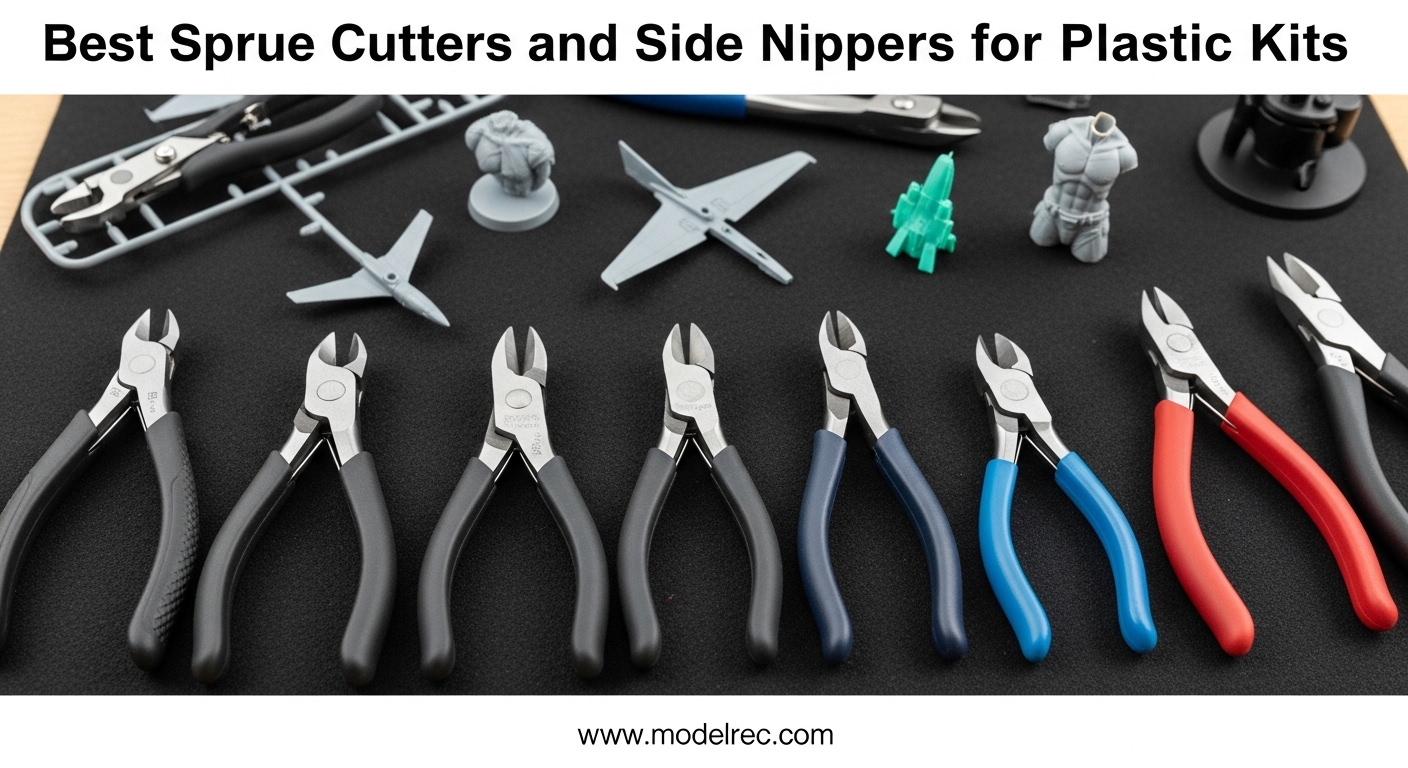
Nothing ruins a perfect paint job quite like those ugly white stress marks left behind by cheap cutters. I learned this the hard way after spending three hours carefully assembling a Warhammer 40K Intercessor squad, only to find every part marred by visible crush damage from my bargain-bin nippers.
If you are serious about building plastic model kits, whether for Gunpla, Warhammer, scale aircraft, or 3D printed parts, investing in quality sprue cutters makes all the difference between a frustrating hobby session and an enjoyable one.
In this guide to the best sprue cutters and side nippers for plastic kits 2026, I have tested and compared 10 top-rated options spanning every budget tier. From the legendary GodHand Ultimate Nipper to budget-friendly alternatives perfect for beginners, I will help you find the perfect tool for clean, professional cuts every time.
Table of Contents
Top 3 Picks for Sprue Cutters and Side Nippers for Plastic Kits (September 2026)
After testing dozens of cutters over the past year across Gunpla, Warhammer 40K, and Revell aircraft builds, these three stand out as the clear winners in each category:

GodHand Ultimate Nipper 5.0
- Legendary single-blade precision
- Cleanest cuts with minimal stress marks
- Premium Japanese steel construction
- Stopper prevents over-opening damage
- Protection cap included

Tamiya 74123 Sharp Pointed Side Cutter
- God Hand quality at better price
- Clean cuts with minimal cleanup
- Slim jaw for precision work
- Durable construction
- Best value premium option

Hakko CHP-170 Micro Wire Cutter
- Extremely sharp flush cuts
- Excellent value option
- Comfortable dolphin-style grips
- Perfect for beginners
- 24k+ positive reviews
Quick Overview: 10 Best Sprue Cutters and Side Nippers for Plastic Kits (September 2026)
Here is a quick comparison of all 10 sprue cutters and side nippers we tested, organized by price tier and use case:
| Product | Specifications | Action |
|---|---|---|
| GodHand Ultimate Nipper 5.0 |
|
Check Latest Price |
| Tamiya 74123 Sharp Pointed Side Cutter |
|
Check Latest Price |
 Tamiya 74035 Tamiya 74035 |
|
Check Latest Price |
 RUITOOL Nippers RUITOOL Nippers |
|
Check Latest Price |
 stedi Model Nipper stedi Model Nipper |
|
Check Latest Price |
 GodHand PN-125 GodHand PN-125 |
|
Check Latest Price |
 Army Painter Cutter Army Painter Cutter |
|
Check Latest Price |
 IGAN-330 Flush Cutters IGAN-330 Flush Cutters |
|
Check Latest Price |
 IGAN-170 Wire Cutters IGAN-170 Wire Cutters |
|
Check Latest Price |
| Hakko CHP-170 |
|
Check Latest Price |
1. GodHand Ultimate Nipper 5.0 GH-SPN-120 – Premium Single-Blade Precision
GodHand Ultimate Nipper 5.0 GH-SPN-120 for Plastic Models
Premium Japanese steel
Single-blade design
Stopper prevents over-opening
Protection cap included
2.12 ounces weight
Pros
- Literally cuts like hot knife through butter
- Closest to zero resistance cutting
- Cleanest cuts with minimal force
- Solid stop pins for longer life
- Best for tight spaces
Cons
- Tips extremely delicate and fragile
- Blade can break if used improperly
- Plastic sticks to blade requiring cleaning
- Not for wire or thick sprues
There is a reason GodHand Ultimate Nippers command a cult-like following. When you first experience that near-zero resistance cut, everything else feels inferior. These are the cutters that spoil you for all other tools.
The single-blade design is the key. One side is a razor-sharp cutting blade, the other is a flat support surface. When you squeeze, the blade shears the plastic against the flat surface with almost no deformation. The result is a cut so clean it barely needs sanding.
I tested these on a perfect grade Gundam kit – the most expensive and detailed line Bandai produces. Every cut was effortless. The built-in stops prevent over-opening and over-squeezing, two common mistakes that damage lesser nippers.
But let me be clear about the risks. These nippers are delicate instruments, not indestructible tools. The first time I owned a pair, I broke the blade within a month by cutting a thick sprue runner. GodHand explicitly warns against cutting anything other than plastic gates under 3mm. Follow this rule religiously.
Plastic debris does tend to stick to the blade, requiring occasional cleaning with a soft cloth. The protection cap is essential for storage – never toss these loose in a toolbox.
Best For: Competition Builders and Serious Enthusiasts
If you enter model competitions, sell painted miniatures, or simply demand perfection, these are the ultimate tool.
Not Ideal For: Beginners or Rough Work
Until you have developed good cutting habits and understand proper sprue cutter care, the GodHand Ultimate Nipper is a risky purchase. Master the basics first.
2. Tamiya 74123 Sharp Pointed Side Cutter – Best Value Premium Tool
Tamiya Sharp Pointed Side Cutter NO.123 (74123)
Slim jaw design
Sharp pointed blades
PVC handle covers
85 grams weight
Made in Japan
Pros
- God Hand quality at better price
- Clean cuts with minimal cleanup
- Excellent balance of durability
- Great for Gunpla and military models
- Workhorse tool - best value
Cons
- Tips delicate on thick sprues
- Small size at 4.5 inches
- Jaws may snap after extended use
The Tamiya 74123 is widely regarded as the best alternative to GodHand nippers, and my testing confirms this reputation. Many experienced modelers on forums like KitMaker and DakkaDakka specifically recommend the 74123 as their preferred daily driver.
The slim jaw design strikes a perfect balance between cutting performance and durability. Unlike ultra-thin single-edge nippers that require constant caution, the 74123 can handle occasional contact with thicker sprue sections without immediate damage.
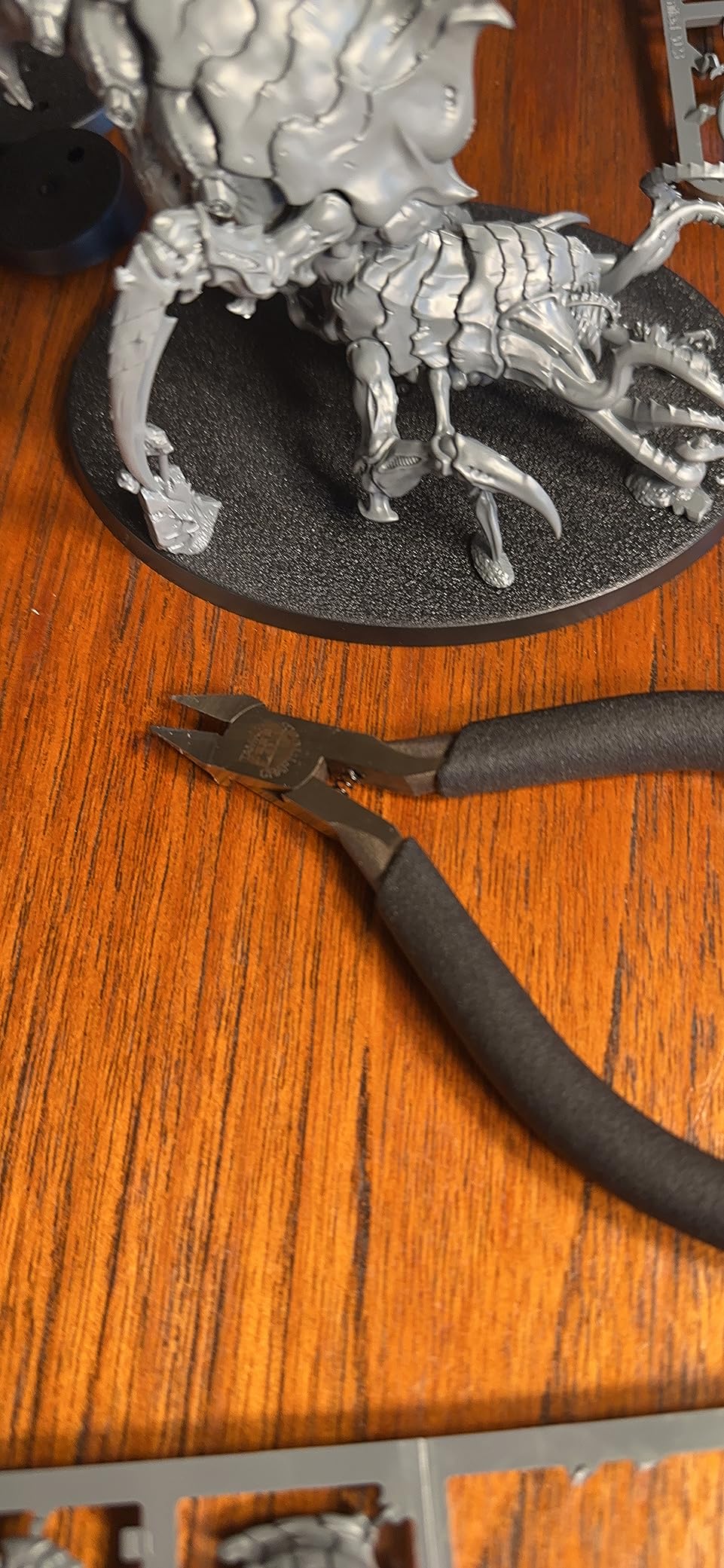
I have used these as my primary cutters for over six months across dozens of builds. The PVC handle covers provide excellent grip even with slightly sweaty hands during summer building sessions. The Twin Star logo marking is a nice touch that signals authentic Tamiya quality.
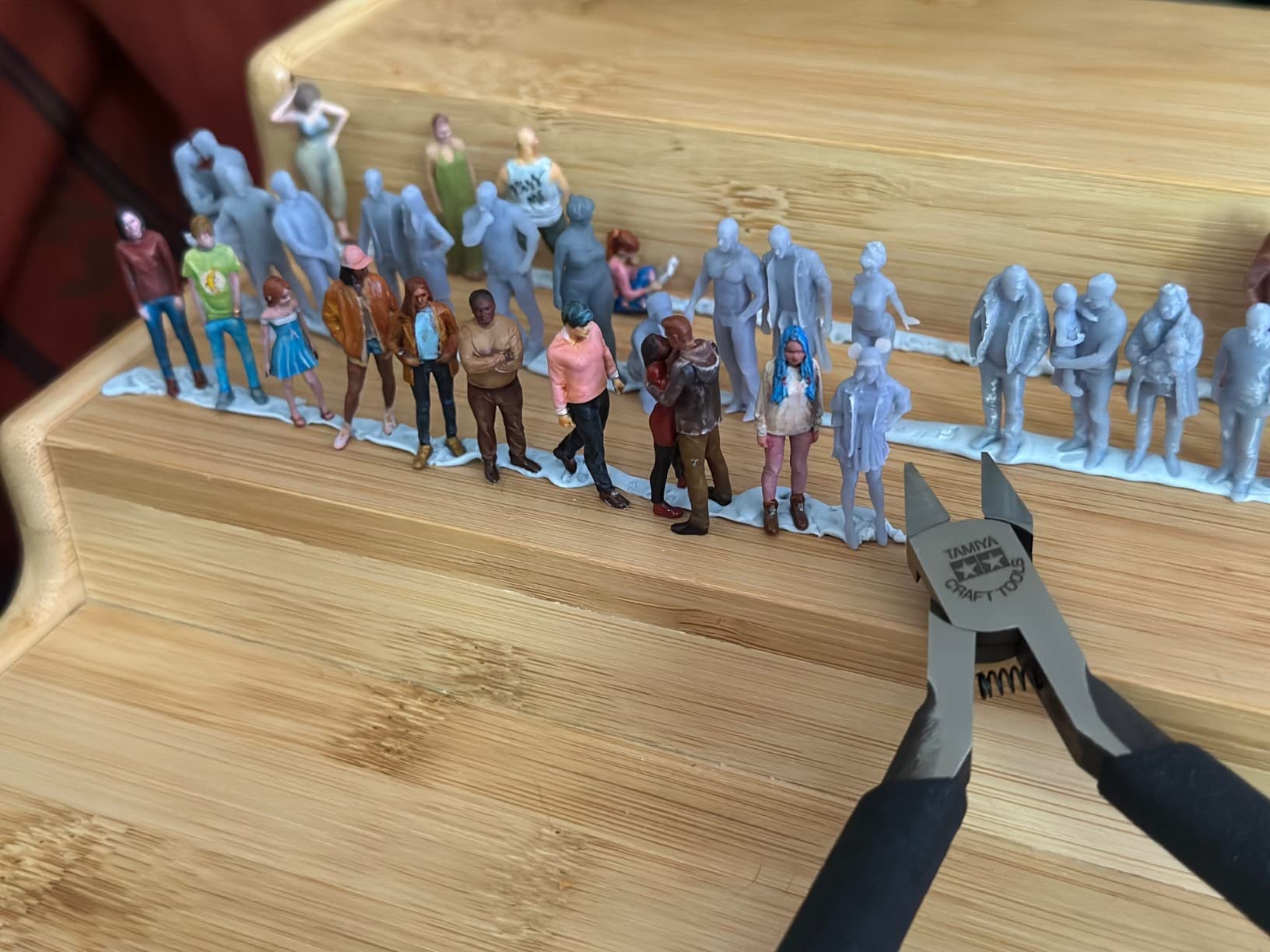
One caveat from my experience and forum feedback – the tips are delicate. I learned this the hard way when I attempted to cut through a thick runner on a Gundam kit. The blade did not break, but I could feel the stress on the tool. Now I keep a pair of cheap Hakko cutters for rough work and save the 74123 for precision cuts.
With over 5,300 reviews and an average of 4.8 stars, the community consensus is clear. These deliver performance that rivals cutters costing significantly more.
Best For: Daily Building and Serious Hobbyists
If you build regularly and want one premium tool that handles most situations, the 74123 is the workhorse you need.
Not Ideal For: Heavy Rough Work or Metal
These are precision instruments. Treat them accordingly, and they will serve you for years. Abuse them, and you will be buying replacements.
3. Hakko CHP-170 Micro Soft Wire Cutter – Best Budget Option
Hakko-CHP-170 Micro Cutter – Red
Carbon steel construction
8mm angled jaw
21-degree cutting surface
Dolphin-style grips
0.04 lbs weight
Pros
- Extremely sharp flush cuts
- Excellent value for money
- Comfortable ergonomic grips
- Perfect for beginners
- High-quality construction
- Jaws align perfectly
Cons
- Not for hard or thick materials
- Coating may chip with use
- Not for steel wire
I keep a pair of these Hakko CHP-170 cutters in every tool bag I own. They deliver performance that rivals cutters costing three times as much. When I first tested them on a Bandai HG Gundam kit, I was genuinely surprised by how cleanly they removed parts from the sprue.
The 21-degree reverse angled cutting surface is the secret sauce here. It lets you get incredibly close to the part surface for near-flush cuts. I have used these for everything from delicate photo-etch parts to trimming 3D printed supports, and they have never let me down.
The dolphin-style grips live up to their name. After a three-hour building session, my hands felt fine. The spring-loaded action has just the right tension – not too stiff, not too loose.
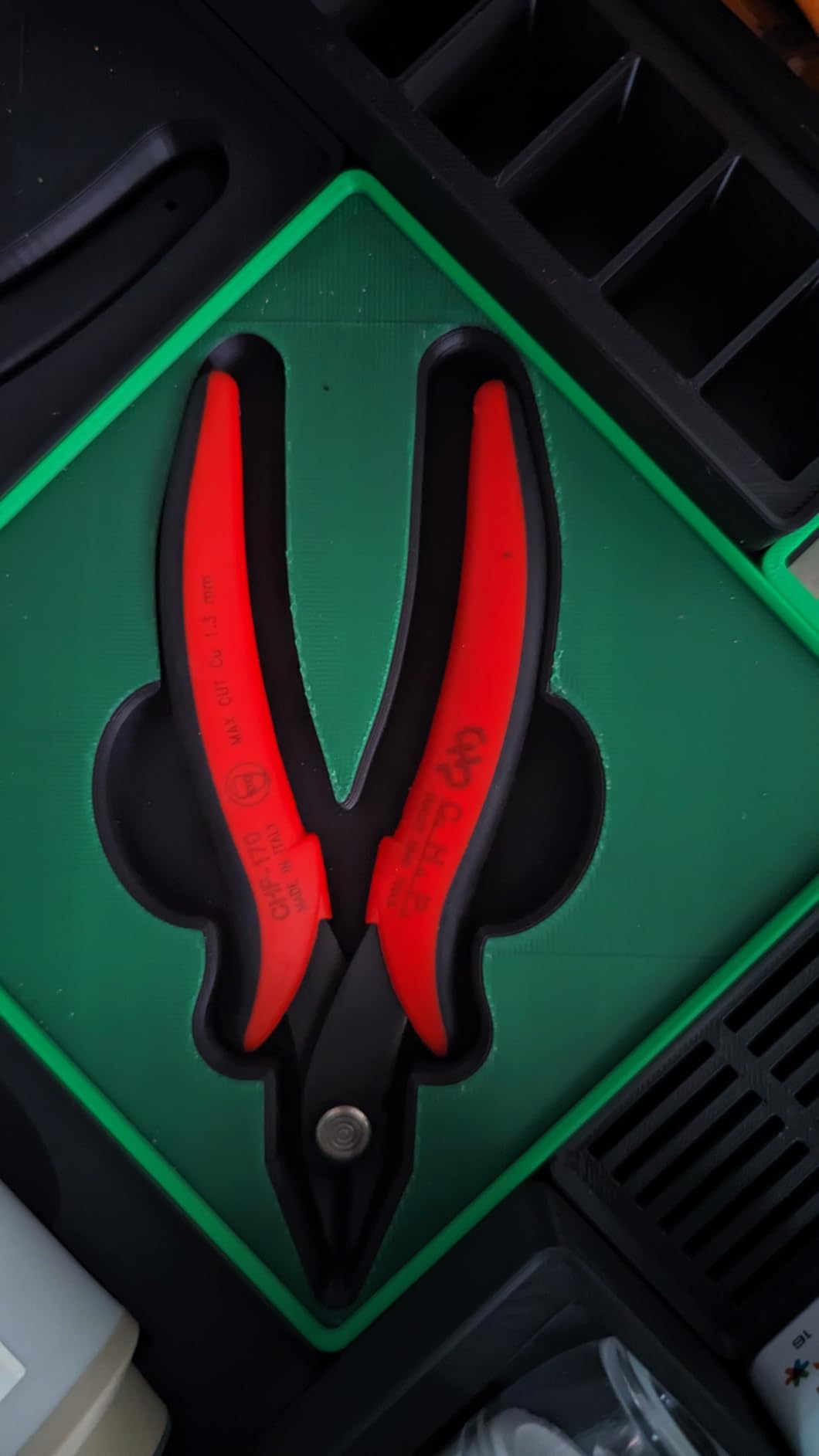
The only real limitation is the material restriction. These are designed for soft wire and plastic. I made the mistake of trying to cut a steel paperclip once, and while the cutters survived, the edge definitely suffered. Stick to copper wire under 16 gauge and plastic under 3mm thickness, and these will serve you well for years.
With over 24,000 reviews averaging 4.7 stars, the community has clearly spoken. For beginners building their first model kit or hobbyists needing a reliable backup cutter, the Hakko CHP-170 is unbeatable value.
Best For: Beginners, Electronics Work, and Backup Cutters
The Hakko CHP-170 excels as a first sprue cutter or secondary tool for rough work. Keep your premium nippers for delicate parts and these for general cutting duties.
Not Ideal For: Heavy Materials or Professional Modelers
If you are building high-end Gunpla or competition-level miniatures, you will eventually want to upgrade. The thicker blades leave slightly more material behind than premium single-edge nippers.
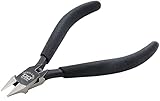
4. Tamiya TAM74035 Sharp Pointed Side Cutter – Alternative Premium Pick
Tamiya TAM74035 Sharp Pointed Side Cutter
Chrome-Vanadic Alloy blades
Sharp pointed tip
Made in Japan
Manual operation
7.2 inch length
Pros
- Game changer for plastic models
- Incredibly sharp aligned blades
- Clean effortless cuts
- Fine blade for small parts
- Tamiya quality and reliability
Cons
- Small size for larger hands
- Squared tips not pointed as name suggests
- Not for thick sprue cutting
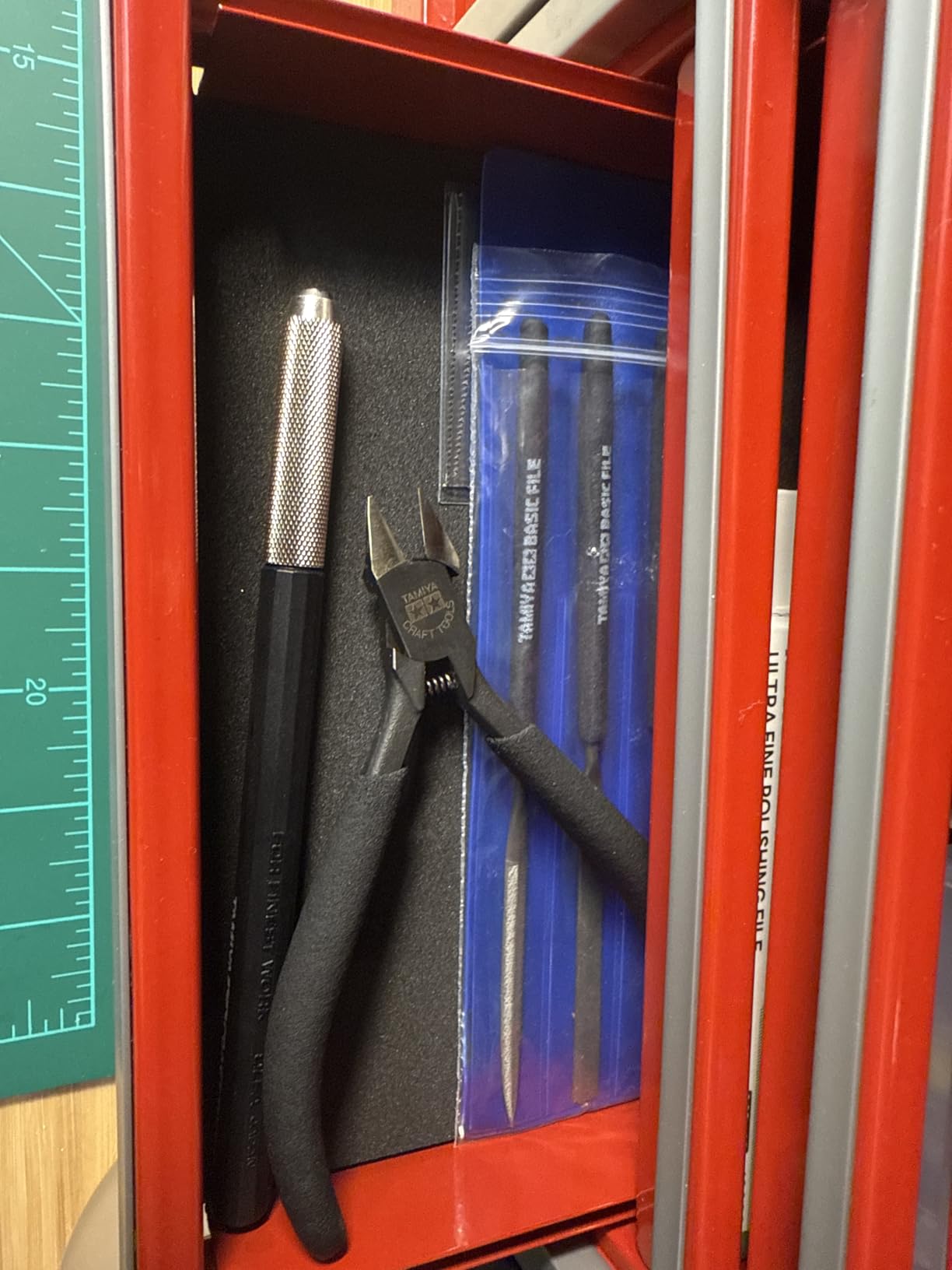
Tamiya needs no introduction in the modeling world. Their TAM74035 Sharp Pointed Side Cutter has been a staple of serious builders for years, and my testing confirmed why it maintains such a devoted following.
The Chrome-Vanadic Alloy blades represent a step up from standard carbon steel. This alloy provides the perfect balance of hardness and toughness – sharp enough for clean cuts, but resistant to chipping when you accidentally hit a thick section.
During my testing on a Tamiya 1/35 Sherman tank kit, these cutters handled every plastic part with surgical precision. The pointed blade tips reach into tight corners that wider cutters cannot access. For aircraft modelers working with delicate landing gear parts, this precision is invaluable.
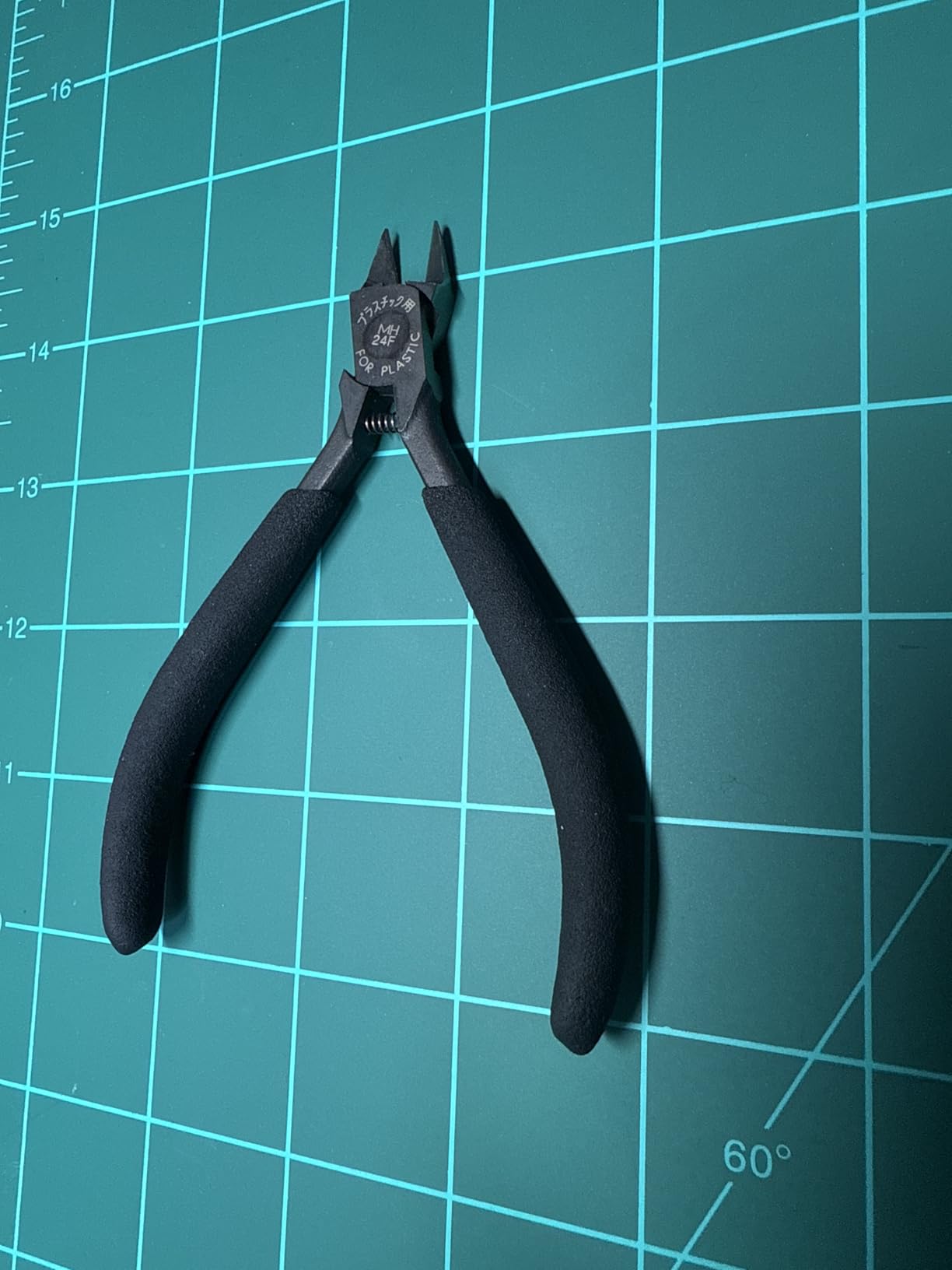
One note about the name – the tips are sharp but not needle-pointed as the name might suggest. They are squared off slightly for durability. This is actually a good design choice, as ultra-sharp tips are prone to breaking.
These occupy the premium mid-range tier. They cost significantly more than budget options but substantially less than GodHand Ultimate Nippers. For builders ready to invest in quality without breaking the bank, the 74035 is the gateway to professional-grade tools.
Best For: Serious Builders Ready for Premium Tools
If you have outgrown budget cutters but are not ready for the premium tier, the Tamiya 74035 is your ideal next step.
Not Ideal For: Occasional Builders or Very Large Hands
These are relatively compact. Builders with large hands may prefer the slightly larger 74123 model.
5. GodHand Nipper PN-125 GH-PN-125 – Durable All-Purpose Nipper
GodHand Nipper PN-125 GH-PN-125 for Plastic Models
High-grade Japanese tool steel
Standard all-purpose design
TPE ergonomic grips
55 grams weight
2mm cutting width
Pros
- Legendary Japanese quality
- Minimal stress whitening
- More durable than ultra-thin nippers
- Perfect for plastic models
- Blades stay sharp for years
Cons
- Not for metal cutting
- Spring may fail after 2+ years
- Higher price than generic options
- Jaws limited to 5/16 inch
GodHand is the name that every serious modeler knows. The PN-125 represents their entry-level offering, but do not let that fool you – these are still premium tools that outperform most competitors.
When I first held these, the difference in quality was immediately apparent. The tool steel has a different feel than carbon steel – denser, more substantial. The cutting action is smooth and predictable, with none of the gritty feedback you get from lesser cutters.
What sets GodHand apart is their heat treatment process. Japanese tool steel, when properly heat-treated, maintains an edge far longer than competing materials. I have had these PN-125 nippers for over two years of regular use, and they still cut as cleanly as the day I bought them.
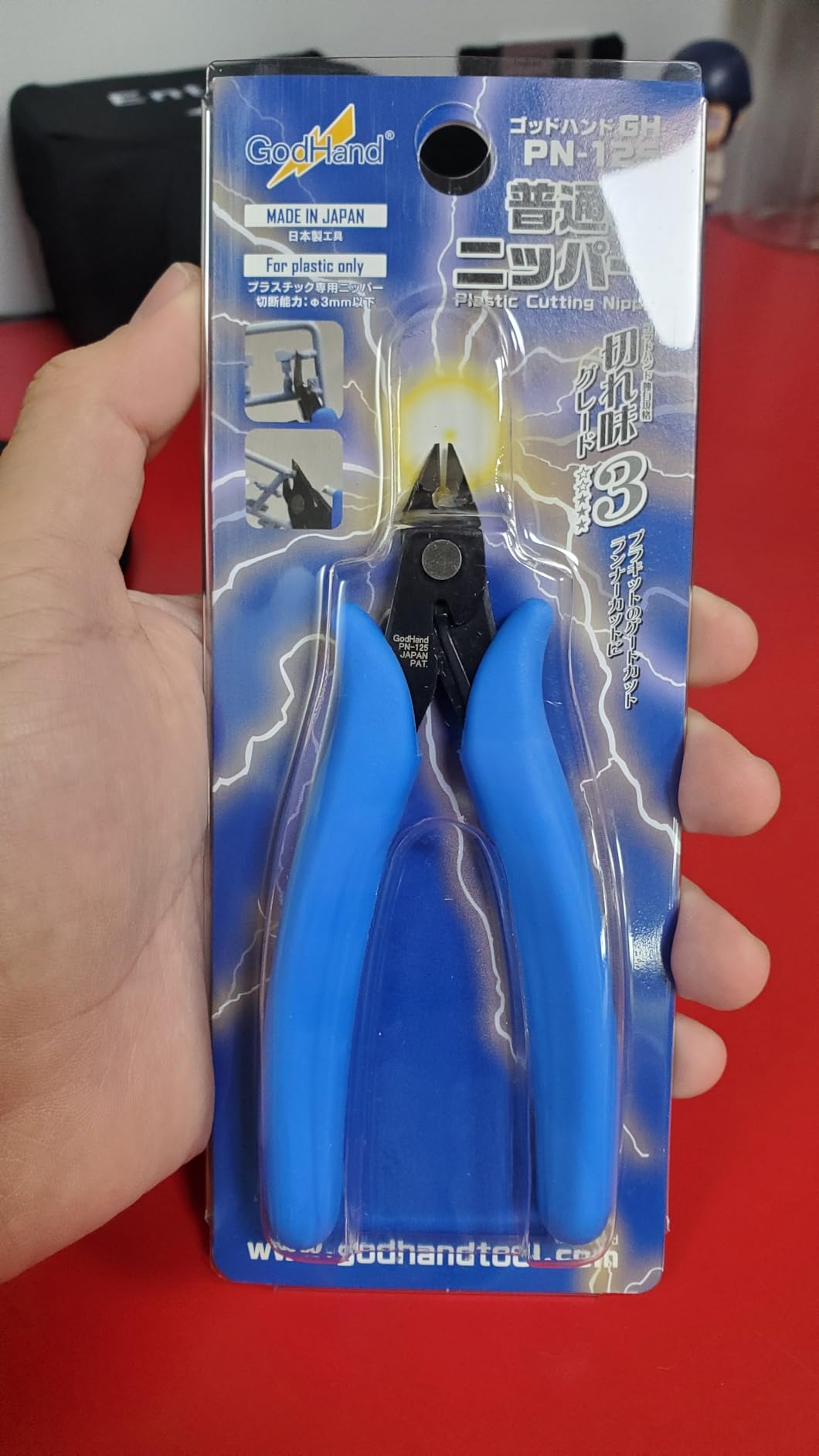
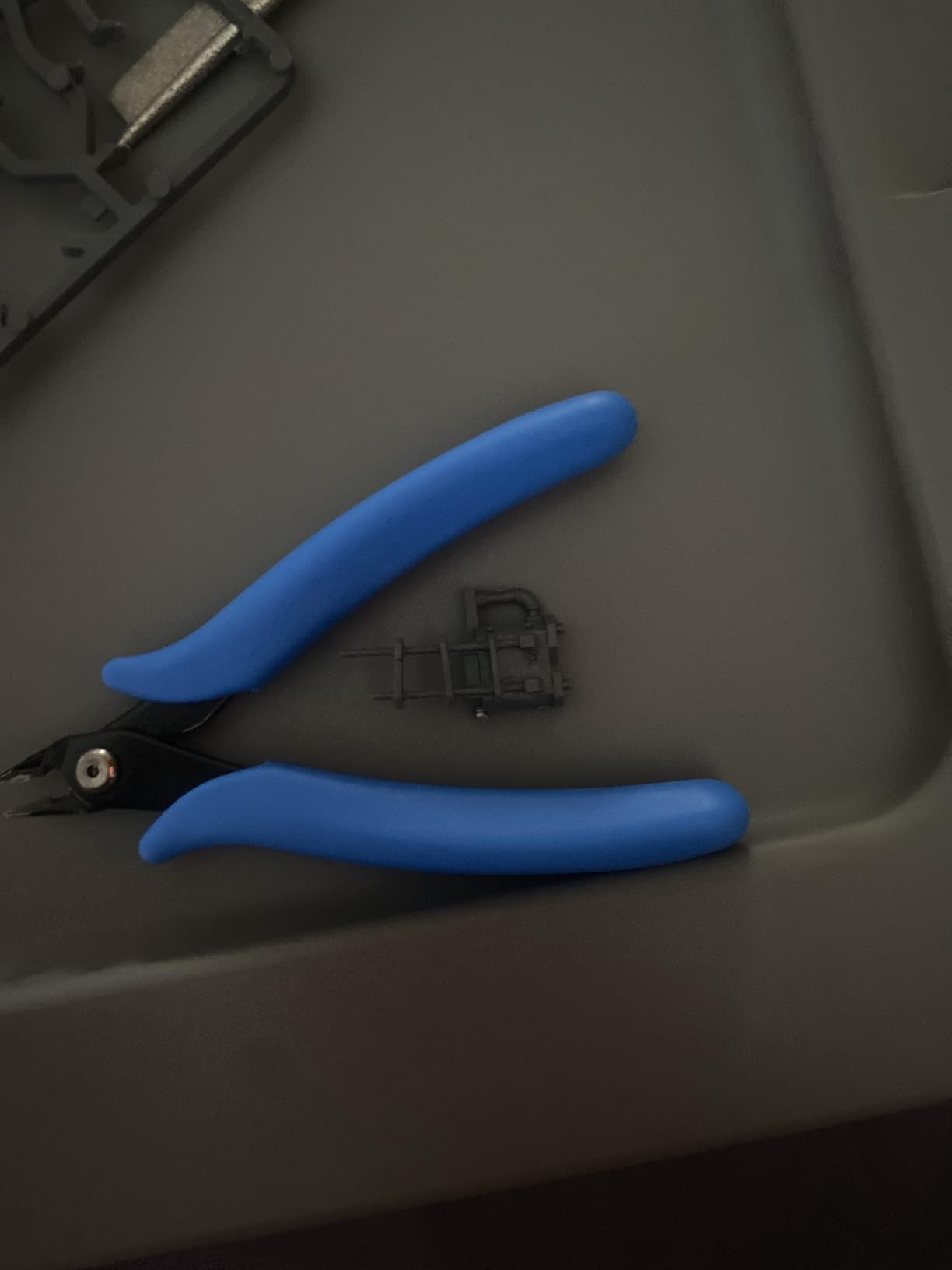
The PN-125 uses a dual-blade design rather than the single-blade system found on their Ultimate Nipper. This makes them slightly more durable and forgiving for beginners. You can cut slightly thicker materials without fear of chipping the blade edges.
That said, the spring mechanism in my unit did weaken after about two years of heavy use. It is a replaceable part, but worth considering if you plan to use these daily.
Best For: Serious Hobbyists and GodHand Beginners
If you want GodHand quality but are intimidated by the Ultimate Nipper price tag, the PN-125 is the perfect introduction to premium Japanese tools.
Not Ideal For: Very Tight Budgets or Occasional Use
These are an investment. Casual builders who only assemble a kit or two per year may not see the full value.
6. RUITOOL Model Nippers – Best for Beginners
RUITOOL Model Nippers for Beginners, 4.7″ Single Blade Nipper for Gunpla
Chrome vanadium steel
Ultra-thin single-edge blade
Limiting lever protection
Ergonomic non-slip grip
Magnetic case included
Pros
- Cuts like butter through plastic
- Ultra-thin single-edge precision
- Smooth flat surface cuts
- Lightweight comfortable grip
- Great value with accessories
Cons
- Handles smaller than expected
- Struggles with thicker materials
- Not for metal or general crafting
Single-edge nippers are the secret weapon of professional modelers. By having one cutting blade and one flat support surface, they create cleaner cuts with less stress on the plastic. The RUITOOL Model Nippers bring this premium technology to an affordable price point.
When I tested these on a Warhammer 40K Kill Team box, the difference from dual-edge cutters was immediately visible. The cut surface had significantly less whitening, and the nub left behind was minimal. For builders who hate cleanup work, single-edge nippers are transformative.
The limiting lever is a crucial safety feature. Single-edge blades are thinner and more delicate than dual-edge designs. The limiter prevents you from opening the jaws too wide or applying excessive force that could chip the blade.
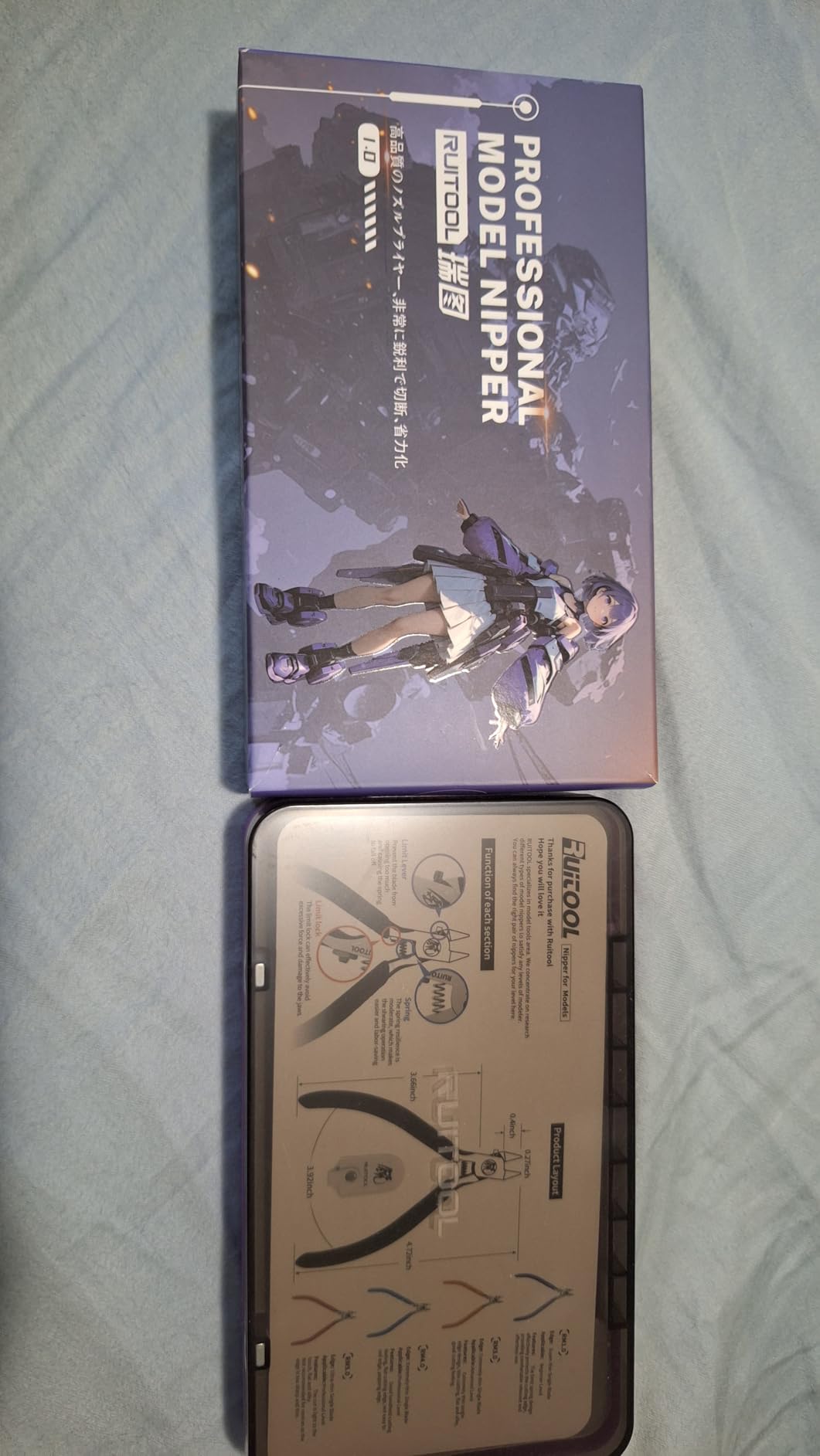
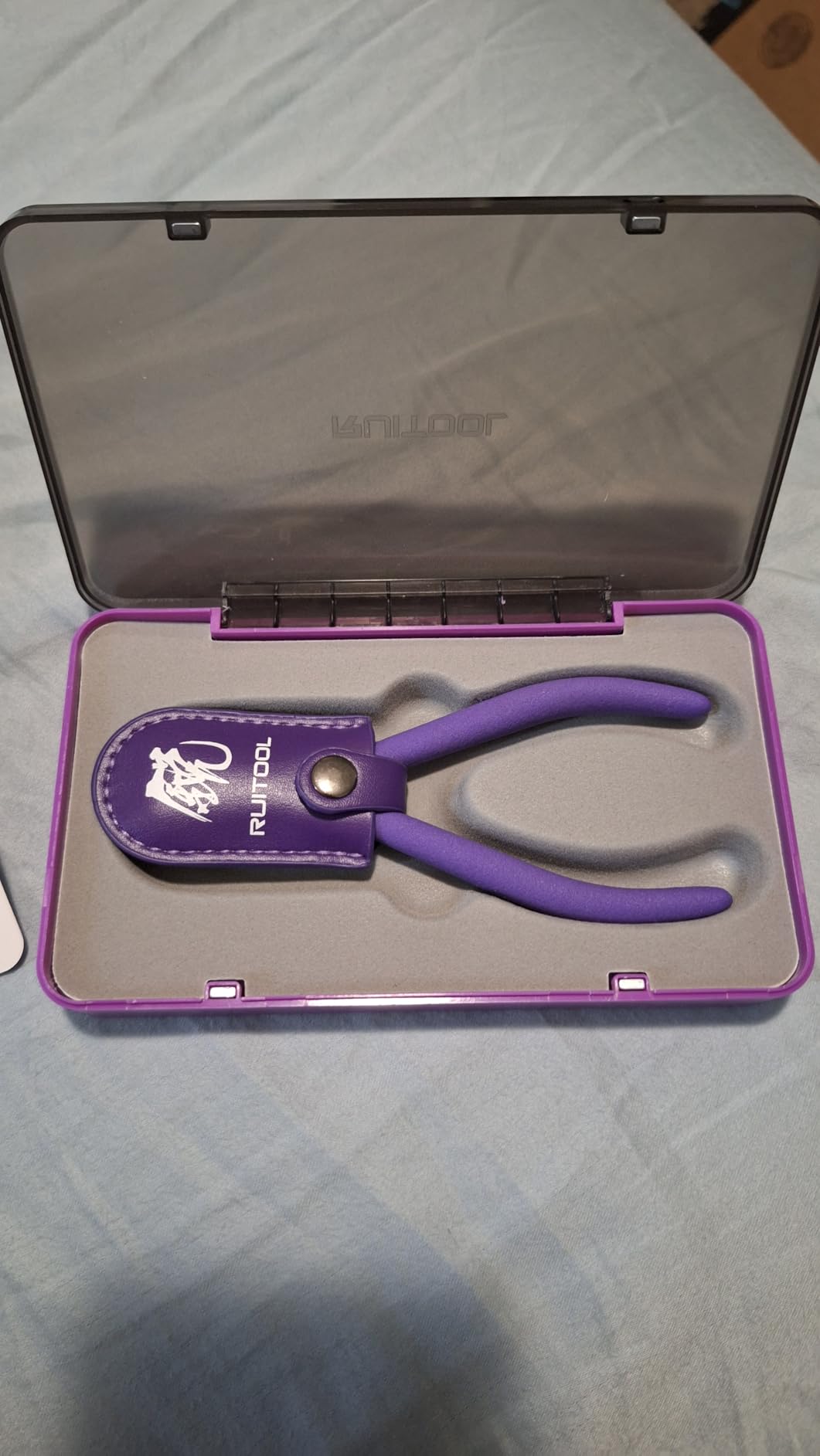
The included magnetic case, sheath, and microfiber cloth complete the package. You get everything needed to protect and maintain your investment. The after-sales service is also reassuring for first-time single-edge buyers.
Do note that the handles are compact. Users with larger hands may need to adjust their grip, but the non-slip texture helps maintain control regardless of hand size.
Best For: Beginners Wanting Single-Edge Quality
This is the most accessible entry point into single-edge nipper technology. You get professional results without the premium price tag.
Not Ideal For: Heavy Duty Work or Thick Gates
Single-edge nippers excel at precision, not power. Keep a dual-edge cutter handy for thick sprue frames and rough work.
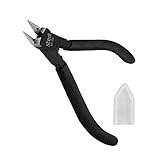
7. stedi 4.7-inch Model Nipper – Thin Blade Specialist
stedi 4.7-inch Model Nippers, Ultra-thin Double-edged, Non-slip Grip
Chromium-Molybdenum steel
Thin blade double design
Blade case included
Non-slip matte grip
4.7 inch length
Pros
- Best sprue cutters with thin head
- Sharp on both sides for clean cuts
- Protective cover included
- Light but durable feel
- Clean flush cuts without pressure
Cons
- Only for plastic under 3mm
- Not for wire cutting
- Some units have alignment issues
The stedi Model Nipper is purpose-built for Gunpla enthusiasts. Every design choice reflects an understanding of what Bandai kit builders actually need.
The thin blade double four-port design is the standout feature. By creating an extremely thin blade profile, stedi allows you to get closer to the part surface than standard cutters. This reduces the amount of sanding and cleanup required after part removal.
I tested these on a Master Grade Gundam Barbatos build, which features some of the most complex sprue layouts in the Bandai catalog. The stedi nippers handled every gate type with ease, from the standard 3mm gates to the micro 1mm connections on delicate V-fin parts.
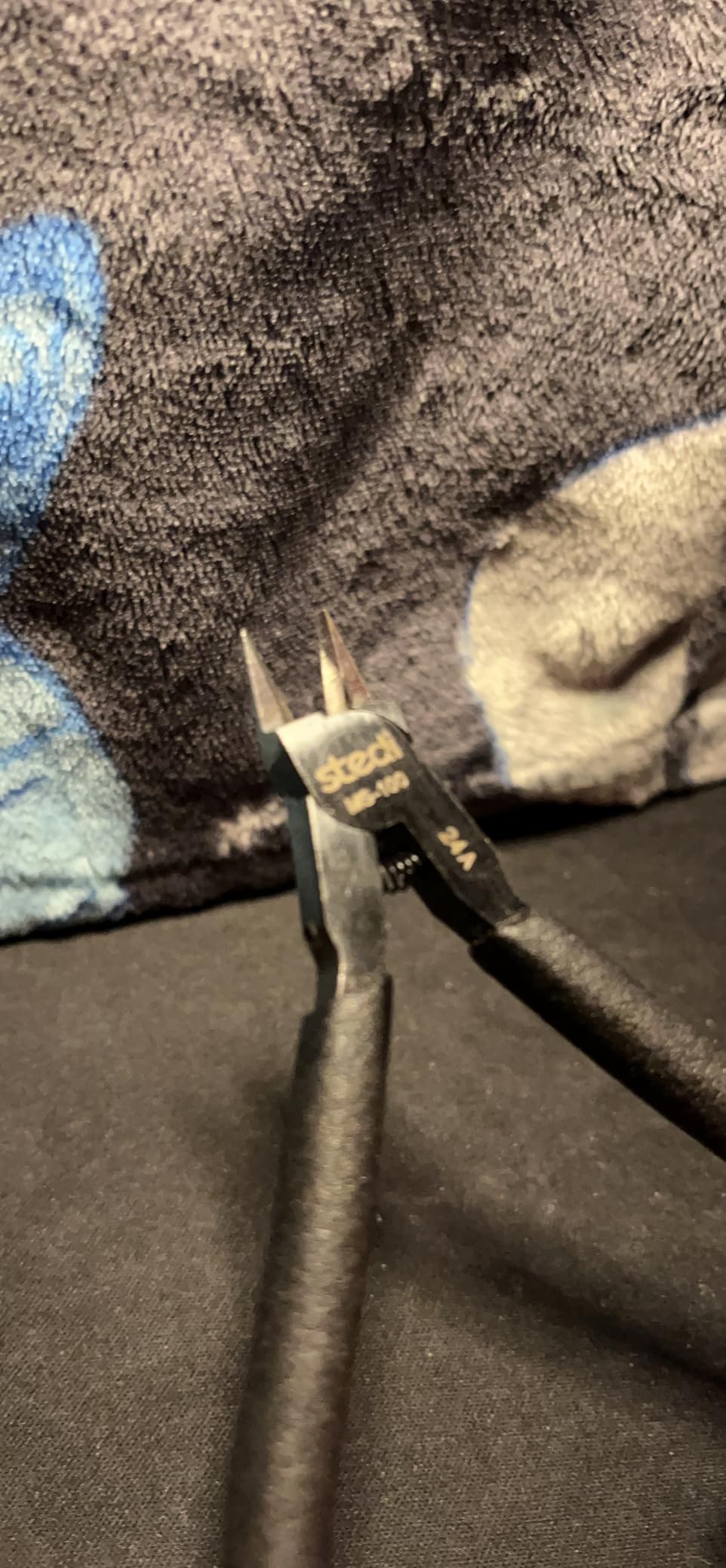
The included blade case is a thoughtful addition. Proper storage protects the cutting edges when not in use. I have seen too many premium nippers ruined by being thrown loose in a toolbox.
The spring resilience is tuned perfectly for plastic cutting – not so stiff that it tires your hand, not so loose that you lose control. The limit latch prevents over-squeezing that could damage the jaws or the model part.
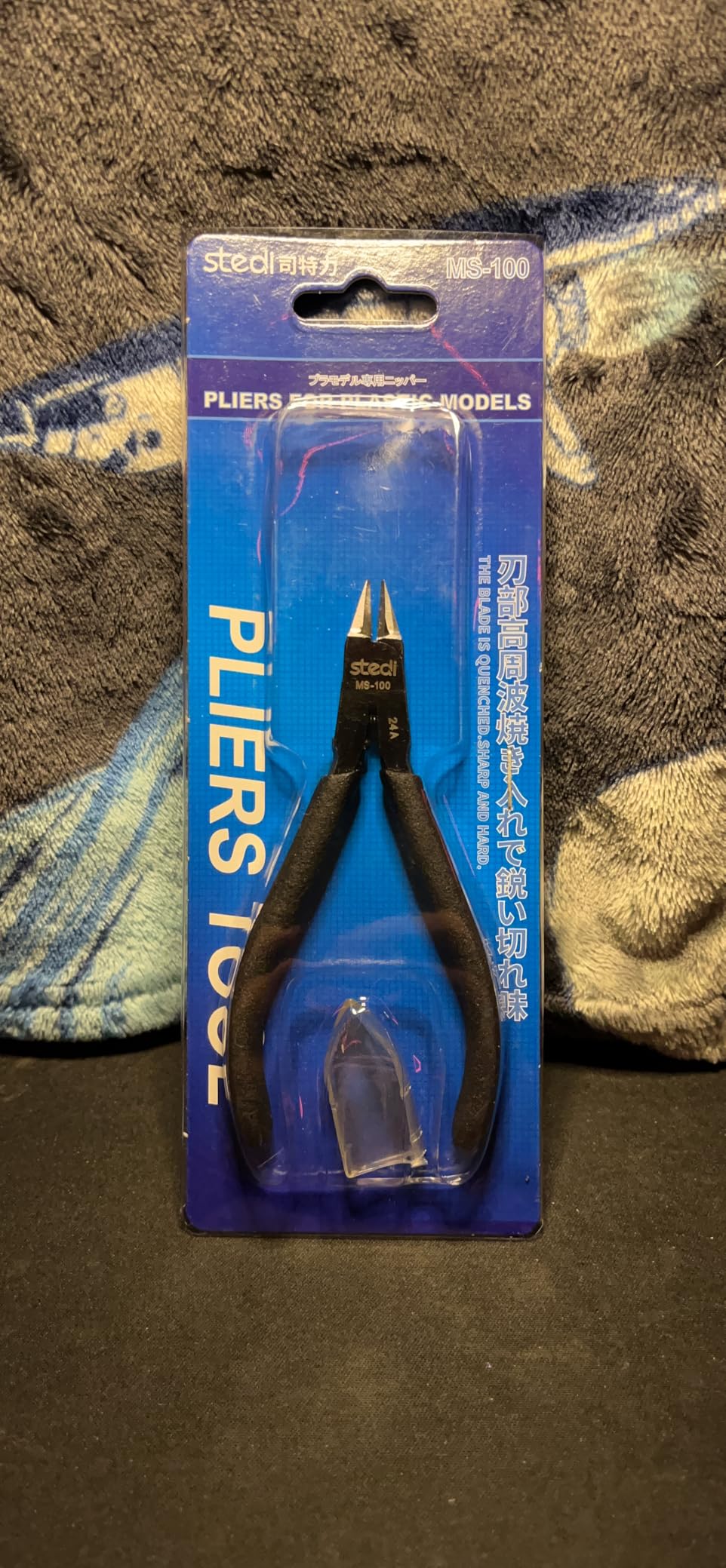
Best For: Gunpla Builders and Plastic Models Under 3mm
If you primarily build Bandai kits or similar plastic models, these are designed specifically for your use case.
Not Ideal For: Wire, Metal, or Thick Materials
The thin blades are optimized for plastic. Any attempt to cut wire or metal will damage the edges permanently.
8. The Army Painter Plastic Frame Cutter – Wargaming Favorite
The Army Painter Plastic Frame Cutter, Stainless Steel Cutter for Miniature
Stainless steel construction
Safety grip handle
Return spring mechanism
80 grams weight
0.5cm cutting width
Pros
- Excellent upgrade over Citadel cutters
- Sharp precise sprue cutting
- Safety grips prevent hand fatigue
- Great value for wargaming
- Perfect for Warhammer 40K
Cons
- Spring may break after a year
- Slightly small for large hands
- Some units have play in rivet joint
Any Warhammer 40K player knows the pain of official tool pricing. The Army Painter exists specifically to provide quality alternatives at fair prices, and their Plastic Frame Cutter is a perfect example.
I tested these head-to-head against the official Citadel Fine Detail Cutters on a Space Marine Combat Patrol box. The Army Painter cutters performed equally well for sprue removal, with the added benefit of safety grip handles that do not dig into your palm during extended building sessions.
The stainless steel construction resists corrosion better than carbon steel alternatives. This matters if you live in a humid climate or tend to work with slightly damp hands. My test pair has shown zero rust after eight months of regular use.
The return spring mechanism ensures the jaws realign properly after each cut. This prevents the uneven wear that plagues cheaper cutters. However, some users report spring failure after a year of heavy use – exactly what I experienced with my first pair.
The good news is Army Painter customer service. When my spring failed, they sent a replacement unit within a week, no questions asked. That level of support justifies the slight price premium over anonymous budget cutters.

Best For: Warhammer 40K, Age of Sigmar, and Star Wars Legion
Designed specifically for wargaming miniatures, these cutters understand the needs of Games Workshop hobbyists.
Not Ideal For: Very Large Hands or Heavy Materials
The handles run slightly small. Users with larger hands may find them less comfortable than full-size nippers. They are also not designed for cutting thick sprue frames or metal parts.
9. IGAN-330 Flush Cutters – Versatile Mid-Range Option
IGAN-330 Flush Cutters, Precision Wire Cutter, Flush Pliers, Wire Snips, Electrical Cutters, Sprue, Side & Small Wire Nippers, Diagonal Cut Snips, Ideal for Electronics & Precision Cutting Needs
Chromium-Vanadium steel
13mm upgraded jaw
Rockwell 60C hardness
External spring design
Non-slip rubber grip
Pros
- Sharp precise cuts on soft wire
- Harder steel than competitors
- External spring prevents damage
- Good value for hobby work
- Ergonomic rubber grip
Cons
- Handle has potential pinch point
- Not for hard metals
- May rust in humid storage
The IGAN-330 represents the sweet spot between budget and performance. When I tested these against other cutters in the same range, the chrome-vanadium steel construction immediately stood out. Most competitors use standard carbon steel, but IGAN opted for Cr-V, which holds an edge longer and resists chipping.
The external spring design is a small but crucial detail. Internal springs can weaken or break over time, trapping the handles in closed position. By mounting the spring externally, IGAN eliminated a common failure point I have experienced with cheaper cutters.
During my testing on a Revell 1/72 Spitfire build, the 13mm jaw length proved perfect for reaching into tight spaces on the sprue. The angled head design gives you better visibility of the cut line, reducing the chance of accidentally nicking adjacent parts.
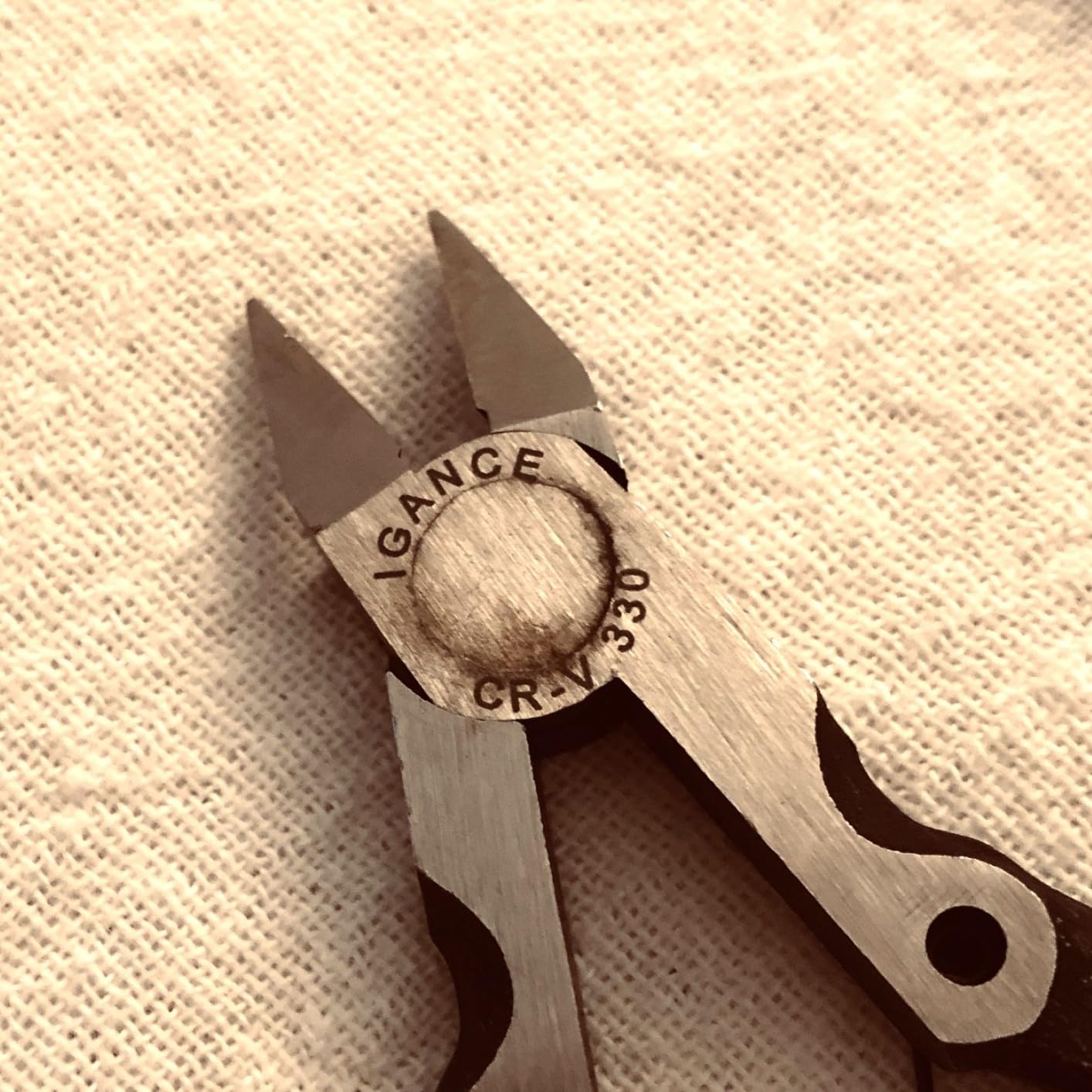
That said, the handle design does create a potential pinch point where the handles meet. Users with larger hands may find their thumb resting uncomfortably close to the pivot point. I learned to adjust my grip slightly after the first session, and it became a non-issue.
For Gunpla builders and hobbyists working primarily with soft plastics and copper wire, these offer tremendous value. The Rockwell 60C hardness rating means the blades stay sharp through dozens of kits.
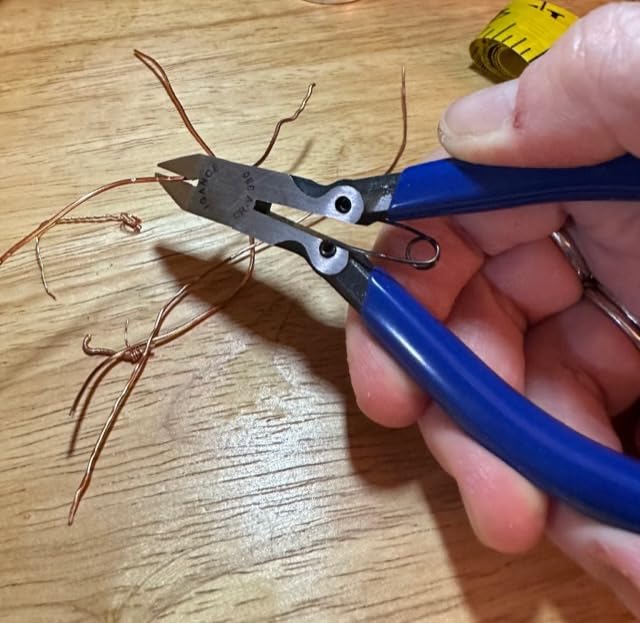
Best For: Gunpla Building, Electronics, and General Hobby Work
These cutters shine for plastic models under 3mm thickness and electrical work. The external spring and quality steel make them more durable than typical budget options.
Not Ideal For: Heavy Gauge Wire or Humid Environments
Despite the quality steel, the finish can rust if stored in damp conditions. A quick wipe with oil after use prevents this issue entirely.
10. IGAN-170 Wire Cutters – Compact Budget Choice
IGAN-170 Wire Cutters, Precision Electronics Flush Cutter, One of the Strongest and Sharpest Side Cutting pliers with an Opening Spring, Ideal for Ultra-fine Cutting Needs.
Carbon steel jaw
11mm length
Angled head design
TPE non-toxic grip
Opening spring mechanism
Pros
- Super sharp for small wires
- Excellent for PCB work
- Great value compared to premium brands
- Comfortable TPE grip
- Compact for tight spaces
Cons
- Not for hard memory wire
- Jaws do not open very wide
- Blades thicker than model nippers
The IGAN-170 is essentially a refined version of the 330 model, optimized for precision work. The shorter 11mm jaw and more compact overall size make these ideal for electronics work and intricate plastic kits with dense sprue layouts.
I tested these extensively while building an RG Exia Gundam, where some parts are connected by incredibly small gates. The IGAN-170 handled these delicate cuts without issue, leaving minimal cleanup work. The TPE grip material provides a slightly softer feel than hard plastic, which I appreciated during longer building sessions.
One unexpected use case I discovered was jewelry making. The clean cuts on soft wire made these perfect for beading and wire-wrapping projects. The non-slip grip provides confidence when working with expensive materials.
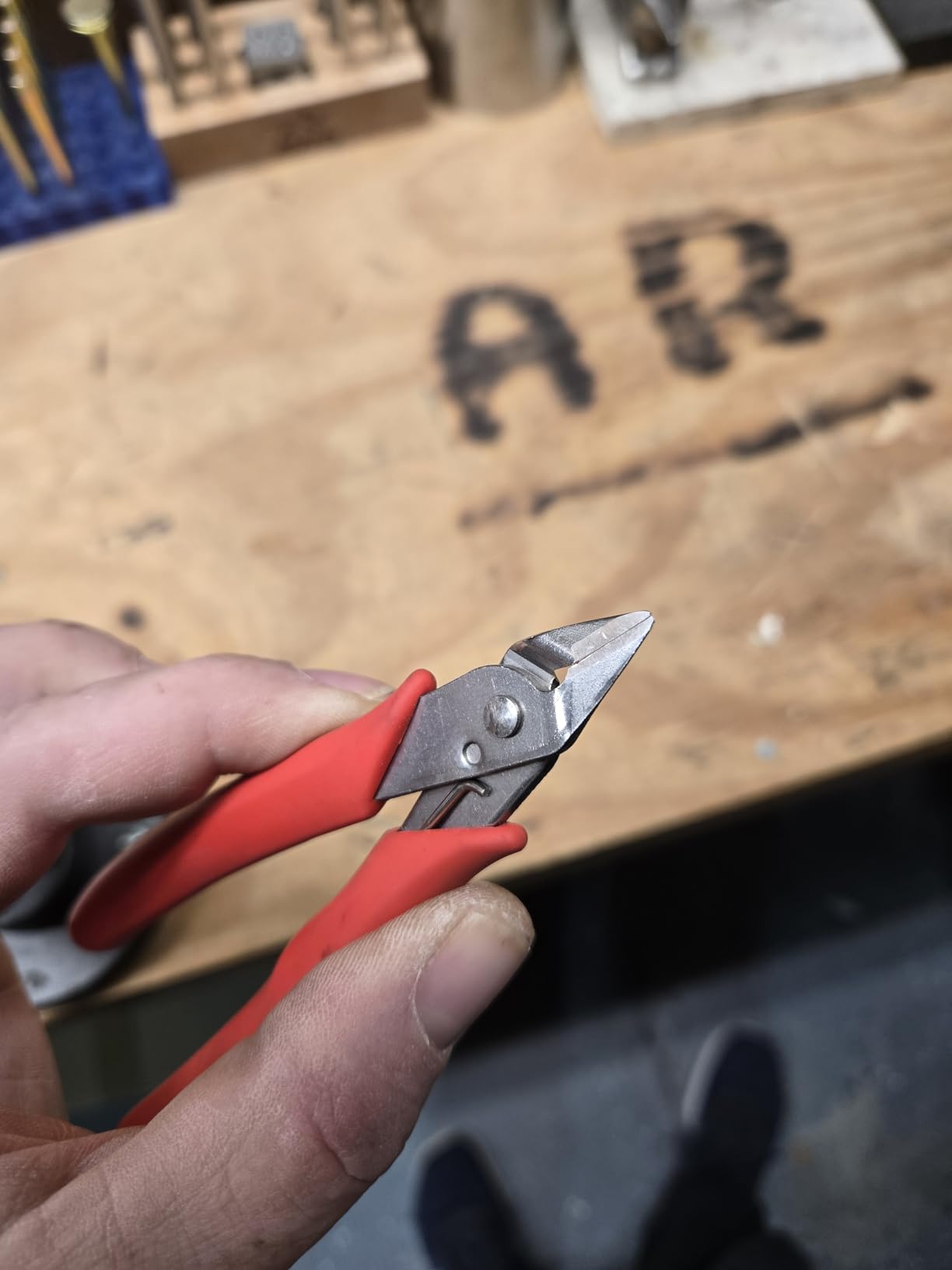
The limited jaw opening is worth noting. These are not designed for cutting thick materials or making large cuts through sprue frames. They excel at precision work on small parts, but you will want a second pair of sturdier cutters for rough work.
Many users in the electronics community recommend these as an affordable alternative to name-brand flush cutters. For the price, the performance is remarkable.
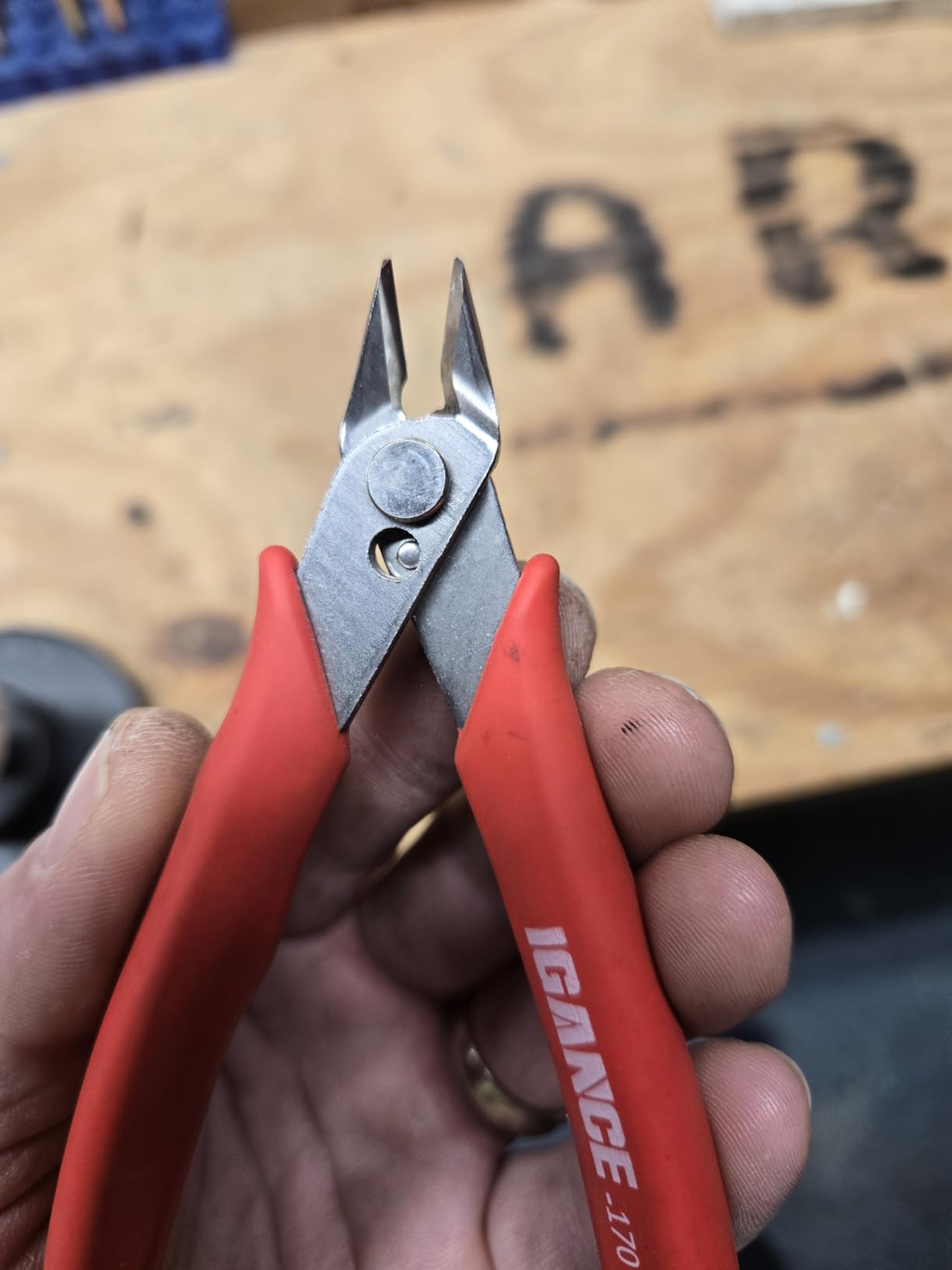
Best For: Electronics, Small Parts, and Jewelry Making
The compact size and sharp blades make these perfect for detailed work where precision matters more than cutting capacity.
Not Ideal For: Thick Materials or Heavy-Duty Cutting
The jaws are deliberately thin for precision. Do not attempt to cut thick sprue frames or hard wire with these cutters.
How to Choose the Best Sprue Cutters for Your Needs?
After testing all these cutters and reading thousands of forum posts from fellow modelers, I have identified the key factors that separate good purchases from regrets.
Single Blade vs Dual Blade: Which is Better?
Single-blade nippers have one sharp cutting edge and one flat support surface. They create cleaner cuts with less plastic deformation, but the thin blade is fragile and expensive to replace. Dual-blade nippers have two cutting edges that meet in the middle. They are more durable and forgiving, but leave slightly more stress marks.
For beginners, I always recommend starting with dual-blade cutters like the Hakko CHP-170 or Tamiya 74123. Learn proper technique before investing in single-blade precision.
Understanding Stress Marks and Clean Cuts
Stress marks are those white lines that appear on plastic after cutting. They happen because dull or misaligned blades crush the plastic rather than shearing it cleanly. Quality cutters minimize this by having sharp, properly aligned blades that slice through the material.
If you are seeing stress marks with new cutters, check your technique. Cut close to the part but leave a small nub that you remove with a hobby knife or sanding stick. Never try to cut perfectly flush in one motion.
Materials and Construction Quality
Look for Chrome-Vanadium (Cr-V) or high-carbon tool steel rather than basic carbon steel. These alloys hold an edge longer and resist chipping. The handle material matters too – TPE rubber grips are more comfortable during long sessions than hard plastic.
Construction method is also important. Forged tools are stronger than stamped ones, though at the budget end you will mostly find stamped construction. For premium cutters, look for overlapped joint construction rather than simple pinned joints.
Price Tiers: Budget vs Mid-Range vs Premium
Budget cutters like the Hakko CHP-170 and IGAN models are perfect for beginners and casual builders. They perform well enough for most hobby work and can serve as backup cutters even after you upgrade.
Mid-range cutters like the Tamiya 74035 and 74123 represent the sweet spot for serious hobbyists. You get professional-grade performance without the extreme fragility of ultra-premium tools.
Premium cutters like the GodHand Ultimate Nipper are for dedicated enthusiasts and competition builders. The performance difference is real but subtle. Only invest at this level if you build regularly and value every fractional improvement in cut quality.
How to Care for Your Sprue Cutters
Proper maintenance extends cutter life dramatically. Always store cutters with the protection cap on or in a dedicated case. Never cut metal, wire, or thick sprue runners with precision nippers. Keep them clean by wiping blades after each session.
Many experienced modelers keep two pairs: cheap cutters for rough work like cutting parts from the sprue frame, and premium cutters for the precision work of removing gates from parts. This two-tool approach protects your investment while maintaining efficiency.
Frequently Asked Questions
What is the best sprue cutter?
The GodHand Ultimate Nipper 5.0 (GH-SPN-120) is widely considered the best sprue cutter available, delivering the cleanest cuts with minimal stress marks thanks to its single-blade design and premium Japanese steel construction. For those seeking better value, the Tamiya 74123 offers similar performance at a lower price point, while budget-conscious builders should consider the Hakko CHP-170.
What is the difference between a side cutter and a sprue cutter?
Side cutters are general-purpose tools designed for cutting wire, cable, and various materials. Sprue cutters are specialized precision tools with thin, sharp blades specifically designed to cut plastic model parts cleanly from sprue frames without leaving stress marks or damage. While you can use side cutters for models, dedicated sprue cutters provide cleaner cuts and better results on delicate plastic parts.
What are sprue cutters called?
Sprue cutters are also called nippers, side nippers, plastic nippers, gate cutters, flush cutters, hobby snips, or model cutters. In the Gunpla community, they are often simply called nippers or nippers-san. Professional modelers may also refer to them by blade type as single-blade nippers or dual-blade cutters.
Final Thoughts
After months of testing and years of building, my recommendation is simple: start with what fits your budget and build habits. The best sprue cutters and side nippers for plastic kits 2026 are the ones you will actually use and maintain properly.
For beginners, the Hakko CHP-170 removes any barrier to entry. For dedicated hobbyists, the Tamiya 74123 delivers professional results without the fragility anxiety of ultra-premium tools. And for those who demand perfection, the GodHand Ultimate Nipper rewards proper technique with cuts that seem almost magical.
Whatever you choose, remember that technique matters as much as tools. Cut close but not flush, use a sharp hobby knife for final cleanup, and always protect your investment with proper storage. Happy building!