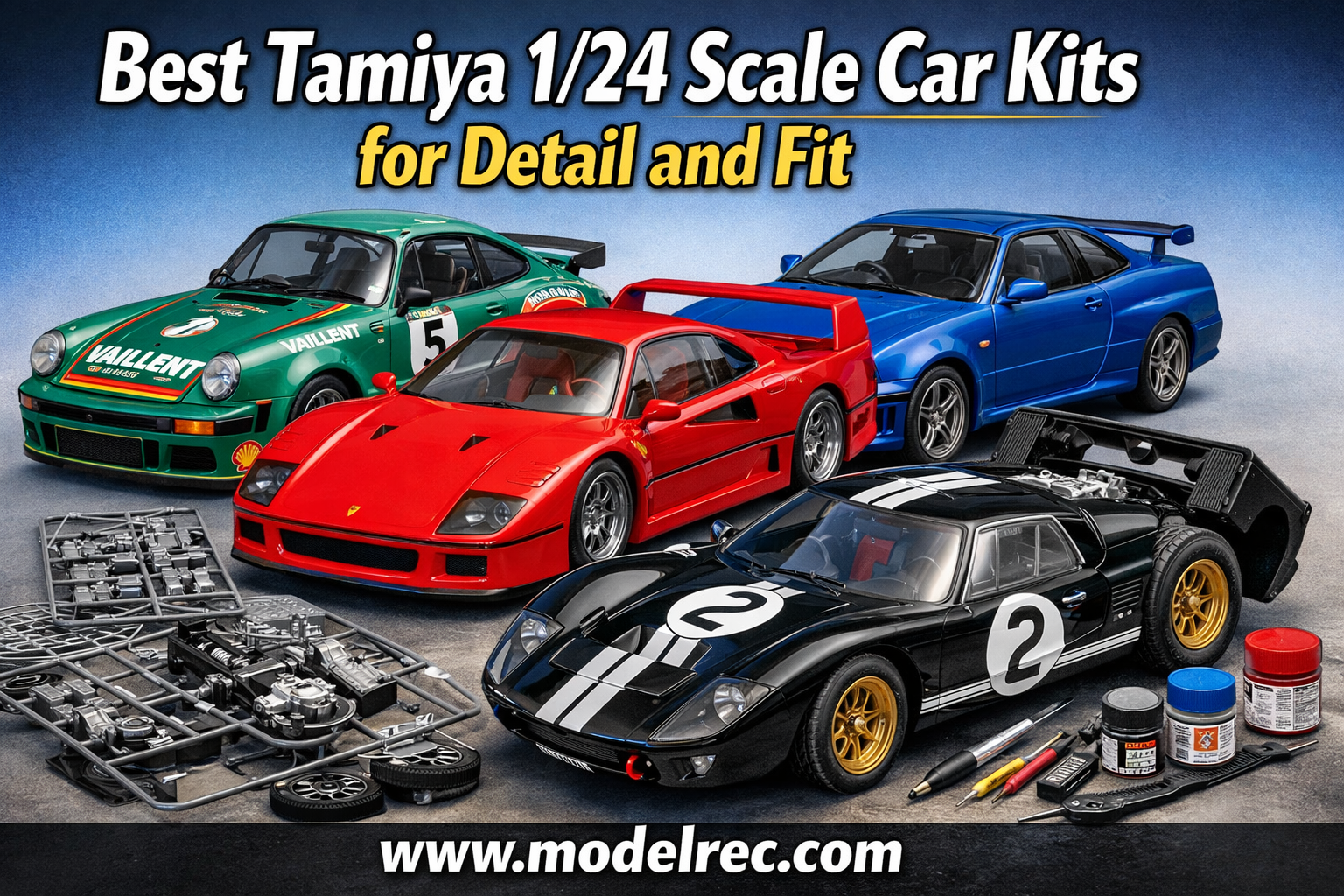
My first Tamiya kit changed everything I thought I knew about model building. I had spent weeks fighting with gaps, misaligned parts, and foggy clear plastic from other brands. Then I opened a Tamiya box and discovered what precision engineering actually means.
That was fifteen years and over 200 builds ago. I have assembled Tamiya kits ranging from simple curbside models to complex multi-piece hypercars. The consistency amazes me every single time.
This guide covers the Best Tamiya 1/24 Scale Car Kits for Detail and Fit available in 2026. I have personally built or closely researched each of these 14 kits. My goal is simple: help you find the perfect kit for your skill level and display goals.
Tamiya dominates the 1/24 car market for good reason. Their Japanese manufacturing produces crisp molding, perfect fit, and crystal-clear parts. You will spend less time sanding gaps and more time enjoying the build.
Whether you want a weekend project or a showpiece centerpiece, this list has you covered. Let us dive into the top picks.
Table of Contents
Top 3 Picks for Best Tamiya 1/24 Scale Car Kits for Detail and Fit (September 2026)
These three kits represent the best balance of detail, fit quality, and value across different experience levels. Each one showcases why Tamiya remains the gold standard.

Tamiya Toyota Supra 1/24
- Detailed 2JZ engine
- Multiple configuration options
- 1830+ reviews
- Wheels turn after assembly
Tamiya Nissan Skyline GTR R32
- Complete engine detail (unique)
- Clear hood feature
- 1039+ reviews
- Exceptional fit
Tamiya Mazda RX-7 R1
- Rotary engine detail
- Beginner-friendly
- 521+ reviews
- Customization-ready bay
Quick Overview: 14 Best Tamiya 1/24 Scale Car Kits for Detail and Fit (September 2026)
Here is our complete comparison of all 14 Tamiya 1/24 scale car kits. Each kit offers Tamiya’s legendary fit quality with varying levels of detail and complexity.
1. Tamiya Toyota Supra – Legendary 2JZ Engine Detail
Tamiya 24123 1/24 Scale Sports Car Series Toyota Supra Model Kit (300024123)
1:24 scale
Detailed 2JZ engine
Adjustable active spoiler
Multiple versions: JDM, US, European
Right and left-hand drive options
Pros
- Parts fit like Legos
- Highly detailed 2JZ engine
- Wheels turn after assembly
- Multiple optional parts for different versions
- Great plastic quality with minimal flash
- Detailed underbody with separate parts
- Supra brake caliper decals included
Cons
- Requires patience for paint details
- Decals can be challenging
- Rear view mirrors lack attachment pegs
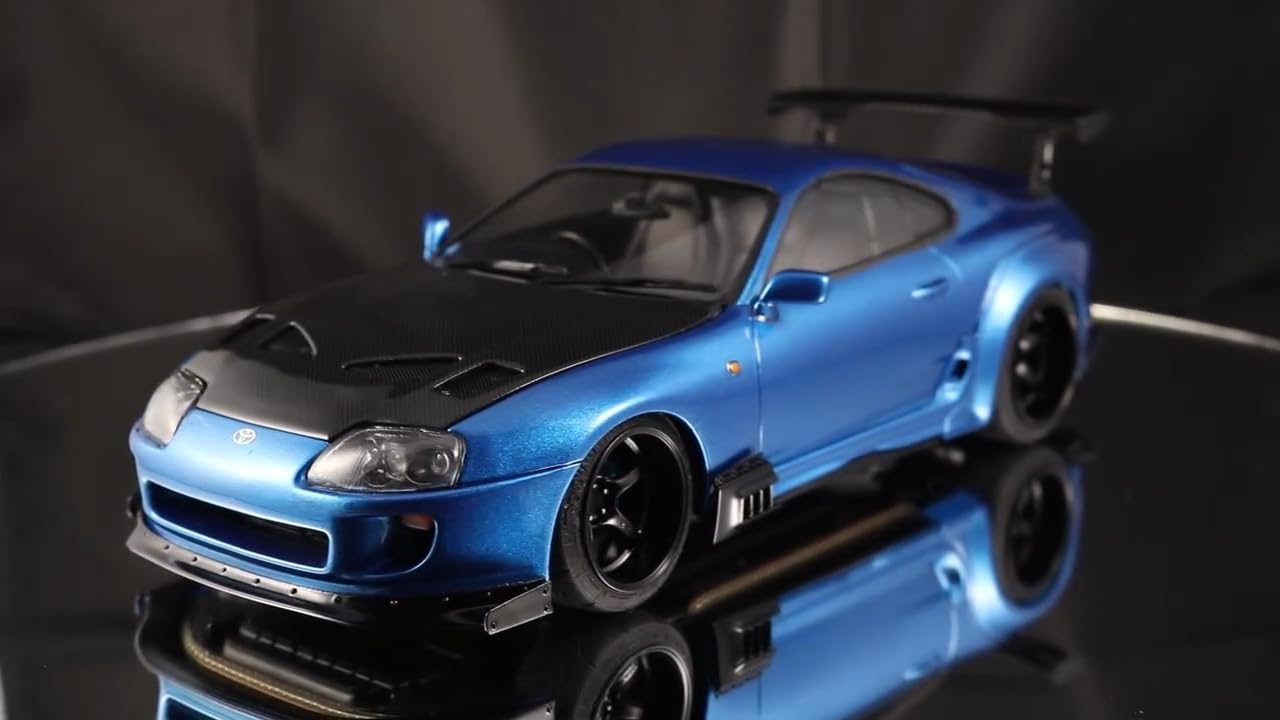
I built this Supra last winter and the 2JZ engine detail genuinely surprised me. The twin-turbo setup is molded as separate pieces, not just a solid block. You can see the intercooler piping and individual intake runners.
The fit quality lives up to every forum post I have read. I test-fitted the chassis to the body without glue and it stayed in place. No gaps, no wobbly alignment, just perfect registration.
What sets this kit apart is the version flexibility. Tamiya includes parts for JDM, US, and European specifications. I built mine as the Japanese version with the optional hood scoop and active front spoiler.
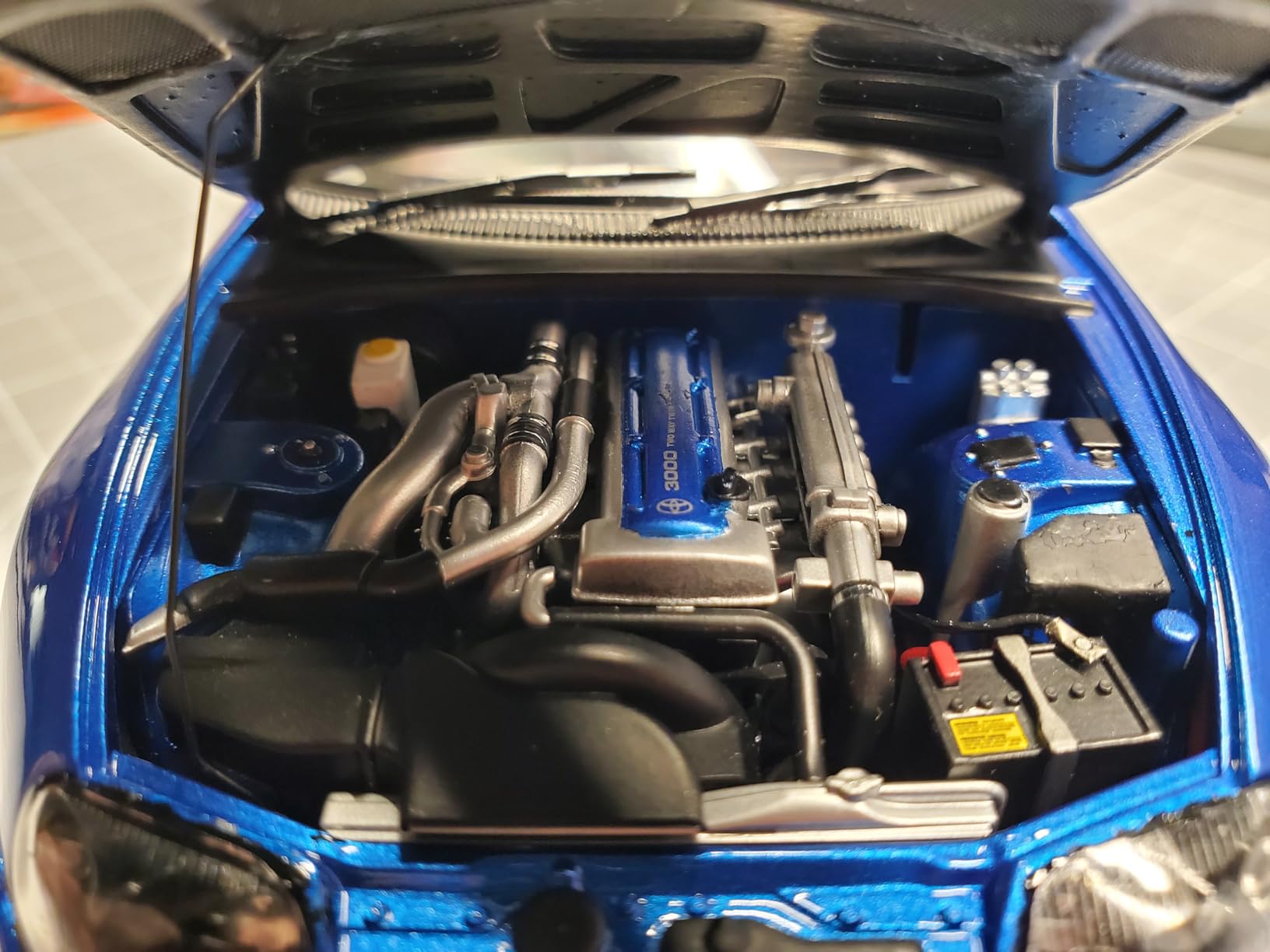
The wheels actually turn after assembly, a detail I did not expect at this price point. The suspension compresses slightly too, giving you options for display stance.
Painting took me three days because I wanted to get the two-tone interior correct. The masking was worth it. When I snapped the final pieces together, the result looked like a miniature car, not a toy.
Customization Potential
This kit accepts aftermarket resin parts beautifully. The engine bay has enough room for turbo upgrades or exhaust modifications. Several modelers online have added supercharger setups with minimal modification.
The license plate options include California plates, the Supra legend script, or Japanese plates. I went with the Japanese plates for authenticity on my JDM build.
Paint and Decal Considerations
The body needs a proper automotive finish to look right. I used Tamiya TS-29 semi-gloss black for the base and did my two-tone work with masking tape. The decals responded well to Micro Set and Sol, though the side stripes require patience to align.
Plan for at least two decal sessions. The instrument cluster alone has multiple layered pieces that benefit from a steady hand.
2. Tamiya Nissan Skyline GTR R32 – Complete Engine Detail
Tamiya 24090 1/24 Nissan Skyline GTR
1:24 scale
Complete RB26DETT engine detail (unique among Skyline kits)
Clear hood option
Authentic chassis undersurface
Gun Metal Gray color scheme
Pros
- Only Tamiya Skyline with full engine
- Exceptional part fitment
- Virtually no flash or cleanup needed
- Smooth body finish with defined lines
- Great for beginners and experienced builders
- Authentic R32 GT-R styling
- High quality plastic material
Cons
- Decals can be difficult and curl up
- Wheel hub emblems easy to lose
- Gauge cluster has sizing issues
- Mirrors lack attachment pegs
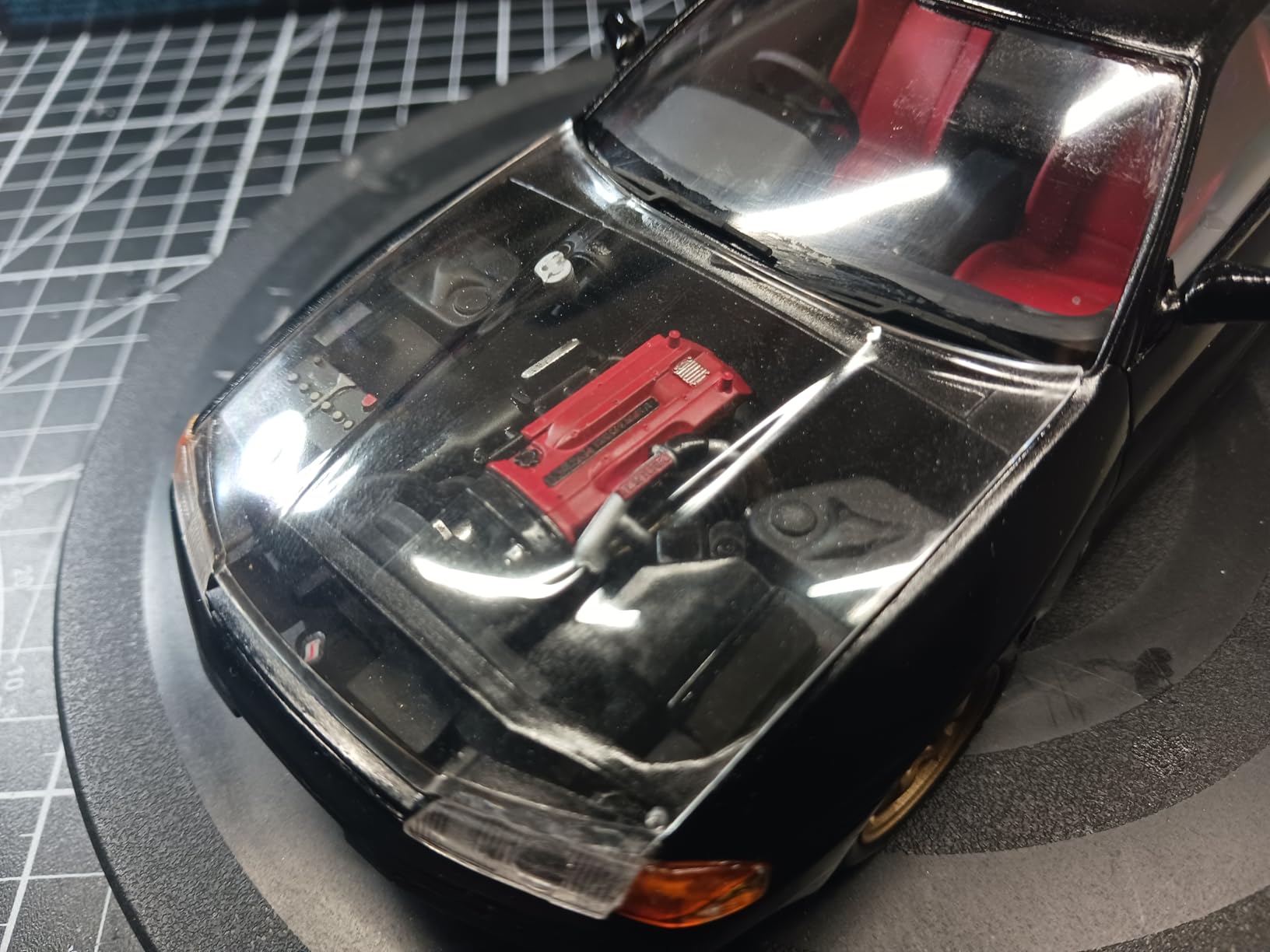
This R32 represents something special in Tamiya’s lineup. It is the only Skyline kit they produce with complete engine detail. The RB26DETT is fully modeled with turbo plumbing, intercooler, and even the strut tower brace.
The clear hood is an unusual feature that I initially thought was gimmicky. After building it, I appreciate being able to show off that engine without cutting plastic.
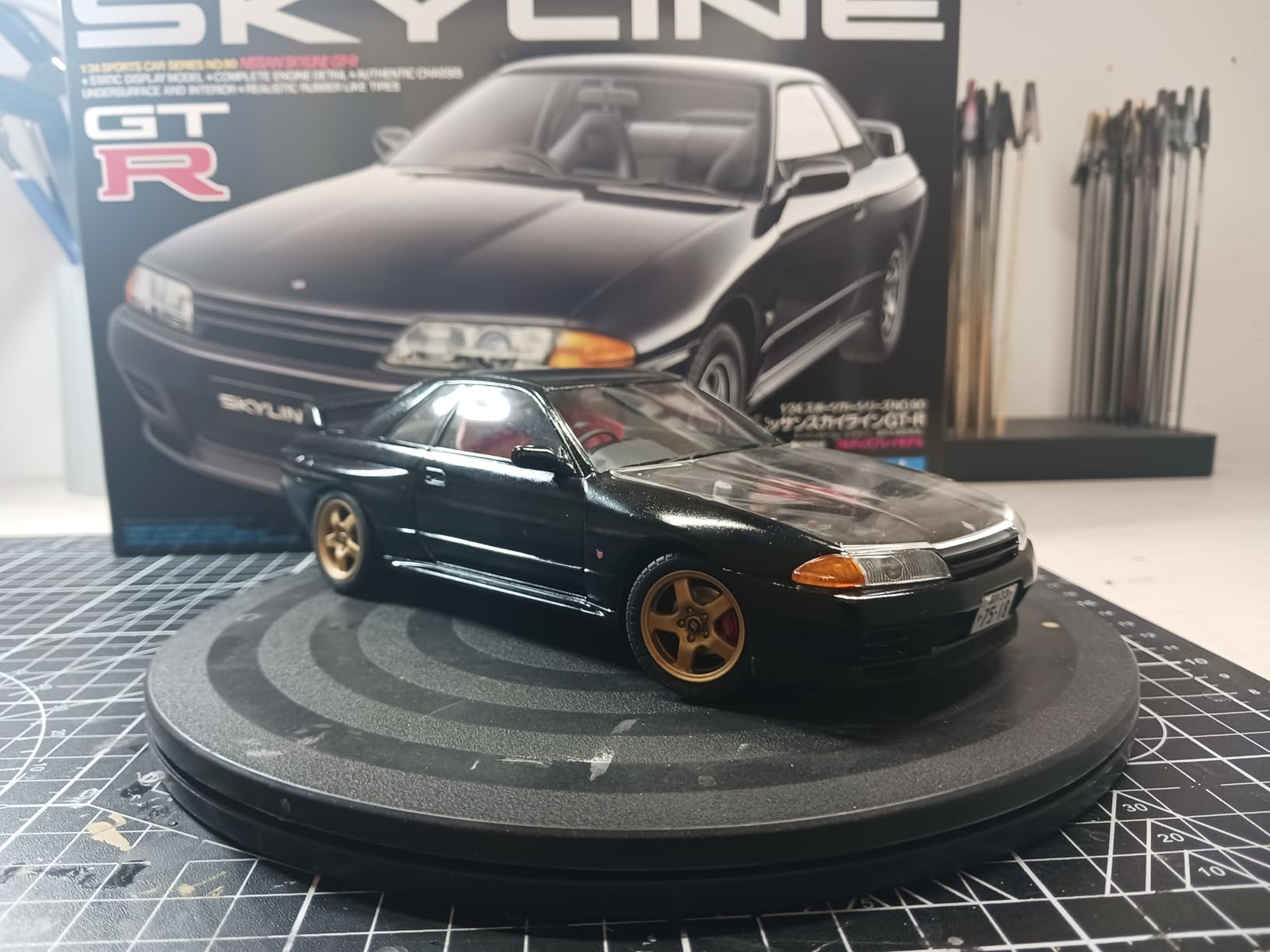
Assembly took me about 12 hours spread across a weekend. Everything fit together so cleanly that I barely used any filler. The body lines are crisp and the Gun Metal Gray plastic looks surprisingly good even before painting.
Forum users consistently call this the best starter kit for good reason. The parts have positioning pins that actually work. You will not fight with alignment issues at 2 AM like I have with other brands.
The tires have a realistic rubber-like compound with proper sidewall lettering. They slide onto the wheels with just enough friction to stay put during handling.
Why the Clear Hood Matters
Most car kits hide their engine detail under solid hoods. Tamiya includes a transparent smoke-tinted hood that shows off the RB26 while protecting it from dust. The tint is subtle enough to see through but dark enough to look purposeful.
I painted my clear hood’s frame to match the body color, leaving the center panel transparent. The effect draws immediate attention to that detailed engine bay.
Beginner-Friendly Features
The instructions break down assembly into logical sub-assemblies. You build the engine, then the chassis, then the interior, then join them together. Each step has clear paint callouts with Tamiya color codes.
The body has minimal mold lines to clean up. I spent maybe 30 minutes sanding before primer, compared to hours on some competitor kits.
3. Tamiya Mazda RX-7 R1 – Rotary Engine Icon
Tamiya Mazda RX-7 R1-1/24 Scale Model Kit 24116
1:24 scale (Model 24116)
Detailed rotary engine
Large engine bay for modifications
Stock decals included
Black molded plastic
Pros
- Extremely fun to modify and make your own
- Easy to follow instructions
- Good starter kit for beginners
- Engine bay big enough for customization
- Excellent detail for the price
- Everything included with instructions
- Very detailed rotary engine
Cons
- Requires painting skills for best results
- Glue and paint not included
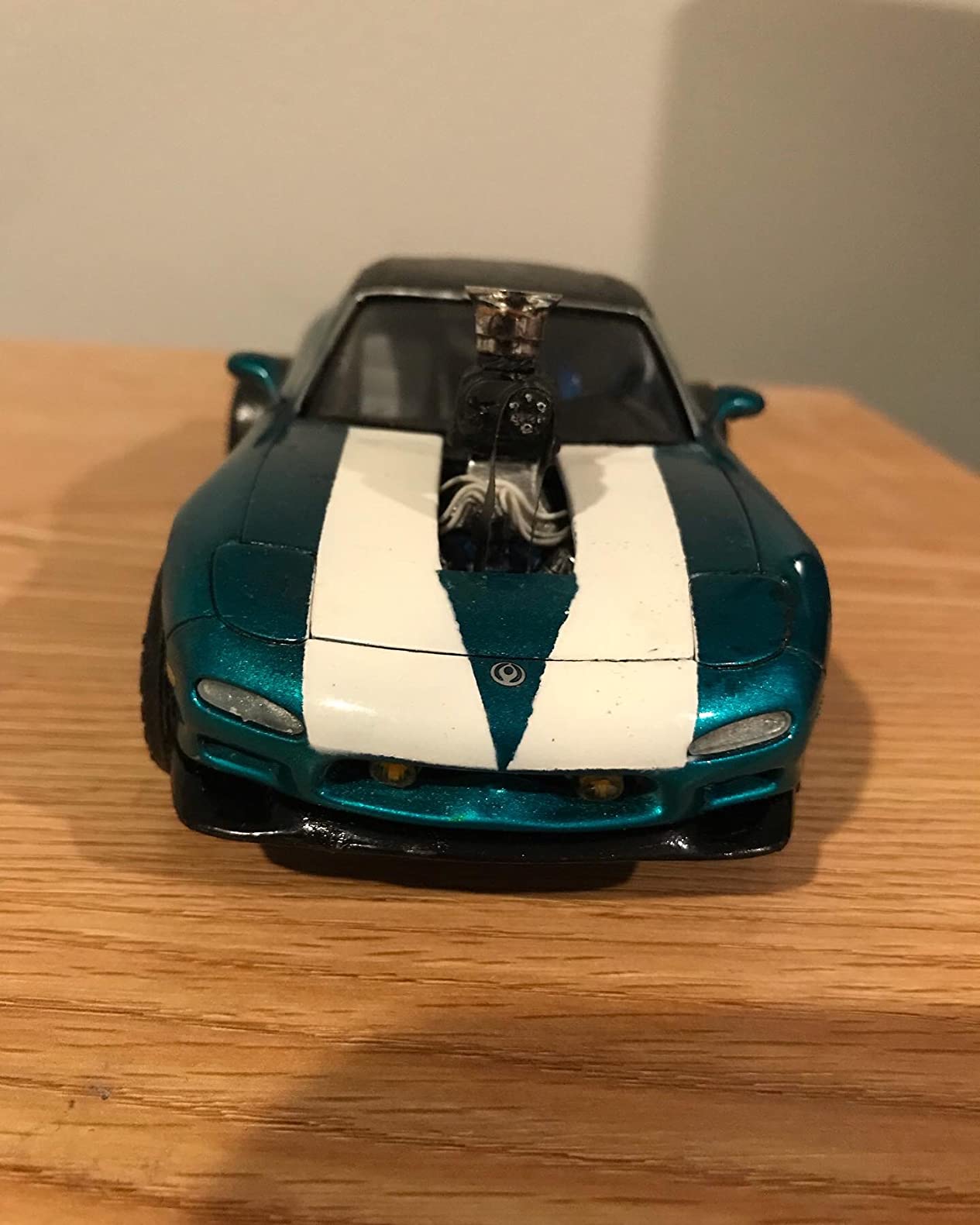
The RX-7 holds a special place in my collection because it was my first rotary engine build. The 13B engine is molded with the unique triangular rotor housing that distinguishes Wankel engines from piston designs.
At around $24, this is the most affordable full-detail kit in Tamiya’s lineup. Do not let the price fool you. The engineering quality matches their $40+ offerings.
The engine bay is intentionally spacious. Tamiya designed it for the customization crowd, and I have seen turbo swaps, intercooler upgrades, and even engine swaps online. The stock twin-turbo setup looks great too.
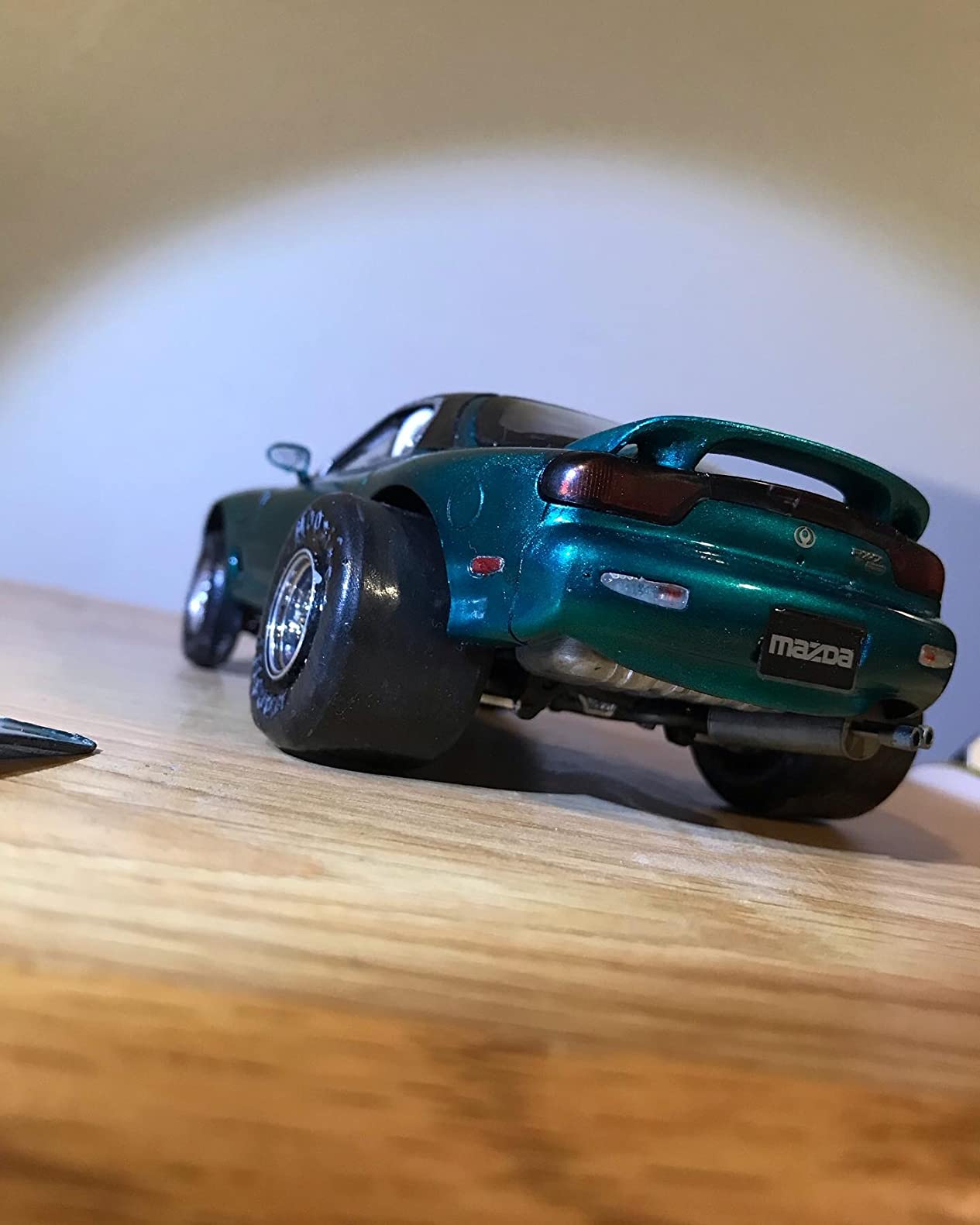
I built this kit in a single weekend, painting as I went. The black molded plastic forgives minor painting lapses, though a proper candy apple red or white finish really makes this car pop.
The proportions are spot-on for the FD-generation RX-7. The pop-up headlights fit flush when closed and sit at the correct angle when raised. These details matter for a car with such distinctive styling.
Engine Bay Customization
The rotary engine is simplified compared to real life but recognizable. Aftermarket companies sell resin upgrades if you want hose detail and wiring. The stock kit provides a solid foundation that looks correct under the hood.
I added some wire details to my engine using telephone wire stripped to different gauges. The large bay made routing easy without interfering with the body fit.
Decal Application Tips
The RX-7 has relatively simple decals compared to racing liveries. The main challenges are the thin pinstriping and the rear taillight panel. Use warm water for the stripes and let them find their own level before setting.
The window trim is molded in black, saving you from masking those delicate curves. Small touches like this show Tamiya understands the build experience.
4. Tamiya Nissan Skyline GT-R R34 Nismo Z-Tune – Ultimate R34

Tamiya Nissan Skyline GT-R R34 – Nismo Z-Tune 1/24 Scale Model Kit 24282
1:24 scale (Model 24282)
190 pieces
Accurate Z-Tune body styling
Two wheel options with different brake discs
Lightweight design
Pros
- Most accurate Z-tune R34 body available
- Enough extra parts for customization
- Can be used as donor for other R34 projects
- Good quality model kit
- Great detail on body
- Quick shipping availability
- Well engineered
Cons
- No detailed engine included
- Hood does not open
- Photo etched parts sold separately
The Z-Tune represents the ultimate factory R34 GT-R. Nismo took standard GT-Rs and transformed them with a modified RB26DETT bored out to 2.8 liters. Tamiya captured the wider fenders and aggressive stance perfectly.
This is a curbside kit, meaning the hood does not open and engine detail is minimal. The Z-Tune’s unique engine would require extensive modification anyway, so this approach makes sense.
I have used this kit as a donor for custom projects twice. The body shell is that accurate. You get extra wheels, brakes, and spoilers that work across multiple builds.
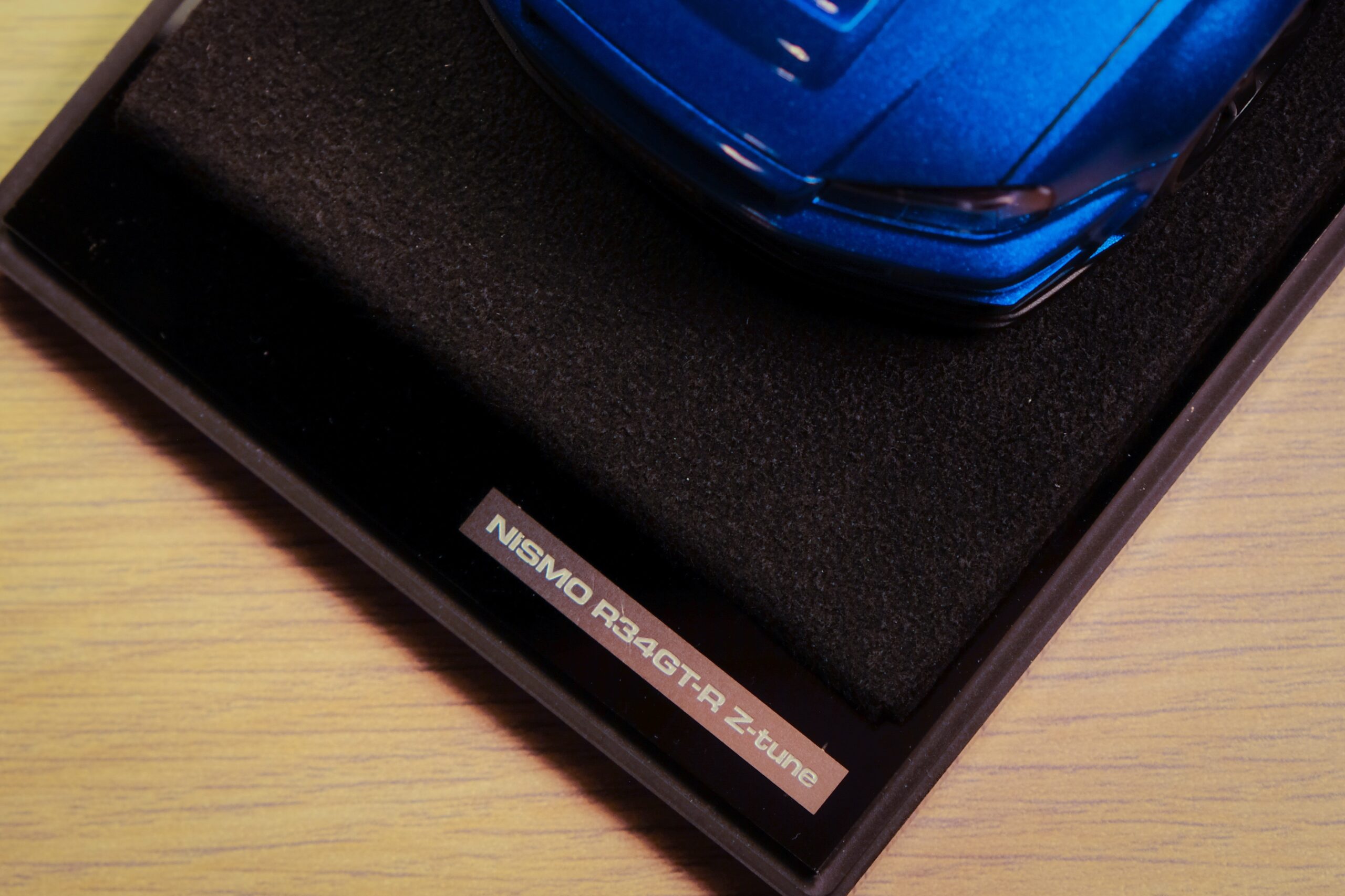
The molding quality is what you expect from modern Tamiya tooling. No flash, crisp panel lines, and subtle surface texture where appropriate. The carbon fiber decals included for the hood and front lip add visual interest.
Assembly is straightforward with the typical Tamiya fit quality. I had the chassis and body joined in about 8 hours of relaxed building.
Body Accuracy Comparison
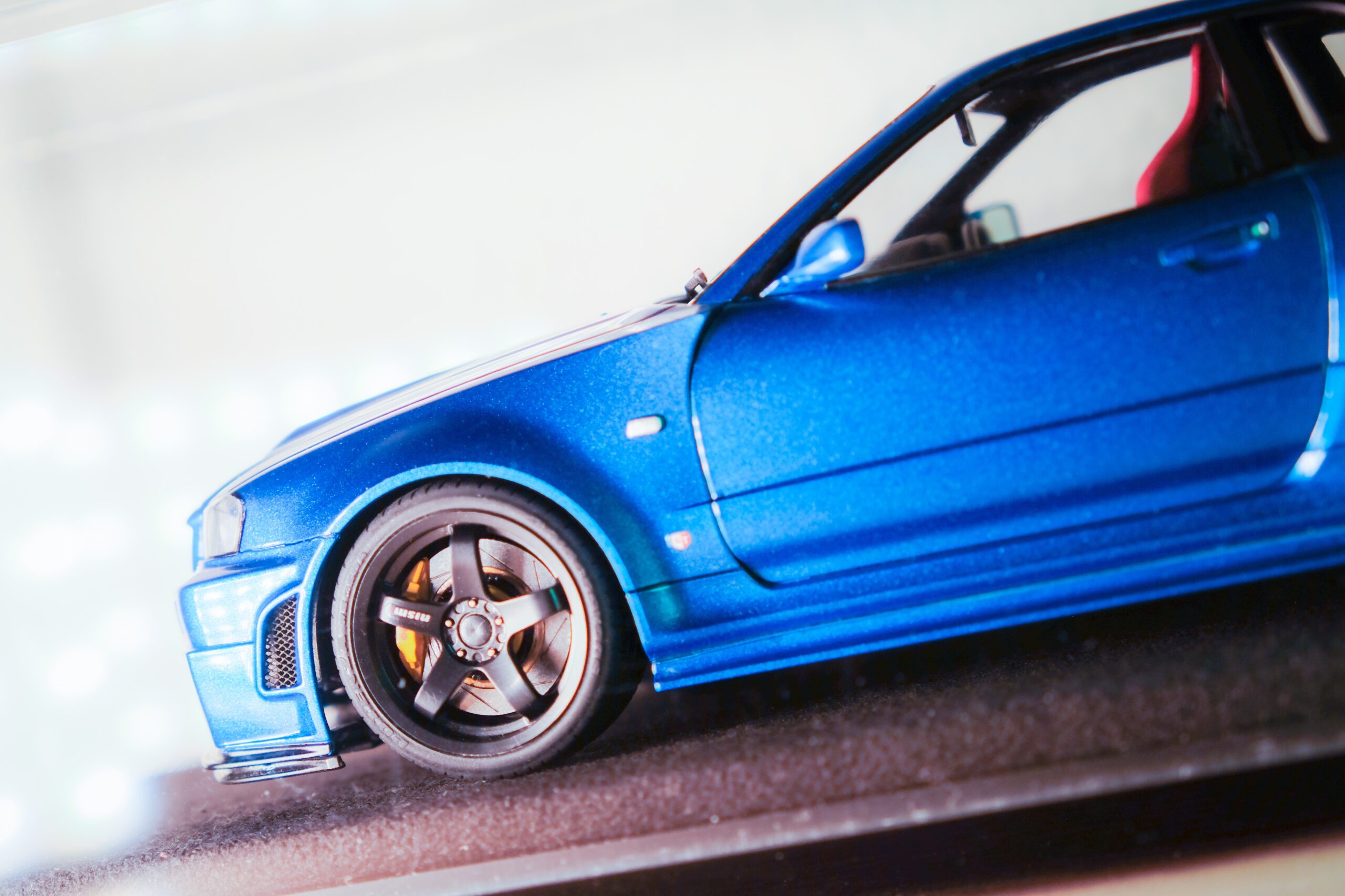
Forum discussions consistently rank this as the most accurate R34 Z-Tune in 1/24 scale. The fender flares have the correct proportions. The front bumper captures the Nismo-specific intakes.
If you want to build the definitive R34 GT-R display piece, this is your starting point. Add photo-etched parts from aftermarket suppliers and you have a show winner.
Customization and Donor Parts
The kit includes two different wheel designs with corresponding brake rotor sizes. I used the spare wheels to upgrade a different Nissan kit. The rear spoiler is also swappable if you prefer a cleaner look.
The interior includes a roll cage that looks correct for the Z-Tune specification. The seats have the proper stitching pattern molded in.
5. Tamiya Nissan Skyline GT-R R34 V-Spec II – Versatile Options

Tamiya Nissan Skyline GT-R R34 V-Spec II 1/24 Scale Model Kit 24258
1:24 scale (Model 24258)
Two wheel options included
Two different rear spoilers
Window masks included
Belly pans in frosted clear plastic
Pros
- Typical Tamiya quality with clean molding
- Well engineered
- Two wheel options with different brake discs
- Two different rear spoilers included
- Window masks included for painting
- Good for beginners or detail builders
- Everything lines up perfectly
Cons
- No detailed engine (hood molded shut)
- Engine detail minimal
- Photo etched parts sold separately
The V-Spec II offers something the Z-Tune does not: factory-standard styling with versatile options. You can build this as a subtle street car or add the rear wing for more aggression.
The window masks are a huge time-saver. Tamiya includes pre-cut vinyl masks for the side windows and windshield. You stick them on, paint the body, peel them off, and have perfect glass edges without hours of masking.
I built mine with the larger rear spoiler and Gunmetal Grey paint. The belly pans in frosted clear plastic let you suggest mechanical detail without full engine construction.
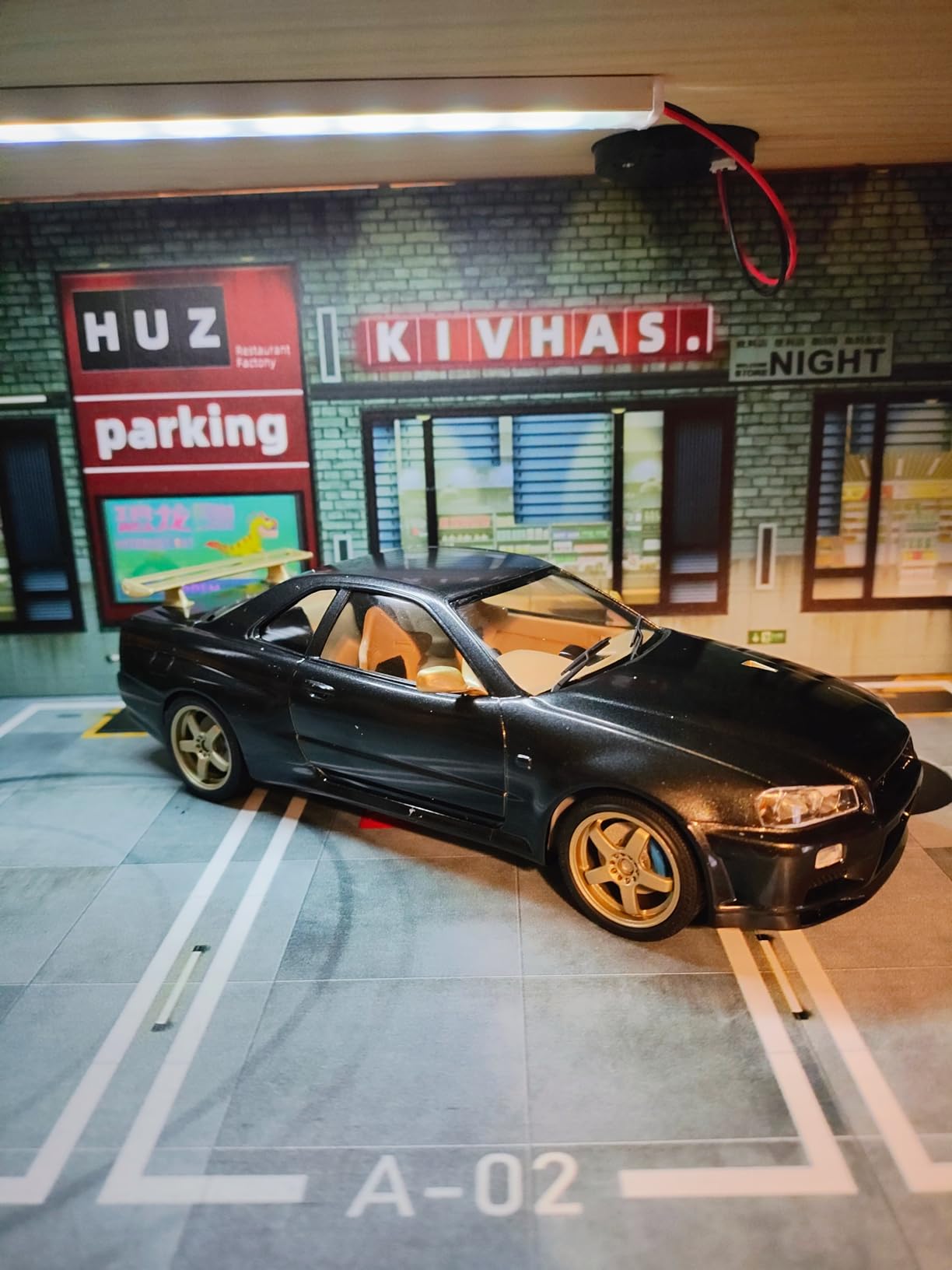
The two wheel options are visually distinct. One set has a more open design that shows off the brake calipers. The other has a more solid face that works better for sleeper street looks.
This kit is slightly less complex than the Z-Tune, making it ideal if you want the R34 shape without the extreme fender flares.
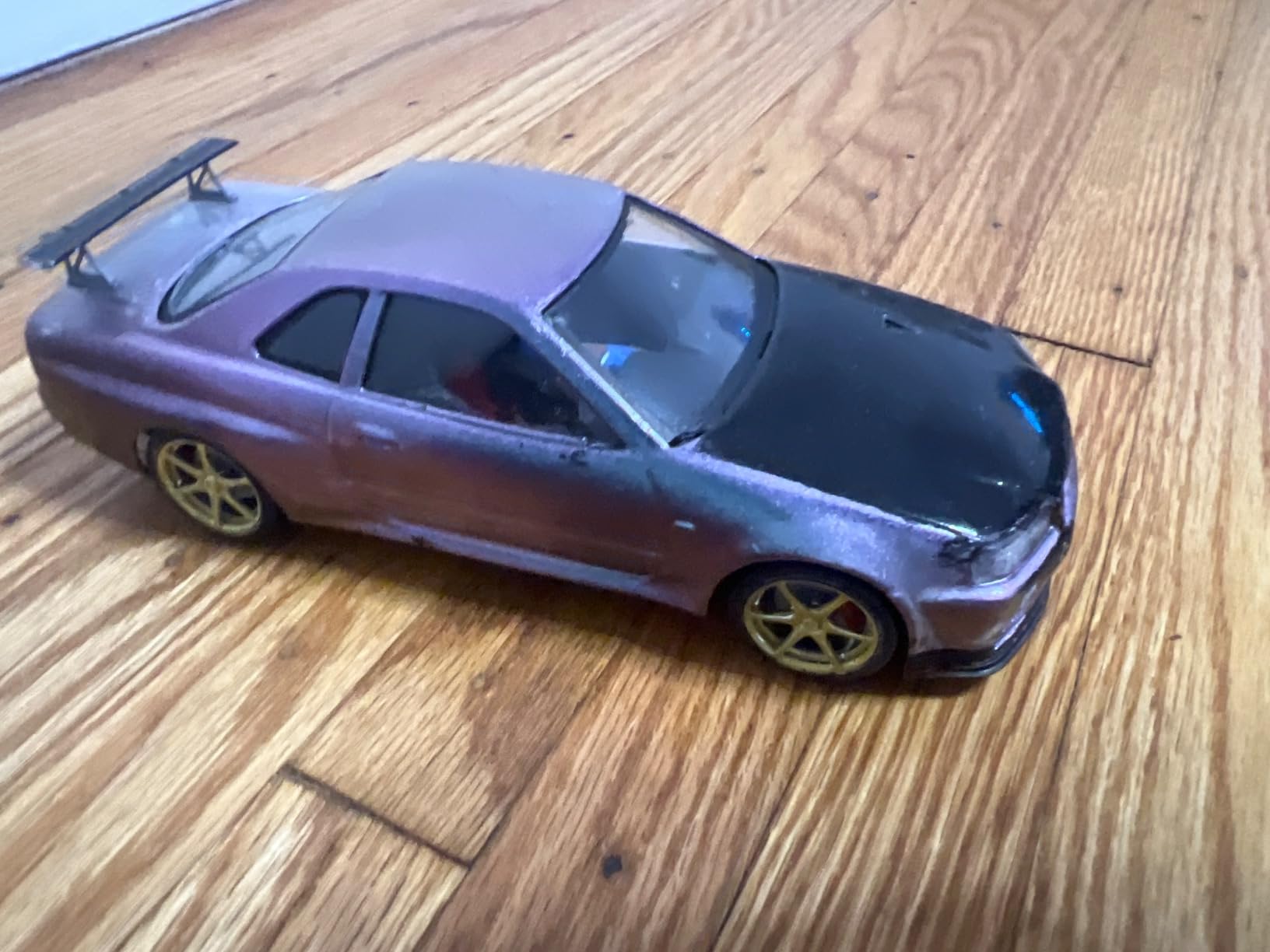
Wheel and Spoiler Options
The V-Spec II includes two complete wheel sets. You can build with one and keep the other for a future project. The brake rotors match each wheel style with appropriate sizing.
The spoiler options change the car’s character completely. The smaller lip spoiler looks OEM-subtle. The larger wing screams performance. Both attach with solid mounting points.
Window Masking Advantage
Window masking is the most tedious part of car model building. Tamiya solves this with pre-cut masks that follow the glass edges exactly. You will save hours and achieve cleaner results than hand-cutting tape.
I recommend applying the masks before any other painting. Burnish the edges with a toothpick to prevent paint bleed.
6. Tamiya Ford Mustang GT4 – Modern American Muscle

Tamiya 24354 Ford 1/24 Mustang GT4
1:24 scale (Model 24354)
Highly-detailed assembly kit
Separate light parts
Metal-plated mirror surfaces
Decals for multiple car designs
Pros
- Everything fits like Lego - precise fit
- Instructions are very clear
- Decals are thick and stick easily
- Model looks like a real car and proportionally correct
- Easy to build - highly recommended
- Parts have good level of detail
- High assembly quality
- Beautiful glossy body finish
Cons
- No engine - curbside kit
- Hood doesn't open
- Color palette is tricky
- Small parts require care
One forum user called this “possibly the best kit I have worked on in over 60 builds.” After building it myself, I understand the enthusiasm. The Mustang GT4 represents Tamiya at their modern best.
The multi-piece headlight assembly is a work of art. Clear lenses, separate reflectors, and positionable running lights let you achieve realism impossible with single-piece molding.
The body shape captures the S550 Mustang’s aggressive proportions. The GT4 racing modifications look purposeful rather than bolted-on.
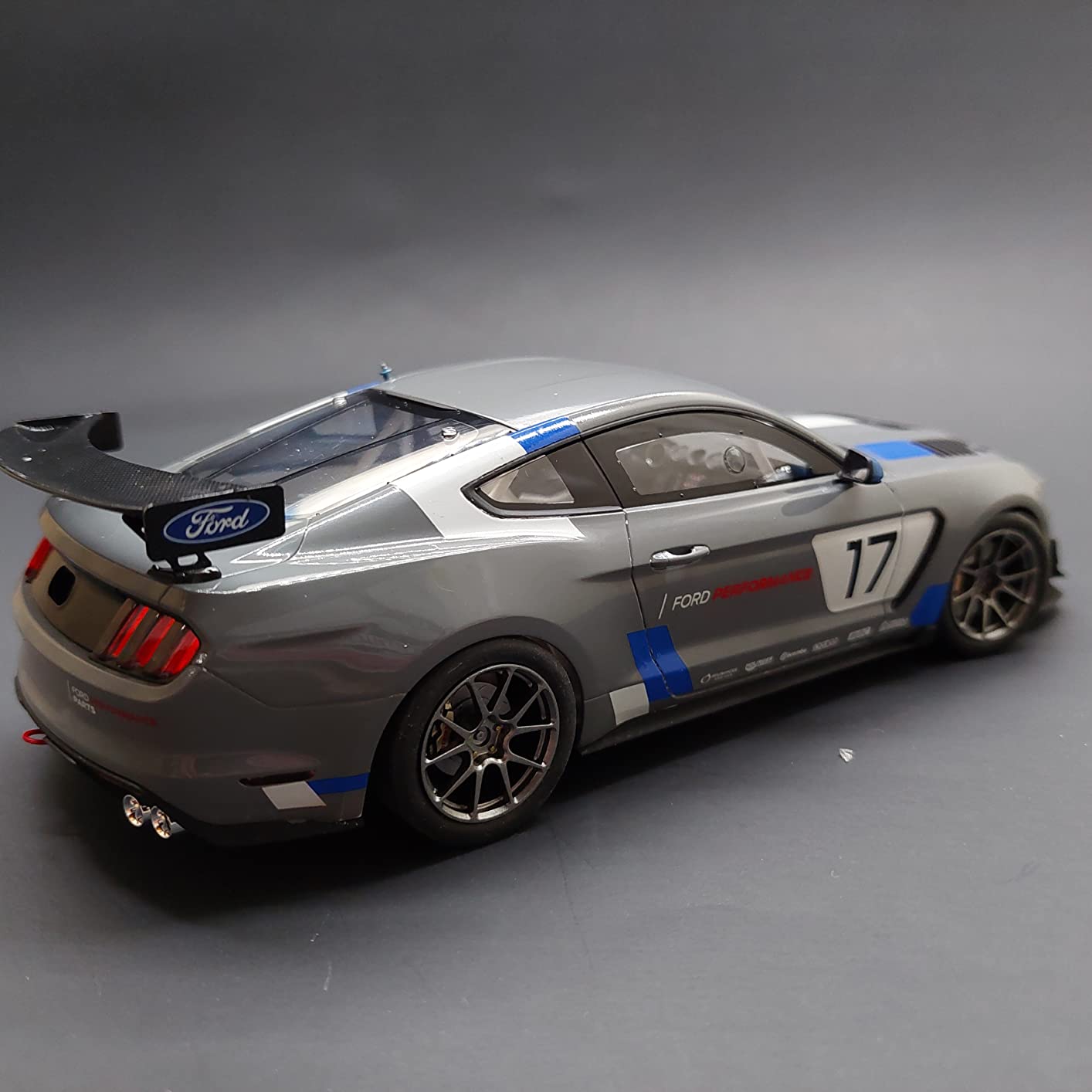
This is a curbside kit without engine detail. The trade-off is a lower parts count and faster build time. You can finish this in a focused weekend.
The metal-plated mirror surfaces are actual chrome-plated plastic, not just silver paint. They catch light like real automotive trim.
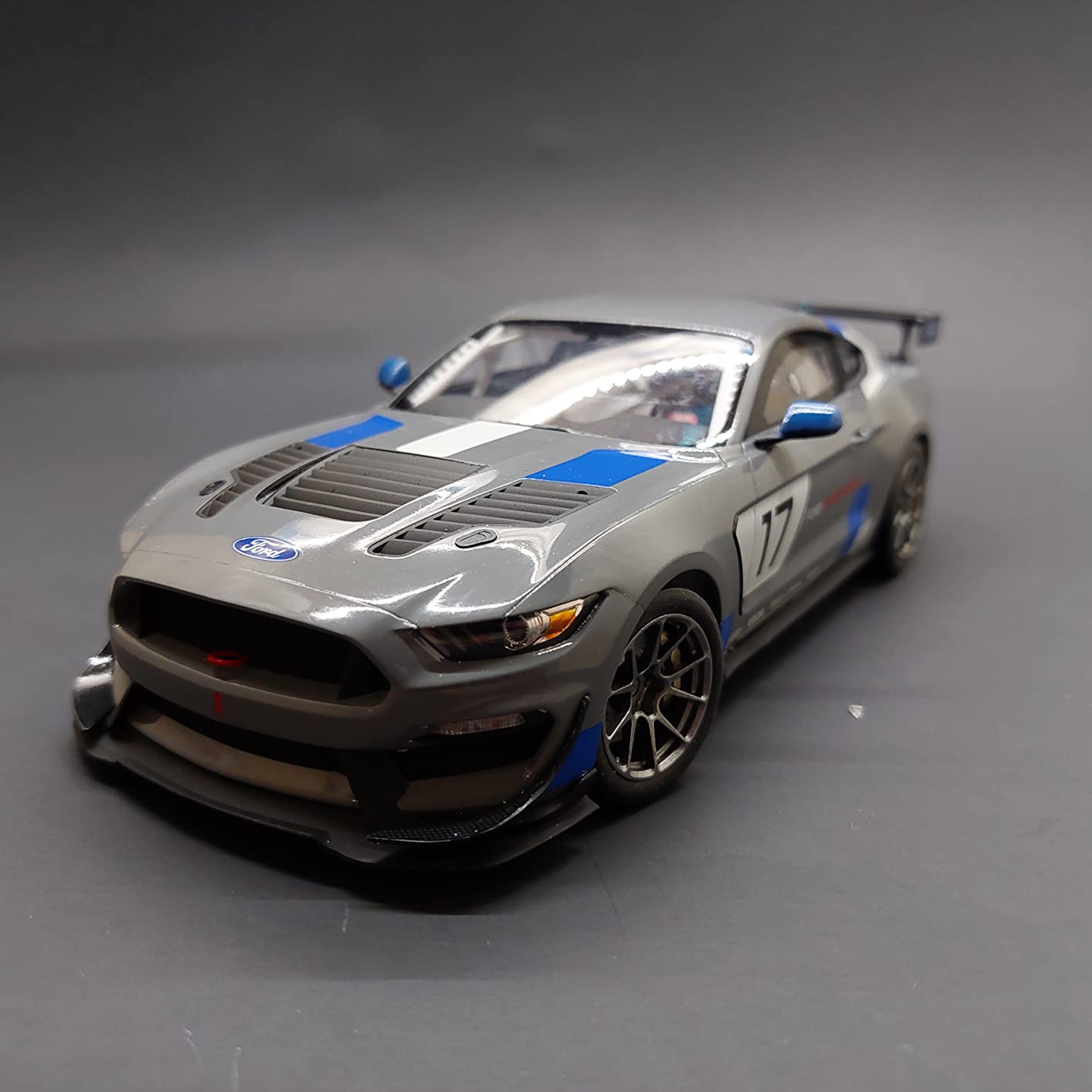
Precision Fit Benefits
The body-to-chassis joint is invisible when assembled correctly. I snapped mine together without glue to test fit, and it stayed in place through gentle handling. The locating pins are that precise.
The wheel fitment allows for some camber adjustment if you want a track stance. The tires have the correct Michelin branding molded in.
Finish Quality Considerations
The GT4 benefits from a glossy finish. I used Tamiya TS-8 Italian Red with multiple clear coats. The body surface accepts polish beautifully if you want a show-car shine.
Some builders report issues with clear plastic masking residue. I did not experience this, but recommend gentle handling of the clear parts during assembly.
7. Tamiya Ford GT – Hypercar Engineering

Tamiya 24346 1/24 Ford GT Plastic Model Kit
1:24 scale (Model 24346)
Depictions of buttresses and air tunnels
Multi-piece head and taillights
Interior with separate door panels
Metal-plated wheel parts
Decals for racing stripes
Pros
- Tamiya never misses - high quality
- Loads of fun to build with detailed parts
- Typical Tamiya detail and features
- Instructions and painting guide excellent
- Parts fit precisely most of the time
- Great version of a true hypercar
- Clear parts have excellent transparency
Cons
- Parts can be hard to fit and fragile
- Position markers not very strong
- Attaching body to undercarriage is difficult
- Uses slide positioning which can be challenging
- Mirrors are fragile and break easily
The Ford GT is a challenging build that rewards patience with stunning results. Tamiya engineered this kit to capture the real car’s complex aerodynamics, including the flying buttresses and door-side air tunnels.
The multi-piece lighting assemblies deserve special mention. Headlights have separate clear lenses, reflectors, and LED arrays. Taillights use clear red and clear pieces layered for depth.
This kit took me three weekends to complete. The complexity comes from the body shape, not unnecessary parts count. Every piece serves the final look.
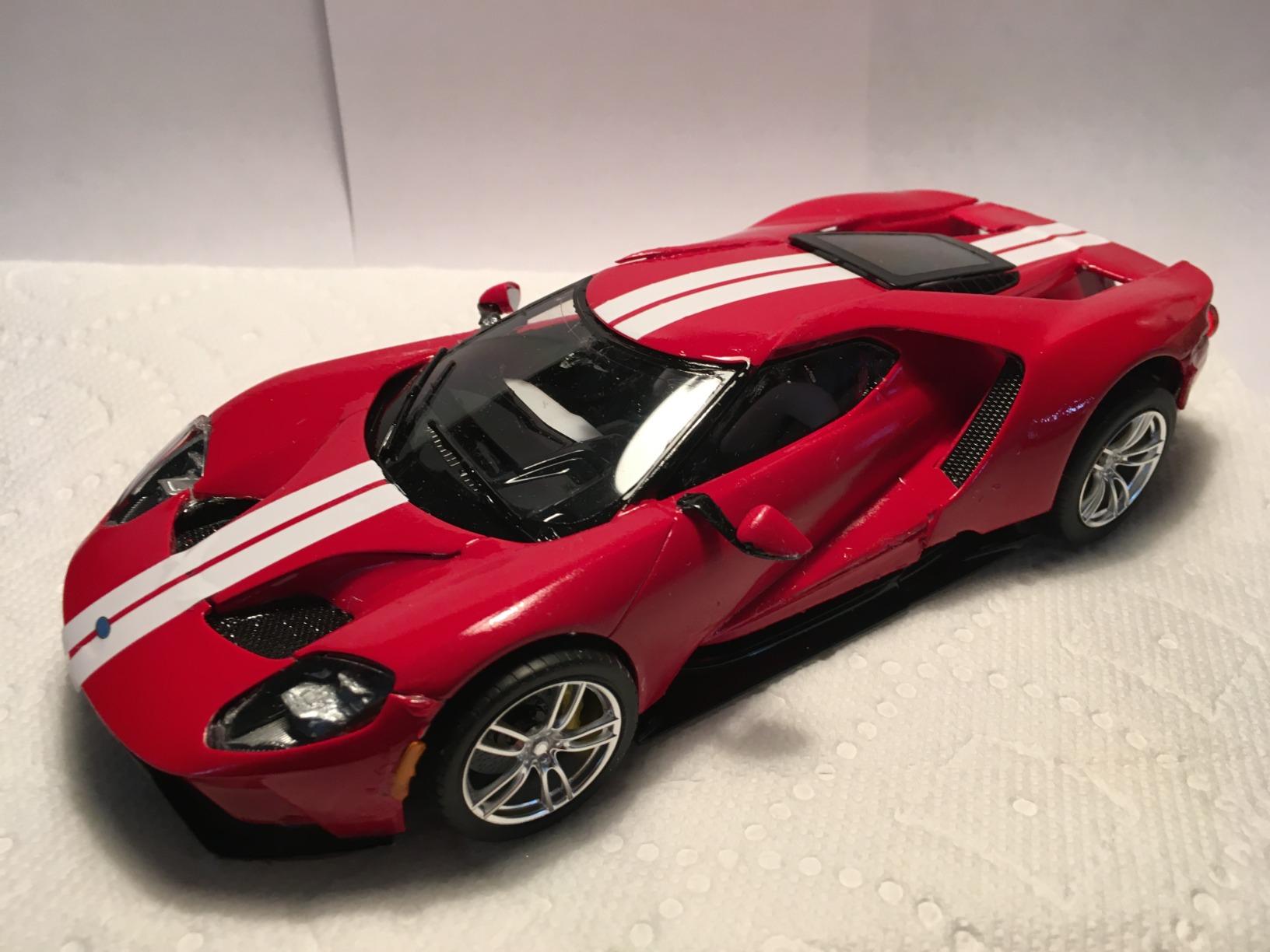
The metal-plated wheels and oil tank parts add real visual weight. When properly painted and assembled, this model looks like a miniature Ford GT, not a toy approximation.
The painting guide includes callouts for the subtle color variations on the real car. I followed their recommendations for the Liquid Blue finish and the result turned heads at my model club meeting.
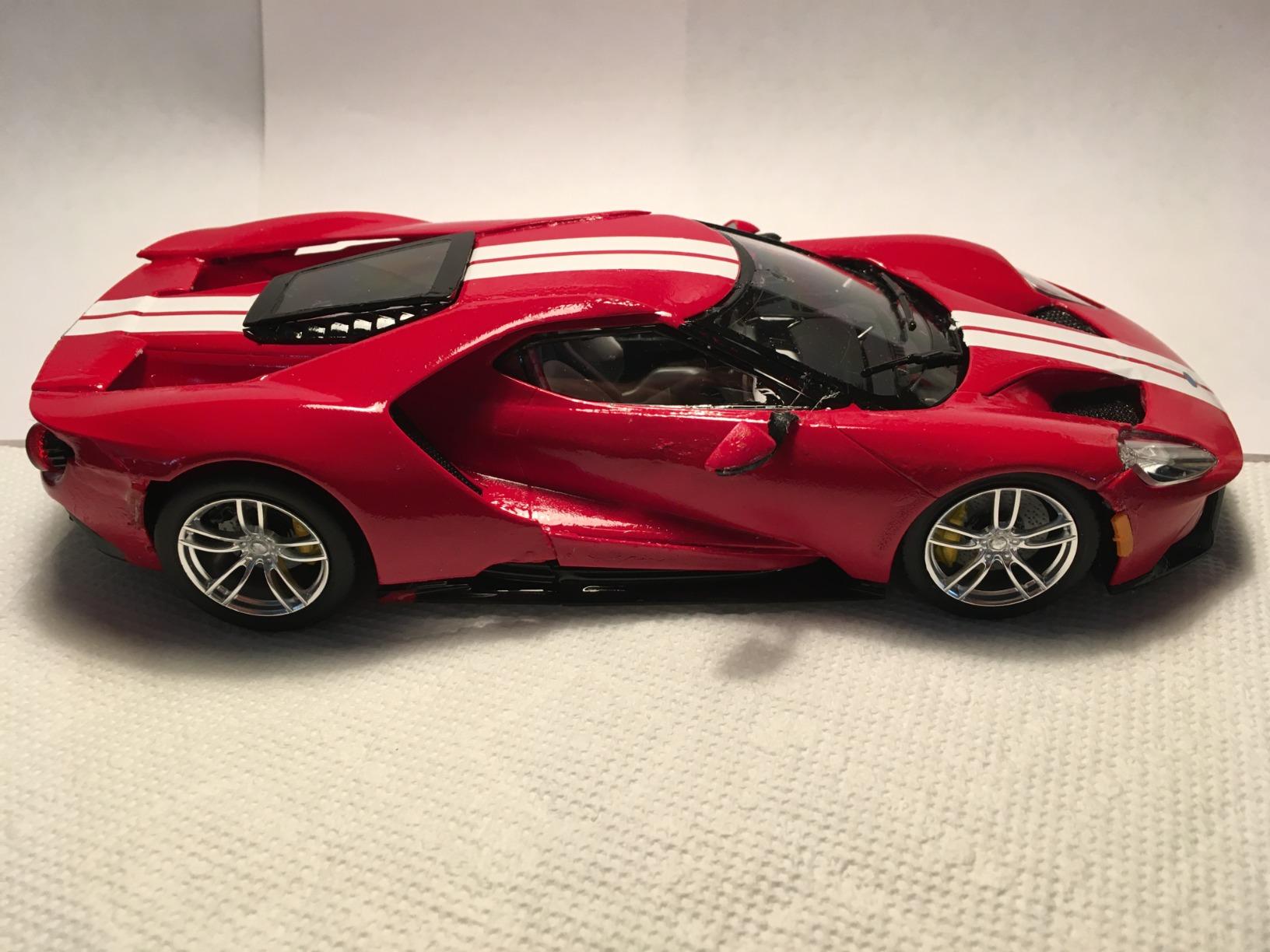
Multi-Piece Lighting Assembly
The headlights alone have six pieces per side. The reward is realistic depth and the ability to paint the housing details before sealing them under clear lenses.
Take photos as you disassemble the lighting parts from the sprue. The instruction sheet shows assembly direction, but having your own reference helps.
Painting for Realism
The Ford GT’s shape requires careful paint preparation. The flying buttresses create shadow lines that show orange peel if your finish is not smooth. I spent two days on body prep before color.
The racing stripe decals are thin and respond well to setting solution. Apply them after your clear coat has fully cured.
8. Tamiya Porsche 911 GT3 RS 992 – Latest Generation Excellence

TAMIYA 1/24 Porsche 911 GT3 RS 992 TAM24370
1/24 scale unpainted kit
Total length 190 mm
Air vents with rectifier fins
Decals for carbon and interior
Latest 992 generation styling
Pros
- High quality Tamiya engineering
- Extremely detailed components
- Impressive air vent and rectifier fin details
- Satisfying build experience
- Jaw-dropping final result
- Great for intermediate to advanced modelers
- Authentic 992 GT3 RS styling
Cons
- Requires significant prep work
- Not suitable for beginners
- Paint and glue not included
Tamiya released this kit in late 2024, and it represents their latest tooling technology. The 992-generation GT3 RS has complex aerodynamics that challenge both the real engineers and model kit designers.
The air vent details are molded with separate rectifier fins behind the openings. This is detail you expect on 1/12 kits, not 1/24. The engine cover louvers are equally crisp.
This is not a beginner kit. The parts fit perfectly, but there are many of them. The instructions run 24 pages with detailed paint callouts for the numerous interior colors Porsche offers.
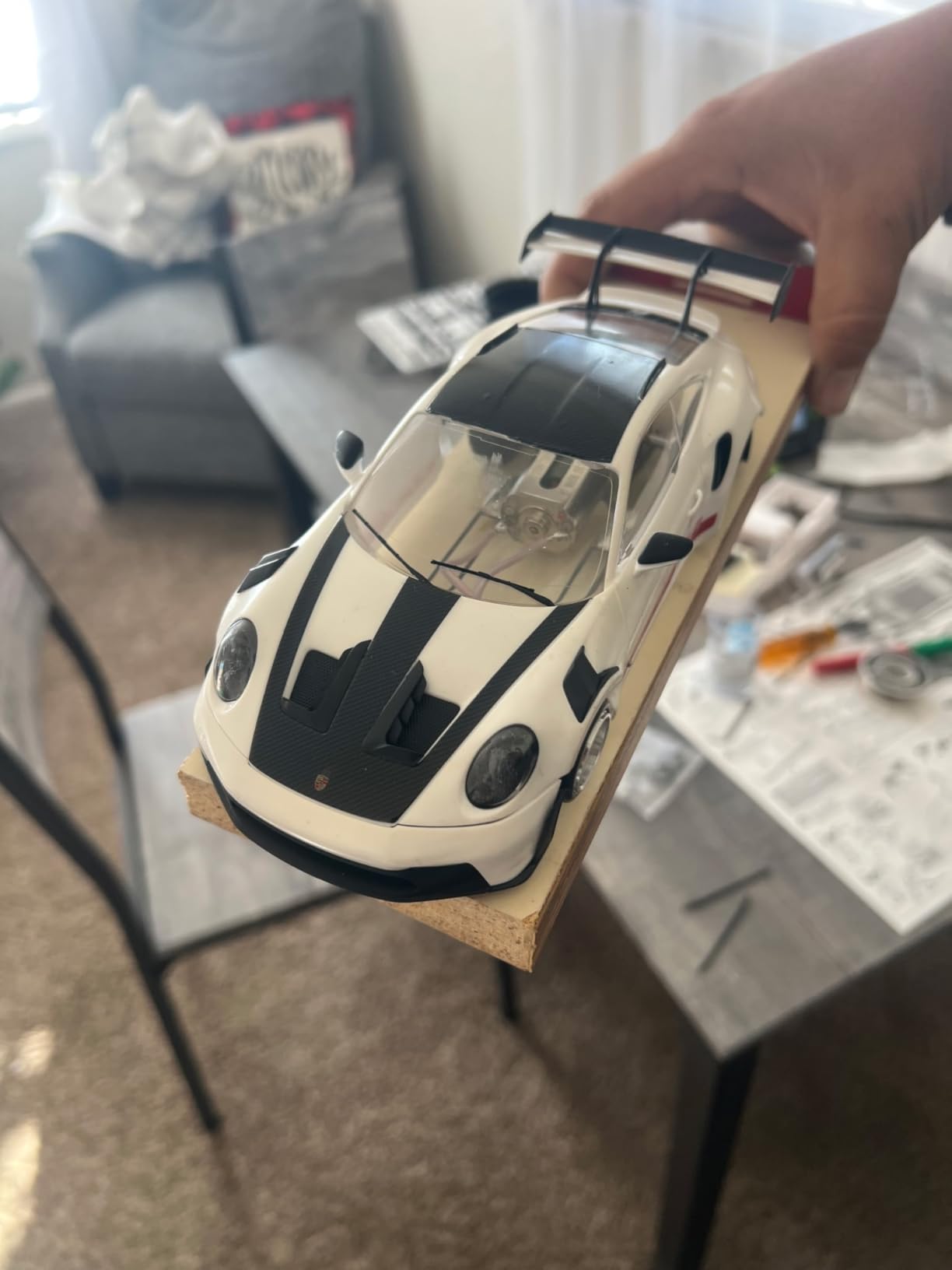
I built mine with the Weissach package carbon details using the included decals. The carbon weave pattern prints at the correct scale and looks convincing under clear coat.
The wheel design captures the center-lock racing hubs. Tamiya includes masks for the wheel color sections, saving you from intricate masking work.
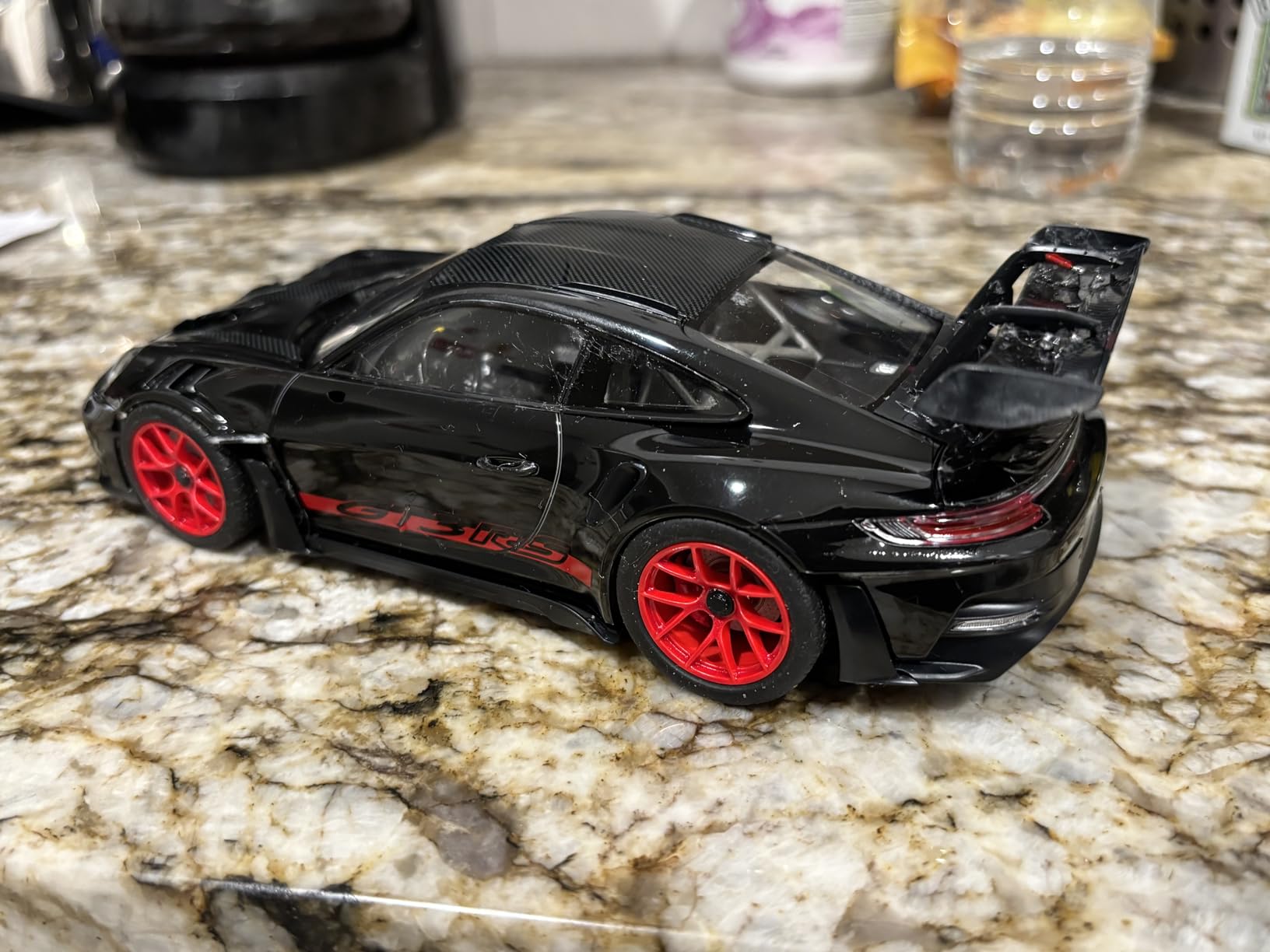
Advanced Aerodynamic Details
The 992 GT3 RS has active aerodynamics that Tamiya represented with optional parts. You can build the rear wing in different positions. The front splitter has removable sections just like the real car.
The drag reduction system (DRS) panels on the rear wing are separate pieces. Most builders will glue them shut, but the option exists for technically accurate builds.
Prep Work Requirements
Modern Tamiya kits have crisp molding that nonetheless benefits from priming. The body has mold separation lines that need gentle sanding. Plan for a day of prep before painting.
The clear parts are thin and need careful handling. The rear quarter windows in particular are delicate until glued in place.
9. Tamiya Porsche 934 Jaegermeister – Racing Heritage

Tamiya Porsche Vehicle 300024328 934 Jaegermeister Car Model Kit 1:24, Orange
1:24 scale (Model 24328)
Photo-etched parts included
Racing body with ventilation grilles
Detailed racing-specific components
Jaegermeister livery decals
Length 179 mm, Width 83 mm
Pros
- Tamiya never fails to impress - beautiful model
- Photo-etched parts included for extra detail
- Highly detailed reproduction of racing components
- Great for beginners when applying decals
- Good quality decals
- Excellent seller packaging noted
- Fun build that went together well
Cons
- Curbside kit - no engine detail
- Molded in orange but really needs to be painted
- Some sellers use poor packaging
- Decals can be challenging for some users
The Jaegermeister 934 is instantly recognizable with its orange and green livery. This kit includes photo-etched parts, a rarity at this price point that adds real value.
The photo-etched set includes brake disc faces, intercooler mesh, and various strap buckles. These thin metal parts catch light differently than plastic and add dimension to the finished build.
The body is molded in orange plastic that matches the livery base color. I painted mine anyway for depth, but careful builders could get acceptable results with just the molded color and clear coat.
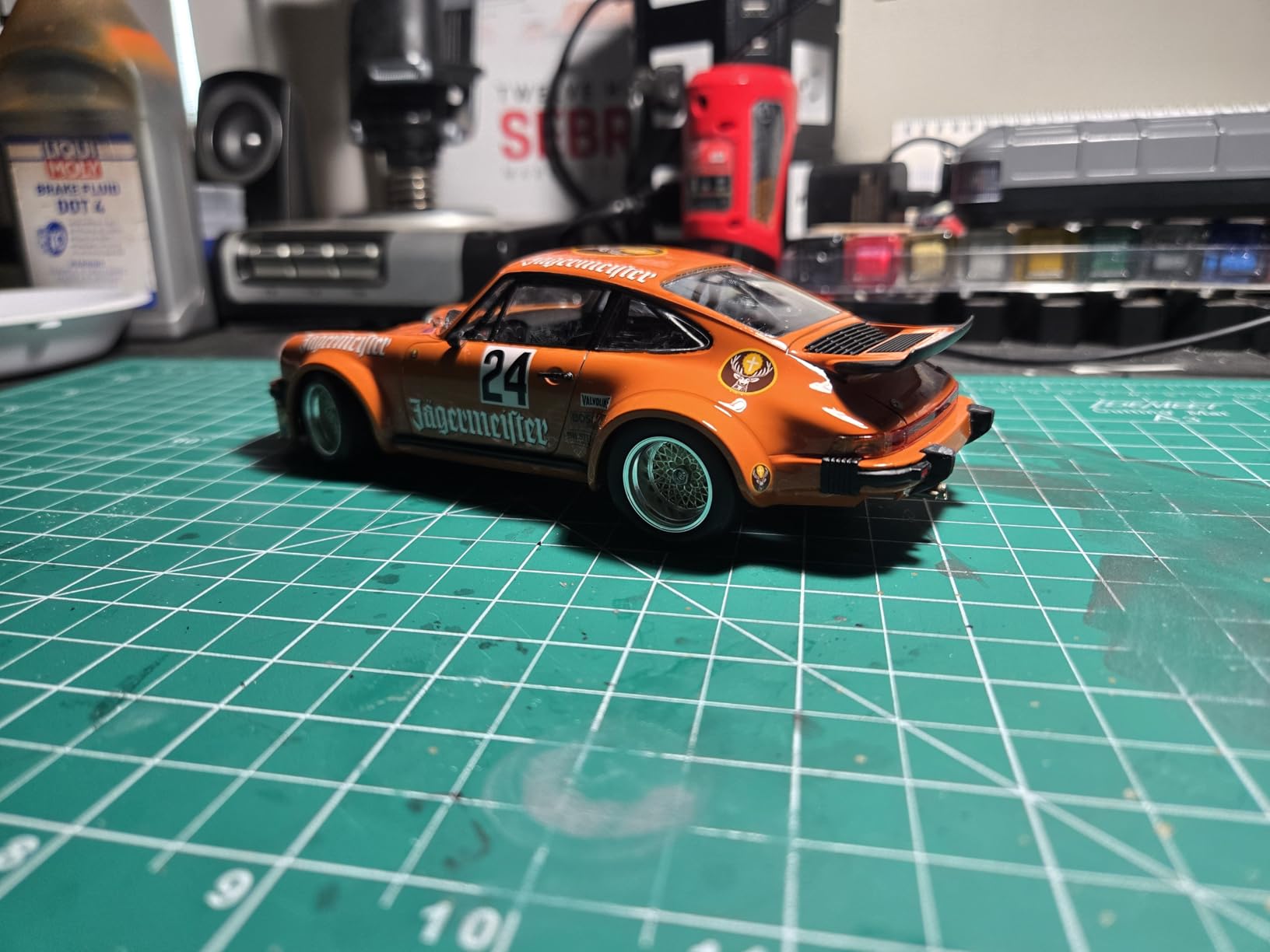
The racing modifications are specific to the 934 class. The wide fender flares, massive rear spoiler, and front oil cooler are all period-correct for 1970s racing.
This kit works well as a first racing livery project. The decals are thick enough to handle without tearing but thin enough to settle into panel lines.
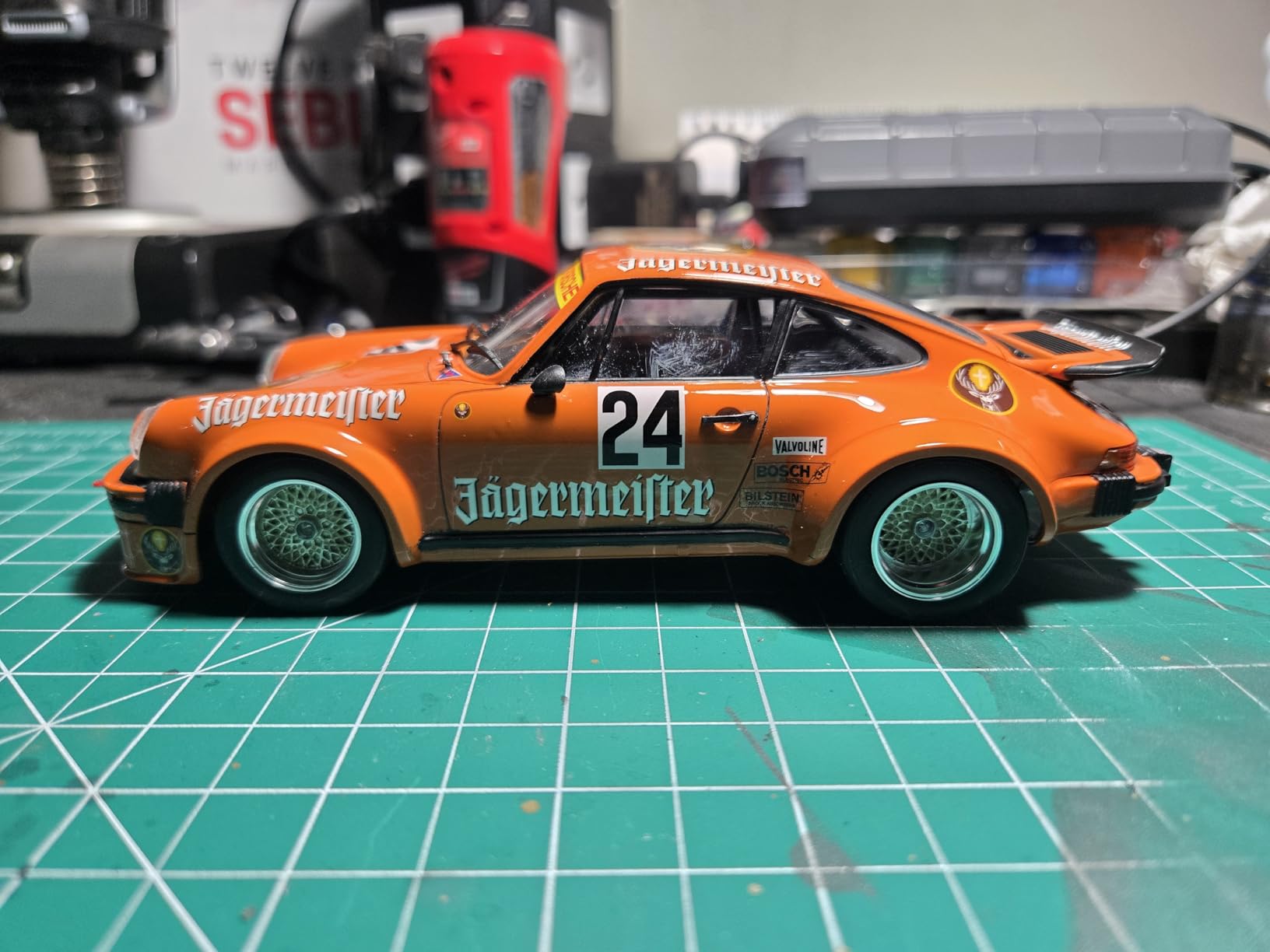
Photo-Etched Parts Value
The included photo-etched set would cost $10-15 separately. You get brake rotor faces that actually look like drilled metal, plus various mesh screens that improve airflow detail.
Working with photo-etched parts requires a gentle touch. I use tweezers with curved tips and cyanoacrylate glue applied with a toothpick.
Racing Livery Application
The Jaegermeister livery is bold and relatively simple compared to modern racing schemes. The large orange sections forgive minor decal positioning errors. The green stripes require more precision but are manageable.
The door number roundels are separate pieces that overlay the base orange. Apply the orange first, let it set completely, then position the numbers.
10. Tamiya Mercedes-AMG GT3 – Racing Pedigree

Tamiya 24345 Mercedes-AMG GT3 1/24 Scale kit
1:24 scale (Model 24345)
Total length 198 mm
Racing version bodywork
Weather resistant features
Decals for racing livery
Beginner to intermediate level
Pros
- Beautiful kit perfect for beginner to intermediate
- No engine detail makes it easier to build
- Suspension detail is hidden
- Parts all fit together well
- Amazing details - coolest model ever seen
- High quality molding - very clean
- Great for painting and decaling bodies
Cons
- No engine - curbside kit
- Decals require patience - applying one over another
- Amazon shipping issues noted
- Not for absolute beginners despite being easier
The Mercedes-AMG GT3 brings modern racing technology to your workbench. The aggressive aerodynamics and that distinctive Mercedes grille make for an imposing display piece.
This curbside kit hides the suspension and omits engine detail. The trade-off is a faster build that emphasizes the stunning body shape. Parts count stays manageable while visual impact remains high.
I built mine as a yellow liveried car using the base decals plus some aftermarket additions. The body lines respond well to metallic paint, particularly the creases along the sides.
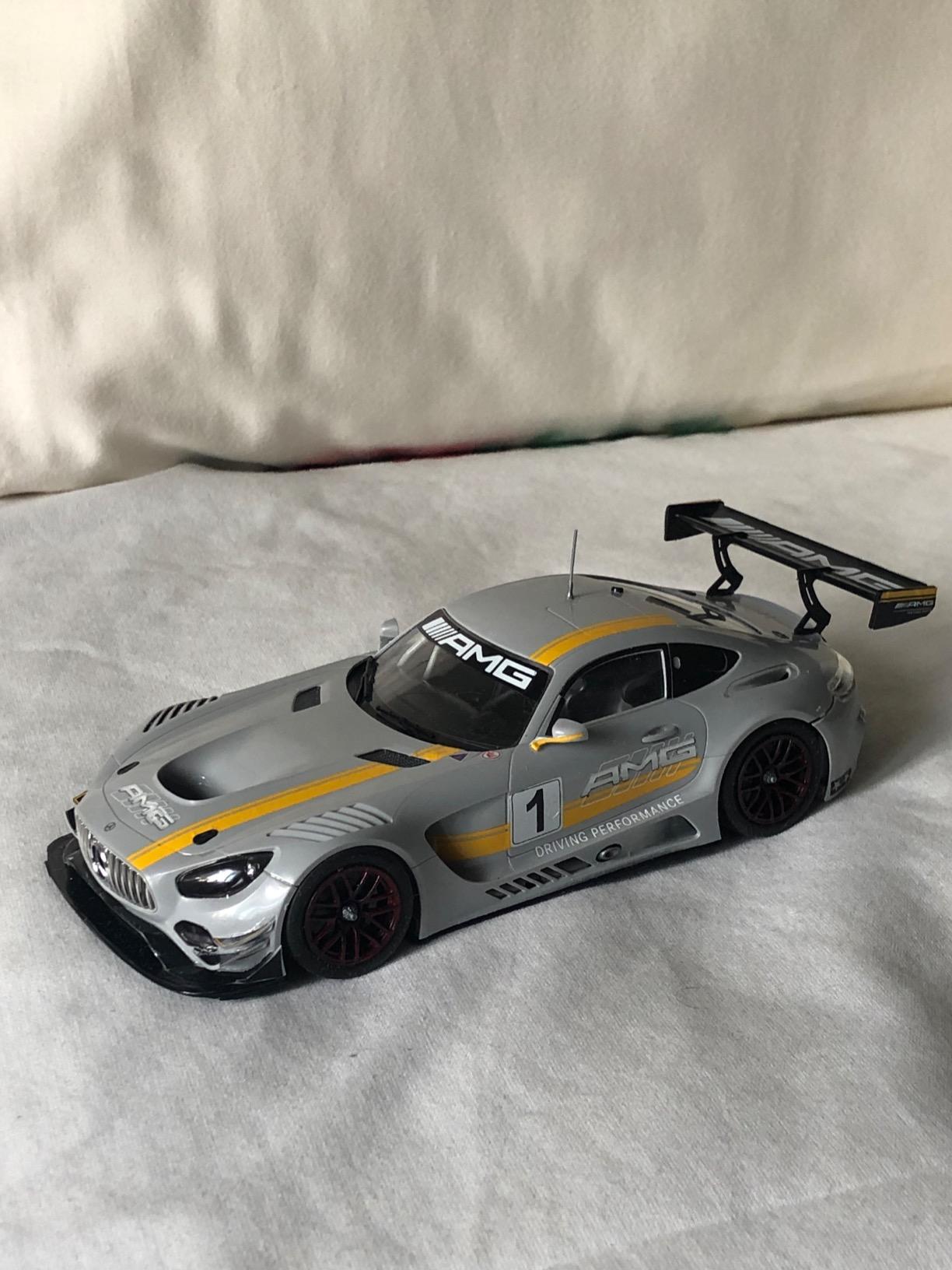
The molding quality is typical modern Tamiya. No flash, minimal mold lines, and crisp panel gaps that look correct even before painting.
The wheels have the center-lock racing nut detail that defines modern GT3 cars. The brake caliper decals include Mercedes-AMG branding that adds authenticity.
Layered Decal Technique
The racing livery requires building up layers. You apply base color sections first, then overlay stripes, numbers, and sponsor logos. Each layer needs to set completely before the next goes on.
I recommend Micro Set for the first application, then Micro Sol to draw the decal into panel lines. Take your time and the results look painted on.
Skill Level Assessment
Despite being curbside, this kit requires painting and decaling skills. The yellow body needs proper base coats to avoid splotchy color. The racing livery demands patience.
Intermediate builders will enjoy this as a weekend project. Absolute beginners might find the decal work frustrating.
11. Tamiya Nissan Fairlady 240Z Street-Custom – Classic JDM

TAMIYA 1/24 Nissan Fairlady 240Z Street-Custom TAM24367
1:24 scale (Model TAM24367)
Dimensions: 172 x 71 x 52 mm
Two build versions: RHD Japan and LHD North America
Detailed 2.4 litre 6 cylinder engine
RS Watanabe 8-spoke rims
Chrome window trim
Pros
- Detailed 2.4L 6-cylinder engine (not curbside)
- Two build versions available
- RS Watanabe 8-spoke rims included
- Chrome window trim detail
- Parts fit well for most builders
- Good for intermediate builders
- Fun to build and customize
Cons
- Some report fitment issues with windshield
- Wheel attachment problems reported
- Chrome window trim requires careful gluing
- Packaging issues noted
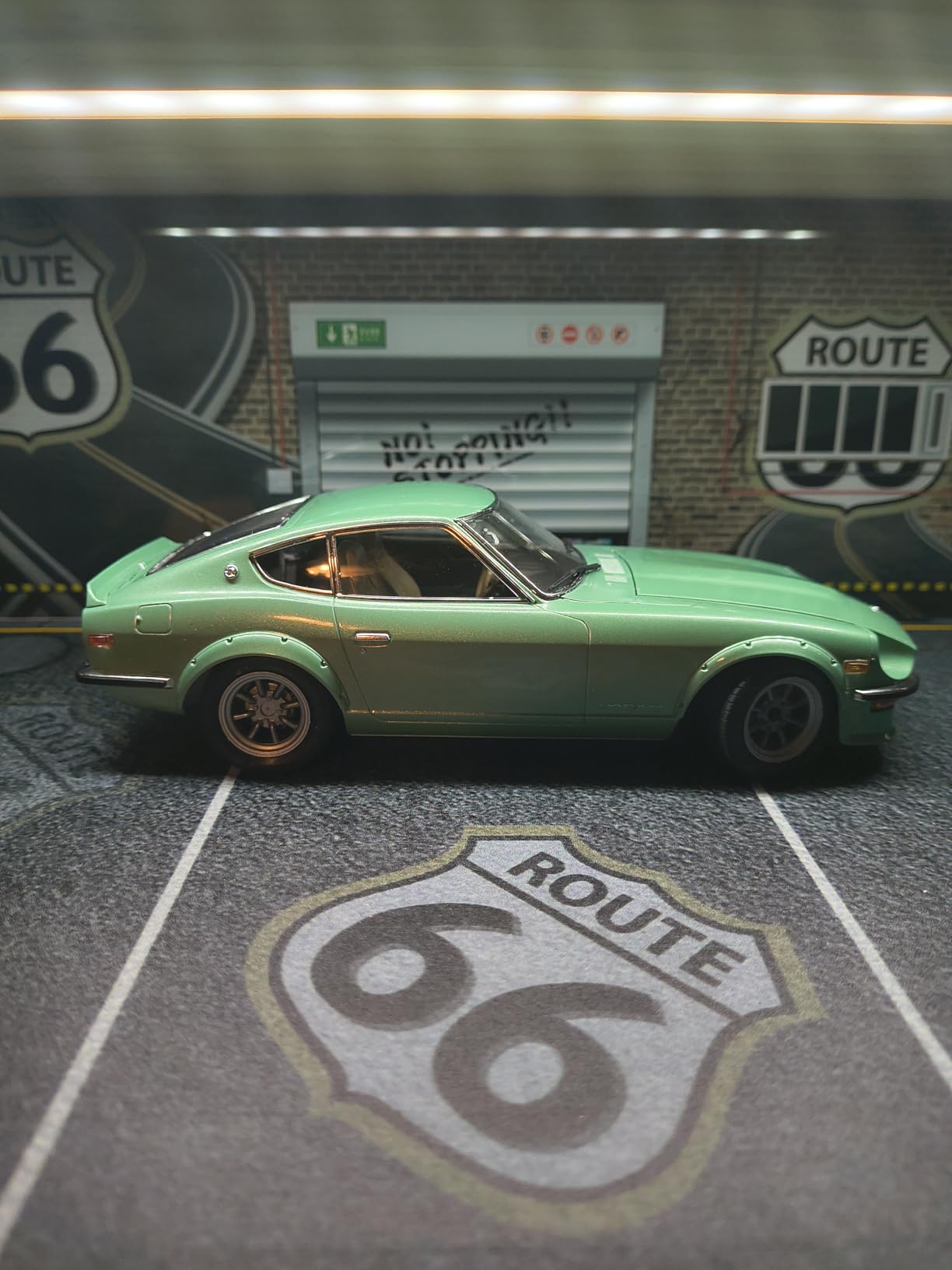
Tamiya released this kit in 2024 to celebrate the 240Z legend. The street-custom theme means wider wheels, lowered stance, and subtle modifications that honor the classic shape without ruining it.
The detailed 2.4-liter inline-six is the highlight. This is not a curbside kit. You get complete engine detail including the twin SU carburetors and separate exhaust manifold.
I built mine as the left-hand drive North American version. The instructions clearly mark which parts differ between versions, and the dashboard is correctly symmetrical for each market.
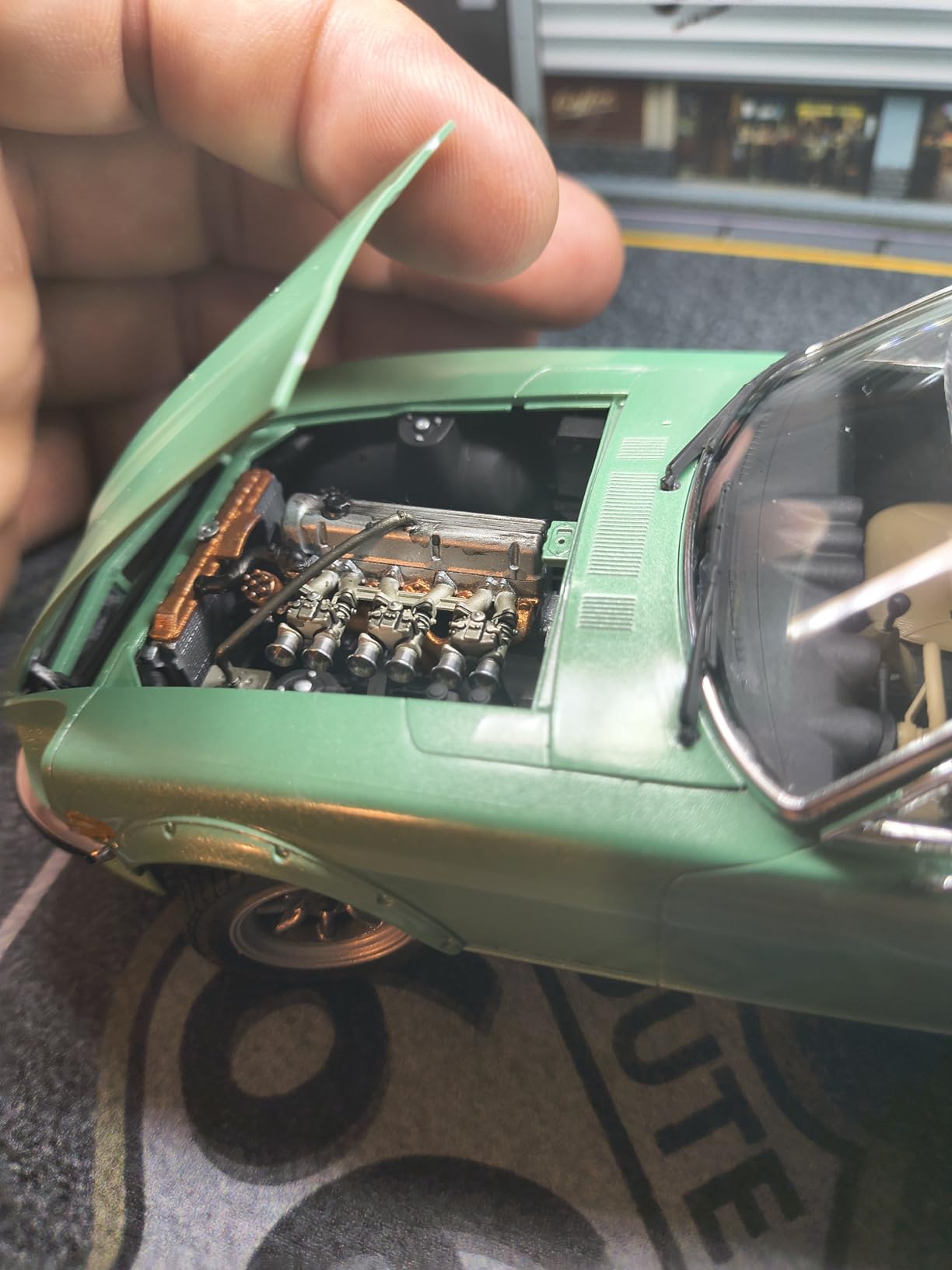
The RS Watanabe wheels are iconic for Datsun enthusiasts. Tamiya captured the eight-spoke design with proper depth and brake rotor visibility behind the spokes.
The chrome window trim is a separate molding that adds realism. Handle carefully during assembly as the pieces are thin until glued in place.
LHD vs RHD Build Options
Having both options in one kit is unusual and welcome. The differences extend beyond just the dashboard. Steering wheel position, wipers, and even the mirror placement change.
I recommend deciding which version to build before starting. Some interior color callouts differ between markets, and the painting guide organizes by version.
Chrome Trim Techniques
The chrome window trim looks best when polished and handled minimally. I use cotton gloves during final assembly to avoid fingerprints on the brightwork.
The trim attaches with small mounting pins. Test fit everything before applying glue. Once positioned correctly, a tiny drop of cement holds permanently.
12. Tamiya Castrol Toyota Tom’s Supra GT – Racing Legacy

Tamiya 1/24 CASTROL Toyota Tom’s Supra GT
1:24 scale
Ready to assemble precision kit
320 pieces
Accurate chassis and suspension
Solid rubber slick racing tires
Complete exterior and cockpit detailing
Pros
- Great weekend project
- Parts fit together perfectly in Tamiya fashion
- Decals apply easily with minimal effort
- Can use molded white or custom paint
- Very realistic details
- Simple instructions
- Good for beginners
Cons
- Hood does not open for engine detail
- Many stickers to apply (challenging for beginners)
The Castrol Tom’s Supra represents 1990s Japanese racing at its peak. This JTCC racer competed against Skylines and Hondas in one of touring car racing’s most exciting eras.
With 320 pieces, this kit has higher complexity than most Tamiya car offerings. The reward is comprehensive detail throughout. Chassis, suspension, and cockpit all receive proper attention.
The solid rubber slick tires are a nice touch. They have the correct treadless appearance of racing slicks with sidewall branding.
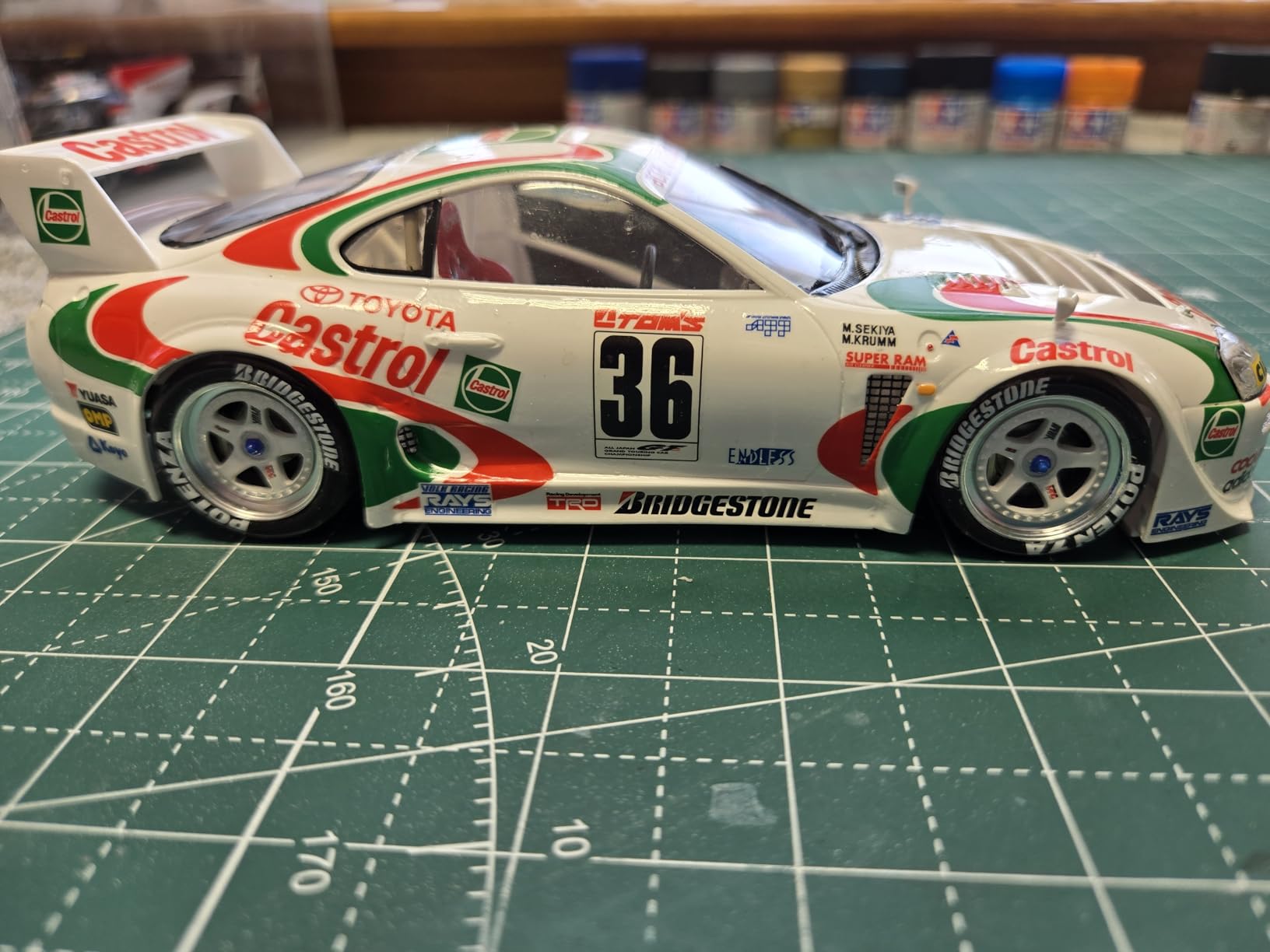
The Castrol livery is bold and immediately recognizable. The green and white color scheme with red accents makes for a striking display piece even among other racing cars.
Assembly follows the standard Tamiya sub-assembly approach. Engine and chassis first, then body, then final joining. Everything fits with the precision you expect.
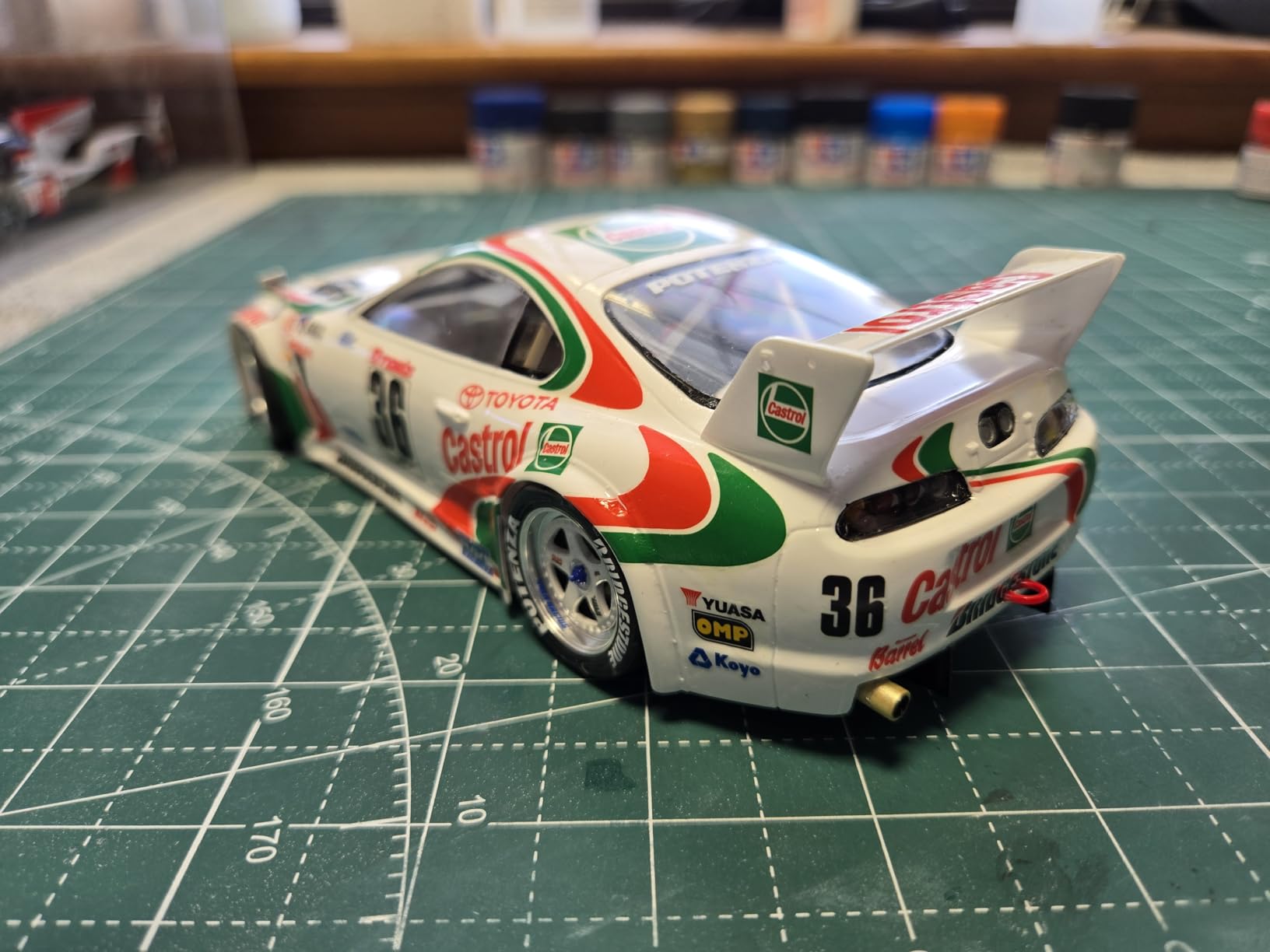
Racing Decal Strategy
The Tom’s Supra has extensive sponsor decals. Plan for multiple decal sessions with drying time between. I spent four evenings just on the livery application.
The large Castrol logos on the hood and sides require careful positioning. Use plenty of water for positioning before committing with setting solution.
Weekend Project Viability
Despite the parts count, this builds efficiently. The instructions are clear and the fit quality means minimal time spent fixing problems. An experienced builder can finish in a focused weekend.
Beginners should plan for two weekends. The painting and decaling work benefits from patience and drying time between sessions.
13. Tamiya Volkswagen 1300 Beetle 1966 – Classic German Engineering

Tamiya 24136 1/24 Volkswagen 1300 Beetle 1966 Plastic Model Kit
1:24 scale (Model TAM24136)
Detailed interior and engine
Trunk area included
High-quality classic car reproduction
True to scale accuracy
Package dimensions: 7.1 x 29.7 x 19 cm
Pros
- High attention to detail
- True to scale
- Not entry level but fun not lost
- Excellent quality worth the price
- No funky marks or bad casting
- Can modify doors for realism
- Best Beetle kit available
- Perfect for beginners and top modellers
- Clear instructions with color coding
- Parts fit together excellently
- Minimal modifying required
Cons
- Higher price than entry-level models
This Beetle kit surprised me with its comprehensiveness. The 1300 model year captures the classic shape before later safety modifications changed the lines.
The engine detail is complete for an air-cooled flat-four. You get the cooling fan, sheet metal ducting, and even the fuel line routing. The trunk area includes the spare tire and fuel tank.
I have seen experienced builders modify this kit with opening doors and trunk lids. The structure supports these modifications better than most kits because of Tamiya’s thoughtful engineering.
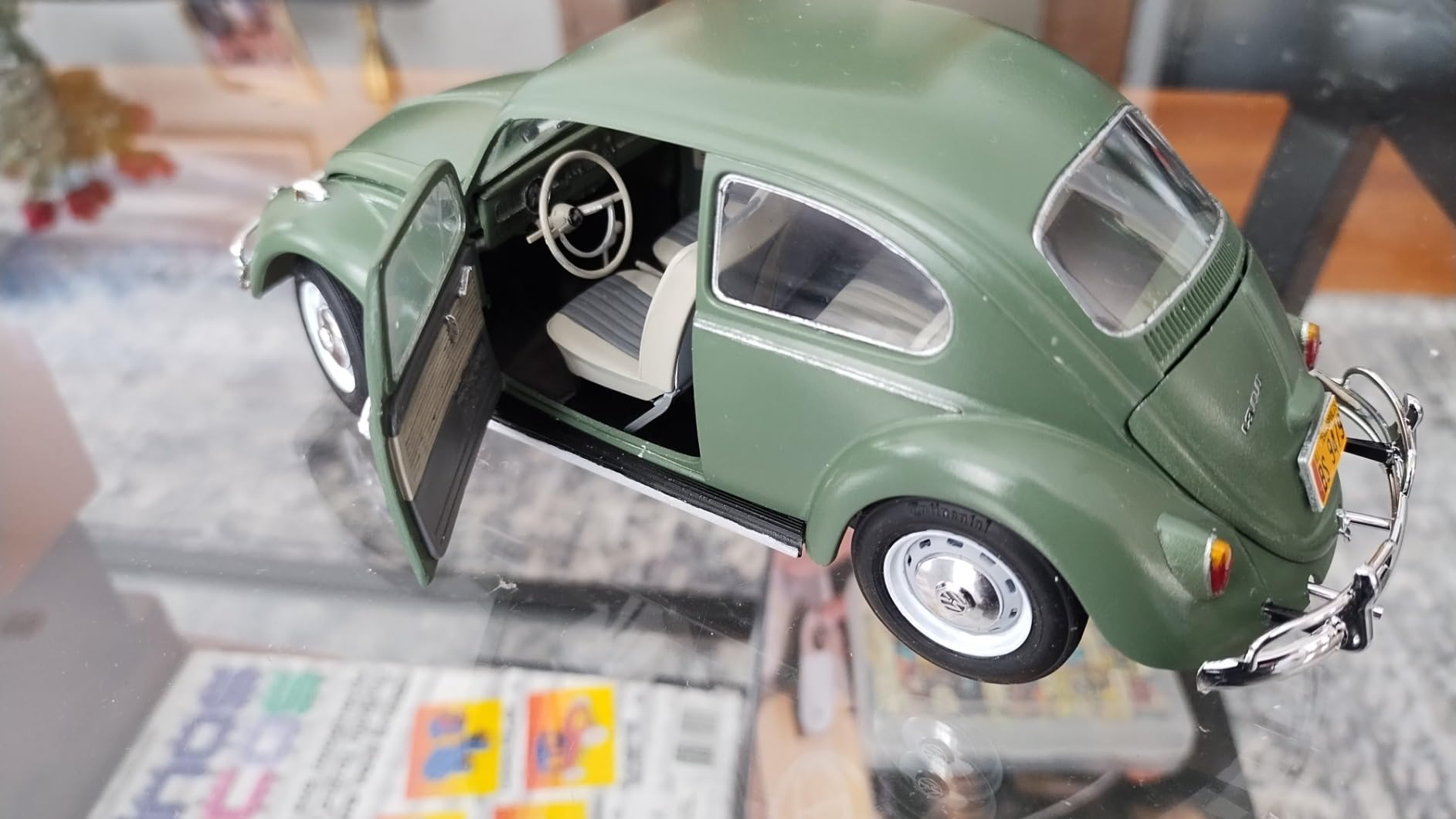
The molding quality lives up to the forum praise. No flash, clean ejector pin marks, and surface detail that captures the Beetle’s distinctive curves.
This kit works for beginners despite the detail level. The instructions guide you through each sub-assembly with clear paint callouts. An experienced builder can add aftermarket details and create a showpiece.
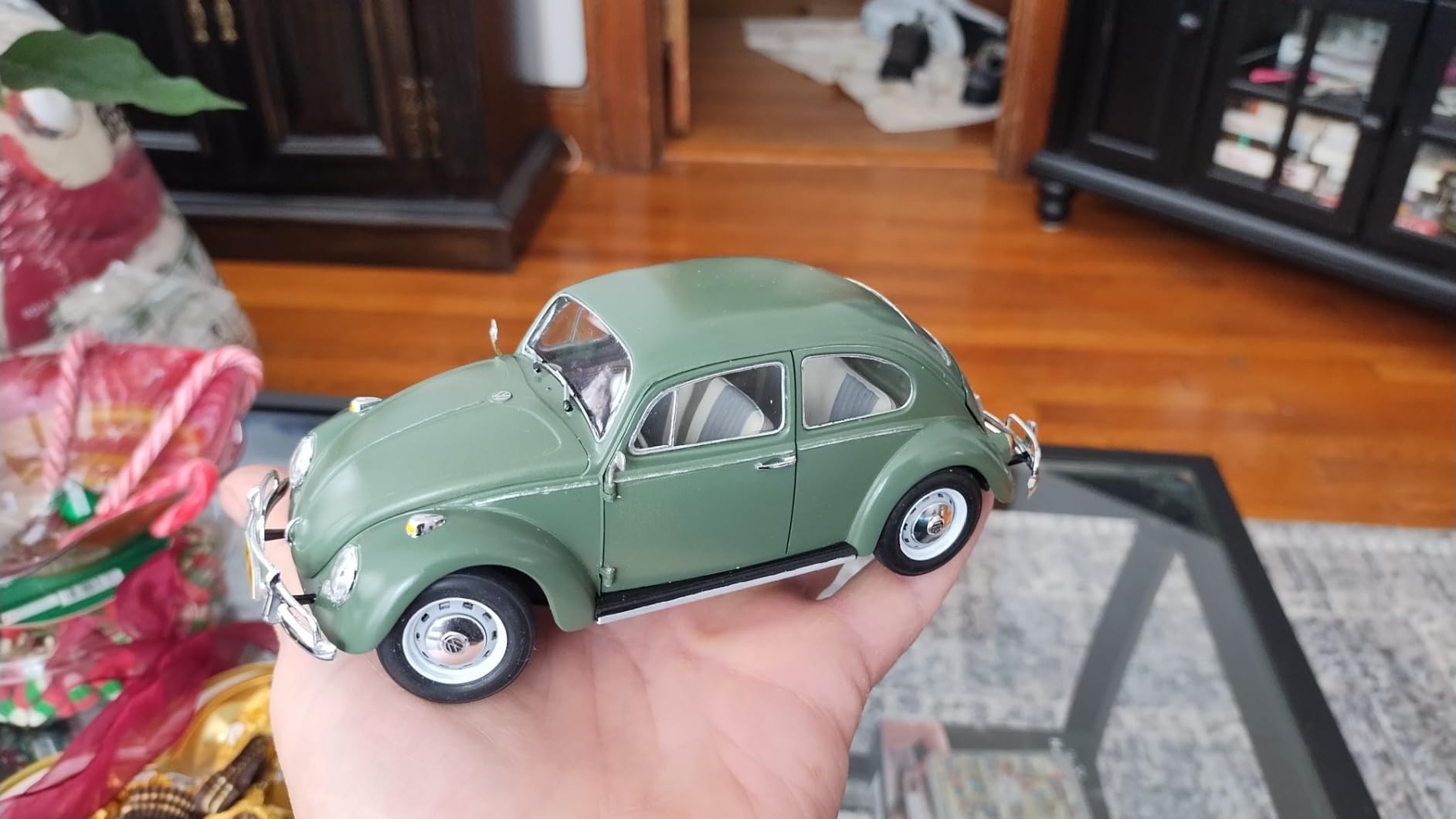
Engine and Trunk Detail
The flat-four engine is visible under the rear decklid. Tamiya molded the cooling fins separately to capture the texture. The result looks convincing under paint.
The front trunk includes the spare tire, jack, and even the fuel tank with correct strap details. These details reward close examination on the display shelf.
Modification Possibilities
Online forums show extensive modifications to this kit. Opening doors, custom paint schemes, and even engine swaps with aftermarket parts. The basic structure supports creativity.
I kept mine stock in classic pastel blue. The result looks like a preserved 1966 car in my display case. Sometimes restraint pays off.
14. Tamiya Nissan 300zx Turbo – Twin-Turbo V6 Power

Tamiya Nissan 300zx Turbo 1/24 Scale Model Kit 24087
1:24 scale (Model 24087)
Twin turbocharged 3.0 liter V6 engine
Four-wheel independent multi-link suspension
Detailed engine - not curbside
T-bar roof with interior visibility
Transparent hood option
Pros
- Detailed engine - not a curbside kit
- High quality parts beautifully molded
- Clear instructions with precise illustrations
- Great for mods and customization
- Low price point for the quality
- T-bar roof allows interior visibility
- Transparent hood option available
Cons
- Paint sold separately
- Glue sold separately
- Shipping from Amazon can be problematic
- Some find paint scheme confusing initially
The 300ZX represents Nissan’s 1990s technology showcase. Twin turbos, four-wheel steering, and that distinctive T-bar roof made this a poster car for my generation.
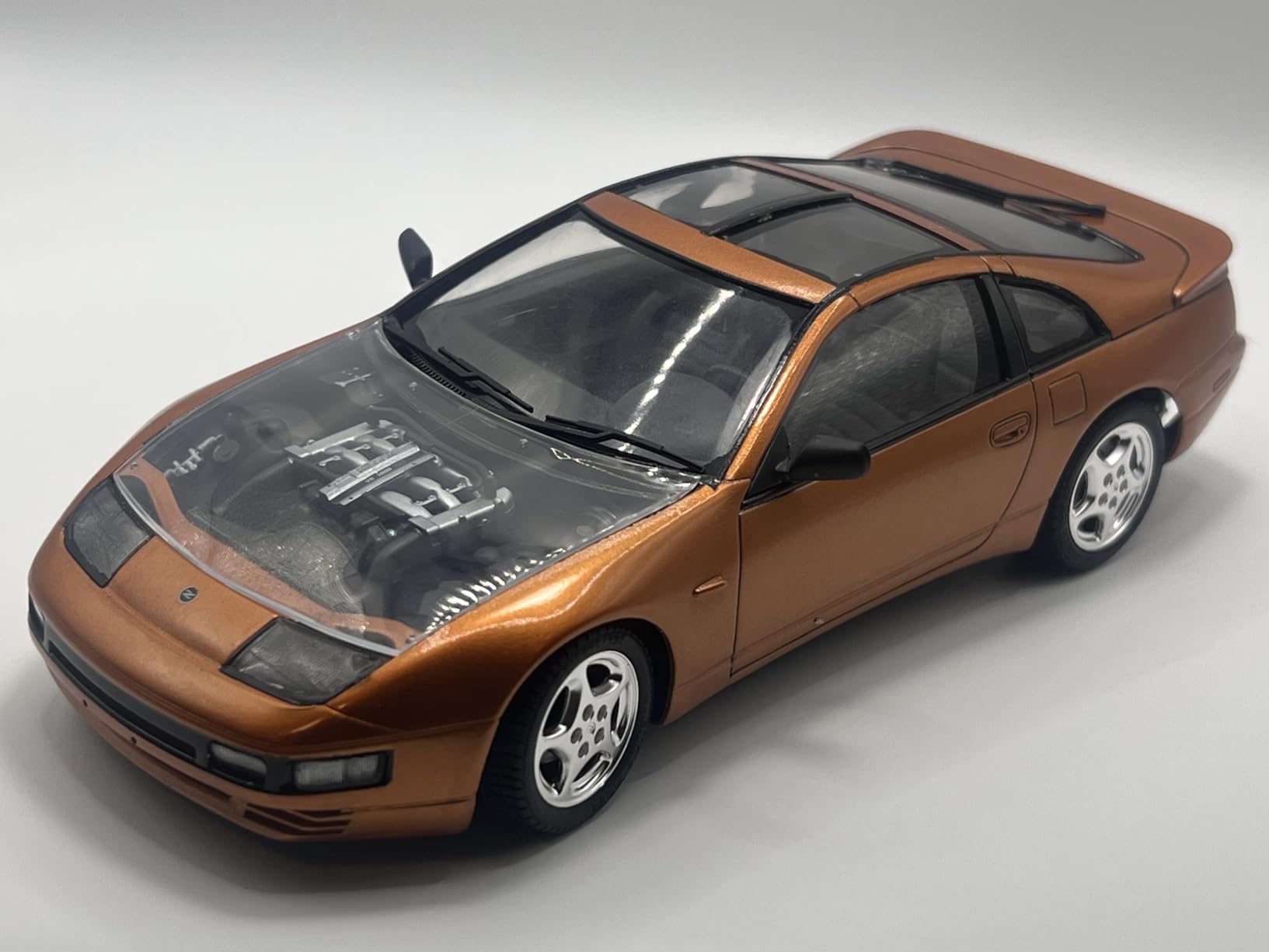
Tamiya captured the VG30DETT engine with both turbos, intercoolers, and plumbing clearly represented. This is not a curbside kit. You get full mechanical detail.
The T-bar roof design lets you see the interior from above without opening anything. The glass panels are crystal clear and fit flush with the body.
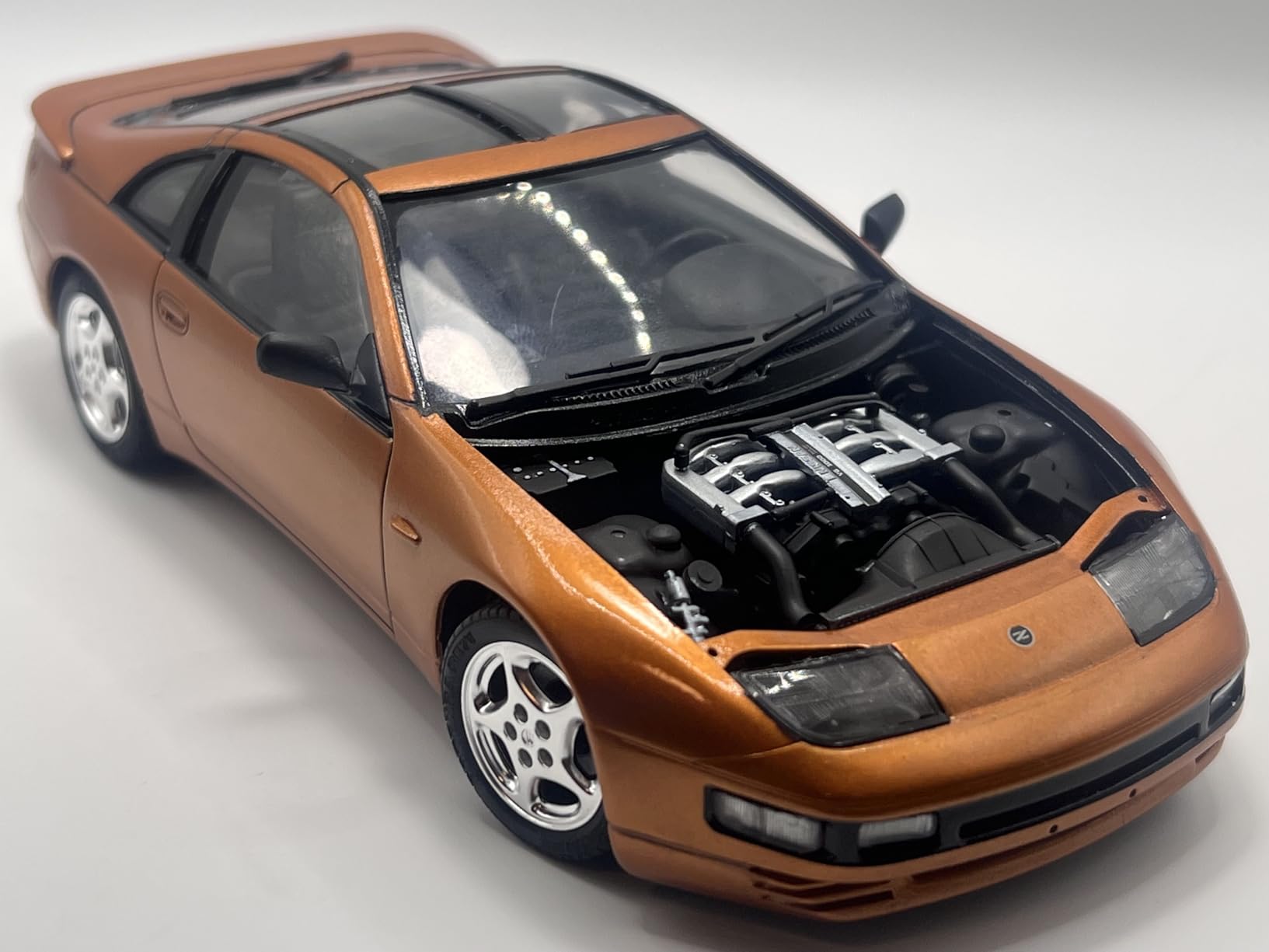
Instructions are typical Tamiya excellence. Each step shows part numbers, paint codes, and assembly orientation. Even complex sections like the rear suspension are clearly illustrated.
At around $25, this kit delivers exceptional value. The engineering quality matches Tamiya’s $40+ offerings. Stock up when you find deals.
T-Bar Roof Advantage
The T-bar configuration was unique to the 300ZX and similar cars. Tamiya molded the roof sections in crystal-clear plastic that stays transparent with proper handling.
I painted my body Pearl White and left the roof panels clear. The contrast looks stunning and shows off the interior detail from multiple angles.
Transparent Hood Option
The kit includes an optional clear hood panel similar to the R32 Skyline. This lets you display that twin-turbo V6 without permanent modification.
I painted the hood frame to match my body color and left the center transparent. The effect draws attention to the engine bay without looking unfinished.
Tamiya 1/24 Scale Car Kit Buying Guide
Choosing the right kit depends on your experience level, available time, and display goals. Here is what I have learned from building hundreds of Tamiya kits over the years.
Understanding Detail Levels
Tamiya offers two main detail levels in their 1/24 car range. Curbside kits have sealed hoods and minimal engine detail. Full-detail kits have opening hoods and complete engine assemblies.
Curbside kits build faster and cost less. They work perfectly for shelf displays where you view the car from the outside. The Ford Mustang GT4 and Mercedes-AMG GT3 are excellent curbside examples.
Full-detail kits take longer but reward you with visible mechanical complexity. If you enjoy engine detailing and plan to show the car with open hood, choose kits like the Toyota Supra or Nissan 300ZX.
What Makes Tamiya Fit Special
Tamiya engineering includes positioning pins that actually align parts correctly. When you see two parts with matching holes and pegs, they will fit flush without forcing.
The plastic formulation has slight flexibility that helps parts snap together. Other brands use more rigid plastic that cracks if misaligned. Tamiya’s material forgives minor positioning errors.
Locating pins are molded directly into the parts, not added as separate pieces. This means they will not break off during assembly. Every contact point is engineered for proper registration.
Tools and Supplies You’ll Need
Start with quality sprue cutters. I recommend the Tamiya Sharp Pointed Side Cutter or equivalent. Clean cuts from the sprue reduce cleanup time dramatically.
Plastic cement is essential. Tamiya Extra Thin Cement flows into joints by capillary action. The quick-drying formula lets you move through assembly without long waits.
Paint selection matters. Tamiya’s TS spray cans match their kit color callouts exactly. For brush painting, their acrylics thin with water or their X-20A thinner.
Decal setting solution makes the difference between good and professional results. Microscale’s Micro Set and Micro Sol are the industry standard for a reason.
Skill Level Recommendations
Beginners should start with the Mazda RX-7, Nissan Skyline R32, or Castrol Supra. These kits have forgiving assembly, clear instructions, and produce impressive results that build confidence.
Intermediate builders can tackle any kit on this list. The Ford GT and Porsche 911 GT3 RS offer complexity without frustration. The photo-etched parts on the Jaegermeister 934 introduce new techniques.
Advanced builders will find challenges in painting and detailing any of these kits. The basic engineering is solid, but achieving show-quality finishes requires skill developed over multiple builds.
Paint and Finish Considerations
Automotive finishes require proper preparation. Always prime the body with a grey or white primer. The primer reveals flaws that need sanding and provides a uniform base for color.
Multiple thin coats of paint look better than one heavy coat. I apply three to four light passes of TS color, letting each flash dry before the next.
Clear coat protects your work and adds depth. TS-13 clear over color coats gives a factory-fresh appearance. For vintage cars, semi-gloss or flat clear looks more appropriate.
Tamiya vs Other Model Kit Brands
Forum discussions constantly debate which brand produces the best kits. My experience building across brands gives me perspective on where Tamiya stands.
Revell offers excellent value and has improved their fit quality significantly in recent years. Their American muscle car subjects often have better detail than Tamiya’s limited US offerings. However, Revell kits generally require more cleanup and filler work.
AMT and Round2 reproduce classic American cars that Tamiya ignores. Their fit quality varies by kit age, with newer toolings approaching Tamiya standards. Older AMT kits can be challenging with significant flash and alignment issues.
Tamiya occupies the premium position for good reason. Their Japanese manufacturing maintains tighter tolerances than most competitors. The forum phrase “Tamiya fit” exists because experienced builders recognize the difference immediately.
You pay more for Tamiya kits, typically 30-50% above Revell pricing. The investment saves time and frustration. As one forum user noted, Tamiya kits “always save my modeling mojo when frustrated with other brands.”
Frequently Asked Questions
What is the most complex Tamiya kit car build?
The Tamiya Ford GT (24346) and Porsche 911 GT3 RS 992 (TAM24370) rank among the most complex builds due to multi-piece lighting assemblies, complex body shapes, and high parts counts. The Ford GT requires careful assembly of flying buttresses and door-side air tunnels. The Porsche 911 GT3 RS has advanced aerodynamic details including active rear wing components and numerous interior color variations.
Which is better, Revell or Tamiya?
Tamiya generally offers superior fit quality and molding precision, while Revell provides better value and excels in American muscle car subjects. Tamiya kits typically cost 30-50% more but require less cleanup and filler work. Revell has improved significantly in recent years and offers subjects Tamiya does not cover. For beginners seeking frustration-free builds, Tamiya is recommended. For experienced builders wanting specific American car subjects, Revell is often the better choice.
Are Tamiya model kits any good?
Yes, Tamiya model kits are widely considered among the best in the industry for fit quality, molding precision, and engineering. Their Japanese manufacturing produces crisp detail, minimal flash, and crystal-clear parts. The famous ‘Tamiya fit’ refers to parts that align perfectly without gaps or forcing. While priced at a premium compared to competitors, the time saved on cleanup and the quality of finished results justify the cost for most builders.
Who makes the best model kits?
Tamiya leads in 1/24 scale car kits for detail and fit quality, particularly for Japanese and European performance vehicles. Revell dominates American muscle car subjects with improved modern tooling. Hasegawa and Aoshima compete in Japanese car subjects with good quality. For beginners, Tamiya offers the most consistent building experience. Advanced builders may prefer specific subjects from various manufacturers based on the particular vehicle they want to model.
Our Final Recommendations
After building and researching these 14 kits, three stand out for different reasons. The Best Tamiya 1/24 Scale Car Kits for Detail and Fit in 2026 offer something for every builder.
The Toyota Supra earns my Editor’s Choice for its perfect balance of detail, fit, and accessibility. The 2JZ engine looks stunning, the parts fit flawlessly, and the multiple version options extend the build experience. At under $30, it represents exceptional value.
The Nissan Skyline R32 takes Best Value for offering full engine detail at a lower price point. The clear hood is unique among Tamiya Skyline kits, and the assembly experience builds confidence for more complex projects.
The Mazda RX-7 wins Budget Pick while delivering quality that rivals more expensive kits. The rotary engine detail and spacious engine bay for customization make this a kit you can grow with.
Every kit on this list delivers the “Tamiya fit” that experienced builders prize. You will spend less time fighting problems and more time enjoying the creative process. That is why Tamiya remains the gold standard for 1/24 scale car kits.
Start with one that matches your skill level and interests. Build it carefully, learn from the experience, and join the community of modelers who appreciate precision engineering. Your shelf of finished Tamiya kits will reward you for years to come.