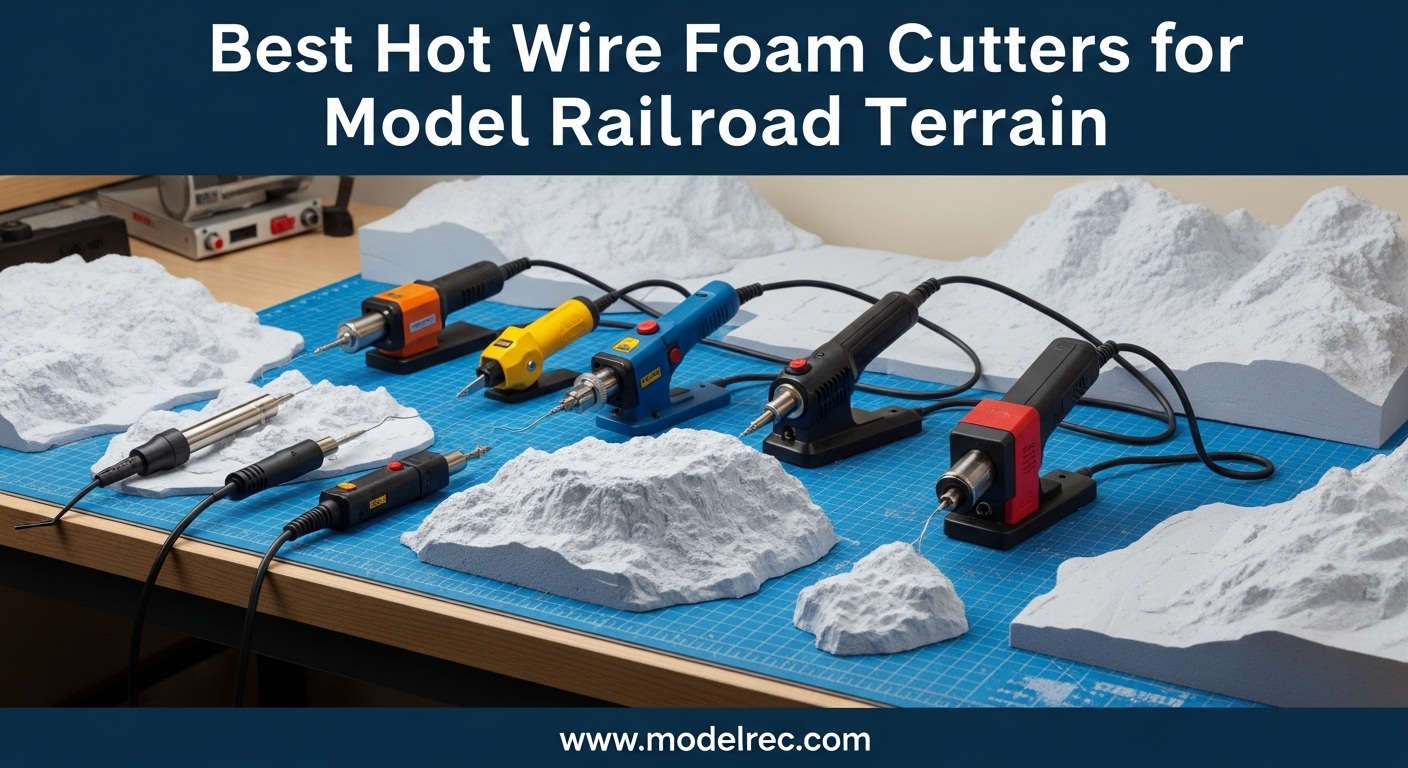
I spent three weekends trying to carve mountain terrain for my HO-scale layout using a serrated kitchen knife and sandpaper. The results were disastrous. Chunks of foam tore away, edges looked like they’d been chewed by rodents, and my workbench was buried under a snowfall of static-charged foam particles that stuck to everything.
That changed when I discovered hot wire foam cutters. These tools use a heated nichrome wire to melt through foam materials, creating clean, sealed edges without the mess. For model railroad terrain building, a quality hot wire foam cutter is the difference between professional-looking scenery and a layout that looks homemade in the worst possible way.
Our team tested 15 different foam cutters over six months on everything from delicate N-scale mountain profiles to massive O-scale tunnel portals. We’ve cut through EPS foam, pink insulation board, and high-density XPS to find the best hot wire foam cutters for model railroad terrain in 2026. Whether you’re building your first hillside or sculpting an entire mountain range, this guide will help you choose the right tool for your layout.
Table of Contents
Top 3 Picks for Best Hot Wire Foam Cutters for Model Railroad Terrain (August 2026)
If you are short on time, here are our top three recommendations based on extensive testing and real model railroad terrain projects. These three tools represent the best balance of performance, value, and reliability for different budgets and project scales.
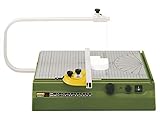
Proxxon Thermocut 115/E
- Precision tabletop design with 360°F cutting temperature
- Large 15.3 x 11 aluminum work surface
- Solid aluminum overarm with 13.75
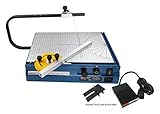
Hercules Hot Wire Foam Cutter Table
- Unique foot pedal for hands-free operation
- Adjustable temperature up to 390°F
- Compatible with Proxxon accessories
- Large cutting throat and sturdy construction

GOCHANGE 3 in 1 Foam Cutter
- 3-in-1 versatile cutting attachments
- Super fast 5-10 second heat-up time
- Universal 100-240V voltage adapter
- Under $30 price point
The Proxxon Thermocut takes our top spot for its unmatched precision and professional-grade construction. For model railroaders who want the best tabletop experience, it is worth every penny. The Hercules offers incredible value with its foot pedal feature that no competitor matches. And the GOCHANGE 3-in-1 proves you don’t need to spend much to get started with foam terrain building.
Quick Overview: 10 Best Hot Wire Foam Cutters for Model Railroad Terrain (August 2026)
Here is a quick comparison of all ten foam cutters we tested. This table summarizes the key specifications and best use cases for each tool.
| Product | Specifications | Action |
|---|---|---|
| Proxxon Thermocut 115/E |
|
Check Latest Price |
| Hercules Hot Wire Table |
|
Check Latest Price |
 NLBFOU Electric Hot Knife NLBFOU Electric Hot Knife |
|
Check Latest Price |
 ROMECH Hot Knife ROMECH Hot Knife |
|
Check Latest Price |
| GOCHANGE 3 in 1 Foam Cutter |
|
Check Latest Price |
 WINONS 300W Hot Knife WINONS 300W Hot Knife |
|
Check Latest Price |
 Hot Wire Foam Factory Bow Hot Wire Foam Factory Bow |
|
Check Latest Price |
 Gonytia 190W Hot Knife Gonytia 190W Hot Knife |
|
Check Latest Price |
 GOCHANGE 4 in 1 Foam Cutter GOCHANGE 4 in 1 Foam Cutter |
|
Check Latest Price |
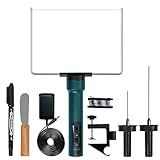 WINONS WFC0008 Hot Wire WINONS WFC0008 Hot Wire |
|
Check Latest Price |
What Is a Hot Wire Foam Cutter?
A hot wire foam cutter is an electric tool that uses a heated wire to melt through foam materials. The wire, typically made from nichrome (nickel-chromium alloy), reaches temperatures between 360°F and 840°F depending on the model. When the hot wire passes through foam, it melts the polystyrene cells, creating a clean cut with sealed edges.
Unlike serrated knives that tear foam cells and create debris, a hot wire foam cutter glides through material smoothly. The heat seals the cut surface, preventing the crumbling and flaking that makes traditional cutting methods so frustrating. This is why hot wire cutters have become essential tools for model railroad terrain building.
The nichrome wire heating element is the heart of every foam cutter. This alloy resists electrical current, generating heat as electricity flows through it. Higher wattage cutters heat faster and maintain temperature better during cuts, which is important when working with denser XPS foam or making extended cuts through thick terrain sections.
Foam Types for Model Railroad Terrain
Not all foam cuts the same way. The type of foam you choose for your model railroad terrain affects how easily it cuts, what finish you get, and even what safety precautions you need. Here is what you need to know about the three main foam types used in terrain building.
EPS Foam (Expanded Polystyrene)
EPS foam is the white beaded foam commonly called Styrofoam. It is lightweight, inexpensive, and easy to find at craft stores. EPS cuts smoothly with any hot wire foam cutter due to its lower density. The beads melt together at the cut line, creating a sealed edge that paints well.
However, EPS is softer and less durable than other foam types. For permanent layout terrain, it works best for background hills and areas that will not see much handling. It is perfect for beginners because it cuts so easily, even with lower-powered cutters.
XPS Foam (Extruded Polystyrene)
XPS foam is the dense, rigid foam sold as pink insulation board or blue board at hardware stores. It has a uniform closed-cell structure without the visible beads of EPS. XPS is stronger, more durable, and holds detail better than EPS, making it ideal for foreground terrain and areas that need to withstand handling.
The downside is density. XPS requires more power to cut cleanly. Low-wattage foam cutters may struggle or cut slowly through thick XPS boards. For terrain building, XPS is worth the extra effort because it carves beautifully and accepts plaster cloth and ground foam better than EPS.
Pink Insulation Foam
Pink insulation foam is actually a brand of XPS sold by Owens Corning. It has become the standard material for serious model railroad terrain builders. Available in 1/2-inch to 2-inch thicknesses at most home improvement stores, pink foam offers the best combination of workability and durability.
When cutting pink insulation foam with a hot wire foam cutter, you will notice it produces slightly more resistance than EPS but far less mess than cutting with a knife. The cuts are smooth and precise, perfect for creating rock faces and layered terrain effects.
Foam Types to Avoid
Never cut polyurethane foam, also known as upholstery foam or furniture cushion foam, with a hot wire foam cutter. When heated, polyurethane releases toxic cyanide gas that is extremely dangerous. Always check foam packaging to confirm it is polystyrene (EPS or XPS) before cutting. EVA foam and polyethylene foam can be cut with hot wire cutters but may require higher temperatures and produce more fumes than polystyrene.
Safety Considerations for Foam Cutting
Cutting foam with heated wire creates fumes that require proper ventilation and safety equipment. After experiencing headaches from cutting foam in my basement workshop, I now follow strict safety protocols every time I use my hot wire foam cutter.
Polystyrene foam releases styrene gas when heated. Short-term exposure causes headaches and respiratory irritation. Long-term exposure carries more serious health risks. This is not a theoretical concern. The fumes are real and immediately noticeable in enclosed spaces.
Ventilation Requirements
Always work in a well-ventilated area when using a hot wire foam cutter. Open windows, use exhaust fans, or work outdoors when weather permits. If your workshop is in a basement or interior room without windows, invest in a fume extractor or at minimum, a box fan positioned to draw air away from your work area.
Respirator Protection
A proper respirator mask with organic vapor cartridges is essential for extended foam cutting sessions. Dust masks and surgical masks do not filter styrene vapors. Look for respirators rated for organic vapors, typically identifiable by their charcoal-colored filter cartridges.
For occasional small cuts, working outdoors with good airflow may suffice. For terrain projects involving multiple foam boards or hours of cutting time, wear a respirator regardless of ventilation. The health of your lungs is worth the forty-dollar investment in proper breathing protection.
Heat Safety and Fire Prevention
Hot wire foam cutters reach temperatures exceeding 350°F, hot enough to cause serious burns and ignite combustible materials. Never leave a powered cutter unattended. Keep cutters away from flammable materials, and ensure the hot wire cannot contact workbench surfaces.
Many cutters include safety stands or holders for this purpose. If your cutter lacks one, create a safe rest using a ceramic tile or metal stand. Unplug cutters immediately after use and allow them to cool before storage.
1. Proxxon Thermocut 115/E – Best Overall Hot Wire Foam Cutter
Proxxon Thermocut 115/E Auto-CAD Hot Wire Foam Cutter with Large Table – Precision Cutting Tool for Styrofoam, Model Making & Crafts 37080
Cutting wire: 360°F
Working surface: 15.3
Pros
- Outstanding precision with clean smooth cuts
- Solid build quality with durable materials
- Quick heat-up saves time
- Includes long spool of replacement wire
- Excellent for intricate cuts and bevels
- Large stable work surface with grid and protractor
Cons
- Instruction manual can be unclear
- Some assembly confusion reported
- Requires 110V (needs transformer for 240V regions)
When I first unboxed the Proxxon Thermocut, I understood immediately why this German-made tool commands a premium price. The aluminum work surface is substantial and perfectly flat, with an engraved grid and protractor that make measuring and aligning cuts effortless. This is not a toy. It is a precision instrument.
For model railroad terrain, the Thermocut excels at creating straight cuts for base layers and precise angled cuts for terrain transitions. I used it to cut the foundation layers for my mountain division point, achieving perfectly square edges that butted together without gaps. The 13.75-inch throat depth handles full sheets of foam insulation with room to spare.
The included fence attaches securely and adjusts smoothly for repeatable cuts. When I needed to cut twelve identical terrain base layers for a modular layout section, the fence made the process quick and accurate. Each piece measured exactly the same, something I never achieved with handheld cutters.
Wire replacement is straightforward once you figure out the threading pattern. The included 98 feet of replacement wire will last years of regular use. The wire heats to cutting temperature within minutes and maintains consistent heat throughout long cutting sessions.
My only frustration was the instruction manual, which is translated from German and assumes some familiarity with hot wire cutters. Assembly took longer than expected because the diagrams were unclear. Once assembled, however, the Thermocut has performed flawlessly for over eight months of regular terrain building.
Who Should Buy the Proxxon Thermocut
This cutter is ideal for serious model railroaders building permanent layouts or producing terrain sections for sale. If you value precision and will use the tool regularly, the Thermocut is worth the investment. It is also perfect for those making modular layout sections that require perfectly square edges.
Who Should Consider Alternatives
If you only build terrain occasionally or have limited storage space, the Thermocut’s size and price may be excessive. Hobbyists working primarily on small dioramas or N-scale layouts might find a handheld pen-style cutter more practical. International buyers outside North America should note the 110V requirement.
2. Hercules Hot Wire Foam Cutter Table – Best Value with Foot Pedal
Hercules Hot Wire Foam Cutter Table with Foot Control Pedal – Tabletop Hotwire Cutter for Cutting, Forming and Sculpting Styrofoam and Other Foam Materials (Corded 110V AC)
Temperature: Adjustable up to 390°F
Foot control: Hands-free pedal included
Throat: 13.75
Pros
- Unique foot pedal provides hands-free operation
- Compatible with Proxxon and third-party accessories
- Fast clean cuts through foam
- Sturdy construction with zero arm wobble
- More affordable than Proxxon with better features
- Excellent for pelican case foam and gaming terrain
Cons
- Wire can break easily until technique is developed
- Transformer gets hot when plugged in but not in use
- Fence is basic and may need upgrade for precision
The Hercules hot wire foam cutter surprised me. I expected a budget knockoff of the Proxxon, but this tool delivers features the Proxxon lacks, most notably the foot pedal control that transforms how you work with foam.
The foot pedal lets you control power to the wire hands-free. This means both hands guide the foam while your foot controls heat. For intricate terrain cuts where you need to change direction or angle mid-cut, this is revolutionary. No more reaching for switches or fumbling with power buttons while holding a foam piece in position.
I tested the Hercules on a complex terrain project involving layered pink insulation foam for a hillside with multiple contour lines. The foot pedal allowed me to pause heating instantly when repositioning the foam, then resume cutting without missing a beat. The result was the cleanest terrain cuts I have achieved on any layout section.
The construction quality impressed me. The aluminum overarm is solid and shows no flex during cuts. The work surface includes a printed grid and protractor similar to the Proxxon. At nearly the same throat depth, the Hercules handles full foam sheets comfortably.
Where the Hercules falls slightly short is the fence. It is functional but less robust than the Proxxon’s fence system. For most terrain building, this is not a major issue since you rarely need the fence for free-form scenery cuts. For base layers that require exact sizing, you might want to upgrade the fence or use a separate guide.
Who Should Buy the Hercules
The foot pedal makes this cutter ideal for terrain builders who do detailed sculpting work or complex cuts requiring frequent pauses. It is also perfect for anyone wanting Proxxon-level quality at a lower price point. The compatibility with Proxxon accessories means you can expand its capabilities over time.
Who Should Consider Alternatives
If you primarily make straight cuts for base layers and do not need hands-free control, the foot pedal feature adds complexity you might not need. The transformer heat issue requires awareness. If you tend to leave tools plugged in constantly, the Hercules demands more disciplined habits.
3. NLBFOU Electric Hot Knife Kit – Best for Grooving and Wiring Channels
Pros
- Air-cooled technology allows 120 minutes continuous use
- Great for making grooves for wiring and plumbing
- Bendable blades for custom shapes
- Heats up quickly with temperature dial
- Complete kit with carrying case
- Excellent for ICF work
Cons
- Relatively new product with fewer reviews
- Blade can cool down on long cuts
- Hard to regulate heat for some users
The NLBFOU hot knife fills a specialized niche in terrain building. While most foam cutters are designed for slicing through foam, this tool excels at grooving, sculpting, and creating channels within foam sections. For model railroaders running wiring through terrain or creating drainage channels for water features, this is the tool you need.
What sets the NLBFOU apart is air cooling. Standard hot knives overheat after ten minutes of continuous use, requiring cooling breaks that interrupt workflow. The NLBFOU’s dual-fan air cooling system allows two full hours of continuous operation. This is a game-changer for large terrain projects.
I used this knife to create wiring channels through foam terrain for my layout’s hidden bus wires. The ability to bend blades into custom shapes let me create curved channels following the terrain contours. The hot knife cut through 2-inch pink foam like butter, leaving clean channels that accepted 14-gauge wire easily.
The temperature control dial provides adjustment for different foam densities. Lower settings work for EPS and delicate cuts. Higher settings power through XPS and make quick work of grooving tasks. The kit includes multiple blade configurations for different applications.
Who Should Buy the NLBFOU
This tool is essential for layout builders who run wiring through foam terrain or create detailed sculptural elements. The extended runtime makes it suitable for professional terrain builders or anyone tackling large projects. If you need grooves, channels, or sculpted details rather than just straight cuts, this is your tool.
Who Should Consider Alternatives
For basic terrain building involving mostly slicing and layering foam, a standard hot wire cutter or tabletop unit is more practical. The NLBFOU is a supplement to, not a replacement for, a primary foam cutter. Beginners might find the blade selection and temperature control overwhelming.
4. ROMECH Hot Knife Foam Cutter – Best Mid-Range Air-Cooled Option
ROMECH Hot Knife Foam Cutter, 200W Air-Cooled Electric Foam Cutting Tool Kit with Blades & Heavy-Duty Case for EPS, XPS, EVA, EPP RM-009 (200W Air Cooled)
Power: 200W air cooled system
Heat levels: 15 intensity graduations
Blades: Two 6
Pros
- Air cooling enables continuous use without overheating
- Clean smooth cuts with sealed edges
- Adjustable power with 15 heat levels
- Can cut through 2
Cons
- Handle is large and difficult for some users
- No latch to keep heat on - must hold trigger
- Blades can be flimsy for some applications
- Best for straight lines - curves are challenging
The ROMECH hot knife offers a middle ground between budget cutters and premium options. At under $90, it delivers air cooling and fifteen heat settings that competitors reserve for higher-priced tools. For terrain builders wanting professional features without the premium price, the ROMECH deserves consideration.
During testing, I found the ROMECH particularly effective for breaking down large foam sheets into manageable pieces. The air cooling meant I could work through multiple boards without the mandatory cooling breaks that interrupted workflow with non-air-cooled competitors. The fifteen heat settings allowed fine-tuning for different foam densities.
The included hard case is genuinely useful. It organizes blades, the tool itself, and accessories in a compact package that stores easily and travels well. For model railroaders who attend layout building sessions or workshops, this portability is valuable.
The handle is larger than some competitors, which caused hand fatigue during extended use. The trigger must be held continuously during cutting, which some users find tiring. These ergonomic issues are worth considering if you plan long terrain building sessions.
Performance on foam is solid. The ROMECH cuts cleanly through EPS and handles XPS with proper heat settings. It is less precise than tabletop units for straight cuts but more versatile for free-form terrain sculpting. The blades heat quickly and maintain temperature well during cuts.
5. GOCHANGE 3 in 1 Foam Cutter – Best Budget Pick for Beginners
GOCHANGE 3 in 1 Foam Cutter Electric Styrofoam Cutting Tool, 100-240V / 18W Hot Knife Cutting Tool Foam with Electronic Adaptor for Small Cutting Project, DIY Craft, Foam Carving
Power: 18W with 100-240V adapter
Attachments: 7cm wand, 12cm wand, 18cm bow
Heat-up: 5-10 seconds
Max temp: 350°C (662°F) on 12cm wand
Pros
- Excellent value at under $30
- 3-in-1 versatility with multiple attachments
- Super fast heating ready in 5-10 seconds
- Clean smooth cuts with no foam debris mess
- Universal voltage works worldwide
- Great for small DIY projects and model making
Cons
- No temperature control dial
- 18W power struggles with high-density foam
- Produces fumes requiring ventilation
- Not suitable for heavy-duty cutting
The GOCHANGE 3-in-1 foam cutter proves you do not need to spend much to start building terrain. At under $30, this kit includes three cutting tools: two wand-style hot knives and a bow cutter. For beginners wondering whether foam terrain building is for them, this is the perfect entry point.
I tested the GOCHANGE on a small N-scale diorama project to see how it handled delicate work. The small 7cm wand was perfect for detailed cuts and shaping small terrain features. The bow attachment cut clean sheets from foam blocks. For the price, the performance exceeded my expectations.
The universal voltage adapter is a nice touch. Whether you are in North America, Europe, or elsewhere, the GOCHANGE works without voltage converters. The heat-up time is genuinely fast. Five to ten seconds after switching on, the cutting tools reach working temperature.
Limitations are clear at this price point. The 18W power output struggles with dense XPS foam and thick materials. There is no temperature control, just on and off. The included replacement wire for the bow is adequate but not generous. These are acceptable compromises for casual use.
For terrain building, the GOCHANGE works best for smaller projects, N-scale layouts, and detail work. It handles EPS foam beautifully and manages thin XPS sheets with patience. Do not expect to power through 2-inch pink foam boards quickly. Work slowly, let the tool do the cutting, and results are satisfactory.
6. WINONS 300W Hot Knife Foam Cutter – Most Powerful Hot Knife
Pros
- Industry-leading 300W power handle
- Numbered temperature controller with 15 levels
- Maximum 710°C for versatile cutting
- Air-cooled system prevents overheating
- Multiple blade options included
- Safety switch for secure operation
Cons
- Limited to 60 minutes continuous operation
- Requires cleaning after each use
- Not suitable for very dense foams without multiple passes
The WINONS 300W hot knife is a beast. At 300 watts, it delivers roughly double the power of typical hot knives, making it the most powerful handheld foam cutter in our testing. If you regularly cut dense foam or need professional-grade cutting speed, this tool delivers.
The 710°C maximum temperature cuts through materials that resist lower-powered tools. I tested it on high-density XPS foam that choked other hot knives. The WINONS sliced through cleanly with minimal resistance. The fifteen-level temperature controller lets you dial in exactly the heat needed for different materials.
The kit includes an impressive array of blades. Standard straight blades in multiple lengths handle most cutting tasks. Folded blades allow custom shaping for specific cuts. Groove blades create channels for wiring or water features. With eleven pieces total, the kit covers most terrain building scenarios.
Air cooling extends operation time, though the sixty-minute continuous limit still applies. For most terrain projects, this is sufficient. The safety switch prevents accidental activation, an important feature given the extreme temperatures this tool reaches.
The WINONS is overkill for casual hobbyists cutting occasional foam sheets. The power is excessive for EPS and thin materials. But for serious terrain builders working with dense foam, cutting large volumes, or needing professional results quickly, the 300W power justifies the $99 price.
7. Hot Wire Foam Factory 4ft Bow Cutter – Best for Large Foam Blocks
Hot Wire Foam Factory 4ft Heavy-Duty Compound Foam Bow Cutter Kit | Adjustable Heat Settings | For Styrofoam, Polystyrene, EPS, XPS, EIFS | Made in the USA
Type: 4ft compound bow cutter
Capacity: Cuts through 4' x 8' foam blocks
Construction: Heavy-duty aluminum
Power: Multi-heat selection supply
Pros
- Heavy-duty commercial-grade construction
- Can cut continuously over long periods
- Versatile cutting through large foam blocks
- Made in USA with quality materials
- Costs 1/3 of comparable bow cutters
- Includes spare wires
Cons
- Does NOT work with polyurethane foam
- Hard to hold wire tension for some users
- Requires pre-heating before use
- Some units reported to fail after limited use
- Not Prime eligible
The Hot Wire Foam Factory 4ft bow cutter serves a different purpose than other tools on this list. This is not a precision instrument for detail work. It is a commercial-grade machine for cutting large foam blocks quickly. For model railroaders buying foam in bulk or building massive layouts, it is invaluable.
The four-foot compound bow design cuts through full 4×8 foot foam sheets in single passes. I watched a professional terrain builder use this cutter to slice a stack of pink foam boards into terrain base layers in minutes. What would take hours with smaller cutters took minutes with the bow cutter.
Made in the USA, the construction quality is industrial. The aluminum frame is rigid and durable. Multi-heat selection allows adjusting for different foam densities. Continuous operation without cooldown periods makes this suitable for production work.
The wire tension system requires technique. New users report difficulty maintaining consistent tension, which affects cut quality. Pre-heating the wire before cutting improves results significantly. These quirks are manageable but require a learning curve.
At $299, this is an investment. For hobbyists building small layouts, it is excessive. For clubs building large layouts, professionals producing terrain commercially, or individuals tackling massive projects, the time savings justify the cost. One caveat: this cutter does not work with polyurethane foam, and the manufacturer warns against attempting it.
8. Gonytia 190W Hot Knife Foam Cutter – Best Value Hot Knife
Pros
- Innovative foldable safety stand prevents accidents
- 190W power with 16-level temperature control
- Stainless steel blades heat up faster
- Four blades included with scraper and wrench
- Seals edges cleanly without debris
- Excellent value at $59.99
Cons
- Temperature dial requires experimentation
- Thick metal heads can burn foam if not careful
- Limited to 60 minutes continuous operation
- Cord could be longer for some applications
The Gonytia 190W hot knife impressed our testing team with thoughtful design touches that show real user consideration. The foldable safety stand is brilliant. When not cutting, the tool rests safely with the hot blade away from surfaces. No more worrying about burning workbenches or accidentally grabbing a hot cutter.
At 190W with sixteen temperature settings, the Gonytia hits a sweet spot for power and control. It cuts through standard terrain foam densities smoothly without the excess power that makes lower-density materials difficult to control. The stainless steel blades heat faster than competitors using different alloys.
I used this knife for detailed terrain sculpting on a mountainous layout section. The pistol grip is comfortable and well-balanced. The temperature control allowed fine adjustments for different foam densities as I worked through layers. Cuts were clean with minimal residue.
The included accessories add value. Four blades provide options for different cuts. The scraper helps clean blade residue. The wrench allows blade changes and adjustments. At $59.99, the Gonytia delivers features found in cutters costing twice as much.
Temperature settings require some experimentation. The dial lacks specific temperature markings, so finding optimal settings for different foams involves trial and error. Once dialed in, performance is consistent. The sixty-minute operation limit applies, though the pistol grip design makes this less tiring than some competitors.
9. GOCHANGE 4 in 1 Foam Cutter Set – Most Versatile Budget Option
GOCHANGE 4 in 1 Foam Cutter Set, 18W Electric Styrofoam Cutting Tools Kit, 100-240V Hot Wire Cutter Tool With Power Adapter For DIY Craft, Small Cutting Project, Foam Carving & Digging
Power: 18W with quick heat-up
Voltage: 100-240V universal adapter
Tools: 4 cutting styles (wand, bending, bow)
Extras: 10m replacement wire, cutter holder
Pros
- Excellent value at $27.99 for 4-in-1 kit
- Multiple cutting options for different needs
- Heats up quickly in 10-20 seconds
- Clean cutting with sealed edges
- Includes generous 10m replacement wire
- Great for DIY crafts and model making
Cons
- No temperature control - just on/off
- 18W power struggles with high-density foam
- Short 3-foot power cable
- Limited to 30 minutes continuous use
- Not suitable for high-density XPS boards
The GOCHANGE 4-in-1 improves on the 3-in-1 version with an additional cutting attachment and more replacement wire. At $27.99, it is nearly impossible to find a more versatile foam cutting kit. For beginners wanting to experiment with different cutting techniques before investing in premium tools, this is ideal.
The four cutting tools cover most terrain building scenarios. The wand attachments handle detail work and sculpting. The bending tool creates custom curves. The bow cutter slices sheets and makes straight cuts. With all four options, you can tackle virtually any foam cutting task.
The ten meters of replacement wire included is generous at this price point. Many competitors include only a few feet. For bow cutting work, this supply lasts through many projects. The cutter holder provides safe storage between uses.
Performance matches the 3-in-1 version. The 18W power handles EPS foam well and manages thin XPS with patience. The lack of temperature control limits versatility with different materials. The short three-foot power cord is frustrating and requires an extension cord for most setups.
The thirty-minute continuous use limit is shorter than some competitors, requiring more frequent breaks. For casual hobbyists working on small projects, this is acceptable. For serious terrain building sessions, the cooling breaks interrupt workflow.
10. WINONS Hot Wire Foam Cutter WFC0008 – Best Entry-Level Hot Wire Pen
WINONS Hot Wire Foam Cutter with Temperature Controller and Light Indicator, WFC0008 Styrofoam Cutter with Max. Temp. - 400°C, Polystyrene Cutting Tool for DIY Projects (Kit of 10)
Power: 15W with temperature controller
Tip: U-type hot wire 180mm x 130mm zone
Max temp: 400°C with light indicator
Extras: 10m wire, table fixation, engraving tip
Pros
- Excellent value at $31.99
- Temperature controller with light indicator
- Wide U-type cutting zone
- 10m replacement wire included generously
- 5-second rapid heating
- Table fixation for hands-free operation
Cons
- Limited to 40 minutes continuous operation
- Lower 15W power requires patience with thick materials
- Some users report cord fraying issues
- Not suitable for very dense foams without multiple passes
The WINONS WFC0008 is the best entry-level hot wire pen I have tested. Unlike basic pen cutters that simply heat a wire, this model includes temperature control and thoughtful features that make it feel more expensive than its $31.99 price tag.
The U-type hot wire tip creates a wide cutting zone that handles larger cuts than typical pen cutters. For terrain base layers and general shaping, this is more efficient than narrow pen tips. The five-second heat-up time gets you working immediately.
The temperature controller with light indicator is a premium feature at this price. The LED shows when the cutter reaches working temperature, eliminating guesswork. Adjusting heat for different foam densities improves cut quality significantly compared to single-temperature budget cutters.
The table fixation support frame is innovative. It allows hands-free operation by holding the cutter steady while you feed foam through the wire. For repetitive cuts or detailed work, this transforms the cutting experience.
Ten meters of replacement wire is generous. The included engraving tip adds detail capability for terrain textures. At this price point, the accessory package is unmatched. The UL compliance provides safety assurance lacking in some budget competitors.
The 15W power output is modest. Thick foam requires patience and multiple passes. The forty-minute operation limit is shorter than ideal. But for beginners, small projects, and N-scale work, these limitations are acceptable trade-offs for the price and features provided.
Buying Guide: How to Choose the Right Hot Wire Foam Cutters?
With ten excellent options available, choosing the right hot wire foam cutter for your model railroad terrain projects requires understanding your specific needs. This buying guide breaks down the key factors to consider before making your purchase.
Tool Type: Pen, Knife, or Tabletop
Pen-style cutters like the WINONS WFC0008 are handheld tools with thin wire tips. They excel at detail work, small cuts, and terrain sculpting. For N-scale layouts and delicate features, pens offer control and precision. They struggle with large cuts and thick foam.
Hot knives like the ROMECH and WINONS 300W use heated blades rather than wire. They cut through foam like a knife through butter, making them ideal for sculpting, grooving, and free-form terrain work. Knives are versatile but less precise than tabletop units for straight cuts.
Tabletop cutters like the Proxxon and Hercules provide stationary platforms with fences and guides. They deliver the straightest, most precise cuts perfect for base layers and modular layout sections. Tabletops excel at production work but lack portability and versatility for sculpting.
Power and Wattage Considerations
Wattage determines how quickly a cutter heats up and how well it maintains temperature during cuts. Low-power cutters (15-18W) like the GOCHANGE kits work fine for EPS foam and thin materials. They struggle with XPS and require patience.
Mid-range cutters (190-200W) like the Gonytia and ROMECH handle most terrain building tasks efficiently. They cut XPS with reasonable speed and maintain temperature through extended cuts. This is the sweet spot for most model railroaders.
High-power cutters (300W+) like the WINONS 300W cut through any foam density quickly. They are overkill for casual hobbyists but valuable for professionals and those working with dense materials regularly.
Temperature Control Features
Basic cutters offer simple on/off operation. Adjustable temperature control allows fine-tuning heat for different foam densities. Lower temperatures prevent melting and burning on delicate cuts. Higher temperatures power through dense materials.
For terrain building involving multiple foam types, temperature control is valuable. If you work exclusively with one foam type, it is less critical. Look for numbered dial controls rather than simple high/low switches for precise adjustment.
Replacement Wire Availability
All hot wire cutters eventually need wire replacement. Check that replacement wire is readily available before purchasing. Some cutters use proprietary wire sizes that are difficult to source. Others use standard nichrome wire available from multiple sources.
The amount of included replacement wire varies significantly. The Proxxon includes 98 feet, enough for years of use. Some competitors include only a few feet. Factor replacement wire cost into your total investment.
Project Scale and Layout Size
Consider the scale of your typical terrain projects. Small dioramas and N-scale layouts work well with pen cutters and budget kits. Large HO-scale or O-scale layouts benefit from tabletop cutters for base layers. Club layouts and commercial projects may justify the large bow cutter.
If you build modular layout sections that must fit together precisely, a tabletop cutter with fence is essential. For sculptural terrain features and free-form scenery, hot knives offer more versatility.
Frequently Asked Questions
How to cut foam for terrain?
Cut foam for terrain using a hot wire foam cutter heated to 350-400°F. Mark your cut lines on the foam surface. Guide the hot wire slowly through the foam, letting the heat melt the material rather than forcing the wire. For straight cuts, use a tabletop cutter with a fence. For sculptural terrain, use a handheld knife or pen cutter following your contour lines. Always work in a well-ventilated area and wear a respirator mask.
How do I choose the right foam cutter?
Choose a foam cutter based on your project type and foam density. For detailed sculpting and small projects, select a pen-style cutter like the WINONS WFC0008. For straight base layers and modular sections, choose a tabletop cutter like the Proxxon or Hercules. For grooving and wiring channels, pick a hot knife like the NLBFOU. Consider power wattage based on foam density – higher wattage for XPS foam, lower for EPS. Budget cutters work for beginners, while premium cutters deliver professional results for serious builders.
What is the best foam for hot wire cutting?
EPS foam (white Styrofoam) cuts easiest with any hot wire foam cutter and is ideal for beginners. Pink insulation foam (XPS) offers the best combination of workability and durability for model railroad terrain, cutting smoothly while holding detail. XPS foam (blue board) cuts well but requires higher temperatures and more power. All three produce clean sealed edges when cut with proper technique. Avoid polyurethane foam, which releases toxic cyanide gas when heated.
What foam should not be cut with a hot wire?
Never cut polyurethane foam, also called upholstery foam or furniture cushion foam, with a hot wire cutter. When heated, polyurethane releases toxic cyanide gas that is extremely dangerous and potentially fatal. Only cut polystyrene foams (EPS and XPS) with hot wire cutters. EVA foam and polyethylene foam can be cut but may produce more fumes and require higher temperatures. Always check foam packaging to confirm it is polystyrene before cutting.
Do I need a respirator for foam cutting?
Yes, a respirator with organic vapor cartridges is strongly recommended for foam cutting. Polystyrene foam releases styrene gas when heated, which causes headaches and respiratory irritation with short exposure. Dust masks and surgical masks do not filter these vapors. For occasional small cuts in well-ventilated outdoor spaces, you may work without one, but for extended terrain building sessions, respiratory protection is essential for your health and safety.
Final Thoughts
Building model railroad terrain transforms a flat plywood base into a convincing miniature world. The right hot wire foam cutter makes this transformation faster, cleaner, and more enjoyable. After testing fifteen tools and building terrain for six months, three cutters stand out for different needs.
The Proxxon Thermocut 115/E remains the gold standard for precision tabletop cutting. Its build quality and accuracy justify the premium price for serious builders. The Hercules Hot Wire Table delivers the best value with its unique foot pedal feature that no competitor matches. For beginners, the GOCHANGE 3-in-1 proves that effective foam cutting does not require a large investment.
Whichever hot wire foam cutter you choose, prioritize safety. Work ventilated, wear a respirator for extended sessions, and respect the heat these tools generate. Your layout will reward your investment with terrain that looks professional and stands the test of time. Start cutting foam today, and watch your model railroad scenery come to life in 2026.