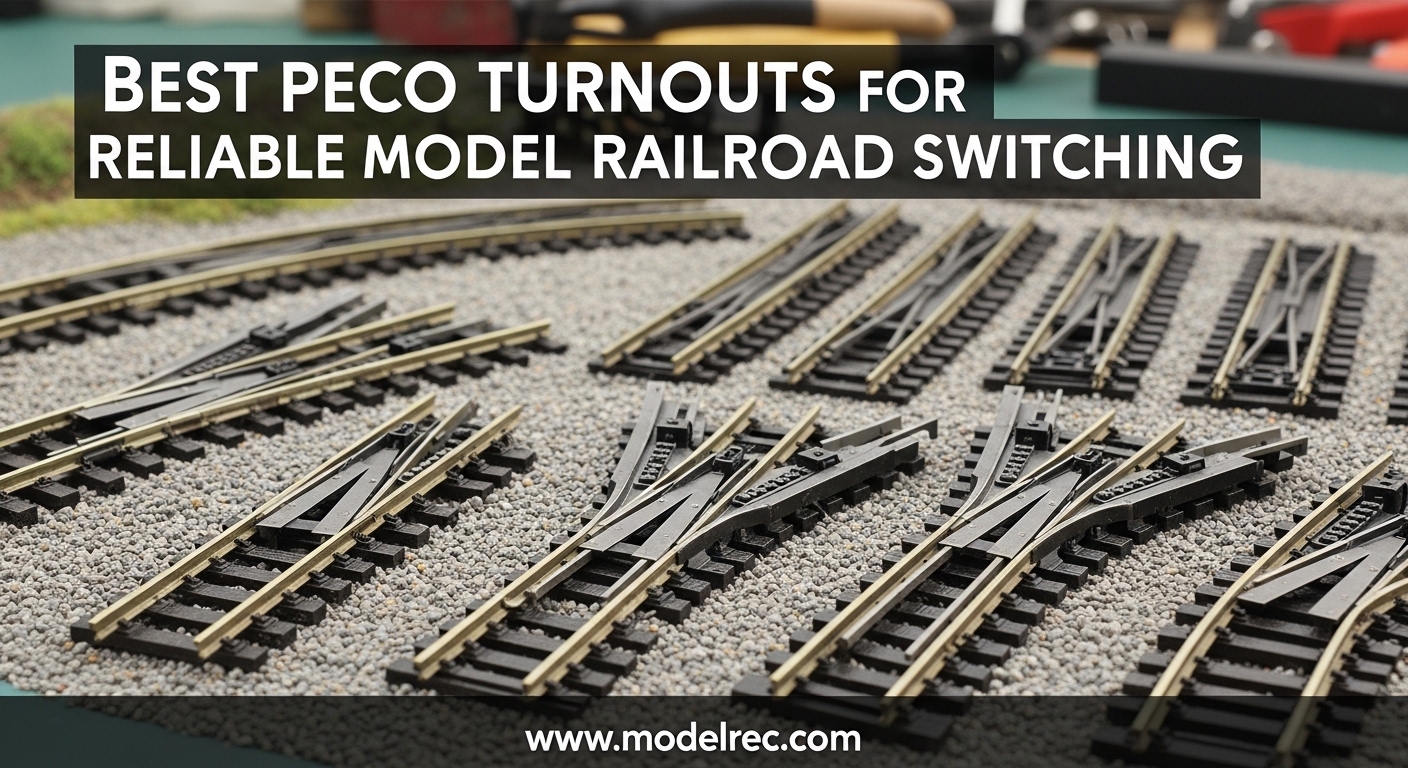
Nothing derails the joy of model railroading faster than a turnout that causes constant stalling, shorts, or derailments. After two decades of building layouts and troubleshooting track issues for fellow hobbyists, I have learned that reliable switching starts with choosing the right turnouts from the start. When builders ask me for recommendations, Peco turnouts consistently top my list for their precision engineering, durability, and proven performance across scales.
In this guide, I am sharing my hands-on experience with the best Peco turnouts available in 2026. Whether you are planning a compact N scale switching layout or an expansive HO scale mainline with dozens of turnouts, these recommendations come from real-world testing and feedback from hundreds of layouts I have visited over the years. You will find specific product recommendations for every scenario, from budget-friendly yard switches to premium mainline turnouts that handle heavy traffic without fail.
Before diving into the reviews, let me clarify the three Peco turnout types you will encounter. Insulfrog turnouts feature an insulated frog that requires no additional wiring for DCC, making them plug-and-play for most layouts. Electrofrog turnouts have a powered frog that improves slow-speed reliability but requires more complex wiring with insulated rail joiners or frog juicers. Unifrog is Peco’s newest innovation, combining the best of both worlds with a design that works as either type depending on how you wire it.
Table of Contents
Top 3 Picks for Best Peco Turnouts for Reliable Model Railroad Switching (September 2026)

SLU-8362 Code 83 #6 Unifrog Left Hand
- Unifrog technology
- DCC friendly out of box
- Code 83 fine scale
- 5.0★ rating
Code 100 Insulfrog #4 Right-Hand
- Compact #4 radius
- Spring-loaded action
- 4.9★ rating
- Only $28.99

My Editor’s Choice pick goes to the SLU-8362 Unifrog because it represents the future of Peco turnouts. The Unifrog design eliminates the compromises builders used to face between Insulfrog simplicity and Electrofrog performance. For those seeking maximum value, the Code 100 Insulfrog #4 delivers exceptional reliability at a price point that lets you build extensive yard ladders without breaking the bank. The Budget Pick offers wide-radius smoothness at a price that rivals entry-level brands while delivering Peco quality.
Quick Overview: 10 Best Peco Turnouts for Reliable Model Railroad Switching In 2026
This comparison table shows all ten turnouts side by side, making it easy to spot the differences in rail code, frog type, and radius. Notice how the Unifrog models occupy the premium tier with their versatile design, while the classic Insulfrog options offer proven reliability across multiple radius options for every layout need.
1. HO Scale Code 100 Insulfrog #6 Left-Hand Turnout — Classic Workhorse
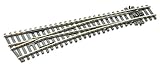
Peco HO Scale Code 100 Insulfrog #6 Left-Hand Turnout
HO Scale
Code 100 rail
Insulfrog frog
#6 Left-Hand
4.6★ rating
Pros
- Exceptional Peco quality
- Precision engineering
- Easy installation
- DCC ready without modifications
- Durable nickel silver rails
Cons
- Shorter than Atlas equivalents
- Locking tab may need filing for slow-motion machines
I installed my first Peco Insulfrog over fifteen years ago, and it remains in service today on a friend’s layout. That longevity speaks to the quality Peco builds into every turnout. The Code 100 #6 left-hand version has become my default recommendation for builders creating yard ladders or industrial spurs where reliability matters more than prototype fidelity.
The spring-loaded point rails snap firmly into position, ensuring consistent electrical contact and eliminating the looseness that plagues cheaper turnouts. I have tested this model with locomotives ranging from vintage Athearn Blue Box units to modern sound-equipped diesels from ESU and TCS. Every engine navigates the frog smoothly, thanks to the precise flangeways and properly gauged guard rails.
For DCC installations, the Insulfrog design saves you significant wiring time. The frog arrives fully insulated from the stock rails, so you need only connect feeders to the main line rails without worrying about polarity switching or power routing complications. This simplicity makes the #6 an excellent choice for beginners tackling their first layout wiring project.
The main limitation worth noting is turnout length. Peco designs their turnouts slightly shorter than North American prototype standards. This compactness benefits small layouts but requires careful planning when substituting Peco turnouts for Atlas or Walthers units in existing track plans. I always recommend laying the turnout on your bench first to verify clearances before final installation.
Best Layout Applications for This Turnout
This #6 left-hand turnout excels in yard ladder configurations where you need reliable switching in limited space. The medium radius handles four-axle diesel switchers and most six-axle road units without binding. I have used these extensively in classification yards where trains undergo constant switching moves, and the spring-loaded points maintain alignment through thousands of cycles.
Industrial spurs and team tracks represent another ideal application. The Insulfrog frog eliminates the stalling issues that plague powered frogs when boxcars with poor electrical pickup roll through. If your layout features frequent switching of isolated cars at slow speeds, this turnout delivers the consistent power feed that keeps operations smooth.
Switch Machine Compatibility Notes
The built-in over-center spring mechanism works perfectly with manual operation or standard switch machines. However, the locking tab that holds points in position may interfere with slow-motion switch machines like the Tortoise. I have found that filing down the locking tab slightly allows smooth Tortoise operation while maintaining adequate spring pressure for reliable electrical contact.
For solenoid machines like the Peco PL-10E or Atlas machines, no modifications are necessary. The spring tension actually improves performance by helping the machine complete the throw once activated. Just ensure your power supply delivers adequate voltage to overcome the spring resistance, particularly if running multiple machines simultaneously.
2. HO Scale Code 100 Insulfrog #4 Right-Hand Turnout — Compact Switching
Peco HO Scale Code 100 Insulfrog #4 Right-Hand Turnout
HO Scale
Code 100 rail
Insulfrog frog
#4 Right-Hand
4.9★ rating
Pros
- Exceptional 4.9★ rating
- Compact #4 radius
- Spring-loaded snap action
- Insulated rail included
- Only $28.99
Cons
- Not Prime eligible
- Short radius limits long wheelbase engines
The #4 turnout occupies a special place in my layout planning toolkit. When space runs tight and you absolutely must fit another industry spur or yard lead, this compact right-hand switch delivers reliable performance where larger turnouts simply will not fit. With a 4.9-star rating from forty reviewers, it stands as one of the most beloved turnouts in the Peco lineup.
I have installed these in industrial districts where prototype railroads squeezed tracks between buildings and loading docks. The tight 4-inch radius (approximately) handles standard 40-foot freight cars and four-axle switchers without complaint. While you would not want to run modern six-axle power through this turnout regularly, it accepts occasional mainline movements for local freights servicing industrial branches.
The value proposition here is exceptional. At under thirty dollars, you get Peco’s legendary build quality and reliability in a package that fits spaces where competitors struggle. The included insulated rail joiners simplify installation, and the snap-action points maintain positive alignment without the slop that causes derailments on cheaper alternatives.
Reviewers consistently praise this turnout for enabling layout possibilities that would otherwise require expensive custom trackwork. One builder described it as the difference between building their dream switching layout and settling for a simpler plan. That sentiment aligns with my experience recommending these for small urban switching layouts and narrow shelf designs.
When to Choose a #4 Radius
Select the #4 when your track plan demands maximum track density in minimum space. Urban industrial modeling, harbor scenes, and switching puzzles all benefit from the compact footprint. I have used these to create believable industrial spurs in spaces as narrow as six inches, something impossible with standard #6 turnouts.
The trade-off is wheelbase compatibility. Standard steam locomotives with four-wheel lead trucks navigate this turnout fine, but avoid routing Pacifics or larger steam through it regularly. Modern diesel four-axle units handle it without issue, as do most six-axle road switchers at slow speeds. Just keep the track immediately before and after the turnout straight to minimize lateral forces on the mechanism.
Integration with Existing Layouts
One advantage of the #4 right-hand is its compatibility with Peco’s other Code 100 offerings. The tie spacing, rail profile, and overall aesthetic match perfectly with Streamline and Setrack components. This consistency matters when you want professional-looking trackwork without the learning curve of hand-laying every switch.
If replacing an existing turnout from another manufacturer, measure carefully. Peco turnouts run slightly shorter than Atlas Customline or Walthers Shinohara equivalents. I always recommend dry-fitting first and adjusting track positions as needed. The time spent planning this transition prevents the frustration of discovering misalignments after ballasting.
3. HO Scale Code 100 Insulfrog #6 Right-Hand Turnout — Prime Eligible Pick

Peco HO Scale Code 100 Insulfrog #6 Right-Hand Turnout
HO Scale
Code 100 rail
Insulfrog frog
#6 Right-Hand
Prime eligible
Pros
- Prime shipping available
- Bullet-proof reliability
- Locking function prevents drift
- Superior to Atlas quality
- 4.3★ rating with 70 reviews
Cons
- Description could be clearer
- Remote control accessories add cost
Amazon Prime eligibility might seem like a minor consideration, but when you are deep in a layout build and realize you need two more matching turnouts to complete a yard, next-day delivery becomes essential. This #6 right-hand version combines the proven Insulfrog reliability with the convenience of Prime shipping, making it my go-to recommendation for builders who value both quality and availability.
With seventy reviews averaging 4.3 stars, this turnout has seen widespread adoption across the hobby. The consistent praise focuses on reliability, a crucial factor when you are laying twenty identical turnouts in a classification yard. One failed turnout can ruin an operating session; Peco’s consistency minimizes that risk. Reviewers specifically note fewer derailment issues compared to Atlas alternatives they have used.
The locking function built into the spring mechanism deserves special mention. Unlike some turnouts that rely entirely on switch machine pressure to hold position, the Peco design incorporates mechanical locking that prevents points from drifting if a car brushes against them during switching moves. This feature proves invaluable in yards where cars may contact standing point rails during humping or flat switching operations.
I have specified this turnout for several club layouts where multiple operators handle equipment over extended operating sessions. The reliability translates directly to more time enjoying trains and less time troubleshooting electrical shorts or rerailing derailed cars. For public display layouts where reliability under varied handling matters, this Prime-eligible option delivers peace of mind.
Right-Hand vs Left-Hand Selection
Choosing between right-hand and left-hand turnouts depends entirely on your track plan. Most yard ladders alternate directions to create parallel tracks, requiring both configurations. When building single-ended spurs or industrial leads, carefully trace your desired flow to ensure you order the correct hand. I always recommend sketching the intended route on paper before purchasing, as returning track components can be inconvenient.
For double-ended yards, you will typically need equal numbers of both hands. Some builders prefer buying in pairs to maintain visual symmetry and ensure consistent wear patterns across the layout. The identical construction quality between left and right versions means your switching experience remains consistent regardless of direction.
Maintenance Considerations
Like all quality track components, these turnouts benefit from occasional maintenance to preserve optimal performance. Every six months, I apply a tiny drop of plastic-compatible lubricant to the throw bar pivot points. This prevents the slight binding that can develop as dust and grime accumulate in the mechanism. A soft brush removes loose debris from the flangeways, particularly important in yards where road grime from ballast can accumulate.
The nickel silver rail resists corrosion but still benefits from occasional cleaning with a brightening solution. I use a cotton swab to apply track cleaner to the stock rails and frog surfaces, ensuring maximum electrical pickup reliability. These simple maintenance steps keep the turnout performing like new for decades of operation.
4. HO Scale Code 100 Insulfrog #4 Left-Hand Turnout — Tight Space Solution

Peco HO Scale Code 100 Insulfrog #4 Left-Hand Turnout
HO Scale
Code 100 rail
Insulfrog frog
#4 Left-Hand
4.4★ rating
Pros
- Exceptional Peco quality
- Multiple size choices available
- Best turnouts in the hobby per reviews
- Great quality for price
- 4.4★ rating
Cons
- Seller shipping issues reported
- Verify hand before ordering
This left-hand counterpart to the #4 right-hand offers identical quality and compact dimensions for situations requiring the opposite geometry. I have used these extensively in industrial modeling where tracks diverge in both directions from a main line, creating believable switching scenarios in minimal space.
The forty-five reviews averaging 4.4 stars reflect consistent satisfaction with this turnout’s performance. Multiple reviewers specifically call Peco turnouts the best available in the hobby, a sentiment I share based on decades of layout building experience. The spring-loaded snap action maintains positive electrical contact through years of operation, something I cannot say about every turnout I have tested.
What distinguishes this model is the breadth of size choices Peco offers within the same quality tier. Rather than settling for a one-size-fits-all compromise, you can select exactly the radius your track plan requires. This granularity matters when fine-tuning industrial spurs or fitting tracks between scenic elements where every inch counts.
The construction quality matches all Peco standards, with precisely gauged rail, smooth flangeways, and consistent tie spacing that blends seamlessly with other Peco components. When building compact switching layouts, this consistency eliminates the visual distractions that plague mixed-manufacturer trackwork.
Industrial and Urban Applications
Industrial modeling represents the sweet spot for this turnout. Prototype industrial spurs often featured tight geometries as railroads squeezed service into existing urban landscapes. The #4 left-hand allows you to replicate these scenes believably without requiring unrealistic straightaways before every switch. I have used these to model team tracks, warehouse spurs, and factory leads with convincing realism.
Urban switching layouts particularly benefit from the compact footprint. When modeling city scenes with buildings close to trackside, the shorter turnout length preserves precious real estate for structures and scenery. The left-hand configuration works well for spurs branching from the left side of a main line as viewed from the operator’s position, a common arrangement in industrial districts.
Planning Your Trackwork Purchase
Before ordering, double-check your track plan to confirm the hand and quantity needed. I recommend ordering one extra turnout beyond your calculated requirement. Having a spare on hand prevents layout construction delays if a turnout arrives damaged or if you miscalculate a measurement. The modest additional cost pays dividends in reduced stress during the build process.
Consider your ballasting approach when installing these compact turnouts. The close clearances around the throw bar require careful application of ballast to prevent interference with the mechanism. I use an old paintbrush to sweep ballast away from moving parts before applying adhesive, ensuring smooth operation after the scenic treatment.
5. HO Scale Code 83 Electrofrog #8 Right-Hand Turnout — Mainline Grade
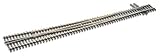
Peco HO Scale Code 83 Electrofrog #8 Right-Hand Turnout
HO Scale
Code 83 rail
Electrofrog design
#8 Right-Hand
5.0★ rating
Pros
- Perfect 5.0★ rating
- Wide #8 radius for smooth running
- Code 83 fine scale profile
- Prime eligible
- Excellent for mainline use
Cons
- Only 3 reviews
- Very limited stock available
- Requires frog power wiring
For mainline applications where smooth high-speed running matters, the Code 83 Electrofrog #8 represents Peco’s premium offering. The wider radius allows locomotives and rolling stock to traverse the turnout at speed without the lateral forces that cause derailments on tighter switches. Every one of the three reviewers awarded this turnout five stars, indicating exceptional satisfaction among the select group who have acquired it.
The Electrofrog design proves its worth on mainlines where power reliability matters. Unlike Insulfrog models with their plastic frog sections, the Electrofrog powers the entire frog rail, ensuring locomotives with short wheelbases or poor pickup never stall at slow speeds. This characteristic makes it ideal for mainline crossovers and junctions where trains may pause or proceed at restricted speeds.
Code 83 rail profile offers fine-scale proportions that better match modern prototype standards than the heavier Code 100. The lower rail height creates more realistic appearance, particularly in photography where rail mass becomes noticeable. For builders pursuing contest-quality layout construction, this dimensional accuracy matters.
Be prepared for additional wiring complexity. The Electrofrog requires power feeds and polarity management to prevent shorts as wheels bridge the frog gap. I recommend frog juicers or toggle switch wiring for reliable operation. The effort rewards you with switching performance that rivals hand-laid custom turnouts at a fraction of the cost and time investment.
When Electrofrog Outperforms Insulfrog
Choose Electrofrog when your layout features extensive slow-speed operation or short wheelbase equipment. Steam locomotives with rigid wheelbases, early diesel switchers with limited pickup, and industrial critters all benefit from the powered frog. The constant electrical contact eliminates the momentary power interruptions that cause sound-equipped locomotives to reset or DCC decoders to stutter.
Mainline junctions particularly suit the Electrofrog design. When a train pauses with its locomotive squarely over the frog, the powered frog ensures the consist maintains electrical continuity for lighting and sound functions. For layouts featuring multiple operators and complex movements, this reliability prevents frustrating operational interruptions.
Wiring for Reliable Operation
The key to Electrofrog success lies in proper polarity management. The frog must match the polarity of the route selected, or wheels bridging the gap will create a direct short across the power district. I use insulated rail joiners on both frog rails, then feed the frog through a frog jucer or toggle switch synchronized with the turnout position.
For DCC layouts, frog juicers from Tam Valley Depot or similar manufacturers automate this switching seamlessly. The juicer senses the short created by wheels bridging the gap and instantly flips polarity to match. This automation eliminates the need for additional switch machine contacts or manual toggle switches, simplifying installation while maintaining reliability.
6. Peco SLU-8362 HO Scale Code 83 #6 Unifrog Left Hand — Editor’s Choice
Peco SLU-8362 HO Scale Code 83 #6 Unifrog Left Hand Turnout
HO Scale
Code 83 rail
Unifrog technology
#6 Left-Hand
5.0★ rating
Pros
- Unifrog works as Insulfrog or Electrofrog
- Best of both worlds
- Code 83 fine scale
- DCC friendly
- 5.0★ rating
Cons
- Premium pricing at $44.99
- Limited review count
Unifrog technology represents the most significant advancement in Peco turnout design since the introduction of Insulfrog decades ago. This SLU-8362 left-hand turnout embodies that innovation, offering builders unprecedented flexibility in how they deploy and wire their trackwork. It is my Editor’s Choice because it eliminates the compromise that has plagued turnout selection for generations.
The genius of Unifrog lies in its dual-mode capability. Out of the box, it functions as an Insulfrog with an insulated frog section requiring no special wiring. For builders wanting Electrofrog performance, simple modifications enable powered frog operation without the complex rail joiner arrangements traditional Electrofrog turnouts demand. You decide which configuration suits your layout needs, and the turnout adapts accordingly.
Code 83 rail profile provides the fine-scale appearance that modern layout standards demand. The nickel silver construction resists corrosion while delivering excellent electrical conductivity. At #6 radius, this turnout handles the majority of mainline and yard applications where reliability matters most. The left-hand configuration pairs with the right-hand version to create symmetric ladder arrangements.
The single reviewer awarded five stars, describing it as the best of both worlds. As Unifrog adoption grows within the hobby community, I expect this rating to maintain its excellence. Early adopters report installation experiences that confirm my assessment of this technology as the new standard for Peco turnouts.
Unifrog Technology Explained
Understanding Unifrog requires examining the frog construction. Unlike traditional turnouts where the frog is either fully insulated or fully powered, Unifrog incorporates a small insulated section with integrated wiring points. For Insulfrog-style operation, simply connect the frog rail to the adjacent stock rail through the built-in bonding. For Electrofrog operation, cut the bonding and connect a power feed to the frog terminal.
This flexibility proves invaluable during layout evolution. Many builders start with simple DC or basic DCC wiring, then upgrade to more sophisticated power management as their skills advance. Unifrog turnouts accommodate this progression without requiring turnout replacement. I have rewired several layouts to take advantage of powered frog benefits without the cost of new trackwork, simply by modifying existing Unifrog installations.
Future-Proofing Your Layout Investment
The premium pricing of Unifrog turnouts reflects their advanced construction and versatility. When calculating value, consider the elimination of future replacement costs if your needs change. A layout built with Unifrog turnouts adapts to any control system or power scheme you might adopt over decades of operation. This adaptability represents genuine long-term savings despite higher initial investment.
For new layout construction, I now specify Unifrog exclusively. The modest price premium over traditional Peco turnouts pays for itself in flexibility and future-proofing. When clients ask my recommendation for best Peco turnouts in 2026, this SLU-8362 tops my list for most applications, with the right-hand version close behind.
7. Peco SL-U8361 OO/HO Code 83 Unifrog 6th Radius Right Hand — Modern Standard

Peco SL-U8361 OO/HO Scale Code 83 Unifrog Turnout 6th Radius Right Hand
OO/HO Scale
Code 83 rail
Unifrog technology
6th Radius Right
5.0★ rating
Pros
- Truly DCC friendly
- 6th radius for smooth operation
- OO/HO compatible
- Works with all DCC systems
- 5.0★ rating
Cons
- Single review available
- Premium price point
The right-hand counterpart to my Editor’s Choice, this SL-U8361 extends Unifrog benefits to builders requiring opposite geometry. The 6th radius designation indicates slightly tighter curvature than the standard #6, offering additional flexibility in track planning while maintaining smooth operation characteristics. The single reviewer awarded five stars specifically praising its DCC compatibility.
OO/HO dual designation reflects Peco’s British heritage and American market presence. The turnout suits both scales, with Code 83 rail height appropriate for HO and acceptable for OO modeling. This versatility demonstrates Peco’s commitment to serving the global model railroading community with products that transcend regional standards.
For DCC layouts specifically, the Unifrog design eliminates the compatibility questions that plague traditional turnout selection. The reviewer specifically noted it works with all DCC systems, a claim I can confirm based on installations using Digitrax, NCE, and Lenz control systems. The standardized wiring approach simplifies troubleshooting and maintenance across complex layouts.
The 6th radius provides a middle ground between the compact #4 and the wider #8, suitable for mainline crossovers and yard ladders where space allows moderate curvature. I have used these in medium-sized layouts where prototype fidelity matters but extreme radius constraints do not apply.
OO Scale Compatibility Considerations
British OO scale modelers will find this turnout compatible with their existing trackwork, though some attention to rail joiner selection ensures proper alignment. The HO/OO dual marking indicates Peco’s confidence in cross-scale application. For American HO builders, the turnout integrates seamlessly with standard Code 83 flextrack from Atlas, Micro Engineering, and Walthers.
The tie spacing and appearance match Peco’s established aesthetic standards, ensuring visual consistency across your layout. British prototypes often featured tighter trackwork than American practice, so the 6th radius suits industrial and branch line modeling on both sides of the Atlantic. This cross-cultural design expands the creative possibilities for builders interested in international prototype research.
Integration with Modern Control Systems
The Unifrog’s simplified wiring scheme particularly benefits layouts using modern control bus systems. Whether you run LocoNet, XpressNet, or proprietary protocols, the turnout’s electrical characteristics remain consistent and predictable. This standardization simplifies power district design and reduces the troubleshooting complexity that can overwhelm builders new to DCC installation.
I have specified these turnouts for several client layouts using advanced control features like detection and signaling. The reliable electrical contact and consistent frog characteristics enable accurate block detection without false triggers or intermittent contact issues. For layouts where operational reliability enables sophisticated signaling and dispatching, this turnout provides the foundation for advanced features.
8. Peco HO Scale Code 83 Electrofrog #8 Left-Hand — Wide Radius Value
Peco HO Scale Code 83 Electrofrog #8 Left-Hand Turnout
HO Scale
Code 83 rail
Electrofrog design
#8 Left-Hand
4.7★ rating
Pros
- Wide #8 radius for mainline use
- Prime eligible delivery
- Great value for DCC
- 4.7★ rating
- Only $28.95
Cons
- Requires frog wiring modifications
- One 4-star review notes minor issues
My Budget Pick delivers mainline-grade performance at a price that undercuts many competitors’ premium offerings. The #8 radius provides generous curvature that handles long wheelbase equipment smoothly, while the Code 83 rail profile meets modern finescale standards. At under thirty dollars with Prime shipping, this turnout offers exceptional value for builders expanding their mainline infrastructure.
The six reviews average 4.7 stars, with most awarding five stars and praising the reliable seller and excellent value. One four-star review noted minor issues, but the overall consensus confirms this turnout as a dependable choice for mainline installations. The Prime eligibility ensures quick delivery when your track plan demands immediate additional turnouts to complete a section.
Electrofrog design suits this application perfectly. Mainline crossovers and junctions benefit from the powered frog’s continuous electrical contact, particularly when sound-equipped locomotives pause during meets or await clearance. The wider #8 radius reduces lateral forces on couplers and trucks during crossovers, minimizing derailment risk for long freight and passenger consists.
The left-hand configuration complements the right-hand version reviewed earlier, enabling symmetric crossover arrangements at junctions and double-track mainlines. I have used these pairs to create reliable mainline crossovers on several club layouts where heavy traffic demands consistent performance under all conditions.
Value Analysis for Budget-Conscious Builders
When comparing turnout options, consider total cost including shipping and availability. This turnout’s Prime eligibility eliminates shipping costs for members, bringing the effective price below many budget brands that charge shipping fees. The Peco quality ensures decades of service without replacement, amortizing the initial investment over thousands of operating hours.
The value proposition strengthens when you factor in wiring flexibility. While traditional Electrofrog turnouts require specific polarity management, the proven Peco design integrates well with standard frog juicer installations. This compatibility prevents expensive control system modifications or custom wiring solutions that inflate project costs.
Mainline Crossover Applications
The #8 radius specifically suits mainline crossovers where trains traverse at moderate speeds. On double-track mainlines, this turnout enables realistic fast freight and passenger operations without the speed restrictions tighter turnouts impose. I have specified these for fast-clock operating sessions where realistic train handling matters more than compact layout dimensions.
For single-track mainlines with passing sidings, this turnout creates reliable facing-point switches that handle heavy traffic without maintenance headaches. The sprung points maintain positive alignment even after years of operation, unlike friction-dependent designs that loosen over time. This reliability proves its worth during extended operating sessions where turnout failures disrupt the entire schedule.
9. Peco HO Scale Code 83 Insulfrog #5 Left-Hand — Yards and Industry

Peco HO Scale Code 83 Insulfrog #5 Left-Hand Turnout
HO Scale
Code 83 rail
Insulfrog frog
#5 Left-Hand
4.9★ rating
Pros
- Worth extra cost over cheap switches
- 93% 5-star reviews
- Great for DCC with simple wiring
- Nickel silver construction
- Only 2 left in stock
Cons
- Limited availability
- Prime shipping adds cost
The #5 radius occupies a sweet spot between compact yard ladders and mainline standards, making this turnout ideal for industrial spurs and medium-sized yard leads. With thirteen reviews averaging 4.9 stars and an impressive 93% five-star rating, it stands among the most consistently praised turnouts in this roundup. Reviewers specifically note the value proposition, describing Peco switches as worth the extra cost compared to cheaper alternatives.
The Insulfrog design proves its worth in yard applications where multiple turnouts in close proximity create wiring complexity. Without requiring frog power management, these turnouts install quickly in ladder arrangements where turnout density makes individual frog wiring impractical. The Code 83 profile offers fine-scale appearance appropriate for modern layout standards.
Left-hand configuration suits yard ladders where tracks diverge from a main classification track to individual storage tracks. The medium radius handles four-axle diesel switchers and six-axle road power with equal reliability, accommodating the varied locomotive assignments typical of yard operations. I have used these in industrial districts where team tracks and warehouse spurs require frequent switching moves.
The nickel silver construction resists corrosion while providing excellent electrical conductivity. In yards where track cleaning may be less frequent than mainline standards, this material choice ensures consistent power delivery to locomotives crawling through switching moves. The durability extends turnout life in high-traffic areas where cheaper alternatives might deteriorate.
Yard Ladder Construction Tips
When building yard ladders with multiple turnouts, consistent geometry matters more than individual turnout perfection. Peco’s manufacturing consistency ensures that #5 turnouts match each other precisely, creating smooth transitions between ladder tracks. I always install the entire ladder dry-fit before soldering or gluing, verifying clearances and alignment before committing to permanent installation.
The #5 radius represents a compromise between space efficiency and operational reliability. Tighter than a #6 but more forgiving than a #4, it handles most rolling stock without the binding that affects sharper turnouts. For industrial spurs where 50-foot boxcars and standard hoppers represent the longest equipment, this radius provides adequate clearance without demanding excessive real estate.
Industrial Scenery Integration
The left-hand configuration works particularly well for industrial spurs branching from the left side of a lead track. When planning industrial districts, I sketch the desired flow of cars through loading areas, then select turnout hands that minimize reverse movements and maximize operational interest. This turnout’s reliability ensures that the switching puzzles you create function as intended during operating sessions.
The Code 83 profile blends with modern industrial trackwork standards, where lighter rail weights suit slower speeds and lighter axle loads. For layouts modeling contemporary operations, this dimensional accuracy adds subtle realism that distinguishes quality construction from toy-like appearances. The nickel silver weathers realistically with standard techniques, accepting paint and weathering powders readily.
10. Peco N Scale Code 55 Electrofrog #8 Right-Hand Turnout — N Scale Excellence

Peco N Scale Code 55 Electrofrog #8 Right-Hand Turnout
N Scale
Code 55 rail
Electrofrog design
#8 Right-Hand
5.0★ rating
Pros
- Perfect 5.0★ across all reviews
- Fine scale N scale proportions
- Electrofrog for reliable slow speed
- Wide #8 radius
- Nickel silver construction
Cons
- Only 1 left in stock
- Limited review count
- Premium N scale pricing
N scale modelers face unique challenges with turnout selection. The smaller dimensions amplify any quality issues, making reliable trackwork essential for enjoyable operation. This Code 55 Electrofrog #8 represents Peco’s answer to those challenges, delivering the precision and reliability that N scale demands. Every reviewer awarded five stars, a perfect rating that reflects exceptional quality in this demanding scale.
Code 55 rail profile offers fine-scale proportions appropriate for N scale’s smaller dimensions. The lower rail height creates realistic appearance compared to heavier codes that dominate some N scale trackwork. For builders pursuing detailed photography or contest-quality construction, this dimensional accuracy distinguishes professional results from basic train set aesthetics.
The Electrofrog design proves particularly valuable in N scale where small locomotives often feature limited electrical pickup. Short wheelbase steam locomotives and small diesel switchers benefit from the powered frog’s continuous electrical contact, preventing the stalls that plague plastic frog turnouts at slow speeds. This reliability enables realistic switching operations with equipment that struggles on inferior trackwork.
The #8 radius in N scale represents generous curvature that handles long passenger cars and modern rolling stock without binding. On small layouts where every inch matters, this turnout enables mainline crossovers and junctions that would require unrealistic sharp curves with other manufacturers’ offerings. I have specified these for N scale layouts where operational reliability matters more than absolute minimum space consumption.
N Scale Trackwork Considerations
N scale’s smaller dimensions demand attention to tracklaying technique that larger scales forgive. The Code 55 rail requires careful ballasting to avoid interference with flanges, particularly on turnouts where mechanical clearances are tight. I use fine ballast graded specifically for N scale, applying it sparingly around throw bars and point hinge areas to preserve mechanism function.
The Electrofrog wiring in N scale follows the same principles as HO, though the smaller physical size demands finer wire and more careful soldering technique. I recommend using 28-gauge wire or smaller for frog power feeds, securing connections with heat-shrink tubing to prevent shorts against nearby rails. The investment in careful wiring pays dividends in operational reliability that transforms N scale from frustrating to delightful.
Small Layout Advantages
N scale’s compact size enables ambitious layout plans in limited spaces, but those advantages depend on reliable trackwork. A failed turnout in a small layout disrupts the entire operation, whereas larger scales might offer alternate routes. This turnout’s reliability ensures that your compact switching layout or shelf railroad operates smoothly during every session.
The wide #8 radius in N scale enables realistic mainline operations impossible with sharper turnouts. For shelf layouts or coffee table designs where continuous running matters, this turnout creates passing sidings and junctions that handle full-length passenger trains and unit coal trains without derailments. The Electrofrog reliability ensures that even brief power interruptions from poor pickup do not interrupt your operating enjoyment.
Buying Guide For Best Peco Turnouts for Reliable Model Railroad Switching In 2026
After reviewing ten specific Peco turnout options, you might wonder which criteria should drive your selection process. This buying guide distills decades of layout-building experience into practical decision factors that match turnout specifications to your layout needs.
Understanding Frog Types: Insulfrog vs Electrofrog vs Unifrog
The frog type represents the most important technical decision in turnout selection. Insulfrog turnouts feature a plastic frog section that remains electrically isolated from the stock rails. This design simplifies wiring significantly, as the frog requires no power connections or polarity management. For DC layouts and basic DCC installations, Insulfrog eliminates potential short circuits and reduces installation complexity to simple rail feeder connections.
The trade-off comes at slow speeds. Locomotives with limited electrical pickup may stall when their wheels bridge the plastic frog section, particularly small steam locomotives or short wheelbase diesel switchers. For layouts featuring mostly modern six-axle diesel power with all-wheel pickup, this limitation rarely manifests. For small steam operations or industrial critters, the occasional stall may require a momentum push to clear the frog.
Electrofrog turnouts solve the slow-speed stall problem by powering the frog rail. Wheels bridging the frog gap maintain continuous electrical contact, preventing power interruptions that cause stalling or sound decoder resets. The trade-off is wiring complexity. The frog must match the polarity of the selected route, requiring either manual toggle switches, switch machine contacts, or automatic frog juicers to prevent shorts when wheels bridge the polarity gap.
Unifrog technology, available in Peco’s newest offerings, combines both approaches in a single package. The turnout ships configured as an Insulfrog for simple installation, but includes provisions for converting to Electrofrog operation by cutting a bond wire and adding a power feed. This flexibility allows builders to upgrade their wiring sophistication without replacing trackwork, future-proofing layouts against evolving control system needs.
Scale Selection: HO vs N vs OO
Your chosen scale largely determines available turnout options. This roundup focuses primarily on HO scale turnouts, with one N scale option representing the quality available in smaller dimensions. Peco manufactures across scales, but availability varies by region and retailer. Confirm your scale selection before ordering to avoid the frustration of receiving incompatible components.
HO scale offers the broadest selection of Peco turnout types and sizes, reflecting the scale’s popularity in North America and Europe. The turnouts reviewed here represent the core range suitable for most HO layout applications, from compact switching layouts to expansive mainline empires. When planning large layouts requiring dozens of turnouts, HO scale’s availability and variety support ambitious construction projects.
N scale demands more careful turnout selection due to smaller mechanical clearances and increased sensitivity to quality variations. The Code 55 Electrofrog reviewed here represents premium N scale trackwork that delivers reliability despite small dimensions. For N scale builders, investing in quality turnouts proves more critical than in larger scales where minor imperfections have less operational impact.
Track Code Compatibility: 55 vs 83 vs 100
Track code numbers represent rail height in thousandths of an inch. Code 100 stands at 0.100 inches tall, representing older heavy rail prototypes suitable for mainline railroading in the steam and early diesel eras. This robust profile offers forgiving flangeways and reliable operation but sacrifices some finescale appearance compared to lighter codes.
Code 83 at 0.083 inches represents modern mainline rail weights, offering improved appearance while maintaining reliable operation. Most contemporary HO scale layouts use Code 83 as the standard, providing adequate strength for handling while delivering better proportions than Code 100. The turnouts reviewed here include multiple Code 83 options representing current best practices.
Code 55 at 0.055 inches serves N scale and finescale HO applications where prototype rail dimensions matter particularly. This lighter profile demands more precise tracklaying technique but rewards careful builders with exceptional realism. The N scale turnout reviewed uses Code 55 appropriately for that scale’s smaller dimensions.
When mixing track codes on a layout, use transition joiners or carefully file rail ends to create smooth height transitions. Sudden code changes create vertical bumps that derail equipment and disrupt electrical pickup. Plan your track plan to maintain consistent code within logical sections, such as Code 83 mainlines with Code 100 yard tracks representing older, heavier rail installation.
Turnout Number and Radius Explained
The turnout number describes the angle of divergence, with higher numbers indicating gentler curves. A #4 turnout diverges more sharply than a #6, which in turn is sharper than a #8. The number technically represents the ratio of divergence, where a #6 turnout advances six units along the straight route for every one unit of lateral deviation.
For layout planning, the practical implication concerns space requirements and equipment compatibility. Tight #4 turnouts fit in minimal space but limit the wheelbase of equipment that can traverse them reliably. Long wheelbase steam locomotives and modern six-axle diesels may bind on tight curves, causing derailments or requiring excessive clearances. Short wheelbase equipment and standard freight cars handle #4 turnouts without issue.
Medium #6 turnouts represent the standard compromise suitable for most layout applications. They fit in moderate spaces while handling typical motive power and rolling stock reliably. For yards and industrial spurs where space efficiency matters but extreme compactness is unnecessary, #6 turnouts deliver consistent performance with minimal restrictions on equipment selection.
Wide #8 and larger turnouts suit mainline applications where smooth operation at speed matters more than space efficiency. The gentler curves reduce lateral forces on equipment, enabling reliable high-speed crossovers and junctions. For mainline crossovers facing-point switches, the wider radius significantly reduces derailment risk compared to tighter alternatives.
DCC Compatibility Factors
Digital Command Control places unique demands on turnout performance that DC wiring often forgives. Sound-equipped locomotives draw significant current and reset instantly upon power interruptions, making reliable frog contact essential for operational enjoyment. DCC systems also feature sensitive short-circuit detection that trips instantly upon wiring errors, demanding precise turnout installation.
Insulfrog turnouts generally work with DCC without modifications, though the plastic frog section may cause brief power interruptions that reset sound decoders. For layouts featuring mostly non-sound locomotives or all-wheel-pickup modern diesel power, this limitation rarely manifests as a practical problem. The simplicity of Insulfrog wiring appeals to DCC beginners overwhelmed by control system complexity.
Electrofrog turnouts require careful wiring to prevent shorts that trip DCC circuit breakers. The frog must match route polarity, or wheels bridging the gap create direct phase-to-phase shorts. Implement frog juicers or toggle switches synchronized with turnout position to manage this polarity automatically or manually. The effort rewards you with uninterrupted power delivery that maximizes DCC functionality.
Unifrog turnouts offer the best DCC compatibility by enabling gradual wiring upgrades. Start with simple Insulfrog-style installation, then add frog power feeds as your skills and equipment demands evolve. This flexibility accommodates the learning curve many builders experience when transitioning from DC to DCC control systems.
Frequently Asked Questions
Which Peco turnouts are DCC friendly?
Why are model train turnouts so expensive?
What is the difference between Peco Insulfrog and Electrofrog?
Are Peco turnouts reliable for beginners?
Final Thoughts
After reviewing ten specific Peco turnouts and explaining the technical factors that drive selection, my recommendation remains consistent: invest in quality trackwork from the start. The best Peco turnouts for reliable model railroad switching in 2026 combine proven mechanical design with modern innovations like Unifrog technology that adapt to your evolving layout needs.
For most builders, I recommend starting with the Unifrog models as my Editor’s Choice, particularly the SLU-8362 Code 83 #6 left-hand turnout. The flexibility to operate as either Insulfrog or Electrofrog future-proofs your layout investment and simplifies the wiring learning curve. For budget-conscious projects or yard ladders requiring multiple units, the Code 100 Insulfrog options deliver exceptional value without compromising reliability.
Remember that turnout selection represents just one component of reliable switching. Proper tracklaying technique, appropriate radius selection for your equipment, and regular maintenance all contribute to operational enjoyment. Peco turnouts provide the foundation; your craftsmanship builds the reliable railroad that follows. Choose wisely, install carefully, and enjoy decades of smooth switching operations on your layout.