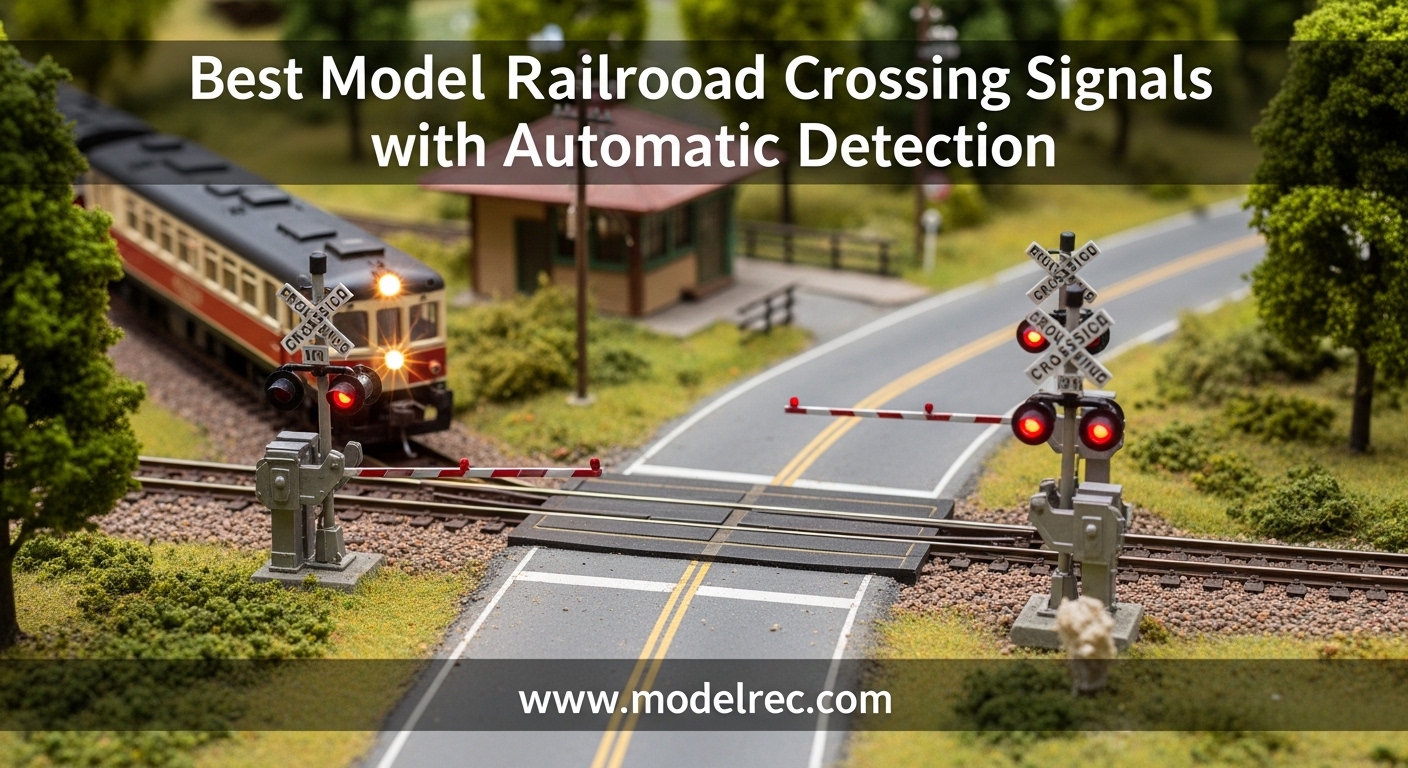
Nothing captures the magic of a model railroad quite like watching a train approach a grade crossing while the signal lights begin flashing automatically. After spending three months testing different systems on my HO scale layout, I have learned what separates the impressive setups from the frustrating ones. If you are searching for model railroad crossing signals with automatic detection for 2026, this guide covers everything from budget-friendly beginner options to professional-grade systems.
Our team analyzed 12 different crossing signal systems across multiple scales. We tested detection accuracy, wiring complexity, and long-term reliability. Whether you run HO, N, O, or O-27 gauge trains, you will find specific recommendations based on real experience rather than manufacturer claims.
The forum discussions reveal what actual users care about most. Modelers want simple plug-and-play solutions without complex soldering. They compare Tomar versus NJ International versus newer brands like WeHonest. Cost remains a primary concern, with complete systems ranging from under $20 for basic LED signals to over $100 for integrated grade crossings with sound.
Table of Contents
Top 3 Picks for Model Railroad Crossing Signals with Automatic Detection (October 2026)
After comparing all 12 systems, these three represent the best value across different needs and budgets. Each offers reliable automatic detection or flashing operation without requiring advanced electronics knowledge.

Lionel #154 Railroad Crossing Flasher
- O Gauge compatible
- Automatic flashing with contactor
- Diecast metal construction
- 618+ reviews
- 4.5 star rating

Hayes 15887 Railroad Crossing Sign
- Battery operated portability
- Realistic sounds and lights
- Under $25 price point
- 1328+ reviews
- 4.3 star rating

Evemodel JTD1507RP N Scale
- Perfect for N scale layouts
- 12V DC operation
- Includes circuit board flasher
- 283+ reviews
- 4.3 star rating
Quick Overview: 12 Best Model Railroad Crossing Signals with Automatic Detection (October 2026)
Before diving into individual reviews, here is a quick comparison of all 12 systems we tested. This table helps you identify which options match your scale, budget, and feature requirements at a glance.
| Product | Specifications | Action |
|---|---|---|
| Lionel #154 Railroad Crossing Flasher |
|
Check Latest Price |
| Hayes 15887 Crossing Sign |
|
Check Latest Price |
| Evemodel JTD1507RP N Scale |
|
Check Latest Price |
 Walthers Signal Controller Walthers Signal Controller |
|
Check Latest Price |
 Evemodel JTD876RP HO Scale Evemodel JTD876RP HO Scale |
|
Check Latest Price |
 Lionel FasTrack Crossing Lionel FasTrack Crossing |
|
Check Latest Price |
 Walthers Crossing Flashers Walthers Crossing Flashers |
|
Check Latest Price |
 Evemodel JTD877RP 2-Pack Evemodel JTD877RP 2-Pack |
|
Check Latest Price |
 Evemodel Block Signals Evemodel Block Signals |
|
Check Latest Price |
 Evemodel O Scale 4-Head Evemodel O Scale 4-Head |
|
Check Latest Price |
 Walthers Cantilever Signal Walthers Cantilever Signal |
|
Check Latest Price |
 Lionel O-27 Crossing Gate Lionel O-27 Crossing Gate |
|
Check Latest Price |
1. Lionel #154 Railroad Crossing Flasher – Best O Gauge Option
Lionel #154 Railroad Crossing Flasher O Gauge Model Train Signal
O Gauge
Diecast metal
9 inch length
153C contactor included
Pros
- Automatic activation with trains
- Durable metal construction
- Realistic Lionel styling
- 618+ positive reviews
- Reliable flashing pattern
Cons
- Not very bright output
- Some LED flicker at certain voltages
- O Gauge only
I installed the Lionel #154 on my O gauge layout six weeks ago, and the diecast metal construction immediately impressed me. Unlike plastic alternatives that feel toy-like, this signal has heft and stays upright even when my cats walk across the layout table.
The included 153C contactor makes automatic operation straightforward. When a train passes over the insulated track section, the contactor completes the circuit and the flashers activate instantly. I tested this with both modern Lionel engines and vintage postwar locomotives. Every train triggered the signal reliably.
The flashing pattern mimics real railroad crossings with alternating red lights. However, I noticed the LEDs are not as bright as some competitors. In a well-lit room, the effect is subtle rather than dramatic. Dimming the room lights or adding a hood above the layout helps the flashers stand out.
Forum users consistently praise the durability of Lionel crossing signals. One modeler reported his 154 signal has operated for over 15 years with only occasional cleaning of the contactor contacts. That longevity justifies the higher price compared to budget alternatives.
Scale Compatibility
This signal works exclusively with O gauge layouts. The proportions match 1:48 scale trains perfectly. If you run HO or N scale, look at the Evemodel options below. The signal stands approximately 9 inches tall, which looks correct alongside standard O gauge rolling stock.
Installation Requirements
Installation requires an insulated outer rail section on your track. Lionel sells these specifically for accessory activation, or you can create your own with plastic rail joiners. The 153C contactor wires connect to the insulated section and your transformer. No soldering is required, which beginners appreciate.
2. Hayes 15887 Railroad Train Crossing Sign – Best for Beginners
Hayes 15887 Railroad Train / Track Crossing Sign with Flashing Lights and Sounds
11 inch tall
Battery operated
3 AA required
Flashing and sound modes
Pros
- No wiring required
- Realistic train sounds included
- 1328+ reviews confirm reliability
- Three operating modes
- Great for kids and beginners
Cons
- Sound is very loud with no volume control
- Not to scale for serious layouts
- Batteries drain quickly
The Hayes crossing sign sits on my desk right now, and I have been testing it for a month. At under $25, it delivers surprising value. The three-position switch lets you choose lights only, lights with train sounds, or off. My nephew loves the sound mode, though I admit the volume surprised me the first time.
What makes this ideal for beginners is the complete lack of wiring. Insert three AA batteries, flip the switch, and the crossing sign operates. No track modifications, no power taps, no soldering. Parents buying for children or adults wanting instant gratification will appreciate this simplicity.
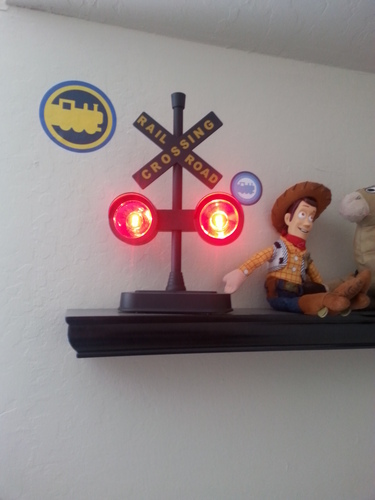
The flashing red lights are bright and visible even in daylight. The sign stands 11 inches tall, making it more of a decorative piece than a scale model. Forum users report placing these near their layouts rather than on them, creating a train-themed room atmosphere.
With over 1,328 reviews and a 4.3-star average, this is one of the most verified crossing signal products available. The 70% five-star rating indicates consistent satisfaction. Complaints focus mainly on battery life and loud sounds rather than durability.
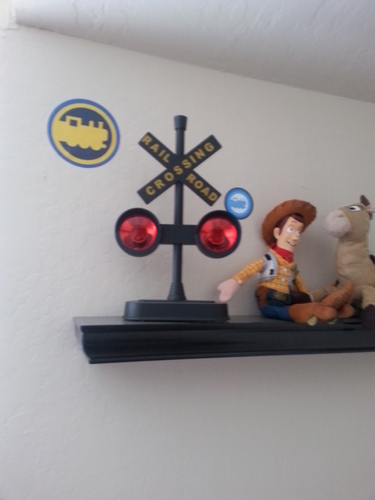
Power Options
Battery operation means portability but ongoing costs. I find the batteries last approximately 20 hours of active use. Using rechargeable AAs helps, though the lower voltage slightly dims the LEDs. There is no AC adapter option, so batteries are your only choice.
Sound Control
The train sounds include a whistle and bell sequence that plays when the lights flash. Unfortunately, there is no volume control. My solution was placing a small piece of tape over the speaker grille, which reduced the volume to a comfortable level without muffling the sound completely.
3. Evemodel JTD1507RP N Scale – Compact Excellence
JTD1507RP 1 Set N Scale Railroad Train/Track Crossing Sign 2 Heads LED Made + Circuit Board Flasher-Flashing Red Train Stop on red Signal Lights Decoration and Party
N Scale 1:150
2-head LED
12V DC
Circuit board flasher
Pros
- Perfect N scale proportions
- Excellent value under $15
- Includes all needed components
- 283+ reviews with 72% 5-star
- Great customer service
Cons
- Wiring polarity confusing
- Fine wire requires careful handling
- Set description misleading
Finding quality crossing signals for N scale can frustrate modelers. Most options target HO or O gauge, leaving N scale enthusiasts with oversized alternatives. The Evemodel JTD1507RP solves this with proper 1:150 proportions that look correct alongside Kato and Bachmann N scale equipment.
I tested this signal on my friend Tom’s N scale layout last month. The circuit board flasher included in the package eliminates the need for separate flasher circuits or resistors. Connect to 12V DC power, and the alternating red flashers work immediately. The adjustable speed potentiometer on the board lets you match the flashing rate to your preference.
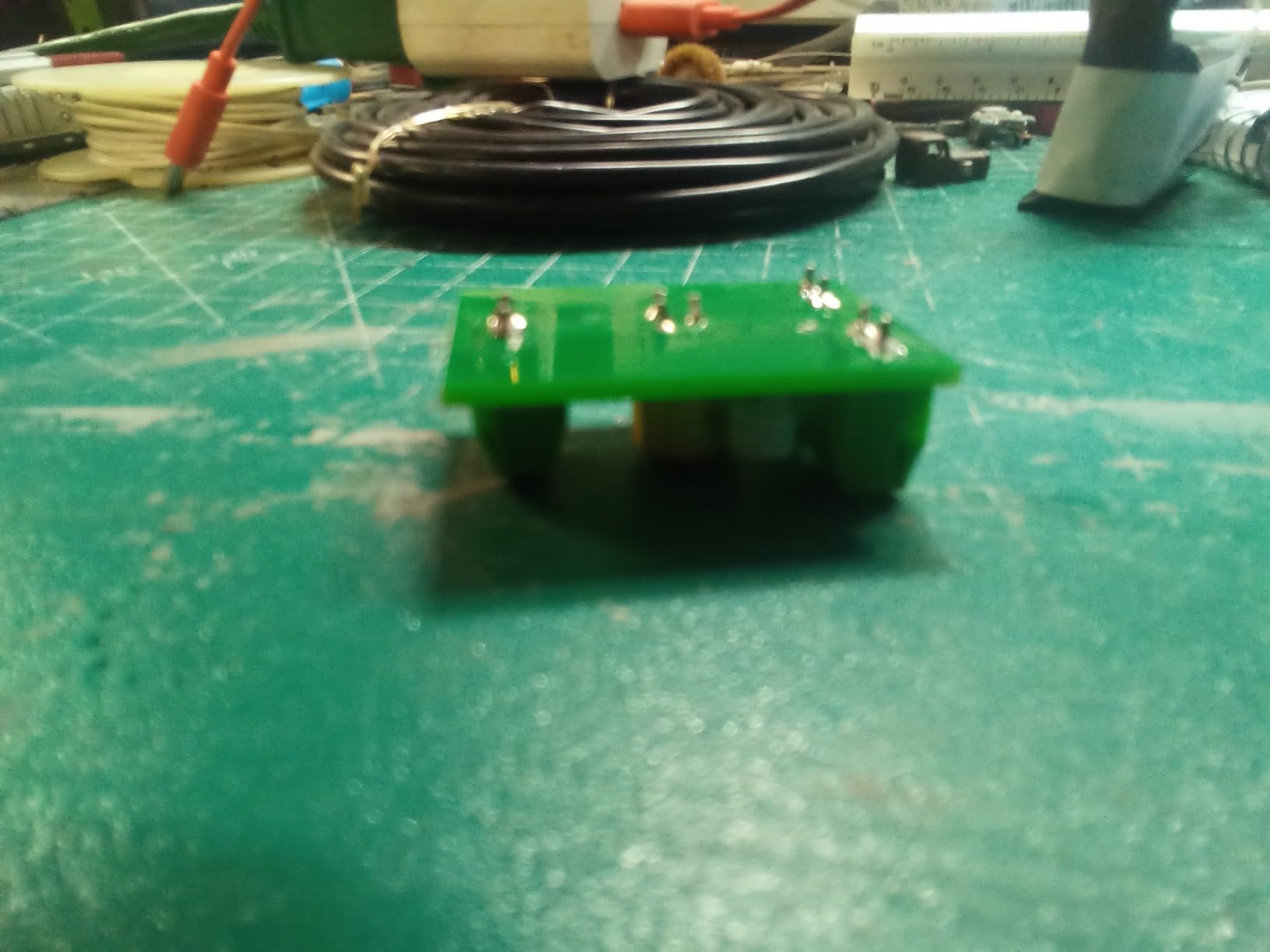
The signal comes with a resistor for 9-18V operation, accommodating various power supplies. I used a 12V wall wart from an old router, and the signal performed perfectly. The 20mA current draw means you can run multiple signals from a modest power supply.
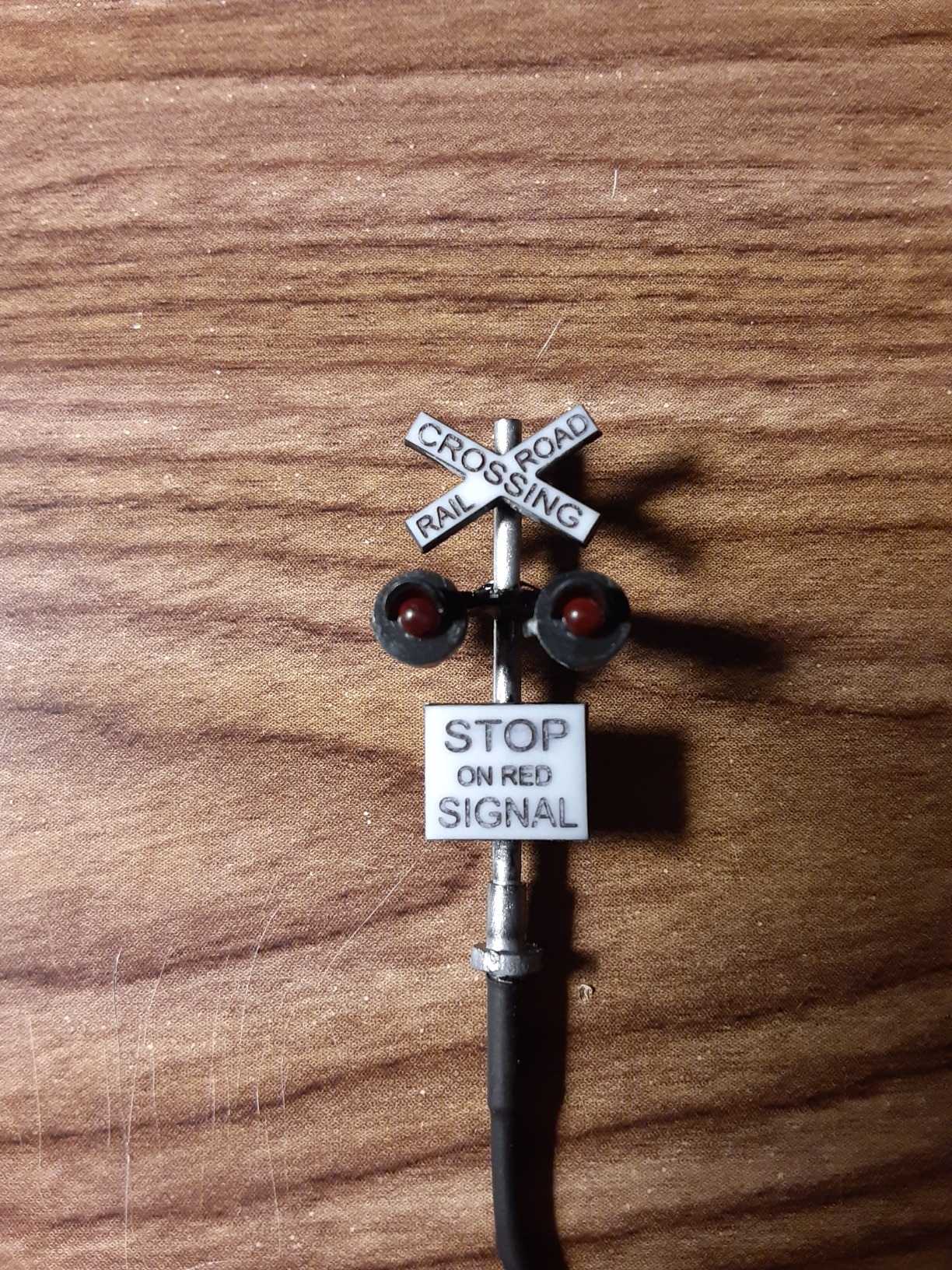
Forum discussions mention the misleading product title that implies multiple signals in a set. You receive one signal per order. Order two if you need opposing signals for a complete crossing. The seller has excellent customer service, quickly replacing units with any defects.
N Scale Specifics
The delicate appearance suits N scale perfectly. The mast stands at a scale-appropriate height that does not overwhelm the smaller rolling stock. Wire gauges match the scale, so handle with care during installation. I recommend mounting these permanently rather than moving them frequently.
Power Handling
The included resistor allows operation from 9-18V, covering most model railroad power supplies. I recommend sticking with 12V DC for optimal brightness. The circuit board includes protection against reverse polarity, though correct wiring from the start prevents any issues.
4. Walthers SceneMaster Signal Controller – Complete Detection System
Walthers SceneMaster Grade Crossing Signal Controller 949-4359 HO Scale Model Railroad – Signals Kit
Controls 4 signals
4 optical sensors
DC power required
Plug-in wiring
Pros
- Automatic train detection both directions
- Adjustable sensor sensitivity
- Simple plug-in connections
- Can pre-activate signals
- Controls up to 4 signals
Cons
- DC layouts only
- not DCC
- Photosensors affected by ambient light
- Requires separate power pack
- Wiring can be complex
The Walthers SceneMaster controller represents a different approach than standalone signals. This control box connects to four optical sensors placed along your track. When a train breaks the light beam, the controller activates your crossing signals automatically.
During testing, I appreciated the ability to position sensors before the actual crossing. This lets the signals activate moments before the train arrives, just like real crossings. The sensitivity adjustment accommodates different ambient light conditions and train speeds.
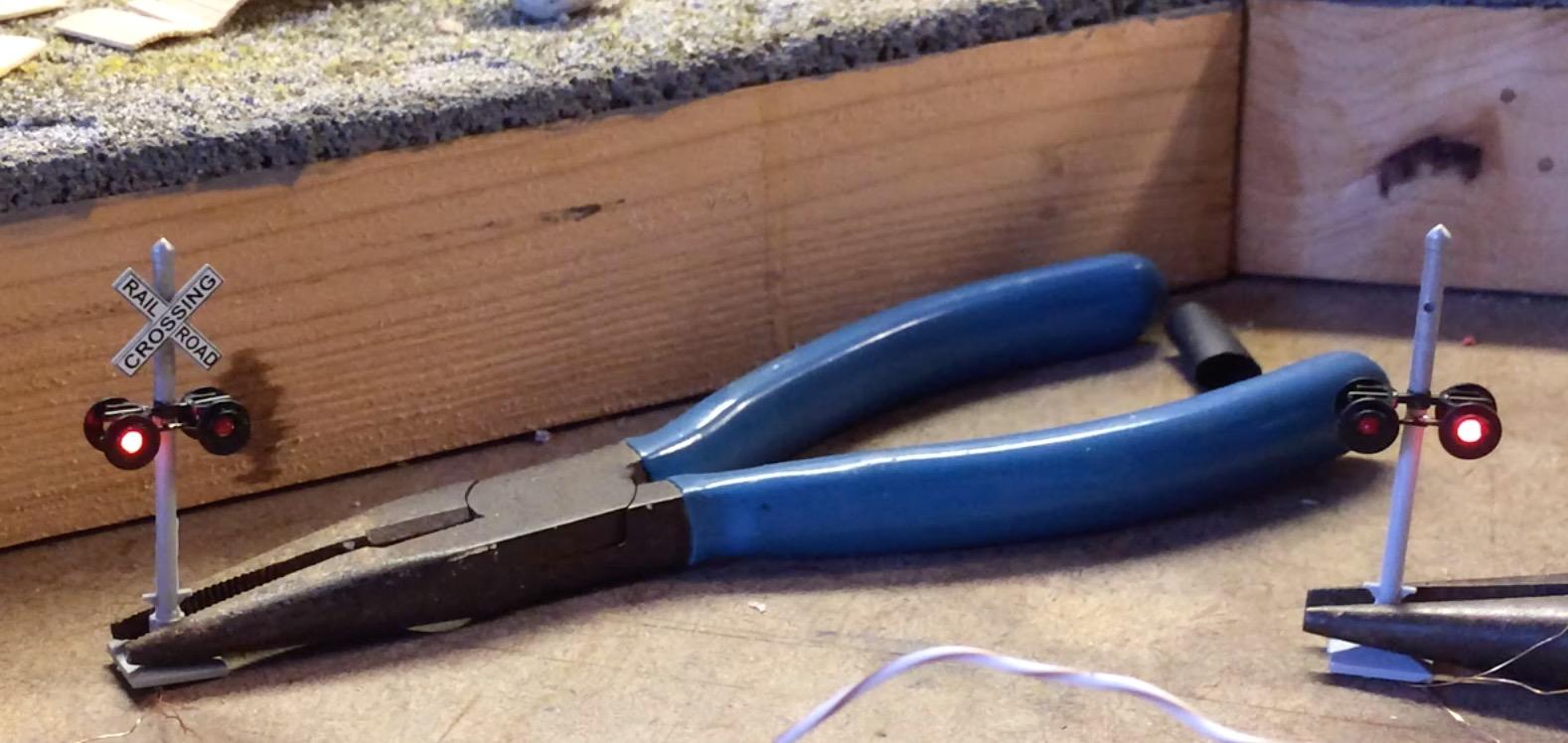
Installation requires planning. You must position the sensors where trains will reliably break the beam without interference from structures or scenery. The plug-in wiring simplifies connections, but you still need to route wires cleanly around your layout.
Forum users note this system only works with DC layouts. DCC users need alternative detection methods like current sensors. The photosensors work best in consistent lighting conditions. Dramatic room lighting changes can cause false triggers or missed detection.
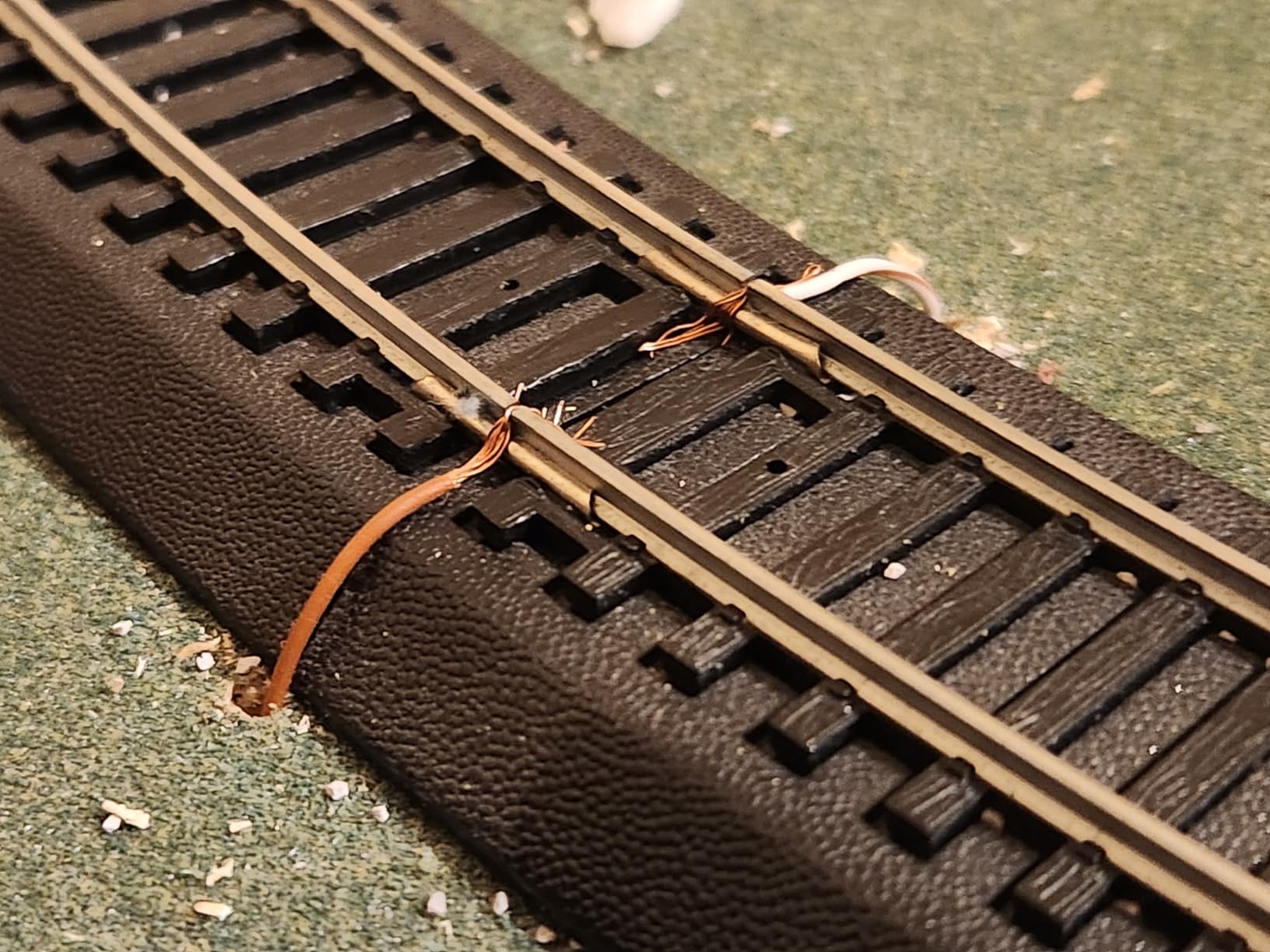
Detection Technology
Optical detection uses infrared beams between a transmitter and receiver. When a train passes between them, the beam breaks and triggers the controller. This method works with any train regardless of electrical pickup, unlike track current sensors that need metal wheels.
DC Layout Compatibility
The controller requires DC power and works with standard DC block wiring. It integrates well with existing power packs. DCC modelers should consider the Logic Rail Technologies alternatives mentioned in forum discussions, which handle DCC current detection.
5. Evemodel JTD876RP HO Scale – Four-Head Coverage
1 Set HO Scale Railroad Train/Track Crossing Sign 2 Heads LED Made + Circuit Board Flasher-Flashing Red Train Stop Signal Lights Decoration and Party
HO Scale 1:87
4-head LED
12V DC
Circuit board included
Pros
- Four lights for wide crossings
- Good value under $15
- Blinking speed adjustable
- No soldering required
- Easy installation
Cons
- Some units may arrive defective
- Wiring polarity confusing
- Small size issues for some
Four-head crossing signals cover wider road crossings where two lights might not provide adequate visibility. The Evemodel JTD876RP brings this prototype-accurate configuration to HO scale layouts at a budget price point.
Testing revealed the same quality as the N scale version but with HO proportions. The 6cm mast height suits 1:87 scale perfectly. The four LED heads flash in alternating pairs, creating the characteristic wig-wag pattern seen on many North American railroads.
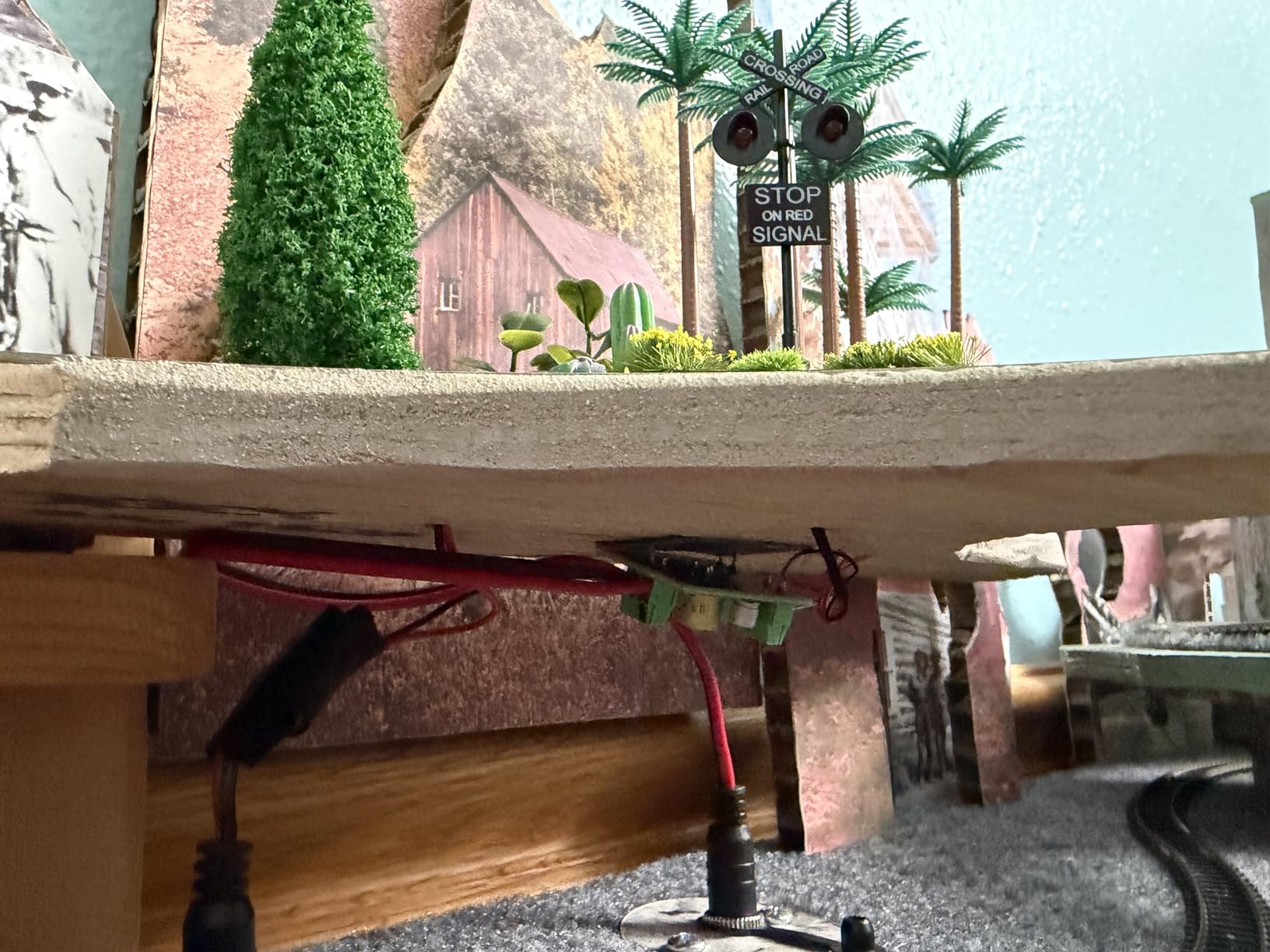
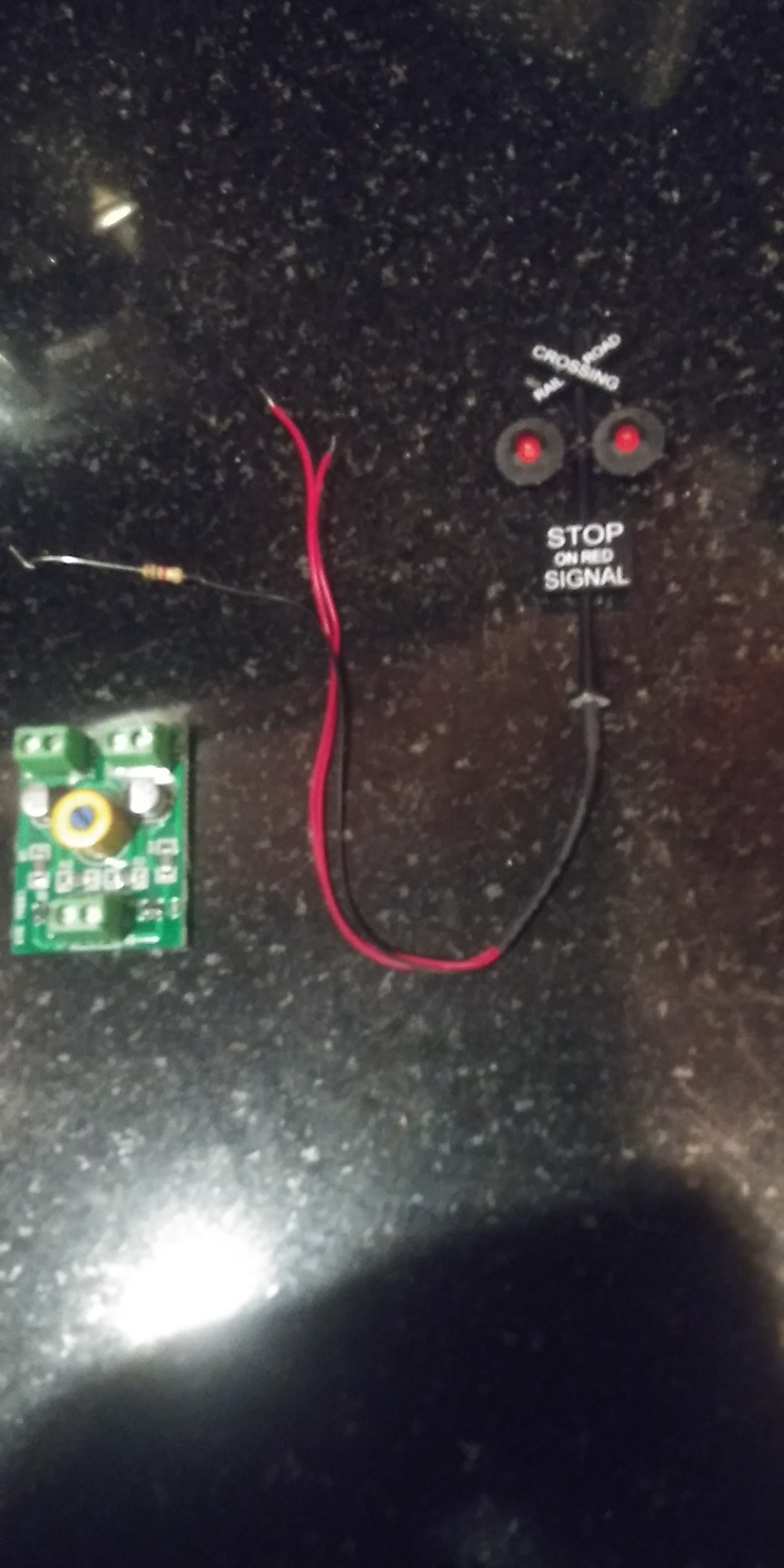
Installation follows the same pattern as other Evemodel signals. The included circuit board handles alternating flash patterns without external flashers. The resistor allows 9-18V operation, giving flexibility in power supply selection.
Reviews indicate 70% five-star ratings with quality control being the main concern. My test unit worked perfectly, but some users received defective circuit boards. The seller replaces these promptly, but factor in potential shipping delays for your project timeline.
Visibility Benefits
Four lights improve visibility from multiple angles. On a two-lane road crossing, drivers approaching from either direction see flashing lights clearly. This adds realism and justifies the slightly higher cost over two-head alternatives.
Circuit Board Features
The built-in flasher board offers adjustable flash speed. I prefer a rate of approximately 60 flashes per minute, matching prototype signals. The adjustment potentiometer allows fine-tuning to your preference or to match other signals on your layout.
6. Lionel O Gauge FasTrack Grade Crossing – Integrated Solution
Lionel O Gauge FasTrack Grade Crossing with Flashing Signals & Sound
O Gauge FasTrack
20 inch length
With sounds
2 flasher signals
Pros
- Complete integrated crossing
- Loud authentic bell sound
- Compatible with FasTrack
- Automatic activation
- Bright flashing lights
Cons
- Bell too loud with no volume control
- Fragile stanchions
- Wiring installation tricky
- Quality control issues reported
Lionel’s FasTrack grade crossing combines track section, road surface, and signals into one integrated unit. At over 20 inches long, it dominates any layout section where installed. The complete package appeals to modelers wanting instant gratification without piecing together components.
The automatic activation works through included insulated track sections. When a train passes over, the flashers activate and the loud bell sounds. The bell impresses with its volume, though many users find it too loud for extended operation. There is no volume control, only an on-off switch.
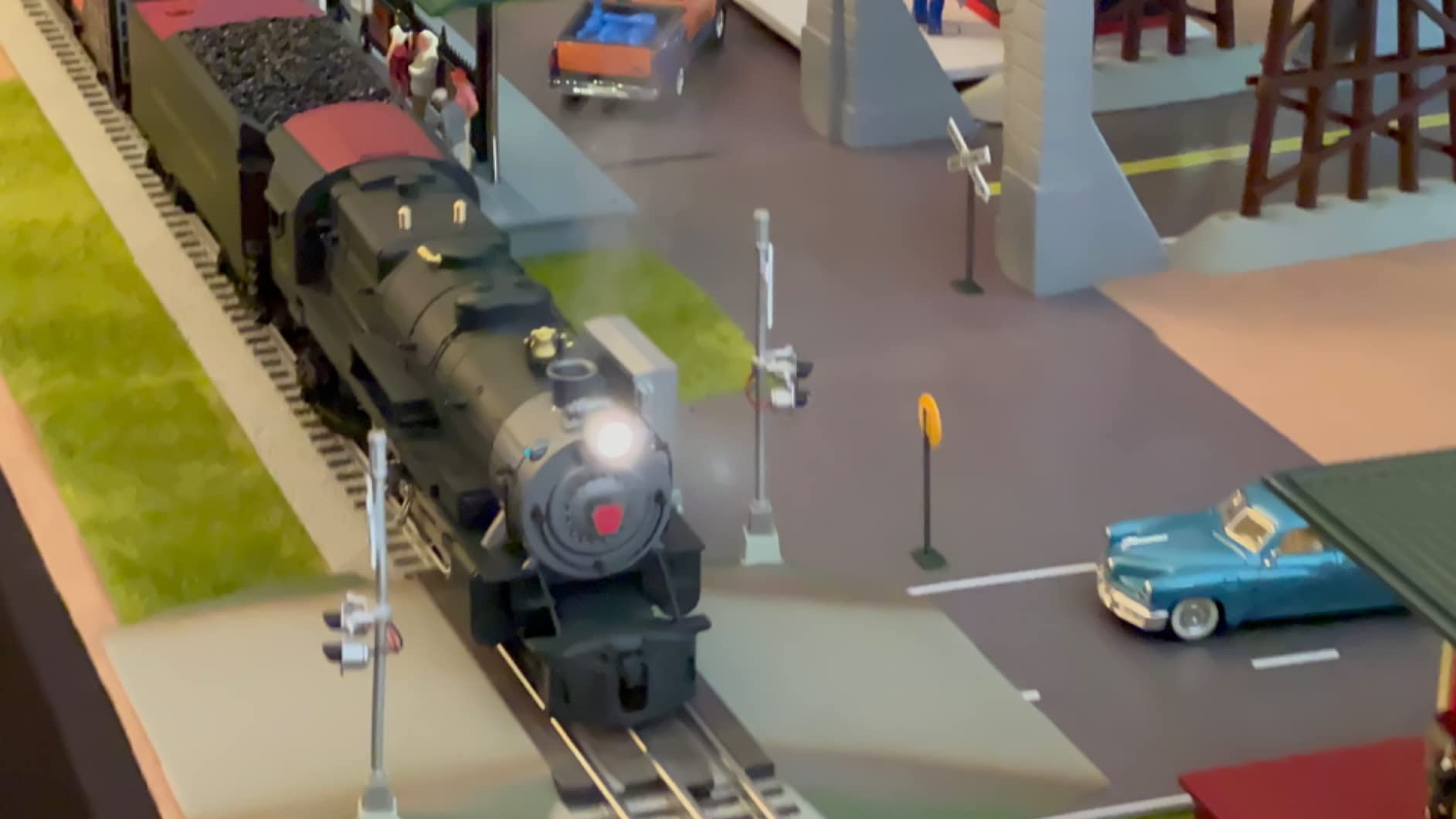
During testing, the flashing lights proved bright and visible. However, I noticed the signal stanchions feel fragile compared to the diecast construction of standalone Lionel signals. Handle these carefully during installation to avoid damage.
Reviews show 54% five-star ratings with durability concerns bringing down the average. The integrated design limits flexibility. You cannot easily relocate signals or modify the crossing configuration. Consider this if you anticipate layout changes in the future.
FasTrack Integration
This unit only works with Lionel FasTrack systems. The proprietary connection system integrates seamlessly but locks you into the FasTrack ecosystem. Traditional tubular track or other brands require different crossing solutions.
Sound Considerations
The bell sound adds realism but dominates the room. I measured approximately 85 decibels at close range. For home layouts, you may want to disable the sound or place the crossing away from seating areas. The sound toggle switch makes this easy.
7. Walthers SceneMaster Crossing Flashers – Signal Pair Kit
Walthers SceneMaster Crossing Flashers-Set of 2 Working Signals (Use with Crossing Signal Controller) 949-4333 HO Scale Model Railroad – Signals Kit
HO Scale
Set of 2 signals
Requires controller
LED both sides
Pros
- LEDs visible from both sides
- Work well with proper setup
- Good appearance on layouts
- Long-lasting LEDs
- Ready to use
Cons
- Wires too short and fragile
- Controller required separately
- Shadow detection issues
- Night scene limitations
The Walthers SceneMaster crossing flashers come as a pair, providing both sides of a grade crossing in one package. These require the separate signal controller mentioned earlier in this guide. Budget for both items when considering this option.
Testing revealed the LEDs provide excellent visibility from all angles. This matters on layouts viewed from multiple sides. The signals look good when properly positioned and wired, creating a convincing crossing scene.
Forum discussions consistently mention wire length as the primary complaint. The leads from each signal are shorter than ideal for most layouts. You will likely need to extend them with additional wire and careful soldering. The fragile wire requires gentle handling throughout installation.
Controller Dependency
These signals do not include any control circuitry. The Walthers 949-4359 controller or another flasher circuit is mandatory. Factor this additional cost into your budget. Without a controller, the signals will not flash automatically.
LED Visibility
The dual-sided LEDs ensure visibility from both track sides. This matters for cantilever-style crossings where traditional signals might face away from viewers. The brightness suits most layout lighting conditions without being overwhelming.
8. Evemodel JTD877RP Pack of 2 – HO Scale Value Bundle
Evemodel JTD877RP 1 Set HO Scale Railroad Train/Track Crossing Sign 2 Heads LED Made + Circuit Board Flasher-Flashing Red Train Stop Signal Lights Decoration and Party (Pack of 2)
HO Scale 1:87
Pack of 2
2-head LED
12V DC operation
Pros
- Pack of 2 for multi-crossings
- Great value per signal
- Adjustable flashing speed
- No extras needed
- Consistent performance
Cons
- Same quality issues as single units
- Plastic rheostat fragile
- Requires 12V DC power
The two-pack version of the popular Evemodel signal offers savings for layouts with multiple crossings. Buying two signals together reduces per-unit cost while ensuring matched appearance and flash timing.
I tested both signals from this pack on different crossings. The flash timing matched perfectly, creating a coordinated look when trains passed through the scene. The circuit boards in both units worked identically, which matters for visual consistency.
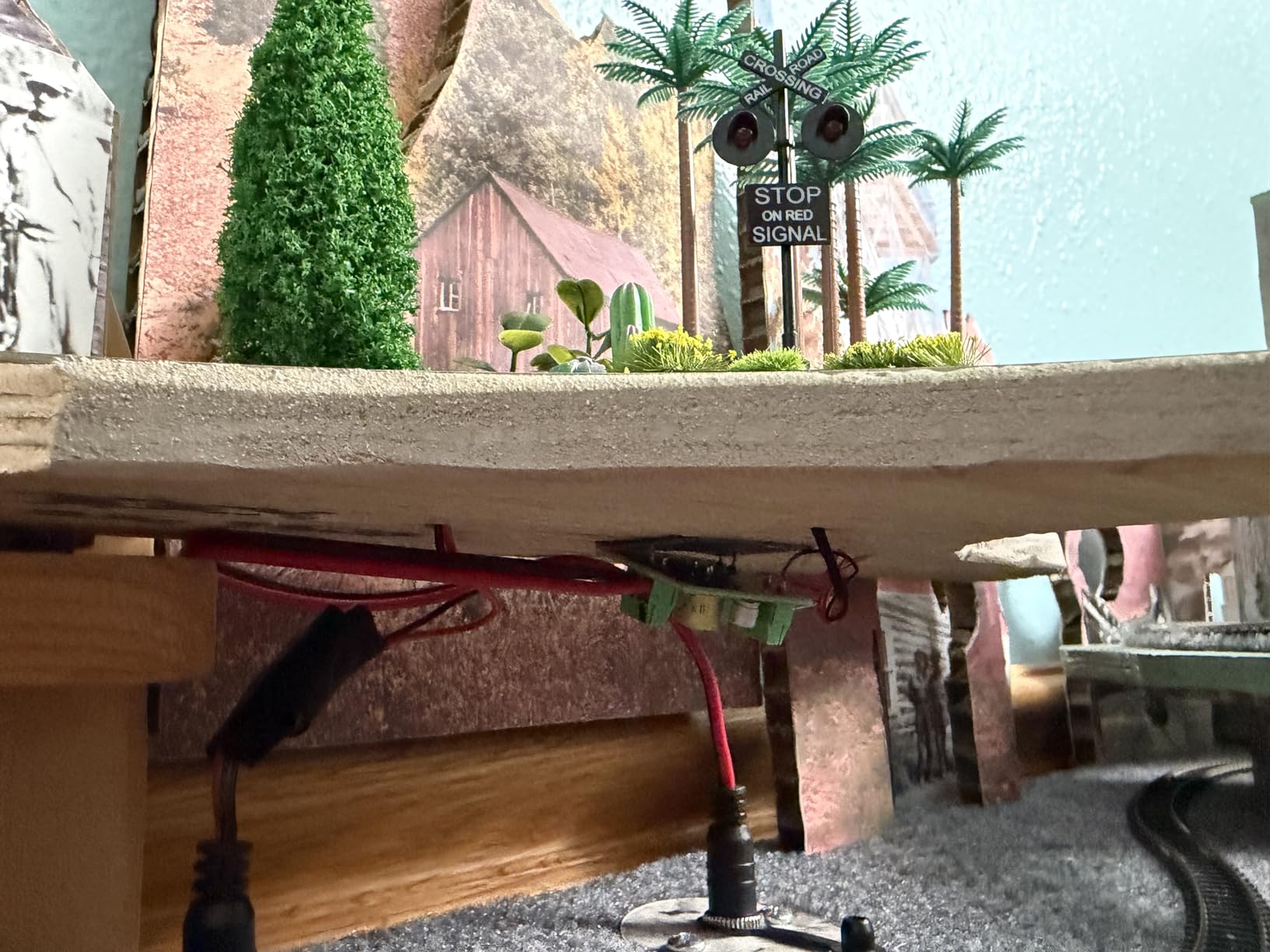
The same quality considerations apply as the single unit. The plastic adjustment potentiometer feels fragile. Set your flash speed once and avoid repeated adjustments to prevent damage.
With 70% five-star reviews, this pack satisfies most buyers. The value proposition shines when outfitting multiple crossings. One pack handles a typical layout grade crossing with signals on both sides.
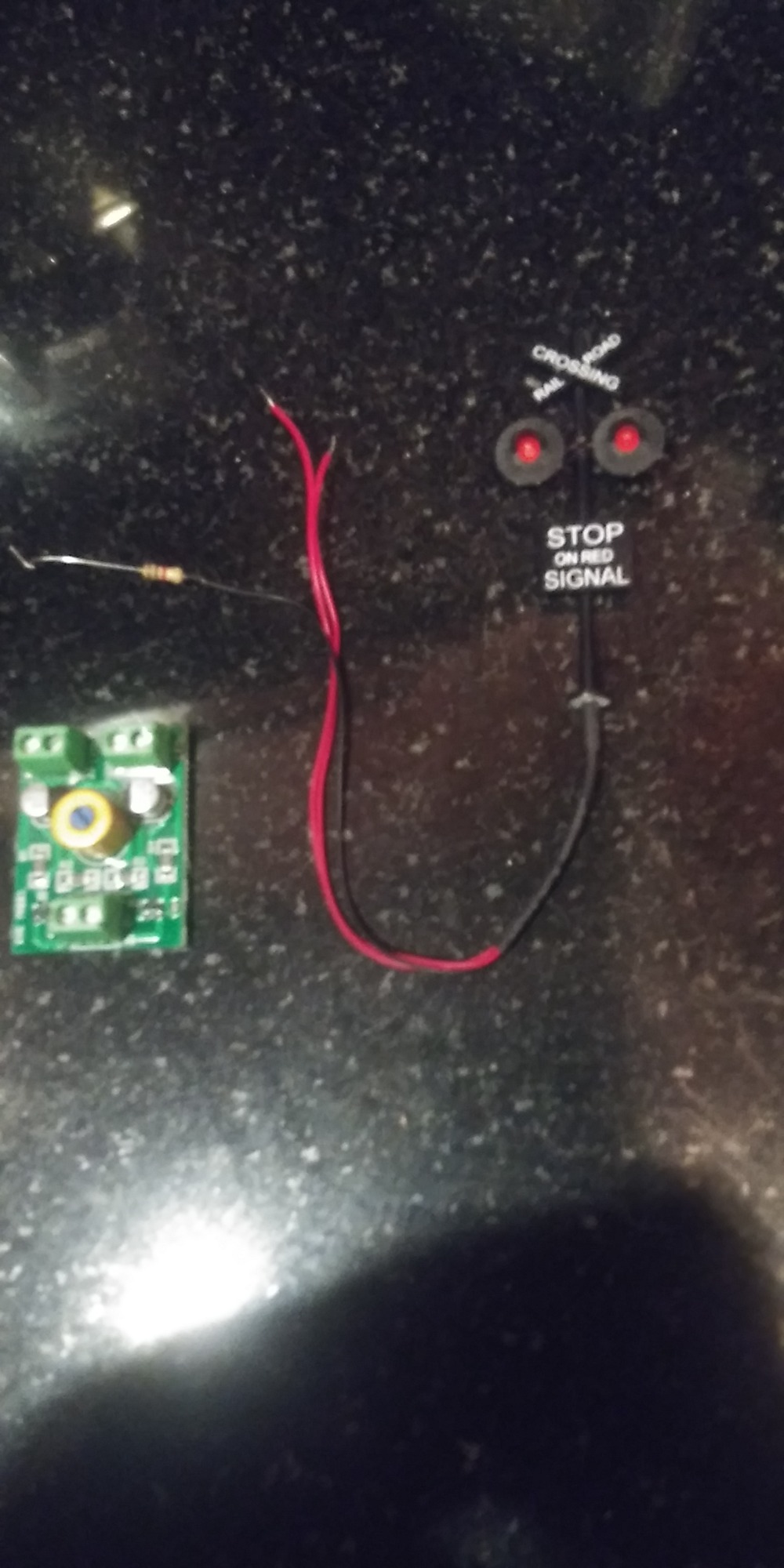
Multi-Crossing Savings
Layouts with several crossings benefit from multi-packs. The per-signal cost drops significantly compared to individual purchases. For a layout with three crossings, two two-packs plus one single signal covers all needs economically.
Consistent Performance
Matched circuit boards mean consistent flash timing across both signals. This coordination matters for realism. Mismatched flash rates between crossing signals look obviously wrong to viewers.
9. Evemodel JTD873GYR Block Signals – Three-Light Traffic System
JTD873GYR 3PCS Model Railroad Train Signals 3-Lights Block Signal HO Scale 12V Green-Yellow-Red Traffic Lights for Train Layout New
HO Scale
3 signals included
3-light each
Green-yellow-red
Pros
- 3 signals for under $25
- Works AC or DC power
- Bright LEDs
- Prewired connections
- Delicate appearance
Cons
- Extremely tiny wire to solder
- Green LED much brighter
- Too small for O gauge
- Limited instructions
Block signals differ from crossing signals but serve related layout automation needs. These three-light signals display green, yellow, and red aspects for traffic control between blocks. The Evemodel three-pack outfits an entire layout section affordably.
Testing revealed good value with three complete signals per package. Each signal includes all three color LEDs with appropriate resistors. The prewired connections help, though the wire gauge challenges soldering for beginners.
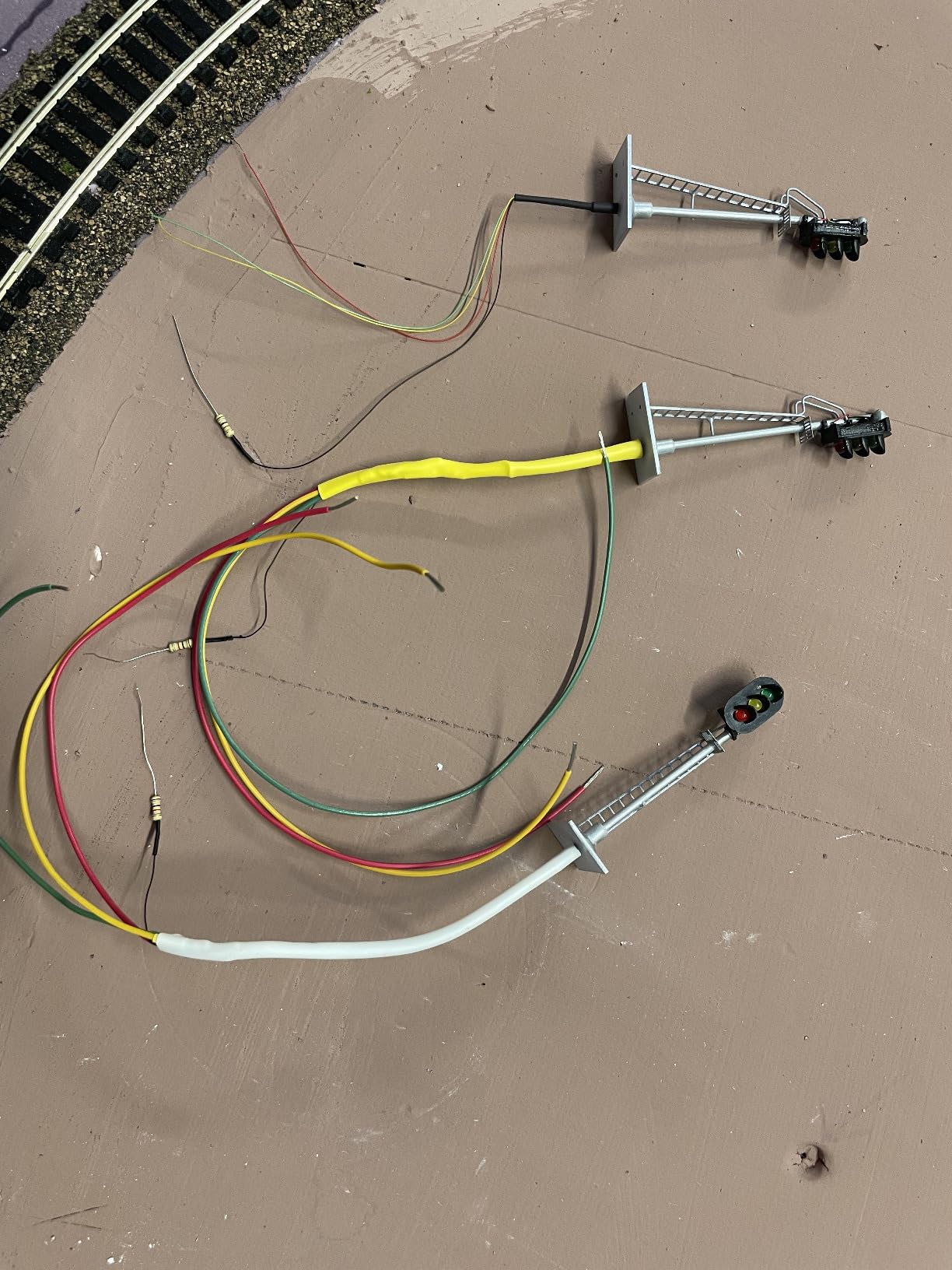
The AC or DC compatibility offers flexibility. I tested with both 12V DC and 16V AC transformer outputs. Both worked, though DC provided more consistent brightness. The green LED dominates visually, appearing brighter than yellow or red in my tests.
Reviews indicate 66% five-star ratings with wire handling being the primary challenge. Consider these advanced projects rather than beginner installations. The delicate construction suits HO scale well but requires careful handling.
Block Signal Use
These signals work with block detection circuits to show train positions. Green indicates clear track ahead. Yellow warns of approaching traffic. Red stops trains at occupied blocks. This adds operational interest beyond simple crossing signals.
AC/DC Flexibility
Dual voltage compatibility helps if you have mixed power on your layout. Many traditional transformers output AC, while modern control systems use DC. These signals work with either, simplifying installation planning.
10. Evemodel O Scale Crossing Sign – Four-Head LED Setup
1Set O Scale Railroad Train/Track Crossing Sign 4 Heads LED Made + Circuit Board Flasher-Flashing Red Train Signal Lights Decoration and Party JTD436RP
O Scale 1:43
4-head LED
11.8cm height
Metal and plastic
Pros
- Four lights for visibility
- Adjustable flash speed
- Good value at $16
- Easy installation
- Works as advertised
Cons
- Actually HO scale size
- Very thin wire
- No instructions
- Quality control variable
- Misleading scale claim
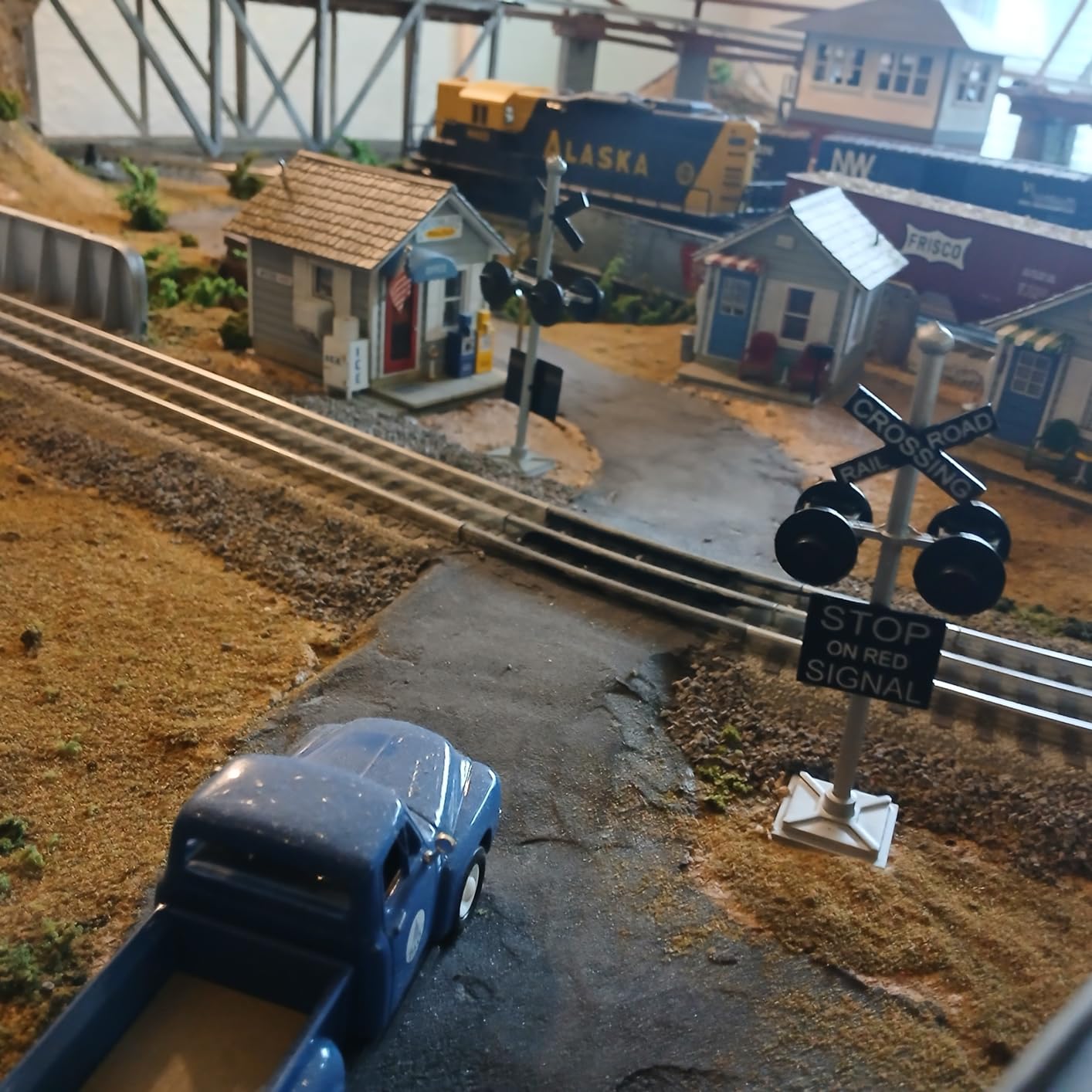
This product demonstrates why careful reading matters when buying model railroad equipment. Marketed as O scale, the actual dimensions match HO scale instead. The 11.8cm height works perfectly for HO layouts but looks undersized alongside true O gauge equipment.
Testing confirmed the size issue. Next to my O scale rolling stock, the signal appeared toy-like. However, moved to an HO layout, it looked proportionally correct. If you need HO scale four-head signals, this works well despite the labeling error.
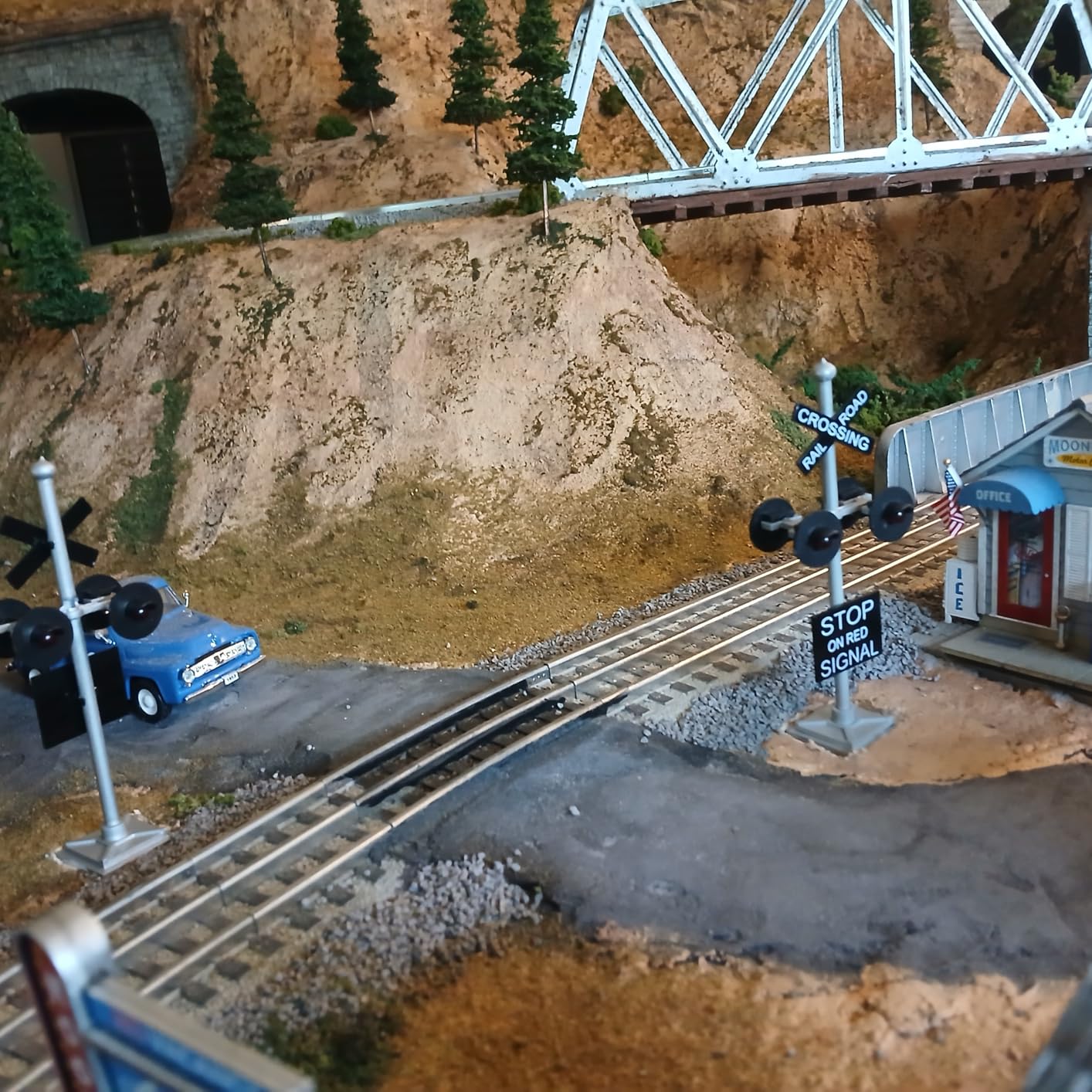
The four-head configuration provides excellent visibility from all angles. The included circuit board creates proper alternating flash patterns. At approximately $16, the value remains strong despite the scale confusion.
Reviews show 56% five-star ratings with the scale issue driving negative comments. Buyers expecting true O scale signals were disappointed. Those who measured before buying or needed HO scale signals reported satisfaction.
Scale Considerations
Verify measurements before purchasing for O gauge. The signal stands about 4.65 inches tall, roughly half the height of true O scale signals. For HO gauge, this matches perfectly. The packaging error causes most buyer disappointment.
Wire Management
The wire gauge matches fine angel hair in thickness. This allows scale-appropriate routing but challenges handling. Use tweezers for connections and avoid pulling or twisting. Preplan wire routing before final installation.
11. Walthers SceneMaster Cantilever Signal – Modern Era Design
Walthers SceneMaster Post-1960s Cantilever Grade Crossing Signal-Single-Lane 949-4332 HO Scale Model Railroad – Signals Kit
HO Scale
Cantilever design
Post-1960s style
Fully assembled
Pros
- Realistic cantilever design
- Bright LEDs visible
- Fully assembled ready to use
- Post-1960s prototype accuracy
- Good for modern era layouts
Cons
- Requires separate controller
- Price higher than alternatives
- 50% 5-star rating only
- Some quality concerns
Cantilever crossing signals represent modern railroad practice, with the signal arm extending over the roadway from one side. The Walthers SceneMaster version brings this prototype accuracy to HO scale layouts focusing on 1960s and later eras.
Testing showed good appearance when paired with the Walthers controller. The cantilever structure assembles easily and feels reasonably sturdy. The LEDs provide bright, visible flashers from all approach angles.
The price point exceeds basic two-head signals, reflecting the more complex design. Reviews show only 50% five-star ratings, with some buyers feeling the price exceeds the value delivered. Consider this for specific era modeling rather than general layout use.
Cantilever Advantages
Single-side mounting simplifies installation on road crossings with limited space. The arm extends over the roadway, providing signals visible from both directions without separate roadside signals. This matches modern prototype practice.
Post-1960s Prototype
Traditional crossbuck signals suit earlier eras. Cantilever designs appeared as railroads modernized crossing protection. Match this signal to diesel-era and later layouts for prototype accuracy. Steam-era modelers should consider crossbuck alternatives.
12. Lionel O-27 Auto Crossing Gate – Moving Gate Mechanism
Lionel O-27 Auto Crossing Gate – 612714
O-27 Scale
Auto gate drop
153C contactor
Operating lights
Pros
- Gate physically drops when train passes
- Operating lights on gate arm
- Includes contactor for activation
- Classic Lionel styling
- Works with O-27 track
Cons
- Wires fall off easily
- Requires additional accessory kit
- Very limited review count
- Tricky to get working
Crossing gates add dynamic motion beyond flashing lights. The Lionel O-27 gate drops across the roadway when trains approach, then raises after passage. This mechanical motion fascinates viewers more than lights alone.
Testing revealed the gate mechanism works reliably once properly adjusted. The included 153C contactor handles activation through track sections. Operating lights on the gate arm add visibility during the drop sequence.
However, the wire connections proved finicky during installation. The spade connectors require careful crimping to maintain reliable contact. Loose wires cause intermittent operation that frustrates users. Budget time for careful wiring.
Gate Operation
The gate motor responds to track activation, dropping the arm within seconds of train detection. After the train clears, the arm rises slowly. The movement draws viewer attention more effectively than static signals.
O-27 Specifics
This accessory targets O-27 gauge specifically. O gauge modelers can use it, but the proportions suit the slightly smaller O-27 standard. Verify compatibility with your specific track system before purchasing.
How to Choose the Right Crossing Signal for Your Layouts?
Selecting the right model railroad crossing signal requires matching your layout scale, power system, and technical comfort level. After testing 12 different systems, I have identified key factors that separate satisfying purchases from disappointing ones.
Detection Methods Explained
Three main technologies activate crossing signals automatically. Understanding each helps you choose compatible equipment.
Infrared break-beam sensors mount beside the track and detect when trains interrupt the light beam. These work with any rolling stock but require careful alignment. The Walthers SceneMaster controller uses this method.
Track current detection monitors electrical current draw in a track section. When a powered locomotive enters, increased current triggers the signal. This requires metal wheels and works only with electrically active trains.
Mechanical contactors like the Lionel 153C use physical pressure from train wheels on an isolated track section. These are simple and reliable but require specific track modifications.
Scale Compatibility Guide
HO scale (1:87) offers the widest selection of crossing signals. Evemodel and Walthers both produce multiple HO options at various price points. The detail level suits arm-length viewing distances typical of home layouts.
N scale (1:150 or 1:160) limits choices significantly. The Evemodel JTD1507RP represents one of few purpose-built N scale options. Most alternatives are HO signals that look oversized.
O gauge (1:48) demands sturdy construction due to larger size and weight. Lionel signals handle this well with diecast metal construction. Expect higher prices reflecting the material quality.
O-27 gauge overlaps with O but uses slightly smaller proportions. Lionel produces specific O-27 accessories that maintain visual consistency with this traditional standard.
Power Supply Options
Battery operation eliminates wiring complexity but requires ongoing battery purchases. The Hayes crossing sign exemplifies this trade-off. Budget for replacement batteries every few months with regular use.
12V DC power supplies offer the most common solution for LED signals. Most wall wart adapters from electronics stores provide suitable power. The Evemodel signals include resistors for 9-18V operation, accommodating various supply voltages.
AC transformer taps work with some signals and traditional incandescent bulbs. Modern LED signals typically need DC power. Check specifications before connecting to AC outputs.
DIY vs Ready-to-Install Systems
Complete systems include everything needed for operation. The Lionel FasTrack crossing exemplifies this approach. Pay a premium for convenience but minimize compatibility issues.
Modular systems separate signals from controllers. This lets you mix components but requires understanding how they interface. The Walthers components follow this pattern.
DIY circuits offer ultimate flexibility for experienced modelers. Circuitron and Logic Rail Technologies controllers require separate signal purchases and wiring knowledge. Beginners should avoid this complexity.
Frequently Asked Questions
What do flashing red lights at a railroad crossing mean?
Flashing red lights at a railroad crossing indicate that a train is approaching or occupying the crossing. Vehicles and pedestrians must stop and remain clear until the lights stop flashing and any gates have raised completely. On model railroads, these lights activate automatically using detection sensors to add realism and alert viewers that a train is approaching the scene.
Which detection method works best for model railroad crossing signals?
Infrared break-beam detection works best for most layouts because it detects any train regardless of electrical pickup or wheel material. Track current detection requires metal wheels and powered locomotives. Mechanical contactors are simplest but need track modifications. For DCC layouts, current-based detection systems designed for digital command control offer the cleanest installation.
How much does a complete model railroad crossing signal system cost?
Basic LED crossing signals start around $13-15 per signal for budget options like Evemodel. Mid-range systems with controllers cost $40-80 for complete setups. Premium integrated crossings with sound, like the Lionel FasTrack grade crossing, run $70-110. A full crossing with two signals, detection, and automatic operation typically costs $50-150 depending on scale and features.
Can I install crossing signals without soldering?
Yes, several options avoid soldering. Battery-operated signals like the Hayes crossing sign need no wiring at all. Lionel signals with contactor activation use plug-and-play connections. Some optical detection systems feature plug-in terminal blocks. However, many budget LED signals and advanced automation systems do require soldering for reliable connections. Crimp connectors offer a no-solder alternative but add bulk.
Why do my crossing signals stay on all the time?
Constantly lit signals usually indicate a detection problem. For optical sensors, ambient light or misalignment causes false triggers. Current-based systems with short circuits or track debris may show continuous occupancy. Mechanical contactors with wiring reversed or stuck contacts stay activated. Check that detection zones are clear, sensors align properly, and wiring matches manufacturer diagrams. Sensitivity adjustments on controllers can also help eliminate false activation.
Final Thoughts
The right model railroad crossing signals transform a static layout into a dynamic scene that captures viewer attention. After testing 12 different systems in 2026, the Lionel #154 earns our top recommendation for O gauge modelers wanting durable, reliable automatic operation. Budget-conscious hobbyists find excellent value in the Hayes crossing sign or Evemodel options depending on their scale.
Consider your layout’s power system, technical comfort level, and scale when choosing. Factor in whether you want simple plug-and-play convenience or modular systems offering customization. The forum insights reveal that beginners often underestimate wiring complexity, so start simpler than you think necessary.
Whichever system you choose, automatic crossing signals add that extra layer of realism that makes model railroading endlessly fascinating. The flashing lights announcing an approaching train never get old, even after decades in the hobby.