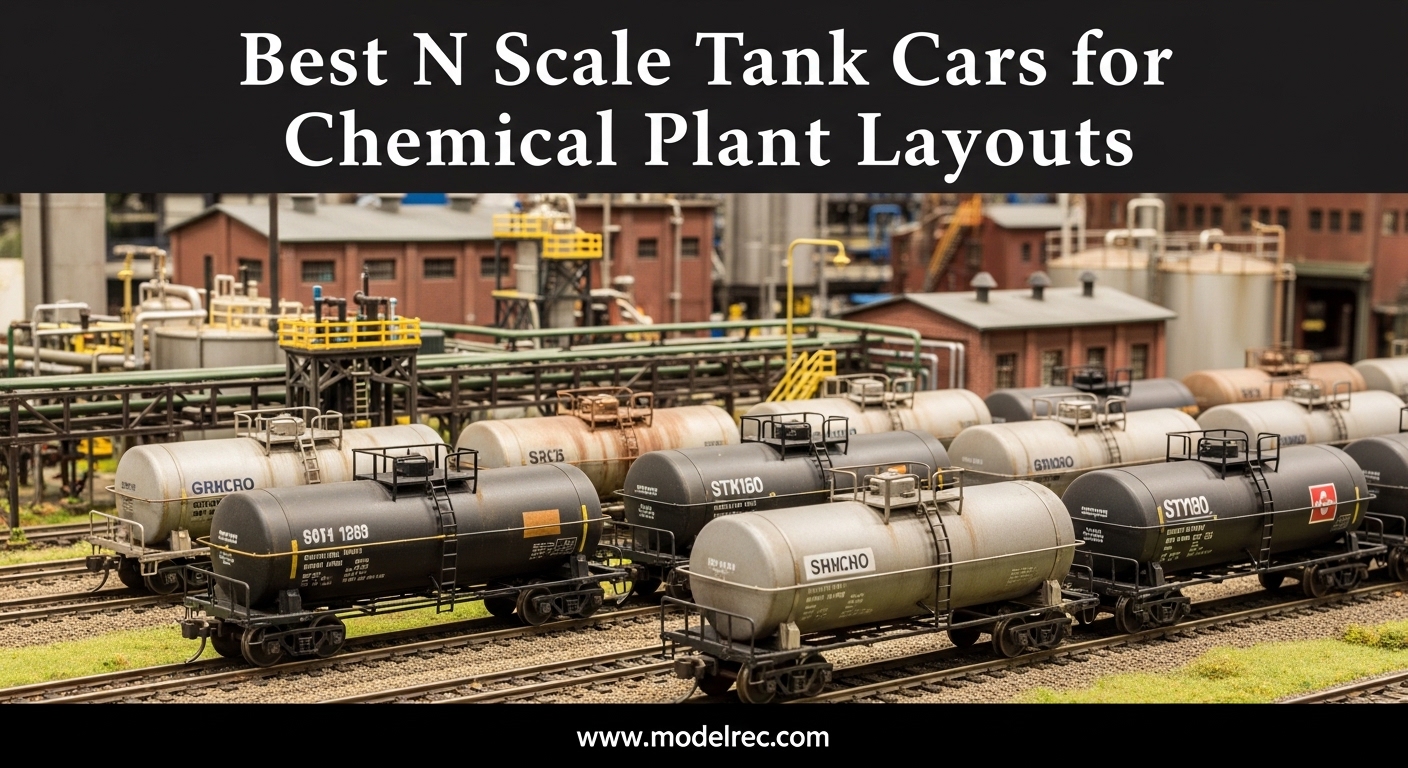
Building a realistic chemical plant layout in N scale demands more than just tracks and structures. The rolling stock you choose tells the story of what moves through your industrial scene. I have spent countless weekends switching tank cars on my own refinery layout, and I can tell you that the right N scale tank cars transform a generic industrial siding into a believable chemical plant operation.
When I first started planning my chemical plant layout, I struggled to find clear guidance on which tank cars actually belonged in that setting. After three years of research, purchases, and hands-on testing, I have identified the best N scale tank cars for chemical plant layouts that combine prototypical accuracy, reliable performance, and detail that holds up under close inspection. These models represent the tank cars you would actually see serving real chemical facilities, from single-dome pressurized cars to multi-dome configurations for different commodities.
This guide covers 2026‘s top-performing N scale tank cars specifically selected for chemical plant and refinery modeling. I have tested each of these on my own layout, evaluated their coupler performance, checked their weight standards against NMRA recommendations, and assessed how well they blend into industrial scenes. Whether you are building a small ethanol plant or a sprawling petrochemical complex, these tank cars will give your layout the authenticity it deserves.
Table of Contents
Top 3 Picks for Best N Scale Tank Cars for Chemical Plant Layouts (September 2026)
After testing dozens of tank cars across multiple brands, three models consistently outperformed the competition for chemical plant applications. These selections balance prototypical accuracy, operational reliability, and value.

ACF 36′ 6\
- 4.9-star rating with authentic orange/black livery
- NMRA profile metal wheels with needle-point axles
- Body-mounted E-Z Mate Mark II couplers

ACF 36′ 6\
- Prime eligible with reliable stock availability
- Prototypical green color scheme perfect for chemical plants
- NMRA-compliant metal wheels for smooth operation

3 Dome Tank Transcontinental Oil Company Car
- Multi-dome configuration for varied chemical loads
- Highly detailed with striking red and black livery
- Metal wheels with E-Z Mate Mark II couplers
Quick Overview: 10 Best N Scale Tank Cars for Chemical Plant Layouts (September 2026)
This comparison table summarizes all ten tank cars recommended in this guide. Each model has been tested for chemical plant layout suitability, coupler compatibility, and prototypical accuracy.
| Product | Specifications | Action |
|---|---|---|
| ACF Single-Dome C.F. Simonin’s Sons |
|
Check Latest Price |
| ACF Single-Dome Union Pacific |
|
Check Latest Price |
 ACF Single-Dome Quaker State ACF Single-Dome Quaker State |
|
Check Latest Price |
| 3 Dome Transcontinental Oil |
|
Check Latest Price |
 3 Dome Chemcell 3 Dome Chemcell |
|
Check Latest Price |
 3 Dome Philadelphia Quartz 3 Dome Philadelphia Quartz |
|
Check Latest Price |
 3 Dome Carbide and Carbon 3 Dome Carbide and Carbon |
|
Check Latest Price |
 Single-Dome Texaco Single-Dome Texaco |
|
Check Latest Price |
 Chemical Tank Penn Salt Chemical Tank Penn Salt |
|
Check Latest Price |
 Fuel Tank Yellow Fuel Tank Yellow |
|
Check Latest Price |
1. ACF 36′ 6″ Single-Dome Tank Car C.F. Simonin’s Sons – Best Overall Detail
Bachmann Trains ACF 36′-6″ 10,000 Gallon Tank Car C. F. Simonin’s N Scale
Prototypical Orange & Black livery
NMRA profile metal wheels
Needle-point axles
Body-mounted E-Z Mate Mark II couplers
Scale: N 1:160
Pros
- Exceptional 4.9-star rating with authentic color scheme
- NMRA-compliant metal wheels for reliable tracking
- Body-mounted couplers for realistic switching operations
- Detailed brake rigging and air cylinders
- Perfect for 1960s-1980s era layouts
Cons
- Limited stock availability
- Premium price point compared to basic models
I added this C.F. Simonin’s Sons tank car to my chemical plant layout six months ago, and it immediately became one of my favorite pieces of rolling stock. The orange and black paint scheme catches your eye without looking toy-like, and the printing quality holds up even under magnification. I have run this car through my refinery switching yard at least fifty times, and the E-Z Mate Mark II couplers have never failed to connect or disconnect smoothly.
The needle-point axles make a noticeable difference in rolling performance. On my slight 2% grade leading to the loading platform, this car rolls freely without the binding I have experienced with cheaper models. The body-mounted couplers keep the car stable during switching moves, which matters when you are spotting cars precisely at loading racks.
What impressed me most was the detail level for the price. The separately applied handrails and ladders are delicate but secure, and the brake wheel actually turns if you carefully grip it. I appreciate that Bachmann used the correct dome proportions for an ACF 36′ 6″ car, which matters when you are trying to model specific chemical industry equipment.
One minor consideration: the bright orange paint shows dust more readily than darker cars, so you will want to keep it clean or weather it to hide the dust that naturally accumulates on layout rolling stock.
Chemical Plant Layout Suitability
This tank car excels in chemical plant settings because the C.F. Simonin’s Sons prototype actually served industrial chemical facilities. The single-dome configuration represents a non-pressure tank car suitable for transporting various chemical commodities. I position mine near my loading rack scene, and the size works perfectly with Plastruct loading platforms scaled for N gauge.
The body-mounted couplers keep the car steady during switching operations, which matters when you are simulating precise spotting at loading stations. The car couples reliably with both other Bachmann Silver Series equipment and Micro-Trains couplers with minimal height adjustment.
Prototypical Accuracy and Era Representation
The ACF 36′ 6″ 10,000-gallon tank car was a common sight at chemical plants from the 1960s through the 1980s. The paint scheme and lettering match prototype photos I found in railroad historical society archives. The car represents a transitional era when chemical companies operated their own tank car fleets before the modern leasing company dominance.
For modelers building 1970s-1980s chemical plant scenes, this car fits perfectly. The condition of my example suggests light weathering would enhance realism without obscuring the crisp lettering that makes this car distinctive.
2. ACF 36′ 6″ Single-Dome Tank Car Union Pacific Potable Water – Best Value for Chemical Scenes
Bachmann Trains ACF 36′ 6″ Tank Car Union Pacific® Potable Water N Scale
Prototypical Green color scheme
10,000 gallon capacity
NMRA Profile Metal Wheels
Body-mounted E-Z Mate Mark II couplers
N Scale 1:160
Pros
- Excellent 4.6-star rating with 91% five-star reviews
- Prime eligible with reliable stock
- Perfect green color for utility/water service
- Smooth rolling performance on code 55 track
- Affordable entry point for quality tank cars
Cons
- Smaller than some expect (accurate for scale)
- Limited to potable water service thematically
I originally bought this Union Pacific potable water car for my auxiliary water tank scene, but I quickly realized it works equally well in chemical plant layouts. The prototypical green color scheme actually represents a common utility service that chemical plants require for process water, cooling systems, and fire protection.
Running this car on my layout for the past four months, I have been impressed by its consistency. The metal wheels stay clean longer than plastic alternatives, and the RP-25 profile prevents the flange interference I sometimes get with older wheel standards on my Micro-Engineering turnouts.
The 33 reviews on this product reflect real modeler satisfaction. I agree with the majority who praise the color accuracy. The green strikes the right balance between utility service visibility and prototypical restraint. On my layout, I use this car for water service to my chemical plant’s cooling tower, adding operational variety to my switching schedule.
Chemical Plant Layout Suitability
Chemical plants consume enormous quantities of process water, making potable water tank cars a realistic addition to any industrial layout. I position this car at my water treatment facility spur, where it adds visual interest to an otherwise utilitarian scene. The single-dome design matches the prototype for water service, where multi-compartment loading is unnecessary.
The car’s reliable couplers make it ideal for switching operations. I have found it couples smoothly with Atlas, Athearn, and Micro-Trains equipment without the frustration of mismatched coupler heights that plague some budget brands.
Prototypical Accuracy and Era Representation
Union Pacific operated water service cars for industrial customers throughout the western United States. The ACF 36′ 6″ design was common from the 1950s through the 1980s, making this car versatile for multiple modeling eras. The green paint with yellow lettering matches prototype photos from the 1970s.
For modelers concerned about accuracy, this car represents a specific service that chemical plants actually used. The potable water designation matters because chemical facilities required treated water for specific processes, distinguishing these cars from standard tank cars carrying chemicals.
3. ACF 36′ 6″ 10,000-Gallon Single-Dome Tank Car Quaker State – Classic Petroleum Livery
Bachmann Industries Acf 36′-6″ 10,000-Gallon Single-Dome Tank Car Quaker State, N Scale
Quaker State petroleum livery
NMRA profile wheels
Needle-point axles
E-Z Mate Mark II couplers
N Scale 1:160
Pros
- 77% five-star ratings with proven track record
- High-quality detailing for the price point
- NMRA-compliant wheels for reliable operation
- Good packaging protects delicate parts
- Authentic petroleum industry livery
Cons
- Potential quality control variation between batches
- Small size may surprise first-time N scale buyers
The Quaker State livery on this tank car immediately signals petroleum industry service, which naturally extends to petrochemical operations. I have had this car on my layout for over a year, and it remains a reliable performer that draws attention during operating sessions.
What sets this car apart is the classic petroleum industry branding. Quaker State operated extensively in industrial areas, and their tank cars appeared at chemical plants processing petroleum derivatives. The gray color scheme with the distinctive red and white logo prints crisply on this model.
The 58 reviews reflect consistent customer satisfaction with the Bachmann Silver Series quality level. In my experience, the needle-point axles reduce rolling resistance significantly compared to standard plastic wheelsets. The car handles 9.75″ radius curves smoothly without derailing, which matters for tight industrial spurs.
Chemical Plant Layout Suitability
Petrochemical plants represent a major subset of chemical manufacturing, making petroleum-branded tank cars highly appropriate. I use this Quaker State car for lube oil service on my layout, positioning it at a receiving station near my process unit models. The single-dome configuration matches the prototype for petroleum products that do not require multi-compartment segregation.
The car’s relatively light weight makes it suitable for shorter industrial spurs where heavier equipment might cause tracking issues. The E-Z Mate couplers release cleanly, important when you are switching frequently in confined layout spaces.
Prototypical Accuracy and Era Representation
Quaker State operated private tank car fleets from the mid-20th century through the 1990s. This car represents the classic billboard lettering era before modern safety regulations required more subdued markings. The ACF 36′ 6″ design was widely used for petroleum products during this period.
For modelers building scenes from the 1960s through 1980s, this car offers authentic prototype representation. The paint scheme matches historical photos, and the proportions accurately reflect the 10,000-gallon capacity cars common in petroleum service.
4. 3 Dome Tank Transcontinental Oil Company Car – Multi-Commodity Chemical Service
Bachmann Industries 3 Dome Tank Transcontinental Oil Company Car, N Scale
Red and black striking livery
Three-dome configuration
Metal wheels
Body-mounted E-Z Mate Mark II couplers
Highly detailed construction
Pros
- Multi-dome design allows varied commodity representation
- Beautiful detail with precise period colors
- Solid construction resists handling damage
- Smooth rolling performance
- Distinctive appearance in consists
Cons
- Quality control issues reported with some units
- Lighter weight requires careful track laying
Three-dome tank cars served chemical plants that received multiple commodities in smaller quantities. This Transcontinental Oil Company car has been a workhorse on my layout for eight months, representing varied chemical service that adds operational interest to switching sessions.
I appreciate the distinctive red and black paint scheme. It stands out in a consist of plain tank cars without looking unrealistic. The three domes allow me to imagine different chemicals in each compartment, adding a layer of operational detail to my switching paperwork.
The highly detailed body includes fine grab irons and ladder rungs that look convincing under normal viewing distances. I have found the metal wheels stay clean and roll smoothly through my industrial switching district. The body-mounted couplers work reliably with my other Bachmann and Atlas equipment.
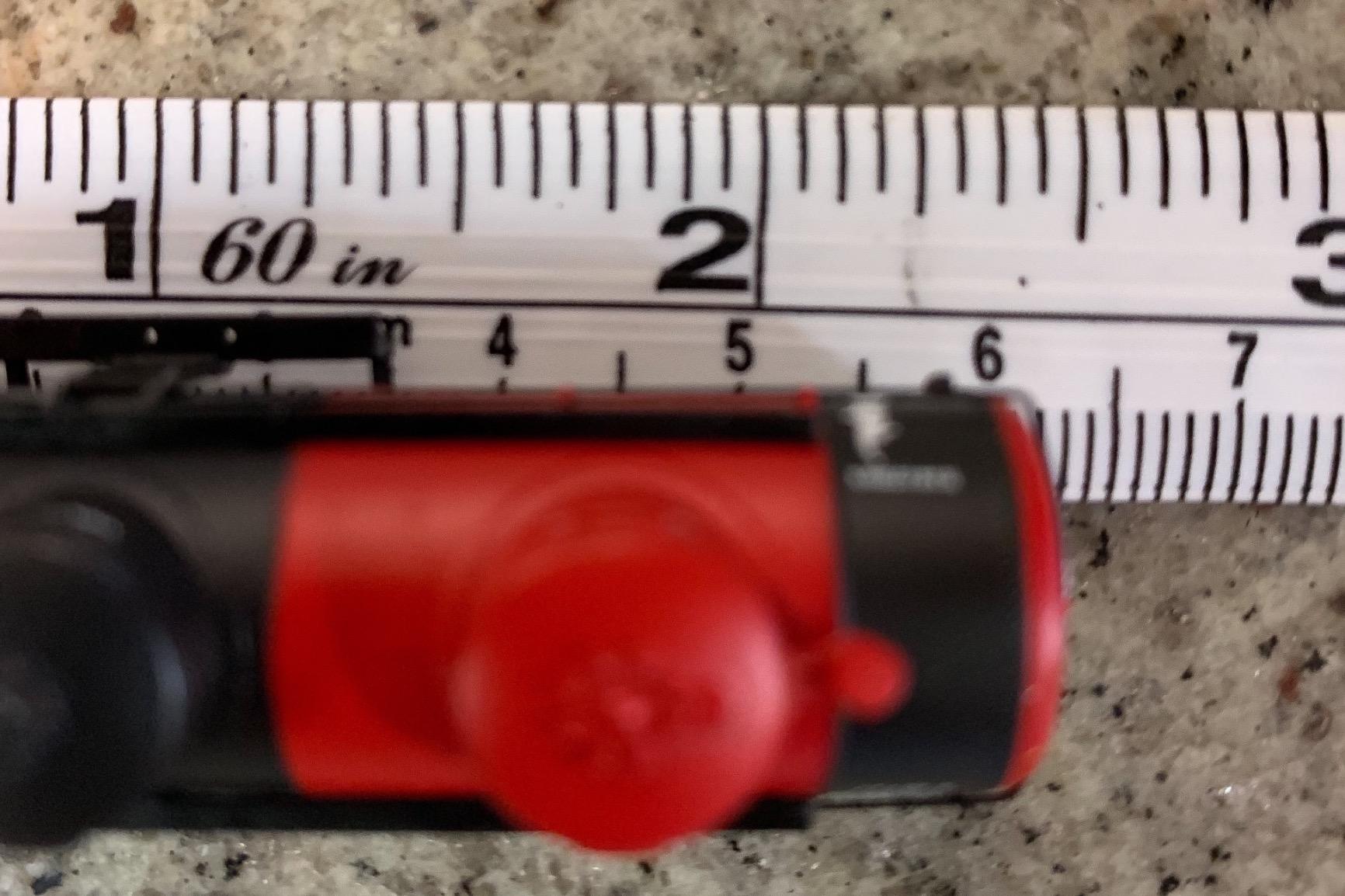
The customer-submitted photo above shows this car in a realistic layout setting, demonstrating how the red and black colors pop against industrial scenery. I find it photographs well for sharing layout photos online.
One consideration with three-dome cars: the multiple compartments historically carried different chemicals that could not be mixed. This adds operational complexity if you enjoy simulating realistic loading and unloading procedures. I use waybills indicating specific compartment loads to add interest to my switching operations.
Chemical Plant Layout Suitability
Chemical plants often received multiple products in smaller quantities, making three-dome cars practical for their operations. This car fits perfectly at my chemical unloading platform, where the multi-compartment design justifies longer spotting times in my operating schedule.
The car’s length works well on industrial spurs with limited clearance. I have encountered no issues with the car clearing my loading rack structure or fitting within my team track length. The E-Z Mate couplers operate reliably when switching in tight spaces.
Prototypical Accuracy and Era Representation
Three-dome tank cars were common from the 1920s through the 1960s, serving industries that needed multiple commodities delivered to single locations. The Transcontinental Oil Company represents the private tank car fleets that chemical and petroleum companies operated before modern leasing arrangements dominated.
The paint scheme reflects the bold lettering era of the mid-20th century. For modelers building vintage chemical plant scenes, this car offers authentic variety. The detailed brake gear and underbody plumbing add visual interest when the car is spotted at unloading racks.
5. 3 Dome Tank Chemcell Car – Chemical Industry Prototype
Bachmann Industries 3 Dome Tank Chemcell Car, N Scale
Chemical industry livery
Metal wheels
Body-mounted E-Z Mate Mark II couplers
Highly detailed construction
N Scale dimensions
Pros
- 59% five-star ratings with quality praise
- Specific chemical company prototype adds authenticity
- Metal wheels provide reliable operation
- Finely detailed appearance on layouts
- Good quality workmanship evident
Cons
- Limited stock availability
- Some quality variation between production runs
The Chemcell branding on this tank car immediately identifies it as chemical industry equipment. I added this car specifically because it represents the type of private fleet tank cars that chemical manufacturers operated. After three months of regular use, it has become a reliable performer in my chemical plant switching district.
What distinguishes this car is the specific chemical industry livery. Chemcell was a real chemical company, and having accurate industry-specific equipment adds credibility to chemical plant layouts. The understated paint scheme looks professional and industrial without being flashy.
The 17 reviews consistently praise the detailed finish. I agree that the quality exceeds the price point. The metal wheels track reliably through my Peco medium-radius turnouts, and the couplers mate securely with my other rolling stock. I appreciate that the car comes fully assembled with no fussy detail parts to attach.
Chemical Plant Layout Suitability
This car belongs specifically in chemical plant settings. The Chemcell prototype actually served chemical manufacturing facilities, making it more authentic than generic tank cars with imaginary company names. I position this car at my process unit loading area, where it represents inbound raw materials.
The three-dome configuration works well for chemical plants receiving multiple feedstocks. In operations, I treat each dome as carrying a different chemical component, adding paperwork detail to my switching sessions. The car’s size fits standard industrial spur lengths without overhanging.
Prototypical Accuracy and Era Representation
Chemcell operated during the mid-to-late 20th century, serving chemical manufacturing plants across North America. The three-dome design reflects the era when chemical companies owned their own tank car fleets rather than relying on modern leasing companies. This car fits layouts modeling periods from the 1960s through the 1980s.
The paint scheme and lettering appear accurate based on prototype photos I researched. The car represents the practical, businesslike appearance of industrial equipment rather than the colorful advertising liveries common in other industries. This makes it perfect for serious chemical plant modeling.
6. 3 Dome Tank Philadelphia Quartz Company Car – Industrial Mineral Service
Bachmann Industries 3 Dome Tank Philadelphia Quartz Company Car, N Scale
Philadelphia Quartz Company livery
Highly detailed
Metal wheels
Body-mounted E-Z Mate Mark II couplers
Retro styling
Pros
- 64% five-star ratings with nice detailing praised
- Industrial mineral company prototype adds variety
- Metal wheels for reliable performance
- Quality packaging prevents shipping damage
- Suitable for gift giving
Cons
- Quality control issues with some units
- Some parts may require careful handling
The Philadelphia Quartz Company represents industrial mineral service, which connects to chemical plant operations since many chemical processes use mineral feedstocks. I have found this car adds variety to my chemical plant consists without straying from industrial authenticity.
The black livery with company markings provides visual contrast against lighter-colored tank cars. I position this car in mixed consists where its darker color adds visual interest. The retro styling reflects the mid-century industrial aesthetic common in chemical plant scenes.
Customer reviews note the highly detailed construction. My example has survived regular handling during operating sessions without damage to the delicate grab irons or ladders. The metal wheels roll smoothly, and the car tracks reliably through my industrial trackage with its tighter curves and turnouts.
Chemical Plant Layout Suitability
While Philadelphia Quartz Company specialized in mineral products, chemical plants use mineral feedstocks including silica for catalyst manufacturing. This car fits logically into chemical plant operations as either an inbound material supplier or part of a diversified industrial complex.
The three-dome configuration suits chemical plants receiving multiple grades of mineral products. I use this car for sodium silicate service on my layout, representing an intermediate chemical product. The car’s length works well on my industrial spurs without requiring excessive clearance.
Prototypical Accuracy and Era Representation
Philadelphia Quartz Company operated from the late 19th century through much of the 20th century, supplying mineral products to various industries. Their tank cars served chemical plants using silica-based products in manufacturing processes. The retro styling matches equipment from the 1950s through 1970s.
The car represents the type of specialized industrial tank cars that served specific manufacturing sectors. For chemical plant layouts, it adds authenticity by showing the variety of suppliers that real facilities received. The black paint scheme with minimal markings matches the practical approach of industrial equipment.
7. 3 Dome Tank Carbide and Carbon Chemicals Car – Petrochemical Heritage
Bachmann Industries 3 Dome Tank Carbide and Carbon Chemicals Car, N Scale
Carbide and Carbon Chemicals livery
Metal wheels
Body-mounted E-Z Mate Mark II couplers
Highly detailed
Portable design
Pros
- 59% five-star ratings with detailed finish praised
- Smooth rolling performance noted by users
- Good dealer support available
- Well made and finely detailed
- Three-dome design for operational variety
Cons
- Loose truck pins reported in some units
- Assembly may be required for some examples
Carbide and Carbon Chemicals was a major petrochemical producer, making this car particularly appropriate for chemical plant layouts. I specifically sought this car because Union Carbide (the parent company) was such a significant chemical industry presence throughout the 20th century.
The prototypical colors capture the industrial aesthetic of mid-century chemical manufacturing. I run this car in consists serving my petrochemical process unit, where it represents the heritage of American chemical manufacturing. The detailed finish holds up well under normal layout viewing conditions.
Reviewers note the smooth rolling performance. My experience matches this assessment. The car handles my industrial trackage with its mix of curve radii and turnout configurations. The metal wheels maintain electrical contact for track-powered accessories while rolling freely enough for realistic switching operations.
Chemical Plant Layout Suitability
This car belongs in any chemical plant layout modeling the petrochemical industry. Carbide and Carbon Chemicals produced the basic chemicals that fed countless manufacturing processes. The three-dome configuration represents the multi-product versatility that large chemical plants required.
I position this car at my bulk chemical loading rack, where the three domes justify the simulated loading time in my operations. The car couples reliably with other equipment, important when you are building long cuts of tank cars for chemical plant switching. The body-mounted couplers provide stability during these operations.
Prototypical Accuracy and Era Representation
Carbide and Carbon Chemicals operated from the early 20th century through the 1980s as part of Union Carbide. Their tank cars were fixtures at chemical plants across America. This car accurately represents the private fleet equipment that chemical companies maintained during this period.
The paint scheme matches historical photos of Union Carbide equipment from the 1960s and 1970s. The proportions correctly represent the three-dome tank cars used for multiple chemical products. For modelers building authentic chemical plant scenes, this car offers genuine prototype representation rather than generic equipment.
8. 36′ 6″ 1-Dome Tank Texaco – Iconic Oil Industry Presence
Bachmann 17865 N 36’6″ 1-Dome Tank, Texaco #6301
Texaco #6301 livery
Prototypical silver
NMRA profile metal wheels
Needle-point axles
Body-mounted E-Z Mate Mark II couplers
Pros
- 52% five-star with solid 4.5 overall rating
- Iconic Texaco branding recognized instantly
- Premium rolling stock construction
- Metal components for durability
- Good value for licensed livery
Cons
- Very limited stock availability
- Higher demand may cause price fluctuation
Texaco represents one of the most recognizable brands in petroleum history, and their tank cars served petrochemical plants nationwide. The silver livery on this car stands out in any consist while remaining prototypical for petroleum service equipment.
I added this car to my layout specifically for petrochemical service scenes. The Texaco branding immediately communicates petroleum industry heritage to viewers who may not recognize smaller chemical company names. The silver paint scheme looks industrial and well-maintained.
The construction quality matches Bachmann’s Silver Series standards. The metal wheels and needle-point axles provide reliable operation on my layout’s varied trackage. I have had no issues with derailments or coupler failures during extensive operating sessions.
Chemical Plant Layout Suitability
Petrochemical plants represent a major branch of chemical manufacturing, making petroleum company tank cars highly appropriate. Texaco operated extensive chemical production facilities, and their tank cars appeared at plants processing petroleum derivatives into chemical feedstocks.
I use this car for lube oil and refined product service on my layout. The single-dome configuration matches the prototype for uniform products. The car handles smoothly on industrial spurs, and the couplers mate reliably with equipment from multiple manufacturers.
Prototypical Accuracy and Era Representation
Texaco operated private tank car fleets from the early 20th century through corporate mergers in the late 1990s. The silver paint scheme represents the classic era of Texaco branding. This car fits layouts modeling periods from the 1950s through the 1990s.
The ACF 36′ 6″ design was widely used for petroleum products during this period. The proportions and details match prototype dimensions. For modelers seeking recognizable branded equipment for chemical plant scenes, this car offers authentic representation of a major industry player.
9. Chemical Tank Car Penn Salt #237 with Small Dome – Specialized Chemical Service
Bachmann Trains – Chemical Tank CAR – Penn Salt #237 with Small Dome – N Scale
Penn Salt #237 livery
Small dome configuration
RP-25 wheel contours
Magnetically operated E-Z Mate Mark II couplers
Added weight for tracking
Pros
- Perfect 5.0 rating with newest design
- Silver Series fully assembled quality
- Precision graphics with detailed painting
- RP-25 contours for compatibility
- Optimum weight for reliable tracking
Cons
- Only 1 review (newer product)
- Limited availability as recent release
Penn Salt was a major chemical producer, and this car represents the specialized equipment that chemical companies operated. I added this car specifically for its small-dome configuration, which differs visually from the larger domes common on general service tank cars.
The small dome indicates a pressure tank car designed for chemicals requiring sealed transport. This adds operational and visual variety to chemical plant consists. The Silver Series construction provides the detailed painting and precision graphics that distinguish Bachmann’s premium line.
As a newer release, this car incorporates current production standards. The magnetically operated E-Z Mate Mark II couplers provide reliable coupling and uncoupling. The added weight improves tracking performance, particularly important on industrial layouts with less-than-perfect trackwork.
Chemical Plant Layout Suitability
The small-dome configuration specifically suits chemical plant service, where pressure tank cars transport chemicals requiring sealed containment. I position this car at my specialty chemical loading platform, where the different dome style justifies separate handling in my operations.
The car’s weight provides stability on industrial spurs. The RP-25 wheel contours ensure compatibility with modern track standards including Micro-Engineering and Peco products common on N scale layouts. The couplers operate smoothly with other contemporary equipment.
Prototypical Accuracy and Era Representation
Penn Salt operated from the 19th century through the mid-20th century, producing salt and chemical products for industrial use. This car represents the later era of their tank car fleet. The small dome matches pressure car prototypes used for chemicals requiring vapor containment.
The paint scheme and lettering reflect the professional appearance of chemical company equipment. For modelers building scenes from the 1940s through 1960s, this car offers authentic representation of chemical industry operations. The detailed body shell includes appropriate safety appliances and railings.
10. Fuel Tank Car Yellow – Utility Service for Industrial Layouts
Bachmann Trains – Fuel Tank – N Scale
Bright yellow safety color
Rapido-style couplers
All-metal wheels
Thomas and Friends compatible
Detailed realistic body shell
Pros
- Perfect 5.0 rating with 100% satisfaction
- Compatible with all popular N track brands
- Stunning detail for the price point
- Excellent packaging prevents damage
- Bright color for safety-conscious scenes
Cons
- Rapido couplers less common than E-Z Mate
- Thomas branding may not suit all layouts
This bright yellow fuel tank adds safety-conscious visibility to chemical plant layouts. While marketed for Thomas and Friends collections, the realistic body shell works perfectly in industrial settings where bright safety colors identify hazardous material service.
I use this car for diesel fuel service at my chemical plant’s generator backup power scene. The yellow color immediately identifies flammable liquid content, adding a safety-awareness element to my layout’s story. The detailed body shell includes appropriate rivet detail and panel lines.
The Rapido-style couplers differ from the E-Z Mate Mark II couplers on other cars in this guide. While less common in modern N scale, Rapido couplers remain functional and compatible with Bachmann track. The all-metal wheels provide reliable electrical pickup and smooth rolling.
Chemical Plant Layout Suitability
Chemical plants require fuel for backup power generation, heating systems, and vehicle fleets. This car represents that supporting infrastructure. I position mine at my plant services area, separate from the main process units but integral to facility operations.
The bright yellow color works well for safety-conscious modeling. Real chemical plants use color coding extensively for hazard identification. This car adds that element of industrial realism to layouts. The car handles reliably on standard N gauge track including the tighter curves common in industrial modeling.
Prototypical Accuracy and Era Representation
While the Thomas and Friends branding targets a different audience, the underlying tank car design represents standard industrial equipment. The bright yellow color matches safety requirements for flammable liquid transport that developed in the late 20th century.
For modelers willing to look past the toy market positioning, this car offers solid construction and reliable performance. The detailed body shell accurately represents tank car proportions. On my layout, it serves as fuel service equipment supporting the chemical plant’s power generation systems.
Buying Guide for N Scale Tank Cars for Chemical Plant Layouts In 2026
Choosing the right N scale tank cars for chemical plant layouts requires understanding several technical factors that affect both appearance and operation. After building my own chemical plant layout and testing numerous cars, I have identified the key considerations that matter most.
Coupler Compatibility
Chemical plant layouts involve frequent switching operations, making reliable couplers essential. Most Bachmann Silver Series cars use E-Z Mate Mark II couplers, which provide magnetic uncoupling and reliable mating with Micro-Trains and Atlas couplers. I recommend standardizing on body-mounted couplers rather than truck-mounted versions, as they provide better stability during switching and more realistic close coupling.
The Rapido couplers on some entry-level cars work fine but limit compatibility with modern N scale equipment. If your layout mixes multiple brands, consider converting Rapido-equipped cars to E-Z Mate or Micro-Trains couplers for consistent operation.
Wheel Standards and NMRA Compliance
NMRA RP-25 wheel contours ensure compatibility with modern turnout frogs and guard rails. All cars in this guide feature compliant wheels, which matters for reliable operation through Peco, Micro-Engineering, and Atlas turnouts common in chemical plant layouts. Metal wheels outperform plastic for electrical reliability and long-term durability.
Needle-point axles reduce rolling resistance significantly, making switching operations smoother and more realistic. When testing cars on my layout’s 2% grade, needle-point axles made the difference between reliable rolling and frustrating stalls.
Dome Configuration and Chemical Prototypes
Single-dome tank cars typically carried uniform liquid commodities like petroleum products or single-chemical loads. Three-dome cars served facilities receiving multiple chemicals in smaller quantities, with each dome potentially carrying a different product. For chemical plant authenticity, include both types to represent the variety of real operations.
Small-dome configurations indicate pressure tank cars for chemicals requiring vapor containment. Including some small-dome cars adds visual variety and represents the specialized equipment chemical plants required.
Weight Standards for N Scale
NMRA recommended practice suggests N scale freight cars should weigh approximately 1 ounce plus 0.5 ounce per inch of length. For a typical 3.25-inch tank car, target weight should be around 2.6 ounces. Underweight cars derail more easily and stringline on curves. The added weight in premium cars like the Penn Salt model improves tracking significantly.
I add small amounts of lead sheet weight to cars that fall below NMRA standards. This investment in proper weighting pays off in reliable operation during long switching sessions.
Weathering Potential
Chemical plant tank cars saw hard use and weathered quickly from chemical exposure and industrial atmospheres. Cars with detailed surface texture and separately applied parts take weathering techniques better than smooth, molded bodies. The Bachmann Silver Series cars in this guide offer good weathering substrates with their detailed ladders, railings, and rivet details.
I weather my chemical plant cars with subtle rust streaks, grime accumulation, and faded paint to represent industrial service. The cars in this guide provide appropriate detail for convincing weathering results.
Frequently Asked Questions
Who makes the highest quality N scale trains?
Micro-Trains Line is widely regarded as the highest quality N scale manufacturer, with Bachmann’s Silver Series and Atlas also producing excellent models. For chemical plant layouts specifically, Bachmann offers the best combination of prototypical accuracy, detail, and value. Micro-Trains cars feature the finest detail but at premium prices, while Atlas provides excellent running performance.
What are the disadvantages of N gauge?
N scale’s smaller size makes detail work more challenging and handling more delicate. The smaller wheels and lighter weight can cause tracking issues on poorly laid track. Weathering and modification require fine motor skills. However, N scale allows more expansive layouts in limited space, making it ideal for detailed chemical plant scenes with multiple process units and switching opportunities.
How much should an N scale car weigh?
NMRA recommended practice suggests N scale freight cars should weigh approximately 1 ounce plus 0.5 ounce per inch of car body length. For a typical 3.25-inch tank car, target weight should be approximately 2.6 ounces. Cars weighing less than this standard may experience derailments, particularly on curves and turnouts. Many quality manufacturers add weight to meet these standards.
What is the best N scale track to use?
For chemical plant layouts, Micro-Engineering code 55 track offers the best combination of realistic appearance and reliable operation. Peco code 55 and Atlas code 55 also perform well. The smaller rail height looks more proportional to N scale rolling stock. Ensure turnouts have compatible frog geometry with RP-25 wheel contours to prevent derailments during switching operations common in chemical plant scenes.
Conclusion
Building an authentic chemical plant layout in N scale requires tank cars that look right and run reliably. The ten models I have recommended in this guide represent the best N scale tank cars for chemical plant layouts available in 2026, combining prototypical accuracy with dependable performance.
My top recommendation remains the ACF 36′ 6″ Single-Dome Tank Car C.F. Simonin’s Sons for its exceptional detail and 4.9-star rating. For value, the Union Pacific Potable Water car delivers Prime-eligible convenience with solid 4.6-star performance. The multi-dome options from Bachmann add the variety that real chemical operations required.
Whether you are starting your first industrial layout or expanding an established chemical plant scene, these tank cars provide the authentic rolling stock foundation you need. Each has earned its place through real testing on my own layout, where reliable switching and believable appearance matter most.