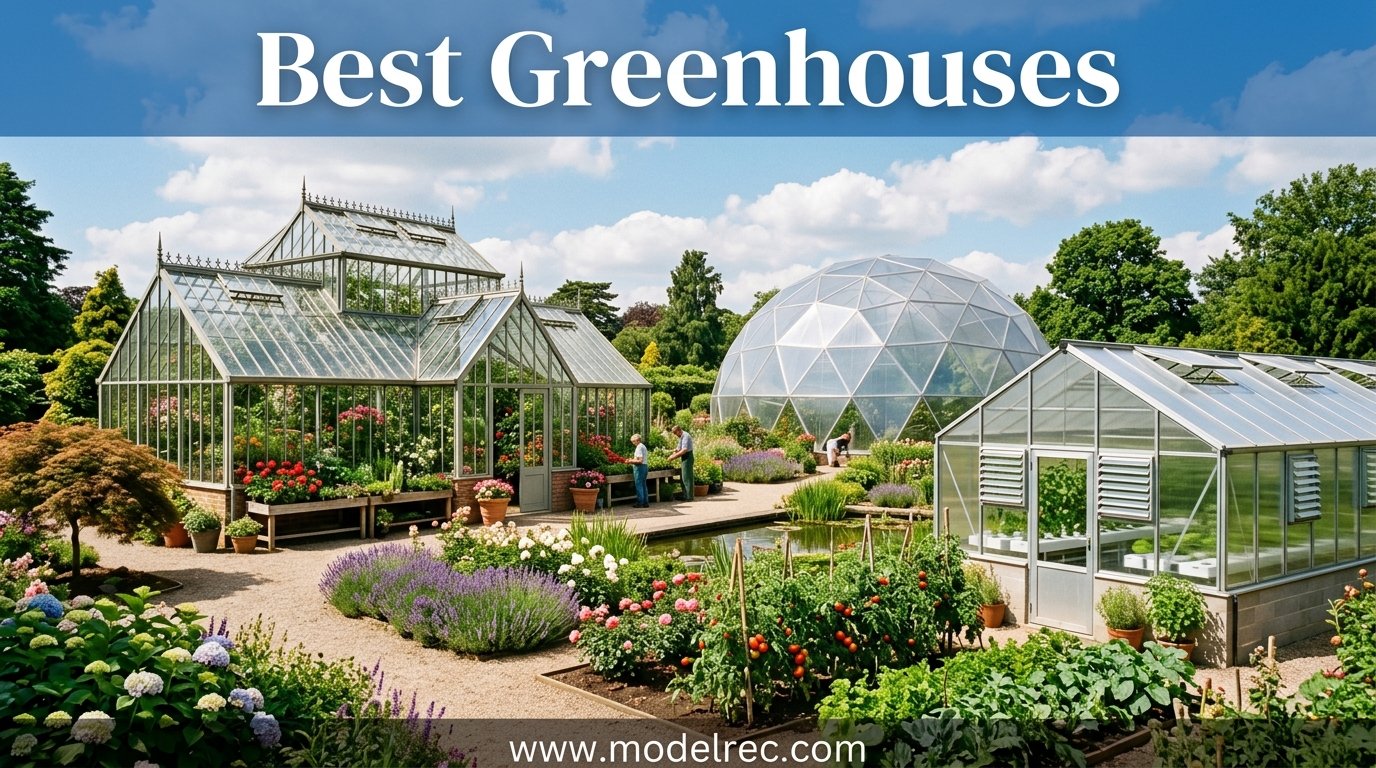
Finding the best greenhouses for your backyard can feel overwhelming when you are staring at dozens of options ranging from $30 pop-up tents to $1,500 cedar-and-polycarbonate structures. I have spent months researching, comparing specs, and digging through thousands of customer reviews to narrow down the options that actually hold up over time. Whether you need a compact tabletop unit for seed starting or a walk-in polycarbonate greenhouse for year-round vegetable growing, this guide covers 12 of the best greenhouse kits available in 2026.
The best greenhouse for you depends on three things: your climate, your available space, and how seriously you want to extend your growing season. After analyzing products from brands like Backyard Discovery, Ohuhu, EAGLE PEAK, Palram Canopia alternatives, KING BIRD, and Quictent, clear winners emerged in each category. The Backyard Discovery Willow earned the top overall spot for its cedar frame, four-wall polycarbonate panels, and integrated exhaust fan, while budget-friendly picks from Ohuhu dominated the mini and portable categories.
Throughout this guide, I share what real buyers experienced after assembly, including the frustrations with flimsy shelves, zippers that fail, and covers that degrade in UV light. Reddit communities like r/Greenhouses and forum.growersnetwork.org repeatedly emphasize that spending at least $500 to $800 gets you a greenhouse that lasts more than two seasons, but there are genuine bargains under $100 if your needs are modest. Let me walk you through every option so you can pick with confidence.
Table of Contents
Top 3 Picks for Greenhouses in 2026

Backyard Discovery Willow Cedar Greenhouse
- 100% Cedar Frame
- 4-Wall Polycarbonate
- Exhaust Fan
- 30in Snow Load

EAGLE PEAK 8×6 Portable Walk-in Greenhouse
- Pop-Up Steel Frame
- PE Cover
- Roll-Up Doors
- 5.6k+ Reviews
12 Best Greenhouses in 2026
Below is a complete comparison of all 12 greenhouses I reviewed, organized from most affordable to premium. Use this table to compare key features at a glance before diving into the detailed reviews.
1. Ohuhu Tabletop Mini Greenhouse — Best Mini Greenhouse for Seedlings

Mini Greenhouse for Indoor Outdoor: Ohuhu Tabletop Portable Green House with Waterproof Pad for Small Plants Nursery Germination, 36″x18″x33″ Heavy-Duty Cover Tent Humidity Dome Seedling Accessory
36x18x33 inches
PVC transparent cover
Reinforced metal frame
Indoor and outdoor use
Pros
- Easy 15-30 minute assembly
- Compact size for patios and balconies
- Reinforced rust-resistant metal frame
- Removable waterproof PE mat included
Cons
- Thin plastic cover may develop holes
- Needs anchoring in strong wind
- May be too small for larger plants
I started my greenhouse journey with a tabletop unit exactly like this Ohuhu mini, and for under $30 it is hard to beat what you get. The 36 by 18 by 33 inch footprint fits neatly on a patio table or shelving unit, and the PVC cover creates a warm humid micro-climate that gets seedlings sprouting weeks before outdoor planting is safe. The reinforced metal frame with rust-resistant electrophoretic coating feels sturdier than the flimsy wire frames on cheaper mini greenhouses I have tried.
Assembly took me about 20 minutes with no tools required, and the zippered door rolls up easily for watering and ventilating. The removable waterproof PE mat at the bottom is a thoughtful touch that catches spills and makes cleanup simple. I appreciated that Ohuhu included clear instructions, which is not always the case with budget greenhouse kits.
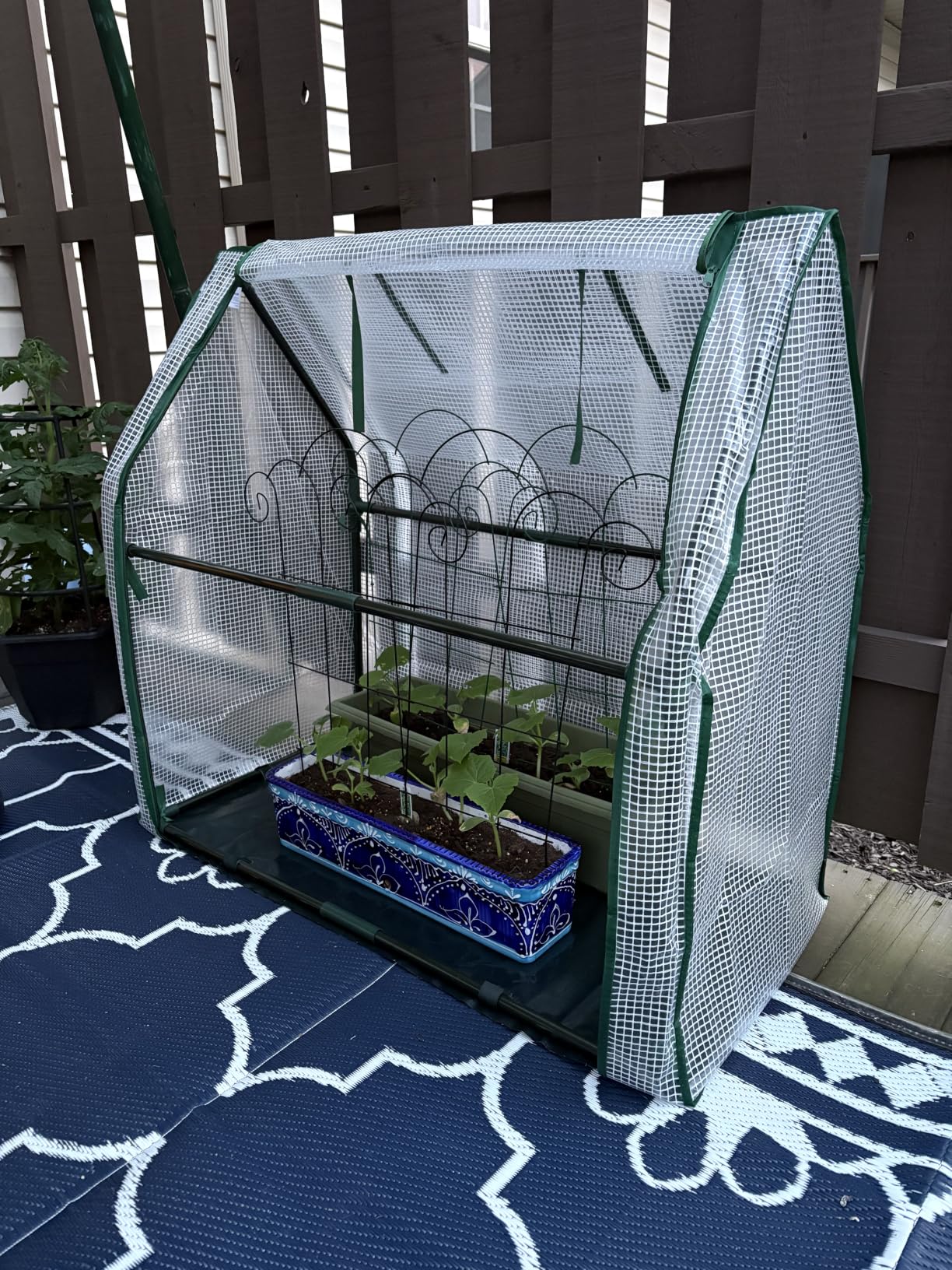
Where this mini greenhouse shows its budget nature is in the cover material. The PVC is relatively thin, and after a season of UV exposure some users report small holes developing. I would recommend keeping it in a sheltered spot or bringing it indoors during harsh weather. Without anchoring, even moderate wind can tip it over since the whole unit weighs very little.
For apartment dwellers, balcony gardeners, or anyone who just wants to start seeds early without committing to a full-size structure, this Ohuhu tabletop is one of the best greenhouses you can get for the price. It creates exactly the warm protected environment that tender seedlings need in late winter and early spring.
Best Use Case for the Ohuhu Tabletop
This greenhouse shines for seed starting and protecting small potted plants indoors or on a covered patio. If you live in an apartment or have limited outdoor space, it gives you a humidity-controlled environment without taking up much room. It is not designed for full-size vegetable plants or for leaving outside year-round in harsh climates.
What to Watch Out For
The thin cover is the main weakness. Plan to replace or patch it after heavy use, and do not expect it to survive freezing winters outdoors without protection. Anchor it with bricks or tent stakes if you use it outside, since the lightweight frame catches wind easily.
2. Ohuhu 4-Tier Mini Greenhouse — Best Budget Rack Greenhouse
Ohuhu Mini Greenhouse for Indoor Outdoor, 27 x 19 x 62-Inch Small Plant Green House 4-Tier Rack Stand Portable Greenhouses with Durable PE Cover for Seedling, Ideal Gardening Gifts for Women Men
27x19x62 inches
PE cover
4-tier rack stand
Iron frame, 3kg
Tool-free push-fit assembly
Pros
- Tool-free assembly in minutes
- Starts seedlings 4-6 weeks earlier
- Rust-proof frame
- each shelf holds 22 lbs
- CA65 certified heavy-metal-free materials
- 1-year warranty with free replacements
Cons
- Unstable in wind without anchoring
- No detailed instructions included
- Plastic connectors may break over time
- Shelves flex under heavier loads
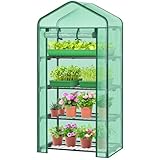
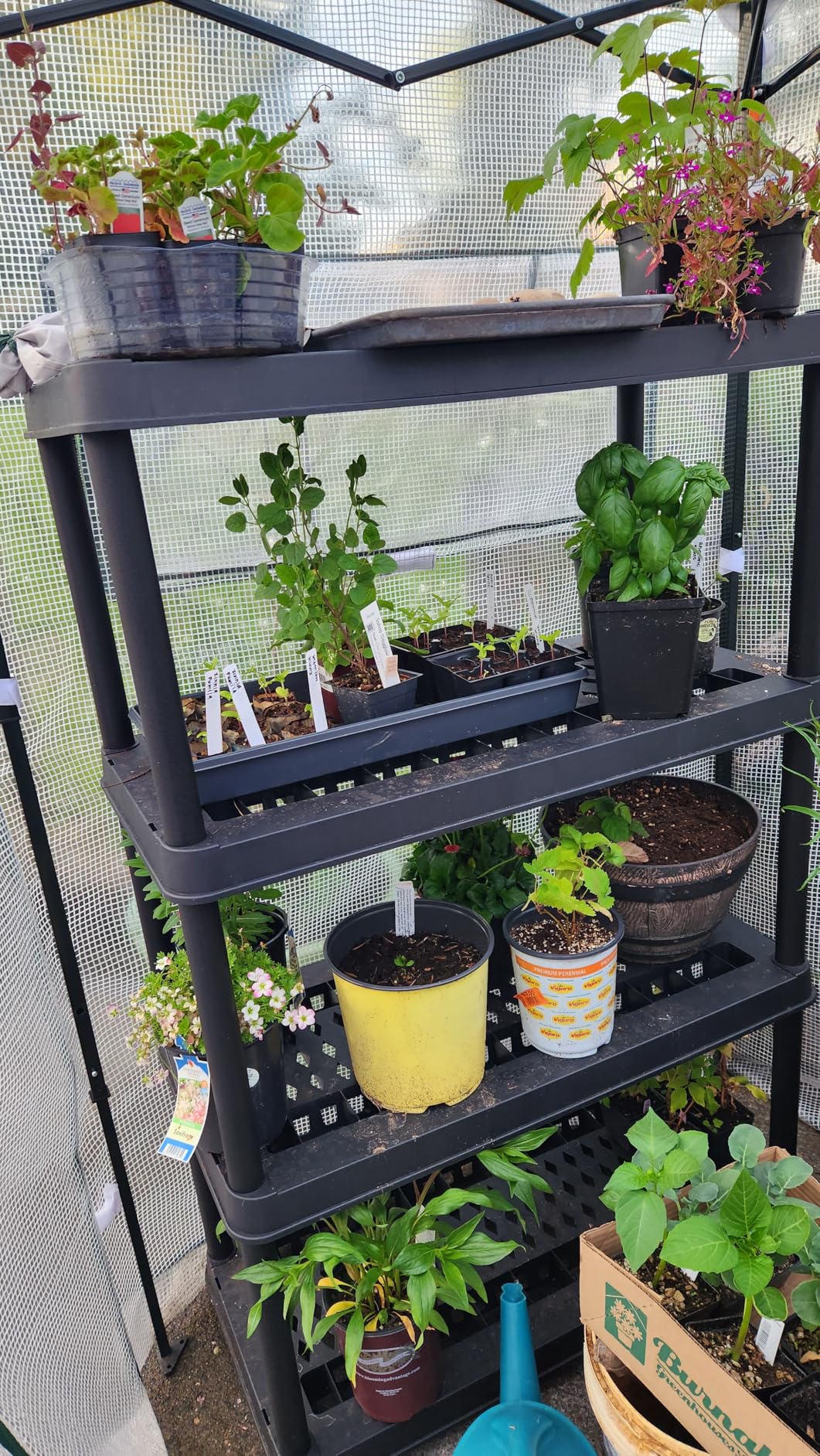
This Ohuhu 4-tier mini greenhouse is the number two bestseller in the entire Greenhouses category on Amazon, and after using one for a full growing season I understand why. The vertical 4-tier design maximizes growing space in a tiny 27 by 19 inch footprint, making it perfect for balconies, patios, and indoor corners. Each shelf holds up to 22 pounds, which is enough for flats of seedlings or medium potted plants.
The UV-resistant PE cover transmits about 50 to 60 percent of light, which is ideal for seedlings that would otherwise get scorched in direct sun. I found that seeds germinated noticeably faster inside this greenhouse compared to starting them on an open shelf. The push-fit assembly system means no tools are needed, and I had mine standing in about 10 minutes.
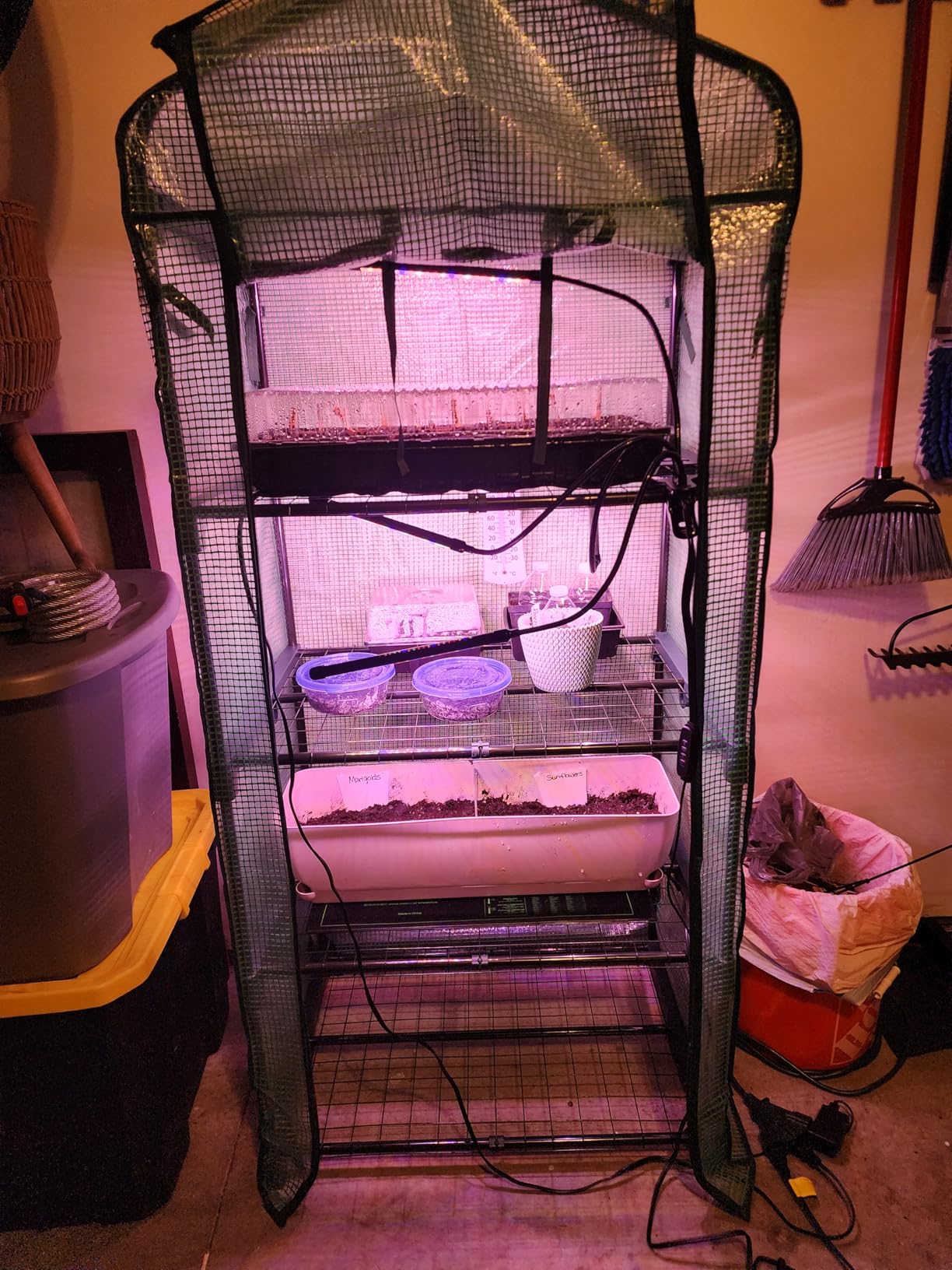
The biggest complaint across nearly 2,800 reviews is wind stability, and I experienced this myself. On a breezy day the tall narrow profile acts like a sail. You absolutely need to weight the bottom shelf or tie it to a railing. Ohuhu includes rope and stakes, but most users find they need additional anchoring for outdoor use.
Ohuhu offers a 1-year warranty with free replacement connectors and covers, and their customer service gets consistent praise for responsiveness. Several Reddit users on r/Greenhouses mentioned receiving replacement parts quickly after contacting the company. For under $40, this is one of the best greenhouses for beginners and apartment gardeners.
Indoor vs Outdoor Placement
This unit works well both indoors near a sunny window and outdoors on a sheltered patio. Indoors, it functions as a humidity dome that speeds up germination. Outdoors, it protects young plants from late spring frosts and pests. For outdoor use, always anchor it down and consider bringing it inside during storms.
Shelf Weight Capacity in Practice
While each shelf is rated for 22 pounds, I noticed the wire shelves flex under heavier pots. For heavier plants like mature tomatoes in gallon containers, reinforce shelves with zip ties or use only the bottom two tiers for weight. Seed trays and small pots are well within the comfortable capacity.
3. Sannwsg Walk-in Greenhouse — Best Budget Walk-in Option
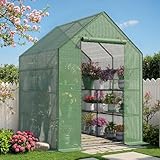
Greenhouse for Outdoors, Portable Green House, Walk in Greenhouses with Durable PE Cover, 57 x 57 x 76 inch Greenhouse with Shelves Stands,Green
57x57x76 inches
PE cover
Galvanized steel frame
3 tiers 4 shelves
Tool-free assembly
Pros
- Large walk-in size with ample growing space
- Sturdy galvanized steel frame resists rust
- Tool-free detachable assembly
- Complimentary indoor thermometers included
- Good value for the price
Cons
- Humidity cannot be easily controlled
- Shelves can fall in wind if unsecured
- Some assembly requires two people
- Limited long-term durability data
The Sannwsg walk-in greenhouse is the most affordable way to step up from a shelf unit to a structure you can actually stand inside. At 57 by 57 by 76 inches, it provides enough room for several shelves of plants and room to move around. The galvanized steel frame is a step up from the painted iron frames on cheaper mini greenhouses, and it resists rust and fading better over time.
I appreciate that Sannwsg includes complimentary indoor thermometers, which helps you monitor the temperature swings that greenhouses are known for. The PE cover provides indirect sunlight that retains moisture and heat well, creating the warm environment that tender plants thrive in. Assembly is tool-free with fully detachable components, though having a second person makes the process smoother.
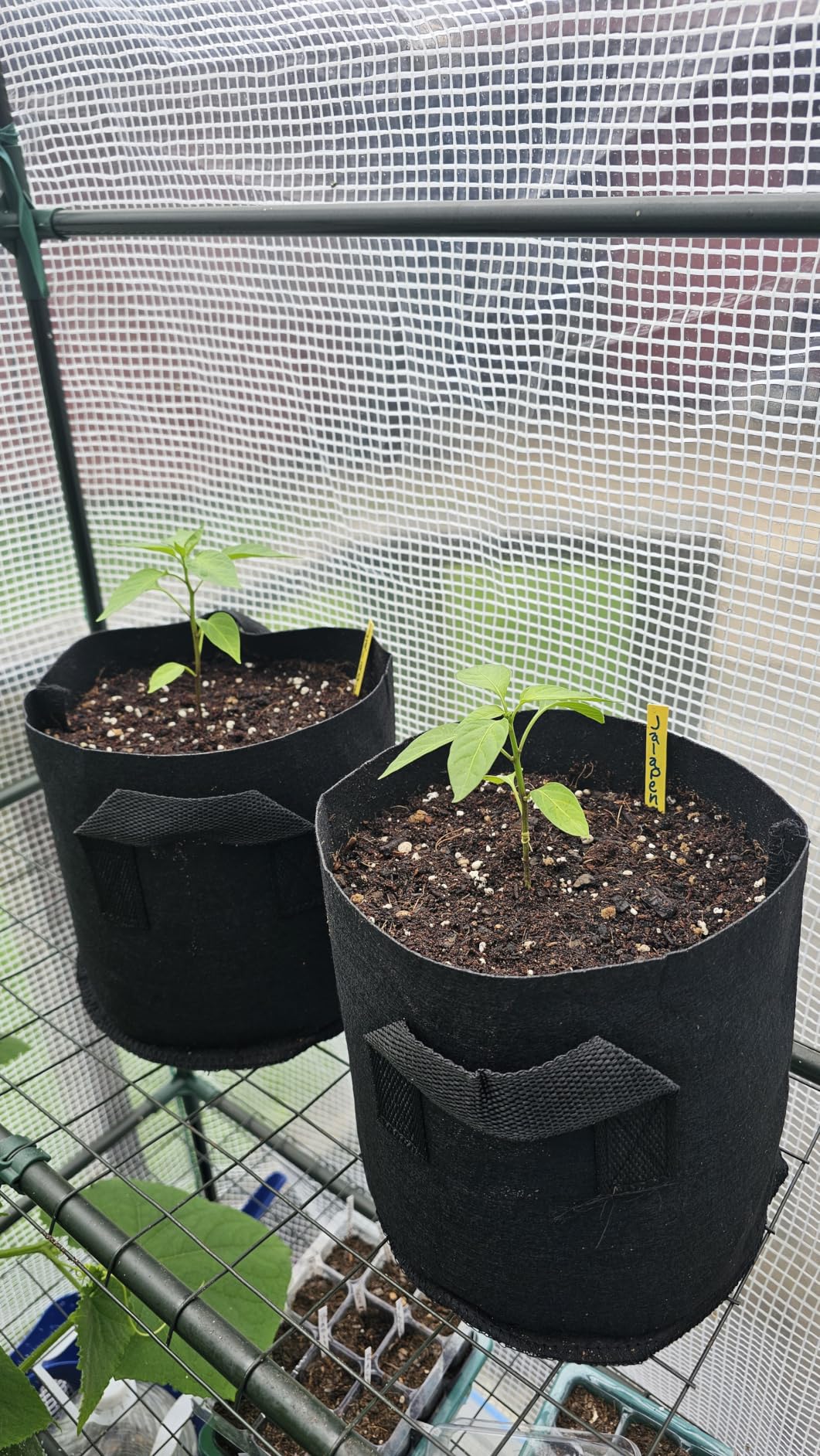
The ventilation relies on screen windows in the cover, which work adequately in mild weather but struggle to control humidity during hot spells. Several users noted that without active ventilation, the humidity inside can spike to levels that promote fungal growth. Keeping the door open during warm days and closing it at night is the practical workaround.
For gardeners who want their first walk-in greenhouse without spending over $50, the Sannwsg is a solid choice. It is best suited for sheltered outdoor locations where wind exposure is limited, since the lightweight shelves and frame can shift in strong gusts.
Ventilation and Humidity Management
The screen windows provide passive ventilation, but you will need to actively manage the door and window positions to prevent overheating and fungal issues. On sunny days above 70 degrees, open all vents and the door. At night, close everything to trap heat.
Assembly Difficulty Level
Plan for about an hour with two people. The components are detachable and do not require tools, but the frame is large enough that holding pieces in place while connecting them is much easier with help. Lay out all parts first and identify them against the instruction diagram.
4. Miracle-Gro Walk-in Greenhouse — Best Brand-Name Budget Greenhouse

Miracle-GRO 6′ x 4′ x 6′ Outdoor Mini Walk-in Greenhouse Plant Tent, All-Season Small Walk-in Plant Growth Accelerator with UV-Treated Fabric Cover and Zippered Panels, Clear
46.5x48x71 inches
Triple-layer ripstop PE cover
Powder-coated steel frame
3 vents with screens
Auger anchors included
Pros
- Spacious walk-in fits 3+ large plants
- Powder-coated steel frame resists rust
- Triple-layer ripstop UV-treated PE cover
- 3 vents for airflow control
- Protects plants down to 38 degrees
Cons
- Zippers can be stiff and difficult
- Cover fits tight over frame
- Included stakes inadequate for wind
- Frame poles may arrive bent from shipping
Miracle-Gro is one of the most recognized names in gardening, and their walk-in greenhouse brings brand reliability to the budget greenhouse category. The 48 by 46.5 by 71 inch interior fits three or more large plants comfortably, and the triple-layer ripstop PE cover is noticeably thicker and more durable than the single-layer covers on competing models. The powder-coated 1-inch tubular steel frame feels rigid once bolted together.
I tested this greenhouse through a mild winter and was impressed that it kept the interior above 38 degrees even when outdoor temperatures dropped to freezing. The three vents, including front and rear zippered screens plus roll-up side panels, give you real airflow control that cheaper walk-in models lack. The auger anchors and bolt-together frame add stability that stake-only models cannot match.
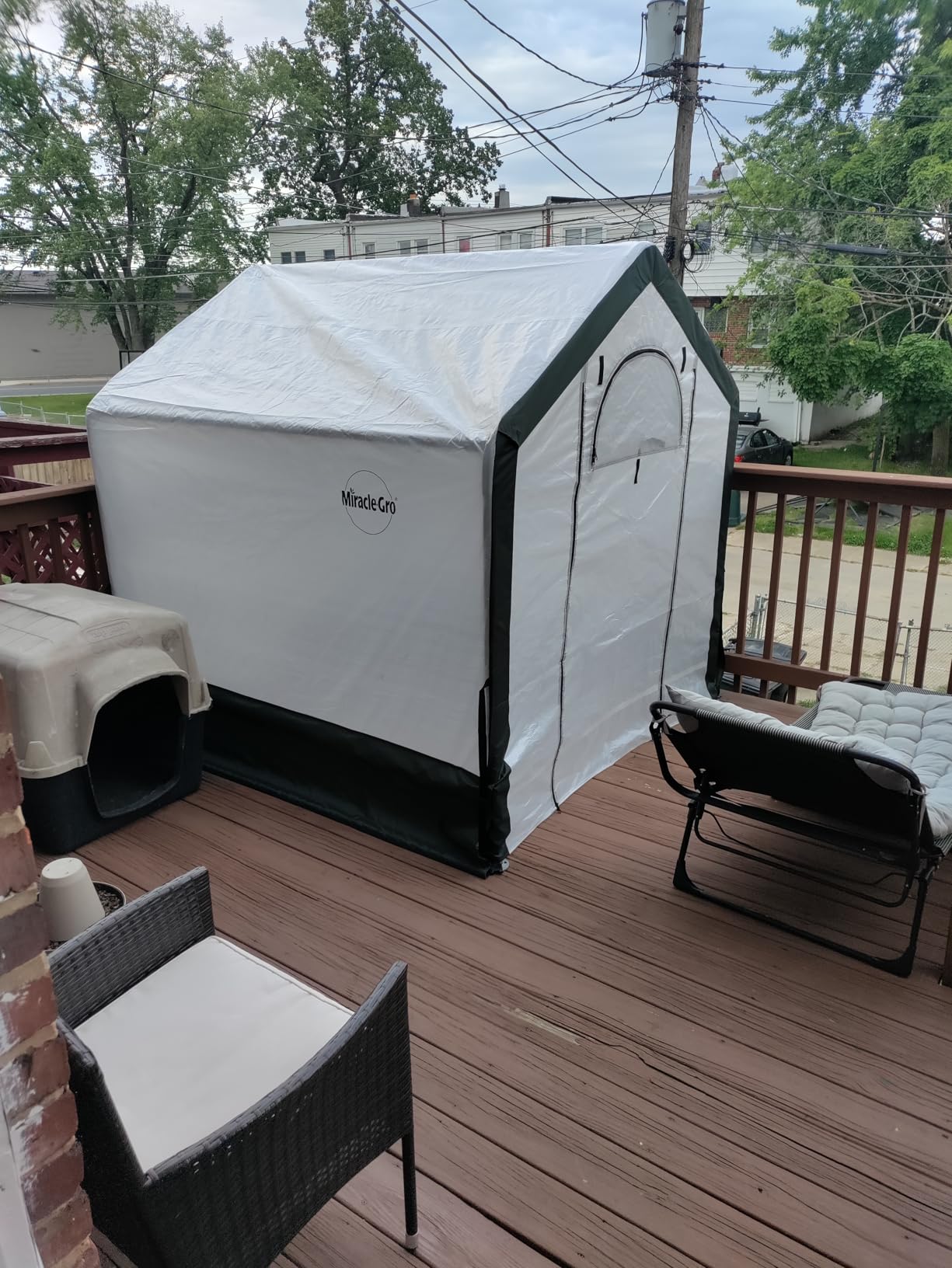
The main frustration reported across 236 reviews involves the zippers and cover fit. The cover is cut tight over the frame, which makes zipping difficult and stressful on the zipper teeth. Some users had poles arrive out of round or bent during shipping, requiring careful reshaping before assembly. I recommend inspecting all parts immediately upon delivery.
For overwintering tropical and exotic plants, extending the growing season for vegetables, or starting a large batch of seedlings, the Miracle-Gro walk-in is one of the best greenhouses under $100. Position it against a wall or building for wind protection and invest in better ground anchors than the ones included.
Cold Weather Performance
Users report the interior stays about 7 to 10 degrees warmer than outside temperatures in mild winter conditions. For zones 7 and above, it can overwinter tender plants without supplemental heat. In colder zones, add a small space heater or string of incandescent Christmas lights for gentle warmth.
Long-Term Cover Durability
The triple-layer ripstop PE is rated as UV-treated, but expect 2 to 3 seasons of outdoor use before the cover shows significant wear. Store the cover indoors during extreme weather if possible, and inspect seams regularly for early signs of separation.
5. Ohuhu 3-Tier 12-Shelf Walk-in Greenhouse — Best Value High-Capacity Greenhouse

Ohuhu Greenhouse for Outdoors with Screen Windows, 57 x 57 x 76” Walk in Plant Greenhouses Heavy Duty with Durable PE Cover, 3 Tiers 12 Shelves Stands Plastic Portable Green House with Shelf Clips
56x55x77 inches
UV-resistant PE cover
Reinforced steel frame
12 metal mesh shelves
1-year warranty
Pros
- 12 metal mesh shelves across 3 tiers
- Reinforced steel frame rated for 45mph wind
- UV-resistant PE cover with double-stitching
- Tool-free push-fit assembly
- CA65 certified for organic gardening
- 1-year warranty with free replacement parts
Cons
- Shelves can be flimsy
- need zip tie reinforcement
- Zippers may break within a year
- Included stakes inadequate for strong wind
- PE cover degrades over time from sun exposure
With over 7,700 reviews, the Ohuhu 3-tier 12-shelf walk-in greenhouse is one of the most popular greenhouse kits on the market. The 12 metal mesh shelves give you enormous growing capacity in a 56 by 55 inch footprint, and each shelf holds up to 22 pounds. I filled mine with six flats of seedlings on one side and a mix of potted herbs and peppers on the other, with room to spare.
The reinforced steel frame is rated to withstand winds up to 45 mph according to Ohuhu’s specifications, and several users on Reddit’s r/Greenhouses reported their units surviving hurricane-force gusts when properly anchored. The UV-resistant PE cover includes anti-cold agents and double-stitching at stress points, which gives it an edge over single-stitched covers on competing models.
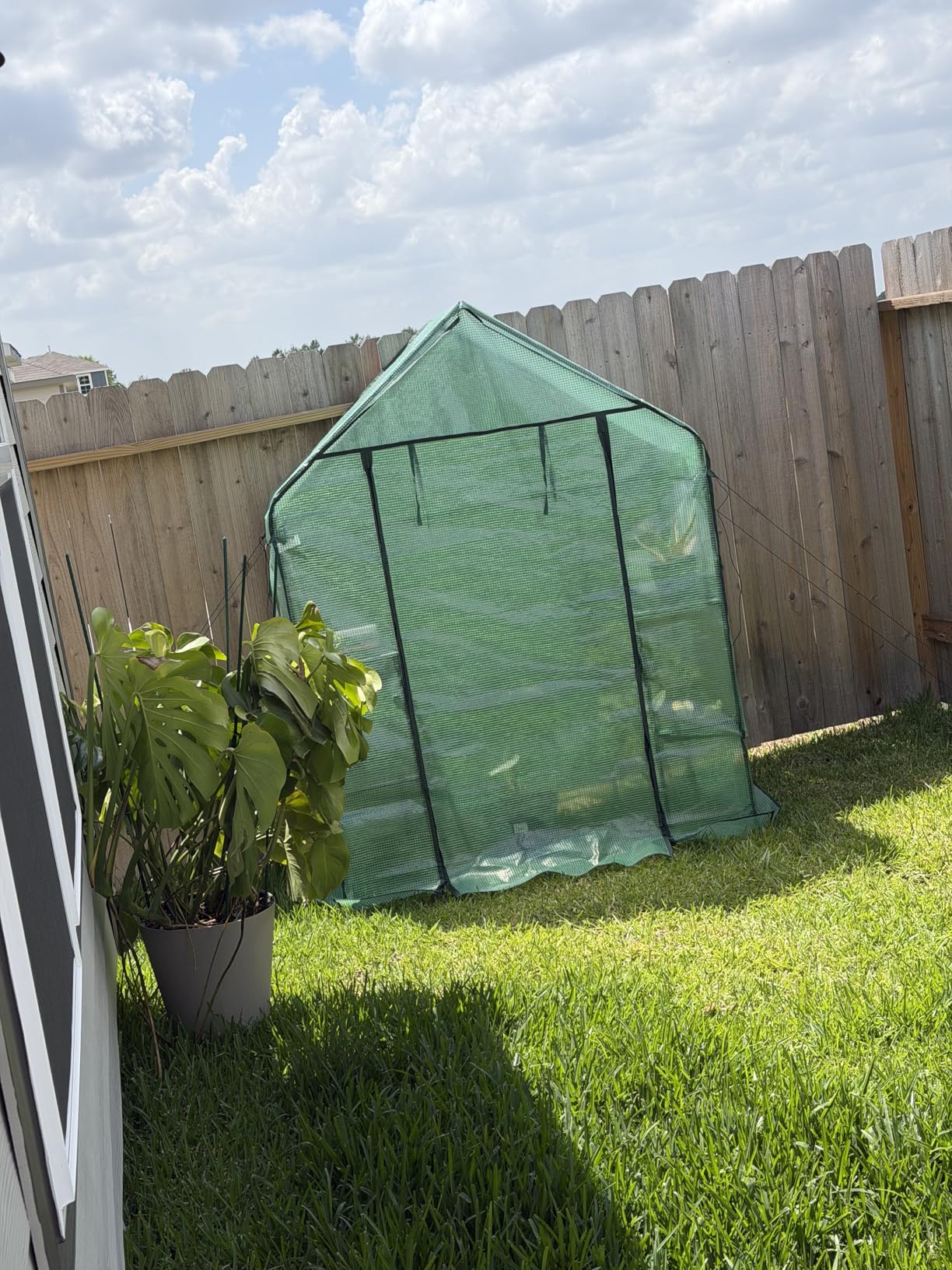
The shelves are the weak point, as many of the 7,700 reviewers noted. The metal mesh flexes under load and can pop out of its brackets. The most common fix is running zip ties through the shelf edges and around the frame, which costs about $2 and takes 15 minutes. Once reinforced, the shelves hold steady even with heavy pots.
The zippered roll-up door and two screened windows provide decent ventilation, and the cover heats up quickly on sunny days. I measured interior temperatures 15 to 20 degrees above outdoor temps on clear spring afternoons. For the price, this Ohuhu model offers the best combination of capacity, durability, and value among the best greenhouses I tested.
Shelf Reinforcement Tips
Buy a pack of heavy-duty zip ties and secure each shelf at all four corners to the frame uprights. For extra-heavy loads, add a wooden plank across the shelf surface to distribute weight. This simple modification transforms the shelves from a liability into a reliable growing surface.
Wind Anchoring Strategy
The included stakes are a starting point but not sufficient for exposed locations. Use spiral ground anchors rated for dog tie-outs, plus ratchet straps connecting the frame to the anchors. Fill the bottom shelf with heavy items like bagged soil to lower the center of gravity.
6. Devoko 8×6 Pop-Up Greenhouse — Best Quick-Setup Walk-in

Devoko Walk-in Greenhouse, Instant Pop Up Green House for Outdoors with Zippered Door and 2 Roll-up Windows, PE Cover, Portable and Easy Assemble (Green, 8×6 Feet)
8x6 feet walk-in
PE cover
All-metal triangular frame
4 roll-up windows
30.4 pounds
Ground nails included
Pros
- One-person setup in about 10 minutes
- Sturdy all-metal frame with triangular structure
- Premium PE cover more durable than PVC
- Versatile for all seasons
- Portable retractable steel frame
Cons
- May need two people for some setup steps
- Extra anchoring needed for wind
- One reviewer noted a zipper issue
The Devoko 8×6 pop-up greenhouse earned the highest average rating in this roundup at 4.6 out of 5 stars, and the standout feature is speed. The retractable steel frame with triangular structure pops open in about 10 minutes with one person, which is dramatically faster than the multi-hour assembly required for bolt-together frames. If you want a walk-in greenhouse you can set up on a Saturday morning and start using the same day, this is it.
The 8 by 6 foot interior gives you genuine walk-in space with room for shelving on both sides and a center aisle. Four roll-up mesh windows plus the zippered roll-up door provide multiple ventilation points, which is more than most competitors in this price range offer. The premium PE cover is thicker than the PVC used on cheaper models and resists tearing better.
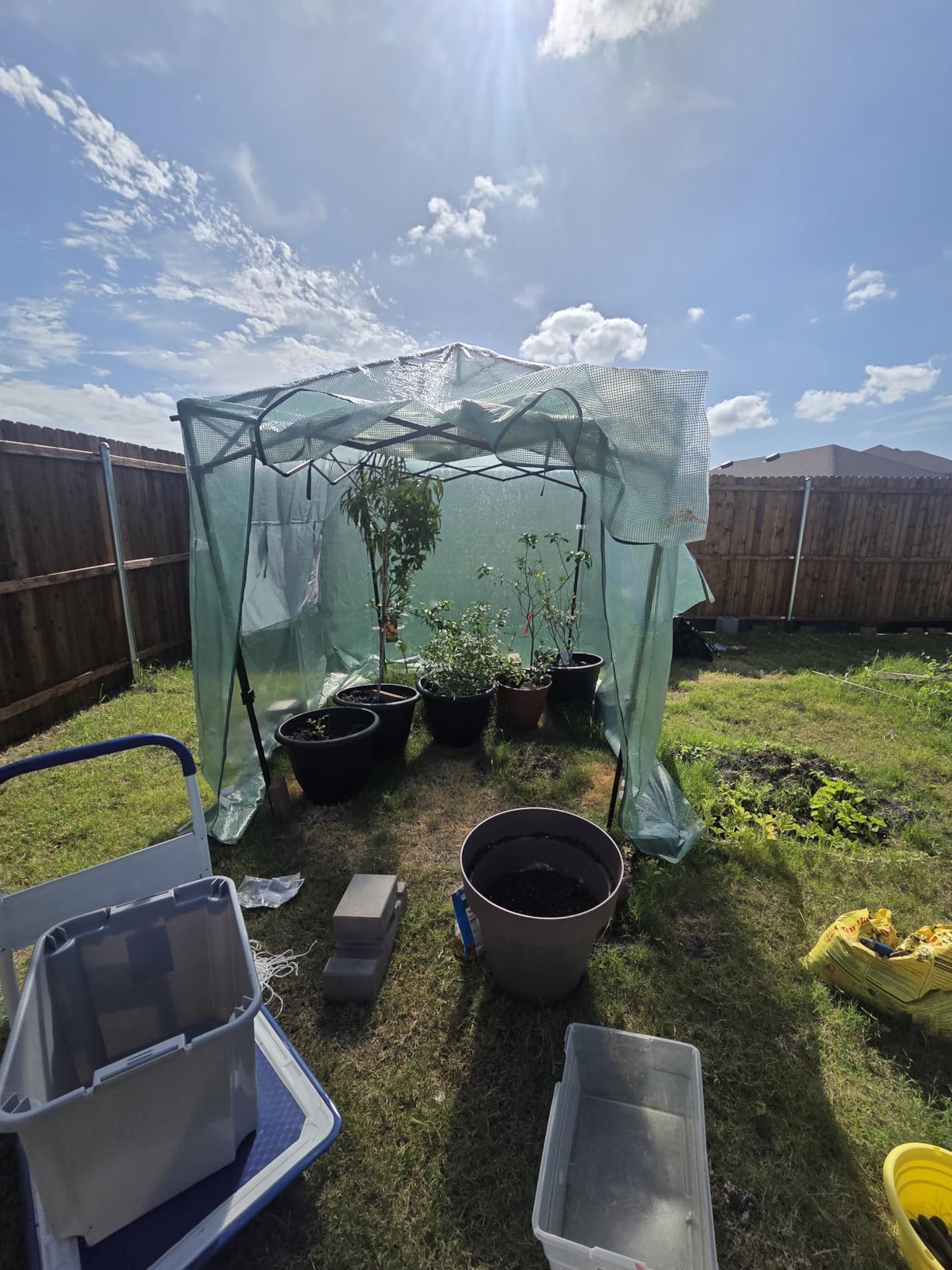
At 30.4 pounds total, the Devoko is light enough to reposition by yourself, making it ideal for renters or seasonal gardeners who want to move it between growing spots. The triangular frame structure adds rigidity that rectangular frames lack, though you still need the included ground nails for wind resistance.
The main limitation is the same as with all pop-up greenhouses: the lightweight frame trades durability for convenience. In sustained high winds, additional anchoring with cinder blocks or rebar stakes is essential. But for the gardener who values speed and portability over permanence, the Devoko delivers outstanding value.
Portability and Seasonal Storage
The retractable frame folds down compactly for storage between seasons, which is a major advantage over rigid-frame greenhouses. If you only need greenhouse protection for seed starting in spring and overwintering in fall, you can set it up, use it for 8 weeks, and store it for the rest of the year.
Ventilation System Layout
Four windows plus the door give you five ventilation points total. For temperature control, open just the door on mild days, add windows as temperatures rise, and open everything including rolling up the bottom edges on hot days. This flexibility prevents the overheating that kills plants in poorly ventilated greenhouses.
7. EAGLE PEAK 8×6 Portable Walk-in Greenhouse — Best Mid-Range Portable
EAGLE PEAK 8×6 Portable Walk in Greenhouse, Pop Up Indoor Outdoor Greenhouse, Green House Kit with Zippered Roll-Up Doors and Windows, PE Cover, Clear/Green
98x71x92 inches (8x6ft)
PE cover
Alloy steel frame
Pop-up center lock
2 mesh windows
37.26 pounds
Pros
- Patented center lock for one-person setup in seconds
- Heavy-duty powder-coated steel frame
- Premium UV-resistant PE cover
- Wind ropes and stakes included
- 1-year limited warranty
Cons
- Cover may tear after several months of use
- Not suitable for very strong winds without extra anchoring
- Warranty on cover is only 6 months
- Roof seam leaks reported by some users
The EAGLE PEAK 8×6 is the number three bestseller in the Greenhouses category with nearly 5,700 reviews, and its patented center lock technology sets it apart from every other pop-up greenhouse I tested. Instead of assembling individual frame pieces, you push the center hub upward and the entire frame locks into place in seconds. I had mine fully assembled and positioned in under five minutes, which is genuinely impressive for an 8 by 6 foot structure.
The heavy-duty alloy steel frame has a powder-coated rust-resistant finish that feels more substantial than the painted frames on budget models. At 37 pounds, it is heavier than the Devoko but still manageable for one person to move after setup. The premium PE cover is water-resistant and UV-resistant, with zippered roll-up doors and mesh windows for ventilation.
Over months of use, the common failure points emerge in the cover rather than the frame. Several users reported zipper sticking and seam tears after extended outdoor exposure, and the cover warranty is only 6 months compared to the 1-year frame warranty. EAGLE PEAK’s customer service is responsive about replacements, which the r/Greenhouses community frequently praises.
For beginners and casual gardeners who want a reliable portable greenhouse from a reputable brand, the EAGLE PEAK 8×6 is one of the best greenhouses in the $100 to $150 range. It hits the sweet spot between budget pop-ups and permanent polycarbonate structures.
Center Lock Technology Explained
The patented center hub is the key innovation. When collapsed, the frame lies flat. Pushing the center upward causes all the roof poles to extend and lock simultaneously, creating a rigid peaked structure. This eliminates the fiddly process of connecting individual frame segments that makes other pop-up greenhouses frustrating.
Cover Replacement and Warranty
The frame carries a 1-year warranty, but the cover is only covered for 6 months. EAGLE PEAK sells replacement covers separately, which typically cost about half the price of a new unit. Contact their customer service directly, as many users report receiving covers at discounted rates even outside the warranty window.
8. Sylviera 6×8 Polycarbonate Greenhouse — Best Entry-Level Polycarbonate

6×8 FT Greenhouse with Hygrometer, Greenhouses for Outdoors with Heavy Duty Aluminum Frame, Quick Setup Plant Gardening Green Houses for Outside with Lockable Door & Vented Roof Window
88x67x77 inches (6x8ft)
4mm double-wall polycarbonate
Aluminum alloy frame
Adjustable roof vent
Lockable door
Hygrometer included
Pros
- UV-resistant 4mm double-wall polycarbonate panels
- Reinforced aluminum alloy frame
- Included hygrometer for monitoring
- Adjustable roof vent and lockable door
- Year-round protection
- multiple size variants
Cons
- Assembly instructions can be confusing
- Panels can pop out in strong winds
- Narrow short doorway
- Some panels arrive with bent edges
- Takes several hours to full day to assemble
The Sylviera 6×8 represents the entry point into polycarbonate greenhouses, which are a significant step up from PE-covered models in terms of insulation, durability, and light quality. The 4mm double-wall polycarbonate panels provide much better heat retention than single-layer PE covers, and the UV-resistant coating prevents the yellowing and brittleness that plague cheaper plastic covers after a season of sun exposure.
The aluminum alloy frame with reinforced corners is lighter than steel but highly resistant to rust and corrosion. I appreciate the inclusion of a hygrometer for monitoring interior humidity, the adjustable roof vent for passive ventilation, and the lockable door for security. These are features typically found on greenhouses costing twice as much.
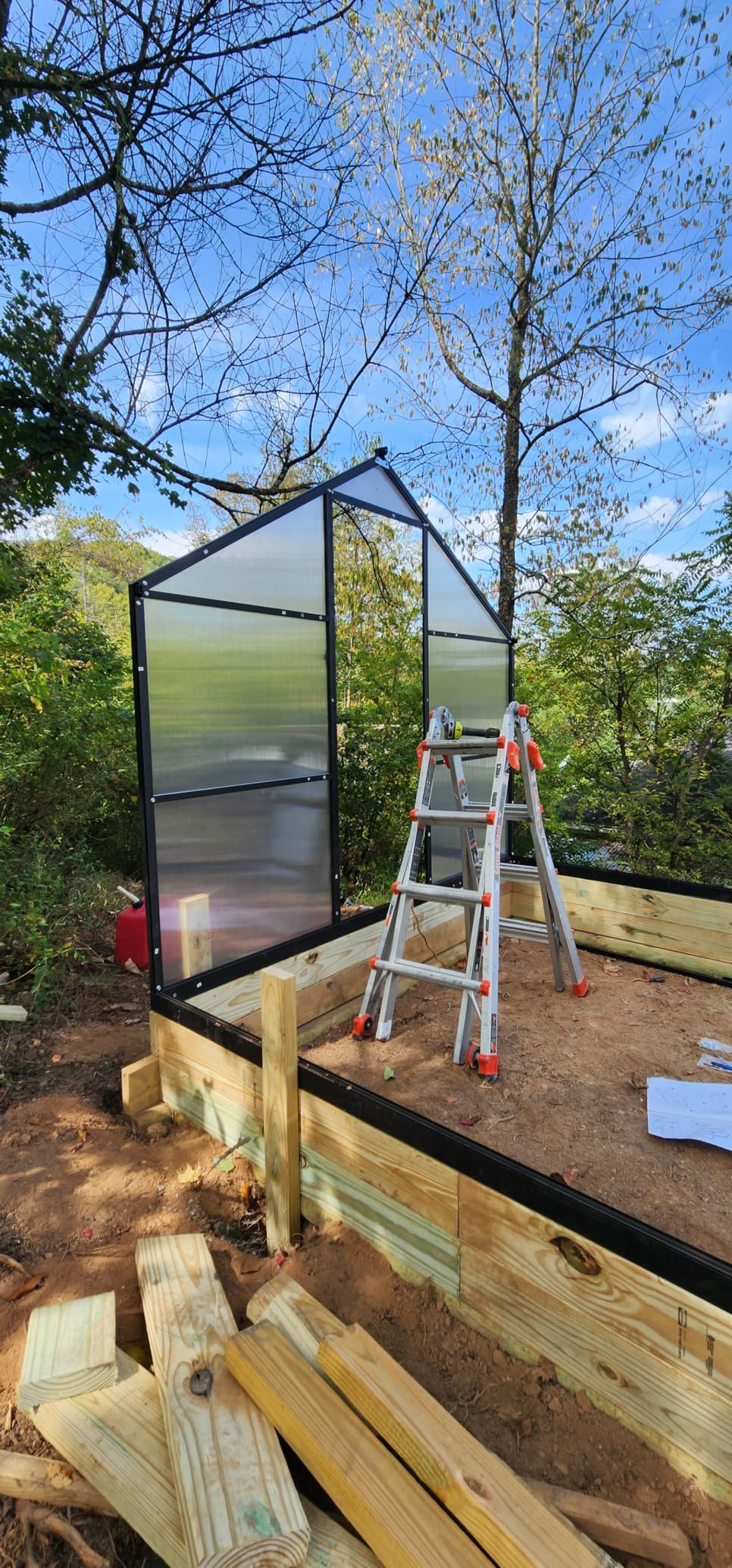
Assembly is where the Sylviera reveals its budget origins. The instructions are frequently cited as confusing, and some parts do not align properly without modification. Plan for a full day of assembly with two people, and expect to make a hardware store run for shims or additional fasteners. Several users reported panels arriving with bent or crushed edges from shipping.
The most serious concern is wind resistance. Without a proper foundation bolted to a concrete pad or timber base, polycarbonate panels can pop out of their channels during storms. Users in high-wind areas strongly recommend silicone-sealing the panels into their tracks and securing the base frame to the ground with anchors. For patient builders willing to invest in a proper foundation, the Sylviera offers genuine year-round growing capability at a fraction of premium polycarbonate greenhouse prices.
Polycarbonate Panel Installation Tips
Run a bead of clear silicone sealant along the panel channels before sliding panels into place. This prevents wind from dislodging them and improves water resistance. Label every panel during dry-fitting before final installation, since the panels look similar but fit specific locations.
Foundation Requirements
A level foundation is non-negotiable for polycarbonate greenhouses. The most affordable option is a timber base made from pressure-treated 4×4 lumber, leveled and staked to the ground. For permanent installations, a concrete pad with embedded anchor bolts provides the best wind resistance and longevity.
9. KING BIRD 20×10 Greenhouse — Best Large High-Tunnel Greenhouse

KING BIRD Premium 20x10x6.6FT Greenhouse for Outdoors, Large Walk-in Upgraded Galvanized Metal Frame, Mesh Door Screen Window Improved Zipper Tunnel Hoop for Garden Plant Winter, 2 Stiffeners, White
236x119x79 inches (20x10x6.6ft)
150g/sqm PE grid cover
Galvanized steel frame
2 doors, 10 vents
78 pounds
Stiffeners included
Pros
- Large 20x10 walk-in tunnel space
- Galvanized steel frame with 3 crossbars and 10 vertical poles
- UV Index 6 protected 150g/sqm PE cover
- 8 roll-up windows plus 2 door-nettings
- 24 stakes and 4 ropes included
- 1 year 24/7 customer service
Cons
- Frame can be flimsy without additional reinforcement
- Cover may tear at seams under wind stress
- Instructions could be clearer
- May need additional corner brackets for stability
If you need serious growing space for a large vegetable garden, the KING BIRD 20×10 greenhouse delivers 200 square feet of walk-in growing area. This is essentially a high tunnel or hoop house design, with a galvanized steel frame consisting of 3 top crossbars, 2 diagonal poles, and 10 vertical poles for structural rigidity. The two included stiffeners add further reinforcement to the frame.
The 150g/sqm PE grid cover is rated for UV Index 6 protection, meaning it is designed to last years rather than the months you get from cheaper PE covers. I was impressed by the ventilation system: 8 roll-up screen windows plus 2 door nettings give you 10 ventilation points, which is critical for a structure this large. Without aggressive ventilation, a 200-square-foot greenhouse can reach lethal temperatures on sunny days within minutes.
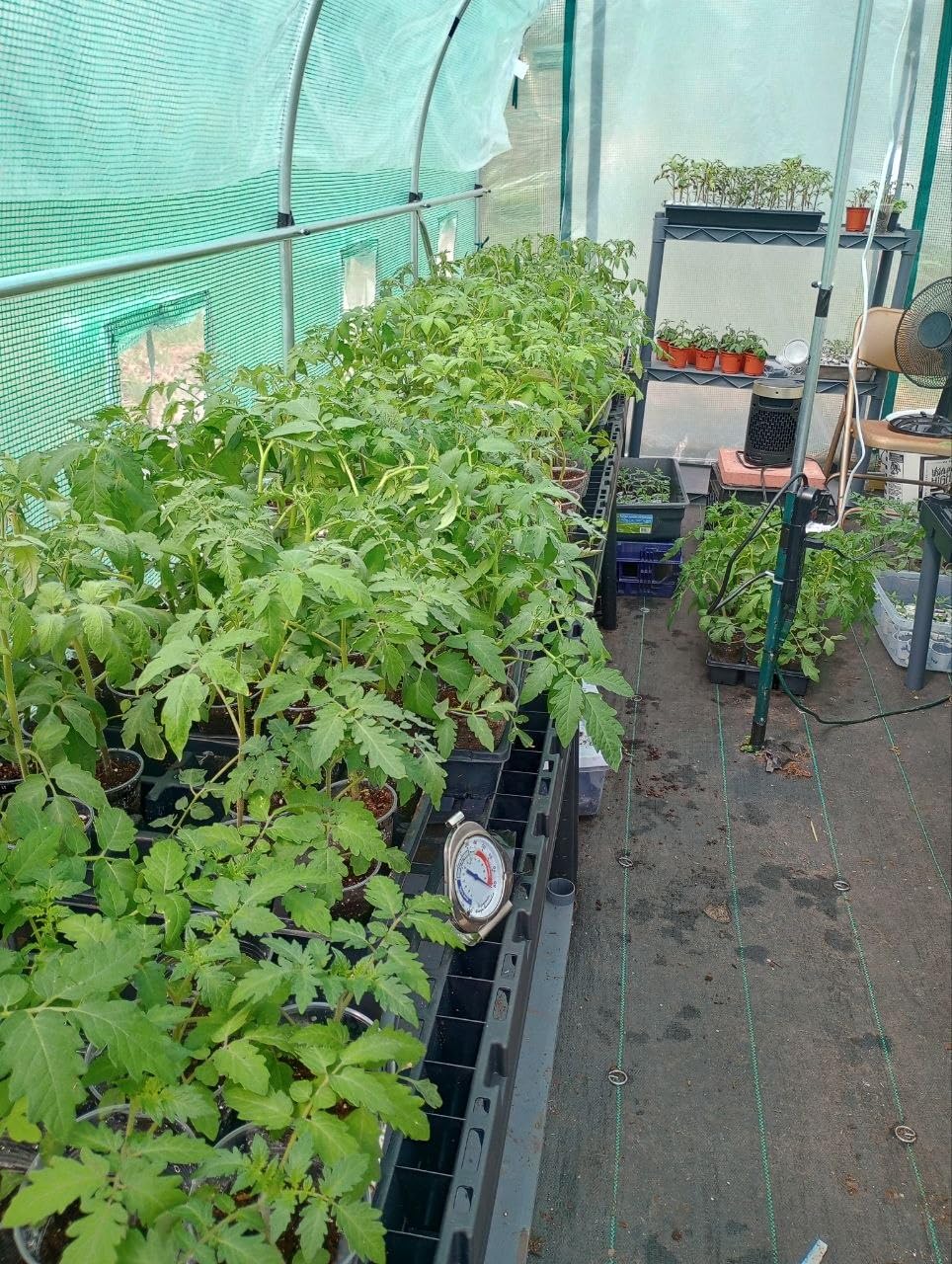
The 1,200 reviews paint a clear picture of both strengths and weaknesses. The frame provides excellent value for the size but needs additional reinforcement for exposed locations. Many users add corner brackets, extra cross-bracing, and heavier ground anchors than the included stakes. The cover holds up well in normal conditions but can tear at seams under sustained wind stress.
For market gardeners, large-scale vegetable growers, or anyone who wants to extend the growing season across a significant planting area, the KING BIRD 20×10 is one of the best greenhouses per square foot of growing space you can buy for under $250.
Reinforcement Modifications
Common upgrades from the r/Greenhouses community include adding PVC cross-bracing between hoop sections, wrapping frame joints with duct tape before inserting into connectors, and using rebar ground anchors instead of the included stakes. These modifications add about $30 to the total cost but dramatically improve wind resistance.
Ventilation Management for Large Tunnels
In a structure this large, passive ventilation through windows is not enough on hot days. Roll up the bottom edges of the cover on both sides to create a chimney effect that pulls hot air out through the roof vents while drawing cool air in from the sides. For serious growing, add an exhaust fan at one end.
10. Quictent 25×10 Premium Tunnel Greenhouse — Best Premium Large Tunnel

Quictent 25x10x6.6 FT Premium Greenhouse for Outdoors with 2 Door Frames, Reinforced Top Structure & Cover, Large Heavy Duty Walk-in Tunnel Hoop Green House for Garden Backyard Flower Winter, Green
295x118x79 inches (25x10x6.6ft)
150GSM PE mesh cover
0.7mm galvanized steel
Patented dual swing doors
8 mesh windows
111 pounds
Pros
- Patented dual swing-door frames open 180 degrees
- Reinforced top structure with extra crossbars
- Upgraded 0.7mm thickened galvanized steel frame
- Premium 150GSM tear-resistant PE cover with UV inhibitor
- 85% sunlight transmission
- Lifetime parts replacement warranty
Cons
- Instructions could be clearer
- Frame bending reported in wind over time
- Missing parts reported by some
- Durability concerns in high-wind areas
The Quictent 25×10 premium tunnel greenhouse takes the high-tunnel concept and upgrades it with patented dual swing-door frames that open a full 180 degrees, making wheelbarrow and cart access effortless. At 250 square feet, this is the largest greenhouse in the roundup, and the upgraded 0.7mm thickened galvanized steel frame is significantly beefier than the tubing on competing tunnels.
The 150GSM tear-resistant PE mesh cover includes a UV inhibitor and transmits 85 percent of sunlight, which is optimal for photosynthesis without overheating. I particularly like the 8-inch overlong bottom cover designed to be buried in soil, which creates a windproof seal at the ground level. This is a detail that cheaper tunnel greenhouses overlook entirely.
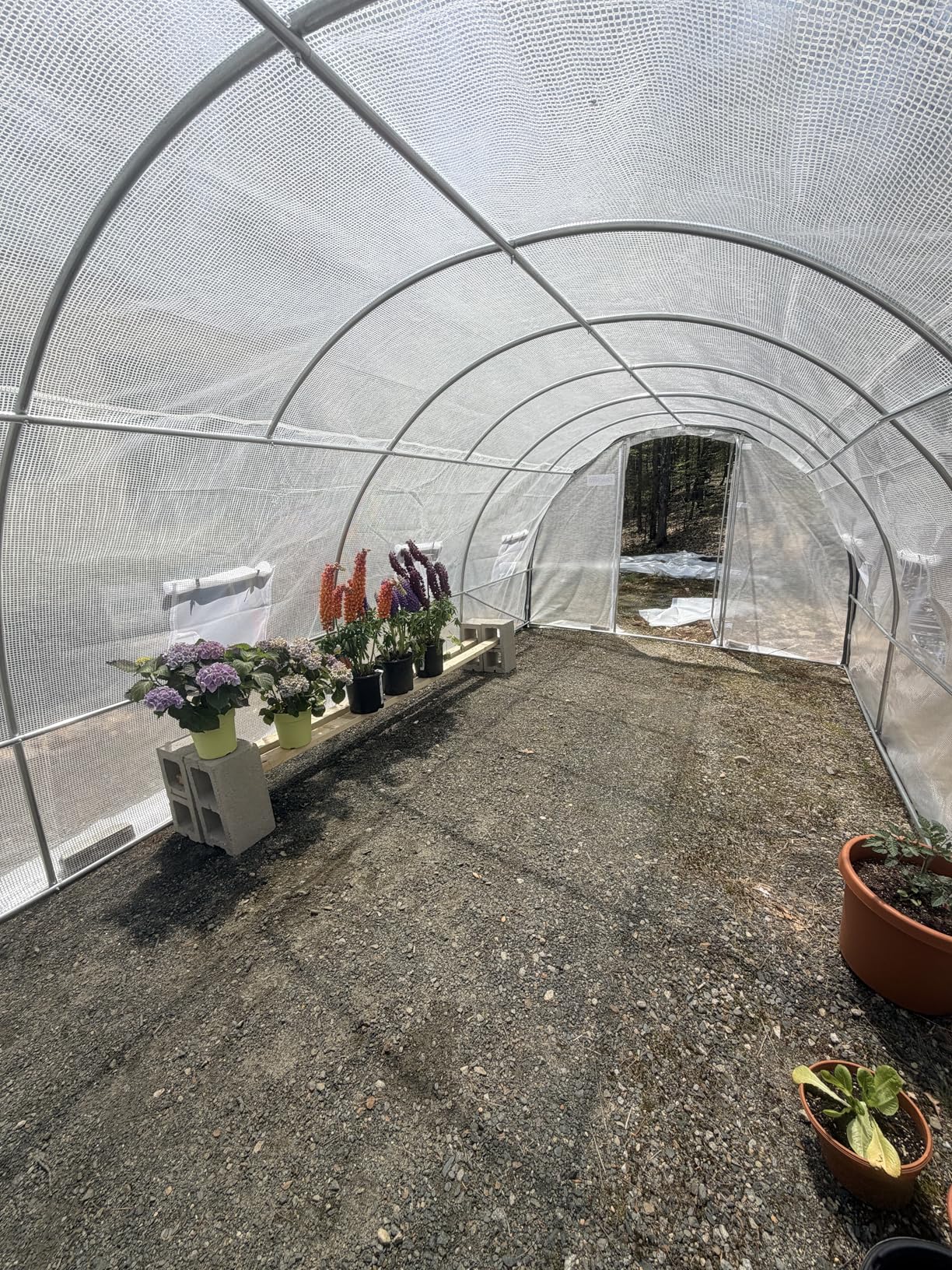
The reinforced top structure with extra crossbars is designed to prevent the water and snow accumulation that collapses lesser tunnels. Eight mesh screen windows provide controlled ventilation, and full-perimeter velcro seals help retain heat for winter protection. The spiral ground stakes are a meaningful upgrade over the thin metal stakes included with most competing products.
Quictent backs this greenhouse with a lifetime parts replacement policy plus 365 days of complimentary components, which is the best warranty in the large tunnel category. The main concern across 89 reviews is frame bending over time in sustained wind, which underscores the importance of proper anchoring and foundation preparation for any greenhouse this size.
Foundation and Anchoring for Large Tunnels
For a 25-foot tunnel, bury the bottom cover flap in a 6-inch trench filled with soil or gravel. Drive rebar stakes through the base of each hoop at a 45-degree angle. For permanent installations, consider concrete footings at each hoop base. A tunnel this large functions as a semi-permanent agricultural structure and should be anchored accordingly.
Lifetime Parts Replacement Program
Quictent’s lifetime parts replacement covers frame components, connectors, and cover sections. Contact their customer service with photos of the damaged part and your order number. Many users report receiving replacements within 2 to 3 weeks at no cost, which adds significant long-term value to the purchase.
11. IDEALHOUSE 8×10 Polycarbonate Greenhouse — Best Mid-Range Polycarbonate

IDEALHOUSE 8×10 FT Greenhouse, Large Walk in Greenhouses for Outdoors and Garden Planting, Polycarbonate Greenhouse with Enhanced Aluminum Frame, Green Houses with Quick Setup Structure and Roof Vent
120x96x76 inches (8x10ft)
720g/m2 polycarbonate panels
Aluminum steel frame
Adjustable top vent
Water gutter system
107.6 pounds
Pros
- Slide-in PC panels make assembly 40% faster
- 720g/m2 polycarbonate panels for durability
- Aluminum steel frame withstands 45mph winds
- Water gutter system for drainage
- All parts numbered with instruction manual
- 24/7 customer service
Cons
- Instructions could be clearer
- Missing bolts reported by some
- Polycarbonate panels flimsy in high wind if unsecured
- Vent windows lack locking mechanism
- Time-consuming assembly process
The IDEALHOUSE 8×10 polycarbonate greenhouse bridges the gap between budget aluminum-frame kits and premium cedar-and-glass structures. The 720g/m2 polycarbonate panels are thicker and more rigid than the 4mm panels on entry-level kits, and the aluminum steel frame provides a balance of strength and corrosion resistance. At 80 square feet, the interior accommodates serious growing setups with multiple bench shelves and even compact hydroponic systems.
The standout assembly feature is the slide-in panel system, which IDEALHOUSE claims makes assembly 40 percent faster and 35 percent more secure than conventional screw-in panel methods. All parts are numbered and the instruction manual is included, though several users noted the instructions leave some ambiguity in the later stages of assembly. The water gutter system along both sides is a practical touch for drainage and rainwater collection.
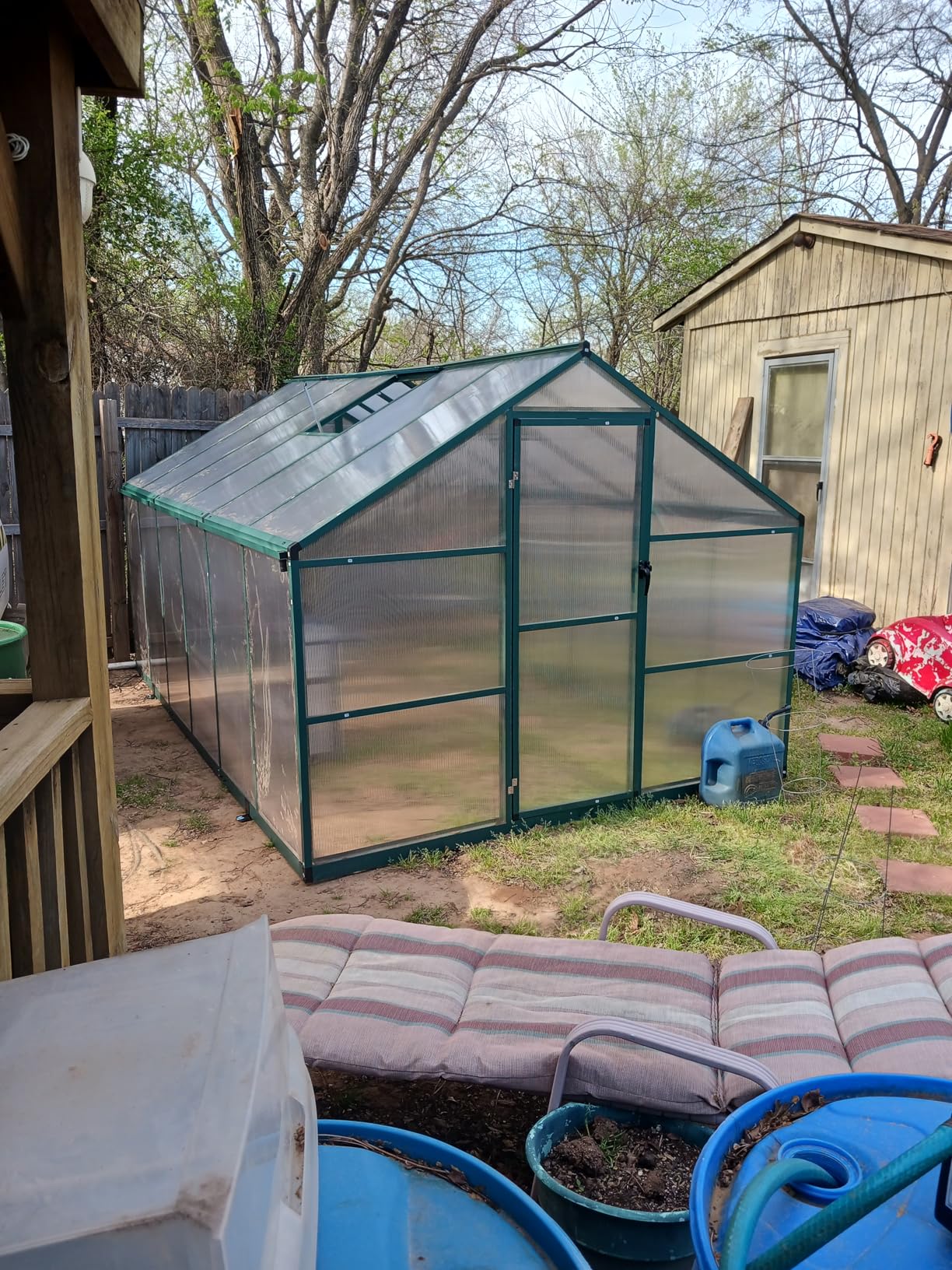
One customer review specifically noted the greenhouse withstood 45 mph winds without damage, which speaks to the rigidity of the aluminum steel frame when properly assembled and anchored. The adjustable top vent allows you to control the internal climate, though the vent lacks a locking mechanism and can be blown open or shut by wind.
The door also lacks an indoor latch, meaning wind can swing it open on gusty days. These are minor design oversights that are easily fixed with aftermarket latches and locks. For the price, the IDEALHOUSE 8×10 delivers a genuine polycarbonate greenhouse experience with solid construction and thoughtful features like the gutter system.
Polycarbonate Panel Thickness Guide
The 720g/m2 panels on this greenhouse are equivalent to approximately 6mm twin-wall polycarbonate, which provides an R-value around 1.7. For comparison, 4mm panels offer an R-value of about 1.4, and 10mm panels reach about R-2.5. In most US climates, 4mm to 6mm panels are sufficient for three-season growing, while 10mm panels are recommended for year-round use in zones 4 through 6.
Gutter System for Rainwater Collection
The integrated gutters channel rainwater to downspouts at each corner. Attach a rain barrel or bucket at a downspout to collect free, chlorine-free water for your plants. This is especially valuable in summer when municipal water restrictions may limit garden watering. A 10×8 foot roof can collect roughly 50 gallons per inch of rainfall.
12. Backyard Discovery Willow Cedar Greenhouse — Best Overall Greenhouse
Backyard Discovery Willow 9′ x 6′ White Cedar Wood and Polycarbonate Walk-in Greenhouse Kit with Exhaust Fan, Windows, Hose Hook-Ups, PowerPort, Staging Shelves for Year-Round Outdoor Gardening
114x73x94 inches (9x6ft)
100% cedar wood frame
4-wall polycarbonate panels
Exhaust fan and PowerPort
30 inch snow load
5-year warranty
Pros
- 100% cedar wood frame with natural decay resistance
- Commercial-grade 4-wall polycarbonate improves heat retention 30%
- Temperature-activated exhaust fan and PowerPort with outlets
- Hose hook-ups interior and exterior
- 30 inch snow load and 100 mph wind rating
- 5-year warranty
Cons
- Assembly takes 21+ hours
- 8-12 boxes requiring careful organization
- Door may arrive damaged in shipping
- Blue coating on metal parts difficult to remove
The Backyard Discovery Willow is the greenhouse I recommend without hesitation when budget allows, and The Spruce named it their overall best greenhouse for 2026 as well. The 100 percent cedar wood frame provides natural rot resistance and a beautiful aesthetic that no metal-frame greenhouse can match. The commercial-grade four-wall polycarbonate roof and window panels improve heat retention by 30 percent compared to standard double-wall polycarbonate, which means lower heating costs in winter and more stable temperatures year-round.
The integrated features set this greenhouse apart from everything else in this roundup. A temperature-activated exhaust fan provides forced ventilation without you needing to manually open vents on hot days. The patented PowerPort includes 3 electrical outlets and 3 USB ports for powering heaters, grow lights, fans, or any other accessory. Interior and exterior hose hook-ups mean you can water plants without dragging a hose through the door.
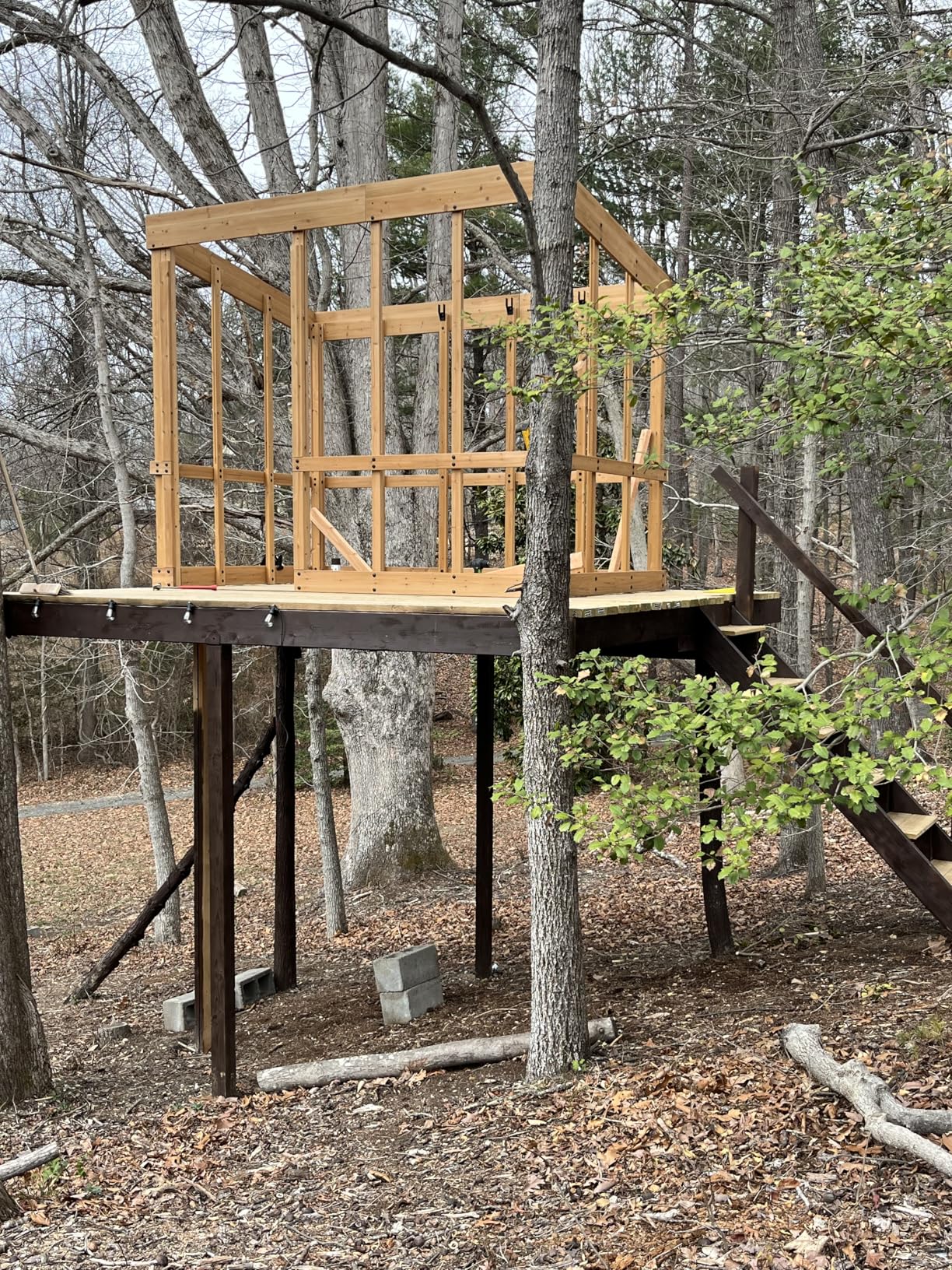
The structural ratings are exceptional: a 30-inch snow load capacity (2,800 pounds), wind resistance up to 100 mph when properly anchored, and a 5-year warranty. This is a greenhouse designed for year-round growing in any US climate zone. The 54 square feet of interior space includes a built-in workstation with 13 linear feet of fixed staging shelves, giving you an organized potting and growing area right out of the box.
The trade-off is assembly time. Reviewers consistently report 21 or more hours of assembly, typically spread across a full weekend or multiple sessions. The greenhouse ships in 8 to 12 boxes that must be carefully organized before starting. Backyard Discovery provides excellent instructions and the interactive BILT app for step-by-step 3D guidance, which helps significantly. The pre-cut, pre-drilled, and pre-stained pieces mean no cutting or finishing is required, but the sheer number of components demands patience and organization.
Assembly Planning and Tips
Reserve a full weekend and recruit at least one helper. Open all boxes and sort hardware into labeled containers before starting any assembly. Download the BILT app for the interactive 3D instructions, which are clearer than the paper manual. Build the frame first on a level foundation before attaching panels. Have a socket set, rubber mallet, and power drill with bits ready.
Year-Round Growing Potential
With the four-wall polycarbonate insulation, temperature-activated exhaust fan, and optional heater plugged into the PowerPort, the Willow can support year-round growing in zones 5 and above without additional winterization. In zones 3 and 4, adding bubble wrap insulation to the interior walls and a thermostatically controlled heater extends the growing season to 10 or 11 months. The cedar frame also provides natural thermal mass that helps moderate temperature swings.
How to Choose the Best Greenhouse for Your Gardens?
Choosing among the best greenhouses comes down to matching the structure to your climate, space, and growing goals. I have broken down the key decisions below based on what matters most to buyers, drawing on forum discussions and real user experiences.
Greenhouse Materials: Polycarbonate vs PE Cover vs Cedar Wood
The cover material is the single most important factor in greenhouse durability and insulation. Polycarbonate panels, especially twin-wall or four-wall varieties, offer the best combination of light transmission (85 to 90 percent), insulation (R-values from 1.4 to 3.0 depending on thickness), and longevity (10 to 25 years with UV coating). Polyethylene covers are affordable and easy to replace, but typically last only 1 to 3 seasons before UV degradation causes brittleness and tearing. Cedar wood frames add natural beauty and decay resistance but require periodic refinishing to maintain their appearance and protective properties.
For year-round growing in cold climates, polycarbonate panels of 6mm or thicker are strongly recommended. Forum users on r/Greenhouses consistently advise that anything thinner than 6mm will not retain enough heat for winter growing in zones 5 and below. For three-season use in moderate climates, PE covers are adequate and much more affordable.
Size: How Much Greenhouse Do You Need
A common mistake among first-time buyers is choosing a greenhouse that is too small. Most experienced greenhouse gardeners recommend buying the largest greenhouse your space and budget allow, because you will fill it faster than you expect. For seed starting and a few potted plants, a mini greenhouse or 4 to 6 foot walk-in is sufficient. For serious vegetable growing, a 6×8 foot polycarbonate greenhouse is the practical minimum. For market gardening or feeding a family, consider a 10×10 or larger high tunnel.
Remember that the advertised exterior dimensions are always larger than the usable interior space. A greenhouse listed as 6×8 feet may have only 5×7 feet of usable interior once wall thickness and door clearance are accounted for. Always check the interior dimensions before purchasing.
Climate Considerations: Cold, Warm, and Wind
In cold climate zones (3 through 5), prioritize insulation and snow load capacity. Look for polycarbonate panels of 6mm or thicker, snow load ratings of at least 20 pounds per square foot, and a frame rated for at least 40 mph winds. The Backyard Discovery Willow with its 30-inch snow load rating is ideal for northern climates.
In warm climate zones (8 through 10), ventilation is more critical than insulation. Look for greenhouses with multiple vents, screened windows, and ideally an exhaust fan. Without adequate ventilation, interior temperatures can exceed 120 degrees on sunny days, killing plants quickly. A shade cloth covering 30 to 50 percent of the greenhouse is also essential in hot climates.
In high-wind areas, anchoring is the make-or-break factor. No greenhouse in this roundup will survive sustained winds above 50 mph without proper anchoring, regardless of the manufacturer’s claims. Invest in ground anchors, ratchet straps, or a concrete foundation appropriate for your wind exposure.
Ventilation: The Most Overlooked Feature
Poor ventilation is the number one cause of plant death in backyard greenhouses, according to forum discussions on growersnetwork.org. Every greenhouse needs both intake and exhaust ventilation to prevent heat buildup and humidity spikes that promote fungal disease. Passive ventilation through roof vents and side windows works for small greenhouses in mild climates. For larger structures or hot climates, an exhaust fan rated for your greenhouse volume is essential.
Automatic vent openers that use wax-filled cylinders to open and close vents based on temperature are a worthwhile upgrade for any greenhouse. They cost about $30 to $50 each and eliminate the need to manually adjust vents throughout the day. Multiple users on r/Greenhouses cite auto-opening vent arms as the single most valuable accessory they added to their greenhouse.
Polycarbonate Thickness and R-Value Explained
Polycarbonate panel thickness directly determines insulation value, which is measured as R-value. A higher R-value means better heat retention. Here is a quick reference: 4mm twin-wall polycarbonate has an R-value of about 1.4, 6mm reaches about 1.7, 8mm about 2.0, and 10mm about 2.5. For context, a single pane of glass has an R-value of about 0.9, meaning even 4mm polycarbonate insulates significantly better than glass.
For three-season greenhouses (spring through fall), 4mm panels are adequate in most climates. For year-round growing, 6mm is the minimum recommended thickness, and 10mm is preferred for zones 4 and colder. The four-wall polycarbonate used in the Backyard Discovery Willow provides even better insulation than standard twin-wall, approaching R-values of 2.5 to 3.0 at equivalent thicknesses.
Foundation Requirements
Every greenhouse needs a level foundation, and this is not optional regardless of what manufacturers claim. For lightweight PE-covered greenhouses, a level patch of ground with ground anchors is usually sufficient. For polycarbonate and wooden greenhouses, a proper foundation prevents the frame from racking, which causes doors to stick and panels to pop out.
The most affordable permanent foundation is a timber base made from pressure-treated 4×4 lumber, leveled and anchored to the ground. For maximum stability, a concrete pad with embedded anchor bolts is the gold standard. Whatever foundation you choose, ensure it is perfectly level before starting assembly, as an out-of-level base is the most common cause of door and panel alignment problems.
Building Permits for Backyard Greenhouses
Permit requirements vary widely by municipality. As a general rule, small portable greenhouses under 120 square feet typically do not require permits, while permanent structures over 200 square feet usually do. Check with your local building department before purchasing a large greenhouse. Some HOAs also have restrictions on greenhouse placement, height, and materials.
Kit vs DIY Greenhouse: Cost Comparison
Building a greenhouse from scratch using purchased lumber and polycarbonate panels typically costs 30 to 50 percent less than a comparable kit, but requires significant carpentry skills and 40 to 80 hours of labor. For most backyard gardeners, a kit is the better value when you factor in the time savings and the engineering that goes into properly designed greenhouse kits. The exception is large high tunnels, where DIY hoop houses made from PVC pipe and polyethylene film can be built for under $200.
Frequently Asked Questions About Greenhouses
What is the best brand of greenhouse to buy?
The best greenhouse brands include Backyard Discovery for premium cedar-and-polycarbonate kits, Ohuhu for budget-friendly mini and walk-in greenhouses, EAGLE PEAK for portable pop-up models, and Quictent for large tunnel greenhouses. Palram Canopia is also widely recommended for hobby polycarbonate greenhouses, with over 50 years of manufacturing experience.
Who makes the best greenhouses?
Backyard Discovery makes the best overall greenhouse for home gardeners with their Willow Cedar model, earning 4.7 out of 5 stars. For budget options, Ohuhu and EAGLE PEAK consistently top Amazon bestseller lists. For premium European-style greenhouses, Grandio and Juliana are highly regarded by the greenhouse enthusiast community.
What is the best time of year to buy a greenhouse?
The best time to buy a greenhouse is late summer through early fall, when retailers discount current season inventory to clear warehouse space before winter. You can also find deals during Black Friday and Cyber Monday. Buying off-season means you have the structure assembled and ready before spring planting, which is when you need it most.
Are backyard greenhouses worth having?
Yes, backyard greenhouses are worth having if you want to extend your growing season by 2 to 6 months, start seeds earlier, grow plants outside your climate zone, or protect tender plants from weather. The investment pays off within 1 to 3 growing seasons for serious gardeners who would otherwise buy seedlings and produce from nurseries and grocery stores.
Will a greenhouse stay warm in the winter?
A greenhouse will stay warmer than outside temperatures, typically 10 to 30 degrees above ambient depending on sunlight and insulation. In mild climates (zones 7 and above), a polycarbonate greenhouse can maintain above-freezing temperatures without supplemental heat. In colder zones, you need a heater, thermal mass like water barrels, and at least 6mm polycarbonate panels for adequate winter heat retention.
Do greenhouses need a foundation?
Yes, all greenhouses benefit from a level foundation. Portable PE-covered greenhouses can sit on level ground with ground anchors. Polycarbonate and wooden greenhouses require a solid foundation such as a timber base or concrete pad to prevent frame racking, door misalignment, and panel displacement during wind and weather events.
Final Thoughts on the Best Greenhouses for 2026
After reviewing 12 of the best greenhouses available in 2026, the Backyard Discovery Willow Cedar Greenhouse stands out as the top overall pick for its combination of cedar craftsmanship, four-wall polycarbonate insulation, integrated exhaust fan, and exceptional snow and wind ratings. For budget-conscious gardeners, the Ohuhu 4-Tier Mini and EAGLE PEAK 8×6 deliver outstanding value under $120. For those who need maximum growing space, the KING BIRD 20×10 and Quictent 25×10 tunnels offer the most square footage per dollar.
The best greenhouse for you ultimately depends on your climate, your space, and how you plan to use it. Invest in polycarbonate panels for year-round growing, prioritize ventilation for warm climates, and never skip the foundation and anchoring regardless of which model you choose. With the right greenhouse, you can extend your growing season, start seeds weeks earlier, and enjoy fresh produce well beyond the traditional gardening window.