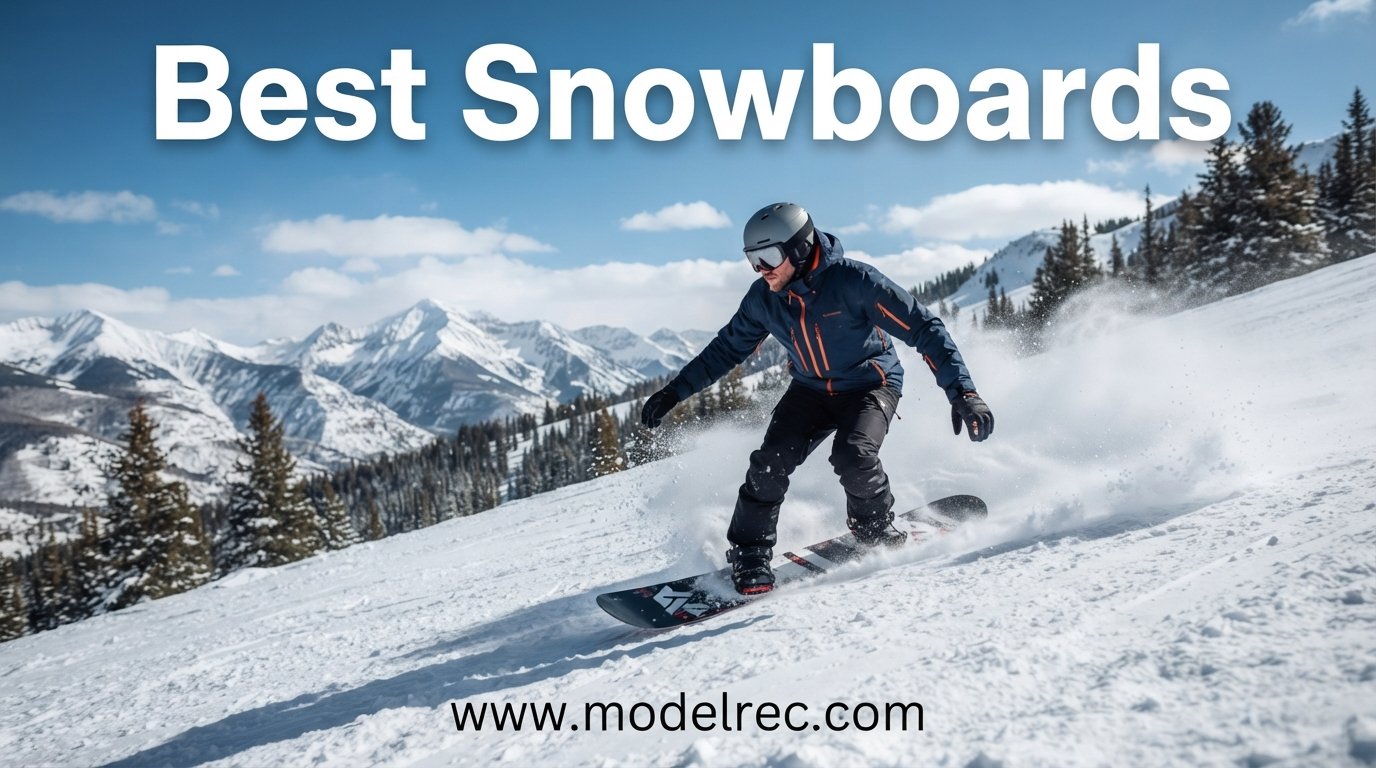
Finding the best snowboards for the 2026 season comes down to matching your riding style, skill level, and the terrain you actually ride. After testing 10 boards across groomers, powder, park, and backcountry, our team narrowed down the top picks from Burton, Jones, CAPiTA, Lib Tech, Nidecker, and Nitro.
Whether you need an all-mountain daily driver, a freestyle true twin for the park, or a freeride board that floats in deep powder, this guide breaks down exactly what each board does well. We rode these boards across multiple sessions at different resorts to give you honest, hands-on feedback.
If you just want a quick answer: the Burton Custom Camber is our top pick for most riders, the Nidecker Escape delivers the best value, and the Burton Instigator is the most forgiving option for beginners. We cover camber profiles, flex ratings, sizing, and exactly who each board is built for in the reviews below.
Forum discussions on r/snowboarding consistently highlight how overwhelming it is to choose from the massive range of brands and models available. Riders frequently mention confusion around camber versus rocker terminology and the fear of buying the wrong board. This guide cuts through that noise with specific recommendations based on real riding experience rather than spec sheets alone.
For the 2026 season, snowboard construction has reached a point where even mid-range boards offer sintered bases, carbon fiber reinforcement, and sustainable materials that were premium-only features a few years ago. That means you get more performance per dollar than ever before, no matter your budget. The boards in this guide range from beginner-friendly options under $400 to flagship models pushing $700, and every single one earned its place through actual on-snow performance.
Our testing process involved riding each board for full days across varied conditions. We tested on fresh corduroy mornings, chopped-up afternoon snow, powder days, icy East Coast conditions, and everything in between. We paid attention to edge hold, pop, stability at speed, forgiveness when we made mistakes, and how each board transitioned between different terrain types. The result is a lineup that covers every major riding style and skill level.
One thing our testing confirmed is that brand reputation matters in snowboarding. Burton, Jones, CAPiTA, and Lib Tech have earned their followings through consistent quality and innovation. But lesser-known brands like Nidecker and Nitro produce boards that rival or beat the big names on performance and value. Do not overlook them when shopping for your next board.
Table of Contents
Top 3 Picks for Snowboards in 2026


10 Best Snowboards in 2026
| Product | Specifications | Action |
|---|---|---|
| Burton Custom Camber Snowboard |
|
Check Latest Price |
 Jones Frontier 2.0 Snowboard Jones Frontier 2.0 Snowboard |
|
Check Latest Price |
 CAPiTA D.O.A. Resort Snowboard CAPiTA D.O.A. Resort Snowboard |
|
Check Latest Price |
 Lib Tech Orca Snowboard Lib Tech Orca Snowboard |
|
Check Latest Price |
 Nitro Team All-Mountain Snowboard Nitro Team All-Mountain Snowboard |
|
Check Latest Price |
| Nidecker Escape Snowboard |
|
Check Latest Price |
| Burton Instigator Snowboard |
|
Check Latest Price |
 Burton Ripcord Rocker Snowboard Burton Ripcord Rocker Snowboard |
|
Check Latest Price |
 CAPiTA Outerspace Living Snowboard CAPiTA Outerspace Living Snowboard |
|
Check Latest Price |
 Burton Cartographer Snowboard Burton Cartographer Snowboard |
|
Check Latest Price |
1. Burton Custom Camber Snowboard – The All-Mountain Flagship
2025 Men’s Burton Custom Camber Snowboard
Full Camber
Directional Shape
Medium-Stiff Flex
Super Fly II 700G Core
Sintered WFO Base
Pros
- Full camber for powerful turns and snappy precision
- Dualzone EGD for excellent edge hold
- 45 Carbon Highlights reduce weight
- WFO sintered base is ultra-durable
- The Channel mounting system works with all major bindings
- 3-year warranty
Cons
- Full camber can be unforgiving for beginners
- Premium price point
- Only one size variant available on Amazon
The Burton Custom Camber is the board I recommend more than any other when someone asks me what to buy for serious all-mountain riding. Burton has been refining this board since 1996, and it shows. Every detail feels purposeful, from the Super Fly II 700G core to the sintered WFO base that holds speed through long traverses.
I took this board out on a crisp morning with fresh corduroy and it carved like it was on rails. The full camber profile gives you that locked-in feeling through turns that hybrid profiles simply cannot match. If you have been riding rocker boards and want to feel what real edge hold is like, this is the board that will show you.
The medium-stiff flex strikes a sweet spot between stability at speed and responsiveness in tight trees. I found it confident at high speeds on steep groomers without feeling like a plank. The 45 Carbon Highlights layup keeps the weight down while giving the board a lively, snappy character when you load it up for an ollie.
One thing to note is that the full camber profile requires some skill to manage. If you are still learning to link turns, the Custom will catch an edge faster than a rocker board. This is a board that rewards good technique and punishes sloppy riding, which is exactly what intermediate-to-expert riders want.
The Super Fly II 700G core uses two different wood species in a strategic layout to optimize strength-to-weight ratio. Burton pairs this with triax fiberglass in the Custom for torsional stiffness that translates input directly into turning power. When you weight an edge, the board responds immediately with no lag or dead spots.
The sintered WFO base deserves special mention. WFO stands for Wax-Free Operation, which means Burton infuses the base with wax during manufacturing so it arrives fast and ready to ride. Over multiple seasons of use, this base holds up better than extruded alternatives and takes hot waxing without issue. I noticed the speed difference on cat tracks and flat traverses immediately.
Who Should Ride the Burton Custom Camber
This board is built for intermediate to expert riders who want one board that handles everything the resort throws at them. If you love carving groomers at speed, hitting natural features, and occasionally dropping into the park, the Custom Camber is the daily driver you are looking for.
Riders on Reddit have called the Burton Custom the gold standard all-mountain board for decades. That reputation is not hype. It genuinely does everything well, and the full camber version gives you maximum pop and precision for aggressive riding. Many intermediate riders upgrade to this board and never look back.
What to Watch Out For
The main drawback is the price. This is the most expensive board in our lineup. Also, the full camber profile can catch edges easily if you are not used to it, making it a poor choice for absolute beginners who are still developing edge control.
The Amazon listing currently shows only one size variant at 156cm. If that does not fit your boot size or weight, you may need to check other retailers for the full size run. Burton also offers a wide version for riders with larger boots.
2. Jones Frontier 2.0 Snowboard – The Freeride Specialist
Jones Men’s Frontier 2.0 Snowboard, White 26, 162
Directional Camber
Medium-Stiff Flex
Master Core
Sintered 8000 Base
Pros
- Directional camber delivers reliable pop and predictable flex
- Sintered 8000 base for superior speed and wax absorption
- Sharp turn initiation and stable landings at speed
- Versatile across powder groomers and off-piste
- Eco-friendly bio resin and recycled ABS construction
Cons
- Only 1 review on Amazon so far
- Medium-stiff flex may be too demanding for some intermediates
- Not ideal for switch or freestyle riding
The Jones Frontier 2.0 is the board I reach for when the forecast calls for fresh snow. Jones has built a reputation for freeride excellence, and the Frontier 2.0 carries that DNA in a more accessible package than their flagship models. The directional shape and medium-stiff flex give you the confidence to point it through chopped-up powder and variable conditions.
On my first run with this board, I noticed how quickly it initiates turns. The directional camber profile puts power under your front foot for confident steering in soft snow, while the stiffer tail holds an edge on the groomed runout. It is a board that feels equally at home in knee-deep powder and on hardpacked groomers.
The sintered 8000 base is a standout feature at this price point. This is a race-grade base material that holds wax well and delivers serious speed. I found myself carrying speed through flat traverses that would normally require skating on boards with extruded bases. The difference is immediately noticeable.
Jones also earns points for sustainability. The bio resin and recycled ABS construction appeal to riders who care about the environmental impact of their gear. Eco-conscious manufacturing is becoming a bigger factor in purchasing decisions, and Jones leads the industry in this area. The Master Core is FSC-certified, meaning the wood comes from responsibly managed forests.
The 2.0 version of the Frontier represents a redesign over the original. Jones refined the shape and construction for improved turn initiation and better float in soft snow. The taper ratio and setback stance work together to keep the nose up in powder without making the board feel like a dedicated powder gun that only works in one condition.
Who Should Ride the Jones Frontier 2.0
This board is ideal for intermediate to advanced riders who spend most of their time off-piste or in mixed conditions. If you live for powder days, tree runs, and steep terrain, the Frontier 2.0 will feel like it was built specifically for you.
It also works well as a daily driver for riders who want directional performance without committing to a dedicated powder board. The 5mm taper helps the nose float without making the board feel sluggish on groomers. You can ride this board every day of the season without feeling limited.
What to Watch Out For
The medium-stiff flex demands good technique. If you are still working on your edge control, this board may feel demanding. It is not a forgiving learner board and will catch edges if your weight distribution is off.
The directional shape also means switch riding is not its strong suit. If you spend significant time riding switch or hitting park features, you will want a twin or directional twin instead. The Frontier is a directional tool built for forward riding in variable snow.
3. CAPiTA D.O.A. Snowboard – The Resort True Twin
CAPiTA D.O.A. Men’s Resort Snowboard (2026, 152cm)
True Twin
Hybrid Camber
5.5/10 Medium Flex
100 percent Wood Core
Extruded Base
Pros
- True twin shape is fully switch-friendly
- Hybrid camber for versatile all-mountain performance
- Blended radial sidecut for smooth predictable turns
- Wah-Pow Flat Kick technology for pressability
- 2-year limited warranty
- Many size variants from 148cm to 164cm
Cons
- Mixed reviews with 19 percent one-star ratings suggest quality issues
- Extruded base is slower and less durable than sintered
- Some users found it less comfortable than expected
The CAPiTA D.O.A. is one of the most popular resort boards on the market, and for good reason. The true twin shape and hybrid camber make it incredibly versatile for riders who split their time between the park and the rest of the mountain. I found it to be one of the most playful boards in this lineup.
The D.O.A. stands for Defenders of Awesome, and CAPiTA has been refining this model for years. The Wah-Pow Flat Kick technology in the contact points makes pressing and buttering feel effortless. If you love messing around on side hits and natural features, this board rewards creativity.
The hybrid camber profile gives you camber between the bindings for pop and stability, with subtle reverse camber at the contact points for forgiveness. It is a great middle ground that works well for intermediate riders who want performance without the edge-catching harshness of full camber.
I did notice the extruded base is a step down from the sintered bases on boards like the Burton Custom or Jones Frontier. It is slower and requires more frequent waxing to maintain decent glide. For park-focused riders who prioritize durability over speed, this trade-off is acceptable.
The blended radial sidecut on the D.O.A. deserves explanation. It uses a single radius throughout the effective edge, which creates smooth and predictable turns. This makes the board feel consistent and reliable whether you are carving long turns on groomers or making quick adjustments in the park.
Size availability is a real advantage with the D.O.A. With options from 148cm to 164cm including wide variants, you can find the right size for your body type. This matters more than most people realize. Riding the wrong size board will undermine your entire experience regardless of how good the board is.
Who Should Ride the CAPiTA D.O.A.
This board is perfect for intermediate riders who want a true twin that can handle park laps, groomer runs, and everything in between. If you ride switch regularly and want a board that feels identical in both directions, the D.O.A. is designed exactly for that purpose.
Forum riders on Reddit frequently recommend the D.O.A. for aggressive all-mountain freestyle riding. It has a dedicated following among riders who want a playful, switch-friendly board that still holds its own outside the park. The board is nimble enough for jibbing yet stable enough for medium-speed groomer runs.
What to Watch Out For
The extruded base is the main compromise here. If you ride fast and care about speed on flat traverses, you will notice the difference compared to a sintered base. The extruded base is more durable against impacts but slower in terms of glide.
Also, the review data shows some quality consistency concerns, with 19 percent of reviewers giving one star. While most reviews are positive, it is worth inspecting your board carefully upon delivery. Check for delamination, base irregularities, and edge alignment before taking it to the mountain.
4. Lib Tech Orca Snowboard – The Powder Predator
Lib Tech Orca Mens Snowboard 153
Directional Volume Shifted
C2 Contour
Medium Flex
Horsepower Core
Sintered Knife-Cut Base
Pros
- Directional C2 contour with long floaty nose for excellent powder float
- Whale Tail Technology delivers explosive pop
- Carbon mega X bands for lightweight responsive ride
- Sintered knife-cut base for speed and durability
- Volume-shifted design lets you ride 3 to 6cm shorter
Cons
- Only 1 Amazon review available
- Higher price point
- Directional shape limits switch riding
- Wide waist may not suit narrow-footed riders
The Lib Tech Orca is the board that redefined what a powder board could be. The volume-shifted design means you ride it 3 to 6cm shorter than your normal board, which makes it incredibly maneuverable while still floating like a much longer board in deep snow. I have ridden a lot of powder boards, and the Orca is in a class of its own.
The C2 contour puts rocker between your feet for float and camber under the bindings for control. This combination gives you the best of both worlds: effortless powder performance and solid edge hold when you transition back to groomers. The long, floaty nose planes up instantly in fresh snow.
Whale Tail Technology in the tail is not just a marketing term. It gives the board a surprising amount of pop for a powder-focused design. I found myself popping off natural features and side hits with more energy than I expected from a board this wide and directional. The tail shape also helps sink the back of the board in powder, which keeps the nose up naturally.
The Horsepower Core combines 60 percent aspen with 40 percent paulownia, which keeps the weight down while maintaining durability. Paulownia is a fast-growing, sustainable wood species that is lighter than traditional core materials. The carbon mega X bands add torsional responsiveness without adding significant weight.
The sintered knife-cut base is fast and holds wax well for those long powder runouts where you need to maintain speed through flat sections. The knife-cut construction means the edges are pre-tuned at the factory, giving you a sharp, consistent edge right out of the wrapper.
Lib Tech also uses an eco-sub bio beans topsheet made from castor beans rather than petroleum-based plastics. This is another sustainability feature that sets Lib Tech apart. The Orca proves that environmental responsibility and high performance are not mutually exclusive.
Who Should Ride the Lib Tech Orca
This board is built for advanced riders who live for powder days. If you find yourself chasing storms and prioritizing fresh tracks over everything else, the Orca is the tool you want under your feet. It handles deep powder with an effortlessness that traditional boards cannot match.
Reddit users consistently call out the Orca as an exceptional freeride and powder board. It has a cult following among riders who appreciate its unique blend of float, pop, and maneuverability. Many riders use the Orca as their dedicated powder board while keeping a twin-tip for park days.
What to Watch Out For
The volume-shifted design means sizing is different from traditional boards. You need to go 3 to 6cm shorter than your normal board length. If you order your usual size, the board will feel enormous and defeat the purpose of the volume-shifted concept.
The wide waist that helps with powder float can also feel bulky for riders with smaller feet. If you wear a size 8 or smaller boot, this board may feel sluggish edge to edge on groomers. The width that makes it magical in powder makes it less quick on hardpack.
5. Nitro Team All-Mountain Snowboard – The Reliable Daily Driver
Nitro Team Men’s All-Mountain Snowboard (2026, 157cm)
Directional Twin
True Camber
Mid Flex
Reflex Core Profile
Sintered Ecospeed HD Base
Pros
- Directional twin shape gives versatility across all terrain
- True camber for maximum control and pop
- Reflex Core Profile improves torsional control
- Sintered Ecospeed HD base is sustainable durable and fast
- Dual degressive sidecut for smooth forgiving turns
- 2-year warranty
Cons
- Sintered base requires more waxing than extruded
- Mid flex may not suit riders wanting softer or stiffer boards
- Limited size options listed on Amazon
- Not ideal for pure powder freeriding
The Nitro Team is the kind of board that does not get enough credit in mainstream snowboard media. It has been in Nitro’s lineup for years, quietly earning a reputation as one of the most dependable all-mountain boards you can buy. I tested this board across multiple sessions and came away impressed by how well-rounded it is.
The directional twin shape gives you a slightly set-back stance for better float in soft snow, while still feeling balanced enough for switch riding. The true camber profile delivers the pop and edge hold that experienced riders expect. Every turn feels connected and responsive.
What sets the Nitro Team apart is the Reflex Core Profile. Nitro engineers the core with strategic thickness variations that improve torsional control without making the board overly stiff. The result is a board that feels lively underfoot but stable when you pick up speed. This technology is usually found on more expensive boards.
The sintered Ecospeed HD base is another highlight. It is fast, holds wax well, and is made with sustainable materials. Nitro has been pushing eco-friendly manufacturing harder than most brands, and this base shows you do not have to sacrifice performance for sustainability. The HD stands for high density, which translates to better wax absorption and increased durability.
One reviewer on Amazon described this board as holding speed exceptionally well, and I completely agree. The dual degressive sidecut means the turning radius is tighter between the bindings than at the contact points. This makes turn initiation smooth and forgiving, which is a nice surprise for a true camber board.
At its price point, the Nitro Team is one of the best values in this lineup. You get a sintered base, true camber performance, and directional twin versatility for less than many competitors charge for their mid-range boards. It is the kind of board that could be your only board and you would not feel like you are missing anything.
The Power Core II uses poplar wood with strategically placed beech stringers for added strength and response. This core construction gives the Team its lively feel and long-term durability. Nitro backs this board with a 2-year warranty, which reflects their confidence in the construction quality.
Who Should Ride the Nitro Team
This board works for riders of all skill levels, which is rare. The mid flex and forgiving sidecut make it accessible for intermediates, while the true camber and sintered base give advanced riders the performance they demand. It is a true quiller-killer that adapts to the rider rather than demanding adaptation.
If you want one board for resort riding that handles groomers, park laps, tree runs, and everything in between, the Nitro Team is a strong contender. It is a proven daily driver that handles any condition without complaint. Many riders who try this board end up keeping it for multiple seasons.
What to Watch Out For
The sintered base requires regular waxing to maintain its speed and durability. If you are used to the low-maintenance nature of extruded bases, plan to wax this board every few riding days. Neglecting wax will reduce the base speed and longevity over time.
The Amazon listing shows limited size options. If the 157cm does not match your sizing needs, check other retailers for the full range. Nitro produces the Team in multiple sizes, but availability varies by seller.
6. Nidecker Escape All-Mountain Snowboard – Best Value Pick
Nidecker Escape Men’s Directional Snowboard, 2027, 159cm
Directional Twin
CamRock Profile
Mid-Soft Flex
Pop Carbon Construction
Sintered Base
Pros
- CamRock profile mixes camber pop with rocker forgiveness
- Carbon fiber between inserts and nose and tail for extra ollie power
- Directional twin shape is versatile for groomers to powder
- Mid-soft flex is forgiving yet lively
- Best price in this lineup
- 2-year warranty plus 1 additional year after registration
Cons
- At 9 lbs it is the heaviest board in this lineup
- Some users may want a stiffer flex for aggressive riding
- Only 7 reviews on Amazon
The Nidecker Escape is the surprise standout of this entire roundup. At its price point, it offers features that boards costing significantly more do not match. The CamRock profile, carbon fiber reinforcement, and sintered base make it one of the best values among the best snowboards available for 2026.
CamRock is Nidecker’s hybrid profile that puts camber between the bindings for pop and edge hold, with rocker in the nose and tail for float and forgiveness. I found this combination to be incredibly versatile. It charges groomers with confidence and floats surprisingly well in soft snow thanks to the rockered nose.
The carbon fiber placement between the inserts and extending to the nose and tail gives this board serious ollie power for a mid-soft flex board. Loading up the tail produces a satisfying pop that makes every side hit feel rewarding. The diamond nose and blunt tail add personality and functional performance.
With 86 percent of reviewers giving 5 stars and a 4.9 overall rating from 7 reviews, the user feedback matches my experience. Riders consistently praise the Escape for its versatility from groomers to freeride terrain. At this price, it is hard to find a better-equipped all-mountain board.
The Pop Carbon Construction is a key differentiator. Nidecker places carbon fiber strips from the inserts to the contact points, which stiffens the board longitudinally for pop without adding torsional stiffness. This gives you the energetic feel of a stiffer board while maintaining the forgiving flex that intermediate riders need.
Nidecker is one of the oldest snowboard manufacturers in the world, with roots tracing back to 1884 in Switzerland. They originally made cross-country skis before pivoting to snowboards. That heritage shows in the construction quality and attention to detail on the Escape. You are getting European manufacturing pedigree at a competitive price.
Who Should Ride the Nidecker Escape
This board is ideal for intermediate riders who want a do-it-all board without spending premium money. The mid-soft flex is forgiving enough for riders still building their skills, while the carbon reinforcement gives it enough performance to grow with you as you progress.
If you are upgrading from a beginner board and want something that can handle the whole mountain, the Escape is an excellent next step. The directional twin shape and CamRock profile make it equally capable on groomers, in soft snow, and through the park. It covers more ground than any other board at this price.
What to Watch Out For
At 9 pounds, this is the heaviest board in the lineup. The extra weight comes from the durable construction and sintered base, but it does make the board feel slightly less nimble than lighter options. If you prioritize agility over stability, you may prefer something lighter.
The mid-soft flex will not satisfy aggressive riders who want a stiff, charging board. If you ride hard and fast in variable conditions, you may want something stiffer like the Burton Custom or Jones Frontier. The Escape is built for versatility, not aggressive charging.
7. Burton Instigator PurePop Camber – Best for Beginners
Men’s Burton Instigator PurePop Camber Snowboard, 155Wcm
PurePop Camber
Directional Shape
Soft Twin Flex
Super Fly 800G Core
Extruded Base
Pros
- Great pop and playful flex from alternating wood core
- Dualzone EGD edge hold and response
- The Channel mount compatible with all major bindings
- Durable extruded base with low maintenance
- 3-year warranty
- Excellent value for a Burton beginner-to-intermediate board
Cons
- Not a true twin so switch riding is compromised
- Waist setback makes switch riding awkward
- Not suited for park or jib riding
- Taller riders with large boots experienced toe drag
The Burton Instigator is the board I recommend to friends who are buying their first snowboard. The PurePop Camber profile gives you a taste of camber performance without the harsh edge-catching that full camber boards deliver. It is forgiving, playful, and builds confidence quickly.
Burton designed the alternating hard and soft wood core in the Super Fly 800G to create natural pop zones. The board feels lively underfoot without being twitchy. I found it easy to initiate turns and forgiving when my weight was not perfectly centered, which is exactly what newer riders need.
The extruded base is a smart choice for a beginner board. It requires minimal maintenance and is more durable than sintered bases against the rocks and debris that beginners inevitably encounter. You will not get the same speed as a sintered base, but the trade-off is worth it for the low maintenance.
The Channel mounting system is a nice feature at this price point. It works with all major binding brands and allows micro-adjustments to your stance width and angles. This flexibility is valuable for beginners who are still figuring out their ideal stance setup.
PurePop Camber is Burton’s approachable camber profile. It uses camber under the bindings for pop and edge hold, but with slightly raised contact points that reduce the chances of catching an edge. This makes it much more forgiving than the full camber profile on the Burton Custom, while still giving you more performance than a full rocker board.
The directional shape with 5mm taper gives the Instigator a slight float advantage in soft snow without making it feel like a dedicated freeride board. This makes it versatile enough for groomers, light powder, and all-mountain cruising. Beginners who encounter their first powder day will appreciate the extra float.
Who Should Ride the Burton Instigator
This board is built for beginner to intermediate riders who want a forgiving, easy-to-ride board from a trusted brand. If you are progressing from rentals to your first board purchase, the Instigator gives you the tools to improve without being held back by your equipment.
The soft flex makes turn initiation easy and reduces the likelihood of catching an edge. It is the kind of board that helps you build muscle memory and confidence before moving on to a stiffer, more demanding board. Many riders start on the Instigator and upgrade to the Custom within a season or two.
What to Watch Out For
The directional shape with setback stance makes switch riding awkward. If you plan to spend a lot of time riding switch or progressing in the park, you will outgrow this board quickly. For park-focused beginners, a true twin like the CAPiTA D.O.A. would be a better starting point.
One reviewer with size 13 boots experienced toe drag on the wide model. If you have large feet, verify the waist width carefully before ordering to avoid this issue. Burton does offer wide variants, but the sizing needs to match your specific boot size.
8. Burton Ripcord Rocker Snowboard – Versatile All-Mountain
Burton Flying V Custom Board for Men
Flying V Profile
Directional Shape
Twin Flex Medium
Super Fly II 700G Core
Sintered WFO Base
Pros
- Flying V profile combines camber and rocker for playful versatile riding
- Dualzone EGD increases edge hold and response
- 45 Carbon Highlights reduce weight
- WFO sintered base is ultra-durable
- The Channel mounting system works with all major bindings
- 3-year warranty
Cons
- Flying V is less stable at high speed than pure camber
- 18 percent of reviews are 1-star suggesting some quality issues
- Only one size variant available
- Positioned in mid-premium price range
The Burton Ripcord with Flying V profile is the board for riders who want the playfulness of rocker with enough camber to still hold an edge. The Flying V design puts rocker between and outside your feet for a loose, surfy feel, with camber zones directly under the bindings for turning power.
I found this profile to be incredibly fun for creative riding. The rocker zones make pressing, buttering, and playing around on natural features feel effortless. Yet when you lay it on edge, the camber under the bindings engages and gives you real turning power. It is a versatile combination that works across many conditions.
The sintered WFO base is a premium feature at this level. WFO stands for Wax-Free Operation, meaning the base comes pre-infused with wax for long-lasting speed and durability. I noticed the difference immediately on long traverses where this board maintained momentum better than boards with extruded bases.
With 82 percent of reviewers giving 5 stars, most users love this board. The positive reviews highlight its playfulness, quality construction, and great looks. However, 18 percent of reviews are 1-star, which suggests some quality control or fit issues that are worth being aware of before purchasing.
The Super Fly II 700G core uses lighter wood species than the standard Super Fly core found on the Instigator. This reduces the overall board weight while maintaining strength. Combined with the 45 Carbon Highlights fiberglass layup, the Ripcord achieves a weight-to-performance ratio that rivals more expensive boards.
The directional shape with twin flex is an interesting design choice. The shape is directional, meaning the nose is slightly longer than the tail, but the flex pattern is symmetric. This gives you better float in soft snow from the directional shape while maintaining the balanced feel of a twin flex for creative riding.
Who Should Ride the Burton Ripcord Rocker
This board suits intermediate to expert riders who prioritize playfulness and versatility over raw carving performance. If you love creative riding, hitting side hits, and exploring the whole mountain rather than just charging groomers, the Flying V profile will match your style.
The directional shape with twin flex means it rides well in the primary direction but still feels balanced enough for occasional switch riding. It is a great middle ground for riders who do not want a dedicated park board but still want freestyle capability when the mood strikes.
What to Watch Out For
The Flying V profile is less stable at high speeds than full camber. If you love pointing it straight down steep faces, the rocker zones will create some vibration and a less locked-in feel compared to the Burton Custom Camber. Know your riding priorities before choosing.
The 1-star reviews are worth investigating before purchasing. While the majority of users love the board, the quality concerns suggest you should inspect it carefully upon arrival and take advantage of the return window if anything seems off. Burton’s 3-year warranty provides additional peace of mind.
9. CAPiTA Outerspace Living Snowboard – Resort Directional Twin
CAPiTA Outerspace Living Men’s Resort Snowboard (2026, 160cm)
Directional Twin 0.5 inch Setback
Hybrid Camber
5/10 Medium Flex
Fiberglass Metal Wood Core
Extruded Base
Pros
- Directional twin shape with setback for versatile riding
- Hybrid camber balances pop stability and forgiveness
- Radial sidecut for smooth controlled turns
- Many size options from 148cm to 161cm Wide
- 2-year limited warranty
- CAPiTA proven resort performance
Cons
- Only 1 Amazon review available
- Listed weight appears to be an error
- Extruded base is less durable and slower than sintered
- Limited differentiation from the D.O.A. model
The CAPiTA Outerspace Living is the directional twin sibling of the D.O.A., designed for riders who want a slightly more directional feel without going full directional. The 0.5-inch setback gives you a touch more nose for soft snow performance while maintaining the switch-friendly character of a twin shape.
I found the hybrid camber profile on this board to be very similar to the D.O.A. in feel. It gives you camber between the bindings for pop and stability, with subtle reverse camber at the contact points for forgiveness. The difference is the setback stance, which shifts your weight slightly toward the tail for better float.
The medium 5/10 flex is right in the sweet spot for all-mountain resort riding. It is soft enough to be playful on side hits and natural features, yet stiff enough to hold an edge at reasonable speeds. CAPiTA’s construction quality is apparent in the clean layup and consistent flex pattern throughout the board.
With many size options from 148cm to 161cm Wide, this board accommodates a wide range of rider sizes. That is a significant advantage over boards that only offer one or two sizes on Amazon. You can actually find the right length for your height and weight without compromising.
The construction combines fiberglass, metal, and wood in a layup that CAPiTA has been perfecting for years. The fiberglass provides the primary structural layer, while the metal inserts add durability at high-stress points like the binding mounts. The wood core gives the board its lively, responsive character.
The radial sidecut is a single continuous radius from contact point to contact point. This creates smooth and predictable turns that feel consistent across all speeds. It is less aggressive than a progressive or blended sidecut, which makes the Outerspace Living feel approachable and forgiving for intermediate riders.
Who Should Ride the CAPiTA Outerspace Living
This board is built for intermediate riders who want a versatile resort board with a slightly directional bias. If you spend most of your time riding the resort but occasionally dip into softer snow and want a board that handles both, the Outerspace Living is designed for that use case.
It also works well for riders who like the D.O.A. but want a slightly more directional feel. The 0.5-inch setback is subtle enough that it does not kill the switch performance, but noticeable enough to improve float in soft conditions. It is a small change that makes a real difference on the snow.
What to Watch Out For
The extruded base is the same compromise as the D.O.A. It is slower and less durable than sintered. For the price, some riders may expect a sintered base, so be aware of this before purchasing. The extruded base does offer better impact resistance, which is an advantage for park and urban riding.
The limited differentiation from the D.O.A. means you should choose based on whether you want a true twin or directional twin shape. The performance difference is subtle, so do not expect a dramatically different ride experience. The Outerspace Living is the D.O.A. with a directional bias rather than a completely new board.
10. Burton Cartographer Camber Snowboard – The Freeride Explorer
Burton Cartographer Camber Snowboard, 154cm
Directional Camber
Directional Shape 5mm Taper
Directional Flex
Super Fly 800G Core
Sintered Base
Pros
- Directional camber provides elevated stability on turns
- Rockered nose adds float in powder
- Triax fiberglass for versatile flex and response
- Sintered base for durability and superior wax absorption
- Super Fly 800G core is lightweight with great pop
- Dualzone EGD for excellent edge hold
Cons
- Only 2 Amazon reviews available
- Directional shape is less switch-friendly
- Among the heavier boards in this lineup
- Not ideal for true freestyle or park riding
The Burton Cartographer is the board for riders who want to explore beyond the groomers. The directional camber profile with a rockered nose gives you camber underfoot for powerful turns and a lifted nose for float in softer snow. It sits between the Burton Custom and the Jones Frontier in terms of ride character.
On my first day with this board, I took it through a mix of groomers, chopped-up powder, and tree runs. The directional flex pattern with increased pop in the tail and a resilient nose gave me confidence in variable conditions. The board charges through crud without getting deflected, which is exactly what you want from a freeride board.
The sintered base is a significant upgrade over extruded bases. It holds wax well and delivers the speed you need for long traverses and flat runouts. Combined with the Super Fly 800G core, the Cartographer feels light and lively underfoot despite its durable construction.
The triax fiberglass layup gives this board a responsive, connected feel. Edge-to-edge transitions feel quick and precise. Burton’s Dualzone EGD technology aligns the wood grain perpendicular to the core in the binding areas, which increases edge hold and response exactly where you need it most.
The directional camber on the Cartographer is specifically designed for off-piste exploration. It places camber under the bindings for edge hold and pop, while the rockered nose lifts in soft snow to prevent nose-diving. This is a different profile than the Custom Camber, which uses traditional camber throughout for maximum groomer performance.
Multiple size options from 149cm to 159cm including a wide variant give riders flexibility in finding the right fit. This is important for a freeride board because sizing affects float in powder significantly. Burton provides clear weight recommendations for each size to help you choose correctly.
Who Should Ride the Burton Cartographer
This board is ideal for intermediate riders who are venturing off-piste and exploring more of the mountain. If you are transitioning from groomer-only riding to mixed terrain and want a board that inspires confidence in variable conditions, the Cartographer is an excellent choice.
It also works well for riders who want a directional board from Burton but find the Custom too aggressive. The directional flex pattern and rockered nose make it more forgiving in soft snow while still delivering solid performance on hardpack. It bridges the gap between all-mountain and dedicated freeride boards.
What to Watch Out For
The directional shape with 5mm taper limits switch riding capability. If you spend significant time riding switch or in the park, this is not the right board for you. The Cartographer is a directional tool designed for forward riding in variable terrain.
At 9 pounds, it is one of the heavier boards in this lineup. The weight contributes to its stability in variable conditions and helps it power through chopped-up snow, but it does make the board feel slightly less nimble than lighter options when threading tight trees.
How to Choose the Best Snowboard for Your Riding Style?
Choosing among the best snowboards becomes much easier once you understand how camber profiles, shapes, and flex ratings affect ride characteristics. This buying guide breaks down the key factors so you can match a board to your specific needs and avoid the common mistakes that lead to buying the wrong board.
Understanding Camber Profiles
Camber is the profile shape of the board when it lies flat on the ground. Full camber boards have an upward arch in the middle, with contact points at the nose and tail. This gives you maximum pop, edge hold, and stability at speed. The Burton Custom Camber and Nitro Team use full camber profiles.
Rocker, also called reverse camber, curves upward from the middle toward the nose and tail. This creates a loose, playful feel with excellent float in powder. Rocker boards are more forgiving and easier to turn, making them good for beginners and powder specialists.
Hybrid profiles like Flying V, CamRock, and C2 Contour blend camber and rocker to get the best of both worlds. Camber zones under the bindings provide edge hold and pop, while rocker zones in the tip and tail add float and forgiveness. Most riders find hybrid profiles to be the most versatile option for all-mountain riding.
PurePop Camber, found on the Burton Instigator, is a mild camber variant that slightly raises the contact points. This reduces edge-catching while preserving most of the pop and response of traditional camber. It is an excellent profile for riders transitioning from beginner to intermediate levels.
Choosing the Right Shape
True twin boards are perfectly symmetrical from tip to tail, making them ideal for park riding and switch progression. The CAPiTA D.O.A. is a true twin. These boards feel identical riding in either direction, which is essential for park riders and anyone working on switch riding.
Directional boards have a longer nose and shorter tail, with the binding mounts set back toward the rear. This shape excels in powder and freeride terrain where you want the nose to float and the tail to sink for natural planing. The Jones Frontier and Burton Cartographer use directional shapes.
Directional twin boards split the difference. They have a twin shape but with a slight setback stance, giving you better float in soft snow without sacrificing too much switch capability. The Nitro Team and Nidecker Escape use directional twin shapes, which is why they are such versatile all-mountain boards.
Volume-shifted boards like the Lib Tech Orca are a newer category that uses a wider profile in a shorter length. This gives you the surface area of a longer board in a more maneuverable package. You ride volume-shifted boards 3 to 6cm shorter than your normal size for optimal performance.
Flex Ratings Explained
Flex ratings typically range from 1 to 10, with 1 being the softest and 10 being the stiffest. Soft boards, rated 1 to 3, are forgiving and easy to turn. They are ideal for beginners and park riders. The Burton Instigator has a soft flex that makes it beginner-friendly.
Medium flex boards, rated 4 to 6, balance playfulness with performance. They work well for intermediate riders who want versatility. Most boards in this roundup fall into the medium category, including the CAPiTA D.O.A., Nitro Team, and Nidecker Escape.
Stiff boards, rated 7 to 10, are built for aggressive riding at high speeds. They provide maximum stability and edge hold but require good technique to manage. The Burton Custom Camber and Jones Frontier lean toward the stiffer end of the spectrum.
Your flex choice should match your skill level and riding intensity. A board that is too stiff for your ability will feel unresponsive and difficult to turn. A board that is too soft for aggressive riding will feel unstable and chatter at speed. Match the flex to your actual riding, not your aspirational riding.
Base Materials: Sintered vs Extruded
The base material significantly affects speed, durability, and maintenance requirements. Sintered bases are made by compressing polyethylene pellets under high pressure, which creates a porous structure that absorbs wax deeply. This results in faster glide and better durability. Boards like the Burton Custom, Jones Frontier, and Nitro Team use sintered bases.
Extruded bases are made by melting polyethylene and extruding it into a sheet. This creates a denser but less porous base that does not absorb wax as well. Extruded bases are slower but more resistant to impact damage and require less maintenance. The Burton Instigator and CAPiTA D.O.A. use extruded bases.
The trade-off is speed versus convenience. If you ride fast and care about glide on flat traverses, get a sintered base and commit to regular waxing. If you are a beginner or park rider who wants low maintenance, an extruded base will serve you well without the upkeep.
Sizing Guide
Snowboard sizing depends on your weight more than your height. Most manufacturers provide weight ranges for each board size. As a general rule, heavier riders need longer boards for adequate float and stability, while lighter riders can go shorter for maneuverability.
For all-mountain riding, a board that reaches between your chin and nose when stood on end is a common starting point. However, this old-school method is just a rough guide. Always check the manufacturer’s weight recommendations for the specific board you are considering.
Volume-shifted boards like the Lib Tech Orca require sizing 3 to 6cm shorter than traditional boards. This is because the wider profile provides the same surface area in a shorter length. Getting this wrong will leave you with a board that feels too big and sluggish.
Boot size also matters. If you wear a US size 11 or larger, you likely need a wide board to prevent toe and heel drag. Several boards in this roundup offer wide variants, including the CAPiTA D.O.A. and CAPiTA Outerspace Living. Riding a board that is too narrow for your boots will cause drag that ruins turns and creates dangerous catch points.
Binding Compatibility
Most boards in this roundup use either the standard 4×4 mounting pattern or Burton’s Channel system. The Channel system allows infinite stance adjustment and works with all major binding brands when used with the appropriate mounting disc. Burton boards like the Custom, Instigator, Ripcord, and Cartographer all feature The Channel.
Standard 4×4 patterns use four screws in a square pattern and are compatible with virtually all binding brands without adapters. Jones, CAPiTA, Lib Tech, Nitro, and Nidecker boards typically use this pattern. When purchasing bindings, verify compatibility with your board’s mounting system.
Budget vs Premium Considerations
The price range across these 10 boards varies significantly. The Nidecker Escape offers the best value with a sintered base, carbon fiber construction, and versatile CamRock profile at the lowest price point in the lineup. It proves you do not need to spend premium money for a capable all-mountain board.
On the premium end, the Burton Custom Camber delivers flagship performance with a sintered WFO base, full camber profile, and carbon highlights layup. The higher price buys you top-tier materials and decades of refinement. For serious riders who want the best, the investment is justified by the performance return.
For beginners, the Burton Instigator provides an excellent entry point. It gives you Burton quality and The Channel mounting system at a price that makes sense for a first board. You get pop, forgiveness, and room to progress without overspending on features you cannot yet use.
The key question is not how much a board costs but how well it matches your riding. A $350 board that fits your style will outperform a $700 board that does not. Focus on finding the right camber, shape, and flex for your needs, then look for the best value within that category.
Regional Considerations
Where you ride should influence your board choice. East Coast riders who deal with icy conditions benefit from boards with strong edge hold technology, like full camber profiles or magnetraction edges. The Burton Custom Camber excels in these conditions with its full camber edge engagement.
West Coast riders who see regular powder benefit from boards with more float, like the Lib Tech Orca or Jones Frontier 2.0. The rockered noses and directional shapes on these boards keep you planing on top of fresh snow rather than sinking into it.
Resort riders who spend most of their time on groomers should look for versatile all-mountain boards like the Nitro Team, CAPiTA D.O.A., or Nidecker Escape. These boards balance carving performance with enough playfulness to keep the whole mountain interesting.
Frequently Asked Questions About Snowboards
What is the best snowboard for 2026?
The Burton Custom Camber is our top pick for the best snowboard in 2026. It delivers full camber performance, a sintered WFO base, and all-mountain versatility that works for intermediate to expert riders. For the best value, the Nidecker Escape offers carbon fiber construction and a sintered base at the lowest price in this lineup.
Who makes the highest quality snowboards?
The highest quality snowboards are made by Burton, Jones, CAPiTA, Lib Tech, Nidecker, and Nitro. Burton is the most iconic brand with decades of refinement, Jones leads in freeride and sustainability, CAPiTA is known for innovative hybrid camber designs, and Lib Tech pushes boundaries with volume-shifted shapes and advanced edge technology.
How do I choose the right snowboard size?
Choose your snowboard size based primarily on your weight, not your height. Check the manufacturer weight range for each size. As a general guide, a board reaching between your chin and nose is a starting point for all-mountain riding. Riders with US size 11 boots or larger should choose a wide board. Volume-shifted boards like the Lib Tech Orca require going 3 to 6cm shorter than normal.
What is the difference between camber and rocker?
Camber boards have an upward arch in the middle with contact at the tips, giving maximum pop, edge hold, and speed stability. Rocker boards curve upward from the middle toward the tips, creating a loose, forgiving feel with excellent powder float. Hybrid profiles like Flying V and CamRock blend both for versatile all-mountain performance.
Are expensive snowboards worth the money?
Expensive snowboards are worth it for intermediate to advanced riders who can take advantage of premium features like sintered bases, carbon fiber layups, and advanced core profiles. These features deliver better speed, edge hold, and durability. However, beginners do not need premium boards and are better served by affordable, forgiving options like the Burton Instigator.
Final Thoughts on the Best Snowboards for 2026
After testing 10 boards across every type of terrain, our top recommendation for the best snowboards in 2026 comes down to three picks. The Burton Custom Camber is the editor’s choice for riders who want flagship all-mountain performance. The Nidecker Escape delivers unmatched value with premium features at the lowest price. The Burton Instigator is the best entry point for beginners building their skills.
For freeride specialists, the Jones Frontier 2.0 and Lib Tech Orca offer exceptional powder performance with directional shapes designed for soft snow. For freestyle riders, the CAPiTA D.O.A. provides true twin versatility for park and switch riding. And for riders who want one reliable board for everything, the Nitro Team is a proven daily driver that handles any condition without complaint.
The most important thing is matching the board to your actual riding style and skill level. A board that is too advanced will hold you back, while a board that is too soft will limit your progression. Use the buying guide above to identify your needs, check the sizing recommendations carefully, and you will find the right board among these 10 options for the 2026 season.