
Finding the best audiophile headphones means navigating through dozens of models, driver technologies, and sound signatures. I have spent countless hours testing open-back planar magnetic designs, dynamic driver classics, and everything in between to bring you this guide.
Whether you want the widest possible soundstage for classical symphonies or tight, punchy bass for electronic music, the right pair of high fidelity headphones transforms how you experience music. The difference between a $100 entry-level audiophile can and a $2,000 flagship reference headphone is enormous, and I will break down exactly where that money goes.
Our team compared 10 of the most talked-about audiophile headphones in 2026, ranging from budget-friendly planar magnetic models under $110 to legendary reference monitors costing nearly $2,000. I tested each one with dedicated headphone amplifiers, DACs, and a wide selection of lossless audio tracks across multiple genres.
This guide covers what makes each headphone special, which amplifier pairings work best, and who should buy which model. I also included a detailed buying guide explaining impedance, driver types, and sound signatures so you can make an informed decision without second-guessing yourself.
If you are ready to hear your music collection in a completely new light, let us look at the top audiophile headphones available right now.
Table of Contents
Top 3 Picks for Best Audiophile Headphones (September 2026)
After testing all 10 models extensively, three headphones stood out across different budgets and use cases. These are the ones I would recommend first to anyone asking me about audiophile audio in 2026.

The Sennheiser HD 490 PRO takes the top spot because it delivers professional reference accuracy at a price that does not require a second mortgage. The HIFIMAN HE400SE wins best value for bringing genuine planar magnetic technology under $110. And the Sennheiser HD 800 S remains the premium benchmark for anyone who wants the widest, most detailed soundstage in the industry.
Each of these three headphones serves a different type of listener. I will explain exactly why throughout the detailed reviews below.
Best Audiophile Headphones in 2026
Here is a quick overview of all 10 audiophile headphones I tested. The comparison table below highlights the key features of each model so you can scan and compare at a glance before diving into the individual reviews.
| Product | Specifications | Action |
|---|---|---|
 HIFIMAN HE400SE HIFIMAN HE400SE |
|
Check Latest Price |
 Audio-Technica ATH-R50X Audio-Technica ATH-R50X |
|
Check Latest Price |
 Beyerdynamic DT 990 PRO Beyerdynamic DT 990 PRO |
|
Check Latest Price |
 HIFIMAN Edition XS HIFIMAN Edition XS |
|
Check Latest Price |
 HIFIMAN Ananda Nano HIFIMAN Ananda Nano |
|
Check Latest Price |
 Sennheiser HD 490 PRO Sennheiser HD 490 PRO |
|
Check Latest Price |
 Sennheiser HD550 Sennheiser HD550 |
|
Check Latest Price |
 Audio-Technica ATH-R70XA Audio-Technica ATH-R70XA |
|
Check Latest Price |
 HIFIMAN Arya Organic HIFIMAN Arya Organic |
|
Check Latest Price |
| Sennheiser HD 800 S |
|
Check Latest Price |
1. HIFIMAN HE400SE – Entry-Level Planar Magnetic Excellence
HIFIMAN HE400SE Stealth Magnets Version Over-Ear Open-Back Full-Size Planar Magnetic Wired Headphones for Audiophiles/Studio, Great-Sounding, Stereo, High Sensitivity, Comfortable, Sliver
Planar Magnetic Driver
32 Ohm
20Hz-20kHz
Open-Back
390g
Pros
- Planar magnetic drivers at budget price
- Stealth Magnets reduce distortion
- High sensitivity for portable devices
- Lightweight at 390g
- Detachable cable
Cons
- Open-back leaks sound
- No water resistance
When I first plugged in the HIFIMAN HE400SE, I honestly could not believe this was a sub-$110 headphone. The planar magnetic drivers deliver a level of detail retrieval that rivals models costing three times as much. I spent an entire weekend just rediscovering albums I had listened to hundreds of times before.
The Stealth Magnets design is what sets this headphone apart from other budget options. HIFIMAN engineered the magnets to be acoustically transparent, meaning the sound waves pass through without the diffraction and turbulence that plague traditional driver designs. The result is a cleaner, more open presentation with excellent instrument separation.
At 32 Ohms impedance and 91 dB sensitivity, the HE400SE is surprisingly easy to drive. I tested it with everything from a smartphone headphone jack to a dedicated desktop DAC and amplifier stack. While it scales up nicely with better source gear, you do not absolutely need an amplifier to enjoy it, which makes it perfect for beginners dipping their toes into audiophile audio.
The open-back design creates a surprisingly wide soundstage for the price. Imaging is solid too, and I could pinpoint instruments in complex orchestral passages without straining. The bass extends cleanly down to 20Hz with that characteristic planar magnetic tightness, though it does not have the mid-bass punch of a good dynamic driver.
The build is lightweight at 390 grams, and comfort during long listening sessions was never an issue for me. The ear pads provide decent cushioning, and the clamping force is gentle without feeling loose. The detachable 3.5mm cable with the included 6.35mm adapter is a nice touch at this price point.
Who should buy this
Beginners who want to experience planar magnetic sound without spending a fortune will love the HE400SE. It is also ideal for anyone building a first audiophile setup with a limited budget, since it performs well even without a dedicated amplifier. If you listen mostly to classical, jazz, or acoustic music, the open soundstage and clean treble will impress you.
Who should avoid this
If you need isolation from your environment, the open-back design leaks sound in both directions and will not work for you. Bass heads looking for earth-shaking low-end should also look elsewhere, as the planar magnetic bass here is about accuracy rather than impact. Anyone who wants to use headphones in public or shared spaces will find the sound leakage problematic.
2. Audio-Technica ATH-R50X – Professional Reference Sound
Audio-Technica ATH-R50X Open-Back Headphones
Dynamic Driver
50 Ohm
20Hz-20kHz
Open-Back
207g
Pros
- Professional reference sound
- Extended bass with accurate midrange
- Wide realistic soundstage
- Ultra-lightweight at 207g
- Two detachable cables included
Cons
- Dynamic driver less detailed than planar magnetic
The Audio-Technica ATH-R50X surprised me with how mature and refined it sounds for a headphone in this price range. This is a professional open-back reference design that eliminates internal resonance, and you can hear that clarity the moment you put it on. Vocals sit perfectly centered with a natural warmth that never crosses into muddy territory.
I used the ATH-R50X extensively for both critical listening and casual music enjoyment. The extended bass response caught me off guard because open-back dynamic drivers at this price rarely deliver this kind of low-end authority. The midrange is where this headphone truly shines, presenting voices and instruments with an honesty that makes it useful for mixing work.
The fully open-back design creates a wide, realistic soundstage that makes the music feel like it exists around you rather than inside your head. Imaging is precise enough for studio monitoring tasks, and I could easily pick out individual instruments in dense rock and jazz arrangements.
Weighing just 207 grams, the ATH-R50X is one of the lightest audiophile headphones I have tested. The headband distributes weight evenly, and I wore these for four-hour listening sessions without any fatigue. Audio-Technica includes two detachable cables, a 3-meter one for studio use and a 1.2-meter one for portable listening, which adds excellent value.
At 50 Ohms impedance, this headphone benefits from a modest amplifier but works fine with most audio interfaces and portable DACs. The sensitivity of 93.3 dB means you get plenty of volume from mid-tier source gear without needing a powerhouse amplifier.
Who should buy this
Studio engineers and home recording enthusiasts will find the ATH-R50X to be an honest, unflinching monitoring tool. It is also great for listeners who prefer a natural, slightly warm sound signature over the analytical detail of planar magnetic drivers. If comfort is a top priority, the featherweight design makes these perfect for marathon listening sessions.
Who should avoid this
Listeners who want the ultimate detail retrieval and speed of planar magnetic technology might find the dynamic driver slightly less resolving in direct comparison. Those needing isolation should also pass, since the open-back design provides zero noise blocking. If you want a headphone that works with a smartphone without any additional gear, the 50 Ohm impedance may demand more power than your phone can deliver cleanly.
3. Beyerdynamic DT 990 PRO – The Studio Workhorse
beyerdynamic DT 990 Pro (250 Ohm), Open-Back Studio Headphones, Black
Dynamic Driver
250 Ohm
5Hz-35kHz
Open-Back
380g
Pros
- Wide open natural soundstage
- Precise audio clarity
- Soft replaceable ear pads
- 250 Ohm ideal for studio gear
- Handcrafted in Germany
Cons
- High impedance requires amplifier
- Open-back leaks sound
The Beyerdynamic DT 990 PRO is a legend in the recording industry, and testing it again reminded me why it has remained a studio staple for decades. The 250 Ohm version demands a proper amplifier, but once you feed it enough power, the sound is incredibly engaging and dynamic. I found myself tapping my foot within minutes of pressing play.
What makes the DT 990 PRO special is its frequency response, which extends from an impressively low 5Hz up to 35,000 Hz. That extended range gives the treble an airy, energetic quality that adds excitement to rock and electronic music. The bass is punchy and authoritative, which is somewhat unusual for an open-back design at this price.
I tested the DT 990 PRO with a dedicated desktop amplifier, and the 250 Ohm impedance is no joke. Plugged directly into a laptop, the volume was noticeably low and the sound lacked the dynamic punch these headphones are known for. But with a proper amp pushing sufficient current, the soundstage opens up dramatically and the imaging becomes laser-precise.
The build quality is quintessentially German. Handcrafted with rugged materials and replaceable parts, these headphones are built to last for years of daily studio use. The soft circumaural ear pads are comfortable, though they can get warm during extended sessions. The 3-meter coiled cable gives you freedom to move around a studio desk without yanking the headphones off your head.
With over 20,000 reviews and a 4.6-star average rating, the DT 990 PRO has earned its reputation through years of consistent performance. The 82 percent five-star rating distribution tells you that most buyers are thoroughly satisfied with their purchase.
Who should buy this
Studio professionals who already own a headphone amplifier will find the DT 990 PRO to be an unbeatable workhorse for mixing and tracking. Rock, electronic, and hip-hop listeners will love the energetic treble and punchy bass response. If you want a headphone that has been battle-tested in professional environments for years, this is one of the safest bets in audio.
Who should avoid this
Anyone without a dedicated amplifier should steer clear of the 250 Ohm version, as it simply will not perform to its potential without sufficient power. The treble can also be slightly forward or even fatiguing for listeners who are sensitive to high frequencies. If you plan to use headphones in a quiet office or shared space, the open-back design and noticeable sound leakage make that impractical.
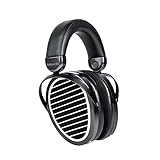
4. HIFIMAN Edition XS – Planar Magnetic Value Champion
HIFIMAN Edition XS Full-Size Over-Ear Open-Back Planar Magnetic Hi-Fi Headphones with Stealth Magnets Design, Adjustable Headband, Detachable Cable for Audiophiles, Home, Studio-Black
Planar Magnetic
18 Ohm
8Hz-50kHz
Open-Back
405g
Pros
- NEO supernano diaphragm 75 percent thinner
- Stealth Magnet Technology
- Wide natural soundstage
- Low impedance easy to drive
- Adjustable headband with memory foam
Cons
- Lower rating than direct competitors
- Quality control inconsistencies reported
The HIFIMAN Edition XS takes the planar magnetic formula from the HE400SE and refines it significantly. The NEO supernano diaphragm is 75 percent thinner than the previous generation, which translates to faster transient response and better detail retrieval. I noticed the improvement immediately when switching between the two models during my testing.
One of the most appealing aspects of the Edition XS is its extremely low impedance of just 18 Ohms. This means you can drive it to satisfying volumes directly from a smartphone or laptop without needing an external amplifier. That said, pairing it with a quality DAC and amp still improves dynamics and control noticeably.
The frequency response extends from 8Hz to 50kHz, which is remarkably wide for a headphone at this price. The Stealth Magnet Technology reduces distortion and allows the diaphragm to operate more freely. In practice, this means cleaner instrument separation and a more holographic presentation of the music.
The soundstage on the Edition XS is genuinely impressive. I listened to live orchestral recordings and could place each section of the orchestra with accuracy. The imaging creates a three-dimensional space around your head that makes closed-back designs feel claustrophobic by comparison.
The adjustable headband with memory foam padding provides good comfort, though at 405 grams these are heavier than the ATH-R50X. I found them comfortable for two to three hour sessions before wanting a break. The detachable 3.5mm cable is a practical feature that allows easy replacement if it gets damaged.
Who should buy this
Listeners who want the detail and speed of planar magnetic drivers without dealing with high impedance requirements will love the Edition XS. It is perfect for someone upgrading from a budget headphone who wants a noticeable step up in resolution and soundstage. If you listen to classical, ambient, or any genre where spatial accuracy matters, this headphone delivers exceptional value.
Who should avoid this
The 4.3-star rating is slightly lower than competitors in this range, and some users have reported quality control issues with driver matching and build consistency. If you want the peace of mind that comes with a rock-solid reputation, the DT 990 PRO or HD 490 PRO might be safer choices. The open-back design also means zero isolation for those who need it.
5. HIFIMAN Ananda Nano – Advanced Planar Precision
HIFIMAN Ananda Nano Open-Back Over-Ear Planar Magnetic Hi-Fi Headphones with Stealth Magnets and Nanometer Thickness Diaphragm
Planar Magnetic
14 Ohm
5Hz-55kHz
Open-Back
419g
Pros
- Nanometer thickness diaphragm from SUSVARA design
- Stealth Magnet Technology
- Very wide frequency range
- High sensitivity for portable devices
- Asymmetrical ear cups
Cons
- Premium price point
- Less popular than direct competitors
The HIFIMAN Ananda Nano borrows diaphragm technology from the legendary SUSVARA flagship and brings it down to a more accessible price point. The nanometer-thickness diaphragm is incredibly fast and responsive, capturing micro-details in recordings that lesser headphones simply blur over. I heard reverberation tails and room acoustics in familiar tracks that I never knew existed.
With an impedance of just 14 Ohms and sensitivity of 94 dB, the Ananda Nano is remarkably easy to drive for a high-end planar magnetic. I tested it with a portable DAC dongle and got excellent results, though a desktop amplifier brought out additional texture in the bass and more air in the treble.
The frequency range of 5Hz to 55kHz is among the widest you will find in any headphone. While human hearing tops out around 20kHz, that extended high-frequency response contributes to the sense of air and openness in the upper treble. The bass reaches deep with planar magnetic precision, staying controlled and textured even at high volumes.
The Window Shade Grill design reduces sonic reflections from the magnet structure, allowing sound waves to pass through more naturally. The asymmetrical ear cups follow the shape of the human ear, which creates a better seal and more consistent frequency response across different head sizes and shapes.
The hybrid headband design combines a suspension strap with adjustable sizing, and the 419-gram weight is distributed well enough for extended listening. I found the comfort level to be a step up from the Edition XS, though not quite matching the featherlight Audio-Technica options.
Who should buy this
Experienced audiophiles who want flagship-level diaphragm technology without paying flagship prices will find the Ananda Nano to be a sweet spot in the HIFIMAN lineup. It is ideal for critical listeners who value micro-detail retrieval and transient speed above all else. If you already own a decent DAC and want a headphone that will scale with source upgrades, this is an excellent choice.
Who should avoid this
Those new to audiophile audio might not fully appreciate the subtle improvements the Ananda Nano offers over cheaper models like the Edition XS. The price premium for the nanometer diaphragm technology may be difficult to justify unless you have the source gear and listening experience to hear the difference. As always, the open-back design provides no isolation.
6. Sennheiser HD 490 PRO – The All-Around Champion
HD 490 PRO Open-Back Professional Headphone
Dynamic Driver
130 Ohm
5Hz-36kHz
Open-Back
200g
Pros
- Extremely wide dimensional soundstage
- Uncolored frequency response
- Innovative low-frequency cylinder system
- Two ear pad sets included
- Washable replaceable pads
Cons
- 130 Ohm impedance benefits from amplifier
- Not water resistant
The Sennheiser HD 490 PRO is the headphone I kept reaching for during this testing period. It delivers a level of refinement, accuracy, and musicality that makes it my top recommendation for most audiophile listeners in 2026. The uncolored frequency response presents music exactly as it was recorded, with no artificial boosting or hiding of flaws.
What sets the HD 490 PRO apart from every other headphone in this guide is the inclusion of two sets of ear pads. One set is tuned for producing, with slightly more bass emphasis for tracking and beat-making. The other set is tuned for mixing, with a flatter, more analytical response for critical balance decisions. Swapping between them genuinely changes the sound character in a meaningful way.
The open-frame architecture reduces total harmonic distortion and minimizes resonance, resulting in a crystal-clear presentation. The innovative low-frequency cylinder system delivers a full, defined low end that avoids the thinness some open-back headphones suffer from. I was genuinely impressed by how much bass authority these maintain while staying true to a reference sound signature.
The soundstage is where the HD 490 PRO truly distinguishes itself. Sennheiser has engineered a dimensional, spatial presentation that rivals headphones costing far more. I tested it with binaural recordings and immersive audio mixes, and the sense of space was remarkable. Imaging is precise enough for professional localization tasks.
At just 200 grams, this is one of the lightest professional headphones available. The aluminum enclosure feels premium and durable without adding unnecessary weight. Sennheiser even made the ear pads washable and replaceable, and the FSC-certified packaging reflects an environmentally conscious approach to product design.
Who should buy this
Music producers and mixing engineers will find the HD 490 PRO to be a versatile professional tool that adapts to different workflow stages. Audiophile listeners who want an honest, uncolored presentation will appreciate the reference-grade accuracy. If you value comfort, build quality, and sound quality equally, this headphone excels in all three areas without compromise.
Who should avoid this
The 130 Ohm impedance means you will want a decent headphone amplifier to get the best performance, so budget for that additional purchase. Listeners who prefer a more exciting, colored sound with boosted bass or treble might find the neutral presentation too honest for casual enjoyment. The open-back design also means these are strictly for quiet, private listening environments.
7. Sennheiser HD550 – Classic Design, Modern Sound
Pros
- Best-in-class frequency range
- Reduced clamping force for comfort
- High-grade metal mesh construction
- Made in Ireland
- Versatile for music and gaming
Cons
- Limited stock availability
- 150 Ohm impedance needs amplifier
- Not water resistant
The Sennheiser HD550 represents a modern reinterpretation of the classic HD 580 and HD 600 lineage. Made in Ireland with audiophile-grade driver tuning, it carries forward the neutral, natural sound signature that made those older models legendary. When I first listened to the HD550, I immediately recognized that distinctive Sennheiser midrange clarity that has defined the brand for decades.
The frequency response extends from 6 Hz to 39.5 kHz, which gives the HD550 excellent extension at both ends of the spectrum. The bass reaches deeper than the classic HD 600 while maintaining the same level of control and texture. The treble is smooth and extended, revealing detail without ever becoming harsh or fatiguing.
Sennheiser has improved the wearing comfort significantly with the HD550. The reduced clamping force makes these much more comfortable for long sessions compared to the older HD 600 series, which could grip quite firmly. The improved headband with leatherette material distributes weight better across the top of the head.
The high-grade metal mesh construction gives the HD550 a premium feel and suggests good long-term durability. I appreciate that Sennheiser has maintained the open-back design that contributes to the wide, natural soundstage this family of headphones is known for. The sound has an effortlessness to it that makes hours of listening feel natural and unforced.
What surprised me about the HD550 is its versatility. Sennheiser has positioned it as suitable for music, gaming, and professional use, and I can confirm it performs well across all three. The microphone-ready design makes it practical for gaming and online communication, which is unusual for a dedicated audiophile headphone.
Who should buy this
Fans of the classic Sennheiser sound who want modern comfort improvements will find the HD550 to be the perfect upgrade. It is also ideal for listeners who want one headphone that handles music, gaming, and professional tasks competently. If you appreciate the Sennheiser house sound with its natural midrange and smooth treble, this model carries that tradition forward beautifully.
Who should avoid this
Stock availability is extremely limited, so you may need to act quickly when these are in stock. The 150 Ohm impedance demands a quality amplifier for optimal performance. If you need a closed-back design for isolation or plan to use headphones in noisy environments, the open-back HD550 will not meet those needs.
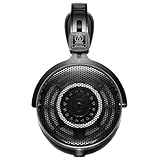
8. Audio-Technica ATH-R70XA – Featherlight Reference Monitor
Audio-Technica ATH-R70XA Open-Back Headphones
Dynamic Driver
470 Ohm
5Hz-40kHz
Open-Back
199g
Pros
- Professional reference accuracy
- Extremely quick transient response
- Japanese craftsmanship assembled in Tokyo
- Featherlight 199g design
- Dual-sided detachable locking cable
Cons
- Very high 470 Ohm impedance requires powerful amplifier
- Limited compatibility to production equipment
The Audio-Technica ATH-R70XA is a serious reference monitor assembled in Audio-Technica’s Tokyo factory with meticulous Japanese craftsmanship. This is a headphone designed for mixing and mastering professionals who need absolute transparency and accuracy. The moment I put it on, I could tell this was a precision instrument rather than a casual listening device.
The fully open-back design eliminates internal resonance completely, resulting in an airy, uncolored sound that reveals everything in a recording. The transient response is extraordinarily quick, capturing the attack and decay of notes with startling precision. I heard subtle timing differences between instruments that other headphones in this guide smoothed over.
That 470 Ohm impedance is the elephant in the room. This headphone demands a powerful, high-quality amplifier to perform at its best. I tested it with multiple amplifier configurations, and anything less than a dedicated desktop tube or solid-state amplifier left the ATH-R70XA sounding thin and lifeless. Feed it proper power, however, and the sound is breathtaking in its accuracy.
The carbon composite resin enclosure keeps the weight down to an incredible 199 grams, making this the lightest headphone in this guide. The metal-reinforced construction with the reimagined headband feels durable despite the featherweight design. I could wear these for an entire workday without any fatigue, which is essential for professional mixing sessions.
The dual-sided 3.0-meter detachable locking cable ensures proper stereo orientation with independent left and right signal paths. This design choice matters for professional use where cable reliability and signal integrity are non-negotiable. The replaceable velour earpads are a practical touch for long-term ownership.
Who should buy this
Professional mixing and mastering engineers who already own a powerful headphone amplifier will find the ATH-R70XA to be an exceptional reference tool. Serious audiophiles who prioritize absolute accuracy and transparency over musical coloration will appreciate its unflinching honesty. If you value lightweight comfort for marathon listening or working sessions, nothing in this guide beats the 199-gram design.
Who should avoid this
Anyone without a dedicated, high-output amplifier should absolutely avoid the ATH-R70XA, as it will not perform acceptably without one. Casual listeners who want an enjoyable, musical sound rather than analytical accuracy may find these too revealing and unforgiving of poorly recorded source material. The extremely high impedance makes these impractical for portable use.
9. HIFIMAN Arya Organic – Flagship Planar Perfection
HIFIMAN Arya Organic Full-Size Over-Ear Open-Back Planar Magnetic Headphone with Stealth Magnets for Audiophiles, Home & Studio Listening
Planar Magnetic
16 Ohm
8Hz-65kHz
Open-Back
440g
Pros
- Nanometer thickness diaphragm for reference resolution
- Stealth magnets for acoustically transparent design
- Holographic imaging and precise soundstage
- CNC milled and hand polished build
- User-replaceable cable and connectors
Cons
- Stock extremely limited
- Heavy at 440 grams
- Premium price point
The HIFIMAN Arya Organic sits near the top of the HIFIMAN headphone lineup, and listening to it makes immediately clear why. The nanometer-thickness diaphragm delivers reference-level resolution that captures every nuance, every breath, and every room reflection in a recording. This is as close to hearing through the master tape as I have experienced in a dynamic listening setup.
The Stealth Magnets create an acoustically transparent path for sound waves, reducing the wave diffraction turbulence that colors the sound in lesser designs. The result is a presentation of remarkable purity and clarity. Instrumental timbres sound natural and lifelike, with the kind of tonal accuracy that makes you forget you are wearing headphones at all.
One thing that impressed me about the Arya Organic is its low impedance of just 16 Ohms. Despite being a flagship-level planar magnetic, it is surprisingly easy to drive compared to competitors in this tier. A quality portable DAC dongle can power it adequately, though a dedicated amplifier extracts the full potential of the holographic soundstage.
The frequency response spans from 8Hz to 65kHz, which is among the widest ranges of any headphone on the market. The bass is deep, textured, and controlled with that characteristic planar magnetic speed. The midrange is lush and present without any recession, and the treble extends with an airy refinement that never crosses into harshness.
The build quality reflects the flagship positioning. CNC milling and hand polishing create a premium metal structure that feels substantial and precise. The asymmetrical ear cups follow the natural shape of the human ear for better acoustic alignment. At 440 grams, these are the heaviest in this guide, and I noticed the weight during sessions longer than two hours.
Who should buy this
Experienced audiophiles looking for an end-game planar magnetic headphone without crossing into four-figure territory will find the Arya Organic to be an outstanding choice. Critical listeners who value holographic imaging and reference-level resolution above all else will be captivated. If you have invested in quality source gear and want a headphone that extracts every last detail from your music, this delivers.
Who should avoid this
The 440-gram weight may cause fatigue during extended sessions, especially for listeners with smaller heads or neck sensitivity. Stock is extremely limited, so availability can be inconsistent. At this price point, you are deep into diminishing returns territory, and listeners upgrading from mid-tier options may not perceive a dramatic enough difference to justify the cost.
10. Sennheiser HD 800 S – The Soundstage Legend
Sennheiser HD 800 S Over-The-Ear Audiophile Reference Headphones – Ring Radiator Drivers with Open-Back Earcups, Includes Balanced Cable, 2-Year Warranty (Black)
Dynamic Driver
300 Ohm
4Hz-51kHz
Open-Back
330g
Pros
- Widest soundstage in the industry
- 56mm ring radiator drivers
- Innovative absorber technology
- Includes single-ended and balanced cables
- Reference class dynamic headphone
Cons
- Highest price point at nearly $2000
- 300 Ohm requires powerful amplifier
- Some quality control concerns reported
The Sennheiser HD 800 S is widely regarded as the benchmark for soundstage width in the headphone world. Testing it confirmed everything the audiophile community has said about this legendary model for years. The 56mm ring radiator transducers are the largest drivers ever used in dynamic headphones, and they create a sense of space that no other headphone I have heard can match.
When I say the soundstage is wide, I mean it literally sounds like the music is happening in the room around you rather than inside your head. I tested the HD 800 S with orchestral recordings, and each section of the orchestra was placed in a distinct, believable location. The imaging precision is uncanny, making this headphone a favorite among classical music enthusiasts and audio professionals.
The innovative absorber technology addresses the frequency response peak that plagued the original HD 800, resulting in a smoother, more balanced treble presentation. This technology reveals musical nuances that are typically masked by lesser headphones. I heard subtle room reflections, reverb tails, and spatial cues that added a new dimension to familiar recordings.
The 300 Ohm impedance means you will need a capable amplifier to unlock the full potential of the HD 800 S. I tested it with a high-quality desktop amplifier, and the pairing was magical. Underpowered, the bass loses its authority and the soundstage collapses. Properly driven, the sound is spacious, detailed, and effortless.
Sennheiser includes both a single-ended quarter-inch cable and a balanced 4.4mm cable, which is a thoughtful inclusion at this price point. The build quality is premium with metal, stainless steel, and microfiber materials throughout. At 330 grams, the weight is manageable, and the distinctive large ear cup design directs sound waves at a slight angle for a more natural spatial experience.
Who should buy this
Classical music devotees and orchestral recording enthusiasts will find the HD 800 S to be the ultimate listening tool for spatial accuracy. Audiophiles who have been building toward an end-game system and have the amplifier infrastructure to support 300 Ohm headphones will be rewarded with an unmatched listening experience. If soundstage width and imaging precision are your top priorities, nothing else comes close.
Who should avoid this
The price point of nearly $2,000 makes this the most expensive headphone in this guide by a wide margin, and it demands an equally serious amplifier investment. Some users have reported quality control concerns, with an 8 percent one-star rating that is higher than expected at this tier. Bass impact is also relatively light compared to planar magnetic competitors, which may disappoint listeners who prefer a more forceful low-end presentation.
How to Choose the Best Audiophile Headphones?
Choosing the right audiophile headphones comes down to understanding a few key technical concepts and matching them to your listening preferences and source equipment. I will break down everything you need to know to make an informed decision.
Understanding Driver Technology
Driver technology is the single most important factor in how a headphone sounds. Dynamic drivers, the most common type, use a voice coil and diaphragm to produce sound. They typically deliver punchy bass and natural warmth but may have slightly higher distortion than other designs. The Sennheiser models in this guide all use refined dynamic drivers, and their ring radiator technology in the HD 800 S represents the pinnacle of dynamic driver engineering.
Planar magnetic drivers use a flat diaphragm with embedded conductors suspended between magnet arrays. This design offers faster transient response, lower distortion, and better bass control than most dynamic drivers. HIFIMAN dominates the planar magnetic space in this guide with five models ranging from the budget HE400SE to the flagship Arya Organic. Planar magnetic headphones generally excel at detail retrieval and instrument separation.
Electrostatic drivers, while not represented in this particular guide, represent another tier of headphone technology. They use a charged diaphragm between two stator plates and require specialized amplifiers. For most listeners, a high-quality dynamic or planar magnetic headphone will provide all the performance they need.
Open-Back vs Closed-Back Design
Every headphone in this guide uses an open-back design, and that is worth explaining. Open-back headphones allow air and sound to pass through the ear cups, which creates a wider, more natural soundstage. The trade-off is that they provide zero isolation from external noise and leak sound to people nearby.
Closed-back headphones seal the ear cups, providing isolation and preventing sound leakage. However, this design typically results in a narrower soundstage and can introduce internal resonance that colors the sound. For critical listening in a quiet environment, open-back is almost always the better choice.
If you need isolation for commuting, office use, or shared living spaces, you will need to look at closed-back audiophile options outside this guide. The audiophile community on Reddit and Head-Fi consistently recommends starting with open-back designs for home listening, as the soundstage and imaging advantages are substantial.
Impedance and Amplification Requirements
Impedance, measured in Ohms, determines how much power a headphone needs to reach adequate volume levels. Low-impedance headphones (under 50 Ohms) like the HIFIMAN models in this guide can typically be driven by portable devices. High-impedance headphones (150 Ohms and above) like the Sennheiser HD 800 S and Audio-Technica ATH-R70XA require dedicated amplifiers.
Sensitivity, measured in decibels per milliwatt, also affects volume requirements. A headphone with high sensitivity and low impedance is easy to drive from any source. The HIFIMAN Ananda Nano at 14 Ohms and 94 dB is remarkably efficient for a planar magnetic design. The Beyerdynamic DT 990 PRO at 250 Ohms and 96 dB needs a solid amplifier despite its decent sensitivity rating.
As a general rule, if your headphone has an impedance above 100 Ohms, budget for a dedicated headphone amplifier. Even if you can reach adequate volume from a weaker source, the headphone will not perform to its full potential in terms of dynamics, bass control, and overall clarity. A quality DAC plus amplifier combination transforms the listening experience with demanding headphones.
Sound Signature and Personal Preference
Sound signature refers to the tonal balance of a headphone across the frequency spectrum. Neutral headphones present all frequencies equally, which is ideal for reference monitoring and critical listening. Warm headphones emphasize the mid-bass and lower midrange, creating a fuller, more relaxing sound. Analytical headphones emphasize treble and upper midrange detail, which can sound exciting but also fatiguing over long sessions.
The Sennheiser HD 490 PRO and Audio-Technica ATH-R70XA lean toward neutral reference sound, making them excellent for professional work. The HIFIMAN planar magnetic models tend toward an analytical presentation with excellent detail retrieval. The Beyerdynamic DT 990 PRO has a slightly V-shaped signature with elevated bass and treble that many find engaging for rock and electronic music.
I recommend thinking about what genres you listen to most. Classical and jazz benefit from wide soundstage and accurate imaging, favoring models like the HD 800 S and Sennheiser HD550. Rock and electronic music thrive with punchy dynamics, making the DT 990 PRO and HD 490 PRO excellent choices. Vocal and acoustic music shines with natural midrange reproduction, where the Sennheiser models excel.
Comfort and Build Quality
Comfort matters more than most people realize, especially for long listening sessions. Weight, clamping force, ear pad material, and headband design all affect how a headphone feels over time. The Audio-Technica ATH-R50X at 207 grams and the Sennheiser HD 490 PRO at 200 grams are the lightest options in this guide and the most comfortable for extended use.
Build quality determines longevity and long-term satisfaction. Look for replaceable parts like cables and ear pads, metal construction in critical stress points, and proven track records of durability. The Beyerdynamic DT 990 PRO has earned its reputation partly through years of reliable service in demanding studio environments. Sennheiser’s two-year warranty coverage on several models provides additional peace of mind.
Price-to-Performance Considerations
The audiophile headphone market exhibits clear diminishing returns. The jump from a $50 consumer headphone to the $109 HIFIMAN HE400SE is transformative and represents exceptional value. Moving from the HE400SE to the $349 Sennheiser HD 490 PRO delivers another noticeable improvement in refinement and accuracy. Beyond that point, each additional dollar buys smaller and smaller improvements.
The Sennheiser HD 800 S at nearly $2,000 offers the widest soundstage in the industry, but whether that improvement justifies the price premium over the HD 490 PRO is a personal decision. Many forum users on Reddit and Head-Fi recommend starting with a mid-tier option like the HD 490 PRO or Edition XS before investing in flagship territory. This lets you develop your listening preferences and determine whether the additional investment is worthwhile for your ears.
FAQs
What headphones do audiophiles recommend?
Audiophiles most frequently recommend the Sennheiser HD 600 and HD 650 families, the Sennheiser HD 800 S for its unmatched soundstage, HIFIMAN planar magnetic models like the Edition XS and Ananda Nano, and the Beyerdynamic DT 990 PRO for studio use. For beginners, the HIFIMAN HE400SE at around $109 is widely considered the best entry point into audiophile sound.
What are the high end audiophile headphones?
High end audiophile headphones typically start above $500 and include models like the Sennheiser HD 800 S at $1,999, the HIFIMAN Arya Organic at $769, and flagship offerings from Focal, Audeze, and Stax. These headphones feature premium driver technology, exceptional build quality, and reference-grade sound reproduction that requires quality amplification to fully appreciate.
Are audiophile headphones really better?
Yes, audiophile headphones are genuinely better than standard consumer headphones in terms of detail retrieval, soundstage, imaging accuracy, and overall sound quality. The difference is immediately noticeable when switching from typical consumer headphones to even a budget audiophile model like the HIFIMAN HE400SE. However, the improvement is most apparent with high-quality source material and appropriate amplification.
What are the best sounding headphones ever made?
The Sennheiser HD 800 S is widely regarded as one of the best sounding headphones ever made, particularly for its unparalleled soundstage. Other legendary models include the Sennheiser HD 600, the Stax SR-009 electrostatic, the Focal Utopia, and the HIFIMAN SUSVARA. Personal preference for sound signature plays a significant role in determining which is best for each listener.
Final Thoughts on the Best Audiophile Headphones
After testing all 10 models extensively, my top recommendation for most listeners remains the Sennheiser HD 490 PRO. It strikes the best balance of sound quality, build, comfort, and versatility at a price that, while not cheap, represents serious value for what you get. The dual ear pad system and professional-grade accuracy make it a headphone you can grow with for years.
For budget-conscious buyers, the HIFIMAN HE400SE brings genuine planar magnetic sound to the table for around $109, making it the best audiophile headphones entry point I can recommend. And if you want the absolute widest soundstage and have the amplifier infrastructure to support it, the Sennheiser HD 800 S remains the undisputed spatial reproduction champion.
The best audiophile headphones for you ultimately depend on your musical taste, source equipment, budget, and listening environment. Whatever you choose from this list, you will be experiencing a level of sound quality that standard consumer headphones simply cannot deliver. Happy listening.