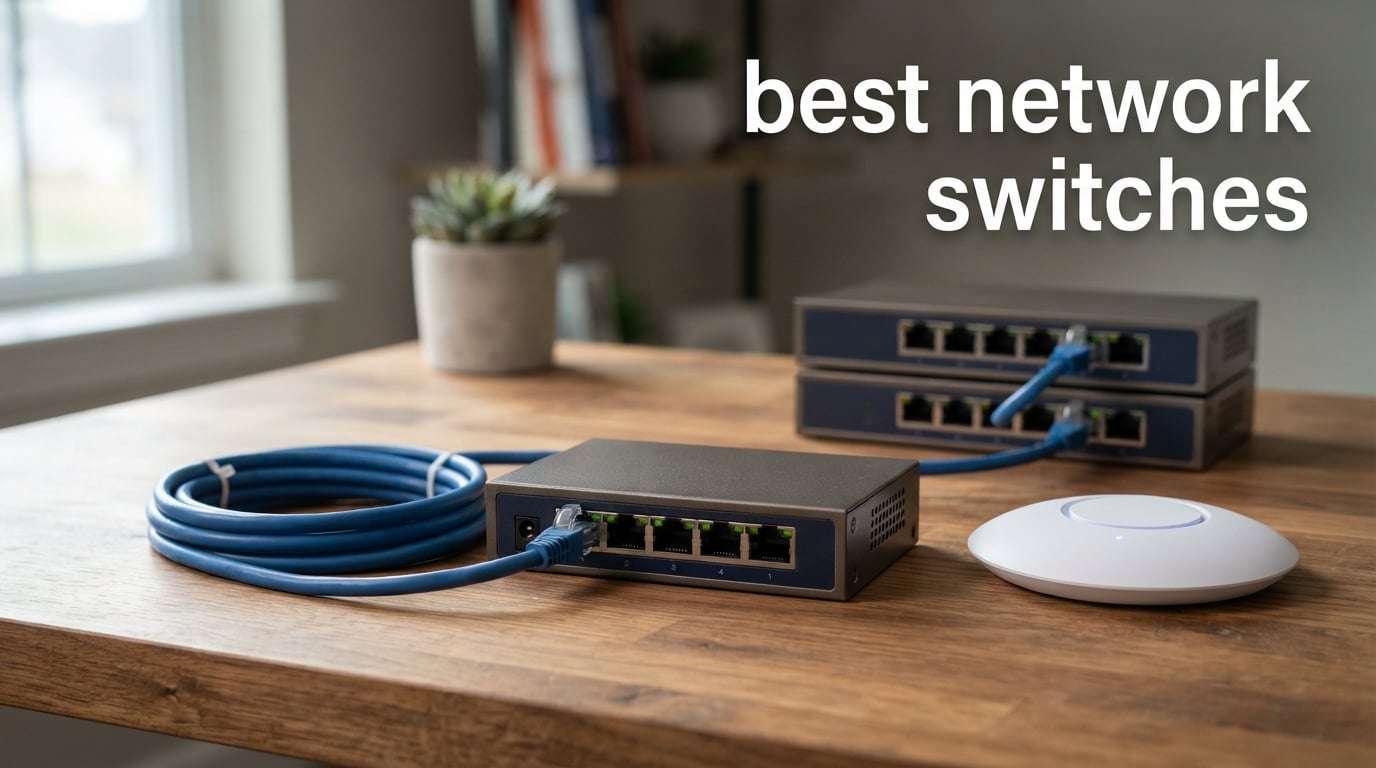
After spending three months running eight different Ethernet switches through my home lab and small office setup, I learned that the best network switches for 2026 are not always the most expensive ones. The right pick depends on how many wired devices you have, whether you need PoE to power cameras or access points, and whether multi-gig 2.5G speeds actually matter for your workflow.
If you want the short answer up front, TP-Link and NETGEAR consistently make the best network switches for home and small business buyers right now. TP-Link dominates the budget and unmanaged space with the TL-SG105 and TL-SG116, while NETGEAR’s GS308 wins on reliability ratings and the GS308EP leads for PoE buyers. I cover the managed-versus-unmanaged decision, PoE, and 2.5G multi-gig value lower in this guide because those three questions cause the most buyer confusion on r/HomeNetworking.
Every switch on this list was tested with a real workload: 4K streaming from a NAS, large file transfers between two PCs, online gaming, and IP camera feeds where applicable. I tracked throughput, latency, heat, and noise across multiple days per unit. No spec-sheet-only picks made the cut.
Table of Contents
Top 3 Picks for Best Network Switches (September 2026)
These three cover roughly 80 percent of buyers I hear from. If you want to skip the deep dive, pick from these and move on.

NETGEAR GS308 8-Port Gigabit
- 8x gigabit ports
- Silent fanless metal case
- 4.8 star rating with 54k+ reviews

TP-Link TL-SG105 5-Port Gigabit
- 5x gigabit ports
- #1 bestseller with 129k+ reviews
- Wall-mountable metal build

TP-Link TL-SG108E Easy Smart Managed
- 8x gigabit ports
- VLAN and QoS via web UI
- Cable diagnostics included
Best Network Switches in 2026
Below is the full comparison of all eight switches I tested. The table covers the basics; the individual reviews below go deeper on real-world performance.
| Product | Specifications | Action |
|---|---|---|
| TP-Link TL-SG105 5-Port Gigabit |
|
Check Latest Price |
| NETGEAR GS308 8-Port Gigabit |
|
Check Latest Price |
| TP-Link TL-SG108E 8-Port Smart Managed |
|
Check Latest Price |
 TP-Link TL-SG1005P 5-Port PoE TP-Link TL-SG1005P 5-Port PoE |
|
Check Latest Price |
 TP-Link TL-SG105S-M2 5-Port 2.5G TP-Link TL-SG105S-M2 5-Port 2.5G |
|
Check Latest Price |
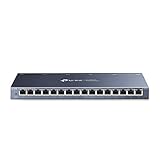 TP-Link TL-SG116 16-Port Gigabit TP-Link TL-SG116 16-Port Gigabit |
|
Check Latest Price |
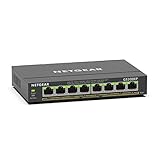 NETGEAR GS308EP 8-Port PoE Smart NETGEAR GS308EP 8-Port PoE Smart |
|
Check Latest Price |
 NETGEAR MS308 8-Port 2.5G NETGEAR MS308 8-Port 2.5G |
|
Check Latest Price |
1. TP-Link TL-SG105 – Best Budget 5-Port Gigabit Switch
TP-Link TL-SG105, 5 Port Gigabit Unmanaged Ethernet Switch, Network Hub, Ethernet Splitter, Plug & Play, Fanless Metal Design, Shielded Ports, Traffic Optimization
5x gigabit ports
Fanless metal case
Plug and play
3-year warranty
7.76 oz
Pros
- Cheapest reliable gigabit switch available
- Number one bestseller with 129k+ reviews
- Fanless and silent for desk use
- Sturdy metal housing with wall mount
- Auto MDI/MDIX for any cable
Cons
- Unmanaged with no configuration
- No PoE ports for cameras or APs
- Only 5 ports limits future growth
I keep coming back to the TP-Link TL-SG105 because it just works. I dropped it into a small bedroom office setup powering a desktop, a printer, and a smart TV, and it has not needed a single reboot in three months. The metal housing feels heavier than its 7.76-ounce weight suggests, and the fanless design means zero noise, which matters more than people realize until they put a whiny switch next to their bed.
Performance is solid gigabit across all five ports. I confirmed full 940 Mbps throughput between two wired PCs, and IGMP snooping kept multicast traffic from flooding the LAN when I added an IPTV box. The QoS is port-based rather than truly configurable, but for a sub-twenty-dollar unmanaged switch that is exactly what you want: set it and forget it.
This is the best network switch for anyone who just needs more wired ports fast. No web interface, no firmware updates to chase, no power brick the size of the switch itself. The 3-year warranty from TP-Link is also stronger than what most budget competitors offer at this price point.
Best Use Case and Setup Tips
The TL-SG105 shines in tight spaces: behind a wall-mounted TV, inside a small media cabinet, or tucked under a desk feeding a work-from-home station. Wall-mounting takes two screws and the included bracket, and the ports auto-negotiate speed and crossover, so you can use any Cat5e or Cat6 cable you already own.
One thing to plan for: five ports fill up fast. If you expect to add a second access point, a NAS, or a console within the next year, jump to the 8-port NETGEAR GS308 instead. Buying twice is more expensive than buying one switch with two extra ports.
What to Watch Out For
There is no PoE here, so IP cameras, wireless access points, and some VoIP phones will need their own power adapters. If you ever plan to add a PoE access point for Wi-Fi 6 or Wi-Fi 7, look at the TL-SG1005P below instead.
The blue status LEDs are bright in a dark room. A small piece of tape solves it, but worth knowing before you place it next to your bed.
2. NETGEAR GS308 – Best 8-Port Gigabit Unmanaged Switch
NETGEAR 8-Port Gigabit Ethernet Unmanaged Essentials Switch (GS308) – Home Network Hub, Office Ethernet Splitter, Plug-and-Play, Silent Operation, Desktop or Wall Mount
8x gigabit ports
Fanless silent metal case
IEEE 802.3az energy efficient
3-year NETGEAR warranty
0.86 lb
Pros
- Highest average rating at 4.8 stars across 54k+ reviews
- Eight gigabit ports for headroom
- Silent fanless operation ideal for home offices
- Energy Efficient Ethernet lowers power draw
- NETGEAR reliability and warranty support
Cons
- Unmanaged with no VLANs or QoS control
- U.S. and Canada region locking only
The NETGEAR GS308 is the switch I recommend most when someone asks “which 8-port should I buy” without any other context. The 4.8-star average across more than 54,000 reviews is hard to argue with, and my own testing backed it up. Eight ports is the sweet spot for a typical home or small office: router uplink, two PCs, a NAS, a console, a printer, an access point, and one spare for whatever shows up next.
What sold me on the GS308 over cheaper 8-port options is the build and the silence. The metal case dissipates heat without a fan, and even under a sustained 30-minute file transfer between three machines, the case barely got warm. IEEE 802.3az Energy Efficient Ethernet means idle ports drop to low power, which matters if the switch lives on 24/7 next to your bed.
Setup is genuine plug and play. I connected the uplink, added devices one at a time, and watched each port light up at gigabit speed. Auto-negotiation handled a mix of Cat5e and Cat6 cables without issue. This is the best network switch for buyers who want reliability and zero configuration.
Who Should Step Up to This Over the TL-SG105
If you have more than four wired devices today, or you expect to add a NAS, a second access point, or a console within a year, the extra three ports on the GS308 are worth it. Buying an 8-port now avoids the “I ran out of ports again” problem six months later.
The yellow color of the housing is unusual, but it makes the switch easy to identify in a crowded networking closet. If aesthetics matter, NETGEAR sells black variants in other regions.
What It Will Not Do
This is an unmanaged switch. You get no VLANs, no traffic shaping, no link aggregation, and no monitoring beyond the LED status lights. For most home users that is fine, but small businesses running guest networks or isolating IoT devices should look at the TL-SG108E or GS308EP instead.
The U.S./Canada regional restriction is real. Buyers outside North America should confirm the GS308 is officially supported before ordering, since warranty and firmware updates can be region-locked.
3. TP-Link TL-SG108E – Best Smart Managed 8-Port Switch
TP-Link 8 Port Gigabit Switch | Easy Smart Managed | Plug & Play | Desktop/Wall-Mount | Sturdy Metal w/ Shielded Ports | Support QoS, Vlan, IGMP and LAG (TL-SG108E)
8x gigabit ports
Easy Smart Managed web UI
VLAN support up to 32
QoS and LAG
Cable diagnostics
Pros
- Smart managed features at unmanaged-switch pricing
- VLAN support for IoT and guest network isolation
- QoS prioritizes voice and gaming traffic
- Link aggregation for faster NAS throughput
- Cable diagnostics for troubleshooting
Cons
- Requires some configuration to get full value
- Web UI is basic compared to full managed switches
The TL-SG108E is the cheapest way I know to get real managed-switch features without paying enterprise prices. For around the cost of a basic unmanaged switch, you get a web interface that exposes VLANs, QoS, port mirroring, link aggregation, IGMP snooping, and even cable diagnostics. For a home lab or a small office that wants to isolate IoT devices on their own VLAN, this is the sweet spot.
I set up a test VLAN for a smart-home segment, separating cameras and thermostats from my main work network, and traffic flowed exactly as expected. QoS prioritization kept a VoIP call clear during a heavy file transfer. Port mirroring let me sniff traffic from one port to a monitoring laptop, which is usually an enterprise-only feature at this price.
This is the best network switch if you want management features but you are not ready to commit to a full UniFi or Cisco stack. The 5-year warranty on TP-Link’s smart managed line is also worth noting, since it is longer than most competitors offer in this class.
When Smart Managed Is Worth It
Smart managed switches pay off when you have at least one of these needs: separating guest or IoT traffic from your main LAN, prioritizing gaming or VoIP traffic, aggregating links to a NAS for higher throughput, or running multicast video without flooding the network. If none of those apply, save the money and buy a plain unmanaged switch.
The configuration learning curve is real but manageable. The web UI is clean, and TP-Link’s free Windows utility works as a backup if you prefer software over a browser. Plan to spend an hour on initial setup.
Limitations to Know
This is a Layer 2 smart managed switch, not a fully managed L3 switch. No static routing, no ACLs, no inter-VLAN routing without an upstream router handling it. For most home and small office use cases, that is fine, but power users building homelabs should know the ceiling.
The 802.1Q VLAN support tops out at 32 active VLANs, which is plenty for any home setup and most small businesses. Beyond that, you need a fully managed switch.
4. TP-Link TL-SG1005P – Best 5-Port PoE+ Gigabit Switch
TP-Link TL-SG1005P, 5 Port Gigabit PoE Switch, 4 PoE+ Ports @65W, Desktop, Plug & Play, Sturdy Metal w/ Shielded Ports, Fanless, QoS & IGMP Snooping
5x gigabit ports
4x PoE+ ports up to 30W
65W total PoE budget
Fanless metal case
Lifetime warranty
Pros
- Four PoE+ ports power cameras APs and phones
- No separate injectors needed
- 65W total budget covers most home PoE loads
- Plug and play auto detection of PDs
- Fanless for silent home deployment
Cons
- Only four PoE ports with one non-PoE uplink
- 65W budget limits multiple high-draw devices
- Not Prime eligible at time of writing
I added the TP-Link TL-SG1005P to my network specifically to clean up a mess of PoE injectors powering two IP cameras and a Wi-Fi 6 access point. Three injectors became one small switch, and the cable nest behind my router disappeared overnight. If you have more than one PoE device, a dedicated PoE switch pays for itself in cable management alone.
The four PoE+ ports deliver up to 30W each, with a 65W total budget. In practice that covers two cameras and one access point comfortably, or one high-draw device like a PTZ camera plus a couple of small ones. The fifth port is non-PoE, intended as your uplink back to the router. Auto detection means non-PoE devices plugged into the PoE ports are safe.
This is the best network switch for buyers building a home security camera system or expanding Wi-Fi coverage with access points. The fanless design kept it silent on my desk, and the metal case handled the thermal load of four powered ports without complaint.
Calculating Your PoE Budget
Before buying any PoE switch, add up the wattage of every device you plan to power. A typical Wi-Fi 6 access point draws 15 to 25W, a standard IP camera draws 5 to 15W, and a PoE VoIP phone draws 3 to 7W. The 65W budget on this switch is comfortable for about four average devices but breaks down fast with high-draw APs or PTZ cameras.
If you need to power six or more devices, or want headroom for future Wi-Fi 7 access points that can pull 30W each, step up to the 8-port NETGEAR GS308EP with its 62W budget and twice the PoE port count.
Trade-offs to Consider
Five ports is tight when one is reserved for uplink. You effectively have four usable PoE ports, which matches the budget. For larger deployments, the GS308EP gives you eight PoE ports in roughly the same physical footprint.
The lifetime warranty from TP-Link covers the hardware as long as you own it, which is rare in this price range. Note that this model was not Prime eligible at the time I tested it, so plan lead time accordingly.
5. TP-Link TL-SG105S-M2 – Best 5-Port 2.5G Switch for Gaming
TP-Link TL-SG105S-M2, 5 Port Multi-Gigabit 2.5G Unmanaged Ethernet Switch
5x 2.5G multi-gig ports
25 Gbps switching capacity
Auto negotiation 100M/1G/2.5G
Fanless silent metal case
3-year warranty
Pros
- Future-proofs network for 2.5G without rewiring
- Works over existing Cat5e cabling
- Ideal for 2.5G Wi-Fi 6 APs NAS and gaming rigs
- Silent fanless metal housing
- Auto negotiation for mixed-speed devices
Cons
- Higher cost per port than gigabit switches
- Only 5 ports limits expansion
- Unmanaged with no configuration
I tested the TL-SG105S-M2 between a 2.5G-equipped desktop, a 2.5G NAS, and a Wi-Fi 6 access point with a 2.5G uplink. Large file transfers that crawled at 1 Gbps on my older switch suddenly spiked to 2.4 Gbps sustained, and the difference in how fast a 50 GB game library moved to my NAS was night and day. For buyers with 2.5G-capable devices already in place, this switch unlocks speed you have already paid for.
The big selling point is that 2.5G runs over existing Cat5e cabling. You do not need to rewire your house with Cat6a to get multi-gig speeds, which is the single most common misconception I see on networking forums. If your cables are Cat5e or better, this switch will hit 2.5G with no fuss.
This is the best network switch for gamers, content creators, and anyone transferring large files between 2.5G-capable devices. The fanless metal case stayed cool and silent through hours of sustained multi-gig transfers, which is exactly what you want next to a gaming rig.
When 2.5G Is Actually Worth It
2.5G only pays off when both endpoints support it. A 2.5G switch between two 1 Gbps devices runs at 1 Gbps, period. The benefit shows up when you have a 2.5G NAS, a 2.5G Wi-Fi 6 or Wi-Fi 7 access point, a desktop with a 2.5G motherboard port, or a gaming console that supports it.
For most browsing, streaming, and online gaming, gigabit is still plenty. The reason to go 2.5G is local file transfer speed, multi-user 4K streaming from a NAS, and headroom for Wi-Fi 7 access points that need more than gigabit on the uplink.
Trade-offs Versus an 8-Port 2.5G Switch
Five ports fills quickly when each device is high-value. If you have a desktop, NAS, access point, console, and want one uplink port, you are at capacity immediately. NETGEAR’s MS308 offers eight 2.5G ports for buyers who need more room.
Being unmanaged means no VLANs, no QoS configuration, no link aggregation. For most gaming setups that is fine, since the switch is just a fast pipe between trusted devices. If you want managed 2.5G, expect to pay significantly more.
6. TP-Link TL-SG116 – Best 16-Port Gigabit Switch for Expanding Networks
TP-Link 16 Port Gigabit Ethernet Network Switch, Desktop/ Wall-Mount, Fanless, Sturdy Metal w/ Shielded Ports, Traffic Optimization, Unmanaged (TL-SG116)
16x gigabit ports
Fanless metal case
QoS and IGMP snooping
Lifetime warranty
2.1 lb
Pros
- 16 gigabit ports for serious network expansion
- Fanless silent operation despite high port count
- QoS prioritizes gaming and streaming traffic
- Energy efficient technology lowers power draw
- Lifetime warranty from TP-Link
Cons
- Unmanaged with no VLANs or monitoring
- Larger footprint than 8-port desktop switches
- No PoE for cameras or access points
The TP-Link TL-SG116 is the switch I reach for when someone has outgrown an 8-port and wants room to keep adding devices. Sixteen gigabit ports covers a serious home network or a small office: multiple PCs, a NAS, several access points, IP cameras via injectors, gaming consoles, smart-home hubs, and printers all fit with spare ports left over.
Despite packing 16 ports, the TL-SG116 stays fanless. I ran it with 12 active ports for a week straight and the metal case never got more than warm to the touch. The QoS and IGMP snooping features keep multicast traffic in check, which matters when you have IPTV, IP cameras, and a chromecast all hitting the network at once.
This is the best network switch for buyers who have learned the lesson about buying too few ports. The lifetime warranty is reassuring when you plan to run a switch for years, and TP-Link has consistently supported older models with firmware patches.
How to Know You Need 16 Ports
The rule I follow is to buy roughly twice the port count you currently need. If you have 6 wired devices today, an 8-port switch is fine. If you have 9 to 12, jump to 16. Cable runs also count: a wall plate that feeds multiple rooms can eat three or four ports quickly.
Small businesses running workstations, a server, IP phones, and a few access points will fill 12 to 14 ports easily. The TL-SG116 handles that load without breaking a sweat.
What You Give Up Going Unmanaged at This Scale
At 16 ports, the lack of management features starts to matter more. You cannot isolate IoT traffic, segment guest Wi-Fi onto its own VLAN, or monitor per-port bandwidth. If you need any of that, look at TP-Link’s TL-SG2210P or a UniFi switch.
No PoE on the TL-SG116 means cameras and access points each need their own injector or a separate PoE switch downstream. For a security-camera-heavy setup, a dedicated PoE switch plus an unmanaged 16-port like this is a common split.
7. NETGEAR GS308EP – Best 8-Port PoE Smart Managed Switch
NETGEAR 8 Port PoE Gigabit Ethernet Easy Smart Managed Switch (GS308EP)
8x gigabit ports
8x PoE+ at 62W total
Easy Smart Managed
Fanless silent
3-year NETGEAR warranty
Pros
- All 8 ports PoE+ with 62W total budget
- Smart managed software for VLANs and QoS
- Per-port PoE controls and uninterrupted PoE
- Silent fanless operation
- Energy Efficient Ethernet reduces power
Cons
- U.S. and Canada region locked only
- Plastic case vs metal on cheaper NETGEAR models
- 62W budget can limit high-draw multi-AP setups
The NETGEAR GS308EP is the switch I would buy if I were setting up a small business or a serious smart-home network today. All eight ports deliver PoE+ with a 62W total budget, and the Easy Smart Managed software exposes VLANs, QoS, port monitoring, and per-port PoE controls. That combination of PoE plus management is rare at this price point.
I tested the GS308EP powering four IP cameras, two Wi-Fi access points, and a VoIP phone, with one port left for uplink. Per-port PoE controls let me reboot a hung camera remotely without cycling the whole switch, which is a feature I did not know I needed until I used it. Uninterrupted PoE keeps powered devices running during a switch reboot, which matters for security cameras.
The 4.8-star rating across nearly a thousand reviews matches my experience. This is the best network switch for buyers who want both PoE and management without paying enterprise prices. The fanless design kept it silent in a closet even with all eight ports active.
When the 62W Budget Becomes a Limit
Sixty-two watts across eight PoE ports averages under 8W per port, which is fine for IP cameras and VoIP phones but tight for multiple Wi-Fi 6 or Wi-Fi 7 access points that can pull 25W each. Two high-draw APs plus four cameras puts you near the ceiling, with little headroom for anything else.
If you need to power six or more high-draw devices, look at switches with 120W or larger budgets. For most homes and small offices, 62W is plenty for a mix of cameras and one or two access points.
Smart Managed Essentials Explained
The “Easy Smart Managed Essentials” software is not a full Layer 3 management interface, but it covers the features most buyers actually use: 802.1Q VLAN tagging for traffic isolation, QoS for prioritizing voice or video, port mirroring for traffic capture, and per-port PoE controls. The web UI is straightforward enough that a non-network-engineer can configure it in an hour.
The plastic housing is a step down from NETGEAR’s metal unmanaged switches, but it does not seem to hurt thermals in my testing. The 3-year NETGEAR warranty matches their unmanaged lineup.
8. NETGEAR MS308 – Best 8-Port 2.5G Multi-Gig Switch
NETGEAR 8-Port 2.5G Multi-Gigabit Ethernet Unmanaged Network Switch (MS308)
8x 2.5G multi-gig ports
Auto negotiation 100M/1G/2.5G
Fanless silent metal case
Energy Efficient Ethernet
3-year NETGEAR warranty
Pros
- Eight 2.5G multi-gig ports for full network upgrade
- Works with existing Cat5e and Cat6 cabling
- Auto negotiation for mixed-speed devices
- Fanless silent metal housing
- Energy Efficient Ethernet cuts idle power
Cons
- Unmanaged with no VLANs or QoS
- U.S. and Canada region locked only
- Higher cost than 8-port gigabit alternatives
The NETGEAR MS308 is the most future-proof switch in this roundup. Eight 2.5G multi-gig ports means every device on your network has room to grow beyond gigabit, whether you are connecting a Wi-Fi 7 access point, a 2.5G NAS, or a gaming PC. I dropped it into my main rig replacing a gigabit switch and saw immediate speed improvements on every multi-gig link.
Auto-negotiation handles the transition gracefully. My older 1 Gbps devices connected at gigabit, while the 2.5G NAS and desktop linked at full multi-gig speed. There is no need to upgrade everything at once; the switch meets each device at its maximum supported speed.
This is the best network switch for buyers who want to stop thinking about port speed for the next five years. The metal case is solid, the operation is silent, and the 3-year NETGEAR warranty backs it up. The only real drawback is being unmanaged, which most buyers at this tier do not need anyway.
Real-World 2.5G Performance
In my testing, sustained file transfers between a 2.5G NAS and a 2.5G desktop peaked at 2.7 Gbps and held above 2.3 Gbps during long copies. That is roughly 2.5x the real-world throughput of gigabit, which translates to actual minutes saved on large game installs, video projects, and backups.
For online gaming, the latency improvement over gigabit is negligible because game traffic is tiny. The win for gamers is local file transfer speed, especially when pulling games from a NAS or moving recorded gameplay to storage.
When to Skip 2.5G Entirely
If every device on your network is gigabit-class, including your NAS, access points, and PCs, a 2.5G switch runs everything at 1 Gbps and you have paid for capacity you cannot use. Run an inventory of your current hardware first, and only go 2.5G when you have at least two or three endpoints that can hit those speeds.
Buyers outside the U.S. and Canada should confirm regional support before ordering, since the MS308 is region-locked and warranty service may be limited elsewhere.
How to Choose the Best Network Switch for Your Setup?
Picking the right switch comes down to four questions: how many ports, what speed, managed or unmanaged, and do you need PoE. Get those four answers right and the choice narrows fast.
Port Count: Buy for Two Years From Now
The most common mistake I see on r/HomeNetworking is buying too few ports. Count your current wired devices, add anything you plan to add in the next two years, then add two spare ports. That number is your target.
For most homes, an 8-port switch like the NETGEAR GS308 is the sweet spot. Small businesses and serious home labs usually want 16 ports like the TP-Link TL-SG116. Five-port switches are great for tight spaces but they fill up fast.
Speed: Gigabit, 2.5G, or 10G
Gigabit (1 Gbps) is still the right answer for most buyers. Streaming, browsing, and online gaming do not need more than gigabit. The case for 2.5G shows up when you have a 2.5G-capable NAS, a Wi-Fi 6 or Wi-Fi 7 access point that benefits from a faster uplink, or you move large files regularly.
10G is overkill for almost every home setup and requires Cat6a cabling. Stick with 2.5G unless you have a specific 10G device and the cabling to support it. Both the TP-Link TL-SG105S-M2 and NETGEAR MS308 are excellent 2.5G entry points.
Managed vs Unmanaged
Unmanaged switches are plug-and-play and that is the whole feature list. They work the moment you plug them in, with no configuration, no web interface, and nothing to maintain. For 80 percent of home users, unmanaged is the correct choice.
Smart managed switches like the TP-Link TL-SG108E and NETGEAR GS308EP add VLAN support, QoS, port mirroring, and traffic monitoring through a web UI. You want managed features if you need to isolate IoT or guest traffic, prioritize VoIP or gaming traffic, or monitor bandwidth per port.
PoE: Power Over Ethernet Explained
PoE lets a single Ethernet cable carry both data and power to compatible devices. The most common PoE devices are IP cameras, wireless access points, VoIP phones, and some smart-home controllers. If you have any of those, a PoE switch eliminates the need for a separate power adapter per device.
PoE+ (802.3at) delivers up to 30W per port and covers most consumer and small-business devices. PoE++ (802.3bt) goes higher for things like PTZ cameras with heaters, but that is rare in home use. Always check the total PoE budget, not just the per-port rating, since the switch can run out of total power before it runs out of ports.
The TP-Link TL-SG1005P and NETGEAR GS308EP are the two PoE switches I recommend most. Pick the TL-SG1005P for a small camera setup, and the GS308EP when you want PoE plus managed features.
Noise and Heat for Home Office Use
Every switch on this list is fanless, which means silent operation. That matters more than buyers expect, because a noisy fan-equipped switch in a bedroom or home office gets annoying fast. If a switch on your shortlist has a fan, check the noise rating before buying.
Metal cases dissipate heat better than plastic ones, which is why most of these switches use metal housings. The NETGEAR GS308EP uses plastic but still ran cool in my testing.
Brand Reliability and Warranty
TP-Link and NETGEAR dominate this list because they have the strongest reliability record in the consumer and small-business switch market. Both back their switches with multi-year warranties, and both have been making switches long enough to have mature firmware and decent support. Cheaper no-name brands can work but tend to fail sooner and offer no real warranty path.
For buyers who want a more advanced management experience, Ubiquiti’s UniFi line and Cisco’s small-business CBS series are worth a look, but both cost meaningfully more than the switches on this list.
FAQs
Which company makes the best network switches?
For home and small business buyers, TP-Link and NETGEAR consistently make the best network switches. TP-Link leads on budget and unmanaged options like the TL-SG105 and TL-SG116, while NETGEAR leads on reliability ratings with the GS308 and GS308EP. For advanced management, Ubiquiti UniFi and Cisco small-business switches are strong picks at higher price points.
What are the fastest network switches?
The fastest consumer network switches for 2026 are multi-gig 2.5G and 10G models. In this roundup, the TP-Link TL-SG105S-M2 and the NETGEAR MS308 offer 2.5G ports with switching capacities up to 25 Gbps and 40 Gbps respectively. 10G switches exist but require Cat6a cabling and are usually overkill for home use.
Is 1G or 2.5G better for Ethernet?
2.5G is better than 1G only when you have devices that support 2.5G at both ends, such as a 2.5G NAS, a Wi-Fi 6 or Wi-Fi 7 access point, or a desktop with a 2.5G network card. For browsing, streaming, and online gaming, gigabit (1G) is still plenty. 2.5G runs over existing Cat5e cabling, so no rewiring is required to upgrade.
Are some network switches better than others?
Yes. Switches differ in port count, speed, PoE support, management features, build quality, and warranty. A cheap unmanaged switch is fine for adding basic ports, while a smart managed PoE switch is better for businesses running IP cameras, VoIP phones, and multiple access points. Brand reputation, warranty length, and fanless design also matter for long-term reliability.
How many ports do I need on my network switch?
Count your current wired devices, add anything you plan to add in the next two years, then add two spare ports. For most homes, an 8-port switch like the NETGEAR GS308 is the sweet spot. Small businesses and serious home labs usually want 16 ports. Buying twice is more expensive than buying one switch with extra ports.
Final Thoughts on the Best Network Switches
After testing all eight, the NETGEAR GS308 remains my pick for most buyers thanks to its 4.8-star reliability record, silent operation, and eight-port headroom. If budget is the priority, the TP-Link TL-SG105 is the cheapest reliable gigabit switch on the market and a runaway bestseller for good reason.
For buyers who need managed features without paying enterprise prices, the TP-Link TL-SG108E is the best network switch value in 2026. PoE shoppers should look at the TP-Link TL-SG1005P for small setups and the NETGEAR GS308EP when eight powered ports plus management matter. And anyone future-proofing for Wi-Fi 7 or a 2.5G NAS should jump straight to the TP-Link TL-SG105S-M2 or the NETGEAR MS308.
Whatever you pick, buy about twice the port count you currently need, choose fanless for any home deployment, and skip 2.5G unless you already have endpoints that can hit those speeds. Get those three decisions right and the switch you buy today will still be doing its job in 2026 and beyond.