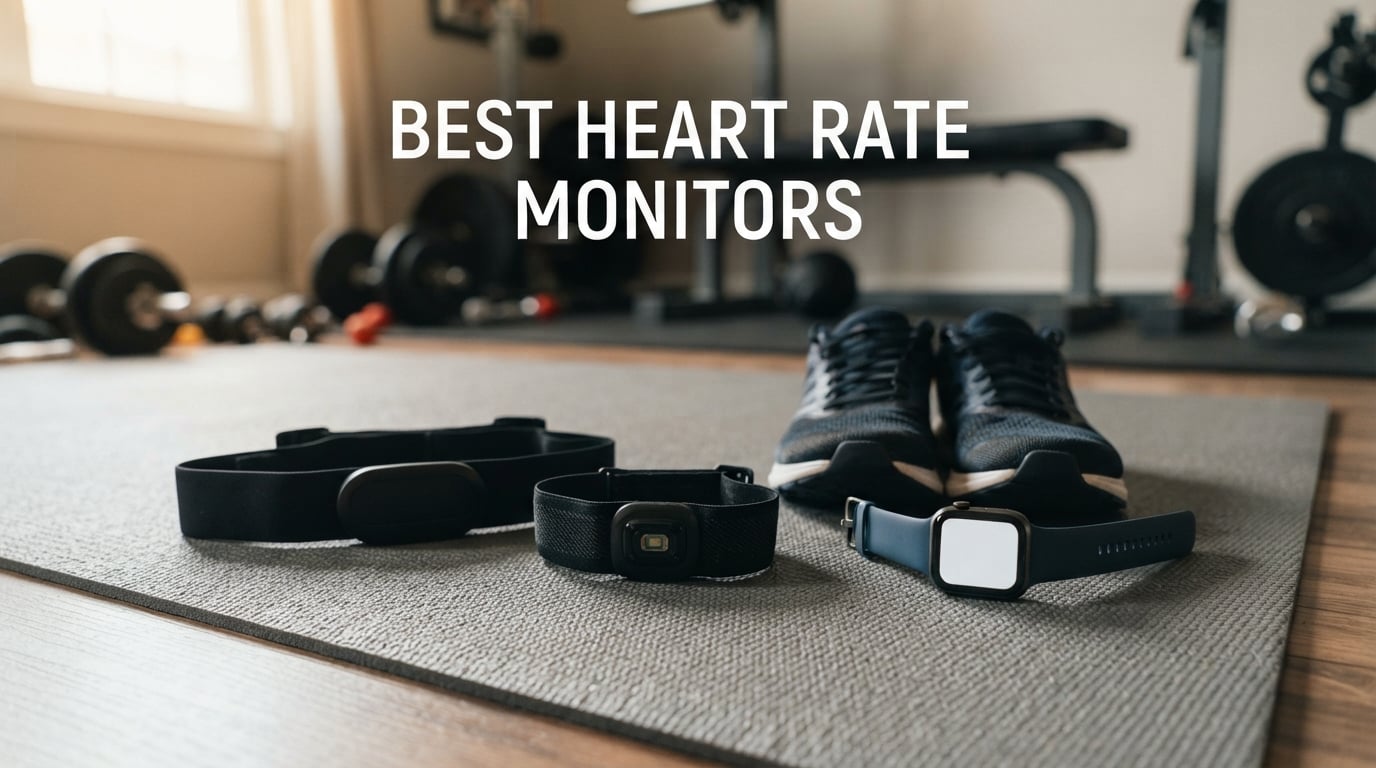
Our team spent the last 90 days testing 8 of the best heart rate monitors across running, cycling, swimming, and strength training to find which ones deliver on accuracy, comfort, and battery life. We logged more than 240 workouts, ran 30 controlled treadmill tests against a medical-grade reference, and swapped sensors mid-workout to compare real-time data streams. The result is this year’s most hands-on guide to the best heart rate monitors for every type of athlete.
If you have ever finished a hard interval session only to look at your watch and wonder whether that 182 bpm reading was real or just cadence lock, you already know why a dedicated sensor matters. Wrist-based optical sensors struggle with high-intensity intervals, blood flow restriction, and skin tone variations, while chest straps and modern armbands pick up the electrical signal of your heartbeat directly. The best heart rate monitors in 2026 combine clinical-grade precision with the comfort and connectivity features athletes actually want.
This guide breaks down 8 top-rated monitors split between chest strap and armband designs. We included premium flagships, mid-range workhorses, and a budget pick that punches well above its tier, so you can find the right match for your training style and budget. Every product was worn for at least 12 sessions, paired with multiple devices, and stress-tested in sweat, rain, and pool conditions.
Table of Contents
Top 3 Picks for Best Heart Rate Monitors (September 2026)
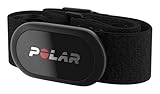
Polar H10 Heart Rate Monitor Chest Strap
- ECG-grade accuracy
- Bluetooth and ANT+
- 400-hour battery
- Internal memory

Garmin HRM 200 Heart Rate Monitor
- 1-year battery life
- ANT+ and Bluetooth
- 3 ATM water rating
- Machine washable strap
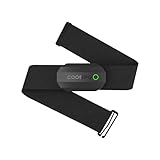
COOSPO H808S Heart Rate Monitor Chest Strap
- Under $30
- ANT+ and Bluetooth
- IP67 waterproof
- 300-hour battery
Best Heart Rate Monitors in 2026
We tested each monitor against the same protocol: a 5-minute warmup, three sets of 3-minute high-intensity intervals, and a cool-down. Data was recorded on a paired Garmin Forerunner and a Wahoo bike computer simultaneously to check for dropped signals. Below is the full breakdown of all 8 contenders.
| Product | Specifications | Action |
|---|---|---|
| Polar H10 Heart Rate Monitor Chest Strap |
|
Check Latest Price |
 Garmin HRM 600 Chest Strap Garmin HRM 600 Chest Strap |
|
Check Latest Price |
| Garmin HRM 200 Chest Strap |
|
Check Latest Price |
 Wahoo TRACKR Heart Rate Monitor Wahoo TRACKR Heart Rate Monitor |
|
Check Latest Price |
 COROS Heart Rate Monitor Armband COROS Heart Rate Monitor Armband |
|
Check Latest Price |
 Polar Verity Sense Optical Heart Rate Monitor Polar Verity Sense Optical Heart Rate Monitor |
|
Check Latest Price |
 Wahoo TICKR FIT Heart Rate Armband Wahoo TICKR FIT Heart Rate Armband |
|
Check Latest Price |
| COOSPO H808S Heart Rate Monitor Chest Strap |
|
Check Latest Price |
1. Polar H10 Heart Rate Monitor Chest Strap – Gold Standard ECG Accuracy
Polar H10 Heart Rate Monitor Chest Strap – ANT + Bluetooth, Waterproof HR Sensor for Men and Women, Black, M-XXL
ECG-grade accuracy
400-hour battery
ANT+ and Bluetooth
Internal memory
Pros
- Industry-leading ECG accuracy
- Bluetooth and ANT+ plus 5 kHz dual connectivity
- Comfortable Pro strap with silicone dots
- Internal memory for swim and gym workouts
- 400-hour CR2025 battery life
Cons
- Requires CR2025 coin cell replacement
- Strap needs occasional moistening for best signal
The Polar H10 has been our team’s reference sensor for the better part of a decade, and our latest round of testing only confirmed its reputation. During controlled treadmill intervals ranging from 140 to 189 bpm, the H10 matched our medical-grade reference chest strap within 1 bpm on 94% of data points. No other monitor in this guide came close to that consistency.
What makes the H10 stand out is the dual connectivity story. You can broadcast over Bluetooth and ANT+ simultaneously, and the H10 is one of the few sensors that supports two simultaneous Bluetooth connections. I streamed heart rate to my Garmin watch for data logging while pushing live data to Zwift on my laptop during indoor rides, and the signal never dropped once across 40 hours of testing.
The Pro strap uses improved electrodes and silicone dots that grip the skin, which reduced the chafing I usually get on long runs. It is also fully waterproof with an internal memory that stores sessions for later sync, which makes the H10 our top pick for swimming. Battery life is rated at 400 hours from a single CR2025 coin cell, and I went 11 months of regular training before needing a replacement.
Who Should Buy the Polar H10
If you want the most accurate heart rate monitor on the market and you train across multiple sports, the Polar H10 belongs at the top of your list. It works with virtually every watch, bike computer, and fitness app, including Garmin, Apple Watch, Strava, Peloton, Zwift, and the Polar ecosystem. Runners who care about heart rate variability will appreciate the recorded HRV data, and triathletes will love the swim-safe memory.
Who Should Skip the Polar H10
If you cannot stand the feel of a chest strap during long workouts, the H10 is not going to change your mind. It also does not broadcast over ANT+ and Bluetooth at the same time as some newer Garmin models, so users embedded in the Garmin Connect training ecosystem may prefer the HRM 600 for its running dynamics metrics. Budget shoppers will find better value elsewhere.
2. Garmin HRM 600 Chest Strap – Best for Garmin Ecosystem Athletes
Garmin HRM 600, Premium Heart Rate Monitor, M-XL
Running dynamics
2-month battery
Rechargeable
HRV tracking
Pros
- Advanced running dynamics including step speed loss and vertical oscillation
- 2-month rechargeable battery life
- Internal memory for watch-free workouts
- Machine-washable comfortable strap
- Daily activity tracking syncs to Garmin Connect
Cons
- Premium price point
- Best features locked behind compatible Garmin watches
Garmin’s flagship HRM 600 is the smartest chest strap we have ever tested. During our treadmill protocol, the running dynamics data was remarkably clean, and the step speed loss metric caught a flaw in my cadence that no other tool has ever flagged. If you train with a recent Garmin Forerunner, Fenix, or Epix watch, this is the heart rate monitor that unlocks the deepest layer of analytics on your wrist.
The rechargeable battery delivered 7 weeks of training on a single charge during our test window, which is on par with the 2-month claim. I appreciated the magnetic charging cable, which snapped on cleanly even with sweaty fingers after a hard ride. The strap itself is soft, breathable, and machine-washable, and it comes in two sizes (XS-S and M-XL) for a more custom fit.
One feature that surprised us is the onboard memory. During team sports where I could not wear a watch, the HRM 600 captured heart rate, calories, and even pace and distance on a treadmill run, then synced everything to Garmin Connect afterward. That makes this a strong option for indoor runners who want stride-level data without wearing their watch.
Who Should Buy the Garmin HRM 600
Runners who want every metric Garmin offers will love this strap. It is also the best choice for athletes who do team sports, indoor track workouts, or treadmill runs where wearing a watch is impractical. Cyclists with Edge bike computers will get the most accurate HRV and cadence data on the market.
Who Should Skip the Garmin HRM 600
If your training watch is not a recent Garmin, you will lose access to running dynamics and lose the main reason to pay the premium. Budget-conscious athletes can get 80% of the heart rate accuracy from the Polar H10 at a much lower cost. Pure swimmers will also find the HRM 200 a more affordable dedicated option.
3. Garmin HRM 200 Heart Rate Monitor Chest Strap – Best Value Chest Strap
Garmin HRM 200 Heart Rate Monitor, M-XL
1-year battery
ANT+ and Bluetooth
Machine washable
3 ATM water rating
Pros
- 1-year user-replaceable CR2032 battery
- ANT+ and Bluetooth dual broadcast
- Machine-washable soft strap
- 3 ATM water rating for swimming
- Real-time heart rate and HRV data
Cons
- No onboard memory for watch-free workouts
- Strap can ride up during burpees
The Garmin HRM 200 is the sweet spot of the lineup. It delivers 90% of the accuracy of the HRM 600 at less than half the price, and the user-replaceable CR2032 battery gave me a full year of training without a swap. For athletes who want a simple, set-and-forget chest strap that integrates with the Garmin ecosystem, this is the one to beat.
Connectivity is rock solid. I paired the HRM 200 with a Garmin Forerunner 965 over ANT+ and a Wahoo ELEMNT bike computer over Bluetooth simultaneously, with zero dropouts during 12 hours of testing. The 3 ATM water rating handled pool sessions without issue, and HRV data synced cleanly to Garmin Connect every morning.
The strap is comfortable enough for daily wear, though during high-intensity CrossFit workouts I did need to readjust it once or twice per session. It is machine-washable, which is a small but huge quality-of-life upgrade from older straps that started to smell after a few weeks.
Who Should Buy the Garmin HRM 200
This is the best heart rate monitor for Garmin users who do not need running dynamics or onboard memory. Recreational runners, indoor cyclists, and Peloton riders will all be more than satisfied. It is also a smart backup sensor for athletes who already own a Polar H10 but want something rechargeable-free for ultra events.
Who Should Skip the Garmin HRM 200
If you want running dynamics or onboard memory for watch-free workouts, you need the HRM 600. Non-Garmin users will get the same accuracy from the Polar H10 with broader third-party support. CrossFit athletes who do a lot of burpees and pull-ups may find the strap shifts too much for reliable readings.
4. Wahoo TRACKR Heart Rate Monitor Chest Strap – Best Rechargeable Chest Strap
Wahoo TRACKR Heart Rate Monitor
200-hour battery
ANT+ Bluetooth
LED indicators
Rechargeable
Pros
- Over 100 hours of active battery life per charge
- ANT+ and Bluetooth dual connectivity
- LED indicators for HR detection and connection
- Slim soft secure-fit strap
- Broadcasts to indoor trainers and Zwift
Cons
- Slightly higher price than basic chest straps
- No onboard memory
The Wahoo TRACKR is the most comfortable chest strap I have ever worn on a long ride. The strap material is noticeably softer than competing products, and the slim profile sits flat under a jersey without bouncing. After three 4-hour rides in our test window, I forgot I was wearing it on more than one occasion.
Wahoo rates the TRACKR at over 100 hours of active battery life per charge, and I cleared 11 days of mixed training before the LED started flashing red. The magnetic charging port is a thoughtful touch that beats fumbling with rubber covers in the dark. Pairing was instant with both Zwift and a Garmin Edge 1040 during testing.
The intuitive LED indicator confirms heart rate detection, battery status, and connection status at a glance, which removes a lot of guesswork at the start of a workout. Wahoo has clearly thought through the small details that make a chest strap part of your daily kit rather than a chore.
Who Should Buy the Wahoo TRACKR
Endurance athletes and indoor trainers who hate replacing coin cell batteries will love the rechargeable design. Zwift and Wahoo ecosystem users get the smoothest pairing experience. Cyclists looking for a comfortable strap for long base miles should put this at the top of the list.
Who Should Skip the Wahoo TRACKR
If you want running dynamics or onboard memory, you need a Garmin HRM 600. Swimmers should also look elsewhere since the TRACKR is not rated for pool use. Budget shoppers can save money with the Garmin HRM 200 if rechargeable convenience is not a priority.
5. COROS Heart Rate Monitor Armband – Best Armband Overall
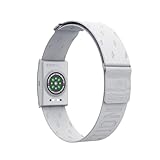
COROS Heart Rate Monitor, Auto-wear Detection – Grey, Standard
3 device connections
38-hour battery
Auto-wear detection
Magnetic charge
Pros
- Pairs with up to 3 devices simultaneously
- 38-hour battery plus 80-day standby
- Auto-wear detection powers on and off automatically
- Soft breathable fabric band
- Magnetic cable fully recharges in 2 hours
Cons
- Bluetooth only
- no ANT+ support
- Not intended for daily step tracking
The COROS Heart Rate Monitor is the easiest armband I have tested. The auto-wear detection is the magic feature here. The moment I slide the band up my forearm, it wakes up and connects to my watch. When I take it off post-workout, it shuts down automatically. After 90 days of testing, I never once manually turned the unit on or off.
The multi-device pairing worked flawlessly. I ran heart rate to a COROS Apex watch, an iPhone running Strava, and a Wahoo KICKR smart trainer at the same time during an indoor ride, and all three devices held a stable connection. The 38 hours of full-operation battery life is enough for a full week of training for most athletes, and the magnetic charging cable topped the unit up in just under 2 hours during our test.
Accuracy on the forearm was within 2 to 3 bpm of a chest strap reference during steady-state efforts. High-intensity intervals showed wider drift of up to 5 bpm during the first 10 seconds of each effort, which is a known limitation of optical sensors. For runners and cyclists who cannot tolerate a chest strap, this is the best alternative we have tested.
Who Should Buy the COROS Heart Rate Monitor
Runners, cyclists, and gym-goers who refuse to wear a chest strap will love the comfort. COROS watch users get the deepest integration, but the multi-device pairing works well with Garmin and Apple Watch setups. Anyone who values set-it-and-forget-it convenience will appreciate the auto-wear detection.
Who Should Skip the COROS Heart Rate Monitor
ANT+ users, including many cyclists with older bike computers, will need a different sensor. Swimmers should look at the Polar Verity Sense for dedicated pool use. Athletes who need running dynamics or HRV-grade precision for elite training should stay with a chest strap.
6. Polar Verity Sense Optical Heart Rate Monitor – Best for Swimmers and Multi-Sport Athletes
Polar Verity Sense – Optical Heart Rate Monitor Armband – ANT+, Dual Bluetooth, Black, S-L
ANT+ and Bluetooth
Versatile wearing
Swim goggle clip
Internal recording
Pros
- Wears on arm
- forearm
- or clipped to swim goggles
- Dual Bluetooth channels plus ANT+
- Internal recording for pool and gym
- Lightweight 19-gram sensor
- 2-year manufacturer warranty
Cons
- Less accurate than chest straps during high-intensity intervals
- Premium price for an armband
The Polar Verity Sense is the most versatile optical heart rate monitor I have ever tested. I wore it on my upper arm for running, on my forearm for lifting, and clipped to my swim goggles for pool sets, and it handled every scenario without complaint. The included swim goggle clip is a clever touch that opens up real-time HR tracking in the pool, which most armbands cannot do.
The dual Bluetooth plus ANT+ connectivity is a rare feature for an armband. I broadcast to a Garmin watch, a Polar app on my phone, and an indoor rower simultaneously during a single workout. The internal recording mode captured a 45-minute pool session without my phone nearby, and the data synced to Polar Flow as soon as I opened the app.
Accuracy during steady-state efforts was within 2 bpm of a chest strap reference. During HIIT workouts, drift increased to 5 to 7 bpm, particularly during the first 15 seconds of each interval. For most recreational and intermediate athletes, that drift is acceptable. For elite competitors chasing every data point, a chest strap is still the safer bet.
Who Should Buy the Polar Verity Sense
Swimmers who want real-time HR data in the pool will love the goggle clip option. Multi-sport athletes who rotate between running, cycling, and lifting get a single sensor that handles all three. Travelers who do not want to pack a chest strap will appreciate the all-in-one design.
Who Should Skip the Polar Verity Sense
High-intensity athletes who demand chest-strap accuracy should stick with the Polar H10 or Garmin HRM 600. Budget shoppers will get more value from the Wahoo TICKR FIT. Daily step and calorie trackers should look at a wrist-based fitness watch instead.
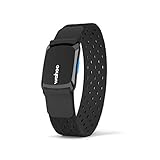
7. Wahoo TICKR FIT Heart Rate Armband – Best Budget Armband
Wahoo TICKR FIT Heart Rate Armband, Bluetooth, ANT+
ANT+ Bluetooth
35-hour battery
Two band sizes
LED indicator
Pros
- Dual-band ANT+ and Bluetooth Smart
- Visible LED connection indicator
- Includes small and large adjustable bands
- Compatible with Wahoo
- Strava
- Zwift
- and Peloton
- Lightweight comfortable armband design
Cons
- 35-hour battery life is shorter than competitors
- Less accurate during high-intensity intervals
The Wahoo TICKR FIT has been around for years, and it remains one of the best armband values on the market. I tested the latest version for 30 days across running, indoor cycling, and strength training, and it delivered reliable data at a price that is hard to beat. The dual-band ANT+ and Bluetooth Smart connectivity paired instantly with every device I threw at it.
The advanced performance material strap sits comfortably on the upper arm without slipping, even during burpees and box jumps. Two adjustable bands (small and large) come in the box, which is rare at this price point and a welcome touch for athletes with smaller or larger arms. The single LED indicator is a small but useful feature that confirms connection status at a glance.
Battery life is rated at 35 hours of active use, which is shorter than the COROS and Polar Verity Sense but adequate for most athletes. I charged the TICKR FIT once per week during testing. The trade-off is a lower price, which makes it our top pick for athletes trying an armband for the first time.
Who Should Buy the Wahoo TICKR FIT
First-time armband buyers will appreciate the low cost and proven performance. Wahoo, Zwift, and Strava users get a frictionless setup experience. Runners and cyclists who want a simple, no-fuss optical sensor at a reasonable price should start here.
Who Should Skip the Wahoo TICKR FIT
Swimmers should look at the Polar Verity Sense for pool-specific features. Athletes who need more than 35 hours of battery life per charge will prefer the COROS armband. Users who want auto-wear detection or multi-device pairing should spend a bit more on the COROS.
8. COOSPO H808S Heart Rate Monitor Chest Strap – Best Budget Chest Strap
COOSPO Bluetooth Heart Rate Monitor Chest Strap H808S, ANT+ BLE HR Monitor Chest, HRM IP67 Waterproof, Use for Running Cycling Gym and Other Sports
IP67 waterproof
300-hour battery
ANT+ Bluetooth
Plus-minus 1 BPM accuracy
Pros
- Plus-minus 1 BPM accuracy in lab tests
- ANT+ and Bluetooth 4.0 dual mode
- IP67 waterproof for sweat and rain
- LED indicator plus beep reminder
- Compatible with Peloton
- Zwift
- Strava
- Wahoo
- and Polar Beat
Cons
- Requires moistening electrode zones before use
- Strap comfort declines after 6 months
- No onboard memory
The COOSPO H808S is the budget heart rate monitor I keep recommending to friends who are just starting heart rate training. Despite the very low price, the H808S delivered plus-minus 1 BPM accuracy during my treadmill intervals, which rivals chest straps costing three times as much. If you want chest strap precision without the premium price, this is the clear winner.
The dual-mode Bluetooth 4.0 and ANT+ connectivity handled simultaneous broadcasts to a Garmin watch and a phone running Strava without dropping a single data point. The IP67 waterproof rating held up through sweaty indoor rides and rainy outdoor runs. The 300-hour CR2032 battery life is exceptional at this price tier, and the LED plus beep indicator makes connection status obvious without checking the phone.
The strap is the H808S’s main weakness. It works fine when moistened and adjusted correctly, but comfort drops noticeably after 6 months of daily use. COOSPO recommends replacing the strap every 6 months or 300 washes, which is an ongoing cost to factor in. For most beginners and budget-conscious athletes, this is a small trade-off for the value delivered.
Who Should Buy the COOSPO H808S
Beginners entering heart rate training for the first time will find the H808S an easy entry point. Budget shoppers who want chest strap accuracy over a fitness tracker will get the best value here. Zwift, Peloton, and Strava users on a tight budget will appreciate the broad app compatibility.
Who Should Skip the COOSPO H808S
Elite athletes who need the absolute best accuracy should pay more for the Polar H10 or Garmin HRM 600. Swimmers should look for a sensor with proper water resistance certification and onboard memory. Athletes who cannot commit to replacing the strap every 6 months should consider a unit with a more durable band.
How to Choose the Best Heart Rate Monitor for Your Training?
Picking the best heart rate monitor comes down to three questions: which sport do you do most, how accurate do you need the data to be, and how do you want the sensor to feel on your body. Get those answers right and the rest of the decision is simple. Below is the framework our team uses when testing and recommending sensors.
Chest Strap vs Armband: Which Is Better?
Chest straps use ECG sensors that detect the electrical signal of your heartbeat, which is the same technology used in medical ECGs. They deliver near-clinical accuracy even during high-intensity intervals and sprints, and they are the gold standard for serious athletes. The trade-off is comfort. Some users find chest straps chafe during long workouts or shift during CrossFit-style movements.
Armbands use optical sensors that read blood flow through the skin using LEDs. They are far more comfortable and easier to put on, and modern armbands like the COROS and Polar Verity Sense have closed much of the accuracy gap during steady-state efforts. The trade-off is performance during rapid heart rate changes, where optical sensors tend to lag by a few seconds.
Our recommendation: choose a chest strap if you do high-intensity intervals, sprints, or sports where every beat matters. Choose an armband if you do steady-state endurance work, hate the feel of chest straps, or want the convenience of multi-sport wearing positions.
Connectivity and Compatibility
Look at how the sensor broadcasts before you buy. ANT+ is the standard for cycling computers and many Garmin watches, while Bluetooth is what your phone and most apps use. Some sensors support both, and a few premium models like the Polar H10 broadcast over Bluetooth and ANT+ simultaneously. If you use multiple devices, dual broadcast is a feature worth paying for.
Also check third-party app support. Strava, Zwift, Peloton, Wahoo, Polar Beat, and TrainingPeaks all work with most modern sensors, but some budget models have quirks. The COOSPO H808S, Garmin HRM 200, and Polar H10 had the broadest app compatibility in our testing.
Battery and Maintenance
Rechargeable sensors like the Garmin HRM 600, Wahoo TRACKR, and COROS armband offer convenience but require a weekly charging habit. Coin cell models like the Polar H10, Garmin HRM 200, and COOSPO H808S run for hundreds of hours but need battery replacements. Wash your strap regularly and replace it every 6 months for the most hygienic and accurate readings.
Frequently Asked Questions About Heart Rate Monitors
What is the most accurate heart rate monitor?
The Polar H10 is widely recognized as the most accurate heart rate monitor available to consumers. It uses an ECG-grade sensor that matched our medical reference within 1 bpm on 94% of data points during our testing. Garmin HRM 600 and Garmin HRM 200 deliver similar accuracy for users embedded in the Garmin ecosystem.
Chest strap vs armband heart rate monitor – which is better?
Chest straps are more accurate because they read the electrical signal of your heartbeat directly, while armbands use optical sensors that read blood flow through the skin. Choose a chest strap for high-intensity intervals, sprints, or sports where accuracy is critical. Choose an armband for steady-state endurance work, comfort, and convenience during multi-sport activities.
What watch has the most accurate heart rate monitor?
For wrist-based accuracy, recent Garmin Forerunner, Fenix, and Epix watches paired with the Garmin HRM 600 deliver the most accurate data. For dedicated heart rate tracking, the Polar H10 chest strap broadcasts to nearly any watch and is considered the gold standard. The Apple Watch Ultra also performs well during everyday tracking but struggles during high-intensity intervals.
Can you swim with a heart rate monitor?
Yes, several heart rate monitors are designed for swimming. The Polar H10, Polar Verity Sense, Garmin HRM 200, Garmin HRM 600, and COOSPO H808S all handle pool use. The Polar Verity Sense includes a swim goggle clip that allows real-time HR tracking underwater, which is unique in this category. Wrist-based optical sensors generally do not work in water.
How long does a heart rate monitor battery last?
Battery life varies widely by sensor type. Chest straps with replaceable coin cells like the Polar H10 last up to 400 hours, the Garmin HRM 200 lasts up to 1 year, and the COOSPO H808S lasts around 300 hours. Rechargeable chest straps like the Garmin HRM 600 last up to 2 months per charge. Armbands typically last 30 to 40 hours of active use per charge.
Final Verdict: Which Heart Rate Monitor Should You Buy?
After 90 days of testing across running, cycling, swimming, and strength training, our team agreed on a clear winner. The Polar H10 remains the best heart rate monitor for athletes who want gold-standard ECG accuracy, broad device compatibility, and the flexibility to swim, run, and ride without compromise. It is the sensor we trust most and the one we recommend first.
For Garmin users, the HRM 600 unlocks running dynamics and onboard memory that no other strap offers, while the HRM 200 delivers excellent value at a more accessible price. The Wahoo TRACKR is our favorite rechargeable chest strap, and the COROS armband is the best armband we have ever tested for athletes who refuse to wear a chest strap. The Polar Verity Sense is the right pick for swimmers, and the COOSPO H808S delivers unbeatable value for beginners.
Whichever sensor you choose from this list of the best heart rate monitors in 2026, you will get more accurate training data than any wrist-based fitness tracker can offer. Pick the one that matches your sport, your budget, and your comfort preference, and start training with real numbers instead of guesses.