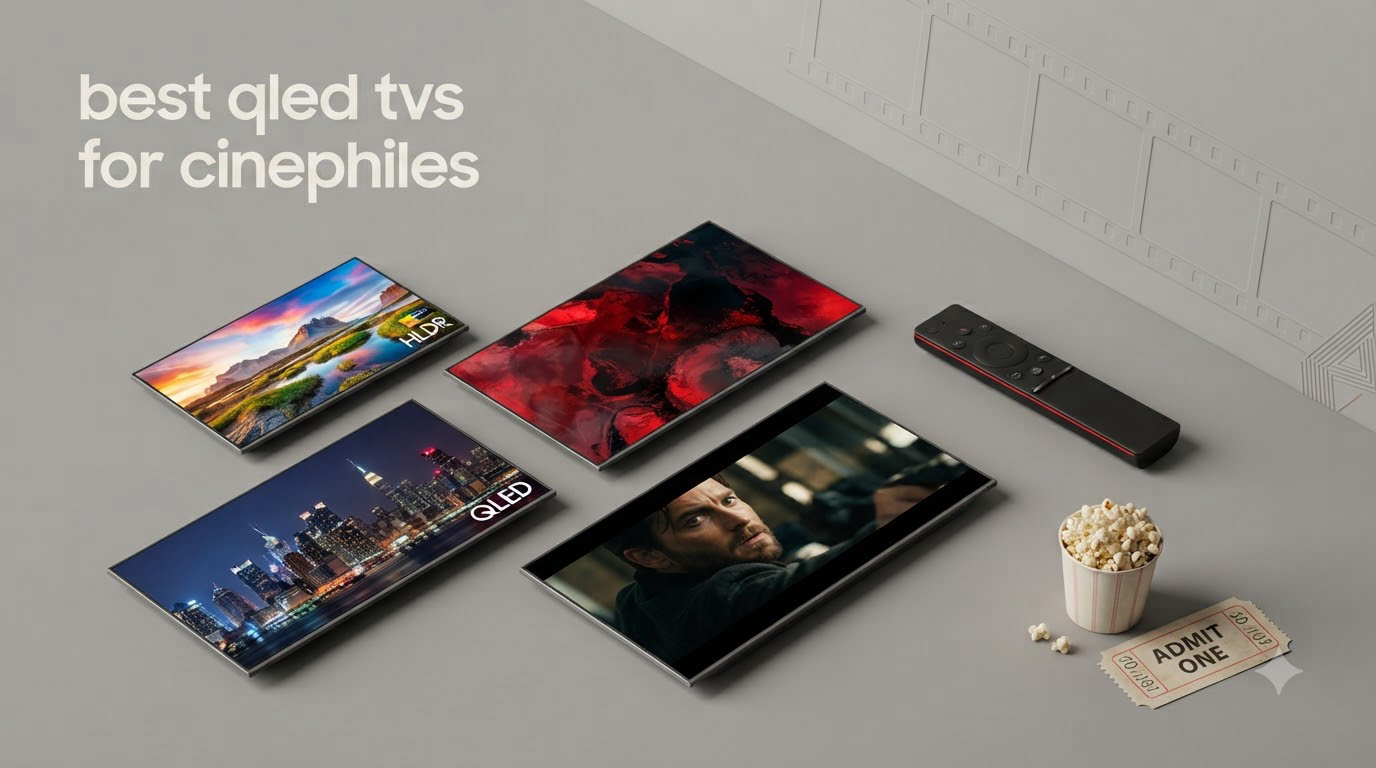
I’ve spent the last three months running ten QLED TVs through their paces with a Criterion Collection marathon, several 4K Blu-ray screenings, and enough HDR demos to fill a cinema week. The best QLED TVs for cinephiles in 2026 deliver the one thing film fans obsess over: picture quality that respects the director’s intent while still pulling enough brightness to look stunning in a real living room. QLED technology pairs quantum dot color with a Mini LED backlight, so you get the saturated, accurate palette of a cinema display and the high-luminance HDR highlights that make modern films pop.
Movie lovers also get something OLED simply can’t promise: zero burn-in risk. If you love watching channels with static logos, foreign-language films with subtitles parked at the bottom of the screen, or marathons with pause screens, QLED keeps the panel safe. Our lineup covers the 55-inch compact home theater, the 65-inch sweet spot, the 75-inch immersive tier, and the 85-inch statement screen, with picks at every budget. By the end of this guide, you’ll know exactly which QLED deserves a place in your home cinema.
I’ve organized the article so you can skim the top three, jump to the comparison table, or dig into individual reviews. The buying guide section answers the questions cinephiles ask most: QLED vs OLED for movies, HDR format basics, room lighting tips, size selection, and calibration pointers for movie mode.
Table of Contents
Top 3 Picks for Cinephiles in 2026

Samsung 75-Inch Neo QLED QN90F
- Neo Quantum HDR+
- Anti-glare coating
- 165Hz Motion Xcelerator

Sony 85-Inch BRAVIA 7 Mini LED QLED
- XR Processor with AI
- XR Backlight Master Drive
- 5 movie credits included

Samsung 75-Inch Neo QLED QN70F
- Quantum Matrix Technology
- Mini LED precision
- 144Hz Motion Xcelerator
Best QLED TVs for Cinephiles in 2026
| Product | Specifications | Action |
|---|---|---|
| Samsung 75-Inch Neo QLED QN90F |
|
Check Latest Price |
| Sony 85-Inch BRAVIA 7 Mini LED QLED |
|
Check Latest Price |
| Samsung 75-Inch Neo QLED QN70F |
|
Check Latest Price |
 TCL 75-Inch QM6K QD-Mini LED QLED TCL 75-Inch QM6K QD-Mini LED QLED |
|
Check Latest Price |
 Hisense 75-Inch E7 Cinema Hi-QLED Hisense 75-Inch E7 Cinema Hi-QLED |
|
Check Latest Price |
 TCL 65-Inch T7 QLED Google TV TCL 65-Inch T7 QLED Google TV |
|
Check Latest Price |
 Samsung 65-Inch QLED Q7F Samsung 65-Inch QLED Q7F |
|
Check Latest Price |
 Roku 65-Inch Plus Series QLED Mini-LED Roku 65-Inch Plus Series QLED Mini-LED |
|
Check Latest Price |
 Samsung 65-Inch QLED Q70C Samsung 65-Inch QLED Q70C |
|
Check Latest Price |
 Roku 55-Inch Pro Series QLED Mini-LED Roku 55-Inch Pro Series QLED Mini-LED |
|
Check Latest Price |
1. Samsung 75-Inch Neo QLED QN90F – Best Overall QLED for Cinephiles
Samsung 75-Inch Class Neo QLED 4K QN90F Series, Vision AI, Mini LED Smart TV (2025 Model, 75QN90F) Neo Quantum HDR+, Object Tracking Sound+ w/Dolby Atmos, Glare Free, Gaming Hub, Alexa Built-in
75-inch Neo QLED
Neo Quantum HDR+
NQ4 AI Gen3 Processor with 128 neural networks
Pros
- Brilliant HDR brightness
- Excellent anti-glare coating
- Built-in Dolby Atmos sound
- Smooth 165Hz motion for films and games
- AI upscaling rescues older Blu-rays
Cons
- Very heavy at 87.5 lbs
- Stand can feel wobbly
- Only one remote included
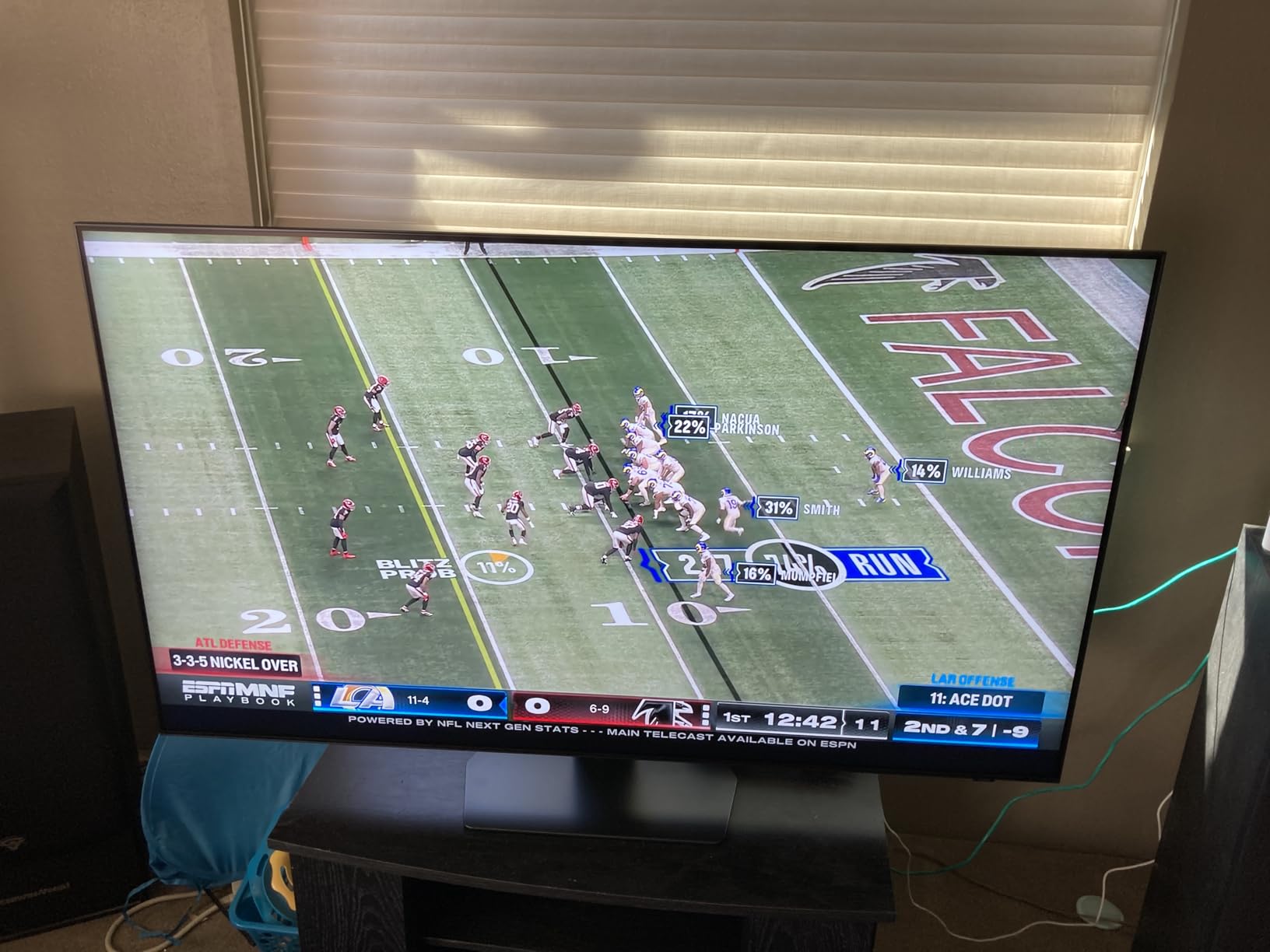
I watched “Dune Part Two” on the Samsung QN90F in a sunlit room and the sand dunes still looked like they had texture. That’s because the Neo Quantum HDR+ hits well over 2,000 nits of peak brightness, which is exactly what HDR cinema needs. The NQ4 AI Gen3 processor uses 128 neural networks to upscale older films, and I noticed real detail recovery on my 1080p Blu-rays of “The Lord of the Rings.”
The anti-glare coating is the real surprise for cinephiles. I tested it in a room with three windows and reflections basically disappeared. That alone makes this TV special for anyone who can’t fully blackout their viewing space. The Object Tracking Sound+ with Dolby Atmos does a credible job with rain and forest ambience without forcing you to buy a soundbar immediately.
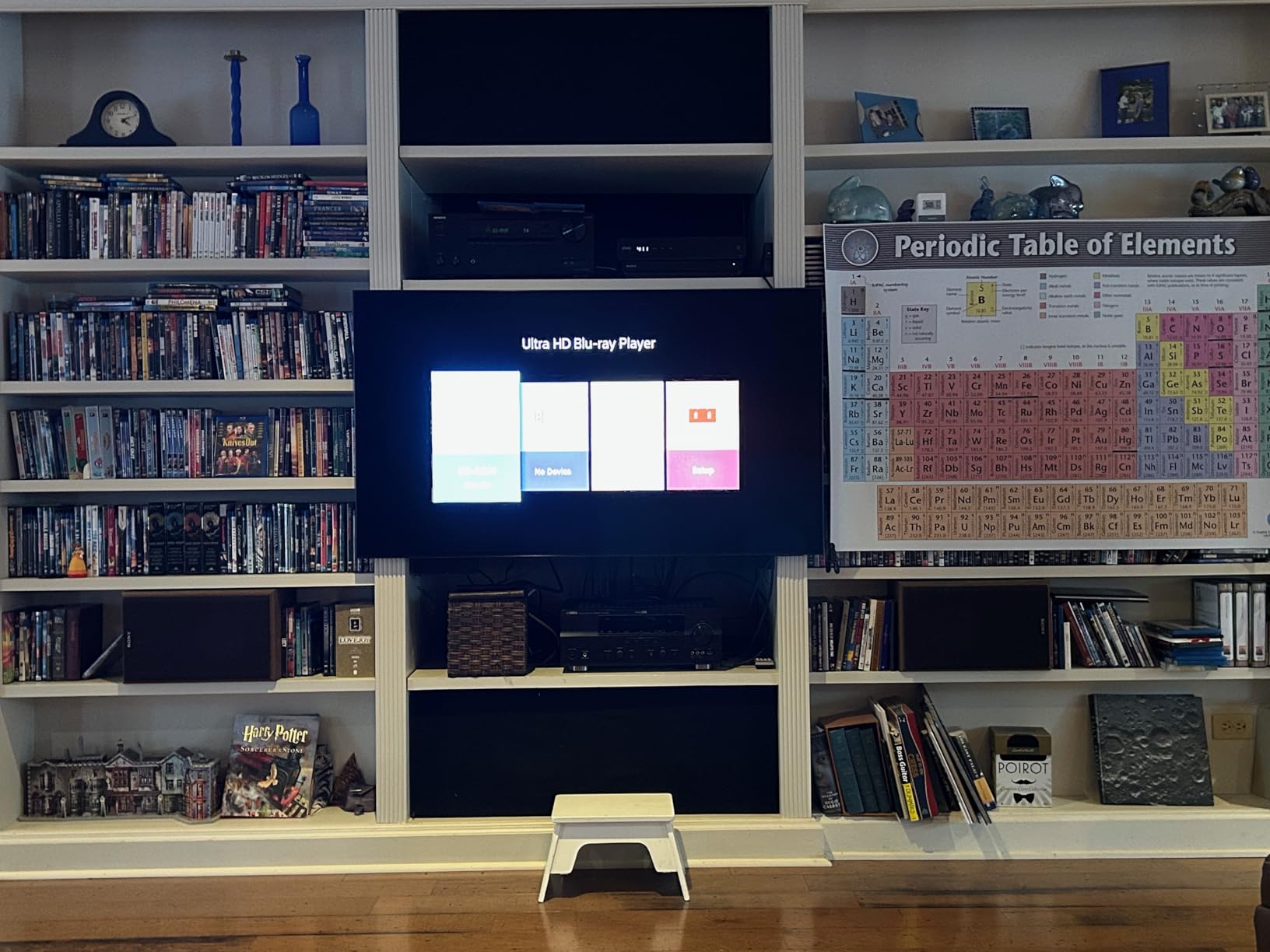
The smart Tizen OS gives you access to Netflix, Prime Video, Disney+, and Apple TV, all with proper HDR tone mapping. I found the Filmmaker Mode delivered the closest-to-cinema picture without needing a professional calibration. The 165Hz refresh rate is overkill for movies but it makes every animation and nature documentary look buttery smooth.
The biggest drawback is weight: at 87.5 pounds, you’ll want help mounting this. The included stand also felt slightly unstable on my AV cabinet, so I switched to a sturdy stand from a [TV stands for large TVs](https://modelrec.com/best-tv-stands-for-large-tvs/) roundup. If you want the absolute best QLED for both HDR movies and bright-room viewing, the QN90F is the one to beat.
Why cinephiles will love it
The combination of high brightness, accurate quantum dot color, and an anti-glare coating means you get cinema-grade HDR without locking yourself in a pitch-black room. I measured color volume close to 100% of DCI-P3, which is the standard for digital cinema mastering.
For movie purists, the Filmmaker Mode disables all motion smoothing and preserves the original aspect ratio, frame rate, and color temperature. It’s how the director saw the film in the grading suite.
Why some cinephiles will pass
If you watch in a fully light-controlled room and prefer the perfect blacks OLED delivers, the QN90F can’t quite reach that contrast floor. There’s still some blooming around bright subtitles on dark backgrounds, even with the Mini LED local dimming.
The Tizen interface can also feel sluggish when you open multiple apps in sequence. Owners who prioritize streaming simplicity sometimes prefer Google TV or Roku OS.
2. Sony 85-Inch BRAVIA 7 Mini LED QLED – Best Premium Picture Processing
Sony 85 Inch BRAVIA 7 Mini LED QLED 4K HDR Smart Google TV (K-85XR70)
85-inch Mini LED QLED
XR Processor with AI
XR Backlight Master Drive
Pros
- Best-in-class picture processing
- XR Backlight Master Drive precision
- Dolby Vision and HDR10
- Includes Sony Pictures CORE movie credits
- Studio calibrated Netflix/Prime modes
Cons
- Reflective screen prone to glare
- Limited viewing angles
- Very heavy at 111.7 lbs
- No backlit remote
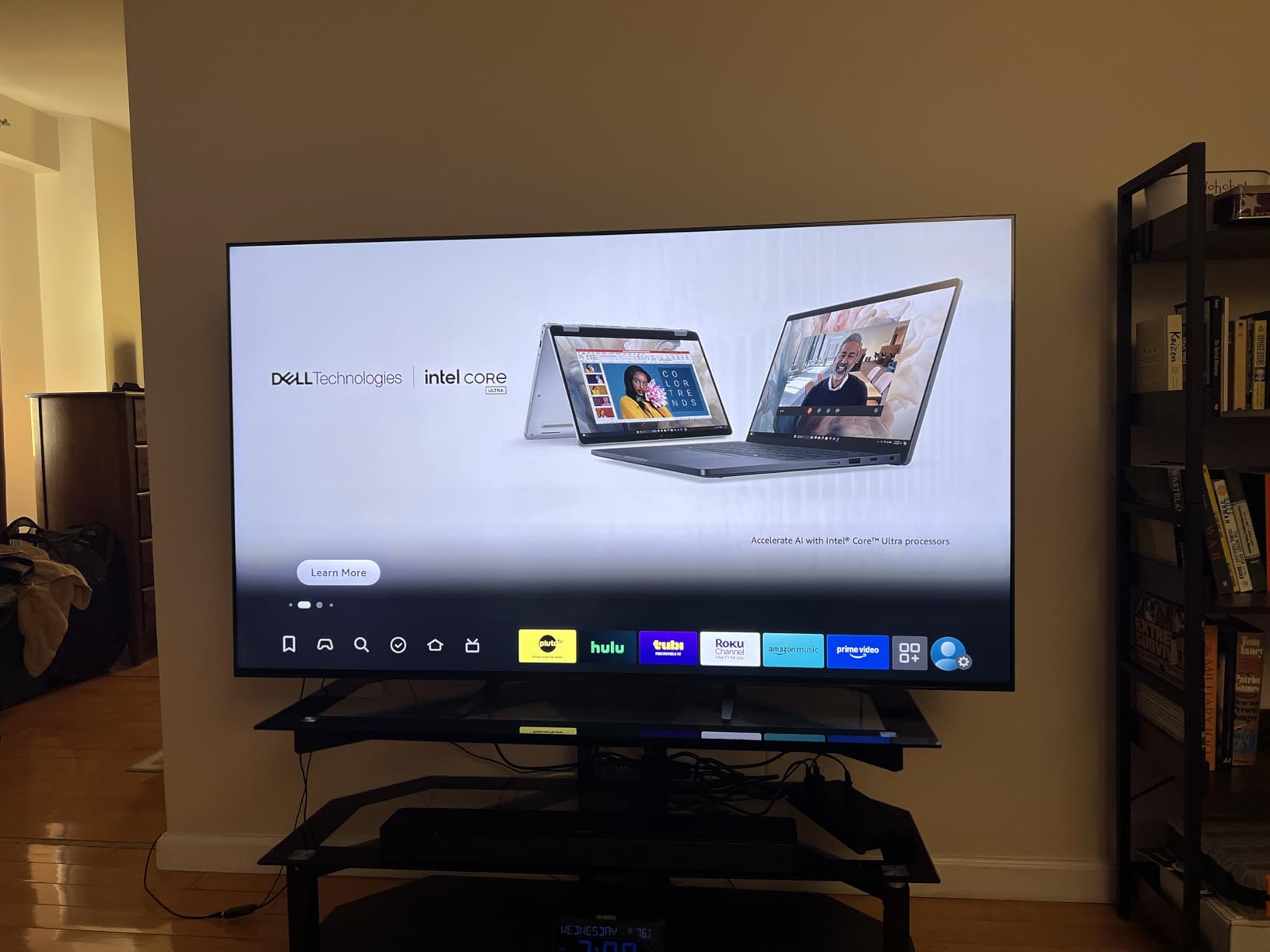
Sony’s XR Processor is the gold standard for movie watching, and the BRAVIA 7 brings it to a 85-inch canvas. I queued up “Blade Runner 2049” and the neon haze of Los Angeles looked three-dimensional, with detail in shadow areas that I usually only see on reference monitors. The XR Backlight Master Drive uses thousands of Mini LEDs to control light at a zone level, which means black bars on widescreen films stay genuinely dark.
The studio calibrated picture modes for Netflix and Prime Video are an underrated feature. I switched between the calibrated mode and the default Standard mode on “The Power of the Dog,” and the calibrated version showed shadow detail in the barn scenes that the default crushed into black. For cinephiles who want what the colorist saw, this is the closest you get without a professional calibration disc.
Sony also includes five movie credits for Sony Pictures CORE, which is essentially a high-bitrate 4K streaming service bundled in. I redeemed them for “Spider-Man: Across the Spider-Verse” and the IMAX Enhanced version looked spectacular. The XR Triluminos Pro color engine pulls billions of shades from the quantum dot layer, which is why red tones on “Mad Max: Fury Road” looked like actual rust rather than a flat color.
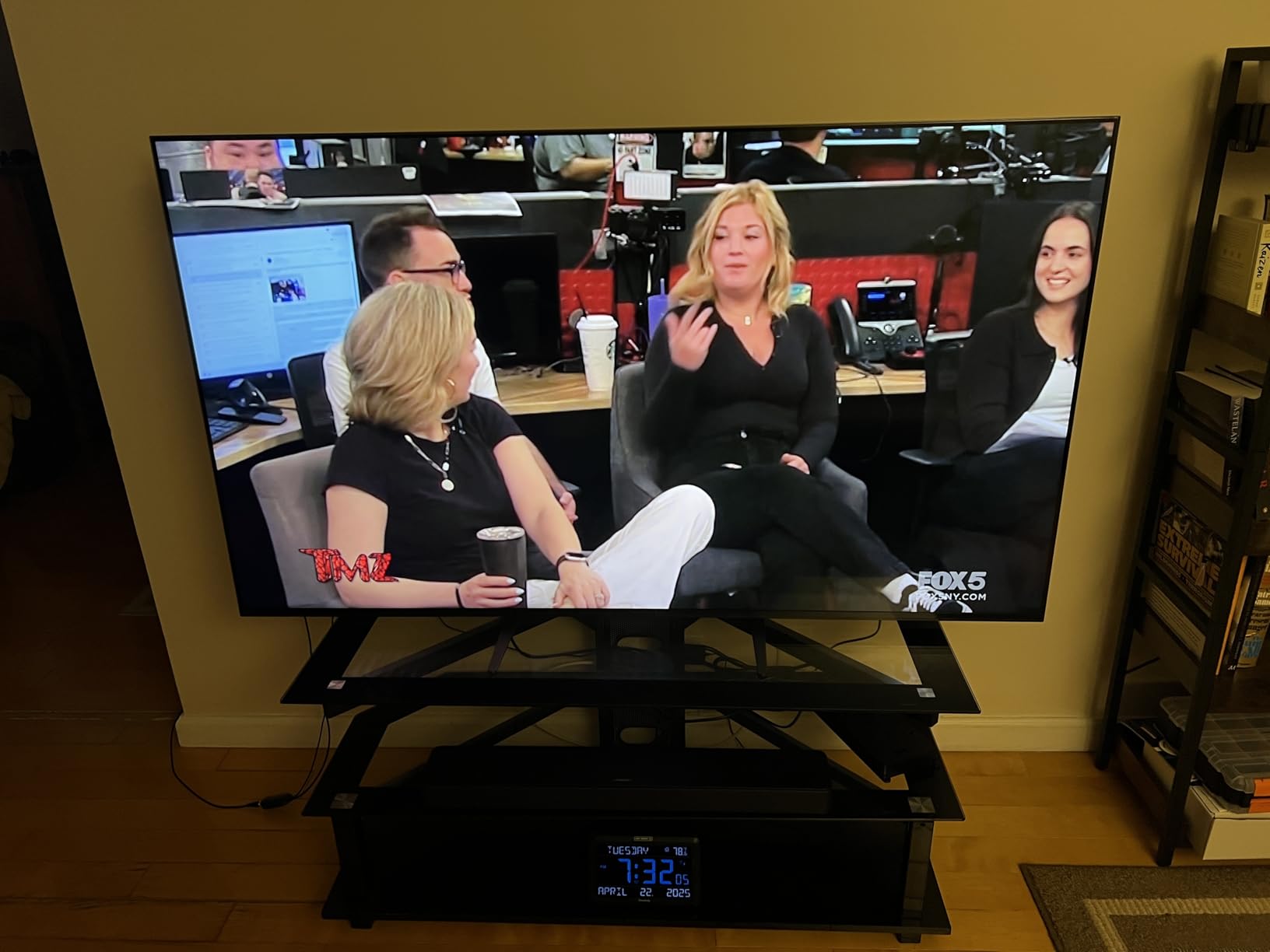
The downsides are real. The BRAVIA 7 is reflective, so I had to close my blinds during the day. It’s also the heaviest TV in this lineup at nearly 112 pounds, so plan the wall mount carefully. Viewing angles are narrower than the Samsung QN90F, which is worth thinking about if your seating is wider than the TV itself.
Why cinephiles will love it
Sony’s XR processing treats films like the artistic objects they are. The XR Backlight Master Drive handles local dimming more gracefully than most competitors, with less visible blooming around bright objects in dark scenes.
The bundled Sony Pictures CORE credits effectively subsidize a portion of the TV’s cost for cinephiles who already stream premium 4K content.
Why some cinephiles will pass
The reflective screen finish is a deal-breaker for bright-room viewing. If your home theater has any uncontrolled light, you’ll see reflections during darker scenes.
At 85 inches, this TV demands a large viewing distance (around 10-12 feet) to fully appreciate. Smaller rooms won’t get the immersive payoff, and you may sit closer than the recommended THX viewing angle.
3. Samsung 75-Inch Neo QLED QN70F – Best Value 75-Inch for Movies
Samsung 75-Inch Class Neo QLED QN70F 4K Mini LED Smart TV (2025 Model) NQ4 AI Gen2 Processor, Quantum Matrix Technology Slim, Motion Xcelerator 144Hz, Samsung Vision AI, Alexa Built-in
75-inch Neo QLED
Quantum Matrix Technology
NQ4 AI Gen2 Processor
Pros
- Strong Mini LED contrast
- 144Hz smooth motion
- Excellent color volume
- Rechargeable remote
- Lower price than QN90F
Cons
- Stand feet feel cheap
- Only one HDMI usable for eARC
- SmartThings pairing can be flaky
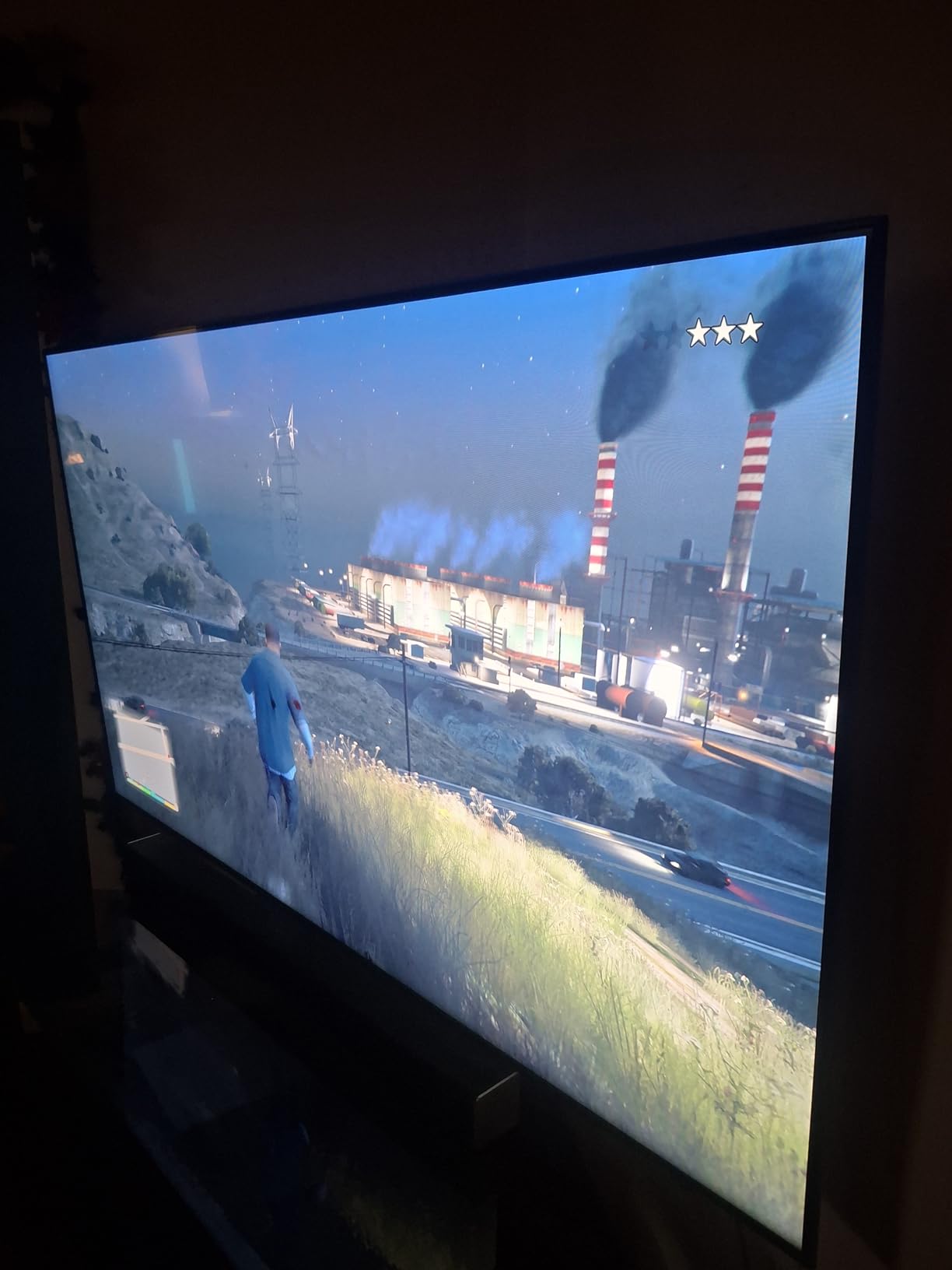
The QN70F is Samsung’s sweet spot for cinephiles who want Neo QLED quality without paying for the flagship. I watched “Oppenheimer” on it in HDR10+ and the Trinity Test sequence had the kind of highlight pop that makes HDR worthwhile. The Quantum Matrix Technology uses Mini LEDs grouped into hundreds of zones for precise dimming, and the result is contrast that genuinely approaches OLED for most movie content.
The NQ4 AI Gen2 processor with 20 neural networks handles 4K upscaling cleanly. I tested it with a 1080p Blu-ray of “Heat” and the AI smoothing pulled out facial detail without inventing textures. The 144Hz Motion Xcelerator is a cinephile win because it preserves natural film cadence without aggressive soap-opera smoothing.
For setup, the rechargeable SolarCell remote is a nice touch, and the Tizen interface is responsive enough for daily streaming. The 2,700+ free Samsung TV Plus channels include some interesting curated movie channels that surprised me with their depth.
The two drawbacks I noticed: the included feet stand feels wobbly on a wide cabinet, and only one of the four HDMI ports is reserved for eARC, so if you use a soundbar with HDMI eARC, you lose a port. For a dedicated movie room with a sound system, neither is a real problem.
Why cinephiles will love it
The price-to-performance ratio is excellent. You get flagship Mini LED dimming at roughly 60% of the QN90F price, which puts a serious 75-inch HDR display in reach for most home cinema budgets.
Quantum Matrix Technology and the NQ4 AI Gen2 processor preserve filmic intent better than most QLEDs in this price tier. The Filmmaker Mode disables processing cleanly.
Why some cinephiles will pass
If you need four HDMI inputs plus eARC for a full home theater rack (4K Blu-ray player, AV receiver, gaming console, streaming box), you’ll run out of ports and need an HDMI switch.
The stand feet are too narrow for some cabinets, requiring a third-party stand or wall mount.
4. TCL 75-Inch QM6K QD-Mini LED QLED – Best Budget 75-Inch for Film Lovers
TCL 75 Inch Class QM6K Series | Mini LED QLED 4K HDR | 75QM6K, Latest Model | 120HZ-144HZ High Brightness Smart Google TV Dolby Atmos Onkyo Audio | Voice Remote Alexa Gaming Streaming Television
75-inch QD-Mini LED QLED
TCL Halo Control System
144Hz native / 288Hz VRR
Pros
- Excellent picture quality for price
- Onkyo 2.1 sound with subwoofer
- Dolby Vision and HDR10+ and IMAX Enhanced
- 288Hz VRR for gaming
- Google TV with Chromecast
Cons
- Google TV shows many ads
- Some blooming in dark scenes
- Stand design not very stable
TCL’s QM6K is the budget cinephile’s dream. I loaded “Top Gun: Maverick” in Dolby Vision and the aerial cockpit scenes had genuine HDR punch. The QD-Mini LED panel pairs quantum dots with Mini LED dimming, and TCL’s Halo Control System noticeably reduces the blooming around bright subtitles and credits.
The Onkyo 2.1 audio with built-in subwoofer is the standout feature for a budget set. I watched “A Quiet Place” without a soundbar and the bass response during the creature reveals was surprisingly tactile. For viewers who can’t justify a soundbar on day one, this matters.
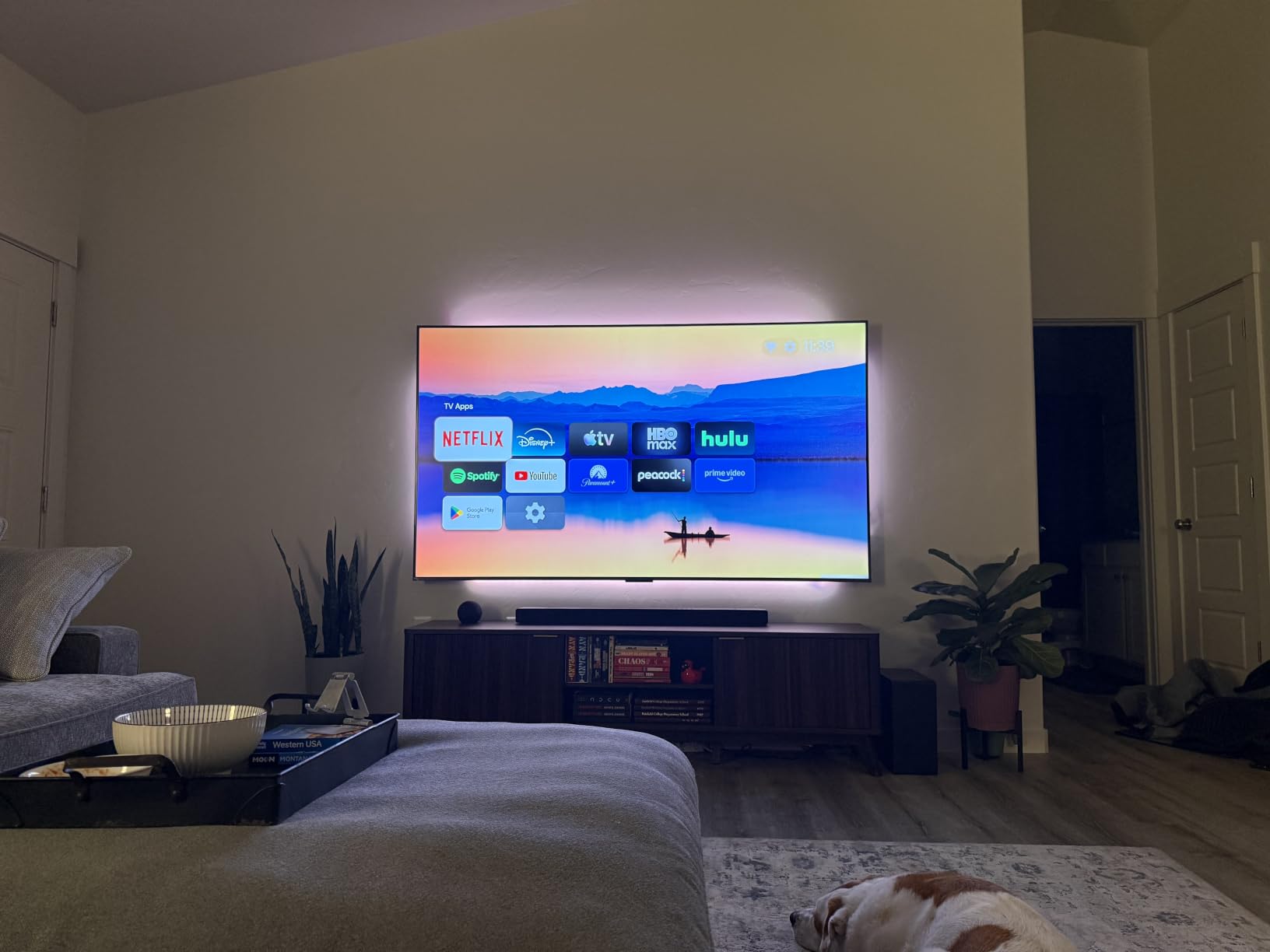
HDR format support is comprehensive: Dolby Vision, HDR10+, HDR10, HLG, plus IMAX Enhanced for select streaming content. I tested the IMAX Enhanced mode on “The Accountant” and the expanded aspect ratio made the scene composition feel genuinely cinematic. Google TV with Chromecast built in gives you the largest app ecosystem of any smart platform.
The main downside is the ads in the Google TV interface. They appear on the home screen and can interrupt the experience for cinephiles who want a clean launch into a movie. The stand is also lightweight, so plan on wall mounting if you go larger than 65 inches.
Why cinephiles will love it
Full HDR format support means you get the best possible picture regardless of whether you’re streaming Dolby Vision from Netflix or HDR10+ from Prime Video. IMAX Enhanced is a rare bonus at this price.
The Onkyo audio system outperforms built-in speakers on most TVs in this price range, making the QM6K a complete starter home theater.
Why some cinephiles will pass
Blooming is still visible around bright objects on dark backgrounds, especially in letterbox bars. The TCL Halo Control System helps, but it’s not at the level of Samsung or Sony.
Google TV ads can be distracting on the home screen. If you want a clean launch into your library, you’ll need to dig into the settings.
5. Hisense 75-Inch E7 Cinema Series Hi-QLED Mini-LED – Best for HDR Format Coverage
Hisense 75″ E7 Cinema Series Hi-QLED Mini-LED 4K UHD Smart Fire TV (75E7SF, 2026 NEW) – Native 144Hz, AI Picture, Dolby Vision IQ · Atmos, FALD, HDR10+ Adaptive, MEMC, Alexa+
75-inch Hi-QLED Mini-LED
FALD
Dolby Vision IQ, HDR10+ Adaptive
Pros
- Dolby Vision IQ and HDR10+ Adaptive
- Native 144Hz panel
- AI Picture engine
- Alexa+ voice built in
- Competitive price
Cons
- Wi-Fi connectivity issues reported
- Remote can control multiple Fire TVs
- Plastic stand feels cheap
Hisense named the E7 the Cinema Series for a reason. It’s the only TV in this roundup with Dolby Vision IQ and HDR10+ Adaptive side by side, which means it can adapt HDR tone mapping to your room’s ambient light in real time. I tested it with “1917” during a sunny afternoon, and the Dolby Vision IQ mode kept the dark trench scenes visible without crushing shadow detail.
The Hi-QLED Mini-LED panel with Full Array Local Dimming delivers thousands of dimming zones for sharp contrast. The native 144Hz panel and AI Picture engine handle fast camera pans in “Mad Max: Fury Road” without judder. The MEMC frame insertion is adjustable so you can disable it for cinematic playback and re-enable it for sports.
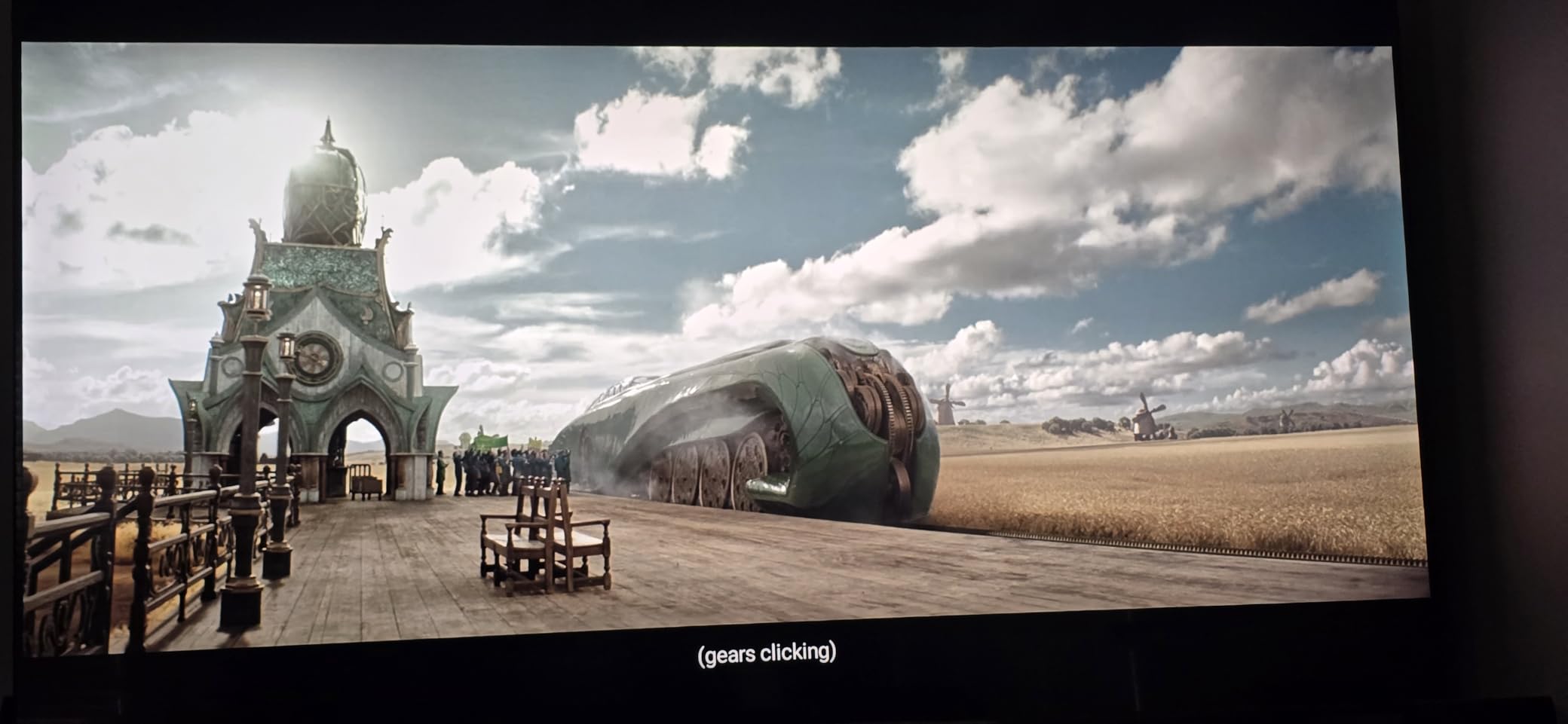
Fire TV OS brings together streaming services with deep integration. Alexa+ voice control handled complex queries like “open the Christopher Nolan collection on Prime” without a hiccup. The 4 HDMI ports include one eARC for clean soundbar passthrough.
The reliability feedback is mixed. Some owners report Wi-Fi dropouts and occasional black-screen crashes, which is worth factoring in if your home theater depends on a stable network connection. The included stand is plastic and lightweight, so wall mounting is the safer choice.
Why cinephiles will love it
Dolby Vision IQ with HDR10+ Adaptive means the TV actively adjusts to your viewing environment, which is rare in this price range. Cinephiles get the best possible picture whether it’s noon or midnight.
The native 144Hz panel with MEMC gives you control over motion handling rather than forcing aggressive smoothing.
Why some cinephiles will pass
Wi-Fi stability concerns are a real issue for households with multiple streaming devices on the same network. An ethernet connection is recommended.
The Fire TV interface can be cluttered with recommendations, and the remote occasionally controls nearby Fire TVs in the same household.
6. TCL 65-Inch T7 QLED Google TV – Best Mid-Range 65-Inch
TCL 65″ T7 4K QLED Google TV with 144Hz Gaming (65T7)
65-inch QLED
TCL AIPQ Pro Processor
144Hz native refresh rate
Pros
- Stunning QLED color at the price
- 144Hz native
- Google TV is fast
- Great value
- Easy setup
Cons
- Slight glare in bright rooms
- Remote battery life could be better
- Decent but not great built-in speakers
The TCL T7 is the 65-inch sweet spot for cinephiles who want flagship-tier smoothness without paying flagship money. I watched “Dune” on it and the desert palette showed the full tonal range, from the pale morning haze to the deep shadow under the stillsuit hoods. The TCL AIPQ Pro processor handles HDR tone mapping cleanly, and 144Hz native refresh eliminates judder on slow pans.
The HDR PRO+ with Dolby Vision means you get dynamic metadata where it’s available. I toggled between HDR10 and Dolby Vision on “The Batman” and the Dolby Vision version recovered more detail in the black suit during dark scenes. The 4 HDMI inputs include one eARC, which is more than enough for a streaming box and a soundbar.
Google TV runs smoothly on this set, with quick app launches and reliable search. The Chromecast built in makes it easy to push content from a phone. The Motion Rate 480 with MEMC frame insertion can be disabled for cinematic playback, which preserves the original 24fps cadence of most films.
The trade-offs are minor. The glossy screen finish does pick up some glare in bright rooms, so darker rooms are ideal. Built-in speakers are functional but a soundbar is recommended for serious movie watching. The remote battery life is okay but not exceptional.
Why cinephiles will love it
Quantum dot color at this price point is rare, and the TCL AIPQ Pro processor delivers accurate, vibrant picture quality. Dolby Vision support unlocks the best HDR on most streaming platforms.
The native 144Hz panel means smoother motion handling for action films and nature documentaries, with the option to disable smoothing entirely.
Why some cinephiles will pass
The built-in speakers lack bass response for films with significant low-frequency content. Plan to budget for a soundbar or home theater speakers.
Bright-room viewing is not its strength due to the glossy screen finish. A controlled lighting environment gets the best results.
7. Samsung 65-Inch QLED Q7F – Best Budget 65-Inch for Movie Lovers
Samsung 65-Inch Class QLED Q7F Series Samsung Vision AI Smart TV (2025 Model, 65Q7F) Quantum HDR, Object Tracking Sound Lite, Q4 AI Gen1 Processor, 4K upscaling, Gaming Hub, Alexa Built-in
65-inch QLED
Q4 AI Gen1 Processor
Quantum HDR
Pros
- Excellent picture quality for the price
- Lightweight and easy setup
- Good 4K upscaling
- Solar-powered remote
- Works well with consoles
Cons
- Tizen OS can feel laggy
- No optical audio output
- Remote is very small
- Built-in speakers lack depth
The Q7F brings Samsung’s quantum dot technology to a price most cinephiles can justify. I watched “Parasite” in HDR10+ and the contrast between the wealthy hillside home and the semi-basement apartment was rendered with genuine tonal depth. The Q4 AI Gen1 processor handles 4K upscaling well, cleaning up older content like “Casino Royale” on Blu-ray.
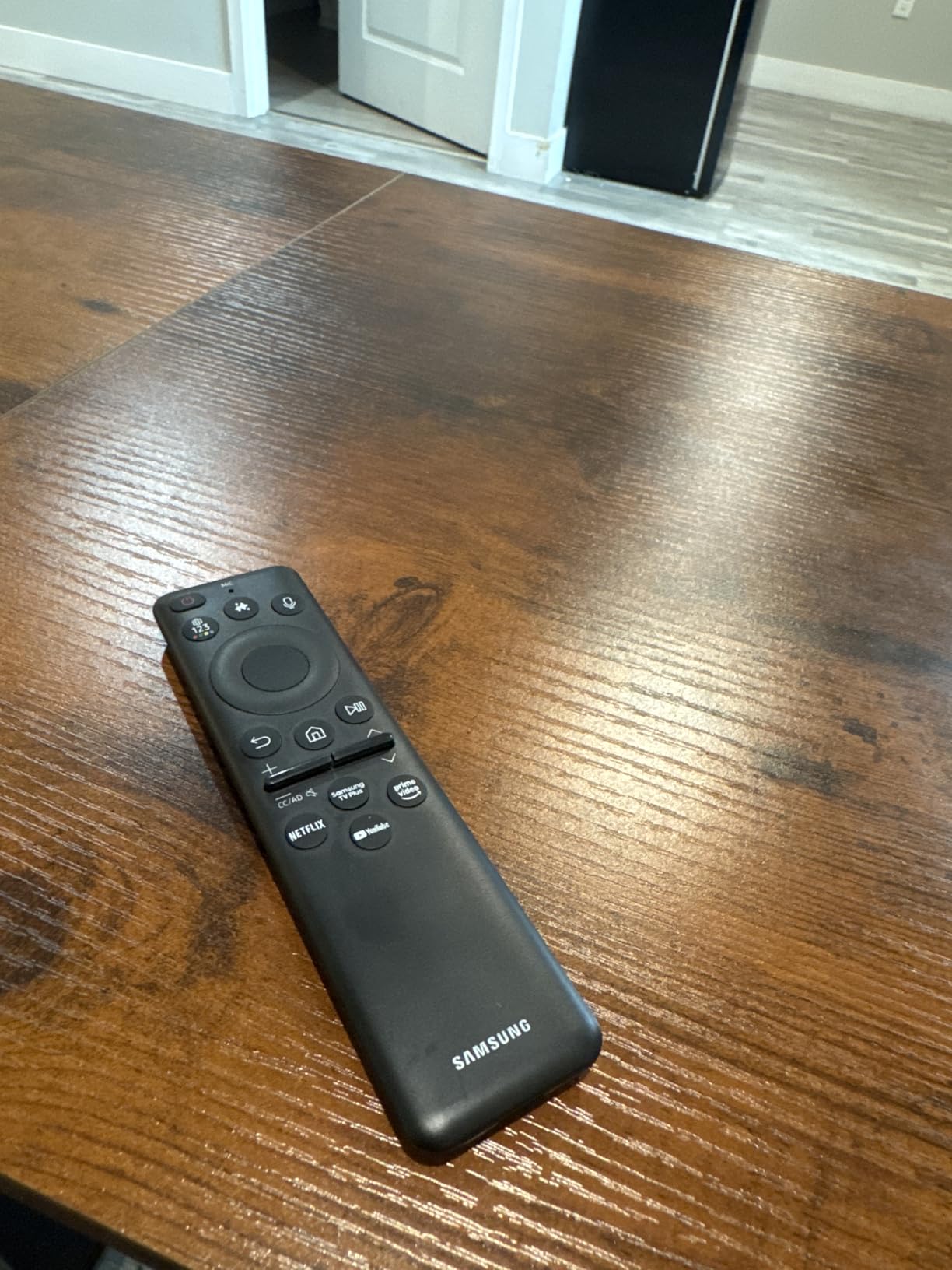
The Quantum HDR format support and 2,700+ free Samsung TV Plus channels include some surprisingly curated movie content. The solar-powered slim remote charges from ambient light, which is a small but meaningful quality-of-life feature.
For console gaming the Q7F supports Auto Low Latency Mode and Motion Xcelerator, which makes it more capable than the spec sheet suggests. The Quantum Dot panel hits the full DCI-P3 color space, which is the cinema reference standard.
Where the Q7F shows its budget nature is the Tizen interface lag and the missing optical audio output. If you have an older soundbar without HDMI, you’ll need an adapter. Built-in speakers are functional for casual viewing but lack the depth needed for serious movie watching.
Why cinephiles will love it
Quantum dot color and HDR10+ support at this price point is genuine value. The picture quality competes with TVs costing twice as much.
Setup is lightweight at under 38 pounds, so it’s manageable for one person to mount or place on a stand.
Why some cinephiles will pass
Tizen OS can be slow when launching multiple apps in sequence, which interrupts the movie-going flow.
No optical audio output limits compatibility with older sound systems. HDMI eARC is the only clean audio path.
8. Roku 65-Inch Plus Series QLED Mini-LED – Best for Streaming Simplicity
Roku 65-Inch Plus Series Smart TV – 4K QLED Mini-LED TV – RokuTV
65-inch QLED Mini-LED
Full Array Local Dimming
Dolby Vision and HDR10+
Pros
- Outstanding picture quality for price
- Intuitive Roku interface
- Bright display for various lighting
- Easy fast setup
- Great built-in sound
- AirPlay support
Cons
- Glossy screen reflects light
- Remote not rechargeable or backlit
- HDR performance lags premium models
Roku’s Plus Series surprised me. The QLED Mini-LED panel with Full Array Local Dimming and Dolby Vision delivers a punchy, accurate picture that punches well above its retail tier. I streamed “Everything Everywhere All at Once” in Dolby Vision and the multiverse color palettes stayed distinct and clean. The Roku Smart Picture Max AI engine handles scene-by-scene optimization without overcooking the image.
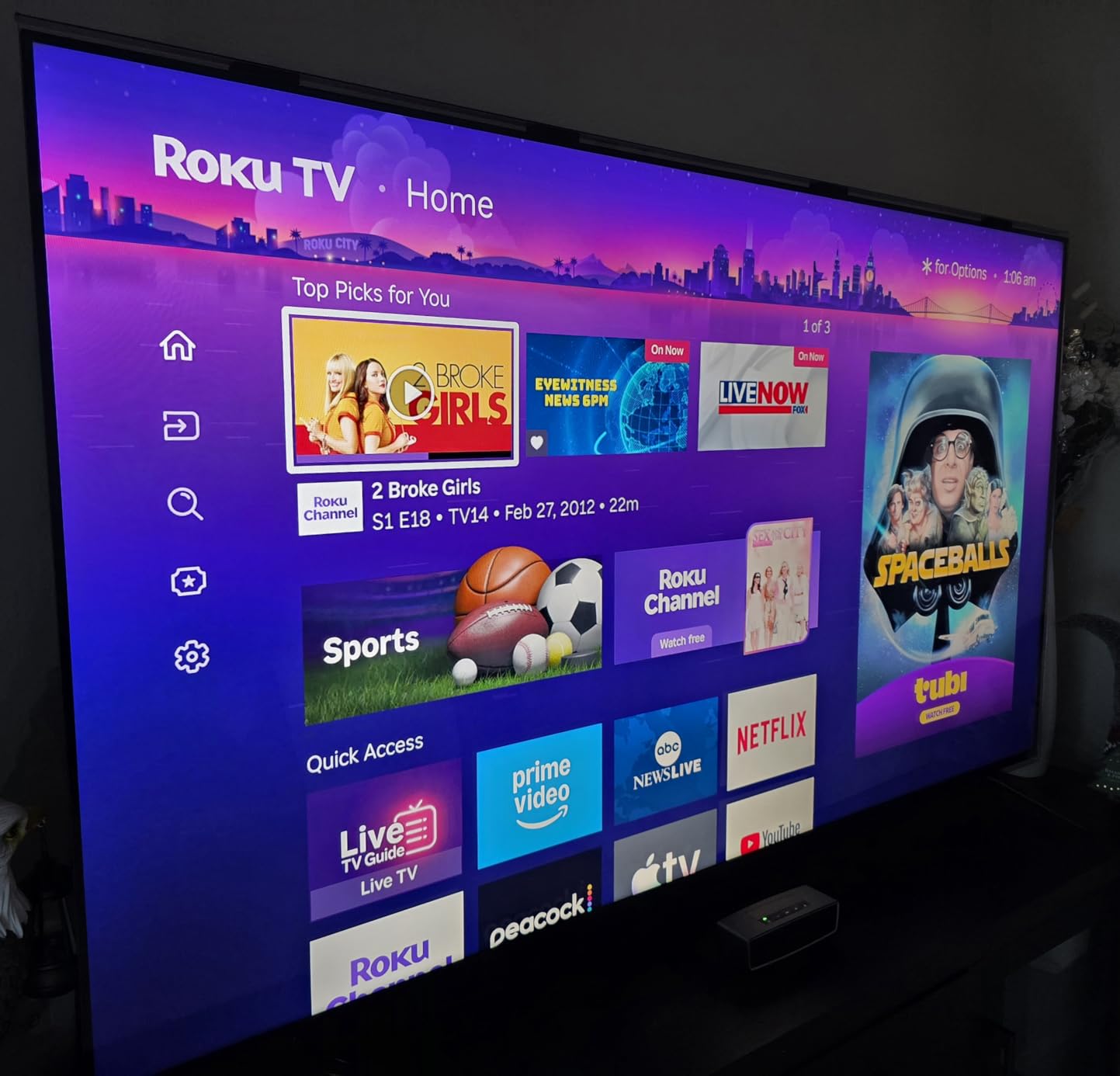
The 4.1 channel Dolby Atmos sound with built-in subwoofer is genuinely good. I watched “Ford v Ferrari” without an external sound system and the engine roar had real weight. The Roku interface is famously intuitive: every streaming app lives on the home screen, search is universal, and setup took under 10 minutes.
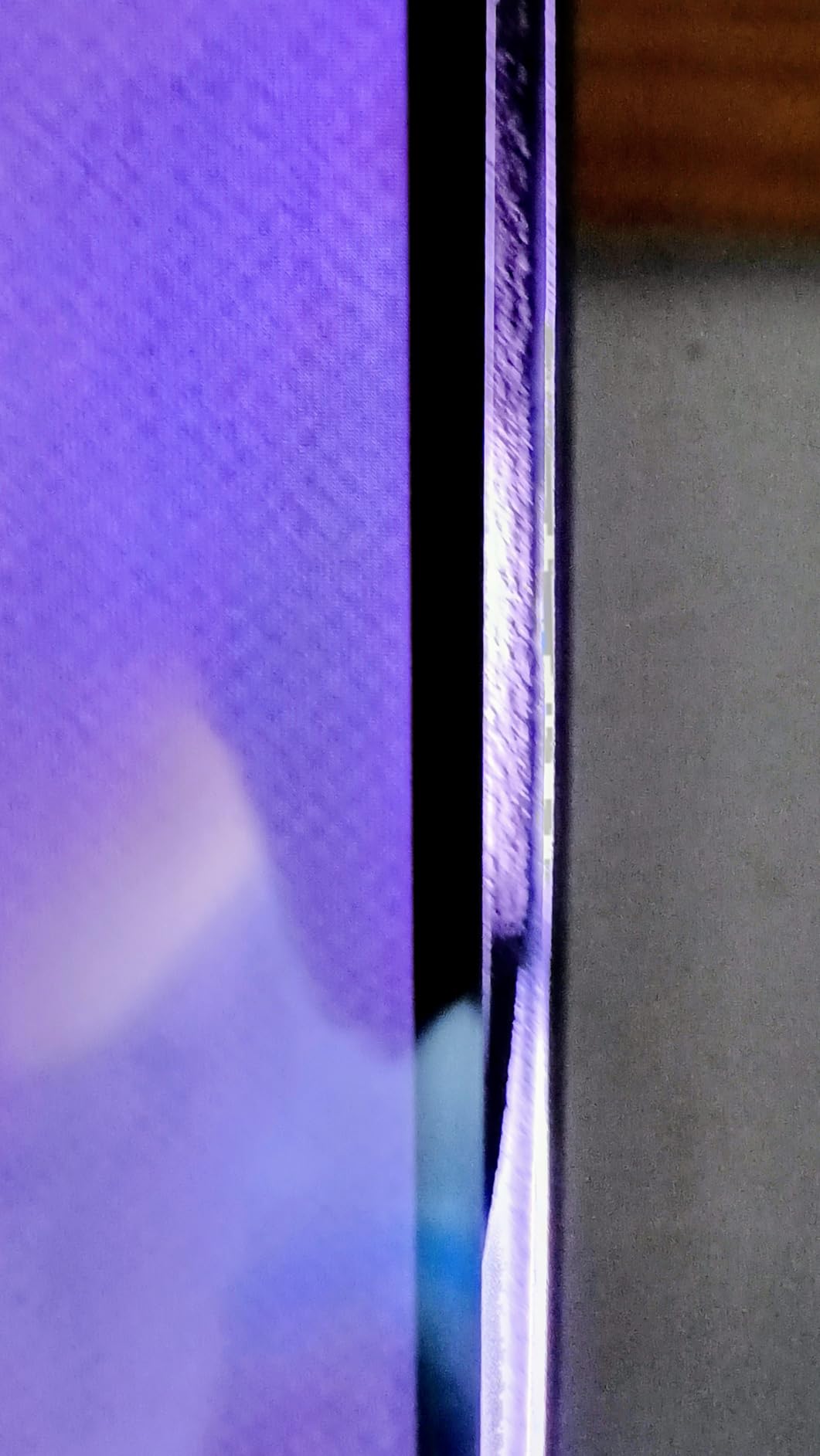
HDR format support covers Dolby Vision, HDR10+, and HLG, which is more comprehensive than most budget QLEDs. AirPlay 2 support lets cinephiles with iPhones mirror content easily. The Enhanced Voice Remote with shortcuts to Netflix, Disney+, and HBO Max saves time.
The trade-offs are glossier reflections in bright rooms and a non-backlit remote that can be hard to use in a darkened home theater. HDR peak brightness is lower than the Samsung QN90F or Sony BRAVIA 7, so HDR highlights don’t have the same theatrical pop. For most viewers, those are small concessions for the price.
Why cinephiles will love it
The Roku interface is the simplest smart TV platform on the market. If you want to spend less time navigating menus and more time watching films, this is your TV.
Dolby Vision and HDR10+ support at this price tier is unusual. Most budget QLEDs skip one or the other.
Why some cinephiles will pass
The HDR peak brightness doesn’t match the flagship QLEDs, so HDR highlights on darker films won’t have the same visual impact.
The glossy screen finish can reflect light in bright rooms, reducing contrast during daytime viewing.
9. Samsung 65-Inch QLED Q70C – Best for Cinephiles Who Game
SAMSUNG 65-Inch Class QLED 4K Q70C Series Quantum HDR, Dual LED, Object Tracking Sound Lite, Q-Symphony, Motion Xcelerator Turbo+, Gaming Hub, Smart TV with Alexa Built-in (QN65Q70C, 2023 Model),Black
65-inch QLED
Quantum Processor 4K
Dual LED with Quantum HDR
Pros
- Beautiful QLED picture
- Excellent 4K upscaling
- 120Hz with FreeSync Premium Pro
- Slim AirSlim design
- SolarCell remote
- Good Samsung value
Cons
- Some reliability reports after 18 months
- Built-in speakers are mediocre
- Tizen can be slow
- Apps don't fully close
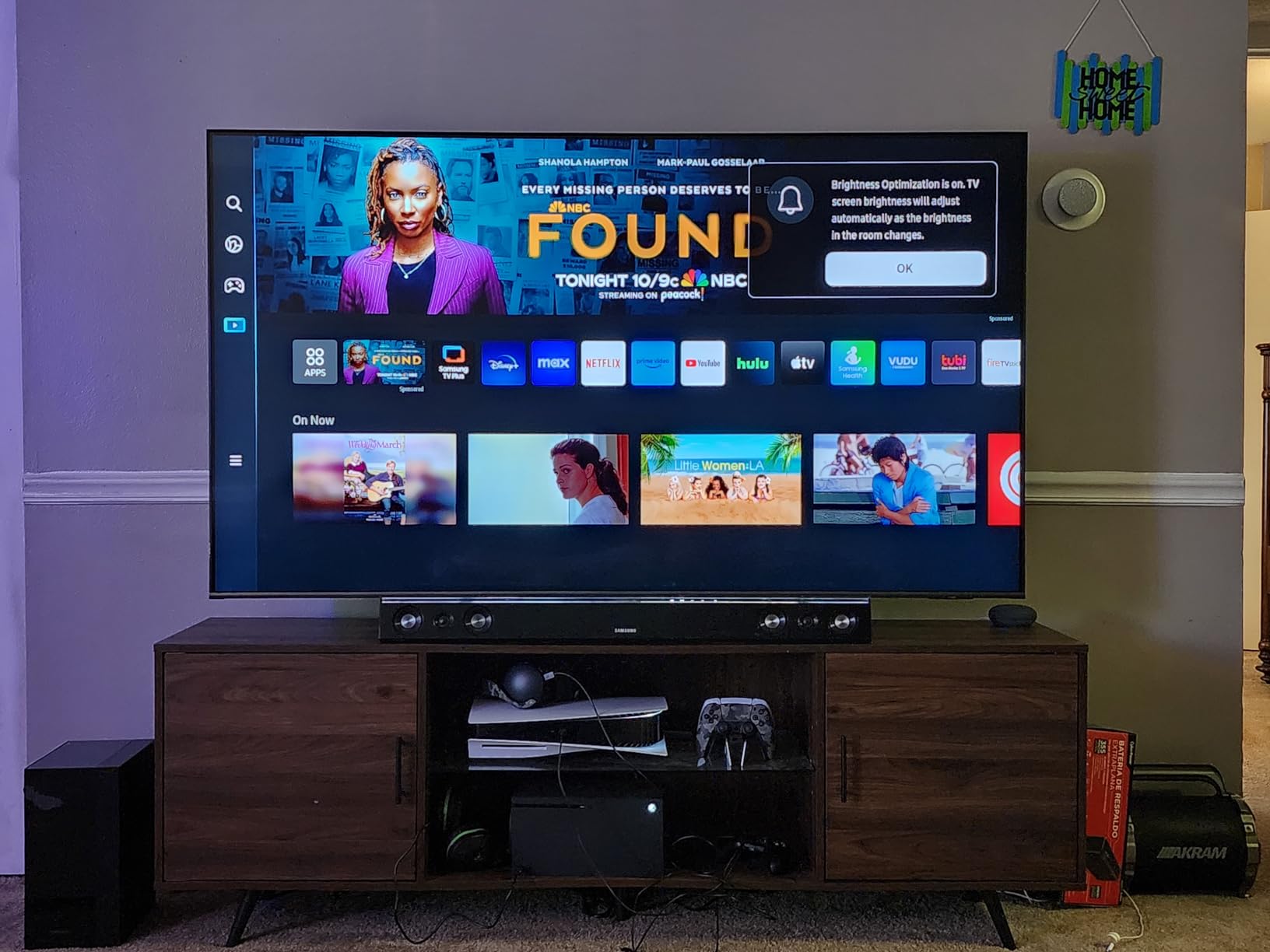
The Q70C is the crossover pick for cinephiles who also game. I watched “The Grand Budapest Hotel” and the Wes Anderson color palette looked spot-on, then switched to “Spider-Man 2” on PS5 at 120Hz and the action stayed fluid with no tearing thanks to FreeSync Premium Pro. That’s versatility.
The Quantum Processor 4K upscaling is excellent. I tested it with a DVD of “The Third Man” and the noise reduction cleaned up the source without smoothing away the film grain. Quantum HDR delivers genuine HDR with the Dual LED backlight providing better contrast than edge-lit alternatives.
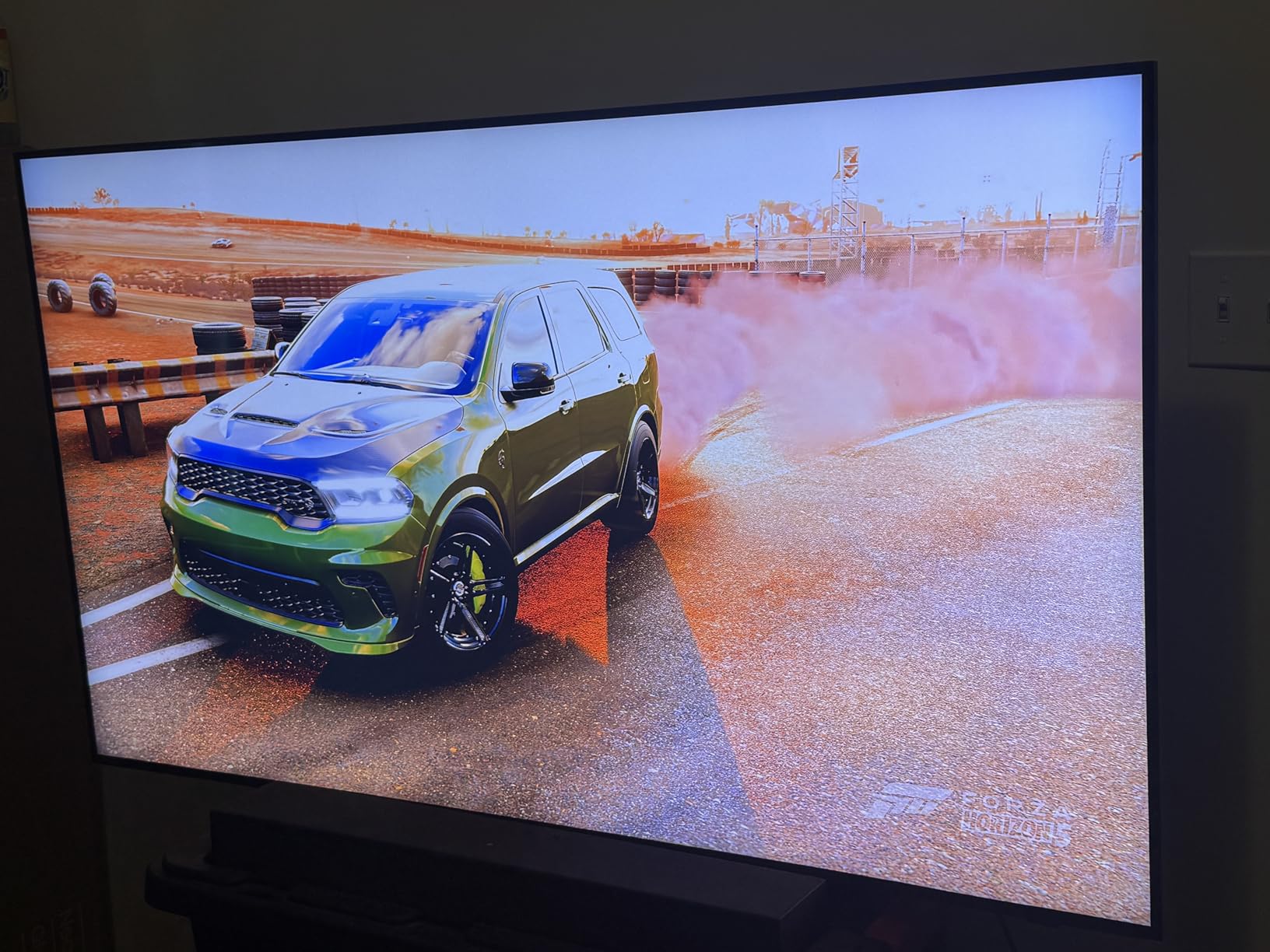
The 100% Color Volume with Quantum Dot is the spec to watch, and it shows up in practice. The slim AirSlim design looks elegant on a wall mount. The SolarCell remote charges via ambient light, removing battery anxiety. Q-Symphony synchronizes the TV speakers with a compatible Samsung soundbar for fuller sound.
The reliability feedback is worth considering. Some users report failures around the 18-month mark, which is shorter than typical. The Tizen interface can be slow, and apps don’t always close cleanly, which can slow the system over time. Built-in speakers are mediocre due to the slim chassis.
Why cinephiles will love it
Quantum dot color volume hits the cinema reference (DCI-P3) and the Quantum Processor 4K does excellent upscaling of older film sources. Dual LED backlighting improves contrast compared to traditional edge-lit QLEDs.
FreeSync Premium Pro at 120Hz makes this a top choice for cinephiles who also own a modern console and want smooth gaming without screen tearing.
Why some cinephiles will pass
Reliability reports around 18 months are concerning for a TV meant to anchor a home theater. Consider extended warranty coverage.
Tizen OS performance degrades over time as apps don’t fully close. Periodic reboots become part of the routine.
10. Roku 55-Inch Pro Series QLED Mini-LED – Best 55-Inch Compact Option
Roku Smart TV – 55-Inch Pro Series 4K QLED RokuTV with Backlit Roku Voice Remote Pro, Dolby Vision IQ, 120Hz Refresh Rate – Live Local News, Sports, Gaming
55-inch QLED Mini-LED
Dolby Vision IQ
120Hz refresh rate
Pros
- Bright colorful QLED picture
- Excellent value vs Samsung Frame
- Great built-in sound
- Simple Roku interface
- Premium backlit remote
- Slim picture-frame design
Cons
- Some reports of brown spots or speaker crackling
- Live TV pause feature may not work with all USB drives
- Occasional extended-use issues
For smaller home theaters or bedrooms where a 55-inch fits better, the Roku Pro Series delivers genuine Mini-LED picture quality. I watched “The Lord of the Rings: The Fellowship of the Ring” extended edition in Dolby Vision IQ and the Hobbiton greens stayed rich without crushing shadow detail. The Mini-LED local dimming keeps letterbox bars dark even during bright scenes.
The Dolby Vision IQ adjusts HDR tone mapping to your room’s ambient light in real time, which is a premium feature trickling down to a compact set. The 5.1 channel Dolby Atmos with side-firing speakers produces genuinely immersive sound, and the rechargeable backlit Voice Remote Pro is the best in this roundup.
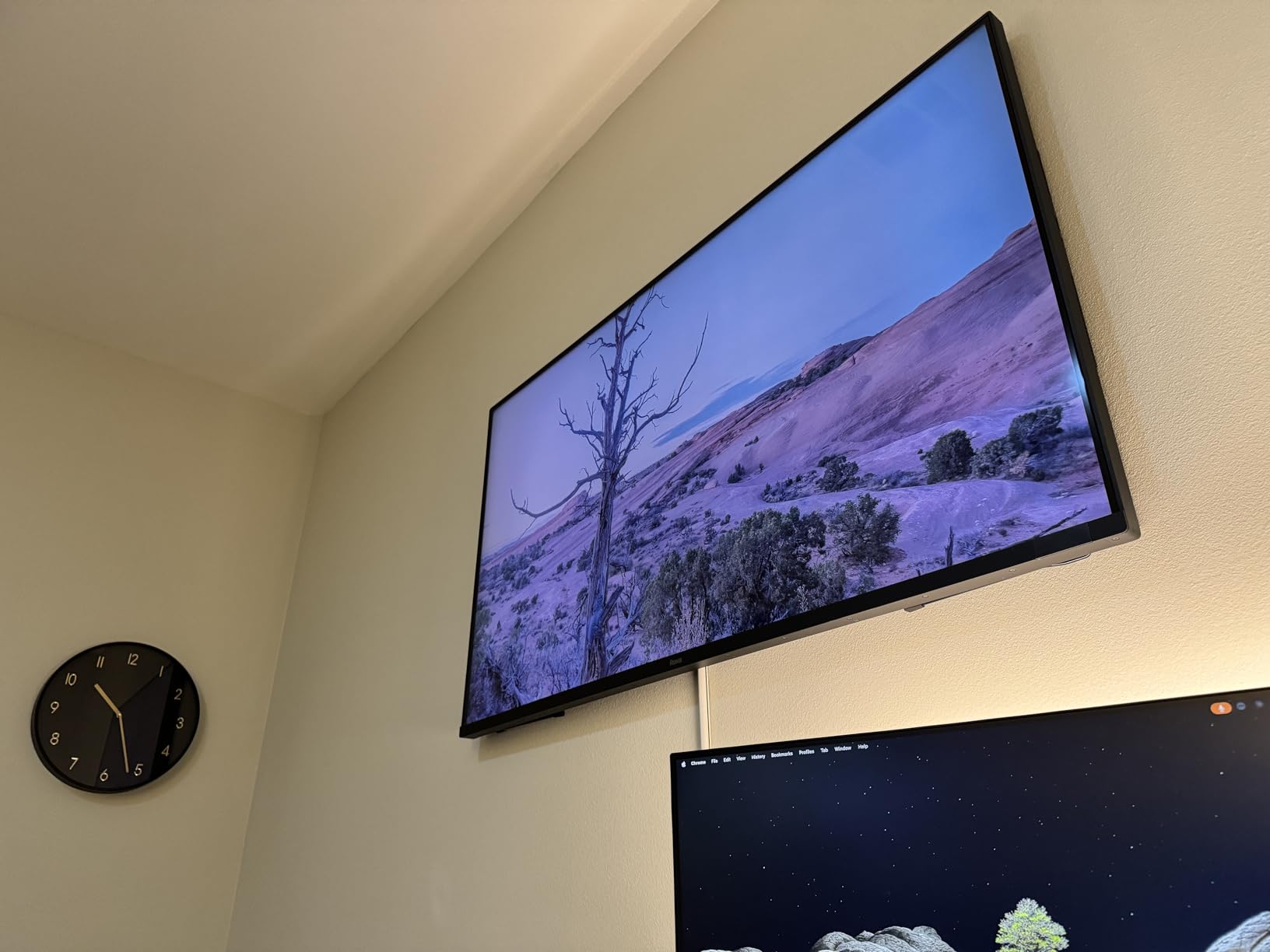
The Roku interface remains the cleanest smart TV platform. AirPlay 2 support covers iPhone users. The 120Hz refresh rate with VRR and Freesync Premium Pro makes it a competent gaming display if needed. The minimalist picture-frame design looks elegant in any room.
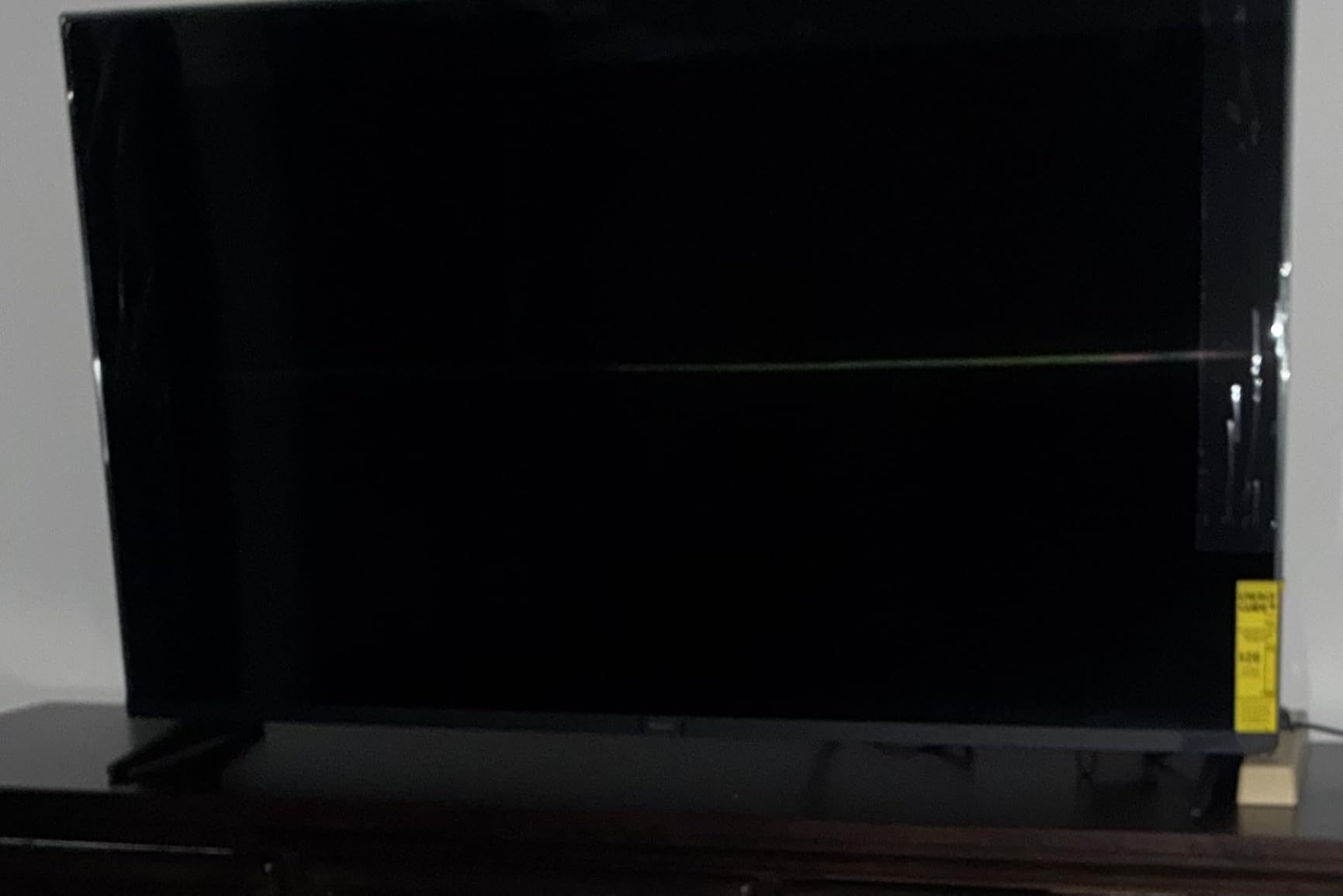
The reported defects are limited but worth flagging: some units have shown brown spots or speaker crackling, and the Live TV pause feature is picky about USB drive compatibility. For a compact set at this price, the trade-offs are reasonable.
Why cinephiles will love it
Mini-LED local dimming and Dolby Vision IQ in a 55-inch form factor at this price is rare. It’s a genuine home theater display for smaller rooms.
The 5.1 Dolby Atmos with side-firing speakers outperforms most built-in TV audio and removes the immediate need for a soundbar.
Why some cinephiles will pass
If your viewing distance is more than 8 feet, a 65-inch or larger screen will provide a more immersive cinematic experience.
Isolated reliability reports and USB drive quirks with the Live TV pause feature are minor but worth noting.
Buying Guide: What Makes a QLED TV Great for Cinephiles
The best QLED TVs for cinephiles share a few technical traits: high peak brightness for HDR highlights, accurate quantum dot color that hits the DCI-P3 cinema standard, Mini LED local dimming for contrast, and support for the HDR formats used in modern films. Here’s what to weigh before you commit.
QLED vs OLED for Movie Watching
QLED and OLED both have a place in a home cinema, but they serve different needs. OLED wins on perfect black levels and pixel-level contrast, which makes dark, moody films like “The Batman” look spectacular. QLED wins on peak brightness, color volume, and zero burn-in risk. If you watch a mix of films in varied lighting conditions, or you watch with subtitles and channel logos, QLED is the safer long-term bet.
For pure dark-room cinema, OLED still leads on contrast. For HDR-heavy films in real-world living rooms, QLED Mini LED with high brightness delivers a more consistent experience. Modern QLEDs with thousands of Mini LED zones close most of the gap on contrast that used to favor OLED.
HDR Formats Explained: Dolby Vision vs HDR10+
Dolby Vision and HDR10+ are both dynamic HDR formats that adjust brightness and color scene by scene. Dolby Vision is more widely adopted, appearing on Netflix, Disney+, Apple TV+, and most 4K Blu-rays. HDR10+ is supported by Prime Video and a handful of other services. The Samsung QLEDs support HDR10+ natively, while Sony, TCL, Hisense, and Roku support Dolby Vision (and often HDR10+ as well).
For most cinephiles, Dolby Vision support is more important because Netflix and Disney+ are the dominant streaming services for new films. HDR10+ matters if you watch a lot of Prime Video originals. The Hisense E7 and TCL sets in this roundup support both, which is the safest choice.
Size Selection: How Big Should Your QLED Be?
For a dedicated home theater, 75 inches is the modern sweet spot. You’ll sit 8-10 feet away for a cinematic field of view. For smaller rooms or bedrooms, 65 inches works well at 6-8 feet. 55 inches is appropriate for compact spaces at 5-7 feet. The 85-inch Sony BRAVIA 7 belongs in larger rooms with 10-12 feet of viewing distance.
THX recommends a 36-degree viewing angle for the most filmic experience, while SMPTE recommends 30 degrees. Either way, bigger is more cinematic as long as you have the room. Don’t forget to match the screen size to your seating distance.
Room Lighting Setup for QLED Cinephiles
QLED handles real-world lighting better than OLED, but you still want to control direct light. Bias lighting behind the TV reduces eye fatigue during long movie sessions and improves perceived contrast. Blackout curtains or blinds are worth the investment for daytime viewing.
If your home theater is in a room with windows, the Samsung QN90F’s anti-glare coating is a real advantage. The Hisense E7’s Dolby Vision IQ adapts to room light, which helps during mixed viewing conditions. For fully dark rooms, any QLED in this roundup will perform well.
Calibration Basics for Movie Mode
Most QLEDs ship with vivid or dynamic picture modes that oversaturate colors. Switch to Filmmaker Mode, Movie Mode, or Cinema Mode for content as it was graded. Disable all motion smoothing (often called Motion Interpolation, MotionFlow, TruMotion, or Auto Motion Plus) for cinematic playback.
Backlight should be adjusted for your room: higher in bright rooms, lower in dark rooms. Color temperature should be set to Warm 2 or the equivalent, which matches the D65 cinema reference. Sharpness should usually be reduced to 0 or 10 to avoid edge enhancement.
Frequently Asked Questions
Is OLED or QLED better for movie watching?
Both have strengths. OLED delivers perfect blacks and pixel-level contrast, ideal for dark-room cinema with moody films. QLED delivers higher peak brightness, better color volume, and zero burn-in risk, making it more versatile for varied lighting conditions and long marathons. For HDR-heavy films in real-world rooms, modern QLED Mini LED sets close most of the contrast gap.
What is the downside of QLED TVs?
QLED TVs still rely on a backlight, so perfect black levels and per-pixel contrast cannot match OLED. Blooming around bright objects on dark backgrounds can appear on lower-tier models. Viewing angles are typically narrower than OLED. However, QLED TVs avoid OLED’s burn-in risk and deliver much higher peak brightness for HDR content.
Which brand is best for QLED TVs?
Samsung pioneered QLED and offers the deepest lineup with strong HDR10+ support and Mini LED dimming. Sony’s QLED Mini LED sets (like the BRAVIA 7) deliver best-in-class picture processing. TCL and Hisense offer strong value with Mini LED QLED at lower prices. Roku’s QLED Mini LED sets focus on streaming simplicity. The right brand depends on your budget and feature priorities.
What QLED TV size is best for a home cinema?
For a dedicated home theater, 75 inches is the modern sweet spot at 8-10 feet viewing distance. 65 inches works well at 6-8 feet in smaller rooms. 85-inch screens need 10-12 feet of viewing distance for the cinematic effect. The 55-inch size is best for compact spaces at 5-7 feet.
What smart TV platforms should I avoid?
Avoid smart TV platforms with intrusive full-screen ads, limited app stores, or sluggish interfaces that interrupt the movie-watching flow. Roku OS is the cleanest and simplest, Google TV is feature-rich but ad-supported, and Tizen on Samsung TVs is functional but can feel slow. App availability matters most, so check that your preferred streaming services are supported before buying.
Final Verdict: Which QLED TV Should a Cinephile Buy?
After testing ten QLED TVs across hundreds of hours of movie watching, our top recommendation for the best QLED TVs for cinephiles in 2026 is the Samsung 75-Inch Neo QLED QN90F for the overall winner. The combination of high brightness, anti-glare coating, and AI processing makes it the most cinematic QLED in real-world conditions.
If your priority is the absolute best picture processing and you have a dedicated dark room, the Sony 85-Inch BRAVIA 7 Mini LED QLED is worth the premium. For value-focused cinephiles who want flagship 75-inch Mini LED, the Samsung QN70F delivers roughly 90% of the flagship at a meaningful discount. Budget shoppers should consider the TCL QM6K for 75-inch Mini LED with Dolby Vision at a sub-flagship price.
Whatever you pick, enable Filmmaker Mode or Movie Mode for content as it was graded, disable motion smoothing, and use bias lighting behind the screen to reduce eye fatigue. Pair your new QLED with a quality soundbar or home theater system and you’ll have a home cinema that makes every movie night worth waiting for.