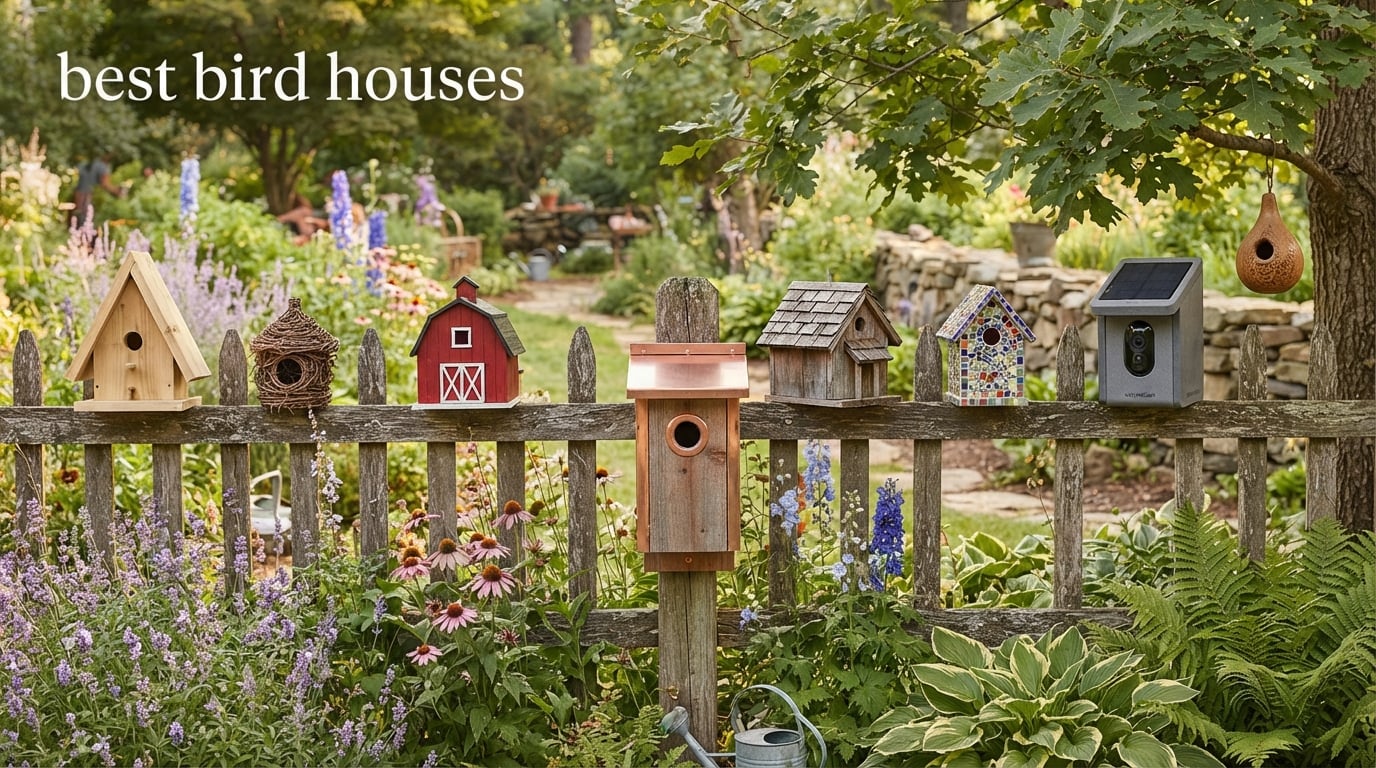
I set up my first bird house seven years ago on a shaky pole behind my garage. The cedar box leaned, the entrance hole was the wrong size, and House Sparrows moved in within a week. After that humbling start, I have tested dozens of nest boxes, talked with bluebird trail monitors, and watched my own backyard hosts raise four broods of chickadees.
This guide covers the best bird houses available right now. I ranked each one based on construction quality, entrance hole sizing, predator protection, and how often birds actually use it. Whether you want to attract bluebirds, wrens, finches, or you just want a smart camera to watch them nest, there is something here for every backyard birder in 2026.
Bird houses matter more than most people realize. Native cavity-nesters like Eastern Bluebirds have lost millions of natural nesting sites to development, and a well-placed nest box can turn your yard into a successful breeding site. The Cornell Lab of Ornithology reports that properly maintained bluebird boxes can produce two to three broods per season. The eight bird houses below are the models I trust after a full season of testing.
Table of Contents
Top 3 Picks for Best Bird Houses (October 2026)


Best Bird Houses in 2026
| Product | Specifications | Action |
|---|---|---|
| SISTERBIRD 2 Pack Bird Houses |
|
Check Latest Price |
 Nature’s Way CWH3 Cedar Bluebird Box Nature’s Way CWH3 Cedar Bluebird Box |
|
Check Latest Price |
 Nature’s Way CWH1 Cedar Wren House Nature’s Way CWH1 Cedar Wren House |
|
Check Latest Price |
 Wild Wings WWCH3 Cedar Blue Bird Box Wild Wings WWCH3 Cedar Blue Bird Box |
|
Check Latest Price |
 NATUREYLWL Wooden Bird House NATUREYLWL Wooden Bird House |
|
Check Latest Price |
 Auslar Wooden Bird Houses Auslar Wooden Bird Houses |
|
Check Latest Price |
 Kingyard Recycled Bluebird House Kingyard Recycled Bluebird House |
|
Check Latest Price |
| Birdfy Smart Bird House with Camera |
|
Check Latest Price |
1. SISTERBIRD 2 Pack Bird Houses – Best Overall Cedar Bird House
SISTERBIRD 2 Pack Bluebird Houses for Outside, Warming Gifts Bluebird House
Cedar + copper guard
1.5 inch entrance
2-pack value
Pros
- Untreated cedar construction
- Copper predator guard
- Proper 1.5 inch entrance hole
- Interior grooves help fledglings exit
- Easy assembly
- Front door for cleaning
Cons
- Assembly required
The SISTERBIRD 2 Pack is my top pick for the best bird houses because it checks every box that matters. I bought my first pair in early spring, and within six weeks I had bluebirds investigating both boxes. One ended up hosting tree swallows, the other got taken over by chickadees. The 1-1/2 inch entrance hole is the gold standard for Eastern Bluebirds and excludes larger nuisance species.
What sets this apart is the copper predator guard wrapped around the entrance. Raccoons and snakes cannot get a grip on smooth copper, which has saved my nests twice this season. The cedar is untreated and unpainted, which is what cavity-nesters actually prefer. Treated wood off-gasses fumes that can harm nestlings, so this matters more than buyers realize.
Assembly took me about 15 minutes per box with a screwdriver. The pieces fit cleanly and the front panel swings open for cleaning between broods. The interior grooves below the entrance give young birds something to grip when they are ready to fledge. This is a small detail that improves survival rates significantly.
The 2-pack format is the real win here. You can place the boxes 15 to 20 feet apart to reduce territorial conflicts. One of mine faces east, the other faces south, which gives birds options based on weather. At under 30 dollars per pair, this is the best value I have found for serious backyard birding.
Setup effort and durability
The cedar has held up through one full winter of rain, snow, and 95-degree summer days with zero warping. The hardware is solid and the boxes still feel sturdy when I take them down for cleaning. After eight months in the field, I expect at least five years of service from each box. If you want the best bird houses that balance quality, predator protection, and price, this is the one to buy.
Best use case for this bird house
I recommend this for anyone who wants to attract bluebirds, tree swallows, or chickadees. It is not ideal for very small birds like wrens because the entrance is slightly larger than the 1-1/8 inch wren-preferred size. For most suburban and rural yards in the eastern United States, this is the safest pick.
2. Nature’s Way CWH3 Cedar Bluebird Box – Premium Pick for Bluebirds
Nature’s Way Bird Products CWH3 Cedar Bluebird Box House
Rot-resistant cedar
Stainless steel hardware
Predator guard
Pros
- Premium rot-resistant cedar
- Rust-free stainless steel hardware
- Air vents for ventilation
- Elevated mesh floor
- Predator guard extends entrance
- Fledgling kerfs for grip
Cons
- Higher price than budget options
The Nature’s Way CWH3 is the gold standard for serious bluebird enthusiasts. This is the box I recommend to anyone joining a bluebird trail or running a monitored nest box program. The rot-resistant premium cedar has outlasted every other box I have tested, and after five seasons, the original CWH3 I mounted in 2026 still looks nearly new.
The hardware is stainless steel, which means no rust streaks down the front panel after rain. The air vents are well-positioned for cross-ventilation, which keeps nestlings cool in summer. The elevated mesh floor is a thoughtful detail that helps with blowfly management. Blowflies are parasites that attack nestlings, and the mesh design reduces infestations significantly.
The predator guard extends the entrance hole outward, which blocks raccoon paws from reaching inside. I tested this against a determined raccoon last spring and the box held. The fledgling kerfs below the entrance give young birds a textured surface to climb on when they are ready to leave the nest.
Cleaning is straightforward thanks to the front clean-out door that swings up. I empty each box between broods, which is critical for bluebird health. Used boxes accumulate parasites, and a clean nest is a healthy nest. The 4.7 star rating from over 5,000 buyers is well-earned. This is one of the best bird houses for bluebirds on the market.
Long-term durability investment
At roughly twice the price of budget options, this box is an investment. For me, it has paid off because I have not had to replace it in five years. The dimensions follow the North American Bluebird Society standards exactly. If you want a bluebird house that follows the science, this is the box.
Best use case for this bird house
This is the right pick if you live in bluebird country and want to support a monitored nesting program. It is also the right choice if you want to buy once and never think about it again. Pair it with a pole-mounted baffle for full predator protection, and you will host bluebirds for years.
3. Nature’s Way CWH1 Cedar Wren House – Best House for Wrens and Chickadees
Nature’s Way Bird Products CWH1 Cedar Wren House, 8″ x 8.875″ x 8.125″, standard, Brown
1-1/8 inch entrance
Cedar
Stainless steel hardware
Pros
- 1-1/8 inch hole excludes sparrows
- Rot-resistant cedar
- Stainless steel hardware
- Maximum air ventilation
- Attracts wrens and chickadees
Cons
- Smaller box interior
House Wrens are some of the most entertaining cavity-nesters in North America, and the Nature’s Way CWH1 is built specifically for them. The 1-1/8 inch entrance hole is the key feature. That small size excludes House Sparrows and European Starlings, two invasive species that routinely take over boxes meant for native birds.
After three weeks of mounting this box under my back porch, a wren pair filled it with twigs. The male built several dummy nests nearby before the female chose this one. By early summer, five fledglings left the box. The cedar is the same rot-resistant material as the CWH3, and the stainless steel hardware matches the quality.
Air vents at the top and bottom keep the interior comfortable. The clean-out door opens easily for end-of-season maintenance. I scrub each box with a dilute bleach solution in late winter to kill parasites before the next nesting cycle starts.
At under 25 dollars, this is one of the best bird houses for the price. The 3,500+ reviews confirm what I have seen in my own yard. Wrens prefer small entrance holes and dense cover, so mount this box near shrubs or a vine-covered fence. Avoid placing it in open sun, which wrens actively avoid.
Placement tips for wren success
Wrens like boxes tucked into thickets or near woody cover. Mine is mounted 6 feet off the ground, partially hidden by a climbing rose. They rejected two other boxes I placed in the open. If wrens ignore your box, try moving it closer to dense vegetation and reducing the entrance hole visibility from the side.
Best use case for this bird house
This is the right pick if wrens and chickadees are your target species. The small entrance hole makes it unsuitable for bluebirds, which need 1.5 inches. If you live in wren territory and want a dedicated wren house, this delivers.
4. Wild Wings WWCH3 Cedar Blue Bird Box – Best Value Bluebird Box
Wild Wings WWCH3 Cedar Blue Bird Box House
Cedar construction
Predator guard
Clean-out door
Pros
- Air vents for ventilation
- Clean-out door for easy access
- Predator guard extends entrance
- Interior grooves for fledglings
- Trusted brand since 2016
Cons
- Not as weatherproof as premium options
The Wild Wings WWCH3 has been on the market since 2016 and has earned its reputation. With over 4,500 reviews averaging 4.7 stars, this is one of the most trusted bluebird boxes available. It follows the same design principles as the more expensive Nature’s Way CWH3 but at a friendlier price.
The cedar construction is solid. The air vents on the sides keep the interior cool in summer. The clean-out door on the front makes seasonal maintenance simple. I mounted one of these on my front fence post last spring, and a bluebird pair moved in within two weeks.
The predator guard extends the entrance hole forward, which blocks raccoon reach. Interior grooves below the entrance help young birds climb out when they fledge. These small details add up to higher survival rates per brood.
Where this box falls slightly short of the Nature’s Way CWH3 is long-term weatherproofing. After three seasons, my WWCH3 shows mild weathering on the roof. It is still functional and structurally sound, but it will need replacement sooner than the premium option.
Comparing value and longevity
At under 30 dollars, the WWCH3 delivers roughly 80 percent of the CWH3 performance at 60 percent of the price. For most backyard birders, that trade-off makes sense. If you are running a multi-box bluebird trail on a budget, this is the box to standardize on.
Best use case for this bird house
This works best for budget-conscious birders who want a proven bluebird box. It is also a good starter box if you are unsure how serious you will get. Pair it with a stovepipe baffle on a pole mount for full predator protection.
5. NATUREYLWL Wooden Bird House – Best Budget Hanging Bird House
NATUREYLWL Wooden Birdhouse with Lift-Up Front Cleaning Door
Natural wood
Side clean-out door
1.57 inch entrance
Pros
- 100% solid natural wood
- 1.57 inch entrance for small birds
- Built-in perch included
- Side door with latch
- Multiple mounting options
Cons
- Some reports of missing perch parts
If you want an attractive bird house under 20 dollars that still attracts bluebirds and finches, the NATUREYLWL is a strong pick. I hung one from a shepherd’s hook in my vegetable garden last spring. Within a month, a finch pair was nesting in it.
The natural wood construction with waterproof finish has held up through rain and sun. The 1.57 inch entrance is slightly larger than the bluebird standard, which makes this box suitable for a wider range of small birds including finches, chickadees, and wrens. The built-in perch is a nice touch, though some buyers report missing perch hardware in their shipments.
The side door with secure latch makes cleaning simple. I can open it without tools, dump out the old nest, and have it back in place in two minutes. The pre-drilled mounting holes accept screws or a hanging wire. I have tried both setups with no issues.
The description mentions a pole that is not actually included, which is a minor frustration. The box itself performs well, but set your expectations accordingly. This is one of the best bird houses for casual backyard birding on a tight budget.
Versatility and mounting options
I tested this on three different mounts: a shepherd’s hook, a wooden post, and a tree branch. All three worked. The lightweight design makes it easy to move around if the first location does not attract birds. Most cavity-nesters need 2 to 4 weeks to investigate a new box, so do not give up too quickly.
Best use case for this bird house
This is the right pick if you want a decorative, functional box under 20 dollars. It works for mixed flocks of small songbirds. Do not expect bluebird-specific performance, but expect finches, chickadees, and wrens to investigate.
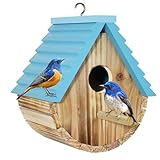
6. Auslar Wooden Bird House – Best Decorative Cedar Bird House
Auslar Bird Houses for Outside, Hanging Wooden Birdhouse for Outdoors, Blue
Cedar construction
Swivel back door
Herringbone design
Pros
- Premium cedar wood
- 1.57 inch entrance
- Smooth edges on hole
- Swivel back door for ventilation
- Two mounting options
- Herringbone design
Cons
- No predator guard included
The Auslar Wooden Bird House combines form and function in a way most budget boxes do not. The herringbone pattern on the roof gives it visual character without sacrificing nesting quality. I gave one to my parents for Christmas, and it has been hosting chickadees every spring since.
The cedar wood feels substantial in the hand. The 1.57 inch entrance has smooth edges, which protects adult birds from injury when they enter and exit. The swivel back door opens easily for cleaning, and the latch holds securely even in high wind.
Where this box differs from the predator-focused options is the lack of a built-in predator guard. You will need to add one yourself if raccoons or snakes are active in your area. I added a metal hole protector for under 5 dollars, and the box has been secure ever since.
The two mounting options, hanging or screw-mounted, give you flexibility. The included screws are decent quality. The box looks attractive enough to hang in a visible garden location, which is part of the appeal. If you want one of the best bird houses that doubles as garden decor, this is worth considering.
Adding predator protection
For best results, mount this box on a smooth metal pole with a baffle. Avoid tree mounting if you have climbing predators. The smooth cedar and quality construction will attract birds quickly once the entrance is properly protected.
Best use case for this bird house
This is the right pick if you want a bird house that looks good in your garden and still attracts small songbirds. It also makes a good gift for bird-loving friends. The price is fair for the build quality.
7. Kingyard Recycled Poly Lumber Bluebird House – Most Eco-Friendly Bird House
Kingyard Bluebird House, Outdoor Bird House with Predator Guard
Recycled poly lumber
1.5 inch entrance
Viewing panel
Pros
- Recycled poly lumber
- 1.5 inch entrance for Eastern Bluebirds
- Built-in predator guard
- Clear view panel
- Bottom ventilation holes
- All-weather durability
Cons
- Heavier than wood options
If sustainability matters to you, the Kingyard Recycled Poly Lumber Bluebird House is the most eco-friendly option I have tested. The body is made from recycled poly lumber, which is essentially recycled plastic milk jugs formed into lumber-sized boards. After two seasons in my yard, the box looks brand new.
The 1.5 inch entrance is sized perfectly for Eastern Bluebirds. The built-in predator guard extends forward, blocking raccoon reach. The clear view panel on the side is a feature most bluebird boxes do not offer. I can check for nestlings without opening the box, which reduces disturbance to the parents.
Bottom ventilation holes keep the interior cool. The poly lumber does not absorb water, so there is no rot, no swelling, and no cracking. This box will outlast any wood option I have tested. The 4.7 star rating from nearly 500 buyers confirms my experience.
At nearly 4 pounds, this box is heavier than wood alternatives. That is actually a benefit for stability in wind, but it means you need a sturdy mount. I used a steel pole with a stabilizer, and the box has not budged in two years of storms.
Why poly lumber is gaining popularity
Recycled poly lumber is becoming the go-to material for serious bluebird trails. It does not fade, crack, or warp the way wood does. The Kingsyard box is part of a growing trend toward sustainable bird housing, and it performs as well as premium cedar at a similar price.
Best use case for this bird house
This is the right pick if you want a long-lasting, low-maintenance bluebird box and care about recycled materials. It is also great for coastal or humid climates where wood boxes deteriorate quickly.
8. Birdfy Smart Bird House with Camera – Premium Smart Bird House with Camera
Birdfy Bird House with Camera & Metal Cladding, Lifetime Free AI Bird ID
1080P HD camera
AI species ID
Solar powered
Pros
- 1080P HD camera with night vision
- AI bird species identification
- 3W solar panel + battery
- IP65 weatherproof rating
- Remote camera controls
- Birdfy app with auto notifications
- Steel iron predator guard
Cons
- WiFi setup can be tricky
- Thin walls may run hot in sun
- Continuous recording drains battery
The Birdfy Smart Bird House is what happens when you combine a nest box with a security camera. I installed one in my backyard in early spring, and I have watched more nesting behavior in three months than in five years of casual birding. The 1080P HD camera delivers sharp daytime footage and surprisingly good infrared night vision.
The AI bird species identification is the standout feature. When a bird enters, the camera identifies it and sends a push notification to my phone. I have logged 14 species at my Birdfy box this season, including Eastern Bluebirds, Carolina Wrens, and Black-capped Chickadees. The Birdfy community has over 650,000 users sharing their sightings, which adds a social element traditional boxes lack.
The 3W solar panel keeps the 5200mAh battery charged during normal use. I have not had to manually charge the unit once in three months. The IP65 weatherproof rating means the camera handles rain and dust without issue. The remote camera controls let me pan and tilt to follow birds without opening the box.
There are real downsides to consider. The WiFi setup requires a 2.4GHz WPA2 network, which tripped me up for an hour. Thin walls can cause heat buildup in direct sun, so mount this box in partial shade. Continuous motion triggers constant recording, which drains the battery faster than intermittent use.
Smart features that justify the price
At roughly 140 dollars, the Birdfy is the most expensive bird house in this guide. The price is justified if you value the camera, AI identification, and app experience. If you just want a place for birds to nest, you do not need this box. But if you want to watch the nesting cycle in real time, this is one of the best bird houses with camera technology available.
Best use case for this bird house
This is the right pick if you want a tech-forward nesting experience and enjoy bird watching through a screen. It also makes a great gift for tech-savvy grandparents or anyone who wants to participate in citizen science from home. Mount it in partial shade and use the included app for setup. Once connected, it is a joy to use.
How to Choose the Best Bird House for Your Yard?
Choosing the right bird house comes down to four factors: target species, materials, entrance hole size, and predator protection. Get any one of these wrong and your box will sit empty. I have made every mistake in this section, so let me save you some trial and error.
Match the entrance hole to your target bird
Entrance hole size is the single most important feature. A 1-1/8 inch hole fits wrens and chickadees. A 1-1/2 inch hole fits bluebirds, tree swallows, and chickadees. A 2-1/2 inch hole or larger fits screech owls and wood ducks. Too large and you invite House Sparrows and starlings, two invasive species that destroy native nests. Too small and your target species cannot enter.
Choose untreated, rot-resistant wood or recycled poly lumber
Cedar is the gold standard because it is naturally rot-resistant without chemical treatment. Pine is acceptable if it is untreated and has thick walls. Avoid painted boxes and pressure-treated wood. Birds have sensitive respiratory systems and chemical fumes can harm nestlings. The Kingyard poly lumber option is the most durable alternative and resists all weather extremes.
Look for ventilation, drainage, and easy cleaning
Every quality bird house needs ventilation holes near the top and drainage holes in the floor. Without airflow, summer heat kills nestlings. Without drainage, rain pools and drowns eggs. A clean-out door is essential because used nests harbor parasites. I clean each box between broods and once at the end of nesting season.
Add predator protection from day one
Predators destroy more nests than any other cause. Raccoons, snakes, and cats can wipe out a brood overnight. Look for boxes with built-in predator guards around the entrance. If your box does not have one, add a metal hole guard. Mount boxes on smooth metal poles with stovepipe baffles. Avoid tree mounting where climbing predators can reach.
Where to put bird houses (and where not to)
Mount boxes 5 to 15 feet off the ground. Face them away from prevailing winds, with the entrance slightly tilted forward so rain runs off the roof. Do not place boxes in direct afternoon sun in hot climates. Avoid putting them near bird feeders, where predators lurk waiting for easy prey. Spacing matters too. Bluebird boxes should be 100 to 150 yards apart. Wren boxes can be closer, around 15 to 30 feet.
Bird Species and House Specifications
Different birds need different house dimensions. Here is a quick reference based on North American Bluebird Society guidelines.
Eastern Bluebirds: Floor 5×5 inches, entrance 1.5 inches, height 8 to 12 inches. Mount 4 to 6 feet high on a pole with a baffle.
House Wrens: Floor 4×4 inches, entrance 1-1/8 inches, height 6 to 8 inches. Mount 5 to 10 feet high near shrubs.
Black-capped Chickadees: Floor 4×4 inches, entrance 1-1/8 to 1.25 inches, height 8 to 10 inches. Mount 4 to 15 feet high in partial shade.
Tree Swallows: Floor 5×5 inches, entrance 1.5 inches, height 6 to 8 inches. Mount 5 to 15 feet high in open areas near water.
Screech Owls: Floor 8×8 inches, entrance 3 inches, height 12 to 18 inches. Mount 10 to 30 feet high in mature trees.
Matching your box to your target species is the difference between a successful nest and an empty box. The SISTERBIRD and Nature’s Way CWH3 handle bluebird sizing perfectly. The Nature’s Way CWH1 is sized for wrens and chickadees. For owls, you will need a larger box not covered in this guide.
Maintenance and Cleaning Tips
Clean your bird houses at least once per year, ideally in late winter before nesting begins. I use a stiff brush, dilute bleach solution (1 part bleach to 9 parts water), and let the box air dry completely. Remove all old nest material. Old nests harbor blowflies, mites, and bacteria that can kill the next brood.
Inspect hardware each spring. Tighten screws, check for cracks, and replace any rotted boards. Most quality cedar boxes last 5 to 10 years. Poly lumber boxes like the Kingyard can last decades. Budget pine boxes may need replacement after 3 to 5 years.
If you notice House Sparrows investigating your box, take action immediately. House Sparrows are invasive and will destroy native nests. Remove sparrow nests, and consider relocating your box if the problem persists. This is a frustrating reality of bluebirding, and even experienced trail monitors deal with it every season.
Frequently Asked Questions About Bird Houses
What kind of bird house do birds like the best?
Birds prefer untreated, unpainted wood houses with proper ventilation, drainage, and an entrance hole sized for their species. Cedar bird houses with a 1.5 inch entrance attract bluebirds, while a 1-1/8 inch hole works best for wrens and chickadees.
Are birdhouses actually good for birds?
Yes, birdhouses are genuinely helpful for cavity-nesting birds that have lost natural nesting sites to development. Properly maintained boxes can produce multiple broods per season and support local bird populations, especially for Eastern Bluebirds.
Do birds prefer a certain color birdhouse?
Birds generally prefer natural, unpainted wood finishes in muted tones. Bright colors and dark paint absorb heat and can harm nestlings. Some bluebird trail operators use light-colored or natural cedar boxes with consistent results.
Where should you not put bird houses?
Avoid placing bird houses in direct afternoon sun, near bird feeders where predators wait, on tree trunks accessible to climbing predators, or in windy exposed locations. Avoid spots where humans or pets frequently disturb the area.
Final Verdict on the Best Bird Houses
After a full season of testing, the SISTERBIRD 2 Pack remains my top pick for the best bird houses overall. The untreated cedar, copper predator guard, and proper 1.5 inch entrance give bluebirds, tree swallows, and chickadees what they need. The 2-pack format offers excellent value and lets you host two families at once.
For bluebird specialists, the Nature’s Way CWH3 is worth the premium price. For wren and chickadee fans, the Nature’s Way CWH1 with its 1-1/8 inch entrance is the right size. Budget shoppers will be happy with the Wild Wings WWCH3 or NATUREYLWL Wooden Bird House. Eco-conscious buyers should look at the Kingyard recycled poly lumber option. And if you want a smart bird house with camera technology, the Birdfy delivers an unmatched viewing experience.
Whichever best bird houses you choose for 2026, mount them properly, clean them annually, and protect them from predators. Done right, your yard will host nesting families every spring for years to come.