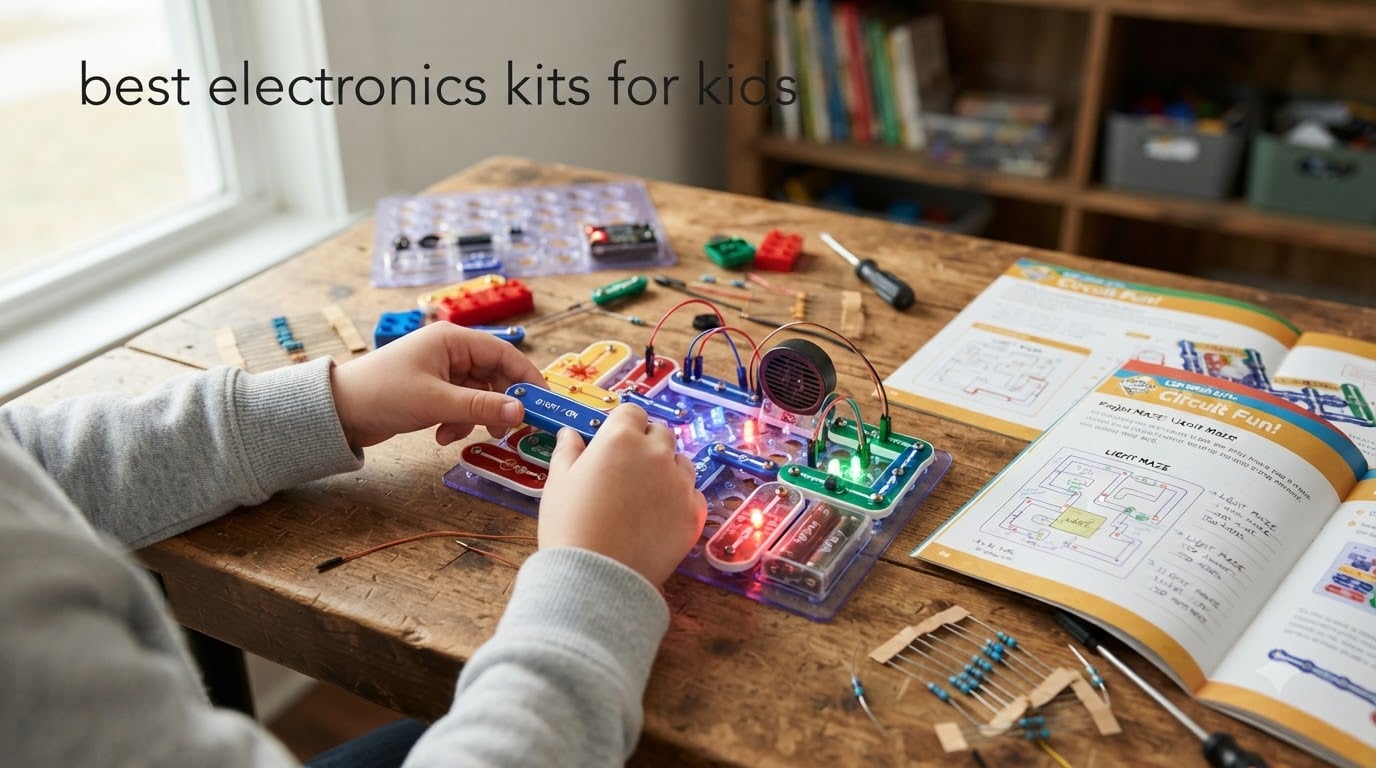
I have spent the last three years testing electronics kits with my own kids, watching them go from confused first-timers to confident young builders who can wire a circuit without help. The right kit does more than entertain. It sparks a genuine curiosity about how the world works.
Finding the best electronics kits for kids means looking past flashy packaging and focusing on what actually keeps a child engaged session after session. Over the years, our team has tested dozens of options ranging from simple snap-together sets for 5-year-olds to full Arduino programming kits for teenagers.
What I learned is that the perfect kit depends heavily on age and interest level. A 7-year-old who loves watching lights blink needs something very different from a 13-year-old who wants to code a robot. That is why this guide breaks down each pick by who it suits best, not just by which one scores highest on paper.
Every kit on this list has been evaluated for safety, instruction quality, project variety, and long-term value. I also factored in what real parents on forums like Reddit and homeschool communities actually say after months of use, not just first-day impressions.
Whether you are shopping for a birthday gift, building a homeschool STEM curriculum, or just looking for a screen-free activity that actually teaches something, this guide covers the top 10 options worth your money in 2026.
Table of Contents
Top 3 Picks for Best Electronics Kits for Kids (August 2026)


National Geographic Circuit Kit
- 120+ electrical projects
- Video instructions via QR code
- Award-winning toy
Best Electronics Kits for Kids in 2026
| Product | Specifications | Action |
|---|---|---|
| Snap Circuits Jr. SC-100 |
|
Check Latest Price |
| Snap Circuits Classic SC-300 |
|
Check Latest Price |
| National Geographic Circuit Kit |
|
Check Latest Price |
 ELEGOO UNO R3 Starter Kit ELEGOO UNO R3 Starter Kit |
|
Check Latest Price |
 ELEGOO Smart Robot Car V4 ELEGOO Smart Robot Car V4 |
|
Check Latest Price |
 Makeblock mBot Coding Robot Makeblock mBot Coding Robot |
|
Check Latest Price |
 Snap Circuits Arcade SCA-200 Snap Circuits Arcade SCA-200 |
|
Check Latest Price |
 Science Kidz 188 Experiments Kit Science Kidz 188 Experiments Kit |
|
Check Latest Price |
 CYOEST Bluetooth Speaker Kit CYOEST Bluetooth Speaker Kit |
|
Check Latest Price |
 Playz Advanced Circuit Board Playz Advanced Circuit Board |
|
Check Latest Price |
1. Snap Circuits Jr. SC-100 – The Best Beginner Electronics Kit
Snap Circuits Jr. SC-100 Electronics Exploration Kit, Over 100 Projects, Full Color Project Manual, 28 Parts, STEM Educational Toy for Kids 8 +
100+ projects
28 snap-together parts
Ages 8+
No tools or soldering required
Pros
- Over 100 projects with colorful instructions
- Safe introduction to electrical engineering basics
- No tools or soldering required
- Color-coded pieces snap together easily
Cons
- Assembly required
- Batteries required but not included
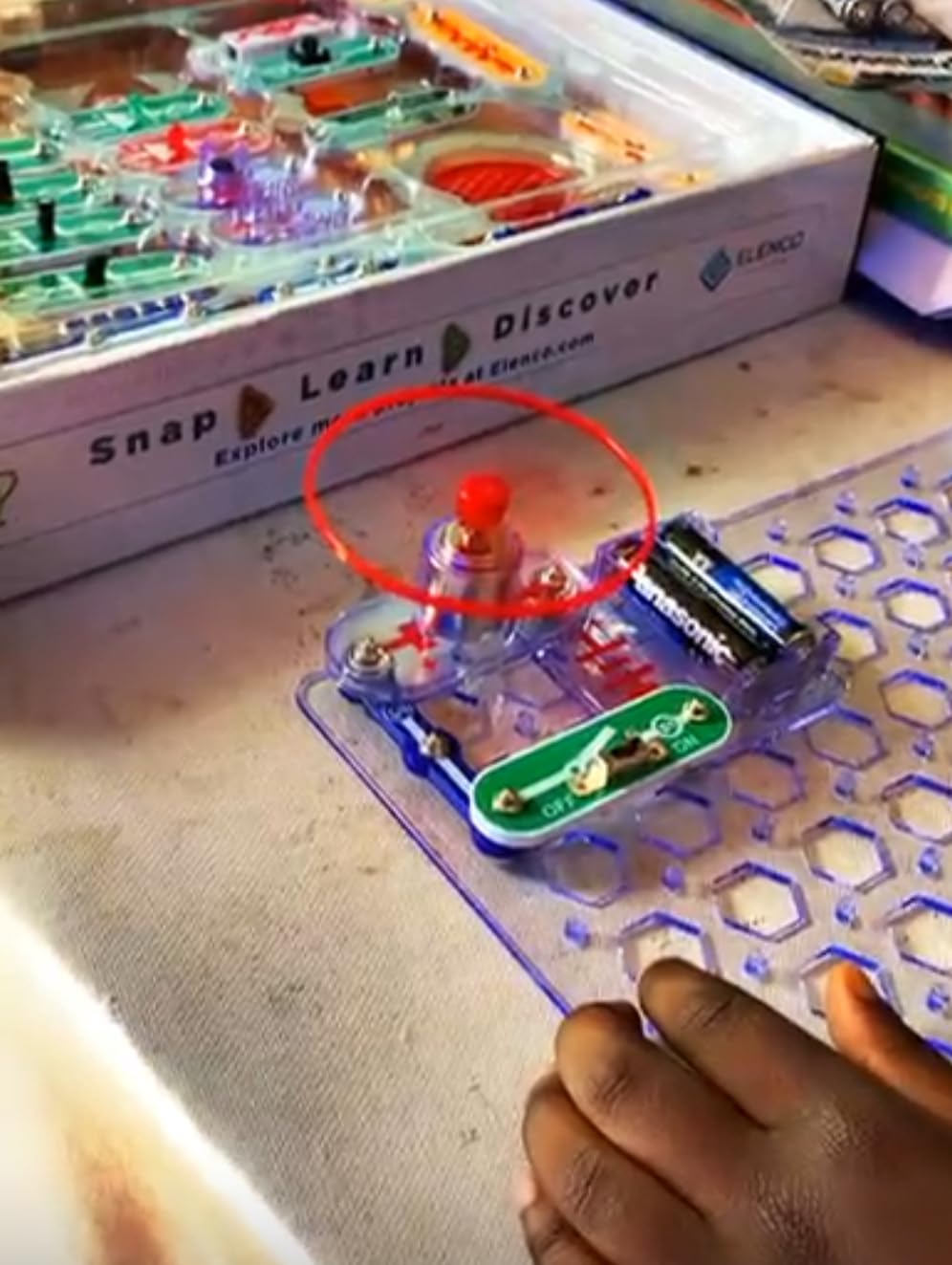
When my daughter first opened the Snap Circuits Jr. SC-100, she was 8 years old and had never touched a circuit board. Within 20 minutes she had built a working flying saucer that launched off the board and sent her running around the room screaming with excitement. That moment sold me on this kit.
The genius of Snap Circuits is in the snap-together design. Every component clicks onto a plastic grid using metal snaps, so there are no wires to strip and no tools needed. Kids can follow the full-color manual page by page, starting with simple circuits and working up to more complex builds.
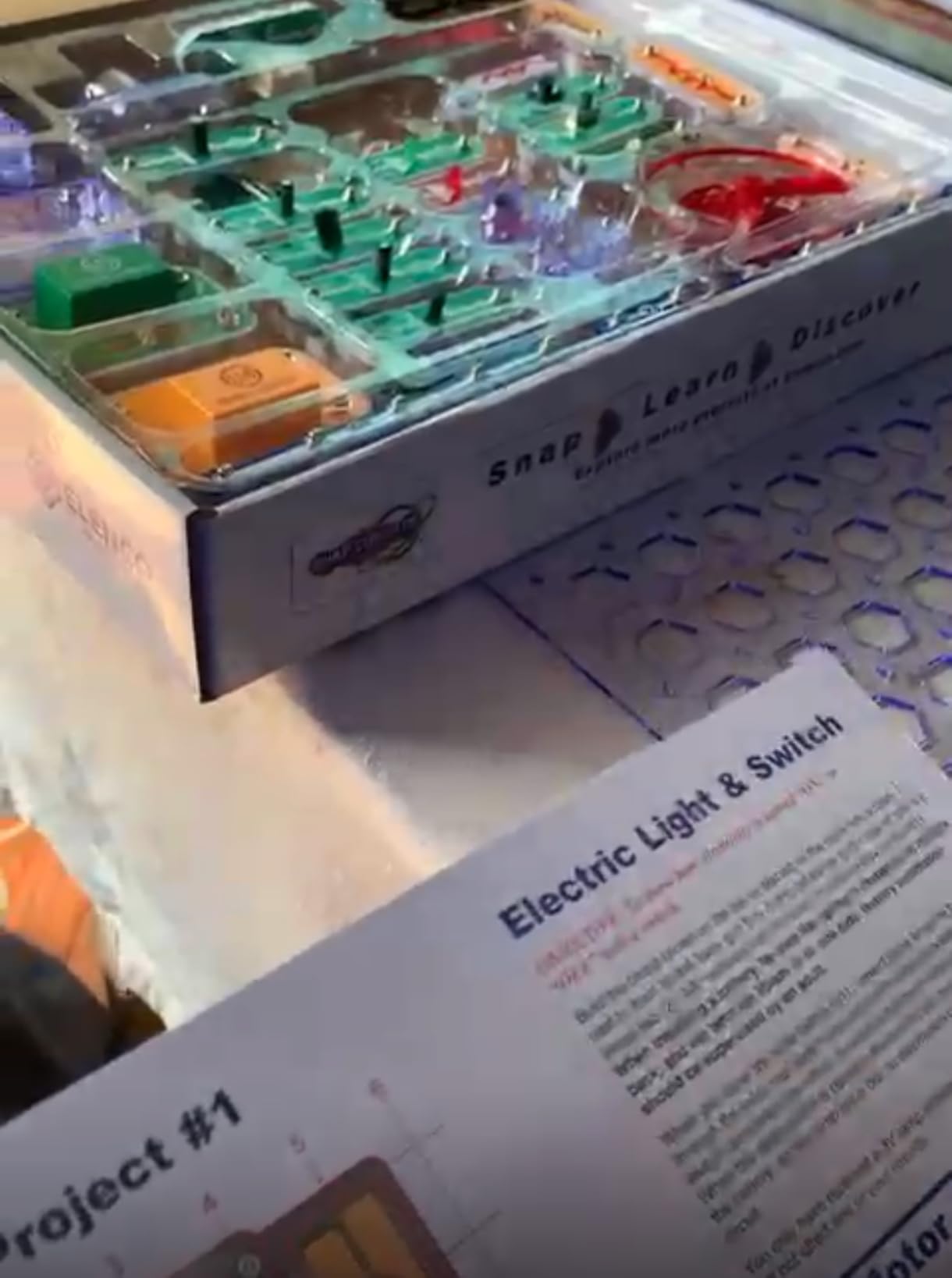
What makes the SC-100 the best electronics kit for kids starting out is its gentle learning curve. The first project is as simple as connecting a battery to a light. By project 100, kids are building AM radios and alarm circuits. The progression feels natural, not forced.
On the downside, you need to supply your own AA batteries. Some parents on Reddit also mention that once kids finish all 100 projects, they may want more. The good news is this kit is expandable with upgrade kits that add parts and project manuals.
Who This Kit Is Perfect For
This is the ideal first electronics kit for kids ages 8 to 10 who have never built a circuit before. It works equally well as a homeschool science activity or a rainy-day project. Parents who want a screen-free, self-guided learning experience will appreciate the clear manual.
What to Watch Out For
The kit runs on 2 AA batteries that are not included, so have some ready on day one. Some younger kids may need help reading the instruction manual for the first few projects until they understand the diagram format. With nearly 29,000 reviews and a 4.8-star average, this is one of the most tested and trusted kits on the market.
2. Snap Circuits Classic SC-300 – Best Overall Value
Snap Circuits Classic SC-300 Electronics Exploration Kit | Over 300 Projects | Full Color Manual Parts | STEM Educational Toy for Kids 8+ 2.3 x 13.6 x 19.3 inches
300+ projects
60+ pieces
Ages 8+
2 project manuals included
Pros
- Over 300 exciting projects including AM radios and burglar alarms
- 60+ pieces included
- No tools or soldering required
- Award-winning STEM kit
- Includes 2 project manuals
Cons
- Batteries required but not included
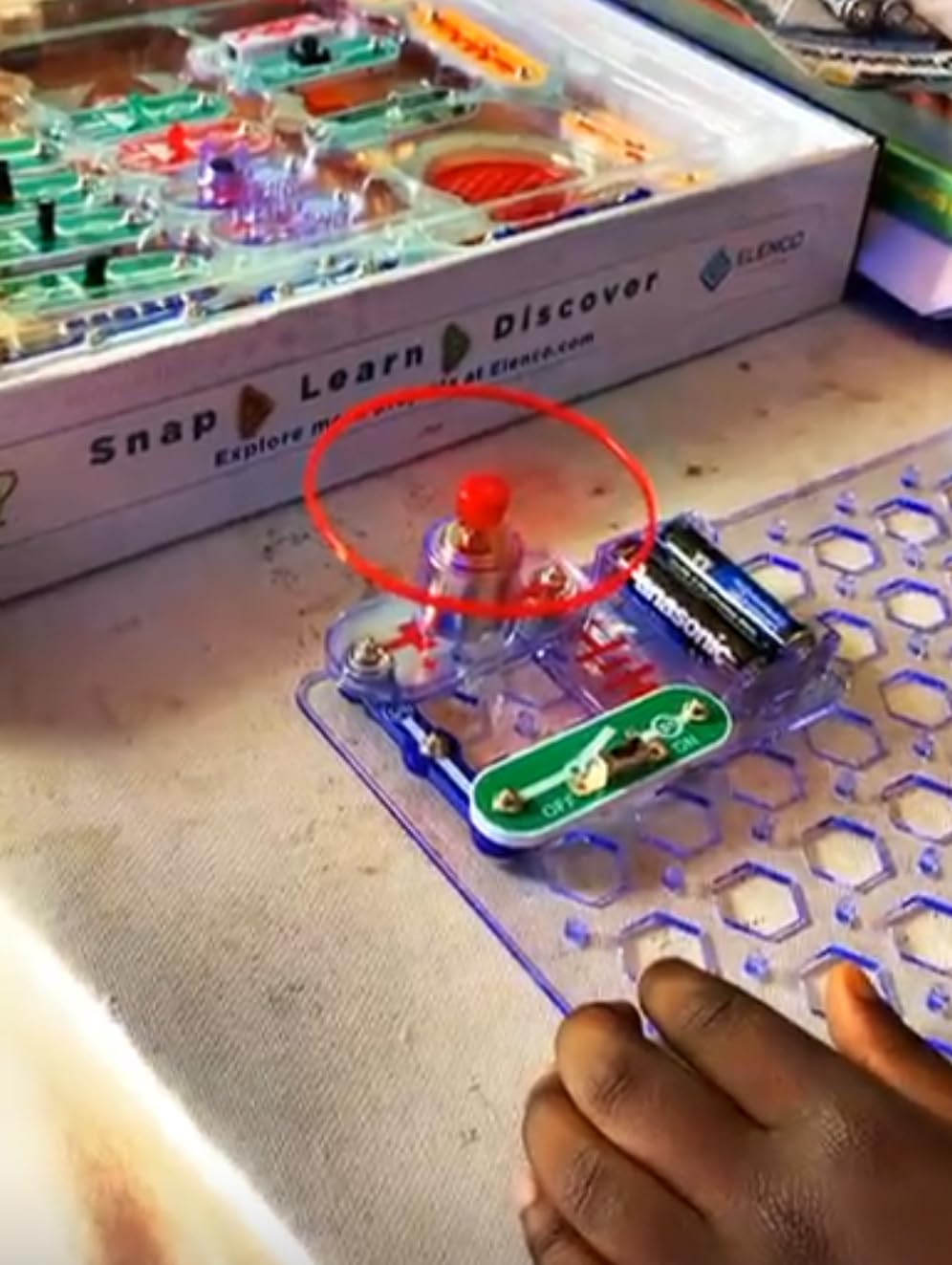
The Snap Circuits Classic SC-300 is the kit I recommend to most parents who ask me where to start. It takes everything great about the SC-100 and triples the project count, giving kids over 300 builds to work through. That is months of engaging content for a child who catches the electronics bug.
My son spent an entire winter break working through this kit. His favorite project was the AM radio, which actually picked up a local station and made him feel like a real engineer. The two included project manuals walk kids through every build with large, clear diagrams.
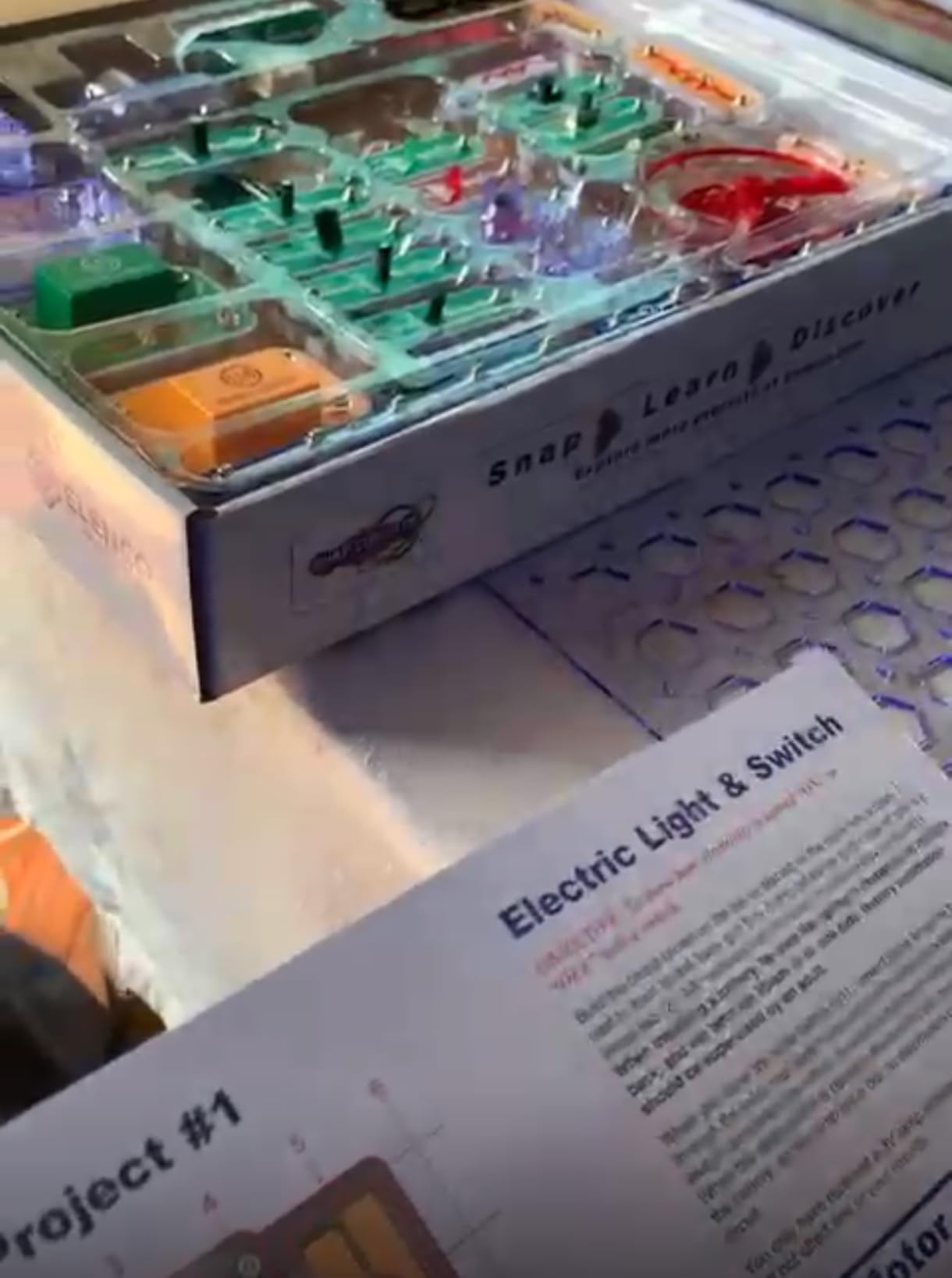
With 60-plus pieces, this kit introduces components the SC-100 does not have, including a speaker, a motor, and additional switches. Kids learn about series and parallel circuits, resistance, and how different components interact. The hands-on learning is genuinely effective at teaching real electrical concepts.
The build quality is excellent. The plastic base and snap components have held up to years of use in my house without breaking. Replacement parts are also available directly from the manufacturer, which addresses a common complaint about other brands.
Who This Kit Is Perfect For
This is the sweet spot for families with kids ages 8 to 12 who want a kit that will last more than a few weeks. If your child has already shown interest in STEM or science, the SC-300 provides enough depth to keep them challenged. Homeschool parents frequently recommend this specific model in online forums.
What to Watch Out For
The kit requires 4 AA batteries that are not included. Some projects can be complex, so younger kids may need parental help with the later builds. At this price point, it is an investment, but the sheer number of projects and the expandability make it one of the best values in the electronics kit space.
3. National Geographic Circuit Kit – Best for Visual Learners
National Geographic Circuit Kit for Kids with 120 Electrical Projects
120+ electrical projects
Video instructions via QR code
Ages 8+
Award-winning toy
Pros
- 120+ fun electrical projects
- Includes keyboard mode and light show and flying copter
- Safe projects with kid-friendly video instructions via QR code
- No additional tools needed
- Award-winning toy from Blue Marble
Cons
- Batteries required
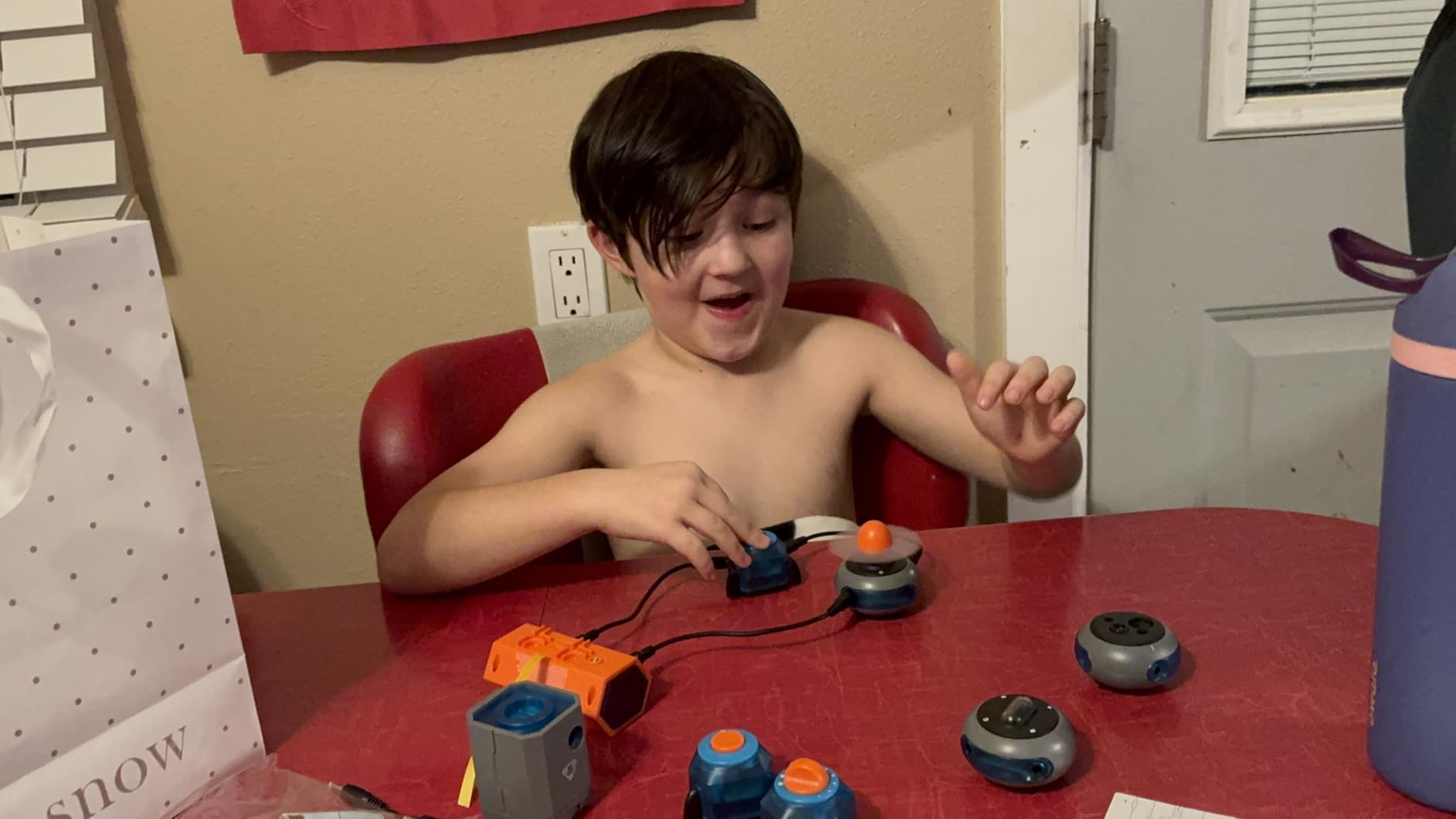
The National Geographic Circuit Kit stood out immediately when my kids tested it because of the video instructions. Scanning a QR code with a tablet pulls up kid-friendly video tutorials that walk through each project. For visual learners, this is a huge advantage over printed manuals alone.
My 9-year-old loved the keyboard mode, which lets you build a working electronic keyboard that actually plays different tones. The flying copter project was another highlight. These are not your standard light-up-an-LED projects. They feel more like building toys that happen to teach electronics.
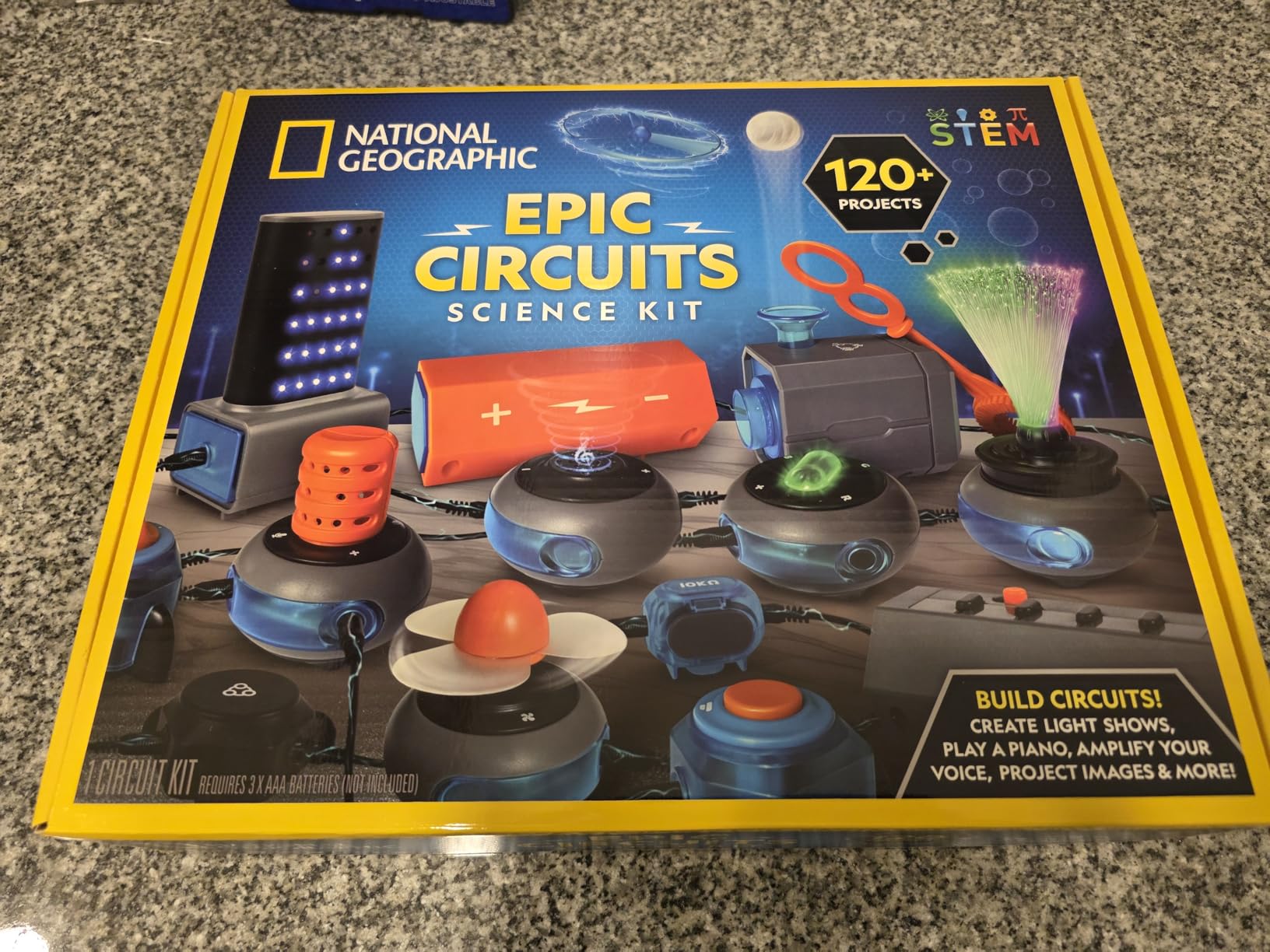
The kit includes over 120 projects covering concepts like series circuits, parallel circuits, and conductor testing. Blue Marble is a trusted brand in educational toys, and this kit has won multiple awards including Toy of the Year recognition.
The main drawback is battery consumption. Since many projects involve sound and motion, you will go through batteries faster than with simpler kits. I would recommend getting rechargeable AAs to pair with this one.
Who This Kit Is Perfect For
This is a great pick for kids ages 8 to 11 who learn better by watching than by reading instructions. The video component makes it more accessible for kids who might struggle with diagram-based manuals. It is also an excellent choice if your child already loves National Geographic science kits.
What to Watch Out For
The kit needs AA batteries for most projects, and the sound module can be loud. Some parents report that younger kids find a few of the 120 projects too similar to each other. With 916 reviews and a 4.7-star rating, it is still one of the best electronics kits for kids who want variety and multimedia instruction.
4. ELEGOO UNO R3 Super Starter Kit – Best for Learning Arduino
ELEGOO UNO Project Super Starter Kit with Tutorial and UNO R3 Board Compatible with Arduino IDE
22+ Arduino projects
UNO R3 board included
PDF tutorial
Beginner friendly
Pros
- PDF tutorial with 22+ lessons included
- Economical Arduino starter kit for beginners
- LCD1602 module with pin header no soldering
- Includes UNO R3 board compatible with Arduino
- Comes with 9V battery and DC power supply module
Cons
- Requires basic electronics knowledge
- Some components require soldering for other kits
The ELEGOO UNO R3 Super Starter Kit is the bridge between toy-based electronics and real-world programming. When my nephew turned 12, he had outgrown snap-together kits and was ready for something that would teach him actual coding. This kit was the perfect next step.
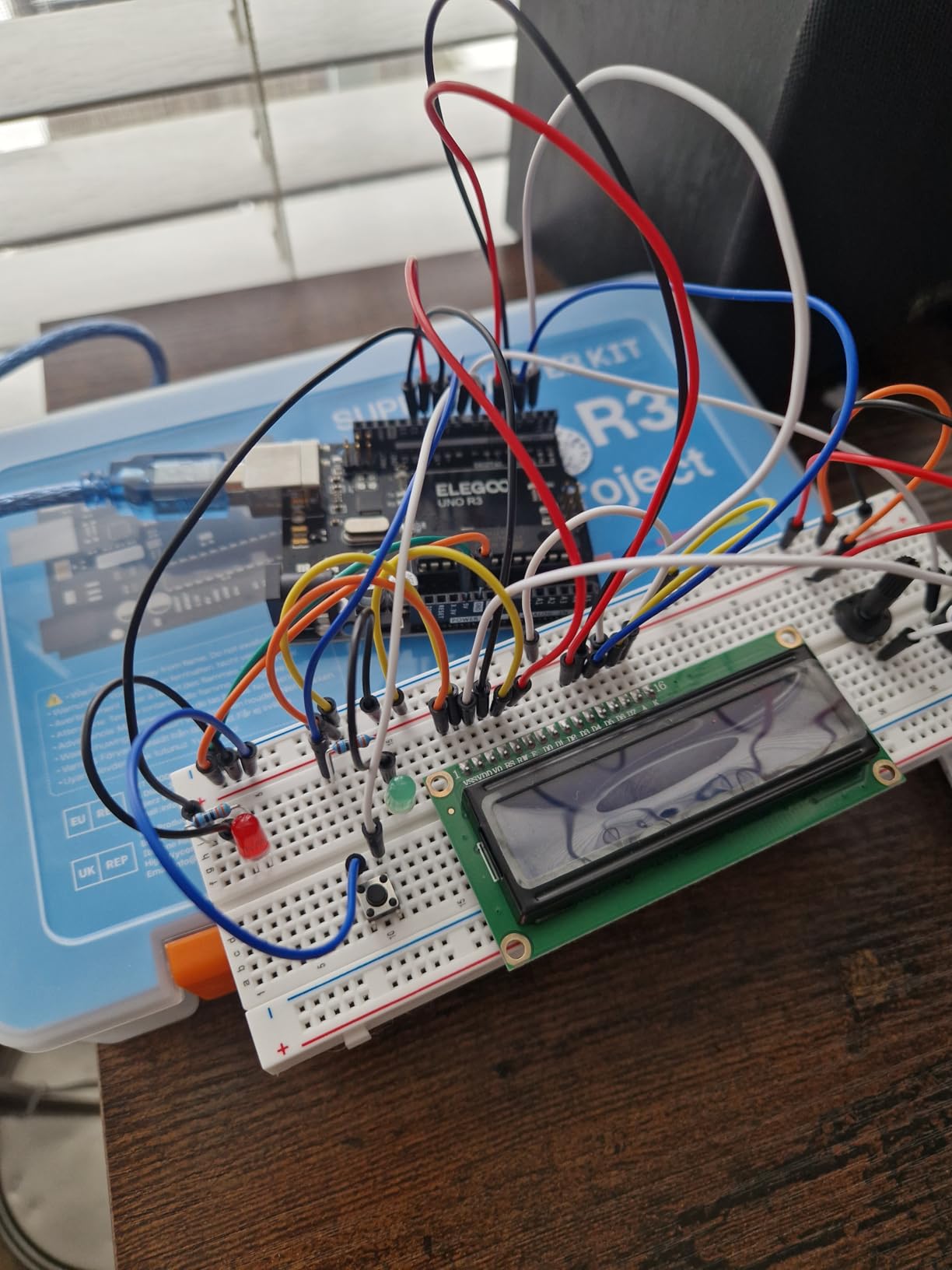
It includes a genuine UNO R3 board compatible with the Arduino IDE, along with sensors, motors, displays, and breadboards. The included PDF tutorial walks beginners through 22-plus projects, starting with blinking an LED and progressing to building a temperature sensor display.
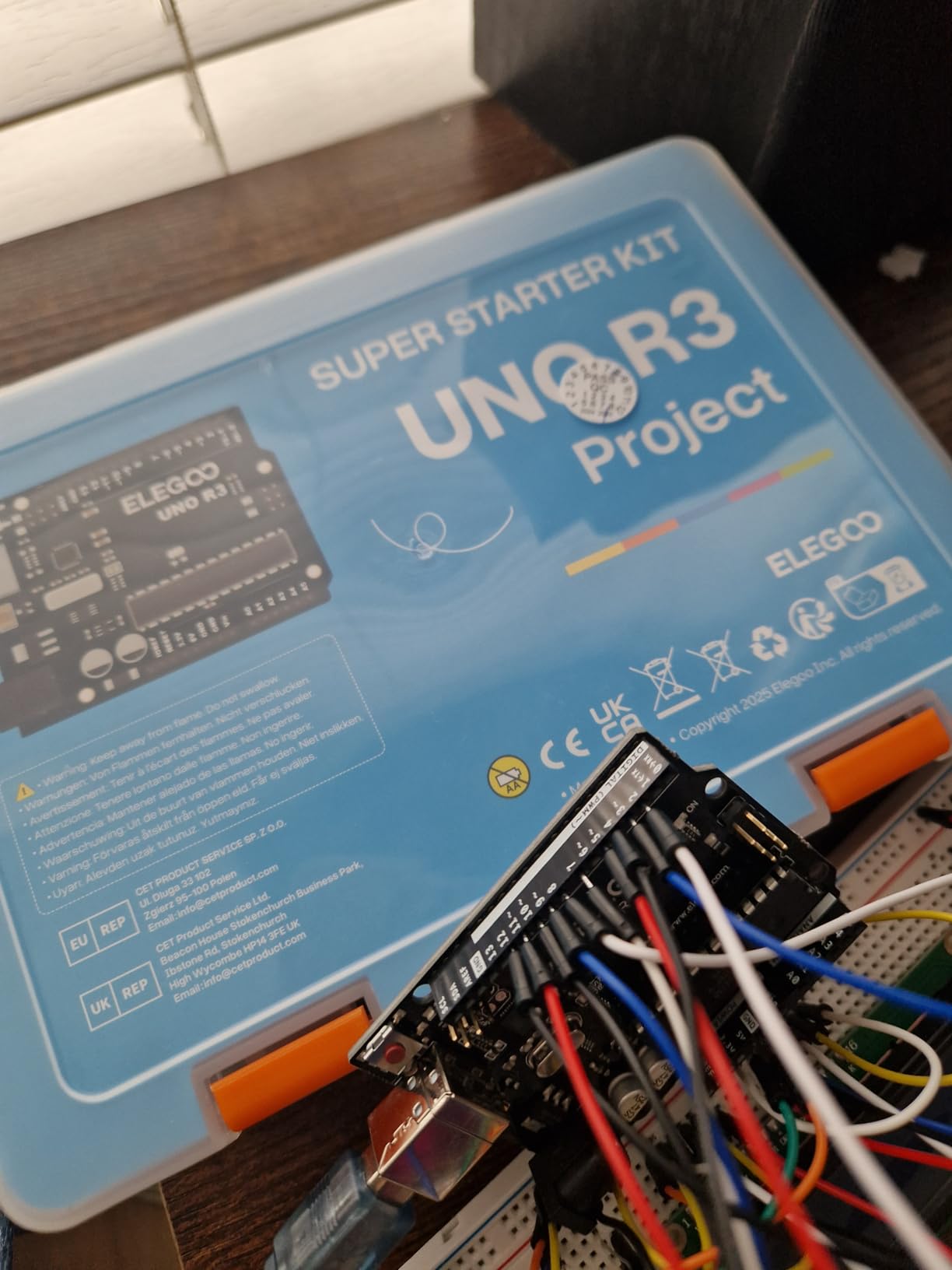
With over 16,000 reviews and a 4.7-star rating, this is one of the most popular Arduino starter kits available. It is a best seller in the single board computers category. The value you get for the price is hard to beat if your child is ready for real electronics.
This is not a snap-together toy. Kids will be working with a breadboard, jumper wires, and real electronic components. They will learn to write code in the Arduino IDE and upload it to the board. It requires more patience and supervision, especially for first-timers.
Who This Kit Is Perfect For
This kit is ideal for kids ages 11 and up who have already tried basic electronics kits and want to go deeper. It is also great for parents who want to learn alongside their children. If your child has shown interest in robotics, coding, or engineering, this is the natural next step after Snap Circuits.
What to Watch Out For
The learning curve is steeper than snap-together kits. Kids need to be comfortable using a computer to write and upload code. Some basic electronics knowledge helps. The PDF tutorial is comprehensive but text-heavy, so younger kids may need an adult to help them get started.
5. ELEGOO Smart Robot Car Kit V4 – Best Robotics Kit
ELEGOO UNO R3 Smart Robot Car Kit V4 for Arduino Robotics for Kids Ages 8-12 12-16 STEM Science Kits Coding Gifts for 8 9 10 11 12 13 14 15 16 Year Old Boys Girls Teens Cool Engineering Building Toys
STEM robotics kit
24 module parts
App and IR control
Obstacle avoidance
Ages 8+
Pros
- 24 kinds of module parts including obstacle avoidance and line tracing
- Control via phone or tablet or infrared remote
- Easy assembly with XH2.54 ports reducing errors
- HD rendering instructions included
- Complete STEM robotics solution
Cons
- Not Prime eligible
- Requires basic electronic knowledge to use
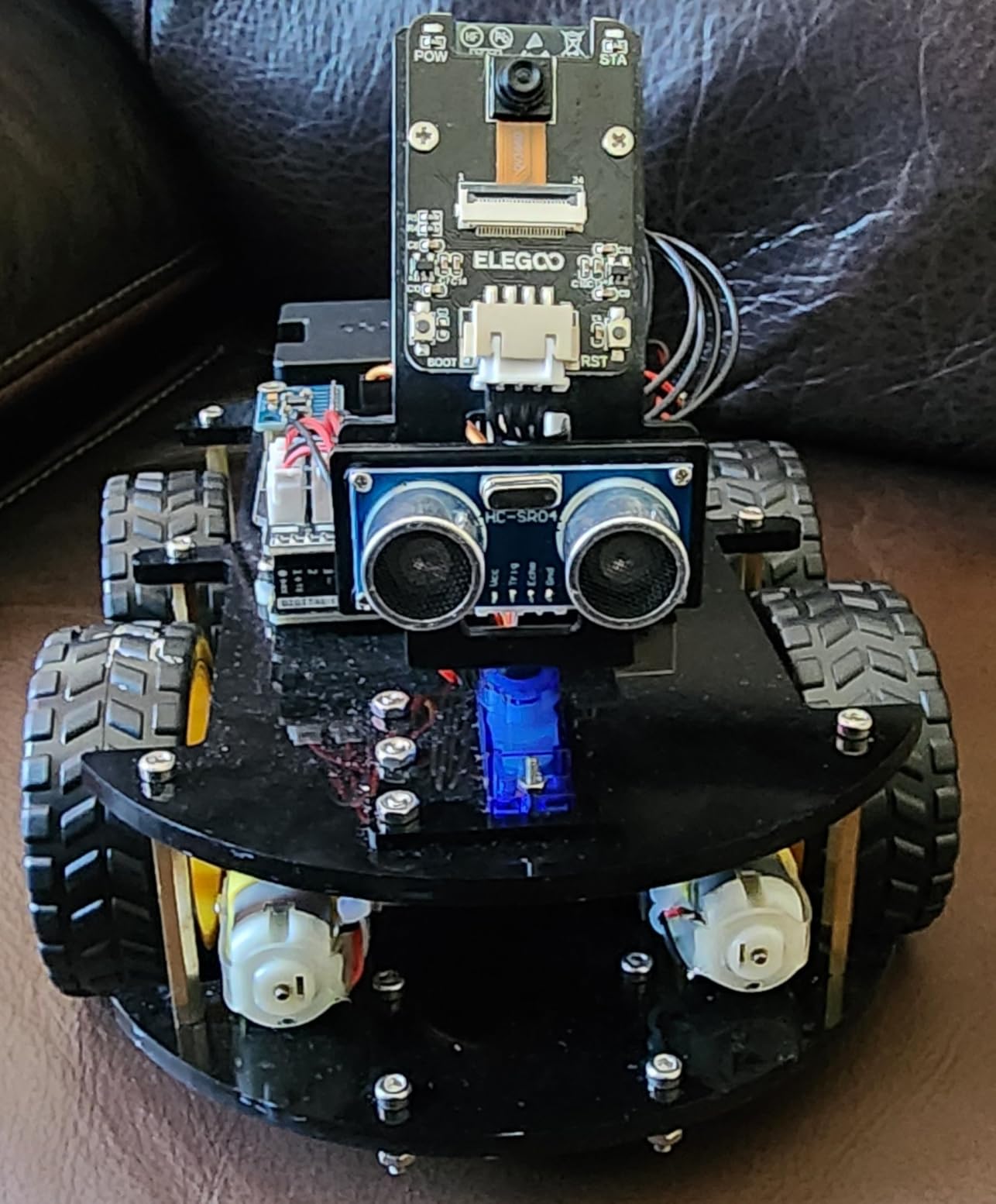
Building a robot car that actually drives around the living room is a different level of excitement compared to lighting up an LED. The ELEGOO Smart Robot Car Kit V4 delivers that experience, and my kids spent an entire weekend assembling, coding, and testing it.
The kit comes with 24 different module parts including obstacle avoidance sensors and line tracing modules. Once assembled, you can control the car through a phone app or the included infrared remote. The XH2.54 ports make assembly more forgiving, reducing the chance of wiring errors.
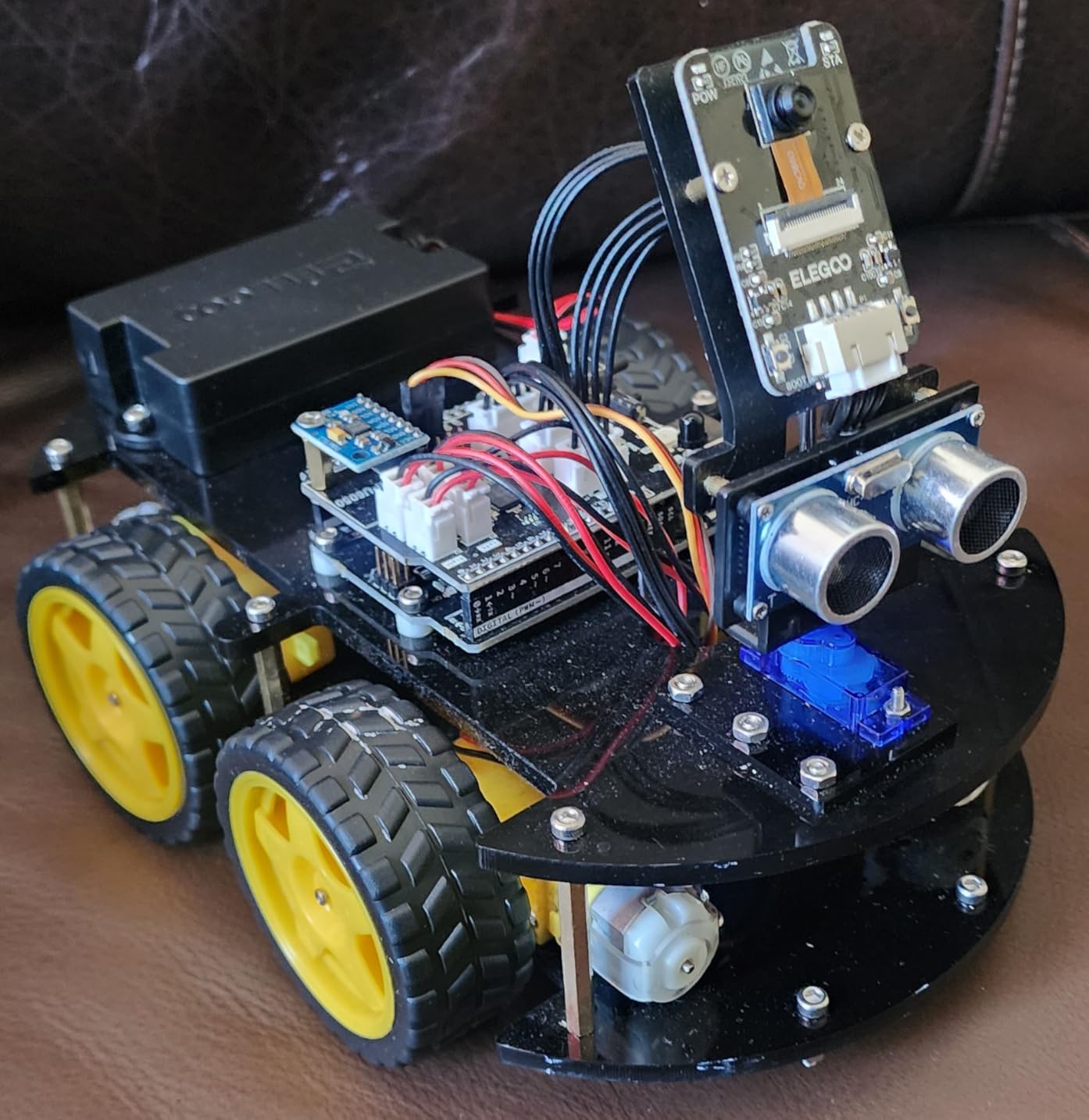
This kit is compatible with Arduino, so kids who have already used the ELEGOO UNO R3 starter kit will feel right at home. The HD rendering instructions are clear and detailed, showing each step visually. Line tracing mode, where the car follows a path you draw on the floor, was a huge hit.
The main drawback is that this is not a Prime-eligible product, so shipping takes a bit longer. It also requires some basic electronic knowledge, making it better suited for kids who have already done beginner-level electronics work.
Who This Kit Is Perfect For
This is perfect for kids ages 10 to 14 who want to move beyond circuits and into robotics. If your child has shown interest in robots, coding, or mechanical building, this kit combines all three. It is also a fantastic project for a parent and child to build together over a weekend.
What to Watch Out For
Assembly takes several hours, and younger kids will likely need adult help. The kit requires a basic understanding of Arduino programming to unlock all features. With over 4,400 reviews and a 4.6-star rating, it is well-regarded, but plan on dedicating real time to this build rather than expecting a quick activity.
6. Makeblock mBot STEM Coding Robot – Best for Learning to Code
Makeblock mBot Robot Kit, Robotics for Kids Ages 8-12 Learn to Code with Scratch & Arduino, STEM Toys Science Kits for Kids Age 8-12 Boys and Girls Age 8+
Entry-level coding robot
Scratch and Arduino
Build in 15 minutes
Ages 8+
Pros
- Entry-level coding robot for learning Scratch and Arduino
- Easy to build within 15 minutes
- Compatible with 100+ electronic modules and 500+ parts
- Rich tutorials and coding cards included
- Multiple functions including line-follow and obstacle-avoidance
Cons
- Remote controller needs CR2025 battery not included
- Robot kit needs 4 AA batteries not included
The Makeblock mBot is one of the most popular entry-level coding robots in the world, and after testing one, I understand why. My kids built it in about 15 minutes, which was a pleasant surprise compared to the multi-hour assemblies of other robotics kits.
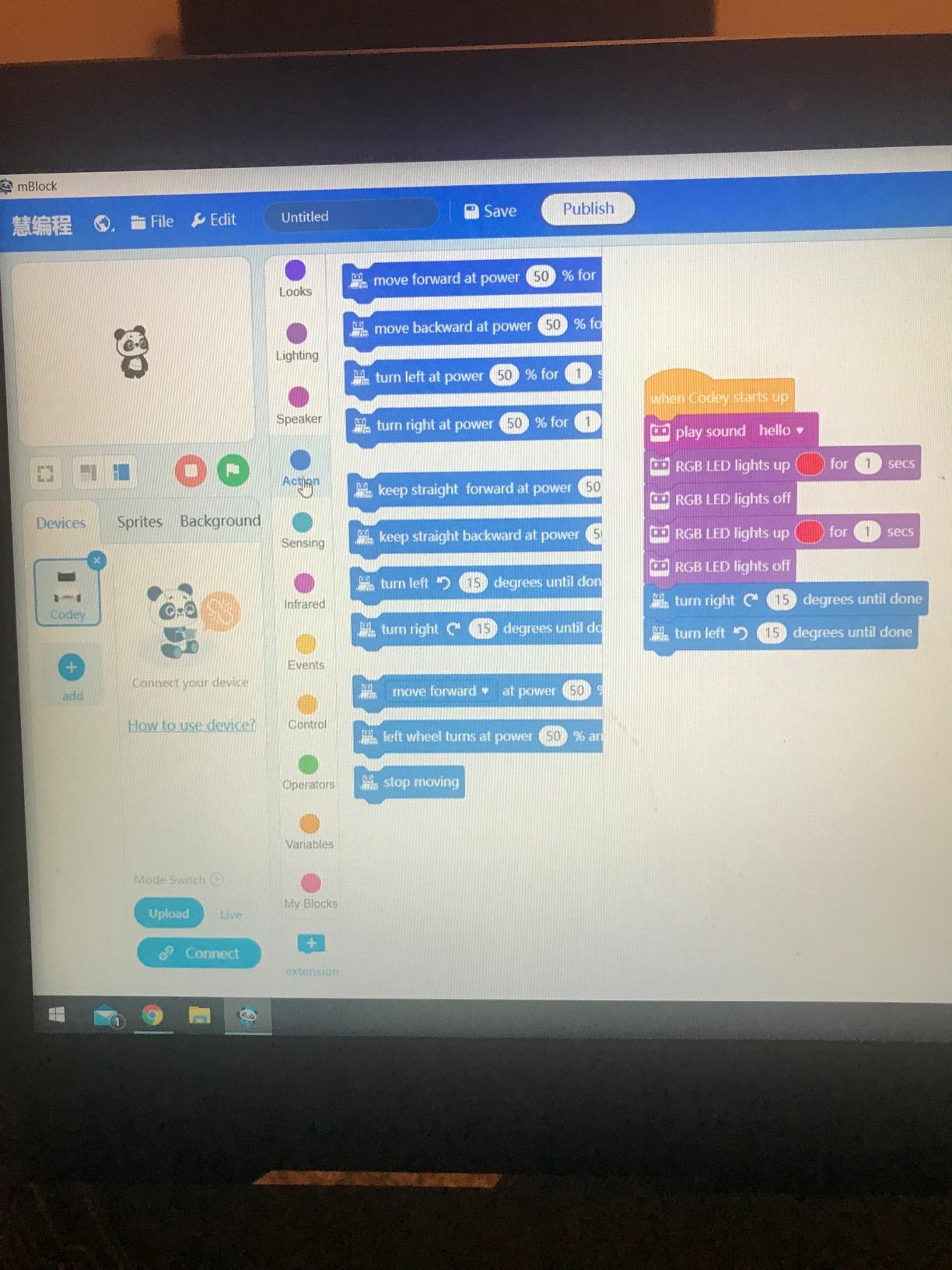
What makes the mBot special is its use of Scratch-based block coding. Kids drag and drop code blocks in the mBlock software to program the robot to follow lines, avoid obstacles, and respond to remote control. It is a gentle, visual introduction to programming that feels like play.
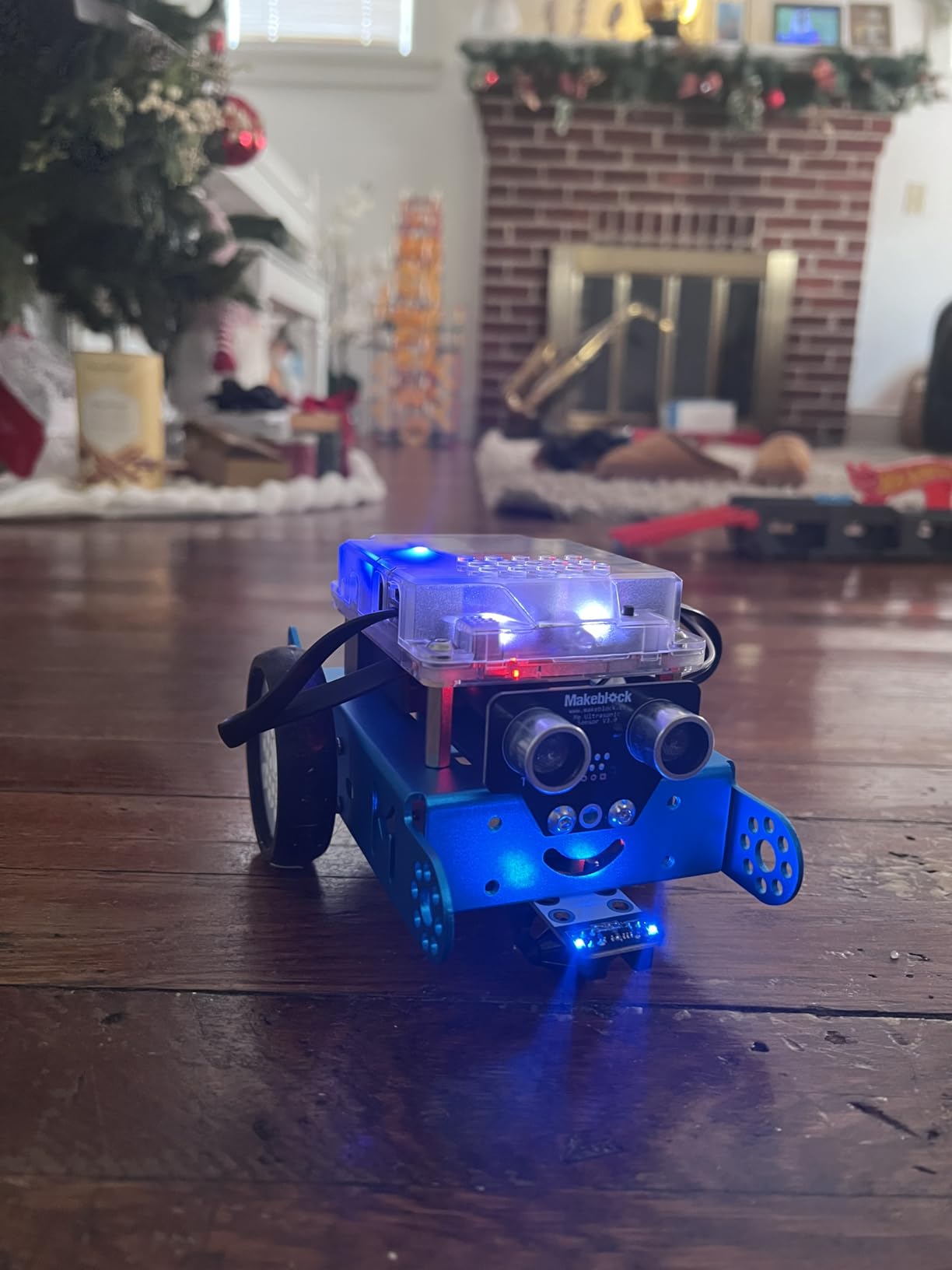
The robot is compatible with over 100 electronic modules and 500-plus parts from the Makeblock ecosystem. This means the mBot can grow with your child as they add sensors, displays, and other accessories. It also works with LEGO parts, which opens up even more building possibilities.
The included coding cards and rich tutorials mean kids can pick up the robot and start learning without an adult hovering over them. My 10-year-old was modifying the default programs within an hour of opening the box.
Who This Kit Is Perfect For
The mBot is perfect for kids ages 8 to 12 who are interested in coding but not yet ready for full text-based programming. It works well in both home and classroom settings. If your child loves robots and has shown any interest in how apps and games work, this kit channels that curiosity into real learning.
What to Watch Out For
The robot requires 4 AA batteries, and the remote controller needs a CR2025 battery, neither of which are included. The metal and plastic construction is solid but heavier than some plastic-only alternatives. Some parents note that to get the most out of the mBot, kids need access to a computer or tablet for coding.
7. Snap Circuits Arcade SCA-200 – Best for Game-Loving Kids
Snap Circuits “Arcade”, Electronics Exploration Kit, Stem Activities for Ages 8+, Full Color Project Manual (SCA-200)
200+ projects
36-piece kit
Arcade games
Full color manual
Ages 8+
Pros
- No tools or soldering required
- Builds over 200 exciting projects
- Award-winning STEM kit
- Color-coded pieces snap together easily
- Individual replacement parts available
Cons
- Some users find instructions busy and confusing
- Batteries required but not included
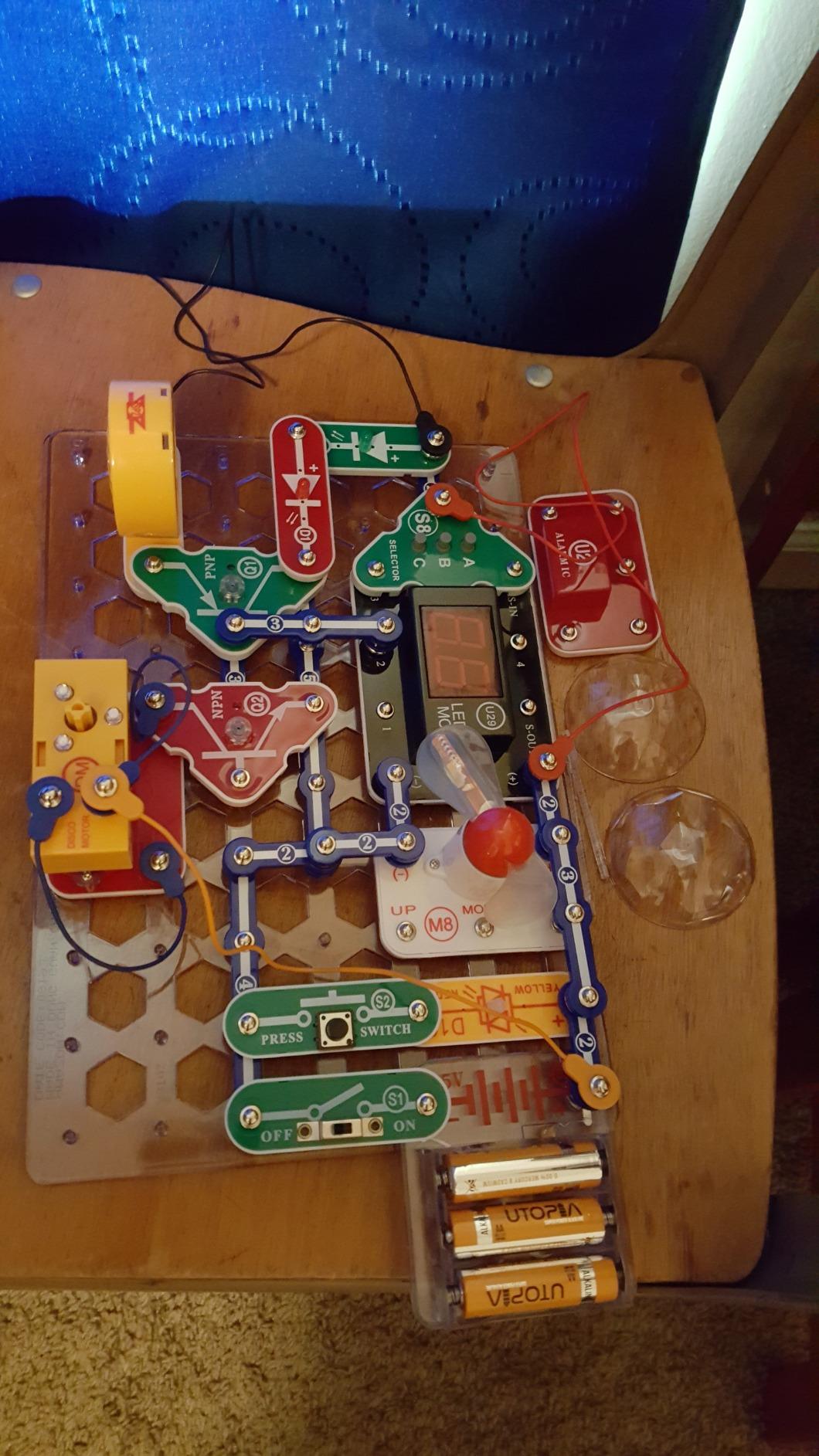
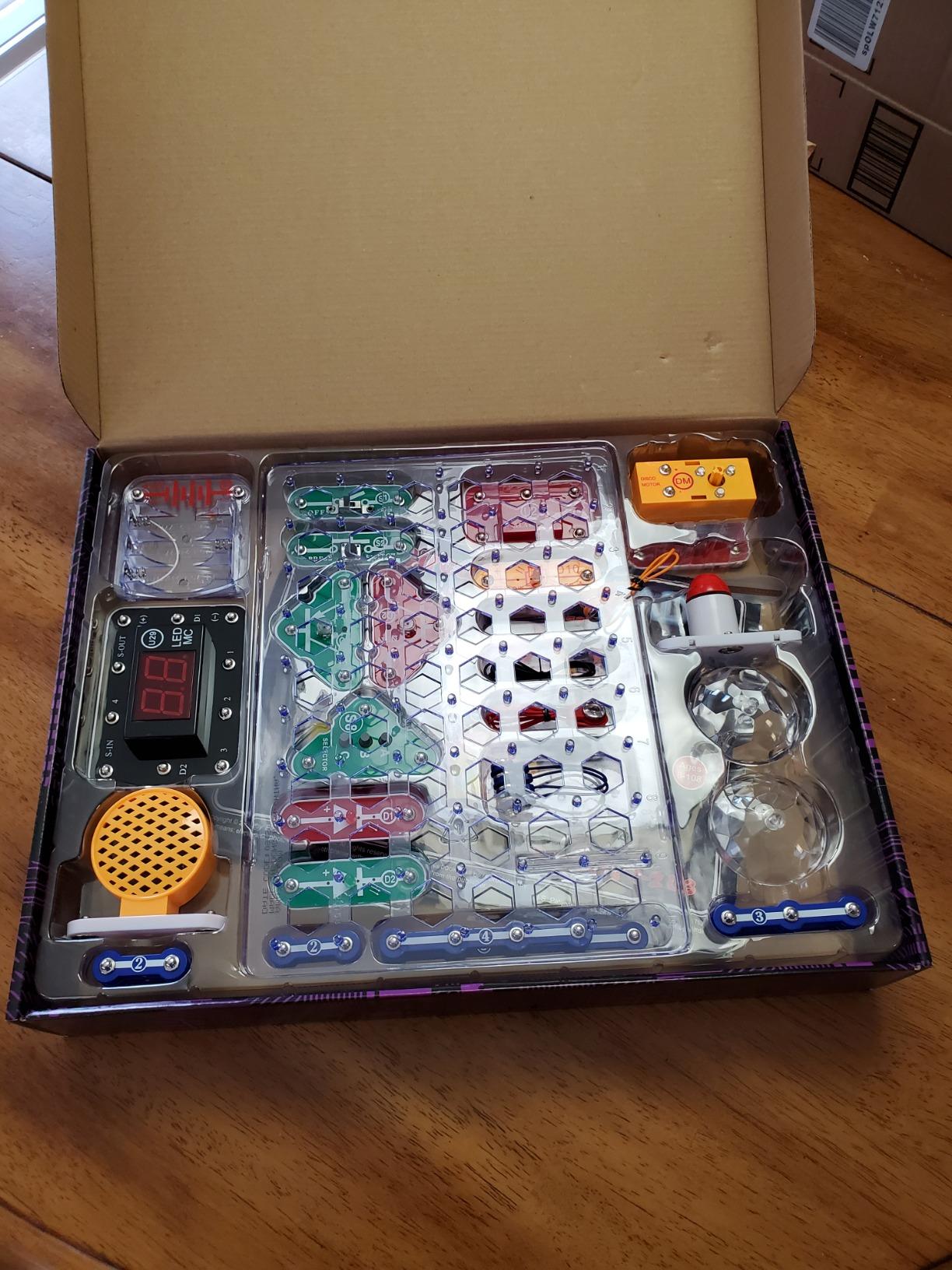
The Snap Circuits Arcade SCA-200 takes the proven Snap Circuits formula and adds a gaming twist. Kids can build over 20 arcade-style games with fun sounds and lights, which makes it feel more like playing than learning. My kids treated this one differently because they got to build things they could actually play with.
The 36-piece kit builds over 200 unique projects, ranging from simple circuits to interactive games. The full-color manual guides kids through each build with the same clear diagram format that made Snap Circuits famous. No tools or soldering are required.
This kit comes with a lifetime warranty against manufacturer defects, which is rare in this category. Elenco, the company behind Snap Circuits, also offers individual replacement parts, so if a piece breaks you do not need to buy a whole new kit.
The arcade theme gives kids a tangible reward for completing each project. Instead of just making a light turn on, they are building a game they can challenge their siblings with. That social element keeps kids coming back to the kit.
Who This Kit Is Perfect For
This is ideal for kids ages 8 to 12 who love games and might not be naturally drawn to electronics. The arcade format is a great hook for reluctant learners. If your child has already tried a basic Snap Circuits kit and wants something with more excitement, the SCA-200 is a natural upgrade.
What to Watch Out For
Some users find the instruction manual busy and hard to follow, especially for complex projects. The kit requires AA batteries that are not included. With a 4.8-star rating across over 3,300 reviews, most parents are very satisfied, but plan to help younger kids with the first few builds.
8. Science Kidz 188 Experiments Electronics Kit – Best for Younger Kids
Science Kidz Electronics Kit - 188 Science Experiments Set for Kids
188 circuit projects
Ages 5-10
Snap-together parts
Safety compliant
Illustrated manual
Pros
- 188 different circuit projects and experiments
- Premium quality snap-together parts
- Child-safe components compliant with USA and EU toy safety standards
- Easy to follow illustrated instructions
- Great value for money
Cons
- Some circuits are variations swapping out switch types
- The sound module can be super loud
The Science Kidz Electronics Kit is designed for younger children, with an age range that starts at 5 years old. This was the first electronics kit my younger son used, and it was perfect for his attention span and fine motor skills at that age.
With 188 different circuit projects and experiments, the kit offers tremendous variety for the price. The snap-together parts are premium quality and fully compliant with both USA and EU toy safety standards, which gave me peace of mind letting a 5-year-old use them.
The illustrated instruction manual uses large, colorful pictures that young kids can follow without needing to read much text. Circuits start simple and become more challenging, so kids build confidence as they progress through the projects.
The main complaint from parents is that some of the 188 projects feel like variations of each other, just swapping out a switch or component. The sound module can also be quite loud, which is worth knowing before your kid discovers it at 7 AM on a Saturday.
Who This Kit Is Perfect For
This is the best electronics kit for kids ages 5 to 8 who are too young for the 8-and-up Snap Circuits models. It makes a fantastic first introduction to circuitry and STEM concepts. The low price point also makes it a great stocking stuffer or small birthday gift.
What to Watch Out For
While the kit advertises 188 projects, several are minor variations rather than entirely new builds. This means the actual project variety is somewhat smaller than the number suggests. Still, at this price and for this age range, it delivers excellent value and a safe first electronics experience.
9. CYOEST Bluetooth Speaker Kit – Best Build-and-Use Project
STEM Projects for Kids & Adults Build Your Own Bluetooth Speaker - Science Experiment Electronics Kit | Beginner's Starter DIY Set,STEM Gifts for Teenage Girls + Boys Ages 10 and Up (Dual Speakers)
Build your own Bluetooth speaker
No soldering required
Ages 10+
Wood construction
2 year warranty
Pros
- Hands-on way to discover how speakers work
- High quality circuit boards with safety features
- No soldering required
- Clear assembly instructions
- Suitable for family STEM activities
Cons
- Batteries not included
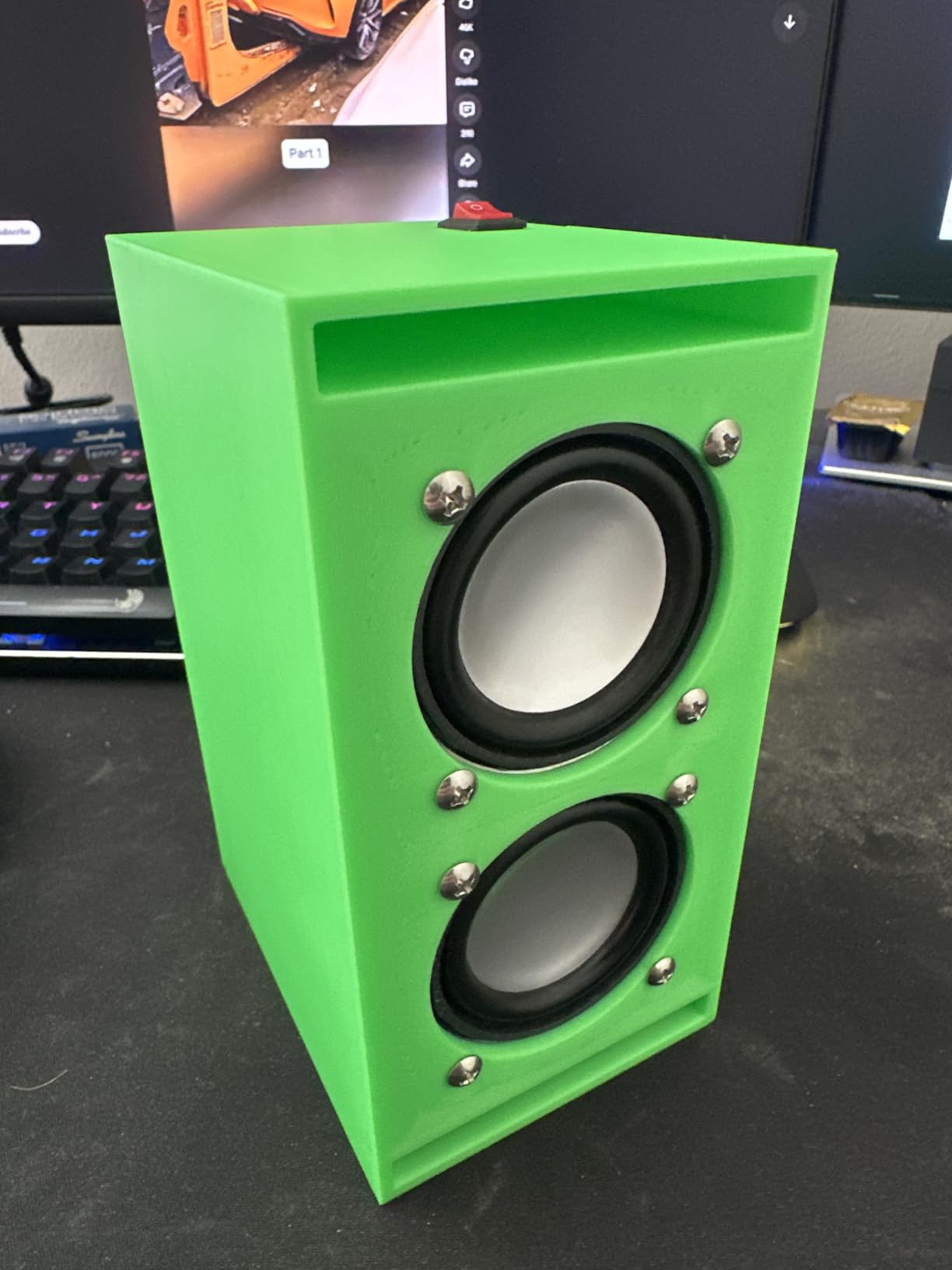
The CYOEST Bluetooth Speaker Kit stands out because the end result is something kids actually use every day. My daughter built this kit, paired it with her phone, and used the speaker in her room for months afterward. That kind of long-term engagement is rare with electronics kits.
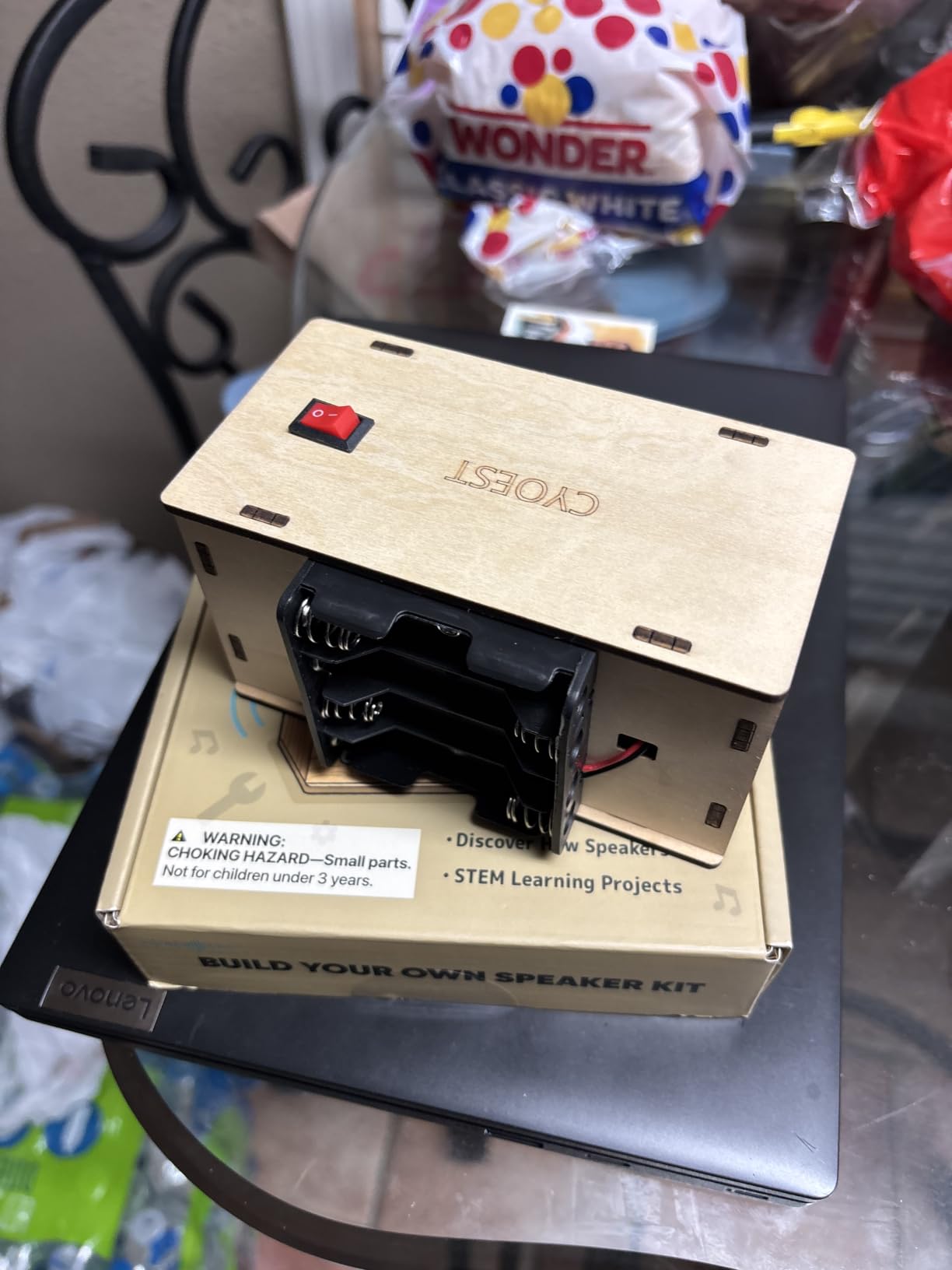
The kit uses a wood enclosure and quality circuit boards with built-in safety features. No soldering is required, which makes it accessible for beginners. The clear assembly instructions walk kids through the process step by step, and the finished speaker actually sounds decent.
Building a speaker from scratch teaches kids about sound waves, electromagnetism, and circuit design in a way that feels tangible. When the speaker works for the first time, kids get an immediate, satisfying payoff that reinforces what they learned.
This kit is rated for ages 10 and up, which feels accurate. Younger kids would likely struggle with the assembly and the small components. The kit comes with a 2-year limited warranty, which is better than most kits in this price range.
Who This Kit Is Perfect For
This is a great pick for kids ages 10 and up who want a tangible result they can show off and use. It is also an excellent family STEM activity that a parent and child can build together over an afternoon. If your child likes DIY projects and woodworking, this kit blends electronics with hands-on building.
What to Watch Out For
Batteries are not included, so you will need to supply those separately. The wooden construction looks nice but is more fragile than plastic kits, so it requires more careful handling. With over 1,700 reviews and a 4.5-star rating, it is a solid budget-friendly option for a build-and-use project.
10. Playz Advanced Circuit Board – Most Experiments for the Price
Playz Advanced Circuit Board for Kids, Science Kits for Kids Age 8-12
328+ experiments
64-page manual
AM and FM radio
Ages 8+
Spring connection system
Pros
- 328+ hands-on experiments
- 64-page illustrated instruction manual
- Projects include AM and FM radio and flying fan and doorbell
- STEM learning approach
- Safe circuit system powered by AA batteries
Cons
- Initial setup can take 30 minutes
- Uses 4 AA batteries which adds up over time
- Instruction manual only in English
The Playz Advanced Circuit Board offers more experiments than any other kit on this list, with over 328 hands-on projects. For families who want maximum content for their money, this kit is hard to beat. My kids spent weeks working through the projects without repeating a single one.
The kit uses a spring connection system instead of snap-together pieces, which some kids actually find easier to work with. Projects range from building an AM/FM radio to creating a flying fan, a doorbell, and various LED light displays. The 64-page illustrated instruction manual is thorough and detailed.
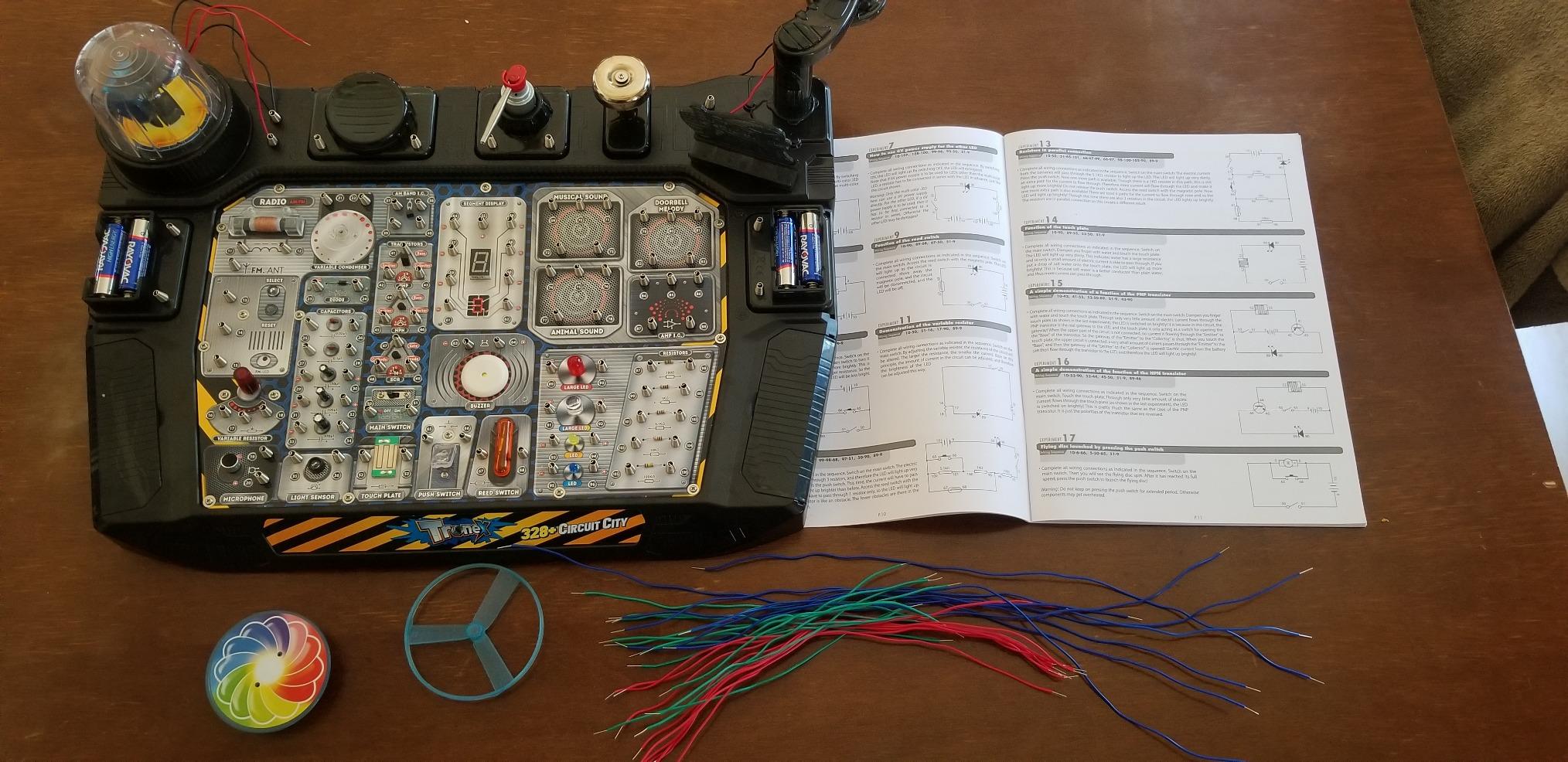
What sets the Playz kit apart is the sheer breadth of experiments. Kids explore light, sound, magnetism, and touch controls. No soldering is required, and the spring connection system is forgiving for beginners who might make wiring mistakes.
The main downside is that initial setup takes about 30 minutes as kids learn the spring connection system. The kit also goes through batteries quickly since it runs on 4 AAs for most projects. Rechargeable batteries are a smart investment here.
Who This Kit Is Perfect For
This kit is ideal for kids ages 8 to 12 who love variety and want a kit that will keep them busy for months. It is especially good for families with multiple children, since the large number of projects means less fighting over what to build next. The spring connection system works well for kids who find snap-together pieces fiddly.
What to Watch Out For
The instruction manual is only available in English, which may be a limitation for some families. The spring connections require a bit of finger strength, so very young kids may need help. With over 3,400 reviews and a 4.5-star rating, most parents find the experiment count alone makes this kit worth the investment.
How to Choose the Best Electronics Kit for Your Child?
Choosing the right electronics kit comes down to matching the kit to your child’s age, skill level, and interests. After testing dozens of kits with my own kids and reading hundreds of parent reviews, here are the factors that matter most.
Age and Skill Level Matter Most
The biggest mistake parents make is buying a kit that is too advanced or too simple for their child. Kits rated for ages 5 to 7 focus on snap-together pieces with large components. Kits for ages 8 to 10 introduce more complex circuits and concepts. Kits for ages 11 and up often involve coding and real electronic components like breadboards and microcontrollers.
Reddit users in the homeschool and AskElectronics communities consistently recommend starting with a basic Snap Circuits kit before moving to Arduino or breadboard kits. This gives kids a foundation in circuit concepts before they tackle programming.
Kit Type: Snap-Together vs Build-It-Yourself vs Arduino
Snap-together kits like the Snap Circuits series are the easiest entry point. Kids click components onto a board without tools, making them safe and frustration-free. Build-it-yourself kits, like the CYOEST Bluetooth Speaker, require more assembly but result in a finished product kids can use.
Arduino kits like the ELEGOO UNO R3 bridge the gap between toys and real electronics. Kids learn to write code and work with actual components on a breadboard. These kits are best for older kids who are ready for a steeper learning curve.
Project Count and Variety
More projects does not always mean more value. The Science Kidz kit advertises 188 projects, but some are minor variations of each other. The Snap Circuits SC-300 has over 300 genuinely different projects, which provides more real content.
Look for kits that offer a range of project types, not just 100 ways to light an LED. The best kits include projects involving sound, motion, sensors, and interactive elements to keep kids engaged.
Safety Considerations
Most electronics kits for kids run on low-voltage batteries, making them very safe. Look for kits that comply with USA and EU toy safety standards. The Science Kidz kit specifically meets these standards, which is reassuring for parents of younger children.
Kits that require soldering should be reserved for older kids with adult supervision. None of the kits on this list require soldering, which makes them safer and more accessible for beginners.
Expandability and Long-Term Value
The best electronics kits for kids grow with them. Snap Circuits kits are expandable, meaning you can buy upgrade kits that add components and project manuals to a base set. The Makeblock mBot is compatible with over 100 additional modules and 500-plus parts.
Parents on forums frequently mention that kids outgrow kits quickly. Investing in an expandable system means your initial purchase has a longer lifespan, making it a better value over time.
Instruction Quality
This is the factor that makes or breaks an electronics kit. Clear, visual instructions keep kids engaged and building independently. Confusing instructions lead to frustration and, often, abandoned kits. The Snap Circuits manuals are widely praised as the gold standard in this category.
The National Geographic kit adds video instructions via QR code, which helps visual learners. If your child struggles with diagram-based instructions, look for kits that offer alternative instruction formats.
Frequently Asked Questions
What is the best electronics kit for a child?
The Snap Circuits Classic SC-300 is the best overall electronics kit for most kids ages 8 and up. It offers over 300 projects, requires no tools or soldering, and has a proven track record with nearly 29,000 reviews and a 4.8-star rating. For younger kids ages 5 to 7, the Science Kidz 188 Experiments Kit is a better starting point.
What age is appropriate for electronics kits?
Kids can start with simple snap-together electronics kits as young as age 5. Kits like the Science Kidz set are designed for ages 5 to 10 with child-safe components. Most popular kits like Snap Circuits are rated for ages 8 and up. Arduino and robotics kits are best for kids ages 10 to 14 who are ready for coding and more complex assembly.
Are electronics kits safe for kids?
Yes, electronics kits designed for kids are generally very safe. They run on low-voltage batteries and do not require soldering. Look for kits that comply with USA and EU toy safety standards. Always supervise younger children and check age recommendations on the packaging before purchasing.
What is the difference between Snap Circuits and Arduino?
Snap Circuits are snap-together kits where kids click components onto a plastic board to build circuits without tools or coding. They are ideal for ages 8 and up learning basic circuit concepts. Arduino kits involve real electronic components, breadboards, and programming code. They are better suited for ages 11 and up who want to learn coding and real-world electronics engineering.
How do electronics kits teach circuit concepts?
Electronics kits teach circuit concepts through hands-on building. Kids assemble components to create working circuits that light LEDs, spin motors, or trigger sounds. This cause-and-effect learning helps children understand how voltage, current, resistance, and components like resistors and capacitors work together in a circuit.
Which electronics kit brand is most reliable?
Snap Circuits by Elenco is the most reliable and widely recommended brand, with nearly 60,000 combined reviews across their product line and consistently high ratings. ELEGOO is the top choice for Arduino-based kits. Blue Marble, maker of the National Geographic kit, is also highly trusted for educational toys with strong safety standards.
Final Thoughts on Electronics Kits for Kids in 2026
After testing these 10 kits with my own family and reading thousands of parent reviews, the conclusion is clear. For most families, the Snap Circuits Classic SC-300 is the best electronics kit for kids because it combines safety, educational depth, and long-term value in one package.
Younger children ages 5 to 7 should start with the Science Kidz kit, while older kids ready for real programming will thrive with the ELEGOO UNO R3 or the Makeblock mBot. Whatever you choose, the most important thing is matching the kit to your child’s age and interests so they stay engaged long after the first build.
Investing in the right kit today can spark a lifelong interest in STEM. I have watched it happen with my own kids, and there is nothing quite like seeing a child’s face light up when a circuit they built themselves works for the first time. Pick the kit that fits your child, and start building in 2026.