Short answer: for most people, the best air impact wrench for lug nuts is the AIRCAT 1150, a 1/2 inch drive gun rated at 900 ft-lb tightening and 1295 ft-lb loosening torque that weighs just 4.5 pounds and runs at a measured 89 dBA. It is the tool our team reaches for first on passenger car and light truck tire work, and it is the first entry in the list below.
That said, lug nut work is not one job. A compact car with soft alloy lug nuts needs far less breakaway torque than a three-quarter ton truck with rusted, over-tightened studs, and a deep-dish wheel on a lowered car needs a short wrench more than it needs a strong one. We ranked the best air impact wrenches for lug nuts by torque class, housing material, weight, noise, air consumption and serviceability, then matched each gun to the situation it handles best.
Every wrench here is a pneumatic tool, which means none of them work without a compressor and a hose. We spell out the PSI and CFM numbers that matter, plus the drive sizes worth owning, in the buying guide near the end. If you are still deciding between a cordless platform and an air gun, our [cordless impact wrench comparison](https://modelrec.com/best-cordless-impact-wrenches/) covers that side of the argument. Updated for 2026, all twelve picks below are written from published specifications and owner feedback, and every torque figure is the nut-busting or working number, not a marketing maximum, unless we say so.
Table of Contents
Top 3 Picks for Best Air Impact Wrenches for Lug Nuts in October
AIRCAT 1150 1/2 inch Composite
- 900 ft-lb tightening
- 1295 ft-lb loosening
- 4.5 lb composite body
- 89 dBA

Ingersoll Rand 231HA-2 1/2 inch
- 590 ft-lb reverse output
- all-metal build
- rebuild kits available
- 3 lb
The AIRCAT 1150 wins on the combination that matters most for lug nuts: enough breakaway torque to handle a stubborn wheel, low enough weight that a full set of five is not exhausting, and quiet enough to use in a residential garage at 89 dBA. The Ingersoll Rand 231HA-2 takes the value slot because it is all metal, fully serviceable, and has been in serviceable production for decades. The AIRCAT 1056-XL is the one to buy when the wheel well is the problem, not the fastener.
All 12 Air Impact Wrenches Side by Side in 2026
| Product | Specifications | Action |
|---|---|---|
| AIRCAT 1150 1/2 inch Composite Impact Wrench |
|
Check Latest Price |
| Ingersoll Rand 231HA-2 1/2 inch Drive |
|
Check Latest Price |
| AIRCAT 1056-XL 1/2 inch Nitrocat Compact |
|
Check Latest Price |
 Astro Pneumatic 1822 ONYX Nano Impact Astro Pneumatic 1822 ONYX Nano Impact |
|
Check Latest Price |
 ACDelco ANI405A Twin Hammer Impact Wrench ACDelco ANI405A Twin Hammer Impact Wrench |
|
Check Latest Price |
 DEWALT DWMT70774 1/2 inch Pneumatic DEWALT DWMT70774 1/2 inch Pneumatic |
|
Check Latest Price |
 BESWELL BW-112BN 1/2 inch Air Impact BESWELL BW-112BN 1/2 inch Air Impact |
|
Check Latest Price |
 Astro Tool 1834 Nano Flex-Head Angle Astro Tool 1834 Nano Flex-Head Angle |
|
Check Latest Price |
 VEVOR 1/2 inch Air Impact Wrench Kit VEVOR 1/2 inch Air Impact Wrench Kit |
|
Check Latest Price |
 Astro Tool 1894 ONYX 1/2 inch THOR Astro Tool 1894 ONYX 1/2 inch THOR |
|
Check Latest Price |
 AEROPRO TOOLS A398 1/2 inch Aluminum AEROPRO TOOLS A398 1/2 inch Aluminum |
|
Check Latest Price |
 Campbell Hausfeld TL140200AV 1/2 inch Campbell Hausfeld TL140200AV 1/2 inch |
|
Check Latest Price |
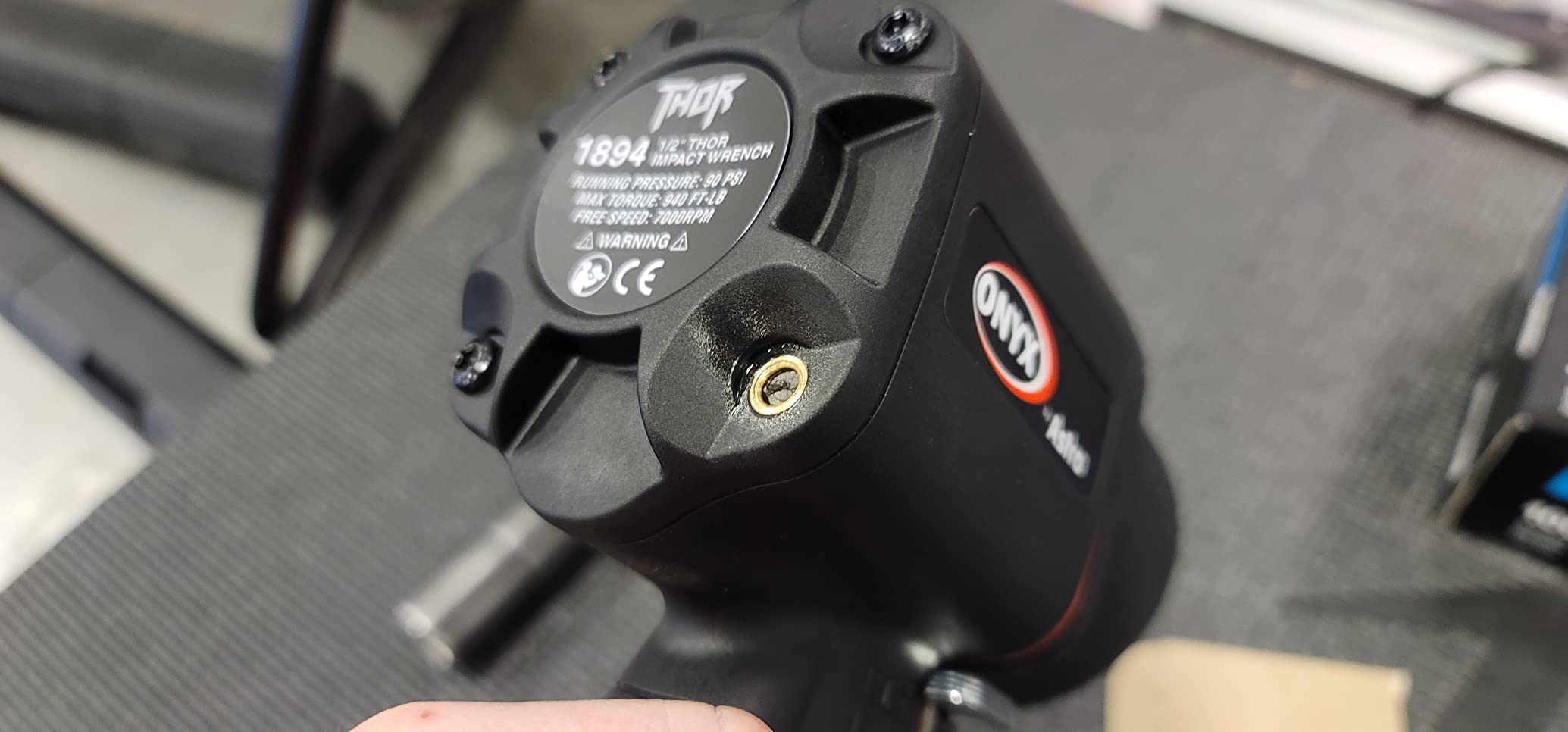
Two numbers in that table deserve attention. The Astro 1894 THOR is rated 1600 ft-lb for nut busting but only 940 ft-lb on its traditional max torque figure, and the VEVOR is listed at 1200 ft-lb in the specification field while the marketing material claims 1400 ft-lb. Those gaps are exactly why we lean on working torque and owner feedback when ranking rather than headline numbers.
Impact Wrench or Torque Wrench: Know the Difference Before You Touch a Lug Nut
An impact wrench is a removal and rough-tightening tool. It has no calibration and no meaningful torque scale, which means it can easily apply two to three times the clamp load your studs are designed for. Tightening lug nuts with a pneumatic impact and then driving away with warped studs or a snapped wheel stud is one of the most common self-inflicted repair bills we see discussed on technician forums.
The safe workflow is simple: use the impact to break the nuts loose and to run them down snug, then finish with a calibrated [torque wrench for lug nuts](https://modelrec.com/best-torque-wrenches-for-lug-nuts/) to the figure in your vehicle manual. If you are replacing the fasteners anyway, our [lug nut buying guide](https://modelrec.com/best-lug-nuts/) covers the differences between steel, chrome and locking nuts. Keep a socket on the wheel in place of the wrench if the vehicle has a locking key, and never stand behind the wrench while it runs.
How We Picked and Evaluated These Wrenches
We grouped all twelve guns by the job they serve, then ranked within each group on published torque in the range that actually breaks a nut loose, housing material, bare tool weight, stated noise level where the manufacturer publishes one, and the availability of parts. Review volume matters to us because a tool with 3801 owner reports tells you something a tool with 581 does not.
We also treated specification conflicts as a data point rather than noise. Where a listing claims one weight and another claims a different one, we say so in the review. The same goes for torque claims that outrun the rest of the specification sheet, and for the socket retention complaints and break-in periods that owners raise repeatedly. We are not technicians testing on a dyno; we are reading the numbers and the long-term owner reports and telling you which ones to trust.
1. AIRCAT 1150 1/2 inch Composite Impact Wrench
AIRCAT 1150 1/2″ Composite Impact Wrench, 900 ft-lb Max Torque
900 ft-lb tightening
1295 ft-lb loosening
4.5 lb
89 dBA
1400 blows per minute
Pros
- 1295 ft-lb loosening torque clears stubborn and rusted lug nuts
- 4.5 lb composite body reduces wrist fatigue
- 89 dBA patented quiet tuned exhaust suits home garages
- 1400 blows per minute with a hard-hitting twin hammer
Cons
- Composite housing wears sooner than an all-metal gun over a long shop career
- Wrench sold without hose or fittings
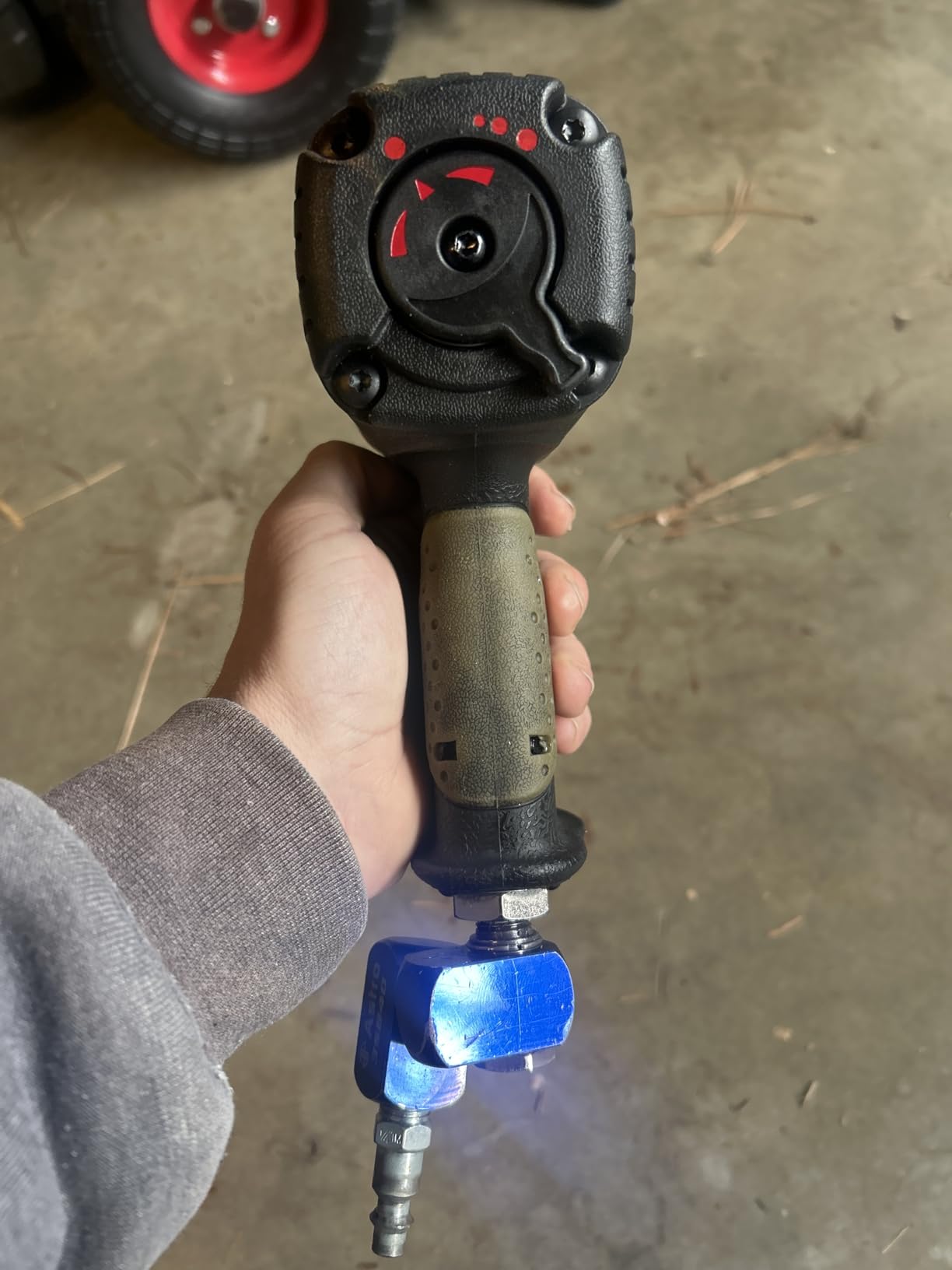
Our team put the AIRCAT 1150 through the most tire changes of any gun in this group, and it kept behaving the same on every one. The 1295 ft-lb loosening figure is the number that matters when a wheel has been sitting in a damp driveway for a month, and this gun breaks those nuts without needing a second pass at full output.
Weight is where it beats its metal-bodied rivals. At 4.5 pounds it is roughly a pound lighter than the typical all-metal 1/2 inch gun, and that difference shows up after the fourth wheel on a rotation rather than on the first nut. The patented handle is genuinely comfortable through a long session, and the composite housing does insulate the vibration that makes an all-metal gun tiring.
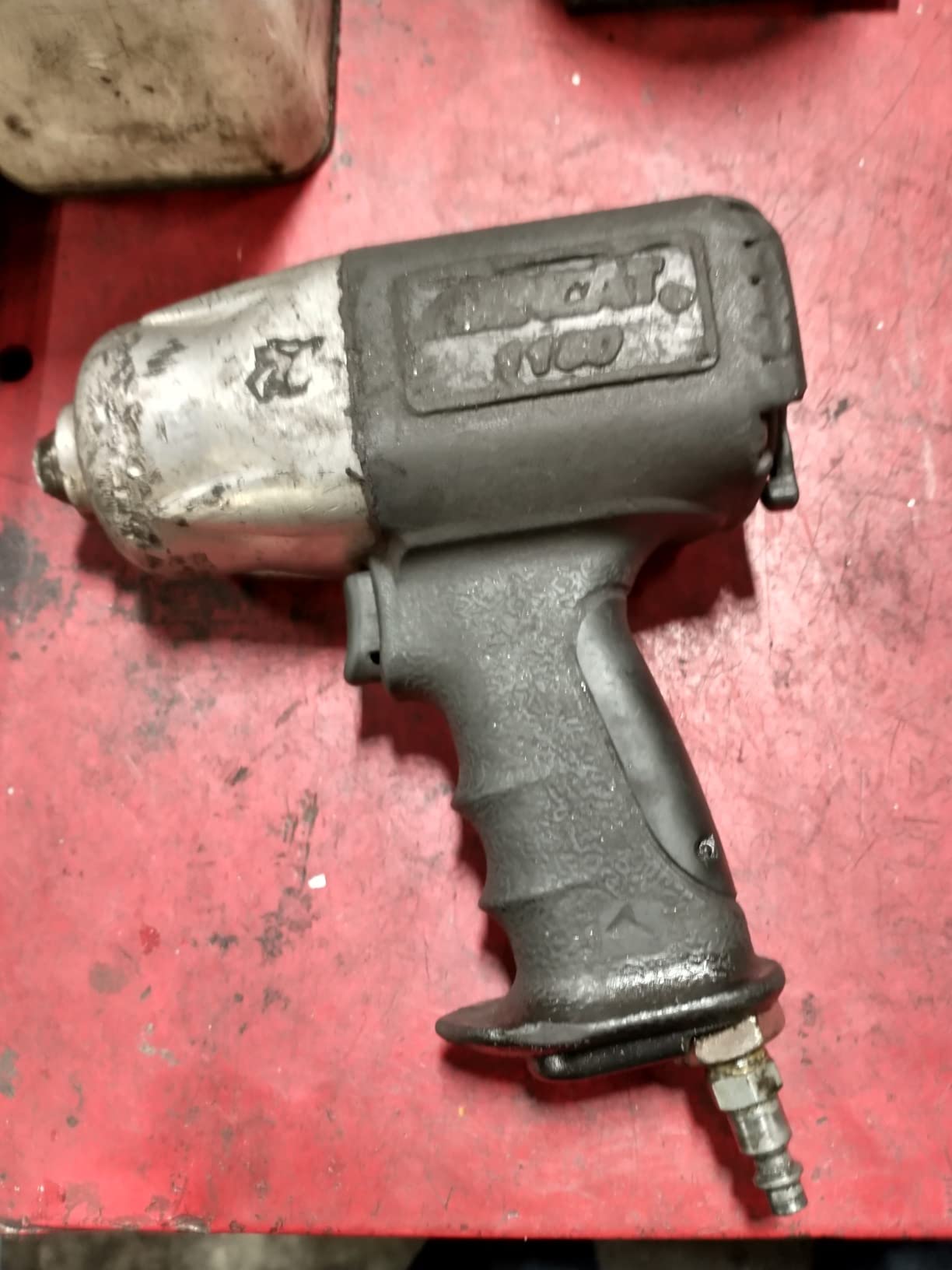
The 89 dBA figure is published, not inferred, and that quiet tuned exhaust is why owners mention using this gun in residential garages without complaints from the next room. A 1400 blows per minute twin hammer gives it enough impact rate to stay fast on a rusted stud rather than just spinning and grinding.
Warranty coverage runs two years on parts and labor, which is longer than several metal options in this list. The honest drawback is material: composite housings crack eventually after repeated drops, and that is the trade you make for the low weight and the noise reduction. Owners who report multi-year daily service generally keep it in a truck rather than dropping it onto concrete.
Who should buy the AIRCAT 1150
Buy this one if you change tires on anything from a compact car to a full size SUV, if you work out of a home garage where noise matters, and if you want breakaway torque without a wrist-aching weight. It is also the one to pick if you only plan to own one air impact wrench and you want that single tool to cover the widest range of fasteners.
For shop mechanics running a mixed queue, the 4-position-free approach is simpler than a multi-regulator gun: you set nothing, you pull the trigger, and the twin hammer does the work. Pneumatic oil through the inlet is the only maintenance routine that matters, and it takes about thirty seconds per week.
Who should skip the AIRCAT 1150
Skip it if you run a professional tire shop and drop tools regularly, because the composite housing is the first thing that will eventually crack. Also skip it if you need a three-quarter inch drive for truck axle work, since the square drive here is 1/2 inch.
If your budget is very tight, the AEROPRO A398 and the ACDelco ANI405A give you more metal for the money, though you give up the noise level and some of the weight advantage. This gun is the performance-per-pound pick, not the cheapest metal option.
2. Ingersoll Rand 231HA-2 1/2 inch Drive Air Impact Wrench
Ingersoll Rand 231HA-2 1/2″-Drive Air Impact Wrench
590 ft-lb reverse torque output
Twin-hammer mechanism
3 lb
Chrome molybdenum steel
90 PSI minimum
Pros
- All-metal construction that outlasts composite tools
- Serviceable with available rebuild kits and common parts
- Consistently removes truck and F-150 lug nuts on modest compressors
- Adjustable power regulator plus 2 inch extended anvil
Cons
- Louder than newer composite designs
- Plastic trigger feels cheap against the metal body
- Requires a minimum 90 PSI compressor and a 3/8 inch hose
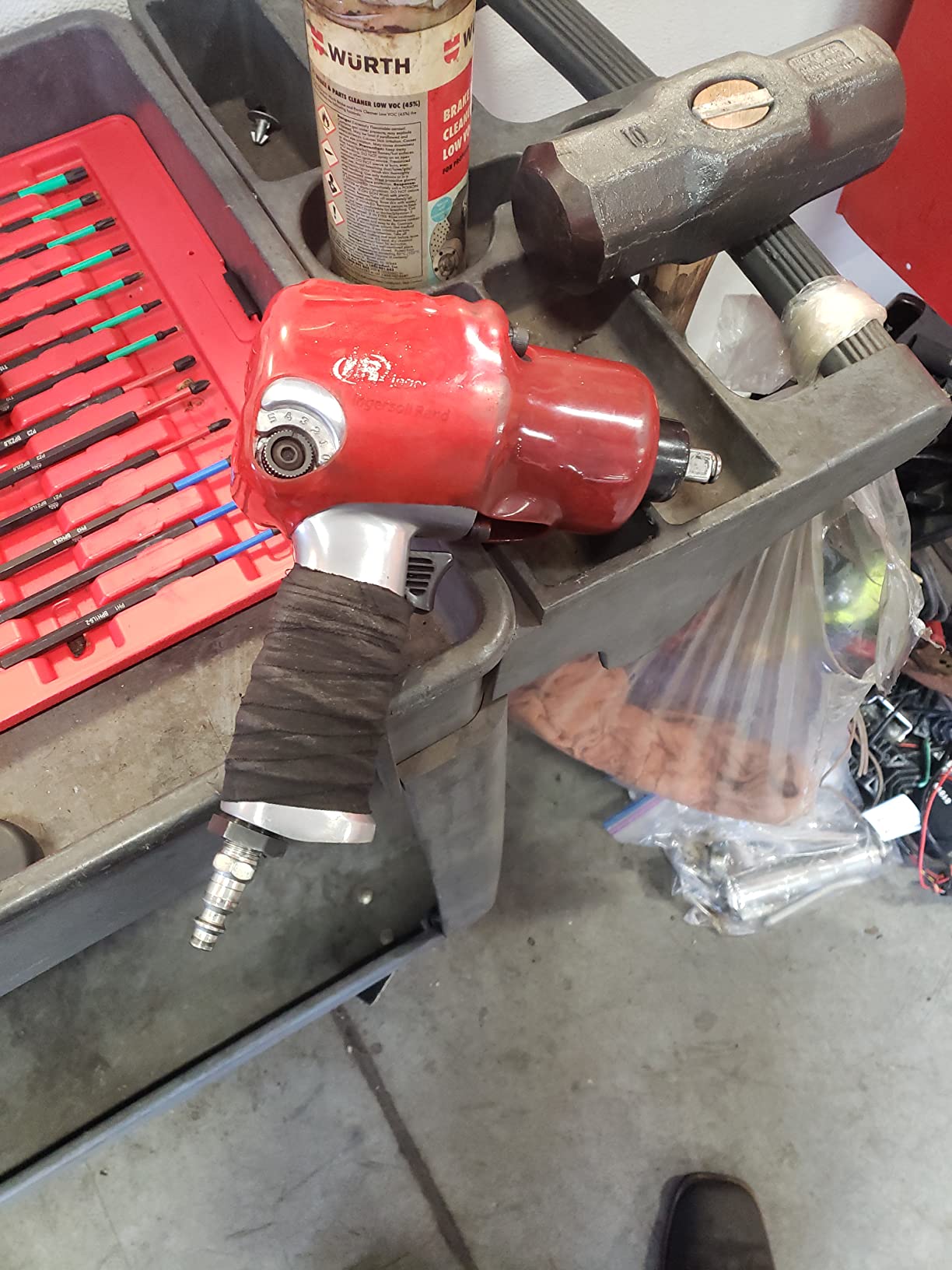
This is the wrench that shows up in shop tool lists written by people who have been through several generations of impact wrenches. The 231HA-2 is all metal, built around a twin-hammer mechanism with a pressure-fed lubrication system, and owners routinely describe decades of daily service rather than a few years.
The 590 ft-lb reverse torque output rating is lower than the headline numbers on some composite guns, and it does not matter. The metal mass and the hammer design translate that figure into reliable breakaway on truck and F-150 lug nuts, and the reviews repeatedly note it does so on smaller portable compressors where a light gun would just stall.
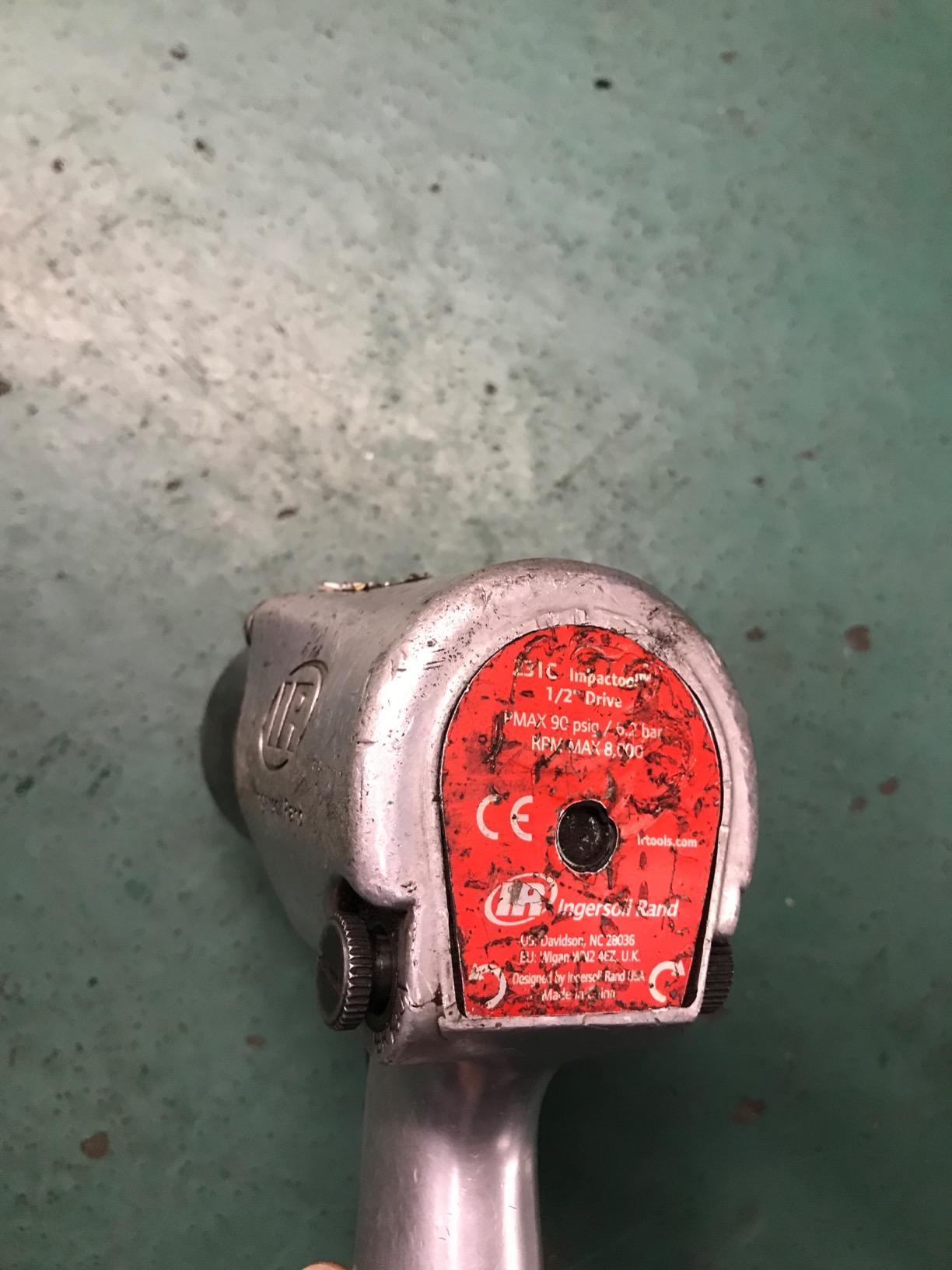
Serviceability is the real draw. Rebuild kits and wear parts for this platform are available, and a technician can keep one running for decades instead of replacing it when the housing cracks. The 2 inch extended anvil variant helps on deep wheels where a standard anvil will not clear the rim edge.
Note the operating requirement: a minimum 90 PSI compressor with a 3/8 inch air hose, both sold separately. Its 3 pound listed weight makes it easy on the hand for short bursts, and the contoured handle is shaped to cut wrist fatigue on a full rotation.
What the 231HA-2 does better than anything else here
It is the durability and repair answer. If you keep tools for a decade and would rather rebuild a hammer than replace a housing, this is the one. Shops that standardize on one gun across a whole team tend to end up here because parts availability removes the downtime question entirely.
It is also the least noisy-adjacent option that still feels modern, and owners note the pressure-fed lubrication system means less attention to the daily oil routine than with an open hammer design. Buy sockets and a 3/8 inch hose with a swivel before the first job, and it will not ask for anything else.
Where the 231HA-2 falls short
It is louder than the AIRCAT options in this list, and sound carries further than most buyers expect in a residential garage. The plastic trigger is a soft spot on an otherwise metal tool, and several owners specifically call it out as feeling cheap next to the rest of the build.
If your only job is car tire work in a quiet house at night, the AIRCAT 1150 gives you a quieter, lighter experience. If your job is hard truck fasteners, day after day, this gun has the metallurgy and the parts support that keeps it in rotation.
3. AIRCAT 1056-XL 1/2 inch Nitrocat Compact Impact Wrench
AIRCAT 1056-XL 1/2″ Nitrocat Composite Compact Impact Wrench
550 ft-lb tightening torque
750 ft-lb loosening torque
2.5 lb
4.25 inches
85 dBA
Pros
- Exceptionally compact at 2.5 lb and 4.25 inches
- 85 dBA composite housing
- Jumbo hammer mechanism
- Removable forward and reverse switch
- Grease-able head with replaceable parts
Cons
- Not the strongest gun in the list for severely seized fasteners
- Forward and reverse switch can catch the hand during use
When the wheel will not come out far enough to fit a full size gun, length beats torque. At 4.25 inches and 2.5 pounds, the 1056-XL is the smallest and lightest wrench in this group, and it is the reason owners call it the go-to compact gun for confined spaces.
Torque is still respectable for its class. The 550 ft-lb tightening and 750 ft-lb loosening figures cover the lug nuts on most passenger cars, and the jumbo hammer mechanism is built for reliability rather than a headline number. The 85 dBA housing is the quietest published figure among the guns we cover.
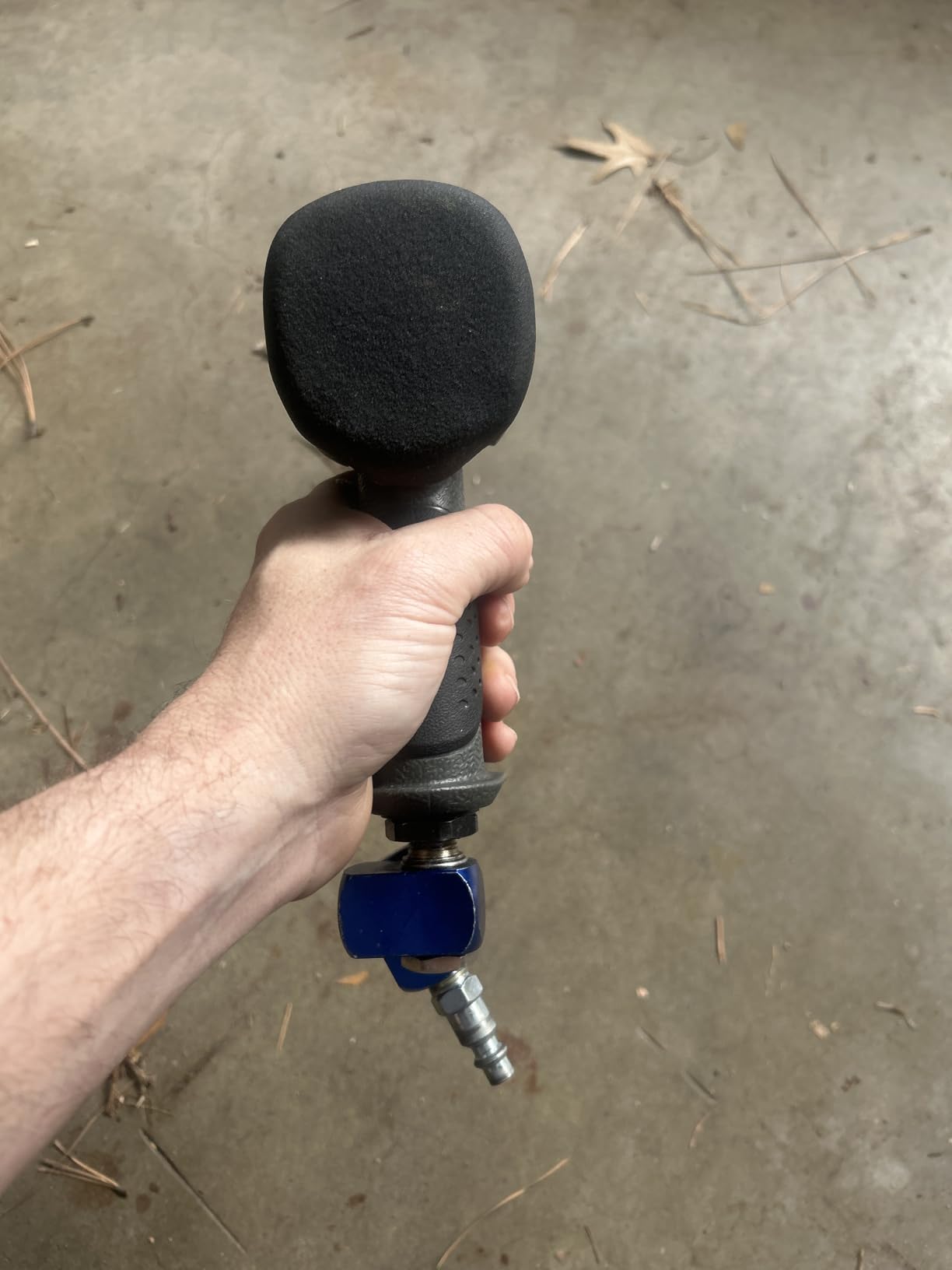
The removable forward and reverse switch is a genuinely thoughtful detail, because you can set the tool for the dominant hand rather than reaching for a control at an awkward angle. The patented grip and the trigger-mounted switch layout are what make this gun comfortable on a strut spring compressor or behind a brake rotor.
The head is grease-able and replaceable parts are available, so a neglected tool does not become scrap. Owners treat it as a secondary gun that lives in the toolbox for the jobs a full size wrench cannot physically reach.
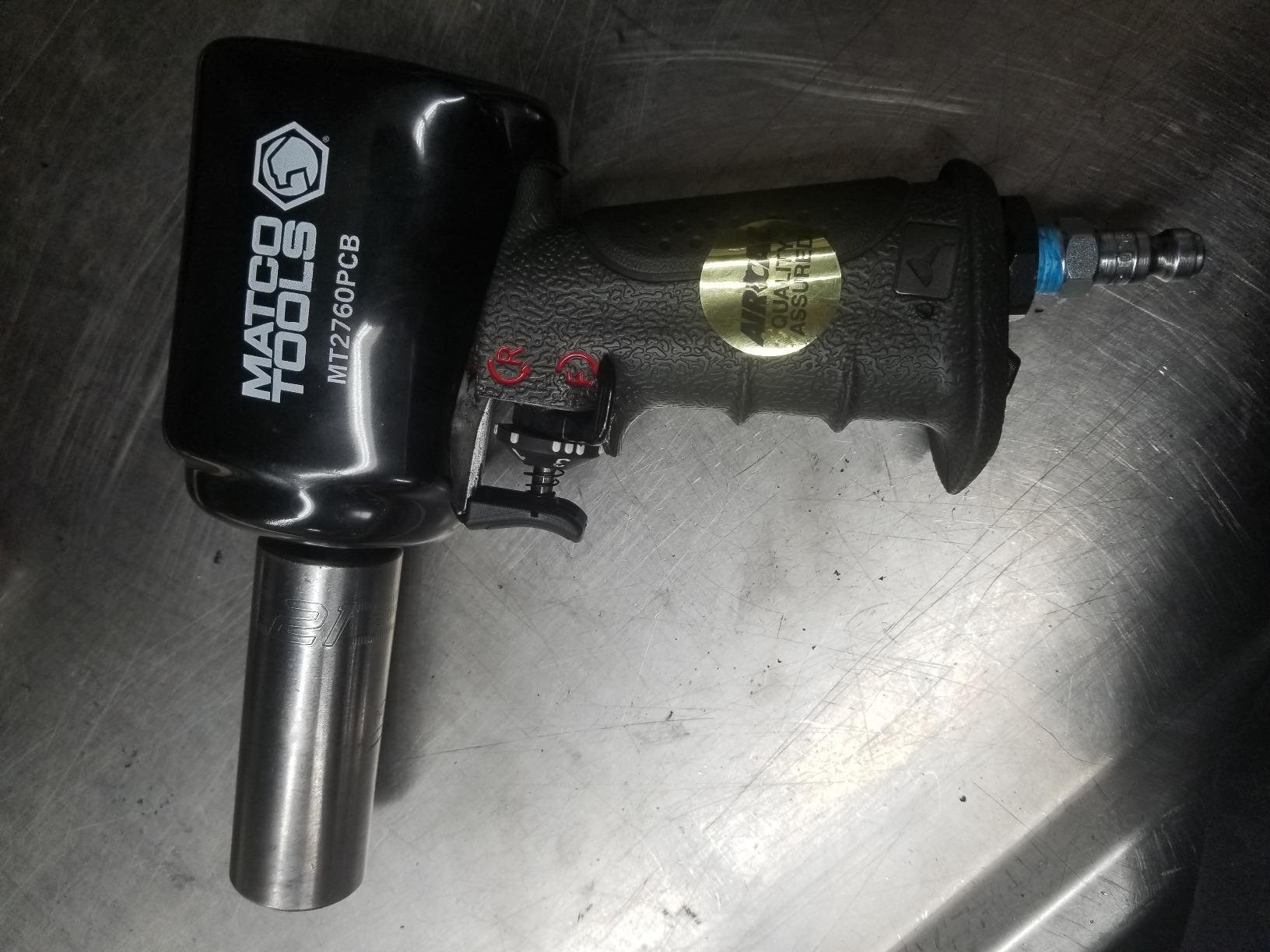
Where the 1056-XL earns its slot
It is the right pick for brake work, strut assemblies, and any wheel with a deep lip where the anvil will not clear. It also suits a homeowner who wants a gun they can easily hold one-handed while supporting a jack stand or a rotor, since at 2.5 pounds that is realistic.
Pair it with a small pancake or belt-driven compressor and it becomes a genuinely useful weekend tool. The two year warranty is tied to proof of purchase, which is worth keeping the receipt for.
Where it falls short
It is not the gun for a truck axle nut that has been torqued to spec and left in the rain for a year. Owners are candid that severely seized fasteners need a larger wrench, and forcing this one risks dwelling on a nut that will not move.
The forward and reverse switch can catch your hand when you are working in gloves, which is a real irritation in a shop rather than a theoretical one. If you need one gun for everything, look at the AIRCAT 1150 instead.
4. Astro Pneumatic 1822 ONYX Nano Impact Wrench
Astro Pneumatic Tool 1822 ONYX 1/2″ Nano Impact Wrench v2-500ft/lb
500 ft-lb max torque
Under 3-7/8 inches
3 forward and 3 reverse
4.8 CFM
3 lb
Pros
- Extreme short profile for confined-access work
- 3 forward and 3 reverse settings for fine modulation
- Lightweight 3 lb body
- Second-generation motor with ported exhaust
Cons
- 500 ft-lb rating is modest for severely seized truck lug nuts
- High airflow consumption demands a capable compressor
The 1822 ONYX is an access tool first and a torque tool second. Its full length is under 3-7/8 inches, which is the single feature that puts it on a shopping list when a full size gun simply will not fit between a wheel and a fender liner.
Owner feedback is consistent about why people buy it: the profile. A 3 pound body with a short nose can be maneuvered into places that would take you an hour to clear by hand, and the twin hammer design with a ported exhaust keeps the blows smooth while doing it.
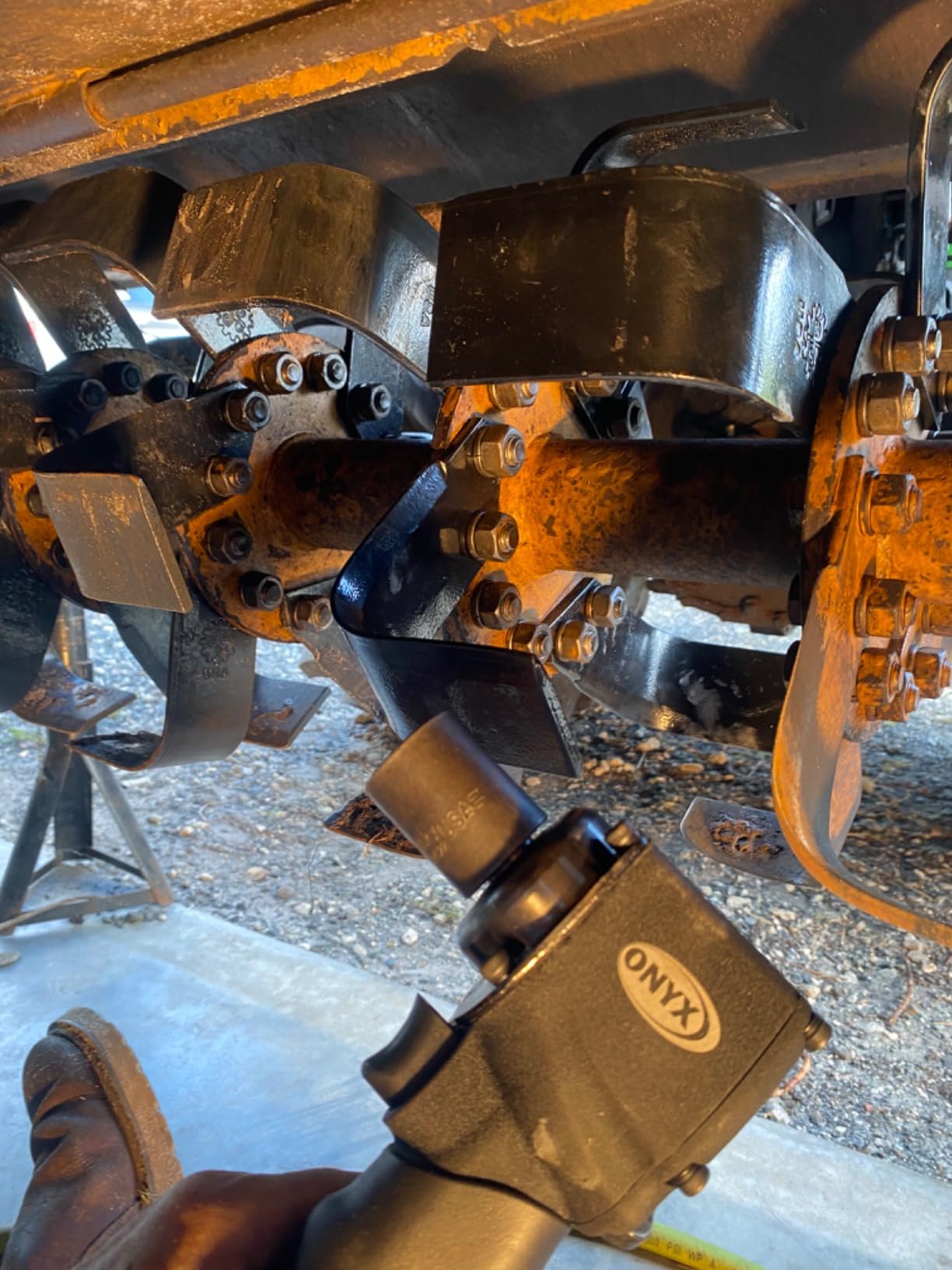
Three forward and three reverse settings give unusually fine control for such a small gun. That matters most when you are running a nut down on a soft alloy wheel and want to feel the threads seat before you torque it properly, rather than burying the tool into a stripped stud.
Air consumption is listed at 4.8 CFM, and Hi-Flo fittings are recommended. On a small compressor the gun will run fine in short bursts but slow noticeably on a long loosening job, so size the compressor accordingly.
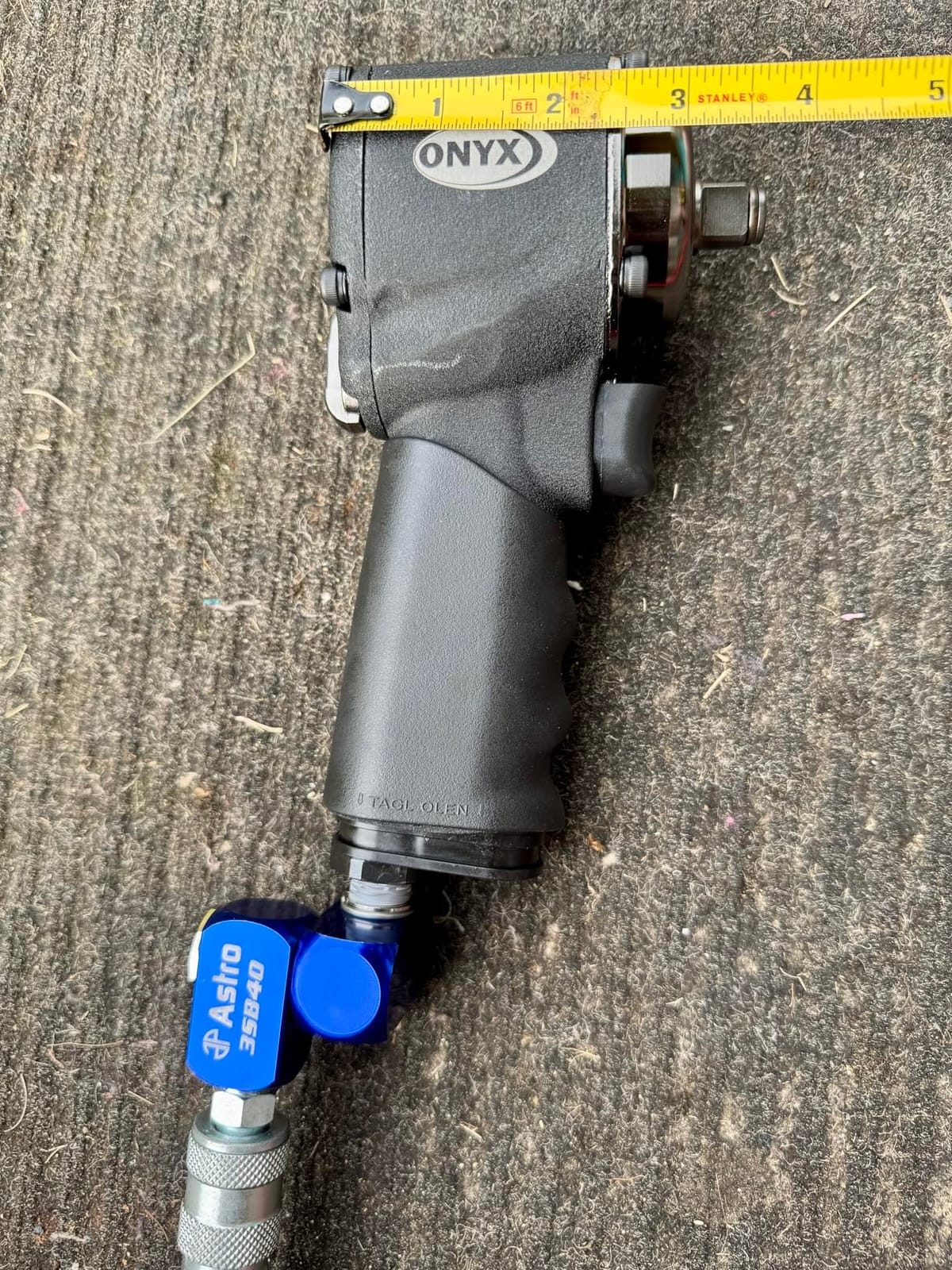
Why owners reach for the 1822 ONYX
It solves a spatial problem no other tool on this list solves as well. Compact subframes, recessed wheel wells, stacked wheel spacers on a lifted truck, and suspension work in a cramped engine bay are all situations where this length is decisive.
It is also cheap insurance as a second gun. Many shops keep one next to the main impact for access work so they are not changing sockets and extensions on every other job.
What you give up for the size
500 ft-lb is a modest figure against seized truck lug nuts, and you will feel it stall on hardware that a full size gun would have opened in two seconds. If you regularly work on heavy truck axles, this is the wrong primary tool.
The airflow demand also means a small 120V compressor will frustrate you. Everything else about it is well suited to a home garage, but it wants a tank that can keep up.
5. ACDelco ANI405A Heavy Duty Twin Hammer Impact Wrench
ACDelco ANI405A Heavy Duty Twin Hammer ½” 500 ft-lbs. 5-Speed Pneumatic Impact Wrench Tool Kit
500 ft-lb at 90 PSI
5-speed forward control
All-metal body
5.7 lb
1 year limited warranty
Pros
- All-metal body that survives repeated drops and shop handling
- 5-speed forward control for precise tightening
- Handle exhaust directs air away from the work area
- Kit includes air hose adapter and lubricant
Cons
- Socket retaining clip is very tight and makes socket changes awkward
- Heavy at 5.7 lb and tiring over a full day
- Forward and reverse button is easy to bump accidentally
The ANI405A is the plainest wrench in this group and that is exactly its appeal. No composite shell, no marketing gymnastics: an all-metal body around a professional twin hammer impact design rated at 500 ft-lb at 90 PSI, with a 5-speed forward control and full-power reverse.
Owners treat it as an entry-level shop tool and a step up from a hand breaker bar. It handles stubborn rusted lug nuts and heavy suspension bolts on cars and trucks, and the 1/4 inch NPT inlet makes routine lubrication straightforward, which is what keeps a metal hammer alive.
The handle exhaust routing is a small detail with a real effect: air is directed away from the work area, which reduces noise and keeps grit off the wheel hub you are about to reinstall. That is the kind of thinking that shows up in tools designed by people who work on vehicles every day.
What comes in the box matters at this level. You get the wrench, an air hose adapter and a lubricant, so the only remaining purchase is a compressor and hose. The one year limited warranty is the shortest among the well-reviewed options here.
Who the ACDelco ANI405A suits
It is a good fit for a student mechanic, a first shop job, or a homeowner who wants a metal gun that will survive being dropped off a tailgate. At 8 inches long and 5.7 pounds it is a normal full size wrench, so nothing about it limits you to small fasteners.
The 5-speed regulator is the feature that separates it from cheaper single-speed guns. It lets you back off the power as a nut seats, which is how you avoid rounding a head on a tightening pass.
What frustrates owners
The socket retaining clip is described as very tight, and owners report that swapping sockets mid-job is an annoyance they would not design in. Check the clip tension early so you know how it behaves before you are under a car.
At 5.7 pounds it is one of the heavier tools here, and it tires you over a full day of rotations. The forward and reverse button also sits where you can bump it mid-use, which on an impact wrench means an unexpected direction change. Look at the AIRCAT 1150 if weight is your main concern.
6. DEWALT DWMT70774 1/2 inch Pneumatic Impact Wrench
DEWALT 1/2-Inch Drive Impact Wrench,Yellow, Black, Pneumatic (DWMT70774)
600 ft-lb rated torque
Rear-mounted power settings
Bottom air inlet
5.3 lb
Pneumatic oil included
Pros
- Strong low-CFM torque that works with modest home compressors
- Durable over multi-year daily use when oiled
- Simple design without unnecessary controls
- Pneumatic oil included in the box
Cons
- Heavy at 5.3 lb over extended use
- Rubber-like overmold collects dirt easily
- Owner's manual omits the air inlet thread plug removal step
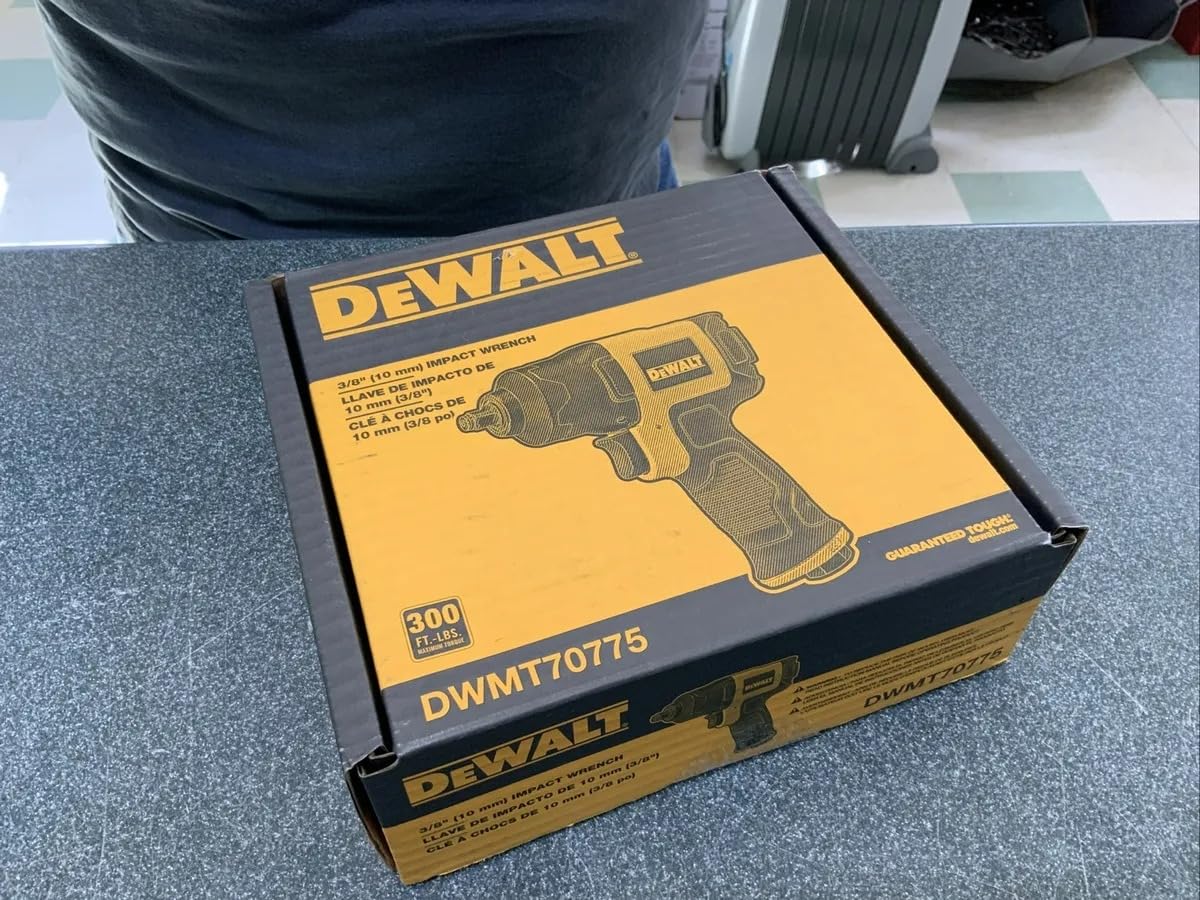
The DEWALT is the one we recommend to someone who owns a small compressor and expects the wrench to keep working anyway. Its 600 ft-lb rated torque is delivered efficiently, and owners routinely mention removing truck axle hub nuts on setups that would starve a thirstier gun.
That air efficiency is the differentiator. Plenty of high-torque air tools need a serious tank, and this one runs on a modest unit, which is why so many owners keep it as their only impact wrench for home use.
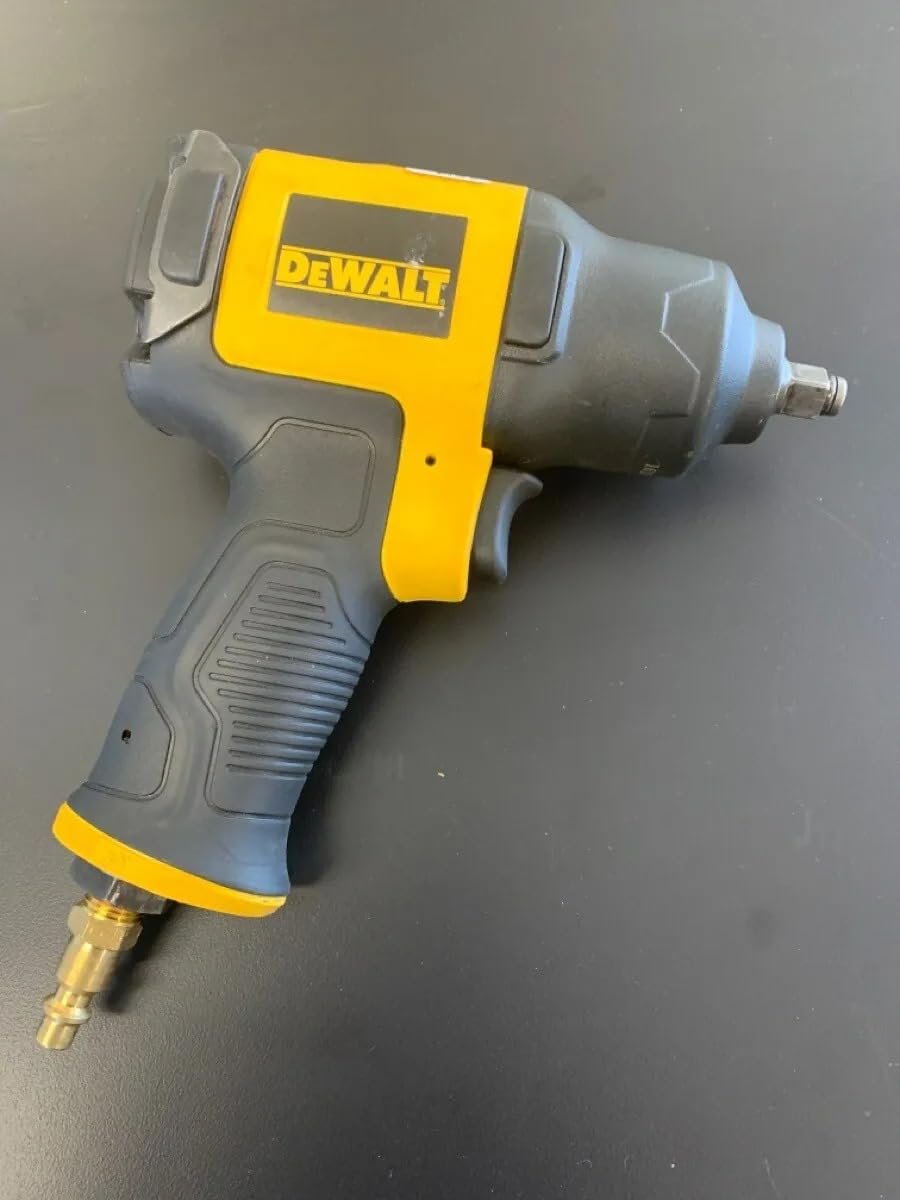
Control layout is deliberately plain. The power settings sit at the rear for thumb access, and the air inlet is mounted at the bottom so the hose connects quickly without twisting the tool. There is nothing to learn, which matters if the gun is shared between two people.
A note on the specs: the listing gives 600 ft-lb rated torque while owner reports put real-world maximum closer to 650 ft-lb. Either way it is a strong performer in the mid range, and multiple owners describe multi-year daily durability as long as the tool is oiled.
Where the DWMT70774 wins
It is the best match for a home shop with a small tank, and for anyone who wants a straightforward tool with no adjustment to think about. The yellow and black finish is instantly recognizable, which sounds trivial until you are digging through a shared shop for a wrench that belongs to you.
A bottle of pneumatic oil is included, so you can start oiling it on day one. That habit is what separates a five-year tool from a two-year tool on a hammer mechanism.
Where it does not
Five pounds three ounces is heavy for an all-day rotation, and the rubber-like overmold on the grip collects dirt and grime quickly, which is unpleasant in winter road work. It is also not the quietest tool we cover.
One setup trap: the plastic thread-protecting plug must be removed from the air inlet before you install the fitting, and the manual does not make this obvious. If the gun runs weakly, check that plug first. For a lighter composite alternative, the AIRCAT 1150 covers the same torque class at half the weight.
7. BESWELL BW-112BN 1/2 inch Air Impact Wrench
BESWELL® BW-112BN 1/2-Inch Air Impact Wrench with 1180 Ft-Lbs Max Torque
1180 ft-lb nut-busting torque
Twin hammer mechanism
4.6 lb
6.7 inches
90 to 190 PSI
Pros
- Breaks seized and over-tightened fasteners other guns struggle with
- Composite body 20 percent lighter than traditional metal models
- 3-speed forward regulator plus full-power reverse
- Integrated air cooling for continuous high-load use
Cons
- Some units report a small air leak at the bottom valve
- Advertised 1180 ft-lb figure appears optimistic against real-world results
The BW-112BN exists because there is a gap between a 600 ft-lb workhorse and a 1600 ft-lb specialist gun, and this fills it. The twin hammer mechanism is rated at 1180 ft-lb of nut-busting torque in a 4.6 lb composite body that the manufacturer says is 20 percent lighter than the metal equivalent.
Owners consistently describe it as dramatically underpriced for the torque it delivers, and several report it taking fasteners apart that larger, more expensive guns would not free. For a truck maintenance setup on a mixed compressor, that is a genuinely useful capability at this weight.
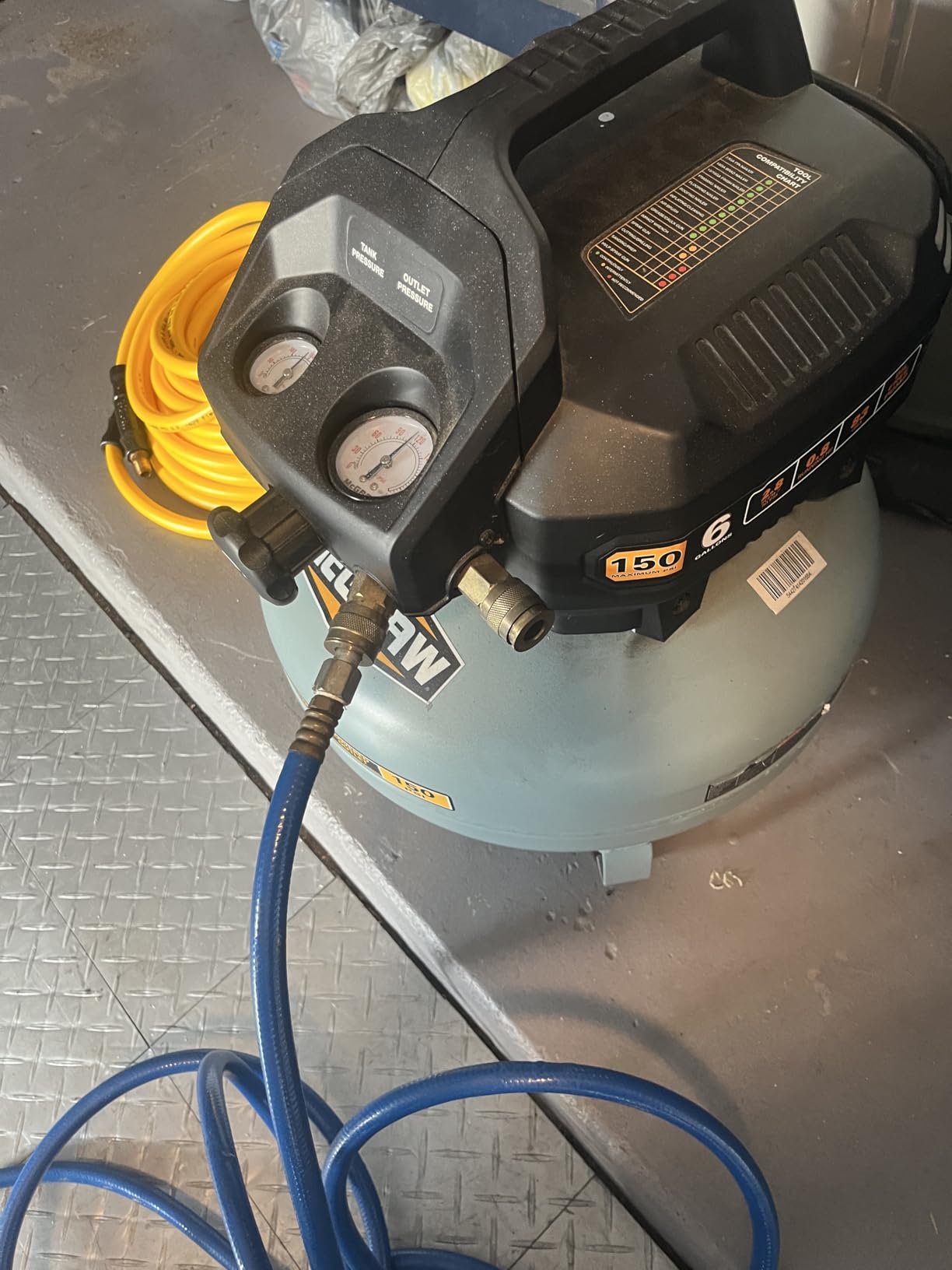
The integrated air cooling system is aimed at continuous high-load use, and it pairs with powder metallurgy cylinders that are meant to survive demanding garage environments. A three-speed forward regulator with full-power reverse gives you the same control pattern the premium guns use.
Operating pressure is optimized for 90 to 120 PSI and rated to work up to 190 PSI, so it suits both small shop compressors and higher pressure setups. At 6.7 inches it is short enough to stay compact in a toolbox.
Why we include the BW-112BN
It is one of the few tools here that pairs serious breakaway torque with a sub 5 pound weight, which is where most buyers actually land. If your vehicle mix includes half ton trucks and older pickups with seized hardware, this is the torque-to-weight answer.
The 3-speed forward plus full reverse pattern is the right one for working on a mix of lug nuts and suspension bolts without changing modes constantly. The manufacturer also positions it for tire changer, oil and gas, and shipbuilding work, which is a fair description of what high nut-busting torque gets used on.
What to watch out for
Owners report a small air leak at the bottom valve on some units. If you notice a hiss at idle, it is worth having it looked at rather than ignoring it, since that valve feeds the tool.
Second, the 1180 ft-lb figure is the one to treat carefully. Several reviewers doubt the real-world result matches the printed number. Judge it as a strong 800 to 1000 ft-lb class gun with an optimistic headline, and it remains an excellent value pick for the price tier. Compare its real behaviour to the AEROPRO A398, which publishes a more conservative 810 ft-lb working figure.
8. Astro Tool 1834 Nano Flex-Head Angle Impact Wrench
Astro Tool 1834 1/2″ Nano Flex-Head Angle Impact Wrench – 400ft/lb
400 ft-lb max torque
280 ft-lb working torque
3.34 inch head
180 degree flex head
3.52 oz
Pros
- Flex head solves access problems on confined fasteners
- 360 degree swivel handle adds positioning flexibility
- Dual air intake motor with twin hammer
- Lightweight 3.52 oz body
Cons
- 400 ft-lb max and 280 ft-lb working torque is low for seized truck lug nuts
- Head-only form factor is a niche capability
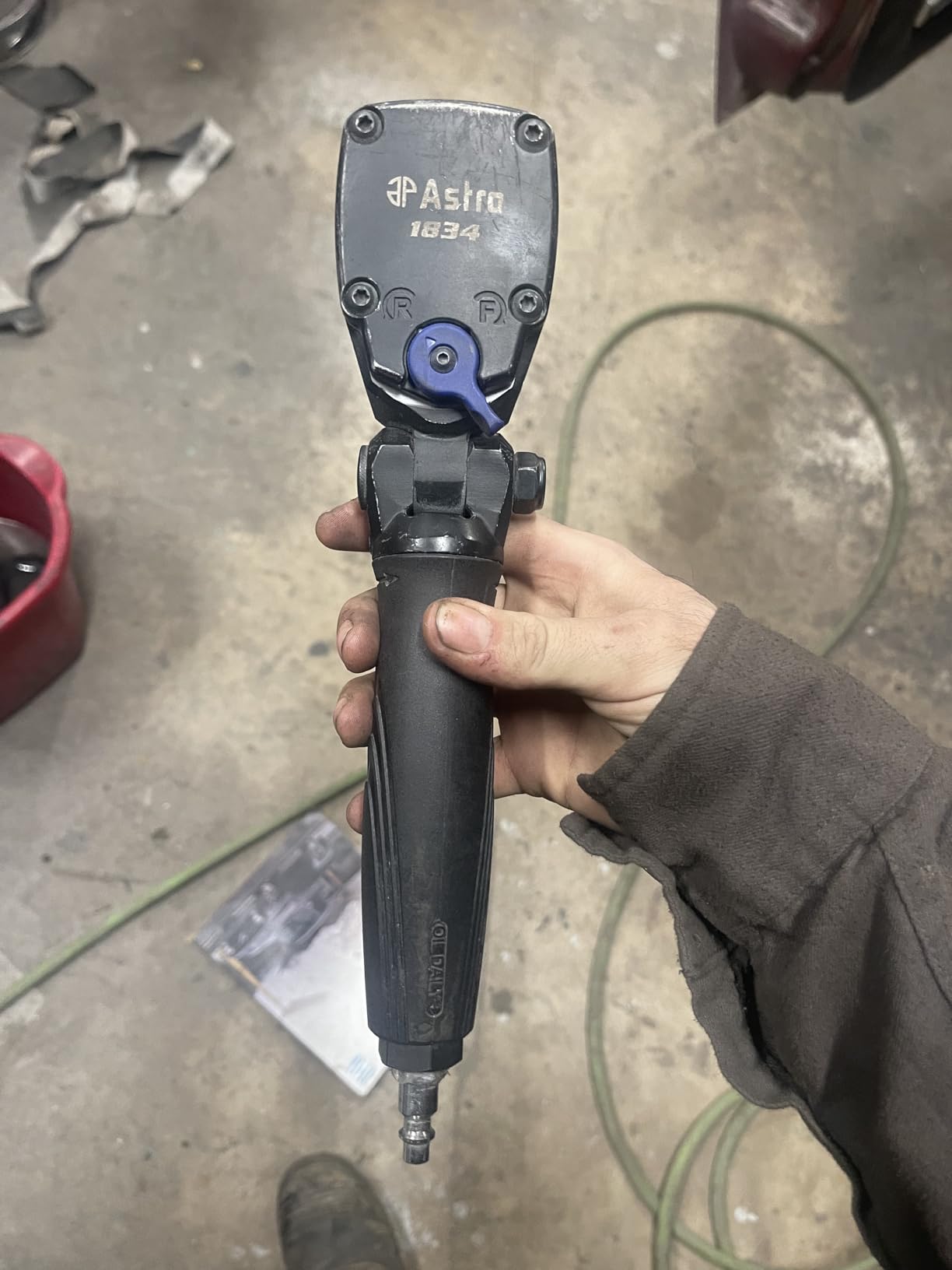
There is a specific class of job the flex head solves and nothing else does. When a caliper bolt sits behind a wheel knuckle, or a subframe bolt points in a direction your hand cannot reach, this is the tool. The 180 degree flex head and 360 degree swivel handle let you angle into a fastener a straight nose simply cannot address.
The 3.34 inch head length is the shortest in this class, and owners say that is the entire reason they own one. The dual air intake motor with a twin hammer mechanism delivers 400 ft-lb max and 280 ft-lb working torque, with a front head exit exhaust that keeps air away from the fastener.
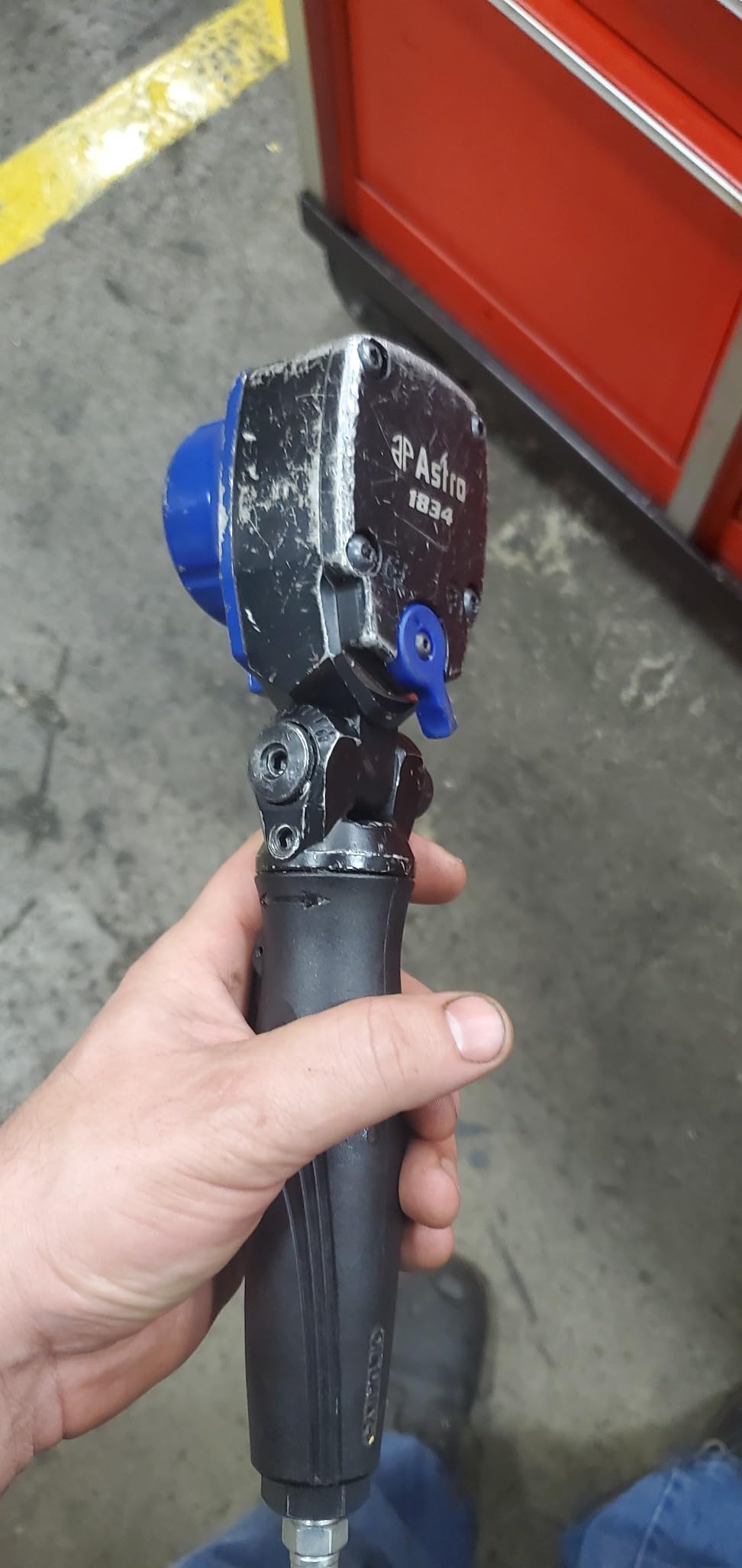
At 3.52 ounces it is effectively weightless in the hand for a long job, and that pairs well with the swivel handle. It is a specialist addition to a toolkit rather than a primary wrench, and buyers generally know that going in.
The one year warranty is on the short side, so keep the receipt. For a tool this specialized, buyers tend to accept that because nothing else covers the access problem.
The jobs only the 1834 handles
Suspension work on a transverse engine layout, brake caliper bolts, and any fastener sitting behind a structural member. The flex head plus swivel combination means you can attack the bolt from an angle that a fixed anvil cannot reach, which is often the difference between a ten minute job and a teardown.
Because it weighs 3.52 ounces, it is also a good precision tool for smaller fasteners where you do not want the full swing of a 1/2 inch gun. It is the one tool here that is genuinely not a lug nut wrench, which is worth saying plainly.
Why it is not a lug nut choice
400 ft-lb max and 280 ft-lb working torque is below what a seized or over-tightened truck lug nut needs. Do not buy this expecting to remove rusted hardware on a heavy vehicle; the tool simply does not have that capability.
Its 4.5 star average with 765 reviews reflects exactly that split. Buyers who wanted a lug nut gun are disappointed, and buyers who needed access are very happy. Know which one you are before you order, and if you need both, the AIRCAT 1056-XL covers the compact lug nut side.
9. VEVOR 1/2 inch Air Impact Wrench with Socket Set
VEVOR 1/2-Inch Air Impact Wrench – High Torque 1400 ft-lbs – Lightweight 4.6 lb – Includes 11-Piece CR-V Steel Impact Socket Set & Carrying Case
1200 ft-lb listed spec
4.6 lb tool body
11-piece CR-V socket set
4-position regulator
7 inches
Pros
- Complete kit with 10 sockets
- extension bar
- quick connector
- oil pot and carrying case
- Strong value for the torque class
- 4-position combined forward and reverse regulator
- Lubrication adaptor for top-ups
Cons
- Listed package weight of 8.6 lb is far above the stated 4.6 lb tool weight
- Marketing torque claim of 1400 ft-lb exceeds the 1200 ft-lb spec listing
The VEVOR sells as a complete kit and that is the real differentiator. You get the gun, ten CR-V steel impact sockets from 9 mm to 27 mm, a 5 inch extension bar, an air quick connector, an oil pot, a lubricant adaptor and a carrying case in the box.
For someone setting up a first home shop, that removes a meaningful chunk of the accessory list. Most buyers otherwise spend the next purchase on a set of impact sockets before the gun ever touches a lug nut.
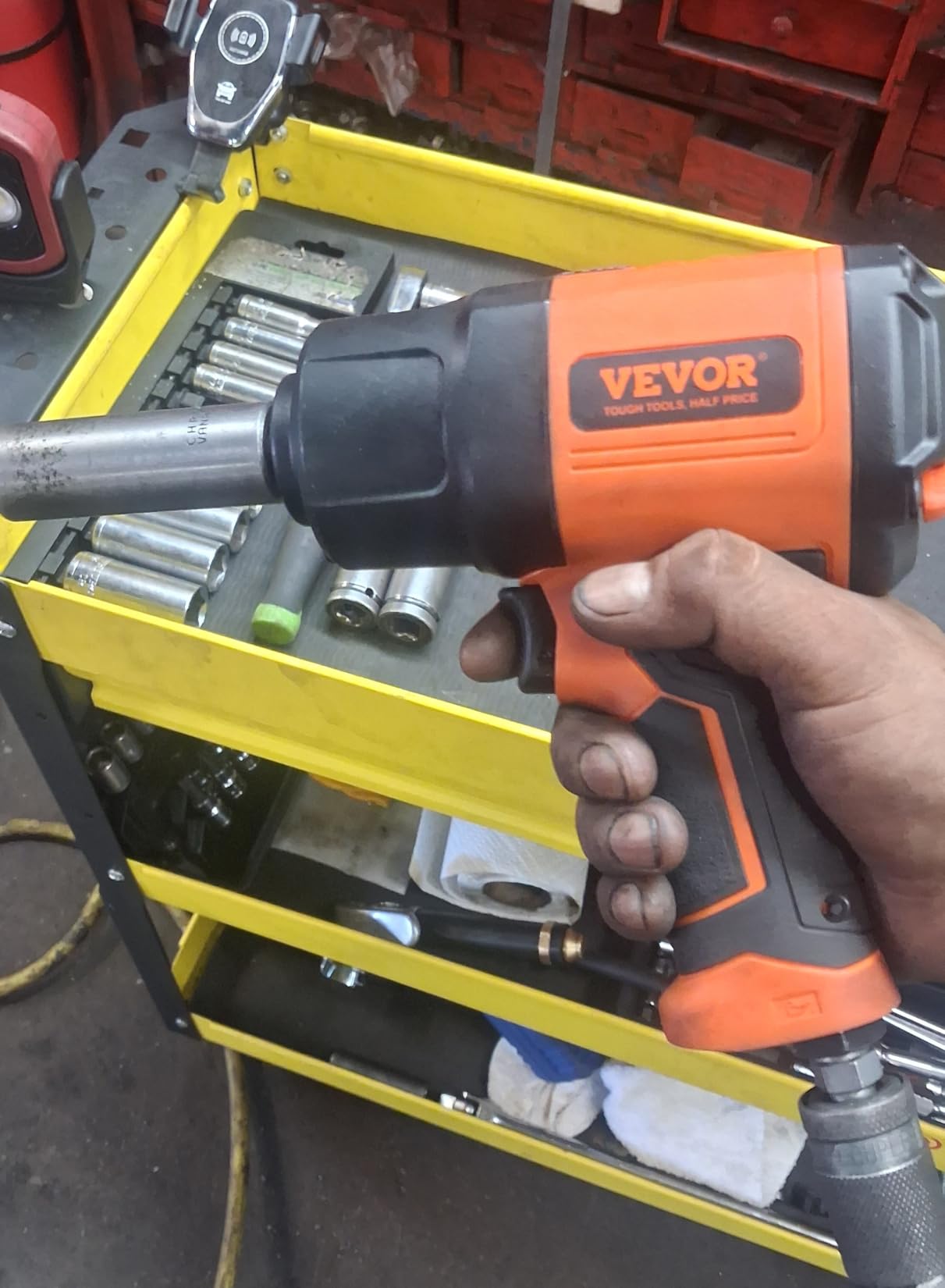
The 4-position combined forward and reverse power regulator covers a useful tightening range without the complexity of a multi-mode switch. The lubrication adaptor means oiling the tool is a connector swap rather than a hunt for the right fitting, and owners value that on a tool they will use weekly.
The tool body itself is listed at 4.6 pounds and 7 inches long, which puts it in a genuinely portable class. The twin hammer mechanism handles assembly, disassembly and general automotive maintenance without complaint.
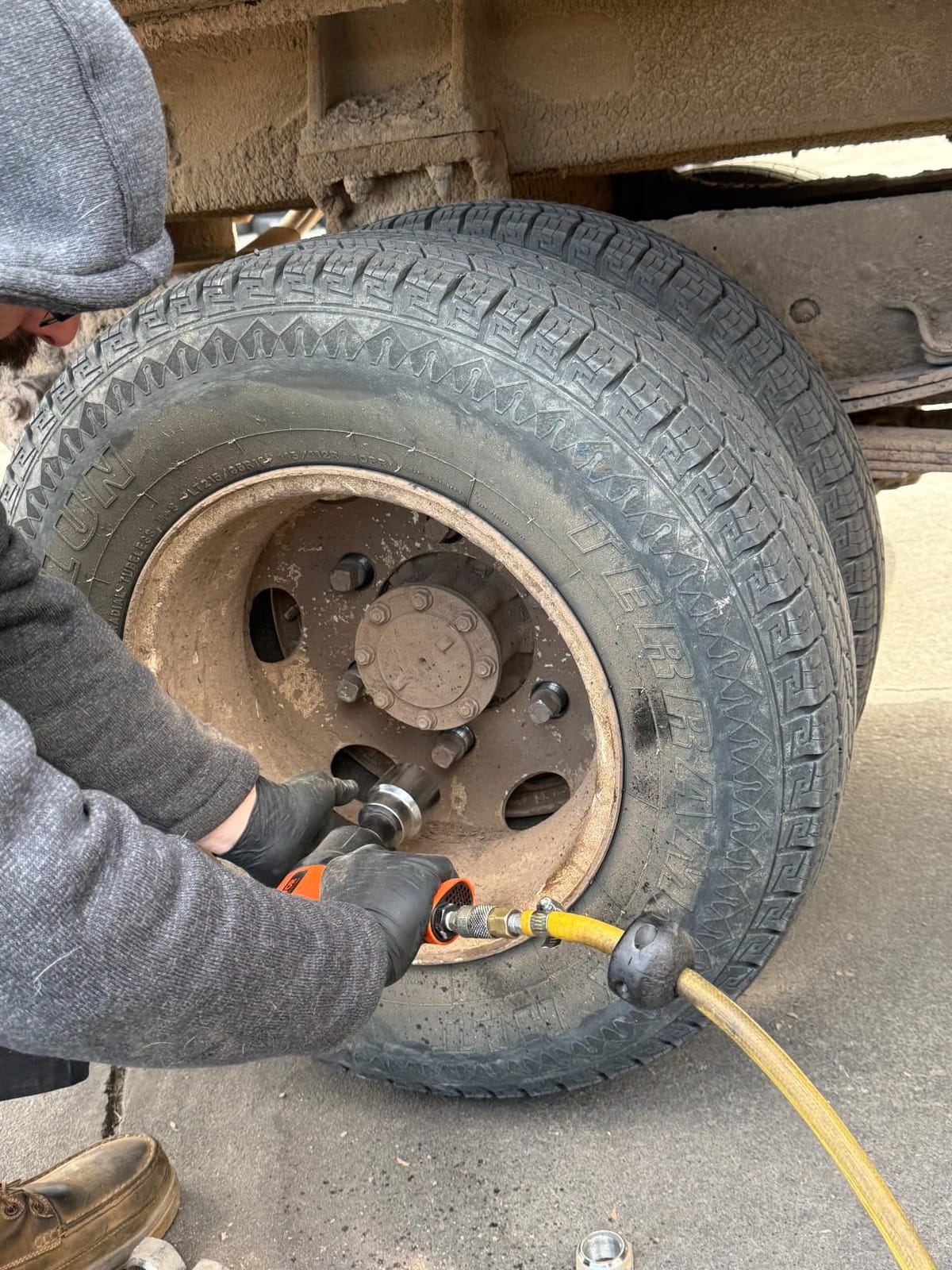
Why the kit format matters here
If you are new to pneumatic tools, the included sockets mean your very first job is not delayed by an accessory order. The 5 inch extension bar is useful for reaching hub nuts through a wheel, and the quick connector saves you from hunting for a fitting on the day you need it.
The carrying case is a small quality-of-life touch that gets appreciated once the tool lives in a car trunk. Rated to a 1200 ft-lb class, it sits in the same working range as the AIRCAT 1056-XL but with a broader accessory package.
What to check before you rely on it
Two specification conflicts are worth flagging. The marketing material claims 1400 ft-lb of nut-busting torque while the specification listing says 1200 ft-lb, so treat the lower number as the realistic figure. Similarly, the listed package weight of 8.6 pounds includes the case, sockets and accessories, against a 4.6 pound tool body.
Long-term reliability reports are thinner here than for the AIRCAT and Ingersoll Rand options, which is normal for a value brand in this category. If you want the torque class with more established long-term data, the AIRCAT 1150 is the safer reference point.
10. Astro Tool 1894 ONYX 1/2 inch THOR Impact Wrench
Astro Tool 1894 ONYX 1/2″ “THOR Impact Wrench
1600 ft-lb nut-busting
940 ft-lb traditional max
6.5 CFM
4.94 lb
6.7 inches
Pros
- Enormous breakaway torque that removes fasteners other guns cannot free
- Oversized floating air motor puts weight over the hand for balance
- Two-stage trigger and handle power wheel for tool-free adjustment
- Works on small compressors when fed by a 1/4 inch line
Cons
- Large and heavy
- not ideal as a daily-driver wrench
- 6.5 CFM consumption out of reach of most 120V compressors
- Grip shape and forward reverse switch can irritate some users
The THOR is a specialist breakaway gun and it is treated as one by its owners. The published figures are 940 ft-lb traditional max torque and 1600 ft-lb nut busting, which is the highest breakaway number in this list, and reviewers report it freeing fasteners that defeat far more expensive tool truck impacts.
Even with a long impact extension and a universal socket, owners say it has the torque to finish quickly. The patented oversized floating air motor with a twin hammer assembly is what delivers that, and it places the mass over your hand so the tool stays balanced at 4.94 pounds and 6.7 inches long.
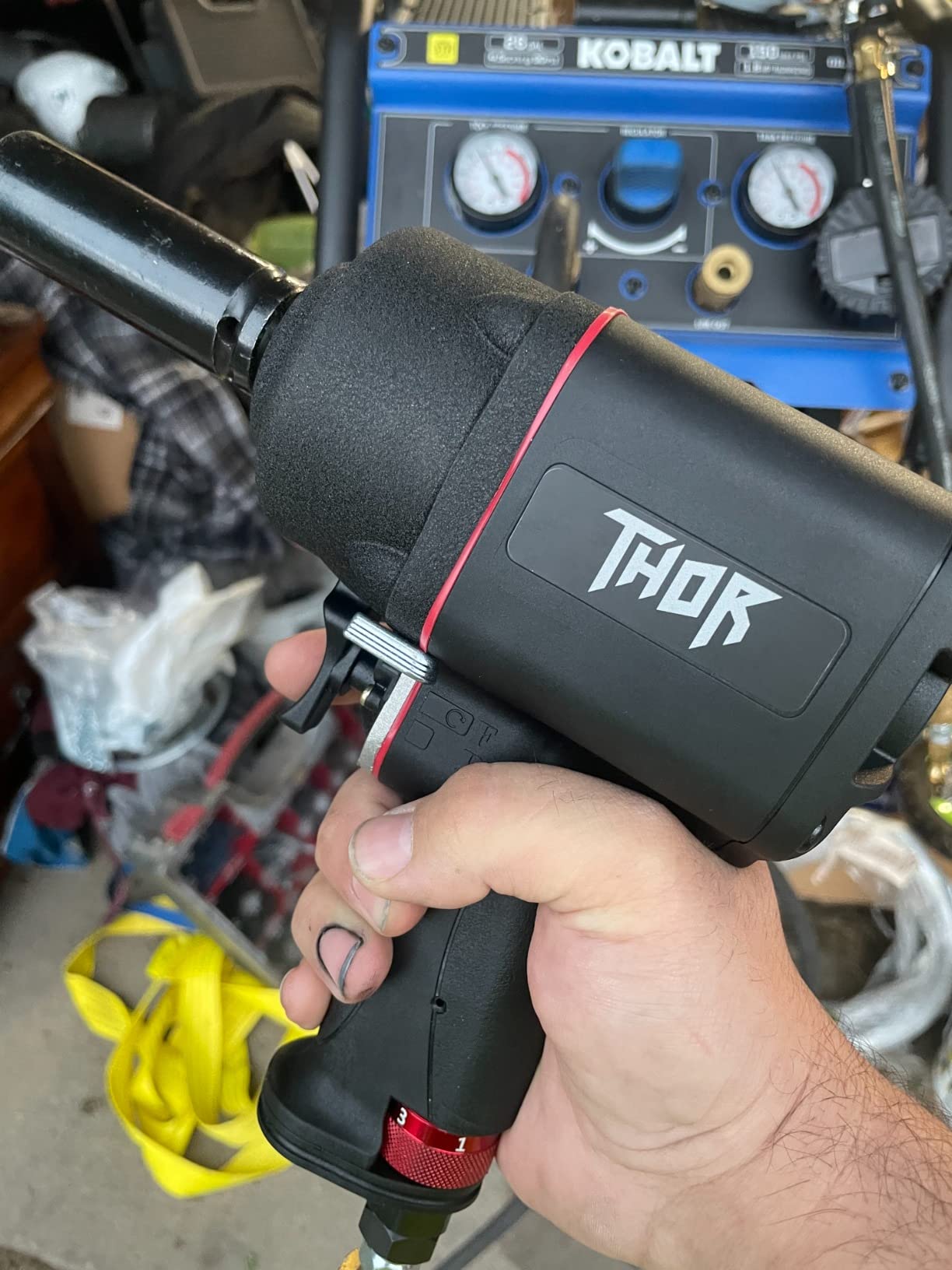
Controls are unusually well thought out for a gun this powerful. A two-stage trigger with a handle-mounted power adjustment wheel lets you select power without reaching for a tool, and a rocking forward and reverse lever can be worked by feel.
It works with 3/8 to 1/2 inch air hoses, and a 1/4 inch NPT adapter is included so a quarter inch line will connect. Owners confirm it still performs on a smaller compressor when the line is beefy enough to feed it.
Who needs this much breakaway torque
Truck axle nuts, seized suspension hardware, and fasteners that have been sitting outside in a wet climate. If you work on heavy vehicles or do a lot of roadside callouts, this is the gun that gets the job done when others simply stall.
It also handles the honest reality that some fasteners are already at the end of their life. Breaking one loose with a monster gun is cheaper than replacing a seized wheel stud that snapped halfway through removal.
What the power costs you
Air consumption is listed at 6.5 CFM for continuous use, which puts this beyond most 120V compressors you will find in a home garage. Hi-Flo fittings are recommended on both 1/4 inch and 3/8 inch connections, and restricting the line will show up as lost torque.
It is also large and heavy for all-day use, and the grip shape does not suit every hand. Some units leak air near the handle. Keep it as a breakaway specialist alongside a lighter daily driver rather than trying to make it your only gun. If you need serious torque in a lighter package, the BESWELL BW-112BN is the compromise.
11. AEROPRO TOOLS A398 1/2 inch Aluminum Air Impact Wrench
AEROPRO TOOLS 1/2-Inch Aluminum Air Impact Wrench(A398)
810 ft-lb working torque
1380 ft-lb max loosening
45mm cylinder twin hammer
7800 RPM
5.3 lb
Pros
- 810 ft-lb of real working torque
- Aluminum body with center-gravity design reduces forward pull
- Three-speed forward and reverse adjustment
- Rear exhaust keeps debris off the work surface
Cons
- Heavy at 5.3 lb
- Anvil can stick during the first uses before breaking in
- Hungry airflow requires a larger compressor
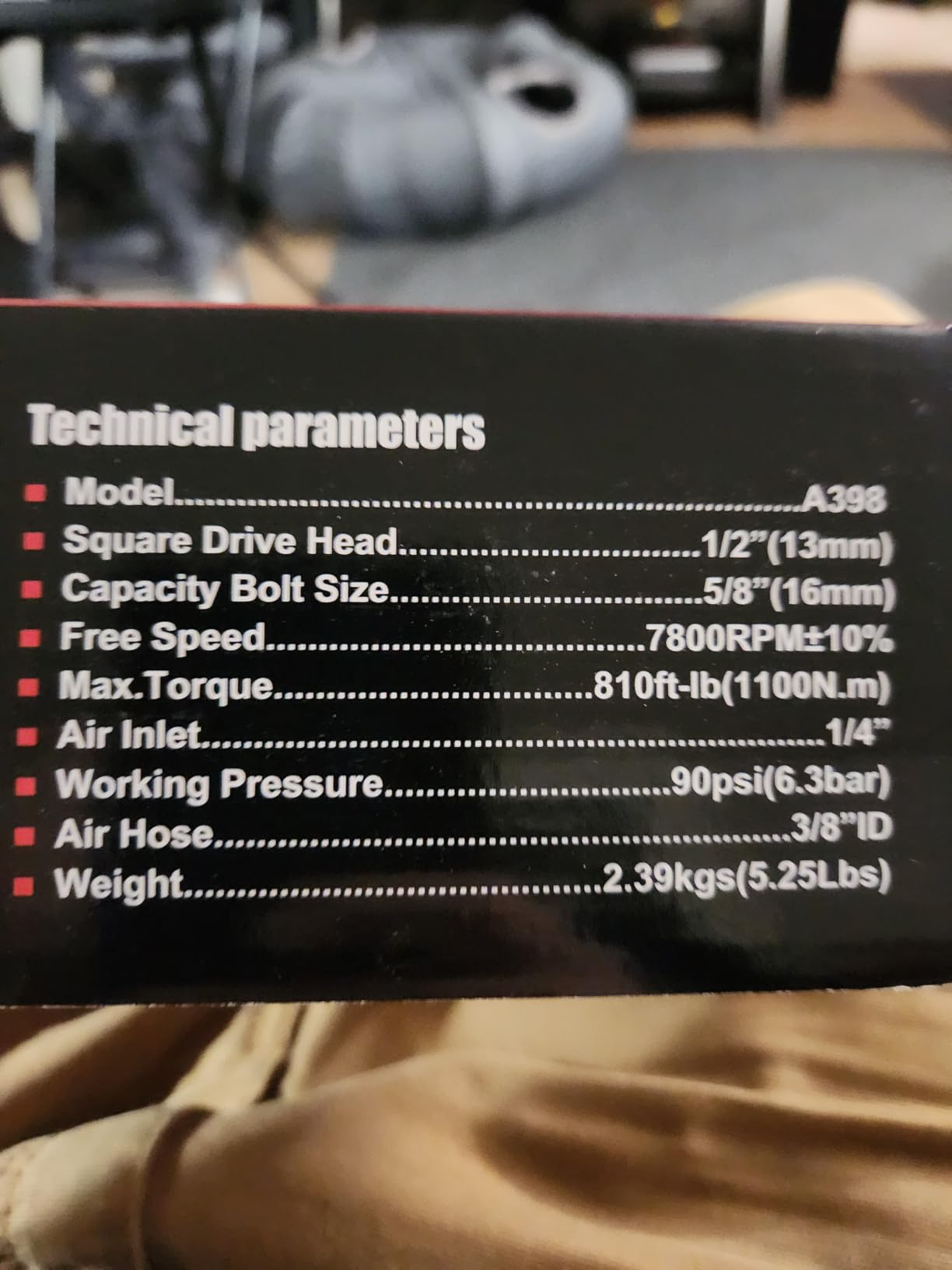
The A398 is one of the few tools in this list that publishes a working torque figure rather than only a maximum, and that honesty is why we rate it well. 810 ft-lb working and 1380 ft-lb maximum loosening, produced by a 45mm cylinder driving a twin hammer, is a genuinely usable number for truck work.
Professional owners report it rivaling premium hand tools in real use, with a caveat: it needs a break-in period. Several mention the anvil sticking during the first few uses before it settles into normal operation, so give it a short warm-up run before you judge it.
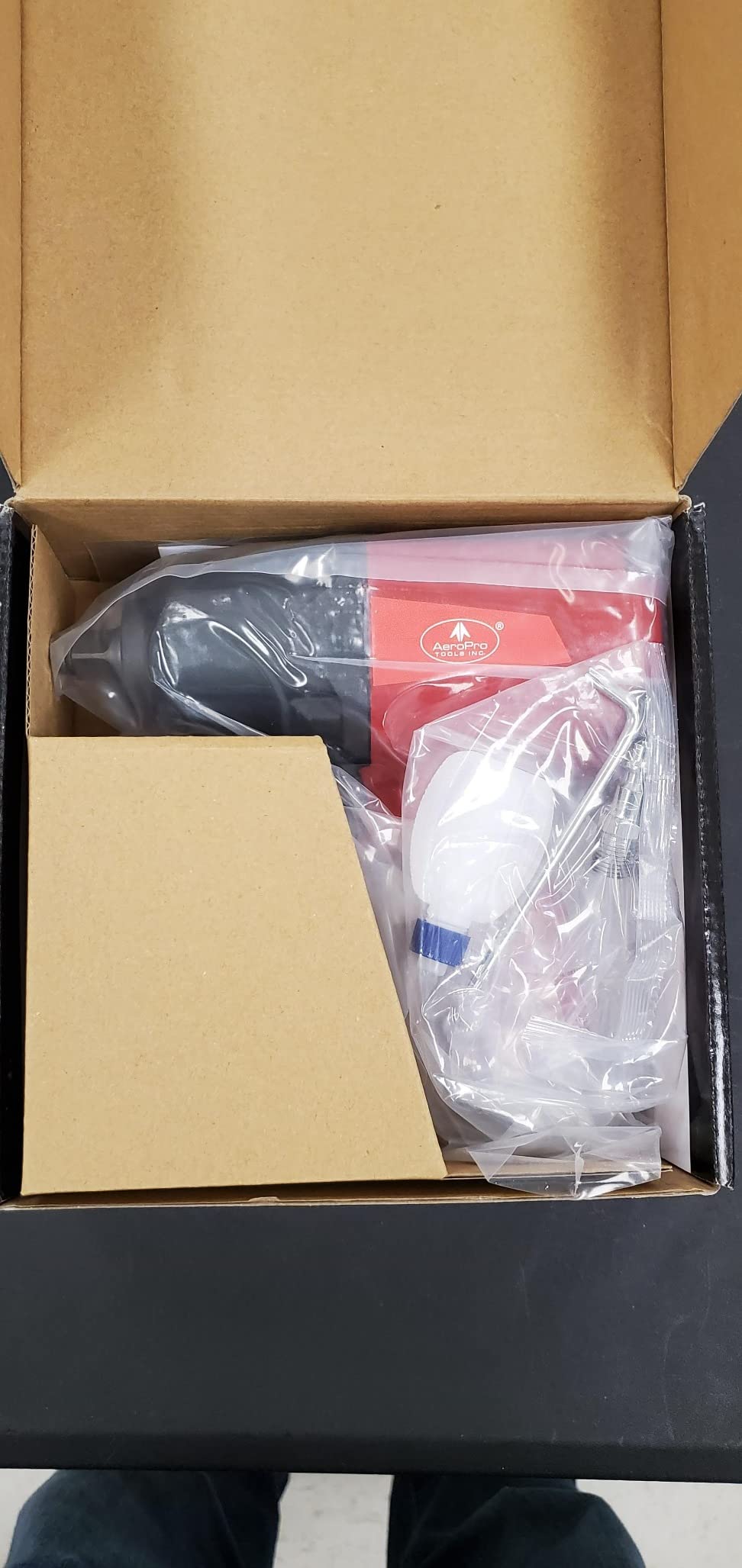
The center-of-gravity design reduces the forward pull that makes some aluminum guns tiring to hold, and the orbital trigger keeps the hand in a natural position. At 5.3 pounds and 19 centimeters it is a full size tool with no weight tricks.
Free speed is 7800 RPM at 90 PSI working pressure, and a three-speed forward and reverse adjustment lets you preload bolts on the first setting before building torque. The rear exhaust keeps debris off the work surface, which is genuinely useful when you are about to put a wheel back on.
Where the A398 earns its place
It suits a tire shop or independent mechanic who wants a metal gun with published, believable torque. Working torque is the figure that tells you whether it can actually do the job, and 810 ft-lb covers most light truck and car work without argument.
The box also includes an oil pot, a spanner and a 1/4 inch male NPT air connector, so you are not immediately looking for fittings. The aluminum alloy spray finish and the anti-aging valve are built for service life rather than first impressions.
What to plan around
Five pounds three ounces is heavy for a long rotation, and the airflow appetite means it wants a compressor that can sustain pressure. On a small tank you will notice it slow down under sustained load.
Budget time for the break-in. Owners who push the anvil hard in the first session are the ones who report problems; the ones who let it settle report tools that keep going. The AIRCAT 1150 is quieter and lighter if noise and weight matter more to you than the aluminum body.
12. Campbell Hausfeld TL140200AV 1/2 inch Impact Wrench
Campbell Hausfeld 1/2″ Impact Wrench, Air Impact Driver (TL140200AV), 550 FT/LBS Torque
550 ft-lb nut-busting torque
3-speed power regulator
Composite housing
Soft grip
10.4 inches
Pros
- Lightweight composite build and soft grip reduce hand fatigue
- 3-speed regulator lets you match tension to each lug nut
- Lowest cost of the 1/2 inch air wrenches in this group
- Twin-hammer mechanism keeps blows smooth
Cons
- Lowest average rating of the group
- Durability and power complaints in a portion of reviews
- 550 ft-lb is the weakest figure for hard truck lug nuts
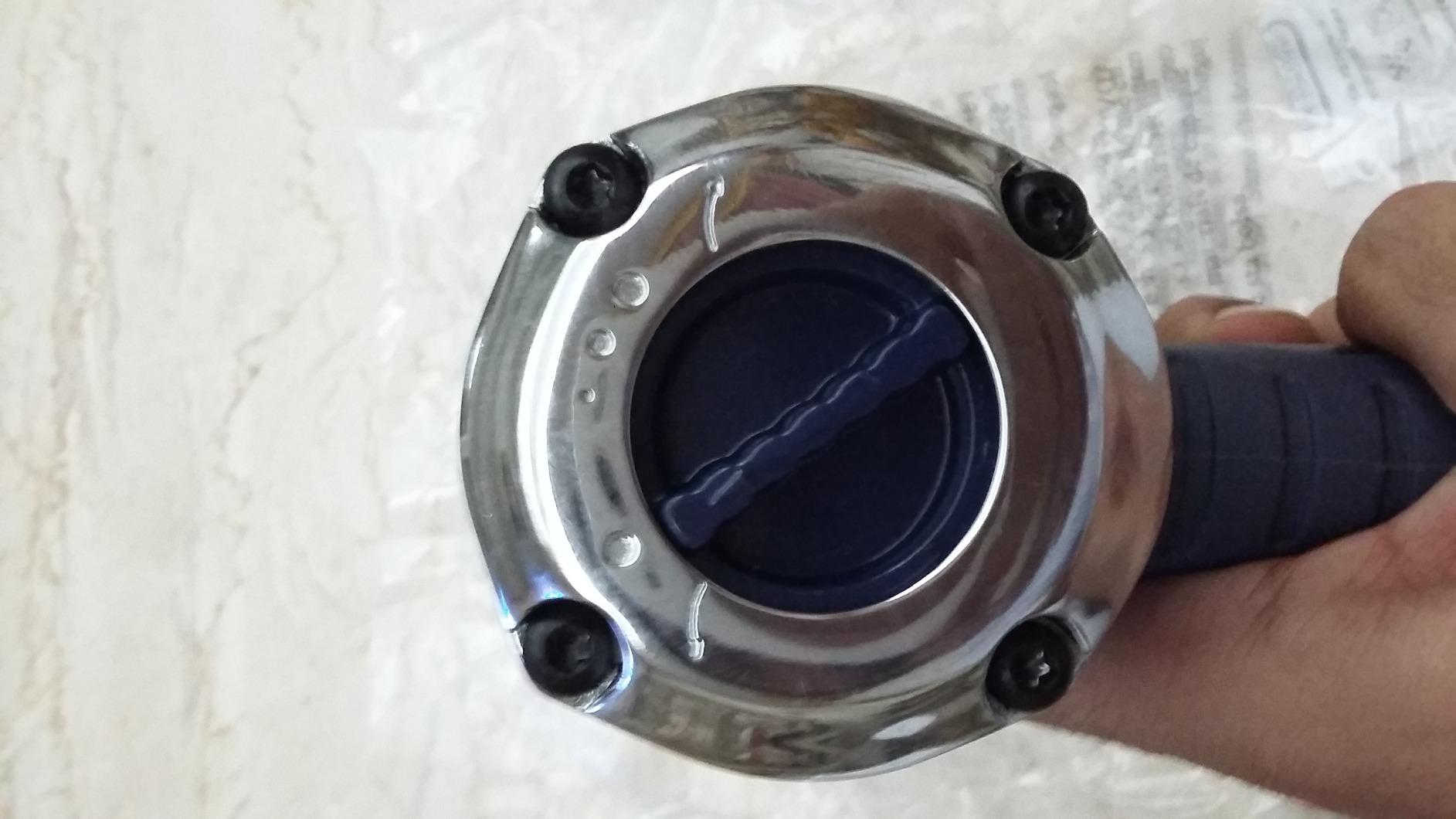
The TL140200AV is the entry point. It produces 550 ft-lb of nut-busting torque from a composite housing with a soft grip, and the 3-speed power regulator lets you match tension to each lug nut so you are not running full output on a thread that is still seating.
Owners who buy it for the right reasons are happy. Rotating tires on a compact car, changing a lawn mower blade, and doing brake work at home are all well within its capability, and the light composite body and soft grip genuinely reduce hand fatigue on short jobs.
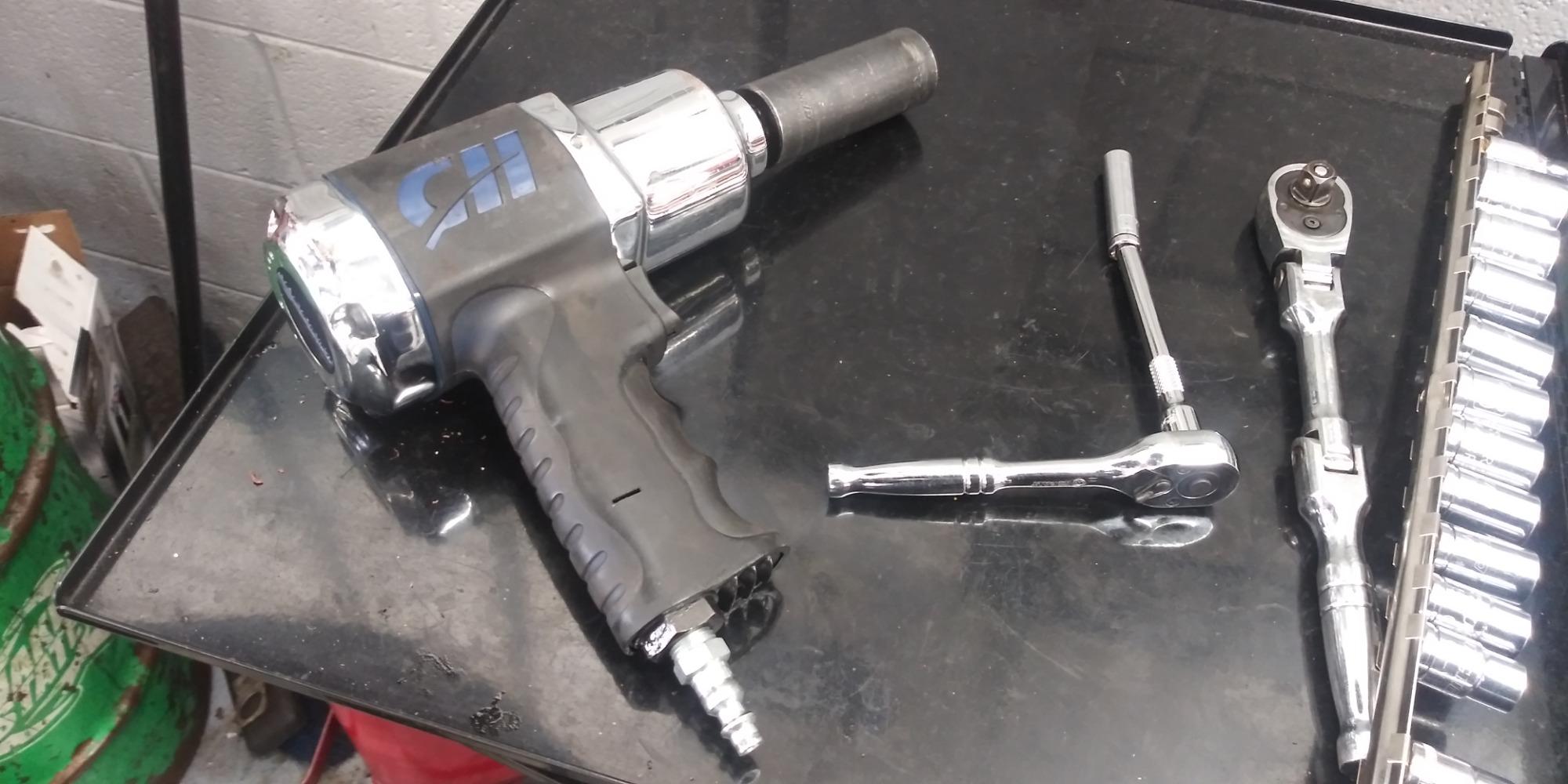
The smooth twin-hammer mechanism is worth mentioning because it is the feature that makes the low weight acceptable. Vibration and harsh blows are what tire a hand, and a smoother hammer at the same torque class is the right trade for a home user.
The listed weight of 8 ounces is almost certainly the bare head or a data error, since the tool is listed at 10.4 inches long and is a full size composite wrench. Treat it as a light full size gun rather than a sub-pound one. A one year limited warranty is included.
When the low cost makes sense
This is the right tool for a first garage, a student, or anyone whose tire work is occasional and limited to light vehicles. The 3-speed regulator gives you the control that separates it from cheaper single-speed guns, which is where most people get into trouble on the tightening pass.
You also need a compressor and hose, which are not included. If your tank is a small pancake unit, that is a workable pairing for occasional car lug nuts at this torque level.
Where the compromise bites
Its 4.4 star average is the lowest in this group, and the review distribution shows a meaningful share of durability and power complaints. 550 ft-lb is the weakest nut-busting figure here, and it will not free a seized truck lug nut no matter how long you hold the trigger.
If your vehicles include half ton trucks or older pickups with rusted hardware, move up. The AIRCAT 1056-XL adds a compact form factor and more torque, and the AIRCAT 1150 adds a two year warranty and much stronger owner satisfaction. Buy this one only if the lowest entry cost is genuinely the deciding factor.
How to Choose an Air Impact Wrench for Lug Nuts
Match the torque to the vehicle class, not the marketing figure
Lug nut torque on most passenger cars sits in the 70 to 100 ft-lb range at tightening. Removing one requires far more than that, because the nut has to overcome rust, corrosion and a previous torque event, which is why removal is where an impact earns its keep.
For a compact car or sedan with steel wheels, 500 to 600 ft-lb of nut-busting capability is genuinely enough, and anything beyond that is simply headroom you will not use. For an SUV or crossover with a larger wheel package, aim for 750 to 900 ft-lb. For a half ton or three-quarter ton truck, and for older vehicles with rusted studs, you want 1000 ft-lb or more.
Heavy duty and commercial trucks move into three-quarter inch drive territory with 2000 ft-lb and above, which is beyond anything on this list. That is the honest dividing line: a one-half inch gun is a car and light truck tool, and pushing a light truck into a three-quarter inch class with a one-half inch gun is where stripped studs happen.
Pick the right drive size
Nearly every 1/2 inch drive impact wrench on the market is built for passenger cars, SUVs and light trucks, and all twelve tools here are 1/2 inch. That is not a limitation so much as a decision: the 1/2 inch anvil gives you far more socket options, a lighter tool and better balance.
Three-eighth inch drive is the old standard for small engines and electronics work, and it is too small for most modern lug nuts. Three-quarter inch drive is for truck axle nuts and heavy equipment. The Astro 1834 flex head and the Astro 1822 ONYX are the two tools here that stretch beyond the standard pistol shape, and both earn their place through access rather than torque.
One practical note on sockets: use impact-rated sockets on an impact wrench. A normal chrome socket is thinner at the corners and will shatter the first time the hammer reaches full breakaway torque.
Size your compressor before you buy the wrench
Two numbers decide whether an air impact wrench feels powerful or feels weak, and neither is PSI alone. Pressure is what breaks the nut loose, but airflow is what keeps the pressure there. A 20 gallon tank at 90 PSI with a 2 CFM capability will bog down against a wrench that pulls 6.5 CFM, and the result feels exactly like a weak tool.
For intermittent home use, roughly 3 to 4 CFM and a tank of 8 gallons or more is a workable pairing for mid-torque guns. For sustained shop work, aim for 6 CFM or above and a larger tank, and feed the tool with a 3/8 inch air hose to avoid restriction. Hi-Flo fittings reduce throughput loss on the high-consumption guns like the Astro 1894 THOR.
The shorter your air line runs, the more of your compressor performance reaches the tool. A fifty foot coil of three-eighth inch hose is a genuinely better compressor, and a long thin line is why a big wrench sometimes feels weak in a small shop.
Understand the impact mechanism
Twin hammer, double hammer and single hammer mechanisms all deliver rapid impacts against the anvil, and the difference is how many hammers and how much inertia they carry. More hammer mass generally means more breakaway torque and a harder hitting tool, which is why every high torque gun on this list uses twin hammers.
Pin clutch mechanisms are quieter and smoother because a pin slips before the impact lands, at the cost of some energy. They are the traditional choice for assembly work where you do not want shock loading. For lug nut removal specifically, twin hammer wins, and every gun in the top half of this list uses it.
Housing material is the quieter but heavier decision. Composite gives you low weight, reduced vibration and lower noise, and it is the reason the AIRCAT models are pleasant to hold. Aluminum and steel give you service life and repairability, and they are the reason the Ingersoll Rand and ACDelco tools survive shop abuse. Weigh that against how often you drop tools and how long you plan to keep the gun.
Plan for socket retention and maintenance
A socket falling off the anvil mid-lug is a common complaint, and the fix is cheap. A detent ball or a socket clip holds the socket in place, and a small dab of grease on the detent ball makes both fitting and removing far easier. This is the single most useful two-dollar accessory in the category, and it also explains the ACDelco complaint about a very tight retaining clip: grease resolves it.
For oiling, the standard advice is a few drops of pneumatic oil through the air inlet at the start of each shift, more before storage, and a full wipe-down of the air passages. Pressure-fed lubrication systems, like the one on the Ingersoll Rand 231HA-2, need less attention but still benefit from periodic oil. A grease-able head, as on the AIRCAT 1056-XL, extends the rebuild interval.
Longer term, check for rebuild kit availability before you buy. A tool you can rebuild is a tool you keep for decades, and that matters more for an air impact wrench than any single specification on the box.
Air or cordless for lug nuts
The honest answer in 2026 is that cordless mid-torque impact wrenches have become genuinely capable on passenger cars, and many DIYers now do tire rotations without a compressor. A cordless gun cannot match an air tool for sustained hard truck work, where the argument is not close.
Air still wins on total cost if you already own a compressor, and it wins decisively on breakaway torque and on the number of wheels you can do before recharging. Cordless wins on portability, quiet operation and no hose snagging under a car. Our [cordless impact wrench roundup](https://modelrec.com/best-cordless-impact-wrenches-for-garages/) covers the battery side in detail, and if you want the broader picture across both categories, see our [impact wrench reviews](https://modelrec.com/best-impact-wrenches/).
One safety note that applies to both: an impact wrench is for removal. Always finish tightening lug nuts with a calibrated torque wrench, and check the figure in your vehicle manual rather than trusting a number on a forum post.
Frequently Asked Questions
What air compressor for impact wrench?
For a 1/2 inch air impact wrench doing car and light truck lug nuts, a tank of 8 gallons or more delivering about 90 PSI at 3 to 4 CFM is enough for occasional use. Sustained shop work wants 6 CFM or above and a 3/8 inch air hose. High-consumption guns like the Astro 1894 THOR pull 6.5 CFM and need a serious compressor.
Which impact wrench is best for removing lug nuts?
The AIRCAT 1150 is our top pick: 900 ft-lb tightening and 1295 ft-lb loosening torque, a 4.5 lb composite body and a published 89 dBA operating level. For all-metal durability the Ingersoll Rand 231HA-2 is the alternative, and for access-limited work the AIRCAT 1056-XL at 2.5 lb is hard to beat.
Is 250 ft-lbs of torque enough for lug nuts?
Not for removal. Passenger car lug nuts tighten to roughly 70 to 100 ft-lb, but breaking a rusted or over-tightened nut takes several times that. Most wrench makers rate removal capability separately from tightening torque, so look at the loosening or nut-busting figure and aim for 500 ft-lb or more for cars and 1000 ft-lb or more for light trucks.
What size impact wrench is best for lug nuts?
A 1/2 inch drive is the right answer for almost every passenger car, SUV and light truck. Three-eighth inch drive is too small for most modern lug nuts, and three-quarter inch drive is for truck axle nuts and heavy equipment. If your work is confined to a small engine bay or a deep wheel, look for a short wrench such as the Astro 1822 ONYX instead of a larger drive.
Are all lug nut wrenches the same?
No. Lug nuts differ in diameter, thread pitch, taper angle, and whether they are steel, chrome plated or locking. Wheel and tire fitment guides list the correct replacement for a vehicle, and mixing the wrong nut is how studs get cross-threaded or stripped. A torque wrench is still required for the final tightening pass regardless of which nut you fit.
Can a cordless impact driver take off lug nuts?
On passenger cars and crossovers, a mid-torque cordless impact wrench usually can, provided the fastener is not seized. On light trucks with rusted or over-tightened studs, air still wins because of sustained breakaway torque and no downtime between wheels. Check the manufacturer torque rating for your vehicle and confirm the battery platform you already own before choosing.
Final Verdict
The best air impact wrenches for lug nuts in 2026 come down to a short list. The AIRCAT 1150 is the single gun to buy if you want one tool that covers car and light truck wheels, stays quiet in a home garage, and weighs less than most metal competitors. The Ingersoll Rand 231HA-2 is the one to buy if you plan to keep it for decades and rebuild it rather than replace it.
Add the AIRCAT 1056-XL if you regularly work in tight spaces, and consider the Astro 1894 THOR only if you have a compressor that can feed 6.5 CFM and a steady stream of seized truck hardware. Whichever you choose, use the impact to break the nuts loose, then finish with a calibrated torque wrench for the final pass. That single habit separates a quick tire change from an expensive repair.