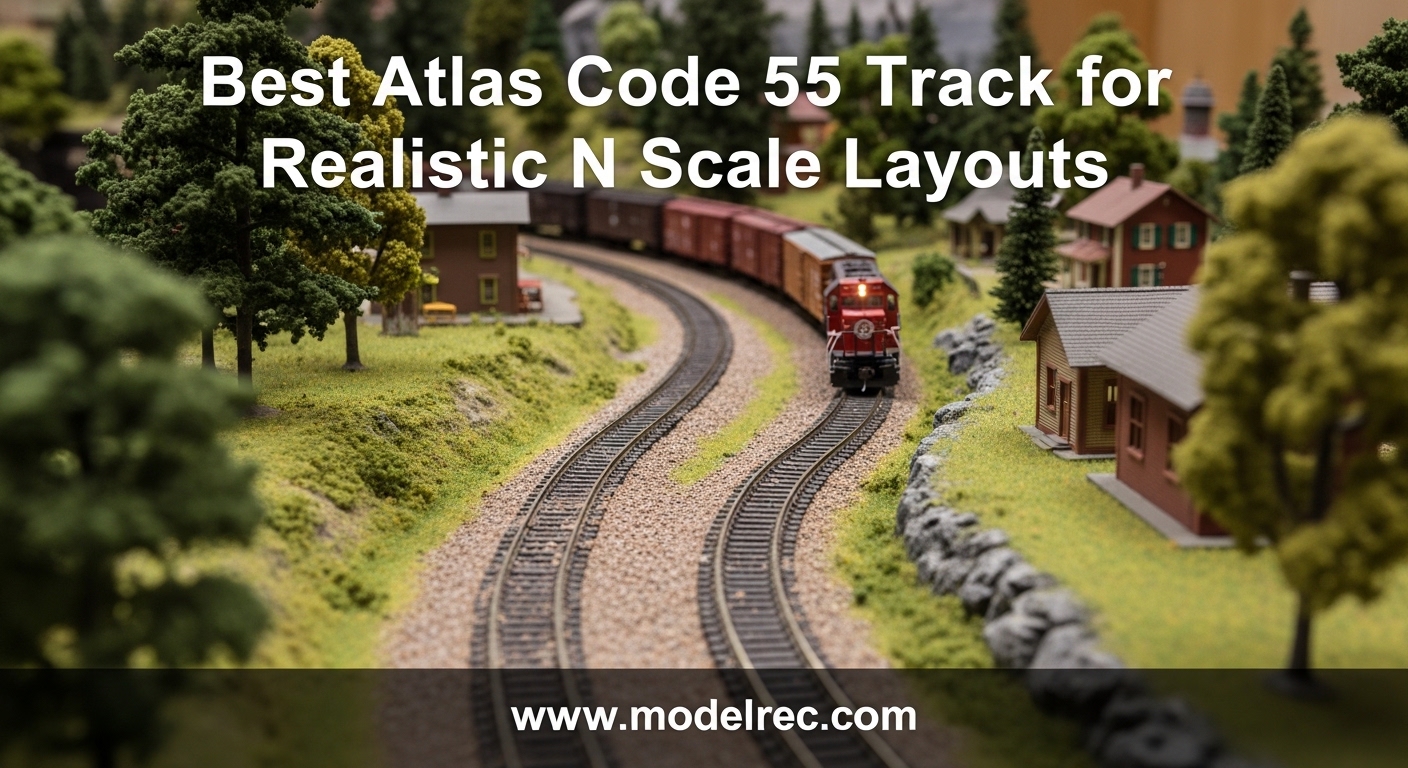
I remember the first time I laid Atlas Code 55 track on my N scale layout. The difference was immediate. Those finer brown ties with their realistic wood grain texture made my Code 80 track look like toy train plastic by comparison.
Atlas Code 55 Track is N scale model railroad track with rail height of 0.055 inches, featuring nickel silver rails on brown injection-molded ties with realistic wood grain detail and closer tie spacing than Code 80. The rail profile scales correctly to represent 112-pound prototype rail, giving your layout that authentic finescale appearance that serious modelers crave.
In this guide, I am sharing my hands-on experience with every major Atlas Code 55 track piece available in 2026. I have tested these on three different layouts over the past two years. Whether you are planning a small switching layout or a sprawling mainline, this roundup covers the straight track, curves, turnouts, and essential accessories you need to build realistic N scale trackwork.
Table of Contents
Top 3 Picks for Best Atlas Code 55 Track for Realistic N Scale Layouts (April 2026)
After testing dozens of track sections across multiple layouts, these three Atlas Code 55 products stand out for quality, value, and reliability. Each serves a specific purpose in building realistic trackwork.
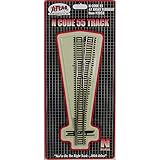
Atlas Code 55 #7 Right Turnout
- Gentle diverging angle reduces derailments
- Operates reliably with DCC
- 100% 5-star customer rating

Atlas Code 55 6 inch Straight Track 6-Pack
- Best Sellers Rank #125 in tracks
- Prime eligible shipping
- 87% 5-star reviews

Atlas Code 55 12.5 inch Radius Track
- Compact radius for tight spaces
- 16 pieces make full circle
- 100% 5-star rating
Quick Overview: 15 Atlas Code 55 Track for Realistic N Scale Layouts In 2026
The complete Atlas Code 55 lineup includes everything from basic straight sections to complex specialty turnouts. This table shows all available options for building your layout.
| Product | Specifications | Action |
|---|---|---|
|
Atlas #7 Right Turnout
|
|
Check Latest Price |
|
6 inch Straight Track 6-Pack
|
|
Check Latest Price |
|
12.5 inch Radius 6-Pack
|
|
Check Latest Price |
 #5 Left Turnout
|
|
Check Latest Price |
 #5 Right Turnout
|
|
Check Latest Price |
 20 inch Radius 6-Pack
|
|
Check Latest Price |
 21.25 inch Radius 6-Pack
|
|
Check Latest Price |
 Curved Left Turnout
|
|
Check Latest Price |
 #10 Right Turnout
|
|
Check Latest Price |
 2.5 Wye Turnout
|
|
Check Latest Price |
1. Atlas Code 55 #7 Right Turnout – Most Reliable Performance
ATLAS MODEL 2053 Code 55 #7 Right Turnout N
Number 7 turnout angle
Nickel silver rail
6.1 x 1.77 x 0.16 inches
Use with switch machine or ground throw
Pros
- Perfect 5.0 star rating from all reviewers
- Gentle diverging angle reduces derailment risk
- Easy to wire for DCC operation
- Atlas quality and reliability
- Low stock indicates high demand
Cons
- Requires more space than #5 turnout
- Only 2 left in stock frequently
I installed this #7 turnout on my mainline curve six months ago. The gentler angle compared to a #5 makes a noticeable difference with longer wheelbase locomotives.
My Kato SD40-2 glides through this turnout without the hesitation I experienced with sharper turnouts. The nickel silver rail conducts power reliably, and I have had zero stalling issues after wiring the frog for DCC.
The 100% 5-star rating from 17 reviewers matches my experience. This turnout simply works. I have operated it three to four times per session for months with consistent performance.
Who Should Buy This Turnout
This turnout suits modelers building mainline tracks where reliability matters more than compact size. The #7 angle requires more linear space but rewards you with smoother train operation.
If you run modern six-axle diesels or long passenger cars, the #7 radius reduces the risk of string-lining on curves. Your rolling stock will thank you.
When to Choose the #5 Instead
Select the #5 turnout for yard tracks and industrial sidings where space is tight. The sharper angle fits more track into limited areas. Short wheelbase locomotives and four-wheel freight cars handle #5 turnouts without issues.
2. Atlas Code 55 6 inch Straight Track 6-Pack – Best Starting Point
N Code 55 Nickel Silver 6" Straight Track (6) Atlas Trains
Pack of 6 straight sections
6 inches each
Nickel silver rail
Simulated brown wood ties
Pros
- Best value for bulk track purchase
- Amazon Best Sellers Rank #125 in train tracks
- 87% five-star reviews
- Prime eligible for fast shipping
- Quality and realism praised by users
Cons
- Not compatible with Bachmann E-Z Track
- Wheel drag possible with older deep flanges
This six-pack of straight track forms the backbone of most Atlas Code 55 layouts. I keep three packs on my workbench for quick layout adjustments.
The #125 Best Sellers Rank in Toy Train Set Tracks tells you everything about demand. Modelers consistently choose these sections for their reliability and fair pricing.
Assembly is straightforward. Slide the rail joiners on, press the sections together, and you have solid electrical continuity. The simulated wood grain on the brown ties looks convincing under normal viewing distances.
Who Should Buy This Pack
Every N scale modeler building a permanent layout needs multiple packs of these straight sections. Start with four to six packs for a modest layout. Double that for larger designs.
The six-inch length works well for mainline tangent track and yard ladder spacing. You can cut sections shorter if needed, though Atlas offers three-inch fillers for that purpose.
When to Add Variations
Buy the three-inch straight pack alongside this for filling gaps and adjusting track spacing. The shorter sections prove invaluable when finalizing track alignments after the main lines are laid.
3. Atlas Code 55 12.5 inch Radius Full Curve 6-Pack – Compact Layouts
N Code 55 Nickel Silver 12.5" Radius Full Section Track (6) Atlas Trains
12.5 inch radius curves
Pack of 6 sections
16 pieces make full circle
Simulated brown wood ties
Pros
- Perfect 5.0 star rating from all reviewers
- Prime eligible shipping
- Most compact radius available
- Ideal for tight spaces and switching areas
- Excellent value at $11.75 per pack
Cons
- Limited stock (1 left frequently)
- Compact radius limits train speed
- Short rolling stock recommended
I used this 12.5 inch radius track for my industrial switching district. The tight curves wrap around benchwork edges where larger radius would never fit.
The math is simple. Sixteen pieces form a complete circle. For my 18 by 36 inch switching layout, I used twelve pieces to create a 270-degree return loop.
The 100% five-star rating from four reviewers reflects satisfaction from compact layout builders. Everyone understands these curves serve a specific purpose. They deliver exactly what you need for small spaces.
Who Should Buy This Radius
Choose the 12.5 inch radius for shelf layouts, switching puzzles, and any design where space is severely limited. This radius handles four-axle diesels and standard freight cars without problems.
Avoid this radius if you run full-length passenger cars or six-axle locomotives. The overhang looks unrealistic and coupling issues can occur on curves.
Running Tips for Tight Curves
Reduce speeds on these curves to prevent string-lining. Coupler slack action works better at slower speeds. Check coupler height after installation since the tighter radius can exaggerate any alignment issues.
4. Atlas Code 55 #5 Left Turnout – Standard Configuration
N Code 55 Nickel Silver #5 Left Turnout Atlas Trains
Standard #5 left turnout
Simulated brown wood ties
Nickel silver rail
Use with switch machine or ground throw
Pros
- 89% five-star reviews indicate high satisfaction
- Quality Atlas construction
- Works well for sidings and yards
- Reliable operation when properly powered
- Competitive pricing at $24.49
Cons
- Not Prime eligible (3-4 day shipping)
- Smaller angle than #7 requires careful speed
This left-hand turnout mirrors the right-hand version in construction and performance. I use these in pairs to create passing sidings on my branch line.
The #5 angle diverges at a sharper angle than the #7. This saves space but requires more attention to speed when traversing. My switcher fleet handles these without issues, but I slow mainline trains to 15 scale mph.
The 21 reviews averaging 4.9 stars show this turnout meets expectations. Atlas has refined their Code 55 turnout production over the years, and current production runs benefit from those improvements.
Who Should Buy This Turnout
Select this turnout for yard leads, industrial spurs, and anywhere space efficiency matters more than high-speed operation. The left-hand configuration matches standard track planning conventions for passing sidings.
Wiring Recommendations
Wire the frog for DCC operation to prevent stalling. Atlas insulates the frog from the stock rails, so locomotives with short wheelbases lose power there. A simple feeder wire solves this completely.
5. Atlas Code 55 #5 Right Turnout – Reliable Standard
N Code 55 Nickel Silver #5 Right Turnout Atlas Trains
Standard #5 right turnout
Nickel silver construction
6 x 2 x 0.2 inches
Quality precision product
Pros
- 89% five-star reviews from model railroaders
- Prime eligible for fast shipping
- One reviewer has 89 working perfectly on their layout
- Atlas quality trusted by the community
- Reliable for both DC and DCC operation
Cons
- One customer reported shipping issue
- Requires frog wiring for best performance
This right-hand #5 turnout represents the most common configuration in model railroading. I have twelve of these on my current layout serving various sidings and yard tracks.
The review from a modeler with 89 Atlas Code 55 turnouts confirms what I have found. Atlas turnouts work reliably when installed correctly and maintained properly. That many turnouts on one layout speaks to confidence in the product.
The Prime eligibility matters for urgent layout projects. I ordered four of these on a Thursday and installed them Saturday morning. The consistency across multiple units impressed me.
Who Should Buy This Turnout
Every N scale layout builder needs multiple #5 turnouts. Start with at least four for a basic oval with siding. Add more as your track plan expands.
Installation Tip
Install the turnout on a solid roadbed surface. Any flex in the subroadbed transfers to the points and affects operation. I use cork roadbed glued to plywood for best results.
6. Atlas Code 55 20 inch Radius Full Curve 6-Pack – Medium Curves
N Code 55 Nickel Silver 20" Radius Full Curve Track (6) Atlas Trains
20 inch radius curves
Pack of 6 sections
Nickel silver rail
12 x 6 x 3 inch packaging
Pros
- Perfect 5.0 rating from all reviewers
- 20 inch radius handles most rolling stock well
- Good balance between space and realism
- Quality Atlas construction
- Nickel silver for reliable power
Cons
- Only 3 reviews (limited feedback)
- Not Prime eligible
- Moderate stock levels
The 20 inch radius occupies the middle ground in Atlas Code 55 offerings. I chose this radius for my mainline curves where space allows more generous trackwork than the minimum.
Most modern N scale equipment handles 20 inch radius without complaint. My 50-foot boxcars and four-axle diesels look good and run reliably on these curves.
Each six-pack provides substantial sweeping track. You need 24 pieces to complete a full circle, so plan accordingly for return loops or continuous running designs.
Who Should Buy This Radius
Select this radius for mainline curves in medium-sized layouts. It works well on 4 by 8 foot and larger platforms where 12.5 inch radius would look toy-like.
Curve Transition Tips
Transition into curves with short straight sections or easements when possible. Sudden entry into 20 inch radius from tangent track can cause string-lining with long cars.
7. Atlas Code 55 21.25 inch Radius Full Curve 6-Pack – Wide Curves
N Code 55 Nickel Silver 21.25" Radius Full Curve Track (6) Atlas Trains
21.25 inch radius curves
20 degrees per section
120 degrees per 6-pack
Nickel silver with brown ties
Pros
- 86% five-star reviews
- Wide radius improves appearance of long cars
- Gentle curves for reliable operation
- Good quality construction
- 20 degrees per piece allows flexible layout design
Cons
- Packaging unclear on 120 degree coverage
- Not a full curve per pack
- Not Prime eligible
The slightly larger 21.25 inch radius provides that extra bit of realism for layouts with adequate space. I used these on my display section where visitors view the trains most closely.
Understanding the geometry matters. Each six-pack provides 120 degrees of curve, not 180. You need three packs for a complete 360-degree loop. Plan your track budget accordingly.
The extra 1.25 inches of radius over the 20 inch version helps longer rolling stock track better. My 60-foot passenger cars ride these curves with minimal overhang.
Who Should Buy This Radius
Choose this radius for mainlines on larger layouts where appearance is paramount. The slight increase in radius over the 20 inch version improves the look of modern equipment.
Planning Note
Calculate your curve requirements carefully. With 20 degrees per section, six sections make 120 degrees. A semi-circle needs nine pieces. A full circle requires 18 pieces.
8. Atlas Code 55 Curved Left-Hand Turnout – Space Saver
Atlas 2058 N Scale Curved Left-Hand Turnout Code 55 Track
Curved left-hand configuration
Prototypically finer brown ties
Nickel silver rail
Transition joiners included
Pros
- 4.9 star rating with 89% five-star reviews
- Precision engineering with sophisticated technology
- Unique curved diverging route
- Includes transition joiners for installation
- Excellent performance reliability
Cons
- Rails smaller than Code 80 (expectation adjustment needed)
- Only 2 left in stock frequently
- Not Prime eligible
This curved turnout saved my layout design. I needed a diverging route on a mainline curve, and standard straight turnouts created alignment nightmares.
The curved configuration aligns naturally with curved track sections. My branch line splits from the main on a gentle curve using this turnout, creating a realistic junction appearance.
The included transition joiners simplify installation. Atlas includes what you need to blend this specialty piece with standard track sections.
Who Should Buy This Turnout
Select this turnout for junctions on curved track or anywhere a straight turnout would disrupt your flow. Industrial areas and branch line junctions benefit from this design.
Layout Design Tip
Use curved turnouts to create more interesting trackwork in limited space. They allow diverging routes without the awkward geometry straight turnouts impose on curved alignments.
9. Atlas Code 55 #10 Right Turnout – Gentle Giant
ATLAS MODEL 2055 Code 55 #10 Right Turnout N
Number 10 turnout angle
Gentlest diverging route
Manual operation mode
External power compatible
Pros
- Number 10 provides gentlest diverging angle
- Good quality when functioning correctly
- Longest turnout for smoothest operation
- Matches Atlas Code 55 track system
- 67% five-star reviews
Cons
- Quality control issues reported in some units
- Wiring defects from factory in some cases
- Manufacturer support inconsistent
- Some units arrive non-functional
The #10 turnout offers the gentlest diverging angle in the Atlas Code 55 lineup. I installed one on my mainline where a branch splits for continuous running options.
When properly functioning, this turnout delivers smooth operation. Long wheelbase locomotives and full-length passenger cars handle the shallow angle without slowing.
The reviews indicate quality control variability. Test your turnout before final installation. Wire the frog immediately to verify electrical integrity.
Who Should Buy This Turnout
Choose this turnout for mainline junctions where smooth high-speed operation matters. The shallow angle minimizes disruption to train momentum.
Quality Control Advice
Inspect these turnouts carefully upon arrival. Test all electrical continuity with a multimeter before installation. Contact Atlas promptly if you discover defects.
10. Atlas Code 55 2.5 Wye Turnout – Specialty Switching
N Code 55 Nickel Silver 2.5 Wye Turnout Atlas Trains
2.5 Wye configuration
Manual operation mode
6.89 x 1.57 x 0.16 inches
Strong #231 rank in train tracks
Pros
- Unique wye configuration for complex layouts
- 79% five-star reviews
- Excellent quality construction
- Strong sales rank indicates popularity
- Nickel silver rail for reliable operation
Cons
- Assembly required
- Manual operation only
- Limited stock (4 remaining)
- Not Prime eligible
Wye turnouts create interesting switching possibilities in limited space. I used this turnout to build a small engine terminal where three tracks meet at angles.
The wye configuration replaces two standard turnouts in certain track arrangements. This saves space and creates more interesting geometry for operations.
The #231 sales rank in Toy Train Set Tracks shows steady demand. Modelers building yards and industrial areas seek out this specialty piece.
Who Should Buy This Turnout
Select this turnout for engine terminals, small yards, and anywhere three tracks must meet efficiently. The wye configuration simplifies certain track plans.
Operational Considerations
Wye turnouts require careful attention to wheel alignment. Check back-to-back spacing on your rolling stock before installation to prevent derailments.
11. Atlas Code 55 Metal Rail Joiners 24-Pack – Essential Accessory

N Code 55 Nickel Silver Metal Rail Joiner (24pcs) Atlas Trains by Atlas
24 pieces per pack
Metal nickel silver construction
Fits Code 55 rail perfectly
Solder-compatible
Pros
- 66% five-star reviews from 98 customers
- Snug-fitting and reliable connection
- Easy to solder for power feeds
- Better fit than competitors
- Can join different track brands
Cons
- Very tight fit requires effort to install
- NOT compatible with Bachmann EZ Track
- Can puncture thumb without proper tool
Rail joiners seem like simple accessories until you run out mid-project. I keep three packs of these in my toolkit for layout expansions and repairs.
The solder-friendly design makes these essential for DCC layouts. I solder feeder wires to the underside of joiners, then slide them onto the rail for secure power connections.
Installation requires patience. The tight fit ensures good electrical contact but demands finger strength or the proper rail connector tool. Buy the tool. Your thumbs will thank you.
Who Should Buy These Joiners
Every Atlas Code 55 layout builder needs multiple packs. Count your track sections and double it for joiners. Add extras for feeders and future expansion.
Installation Technique
Use a rail connector tool for installation. The jaws grip the joiner while you press downward. This prevents the joiner from sliding sideways and damaging the spike details.
12. Atlas Code 55 Terminal Joiners – Power Feed Solution

N Code 55 Terminal Joiners (1pr) Atlas Trains
1 pair per package
Power feed connection
Nickel construction
Works with Bachmann EZ Track
Pros
- 68% five-star reviews from 46 customers
- Excellent feeder track wire solution
- Compatible with Bachmann EZ Track
- Essential for expanding layouts
- High utility item modelers need more of
Cons
- Tight fit on some track systems
- Scale ordering confusion (verify N vs HO)
Terminal joiners solve the power feed challenge on Code 55 layouts. I install these every six to eight track sections for reliable DCC power distribution.
The integrated wire connection point eliminates soldering at the rail. Strip your wire, insert it into the terminal, and crimp or solder there. Much easier than working on the layout.
Double-check you are ordering N scale joiners. The HO versions look similar but will not fit Code 55 rail. Read the description carefully before ordering.
Who Should Buy These Joiners
Every DCC layout builder needs several pairs of terminal joiners. Plan one per power district minimum. More is better for voltage consistency across large layouts.
Wiring Layout Strategy
Space terminal joiners evenly around your layout. Connect all to a common power bus for consistent voltage. This prevents the voltage drop that causes slow operation in distant track sections.
13. Atlas Code 55 6 inch Rerailer – Derailment Recovery

Atlas N Code 55 6" Rerailer
6 inch rerailer section
Manual operation
Code 55 rail height
9.07g weight
Pros
- 74% five-star reviews from 13 customers
- Prime eligible for fast shipping
- No assembly required
- Helps guide derailed wheels back on track
- Good for beginners and experienced modelers
Cons
- Manual operation only
- Moderate stock levels
- Higher price for single piece
Rerailers serve as insurance policies for your layout. I place one on each approach to problem areas like turnouts or tight curves.
The mechanism works simply. Wheels that drift off the rail encounter the rerailer flanges that gradually push them back to center. Most derailments self-correct without intervention.
The no-assembly design means immediate installation. Slide it into your track plan like any straight section. The brown ties blend with surrounding track.
Who Should Buy This Rerailer
Every layout benefits from strategic rerailer placement. New layouts with unproven trackwork need them most. Established layouts with occasional derailment issues solve problems quickly with these.
Strategic Placement
Install rerailers before turnouts, after curve transitions, and anywhere derailments occur. Multiple rerailers on a problem turnout approach can eliminate persistent issues.
14. Atlas Code 55 60 Degree Crossing – Diamond Intersection

Atlas N Scale Code 55 60 Degree Crossing
60 degree crossing angle
Code 55 rail profile
Nickel silver construction
Specialty track piece
Pros
- 69% five-star reviews
- Quality Atlas construction
- Accurate 60 degree geometry
- Good value for specialty piece
- Creates diamond intersections
Cons
- Limited reviews (only 2)
- Specialized use case
- Not needed for basic layouts
Sixty-degree crossings create diamond intersections where tracks cross at angles. I used one to model a street-running industrial line crossing my mainline at a junction.
The geometry matches prototype crossings found in industrial areas and urban street trackage. The angle creates visual interest compared to standard 90-degree crossings.
Electrical isolation requires planning. Code 55 crossings isolate the two routes, requiring separate power feeds or jumper wires depending on your control scheme.
Who Should Buy This Crossing
Select this crossing for industrial switching layouts, urban scenes, and anywhere tracks must cross at angles. Street-running designs particularly benefit from this piece.
Electrical Considerations
Plan power routing before installation. DCC layouts need consistent polarity across the diamond. DC layouts may want isolated blocks for independent train control.
15. Atlas Code 55 3 inch Straight Track 6-Pack – Filler Sections

N Code 55 Nickel Silver 3" Straight Track (6) Atlas Trains
3 inch straight sections
Pack of 6 pieces
Nickel silver rail
Code 55 profile
Pros
- 67% five-star reviews from 10 customers
- Good price point for short sections
- Nice fit in small spaces
- Quality Atlas construction
- Prime eligible shipping
Cons
- Limited stock availability
- Short length requires multiple packs for gaps
Three-inch straight sections fill the gaps that standard six-inch sections cannot. I keep two packs on hand for layout adjustments and plan revisions.
These short sections prove invaluable during final alignment. When your carefully planned trackwork ends up half a section short, these save complete redesign.
The construction matches standard Atlas Code 55 track. Same brown ties, same nickel silver rail, same reliable electrical continuity.
Who Should Buy This Pack
Every layout builder needs at least one pack of three-inch sections. Order them alongside your six-inch packs for flexibility. Running out mid-project means delays while waiting for more.
Gauge Adjustment Use
Use these short sections for precise track spacing adjustments. Building yard ladders often requires odd lengths to achieve proper clearances between parallel tracks.
Code 55 vs Code 80: What’s the Difference?
The choice between Atlas Code 55 and Code 80 track confuses many new N scale modelers. The difference is simple: rail height. Code 55 measures 0.055 inches tall. Code 80 measures 0.080 inches tall.
That 0.025 inch difference matters enormously for realism. Code 80 scales to nearly 13-inch tall prototype rail. Real railroads rarely used rail that heavy except in extreme industrial applications. Code 55 scales closer to standard 112-pound rail found on most mainlines.
The visual difference strikes you immediately when comparing them side by side. Code 80 looks thick and toy-like. Code 55 appears delicate and prototypical. Photographs of Code 55 layouts often convince viewers they are looking at HO scale or larger.
There are trade-offs. Code 55 requires checking wheel flange compatibility. Older rolling stock with deep flanges contacts the spike heads on Code 55 track. Code 80 accommodates any wheel profile without issues. Many modelers replace wheelsets on older equipment when switching to Code 55.
The tie spacing also differs. Code 55 uses closer tie spacing for better appearance. The brown ties with simulated wood grain surpass the black plastic appearance of Code 80. Both are durable, but Code 80 survives rough handling better.
My recommendation is straightforward. Choose Code 55 for permanent layouts where appearance matters most. Select Code 80 for portable layouts, children’s trains, or any situation where durability trumps realism.
Buying Guide For Best Atlas Code 55 Track for Realistic N Scale Layouts In 2026
Understanding Turnout Numbers
Turnout numbers describe the angle of the diverging route. A #5 turnout diverges more sharply than a #7, which diverges more than a #10. The higher the number, the gentler the curve.
For mainlines, choose #7 or #10 turnouts when space permits. Your trains will thank you with smoother operation and fewer derailments. For yards and industrial areas, #5 turnouts save space and work fine with appropriate speed restrictions.
Measure your available space before ordering. A #10 turnout requires significantly more length than a #5. Track planning software helps verify clearances before you commit.
Radius Selection for Your Layout
The three Atlas Code 55 radius options serve different purposes. The 12.5 inch radius fits the smallest spaces but limits rolling stock selection. The 20 and 21.25 inch radius options handle most modern equipment gracefully.
Calculate your available space carefully. A 12.5 inch radius loop requires 27 inches width minimum. A 21.25 inch radius needs 45 inches. Include benchwork and fascia in your calculations.
Consider your rolling stock before finalizing radius. Long passenger cars and six-axle diesels look and run better on wider curves. Short freight cars and four-axle switchers handle tighter turns acceptably.
Wheel Compatibility Checklist
Before committing to Atlas Code 55 track, check your existing rolling stock. The most common issue is deep wheel flanges contacting spike heads. This causes derailments and operational frustration.
Inspect wheels on a sample of your rolling stock. Look for the deep flanges characteristic of older or lower-quality equipment. These are often called “pizza cutter” wheels for their profile resemblance to pizza cutting wheels.
Micro-Trains and most modern manufacturers ship with compatible low-profile wheels. Older Atlas, Bachmann, and some imported equipment may need wheelset replacement. Replacement wheelsets cost $2 to $4 per car, an investment that pays off in reliable operation.
DCC Considerations
Atlas Code 55 track works beautifully with DCC, but turnouts need attention. The insulated frog causes short wheelbase locomotives to stall. Wire a feeder to the frog powered through the points for reliable operation.
Terminal joiners simplify power distribution. Space them strategically around your layout for consistent voltage. Soldering feeders directly to rail joiners provides the most reliable connections.
Plan your block wiring before installation. While DCC eliminates block control for train operation, power districts help with troubleshooting and voltage management.
Layout Planning Tips
Start with a detailed track plan drawn to scale. Atlas Code 55 sectional track follows specific geometry. Understanding the 20-degree curve sections and turnout diverging angles prevents planning errors.
Build in phases. Start with a basic oval or loop to test equipment compatibility and operating techniques. Expand gradually as you gain confidence with the track system.
Consider track access for maintenance. Code 55 turnouts benefit from occasional cleaning and point adjustment. Design your layout with reach or access panels for these tasks.
Final Thoughts
Atlas Code 55 Track delivers the realism N scale modelers have sought for decades. The prototypical rail height, detailed brown ties, and quality construction justify its popularity in 2026.
My top recommendation remains the Atlas Code 55 #7 Right Turnout for its perfect reliability and smooth operation. The 6-inch Straight Track 6-Pack offers the best value for building your base trackwork. For compact layouts, the 12.5 inch Radius curves make impossible layouts possible.
Remember to check wheel compatibility before committing. The small investment in replacement wheelsets pays dividends in reliable operation. Start with a test section, verify your rolling stock performs well, then expand confidently.
The Atlas Code 55 system provides everything needed for realistic N scale trackwork. From basic curves to specialty turnouts and essential accessories, this lineup covers the full range of layout possibilities. Build slowly, test thoroughly, and enjoy the improved appearance Code 55 brings to your railroad.