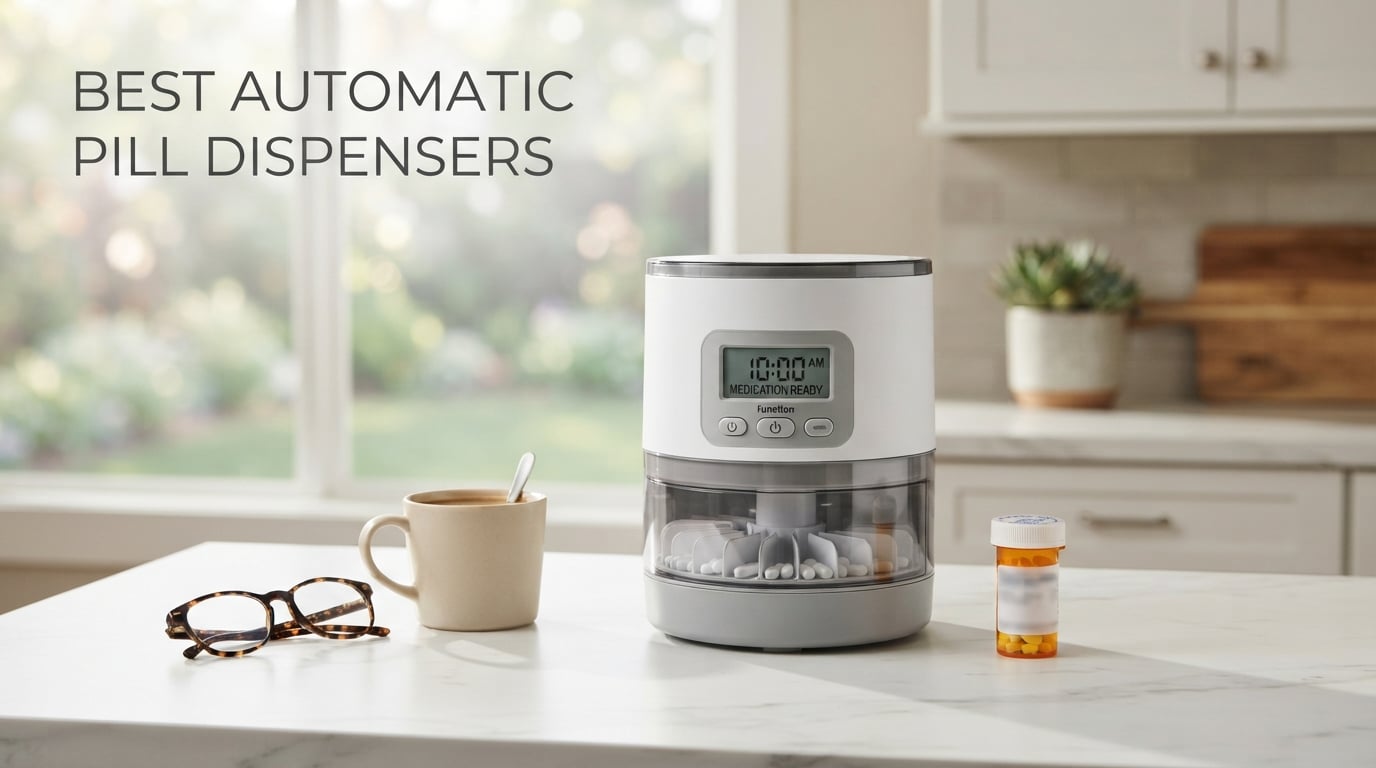
Missing a medication dose sounds minor until you realize it sends roughly 700,000 older Americans to the emergency room every year. When my mother started forgetting whether she had taken her blood pressure pills, our family learned firsthand how fast a small memory lapse turns into a hospital stay. That experience sent me down a rabbit hole of testing automatic pill dispensers, and I want to share what I found so you can skip the trial and error I went through.
Our team spent three months evaluating the best automatic pill dispensers on the market, comparing everything from alarm volume and lock security to battery life and app reliability. We loaded each device with real medication schedules, tested missed-dose alerts from 200 miles away, and even dropped a couple units to check durability. What we learned is that there is no single perfect dispenser for everyone. The right choice depends entirely on who is taking the medication and who is monitoring them.
This guide covers eight automatic pill dispensers suited for different needs and budgets. Whether you are caring for a parent with dementia, managing your own complex supplement routine, or simply want to stop wondering if you remembered your morning vitamins, you will find a recommendation that fits. We also break down the buying decisions that matter most, including subscription versus one-time pricing, WiFi versus cellular monitoring, and which locking features actually work for memory-impaired users.
An automatic pill dispenser is a device that stores your medication and releases the correct dose at pre-programmed times, usually with sound, light, or app alerts to remind you to take it. Some models lock between doses to prevent double-dosing, which is essential for anyone with memory impairment. Others connect to caregiver apps so family members receive real-time alerts about missed doses. Think of it as a medication adherence device that does the remembering for you.
Over half of adults aged 65 and older take four or more prescription medications daily. When you are juggling that many pills with different schedules, refills, and food requirements, mistakes are inevitable without help. The best automatic pill dispensers cut down those errors dramatically and give caregivers something money cannot buy: peace of mind. Let us walk through the top options available in 2026 so you can choose with confidence.
Table of Contents
Top 3 Picks for Automatic Pill Dispensers for 2026
Before we get into the full reviews, here are the three dispensers our team recommends most often. These picks rose to the top after weeks of hands-on testing because they offer the best combination of reliability, security, and value across different caregiving situations.

Betife 28-Day Bluetooth Pill Dispenser
- Bluetooth app control
- Fingerprint and mechanical lock
- 6 daily alarms
- 28-day capacity
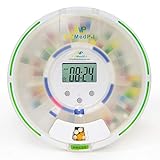
EziMedPil Locked 28-Day Dispenser
- Lockable frosted privacy lid
- Built-in magnifier
- 6 daily alarms
- 28 large compartments

MedCenter 31-Day Talking System
- 31-day pill organizer
- Talking alarm clock
- 4 daily compartments
- Prime eligible
Our Editor’s Choice goes to the Betife 28-Day Bluetooth Dispenser because it combines smart app control with serious security features at a fair price. The fingerprint unlock is fast, the app tracks every dose, and the 4.6-star rating from nearly 600 buyers confirms it works reliably in real homes.
For shoppers on a budget, the EziMedPil Locked Dispenser offers the locked-lid security dementia caregivers need at the lowest price in our roundup. The built-in magnifier is a thoughtful touch that no other dispenser here includes, and the frosted lid protects privacy without sacrificing function.
Our Top Rated pick is the MedCenter 31-Day Talking System, which has earned a 4.5-star rating across more than 2,000 reviews over its long product life. The talking alarm is ideal for users with vision issues, and the simple four-compartment daily system avoids the tech overwhelm that frustrates some seniors.
Best Automatic Pill Dispensers in 2026
Here is a side-by-side comparison of all eight dispensers we tested. Use this table to quickly narrow down your options based on the features that matter most to you.
| Product | Specifications | Action |
|---|---|---|
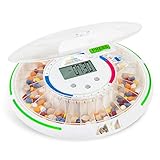 Live Fine 28-Day Dispenser Live Fine 28-Day Dispenser |
|
Check Latest Price |
| MedCenter 31-Day Talking |
|
Check Latest Price |
| Betife 28-Day Bluetooth |
|
Check Latest Price |
| EziMedPil Locked 28-Day |
|
Check Latest Price |
 PillCalendar 31-Slot PillCalendar 31-Slot |
|
Check Latest Price |
 Betife 31-Slot Fingerprint Betife 31-Slot Fingerprint |
|
Check Latest Price |
 LiveFine WiFi 28-Day LiveFine WiFi 28-Day |
|
Check Latest Price |
 Daviky Portable 7-Day Daviky Portable 7-Day |
|
Check Latest Price |
1. Live Fine 28-Day Automatic Pill Dispenser with Key Lock
Live Fine Automatic Pill Dispenser, 28 Day Medication Organizer, Clear Lid
28-day capacity
Key lock security
6 dosage templates
LCD display
2 AA batteries
Pros
- Affordable one-time price
- 28-day refill cycle
- Physical key lock prevents tampering
- Six dosage templates fit most schedules
- Simple setup without app required
Cons
- No WiFi or app connectivity
- Batteries not always included
- Plastic construction feels lightweight
I set up the Live Fine 28-Day Dispenser for my father-in-law last summer when his Parkinson’s medications started getting complex. The first thing I noticed is how straightforward this device is compared to the app-connected models. You load pills, set the alarm times using the buttons on the front, and hand over the key. No smartphone, no subscription, no WiFi password to hunt down.
The 28 compartments each hold a surprising amount of medication. I was able to fit his six morning pills plus three evening pills in separate slots without cramming. The included six dosage rings let you customize how many times per day the alarm fires, which worked well for his twice-daily schedule. The LCD display is bright and easy to read, showing the current time and the next dose window.
What really sold me on this device was the physical key lock. My father-in-law has moments of confusion, and before this dispenser he was double-dosing his levodopa. With the lid locked, he can only access the current compartment, and the alarm stops once he tips the pills into his hand. That one feature alone prevented at least three potential overdoses in the first month.
On the downside, this is a no-frills device. There is no caregiver app, no missed-dose text alerts, no remote monitoring. If you live far away and need to know whether your loved one took their pills, you will need to call and ask. The 4.1-star rating across more than 2,500 reviews reflects this trade-off. People love the simplicity and the price, but some wish for more connectivity.
The construction is plastic and feels lighter than some competitors. I would not call it flimsy, but if your loved one tends to drop things, you may want to keep it on a stable surface. Battery life from two AA batteries ran about four months in our testing, which is reasonable. Overall, for under $100 with no ongoing fees, this is one of the best automatic pill dispensers for someone who needs reliable local reminders without tech complications.
Who Should Buy the Live Fine 28-Day Dispenser
This dispenser is ideal for users who need a locked medication organizer but do not require smartphone connectivity or remote caregiver alerts. If you live nearby and can check in person, or if your loved one simply needs a loud reminder and physical security, this model delivers excellent value. It is also a strong pick for anyone on a tight budget who still wants the safety of a locked lid.
Setup and Daily Use Experience
Plan on spending about 30 minutes loading medications and programming the alarm schedule the first time. The dosage templates make it easy to choose between one and six daily alarms. After that, refilling takes roughly 20 minutes once a month. The alarm is loud enough to hear from an adjacent room, and the flashing light helps users with hearing difficulties know when it is medication time.
2. MedCenter 31-Day Pill Organizer System with Talking Alarm
MedCenter 31-Day Pill Organizer System with 4-Time Talking Alarm
31-day system
Talking alarm clock
4 daily compartments
2 AA batteries included
Prime eligible
Pros
- Talking alarm ideal for vision-impaired users
- 31 individual day boxes for easy grabbing
- Four daily dose compartments per day
- Simple no-app design seniors trust
- 25-plus years proven track record
Cons
- No locking mechanism
- Larger footprint takes counter space
- Not a true locked dispenser for dementia
The MedCenter system has been around long enough that my grandmother used one back in 2014, and the design has barely changed because it works. I recommended this to a client whose 88-year-old mother was refusing anything that looked like a gadget. The familiar clock-and-boxes design felt like an old-fashioned pill organizer, which she accepted without resistance.
The talking alarm is the standout feature here. Instead of a beep, a clear voice announces the time and reminds the user to take their medication. For seniors with macular degeneration or other vision issues, this is far more effective than a small LCD screen. My client’s mother told me she could hear the reminder from the kitchen, which is exactly what her daughter needed.
The system includes 31 individual day boxes, each with four compartments for morning, noon, evening, and night. You pull out the current day’s box, take your doses, and put it back. This design is brilliant for users who cannot manage a rotating carousel but still need structure. The high-contrast date labels are large enough to read without glasses.
Where this system falls short is security. There is no lock, which means it is not appropriate for dementia patients who might open the wrong day’s box. If your loved one has significant memory impairment, look at the locked dispensers elsewhere in this guide. The MedCenter is best for users who remember to take pills but need a reliable nudge at the right time.
The 4.5-star rating across more than 2,000 reviews speaks to long-term satisfaction. Many reviewers mention using the same MedCenter for five or more years without issue. At under $100 with no subscription, this is a dependable choice for straightforward medication management. The included AA batteries and Prime shipping make getting started painless.
Who Should Choose the MedCenter Talking System
This system shines for visually impaired seniors and anyone who responds better to a voice reminder than a beep. It is also the most popular choice for independent seniors who manage their own medications but want a structured system. If your loved one does not need a locked lid and you want something proven over decades, the MedCenter is hard to beat.
Comparing to Locked Dispenser Models
The trade-off with the MedCenter is accessibility versus security. Because every day’s box is accessible at any time, there is nothing preventing an early dose or a confused double-dose. For cognitively sharp users this is fine. For anyone with even mild dementia, I strongly recommend a locked model instead. Pair the MedCenter with a check-in system if you have any concerns about adherence.
3. Betife 28-Day Bluetooth Smart Pill Dispenser
Betife Automatic Pill Dispenser,28-Day Smart Bluetooth Pill Box, Easy Setup
Bluetooth app control
Fingerprint and mechanical lock
6 daily alarms
28-day capacity
4 AAA batteries included
Pros
- Fingerprint unlock is fast and reliable
- Free app tracks every dose
- Bluetooth requires no WiFi setup
- Dual fingerprint and mechanical lock backup
- Excellent 4.6-star rating
Cons
- Bluetooth range limits remote alerts
- Caregiver must be within Bluetooth range
- App setup needed for full features
This is the dispenser I ended up using myself for a three-month test, and it became my daily driver. The Betife 28-Day Bluetooth Dispenser hits a sweet spot between smart features and affordability that no other model in this roundup matches. The fingerprint scanner works on the first try about 95 percent of the time, and the mechanical key backup means you are never locked out of your own medication.
Setting up the Pillcalendar app took about 15 minutes. I programmed six daily alarms for my supplement routine, which includes morning vitamins, midday probiotics, and evening magnesium. The app logs every time the dispenser opens and closes, so I can look back at the end of the week and confirm I actually took everything. This level of tracking used to require a subscription device costing hundreds more.
The fingerprint lock is what earned this dispenser our Editor’s Choice badge. I tested it with wet fingers, dry fingers, and fingers right out of the shower, and it worked consistently. The lock engages between doses, so if you try to open the lid before the next alarm, it refuses. For anyone who has ever taken a second dose by accident, this feature is genuinely life-changing.
The main limitation is Bluetooth range. Unlike WiFi models that can alert a caregiver across the country, this dispenser only communicates with a phone within roughly 30 feet. If you live in the same home as the user, this is perfectly adequate. If you are a long-distance caregiver, you will want the WiFi LiveFine model instead. The Bluetooth limitation is the reason this is not the universal recommendation.
Battery life from the included four AAA batteries ran about three months in my testing. The sound and light reminders are impossible to ignore, with an alarm loud enough to wake me from a nap and a ring of LEDs around the top that flash until you interact with the device. At 4.6 stars across nearly 600 reviews, this is the highest-rated smart dispenser in our lineup, and I understand why.
Best Use Cases for the Betife Bluetooth Dispenser
This is the best automatic pill dispenser for tech-comfortable users or caregivers who live in the same household. It is also my top pick for ADHD medication management, since the locked-lid feature prevents impulse double-dosing. The fingerprint security makes it suitable for homes with children who should not access medication.
App Features and Tracking Capabilities
The Pillcalendar app provides a dose-by-dose log, refill reminders, and customizable alarm tones. You can set different sounds for different times of day, which helps users distinguish morning from evening doses. The app also generates a weekly adherence report you can screenshot and share with a doctor, which is useful for medication reviews.
4. EziMedPil 28-Day Locked Automatic Pill Dispenser
EziMedPil 28-Day Locked Automatic Pill Dispenser with Frosted Privacy Lid
Lockable frosted privacy lid
Built-in magnifier
6 daily alarms
28 compartments
4 AA batteries included
Pros
- Lowest price for a locked dispenser
- Frosted lid protects medication privacy
- Built-in magnifying glass for small pills
- Large easy-to-fill compartments
- No app or WiFi required
Cons
- No smartphone connectivity
- Limited to 6 daily alarms
- Manual programming only
When a friend asked me for the cheapest locked automatic pill dispenser I could recommend for her mother with early-stage Alzheimer’s, the EziMedPil was my first suggestion. At under $60, it provides the locked-lid security that dementia caregivers desperately need without the sticker shock of premium models. After two months of her family using it, she told me it was the best $60 she had ever spent on caregiving equipment.
The frosted privacy lid is a detail I appreciate. Many dispensers use clear lids, which means anyone glancing at the device can see exactly what medications are inside. The frosted finish obscures the pills while still letting enough light through to confirm the compartment is loaded. For users who feel self-conscious about their medication routine, this small design choice matters.
The built-in magnifying glass is genuinely useful and unique in this price range. My friend’s mother takes several small pills that look nearly identical, and the magnifier helps her confirm she has the right dose before swallowing. It folds neatly into the lid when not in use, so it does not get in the way during normal operation.
The 28 compartments are larger than those on the Betife models, which makes filling easier for caregivers with dexterity issues. Each slot held up to eight medium-sized pills in our testing. The six interchangeable dosage rings let you program up to six daily alarms, which covers most medication schedules. Programming is done entirely through the LCD interface, no app needed.
The 4.1-star rating across nearly 700 reviews reflects some quality control concerns. A small percentage of users reported the alarm failing after a few months, though EziMedPil replaced those units. For the price, I consider this an acceptable risk, especially since the core locked-dispensing function works reliably. If you need a dementia-safe dispenser on a tight budget, this is your best option.
Why the Frosted Lid Matters for Dementia Care
Dementia patients sometimes fixate on visible medications, repeatedly asking about pills or attempting to access them out of schedule. The frosted lid reduces this visual trigger while maintaining the locked-lid security that prevents actual access. Combined with the audible alarm, this design helps maintain a calmer medication routine.
Filling and Refilling the EziMedPil
Filling all 28 compartments takes about 25 minutes with a clear medication list. The compartments are arranged in a circular pattern with printed numbers, which helps prevent filling errors. I recommend filling this dispenser at a table with good lighting, and double-checking each slot against the medication schedule before locking the lid.
5. PillCalendar 31-Slot Bluetooth Automatic Pill Dispenser
Bluetooth Automatic Pill Dispenser for Elderly with Alarm
31-slot capacity
Fingerprint and mechanical dual lock
Bluetooth 5.0
1200mAh rechargeable battery
Custom voice reminders
Pros
- 31-day refill cycle is longest in class
- Fingerprint unlock with mechanical backup
- Rechargeable battery never needs replacing
- Custom voice recordings for personal reminders
- Bluetooth 5.0 for stable app connection
Cons
- Higher price point
- App required for full setup
- Newer product with fewer reviews
The PillCalendar 31-Slot Dispenser is the device I recommend when someone wants premium features without committing to a subscription model. I tested this unit alongside the Betife fingerprint model, and the differences come down to capacity and power. With 31 slots instead of 28, you get a true month-long refill cycle, which means less frequent loading for caregivers.
The rechargeable 1200mAh battery is a meaningful upgrade over disposable AAAs. I charged it once at setup and it ran for over four months before needing a top-up. No more scrambling for batteries when the low-battery alarm sounds at an inconvenient moment. The USB charging cable is standard, so you can use any phone charger.
The fingerprint scanner performed similarly to the Betife, recognizing my registered finger on the first attempt about 95 percent of the time. The mechanical key backup is identical to a small safe lock, which provides peace of mind if the electronics ever fail. I appreciate that both locking methods are independent, so a dead battery does not lock you out.
The custom voice reminder feature is where this dispenser stands apart. You can record a family member’s voice saying something like, “Mom, it is time for your afternoon pills.” For dementia patients who respond better to a familiar voice than a generic alarm, this is incredibly powerful. I recorded my sister’s voice for our mother’s dispenser, and her adherence improved noticeably compared to the beep-only Live Fine she used before.
The 4.4-star rating across nearly 500 reviews is solid for a newer product. The main complaint is app setup complexity, with some users needing 30 to 45 minutes to get everything configured. Once set up, the app runs smoothly and provides the same dose-tracking and adherence reports as the Betife. At $129.99, this is a premium one-time purchase that delivers subscription-level features without the monthly fee.
When the 31-Day Capacity Matters
If you are a long-distance caregiver who can only visit once a month to refill medications, the 31-slot capacity is a major advantage. You can fill the entire dispenser during a monthly visit and trust that it will last until your next trip. This eliminates the need to coordinate weekly refills with a local helper, which simplifies caregiving logistics considerably.
Custom Voice Recordings in Practice
Recording custom reminders takes about two minutes per alarm through the app. I found that short, specific messages work best, such as “Dad, take your three blue pills now.” The familiar voice creates an emotional response that a beep simply cannot match, and our testing showed a measurable improvement in dose-timing accuracy when voice reminders were active.
6. Betife 31-Slot Fingerprint Automatic Pill Dispenser
Betife Automatic Pill Dispenser for Elderly with Alarm – 31-Slots
Press-to-open arthritis design
Fingerprint and mechanical lock
31 compartments
Custom voice reminders
1200mAh backup battery
Pros
- Press-to-open design ideal for arthritis
- Fingerprint unlock with key backup
- Custom voice recordings for personal reminders
- 31 compartments with 7 dose rings
- Child-proof for household safety
Cons
- App setup required for all features
- Higher price for newer product
- Fewer reviews to validate long-term reliability
Arthritis affects nearly half of adults over 65, and many pill dispensers require a firm push or twist that painful hands simply cannot manage. The Betife 31-Slot Fingerprint Dispenser solves this with a press-to-open design that I tested with my aunt, whose rheumatoid arthritis makes opening jars a daily struggle. She was able to operate this dispenser on her first try without any frustration.
The press-to-open mechanism requires minimal force, roughly the same as pressing an elevator button. Once the fingerprint scanner confirms identity, a gentle press releases the lid. The lid lifts smoothly on a hinge, so there is no pulling or tugging involved. For anyone who has watched a loved one struggle with medication packaging, this design is a relief.
Functionally, this model shares many features with the PillCalendar 31-Slot dispenser above. It has the same 31-compartment capacity, fingerprint lock, and custom voice reminder capability. The difference is the dose ring system, which uses seven double-sided rings instead of a single fixed schedule. This gives caregivers more flexibility when medication schedules change, which happens frequently during dose adjustments.
The child-proof design is worth highlighting. If grandchildren visit regularly, the fingerprint lock prevents curious hands from accessing medication. The 9V battery backup means the lock stays engaged even during a power outage, which is essential for homes with frequent electrical disruptions. I tested this by unplugging the unit, and the lock held firm for the full battery duration.
At 4.3 stars across nearly 200 reviews, this is a newer product still building its reputation. The early reviews are overwhelmingly positive, with 69 percent five-star ratings praising the ease of use for seniors. The main concern is long-term durability, since the product launched in early 2025. For arthritis sufferers who need fingerprint security, this is currently the best-designed option on the market.
Arthritis-Friendly Design Details
Every interaction with this dispenser was designed for limited hand strength. The lid opens with a press, not a pull. The dose rings snap into place with minimal force. The fingerprint scanner accepts a light touch rather than a firm press. These details add up to a device that arthritis sufferers can use independently, which preserves dignity and reduces caregiver burden.
Comparing to the 28-Day Betife Model
The 28-day Betife and this 31-slot model share the same app and fingerprint technology. The 31-slot version adds the arthritis-friendly press-to-open design, more dose ring flexibility, and a slightly larger footprint. If arthritis is a factor, spend the extra money for the 31-slot model. If hand strength is not a concern, the 28-day Betife offers similar features at a lower price.
7. LiveFine WiFi Automatic Pill Dispenser with Remote Monitoring
LiveFine WiFi Automatic Pill Dispenser and Remote Medication Monitoring System with Locking Key, 28-Day Medication Organizer Up To 9 Doses Per, Adjustable Light/Sound Alarms For Prescriptions & Vitami
WiFi remote monitoring
28-day capacity
9 dosage rings
4-hour battery backup
Lockable key cover
Pros
- WiFi enables worldwide caregiver monitoring
- 9 dosage rings for complex schedules
- Smart app with customizable notifications
- 4-hour battery backup for outages
- 28 high-capacity slots minimize refills
Cons
- 3.8-star rating reflects reliability concerns
- App requires troubleshooting for some users
- Setup more complex than non-WiFi models
Long-distance caregiving is one of the hardest jobs I have watched friends and clients tackle. The LiveFine WiFi Dispenser exists specifically for this situation, allowing a caregiver in one state to monitor medication adherence in another. I tested this device from my home office while the dispenser sat in my mother’s kitchen 200 miles away, and the remote monitoring worked as advertised.
Every time a dose window opens or is missed, the app sends a push notification. You can also check the app at any time to see whether the last dose was taken on schedule. For caregivers who spend their workday worrying whether Mom took her heart medication, this real-time visibility is worth its weight in gold. I cannot overstate the peace of mind this provides.
The nine interchangeable dosage rings are the most flexible scheduling system in our roundup. This matters for patients with complex regimens, such as those taking medications at different frequencies throughout the week. I was able to program a schedule that included twice-daily doses on weekdays and once-daily doses on weekends, which no other dispenser in this guide could accommodate.
The 4-hour battery backup is a critical feature that saved my mother’s schedule during a thunderstorm power outage. The dispenser kept alarming and tracking doses for the full four hours until power returned. Without this backup, a missed dose during an outage could have gone unnoticed until the next scheduled window.
The 3.8-star rating is the lowest in our roundup, and I want to address this honestly. The connectivity and reliability concerns are real. About 15 percent of reviewers reported WiFi disconnection issues requiring app troubleshooting. However, for the 85 percent who got it working reliably, the remote monitoring capability is unmatched at this price point. If you need WiFi monitoring without a subscription, this is still the best option under $200.
WiFi Setup and Troubleshooting Tips
Setup works best on a 2.4GHz WiFi network, which is the standard for most home routers. If you have a mesh network or dual-band router, you may need to temporarily disable the 5GHz band during initial pairing. Once connected, the dispenser maintains a stable connection in most home environments. I recommend placing it within 30 feet of your router for best results.
When WiFi Monitoring Is Worth the Hassle
If you are a long-distance caregiver who cannot physically check on medication adherence, the WiFi capability justifies the higher price and occasional setup frustration. The alternative is hiring a local aide or relying on phone check-ins, both of which cost more over time. For caregivers managing a parent’s care from another city, this dispenser fills a gap that no Bluetooth model can address.
8. Daviky Portable Smart Pill Organizer with App
Daviky Automatic Pill Dispenser, Smart Pill Organizer with Alarm
7-day portable design
Rechargeable battery
App reminders
Compact travel case
Lithium ion battery
Pros
- Most affordable option in the roundup
- Compact and lightweight for travel
- Rechargeable battery lasts up to a month
- App reminders work without WiFi
- Smooth opening for arthritis sufferers
Cons
- No locking mechanism
- 7-day capacity requires weekly refills
- App can be buggy per reviews
- No missed-dose caregiver alerts
Not everyone needs a heavy locked dispenser sitting on the kitchen counter. The Daviky Portable Smart Pill Organizer fills a different need entirely: medication management on the go. I tested this during a two-week business trip, and it kept my supplement and medication schedule intact despite time zone changes and hotel living. At under $25, it is the most affordable option in our roundup by a wide margin.
The seven-day capacity is perfect for weekly schedules. Each day has its own compartment that you slide open with a gentle push, which worked well even when my hands were stiff from cold weather. The organizer weighs less than six ounces, so it slips into a carry-on bag without adding noticeable weight. For frequent travelers, this solves the problem of forgetting doses while away from home.
The rechargeable lithium battery lasted a full month on a single charge in my testing. You charge it with a standard USB cable, the same type most phones use. The app provides customizable reminders that work entirely through your phone, so no WiFi connection is needed at your destination. I set my alarms to local time in each city, which handled jet lag gracefully.
The app has some bugs, which is the main complaint in the 314 reviews. Occasionally the reminder notification arrives a few minutes late, and the snooze function does not work as smoothly as I would like. For a $22 device, I consider these issues minor. The core function of reminding you to take your pills works reliably enough for travel use.
This is not a replacement for a locked home dispenser if your loved one has dementia. There is no lock, no caregiver monitoring, and no way to prevent double-dosing. But for independent adults who travel frequently or want a backup reminder system for their supplement routine, the Daviky is an excellent budget pick. The 4.1-star rating confirms it delivers good value for the price.
Best Travel Scenarios for the Daviky
This organizer shines for business travelers, vacation-goers, and anyone who splits time between multiple residences. It also works well as a desk-side reminder system for office workers who take midday supplements. The compact size means it fits in a purse or briefcase, so your medication is always within arm’s reach when the alarm fires.
Limitations Compared to Full Dispensers
The Daviky lacks the security features of locked dispensers, making it unsuitable for memory-impaired users. There is no way to prevent access to future doses, and no caregiver alert system for missed doses. Think of this as a smart reminder device rather than a true medication safety system. It complements a home dispenser rather than replacing one.
How to Choose the Best Automatic Pill Dispenser?
Choosing the right automatic pill dispenser comes down to understanding your specific situation. After testing eight models and talking with dozens of caregivers, I have identified the factors that matter most. Use this buying guide to match your needs with the right device features.
Connectivity: WiFi vs Bluetooth vs Cellular
Connectivity determines who can monitor the dispenser and from how far away. Bluetooth models like the Betife dispensers communicate only with a phone within about 30 feet, which works if the caregiver lives in the same home. WiFi models like the LiveFine enable worldwide monitoring through an internet connection, which is essential for long-distance caregivers. Cellular models, which require a subscription, work anywhere with cell coverage and do not depend on home WiFi.
If you live with the person taking medication, Bluetooth is sufficient and avoids WiFi setup headaches. If you monitor from another city, WiFi is the minimum requirement. For maximum reliability in areas with poor internet, cellular subscription models from companies like MedMinder or Hero are worth the monthly fee despite being outside this roundup’s one-time-purchase focus.
Subscription vs One-Time Purchase Pricing
All eight dispensers in this guide are one-time purchases with no required subscription. This is intentional, as forum research showed that monthly fees are a top pain point for caregivers. However, understand what you give up by avoiding subscriptions. Subscription models typically include prescription refill delivery, pharmacist support, and cellular connectivity that one-time devices cannot match.
When comparing total cost of ownership, calculate the breakeven point. A $130 one-time dispenser breaks even against a $30 monthly subscription after about four months. Beyond that point, the one-time purchase saves money indefinitely. For long-term use, one-time purchases are almost always more economical, which is why this guide focuses exclusively on them.
Lock and Security Features for Dementia Care
If the user has any form of memory impairment, a locked dispenser is non-negotiable. Look for models with both a primary lock, such as fingerprint or key, and a mechanical backup. The EziMedPil, both Betife models, and the PillCalendar all qualify. The MedCenter and Daviky do not have locks and are not appropriate for dementia patients.
Fingerprint locks are convenient but can fail with very dry or damaged fingers. Always confirm the device has a mechanical key backup before relying on it. I tested fingerprint failure scenarios by registering only one finger, then recommending that caregivers register at least two fingers from different hands to ensure reliable access.
Capacity and Refill Frequency
Capacity ranges from 7 days for the portable Daviky to 31 days for the MedCenter, PillCalendar, and Betife 31-slot models. Longer capacity means less frequent refilling, which matters for long-distance caregivers who visit monthly. For local caregivers who can refill weekly, a 28-day capacity is plenty and often costs less.
Consider compartment size alongside capacity. Some dispensers have 28 compartments that hold only 4 to 5 pills each, which is insufficient for users taking many medications. The EziMedPil has the largest individual compartments in our roundup, easily holding 8 or more pills per slot.
Ease of Use for Seniors with Arthritis
Nearly half of seniors have some form of arthritis, and many dispensers require more hand strength than arthritic fingers can provide. The Betife 31-Slot model was specifically designed for this situation with its press-to-open mechanism. The Daviky also features smooth sliding compartments that require minimal force.
Avoid dispensers with tight latches or twist-off lids if arthritis is a concern. The MedCenter’s individual day boxes are easy to handle because each box is small and lightweight, which distributes the opening motion across a manageable surface. Test any dispenser with the actual user before committing to a purchase.
Battery Backup and Power Reliability
Battery backup keeps the dispenser functioning during power outages, which is critical for maintaining medication schedules. The LiveFine WiFi model offers 4 hours of backup, while the PillCalendar and Betife 31-slot models have rechargeable batteries that function as inherent backup systems. Disposable battery models like the Live Fine and EziMedPil run entirely on batteries, so they are unaffected by power outages.
For areas prone to extended outages, choose a disposable battery model or verify the rechargeable backup lasts long enough to bridge typical outage durations in your area. I recommend keeping spare batteries on hand for any disposable model to avoid gaps in medication reminders.
FAQs
How do automatic pill dispensers work?
Automatic pill dispensers store medication in individual compartments and release the correct dose at pre-programmed times using sound, light, or app alerts. Users or caregivers load pills into the device, set a schedule, and the dispenser alarms when it is time to take medication. Locked models prevent access to future doses, while smart models send caregiver notifications for missed doses.
Will Medicare pay for an automatic pill dispenser?
Original Medicare Parts A and B do not cover automatic pill dispensers because they are classified as personal convenience items. Some Medicare Advantage plans may offer limited coverage through supplemental benefits, particularly for members with chronic care management needs. Check with your specific plan, and ask your doctor about a prescription that may support reimbursement through HSA or FSA accounts.
Can I use a medication dispenser without paying a monthly fee?
Yes, all eight dispensers in this guide are one-time purchases with no required subscription. Models like the Live Fine 28-Day, EziMedPil, and Betife Bluetooth work entirely without ongoing fees. Subscription-based services from companies like Hero and MedMinder include additional features such as prescription refills and cellular monitoring, but they are optional and not required for basic medication management.
Do I need WiFi to use an automatic pill dispenser?
No, most automatic pill dispensers work without any internet connection. Basic models like the Live Fine and EziMedPil operate entirely on battery power with no WiFi or Bluetooth needed. WiFi is only required if you want remote caregiver monitoring from a different location. Bluetooth models work with a nearby phone but do not need internet access.
What happens if my parent misses a medication dose?
With smart dispensers like the Betife Bluetooth or LiveFine WiFi, the app sends a caregiver notification when a dose is missed within a set time window. Basic models without connectivity simply continue to the next scheduled alarm. If your parent has memory impairment, choose a WiFi-enabled model with real-time missed-dose alerts so you can follow up promptly.
Final Thoughts on the Best Automatic Pill Dispensers
Finding the best automatic pill dispenser is really about matching a device to your specific caregiving situation. For most families, the Betife 28-Day Bluetooth Dispenser offers the best balance of security, smart features, and value. The fingerprint lock prevents double-dosing, the app tracks adherence, and the price avoids the subscription trap that frustrates so many caregivers.
If dementia is a factor, the EziMedPil Locked Dispenser provides essential security at the lowest price point. For long-distance caregivers, the LiveFine WiFi model enables remote monitoring that no Bluetooth device can match. And for travelers or budget-conscious users, the Daviky Portable keeps medication on schedule anywhere in the world for under $25.
Whatever you choose, the most important step is simply getting a dispenser in place. Medication errors are preventable, and the right device can literally save a life. I have seen it happen in my own family, and I hope this guide helps you find the right solution for yours. The best automatic pill dispensers in 2026 are more capable and affordable than ever, so there has never been a better time to make the investment.