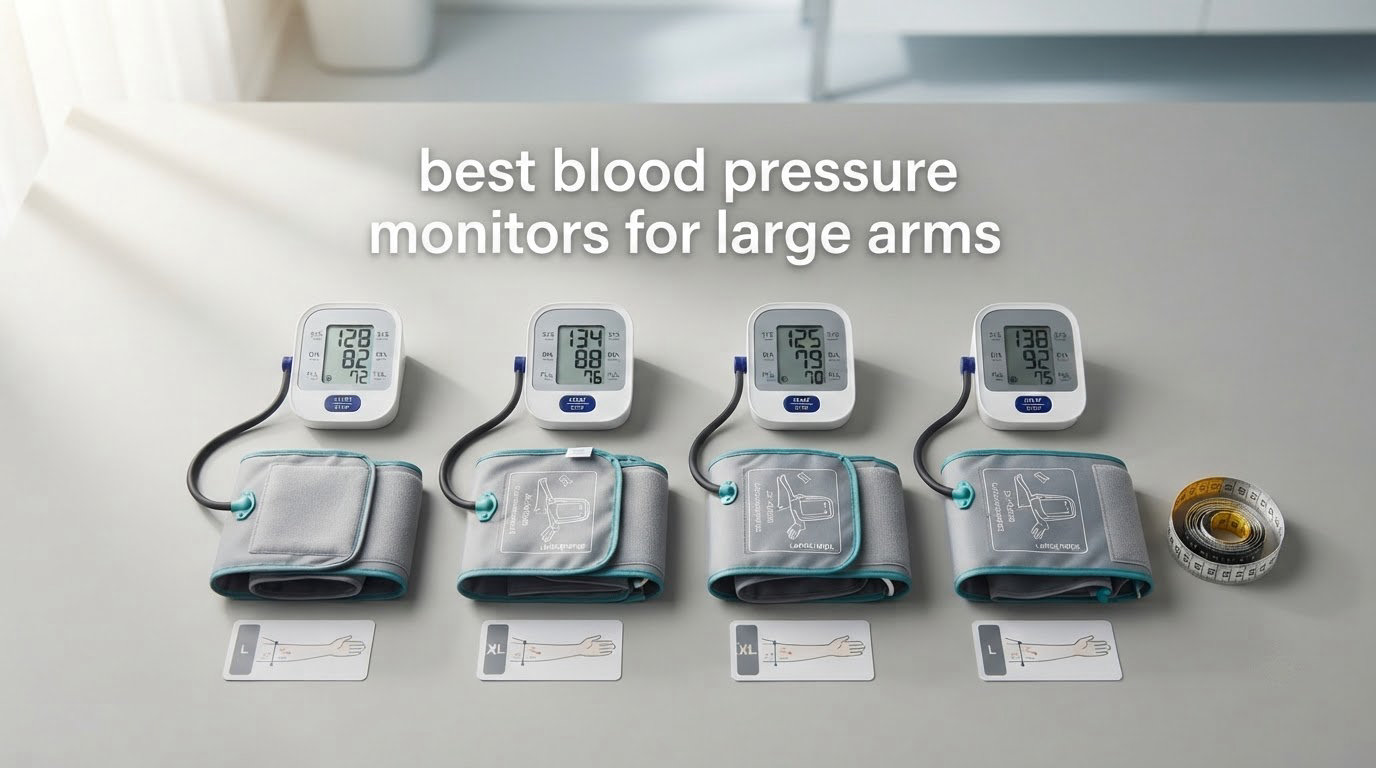
Most home blood pressure monitors ship with a cuff that tops out around 16.5 to 17 inches, and plenty of people never check that number until the cuff is already on their arm and the display is flashing an error. If your mid-upper-arm measurement runs past that ceiling, the number you are reading is not a measurement of your blood pressure. It is a measurement of the cuff fighting you.
The American Heart Association is blunt about the physics here. A cuff that is too small produces falsely high readings, and a cuff that is too large produces falsely low ones. For a large-armed user that means the risk runs in both directions, and it is the reason we built this guide around cuff range first and brand reputation second. A well-known brand with a standard cuff will still give you a bad reading if it stops 3 inches short of your arm.
The best blood pressure monitors for large arms are rarely the models with the biggest brand names, so we compared ten upper arm units for this roundup, sorted by the widest arm each cuff actually fits, and checked what reviewers say about accuracy against office equipment, comfort during inflation, and whether the monitor has a Bluetooth app worth using. Every cuff range below is stated in inches, with the centimeter equivalent where the manufacturer publishes one, so you can match it against a tape measure in about thirty seconds.
One quick note before we start: this is a consumer guide, not medical advice. If your readings are consistently high, if you are starting or changing medication, or if you have swelling in one arm, talk to your clinician rather than to a product page.
Table of Contents
How to Measure Your Arm Circumference Before You Buy
Your arm size is a number you can get in a minute, and it decides which of these ten monitors you should actually buy. The measurement that matters is your mid-upper-arm circumference, taken at the widest part of the upper arm between the shoulder and the elbow. That is the point where a clinical cuff is designed to sit.
Here is how we do it:
Relax the arm and let it hang loose at your side. Do not flex the biceps, because a tensed muscle adds an inch or more that will not be there during a real reading.
Wrap a soft tape measure around the midpoint of the upper arm, roughly halfway between the acromion and the olecranon.
Pull it snug, not tight. You should be able to slide one fingertip underneath.
Write the number down in inches, then compare it to the cuff ranges in this guide. Choose a monitor whose upper limit sits one to two inches above your measurement rather than exactly at it.
There is a second fit check that reviewers bring up constantly, and it is the one that catches people who measure correctly but still get bad numbers. When the cuff is wrapped, the printed artery line has to land over the brachial artery on the inner arm, with a finger of clearance above and below. On a very large arm, a cuff that technically fits can still sit so low that the marker misses the artery entirely, and that is when readings start drifting.
The sizing ladder, roughly speaking: a standard adult cuff runs 8.7 to 16.5 inches, a large cuff about 12 to 17.7 inches, an extra-large cuff 13 to 21 inches, and a genuine bariatric cuff 16.5 to 23.6 inches. If you are above 23.6 inches, no consumer cuff on the market is rated for you, and we cover what to do about that further down.
A wrist monitor is the usual fallback people are handed when an upper arm cuff will not fit. Bodybuilders posting on uk-muscle.co.uk and professionalmuscle.com report that wrist units read implausibly low against their manual readings, and the accuracy of wrist monitors also depends on holding the wrist precisely at heart level. Our picks below are all upper arm models for that reason.
Our Top 3 Picks for Best Blood Pressure Monitors for Large Arms in October

yuwell YE660E Large-Cuff
- Cuff fits 8.7-17.7 in arms
- Voice broadcast of every result
- 99 readings plus 3-reading average
- AC adapter in the box
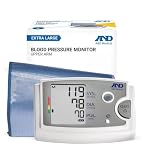
A&D Medical UA-789AC
- Widest cuff here at 16.5-23.6 in
- Preformed tapered extra-large cuff
- 60 readings with 3-reading average
- Three measurement reminders

Greater Goods XL Monitor
- Cuff fits 15.7-20.5 in arms
- Two users at 60 readings each
- Bluetooth trend charts
- Backlit color-coded display
Two questions narrow this list fast. First, what is your arm measurement in inches, because the yuwell stops at 17.7 and the A&D runs to 23.6. Second, do you want a phone app and trend charts, or a big backlit screen you can read from across the room with no phone involved at all.
Best Blood Pressure Monitors for Large Arms in 2026
| Product | Specifications | Action |
|---|---|---|
| yuwell YE660E Large-Cuff Monitor |
|
Check Latest Price |
| A&D Medical UA-789AC |
|
Check Latest Price |
| Greater Goods XL Cuff Monitor |
|
Check Latest Price |
 AQESO U80B Three-Cuff Monitor AQESO U80B Three-Cuff Monitor |
|
Check Latest Price |
 LIVAROCI Two-Cuff Monitor LIVAROCI Two-Cuff Monitor |
|
Check Latest Price |
 YONLO A02-SE Monitor YONLO A02-SE Monitor |
|
Check Latest Price |
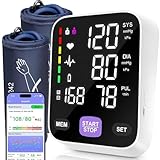 Andesfit Bluetooth Monitor Andesfit Bluetooth Monitor |
|
Check Latest Price |
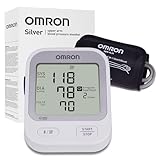 Omron BP5255 Silver Omron BP5255 Silver |
|
Check Latest Price |
 iHealth Track 550BT iHealth Track 550BT |
|
Check Latest Price |
 WAJ 6.4 Inch LED Monitor WAJ 6.4 Inch LED Monitor |
|
Check Latest Price |
1. yuwell YE660E Large-Cuff Monitor: Cuff Fits 8.7-17.7 Inches
Cuff size: 8.7 to 17.7 inches. This is our best blood pressure monitor for large arms overall, and the reason is simple. It reaches past the 16.5 inch wall that most standard cuffs stop at without turning into a specialty bariatric device that needs its own shelf.
yuwell Blood Pressure Monitor, Large Upper Arm Blood Pressure Cuff, Digital Blood Pressure Machine for Home Use, Large Display, Stores 99 Readings, Voice Broadcasting with Power Adapter and Batteries
Cuff 8.7-17.7 in
99 readings, 3-reading average
Voice broadcast
AC adapter included
Pros
- Cuff reaches 17.7 inches so it works just past the standard ceiling
- Reads confirmed against doctor office equipment by owners
- Intelligent pressurization reduces squeeze on a large arm
- AC adapter and storage bag in the box
Cons
- Voice broadcast cannot be switched off easily
- Cuff tubing is short so the monitor sits in your lap
- No medium cuff size offered
We spent a good stretch of time with this one because it does two things well that most monitors manage badly. The pressurization ramps up gently instead of jamming to maximum immediately, which matters a lot when the arm is large and the motor is squeezing hard. And it averages your last three readings automatically, which is closer to what a clinician does than any single measurement.
At 4.5 stars across more than 10,000 reviews, it pairs the top rating in this group with a very large review base. Users repeatedly report matching their doctor’s office equipment, and one reviewer notes the same cuff fitting both a 145 lb wearer and a 6 foot 5, 245 lb wearer.
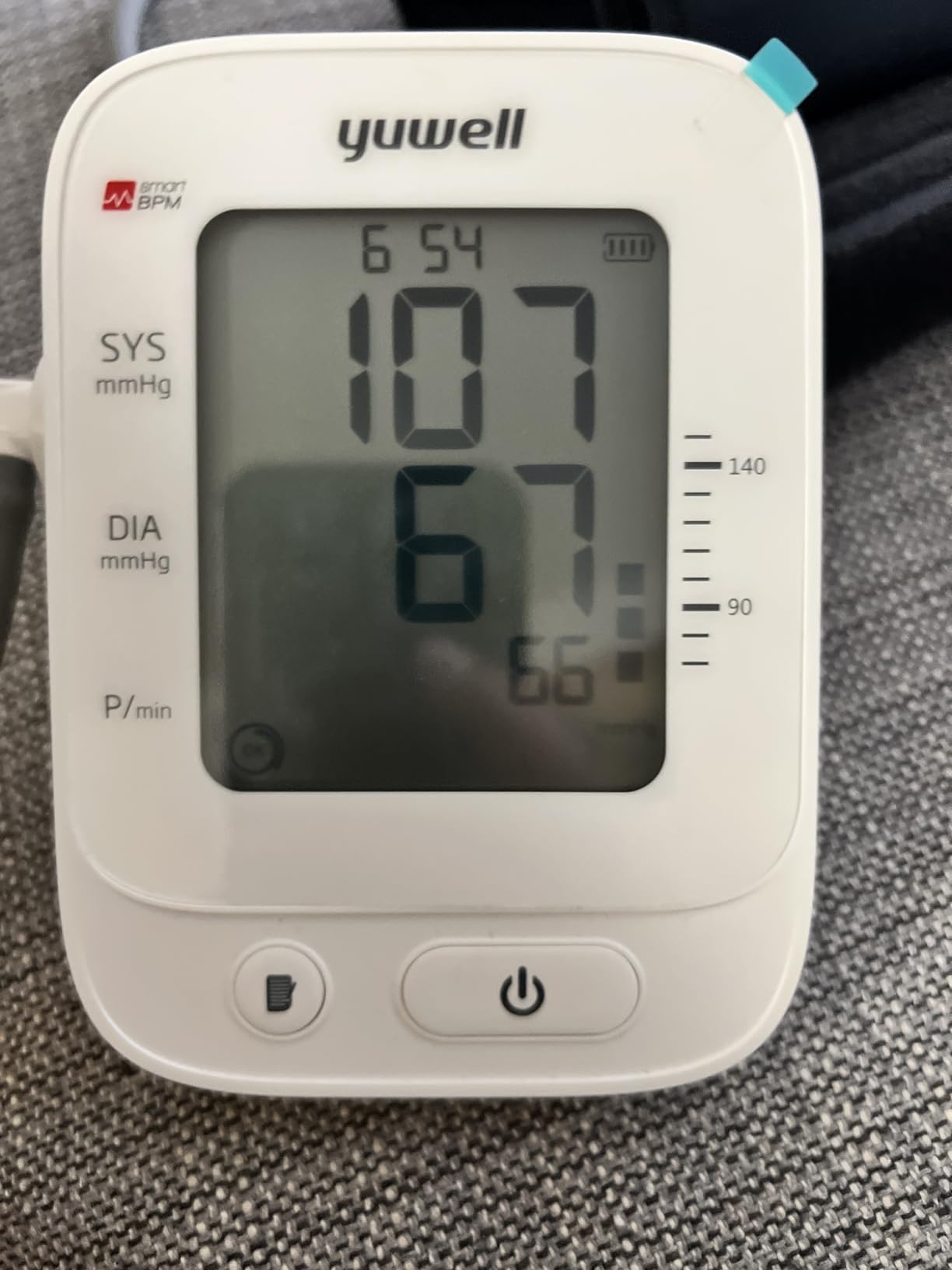
The voice broadcast reads your systolic, diastolic and pulse out loud, then tells you whether the result is normal. That is genuinely useful for anyone taking medication at a distance from a phone, or for a user with limited vision who would rather not read small digits off a screen.
Our reservations are small but real. The voice cannot be disabled cleanly, which some reviewers find irritating in a shared bedroom, and the cuff hose is short enough that the unit has to sit in your lap. There is no medium cuff, so if two people in your house have very different arms, you are looking at a second monitor rather than a second cuff.
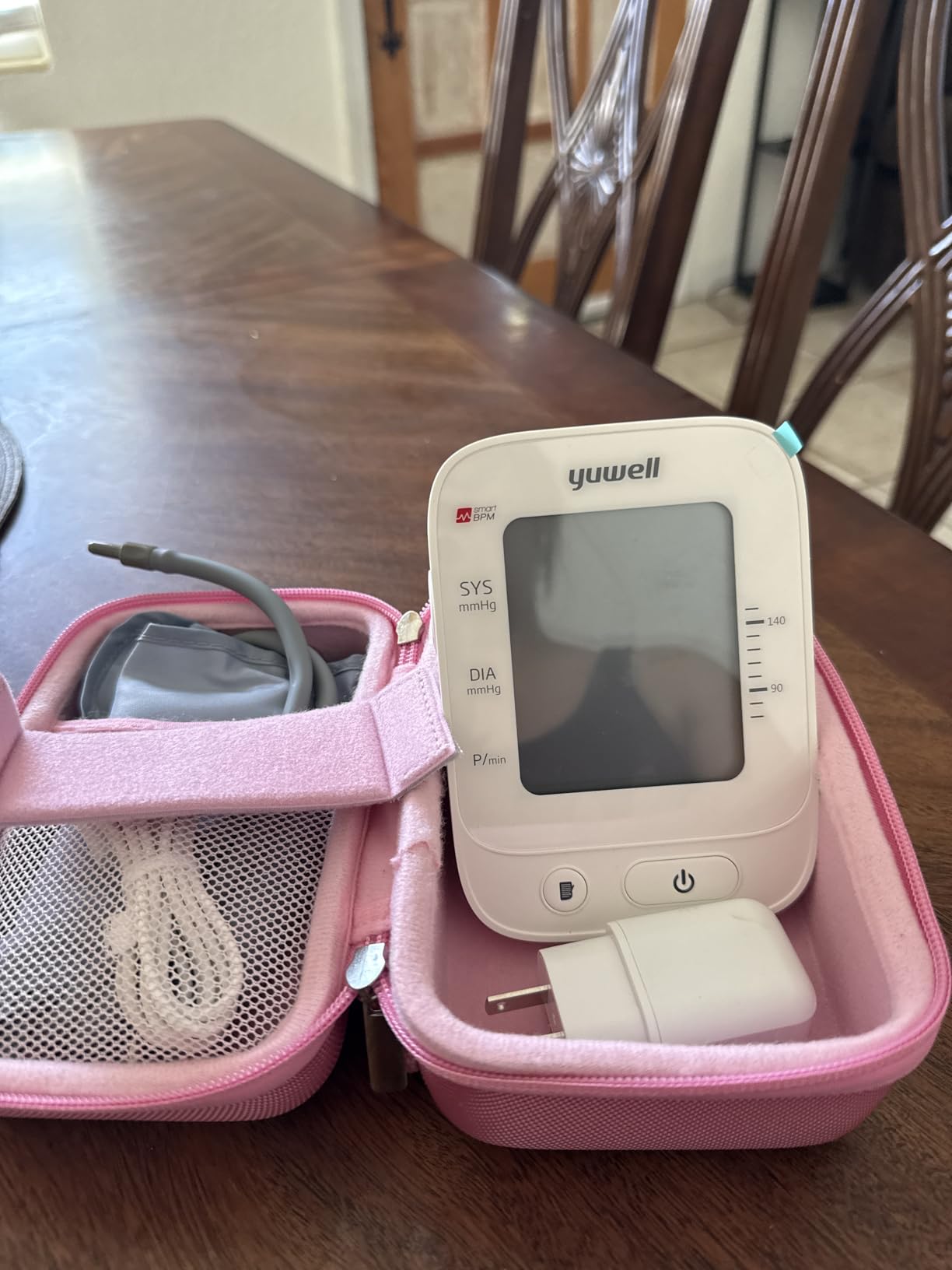
Check this fit if your arm is between 16.5 and 17.7 inches
This is the narrow band where most large-armed buyers get caught. If your measurement is 16 inches, this monitor is fine. If it is 17.6 inches, you are on the top edge of the range and the artery marker will have less room to sit correctly, so the reading deserves a comparison against a clinic device before you trust it for medication decisions.
The listing also shows this model at roughly 6.2 by 5.4 by 3.7 inches and 12.7 ounces, so it fits in a drawer with the cuff rolled alongside it. Four AAA batteries are included, and the AC adapter means you are not hunting for cells during a weekly check-in.
Watch out if silence matters or the hose is too short
If you share a room with a partner and the un-muteable voice is a deal breaker, this is not the model. Reviewers who want a quiet unit end up muting it with a finger on the button, which is a workaround rather than a fix.
There is no Bluetooth and no app here, so trend tracking depends on the written log and the on-device average. For anyone tracking a medication titration over months, that is a real cost, and it is the reason our app-connected picks below exist.
2. A&D Medical UA-789AC: Cuff Fits 16.5-23.6 Inches
Cuff size: 16.5 to 23.6 inches (42 to 60 cm). Nothing else in this roundup reaches this far, and that single specification is why this monitor exists. If your arm is 20 inches, this is very likely the only consumer unit on the market that fits you properly.
A&D Medical UA-789AC Blood Pressure Monitor, Extra Large Cuff 16.5-23.6″
Cuff 16.5-23.6 in (42-60cm)
60 readings, 3-reading average
3 programmable reminders
AC adapter included
Pros
- Widest cuff range in this roundup
- Preformed tapered cuff sits securely on a large arm
- Readings verified against clinic equipment by multiple owners
- Works on 4 AA batteries or the included AC adapter
- Swaps with A&D medium and large cuffs for two users
Cons
- No Bluetooth or app
- so logs are kept manually
- Cuff is rated only from 16.5 in up
- so it cannot serve a smaller-armed user
- Very long cuff can dig into the elbow on a shorter arm
Beyond the cuff, there is no Bluetooth and no app, so trend tracking depends on the built-in average and a written log. A rating of 4.3 across roughly 2,900 reviews puts it in line with the other well-reviewed models here rather than above them.
The cuff is preformed and tapered, which means it holds a cone shape around a large upper arm instead of collapsing into a flat band. That shape is what keeps the artery marker in position, and it is the difference between an extra-large cuff that measures accurately and one that merely fastens onto a big arm.
Multiple owners report taking it to an appointment and having readings confirmed by their doctor, and several say it revealed that their clinic numbers had been skewed by a too-small cuff for years. That review theme lines up exactly with the AHA guidance on cuff sizing, and it is the single most valuable thing owners say about this model.
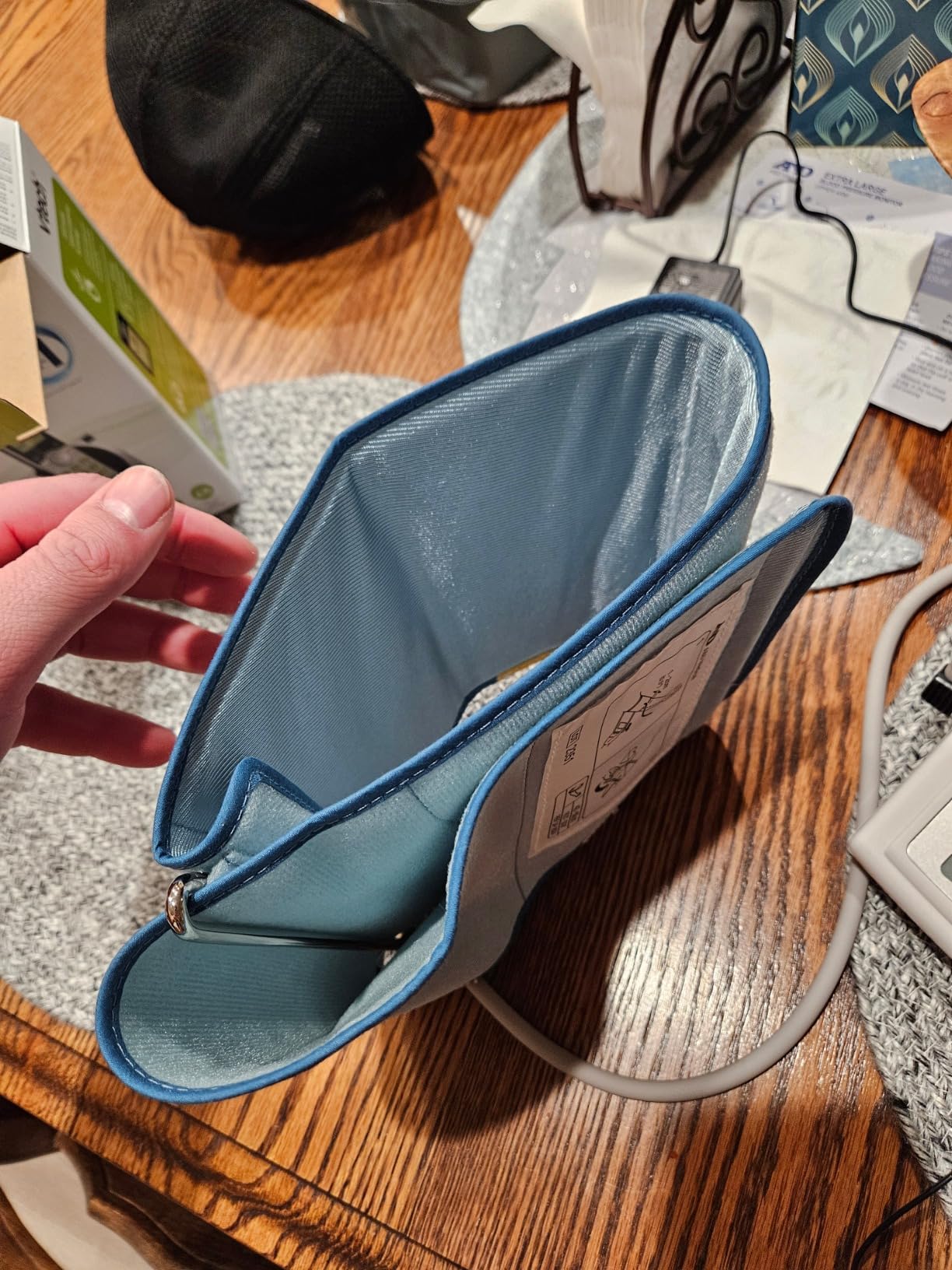
The extras are genuinely useful at this size. It stores 60 timestamped readings, averages the last three, and offers three programmable measurement reminders, so a weekly routine does not depend on your memory. A dual-pump system inflates and deflates faster than a single-pump unit, which shortens the uncomfortable squeeze.
A&D also sells its medium and large cuffs separately, so a household can buy one monitor body and fit the cuff that matches each arm. The cuff is the consumable part here, and it is the part that eventually wears out.
Check the fit if your arm is above 21 inches
Above 21 inches you are in the part of the range where nothing else works, and where you should bring this monitor to a clinician once a year for a side-by-side check. A cuff operating at the far end of its range is still operating outside the conditions most validation testing covers, so a periodic professional comparison is worth the appointment.
Reviewers with 20 and 21 inch arms say it is frequently the only monitor that fits them properly at all. Just measure first, because the lower limit of 16.5 inches means this is genuinely not a shared monitor for a small-armed household member.
Watch out if you have a shorter arm or want app tracking
It has been on the market since 2007, and the reason it has survived is the cuff. The long cuff also digs into the elbow and underarm on shorter arms, and it is measurably less accurate for a small-armed user.
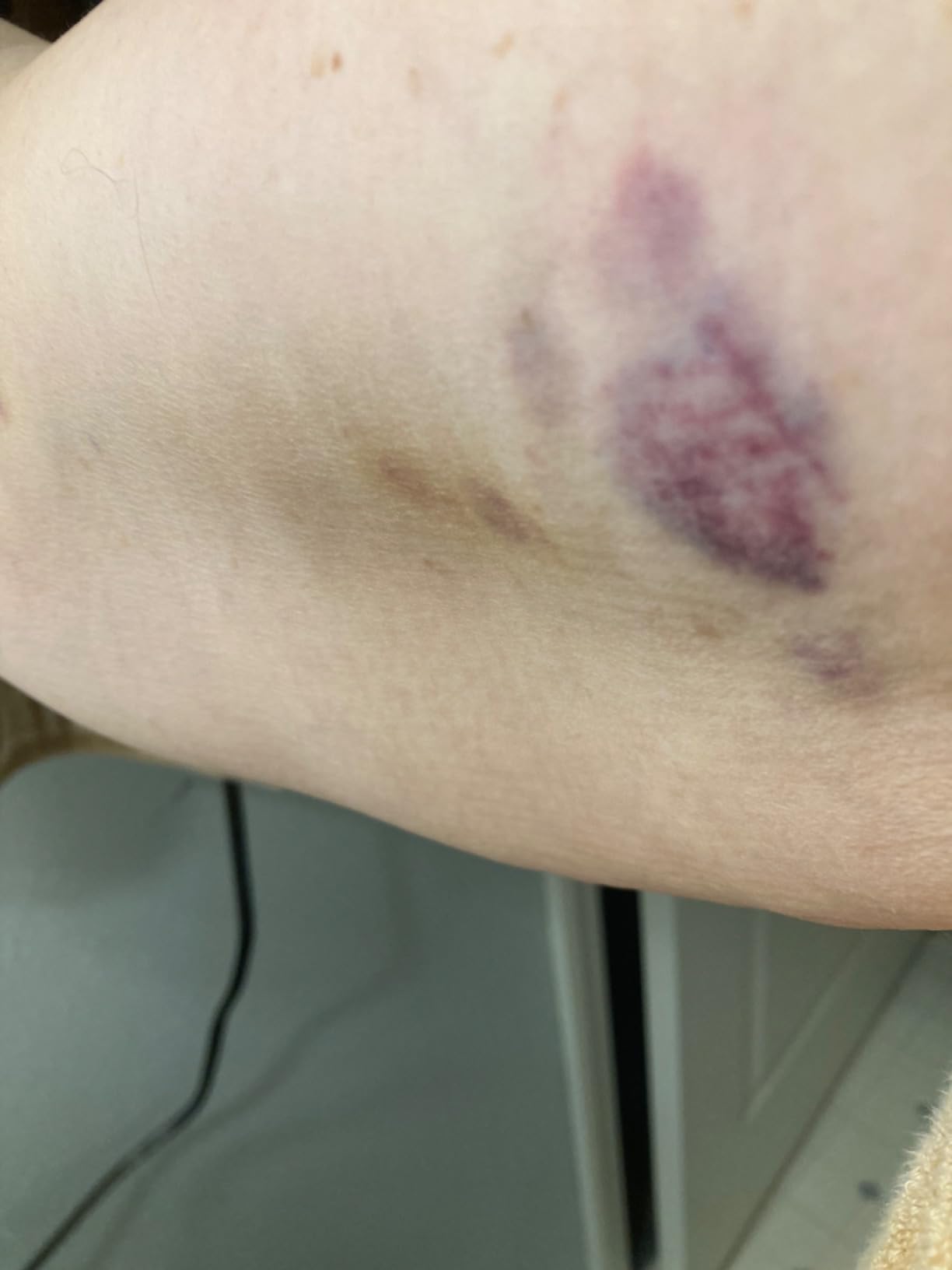
One owner reported bruising after repeated over-inflation and a pump that kept re-tightening, which is an isolated report but worth knowing about if the squeeze feels aggressive on your arm. There is no app, so trend tracking depends on the on-device three-reading average and a written log.
3. Greater Goods XL Cuff Monitor: Cuff Fits 15.7-20.5 Inches
Cuff size: 15.7 to 20.5 inches (40 to 52 cm). This is the middle of the large-arm range, and it is the pick we would buy for a household that wants one monitor that covers a big arm and a Bluetooth app for real trend tracking.
Greater Goods Blood Pressure Monitor, XL Cuff for Large Arms, 15.7-20.5 in
Cuff 15.7-20.5 in (40-52cm)
Two users, 60 readings each
Bluetooth to Balance Health app
Backlit color display
Pros
- Cuff starts at 15.7 in so average and large arms both fit
- Artery alignment guide printed on the cuff
- Two-user memory with 60 readings per user
- Balance Health app produces trend charts and shareable reports
- Travel case and USB-C cable included
Cons
- Velcro cuff is hard to tighten one-handed
- Inflation takes longer than deflate-based monitors
- App feature set is thinner than dedicated BP logging apps
Unlike the models that only work above 16.5 inches, this one covers the awkward 15.7 to 16.5 inch band where an off-the-shelf wide-range cuff technically fits but sits at the very bottom of its range. A cuff sitting at the bottom of its range is the problem forum users keep describing on r/hypertension, where a person with a big arm can technically wrap a standard cuff and still get a drifting number.
Two users can each store 60 readings, so 120 in total, and the Bluetooth connection to the Balance Health app gives you trend charts you can hand to a doctor. Owners with arms over 16.5 inches say the standard variant of this monitor is too small for them, so check which variant you are actually adding to a cart.
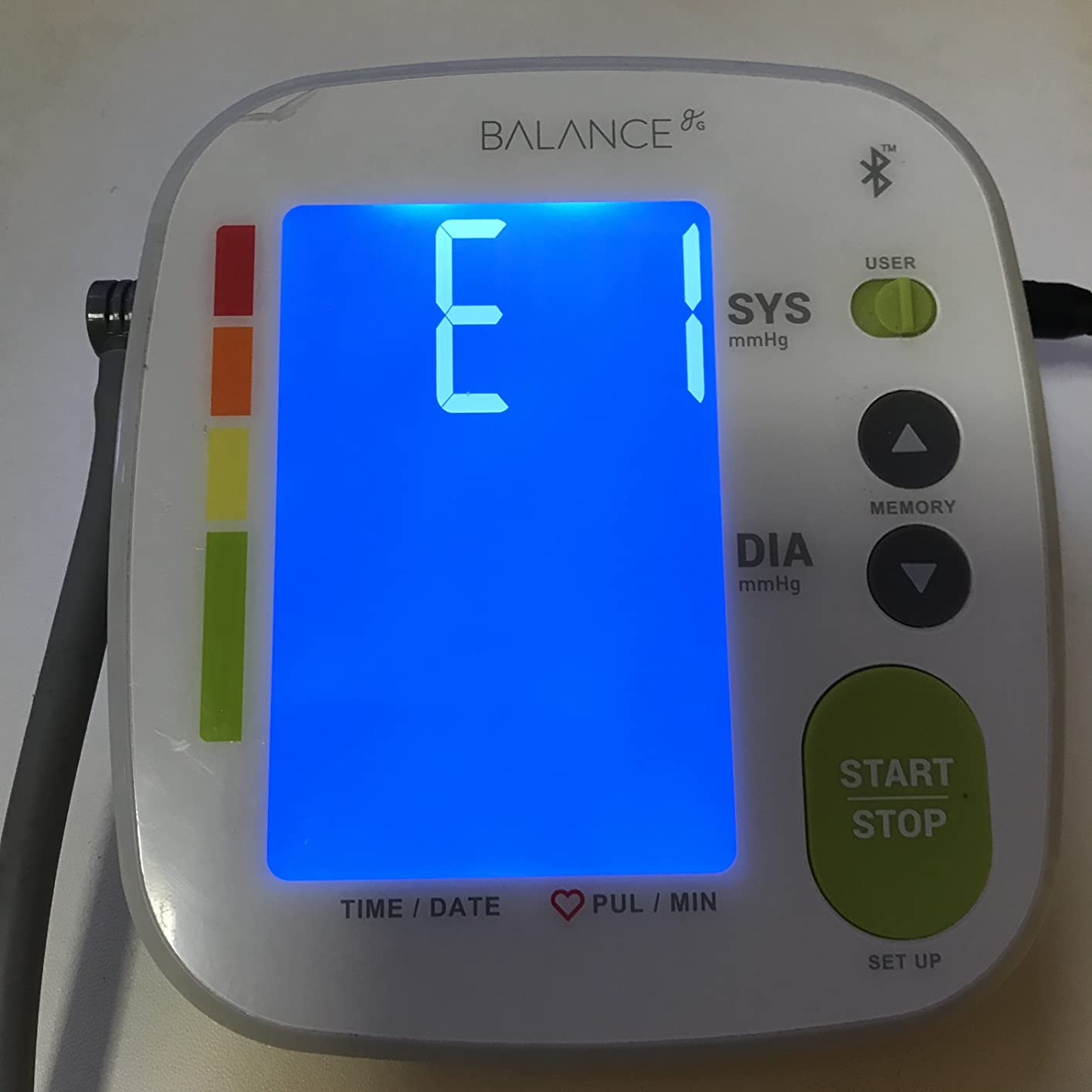
Accuracy is the part that matters most on a cuff this size, and it holds up. Owners report readings matching office equipment, and the cuff carries a printed artery alignment line, which is one of the small details that separates a monitor designed with large arms in mind from one that just ships a bigger tube.
The kit is complete for travel: cuff, four AAA batteries, a USB-C cable and a case. At 5.51 by 5.12 by 2.19 inches and 9.76 ounces, it stays compact while still reaching past 20 inches.
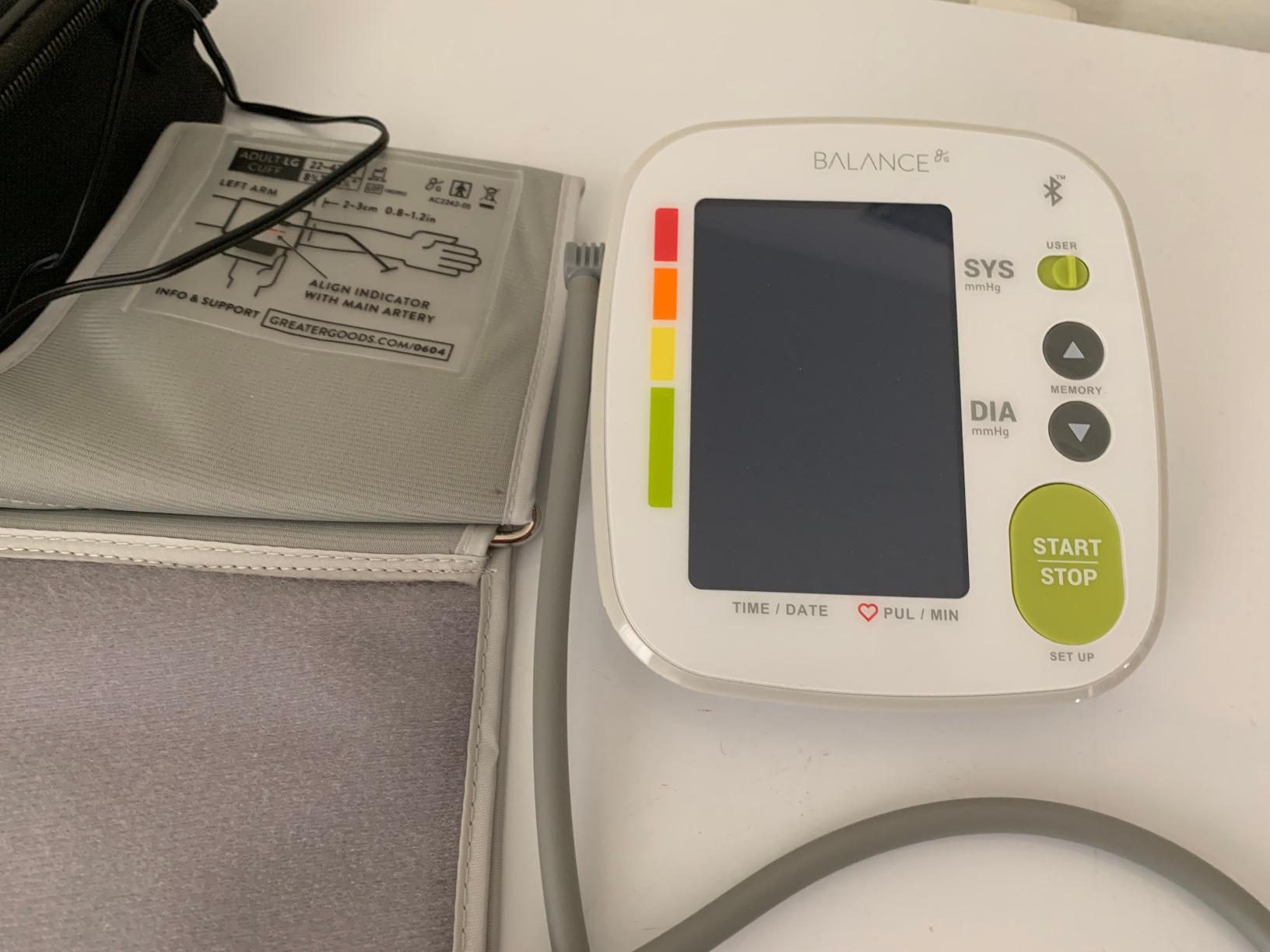
Check this fit if you want app tracking without an account
If your arm is between 15.7 and 20.5 inches, this monitor’s cuff wraps the widest part of your arm with room to spare, which is exactly what you want. If you are 20.6 inches or above, you need the A&D above and nothing else in this group will reach you.
Check the variant label before you buy, because this monitor also exists in a standard 8.7 to 16.5 inch cuff version.
Watch out if you have limited hand strength
The cuff is a flat Velcro design rather than a preformed one, and that is the most common complaint. Applying it one-handed to a large arm takes two tries, and users who measure themselves regularly or have arthritis in one hand will feel that every session.
The app is serviceable rather than deep. It handles logging, trends and shareable reports, but owners who come from a more capable logging app describe the feature set as limited. Inflation also runs a little longer than a deflate-based unit, so budget an extra few seconds of squeeze per reading.
4. AQESO U80B Three-Cuff Monitor: Three Cuffs Covering 7 to 21 Inches
Cuff size: three cuffs included, a small at 7 to 9 inches, a medium/large at 9 to 17 inches, and an extra-large at 13 to 21 inches. This is the broadest cuff package in the roundup, and the only one that includes a small cuff for a child alongside a 21 inch cuff for a large adult.
Blood Pressure Machine Upper Arm, 3 Size Cuffs, Small 7″-9″, Medium/Large 9″-17″ and Extra Large XL Cuff 13″-21″, Accurate Automatic Digital BP Cuff Home Use, Large Backlit BP Monitor 3-User 1500 Mem
Cuffs at 7-9 in, 9-17 in and 13-21 in
3 users, 500 readings each
4-inch backlit LCD
AAA batteries or USB-C
Pros
- Three cuff sizes cover nearly the entire adult arm range
- Highest memory capacity here at 3 users by 500 readings
- D-ring cuff design is easy to put on and remove alone
- Large 4-inch backlit LCD with oversized numbers
- Customer service repeatedly sends larger replacement cuffs
Cons
- No power adapter included
- only a USB-C cable
- Some users report heavy battery drain
- Isolated reports of defective displays or pumps
The extra-large cuff here is listed at 13 to 21 inches, matching the reach of the other 21 inch models in this group. Owners with very large arms specifically credit the XL cuff with matching or beating readings taken in a clinic, which is the outcome you are buying when you move up to this size.
Three users with 500 timestamped readings each means you can track a medication change for months without losing the baseline, and each profile stays separate.
The integrated D-ring and hook-and-loop cuff is a genuinely thoughtful detail for a large arm. Instead of peeling a flat Velcro strip apart with one hand and fighting the fabric, you thread the cuff through the D-ring and pull, which is a two-handed job for most people and a manageable one for some.
Accuracy claims rest on ASP signal processing tested against a large clinical dataset, and at 4.4 stars from more than 3,400 reviewers. It runs on four AAA batteries or 5V USB-C power.
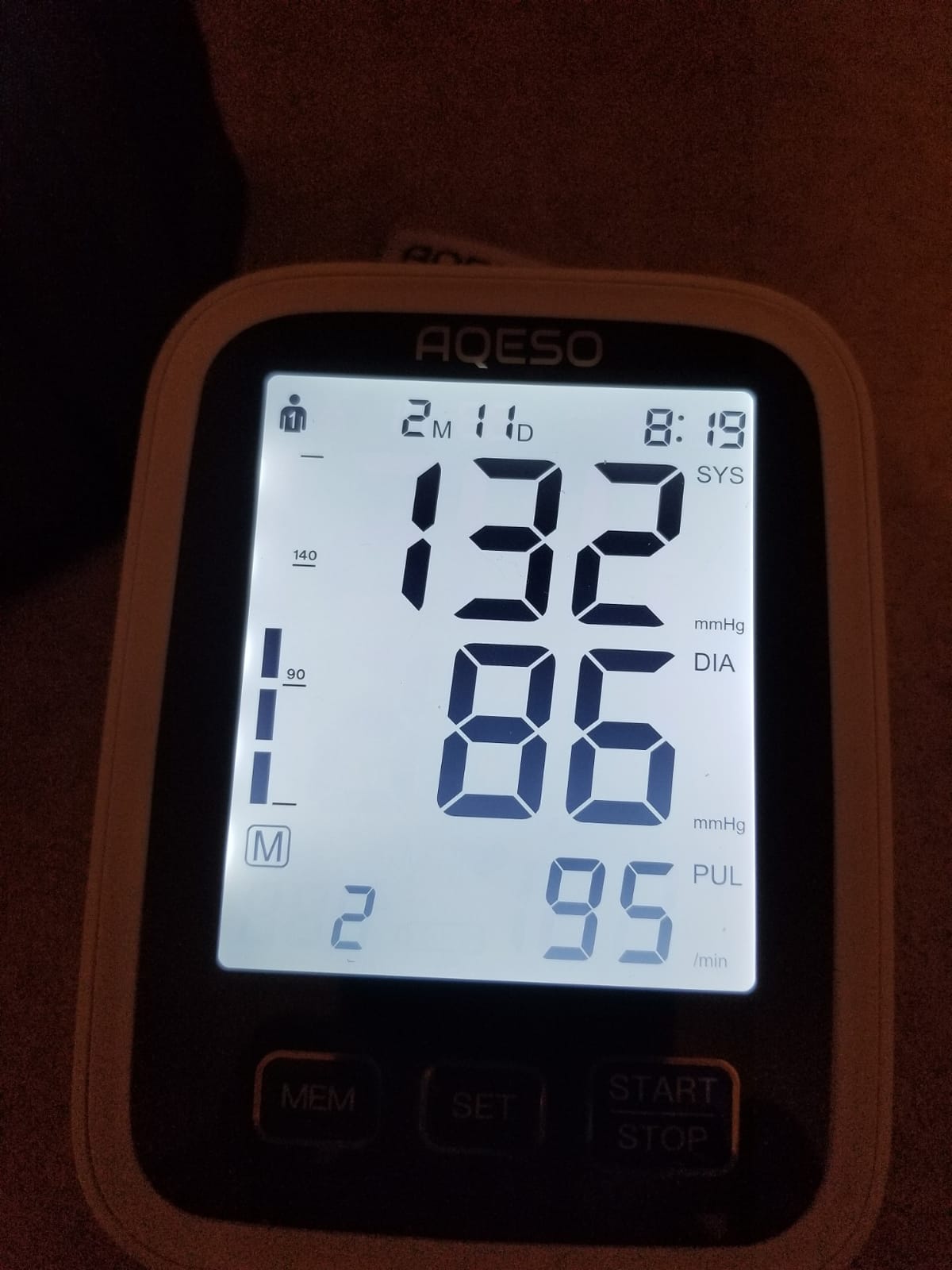
Check this fit if two or more people in your house have different arm sizes
Because all three cuff sizes are in the box, this is the monitor to buy when a partner or parent has a much smaller arm than you do. The small cuff at 7 to 9 inches also covers a teenager, and the medium/large at 9 to 17 inches covers most adults.
If your arm is above 21 inches, the extra-large cuff will not reach you and you need the bariatric unit instead. Measure before choosing, not after.
Watch out if you need a wall adapter or want a single profile
There is no power adapter in the box, only a USB-C cable, so a small block adapter is on your list. Battery drain is reported by some users as heavier than expected, so keep a spare set of AAA cells with the unit.
There are also isolated reports of defective displays and pumps requiring replacement, and one owner reported dangerously low readings and fell back to a wrist monitor. Those are individual reports in a large review base, not a pattern, but they are the reason to confirm any new monitor against a clinic device before you rely on it for medication decisions.
5. LIVAROCI Two-Cuff Monitor: XL Cuff Fits 13 to 21 Inches
Cuff size: medium/large at 9 to 17 inches plus an extra-large at 13 to 21 inches, both in the box. If your arm is 18 inches and you want a bright display that is easy to read, this is one of the more straightforward answers.
Blood Pressure Monitor, 9-17” & 13-21” Extra Large Blood Pressure Cuff
Cuffs at 9-17 in and 13-21 in
Color backlit extra large display
2 users, 199 readings each
3-color result indicator
Pros
- Extra-large color backlit screen with large fonts readable day or night
- XL cuff fits arms up to 21 inches
- Two-user mode keeps each profile separate
- Results classified with a green
- orange or red indicator
- Updated inflation technology aimed at faster readings on large arms
Cons
- No user manual in the box
- so date and time settings are hard to find
- Some monitors reported running away with inflation
- Cuff can be hard to apply one-handed on a very large arm
- Cuff inflation reliability reported to fade after about six months
The extra-large LED color backlit screen is the reason this monitor keeps coming up for anyone with a large arm and a large family. A big arm tends to mean a big room, a big kitchen, and a monitor set down on a counter rather than held at eye level, and a bright color display with large fonts is the difference between reading a number and squinting at one.
Owners with very large arms say the XL cuff fits well and, in one case, produced readings matching a critical care nurse’s manual measurement. The updated smart chip runs an algorithm tuned on clinical hypertension data, and memory stores 199 readings for each of two users.
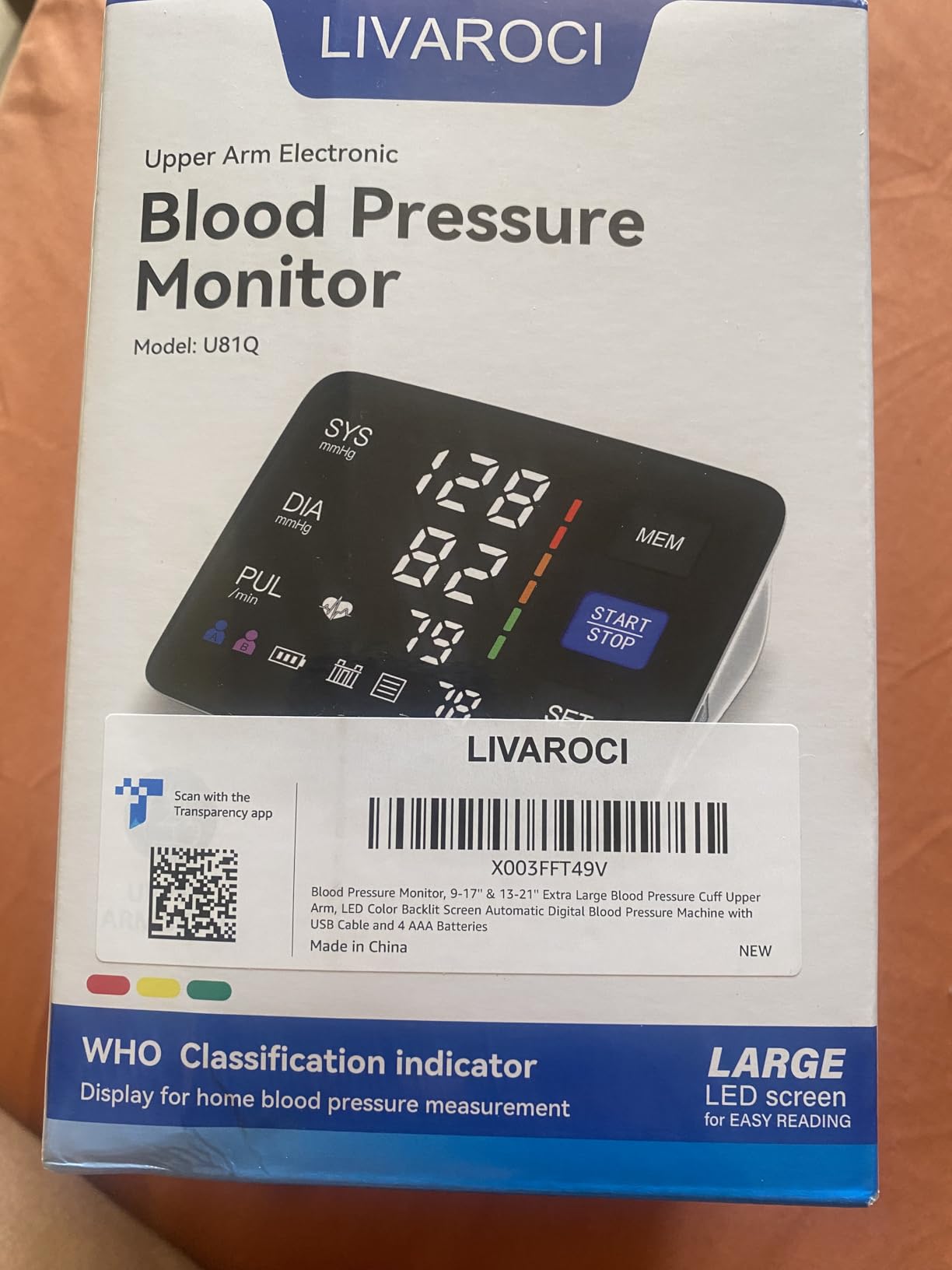
The three-color indicator is useful for a glance check: green, orange or red tells you which side of normal you are on before you even read the digits. A one-button oversized Start/Stop control is easy to hit, which matters if you are taking a reading with a sore shoulder on the same side.
It runs on four AAA batteries or the included Type-C cable, and the box carries a nylon carry bag. At 1.48 pounds, it is a monitor you can move between rooms without thinking about it.
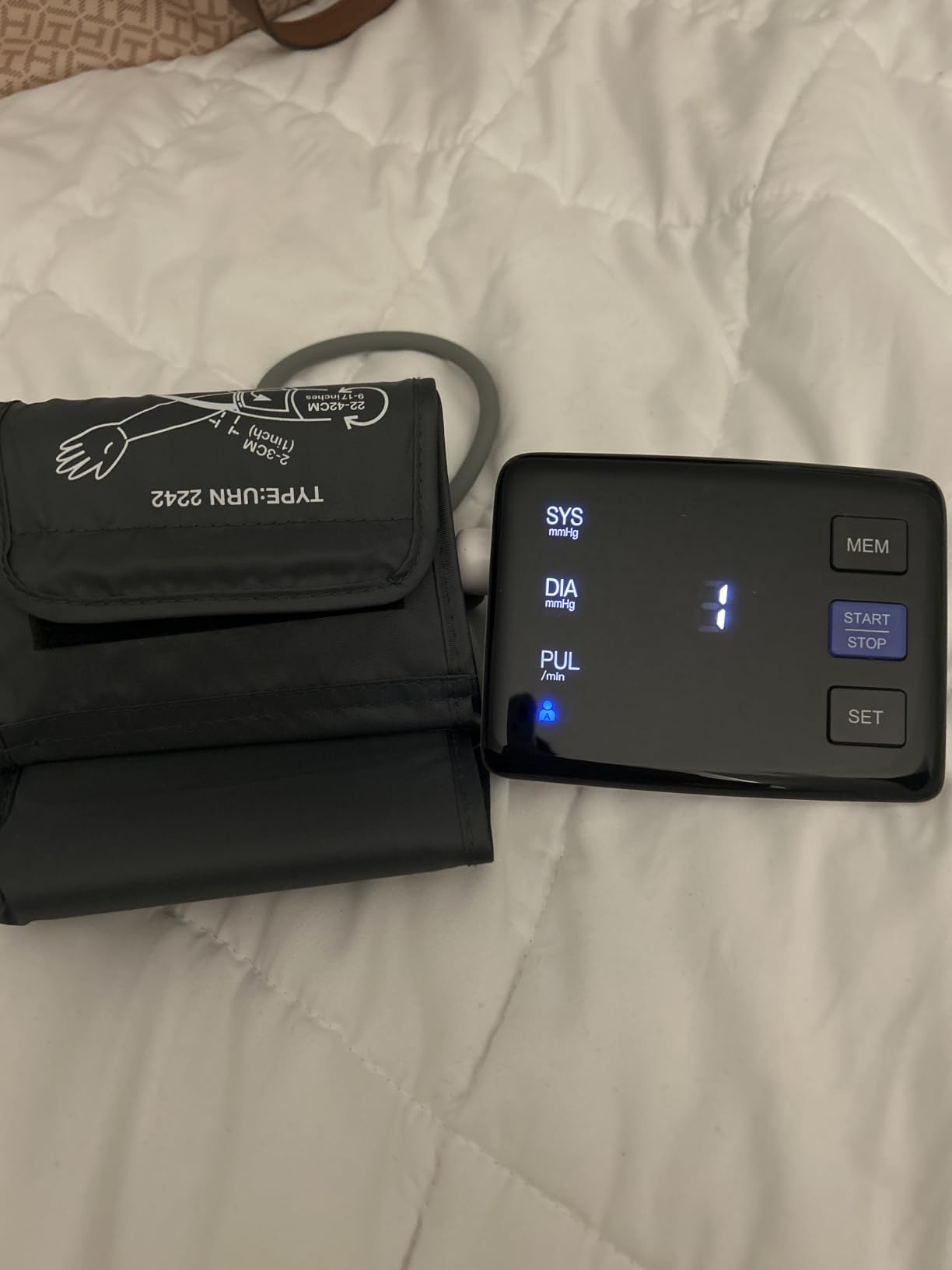
Check this fit if readability at distance matters most
If you read your numbers in a dim room, at arm’s length, or with the monitor on a table rather than in your hand, the color backlit display here is a step above the plain LCD options further down this list. The XL cuff reaches 21 inches, which covers most of the large-arm range short of true bariatric sizing.
Two users each get 199 readings, which is plenty for a couple monitoring on different schedules. Neither profile syncs to a phone, though, so logging stays manual.
Watch out if you need setup instructions you can actually read
The most common complaint is documentation, not hardware: buyers without a user manual in the box were unable to set the date and time, and those settings are hard to find. Budget ten minutes with the manufacturer’s online instructions before your first reading, because timestamped memory is useless if the clock is wrong.
Several buyers also reported monitors that kept pumping without stopping, and cuffs that stopped inflating reliably after roughly six months. The manufacturer is noted for replacing failed units, which is reassuring, but budget for the cuff as a consumable rather than a permanent part.
6. YONLO A02-SE Monitor: Cuffs Cover 9-17 and 13-21 Inches
Cuff size: two adjustable cuffs covering 9 to 17 inches and 13 to 21 inches. This is a three-user monitor with a genuinely large-arm cuff, and at about 35 seconds per reading it is the fastest result time in this group.
YONLO Automatic Upper Arm Blood Pressure Monitor, 3*199 Sets Memory, White
Cuffs at 9-17 in and 13-21 in
3 users, 199 readings each
Results in about 35 seconds
Color backlit LED display
Pros
- Two cuff sizes cover both standard and extra-large arms
- Three users with 199 separate readings each
- Fast 35-second result time on one button
- Large multi-color backlit display with result coding
- Service credited with replacing defective monitors outside the return window
Cons
- Cuff is easy to install backwards
- Type-C cable is for power only
- not charging
- No app or Bluetooth for automatic logging
Three independent user profiles is unusual at this cuff size, and it is the reason this monitor makes sense in a shared home. Each person gets 199 readings with their own time stamps, so three adults can track independently without taking turns resetting the device or reading each other’s numbers.
Owners like the 35-second cycle and the color-coded backlit display. One registered nurse verified readings within 5 percent of hospital equipment, which is the kind of independent check that matters more than a printed accuracy claim.
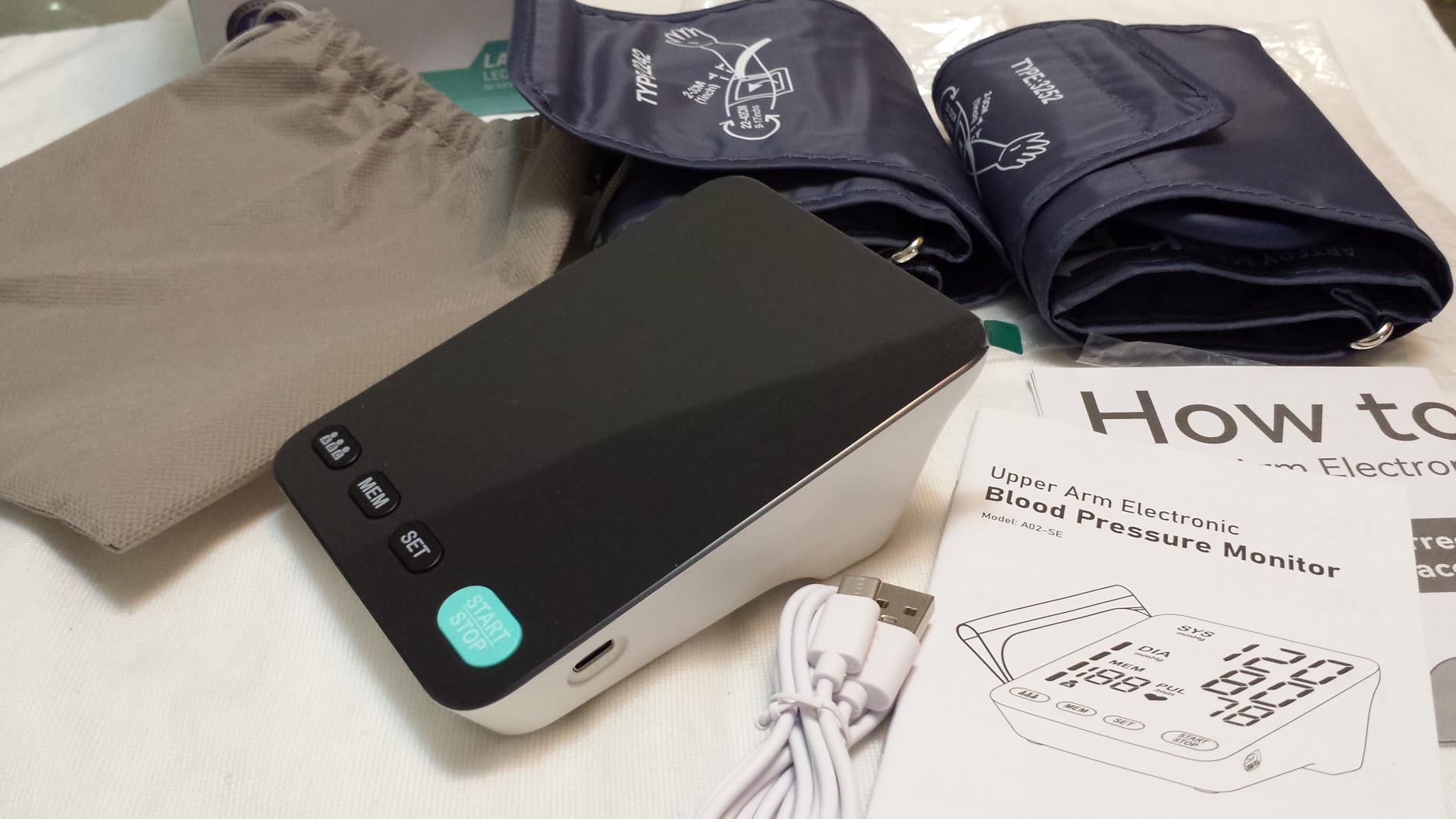
The XL cuff is listed at 13 to 21 inches, so this covers the same large-arm band as the LIVAROCI above with a faster cycle and more profiles, at the cost of any app connectivity. There is no Bluetooth, so readings are logged by hand or by photographing the display.
At 4.2 stars it carries a lower average than the other models here, though the review themes are about setup and connection rather than readings. Eight color options are available, which is a small thing that matters in a bedroom or a bathroom.
Check this fit if you want three profiles and quick results
Choose this if you are monitoring alongside two other people and you value a clean per-user log over an app. The 35-second cycle also reduces the window of sitting still with a cuff squeezing your arm, which is a real consideration on a large arm.
The 13 to 21 inch cuff serves a large arm, but it will not reach past 21 inches, and the lower bound of 13 inches means the second cuff cannot serve a small child. Measure first.
Watch out if cuff orientation or connectivity trips you up
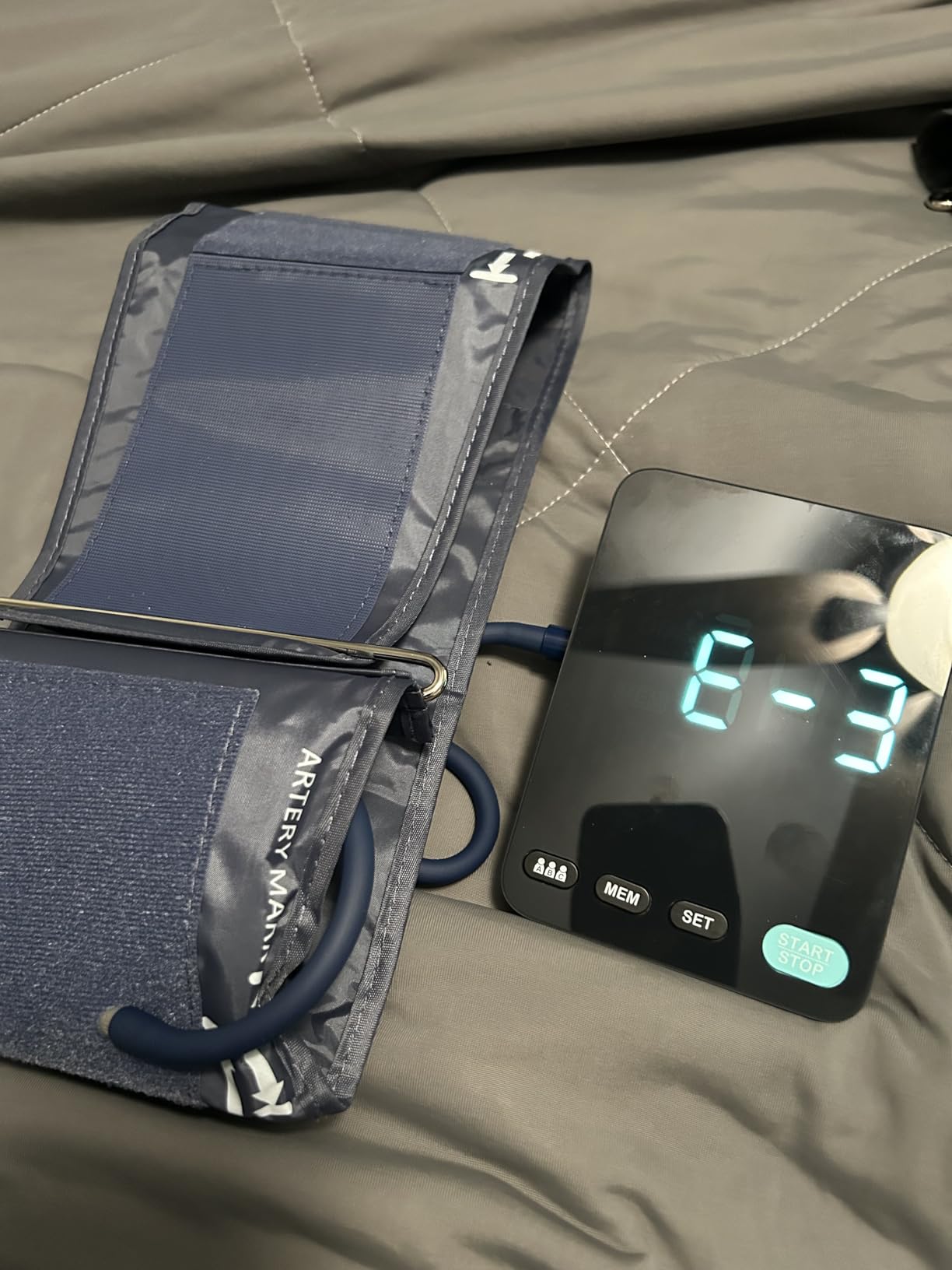
The most-cited issue is that the cuff installs backwards easily, and a reversed cuff produces inaccurate readings without any error message. The printed artery marker is your guide, so check the orientation every single time rather than assuming muscle memory.
There is no app and no Bluetooth, and the included Type-C cable is for powering the unit rather than charging an internal battery, so plan on four AAA batteries as the primary supply.
7. Andesfit Bluetooth Monitor: 17 Inch and 21 Inch Cuffs Included
Cuff size: two cuffs listed as 17 inch standard and 21 inch extra-large, with a stated arm circumference range of 9 to 17 inches on the listing. That mismatch matters, and we will come back to it, but the intent here is a 21 inch cuff pairing alongside thorough app support.
Andesfit Upper Arm Blood Pressure Monitor for Home Use 17″ Large & 21″ XL Extra Large Cuff Big arm, Free APP Bluetooth Sync Apple Health Track Google Fit, Large Display Smart BP Machine for Seniors
17 in and 21 in cuffs
Bluetooth to Apple Health and Google Fit
6-inch color LED display
Pros
- Advertises 17 in and 21 in cuffs for large-bodied users
- Syncs to a free app plus Apple Health and Google Fit
- No login or personal data required
- 6-inch color LED display with one-touch operation
- FDA cleared for home use
Cons
- Listing cuff sizes are confusing against the stated range
- Type-C port supplies power only and does not charge
- No AC wall adapter included
The software is the reason to look here. It syncs over Bluetooth to a free app, to Apple Health and to Google Fit, storing unlimited readings and generating trend reports, and it requires no login and no personal data. You share your history as a CSV file. For anyone tracking blood pressure medication over months, unlimited cloud-free history is a genuine advantage.
The 6-inch color LED panel, with one-touch operation and a dual user mode storing 199 readings per profile. It is FDA cleared for home use, which is a different and more specific claim than a marketing statement that a monitor is clinically accurate.
Two cuffs ship in the box, described on the listing as 17 inch standard and 21 inch extra-large for seniors and large-bodied users. The stated arm circumference range of 9 to 17 inches appears to describe the smaller cuff, so if you are above 17 inches, confirm with the manufacturer which cuff you should be using before your first reading.
That ambiguity is the honest weakness of this pick. The hardware is capable and the app is the best connected option in a large-cuff monitor, but a product page that contradicts itself about cuff size is exactly the kind of thing that produces the fits-but-at-the-bottom-of-the-range problem.
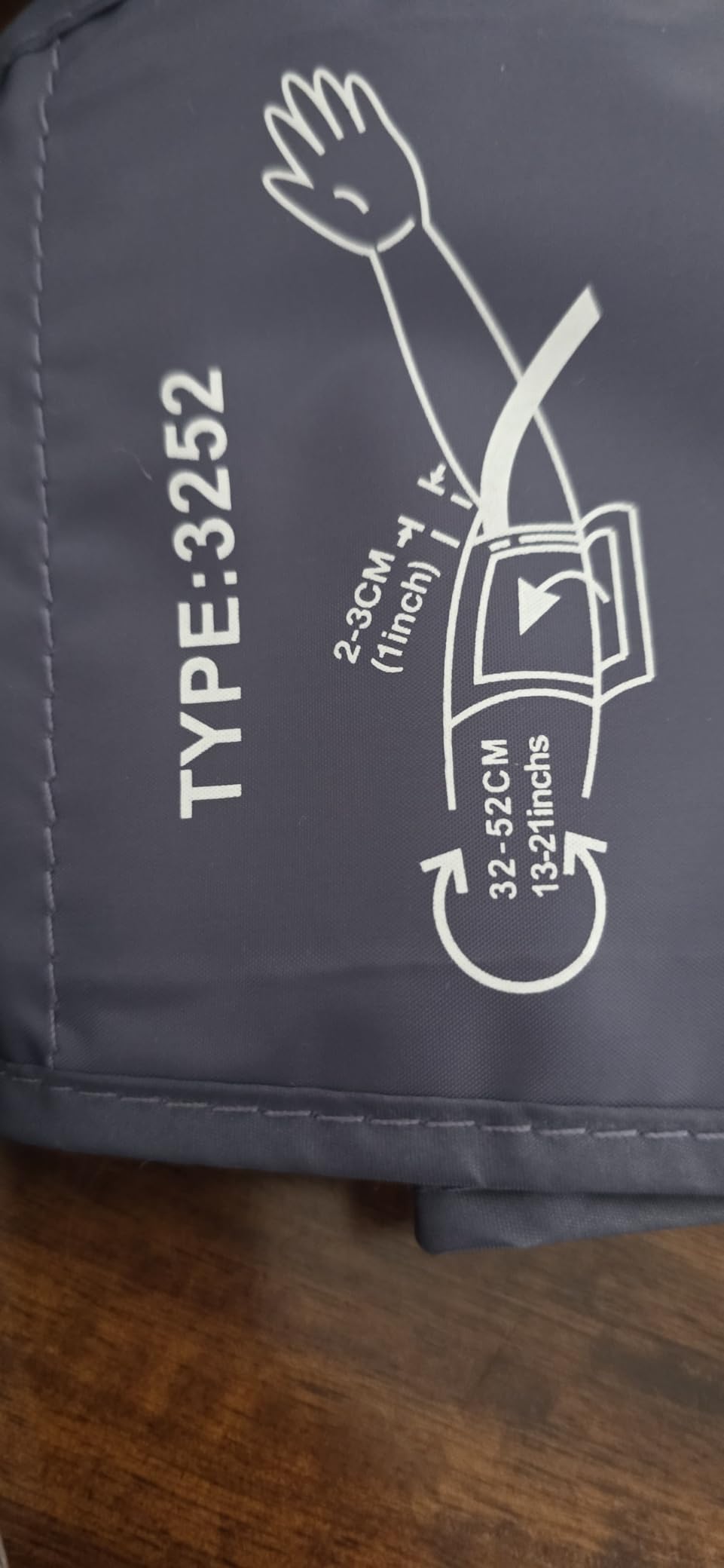
Check this fit if app history matters more than an ambiguous label
If you want unlimited, no-account logging and your arm measures inside 17 inches on the smaller cuff, this is a strong pick. It is among the newest and least-reviewed products in the roundup, so the track record is short compared with the A&D model that has been in production since 2007.
Treat a first reading as provisional. Confirm against a clinic device before you make any medication decision based on it, which is good practice with any new monitor and wiser with one that has this little history.
Watch out if you need a wall adapter or clear cuff sizing
No AC wall adapter is included, and the Type-C port supplies power only rather than charging an internal battery, so your runtime depends on the four AA batteries included in the box.
The confusing cuff labeling is the bigger issue. If you are near the 17 to 18 inch boundary, read the manual or contact the company rather than guessing, because guessing is how large-armed buyers end up with a technically fitting but inaccurate setup.
8. Omron BP5255 Silver: Easy-Wrap ComFit Cuff Fits 9 to 17 Inches
Cuff size: 9 to 17 inches. This is the best-known brand in the roundup, and we include it with a clear caveat: if your arm is genuinely large, the ComFit cuff stops about where a standard cuff stops and you should look further up this list.
OMRON Silver Blood Pressure Monitor & Upper Arm Blood Pressure Cuff
Easy-wrap ComFit cuff 9-17 in
30 readings stored
Bluetooth to OMRON connect app
Irregular heart beat detection
Pros
- Advanced Accuracy Technology validated against office equipment
- Easy-wrap ComFit cuff with spring assist for a snug fit
- OMRON connect app with Apple Health and Google Fit
- Irregular heart beat detection and hypertension indicator
- Cuff printed with placement instructions
Cons
- No display backlight
- AC power adapter sold separately
- Thin storage case with little drop protection
- Cuff warranty is 1 year versus 3 years for the monitor
The spring assist inside the easy-wrap ComFit cuff is the detail that matters on a bigger arm. It expands the cuff toward you as you wrap it, which closes the gap between the artery marker and your skin, and the cuff is printed with placement instructions so the fit is self-correcting.
Multiple owners compared readings against their physician’s office equipment and found them close, and the unit holds 30 readings on device with Bluetooth syncing to the OMRON connect app, Apple Health and Google Fit. Irregular heart beat detection and a hypertension indicator run during a normal measurement.
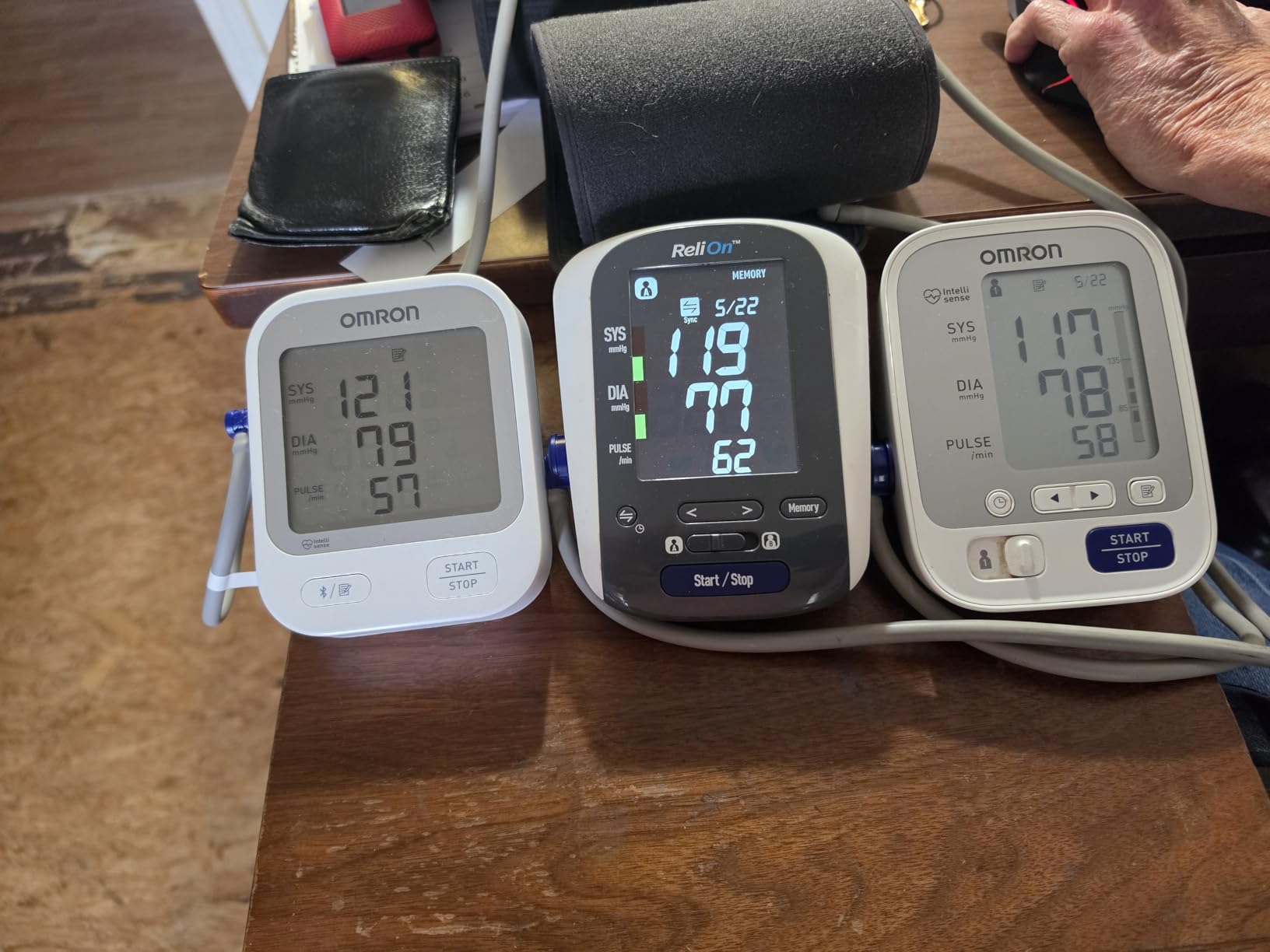
At 4.3 stars across more than 5,000 reviews, this is the most widely recognized name on the list, and that recognition is not misplaced. The accuracy technology is validated against office equipment within a few percent, and the app integration is well developed for a connected model.
The unit runs on four AA batteries, and the monitor body measures 5.3 by 3.3 by 4.3 inches at 1.55 pounds, which is heavier than most of the compact models here.
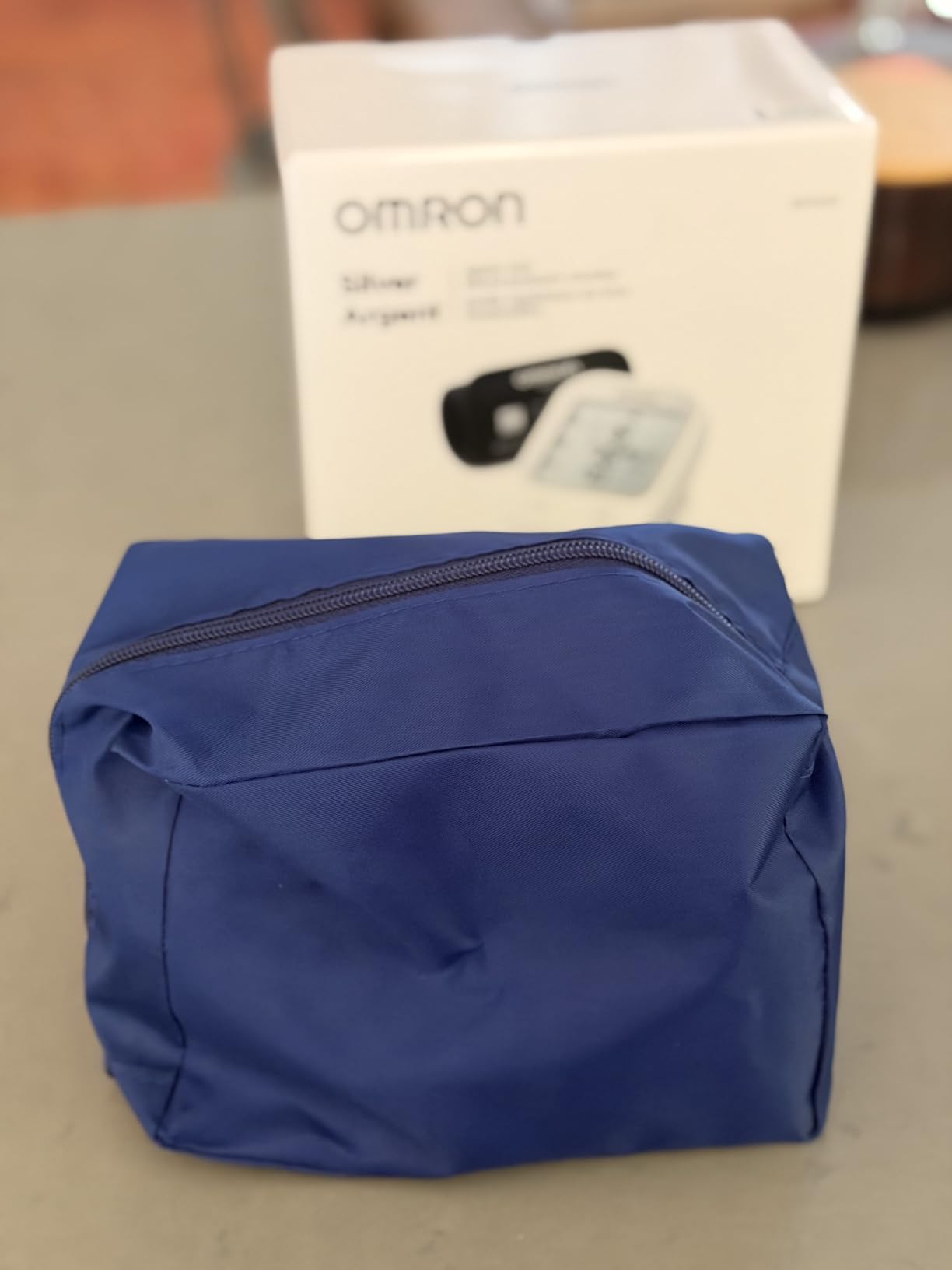
Check this fit if your arm measures 16 inches or under
Measure first. The ComFit cuff runs 9 to 17 inches, which is a genuinely wide standard cuff, and plenty of people who assume they have large arms land comfortably in the middle of that range. Users on Best Buy reviews note the wide-range cuff works across a household with different arm sizes.
If your measurement is 16.8 inches, you are technically inside the range but near the ceiling, and we would rather you read the notes on that situation below before committing.
Watch out if your arm exceeds 16.5 inches
Anyone above 16.5 inches should assume this cuff is too small, which means the reading is likely falsely high, exactly the failure the American Heart Association warns about. The yuwell at the top of this list reaches 17.7 inches for that reason.
There is no display backlight, so reading the screen in a dim room is harder, and the AC adapter is not included. One owner also reported the cuff being excluded from the warranty after a failure, which is worth knowing because the cuff is rated for 3 years on the monitor but only 1 year itself.
9. iHealth Track 550BT: Wide-Range Cuff Fits 8.7 to 16.5 Inches
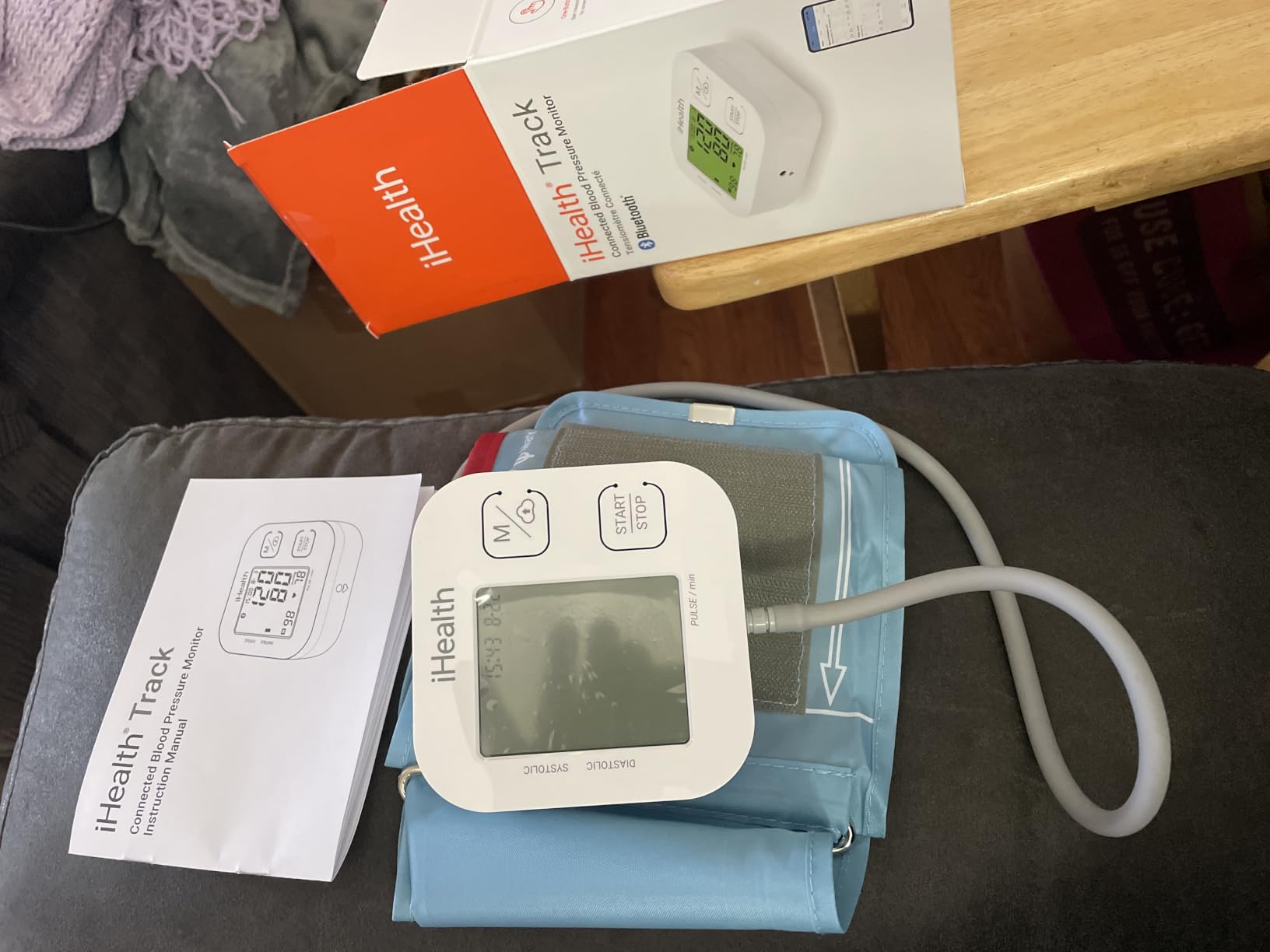
Cuff size: 8.7 to 16.5 inches (22 to 42 cm). This is the most reviewed monitor in the roundup by a wide margin, and the app is the best known, but the cuff is a standard wide-range cuff and that fact limits who it actually serves.
iHealth Track Smart Upper Arm Blood Pressure Monitor with Wide-Range Cuff
Wide-range cuff 8.7-16.5 in (22-42cm)
99 on-device plus unlimited app storage
Bluetooth to iOS and Android
Heart rhythm disturbance detection
Pros
- One of the most reviewed monitors available
- Stores 99 readings on device and unlimited readings in the app
- Multi-color backlit display with color-coded results
- Heart rhythm disturbance detection with a warning symbol
- Meets ESH 2010 performance standards
Cons
- Cuff stops at 16.5 in and will not fit a truly large arm
- Requires a Bluetooth 4.0 smartphone for app features
- Cuff can be difficult to tighten one-handed
It has been the top seller in automatic arm blood pressure monitors, and the reason is a combination of a huge review base and an app that most people keep using. Readings store on the device up to 99 times and in the iHealth app without limit, which is the same unlimited-history advantage as the connected model above, on a much larger install base.
The display is large, multi-color and backlit, with green, yellow or red coding that tells you the result range at a glance. Heart rhythm disturbance detection raises a warning symbol during the measurement, and the monitor meets ESH 2010 performance standards.
Operation is two buttons, and the unit is compact at 3.9 by 3.9 by 1.6 inches and 15.45 ounces. Four AAA batteries are included, and there is no adapter, which is the trade for that compactness.
At 4.4 stars across more than 67,000 ratings, it has the most established track record in this guide. That track record is real, and it is also the reason we have to be direct about the ceiling.
Check this fit if your arm measures under 16.5 inches
If your mid-upper-arm measurement is 16 inches or less, this monitor serves you well and the app is a genuine advantage for tracking trends. The wide cuff covers a broad standard range, so most adults who feel they have big arms are actually inside it.
It is worth measuring rather than estimating, because the number that decides this is not visible from the outside. Plenty of buyers describe it as a wide-range cuff without ever checking the upper limit.
Watch out if you are above 16.5 inches
At 16.5 inches this cuff is finished, and a monitor whose cuff ends 2 inches below your arm is going to read high. For an arm of 18 inches or more, the Greater Goods, LIVAROCI, YONLO and A&D options above are all better fits.
The app also needs a Bluetooth 4.0 or later smartphone, and some users note the cuff is hard to tighten one-handed. It also carries a 12-month warranty.
10. WAJ 6.4 Inch LED Monitor: Large Cuff Fits 8.6 to 16.5 Inches
Cuff size: 8.6 to 16.5 inches (22 to 42 cm). Despite the name, this is not an extra-large cuff monitor, and we include it because its display is genuinely exceptional and because a 16.5 inch ceiling is a useful boundary marker in a guide about large arms.
WAJ Blood Pressure Monitor for Accurate Home Use, Large Cuff 22-42cm, 6.4″ LED, White
Large cuff 8.6-16.5 in (22-42cm)
6.4-inch backlit LED display
2 users, 120 readings
Pros
- Oversized 6.4-inch backlit LED display
- One-button operation aimed at seniors and family use
- Dual user memory with 120 readings per user
- Auto-averages the last 3 measurements
- Auto shut-off after 2 minutes and dual power options
Cons
- Cuff tops out at 16.5 in and will not fit very large arms
- No Bluetooth or app so readings are logged manually
The screen is the argument. The manufacturer’s listing describes an extra-large 6.4 inch backlit LED panel, and the whole interface is one button with a high-sensitivity sensor and clear pressure level indicators. For a senior with reduced vision, or anyone taking a reading in a dark room, that is a bigger practical advantage than an app.
At 4.5 stars it ties the yuwell for the highest average rating here, across 1,880 reviews. It carries dual user memory with up to 120 readings per user, automatic averaging of the last three measurements, and an auto shut-off after two minutes that stops the batteries draining while you are out.
Power is flexible: four AA batteries or USB-C, with a carrying pouch included. The unit is small at 5.1 by 2.5 by 3.7 inches, which is easy to move between a bedroom and a kitchen, which is exactly the routine for someone checking pressure at two different times of day.
There is no Bluetooth, so logging is manual. That is a real limitation for anyone tracking a medication titration, and it is the trade for a device that needs no phone at all.
Check this fit if display size matters more than connectivity
Choose this if you want extra-large numbers and a zero-friction button. Dual profiles mean a couple can each keep 120 readings, and the automatic three-reading average reduces the chance of reacting to a single odd result.
Its simplicity is the feature. There is no account, no phone pairing and no firmware, so there is nothing to go wrong between you and the number on the screen.
Watch out if your arm is past 16.5 inches
The cuff ceiling of 16.5 inches places it below the true extra-large monitors in this guide. Anyone measuring above that needs the A&D UA-789AC, the Greater Goods XL, or any of the 13 to 21 inch cuff models above.
The name and the large display can create the impression that this is a bariatric device, and it is not. Judge every monitor on the printed cuff range, not on the display size or the product title.
How to Take an Accurate Reading With an Extra-Large Cuff
A correctly sized cuff is wasted on a sloppy technique. On a large arm in particular, arm position matters more because the brachial artery sits deeper and the measurement is easier to throw off. Six steps, and the protocol is the one your clinician would use.
No caffeine, exercise or smoking for 30 minutes beforehand, and empty your bladder first.
Sit with your back supported and both feet flat on the floor. Crossing your legs raises the reading.
Rest your bare arm on a table so the cuff sits at heart level. A dangling arm or a supported arm that is too low can add several points.
Use a bare arm. A shirt sleeve under the cuff adds thickness and the fabric can distort the reading.
Take two or three readings a minute apart and average them. Most of the monitors here with 3-reading averaging do this for you.
Record the average rather than the single highest number, and bring the log to your appointments.
Log your readings in the same position every time. A reading taken sitting at a desk at 8am and one taken on a sofa at 9pm are not the same measurement, and mixing them makes the trend chart useless.
Finally, verify the monitor itself once a year. Bring it to an appointment, take a reading in the same position as your nurse, and compare. It is a five-minute check that catches a wrong-size cuff, a failing pump or a drifted sensor before either becomes a health problem.
What to Do When No Cuff Fits Your Arm
Our top pick reaches 23.6 inches, and above that there is no consumer cuff rated for your arm. This is not a rare situation, and it is not a reason to guess.
Measure again, carefully, at mid-upper-arm rather than at the biceps peak, because the peak measurement is typically an inch larger and can put you in the wrong cuff band.
Check whether the manufacturer sells a bariatric replacement cuff for a model you already own. The cuff is a separate part, and replacing it is far cheaper than replacing the monitor.
Ask your clinician about ambulatory blood pressure monitoring, where a device is fitted and calibrated for you over a full day. Forum users outside cuff ranges describe it as bulky but reliable.
Ask about validated bariatric clinic devices, which are built to a wider standard than anything sold for home use.
Treat a wrist monitor as a fallback rather than an answer. It depends on holding the wrist exactly at heart level, and forum users report implausibly low wrist readings on very muscular arms.
One more reason to involve a clinician: doctors rarely check whether a home cuff is the right size. Nobody at an appointment is inspecting the label on your cuff, so an undersized cuff can quietly distort months of logged data before anyone notices.
Buying Guide for Large Arms
If you read nothing else, read the cuff range on the box before the features.
Upper arm beats wrist for large arms. Every pick in this guide is an upper arm model. Wrist monitors are often suggested when an arm cuff will not fit, but their accuracy depends on holding the wrist at heart level, and lifters on muscle-focused forums report wrist units reading implausibly low against clinical measurements. A wrist monitor is a travel backup, not a replacement for a correctly sized cuff.
Choose a cuff ceiling above your measurement, not equal to it. A cuff at the very bottom of its range can fit without satisfying the artery marker clearance, and that is the situation r/hypertension users describe when their readings drift. One to two inches of headroom is the safe target.
Tapered or preformed cuffs help on big arms. A preformed cuff holds a cone shape instead of collapsing flat, which keeps the artery line in the right place. The A&D’s tapered cuff and the D-ring design on the three-cuff model both do this better than a flat Velcro band.
Validation labels matter more than accuracy claims. Look for a monitor validated to ANSI/AAMI SP-10, or one that meets ESH or AHA performance standards, and treat phrases like clinically proven with more caution. The iHealth and yuwell both state a specific standard, which is a more checkable claim.
Decide on connectivity honestly. Bluetooth logging is genuinely useful over months of medication tracking, and the iHealth and Andesfit models give you unlimited history. The downside is a phone dependency, a setup step and a one-button cuff that can be harder to position. If you will not open an app, a large backlit display and manual logging serve you better.
Count memory slots by user, not by total. 500 readings across three users is worth more for a shared home than 600 readings for one, and a multi-user mode that keeps profiles separate saves arguments at the kitchen table.
Check the power source. If you want an AC adapter, the A&D and yuwell include one. The AQESO, YONLO, Andesfit and WAJ run on batteries with a USB-C cable, and several of those cables supply power rather than charge an internal cell.
For more on the tradeoffs, our guide to the best upper arm blood pressure monitors covers standard-cuff models in depth, and blood pressure monitors with voice for seniors goes into the audio-feedback category that the yuwell and WAJ belong to.
Buy a Replacement Extra-Large Cuff Instead of a New Monitor
If your monitor reads well and only the cuff is undersized, you do not need new hardware. The cuff is the consumable component, it wears out before the monitor does, and replacement cuffs are sold separately by most of the brands in this guide.
A&D is the clearest example. The UA-789AC extra-large cuff covers 16.5 to 23.6 inches, and the same monitor body works with the A&D medium cuff at 9.0 to 14.6 inches and the large cuff at 12.2 to 17.7 inches, both sold separately. That makes a two-size household a one-device household.
OMRON sells a 17 to 20 inch cuff as a separate part for compatible models, which covers the band where a standard ComFit cuff runs out of room. If you already own an Omron and your arm measures 18 inches, this is the path rather than a new monitor.
Three things to check before you order a cuff: the arm range printed on the cuff in inches, whether the connector and tube length match your monitor model, and whether your monitor’s model number is listed as compatible. A cuff that fits the arm but not the device is the most common wasted order here.
And the fit test still applies. Put the new cuff on, confirm the artery marker sits over the brachial artery with a finger of clearance, then compare a reading against your old one. If the numbers jump by more than a few points, the old cuff was the problem all along.
Frequently Asked Questions
What size blood pressure cuff do I need for large arms?
For large arms you need a cuff whose rated range extends above your measurement. Standard adult cuffs stop at 16.5-17 inches, a large cuff reaches roughly 17.7 inches, extra-large cuffs cover 13-21 inches, and bariatric cuffs run 16.5-23.6 inches. Measure your mid-upper arm halfway between shoulder and elbow, then pick a monitor whose upper limit is one to two inches above that number.
Can having big arms affect blood pressure readings?
Yes. The American Heart Association notes that a cuff that is too small produces falsely high readings and one that is too large produces falsely low ones. Since most stock cuffs stop at 16.5-17 inches, anyone above that range may be logging inaccurate numbers and could end up over- or under-treating their blood pressure without knowing it.
What is the largest cuff size for a blood pressure monitor?
The widest consumer cuff we found is 16.5-23.6 inches, or 42-60 cm, on the Au0026amp;D Medical UA-789AC. Several monitors in this roundup include 13-21 inch extra-large cuffs, and the AQESO three-cuff set covers 7-21 inches across three sizes. Above 23.6 inches no consumer cuff is rated, and you should ask a clinician about ambulatory or bariatric clinic devices.
Does Omron make an XL cuff?
OMRON sells a wide-range extra-large cuff rated at roughly 17-20 inches as a separate part for compatible models, which is the right path if you already own an Omron. The ComFit cuff included with the BP5255 we reviewed runs 9-17 inches, so it is a wide standard cuff rather than a true XL. Check your model number against the replacement cuff compatibility list before ordering.
How to check blood pressure if arm is too big?
If no cuff fits, start by measuring at mid-upper-arm rather than at the biceps peak, since the peak reading is usually an inch larger. Ask whether your existing monitor takes a bariatric replacement cuff. If not, ask your clinician about ambulatory blood pressure monitoring, where a device is fitted and calibrated for a full day, or about validated bariatric clinic equipment.
Is a wrist monitor more accurate than an upper arm cuff for very large arms?
Not usually. Wrist monitors depend on holding the wrist precisely at heart level, and accuracy falls off quickly when the position drifts, which is common when the arm itself is very large. Forum users training for strength report wrist units reading implausibly low against clinical measurements. Wrist monitors work best as a travel backup when a correctly sized upper arm cuff is unavailable.
Conclusion
Measure your arm before you buy anything, and let the printed cuff range decide. Above 16.5 inches, the best blood pressure monitors for large arms are the ones we ranked here, and the order reflects how far each cuff reaches before it gives up.
The yuwell YE660E is our top pick at 4.5 stars across more than 10,000 reviews, reaching 17.7 inches with gentle pressurization, automatic three-reading averaging and an AC adapter in the box. The A&D Medical UA-789AC is the answer for genuinely large arms, with a 16.5 to 23.6 inch tapered cuff that several owners say finally matched their clinic readings.
For everyone in between, the Greater Goods XL at 15.7 to 20.5 inches with two-user memory and app trends covers a lot in one box, and the AQESO three-cuff set covers a household from a small arm to 21 inches in one device. Take your reading sitting still with the arm at heart level, average two or three readings, and compare the monitor against a clinic device once a year.
Our related roundups cover the best blood pressure monitors overall and the best Bluetooth monitors if you want to see how large-cuff options compare with the rest of the market. This guide is current for 2026, and cuff ranges change as manufacturers revise models, so confirm the range printed on your specific unit before relying on it for medication decisions.