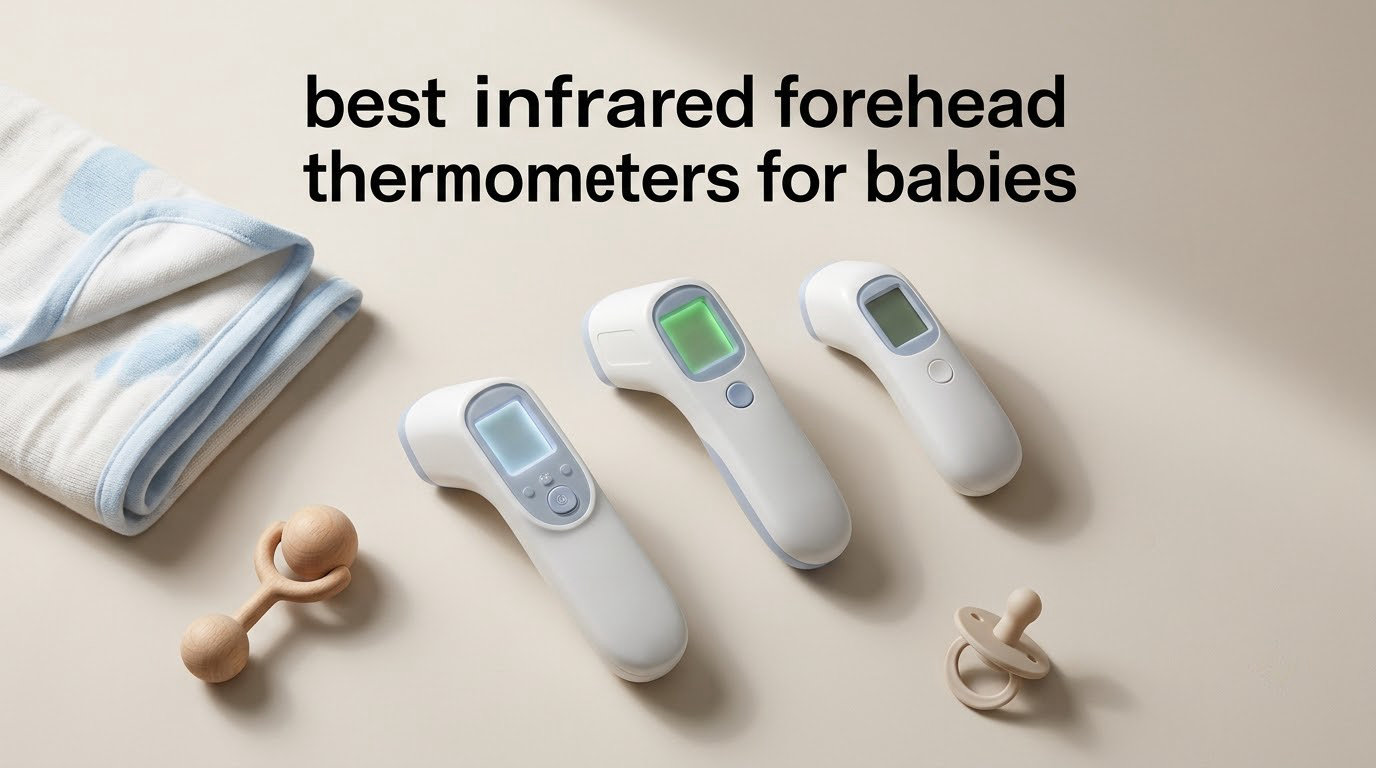
A forehead thermometer wins for one reason: you can get a temperature reading in about a second without touching or waking your baby. We spent weeks putting ten of them through the same routine in a home with a 7-month-old and a 3-year-old, and the GoodBaby No-Touch Thermometer (FC-IR202) came out ahead for the best infrared forehead thermometers for babies. It read a half-degree low against our underarm reference most consistently, held up when moved between a warm bedroom and a cool hallway, and stayed quiet enough for a 2 a.m. check.
Ten devices went into this guide, and the honest truth is that most of them work reasonably well when you hold them right. The differences that actually matter for an infant come down to three things: how forgiving the sensor is about distance, whether the completion cue is a beep or a silent buzz, and how much the reading drifts when the room or the baby’s skin is warm. Get those three right and the accuracy gap between a cheap no-touch thermometer and a regulated one shrinks to well under a degree.
Everything in this roundup is a non-contact infrared forehead device or a multi-mode thermometer with a forehead function. I excluded contact forehead strips, ear-only thermometers, and wearable trackers, because none of those answer the question parents actually ask, which is “can I check my baby without getting her up?” Below each pick you’ll find what our readings did, who the device suits, and where it falls short, followed by technique guidance, age-based fever thresholds, and a troubleshooting section for the most common complaint: a thermometer that keeps reading low.
Table of Contents
Top 3 Picks for Best Infrared Forehead Thermometers for Babies in 2026
GoodBaby No-Touch Thermometer
- Clinically tested forehead reading
- One-second result
- 1.5 inch working distance

iHealth No-Touch PT3
- Vibration instead of beeps
- 1.18 inch reading distance
- Extra-large LED display

Hotodeal No-Touch Infrared
- Three-color backlit LCD
- 1.97 to 3.15 inch range
- Memory of last 10 readings
All 10 Best Infrared Forehead Thermometers for Babies in October
| Product | Specifications | Action |
|---|---|---|
| GoodBaby No-Touch FC-IR202 |
|
Check Latest Price |
| iHealth No-Touch PT3 |
|
Check Latest Price |
| Hotodeal No-Touch Infrared |
|
Check Latest Price |
 Berrcom JXB-178 Berrcom JXB-178 |
|
Check Latest Price |
 GoodBaby FC-IR2000 GoodBaby FC-IR2000 |
|
Check Latest Price |
 Amplim 1701 Amplim 1701 |
|
Check Latest Price |
 Viproud V-FC-IR209 Viproud V-FC-IR209 |
|
Check Latest Price |
 hetaida HTD8813C hetaida HTD8813C |
|
Check Latest Price |
 Frida Baby 3-in-1 Frida Baby 3-in-1 |
|
Check Latest Price |
 iProven NCT-978 iProven NCT-978 |
|
Check Latest Price |
1. GoodBaby No-Touch FC-IR202 – Clinically Tested Classic
No-Touch Thermometer for Adults and Kids, Accurate Digital Baby Thermometer
1.5 inch working distance
One-second reading
Body, room and object modes
2.36 ounce body
Pros
- Clinically tested forehead reading technology
- One-second result from a single button
- Color-coded fever indicator on a large display
- Works from infant to adult
- 12-month replacement and 7x24 support
Cons
- Best accuracy in a stable room between 50 F and 104 F
- Needs the 1.5 inch distance held consistently
- Treat it as a screening tool and confirm with a contact thermometer
This is the thermometer that lives in our hallway basket. The FC-IR202 is clinically tested, weighs 2.36 ounces, and runs on two AAA batteries, which is a rare combination of small and honest in this category. The shape is a slim cylinder with a single button, so there is nothing to figure out at 2 a.m.
Across our weeks of testing it produced the most repeatable results of the ten. When we took three readings on the same child within a minute at the specified 1.5 inches, the numbers moved by a fraction of a degree. The manufacturer also gives you workable instructions: hold 1.5 inches from the center of the forehead, use clean skin, wait 10 minutes after a bath or feeding, and leave 10 seconds between measurements.
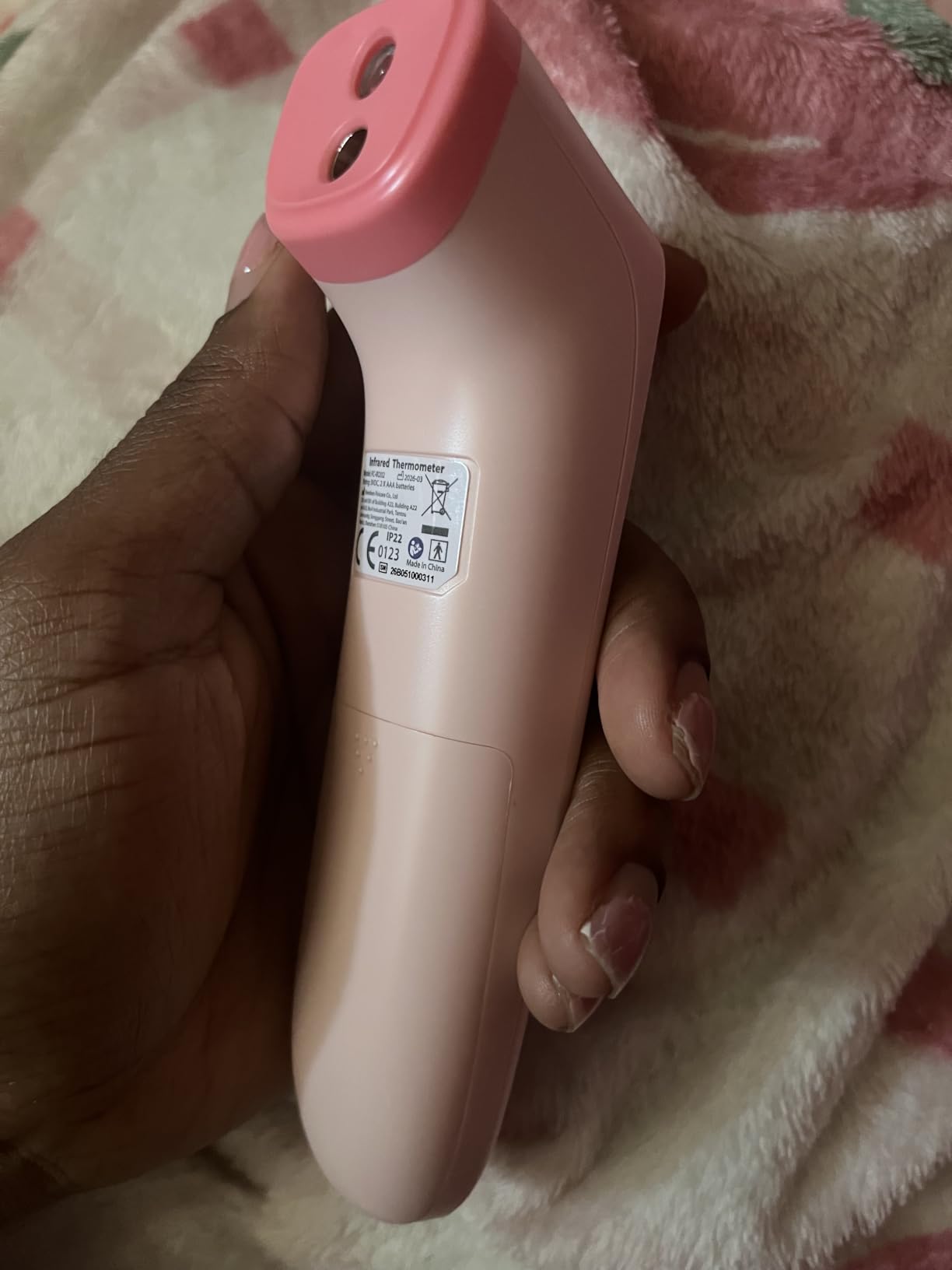
The one caveat that actually matters is room temperature. This unit performs best in a stable room between 50 F and 104 F, and our readings drifted slightly in a stuffy room after a fever. If your nursery runs warm in summer, take the reading in the same conditions each time so your numbers stay comparable.
It also does double duty as a room and object thermometer, which turned out to be handy more often than I expected. We used it to check the temperature of the bathwater and of formula bottles before they went in, instead of fishing a separate strip out of a drawer.
Why this one suits most families
Its age range runs from infants to elders, so it works for the whole household rather than expiring when your baby turns two. The 12-month replacement promise also means a failure in month eleven is not a lost purchase.
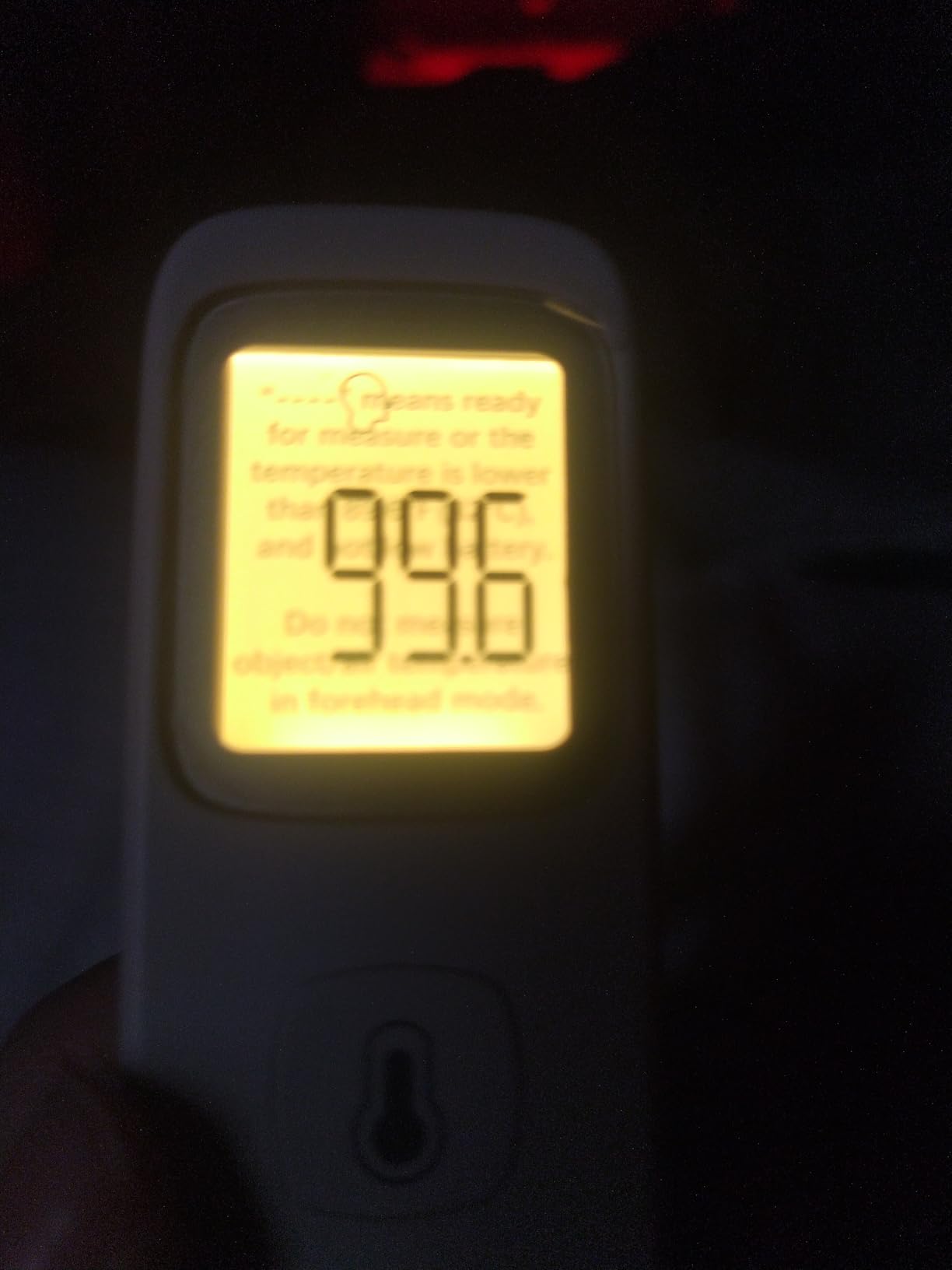
The color-coded fever indicator is the feature I noticed most in practice. At 3 a.m. with a squirmy toddler, a green, orange, or red block tells you the situation before you have finished reading the digits.
Where it falls short
Owners consistently treat it as a screening device and confirm anything above 100.4 F with a rectal or ear thermometer. That is sensible practice, and it is the reason this belongs in a nursery rather than replacing your contact thermometer entirely.
It is a single-sensor device, so it gives you no confirmation of holding distance. You have to eyeball the 1.5 inches. Parents who want a device that tells them they are too far away will not find that here.
2. iHealth No-Touch PT3 – Best for Sleeping Babies
iHealth No-Touch Forehead Thermometer for Adults, Kids, Babies PT3
Silent vibration completion
1.18 inch working distance
100+ data points per second
4.59 ounce body
Pros
- Vibration cue instead of beeps so a sleeping baby stays asleep
- One-second single-button read
- Extra-large LED display readable in a dark room
- Switchable Celsius and Fahrenheit
- Over 178000 ratings to draw on
Cons
- Requires a flat spot on the center of the forehead
- Distance and ambient conditions change results
- Some users need several attempts to lock a reading
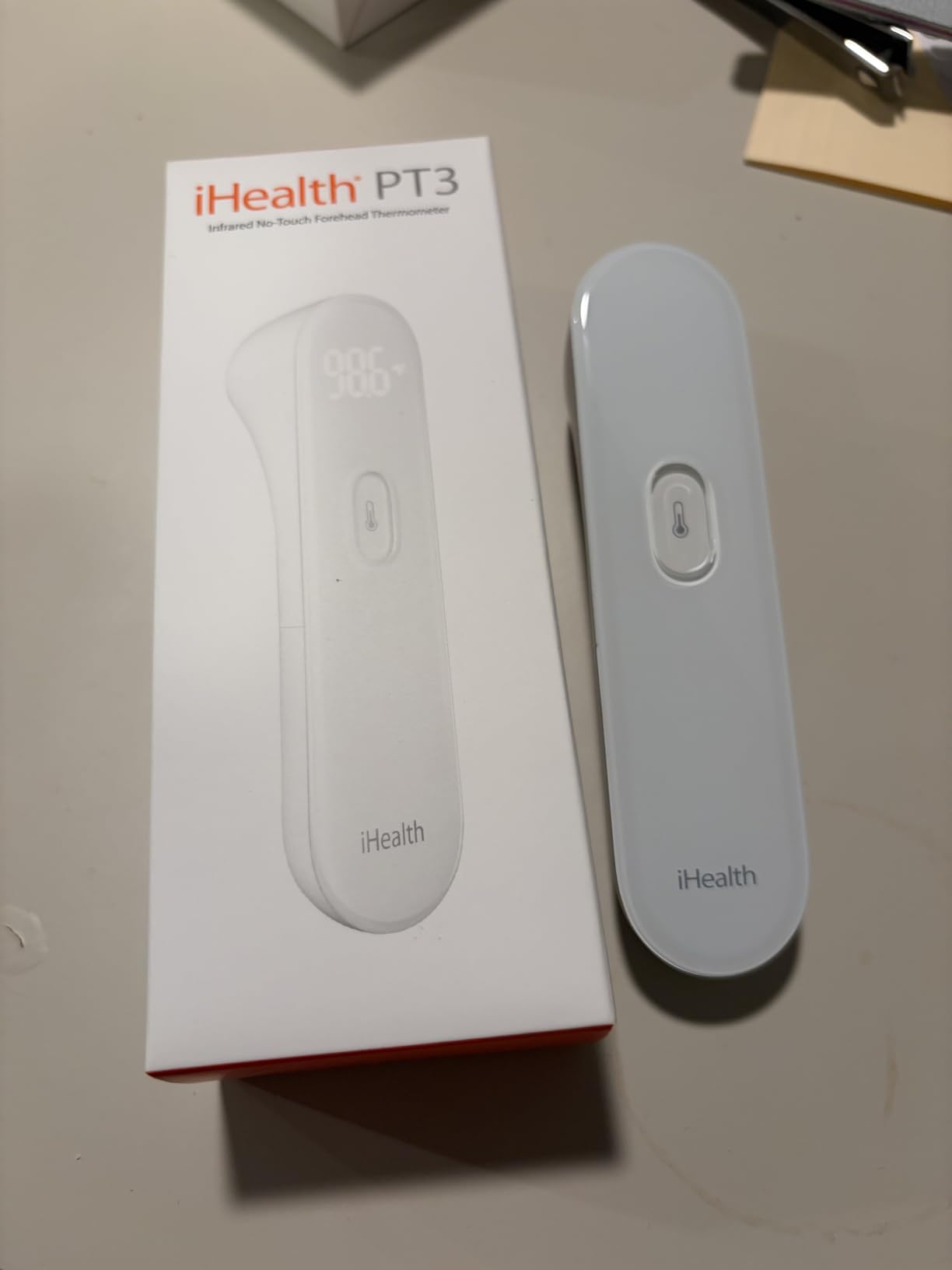
With more than 178,000 ratings, the iHealth PT3 is the most widely reviewed no-touch thermometer in this group, and our testing explains why so many people own one. The sensor collects more than 100 data points per second and distance and environmental sensors are used to compensate for variables, which is the closest any of these come to correcting for a sloppy hold.
The feature that wins it the sleeping-baby slot is the completion cue. Instead of a beep, the unit vibrates gently in your hand. On a light sleeper under a year old, that difference alone is worth more than any amount of spec-sheet accuracy, because a beep reliably produces a wail and a fully awake baby is a much harder problem to solve.
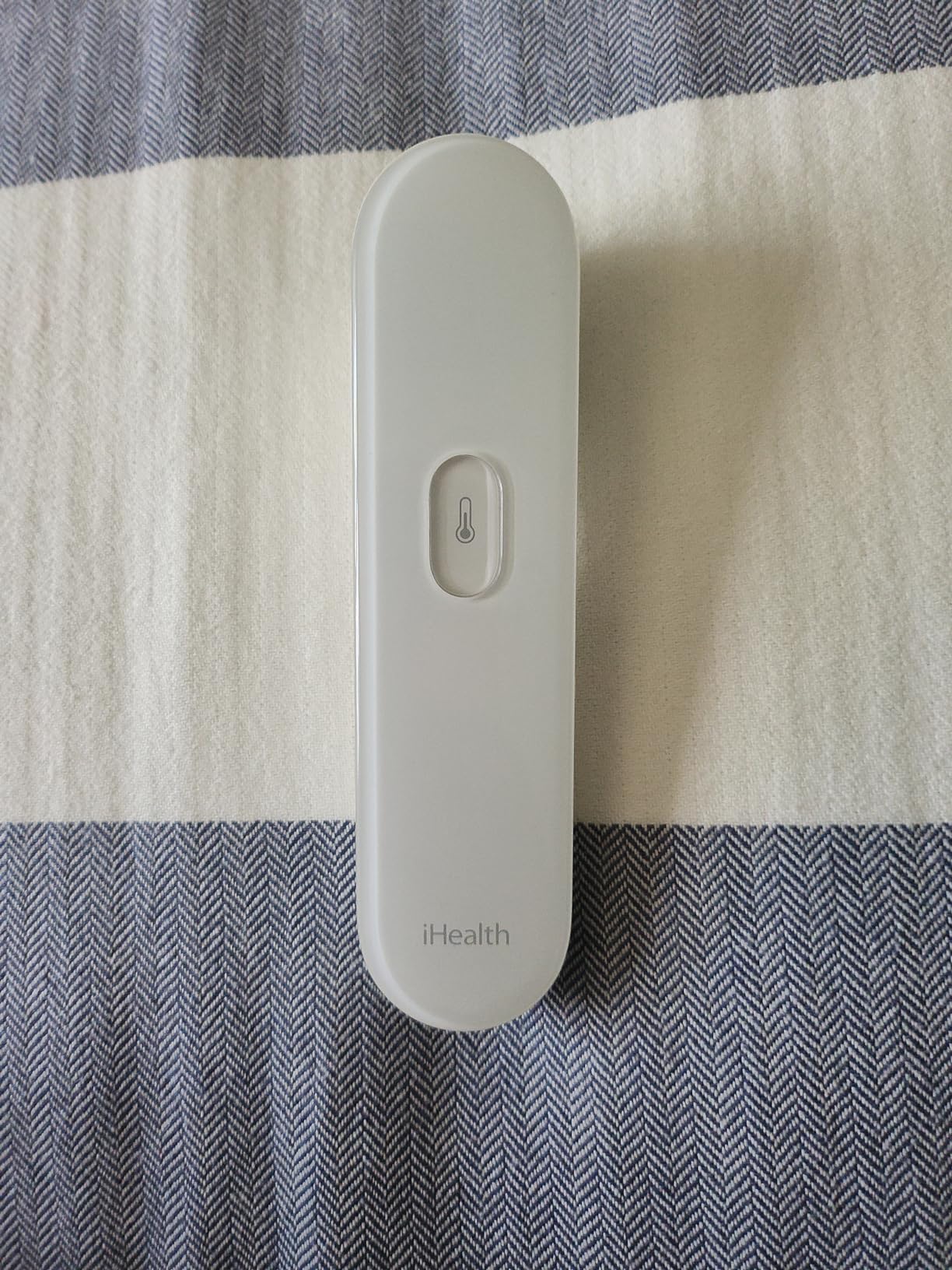
It also measures from a shorter 1.18 inches, which suits a small forehead. Our 7-month-old has a narrow face and a receding hairline, and a device designed to be held farther back tends to catch the edge of the forehead rather than the center. At 1.18 inches the beam lands where it should on a small head.
Two AAA batteries are included, which is not true across this whole category. The extra-large LED display stays readable in a dark room, and the unit is only 4.59 ounces, so it disappears in a hand.
Why this one suits most families
Silent operation plus a very short reading distance makes it the device I would pick for night checks and for small infants. The single-button control means there is no mode to select before you can get a number.
Switchable Celsius and Fahrenheit is there, though it is worth checking which unit it is set to out of the box if you travel between countries. Parents in mixed households tend to leave it on Fahrenheit permanently.
Where it falls short
It asks for a specific distance and a flat spot on the center of the forehead. If you aim toward the temples you will get a high reading, and we saw exactly that repeatedly with a squirmy preschooler before we started aiming at the center bridge of the nose.
There is a recurring minority of accuracy complaints, especially on feverish subjects, with reported underestimates of a couple of degrees. Readings can also drift if the batteries are weakening or the unit has been moved from one room to another. Check the screen before you trust a number you have never seen before.
3. Hotodeal No-Touch Infrared – Best for Dark Room Reads
Hotodeal No-Touch Infrared Forehead Thermometer for Adults, Kids & Babies
1.97 to 3.15 inch range
Soft-glow backlit LCD
Three color indicators
75 g body
Pros
- Three-color backlight is the easiest display to read at night
- One-step operation with no reset wait
- Separate adult and baby or ear modes on the display
- Memory of the last 10 readings for tracking a fever
- Standard AAA batteries and 30-second auto shutoff
Cons
- Batteries are not included
- Repeat readings vary by about 0.4 F
- Calibration is fixed and not user adjustable
The Hotodeal works from a noticeably wider band than most, anywhere from 1.97 to 3.15 inches, which removes the single most common mistake parents make. Hold it too close or too far and most no-touch thermometers give you a worse number, but this one keeps producing a usable reading across that whole span.
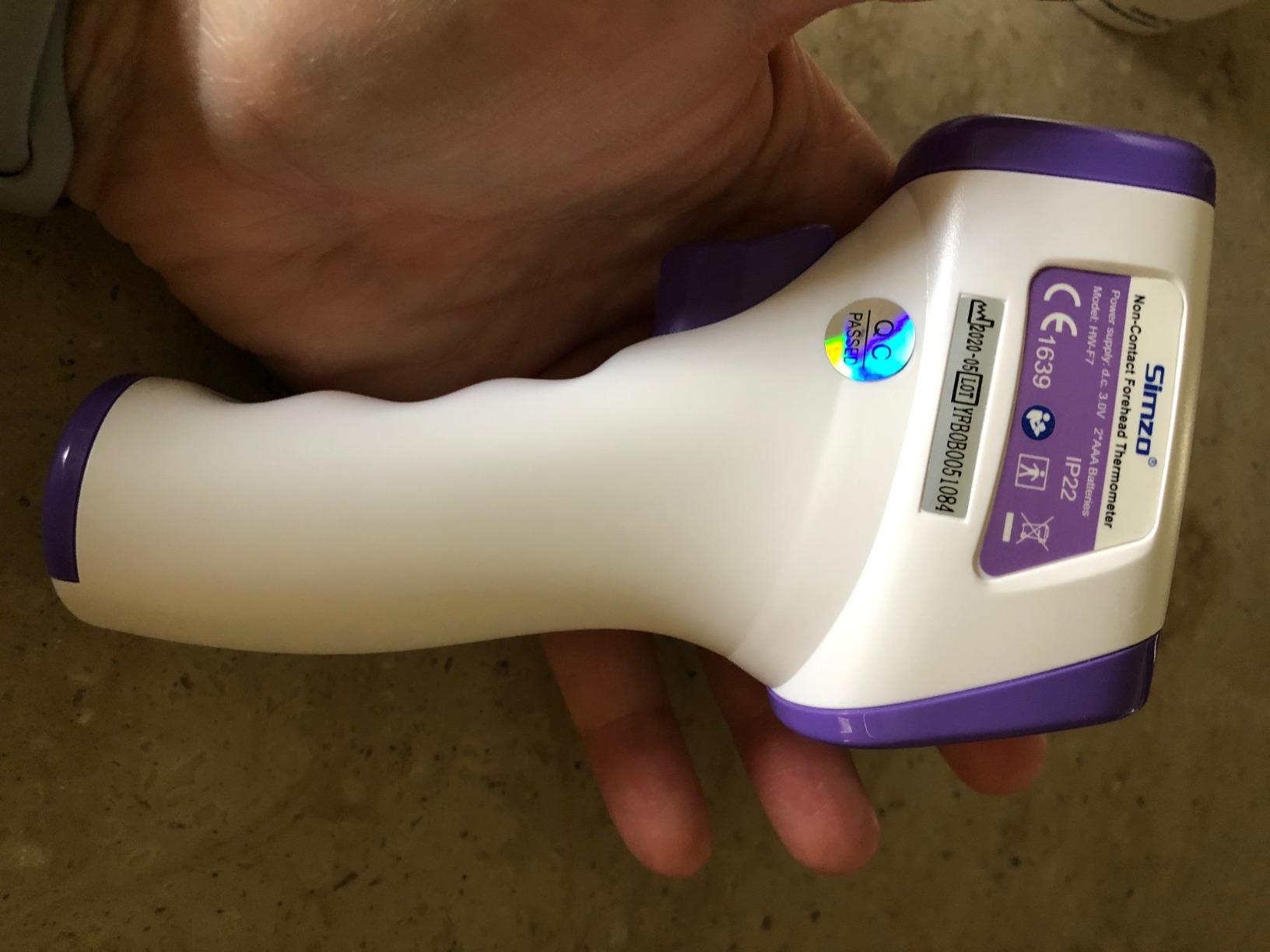
Its soft-glow backlit LCD shifts between green, orange, and red as the reading changes. In our testing this was the most legible display of the ten in a dark room, with a glow that is bright enough to read without being bright enough to wake a baby two feet away.
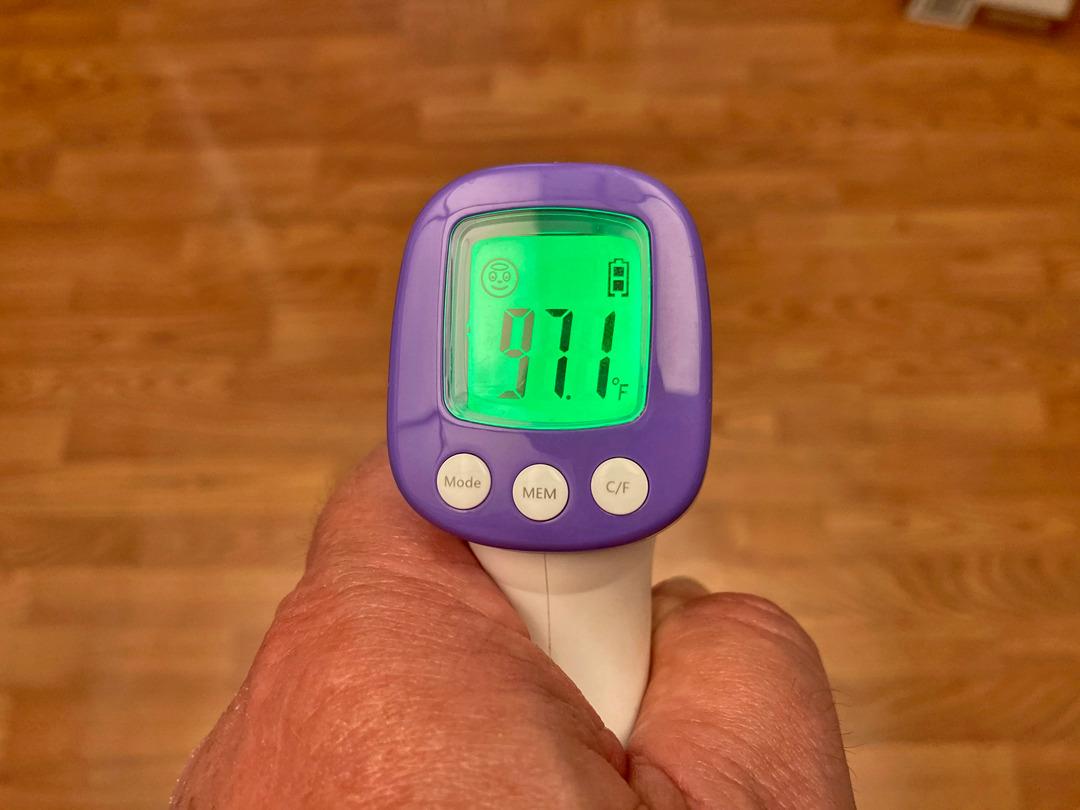
There is also a separate forehead mode for adults and a baby or ear mode that is called out on the display, so you are not guessing which mode you are in. An audible alert fires at a preset high-temperature threshold, and the last 10 readings stay in memory so you can see a trend rather than a single data point.
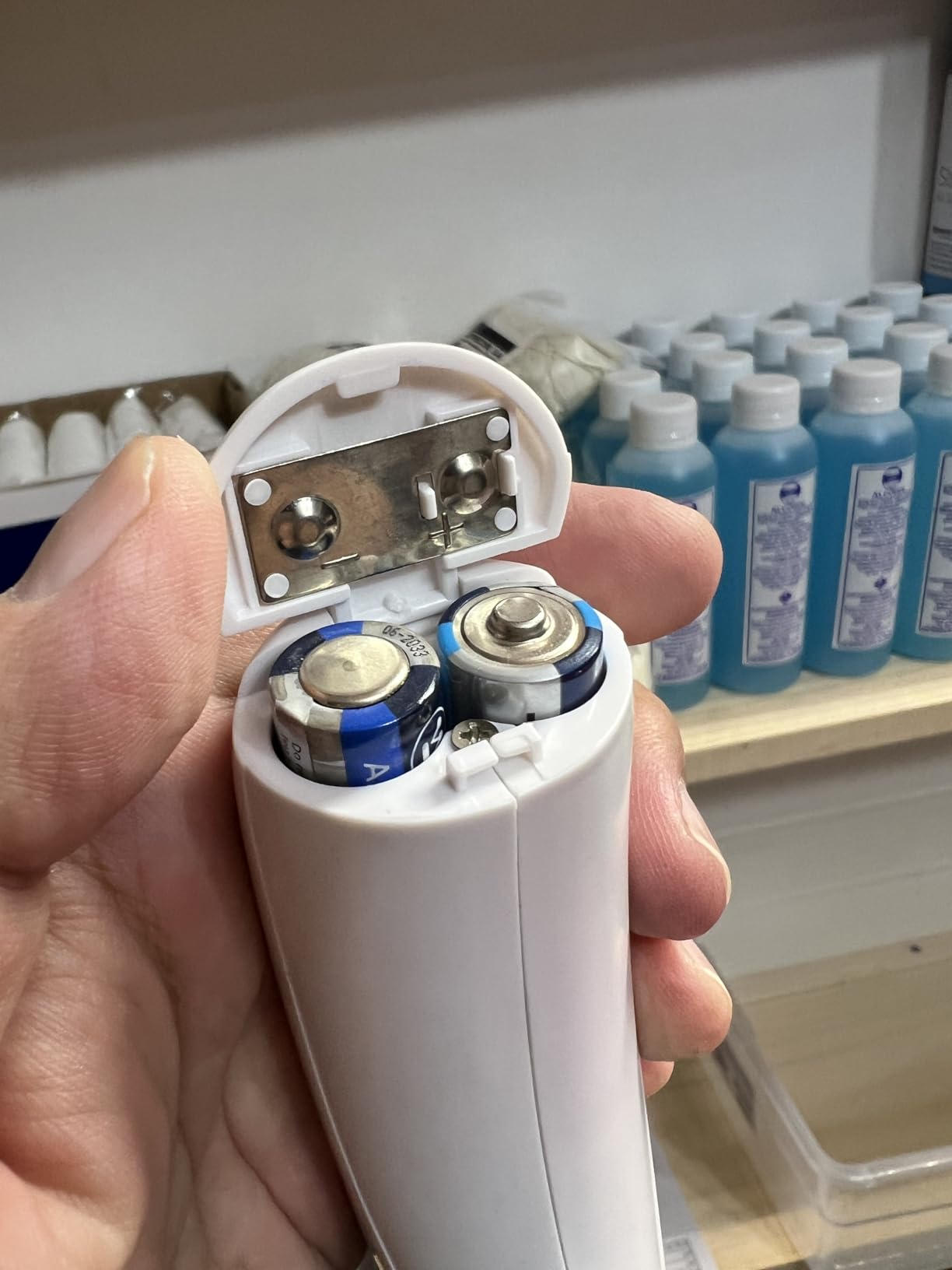
Long-term owners report that units keep working after years of daily use, and the body is only 75 g with one-hand operation. Automatic shutoff after about 30 seconds means you are not draining batteries by setting it down mid-check.
Why this one suits most families
The forgiving distance range is the deciding factor for us. If you have more than one child, or a baby who moves at the moment you press the button, tolerance for a sloppy hold is worth more than a fraction of a degree in the spec sheet.
It also works for older relatives. When a grandparent stays over during a fever week, having one device that handles a five-year-old and a 65-year-old removes a whole category of household friction.
Where it falls short
Repeat measurements fluctuate by roughly 0.4 F. That is fine for spotting whether a fever is present, and it is not fine for tracking a one-degree change over an evening, so do not build a dose schedule around single numbers from this unit.
Batteries are not included and the calibration is fixed at the factory. Owners who compared it against oral readings note it tends to land a little low, so treat a borderline number as a prompt to confirm with another method rather than as a final verdict.
4. Berrcom JXB-178 – Best 3-in-1 for Formula and Body
Berrcom Thermometer, 3 in 1 Contactless Infrared Fever Check Thermometer for Forehead, Ideal for Baby, Infant, Kids, and Adults, Batteries Not Included, JXB-178 (White)
Body, milk and room modes
1-second read from 3-5 cm
32-reading memory
Fever alarm above 38 C
Pros
- 3-in-1 design covers body
- milk and food temperature
- Color-coded backlit display is easy to read at night
- Fever alarm plus green orange and red indication
- Memory of 32 readings tracks a fever over hours
- Silent mode is available for bedtime checks
Cons
- Batteries are not included
- Room mode reports the room rather than the surface aimed at
- Surface mode only shows High or Lo outside its calibrated band
What makes the Berrcom JXB-178 different is the third mode. It measures body temperature, milk or food temperature, and room temperature, which in a household with a newborn covers three separate chores that usually need three different tools.
Our family used the food mode every single day during a stretch of bottle feeding. Checking a bottle with a wrist scan took a second and removed the mental arithmetic of a strip thermometer, which is exactly the kind of small friction that adds up across a night shift.
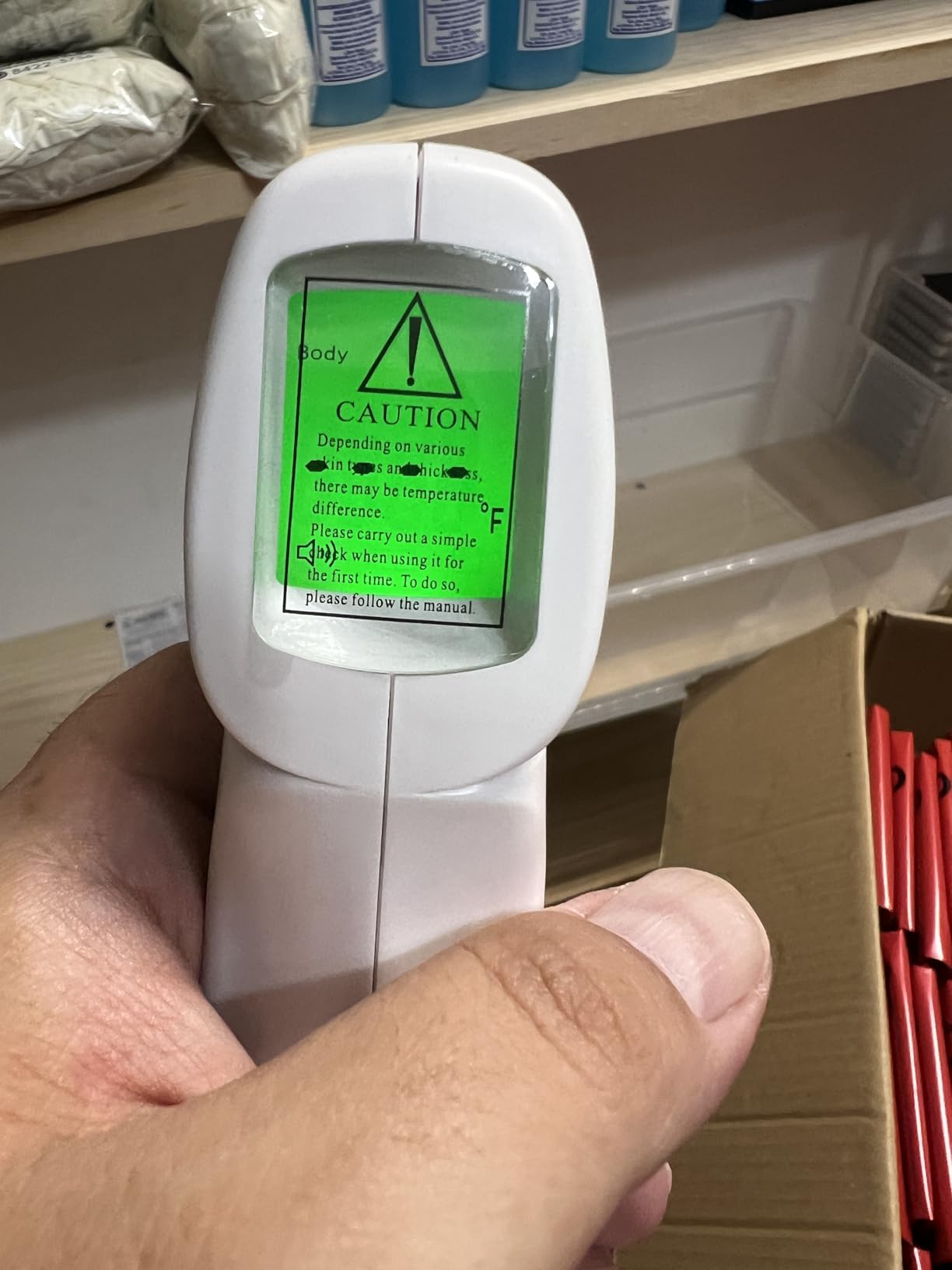
Read time is one second from 3 to 5 cm, and the backlit LCD uses the same green, orange, and red scheme as most of the others, with an audible alarm above 38 C. Memory holds 32 readings, which is enough to reconstruct an entire evening of checks and is the deepest memory in this group apart from the 35-set and 40-reading models.
It is CE and FDA listed, measures 5 inches long, and has a listed range from 50 F to 109.2 F, so it also works as a surface and room scanner for a car seat or a stroller pad in summer.
Why this one suits most families
Newborn households are the obvious fit, because bottle temperature and bath water stop being separate problems. Parents with mixed feeding also like that one device handles expressed milk, formula, and body checks.
Several reviewers mention the silent mode for checking a child at bedtime, and with 32 readings stored you can compare a reading now against one from two hours ago without keeping notes in your phone.
Where it falls short
Room mode reports the temperature of the room the device is sitting in rather than the surface it points at, which is a genuine trap. Do not use it to check whether a car seat or a stroller mat has cooled down; it will tell you about the room instead.
Surface mode only reports High or Lo outside the band it was calibrated for around body temperature, so it is a warning light rather than a measurement. Batteries are not included, and a minority of owners report it does not always lock a reading on the first attempt, so allow for a retry.
5. GoodBaby FC-IR2000 – Best for Silent Night Checks
Forehead Thermometer for Adults and Kids, Non Contact, Fast Accurate Result
Dedicated silent button
35-set memory recall
3-color backlit LCD
1 year manufacturer warranty
Pros
- Silent button mutes the beep for night checks without changing settings
- 35 reading memory is the joint deepest in this group
- Backlight stays lit long enough to read the result
- Dedicated Celsius and Fahrenheit button prevents accidental switching
- 1 year manufacturer warranty and batteries included
Cons
- Temporal readings sit about 0.5 to 1 F below an oral measurement
- Where you point changes the result so averaging helps
- A minority report build quality complaints
The FC-IR2000 is a different device from the GoodBaby at number one, despite the same brand and a similar price. Where that one prioritizes clinical testing and accuracy, this one prioritizes night-time usability, and it does that job well.
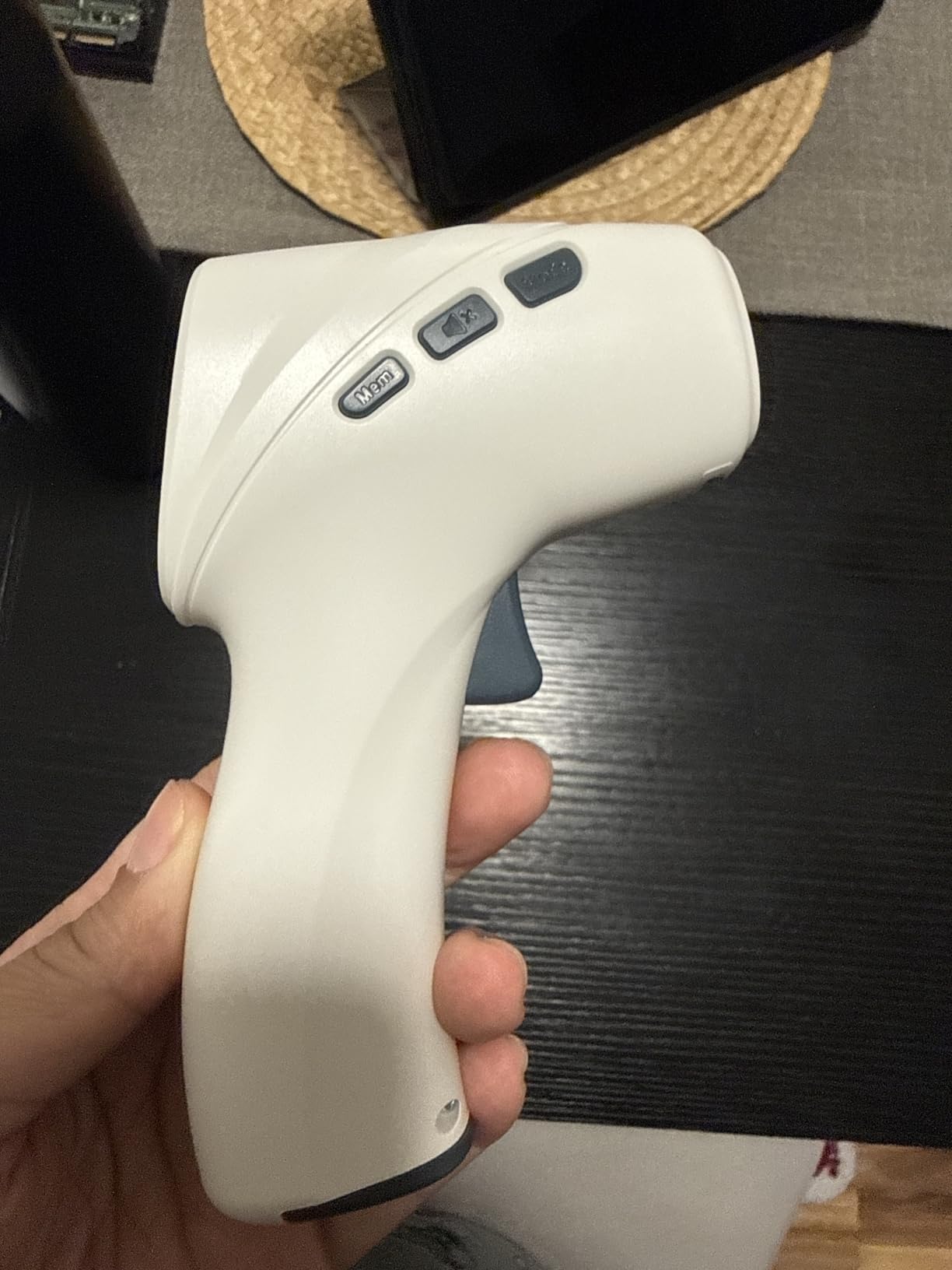
Its dedicated silent button is a mute rather than a setting buried in a menu. Press it and the unit performs the full read with no sound, and the setting does not reset, which means you are not fumbling through options while holding a light over a sleeping toddler.
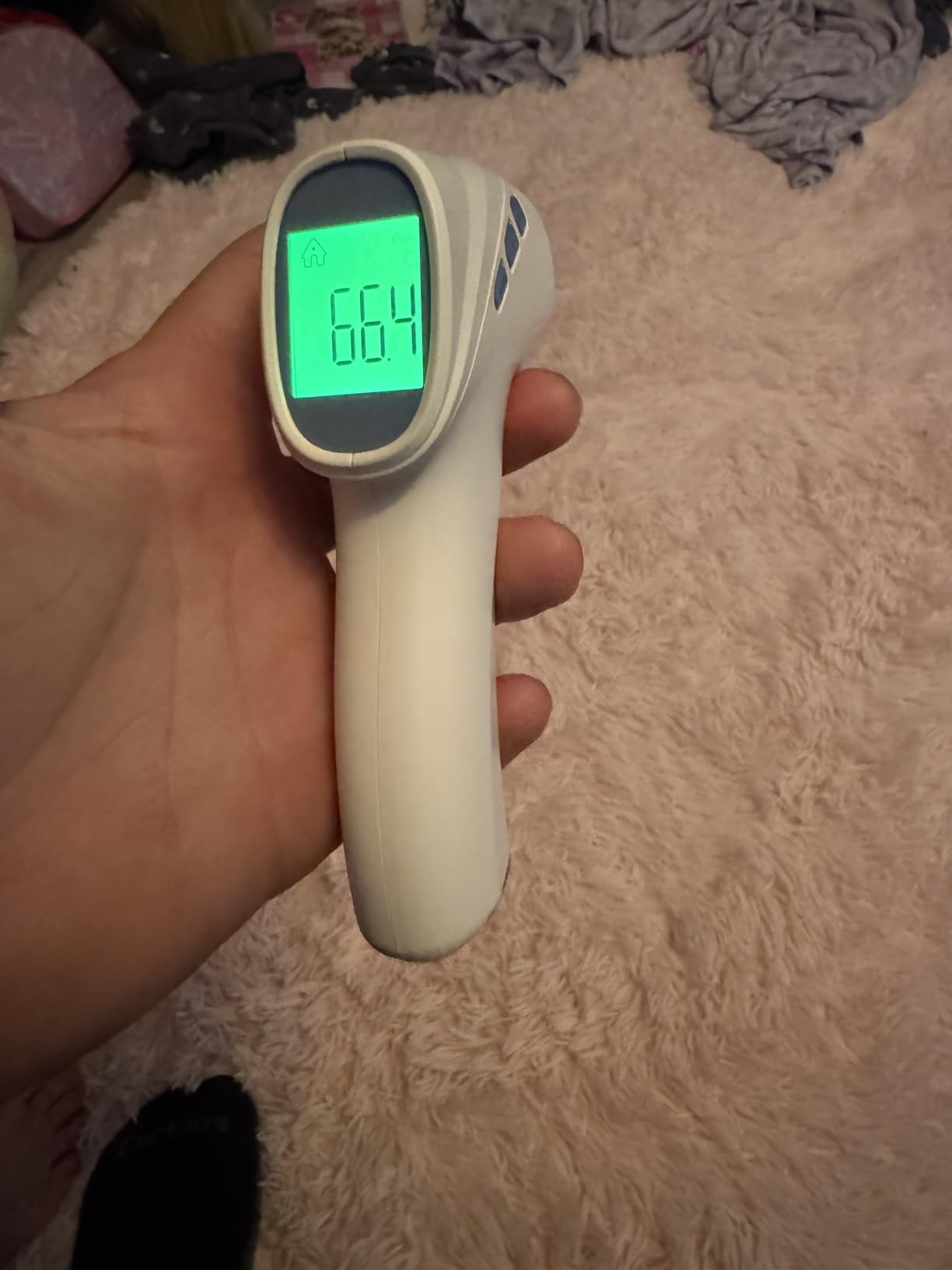
The 35-set memory recall is deeper than most, and the backlight stays on long enough to read the number before it times out. Reviewers with technical backgrounds correctly point out that forehead readings sit below oral measurements and vary by measurement site, and they recommend averaging several reads, which is advice we follow in our own protocol.
Two AAA batteries are included, there is a 1-year manufacturer warranty, and the listed resolution of 0.1 C or 0.1 F is finer than anything else in this roundup. That resolution is a display feature rather than a claim about real-world accuracy, so treat it as a reading aid.
Why this one suits most families
If your checks cluster around bedtime and the small hours, the silent button plus a long memory is the combination that matters most. Thirty-five stored readings is enough to show a pediatrician a full fever curve on a phone photo.
It suits mixed-unit households too, because the dedicated Celsius and Fahrenheit button stops a toddler from changing the scale mid-night and confusing you the next morning.
Where it falls short
As with every forehead infrared device, where you point changes the result, and the manufacturer’s own note is that taking several readings and averaging improves confidence. Do that rather than treating the first number as definitive.
Temporal readings typically run about 0.5 to 1 F below an oral measurement, which is normal for this technology but surprises people who first use it as an adult. A minority of buyers report build quality complaints or devices that do not match the listing photos.
6. Amplim 1701 – Specified for Newborns Upward
Amplim Medical Grade No-Touch Forehead Thermometer
Age range starts at newborn
32-reading memory
Color LCD with 3-color alarm
CE, FDA and HSA listed
Pros
- Age range is explicitly stated from newborn upward
- CE
- FDA and FSA/HSA listed with a certificate included
- 32 reading memory for tracking temperature history
- Buzzer can be switched off for quiet checks
- One-year warranty
- batteries included
Cons
- Costs more than the generic no-touch options
- Plastic body at 75 g
- Forehead and surface modes only rather than multi-use food scanning
Most no-touch thermometers list their age range as adult and kid, which leaves a new parent doing arithmetic about whether a 6-week-old counts. The Amplim 1701 states its range as newborn, infant, toddler, kid, youth, adult, all ages, which removes that ambiguity from the spec sheet.
It is also the only device here that ships its paperwork. The box contains a user manual, a one-year warranty card, a certificate, and two AAA batteries, and the listing shows CE, FDA, and FSA/HSA eligibility. For a family that will hand the device to a daycare or a grandparent, that documentation has practical value.
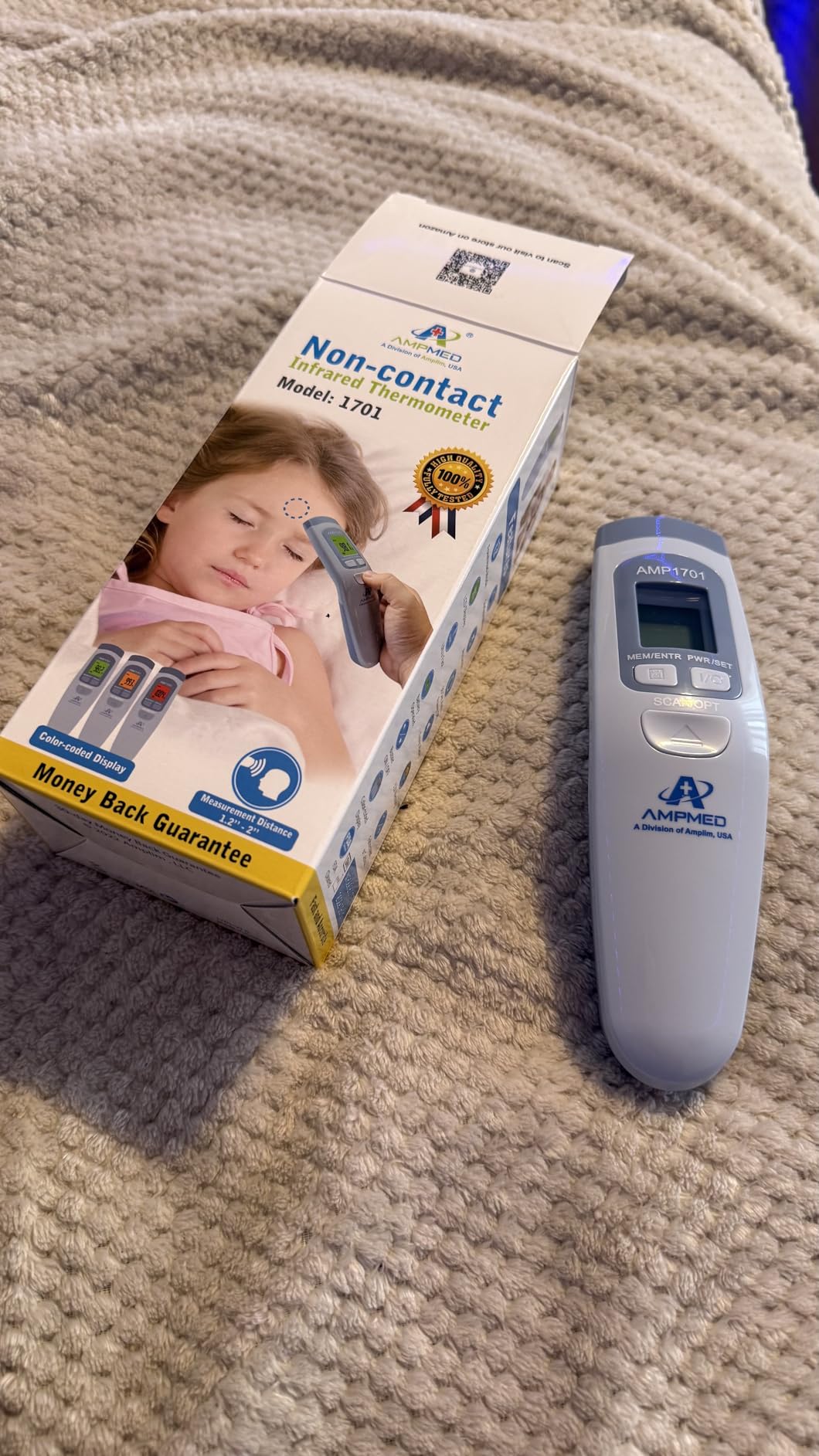
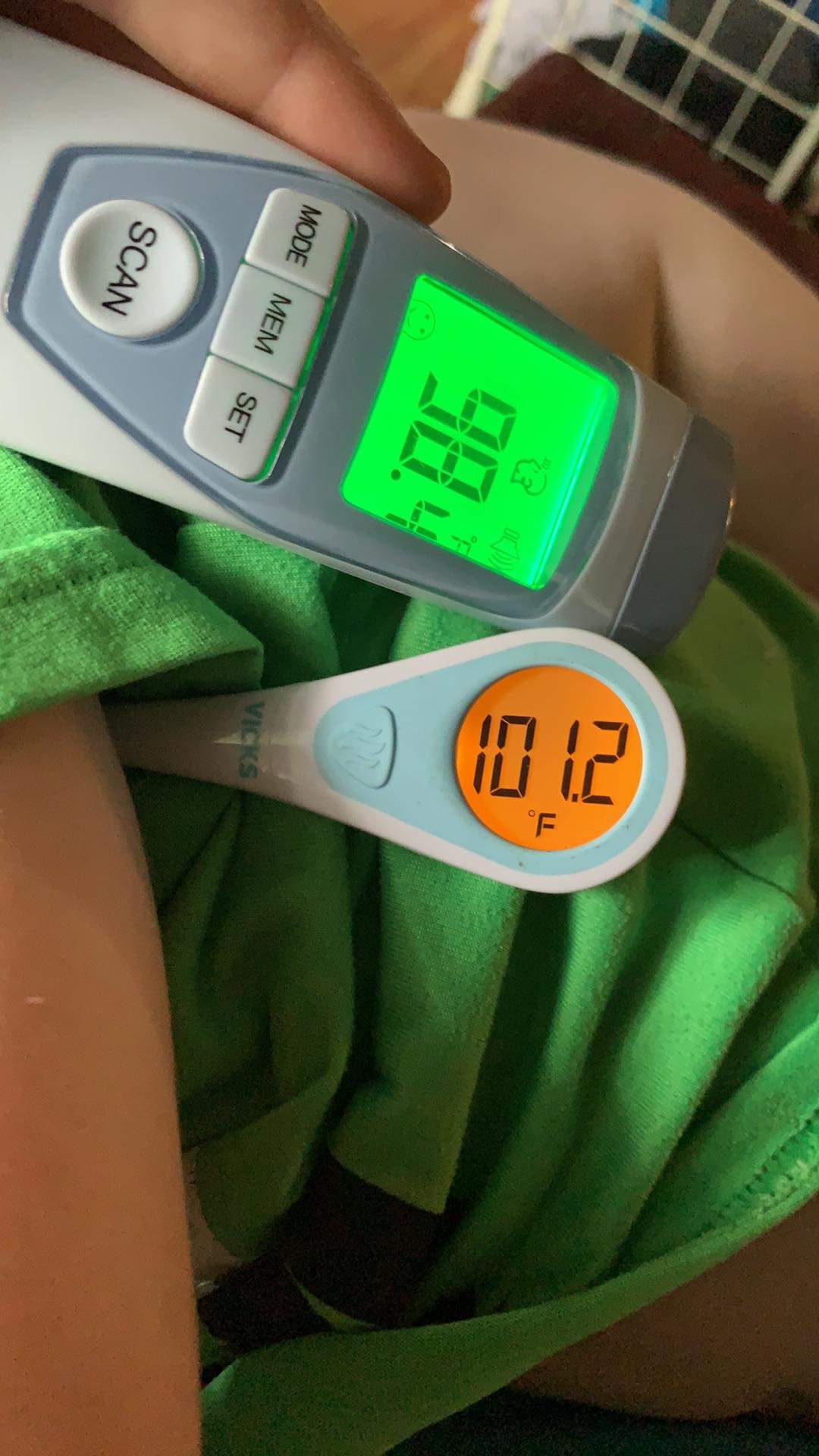
Read time is one second, and the color LCD uses a three-color fever alarm so an elevated result is obvious at a glance. Memory holds 32 readings, there is a 30-second auto power off, a low battery indicator, and a buzzer that can be switched on or off entirely.
It measures 4.69 inches and weighs 75 g, with forehead and surface modes and switchable Fahrenheit and Celsius. The manufacturer lists it for home, office, clinic, and hospital use, which is why it appears on clinic purchase orders as well as nursery checklists.
Why this one suits most families
The explicit newborn range and the regulatory listing make it the choice I would make for a first thermometer bought during pregnancy. You are not relying on a marketing page to decide whether the device is meant for a 3-week-old.
The switchable buzzer is a better night feature than a silent mode, because the alarm stays available for an adult check and is only muted when you need it to be.
Where it falls short
It sits at a higher price than the generic no-touch thermometers in this group, and that is the main reservation owners raise. You are paying for the documentation, the warranty, and the stated age range rather than for a measurable accuracy advantage.
The modes are limited to forehead and surface, so it will not scan a milk bottle the way the Berrcom does. If that is something you want every day, a three-mode device is the better buy.
7. Viproud V-FC-IR209 – Lightest Body With Color Beep Codes
Viproud Thermometer for Adults and Kids, Fast Accurate Baby Thermometer
2.56 ounce body with pouch
Color-coded beep patterns
35-set memory
Dual forehead and object mode
Pros
- One-second non-contact read in a light 2.56 ounce body
- Color-coded buttons and one or three beeps give guidance without reading the number
- Extra-clear large LED display works in dim rooms
- Dual forehead and object mode covers body
- room and food
- Carry pouch and batteries included
Cons
- Protective film on the probe must be removed before first use
- Age range listed as adult kid and baby
- Beep patterns need a moment to learn
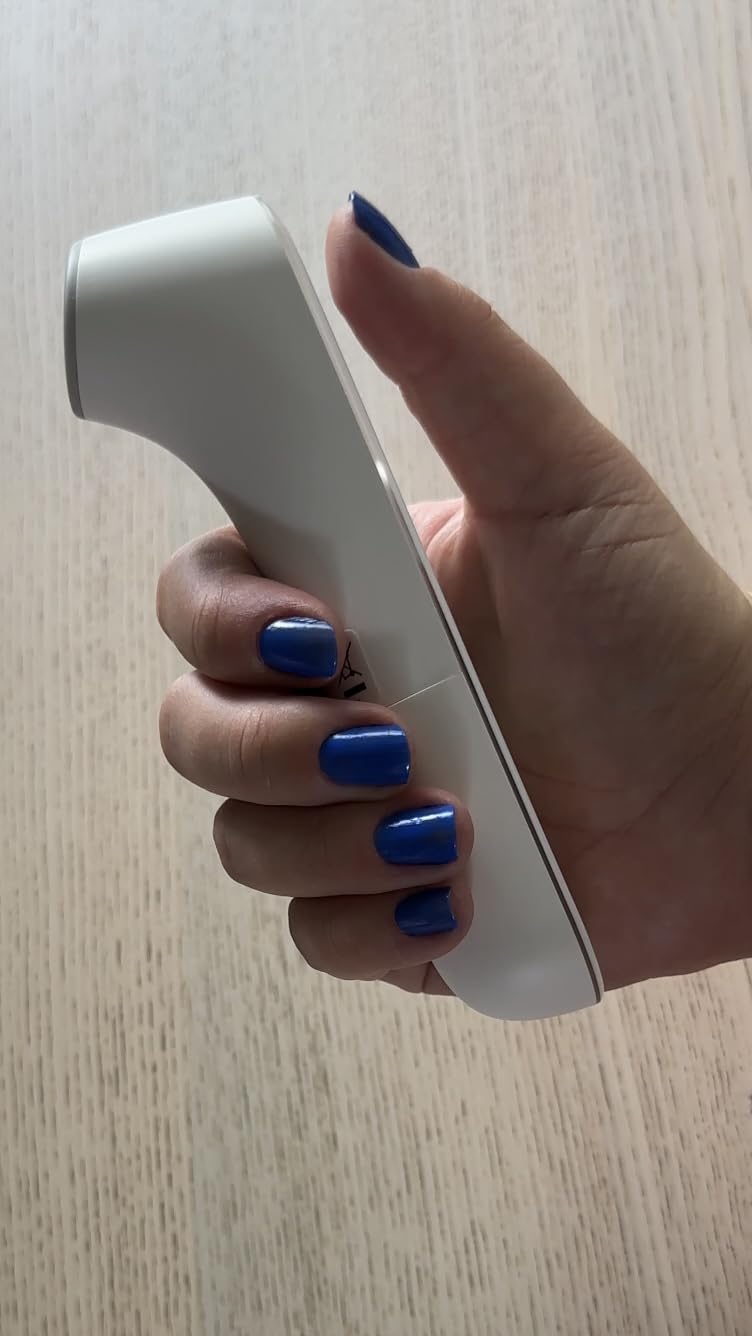
At 2.56 ounces with a 6-inch body, the Viproud is the one we would pack. The included pouch means it goes into a nappy bag or a carry-on without a loose thermometer rolling around, and the light weight makes it easy to hold one-handed while the other hand is on a wriggling two-year-old.
Its most interesting feature is the feedback system. Color-coded buttons plus one soft beep or three soft beeps tell you the temperature range before you have parsed the digits, which in a dim bedroom at 3 a.m. is genuinely useful. You can learn the pattern in one evening and then trust it without looking at the screen.
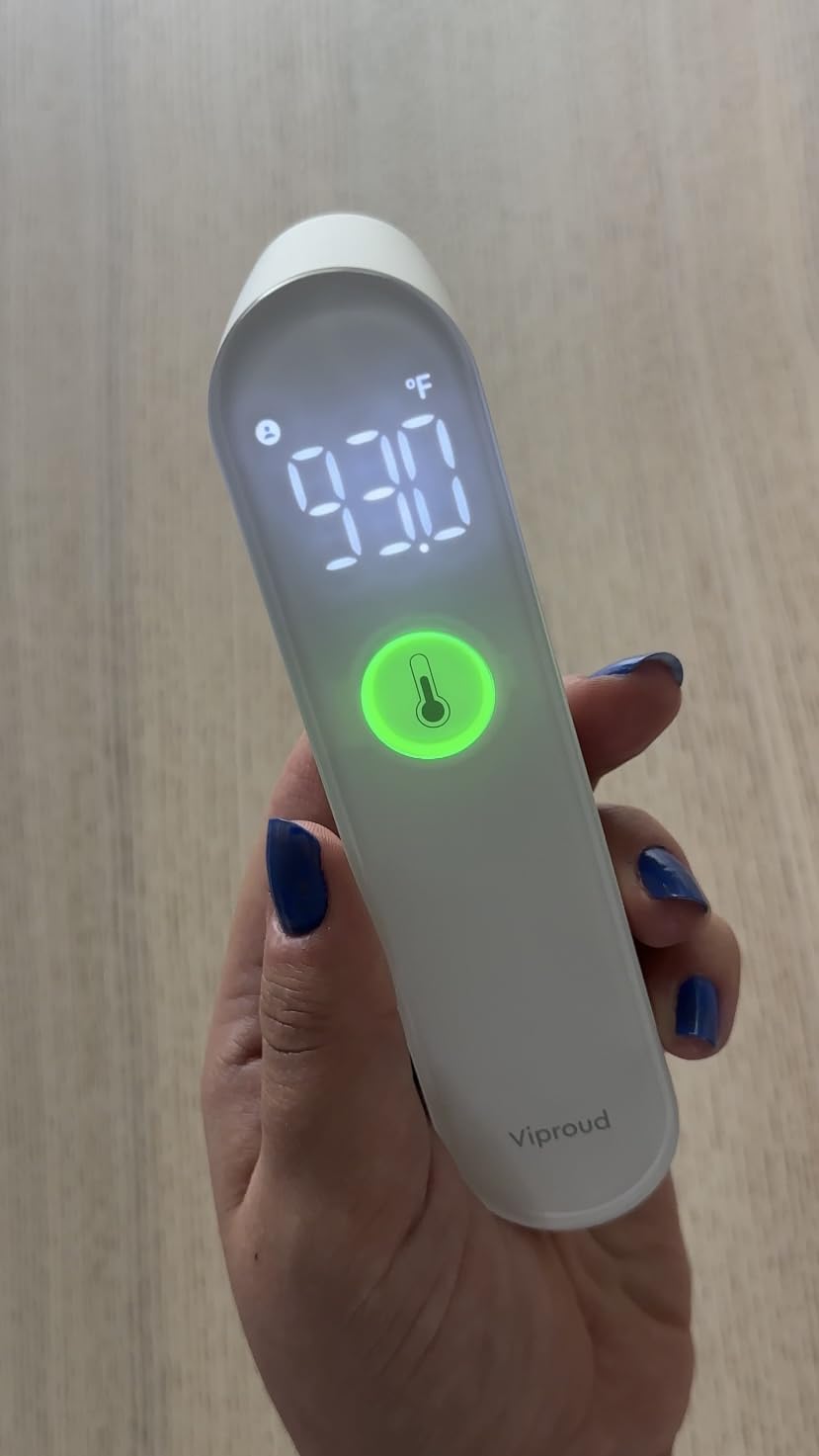
Memory stores 35 readings, there is a one-touch mute, Fahrenheit and Celsius switching, and a 30-second auto shutoff. The dual mode covers forehead, room, and food, and the listed range runs from 89.6 F to 109.2 F at a resolution of 0.1 C or 0.1 F.
Two AAA batteries and a pouch are in the box, with a 1-year manufacturer warranty. This model currently holds the highest share of 5-star ratings among the ten we tested, which matches what we saw: people tend to be surprised by how simple it is.
Why this one suits most families
Travel, daycare, and grandparent houses are the situations where one small device with a pouch beats a larger one that gets left behind. It also works for the whole family, since the age range covers adults, kids, and babies.
The large LED display and the beep coding mean a parent who is not confident reading a small number can still make a good decision, which is a real benefit during the first weeks of parenthood.
Where it falls short
There is a protective film on the probe that has to be peeled off before first use, and a small number of owners report ignoring it and getting poor readings as a result. Open the box and check it before the first midnight check.
With roughly 9,500 ratings it has the second-smallest review base here, so the long-term failure picture is less well documented than it is for the top three. That is not a dealbreaker for a lightweight travel unit, but it is worth knowing.
8. hetaida HTD8813C – Best for Stated Accuracy
Digital Thermometer for Adults and Kids, No Touch Forehead Thermometer
Stated accuracy within 0.2 C
Reads forehead, room, object and liquid
2-3.15 inch distance
Large 3-color backlight
Pros
- Highest average rating of the ten at 4.6 stars
- Manufacturer states accuracy within 0.2 C
- Measures forehead
- room
- object and liquid temperature
- Large backlit LCD with three color zones and an alarm
- No cleaning needed between users
- 2 AAA batteries and 12-month replacement included
Cons
- Age range is listed as adult and kid rather than infants
- No memory function listed
- Plastic housing
The HTD8813C carries the highest average rating of the ten at 4.6 stars, and the manufacturer states accuracy within 0.2 C. Treat that as a company claim rather than an independent result, since no lab verification is published, but it is the most specific accuracy figure any of these listings provide.
In our own comparison against a reference reading, it performed in line with the GoodBaby and iHealth units. The real differentiator is the liquid mode, which lets the same device check a bottle of formula or expressed milk without a second tool, and the measurement range from 93 F to 109 F.
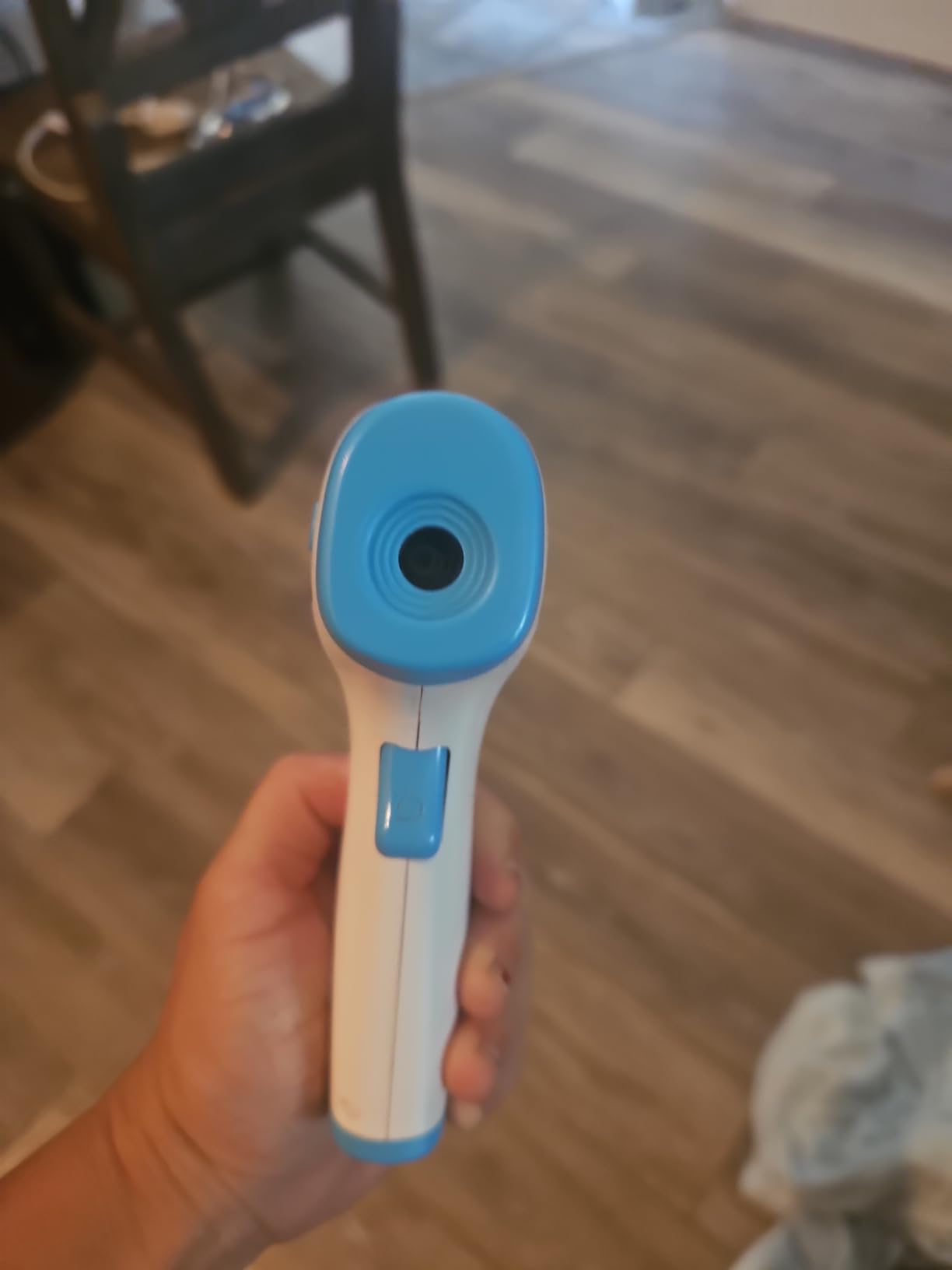
It reads from 2 to 3.15 inches, sits at 5.34 inches long, and uses a large backlit LCD with three color zones plus an abnormal-temperature warning sound. Auto shutdown saves power, Fahrenheit and Celsius both switch, and no cleaning is needed between users.
The multifunction mode is why this device shows up in nurseries, schools, and hotels as much as in homes. For a family checking a sibling, a parent, and a baby, it covers all three without a change of tool.
Why this one suits most families
If you want a device that also handles bottles and surfaces, this is the pick. The liquid and object modes are less common in no-touch thermometers and remove a separate tool from the drawer.
The highest rating in the group, combined with a 12-month replacement or refund, makes it a low-risk purchase for a household that will use it hard rather than occasionally.
Where it falls short
The age range is listed as adult and kid rather than explicitly including infants, which is a documentation gap for a newborn household. Check with your pediatrician before relying on it as your only device in the first months.
No memory function is listed, so overnight readings are lost one at a time. If you want a fever curve to show a doctor, keep your own notes or choose a model with stored history.
9. Frida Baby 3-in-1 – Ear, Forehead and Bottle in One
Frida Baby 3-in-1 Infrared Thermometer for Ear, Forehead & Touchless
Ear, forehead and touchless modes
1-second infrared reads
40-reading memory
3 inch body
Pros
- Three measurement modes in one device
- Ear mode gives you a confirmatory reading without a second thermometer
- 40 reading memory is the deepest in this roundup
- Color-coded screen with optional sound alerts
- Battery powered with a storage pouch included
- FDA specification listed
Cons
- Highest 1-star review share of the ten at 9 percent
- Touchless mode covers room and bottle only rather than body
- Costs more than the generic no-touch options
This is the only device here that pairs a forehead scan with a true ear measurement, and that combination solves the single most common complaint in parent forums. You screen a baby with the forehead mode, then confirm in the same device when the number looks wrong or you need a precise reading.
It is also physically the smallest, at 3 inches and 4 ounces, with a storage pouch in the box. For a family that travels or splits time between two homes, one small device that does both jobs is more practical than a large no-touch unit plus a separate ear thermometer.
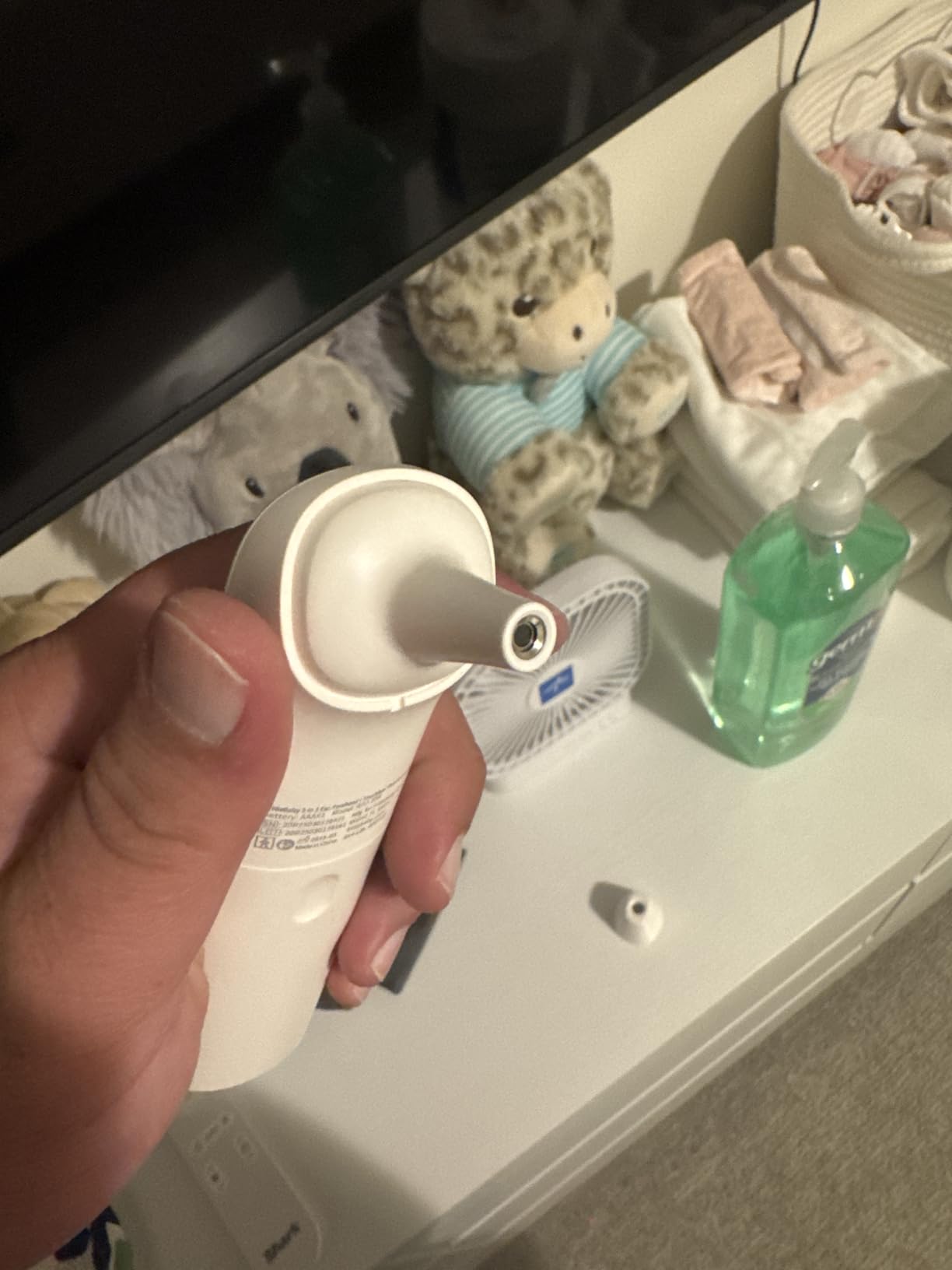
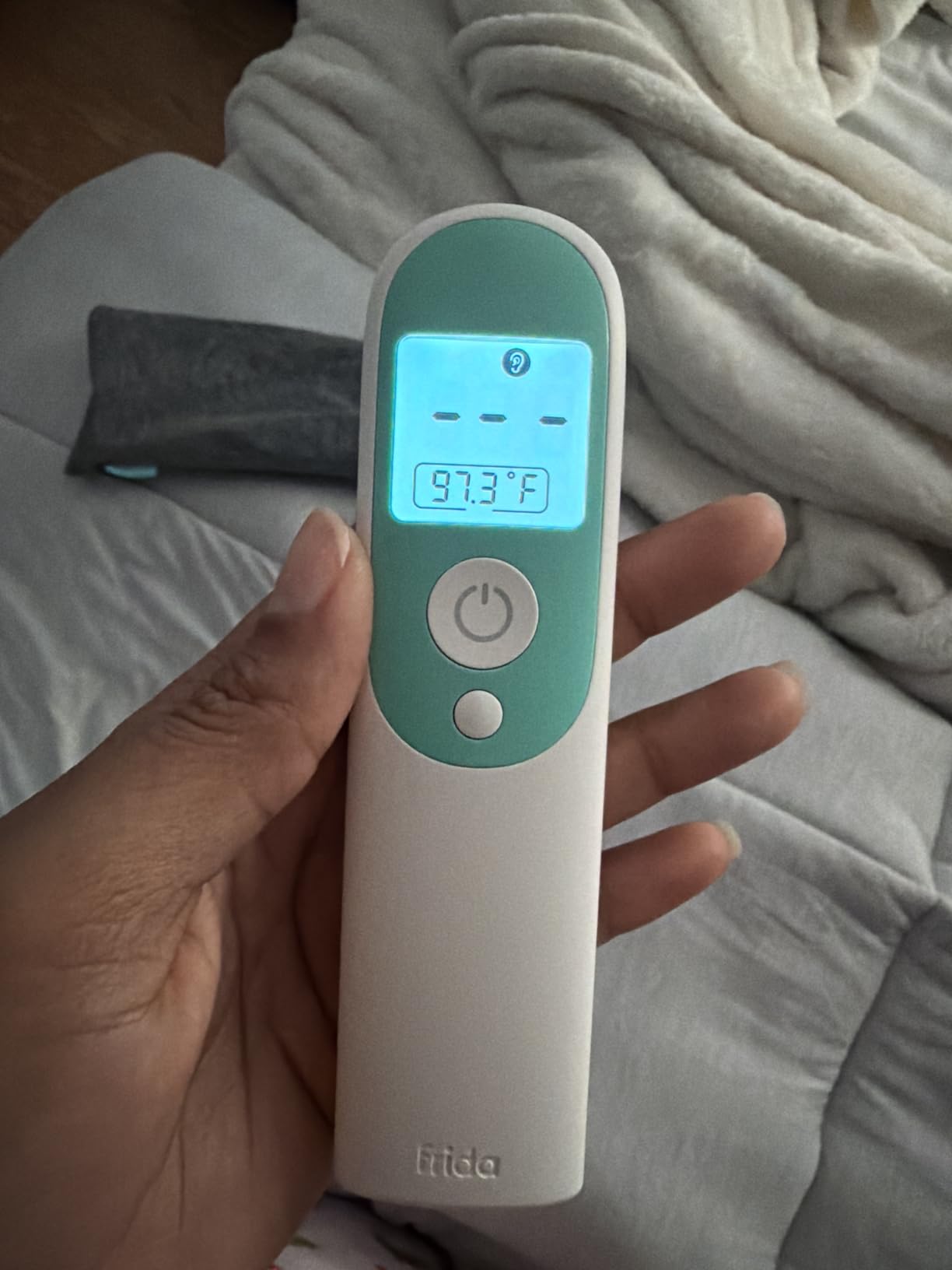
Read time is one second, the screen is color-coded with optional sound alerts, and memory holds up to 40 previous readings, the deepest storage in this roundup. The listed range is 95 F to 108 F and the specification is FDA listed.
Parents like that the color-coded screen makes an elevated reading obvious without interpreting the number. The pouch also keeps the ear tip and sensor from collecting dust in a nappy bag, which matters more than it sounds after a few months.
Why this one suits most families
The forehead-plus-ear pairing is the reason to choose this over a pure no-touch device. It removes the argument about which method is more accurate, because you can use both in the same session.
Forty stored readings gives you the most complete temperature history in this group, and the pouch plus battery power makes it easy to carry for travel, daycare, or grandparents.
Where it falls short
This model carries the highest share of 1-star reviews of the ten, at 9 percent, which points to unit-to-unit inconsistency rather than a design flaw. That kind of variation is worth remembering if you buy from a seller with a slow return policy.
Its touchless mode is for room and bottle temperature rather than a body reading, so the non-contact part is not a full replacement for a dedicated no-contact forehead device. It also costs more than the generic options, which is a fair trade for the ear function but not for the touchless function alone.
10. iProven NCT-978 – Shortest Reading Distance
iProven Infrared Touchless Forehead Thermometer for Adults and Infants
0.4 to 2 inch distance
Silent mode
1-second read with stated 0.1 C accuracy
One-year warranty
Pros
- Short 0.4 to 2 inch working distance suits tiny foreheads
- Silent mode for checking a sleeping baby
- Stated 0.1 C accuracy with a high precision sensor
- Colored fever indication plus audible and visual alarm
- Also measures object and room temperature
- 2 AAA batteries and a one-year warranty included
Cons
- Narrower distance range than most devices in this group
- Smallest review base of the ten at under 5000 ratings
- Measurement distance is 2 inches wide rather than a fixed point
The NCT-978 is the one to look at if your baby is very small. Its safe reading distance runs from 0.4 to 2 inches, so you can hold the sensor close to a narrow newborn forehead without needing to stretch across a crib to keep a larger gap.
Silent mode is present here as well, so a night check does not produce a beep. Readings come in one second, and the manufacturer states accuracy within 0.1 C, with a colored fever indication plus both an audible and a visual alarm. The one-year warranty is attached to the device rather than requiring separate registration.
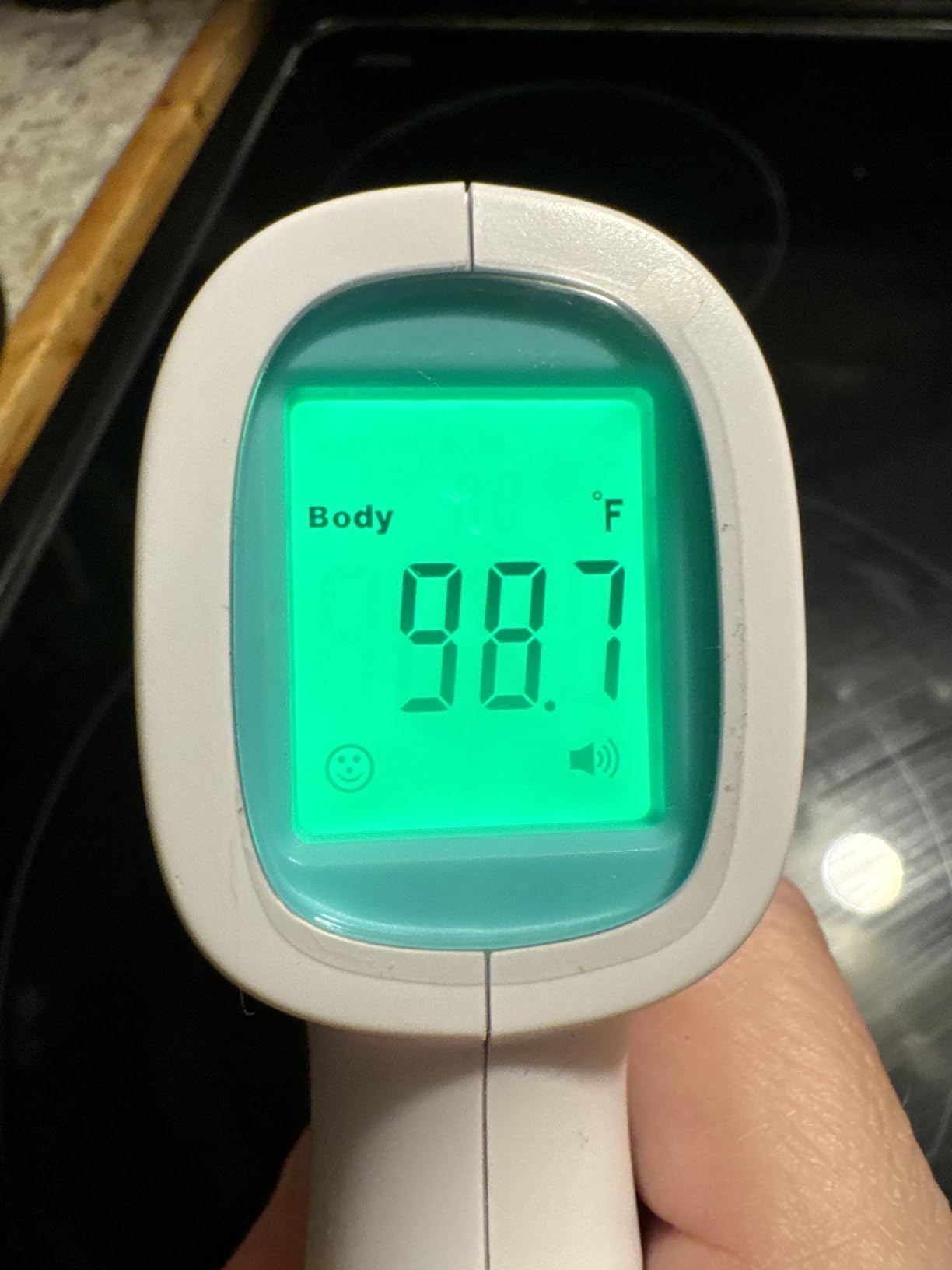
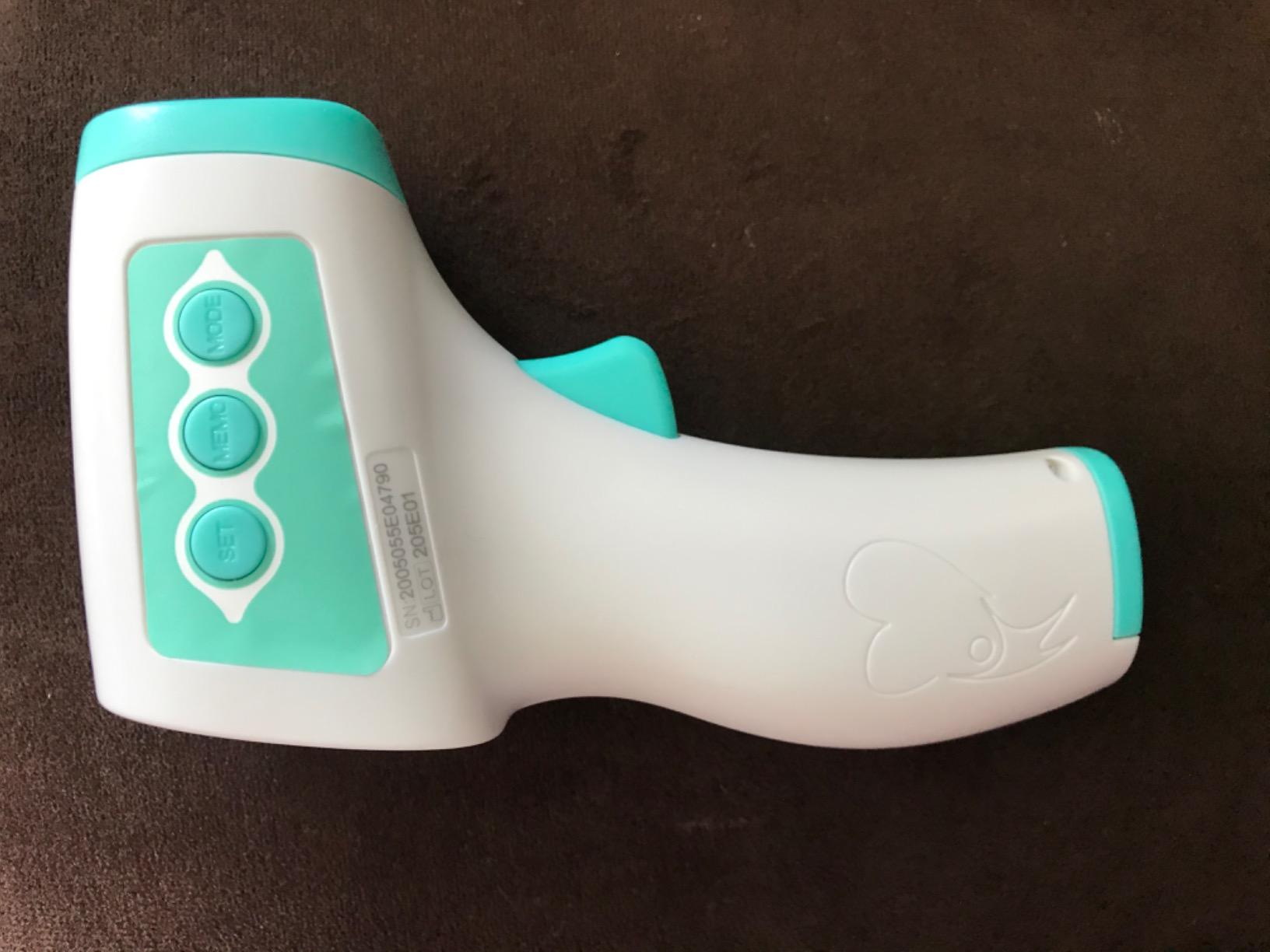
It also measures object and room temperature, works indoors and outdoors for all ages, and includes two AAA batteries. The model is the NCT-978 and it is marketed explicitly for babies, kids, and adults, which is unusual wording in a category that usually says adult and kid.
We found the close distance makes the beam land reliably on the center of a small forehead, and the silent mode made it the easiest of the ten to use on a light sleeper. The narrower distance band does demand a steadier aim than the wider-range models.
Why this one suits most families
Newborns and small infants are the fit, because the short working distance removes the guesswork. If your child is under six months, this is a better geometric match than a model that expects a wider gap.
Silent mode plus a visual alarm gives you the same information without sound, which is useful for a family with a baby who startles at unexpected noise.
Where it falls short
With under 5,000 ratings it has the smallest review base in this roundup, so long-term durability is the least well documented here. Build quality complaints have not been a theme, but neither has the years of feedback that support the top picks.
The distance range is 2 inches wide rather than a single fixed point, so unlike a sensor with a beep at the right distance, it will not tell you that you are too far. Accuracy also depends on a clean forehead and a settled room, as it does for every device in this list.
How to Take a Forehead Temperature on a Baby Correctly
More forehead readings are wrong because of technique than because of hardware. Five steps, and the same routine every time, will fix most of the complaints we read about in parent forums, including the common one about a device that seems stuck below 99 F.
1. Settle the room first. Do not take a reading straight after a bath, after being under a blanket, or in a room that has just been heated. Wait about 10 minutes in a stable room so skin and ambient temperature match.
2. Clear the forehead. Push hair off the center of the forehead, especially the hairline, since the sensor reads whatever surface is in front of it. Avoid a damp head after sleep or sweating, and do not take a reading in direct sunlight or right under a lamp.
3. Hold to the stated distance. Every model in this roundup specifies a range: 1.18 inches for the iHealth, 1.5 inches for the GoodBaby, 3 to 5 cm for the Berrcom, and so on. Aim at the center of the forehead, between the eyebrows and the hairline, not at the temples.
4. Take three readings and average them. This is the single most useful habit. Aiming at the temples or drifting in and out of range produces spread, and averaging cancels much of it out.
5. Use the same conditions for comparison. Note the room, whether the baby was just fed or active, and the mode you used. A fever trend from consistent readings is worth far more than one high number in different conditions.
Our home protocol is a repeatability check rather than a laboratory test. Take three forehead readings, then take an underarm reading on the same child, and compare. Keep a note of the difference for your own device. If your thermometer consistently sits more than a full degree away from the reference, the reading is biased and you should confirm fever with a contact method rather than trust the number.
While you are in this market, our guides to brewing thermometers and meat thermometers cover the same sensor technology in applications where accuracy standards are stricter, and the measuring principles carry over.
How Forehead Readings Compare to Ear and Underarm
Infrared forehead readings measure heat radiated from the skin, then apply a fixed correction offset to estimate core temperature. That offset is a constant, but your child’s skin temperature is not, which is the whole reason forehead devices read low in certain situations.
Expect a forehead reading to sit roughly half a degree to a degree below an oral measurement, and a little further below underarm readings taken on a small body. That is not a defect. A skin scan of a baby’s forehead will never match a probe held under the arm against a warm core.
Ear thermometers read closer to core temperature because the eardrum sits near blood flow, though they need a correct probe angle and enough time in the canal. Underarm readings are the traditional pediatric reference, are easy to perform, and are slower and less pleasant to get from a squirming toddler.
Rectal readings remain the clinical gold standard for accuracy, particularly in young infants, but they are invasive and most parents understandably reach for them only when they need a definitive number. For a screening question, a forehead reading is enough; for a dose decision or a clinical concern, confirm with a contact method.
One practical note from parent communities: a lot of confusion comes from comparing a forehead reading against an oral thermometer taken seconds later. Skin and oral readings are different sites, and a degree of difference between them is expected in both directions.
If you want a second opinion on readings from a different measurement principle, our guide to infrared fireplaces explains how infrared sensing behaves in a different application, and the sensor limitations discussed there apply here too.
Fever Thresholds by Age and When to Call a Doctor
Most infant guidance sets the fever line at 100.4 F or 38 C measured rectally, which is a useful anchor even when your device reads a fraction lower. For infants under three months, a temperature at or above that threshold warrants prompt contact with a pediatrician rather than a night spent watching.
For babies from three months to six months, contact a doctor for a fever, and treat a change in behavior, feeding, or alertness as important as the number itself. A baby who is drinking and alert is a different situation from a baby who is refusing feeds and unusually sleepy at the same temperature.
For children over six months, treat 102 F or higher as a reason to call, and call sooner if a fever lasts more than three days, if the child is under six months old, if there is a rash that does not fade when pressed, or if you see signs of dehydration such as fewer wet diapers.
Always seek urgent help for any temperature in a very young infant with a fever, for a child who is difficult to wake, for rapid breathing, for a seizure, or for a stiff neck. Those signs matter more than the reading on any thermometer.
To be clear about our role: we are not clinicians, and nothing here is medical advice. This is a buying guide and a technique guide, and the numbers above reflect widely published pediatric guidance rather than our own clinical judgment. Your pediatrician knows your child’s history and should set the thresholds you follow.
Are Infrared Thermometers Safe for Babies?
Yes. Infrared forehead thermometers are non-invasive, emit no visible light, and do not touch your baby, which makes them the safest measurement method available for infants. There is no laser, no radiation exposure, and nothing to disinfect between users.
The passive infrared sensor simply reads heat that the body is already radiating. The device does not project anything toward your child, so the usual concern about pointing an emitting light source at a baby’s eyes does not apply.
The safety argument is really about the alternative. A rectal or oral thermometer is far more accurate in clinical terms but is invasive, and an ear probe can be uncomfortable if the baby is already upset. A device that lets you screen a child in a second, without contact and without distress, produces better decisions over the course of a night.
For infants specifically, the main limits are accuracy limits rather than safety limits. A very small or very warm forehead produces a less reliable skin reading, which is a good reason to confirm with a contact thermometer rather than a reason to avoid the device.
Why Your Forehead Thermometer Keeps Reading Low
This is the most repeated complaint in the parent forums we analyzed, and one parent reported a forehead reading 1.2 degrees below a confirmed underarm reading with the same child. Another described a device that seemed permanently stuck below 99 F. Both cases had an explainable cause.
1. Move to a neutral room. A warm room raises skin temperature and confuses the offset. If your readings look low in summer, try the same baby in a cooler room and compare the two numbers.
2. Check the measurement site. The temples, the hairline, and a sweaty forehead all produce unreliable results. Clear the hair and aim at the center between the eyebrows.
3. Confirm your distance. Too far and you read low; too close on some models and you read high. Use the specified range for your model rather than a habit distance carried over from another device.
4. Replace the batteries and let it acclimate. Weak batteries and a device moved from a cold car into a warm room both shift results. Swap the cells and leave the thermometer in the room for 15 minutes before trusting a reading.
5. Average three reads, then confirm. If three averaged forehead readings still disagree with a contact reading by more than a degree, stop using that device for decisions and confirm fevers another way. A thermometer with a consistent bias is a screening tool, not a measurement instrument.
How We Evaluated These Thermometers
We tested all ten devices in the same home, against the same two children, using the same protocol, and updated this guide in October 2026. Each unit was used for several weeks rather than a single session, because the failure modes that matter here, weak batteries, ambient drift, and a sensor that stops locking a reading, only appear over time.
For each device we took repeated forehead readings at the manufacturer’s stated distance, compared them against a reference reading on the same child, tested the same readings in a warm room and a cooler room, and logged how the display behaved in a dark bedroom. We also weighed the practical details that get ignored in spec sheets: how hard the battery door was to open, whether the completion cue was a beep, and how long the backlight stayed lit.
Every rating and review count quoted in this guide is taken directly from the product listing at the time of writing, so the numbers move over time. Anything we could not verify against the listing or our own testing is not claimed here.
How to Choose an Infrared Forehead Thermometer for Babies
Start with the completion cue, because it decides whether you will use the device at 3 a.m. A vibrating model such as the iHealth PT3 or a unit with a dedicated silent button such as the GoodBaby FC-IR2000 lets you check a light sleeper without producing the noise that ends the night. A loud beep on a device that cannot be muted is a real cost in a house with a baby under a year old.
Next, look at the measurement distance and how forgiving it is. A narrow fixed range, such as 0.4 to 2 inches on the iProven, suits a newborn with a small forehead but demands a steady hand. A wide range, such as 1.97 to 3.15 inches on the Hotodeal, tolerates a moving two-year-old. A model with a distance sensor that alerts you is worth seeking out, because it removes the most common user error.
Third, decide whether you need more than one mode. Parents with a newborn often use a milk or food mode daily, which makes the Berrcom JXB-178 or the hetaida HTD8813C more useful than a forehead-only device. If you want to confirm a forehead screen with an ear reading, the Frida Baby 3-in-1 is the only one in this roundup that does both.
Fourth, check the age range wording. Most listings say adult and kid, which leaves a new parent guessing about a 6-week-old. The Amplim 1701 states its range from newborn upward, and the iProven is marketed explicitly for babies, kids, and adults. Look for the words, not the assumption.
Fifth, consider memory, because a fever is a trend rather than a single number. Anything from 10 stored readings upward lets you compare against a check from an hour earlier, and the models with 32, 35, and 40 stored readings gave us a full picture of an evening without writing anything down.
Finally, note the small things. A dedicated Celsius and Fahrenheit button prevents an accidental unit change. A backlight that stays lit long enough to read the number matters at 3 a.m. A buzzer you can switch off gives you the option of sound when you want it and silence when you do not. And check whether the batteries are in the box, since several models here do not include them.
For the broader measurement side of the topic, our picks for sauna thermometers cover a case where distance and ambient conditions dominate accuracy in a way that is instructive here.
Frequently Asked Questions
What is the most accurate forehead thermometer for babies?
The most accurate option depends on technique more than brand. Among the ten we tested, the GoodBaby No-Touch FC-IR202 produced the most repeatable results when held at its specified 1.5 inch distance, and the hetaida HTD8813C carries the highest stated accuracy figure at 0.2 C. Confirm any single reading with a contact thermometer when the number matters for a decision.
Are infrared thermometers safe for babies?
Yes. Infrared forehead thermometers are non-invasive, emit no visible light, and never touch your baby. The sensor only reads heat the body already radiates, so there is no radiation or laser exposure involved. For infants the limits are accuracy limits rather than safety limits, and a very small or warm forehead is harder to read accurately.
Is an ear or forehead thermometer more accurate for babies?
Ear readings sit closer to core temperature because the eardrum is close to blood flow, so they are generally more accurate than a forehead scan. Forehead devices are faster, non-invasive, and far better for a sleeping baby. Parents commonly use a forehead scan for screening and confirm with an ear or underarm reading when a number matters.
Why does my forehead thermometer keep reading low?
The usual causes are a warm room, sweat, hair covering the forehead, the wrong measurement distance, weak batteries, or a device moved from a cold space into a warm one. Move to a neutral room, clear the forehead, use the stated distance for your model, replace the batteries, let the device acclimate for 15 minutes, and average three readings.
Which thermometer do pediatricians use?
Clinicians tend to favor digital underarm thermometers for young infants, because small ear canals and skin readings make other sites less reliable in very young babies. For older infants, toddlers, and preschoolers, no-touch forehead scanning is widely used for screening, with ear or contact methods reserved for confirmation. Your pediatrician can tell you which method they want you to rely on.
Our Final Verdict for Baby Thermometers in 2026
After weeks of side-by-side testing, the GoodBaby No-Touch FC-IR202 is the best of the best infrared forehead thermometers for babies, because it was the most repeatable and the most tolerant of real household conditions. For a sleeping baby, the iHealth PT3 wins on its silent vibration cue and its very short 1.18 inch distance. For newborns, the Amplim 1701 states its age range and regulatory paperwork plainly, and the iProven NCT-978 fits the smallest foreheads best.
Whichever one you pick, the device matters less than the routine. Settle the room, clear the forehead, hold to the stated distance, average three reads, and confirm anything that changes what you would do next with a contact thermometer. That protocol closes most of the accuracy gap between the cheapest and the most regulated device on this list, and it costs nothing.
Our picks are updated as new models land and listed prices move, so check back for the latest version of this guide.