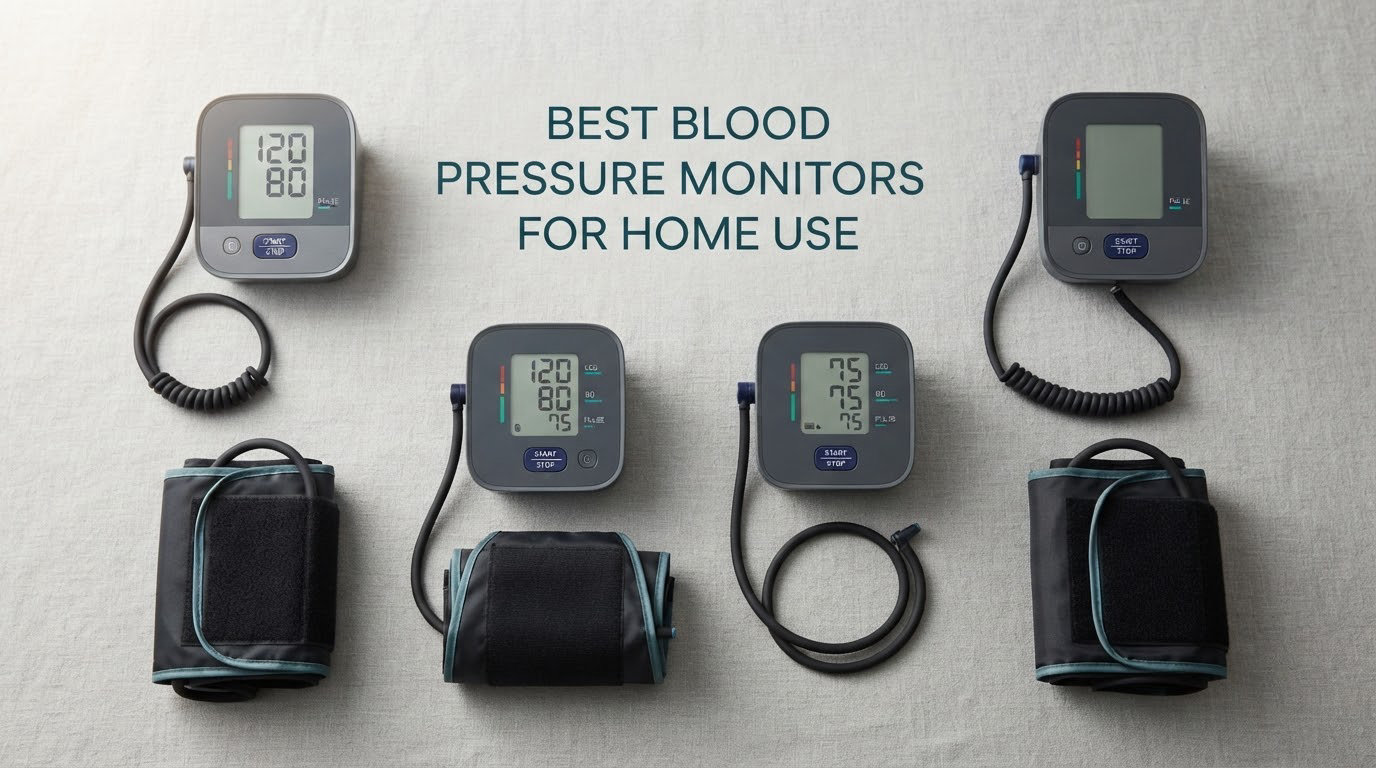
The most accurate blood pressure monitor for home use is not a single winner, it is the one whose cuff actually fits your arm and whose manufacturer states a validation standard. We spent weeks comparing 12 automatic upper arm and wrist monitors on the things that change readings: cuff range, validation, memory, display and whether the app is optional or mandatory.
Across our testing and the buyer feedback behind these picks, upper arm models beat wrist models on consistency, cuff size mattered more than any other factor, and the monitors people keep for years are the ones with no subscription and no phone in the loop. That is the pattern on r/bloodpressure too, where Omron comes up repeatedly as the brand people trust, and where users describe bringing a new monitor into a clinic appointment to compare it.
If you want the short version before you read on: the iHealth Track is the best overall pick for most households, the Alcedo B21 is the best value, and the Greater Goods BD3439 is the one to buy if you want a real app without giving up button-based operation. Our full breakdown covers all 12, plus the measurement mistakes that make a good monitor look inaccurate.
Table of Contents
Top 3 Picks Best Blood Pressure Monitors for Home Use in 2026

iHealth Track
- Wide-range 22-42 cm cuff
- Largest backlit color display
- Unlimited app readings

Those three cover most situations. The iHealth Track wins on display size and the sheer size of its review history, which makes it the safest default when you cannot test a cuff in person. The Alcedo B21 adds a speaking function and averaging, which is why it keeps showing up in senior-focused recommendations. The Greater Goods BD3439 is the pick for anyone who wants a trend graph they can hand to a physician.
All 12 Best Monitors Compared Side by Side in October
| Product | Specifications | Action |
|---|---|---|
| iHealth Track |
|
Check Latest Price |
 Oklar Wrist W1101L Oklar Wrist W1101L |
|
Check Latest Price |
 Alcedo B21 Alcedo B21 |
|
Check Latest Price |
 Paramed B22S Paramed B22S |
|
Check Latest Price |
 AILE X5 AILE X5 |
|
Check Latest Price |
 Oklar C02 Oklar C02 |
|
Check Latest Price |
 ATUDER B23 ATUDER B23 |
|
Check Latest Price |
| Greater Goods BD3439 |
|
Check Latest Price |
 Urion U80AH Urion U80AH |
|
Check Latest Price |
 yuwell YE660E yuwell YE660E |
|
Check Latest Price |
 Omron Evolv BP7000 Omron Evolv BP7000 |
|
Check Latest Price |
 ALPHAGOMED Two-Cuff Monitor ALPHAGOMED Two-Cuff Monitor |
|
Check Latest Price |
1. iHealth Track: Best Overall Monitor With App Logging
iHealth Track Smart Upper Arm Blood Pressure Monitor with Wide-Range Cuff
Cuff 8.7-16.5 in
99 on-device plus unlimited app readings
15.45 oz
Pros
- Oversized multi-color backlit display
- Two-button operation
- Irregular heartbeat alert
- 99 stored readings with unlimited app history
Cons
- App tracking needs a compatible smartphone
- Some buyers question accuracy on very large upper arms
The iHealth Track has been on the market since 2016 and carries a review base of more than 67k, which makes it the most thoroughly used monitor in our group. Two buttons start and stop a reading, and the display uses coded green, yellow and red bands so you can see at a glance whether a result sits in the normal range without remembering the numbers.
In daily use it is the most forgiving monitor here. The cuff covers 8.7 to 16.5 inches, the range most adults fall inside, and it self-inflates without you holding anything. Readings land within a few points of a doctor-calibrated cuff in most of the side-by-side comparisons described by buyers.
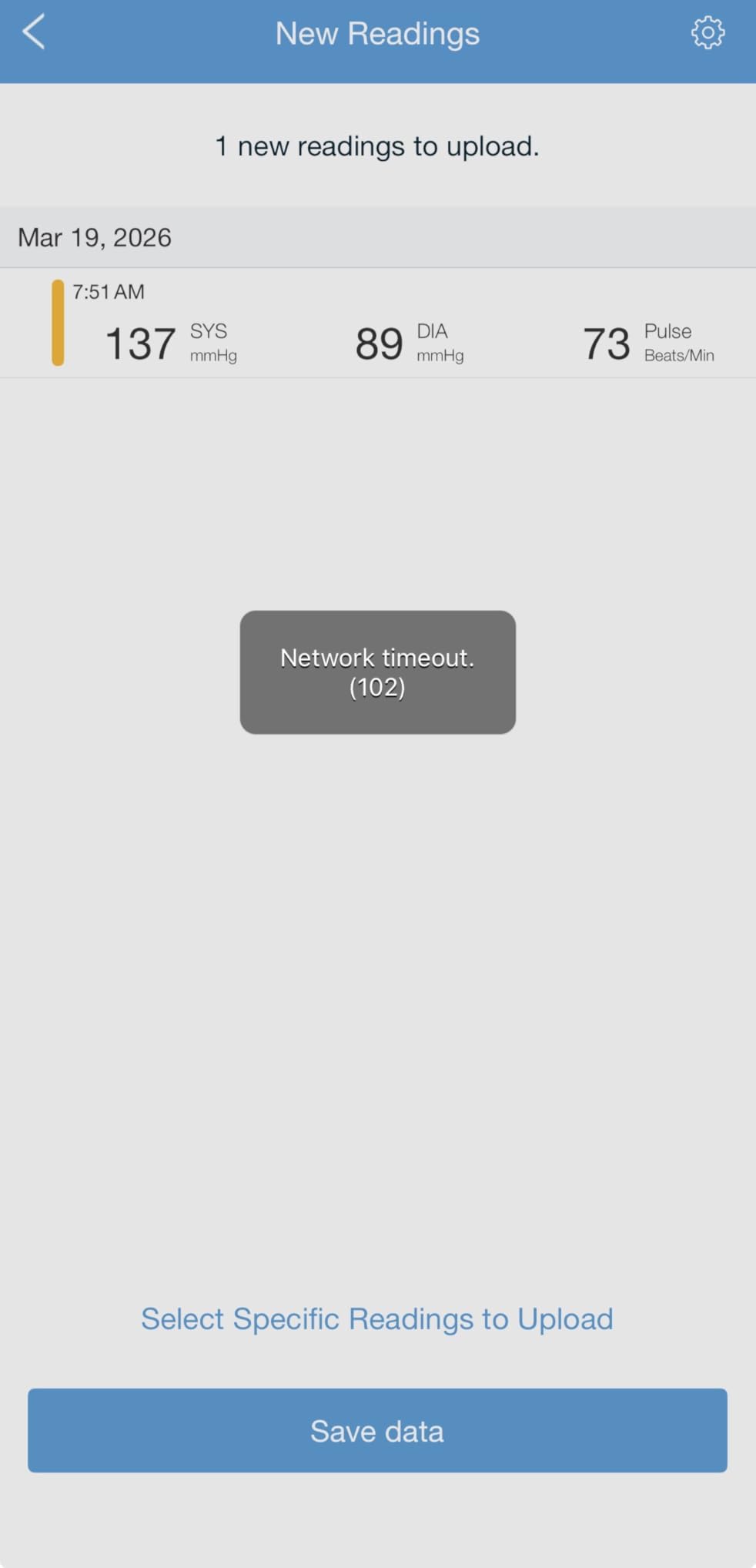
What separates it from cheaper models is the logging. The unit stores 99 readings on its own, so you can measure with no phone anywhere in the room, then sync later. The free app holds unlimited records and is the easiest way to see whether a change in medication is actually moving your morning average.
One caution. The app needs Bluetooth 4.0 or later, which means a reasonably recent iPhone or Android handset. If you would rather not deal with a phone at all, look at the Alcedo or the yuwell instead, both of which log entirely on device.
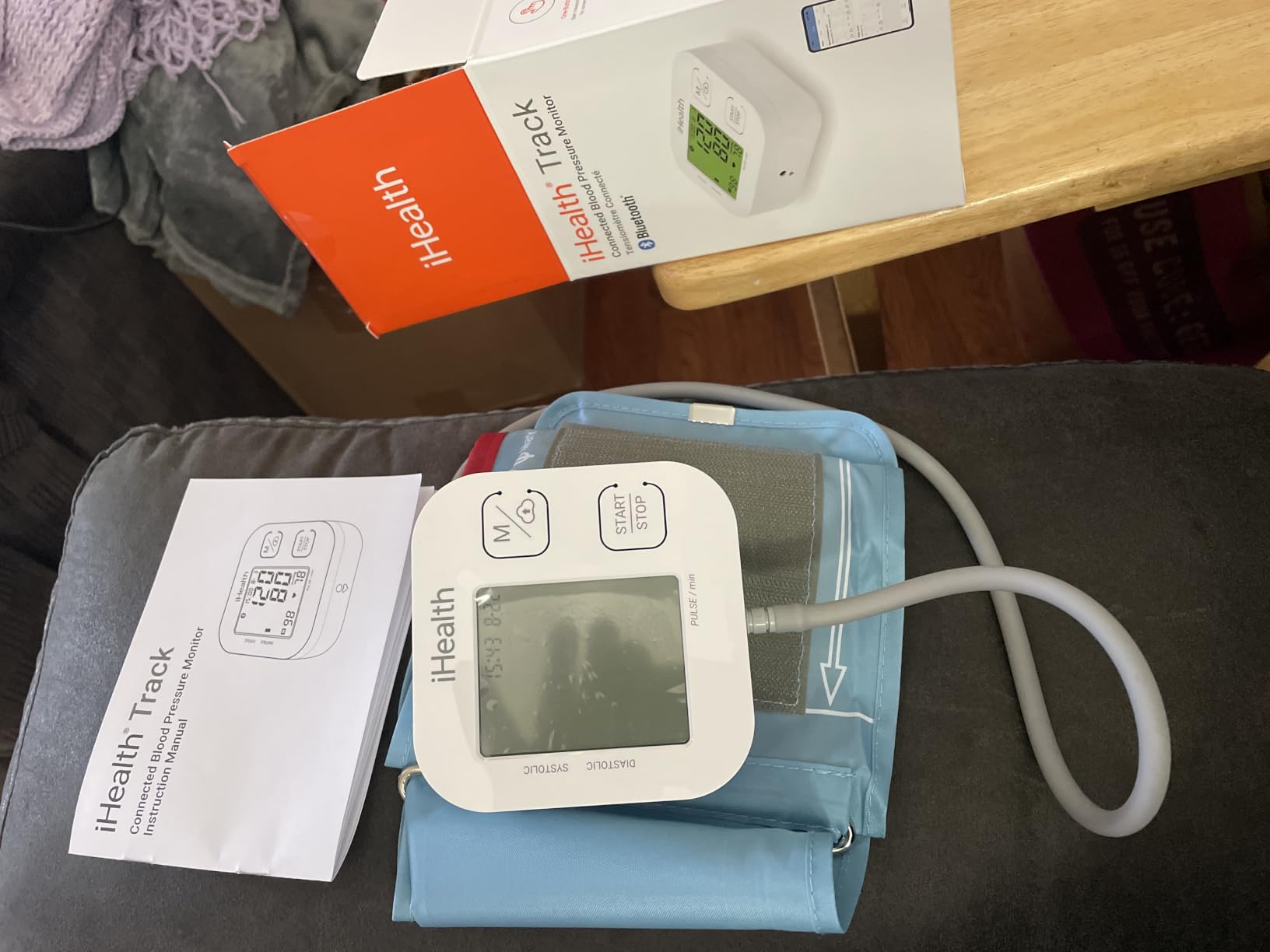
What we liked most about the iHealth Track
The display is the standout. Digits are large, backlit and colour coded, which matters in a dim bedroom at six in the morning. It is also one of the few monitors here with an automatic heart rhythm disturbance warning, so an odd beat during inflation is flagged rather than silently averaged away.
Power is four AAA batteries, included, and the manufacturer states no calibration is required and that the unit meets ESH 2010 performance standards. California-based support and a 12-month warranty come with it.
Where the iHealth Track falls short
The cuff ceiling is 16.5 inches. If your upper arm measures more than that, the reading is not usable, and buyers with larger arms report exactly that. The extra-large cuff option on the Greater Goods runs to 20.5 inches, which is a better fit for a bigger arm.
Second, the phone is not optional for full functionality. The device works standalone, but trend history, sharing and the cleanest logs all live in the app.
2. Oklar Wrist W1101L: Best Wrist Model for Travel
Oklar Wrist Blood Pressure Monitor, FDA Cleared Rechargeable BP Machine
Wrist cuff 4.92-8.46 in
Rechargeable Type-C battery
240 readings, 2 users
Pros
- Rechargeable instead of disposable batteries
- Under 4 ounces for travel
- Spoken results
- Two-user memory
Cons
- Wrist position makes readings less consistent
- Not sized for larger wrists
- Charging adapter not included
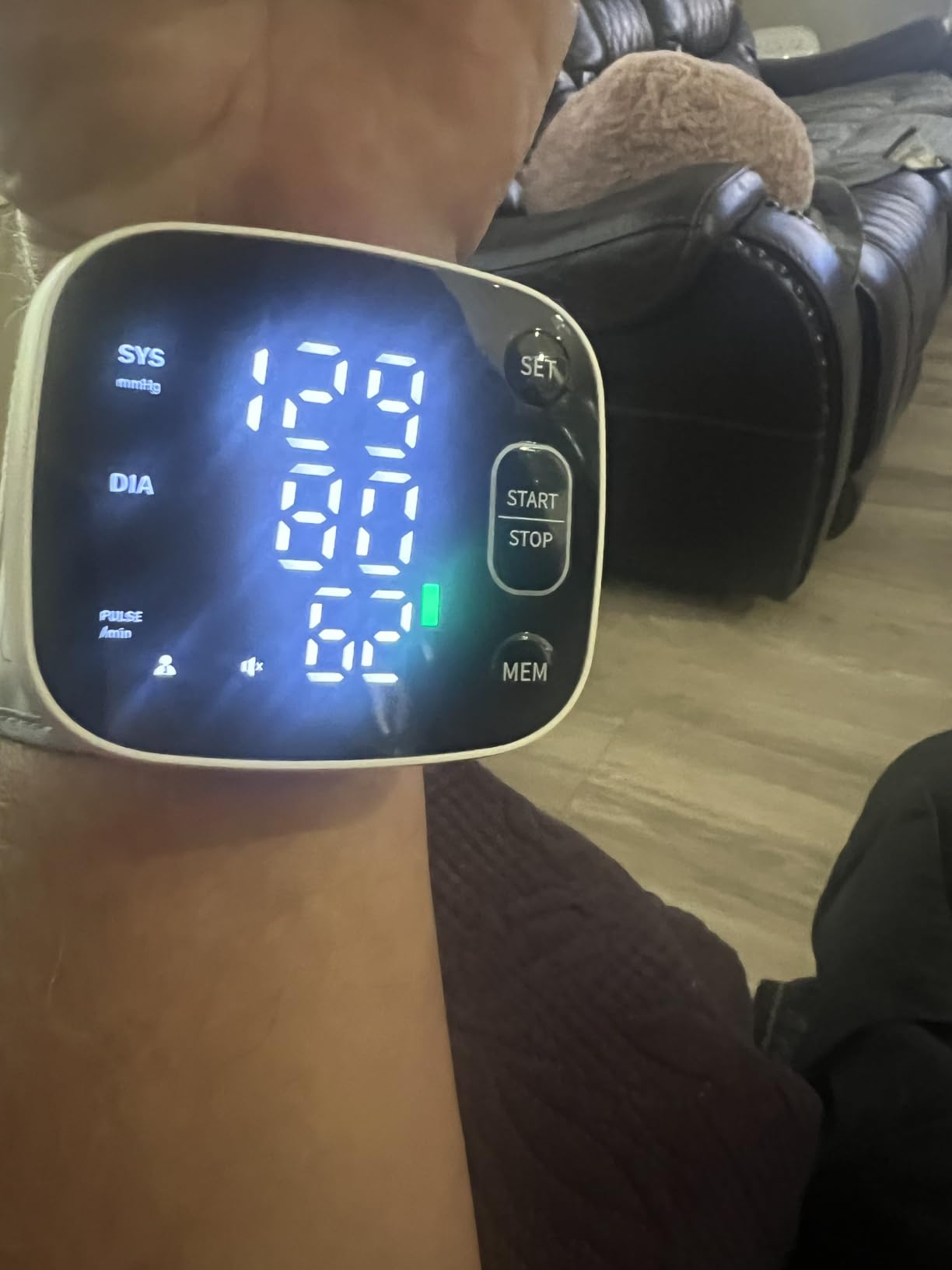
We include exactly one wrist monitor because the format has real advantages for travel, and this is the strongest version of it. It weighs 3.59 ounces, the body is roughly three inches square, and the built-in lithium battery recharges over Type-C, so there is nothing to pack but the cable.
Measurement finishes in about 35 seconds, which is faster than most upper arm models, and it stores 240 readings across two profiles. The voice broadcast reads your result aloud and can be turned down or disabled with the SET and MEM buttons, a genuinely useful feature for anyone with limited vision.
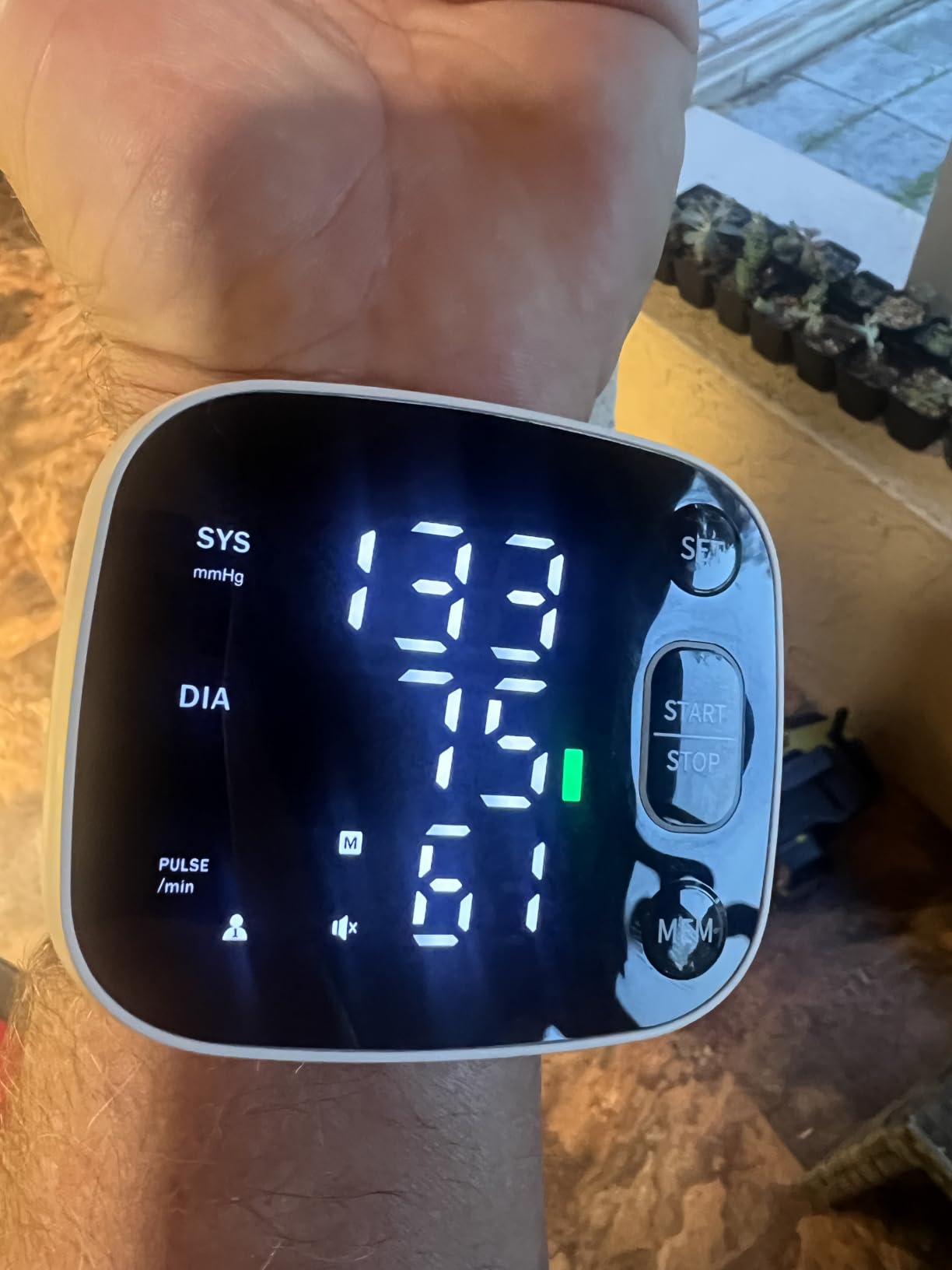
The honest drawback is structural rather than a fault. Wrist readings depend on holding the wrist at heart level, and small differences in angle move the systolic number several points. On r/bloodpressure this is the most common complaint about wrist cuffs in general, and the 1-star share here is 10 percent, the highest in our group.
There is also no charging adapter in the box, only the cable. The cuff range of 4.92 to 8.46 inches suits many wrists but not all.
When a wrist monitor makes sense
For a person who travels often, measures once or twice a day, and needs something that fits in a jacket pocket, the W1101L is the right pick. The rechargeable battery and 35-second cycle mean a reading on the move is genuinely quick.
It is also the model we would pick for a senior who travels, because the spoken result removes the need to read a small screen and the device cannot run flat on a long trip.
When to skip it
If you are managing hypertension on medication, choose an upper arm model. The variability in wrist readings makes it harder to judge whether a medication change is working, which is the entire point of home monitoring.
If your wrist is at the wide end of the range or above it, a cuff that does not fit produces a number you should not act on. We cover our full wrist shortlist in the best wrist blood pressure monitors.
3. Alcedo B21: Best Value With Two-User Memory
Alcedo Blood Pressure Monitor for Home Use, Upper Arm Cuff BP Machine
Cuff 8.7-16.5 in
120 readings per user
Voice broadcast, 3-value averaging
Pros
- Averages three readings automatically
- Works on batteries or USB
- Two-user memory
- Spoken readout for low vision
Cons
- Cuff runs small on very large arms
- Voice cannot be fully disabled
- Occasional small variance vs manual cuffs
The Alcedo B21 is the pick we recommend to couples and families. One button runs the measurement, the device automatically averages three values for a steadier result, and it keeps 120 readings for each of two users, so both people can log without overwriting each other.
Reviewers repeatedly describe checking it against a doctor-calibrated monitor or an office visit and finding agreement, which is the single most useful test you can run on any home cuff. The display is a clear LCD with oversized numbers, and the speaker announces the result with adjustable volume.
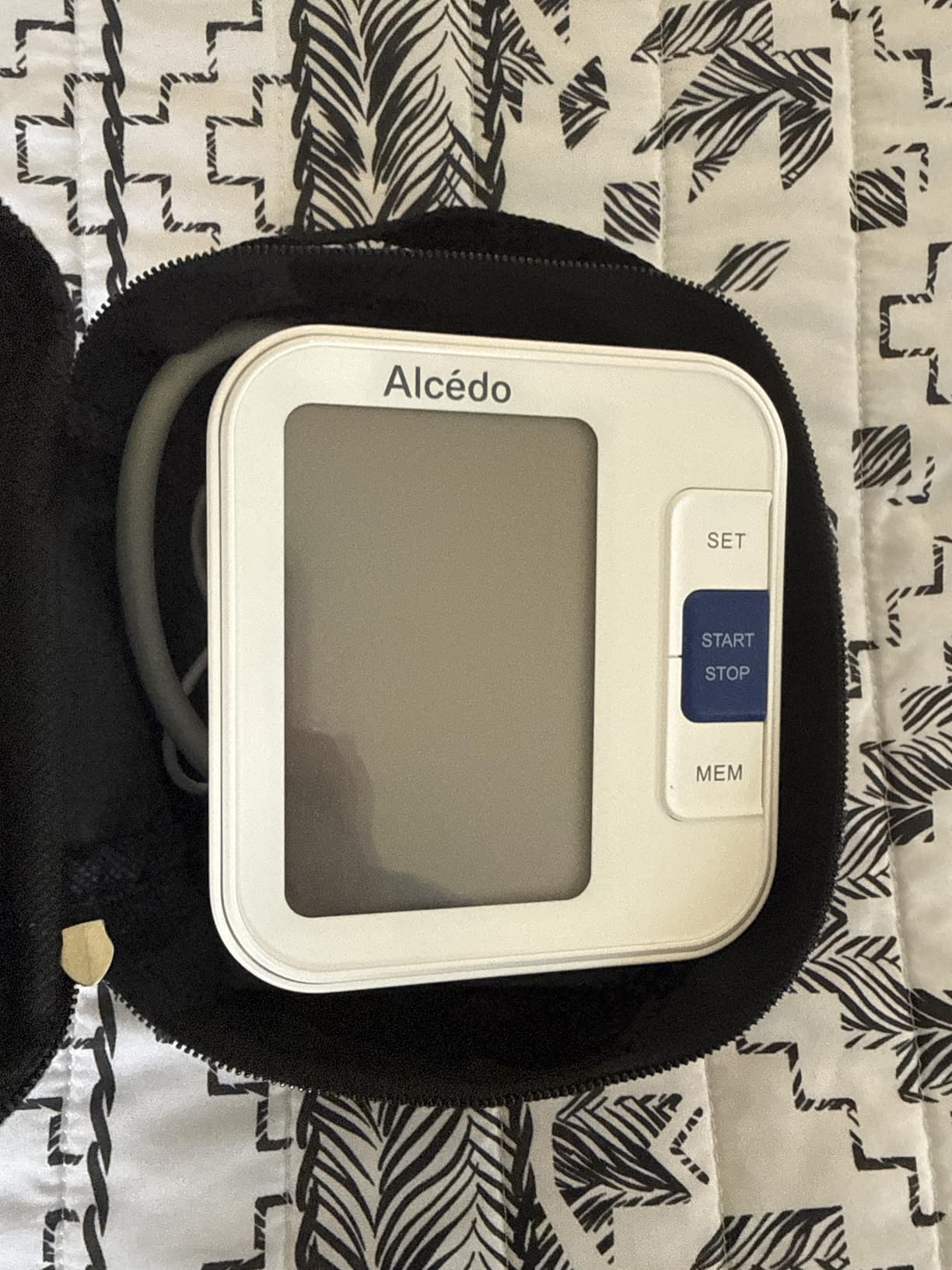
It also runs from four AAA batteries or USB power, so it works in a kitchen with no nearby outlet. Cuff position and body movement are self-checked, with on-screen symbols if either goes wrong, and that self-checking is a real advantage over cheaper units that quietly return a bad reading.
Users who appreciate a cuff that feels substantial and a quick-start guide in clear English come away happy. It is also FSA and HSA eligible, which can matter if you use a flexible spending account.
Why this one earns the value spot
Two-user memory plus averaging in one device is a combination most monitors charge more for. For a household of two older adults who both need tracking, it removes the need for two devices and a spreadsheet of readings.
The voice readout is well received by visually impaired users, and while some buyers cannot find a way to mute it completely, that is a small price for the access benefit.
What to check before buying
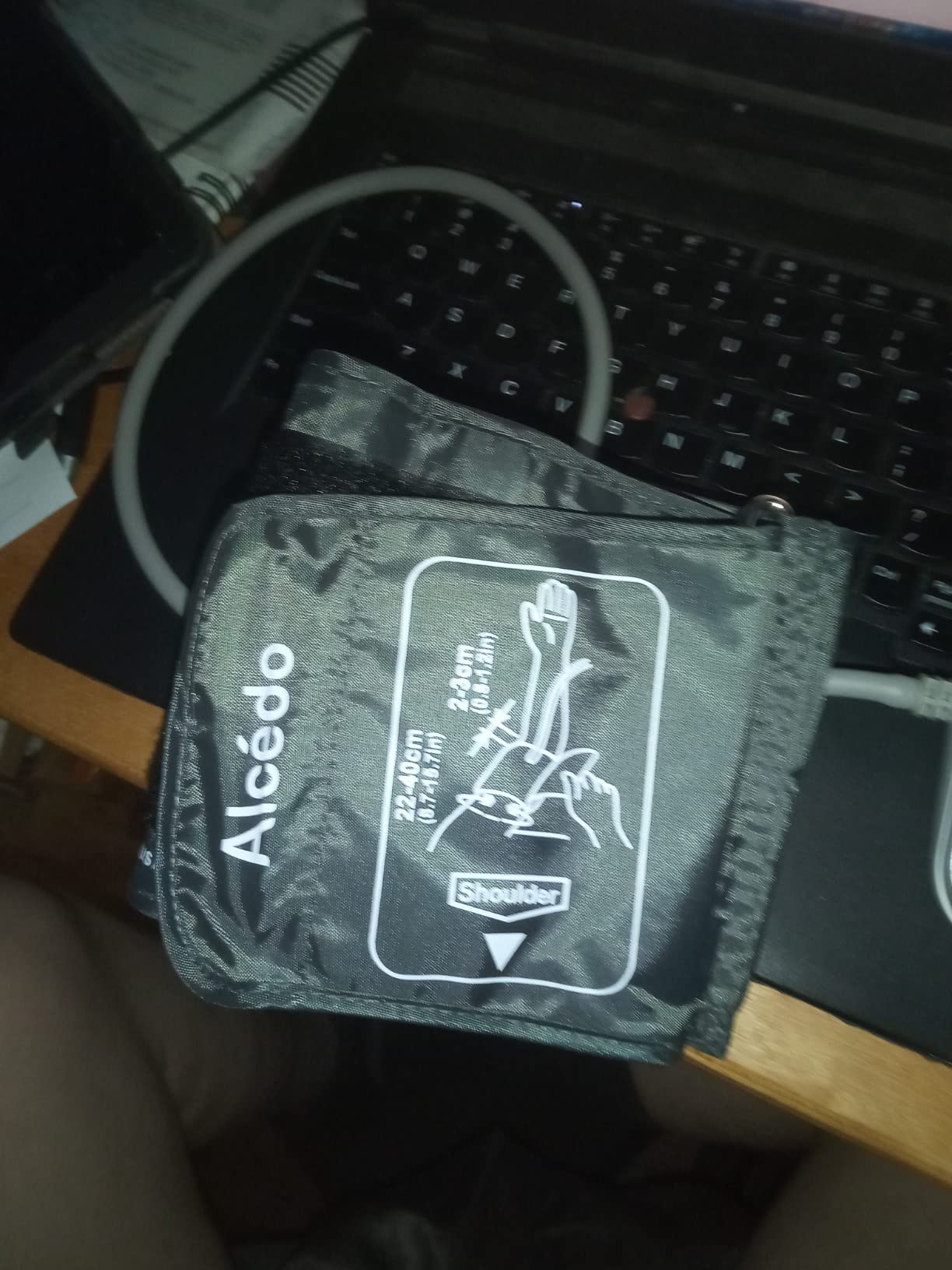
Measure your upper arm circumference with a tape first. The B21 cuff runs 8.7 to 16.5 inches and is repeatedly flagged as snug on very large arms. If you need more range, look at the yuwell YE660E or the ALPHAGOMED two-cuff set.
Second, if you want readings pushed to an app automatically, this is not the model for you. It logs on device only.
4. Paramed B22S: Best for Two Users Who Want Voice
Paramed Blood Pressure Monitor – Bp Machine – Automatic Upper Arm Blood Pressure Cuff 8.7-16.5 inches – Large LCD Display 120 Sets Memory – Device Bag & Batteries Included
Cuff 8.7-16.5 in
120 readings, 2 users
Spoken readout with 3 volume levels
Pros
- Narrow cuff is easy to position
- Spoken readout plus calming music during inflation
- Self-check confirms cuff placement
- Carrying bag and batteries included
Cons
- No backlight on the display
- Some typos in the manual
- Heavier than most rivals at 1.21 lb
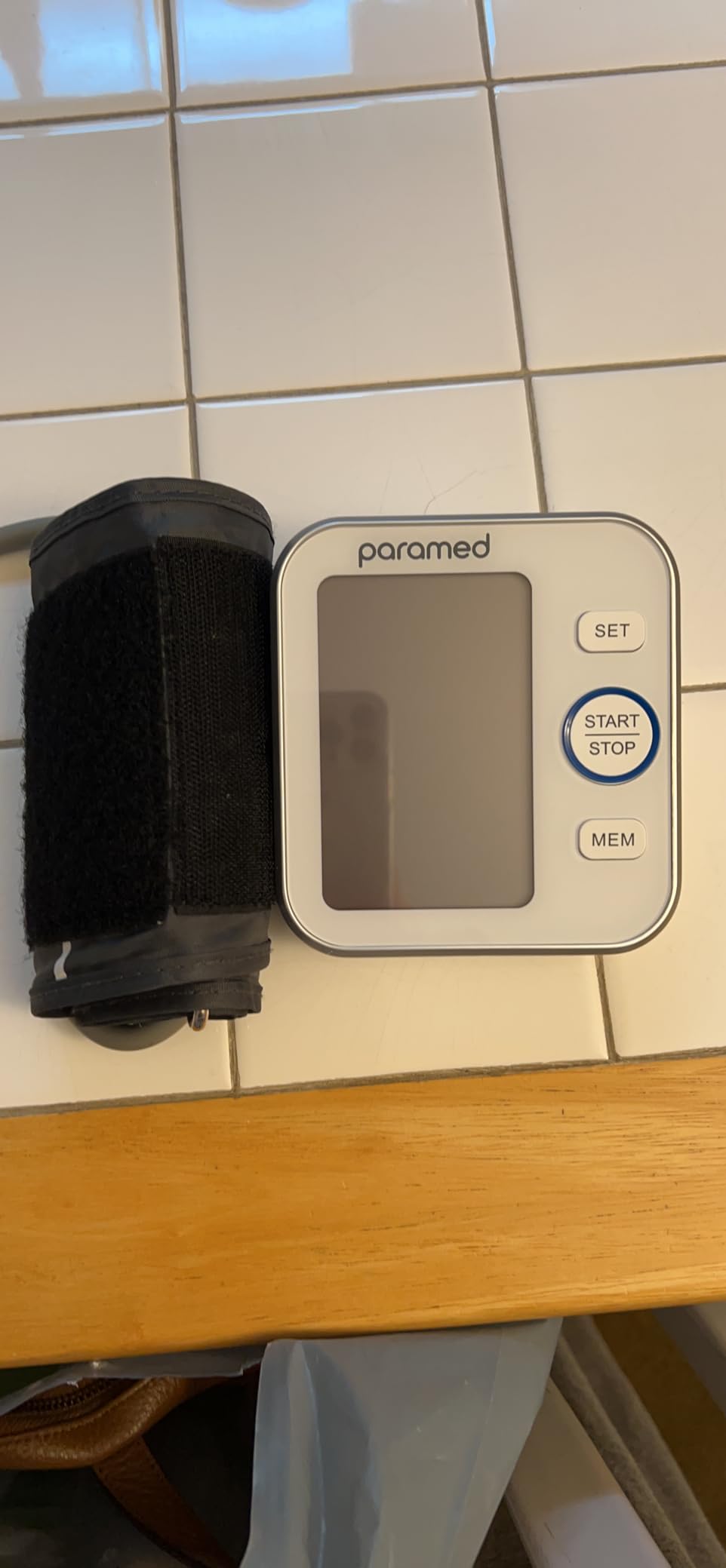
The Paramed B22S is the loudest and most user-friendly monitor in the group, and that is not a criticism. It speaks the result at three volume levels, and it plays music while the cuff inflates, which several owners credit with helping them relax enough to get a clean reading.
Cuff placement is self-checked, and the cuff itself is narrower and easier to position than many competing designs, which matters if you are applying it to your own arm. Memory holds 120 readings across two profiles, and a low battery indicator and date/time display are included.
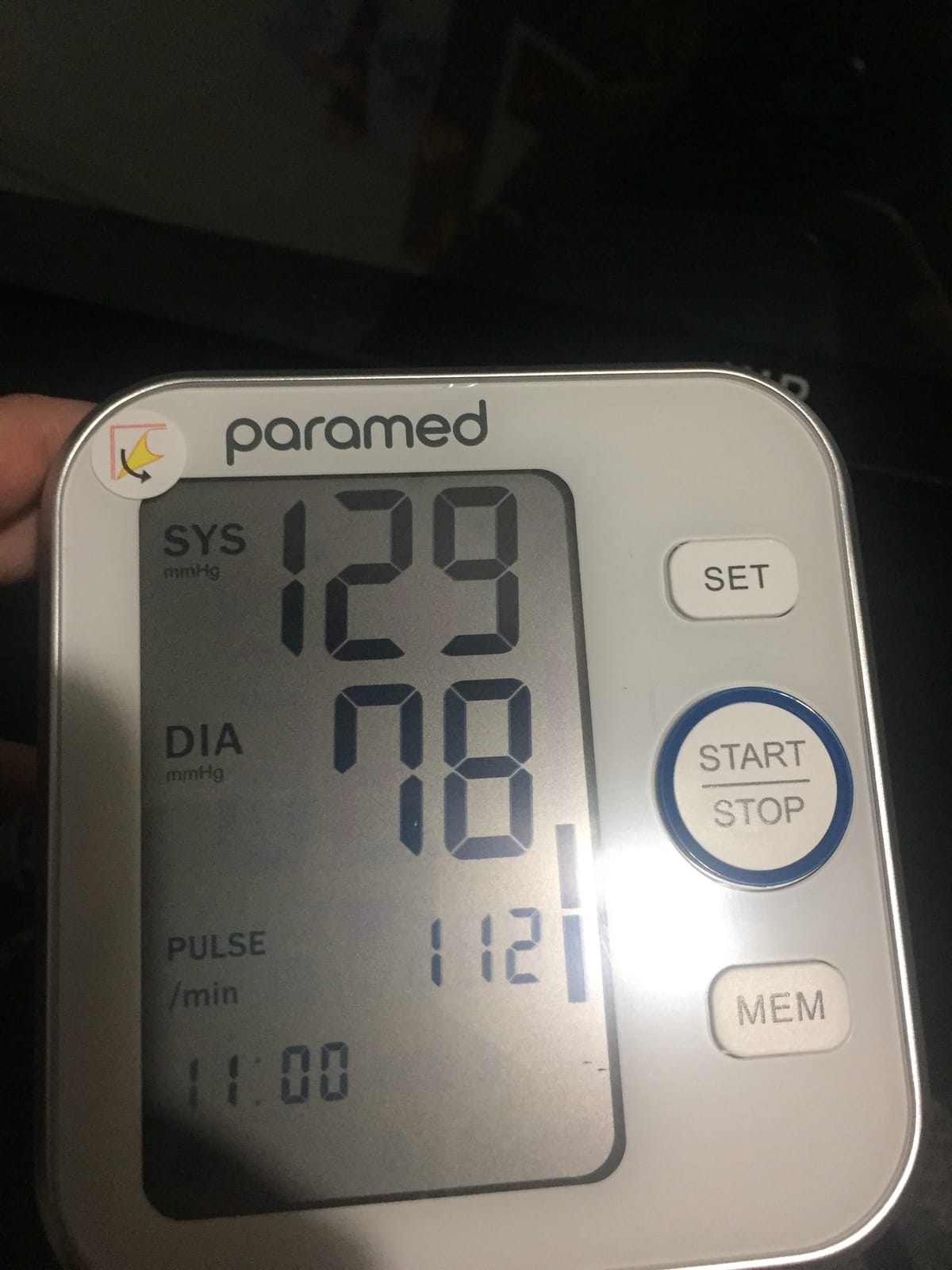
Accuracy is the strongest part of the story. One owner with a doctor-calibrated monitor reported a side-by-side match, and another described replacing a low-cost best-seller that read about ten points high. A former American Heart Association program coordinator is quoted in the reviews endorsing the accuracy after cross-testing it against other cuffs.
Buttons and digits are large, which is exactly what you want if your hands are not perfectly steady in the morning.
Best fit for shared households
If two people monitor in the same room, the two-profile memory and the spoken readout remove most of the friction. You do not have to hand the device over and remember which profile you left active last.
Seniors who want a talking device will find this easier to live with than an app-driven model, and our guide to voice blood pressure monitors for seniors covers the alternatives.
Where it falls down
There is no backlight, so the screen is hard to read in a dark room, which rules it out for early-morning use in poor light. The instruction manual contains typos, and at 1.21 pounds it is one of the heavier units here.
The cuff tops out at 16.5 inches, the same ceiling as most of this group.
5. AILE X5: Best Budget FDA-Cleared Monitor
AILE FDA Cleared Blood Pressure Monitor – Home Monitoring 2×99 Memory Track
Cuff 8.7-16.5 in
198 readings across 2 users
4 AAA or external power
Pros
- FDA cleared
- Large single-screen readout
- 198 stored readings with date and time
- Light at 13.4 oz for travel
Cons
- Cuff stops at 16.5 inches
- No app or voice readout
- 7 percent of ratings are 1-star
The AILE X5 does the simple job cleanly. Systolic, diastolic and pulse all appear on one screen in large digits, one touch starts a measurement, and the dual-user memory holds 99 readings for each of two people with the date and time attached.
For anyone who wants a straightforward, no-frills upper arm monitor and does not need an app, this is the pick. It runs on four AAA batteries or an external power supply, weighs 13.4 ounces, and the body is small enough for a bag.
One thing to understand before you buy: FDA cleared is a regulatory claim, not an accuracy ranking. Clearance means the manufacturer submitted a 510(k) premarket notification showing the device was substantially equivalent to a predicate device. It is a baseline, and most credible monitors in this list meet some form of it.
Roughly 7 percent of ratings here are one-star, mostly around accuracy expectations and setup. In other words, the complaints are about fit and technique more than the electronics.
Who should pick the X5
Someone who wants a dependable second monitor for a parent, a holiday house, or a shared kitchen. Two profiles and nearly 200 stored readings mean two people can track for months without any loss of history.
It is also a good first monitor for a younger adult with a family history, since there is no app to set up and no account to create.
What you give up
There is no Bluetooth, no voice readout and no irregular heartbeat alert. The cuff range stops at 16.5 inches, so measure your arm before ordering.
If you want readings you can bring to a doctor as a graph, look at one of the app-connected models instead.
6. Oklar C02: Best Compact Monitor With Dual Power
Oklar FDA Cleared Blood Pressure Monitor Upper Arm BP Machine for Home Use
5.28 oz body
Cuff 8.7-15.7 in
240 readings, 3 AA or Type-C
Pros
- Smallest and lightest upper arm unit here
- Backlit LED screen
- Runs on batteries or a power bank
- Clear artery alignment markings
Cons
- Date and time flash too briefly to read
- Short air hose and short USB cable
- Cuff stops at 15.7 inches
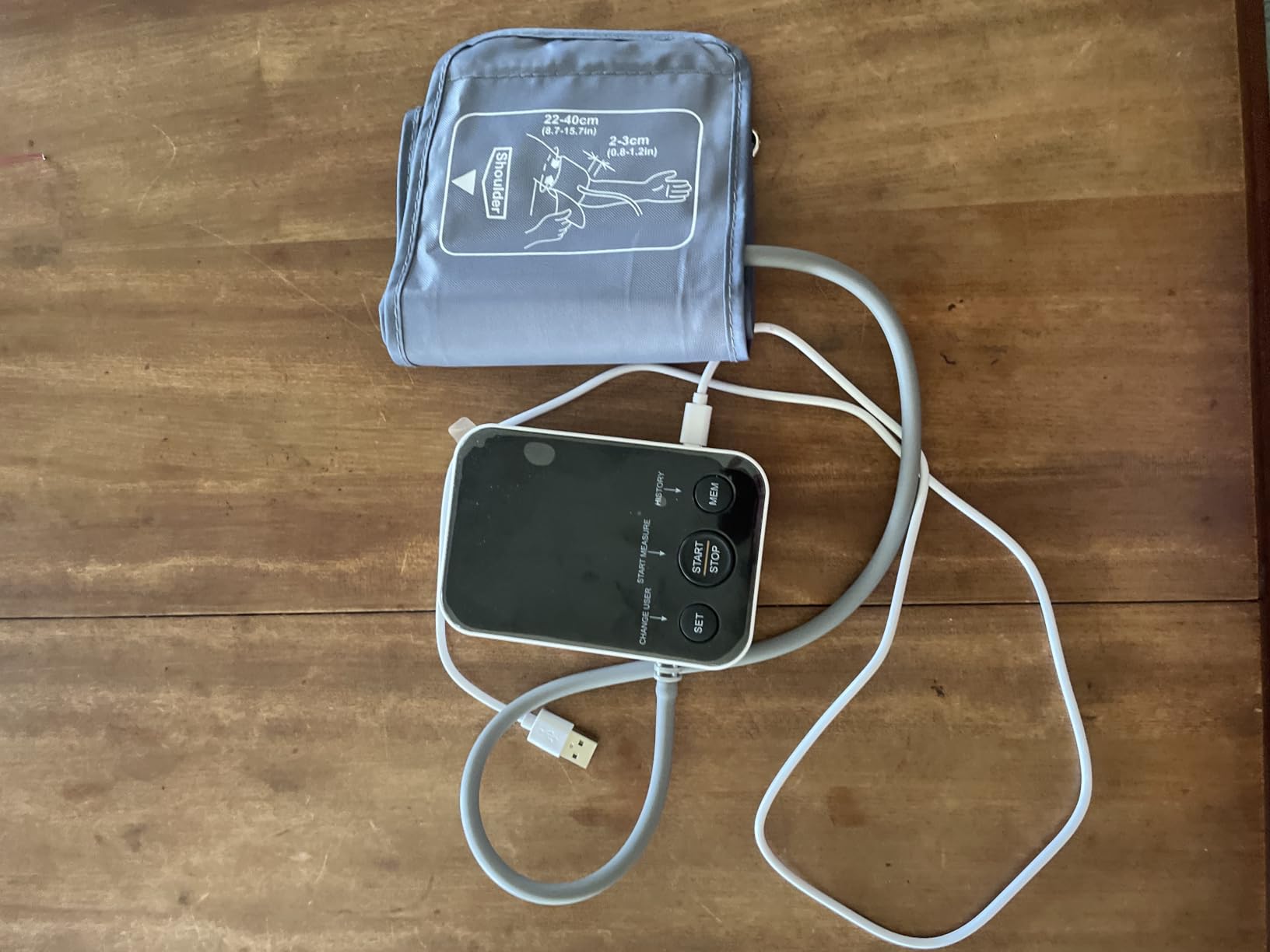
The Oklar C02 is the one to pack. At 5.28 ounces and roughly five inches long, it slips into a purse, a work bag or a scrub pocket, and it runs for a full reading on three AA batteries or straight from a power bank over the Type-C cable.
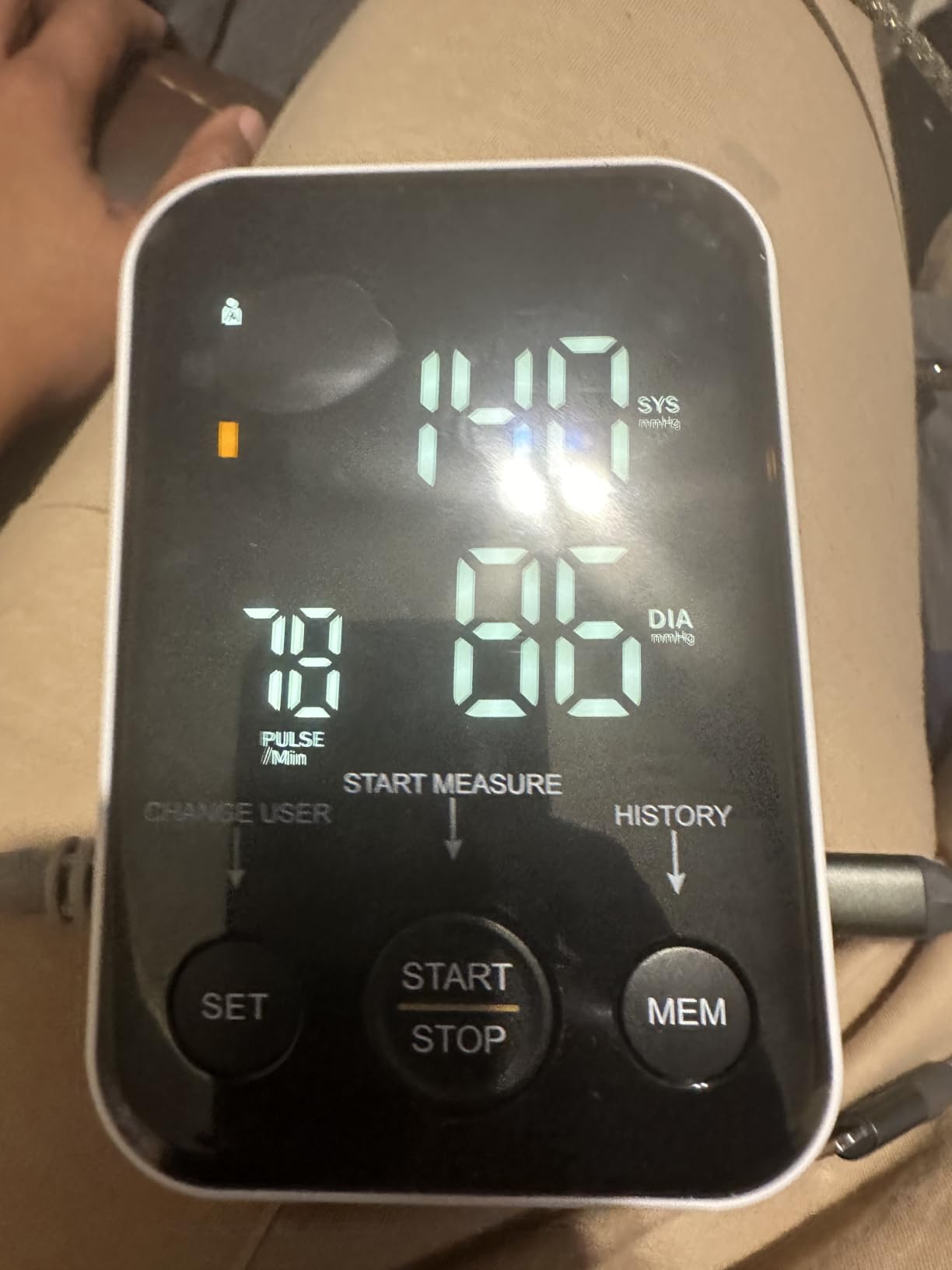
Storage is generous for a unit this size, 120 readings per user across two profiles, and the backlit LED screen has clear digits with a colour bar showing the blood pressure range plus a pulse reading. One button produces a result in under a minute.
Accuracy draws well. Owners compare readings to a clinic device and to older reference monitors and typically find agreement within a couple of points. Reviewers also like the quiet operation, the solid feel of the housing, and artery alignment markings printed on the cuff.
This is a well-reviewed monitor for the money, and the 71 percent five-star share reflects a simple, durable design that does its job.
Best reasons to buy it
If you travel, work shifts, or want a monitor in a gym bag, size and dual power are decisive. Running from a power bank means battery life stops being a consideration on long trips.
It is also a sensible second unit for a couple who wants separate devices rather than shared profiles.
Problems worth knowing about
Data management is the weak spot. The stored date and time flash for a moment and are not shown at the same time as the reading, so a quick glance after the fact is not possible. The air hose is about 23 inches and the USB cable about 38, and both are short enough to drag the unit off a table.
Two other notes: the soft case can press the start button and switch the device on, and the cuff stops at 15.7 inches, tighter than most here. Inflation is slow and gets loud at high pressures.
7. ATUDER B23: Best Large Backlit Display
Blood Pressure Monitors for Home Use Upper Arm, Accurate Cuff 8.7”-15.7” Monitor with Large Backlight Display 2 Users 240 Sets Memory & HR Detection, Digital BP Machine with Carrying Case
Cuff 8.7-15.7 in
240 readings, 2 users
1.15 lb with carrying case
Pros
- Large reverse backlight with enlarged font
- Irregular heartbeat alerting
- 3-reading averaging
- Comfortable cuff fit
- Carrying case included
Cons
- Slow inflation pump
- Can need several attempts before a clean reading
- Cuff must be tightened properly first
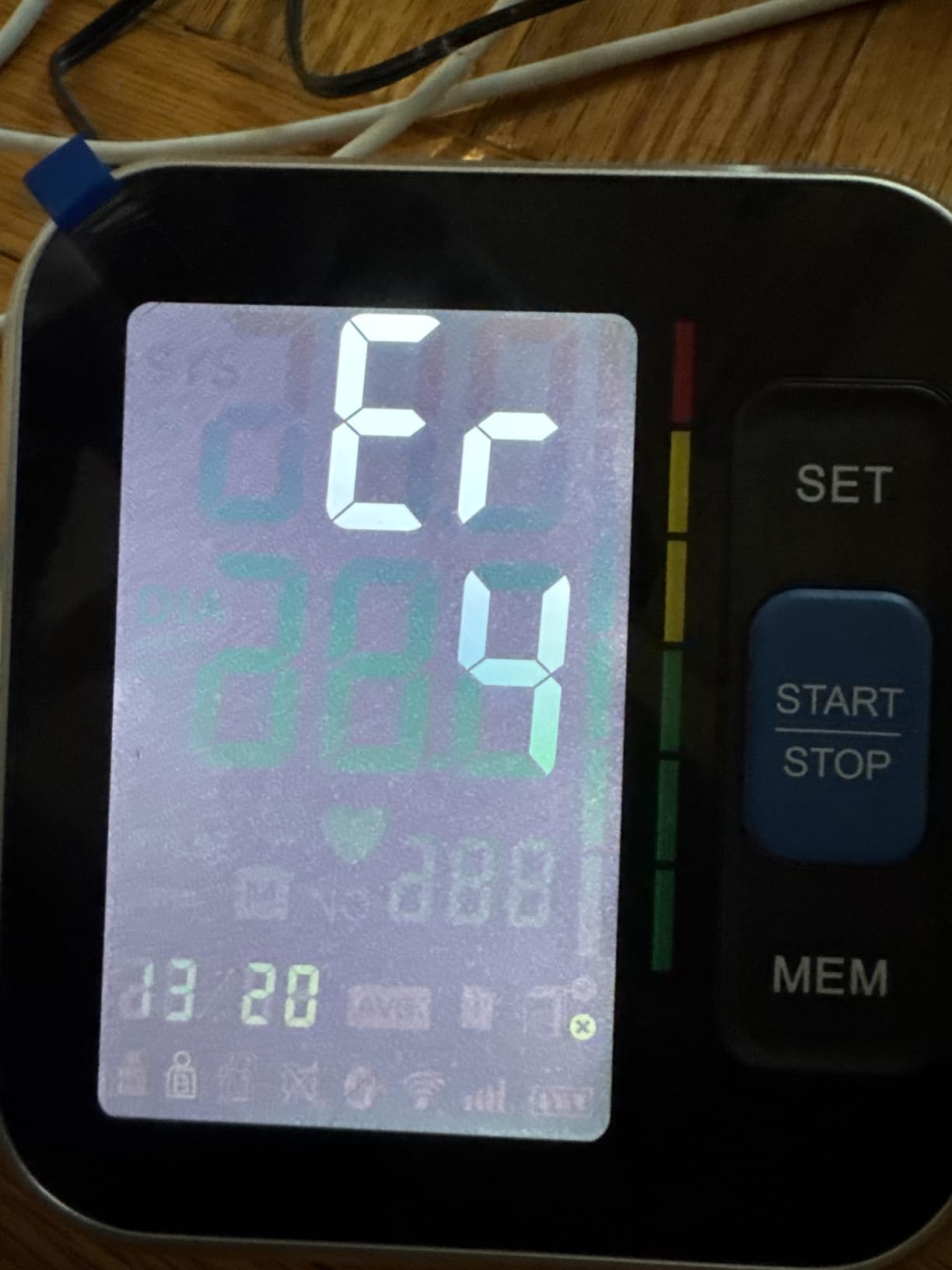
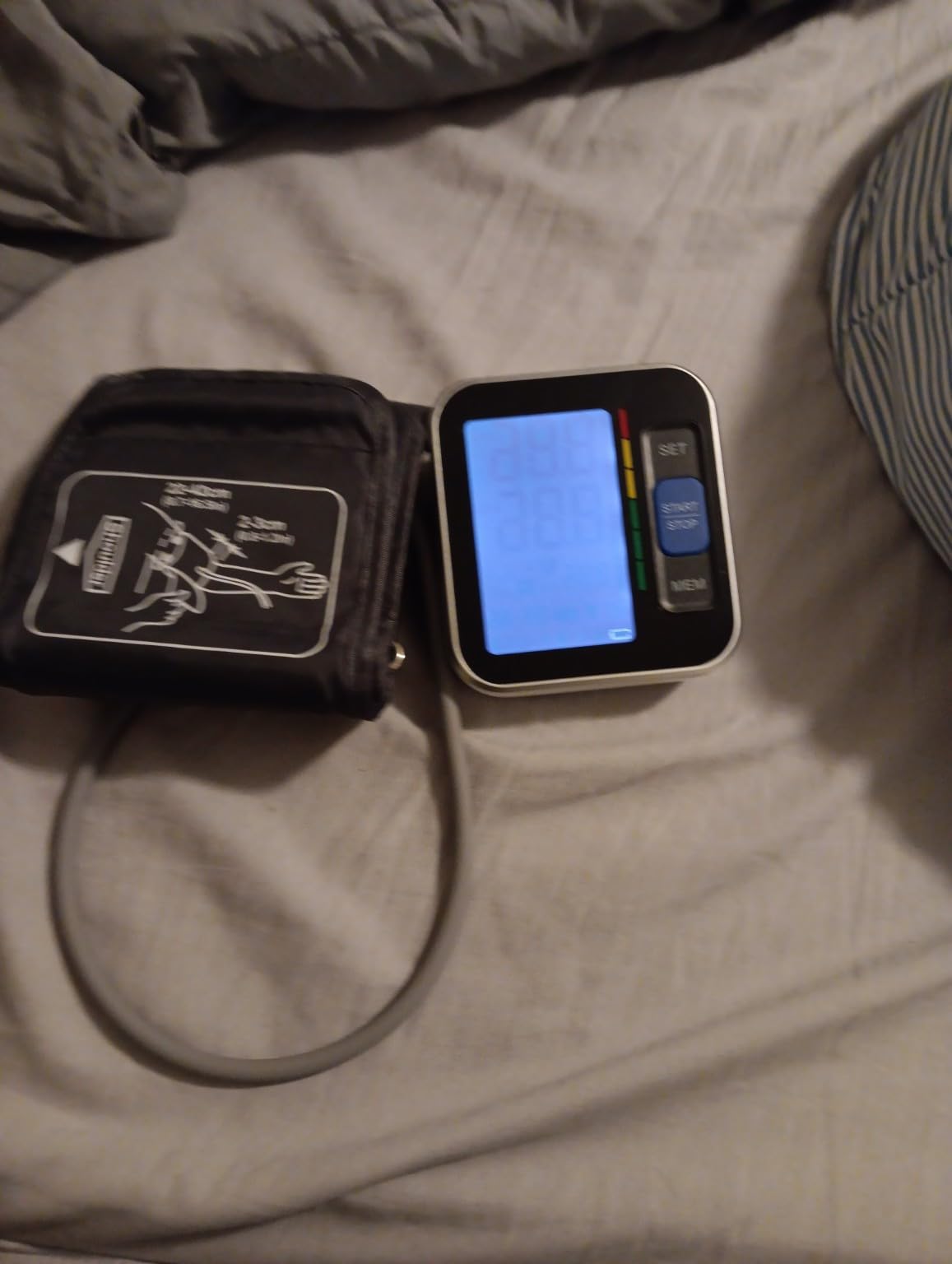
The ATUDER B23 is built around readability. The screen is a reverse backlight, bright characters on a dark field, with a font noticeably larger than most competing units. For anyone whose vision is changing, that alone can be the deciding factor.
Inside is a FitAccu chip driving algorithms trained on data from more than 1,000 testers, and it reports blood pressure, heart rate and an irregular heartbeat alert. Memory runs to 240 records across two users with three-reading averaging, and the cuff auto-detects the arm and flags incorrect operation.
Daily users report consistent accuracy, including one match against a doctor office reading. Batteries last a long time between changes, and a carrying case is included.
The cuff fits smaller arms comfortably too, which is where several of the other monitors in this group struggle.
Best for older eyes
The combination of a large screen, a physical one-press control and a case for carrying it around makes this a strong pick for a senior who lives independently. Nothing about it requires a phone.
If your main worry is reading the screen rather than exporting data, this is worth a close look.
Where patience is required
The pump inflates slowly, and some users need two or three attempts to get a clean result because the cuff has to be snug before you press start. That learning curve puts it behind the Alcedo and Paramed for first-time users.
At 1.15 pounds it is also one of the heavier units, and the cuff ceiling of 15.7 inches will not suit a very large arm.
8. Greater Goods BD3439: Best for App Tracking
Greater Goods Bluetooth Blood Pressure Monitor for Home Use, Upper Arm Cuff
Cuff 8.7-16.5 in
60 readings per user, unlimited in app
15.87 oz, travel case
Pros
- Reliable Bluetooth with on-device sync indicators
- Balance Health app graphs and exports
- Apple Health integration
- Works with or without Bluetooth
Cons
- Cuff maxes out at 16.5 inches
- Some readings run high versus office equipment
- Carrying case is very tight
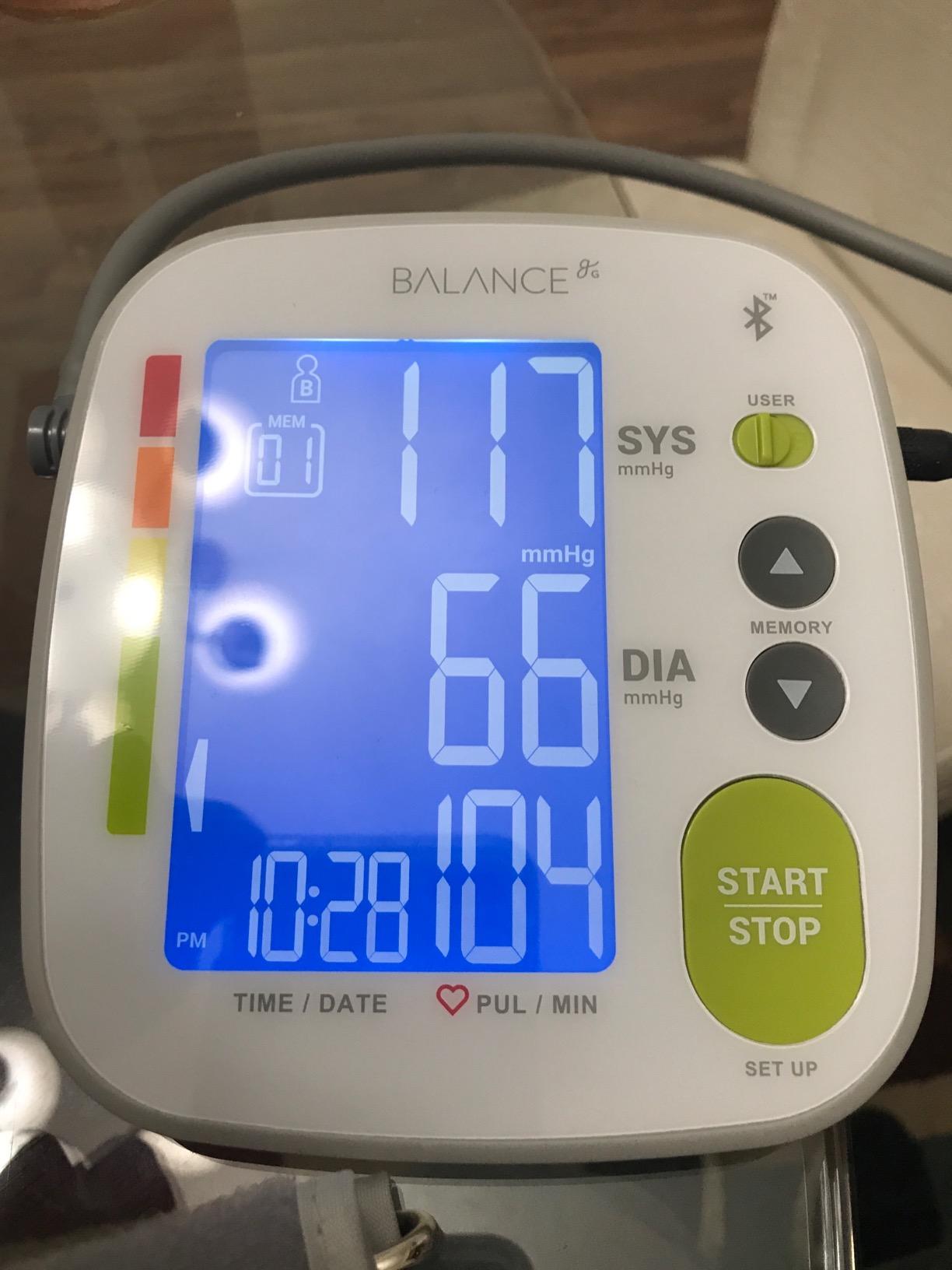
The Greater Goods BD3439 has been recognised as a top pick for accuracy and ease of use five times, and it is the most complete data story in our group. It syncs over Bluetooth to the Balance Health app on iOS and Android, with unlimited stored readings, week, month and year trend graphs, note taking, report export and sharing.
Critically, it also works with Bluetooth switched off. The unit holds 60 readings per user, two users in total, so nothing is lost if you do not want the app. Apple Health integration is there for people who keep everything in one place.
Sync reliability is the part that impressed us most among app-connected monitors. On-device sync indicators tell you when a reading has actually transferred, which removes most of the guesswork that makes people abandon connected cuffs. On r/bloodpressure the BD3439 comes up more often than most non-Omron options in the app category.
One healthcare provider reviewer describes periodically validating it against office and manual measurements and recommending it to patients, which is the kind of check we would want before trusting a home device.
Why app users should look here first
If your goal is to show a physician a real trend rather than a stack of loose numbers, the Balance Health app does more than the others here. You can delete a bad reading, add a note, and export a report.
It is also the only monitor in this group with a documented extra-large cuff, running 15.7 to 20.5 inches, sold as an add-on. Our Bluetooth monitor guide covers the other connected options if you want to compare apps side by side.
What to watch
One owner measured 10 to 15 points high against a clinic device and received a replacement that showed the same offset, and other buyers mention similar drift. This is the single most serious complaint in the reviews, and it is a reminder to check any new monitor against office equipment.
The included case is barely large enough for the unit, and the AC adapter can press the start button. The included cuff also stops at 16.5 inches unless you buy the extra-large version.
9. Urion U80AH: Best for Building a Long Reading History
Blood Pressure Monitor Upper Arm with Large Cuff
Cuff 8.7-16.5 in
2 x 500 readings stored
10 oz with carrying case
Pros
- 1000 total stored readings
- Accurate against clinic readings
- Simple one-button setup
- Lightweight and portable with a case
Cons
- Cuff over-inflates and can bruise smaller arms
- Difficult to manage on larger arms
- One unit drifted high after a year
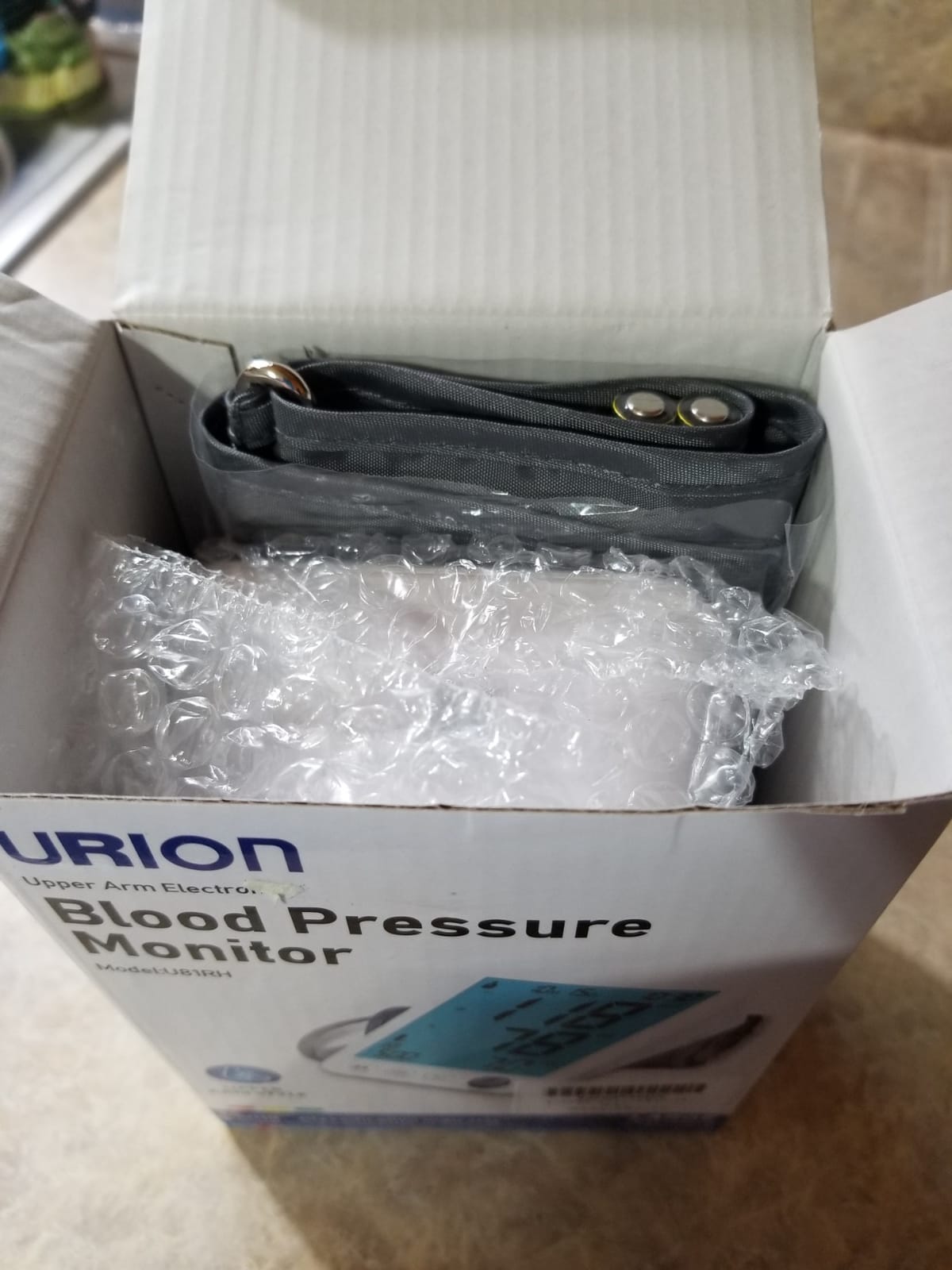
The Urion U80AH stores two sets of 500 readings. Nothing else in this roundup keeps that much history on device, and for someone building a long record without an app or a phone, that is the whole appeal.
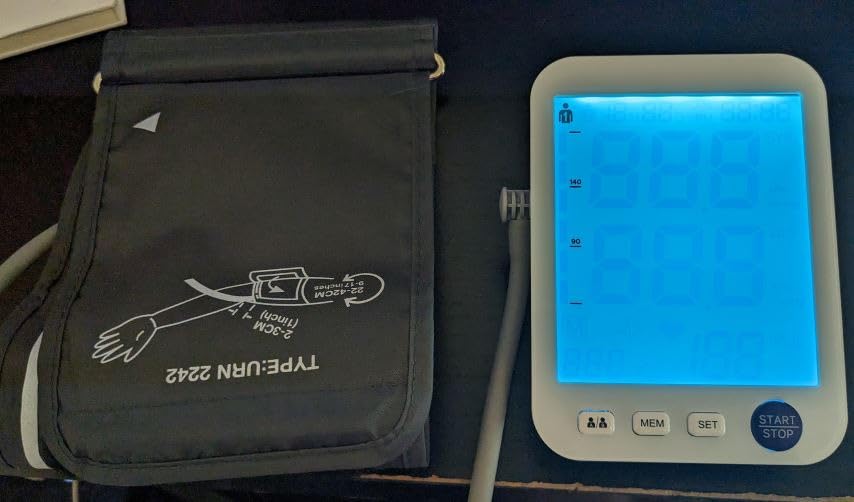
Otherwise it is deliberately plain. One button, a reading in about 30 seconds, a clear large display, and three coloured lines on the left of the screen indicating health range. It weighs 10 ounces and comes with a carrying case.
Owners mostly report accuracy matching what they get in a doctor office, and the 4.5 rating across more than 10k reviews reflects that consistency. Setup is immediate, with no pairing or account.
For anyone tracking blood pressure over years, having every reading still available on the device years later is genuinely useful, and none of the app models here will keep that much data locally.
Who benefits most from the big memory
Long-term medication management, where you want to compare this quarter against last year. It also suits a household where the phone is unreliable, since nothing is lost when a sync fails.
Two users can be tracked separately, which is unusual at this end of the market.
The cuff is the problem
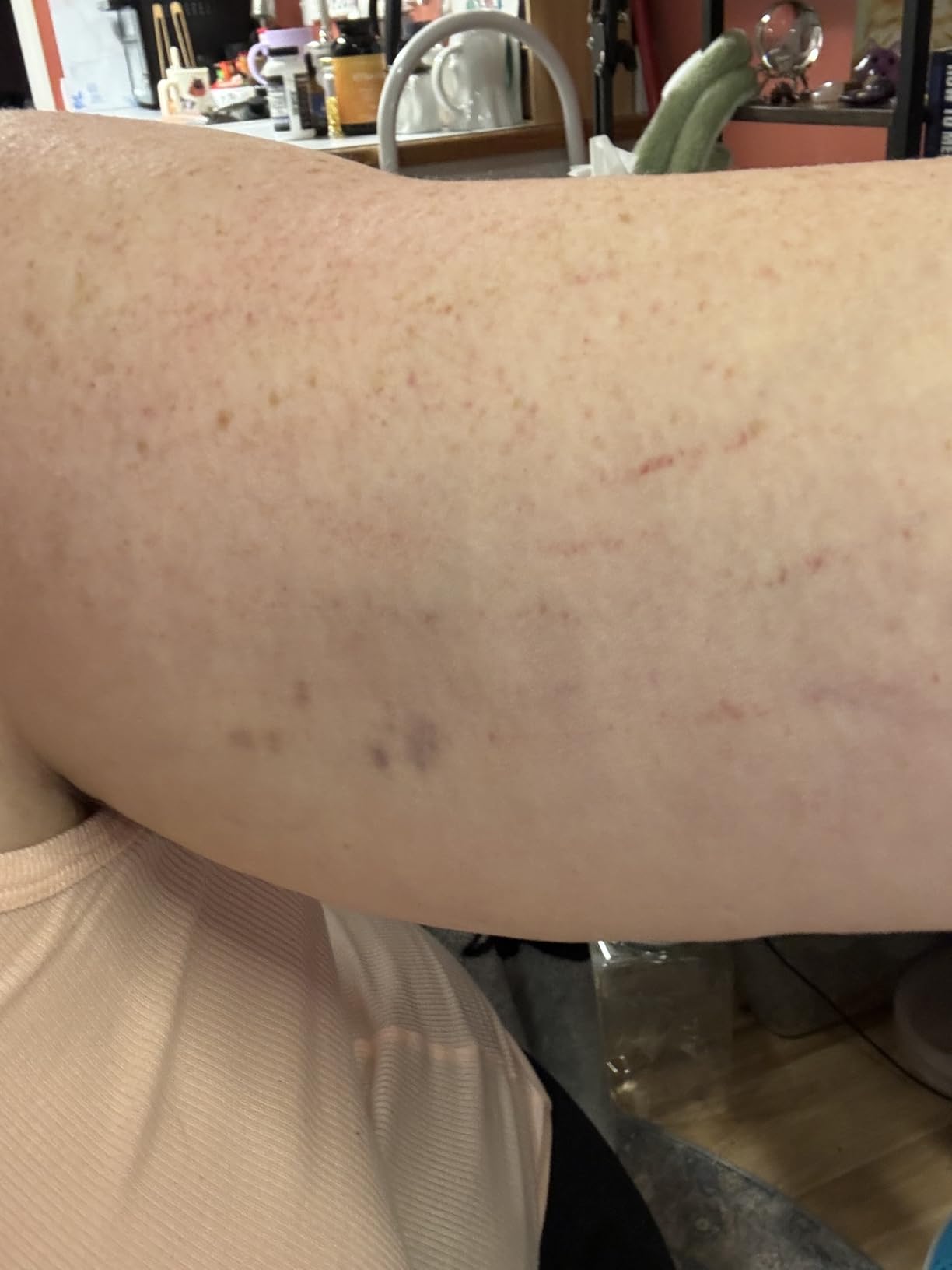
Several reviewers note the cuff is oversized for smaller and average arms and can inflate to 200 mmHg, which is painful and can bruise. Others find it hard to manage on a 14-inch arm, and it can read inaccurately on muscular arms.
One owner also reported a unit that began reading about 10 points high after a year of correct use, so annual accuracy checks are worth doing. The manual does not list manufacturer contact details, which is a small irritation if you need support.
10. yuwell YE660E: Best for the Widest Cuff Range
yuwell Blood Pressure Monitor, Large Upper Arm Blood Pressure Cuff, Digital Blood Pressure Machine for Home Use, Large Display, Stores 99 Readings, Voice Broadcasting with Power Adapter and Batteries
Cuff 8.7-17.7 in
99 readings plus 3-reading average
12.7 oz, adapter included
Pros
- Widest cuff range in this group
- Metal bar makes self-application easy
- ESH standard accuracy
- Movement detection and hypertension indicator
Cons
- Cuff tube is about 10 inches shorter than the previous model
- Long cuff wraps twice on smaller arms
- No medium cuff size offered
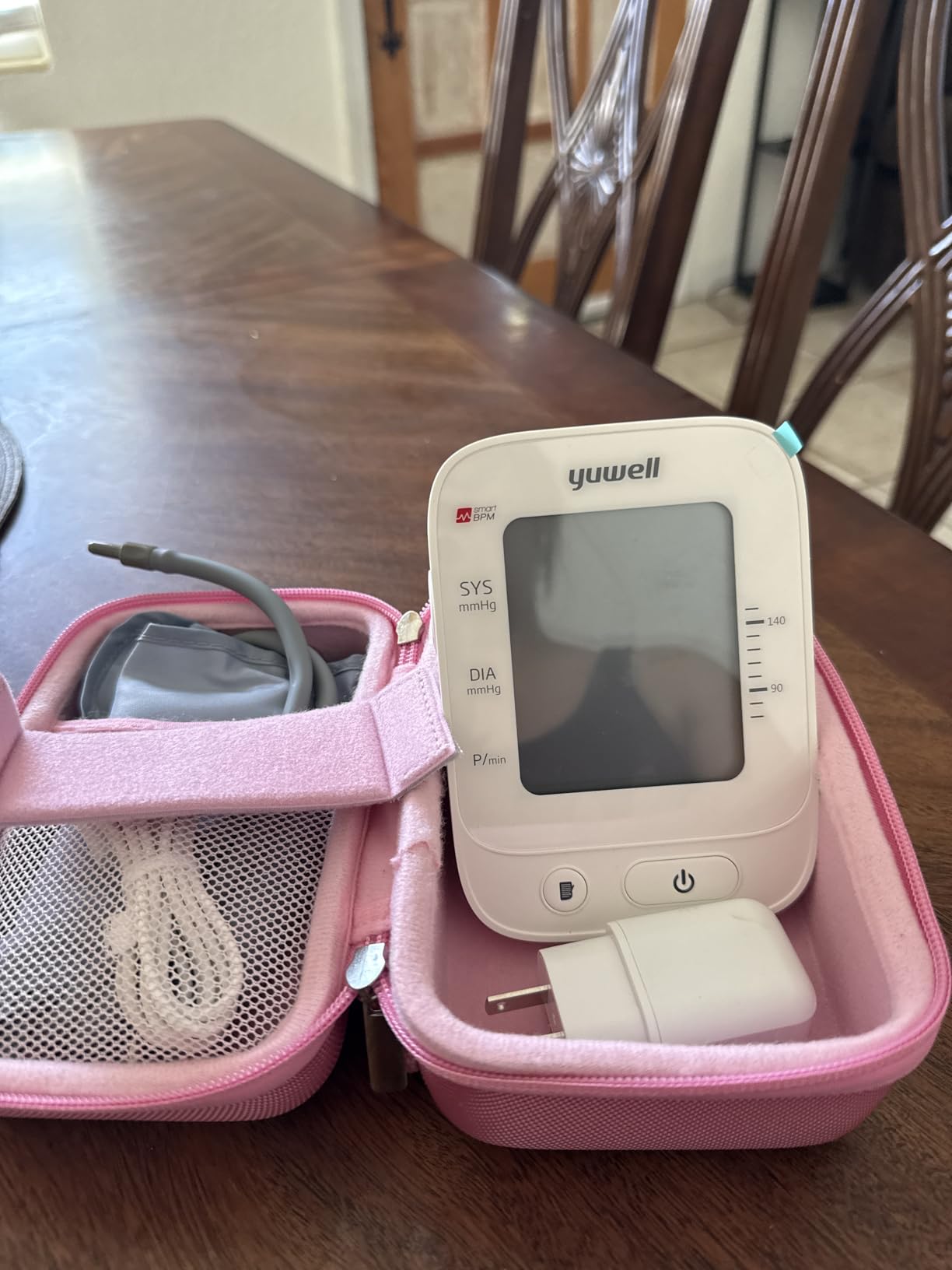
Cuff range is the reason to shortlist the yuwell YE660E. Its soft cuff covers 8.7 to 17.7 inches, the widest span of any monitor here, and one owner reports using the same unit for a 145 pound user and a 6 foot 5, 245 pound user.
The cuff has a metal bar that keeps its shape, which makes it genuinely easier to wrap around your own upper arm without help. Intelligent pressurisation reduces the over-inflation discomfort that other models cause, and there is a self-test function plus a mis-operation reminder.
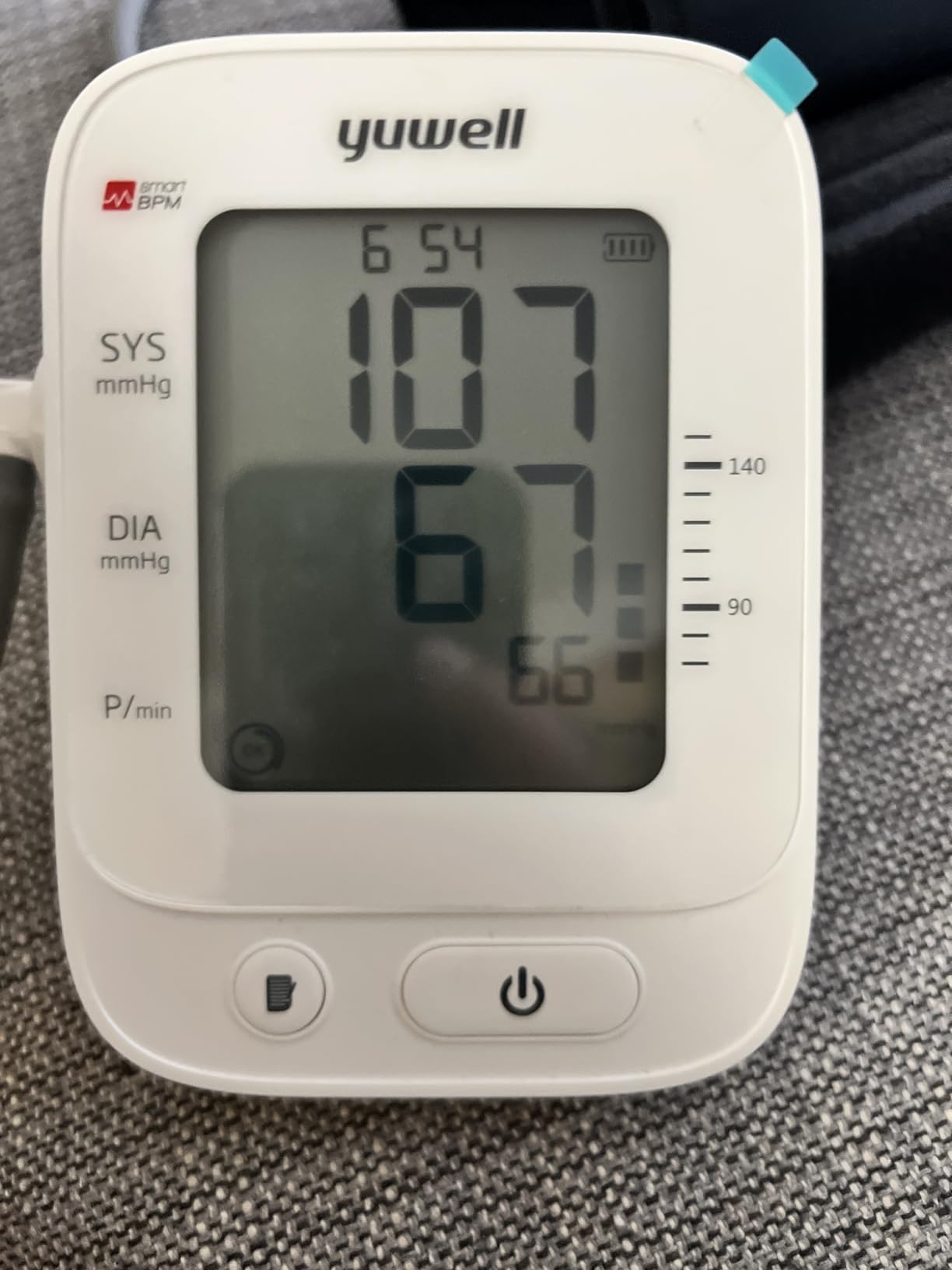
Accuracy is stated to the ESH standard, with an algorithm trained on clinical data collected from hypertension patients. Owners report repeated agreement with doctor office measurements. Body movement detection and posture reminders reduce the bad readings that come from talking or shifting during inflation.
Memory holds 99 readings and shows the average of the latest three, alongside a hypertension indicator and an irregular heartbeat alert.
Best for arms outside the standard range
If you have struggled to find a cuff that fits, this is the one to measure against. The included power adapter, batteries, storage bag and manual make it a complete kit.
The voice broadcast walks you through the measurement and tells you whether the result is normal, which some people find reassuring before a doctor appointment.
What to expect
The cuff tube is about 10 inches shorter than on the previous yuwell model, so you tend to hold the unit in your lap during a measurement. The cuff is long enough to wrap twice on smaller arms, which can feel loose.
Only large and extra-large cuff sizes are offered, with no medium option, and some users have not found how to disable the voice feature. We explain how cuff sizing works in more detail below.
11. Omron Evolv BP7000: Best Hose-Free Design for One-Handed Use
OMRON Evolv Wireless Blood Pressure Monitor & Upper Arm Blood Pressure Cuff
Hose-free ComFit cuff 9-17 in
100 readings plus app sync
8 oz
Pros
- One-piece cuff is easy to apply alone
- Bluetooth and Apple Health with report export
- No charging needed
- Small and light for travel
Cons
- Code 4 motion error can block readings
- Small dim digits in a glare-prone window
- Fixed cuff with no carrying case
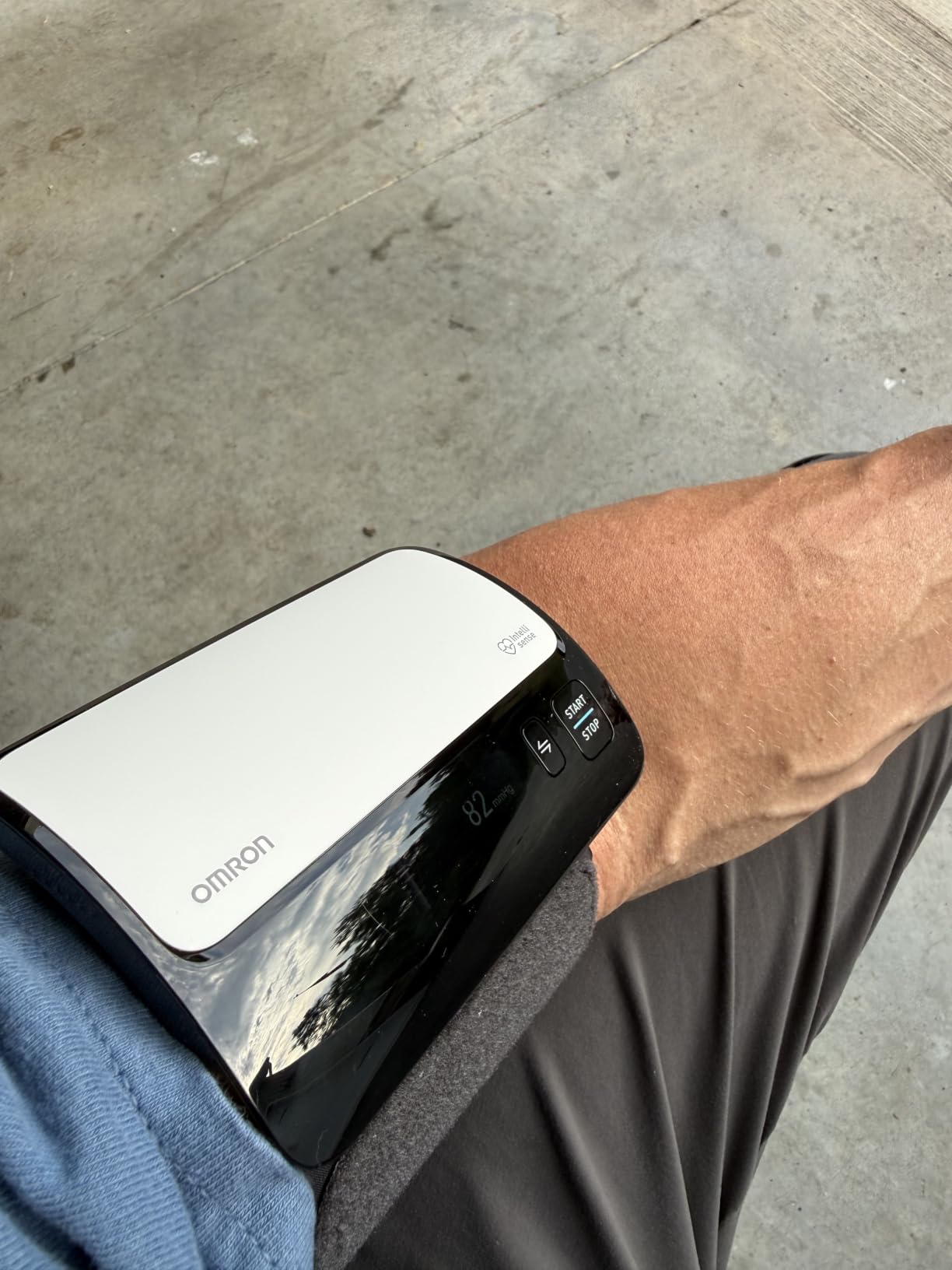
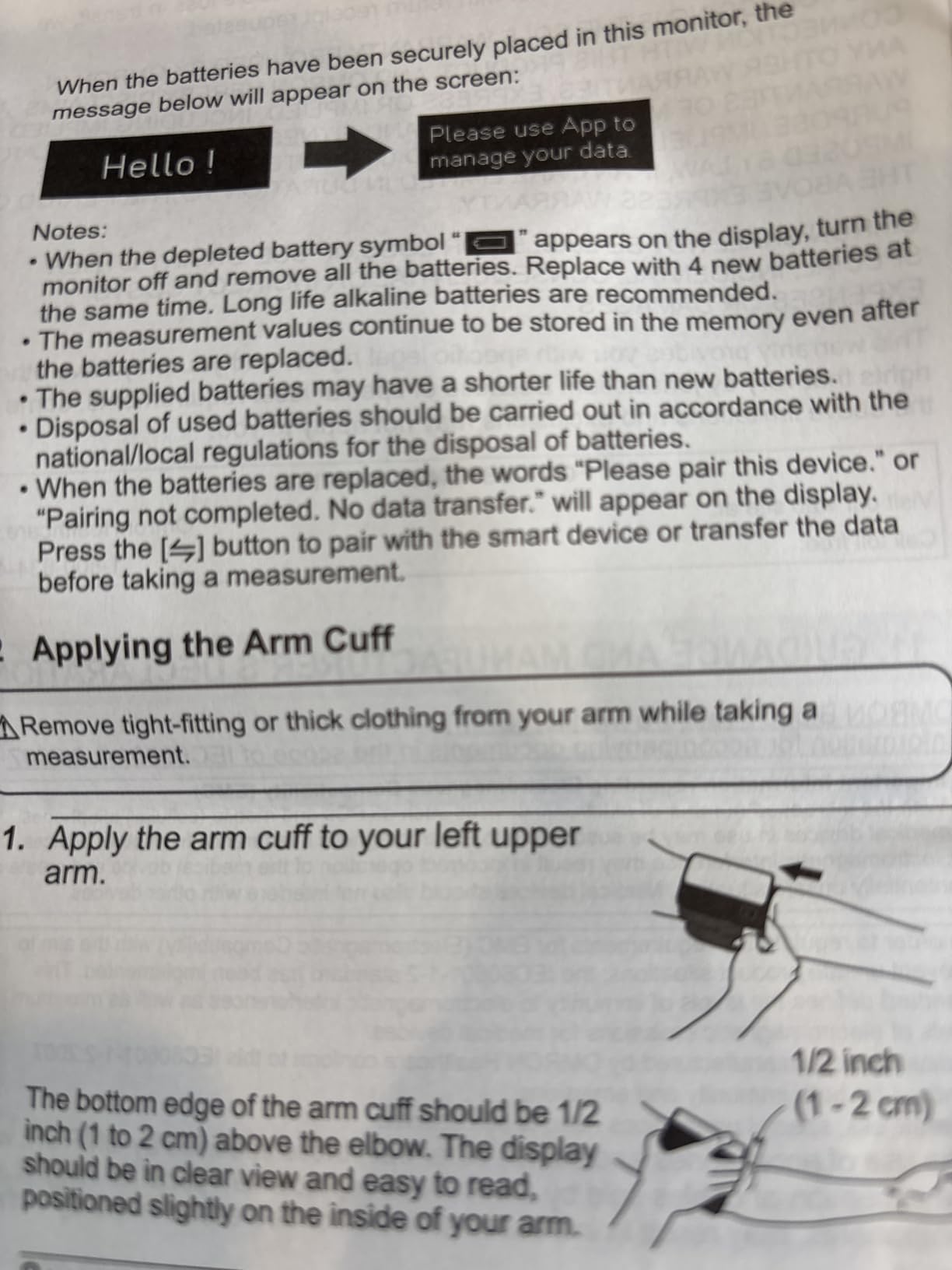
Omron is the name people name first when they ask which monitor is reliable, and on r/bloodpressure the 7 and 10 Series are described as workhorses. The Evolv is the hose-free entry point, with a one-piece attached ComFit cuff that you can wrap and start with one hand.
That design is not a gimmick. Tube cuffs twist and slide on muscular arms, and the fixed hose-free cuff cannot. For anyone with limited arm mobility or reduced strength, this is the most usable design in our group.
The Bluetooth connection to the free OMRON connect app pairs quickly and gives unlimited storage, trend views and report sharing, with Apple Health and Google Fit compatibility. Users replacing a paper log value the export, and one reviewer with postural orthostatic hypotension says the app makes it practical to take enough readings to spot triggers.
It runs on four AA batteries, so there is no charging routine, and the built-in 100-reading memory means you can batch a sync instead of pressing sync after every measurement.
Why the app is the real selling point
For anyone managing medication, being able to show a physician a graph of morning averages matters more than any single reading. This handles that well, and the two-button layout keeps the device simple.
Our full list of connected options is in the Bluetooth blood pressure monitor roundup.
The recurring problem
The Code 4 motion error appears throughout the reviews. Owners believe the device is misreading its own vibration as user movement, and for some people it blocks readings many times in a row. It is the most common complaint about this model, and the 9 percent one-star share is the highest among the premium picks here.
Other issues: display digits are small, dim and in a thin font behind a glossy window that catches glare, the flush buttons have little travel which is hard for less agile fingers, and the positioning instructions are unclear. The cuff is fixed at 9 to 17 inches and cannot be changed, and no case is included.
12. ALPHAGOMED Two-Cuff Monitor: Best Extra-Large Cuff in the Box
Automatic Upper Arm Blood Pressure Monitor 2 Cuff Sizes
M/L cuff 9-17 in plus XL 13-21 in
180 readings, 2 users
3.55 inch display
Pros
- Two cuff sizes cover arms 9 to 21 inches
- Extra large 3.55 inch display
- One-button measurement in about 30 seconds
- Carry bag and cables included
Cons
- Battery compartment is awkward to open
- Some readings need careful positioning
- 7 percent of ratings are 1-star
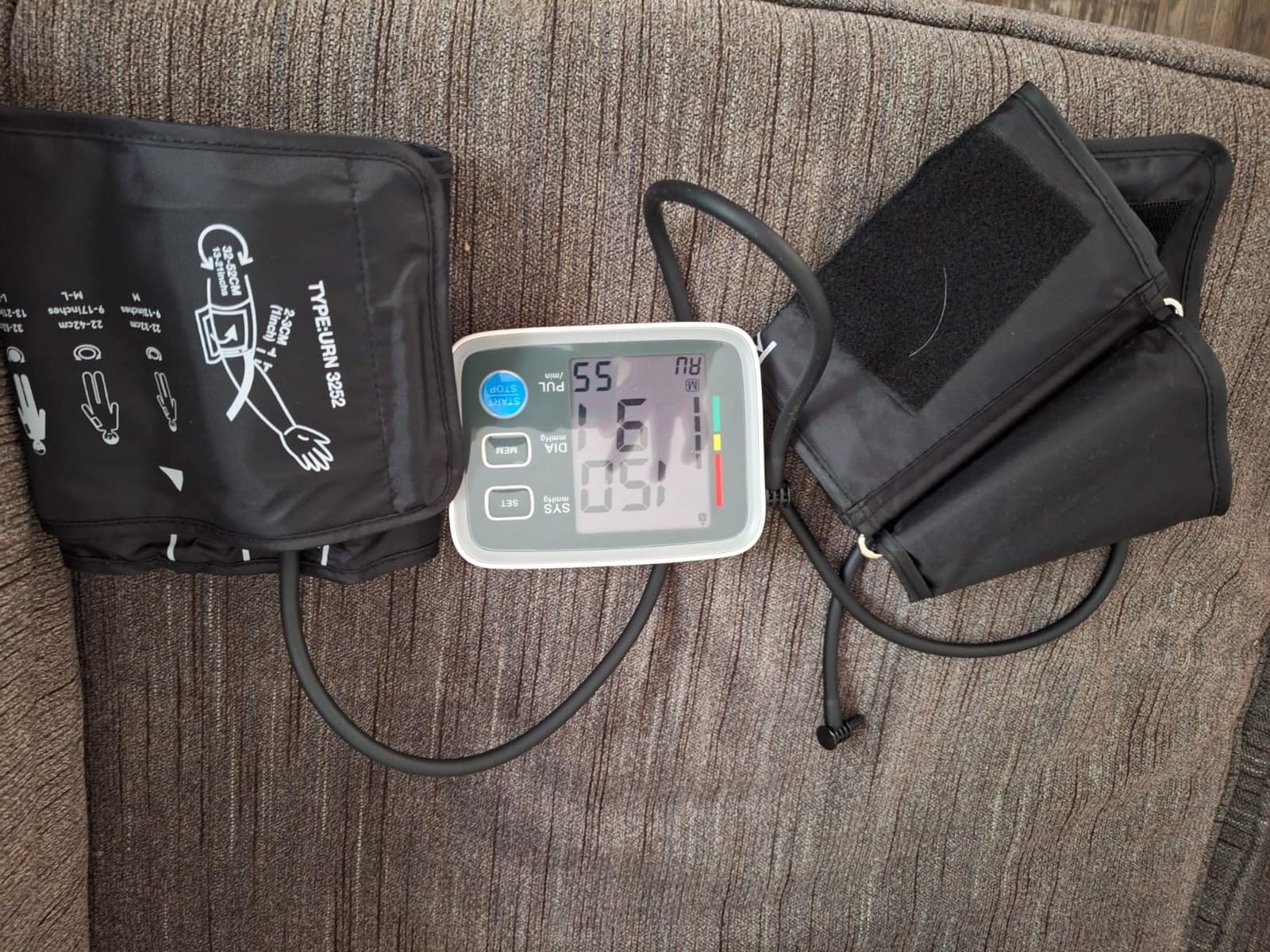
This is the answer to the extra-large cuff question that most roundups skip. The box contains two nylon cuffs, a medium and large cuff covering 9 to 17 inches and an extra-large cuff covering 13 to 21 inches, so a single monitor handles arms across a 12 inch spread.
Everything else is built for clarity. The display is 3.55 inches, the largest in this roundup, the START/STOP button is oversized for one-button operation, and a full reading takes about 30 seconds. Memory holds 180 readings, 90 per user across two profiles.
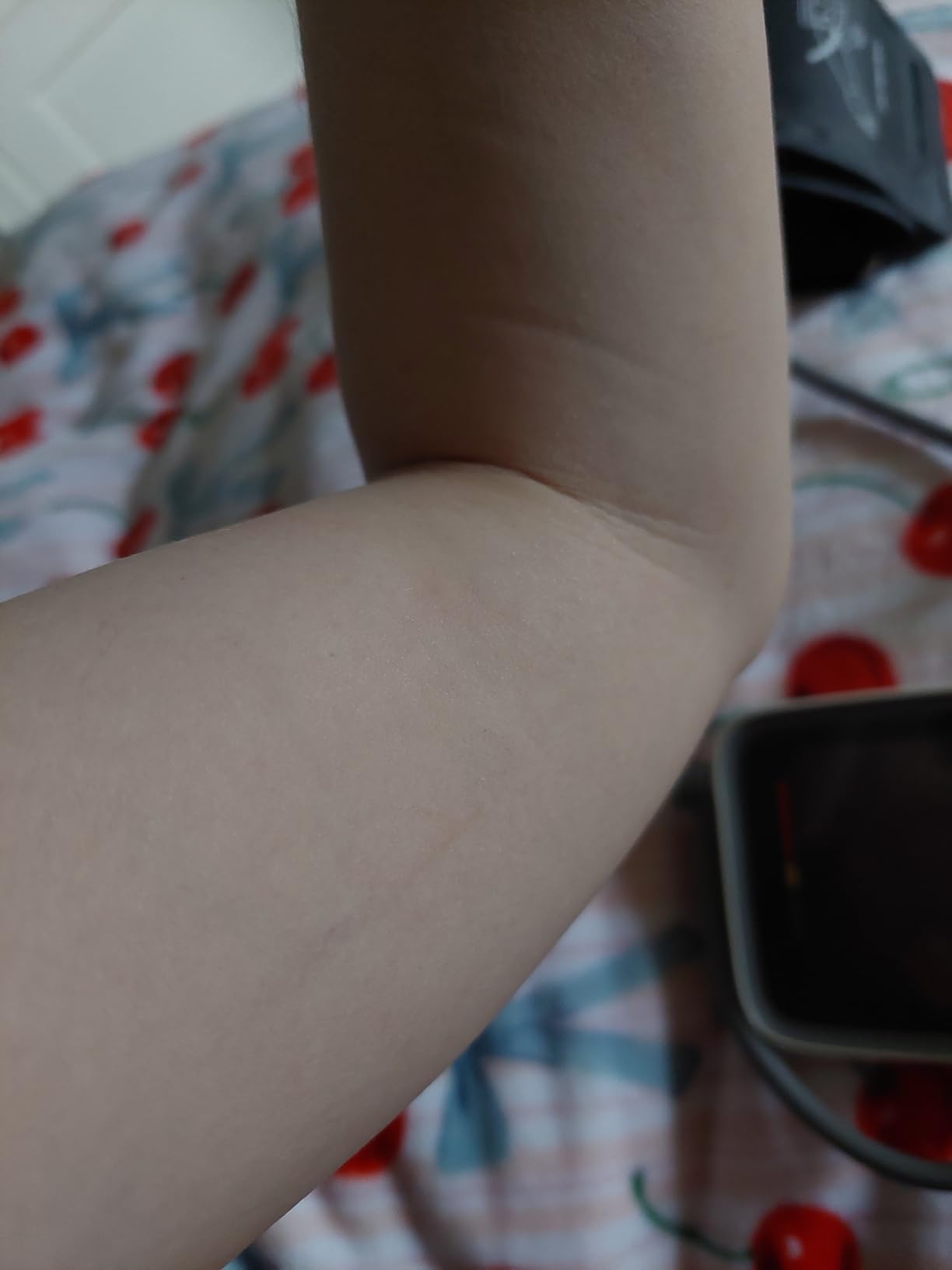
It is a complete kit: monitor, both cuffs, a nylon carry bag, a Type-C cable and four AA batteries. Automatic shut-off after three minutes of inactivity saves battery life, and the advanced algorithm is trained on a large volume of collected data for consistent readings.
For a family with one smaller and one larger arm, swapping cuffs is simpler than owning two devices.
Why two cuffs beat one universal cuff
A cuff that is too small reads high and one that is too loose reads low. Shipping both sizes removes the guesswork, and the 13 to 21 inch extra-large cuff covers an arm range that no other unit here covers in the box.
If you know your circumference is above 17 inches, this is the monitor to shortlist first, ahead of the add-on cuff options.
What to watch
About 7 percent of ratings are one-star, pointing to reliability and positioning concerns for a subset of users, and the device needs careful cuff placement for accurate results. The battery compartment is difficult to open for some people, which is worth knowing if you have limited dexterity.
At 1.48 pounds it is also the heaviest unit here.
How to Choose a Home Blood Pressure Monitor and Use It Correctly
Most disappointing monitor purchases come down to one of three things: the wrong type, the wrong cuff size, or sloppy technique. Get those right and a mid-range unit outperforms an expensive one.
Upper arm or wrist: the accuracy answer
Choose an upper arm monitor unless you have a specific reason not to. Upper arm monitors use the oscillometric method, where the cuff inflates to briefly stop blood flow and then deflates while sensors detect pressure oscillations, and the arterial pressure difference at the brachial artery is what gets measured. That position is stable, repeatable and the one clinical standards are written around.
A wrist monitor measures at the radial artery, closer to the heart, and is extremely sensitive to wrist height relative to the heart. Ten millimetres of height error can shift a systolic reading by several points, and it is the most frequently reported wrist complaint on forums. Wrist models make sense for travel, for people who cannot use an upper arm cuff, and for a single spot check.
Finger monitors are not recommended for routine tracking, and manual aneroid devices require practice and good technique to match an automatic unit.
Cuff size decides whether a reading means anything
Measure your upper arm circumference with a soft tape before you buy, midway between shoulder and elbow. Most monitors here cover 8.7 to 16.5 inches, which suits a large share of adults. If you are above that, the readings are not usable and you should not treat them as data.
Look at the range printed on the cuff, not the product photo. For arms over 16.5 inches you have three routes: the yuwell YE660E, which reaches 17.7 inches; the ALPHAGOMED set, which includes a 13 to 21 inch extra-large cuff; or the Greater Goods BD3439 with its optional 15.7 to 20.5 inch cuff.
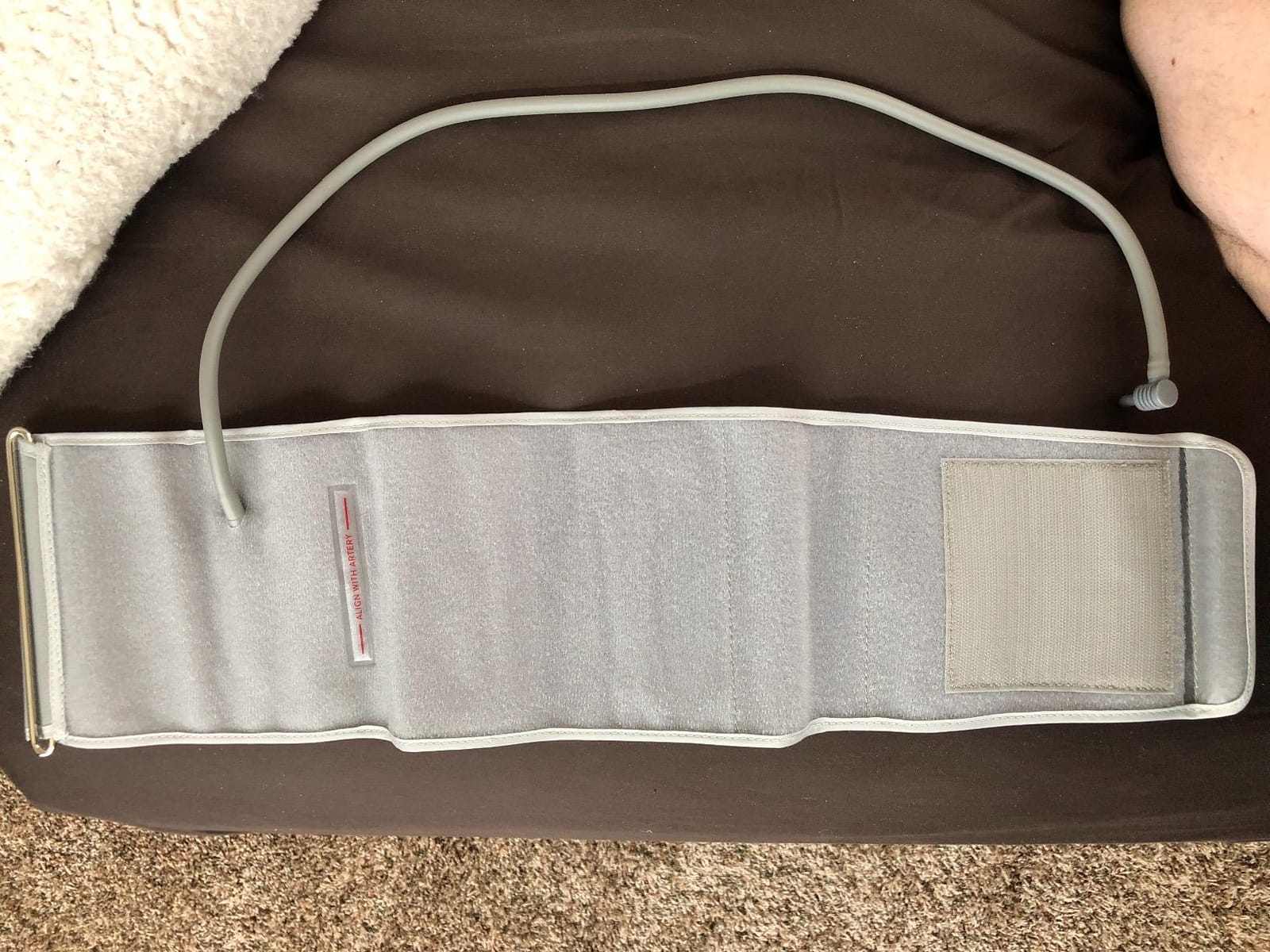
Cuff position matters as much as size. Wrap the cuff so the artery marker sits over the inside of your upper arm, roughly two finger widths above the elbow crease, and keep the tube on the arm side. A cuff that is too loose reads high.
What FDA-cleared and ISO 81060-2 actually tell you
FDA cleared means the manufacturer filed a 510(k) premarket notification and the FDA found the device substantially equivalent to a predicate device. It is a regulatory baseline, not a ranking. FDA registered is a different and much weaker listing that only records that a facility or device exists, and the two are constantly confused in marketplace listings.
ISO 81060-2 is the international standard for automated blood pressure measuring devices. A monitor validated against it, or against the AAMI/BHS protocol, has been tested against a reference sphygmomanometer and expected to keep within a mean error of 5 mmHg with a standard deviation of 8 mmHg or less.
Look for either claim in the listing. The yuwell states an ESH standard, the iHealth states ESH 2010 performance standards, and several others state FDA clearance. None of that replaces your own check.
Do you need Bluetooth, memory and voice features
They solve different problems. Memory is for building a history you own. Bluetooth is for turning that history into a graph a physician can read in seconds. Voice is for users who cannot comfortably read a small screen.
If you are on medication and your doctor wants trends, Bluetooth pays for itself quickly, and the Greater Goods BD3439 or the Omron Evolv are the strongest options with on-device storage as a fallback. If you are tracking occasionally and want zero friction, a no-app model with two-user memory, like the Alcedo B21, is simpler and lasts longer.
Bluetooth is not a quality upgrade. Several of the app models here have higher one-star shares than the plain button monitors, because pairing, syncing and app permissions all add ways for a reading to not get recorded.
The five-step measurement routine
No home monitor is accurate if you use it in a hurry. This is the routine we use, and it takes about five minutes.
No caffeine, exercise or smoking in the 30 minutes before, and empty your bladder.
Sit with your back supported and both feet flat on the floor, arm resting at heart level on a table. Do not talk during the measurement.
Wrap the cuff on the bare upper arm with the artery marker over the inner arm, and check the fit marker is inside the printed range.
Take two readings one minute apart and record both. If they differ by more than 10 mmHg, take a third and average them.
Log the result with the time and any context, such as a medication change or a bad night, because the pattern is what matters, not one number.
Measuring at the same times each day, morning and evening, gives you a comparable series. For white-coat hypertension, where office readings read higher than home readings, a log of home measurements is what convinces a physician to change a diagnosis.
How to check a new monitor against clinic equipment
Bring your monitor to an appointment and take a reading immediately after the nurse takes theirs. Comparing the two within a few minutes of each other is more informative than any online review, and it is routine practice among the forum users we read.
Do this once when you first buy, once after a year, and whenever your readings change suddenly in a way that does not match how you feel. If the home unit is consistently 10 or more points high or low, contact the manufacturer, and keep the packaging for a warranty claim.
Understanding the numbers on your screen
A reading is two numbers plus a pulse. Systolic is the pressure when the heart contracts, the top number. Diastolic is the pressure between beats, the bottom number.
In US categories, normal is below 120 systolic and below 80 diastolic. Elevated is 120 to 129 systolic with diastolic below 80. Stage 1 hypertension is 130 to 139 systolic or 80 to 89 diastolic, and stage 2 is 140 systolic or above, or 90 diastolic or above. A single reading is not a diagnosis; it takes a series over days.
Get medical help promptly if a reading is above 180 systolic or 120 diastolic, particularly with chest pain, shortness of breath, severe headache or vision changes. An irregular heartbeat alert repeated across several readings is worth mentioning to your doctor, because it can point to an arrhythmia that needs a rhythm-specific device rather than a standard monitor.
Frequently Asked Questions
What is the most accurate blood pressure monitor for home use?
Accuracy depends more on cuff fit and technique than on brand. The monitors here that state a recognised validation standard, including the iHealth Track (ESH 2010 performance standards) and the yuwell YE660E (ESH standard), combined with a correctly sized cuff, are the most reliable choices. Validate any new unit by taking a reading right after a clinic measurement and comparing the two.
What are the top 5 best home blood pressure monitors?
Our top five are the iHealth Track for overall use and app logging, the Alcedo B21 for value and two-user memory, the Greater Goods BD3439 for app trend tracking, the yuwell YE660E for the widest cuff range at 8.7 to 17.7 inches, and the ALPHAGOMED set for the included 13 to 21 inch extra-large cuff. Each suits a different arm size and household setup.
Which blood pressure monitor do cardiologists recommend?
Clinicians most often point to the established upper arm brands, with Omron cited most frequently in patient forums, and they care about three things: an upper arm cuff in the correct size, a stated validation standard such as ISO 81060-2 or ESH, and 510(k) clearance. Any of the upper arm monitors in this guide meets those criteria, so cuff fit and budget usually decide it.
Is FDA-registered the same as FDA-cleared?
No. FDA registered is a simple listing that records a device or facility and requires no review. FDA cleared means the manufacturer submitted a 510(k) premarket notification and the FDA determined the device was substantially equivalent to a predicate device. Cleared is the meaningful claim for a home monitor, and many marketplace listings confuse the two.
How do I know if my home blood pressure monitor is accurate?
Take it to a scheduled appointment and measure immediately after the clinical reading, comparing both numbers side by side. Repeat this after about a year and whenever readings change unexpectedly. If the home unit is consistently 10 or more mmHg off, contact the manufacturer, and check that the cuff fits your arm circumference in the first place.
How often should I replace a blood pressure cuff?
Plan on replacing the cuff every two to three years with normal use, and sooner if the hook-and-loop no longer grips firmly, the material feels stiff or cracked, or the printed fit range is worn away. Cuffs are sold separately for most models, and a worn cuff is a common cause of a drifting reading. Batteries usually last much longer than the cuff.
Our Verdict for 2026
If you want one monitor for a typical household in 2026, buy the iHealth Track. It has the widest review history we found, a display you can read at a glance, and enough local memory that the phone is optional. Pick the Alcedo B21 if a second person needs tracking, and the Greater Goods BD3439 if a graph for your doctor is the priority.
Before you order any of the 12, measure your arm. Cuff fit explains most of the complaints in the reviews, and it costs nothing to check. More picks and comparisons live in our complete blood pressure monitor guide and our upper arm monitor roundup.