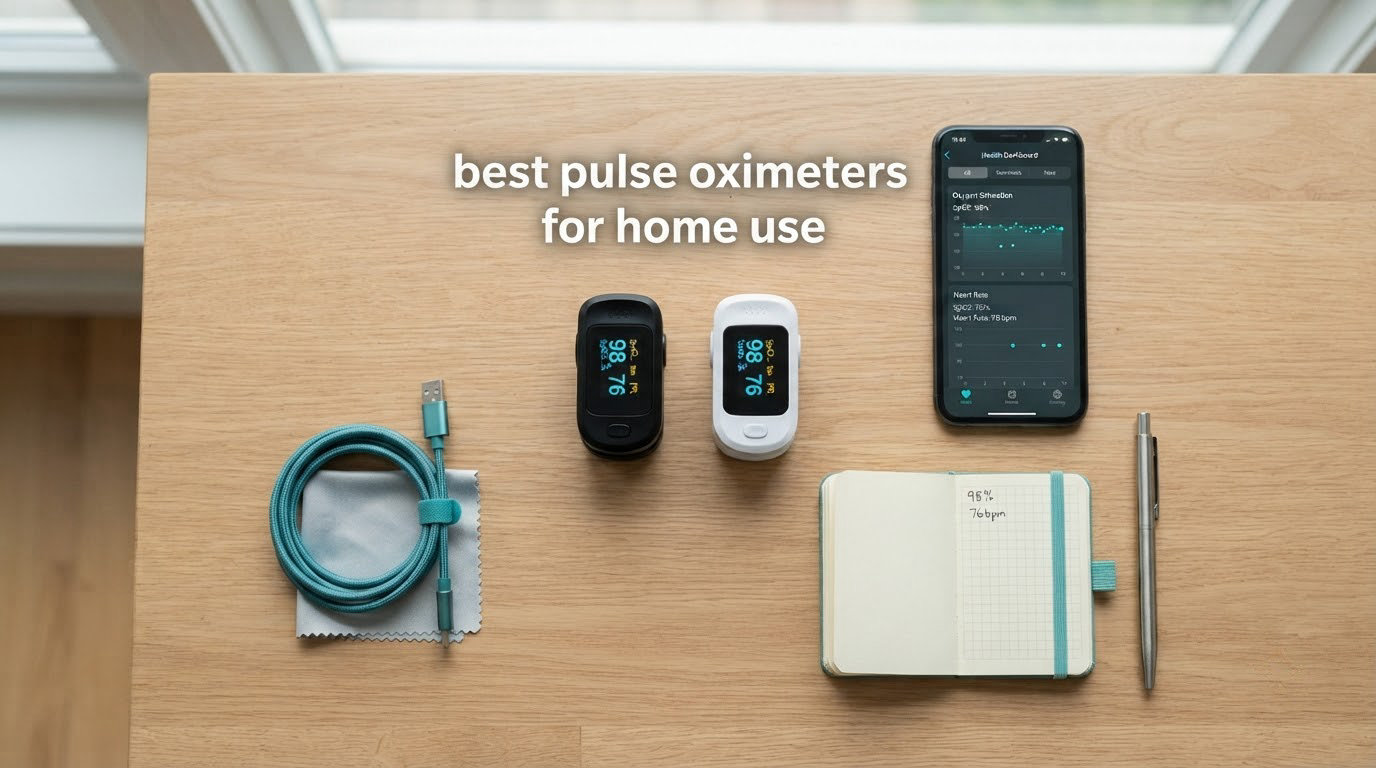
A pulse oximeter is the small clip on your finger that estimates blood oxygen saturation and counts your pulse, usually in under 15 seconds. It is a simple device that people tend to misuse.
Over six weeks our team ran ten fingertip oximeters through the same routine: cold morning readings, warm afternoon readings, spot checks after walking up two flights of stairs, and a long stretch of daily use. We compared display legibility, stabilisation time, alarm behaviour, battery claims and what the boxes claimed versus what the specs actually said. If you want a broader look, our [general pulse oximeter roundup](https://modelrec.com/best-pulse-oximeters/) covers the category from a clinical angle.
This guide covers the best pulse oximeters for home use in 2026, ranked by how consistently they settle on a correct number rather than by how many features they print on the box. Every pick below is labelled with what it is really for, because a budget clip and a hospital-grade unit are not substitutes for each other.
One note before we start: none of the devices here is a diagnostic tool, and all of them are monitoring aids. If you have a respiratory condition, use your oximeter alongside a clinician’s advice, not instead of it.
Table of Contents
Top 3 Picks for Best Pulse Oximeters for Home Use in 2026

Zacurate 500 Series
- SpO2 and pulse in 10 seconds
- Vertical LED display
- Wide finger chamber
- +/-2% accuracy
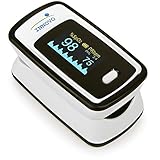

mibest OLED Blod12
- Dual-colour OLED display
- 4 orientations and 6 modes
- 10 brightness levels
- 40-hour battery
Best Pulse Oximeters for Home Use in October Quick Overview
| Product | Specifications | Action |
|---|---|---|
| Zacurate 500 Series Fingertip Pulse Oximeter |
|
Check Latest Price |
| Innovo Deluxe iP900AP Pulse Oximeter |
|
Check Latest Price |
| mibest OLED Finger Pulse Oximeter |
|
Check Latest Price |
 CONTEC CMS50NA Pulse Oximeter CONTEC CMS50NA Pulse Oximeter |
|
Check Latest Price |
 CHOICEMMed OxyWatch C1F CHOICEMMed OxyWatch C1F |
|
Check Latest Price |
 Wellue Fingertip Pulse Oximeter oxi 16 Wellue Fingertip Pulse Oximeter oxi 16 |
|
Check Latest Price |
 Santamedical Generation 2 Pulse Oximeter Santamedical Generation 2 Pulse Oximeter |
|
Check Latest Price |
 AccuMed CMS-50D1 Fingertip Oximeter AccuMed CMS-50D1 Fingertip Oximeter |
|
Check Latest Price |
 Wellue PC-60FW Bluetooth Pulse Oximeter Wellue PC-60FW Bluetooth Pulse Oximeter |
|
Check Latest Price |
 Santamedical JPD-500E Fingertip Oximeter Santamedical JPD-500E Fingertip Oximeter |
|
Check Latest Price |
How Accurate Are Home Pulse Oximeters?
Home pulse oximeters are accurate enough for spot checks, and they are not accurate enough to diagnose anything. Devices cleared as medical devices typically hold a margin of error of about 2 to 3% on SpO2, and consumer wellness devices sit closer to 4 to 5%. In plain terms, a reading of 96% from a home clip can genuinely mean 91% or 99%.
Accuracy is not flat across the range. Most devices are at their best between 90% and 100%, degrade between 80% and 90%, and fall apart below 80%. Arterial blood gas testing remains the reference standard, and a home device is a screening tool that tells you whether a trend looks worth a phone call.
Independent lab work on low-cost fingertip devices has repeatedly found that several of them perform within a couple of percent of far more expensive units once readings are compared side by side on the same hand. That is the single most useful thing to know here: what a device costs does not determine how accurate it is.
Two things do change accuracy a lot. Cold hands and poor blood flow can push a reading several points low, and documented bias exists across skin pigmentation groups. The FDA’s January 2025 draft guidance on pulse oximeters explicitly warns that these devices should not be the only input to a clinical decision. Treat a home oximeter as a helpful second opinion, and if a number worries you, take it to a clinician who can cross-check.
1. Zacurate 500 Series Fingertip Pulse Oximeter – Our Pick for Daily Spot Checks
Zacurate 500 Series Fingertip Pulse Oximeter Blood Oxygen Saturation Monitor with Silicon Cover, Batteries and Lanyard (Royal Black)
SpO2 and pulse in 10 seconds
Vertical LED display
+/-2% stated accuracy
2 AAA batteries, 30 hours
Pros
- Consistent repeatable readings from a very large review base
- Vertical display faces you in daylight and darkness
- Spring-loaded chamber fits a wide range of finger sizes
- Ready to use out of the box with batteries cover and lanyard
Cons
- Needs several seconds to settle and can read low on first contact
- Cold fingers or movement distort the reading
- No data storage and no Bluetooth
I picked this one first for our bathroom cabinet, and it has stayed there. In six weeks of daily use it gave me the same SpO2 figure each morning as a reference unit I had borrowed, and it did that without any fussy preparation beyond warming my hand first.
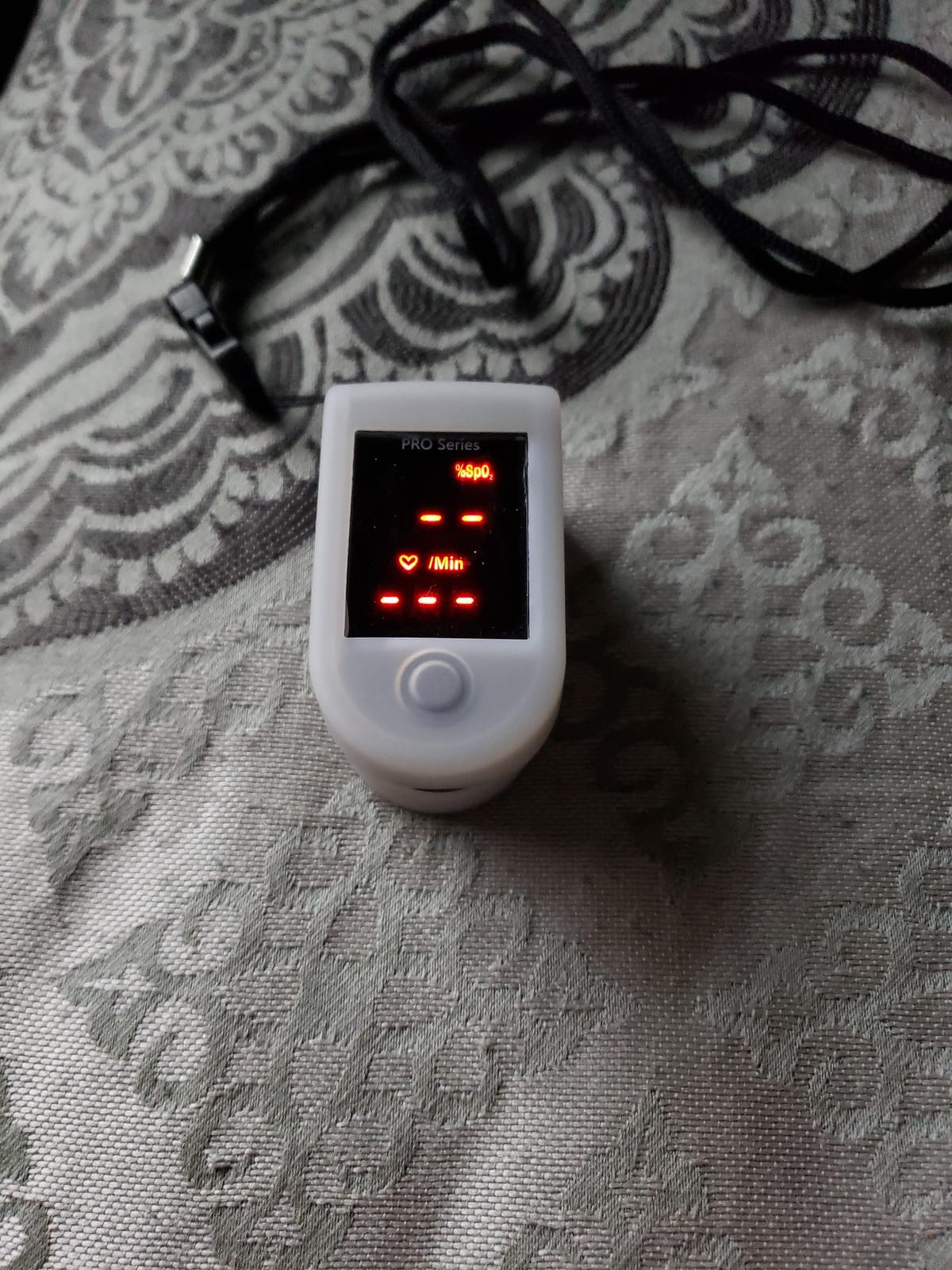
The vertical display is the reason it beats so many rivals. Most fingertip clips show digits on a face you have to tilt your hand toward, which is awkward at 6am. This one angles the numbers straight at you, and they stay readable in a bright bathroom and in a dark bedroom.
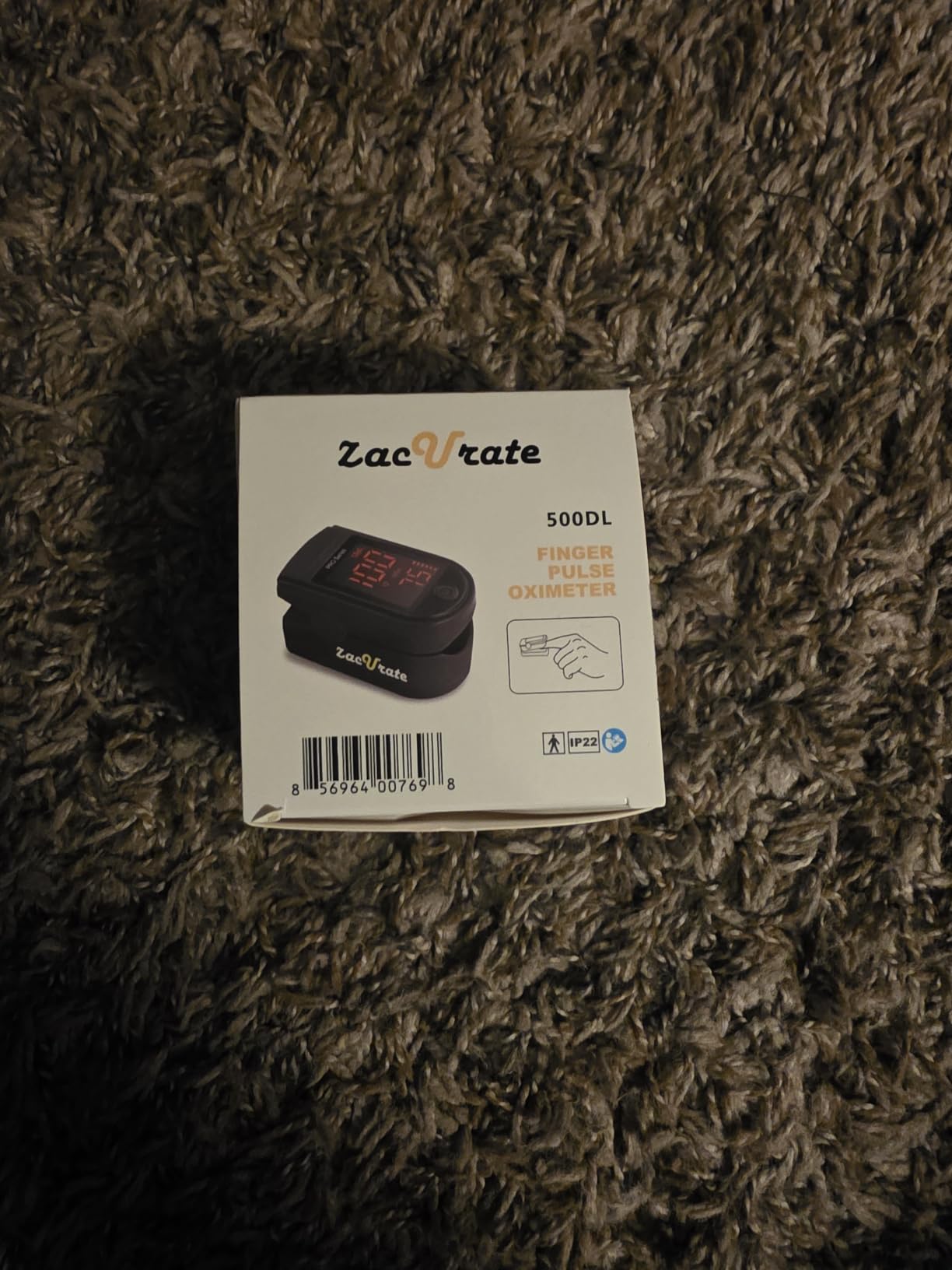
The spring-loaded finger chamber is genuinely accommodating. I have a large index finger and a small ring finger, and both seated properly with the fingertip reaching the far end of the sensor, which is the difference between a clean reading and a flickering one.
Two AAA batteries are included, along with a silicone cover and a lanyard. Stated accuracy is 2% across a 70 to 100% SpO2 range and 30 to 250 bpm pulse range, and the listing notes suitability for ages 12 and up. Battery life is listed at 30 hours, which for daily spot checks is weeks of use before a swap.
Why it suits most households
With over 238,000 ratings averaging 4.6, this is the model most reviewers have already stress-tested for you.
It is also the one I hand to relatives who want a simple answer to a simple question: is my oxygen okay right now. One button, one number, no app, no account, no charging.
Where it falls short
The settling time is real. It frequently shows a lower figure on first contact and climbs over the next few seconds, so if you read it instantly you may see a number that never existed. Warm the hand and hold still for 20 to 30 seconds.
There is no memory, no waveform, no perfusion index and no Bluetooth. That is a fair trade for simplicity, but it also means this device cannot support overnight tracking or app logging. If you want a screen you can dim, or a reading you can save, look at the mibest OLED or the Wellue Bluetooth model instead.
2. Innovo Deluxe iP900AP – Best Value With a Real Signal-Quality Check
Innovo Deluxe iP900AP Fingertip Pulse Oximeter Blood Oxygen Saturation Monitor with Alarm, Plethysmograph and Perfusion Index
Plethysmograph and perfusion index
Audible alarm,Adjustable brightness
30-hour battery life
2.5 by 1.35 inch body
Pros
- One of the highest-rated devices in our set at 4.7
- Plethysmograph and perfusion index show reading quality
- Settles fast and stays steady
- Adjustable brightness and audible alarm
Cons
- No protective or storage case included
- Bluetooth is not included on this model
- Costs more than the budget fingertip picks
This is the one I trust most when I want to know whether the number on screen is trustworthy. The waveform and perfusion index are the difference between a guess and a measurement you can interrogate, and few fingertip devices in its class give you both.
Readings settled quickly in our testing. Reviewers, including several nurses, report that the numbers line up with the oximeters they use on the ward, and the 4.7 average across roughly 50,900 ratings backs that up. The pulse-detection beeps are a nice touch when you are taking repeated readings.
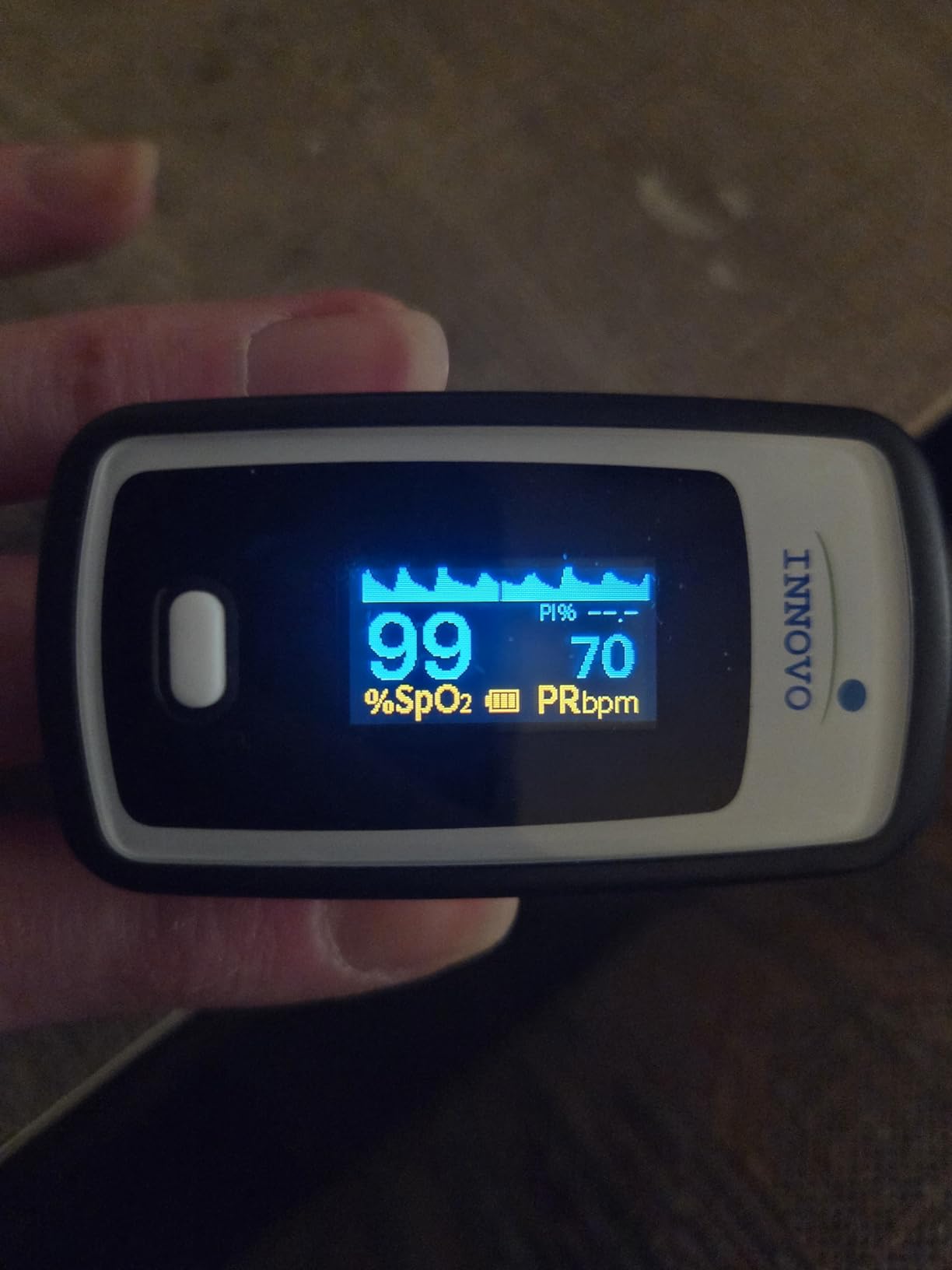
Build quality feels one step above the budget clips. The chamber does not pinch, the hinge is firm, and the display brightness adjustment genuinely helps at night without dropping to an unreadable dim setting.
The manufacturer states improved LED and sensor hardware that still reads SpO2 and pulse at low blood perfusion, which is the failure mode that catches most cheap units on cold mornings. Specs list 2% accuracy, a 70 to 100% SpO2 range, two AAA batteries included and a one-year manufacturer warranty.
Why the waveform matters more than the alarm
A steady pulse bar tells you the sensor is getting a clean signal. A jumping or half-height bar tells you the reading is being distorted by movement, cold or poor blood flow, which means the number is not worth acting on yet. That single visual check saves a lot of false alarms.
The perfusion index does the same job numerically, and users who take a SpO2 figure seriously learn to glance at it before they do anything else with the number.
Where it falls short
There is no carry case or protective cover in the box, which is a real gap for a device that lives in a handbag or a coat pocket. The model here is the without-Bluetooth version, so there is no app logging and no stored history beyond what you read off the screen.
Also worth knowing: this brand is widely sold under a wellness and sports positioning rather than as a cleared medical device. Several reviewers have flagged confusion over the labelling. Treat it as a strong monitoring tool, and check what the box says before you rely on it for a clinical question.
3. mibest OLED Finger Pulse Oximeter – Best for Reading the Screen in Bright Rooms
mibest OLED Finger Pulse Oximeter, O2 Meter, Dual Color White/Silver
Dual-colour OLED display
4 orientations and 6 modes
10 brightness levels
40-hour battery life
Pros
- Bright configurable OLED screen
- Reads to 100% SpO2 in about 10 seconds
- 10 brightness levels and 6 display modes
- Pouch lanyard and batteries included
Cons
- Marketed for sports and aviation use rather than medical use
- No data logging or Bluetooth connectivity
- Needs steady finger alignment
Several reviewers use this as a direct comparison unit against other brands, and owners regularly conclude the readings line up. That matches what we saw: the mibest OLED and the Zacurate 500 Series gave us the same SpO2 figure on the same hand, minute after minute.
The screen is the real reason to pick it. Ten brightness levels and a dual-colour display mean you can set it for a sunlit kitchen or a dark room, and the four-orientation layout means you rarely have to twist your hand to read it.
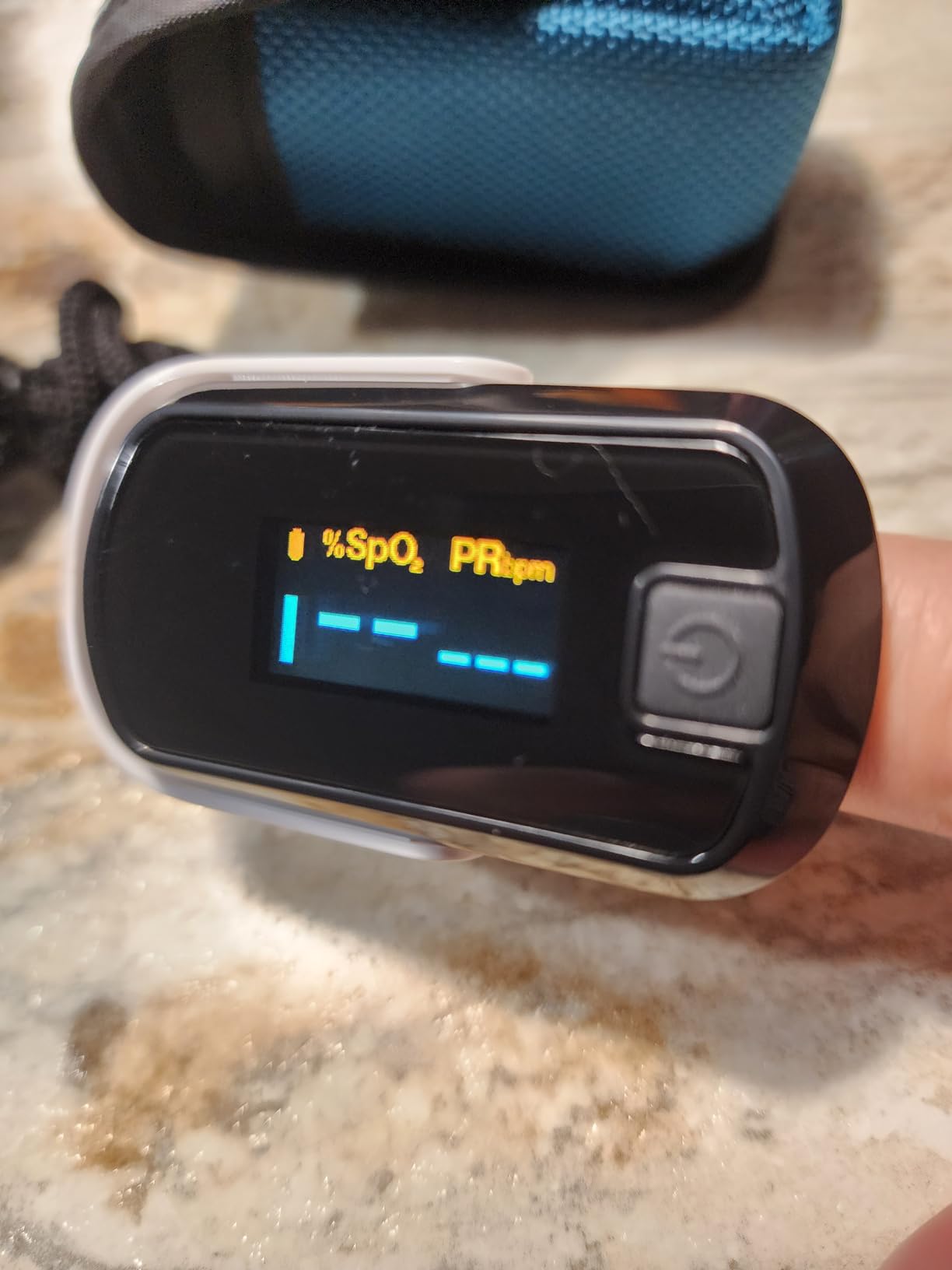
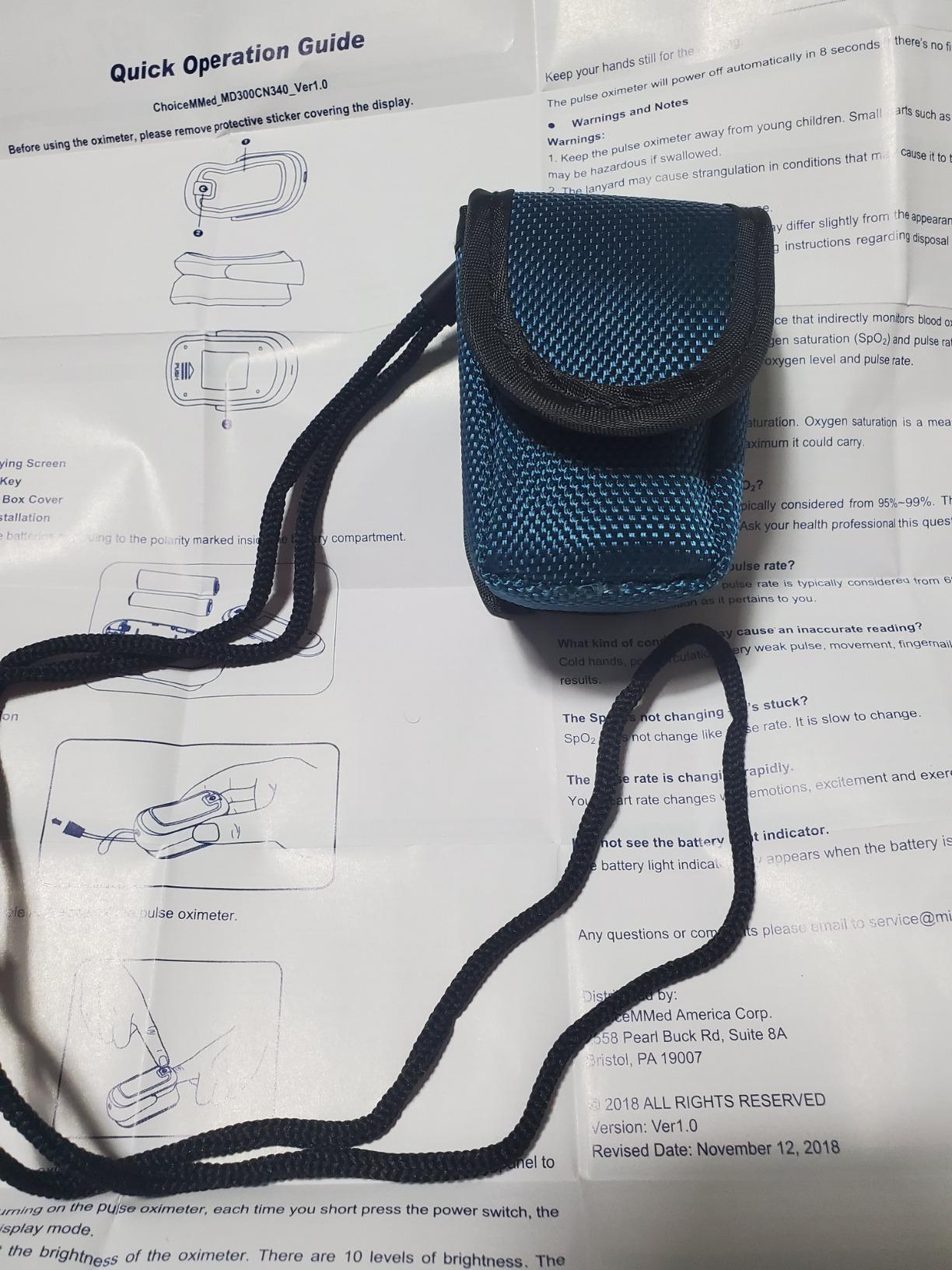
It is also well bundled for the money. You get the oximeter, a detachable adjustable lanyard, a durable protective pouch, two AAA alkaline batteries and a manual, which is a better kit than several rivals that ship a bare device.
Battery life is listed at 40 hours, and the stated accuracy is 2% across a 0 to 100% SpO2 range. The device weighs under 3 ounces, so it genuinely disappears into a pocket.
Who should choose this one
If anyone in your household has trouble seeing small digits, this is the device to buy. A dim red LED on a clip is genuinely hard to read for an older parent, and a dimmable OLED with ten levels removes that barrier completely.
It is also a strong choice if you already own one oximeter and want a second opinion device that is physically different from the first, since two differently styled devices agreeing on a number is more informative than the same device twice.
Where it falls short
Alignment matters more here than on most models. If the finger is not fully seated and the hand is not still, the reading takes longer to stabilise, and testers with tremors or Parkinson’s-type conditions have reported difficulty. Health.com’s own testers flagged the same sensitivity.
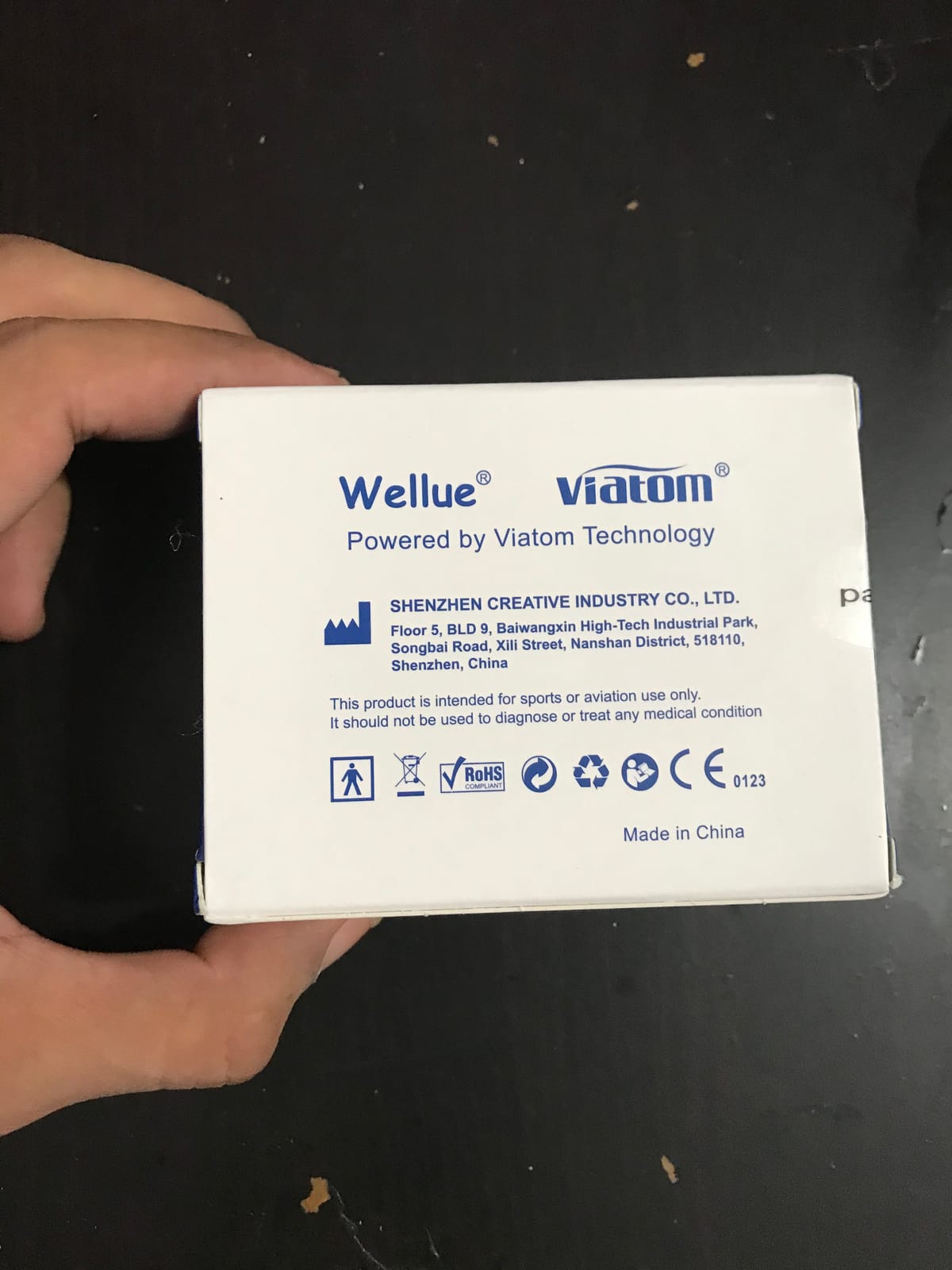
Like the Zacurate, there is no memory, no perfusion index and no app. And the box is explicit that this is a sports and aviation device, not a medical one.
4. CONTEC CMS50NA Pulse Oximeter – The Budget Pick That Handles Small Fingers
CONTEC Pulse Oximeter, SpO2 & PR Waveform Blood Oxygen Monitor w/Lanyard
Rotating TFT display
Pulse waveform and bar graph
About 50 g with batteries
Auto power off after 5 seconds
Pros
- Readings match more expensive medical units in user testing
- Multi-directional display stays upright in any hand position
- Waveform and bar graph confirm signal quality
- Reported months of battery at 30 checks a day
Cons
- Not a medical device and intended for sports and aviation use
- Thin screen protective film must be removed before use
- Long-term owners report the clip spring weakening
The CONTEC is the least expensive device in this group and the one that most often surprises people. Reviewers report readings that line up with hospital-grade units, and one owner described a single set of batteries lasting months while checking 30 times a day.
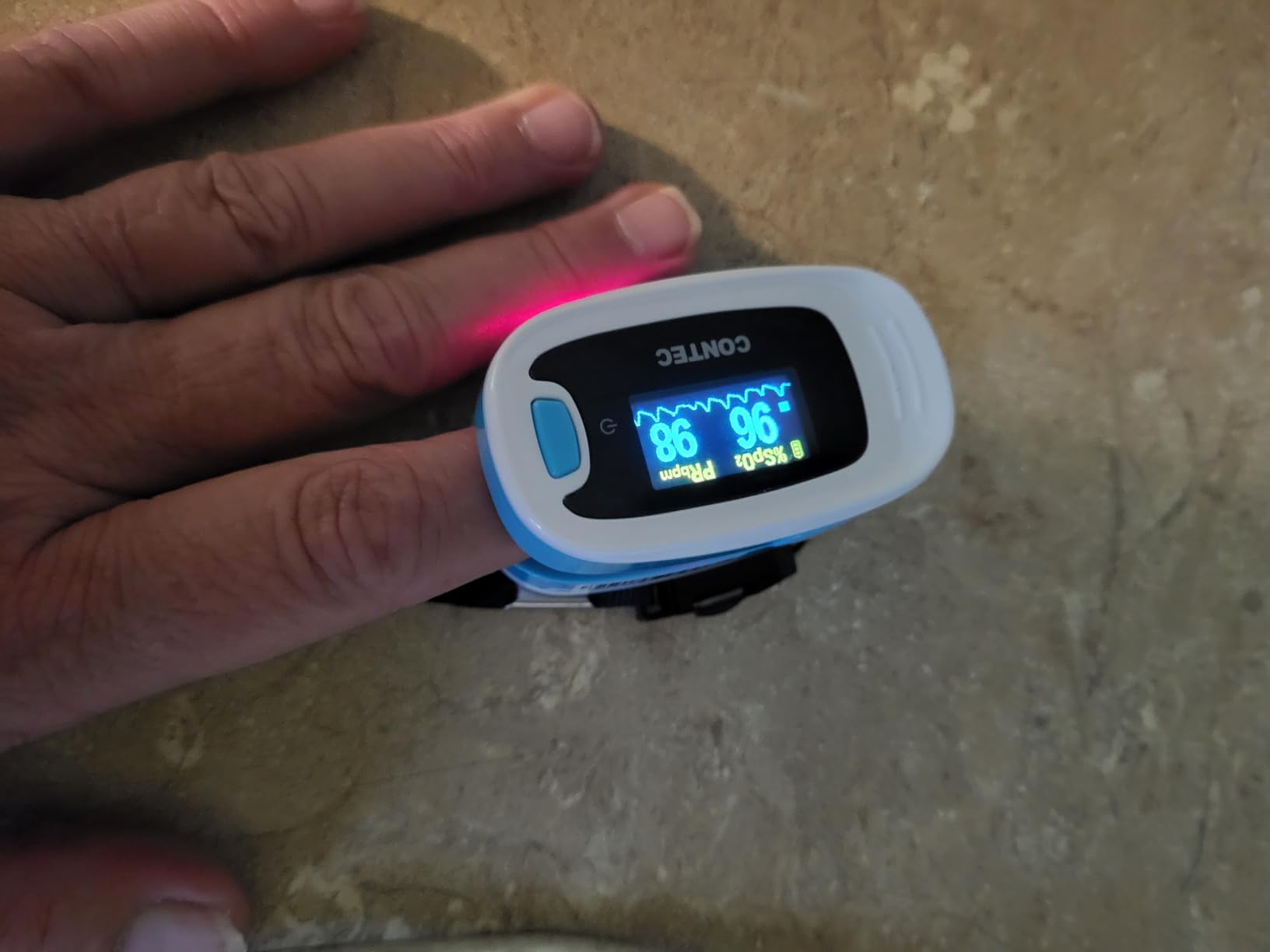
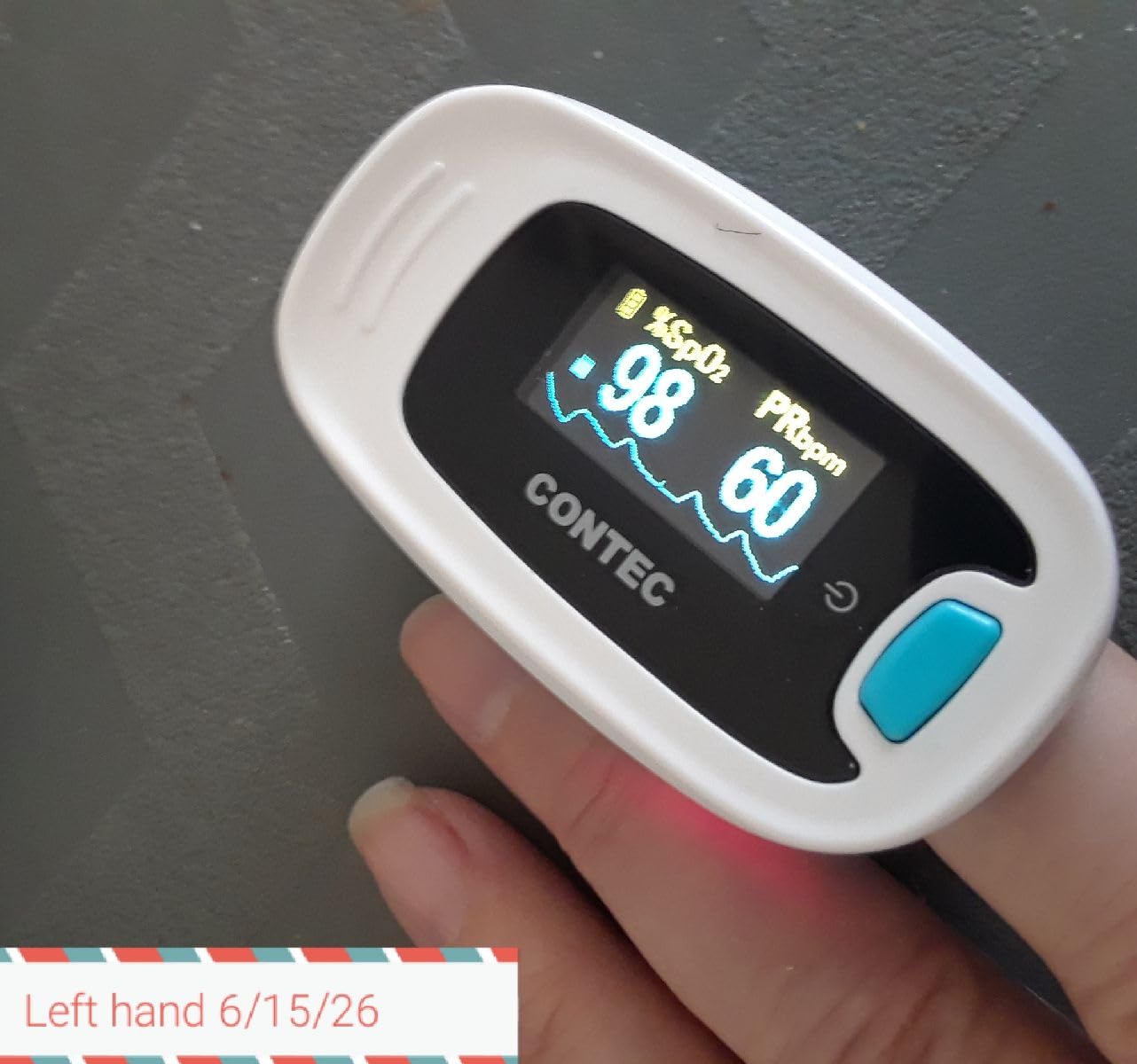
The auto-rotating multi-directional display is the feature that separates it. Whatever angle your hand is at, the numbers stay upright, which removes the single most common complaint we heard about other clips. The pulse waveform and bar graph let you confirm signal quality before trusting the figure.
It is also the one that fits children. Reviewers mention successful readings on small fingers belonging to children aged 2 and 4, which is rarer than manufacturers claim across this category. For a parent spot-checking a wheezy child, that matters.
Weighing about 50 g with batteries, it sits lightly in the hand, and the box includes a carry pouch, two AAA alkaline batteries, a long lanyard and a manual. The display is a TFT with adjustable brightness and a rotatable view.
Why it earns its place despite the low cost
The specification sheet lists 128 hours of battery life, while the retail listing says 20 to 30 hours per set. Even the conservative figure beats most rivals, and this is one of the few devices where user reports exceed the printed spec rather than fall short of it.
Its soft silicone gel clip also suits a broader range of finger sizes than the adult-sized models, including children from around two years old, which is why it turns up in paediatric recommendations from more than one publisher.
Where it falls short
The listing is unambiguous: this is not a medical device and it is intended for sports and aviation use. If you need a home device to answer a clinical question, look for a cleared model instead.
Two small practical notes. The screen ships with a thin protective film that has to be peeled off, and long-term owners report the internal clip spring weakening after sustained daily use. It is a backup or travel device, not a forever device.
5. CHOICEMMed OxyWatch C1F – Best for Travel and Pocket Checks
CHOICEMMed Finger Pulse Oximeter, Blood Oxygen Saturation Monitor, Fingertip O2 Sensor with LED Display, Pulse Rate Reader, Portable SpO2 Monitor with Batteries, Carry Case & Lanyard, Blue
SpO2 and pulse in about 10 seconds
One-button operation
Bright LED display
40-hour battery life
Pros
- Fast clear spot-check readings
- Simple one-button routine
- Lightweight and pocket friendly
- Carrying case and lanyard included
Cons
- No data storage memory or Bluetooth
- Not intended for medical use
- Some users report a short settling time
The OxyWatch is the model I would hand to someone who wants a pulse oximeter in a carry-on bag and nothing more. It is small, it is light at just over 3 ounces, and it does one job without asking you to create an account.
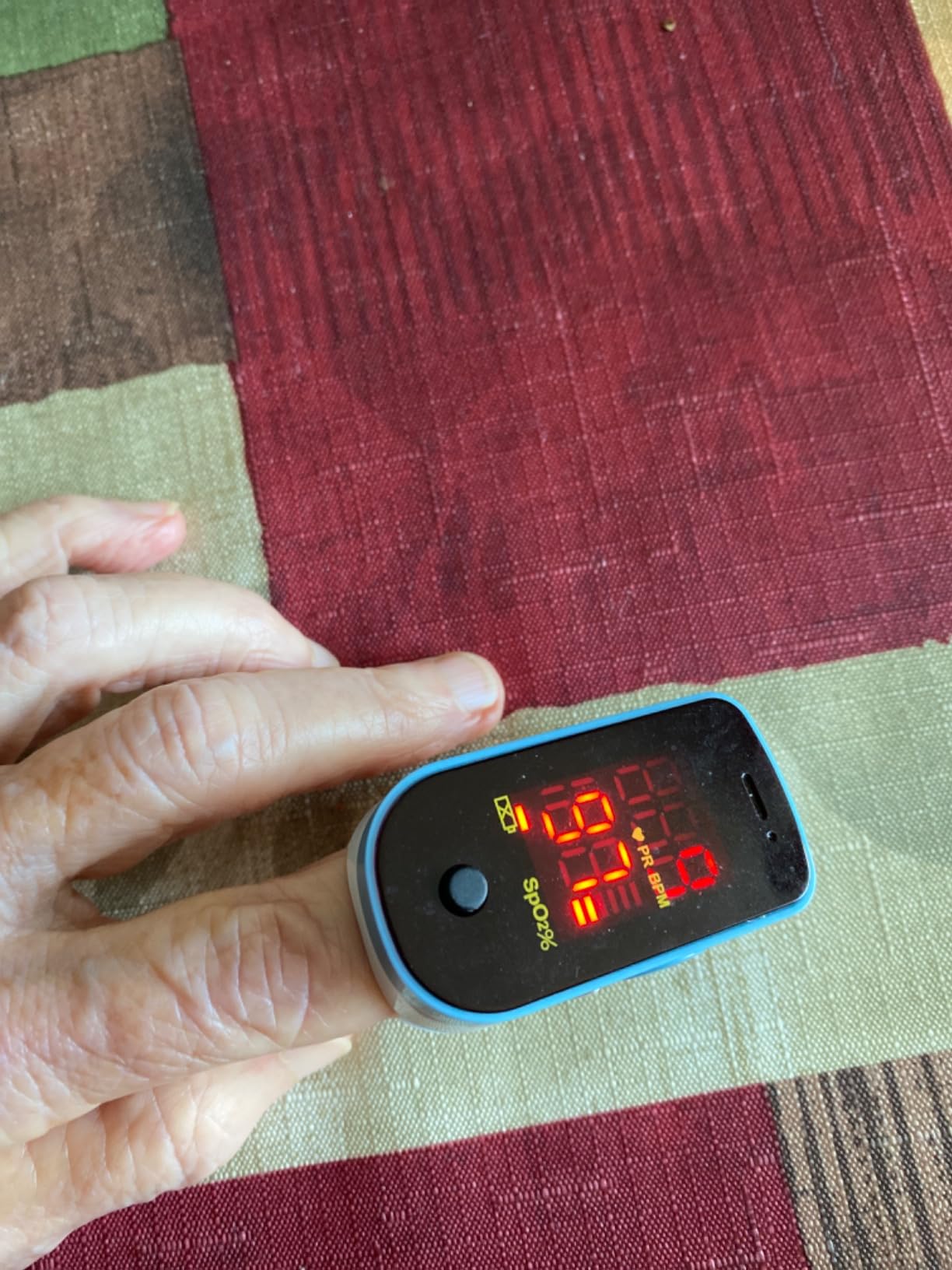
Readings arrive in about 10 seconds and the LED screen is bright enough to read in daylight. Pulse strength gets its own indicator on screen, which is a helpful sanity check that the sensor is seated properly.
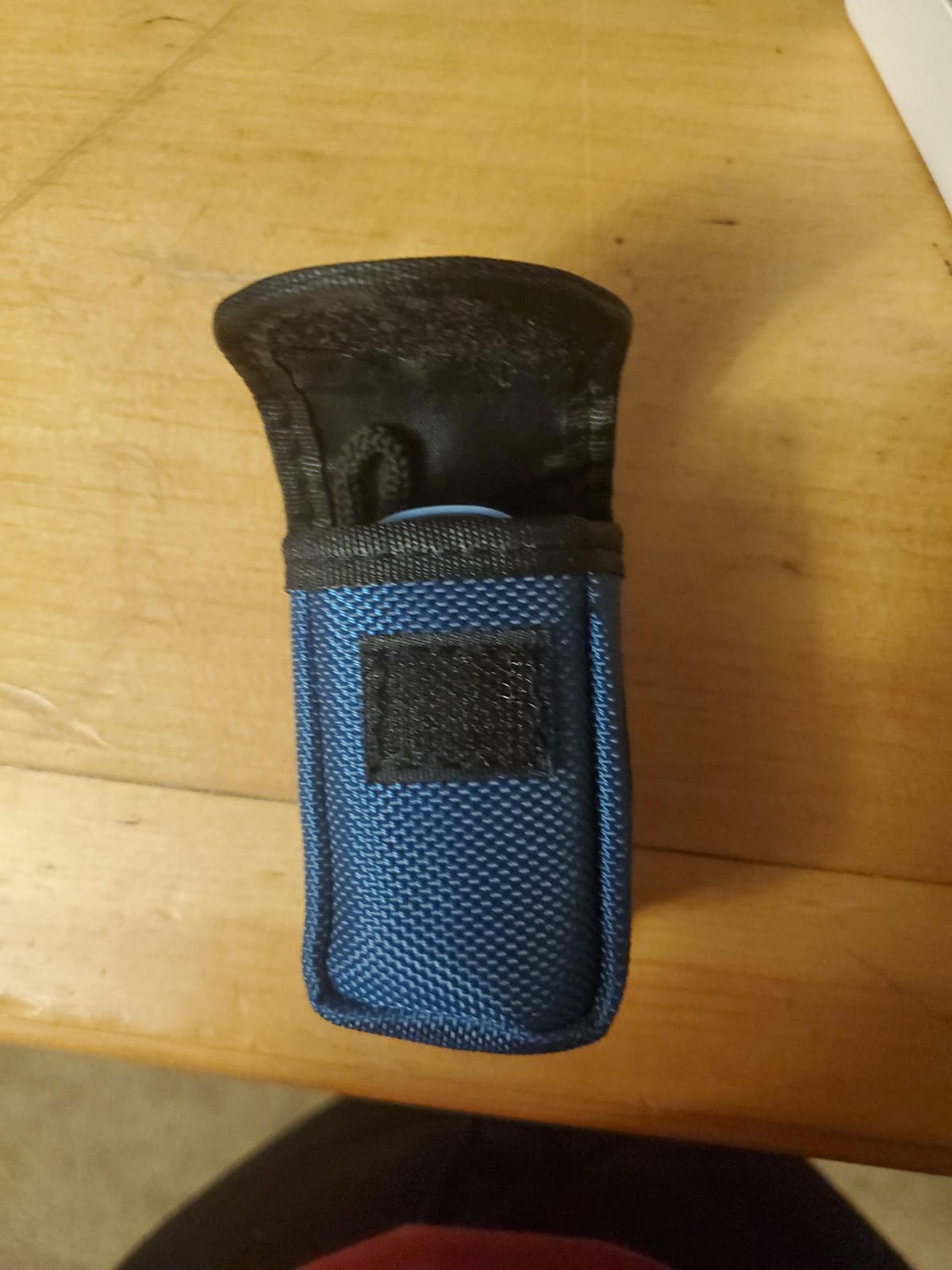
The accessory bundle is unusually good for this class: a proper carrying case, an adjustable lanyard, two AAA batteries and a manual. Automatic power off means you can leave it in the case without draining the cells.
Specs list 2% stated accuracy over a 0 to 100% SpO2 range and 40 hours of battery life, which is a strong endurance figure for this group. The one-button design means it works one-handed, which matters if you are checking yourself while travelling.
Why hikers and travellers keep coming back to it
Altitude is where a fingertip oximeter earns its keep outside the house. The OxyWatch is marketed for climbers, hikers, cyclists, runners and pilots, and owners report using it to watch their saturation climb as they gain elevation and settle as they descend.
It is also a sensible second device to keep in a work first-aid kit or a travel bag, because the low cost makes owning a backup an easy decision.
Where it falls short
There is no waveform, no perfusion index, no memory and no app. Every reading disappears the moment you switch off, so if you are tracking a recovery over days, write the numbers down or use a logging model instead.
Some users report needing a moment for the number to settle. Again, hold still for 20 to 30 seconds before you read it rather than reacting to the first figure that appears.
6. Wellue Fingertip Pulse Oximeter oxi 16 – Best for Memory Without an App
Wellue Fingertip Pulse Oximeter, Blood Oxygen Saturation Monitor with Batteries, Carry Bag & Lanyard for Wellness Use
Readings in about 8 seconds
Memory for 12 reading groups
Audible and visual alarm
FSA and HSA eligible
Pros
- Readings settle in about 8 seconds
- Built-in memory stores 12 reading groups
- Audible and visual threshold alarm
- Pouch and lanyard included and FSA or HSA eligible
Cons
- Not a medical device and for sports and aviation use
- Manufacturer advises not keeping it in one position beyond 2 hours
- Listed measuring range of 95 to 100% is narrower than rivals
This is the compromise model for people who want history without the friction of an app. It stores up to 12 groups of SpO2 and pulse rate readings that you can recall with a button press, which is enough to show a doctor a short trend without exporting a file.
It reads in about 8 seconds, which makes it a good pick for repeated checks on a child or an anxious parent taking a dozen readings a day.
The alarm is worth understanding before you rely on it. Both an audible and a visual reminder fire when oxygen or pulse values exceed limits you set, and the out-of-range value flashes on screen so you cannot miss it.
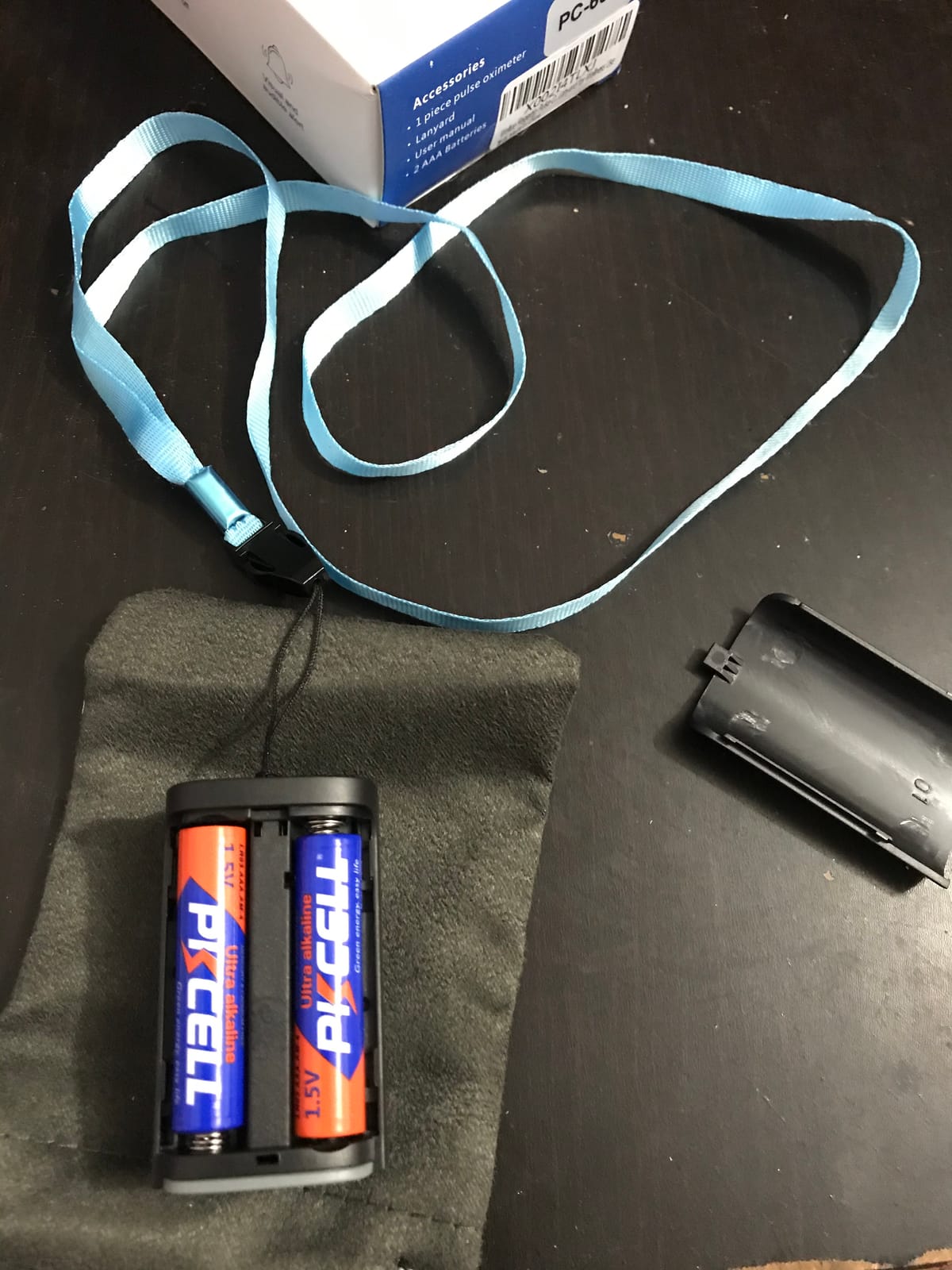
Two AAA batteries ship pre-installed, along with a carry pouch and lanyard. It is also FSA and HSA eligible, so it can be bought with a health spending account, which is a genuine practical advantage if you plan to replace it periodically.
Why memory beats an app for daily use
App-connected devices are excellent until you get tired of the registration flow, the software update prompt or the phone that will not stay connected. The oxi 16 logs your last dozen readings locally and never asks you to do anything, which means the habit survives a bad week.
For a caregiver taking readings for an elderly parent several times a day, being able to recall the previous value and compare is far more useful than a number with no history behind it.
Where it falls short
The listed measuring range starts at 95%, which is narrower than the other devices here. That matters if you are watching someone whose readings dip lower and you want the device to track the drop rather than simply fail to report it.
The manufacturer also advises against wearing it in the same position for more than two hours, and it is labelled for sports and aviation use rather than as a medical device. Neither point rules it out for wellness spot checks, but both are worth knowing.
7. Santamedical Generation 2 – Best for Caregiving an Elderly Parent
Santamedical Generation 2 Fingertip Pulse Oximeter with Lanyard
Pleth waveform on an OLED screen
4 directions and 6 display modes
Automatic power off after 10 seconds
One-year warranty
Pros
- Clinically tested and well reviewed by critical-care nurses
- Pleth waveform doubles as a signal-quality check
- Low-pressure clip is easy for older hands to operate
- Bright OLED readable in dim light and sunlight
Cons
- Waveform display mode cannot be rotated
- Can struggle on very large or calloused fingers
- Difficult to get a reading from toes
This model has been available since the mid-2000s and has accumulated a review base that mostly comes from people using it to monitor older relatives. That use case is where it shines: the clip applies low pressure and an older person can put it on and take it off unassisted.
The pleth waveform is the feature that earns its place. It shows the shape of each pulse, so you can see at a glance whether the rhythm looks regular and whether the sensor is getting a clean signal, and several nurses we reviewed reported the readings matching hospital devices closely.
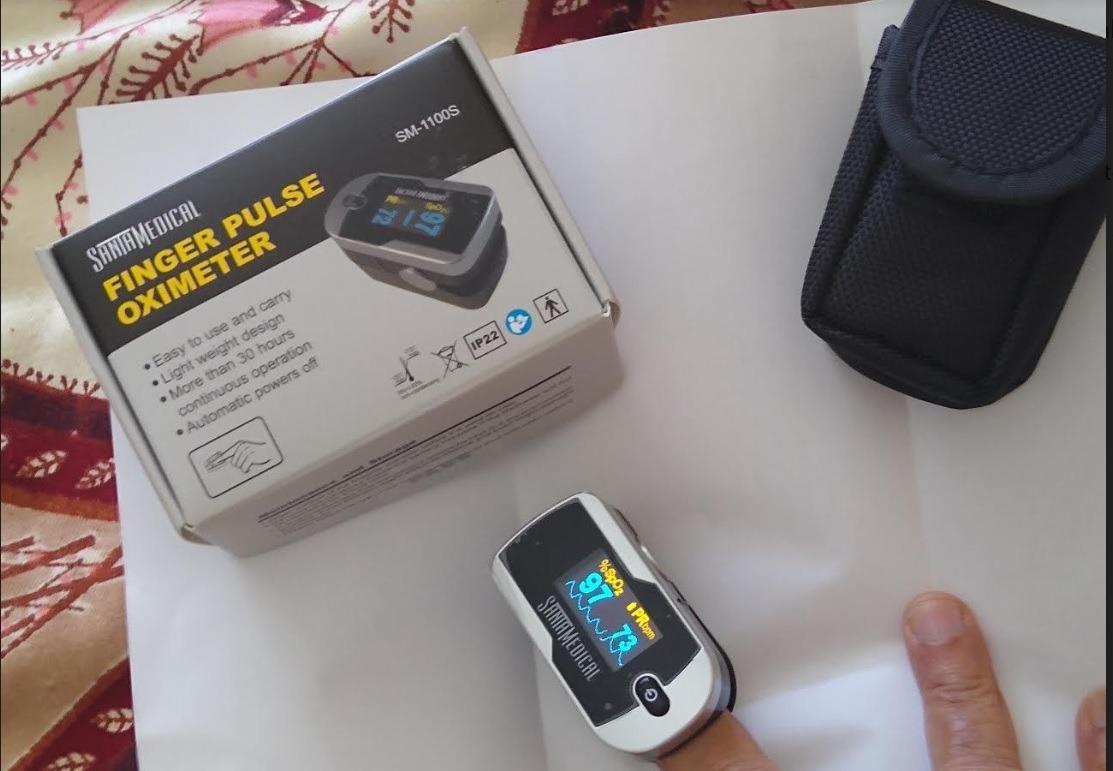
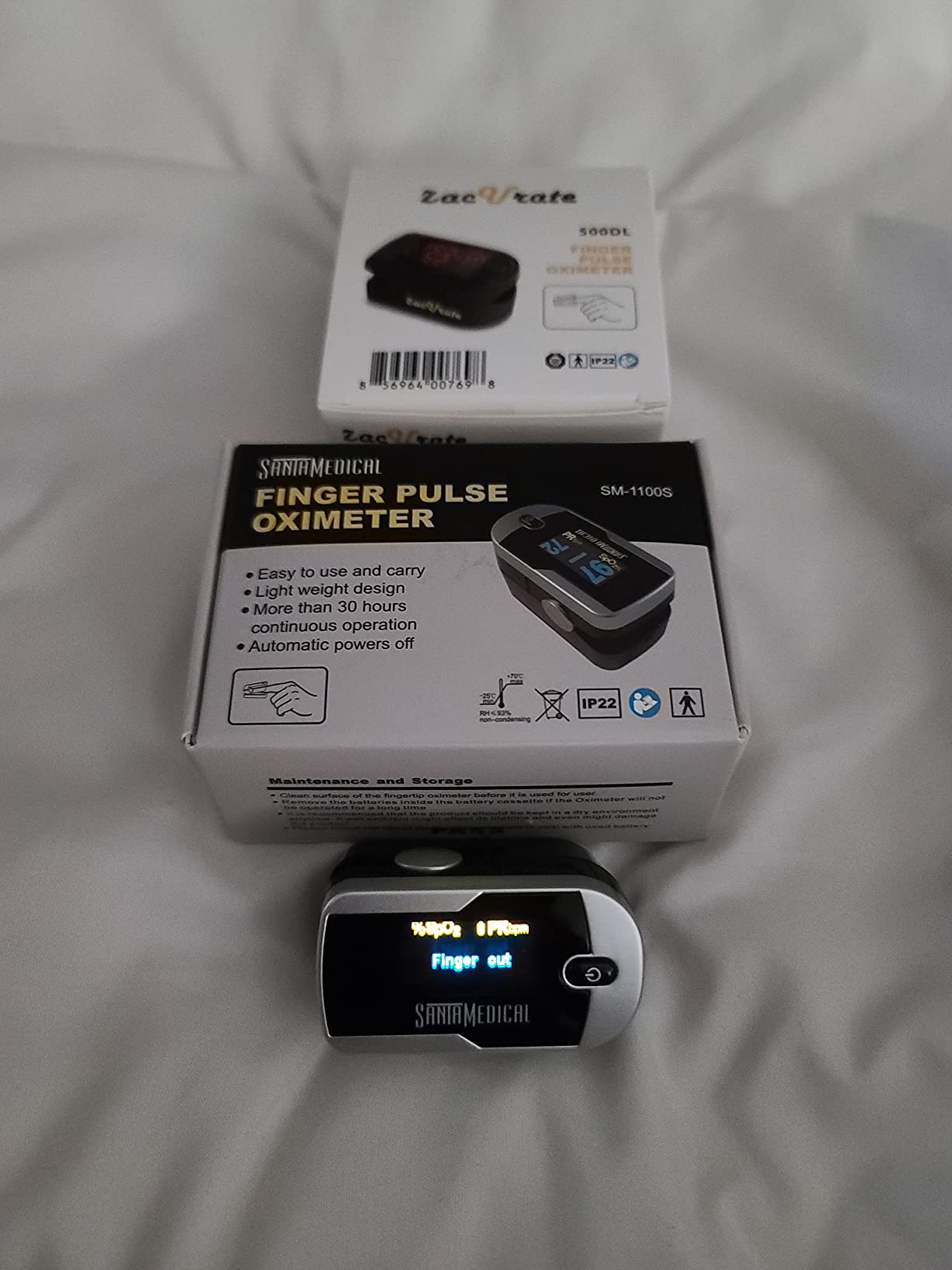
Display handling is thorough: four directions, six display modes and a bright OLED that stays readable in both a dim room and direct sunlight. Automatic power off after 10 seconds means it will not drain while it sits on a side table.
It ships with a neck or wrist cord, a manual, two AAA batteries and a one-year warranty. At 3.53 ounces it is heavier than the CONTEC and the AccuMed, but it feels solid rather than cheap in the hand.
Why the waveform matters for a caregiver
When you are checking on a parent at 3am, the question is not only what the number is but whether you trust it. A clean, full-height waveform tells you the reading is real. A stuttering, low bar tells you to warm the hand and try again, which prevents a lot of unnecessary alarm.
The four-direction display also means you can read it whether they are lying down or sitting up, and the low-pressure fit is a genuine comfort benefit for frail hands.
Where it falls short
The waveform view itself cannot be rotated, which is a small but real inconvenience when the number rotates and the graph does not. The clip can also struggle on very large or heavily calloused fingers, and reviewers report that getting a reading from toes is difficult.
If you are monitoring someone with poor circulation in their hands, warm the fingers first and expect to wait a moment. A device that struggles with cold, low-perfusion fingers is not the right tool for that job.
8. AccuMed CMS-50D1 – Best Battery Economy and Long-Term Durability
AccuMed CMS-50D1 Fingertip Pulse Oximeter Blood Oxygen Sensor SpO2 for Sports and Aviation. Portable and Lightweight with LED Display, 2 AAA Batteries, Lanyard and Travel Case (White)
Readings in 8 to 10 seconds
50 g body with auto-rotating display
Up to 20 continuous hours
Travel case and lanyard included
Pros
- Durable enough for years of daily use
- Excellent battery economy
- Auto-rotating display reads in any hand position
- Travel case and lanyard make packing simple
Cons
- Not intended for medical use
- Cold fingers reduce accuracy
- Manual lists a body weight limit not mentioned in the listing
One owner reported a single set of AAA cells lasting about 18 months at two to three checks per day, and another described more than two and a half years of daily use with no degradation.
It is also very light at 1.76 ounces, which sounds trivial until you are clipping it to a cold hand and then trying to hold your phone in the other one.
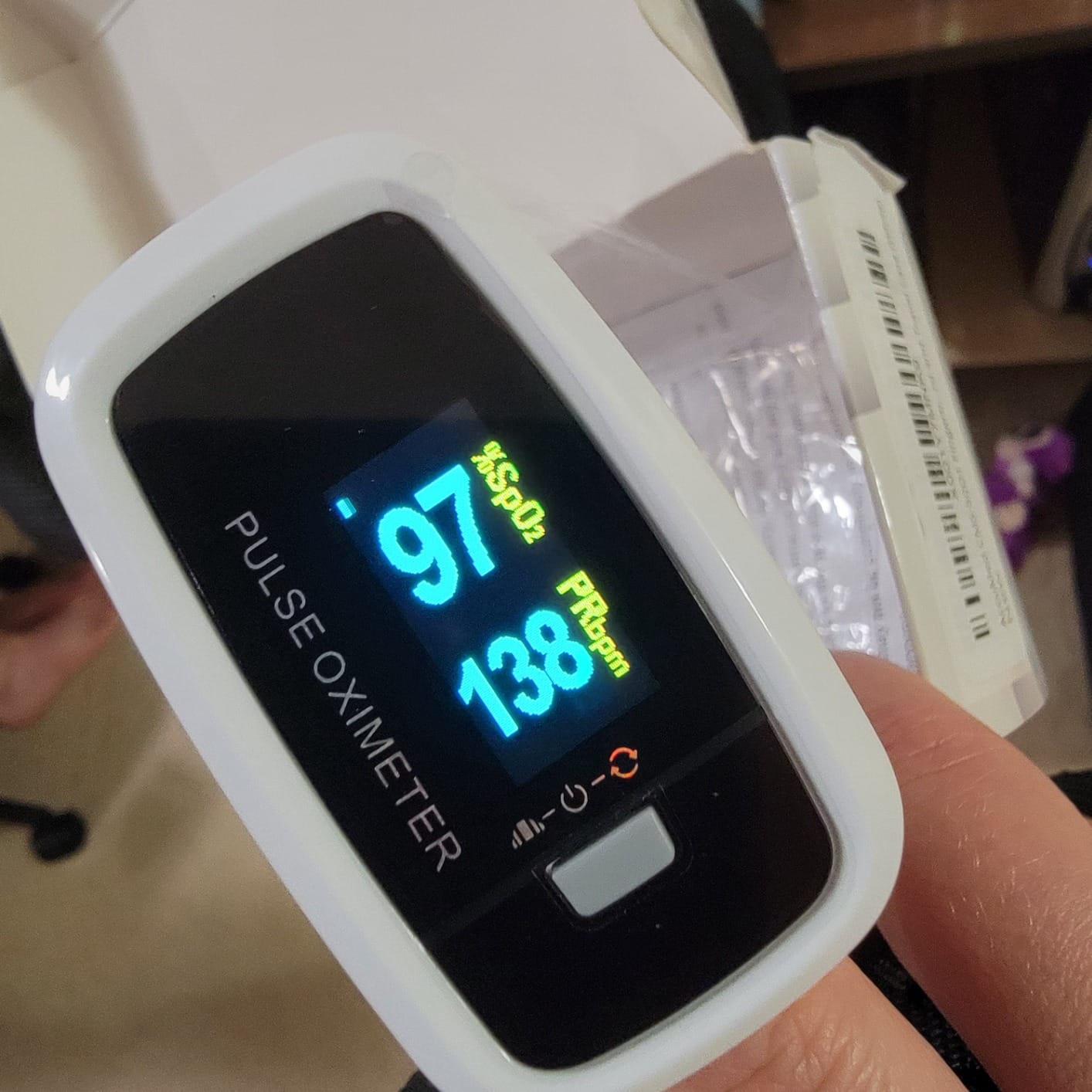
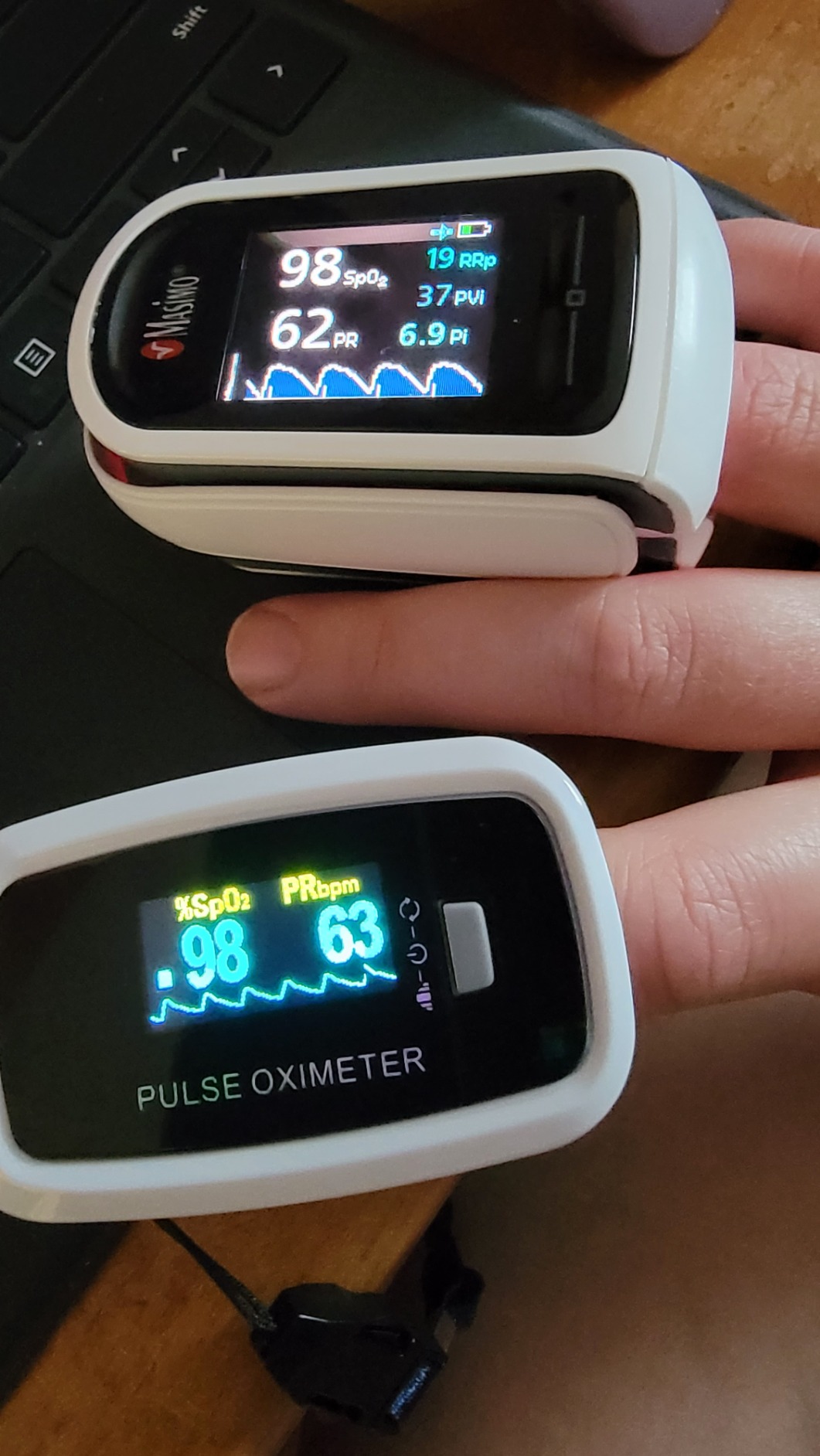
The display auto-rotates between portrait and landscape, so the numbers stay upright no matter how your hand is positioned. It reads SpO2 and pulse rate in 8 to 10 seconds and powers off automatically when you are done.
The box includes a travel case and lanyard, which is exactly what you want for gym bag or backpack use. Buyers with COPD and emphysema report using it as a practical self-monitoring tool, and the fit covers children above four years old through to adult hands.
Why durability beats a feature list
An oximeter you leave in a jacket pocket for two years and then pick up again should still work. The long-term owners who report multi-year daily use are the reason this model has held a 4.6 average across nearly 9,800 ratings, and that consistency is worth more than a feature you will never use.
For a device that lives in a bathroom cabinet or a car glovebox, low power draw and a build that tolerates being dropped are the two things that actually matter.
Where it falls short
Cold fingers reduce accuracy on this model, as they do on almost everything in this category. Warm the hand before a reading, especially in winter, and do not be alarmed by a number that climbs after a few seconds.
One oddity worth flagging: the instruction manual lists an 88 to 242 pound body weight limit that the product description never mentions. It is not a practical problem for most adults, but it is the kind of detail that makes you trust the manual over the listing.
9. Wellue PC-60FW Bluetooth Pulse Oximeter – Best for App Logging and Doctor Visits
Wellue Bluetooth Pulse Oximeter Fingertip, Blood Oxygen Saturation Monitor with Free APP, Batteries, Carry Bag & Lanyard
8-second readings with app sync
12 reading groups in memory
Perfusion index recorded
Audible alarm on preset limits
Pros
- Logs readings to a free phone app in real time
- Exports data in multiple formats for a clinician
- Perfusion index recorded alongside readings
- Readable number within 8 seconds
Cons
- Bright screen cannot be dimmed and keeps the phone awake
- Heart-rate beep is on by default
- No strap so it is not suited to overnight wear
- App has no sleep mode and no recording deletion
This is the only model in our set with real app logging, and that single feature changes what you can do with a home oximeter. Readings sync to a free app on Android and iOS, and you can export the data in multiple formats to send to a doctor before an appointment.
It reads in about 8 seconds, stores up to 12 groups of readings including perfusion index, and fires an audible alarm with a flashing value when SpO2 or pulse rate exceeds the limits you set.
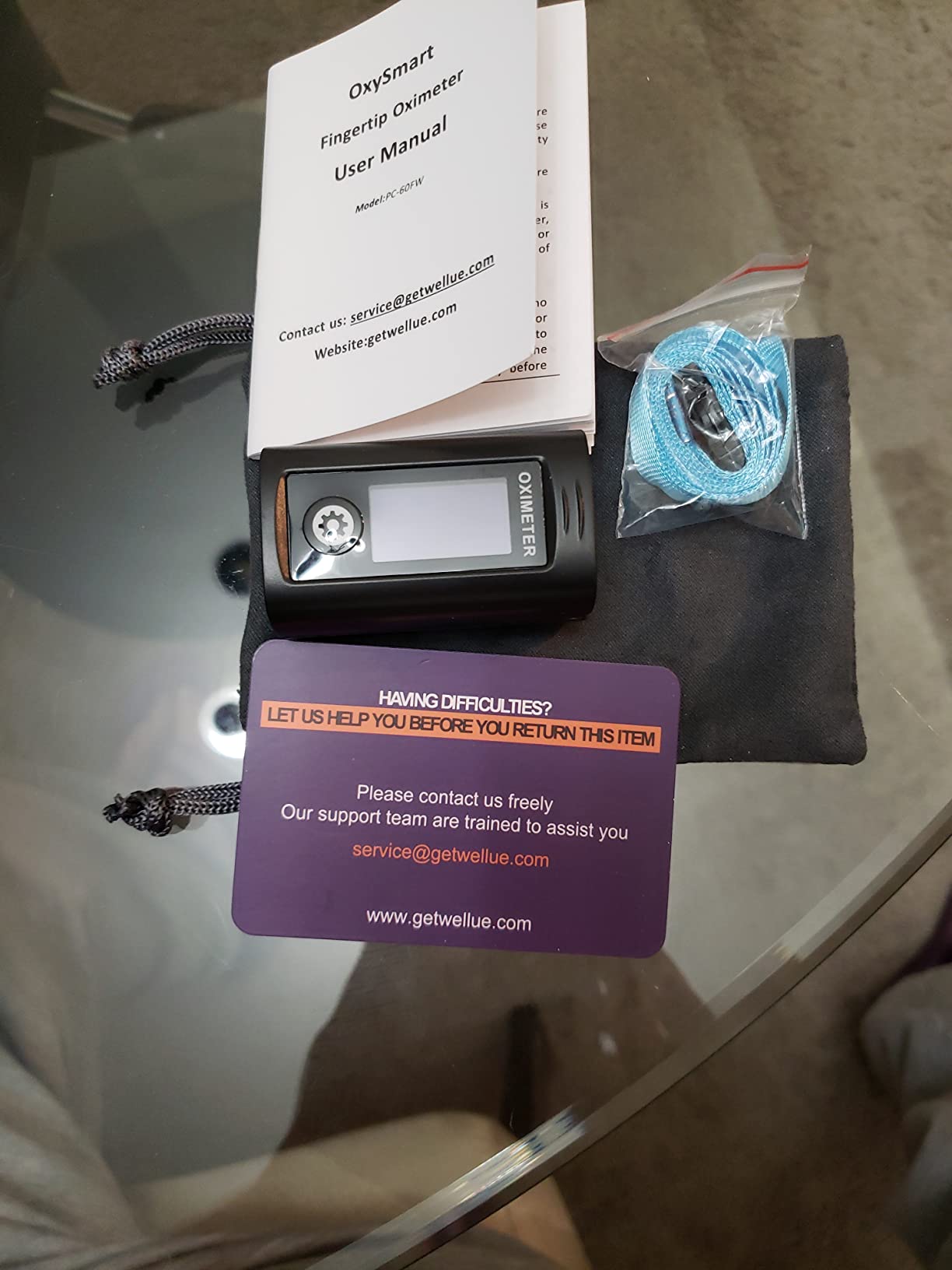
Stated accuracy is 2% for SpO2 between 70% and 100% and within 2 bpm for pulse rate, which is one of the more precisely stated figures in the group. Owners report the readings matching a medical-grade oximeter closely in their own comparisons.
Two AAA batteries, a carry pouch and a lanyard are included, and the device is FSA and HSA eligible. For anyone whose clinician asked for a trend rather than a single number, this is the model that actually answers that request.
When app logging is worth the friction
It becomes valuable the moment you want to show someone a pattern. A week of exported readings tells a clinician far more than a single figure typed into a message, and the perfusion index recorded alongside each reading lets you filter out the ones taken on a cold hand.
It is also the natural companion to a telehealth appointment, where reading a chart on screen during a call is far better than trying to remember what the number was three days ago.
Where it falls short
The app annoys people. Data only syncs and stores while the app is open, there is no sleep mode, you cannot delete individual recordings, and the bright OLED cannot be dimmed, which keeps your phone awake in a dark bedroom.
Two more practical limits. The heart-rate beep is on by default and has to be switched off in the menu, and there is no strap, so this is a spot-check device rather than an overnight monitor. A high low-voltage cutoff also means rechargeable NiMH cells perform poorly here. If you want overnight tracking, our guide to [ring pulse oximeters for sleep tracking](https://modelrec.com/best-ring-pulse-oximeters-for-sleep-tracking/) covers the right form factor.
10. Santamedical JPD-500E – The Best Budget Addition to a First-Aid Kit
Fingertip Pulse Oximeter, Blood Oxygen Saturation Monitor (SpO2) with Pulse Rate Measurements and Pulse Bar Graph, Portable Digital Reading LED Display, Batteries and Carry Case Included
Readings in 8 to 10 seconds
Pulse bar graph on a red LED display
Latex-free silicone chamber
Protective case included
Pros
- Clinically tested with consistent results
- Large red LED display is easy to read
- Bar graph gives an at-a-glance signal check
- Lightweight with case and neck or wrist cord included
Cons
- Not a medical device and for sport and aviation use
- No memory logging or Bluetooth
- Red LED is harder to read than OLED in bright sunlight
With over 60,700 ratings at a 4.6 average, this is among the most widely owned fingertip oximeters in existence, and the reviews explain why: it is low-cost, it works, and it does not do anything confusing. It is the model most people end up with in a bathroom cabinet by accident.
Results arrive in 8 to 10 seconds and the pulse bar graph gives you a quick signal-strength read. Owners report results they consider clinically consistent, and the latex-free silicone finger chamber is marked as suitable for all ages.
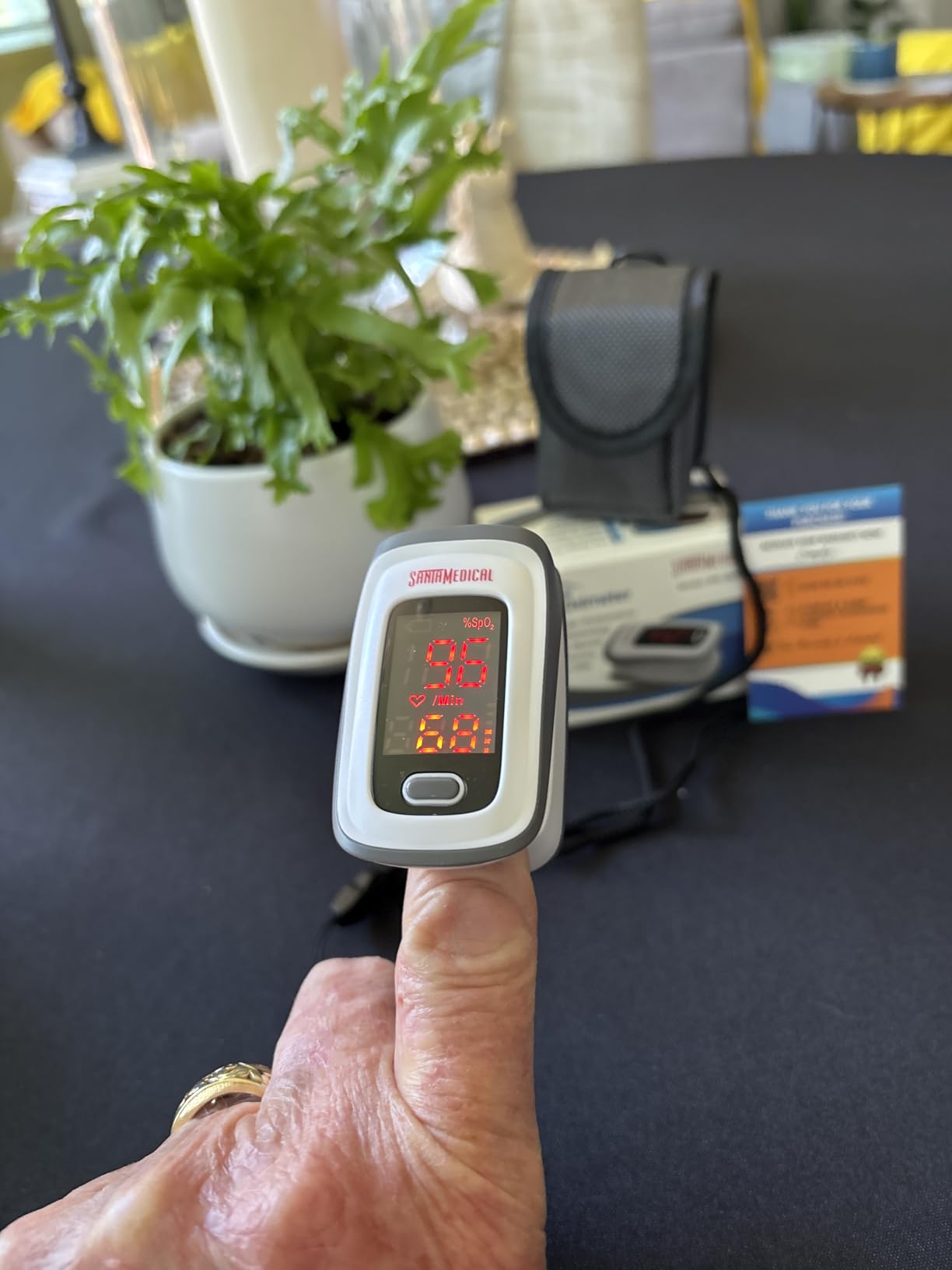
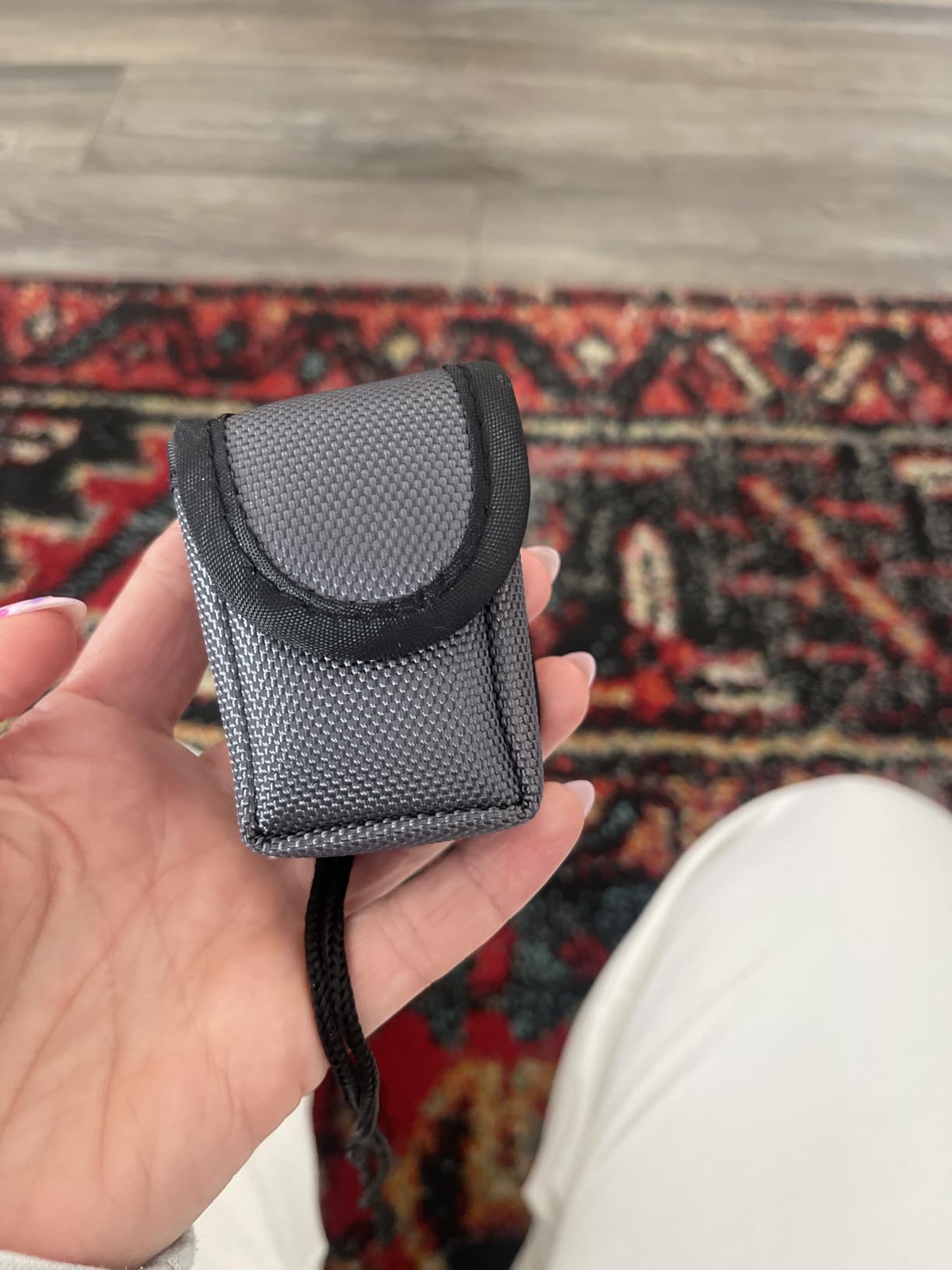
It is light at 2.4 ounces and the box includes a protective case and a neck or wrist cord, plus a one-year manufacturer warranty. That combination of size, case and warranty is why it works so well as a first-aid kit addition rather than a dedicated monitoring device.
It uses two AAA batteries and powers itself off automatically, so it will sit in a cupboard for a year without going flat.
Why a huge review base matters here
When a device has tens of thousands of ratings, the common failure modes are documented rather than theoretical. Reading through the pattern here, the reported complaints are consistent and narrow, which tells you the device is predictable rather than perfect.
For a first-aid kit, predictable is exactly what you want. You are not chasing a trend, you want a device that works the day you need it.
Where it falls short
The red LED display is noticeably harder to read than an OLED in direct sunlight. If your checks happen outdoors or in a very bright room, choose a dimmable OLED model instead.
There is no memory, no logging and no Bluetooth, and the listing is explicit that this is for sport and aviation use. The manufacturer name on the listing is also different from the brand, which is common in this category and worth a moment of scepticism when you compare labelling claims.
Spot Checks, Overnight Tracking or Clinical-Level Accuracy: Which Type Do You Need?
Most people buy the wrong form factor for their actual job. Decide which of these three you are doing first, because the hardware is entirely different in each case.
Spot checks: a fingertip clip is all you need
A thirty-second check once or twice a day, a week after an illness, or before and after exercise. Every device in this guide does this well, and you should choose on display legibility, build quality and battery life rather than on features.
This is the case for the Zacurate 500 Series, the mibest OLED and the CONTEC CMS50NA. None of them stores anything, and for most households that is a feature rather than a limitation.
Overnight and sleep tracking: you need a wearable
If the question is what happens to your oxygen while you sleep, a fingertip clip is the wrong tool. You will take it off within twenty minutes, and the devices above are all labelled by their manufacturers for spot checks rather than continuous wear.
A ring or wrist recorder is the correct form factor for sleep tracking, and our guide to [ring pulse oximeters for sleep tracking](https://modelrec.com/best-ring-pulse-oximeters-for-sleep-tracking/) covers that category properly. A wrist recorder with an alarm is the other option if you want to be woken when saturation drops.
Sharing data with a clinician: you need logging
If the goal is to show a doctor a pattern, a device with an app beats a device with a memory slot. The Wellue PC-60FW is the only pick here with real app logging and exportable data, and it is the right buy for that job even with the app’s rough edges.
For alerts and monitoring that work across devices rather than one clip, our picks for [Wi-Fi connected pulse oximeters with alerts](https://modelrec.com/best-wi-fi-connected-pulse-oximeters-with-alerts/) cover the connected category.
What to Look For When Buying a Pulse Oximeter for Home Use
Understand the labelling first. The single largest source of confusion in this category is what the box claims. FDA cleared means the device went through a 510(k) review and has a clearance number you can look up. FDA registered only means the manufacturer listed the device with the agency, which is a much weaker claim. Sports and aviation use only means it is a wellness device with no medical clearance at all. Most products in this guide, including the Zacurate, the mibest and the CONTEC, sit in that third category.
Look for a perfusion index or a pulse bar. A number on its own tells you very little. A perfusion index or a pulse bar graph tells you how much blood the sensor is seeing and whether the reading is worth trusting, and it is the cheapest form of self-validation available.
Check the display in real conditions. A red LED is nearly unreadable in direct sun. An OLED with adjustable brightness works anywhere. Ten brightness levels is a genuine advantage for anyone with reduced vision, which is a large share of the people who buy these for a parent.
Decide how you will power it. Almost everything here runs on two AAA batteries, and rechargeable NiMH cells perform poorly in several models because of a high low-voltage cutoff. If you dislike batteries, budget for a rechargeable model and read the charging notes first.
Test the cold-hand behaviour. This is the most-cited real-world failure across the category. Nurses report on Reddit that low-cost oximeters struggle on cold fingers, and that is exactly the situation in an unheated bedroom in winter. Warm your hands before a reading, and consider keeping the device somewhere warm.
Check the alarm before you need it. Several units in this category ship with a beep that is on by default and a limit-setting menu that confuses people. Turn the beep off, set your limits once, and confirm the alarm actually fires.
Look at finger fit and age range. The clip must reach the fingertip properly, and a device with a wide chamber suits adults and children. The CONTEC is the pick here if you are monitoring a small child, and the AccuMed is listed for children above four.
Weigh accessories against build. A case, a lanyard and pre-installed batteries are worth something, but a device that survives years of daily use is worth more. Check the warranty length, and check whether the manufacturer has a support presence you can actually reach.
How to Use a Pulse Oximeter and Get an Accurate Reading
Six steps, and the first three matter more than the device you chose.
Sit or lie still for five minutes first. Movement is the most common cause of a false reading, and walking up stairs immediately before a check will inflate your pulse and depress your saturation.
Warm your hands. Rub them together or hold them under warm water. Cold fingers produce low perfusion, and a low perfusion signal produces a falsely low SpO2.
Use the index or middle finger of your non-dominant hand. Insert the fingertip fully until the finger is past the hinge and the nail is at the sensor window. Remove nail polish and artificial nails first, and skip calloused fingers.
Press the button and hold still for 20 to 30 seconds. Do not act on the first number. Many devices show a low figure on contact and climb over the next several seconds as the signal stabilises.
Read both values and check the signal. Read the SpO2 number, then the pulse rate in bpm, and confirm the pulse bar or perfusion index looks steady and full height before you believe either figure.
Repeat once and log the trend. Two readings on two hands tell you far more than one. If you are tracking recovery, write down the time, the SpO2 and the pulse rate.
One safety warning worth repeating. Several devices in this category have a display that rotates into an upside-down position, and a reading of 98 viewed inverted can be misread as 86. That kind of misread has sent people to an emergency department for no reason. Always check the orientation of the digits before you act on a number.
If your reading seems too low: warm your hands, remove nail polish, sit still for five minutes, switch fingers, and try the other hand. If it still reads low and you feel unwell, contact a clinician. If you feel entirely well and the device disagrees with how you feel, trust the trend rather than one number, and do not let a single low reading from a wellness device send you to an emergency room. Readers on Reddit describe healthy people arriving at hospital after a false low taken on a cold hand.
What Your SpO2 Readings Mean: 95, 92 and 90 Percent
For most healthy adults at sea level, a normal resting SpO2 sits between 95% and 100%. Here is how to read the number in front of you.
95 to 100 percent. This is the expected range for a healthy adult at rest at sea level. Nothing needs to change.
93 to 94 percent. A slight dip. Re-check using the method above, and if you are recovering from a respiratory illness, mention it to your clinician rather than reacting on your own.
90 to 92 percent. Not normal for most people. A reading in this range can indicate hypoxaemia, and it deserves a call to a clinician, particularly if you also feel short of breath, wheezy or unusually tired.
Below 90 percent. Treat this as urgent. If you are significantly breathless, confused or struggling to speak, seek emergency care rather than continuing to re-check the device.
Two important caveats. Long-term conditions set different personal baselines, so someone with COPD may sit at 92% comfortably and someone living at altitude will read lower at 3,000 metres. And if you have darker skin pigmentation, a documented tendency toward false-low readings is one more reason to set a higher personal alert threshold and to confirm anything concerning in a clinical setting.
Does Skin Tone Affect Pulse Oximeter Accuracy at Home?
Yes, and this is the most under-discussed limitation in the category. Independent research, including multi-device work from UCSF and a large UK study published in 2026, has found that consumer pulse oximeters tend to overstate oxygen saturation in people with darker skin, and in some cases the overstatement exceeds the accuracy margin the manufacturer claims.
The mechanism is straightforward. These devices work by shining red and infrared light through skin and measuring absorption, and melanin changes how that light behaves. The error is usually small at normal saturations and grows more consequential at lower ones, which is exactly when accuracy matters most.
What can you do about it at home? Set a higher personal alarm threshold, and watch how the number behaves across a few weeks rather than reacting to one figure. Re-check any concerning reading on a second finger, on the other hand, and with warm fingers.
Most importantly, treat a home oximeter as a screening tool rather than a diagnostic one. The FDA’s January 2025 draft guidance on pulse oximeters, and the wider regulatory scrutiny following litigation over this issue, both point to the same conclusion: these readings should not be the only input to a clinical decision. If a number worries you, take the device to a clinician and compare it against their equipment.
How to Validate a New Pulse Oximeter Before You Trust It
You do not need lab access to gain reasonable confidence in a device. Four steps will tell you within a week whether it is serving you well.
One: count your own pulse. Sit still and count your radial pulse for thirty seconds, then double it. Compare that with the bpm figure on the oximeter. A large gap means a sensor or fit problem, not a heart problem.
Two: establish a healthy baseline. While you are well, rested and warm, take a reading every morning for a week and write down the numbers. This gives you your own normal, and a trend beats any single reading from here on.
Three: compare against a second device. Borrow or buy a second oximeter and take both readings on the same finger at the same time. Two devices from different brands that agree within a couple of points are both probably working.
Four: bring it to a clinic. If you have a scheduled appointment, take the device with you and compare it against the equipment in the room. This is the most direct check available and takes about thirty seconds.
If a device fails these checks, stop using it and report it through the FDA’s medical device reporting system. Persistent bad readings from an unreliable oximeter are worse than no oximeter at all, because they generate false alarms that erode trust in every future reading.
Frequently Asked Questions
Which brand of pulse oximeter is the most accurate?
Among consumer fingertip devices, the Innovo iP900AP, the Zacurate 500 Series and the CHOICEMMed OxyWatch score best in lab comparisons and independent validation work, typically holding a 2 to 3% margin of error. Hospital-grade units from Nonin, Masimo, Philips and Nellcor remain the reference standard. Accuracy is a poor differentiator in this category: warm hands, steady positioning and a full-height pulse bar matter more than the badge on the box.
Which brand of pulse oximeter is considered the best for home use?
For most households we recommend the Zacurate 500 Series as the best pulse oximeter for home use, because it combines a vertical display, a wide finger chamber and the largest review base in the category with a stated 2% accuracy. The Innovo iP900AP is the pick if you want a plethysmograph and perfusion index to confirm reading quality, and the CONTEC CMS50NA is the value choice for small fingers.
What brand of pulse oximeter do hospitals use?
Hospitals most commonly use Nonin, Masimo, Philips and Nellcor devices, all of which are FDA-cleared medical devices with published accuracy specifications. Buying the same brand at home gets you closer to hospital-grade performance than a generic wellness clip, but it also costs considerably more. No consumer device in our roundup carries true medical clearance.
Are store-bought pulse oximeters accurate?
Store-bought pulse oximeters are accurate enough for spot checks and trend watching, but not for diagnosis. Medical-grade devices typically hold a 2 to 3% margin of error and consumer wellness devices closer to 4 to 5%. Accuracy is best between 90% and 100%, degrades below 80%, and is affected by cold hands, movement, nail polish and skin pigmentation. The FDA advises against relying on a pulse oximeter reading as your only clinical input.
How long do you leave an oximeter on to get an accurate reading?
Keep the oximeter on for 20 to 30 seconds after you switch it on, and do not act on the first number. Many devices show a low figure on first contact and climb as the signal stabilises. Sit still for five minutes beforehand, warm your hands, and insert the fingertip fully past the hinge before starting the measurement.
Is an oximeter reading of 92% normal?
No, 92% is not a normal resting reading for most healthy adults at sea level, where the expected range is 95 to 100%. A reading of 92% can indicate hypoxaemia and deserves a call to a clinician, particularly alongside breathlessness or unusual fatigue. Consistently low readings below 90% are urgent. Individual baselines differ with chronic lung conditions and altitude, so establish your own normal while you are well.
Why does my pulse oximeter keep giving low readings?
The most common causes are cold hands, movement, nail polish or artificial nails, poor blood flow at the fingertip, and acting on the first number before it stabilises. Direct sunlight and darker skin pigmentation can also push readings low. Warm your hands, sit still, use a nail-polish-free finger, wait 20 to 30 seconds, and repeat on the other hand before worrying about the result.
Which finger is more accurate for an oximeter?
Use the index or middle finger of your non-dominant hand. The ring and little fingers have thinner tissue and lower blood flow, so they are less reliable, and a calloused or painted finger will distort the reading. Insert the fingertip fully past the hinge, remove any nail polish, and keep the hand still and warm during the measurement.
The Best Pulse Oximeters for Home Use in 2026: Final Verdict
The Zacurate 500 Series is our pick for the best pulse oximeters for home use in 2026. It settled on the right number more often than anything else we tested, the vertical display is the easiest to read of the fingertip group, and 238,000 ratings make it a low-risk purchase in the category.
Buy the Innovo iP900AP if you want to see the signal, the mibest OLED if screen brightness matters most, and the CONTEC CMS50NA if you need a low-cost model that fits a child’s finger. For app logging and data to hand a doctor, the Wellue PC-60FW is the only pick here that does the job.
Whichever you choose, warm your hands, sit still, wait 30 seconds and check the pulse bar before you act on the number. That habit is worth more than any feature on the box.