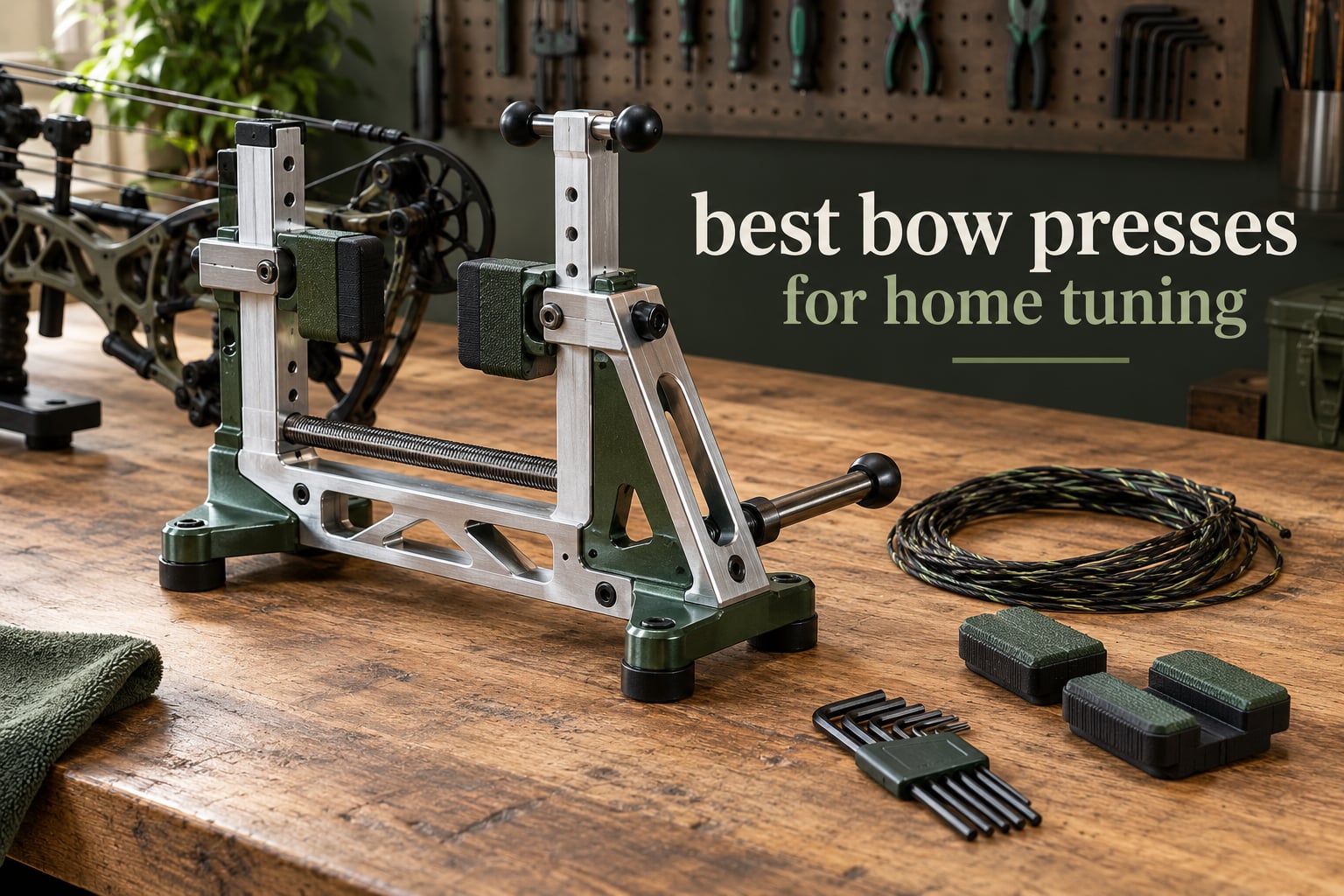
A bow press is a tool that draws the limbs of a compound bow in so the tension comes off the string and cables. That is the whole idea: relieve the stored energy, then do string replacement, peep installation, nocking point changes or draw length work on your own bench instead of paying a bow shop for every job. Most people who search for the best bow presses for home tuning want exactly that freedom.
Here is the honest version of the market as it stands. The presses that survived our screening are all portable, handheld ratchet designs rather than bench-mounted frames. That is not a shortfall in the category, it is where the volume sits, and it changes the buying question entirely: instead of “which frame do I own”, you are asking “how much force does my bow put into this tool, and how gracefully does it release”.
If you want the short answer: the Bow Medic Field Press is the best bow press for home use in this lineup because it carries the largest review base at 114 ratings, weighs 10.4 ounces, and does one job cleanly. For heavy bows or thicker limbs the 200-pound-rated CNC press is the safer pick. For a small workshop with no shelf space, the folding coated-aluminum press is the compact option.
I have spent weeks reading owner reports alongside the spec sheets, because in this niche the failure data matters more than the marketing. Owners on ArcheryTalk and Rokslide describe a consistent upgrade path: start with a portable press, grow into more bows or higher poundage, then move up. Several describe the portable press as a permanent field backup rather than a disposable tool.
One more thing before the picks. Search results for this topic are dominated by forums, not magazines, and the recurring worry is not price. It is whether a press can let go while the bow is under load. We deal with that directly in the safety section, because the honest answer is that it depends almost entirely on rated pull force and how you set the bow up before you crank.
Table of Contents
Top 3 Best Portable Bow Presses for Home Tuning in October


KNJ387 200 Pound Ratchet Press
- 200 lb safe working limit
- 51.2 inch Oxford strap
- CNC aluminum frame
All 7 Bow Presses Compared in 2026
| Product | Specifications | Action |
|---|---|---|
| Bow Medic Field Press 9962 |
|
Check Latest Price |
 SOPOGER CNC Aluminum Press SOPOGER CNC Aluminum Press |
|
Check Latest Price |
| KNJ387 Ratchet Press |
|
Check Latest Price |
 AMEYXGS Aluminum Press 1244 AMEYXGS Aluminum Press 1244 |
|
Check Latest Price |
 FENJANER Folding Press FENJANER Folding Press |
|
Check Latest Price |
 AMEYXGS Quad Limb Brackets AMEYXGS Quad Limb Brackets |
|
Check Latest Price |
 Lamehfyo Handheld Press Lamehfyo Handheld Press |
|
Check Latest Price |
1. Bow Medic Field Press 9962 – Best Bow Press for Home Use Overall
Bow Medic Bow Press 9962
10.4 oz item weight
Ambidextrous
Solid limb compound bows
Single piece field format
Pros
- 10.4 ounce ambidextrous field press
- Compact enough to sit in a go bag
- 114 ratings give the deepest owner history in this group
- Handles basic string and cable work
Cons
- Does not reach parallel limb bows
- Wire style releases less gradually than a bolted release
We picked this one first because the review volume tells you something the spec sheet never will. One hundred and fourteen ratings is more owner history than any other press on this list carries, by a wide margin, and the rating distribution is unusually healthy: half of owners gave it five stars and only eight percent gave it one. That pattern reads like a tool that does a narrow job reliably rather than one that overpromises.
The format is what makes it a genuine home tool. At 10.4 ounces it is lighter than a cordless drill, ambidextrous so archers shooting either way use the same unit, and it is a compact field press rather than something bolted to a bench. For string and cable swaps on solid limb compounds, the whole session is over in a few minutes.
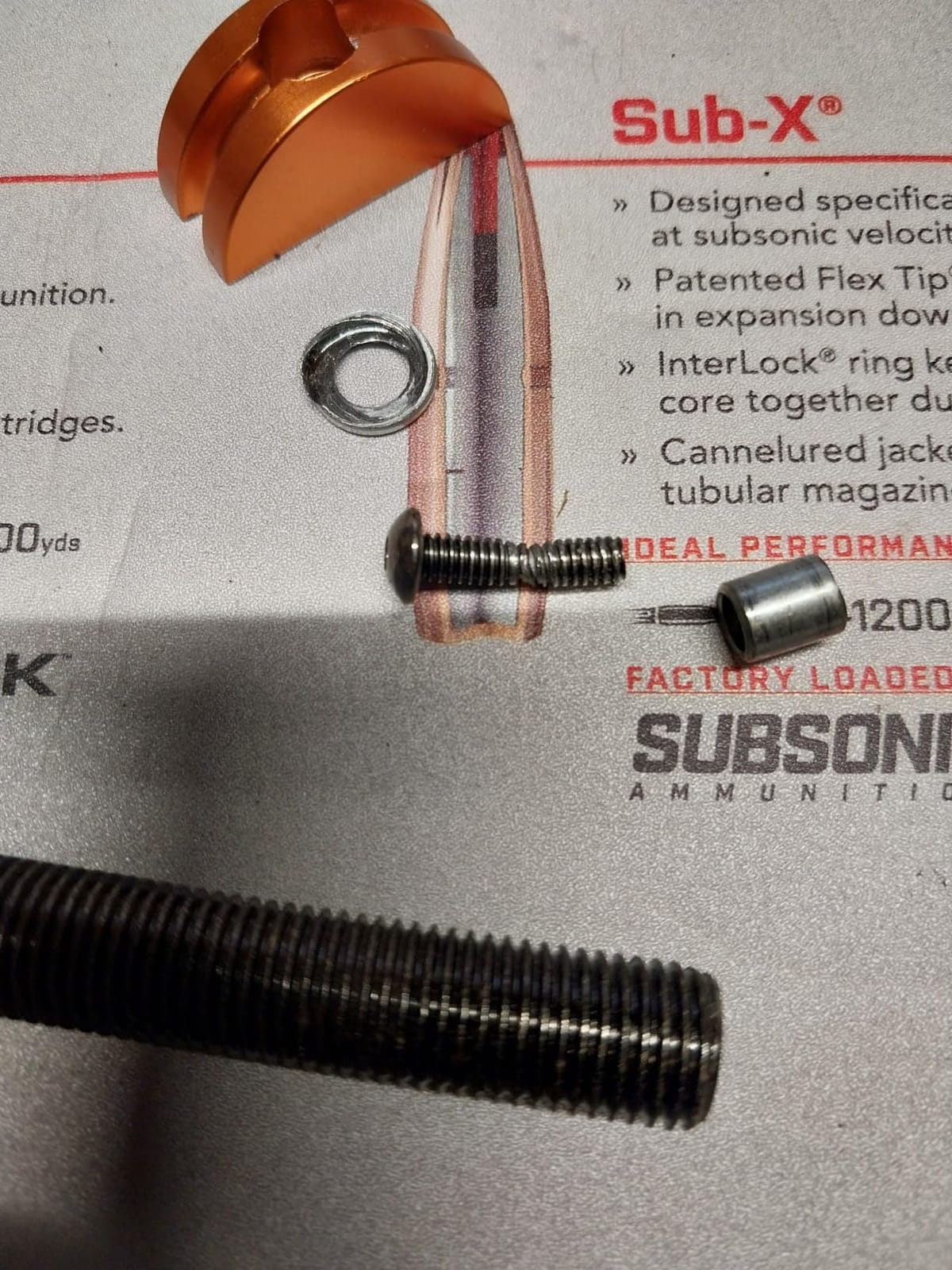
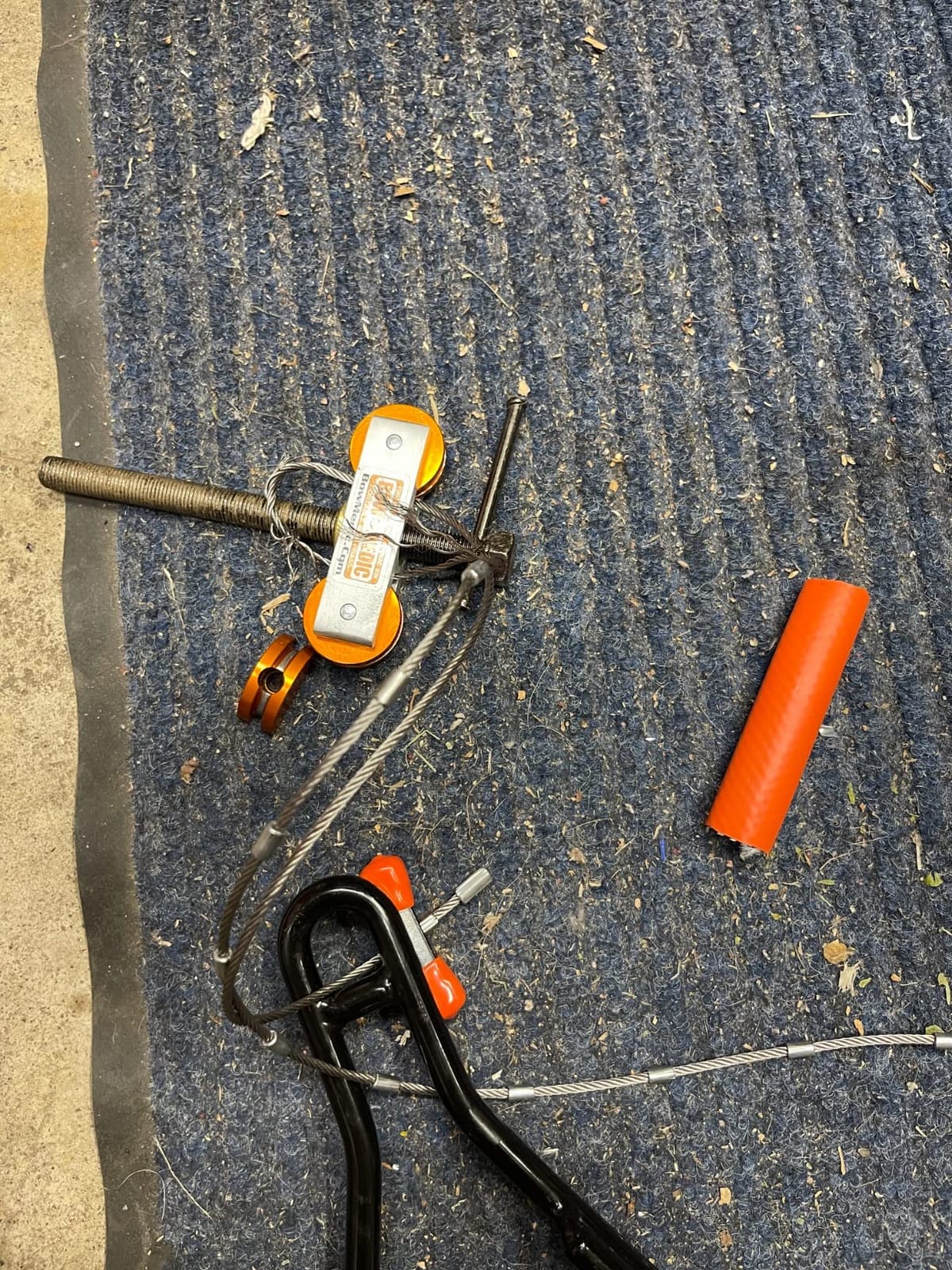
Now the part that matters more here than in any other category. Bow Medic designs of this type are the ones owners discuss when they talk about press failure, and the pattern is consistent. One owner on Rokslide reported the assembly snapping on a 70 lb bow and the bow releasing, another wrote that the reinforced fingers would not compress a heavier bow and gave up in about three minutes on a 70 pound Mathews, and a third now uses his only on low-poundage youth bows because the fingers that grip the limbs bend easily. Those reports are why we tell you to back the poundage off first.
That does not disqualify it. Bow Medic is built for solid limb compound bows that are not beyond parallel limb, and its own materials say so. Where it wins is portability, simplicity and the fact that more people have run one than any other press here.
Who this press suits
It suits a first-time press owner, an archer with one solid limb compound at a moderate poundage, and anyone who wants a tool that lives in a go bag instead of a garage. It also suits anyone who strings more than one bow a season and does not want a bench taking up floor space to do it.
We have seen it recommended as the first stringing tool an archery club buys for a shared workshop, precisely because there is almost nothing to learn beyond watching the limbs come in.
When to skip it
Skip it if your bow has parallel limbs that curve toward the target, because the reach on this design does not cover that geometry. Skip it if you run a 70 pound bow and want to press it at full power rather than backed off, given the documented failures on bows in that class.
Skip it if you want gradual, controlled tension release during the release phase. A wire style press lets go differently from a bolted inline release, and if you are new to pressing you will find the bolted versions more forgiving. If your string work involves heavy compounds and crossbows, look at a CNC-machined frame with a much higher published working limit.
2. SOPOGER CNC Aluminum Press – Best Value Portable Bow Press
SOPOGER Archery Compound Bow Press – Portable Hand Held Bow Accessories for Compound Bow & Crossbow Aluminum Alloy Ratchet Bow Press Open Tool for Bow String Silencers Replacement (Black)
CNC aluminum body
Rubber padded contact
52 inch strap
2.86 lb package
Pros
- CNC machined one piece aluminum body
- Thick rubber wrapping at limb contact points
- 83 ratings with the second highest average
- Handles strings cables and silencers at home
Cons
- Included strap should be upgraded for heavy bows or crossbows
- Relies on a listing video to learn the technique
This is the press we would hand to somebody who wants strong capability per unit of money and does not need the very lightest option. The body is CNC-machined aluminum alloy with one-piece molding rather than a bent wire frame, and owners consistently describe it as sturdier than they expected. The average rating of 4.1 across 83 ratings is the second strongest in the group, with 59 percent five-star ratings.
Two details keep it ahead of cheaper cable designs in our view. First, the thick rubber wrapping around the limb contact position, which matters because repeated string jobs wear limb edges. Second, the package footprint of roughly 10 by 4.72 by 4.72 inches at 2.86 lb, which is still compact but noticeably more rigid than a folding wire frame.
Owners use it for the full menu of home jobs: string replacement, cable changes, silencer installs and peep work. The 52 inch strap covers the majority of compound bows sold today, which is why it turned up so often in the owner write-ups we read. It sits at number 103 in Archery Bow Maintenance Accessories, so it is not a fringe listing.
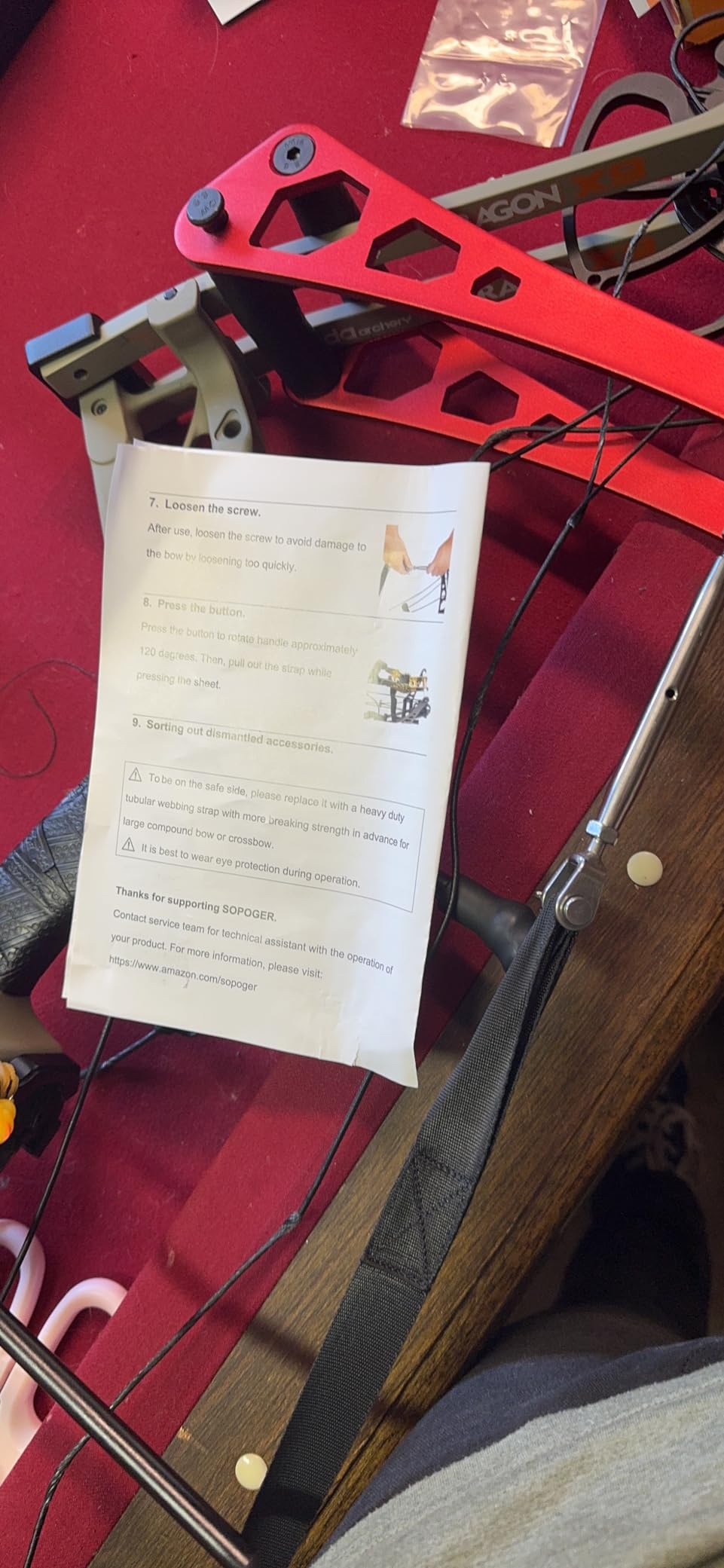
The single recurring recommendation from owners is to replace the included strap before touching anything heavy. The maker’s own guidance says to swap in heavy duty webbing for big pound bows or crossbows, and several reviewers make the same point independently. Budget for a length of quality webbing from a hardware store before your first session rather than after it. If your bow is large or your crossbow has a wide cam profile, the 200-pound-rated unit in position three is a better match.
Who this press suits
It suits the owner who wants one press that covers most home jobs on mainstream compounds. Reviewers report using it for cable changes, peep installs and dry-fire repairs, which tells you the frame takes more than one type of job. Archers who serve their own strings will find the cord and cable work straightforward on a press with this much rigidity.
It also suits anyone who cares about how limbs look after a season of string work, since the padded contact points take the abrasion that bare metal leaves behind.
When to skip it
Skip it if you only string one bow once a year. The capability is there but you would be buying a workshop tool for an annual chore, and a simpler field press covers the same single job at a fraction of the weight.
Skip it if you cannot source a replacement strap easily. That sounds trivial, but the strap is the part most owners end up replacing first, and reviewers repeatedly recommend the swap before heavy work.
3. KNJ387 200 Pound Ratchet Press – Best for Heavy Bows
Handheld Bow Press, Archery Compound Bow Press, Universal Aluminum Alloy Bow Press for Compound Bow and Crossbow, Portable Ratchet Type Fine Tuning Tool with 51.2in Strap
200 lb safe working limit
51.2 inch Oxford strap
CNC aluminum frame
10 x 4.69 in package
Pros
- 200 lb safe working limit published on the listing
- Rubberized contact components
- 55 percent five-star ratings
- CNC-machined frame with a rigid profile
Cons
- Turnbuckle threads can strip during repeated adjustments
- Tension release is not gradual so the ratchet can let go
The number that matters on this one is the published safe working limit of 200 pounds. Bow weight, limb weight and rig pressure all add up at the limb tips, and the forum failures we read about on lighter presses cluster almost entirely at the heavy end of that range. This is the press we would reach for if your compound sits at 65 or 70 pounds.
The frame is high-precision CNC-machined aluminum alloy with rubberized contact components and a 51.2 inch Oxford fabric strap. Several owners note it feels heavier and more solid than the packaging suggests, and the 55 percent five-star share puts it slightly ahead of the Bow Medic on satisfaction even though the review base is smaller.
Why the hardware matters
The turnbuckle is the weak point and the reviews are unusually specific about it. Owners report stripping the threads during repeated adjustments and replacing the turnbuckle with a better grade from a hardware store. That is a ten-minute fix and an honest limitation rather than a defect, but you should know about it before you start cranking.
The second point is release control. Because tension bleeds off through the ratchet rather than a deliberate release bolt, owners warn that gradual release is not obvious and the tool can let go suddenly. Bleed tension down in small increments rather than releasing at once, which is standard practice with any ratchet press. Owner reports also confirm it works for cable changes, peep installs and dry-fire repairs on real bows.
Measure before you buy
The maker asks buyers to verify limb width and cam axle length before purchasing, and that check is not optional: it is the most common reason a portable press does not fit a given bow, and it takes five minutes with a caliper against the bow in your hand.
Model number KNJ387, package dimensions 10 by 4.69 by 3.94 inches, and a listed safe working limit of 200 lb. If you cannot confirm the limb and axle dimensions, this is not your press, and we would rather say so plainly than let someone find out with a loaded bow on the floor.
4. AMEYXGS Aluminum Press 1244 – Best for Controlled Tension Release
AMEYXGS Archery Compound Bow Press Portable Bow Press Bows Tuning Accessory for Hunting Shooting Outdoor(Red)
Inline release bolt
1.3m strap
Split limb capable
Aluminum alloy body
Pros
- Inline release bolt bleeds tension off gradually
- Aluminum body feels better finished than wire cable presses
- Handles split limb bows as well as compounds
- Several owners report it paid for itself in one job
Cons
- Included strap is the weakest link
- Press ends can walk up the limbs without tie-off
This is the one to buy if your biggest objection to a portable press is the sudden let-go at the end of a job. The inline release bolt bleeds pressure off in controlled increments instead of dumping it, and owners who have used both styles describe that difference as the reason to move up. It is also one of the few presses here that explicitly covers split limb bows as well as standard compounds.
The body is premium aluminum alloy and reviewers consistently place the build above cheap cable-style presses. The 1.3m strap covers most compound bows, and the frame handles strings, cables, silencers and peep sights. Several owners report that a single stringing job covered the cost of the tool, which is the fastest payback story we found in the reviews.
Handling notes that come straight from owners
Two problems recur. The strap is the weak link, and many owners upgrade to 4000 lb tubular webbing before doing anything serious. The press ends also walk up the limbs toward the cams if you do not tie them off, so a length of paracord around the contact points is a two-minute habit that prevents real damage.
Owners also note the frame is bulky and leaves little room to work on the string itself, and that the bar is stiff to reposition. The instructions are weak or hard to find. None of that is disqualifying at 57 ratings and a 3.9 average, but it means this is a tool for someone willing to spend a few minutes setting it up properly rather than grabbing it and going.
Safety note on crossbows
One review in this set raised a serious complaint about a limb crack during crossbow use. We are repeating that here rather than burying it, because the maker’s own guidance on presses of this class is that you back the bow’s poundage down before you press and that heavier crossbow setups call for heavy duty webbing. If you plan to press a crossbow, read the draw weight guidance for your specific press first.
For compound and split limb work at normal hunting poundages, reviewers report good results. The 3.9 average with 51 percent five-star ratings reflects a solid tool that rewards correct setup and punishes shortcuts.
5. FENJANER Folding Press – Best for Small Workshops
FENJANER Archer Compound Bow Press, Alumium Alloy Portable Hand Held Replace Bowstrings Tool, Press Ratchet Bow Limbs Open Accessories for Compound Bow (Red)
Folds for storage
2.86 lb
52 inch strap
Coated aluminum alloy
Pros
- Top average rating in this lineup at 4.4 out of 5
- Rubber padded contact areas reduce limb wear
- Folds down for a small workshop
- Coated alloy resists corrosion over time
Cons
- Setup relies on a product video instead of printed instructions
- Some crossbow limb and axle sizing leaves the strap tight
On satisfaction scores this is the press we rated most highly, with a 4.4 average across 49 ratings and 67 percent of owners handing over five stars. That is a small sample next to the Bow Medic’s 114, and we weighted the review volume when we chose our top pick for that reason.
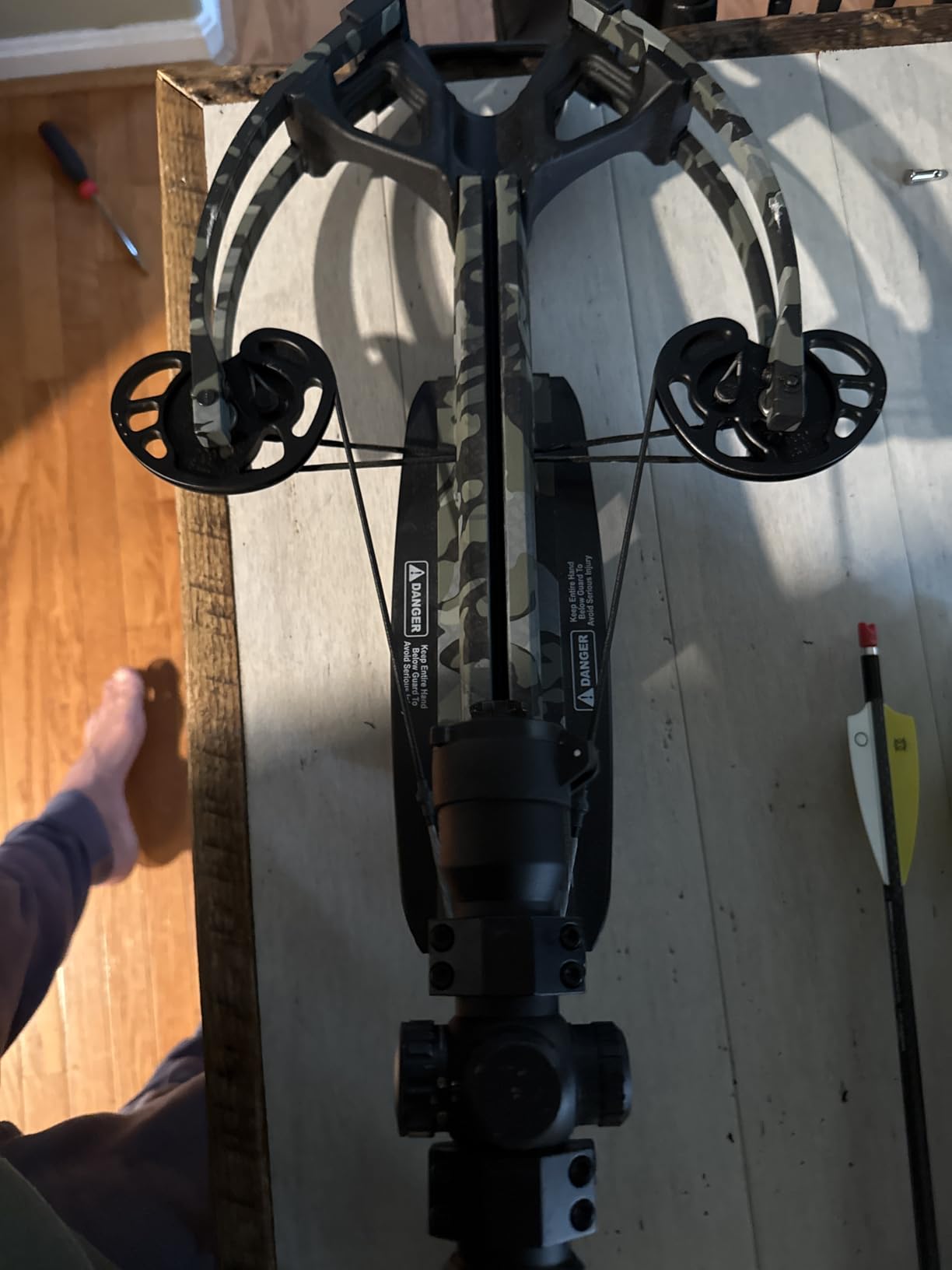
The frame is aluminum alloy with a metallic exterior coating for corrosion resistance, which matters in a garage that sees temperature swings and damp air. It folds down to a package of roughly 10 by 4.72 by 4.72 inches at 2.86 lb, so it lives in a drawer between jobs rather than occupying a stand. The 52 inch strap covers the majority of compound bows on the market today.
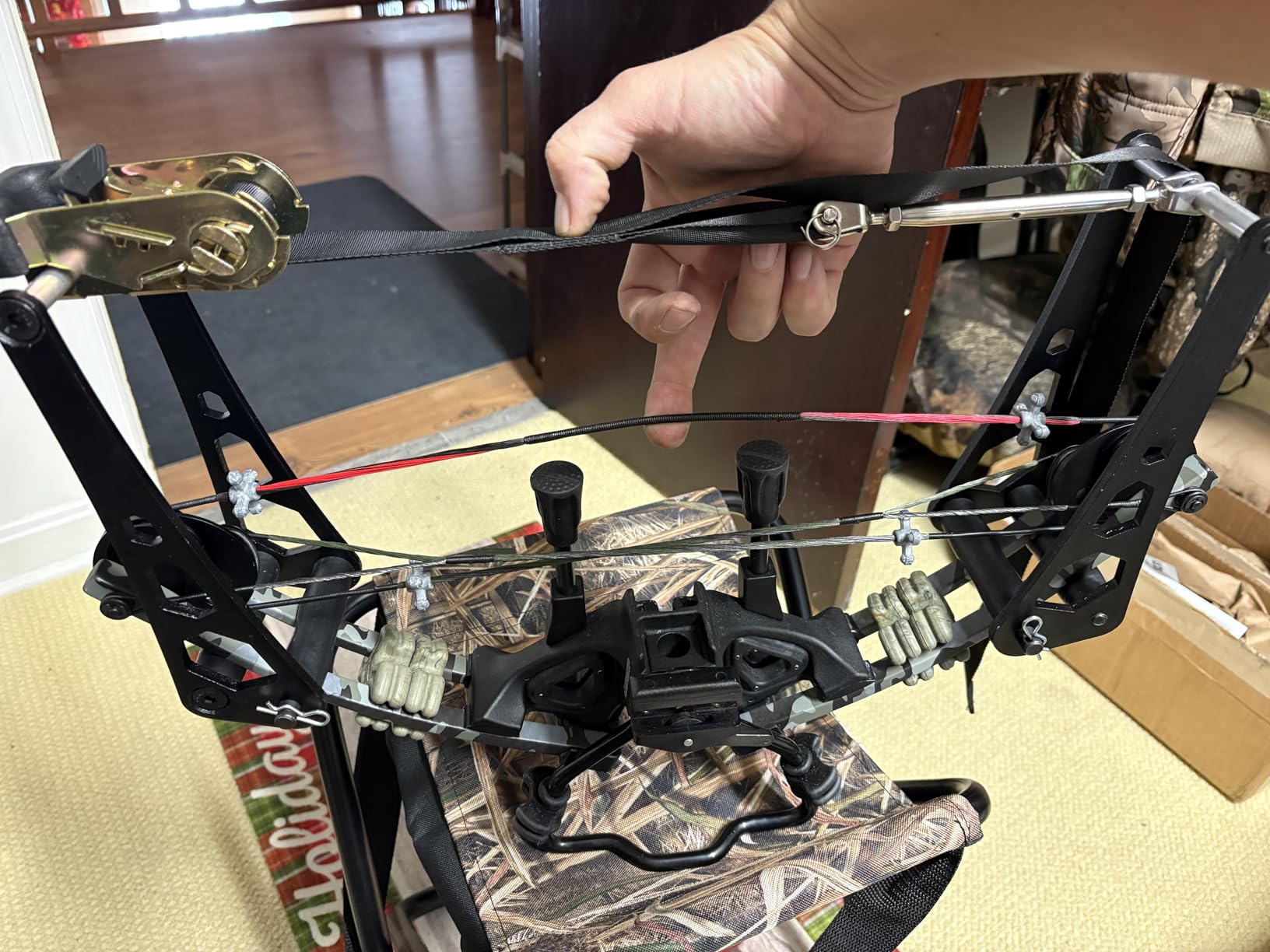
Thick rubber on all limb contact areas does the quiet work here. If you string a bow several times a year, contact wear on limb edges is a slow, cumulative problem, and padded contact points are the cheapest fix available. Owners who serve their own strings and replace pulley blocks report the same.
The limitation owners mention is setup. Rather than printed instructions, you learn the technique from the product video, and reviewers note that first-time users depend on that video to get the technique right. That is workable and costs nothing, but plan to spend ten minutes watching it before your first job rather than during one.
The other note is sizing. On some crossbow limb and axle combinations the strap sits tight even at full extension. Measure before you commit, particularly if your bow is a crossbow or a wide-cam compound.
Who this press suits
It suits anyone in a small workshop, a garage bench with limited shelf space, or an apartment where a permanent press stand is not an option. The fold-away footprint is the reason this press exists and it does that job properly.
It also suits an archer with a light to moderate draw weight compound who wants a good-looking tool that resists corrosion over a decade of use. The coating is a quiet quality signal and the rating distribution backs it up: only three percent one-star ratings.
When to skip it
Skip it if you need a high published working limit for a heavy bow, since it does not carry the 200 lb figure of the KNJ387. Skip it if you want a bolted inline release, since this design does not offer one and you will release at the strap.
Skip it if you dislike learning from video. That is the only recurring complaint in the reviews, and it is a small one, but if you prefer printed documentation you will be more comfortable with a press that ships one.
6. AMEYXGS Quad Limb Brackets – Best for Youth and Low Poundage Bows
AMEYXGS Archery Bow Press Compound Bow Quad Limb Brackets Package Bundle for Tuning Hunting Shooting Outdoor
60 lb maximum pull force
Quad limb brackets included
0.27 kg package
Multi-stop cord
Pros
- Package weight of about 0.27 kg
- Multi-stop cord adjusts the compression arc length
- Bundled quad brackets for parallel limb setups
- Owners on lighter bows report it performs well
Cons
- Rated for about 60 lb of pull force only
- Hooks can be too small to grip some limbs
- Rubber clamp feet can slip under load
This one carries the lightest package in the lineup at about 0.27 kg, and it comes bundled with quad limb brackets. That bundle is the reason to consider it if your setup includes parallel limb bows and you want bracket coverage in the same purchase rather than as an add-on later.
The multi-stop cord lets you adjust the arc length of the compression, which is a genuinely useful feature when you are working between bows of different geometry. Owners report it performs as well as costlier presses on lighter, older compound bows.
The honest limit is stated plainly on the product itself: maximum pull force is 60 lb, and the guidance is to set the bow to about 40 lb before use so you do not stress it. That number governs everything. This is a youth bow and beginner bow press, full stop, and treating it as anything more is how hardware fails.
The one-star reviews all point at hardware rather than concept. Bent brackets and slipping rubber clamp feet account for most of them, and owners also report that the hooks can be too small to grip some limbs without drilling larger screws. Several owners on older bows rated it highly while the same hardware disappointed others, which is a variance pattern rather than a design flaw.
Where it belongs in a workshop
Think of it as the press for a family with several youth or entry-level compounds, a club loaner, or a second bow you only string once a year. It is also the easiest of the seven to carry, which makes it the natural choice for a bow that lives in a different vehicle from the one you shoot from.
Pair it with the habit that keeps every press in this article safe: back the poundage down to around 40 lb before compressing, and use a short strap rather than the longest one available. Owners who do this report no problems at all with the tool.
When to skip it
Skip it if your hunting bow is above 60 lb, because that is where the pull rating runs out and where reviewers report bent brackets and slipping clamp feet. Skip it if you cannot accept the parallel limb setup that comes with the quad brackets, because that configuration changes how the limbs are contacted.
Skip it if you string more than a couple of bows a season. At that rate the hardware complaints in the reviews become a routine annoyance, and one of the CNC-machined presses higher up this list will serve you better for the same work.
7. Lamehfyo Handheld Press – Best Portable Field Backup
Lamehfyo Compound Bow Press – Universal Archery Bow Tuning Tool Accessories for Shooting Hunting (Black)
Two frame sizes
1.3m strap
1.3 kg weight
22 x 10 x 6 cm
Pros
- Two frame size options to suit different bows
- Handle-free design works as a field emergency press
- Owners report successful cam lean and sight installs
- Weighs about 1.3 kg
Cons
- No printed instructions included
- Bolts and pins can bind or bend
- Thinnest review base at 17 ratings
This one exists for a different job than the others in this list. It is a handle-free carry design, which is what you want when the bow breaks two hours from a road and you need to swap a string before you can shoot again. Owners describe treating it as a field backup rather than a primary workshop press, and that framing is honest.
It comes in two frame sizes, 22 by 10 by 6 cm and 25 by 10 by 6 cm, with a 1.3 m strap and a weight of about 1.3 kg. Owners report successful cam lean and sight installs on real bows including a Bear Legacy, and several run it on 55 to 65 lb bows when operated carefully.
What the reviews hold back
There are no printed instructions in the box, which owners call out directly. Bolts and pins can bind or bend, and the ratchet release is described by reviewers as sketchy, so treat it as something you learn on a low-poundage bow first rather than a hunting bow you have never strung.
The 3.9 average across 17 ratings is the thinnest review base here, and the critical reviews concentrate on machining quality and thread binding. The 40 percent five-star share is also on the low side, which is another way of saying owners are satisfied but not glowing.
When it is worth it
It is worth buying as the second tool, not the first. Owners across ArcheryTalk describe the standard progression: a portable press for years, then a bench press once you own several or higher-poundage bows, with the portable unit repurposed as a field backup. This model fits that second role exactly.
Bigger cam-to-cam profiles may not fit between the press ends, so measure again, especially on wide-cam hunting bows. If your only goal is bench work at home, one of the CNC-machined units higher up the list will serve you better and last longer.
Home Press vs Portable Press: What Changes in Your Garage
The mechanical difference is simple enough to explain in one sentence. A home press holds the bow for you and leaves both hands free to work on the string, while a portable press requires you to sit on the floor of your garage with both hands on the tool and your attention split between the strap and the bow.
That is the entire argument, and it explains why owners on ArcheryTalk describe a predictable upgrade path. People start with a portable press, find that string jobs on several bows take more time than expected, and eventually buy a bench press for the garage while keeping the portable unit in the truck. Several describe the move from Bowmaster-style portable presses to a Last Chance bench press with the same phrase: no regrets, and a wish they had done it sooner.
What you give up with a portable press is speed and repeatability. What you gain is storage, cost and the ability to fix a string in a parking lot. For a bow press bought for home tuning, most archers are making the right trade the first time, because the jobs are not that frequent.
If you are still deciding, and you also shoot at long range, the rest of your kit matters as much. Our picks for bow releases and hunting rangefinders cover the accuracy side of the same setup, and a bow case that fits the bow properly matters more to bow longevity than any press ever will.
What You Can and Cannot Do at Home With a Press
A press changes string tension, and that unlocks a specific set of jobs. Here is what you can reasonably do yourself once the bow is pressed, and where a bowyer still earns his fee.
String and cable replacement. This is the core job and the one a press exists for.
Peep sight installation and removal. Straightforward with the limbs drawn in.
Nocking point tie-in or relocation on the serving jig.
Draw length changes through the limb bolts, provided you mark your current setting first.
Limb swaps where the bow’s design allows, and cam or wheel replacement on older bows.
String silencer and stabilizer installs, and post-season waxing and inspection.
Paper tuning follow-up, since small nock point moves are easy once you are set up.
Here is what we would leave to a shop. Large cable guard or yoke moves change your bow’s center of mass and should be checked afterward. Axle-to-axle cam timing on modern hybrid cams needs the right gauges and a reference set of centers, not just a pressed bow. Any work involving a stiff riser, a damaged limb, or a cable guard move that requires re-serving should go to a bowyer.
The cost argument usually settles this. Owners estimate that shop string and cable replacement runs to a substantial recurring cost per bow per year, which is why a press pays back quickly for anyone who owns more than one bow. A shop also charges a modest fee to install a peep, and a press plus a few dollars of supplies turns that into a ten-minute job in your garage.
How to Use a Portable Bow Press Safely
Every failure report we read shares one common factor: the bow was at full draw weight when it let go. Backing the poundage down before pressing changes whether a portable press is safe to use at all, and it is the single most useful piece of advice in this category.
Back the bow’s poundage down to around 40 lb, or whatever your press is rated for, before you touch the strap.
Verify limb width and cam axle length so the press ends seat fully and do not walk toward the cams.
Tie the press ends off with a short length of paracord so they cannot migrate upward under load.
Crank slowly and evenly, and keep your hands clear of the limbs throughout.
Bleed tension off in small increments rather than releasing the ratchet or strap in one motion.
Replace a worn strap before the job, not after it lets down in your hand.
On the failure mode itself, the pattern across forum reports is consistent. The reinforced fingers that grip the limbs bend under load on heavier bows, and once they bend the bow is no longer controlled. That is why a press rated for 60 lb and one rated for 200 lb behave so differently in owner reviews, and why the documented failure complaints in this category all cluster at the heavy end of the range.
Can a press damage your bow? Yes, in three ways: a press not compatible with your limb style, a press beyond its weight rating, or grip fingers failing under load. None of those are common when you respect the rating and work method, and all three are avoidable.
How to Pick the Right Bow Press: 6 Criteria That Matter
Compatibility first. Match limb width and cam axle length, and check whether the design reaches parallel limb geometry. A press that does not fit your bow is useless regardless of its rating.
Rated pull force. Compare the published working limit against your bow’s peak poundage. A 60 lb rated press belongs with youth and beginner bows; heavy compounds want a 200 lb frame.
Release control. An inline release bolt bleeds tension off gradually. A plain strap or ratchet can drop suddenly. This is the safety difference that matters most on a heavy bow.
Strap as a consumable. Assume you will replace the included strap with heavy duty webbing before working on a heavy bow or crossbow, and check you can source it locally.
Contact materials. Rubber padding at every limb contact point reduces wear on the limb edges across repeated jobs.
Review volume and documentation. A tool with dozens of ratings and a build you can inspect beats an unrated listing every time. Printed instructions are a nice-to-have; a video walkthrough is an acceptable substitute.
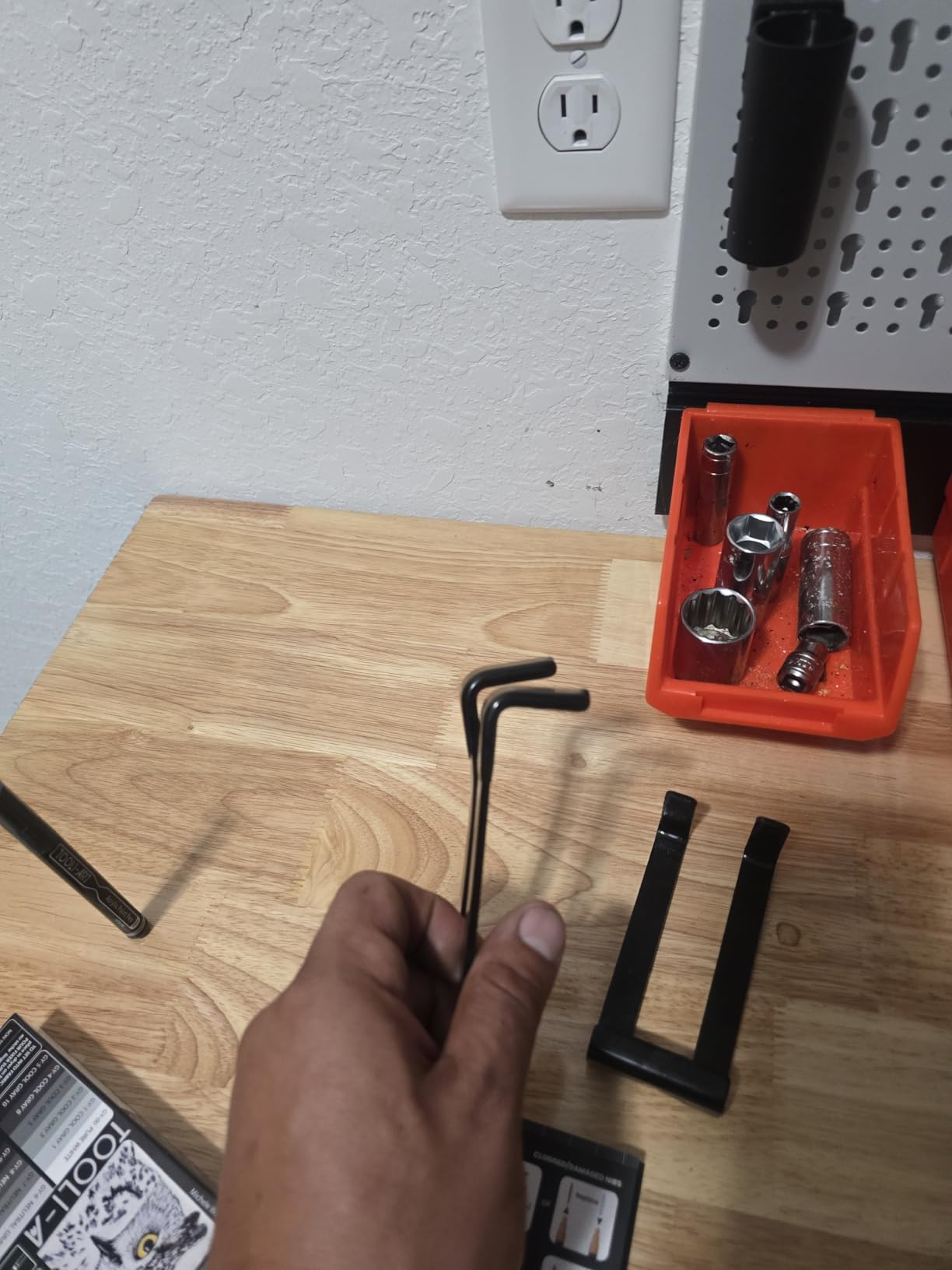
One more piece of companion kit worth budgeting for. A draw board and a string serving jig handle most of the measuring and tie-on work that follows a press, and a good set of hex keys covers the limb bolts and rest adjustments. If you tune seriously, our bow release picks and bow case roundup round out the workshop. None of it matters as much as owning a press that fits your bow.
Frequently Asked Questions
What is the best bow press for home use?
The Bow Medic Field Press is the best bow press for home use overall in our lineup because it carries the deepest owner history at 114 ratings, weighs only 10.4 ounces, and handles string and cable work on solid limb compound bows cleanly. If your bow is a heavy 65 or 70 pound compound, choose the 200 pound rated CNC press instead. For very heavy bows or crossbows, back the poundage down before pressing.
Do portable bow presses actually work?
Yes, for string and cable changes on low to moderate draw weight, provided you back the poundage off before compressing the limbs. Documented failures cluster at the heavy end, where reinforced grip fingers bend under load and let go. Owners report a portable press giving up in about three minutes on a 70 lb bow. Check the published pull force rating against your bow’s actual poundage before every job.
Can I tune my compound bow at home?
Mostly. A press unlocks string and cable replacement, peep installation, nocking point changes, draw length adjustments through the limb bolts, silencer installs, and paper tuning follow-up. Leave large cable guard or yoke moves and axle-to-axle cam timing on modern hybrid cams to a bowyer, since both change how the bow behaves and need proper gauges and reference centers.
Can a bow press damage my bow?
Yes in three specific ways. A press incompatible with your limb style can pinch or bend limbs, a press beyond its rated working limit can fail under load, and grip fingers on lighter designs can bend and release the bow. All three are avoidable by matching limb width and cam axle length, respecting the rating, and backing the poundage down to around 40 lb before compressing.
What is the difference between a home bow press and a portable one?
A home press holds the bow and leaves both hands free to work on the string, which makes repeated jobs faster. A portable press requires you to sit on the floor of your garage with both hands on the tool. Portable presses carry a far lower cost and the installed strap will need replacing before heavy work. They store in a drawer or a go bag, and they can be used in a parking lot to swap a string in an emergency.
How long should a bow stay in a press?
Only as long as the job takes. Open the limbs as soon as the string or cable work is finished and the bow is re-strung and re-torqued, because compressed limbs and unloaded cables are not their normal state. Owners on forums consistently describe a press as a working tool rather than a storage solution, and the rubbers and straps wear faster the longer a loaded bow sits compressed.
The Verdict: Which Bow Press Should You Buy in 2026?
If you only buy one bow press this year, buy the Bow Medic Field Press. It is ambidextrous, it weighs 10.4 ounces, and it has more owner history behind it than any other press on this list. Just confirm your bow is a solid limb compound before you order.
If you shoot a heavier bow or a crossbow, the 200 pound rated CNC press is the safer bet, and the inline release bolt design further down the list is the one to pick if gradual tension release is what frightens you. Every one of these seven works. Matching the rated pull force to your actual bow poundage is what separates a good press from a bent bracket in your driveway.
Whichever you choose for home tuning in 2026, back the poundage off before you compress, replace the strap before the strap replaces itself, and buy the workshop kit around it. If you want a start, our bow release and bow case guides cover the rest of the setup.