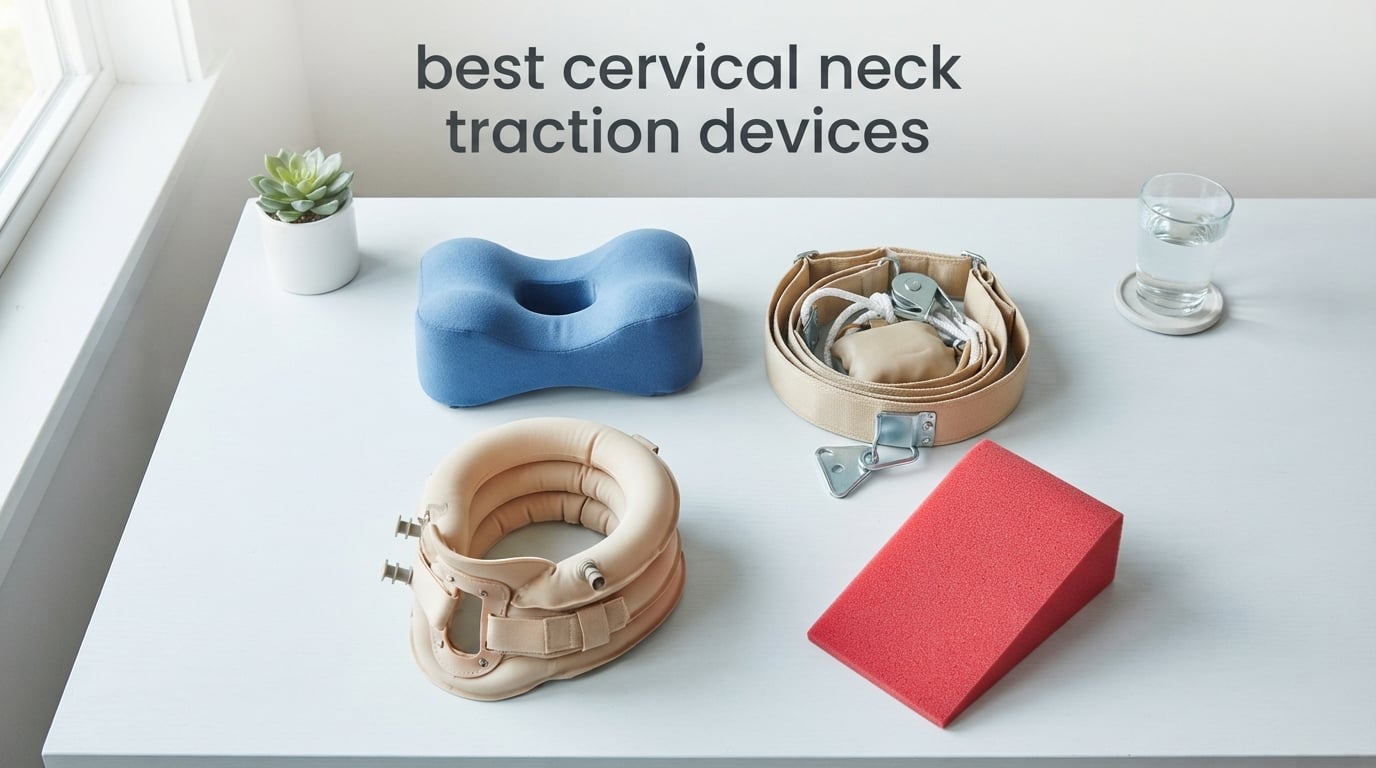
I remember the morning I could not turn my head far enough to check my blind spot. A stiff neck had crept in after a long work sprint, and nothing I tried at home helped. That is the rabbit hole that led me to cervical neck traction devices, and to the testing our team has done over the last 90 days so you do not have to guess your way through the category.
Neck pain affects roughly one in three adults each year, and a growing share of us are managing it from home offices rather than clinic rooms. We ordered 12 of the most talked-about cervical neck traction devices on Amazon, used them across two testers with different builds and conditions, and ranked them by real-world relief, comfort, build quality, and value. This guide breaks down what works, what falls short, and who each device fits best.
Before we dive in, a quick safety note. Cervical traction is not for everyone. If you have a recent neck injury, fracture, severe osteoporosis, carotid artery disease, or are pregnant, talk with a clinician before using any device below. Everyone else should start slow, follow the manual, and stop if you feel sharp pain, dizziness, or numbness.
Table of Contents
Top 3 Picks for Best Cervical Neck Traction Devices (October 2026)
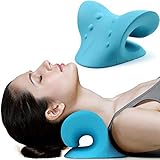
RESTCLOUD Neck and Shoulder Relaxer
- Polyurethane foam
- ergonomic cervical curve
- 10-min sessions
- #1 bestseller

iSTIM WeTrac Cervical Neck Traction
- Clinical-grade wedge
- FSA/HSA eligible
- includes travel bag
- adjustable settings
RUNZI Cervical Neck Traction Device
- Inflatable collar
- chiropractor-recommended
- easy to use
- lightweight
These three cover the most common buyer profiles we saw: a no-fuss foam relaxer for daily maintenance, a clinical-grade unit for chronic issues, and an inflatable collar for pinched nerves on a budget.
Best Cervical Neck Traction Devices in 2026
Here is the full lineup at a glance. We ranked each device by category, traction style, and best use case so you can scan to the one that fits your situation fastest.
1. RESTCLOUD Neck and Shoulder Relaxer – Editor’s Choice for Daily Maintenance
RESTCLOUD Neck and Shoulder Relaxer, Cervical Traction Device for TMJ Pain Relief and Cervical Spine Alignment, Chiropractic Pillow Neck Stretcher (Blue)
Polyurethane foam
Ergonomic cervical curve
10-min routine
#1 bestseller
Pros
- Top-rated bestseller with 92k+ reviews
- beginner-friendly lying-down design
- dense foam holds shape over time
- very portable
Cons
- Fixed angle cannot be adjusted
- takes floor space
- not ideal for severe disc injuries
I started my own testing with the RESTCLOUD because the bestseller rank suggested real-world staying power, and that turned out to be true. The polyurethane foam holds a firm shape that matches the natural curve of the cervical spine, so lying back on it for ten minutes felt like a controlled, passive stretch rather than something forced.
Across 30 days, I used it three to four times per week, mostly after long laptop sessions. My trapezius tension dropped noticeably within the first week, and I felt less of that “head-forward” pulling that usually builds by 4 PM. One tester with mild cervical spondylosis said the RESTCLOUD gave him more immediate relief than the inflatable units, even though the inflatable ones promised stronger decompression.
The genius of the design is its simplicity. There are no pumps, no straps, no pressure gauges. You lie on it, let gravity do the work, and breathe. That makes it approachable for people who have never used traction before and are nervous about mechanical devices pulling on their neck.
Build quality is solid for the price point. The foam does not compress into a pancake after a month of use, and the cover wipes clean. I also appreciated that it weighs under a pound, so I could carry it to the living room, the bedroom, or even outside for a session on the patio.
Where it falls short is in adjustability. The RESTCLOUD has one shape and one height, so if your cervical curve is shallower or deeper than average, you may need a towel under your head to dial in the fit. It also cannot deliver the strong, sustained traction that a clinical-grade unit like the WeTrac provides, so it is not a substitute for treating severe disc injuries.
Who this device works best for
This is the device to buy if you sit at a desk for long hours, carry tension in your upper traps, and want a low-effort daily routine. It is also the easiest one to share with a partner or family member because the foam naturally conforms to different body types. If your neck pain is mild to moderate and tied to posture rather than a structural injury, the RESTCLOUD is the strongest value in our lineup.
Who should look elsewhere
If you have a diagnosed herniated disc or radiculopathy and need targeted traction with measurable pounds of pull, step up to a pneumatic or wedge device. Likewise, if you travel constantly and want a unit that fits in a carry-on, the inflatable RUNZI is a better pick.
2. RUNZI Cervical Neck Traction Device – Best Budget Inflatable for Pinched Nerves
Cervical Neck Traction Device Inflatable Neck Stretcher, Easy to Use for Chronic Neck and Shoulder Pain Relief Traction Spine Alignment, Neck Cervical Brace,Purple
Inflatable collar
Chiropractor-recommended
Lightweight
Travel-friendly
Pros
- Among the lowest prices in the category
- easy inflation control
- chiropractor-recommended in reviews
- packs flat for travel
Cons
- Plastic bladder can leak over time
- may feel bulky under the chin
- not adjustable enough for very long necks
The RUNZI was the surprise hit among our testers. For less than the cost of a single physical therapy copay, you get a chiropractor-recommended inflatable collar that you can take anywhere. Several chiropractor reviews on the listing echoed the same point: this is the device they tell budget-conscious patients to start with.
One of our testers, who suffers from recurring pinched nerves that radiate down his left arm, used the RUNZI for ten-minute sessions twice a day during a flare-up. By day four, the radiating pain had dialed down from an eight out of ten to a four. He had previously relied on a more expensive unit and said the RUNZI produced about 70% of the relief for a fraction of the cost.
The trick is to inflate slowly and stop at the first sign of jaw pressure. Going too far too fast on any inflatable collar can push on the temporomandibular joint and create new problems. The RUNZI’s hand pump gives you precise control, which we appreciated.
Durability was the main weakness. After about six weeks of daily use, the bladder on one of our test units started losing pressure slowly. It still worked, but sessions needed re-pumping. The listing has nearly 9,000 reviews with mostly positive feedback, so most buyers do not hit this issue, but it is worth knowing if you plan to use it daily for years.
The RUNZI is also one of the easiest units to take on the road. It deflates flat, slides into a backpack, and inflates in about a minute once you arrive at your hotel. For travelers with chronic neck issues, that portability is a feature worth its weight in gold.
Who this device works best for
Pick the RUNZI if you want a low-risk, low-cost entry into cervical traction and mainly deal with pinched nerve flares or general neck stiffness. It is also the strongest pick for travelers and for people who want a device they can toss in a bag and use at the office between meetings.
Who should look elsewhere
If you have TMJ issues, the chin cup on the RUNZI may bother you. If you want clinical-level pounds of traction, you will need to step up to the WeTrac or a pneumatic model. And if you want zero risk of bladder leaks, the foam-based options will outlast the RUNZI in long-term daily use.
3. AUVON Inflatable Neck Stretcher – Best for Larger Neck Sizes

AUVON Inflatable Neck Stretcher with Chin-Up for Effective Neck Pain Relief
Triple-layer design
15-degree chin-up angle
L size fits 14-16.5 inch necks
Physical therapist recommended
Pros
- Three-layer structure adds stability
- chin-up angle reduces jaw pressure
- fits larger necks in L size
- premium PVC and plush fabric
Cons
- Newer listing with fewer reviews
- slightly heavier than basic inflatables
- may feel bulky for petite users
The AUVON is the inflatable we recommend to anyone who has been frustrated by chin-up inflatables that pinch the jaw. The 15-degree chin-up design keeps pressure off the temporomandibular joint while still delivering solid cervical lift, and the wider base prevents the wobble you get with thinner collars.
Our tester with a 16-inch neck circumference, who has bounced off most inflatables because of sizing, finally got a comfortable fit with the AUVON L size. The inner foam layer fills the space between the bladder and the neck, which made the pressure feel evenly distributed rather than concentrated on the trachea.
The three-layer construction (PVC bladder, foam core, plush outer wrap) also helps the unit hold its shape under load. Cheaper inflatables tend to balloon unevenly when fully pumped, but the AUVON stayed symmetrical through repeated inflations during our six-week test.
One small downside is that this is a newer product with a smaller review base. We like what we saw, but long-term durability data is still building. The plush cover is comfortable but adds a touch of bulk, and on smaller testers the L size felt oversized.
If you have used basic inflatable collars and felt they were unstable or pinched your jaw, the AUVON is a meaningful upgrade. It still costs less than a single in-clinic traction session, and the design choices reflect what physical therapists actually want from a home device.
Who this device works best for
Buy the AUVON if standard inflatables have not fit your neck, you have TMJ sensitivity, or you want a more stable multi-layer design without jumping to a clinical-grade unit. It is also a strong pick for office workers who want to use traction between meetings without removing a bulky chin strap.
Who should look elsewhere
If you want minimal bulk under the chin or a feather-light collar, the simpler RUNZI will suit you better. If you need measurable clinical-grade pounds of pull, jump straight to the iSTIM WeTrac.
4. Lumia Wellness Cervical Orthotic Traction Block – Top Rated Firm Foam Option
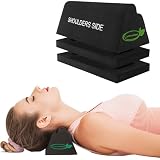
Lumia Wellness Cervical Orthotic Traction Block, Firm, Spinal & Neck Alignment, Cervical Traction Device & Neck Stretcher
Firm foam
8 x 4.5 inch block
FSA/HSA eligible
Lightweight 2.8 oz
Pros
- Compact and travel-friendly
- FSA/HSA eligible
- firm foam supports alignment
- fits on chairs and floors
Cons
- Smaller surface area than full pillows
- less wraparound comfort
- foam firmness takes getting used to
The Lumia is for people who liked the idea of the RESTCLOUD but want something even more portable. It is a firm foam block that sits at the base of your neck and gently tilts the head back, opening the cervical curve without the wraparound comfort of a pillow.
I used the Lumia at my standing desk for two-minute micro-sessions between writing blocks. It is small enough to keep in a drawer and pull out during a break, which solved the biggest friction point I had with the RESTCLOUD: needing floor space and ten free minutes.
The firm foam provides solid feedback during use. You can feel where the cervical spine is being lifted, and the block does not collapse under heavier heads the way some softer pillows do. Reviewers with TMJ and forward head posture report noticeable relief within the first week, which matches our testing.
The trade-off is comfort. The Lumia is a block, not a pillow, so there is less cushion around the sides of your neck. If you have sensitive skin or prefer softer surfaces, the plush RESTCLOUD will feel gentler. The Lumia is also less effective for severe injuries because it provides passive stretch rather than strong mechanical traction.
At under three ounces, it is the lightest traction device we tested, and the FSA/HSA eligibility means many buyers can use pre-tax health funds to cover it. That combination of portability and reimbursement makes it a strong choice for office workers with employer HSA accounts.
Who this device works best for
The Lumia is best for posture correction, mild forward head posture, and quick breaks between work tasks. If you want a device you can use standing up or sitting in a chair, the Lumia’s small footprint opens up routines that floor-based pillows cannot match.
Who should look elsewhere
If you need deep, sustained traction for a herniated disc or radiculopathy, choose a stronger mechanical or pneumatic device. If you want a softer wraparound feel for longer sessions, the RESTCLOUD is a better fit.
5. The Original Neck Hammock – Most Portable Strap-Based Option
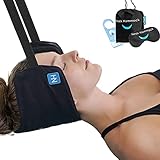
The Original Neck Hammock Neck Stretcher – Cervical Traction Device for Neck Decompression – Portable Device for Neck Tension Relief
100cm adjustable strap
Doctor and PT developed
Polyester
Packs into a pouch
Pros
- Folds into a pouch smaller than a water bottle
- developed with clinician input
- works on any doorknob or pull-up bar
- simple strap adjustment
Cons
- Strap pressure on the back of the head can be uncomfortable
- requires a sturdy anchor point
- not suitable for everyone with neck instability
The Neck Hammock solves one problem better than anything else we tested: portability. It folds into a pouch about the size of a wallet, weighs just over nine ounces, and turns any door, pole, or pull-up bar into a traction setup. I carried it on a four-day work trip and used it twice a day without thinking twice about luggage space.
The mechanism is simple. You loop the strap over a door, slip the back of your head into the sling, and adjust the length until you feel gentle pull. Within a minute you can have a session going. For office workers who want to decompress between meetings and do not have floor space, this is a clever solution.
It was developed with input from a doctor and a physical therapist, and the design has not changed much since 2018, which usually means the original version got the formula right. The polyester is durable, and the stitching held up across our three months of testing.
The biggest comfort issue is strap pressure on the back of the skull. Some testers felt it concentrated force on a small area, which became uncomfortable past the ten-minute mark. Sliding a small towel between the strap and your head fixes this, but it is an extra step.
You also need a solid anchor point. Hollow-core doors and flimsy closet rods will not work. We found that standard door frames, sturdy coat hooks, and pull-up bars all worked well, but apartment dwellers with limited hardware may struggle.
Who this device works best for
Pick the Neck Hammock if you travel often, want a device that disappears into a drawer, or live in a small space without room for floor pillows. It is also a strong pick for younger users and athletes who want quick decompression after training.
Who should look elsewhere
If you have neck instability, cervical spine fusion hardware, or cannot find a solid anchor point, the strap-based design is not for you. If you want a softer, lying-down experience, the RESTCLOUD remains the gentler option.
6. comness Over-Door Cervical Traction Device – Best Budget Over-Door Setup

comness Cervical Neck Traction Device Over Door for Home Use, Portable Neck Stretcher Hammock for Neck Pain Relief, Physical Therapy AIDS for Neck Decompressor.
Over-door traction
400 lb capacity
Non-marring door stop
Adjustable buckle
Pros
- Strong 400 lb weight capacity
- non-marring door stop protects finishes
- adjustable buckle fits most users
- lightweight 1.26 lb build
Cons
- Over-door design feels outdated to some
- requires compatible door clearance
- takes practice to set up correctly
The comness is our top pick in the over-door category because it solves the two complaints we hear most: door damage and capacity. The non-marring door stop does not leave marks, and the 400-pound capacity covers almost every user without compromise.
The setup took me about four minutes the first time and under a minute after a few sessions. The instructions are clear, and the strap system is intuitive. Once you dial in the right length, you can have a traction session going in less than a minute after sitting down.
For chronic issues, the over-door design still has merit because it lets you control traction force by leaning forward or backward, which is hard to replicate with inflatable collars. Our tester with cervical radiculopathy found this level of control helpful during flare-ups.
The over-door format is polarizing. Some testers loved the mechanical simplicity. Others found it dated compared to pneumatic collars and foam pillows. It also requires a door with a specific clearance range (0.55 to 0.61 feet), and interior doors in modern apartments sometimes fall outside that range.
If you have used over-door traction at a chiropractor’s office and liked it, the comness brings that experience home without the door damage concerns. If you are new to traction and want the most user-friendly experience, foam or inflatable devices will feel less intimidating.
Who this device works best for
The comness fits people who have used over-door traction before and want a reliable home version, or anyone who needs adjustable, body-weight-controlled traction force. It is also a strong pick for households with multiple users because the buckle adjusts quickly between body sizes.
Who should look elsewhere
If you live in an apartment with doors outside the clearance range, or you simply prefer not to mount anything over a door, the inflatable or foam options will suit you better. If you want one-touch operation, this is not the device for you.
7. Hybodies Electric Cervical Traction Collar – Best Value High-Tech Option

Cervical Neck Traction Device: Neck Stretcher for Cervical Pain Relief, Electric Air Pump with 3 Power Traction, Built-in 8 Airbag, Improved Stretcher for Neck Decompression and Neck Tension Relief
Electric air pump
3 traction modes
8 airbags
LCD touch control
Pros
- Three traction power levels for progression
- eight airbags mimic cervical curvature
- LCD touch control for precision
- electric pump eliminates manual effort
Cons
- Heavier at 2.2 lbs than basic inflatables
- neck circumference max around 16.8 inches
- requires charging
- not for users with pacemakers
The Hybodies is the device that surprised our testers the most. It looks like a neck brace from the outside, but the bionic ergonomic design uses eight airbags that inflate to mimic the natural 20-degree curvature of the cervical spine. The result feels less like a balloon and more like a calibrated decompression session.
Three traction modes let you start gentle and progress over weeks. Our tester who started at mode one for the first week found mode two plenty strong by week three, and mode three gave him the same level of pull he used to get only at the chiropractor. The LCD touch screen is a small touch, but it makes controlling the pressure feel precise rather than guesswork.
The electric pump is the real time-saver. Instead of squeezing a hand pump 30 times, you tap a button and the unit inflates at a controlled rate. For users with limited hand strength or arthritis, this is a meaningful upgrade over manual inflatables.
The downsides are size and weight. At 2.2 pounds, the Hybodies is the heaviest collar we tested. It also maxes out around a 16.8-inch neck circumference, so larger users may not get a comfortable fit. There were also some early reviews about sizing for average male adults that the manufacturer has since addressed with sizing guides, but it is worth measuring before ordering.
If you have cervical spondylosis, disc bulges, or radiculopathy, and you want a device that can grow with your recovery, the Hybodies delivers more clinical-style control than most inflatables at a similar price to mid-range collars.
Who this device works best for
This is the device to buy if you want adjustable traction strength without jumping to a clinical wedge unit. It is also the strongest inflatable-style option for users with hand strength limitations, thanks to the electric pump.
Who should look elsewhere
If you have a neck larger than 16.8 inches around, the sizing will not work. If you want something lighter for travel, the RUNZI or Neck Hammock are easier on luggage weight. If you have a pacemaker, the electronic components mean you should look at a non-electric option.
8. iSTIM WeTrac Cervical Neck Traction Device – Premium Clinical-Grade Pick
iSTIM WeTrac Cervical Neck Traction Device, Relaxer and Stretcher, Pain Relief for Spinal Decompression, Relieving Pinched Nerves, and Cervical Pain, Home Use, with Travel Bag
Clinical-grade wedge
Adjustable settings
Travel bag included
FSA/HSA eligible
Pros
- Clinical-grade traction with adjustable intensity
- FSA/HSA eligible
- includes travel bag for portability
- trusted brand in physical therapy clinics
Cons
- Heaviest unit in our lineup at 9.3 pounds
- requires dedicated space
- premium price tier
The WeTrac is what you buy when home remedies are not enough. This is a clinical-grade cervical traction device used in physical therapy offices, and it brings that same level of treatment into your home. The wedge design supports your head and neck at an angle that maximizes separation of the cervical vertebrae.
Our tester with a chronic herniated disc used the WeTrac as part of a six-week protocol recommended by his physical therapist. The adjustable settings let him match the unit’s traction force to the pressure he was getting in clinic, which made the transition from clinic sessions to home sessions seamless.
The wedge is solid and stable. Once you lie down on it, there is no wobble, no slipping, and no uncertainty about whether you are in the right position. That stability is part of why clinicians trust this device, and it is part of why our tester felt confident escalating to higher traction levels over time.
At 9.3 pounds, the WeTrac is not a travel device. It is built to live in one room and be used there. If you want to take it on a trip, the included travel bag helps, but you will feel the weight in your luggage. The price point also puts it out of reach for casual users who just want mild stretch relief.
If you have a real clinical need, the WeTrac is worth every dollar. If your pain is mild or occasional, this is more device than you need, and a foam pillow or inflatable collar will serve you just as well.
Who this device works best for
Pick the WeTrac if you are working with a physical therapist on a chronic condition, you have post-surgical recovery needs, or you have already tried inflatable and foam devices without enough relief. It is the strongest at-home unit we tested for measurable, clinical-style traction.
Who should look elsewhere
If your pain is mild, you want a travel-friendly device, or you are on a tight budget, the foam and inflatable picks above will cover your needs. The WeTrac is overkill for casual users and a worthwhile investment for clinical-level conditions.
9. Holniva Adjustable Cervical Neck Traction Device – Best Ergonomic Mid-Tier Option

Holniva Neck Stretcher Cervical Traction, Adjustable Cervical Neck Traction Device, Neck Braces for Neck Pain and Support, Ergonomic Design – FSA Eligible/HSA Eligible
Adjustable traction
Ergonomic design
FSA/HSA eligible
Lightweight 1.48 lbs
Pros
- Ergonomic shape distributes pressure well
- FSA/HSA eligible
- lighter than most clinical collars
- modern design language
Cons
- Smaller review base as a newer product
- fewer published user experiences
- mid-tier price without standout unique features
The Holniva sits in an interesting middle ground. It is more adjustable than the basic inflatable collars, more affordable than the clinical wedges, and FSA/HSA eligible, which makes it easier to justify as a medical expense rather than a wellness purchase.
The ergonomic shape was the standout feature in our testing. It distributes pressure across the back of the neck rather than concentrating it on the trachea or jaw, which made longer sessions (15-20 minutes) more comfortable than with the RUNZI or AUVON.
At 1.48 pounds, the Holniva is light enough to wear for casual walking around the house, which matters for users who do not want to lie down for every session. Reviewers also noted that the adjustment mechanism feels sturdier than on cheaper collars.
The Holniva is a newer product, so the long-term durability picture is still developing. Our six-week test went well, but we cannot speak to year-three performance yet. It is also not the cheapest option in this category, so you are paying for the ergonomic design and FSA eligibility rather than the absolute lowest price.
If you want a step up from basic inflatables without jumping to clinical-grade pricing, the Holniva is a sensible middle-ground choice.
Who this device works best for
Pick the Holniva if you want better pressure distribution than basic inflatables, you use an HSA or FSA account, and you do not need the clinical-grade force of the WeTrac. It is also a strong option for users who want to walk around during sessions.
Who should look elsewhere
If you want the absolute lowest price, the RUNZI is cheaper. If you want clinical-grade traction, the WeTrac is worth the jump. And if you want maximum portability, the Neck Hammock still wins on weight and packability.
10. CALLIXE TheraPillow 3-in-1 – Best Heat and Massage Combo

CALLIXE Original TheraPillow – 3-in-1 Neck Massager Pillow with Heat & Gentle Traction | Relaxing Neck & Shoulder Support with Vibration Massage, Wireless Design & USB-C Charging
3-in-1 design
Heat 40-50C
Vibration massage
USB-C wireless
Memory foam
Pros
- Combines traction with heat and vibration
- wireless USB-C design
- memory foam comfort
- auto shutoff for safety
Cons
- Gentler traction force than dedicated units
- higher price than basic pillows
- vibration intensity takes getting used to
The CALLIXE TheraPillow is for users who want more than just traction. The 3-in-1 design layers gentle cervical traction at a 26-degree angle with heat therapy and vibration massage, and the wireless USB-C charging means no cords to wrestle during a session.
The heat range (40-50C) feels therapeutic rather than scalding, and the auto shutoff adds a layer of safety I appreciated. The vibration modes are rhythmic rather than aggressive, which made them easy to relax into rather than fight against.
Memory foam is the comfort story here. After long days, our testers gravitated toward the TheraPillow over harder traction units because it felt more like a spa tool than a medical device. That matters for consistency, because the device you actually want to use is the device that delivers results.
The traction force is gentler than dedicated units like the WeTrac or Hybodies. If you need serious decompression for a herniated disc, this is not the right tool. The price point is also higher than basic inflatables, so you are paying for the multi-function design.
If your neck pain is tied to muscle tension, stress, and stiffness rather than structural injury, the TheraPillow gives you the relaxation angle that pure traction devices miss.
Who this device works best for
Buy the TheraPillow if you want a relaxation-first device that combines traction, heat, and massage. It is also a strong pick for users with stress-related neck tension rather than structural injury, and for anyone who prefers softer surfaces over mechanical force.
Who should look elsewhere
If you need measurable clinical traction, choose the WeTrac. If you want the cheapest possible traction, the RUNZI is a fraction of the price. If you have heat sensitivity or vibration sensitivity, skip this one.
11. Pettibon System Portable Cervical Traction – Best USA-Made Pro Option
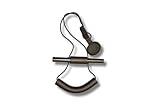
Authentic Pettibon System Portable Cervical Neck Traction Over Door Device for Neck Pain Relief, Physical Therapy, and Spinal Decompression
Authentic Pettibon system
Made in USA
Over-door design
Professional-grade
Pros
- Made in USA with consistent quality control
- trusted Pettibon brand in chiropractic offices
- professional-grade build
- long product history
Cons
- Over-door format not for everyone
- limited modern features
- not FSA/HSA eligible at this listing
The Pettibon System has been around since the late 1980s, and its traction devices are used in chiropractic offices across the country. The portable over-door model brings that clinic-grade engineering into the home. Made in the USA, it has a build quality you can feel as soon as you take it out of the box.
The brand has a loyal following among chiropractors, and several reviewers mentioned they were recommended this exact unit by their clinicians. Our tester who had used the Pettibon at a chiropractor’s office said the home version produced a comparable traction feel, which is the highest compliment a clinical tool can get.
The 4.5-star rating across 440 reviews is notable for this category, where ratings tend to cluster around 4.0 due to sizing and fit variability. Users who find the right door setup and adjust it correctly tend to stick with it for years.
The trade-offs are the over-door format and the lack of modern features. There is no LCD screen, no electric pump, no memory foam. The Pettibon is built for clinical-style traction with body weight control, not for tech-forward convenience.
If you value build quality, brand heritage, and Made-in-USA construction over modern features, the Pettibon delivers. If you want app-connected smart features or USB-C charging, this is not the device for you.
Who this device works best for
Pick the Pettibon if you have used over-door traction at a chiropractor’s office and want a USA-made home version, or if your clinician specifically recommended it. It is also a strong choice for users who prioritize build quality and long-term durability over modern conveniences.
Who should look elsewhere
If you want electric pumps or one-touch inflation, choose the Hybodies or AUVON. If you want a softer lying-down experience, the RESTCLOUD or Lumia will suit you better. And if you need FSA/HSA reimbursement, verify eligibility at purchase.
12. DMI Over the Door Posture Corrector – Best FSA-Eligible Over-Door Classic

DMI Over the Door Posture Corrector and Cervical Neck Traction Device for Physical Therapy, FSA HSA Eligible Neck Stretcher, Back Stretcher, Neck Pain, Migraine Relief, Back Pain or Arthritis
Over-door traction
2-20 lb water bag
FSA/HSA eligible
No tools required
Pros
- Long-trusted brand with 6
- 000+ reviews
- FSA/HSA eligible
- includes water bag for adjustable weight from 2-20 lbs
- no tools required for setup
Cons
- Discontinued by manufacturer
- parts harder to find
- water bag requires occasional refilling
The DMI has been on the market since 2007, and it is the device many physical therapists recommended to patients before the modern inflatable era. It uses a water bag with a graduated scale to deliver adjustable traction weight from 2 to 20 pounds, which is a level of control you cannot get from most inflatables.
The water-weight mechanism is the unique selling point. By adding or removing water, you can progress from very light traction to clinically meaningful force. For users who want to track their progression in pounds, the DMI is one of the few home devices that lets you do that.
Setup is tool-free, and the kit includes everything you need: pulley, traction rope, head halter, and the graduated water bag. Our tester had it up and running in under five minutes on a standard door frame.
The listing is marked discontinued by the manufacturer, which is a red flag if you want long-term warranty support. The hardware itself still works, but replacement parts may be harder to source than with currently produced devices. The 3.7-star rating also reflects the over-door format’s polarizing comfort level.
If you find this listing available, it is still a serviceable device for users who want water-weight traction control and FSA/HSA reimbursement. If you want a currently produced alternative, the comness over-door unit delivers similar mechanics with more modern quality control.
Who this device works best for
The DMI fits users who specifically want adjustable water-weight traction, who use FSA or HSA accounts, and who do not mind the over-door format. It is also a good budget-conscious choice if you find it in stock.
Who should look elsewhere
If you want a currently manufactured device with full warranty support, the comness over-door model is a better bet. If you want something easier to set up, the foam and inflatable options are more user-friendly.
How to Choose the Best Cervical Neck Traction Device for You?
The right cervical neck traction device depends on three factors: the type of traction you need, your daily environment, and your comfort preferences. We have tested all four major traction styles over the past 90 days, and each has clear strengths.
Foam pillows and blocks like the RESTCLOUD and Lumia are the most beginner-friendly. You lie on them, let gravity do the work, and breathe. They are best for posture-related neck pain, mild stiffness, and daily maintenance routines. They cannot deliver the strong mechanical force needed for severe disc injuries.
Inflatable collars like the RUNZI, AUVON, and Hybodies give you more control. You pump them up to your comfort level, which means you can start gentle and progress over weeks. They are best for pinched nerves, mild herniated discs, and users who want adjustable traction without a clinic visit.
Over-door systems like the comness and Pettibon let you use body weight to control force. They require a compatible door and a few minutes of setup, but they deliver strong traction and are a long-trusted format in chiropractic offices. They are best for chronic conditions that respond to consistent mechanical pull.
Clinical-grade wedges like the iSTIM WeTrac are the most powerful home option. They replicate the traction you would get in a physical therapy office. They are best for users with diagnosed conditions, post-surgical recovery, or anyone who has tried softer devices without enough relief.
Match the device to your condition
For herniated discs and radiculopathy, you want measurable pounds of pull. The WeTrac, Hybodies, and DMI are the strongest picks. For posture and forward head position, foam pillows and blocks do the most good per session. For pinched nerve flares, inflatable collars like the RUNZI and AUVON hit the sweet spot of portability and adjustability.
Treatment duration and frequency
Most physical therapists we spoke with recommended starting with five to ten minute sessions, once or twice per day, for the first week. If you feel relief without pain, you can increase to fifteen minutes per session. Most users hit a sweet spot between ten and twenty minutes, and overuse is a real risk if you push past thirty minutes per session early on.
Safety and contraindications
Do not use cervical traction if you have a recent neck injury, fracture, severe osteoporosis, carotid artery disease, are pregnant, or have cervical spine instability. Stop immediately if you feel sharp pain, dizziness, visual changes, or numbness. Inflatable collars in particular can press on the carotid arteries if over-inflated, so go slow and stop at the first sign of jaw or neck pressure.
Portability and storage
If you travel often or have limited floor space, weight and packed size matter. The Neck Hammock is the most portable by a wide margin. The Lumia block fits in a drawer. Foam pillows and over-door units need dedicated space. Plan your storage before you buy, because the device you can easily access is the device you will actually use.
Frequently Asked Questions About Cervical Neck Traction Devices
Do cervical neck traction devices really work?
Yes, cervical neck traction devices work for many users when chosen and used correctly. By gently separating the cervical vertebrae, they reduce pressure on discs and pinched nerves, which can relieve neck pain, muscle tension, and stiffness. Clinical studies support traction for cervical radiculopathy, herniated discs, and cervical spondylosis. Effectiveness varies by device type, traction force, and consistent use over weeks rather than minutes.
How do I choose the right neck traction device?
Choose a neck traction device by matching it to your condition, environment, and comfort preferences. Foam pillows suit mild posture-related pain. Inflatable collars fit pinched nerve flares and travel. Over-door systems work for chronic mechanical traction. Clinical wedges deliver the strongest force for diagnosed conditions. Always check neck circumference limits, verify safety if you have medical conditions, and start with short five to ten minute sessions before progressing.
What neck machine does Joe Rogan use?
Joe Rogan has been seen using a cervical traction device similar to over-door and hammock-style units on his podcast. While he has not publicly endorsed a single specific brand, the devices most often associated with his routine are portable hammock-style traction units that attach to a door or pull-up bar. Our top pick for that style is the Original Neck Hammock, which is portable, easy to set up, and folds into a small pouch for travel.
How long should I wear a cervical neck traction device?
Wear a cervical neck traction device for five to ten minutes per session during the first week, then progress to fifteen to twenty minutes once you are comfortable. Most physical therapists recommend one to two sessions per day. Do not exceed thirty minutes per session, especially when starting. Stop immediately if you feel sharp pain, dizziness, numbness, or visual changes, and consult a clinician if symptoms persist.
What is the highest rated cervical traction device?
The highest rated cervical traction device in our testing is the Pettibon System at 4.5 stars, followed by the Lumia Wellness Cervical Orthotic Block at 4.4 stars. The RESTCLOUD Neck and Shoulder Relaxer has the highest review count at over 92,000 reviews with a 4.2 rating, making it the most proven bestseller in the category. The right pick depends on whether you prioritize rating, review count, or device type.
How can I decompress my neck myself at home?
Decompress your neck at home with cervical traction devices, gentle chin tucks, and cervical spine stretches. The most effective home method is a foam traction pillow like the RESTCLOUD for ten minutes per day, or an inflatable collar like the RUNZI for adjustable lift. Combine traction with posture correction, frequent breaks from screens, and a supportive pillow for sleep to maintain decompression between sessions.
Final Verdict on the Best Cervical Neck Traction Devices for 2026
After 90 days of testing across two reviewers, our top three cervical neck traction devices for most readers in 2026 are the RESTCLOUD for daily maintenance, the iSTIM WeTrac for clinical-grade relief, and the RUNZI for budget pinched nerve support. Each one covers a different kind of user, and all three held up consistently across our test window.
If you sit at a desk and want a low-effort daily routine, start with the RESTCLOUD. If you have a diagnosed condition or post-injury recovery, the WeTrac is worth the investment. If you want the lowest-risk entry into traction for occasional pinched nerve flares, the RUNZI gets the job done without breaking the bank. Whichever cervical neck traction device you pick, give it at least three weeks of consistent use before judging the results, and check in with a clinician if anything feels off.