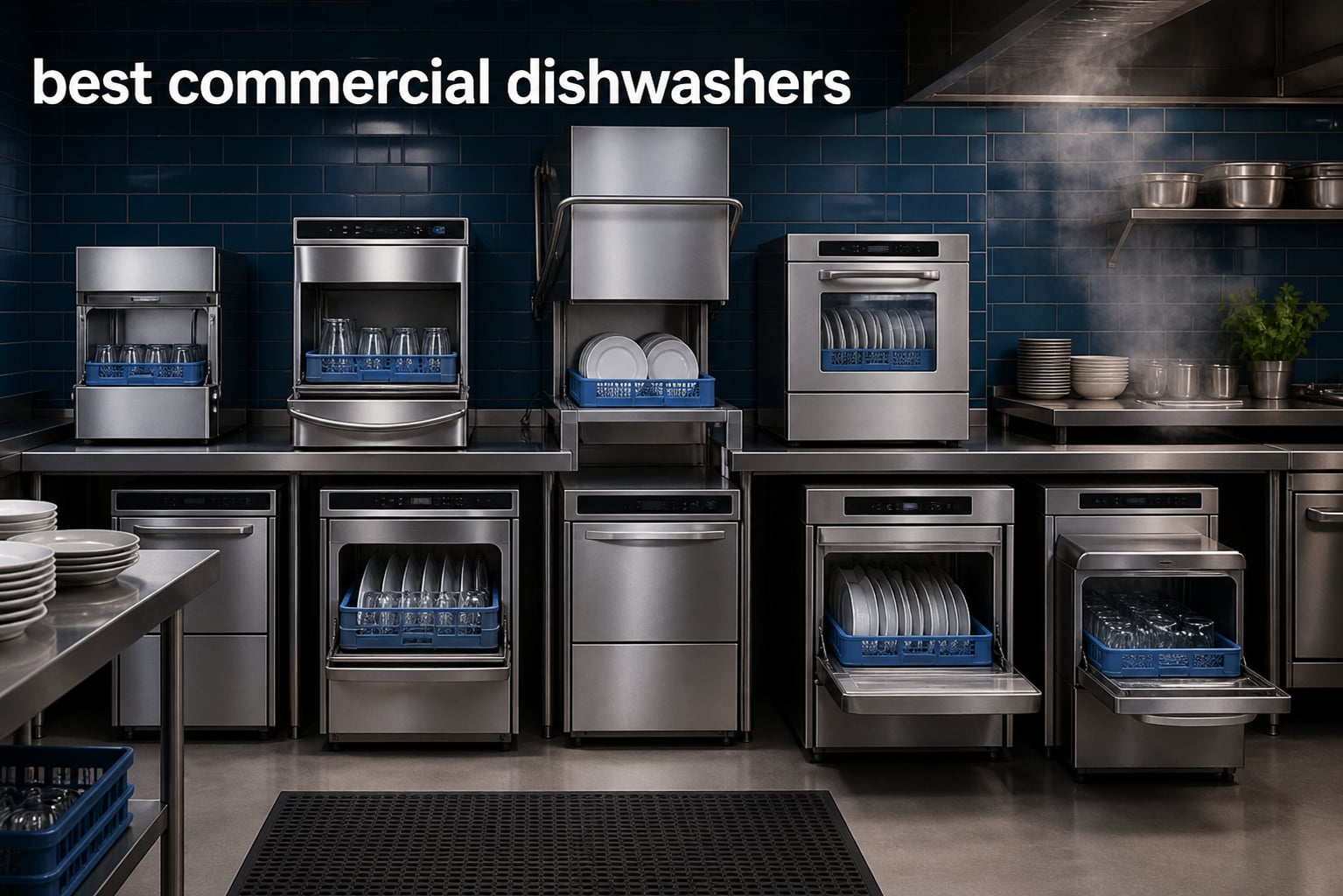
Choosing the best commercial dishwashers is less about finding the biggest machine and more about matching wash capacity, available utilities, glassware care, and service access to your kitchen. The right restaurant dishwasher should turn dirty racks into sanitized ware in 60 to 175 seconds without creating a staffing bottleneck, a sanitation problem, or an electric bill that surprises you.
I assessed all eight machines in this roundup for real operating distinctions rather than treating ratings alone as proof. Capacity claims, cycle times, water use, temperature method, door or opening size, chemical handling, and included pumps matter because a specification that looks strong in a catalog can be wrong for your room.
This guide focuses on best commercial dishwashers available in 2026, with separate undercounter, glasswasher, hood-type, and door-type choices. Several products have very small review samples, so I treat a 5.0 rating as supporting context, not a promise. Your local health code, water heater, electrical service, floor drain, and preferred chemical supplier still control the final fit.
Commercial dishwashers clean and sanitize far more ware per hour than residential machines. They use stronger wash pumps, purpose-built racks, booster heaters or chemical sanitizing, and short programmed cycles to keep restaurants, bars, hotels, schools, hospitals, and catering operations supplied with clean plates and glasses.
Racks per hour is the most useful first filter, but a 50-rack machine can still disappoint if loading, unloading, and dish landing take too long. I would add roughly 20% headroom above your measured peak demand, then check that the physical opening accepts the plates, hotel pans, and glasses you actually wash.
Forum owners repeatedly warned that a commercial unit is a sanitizer, not a garbage disposal. Their advice aligns with the operating data here: pre-scrape food, select the correct rack, protect delicate stemware, and arrange professional service before accepting delivery. That preparation is part of the purchase, not an optional afterthought.
Table of Contents
Top 3 Commercial Dishwasher Picks for 2026
These three picks cover the strongest practical needs in the group: maximum listed undercounter output, a low-water premium option, and a dedicated glasswasher. I would choose among them by ware type and service expectations rather than ranking one across every kitchen.

RIOXC H50-ST High-Temp Undercounter
- 40 racks per hour
- 85/115/175-second cycles
- Zoppas booster

Best Commercial Dishwashers in 2026 at a Glance
These eight products divide into dedicated glasswashers, all-purpose undercounter machines, a tall hood-type unit, and a higher-output door-type machine. Their listed capacities range from 30 to 51 racks per hour, so every operation should compare that figure with its peak rack demand and available floor space.
| Product | Specifications | Action |
|---|---|---|
 Lamber DSP3 Glass Washer Lamber DSP3 Glass Washer |
|
Check Latest Price |
 Lamber DSP4DPS Undercounter Lamber DSP4DPS Undercounter |
|
Check Latest Price |
| RIOXC H50-ST Undercounter |
|
Check Latest Price |
| Hobart LXEH-2 Undercounter |
|
Check Latest Price |
 HYBOKITCH HYBO-302D HYBOKITCH HYBO-302D |
|
Check Latest Price |
 Elite Kitchen Supply H60-S1 Elite Kitchen Supply H60-S1 |
|
Check Latest Price |
 Hobart CDL-1 Door Type Hobart CDL-1 Door Type |
|
Check Latest Price |
 CMA Dishmachines UC65E CMA Dishmachines UC65E |
|
Check Latest Price |
1. Lamber DSP3 Glass Washer — Compact High-Temperature Glass Care
Eurodib DSP3 Lamber High Temperature Rack Undercounter Commercial Glass Washer, 30 Racks/Hr, Stainless Steel, 16″ x 16″ Rack Size, 208-240v, 15A, Silver
30 racks per hour
2-minute cycle
16 x 16 inch rack
240 volts
Pros
- Stainless wash and rinse arms
- Large 16 x 16 inch basket
- Detergent and rinse-aid pumps
- Removable control panel
Cons
- Low stock
- Limited 11-review sample
- Gravity drain requires confirmation
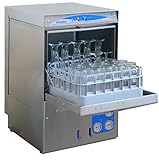
I would use the Lamber DSP3 when glassware is the main workload and the bar has limited floor space. Its 18 by 20 by 31 inch listed footprint and 30-rack-per-hour rating suit a compact station, while the 16 by 16 inch basket gives staff more usable room than a small glass rack.
The two-minute cycle, stainless upper and lower wash and rinse arms, temperature thermometers, detergent pump, and rinse-aid dispenser make the operating package feel complete. In a busy bar, I appreciate having dedicated glass cycles because one heavily soiled plate rack should not dictate the whole machine’s wash time.
The trade-off is confidence in support. Eleven reviews averaging 3.2 raise concerns about product condition and replacement-part access, and the listing has only 11 units shown in stock. I would confirm drain type, water temperature, delivery condition, and technician coverage before ordering.
High-temperature washing also makes glass handling a safety issue. Let glasses cool before pouring cold beer, because forum users report that heated glass can affect a pour and may create thermal stress if moved straight into service.
Its 45 dB noise listing is another reason it fits near a bar better than a loud back-of-house alternative. Even so, that figure should be checked against an installation with hard floors and reflective tile, which can make a machine seem louder than its rated sound output.
Best fit and installation checks for the Lamber DSP3
This model is best for bars, tasting rooms, cafes, and compact hotel outlets with a strong glassware focus. A proper 16 by 16 inch rack set matters because glass stems, tall goblets, and delicate stemware need more support than loosely mixed plates.
Confirm the 240-volt connection, incoming water requirements, detergent clearance, and whether the drain is gravity-fed before planning cabinetry. Those checks prevent the most common surprise: a machine that fits the opening but does not match the plumbing route.
Where the Lamber DSP3 falls short
The 30-rack rating is appropriate for a bar, but it may leave no recovery margin in a high-volume restaurant washing mixed ware. Its limited review history also makes local serviceability as important as the specification sheet.
I would not buy it solely because it is a high-temperature machine. Confirm that the glass program, temperature controls, and drain arrangement satisfy local health requirements and that replacement parts are available nearby.
2. Lamber DSP4DPS — Flexible 20-Inch-Rack Undercounter Workhorse
Eurodib DSP4DPS Lamber Deluxe High-Temp Rack Undercounter Dishwasher, 30 Racks/hr, Stainless Steel, 208-240v, Silver
30 racks per hour
2-minute cycle
20 x 20 inch basket
4.8 gallons
Pros
- Spacious 20 x 20 inch basket
- Stainless wash and rinse arms
- Detergent and rinse-aid pumps
- Removable control panel
Cons
- Only seven reviews
- Ships in 2-3 days
- 240-volt service needed
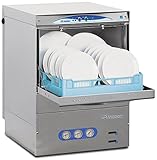
The Lamber DSP4DPS is the more adaptable Lamber option when your team needs a larger 20 by 20 inch basket than the DSP3 provides. I see it as a better fit for cafes and small restaurants that mix larger plates, bowls, and some glassware without moving to a door or conveyor system.
Its listed 4.8-gallon capacity, stainless arms, two-minute cycle, thermometers, and removable control panel support quick service. The 106-pound listed weight and 25 by 24 by 32 inch dimensions still call for a planned undercounter opening and two people or equipment for placement.
Seven reviews averaging 4.5 are encouraging, with the data noting 66% five-star ratings. That sample is small, so I would give the score less weight than rack size, access to the control panel, and the availability of a qualified service technician.
Noise is listed at 44 dB, which is useful if the machine sits near staff or customers. A stainless body and stainless wash components should also tolerate regular commercial cleaning better than mixed-material construction.
The main operational question is whether 30 racks per hour covers your true surge. Add your busiest table turns, glass reset, pan washing, and weekend demand; if the number is close to capacity, the RIOXC H50-ST or Elite H60-S1 deserves consideration instead.
Best fit and installation checks for the Lamber DSP4DPS
Choose the DSP4DPS for a small restaurant, hotel breakfast room, or catering kitchen needing more rack area than a glass-only washer. Its 20-inch basket can reduce bending or accommodate larger dishware, but the exact usable opening still needs measuring.
Have a professional verify 240-volt power, water temperature, drain height, and chemical connections. The machine is not a drop-in residential dishwasher, and a few inches of wrong-direction clearance can become a cabinetry problem.
Where the Lamber DSP4DPS falls short
The rating evidence comes from just seven reviews, and the listed 2- to 3-day dispatch time is less convenient than immediate replacement. I would also compare its two-minute fixed cycle with machines that offer 85- or 60-second options.
For a 50-rack peak workflow, even the larger basket does not solve the throughput problem. In that case, use a high-output undercounter or door-type model and keep this Lamber as a second-station option.
3. RIOXC H50-ST — Highest-Listed Undercounter Throughput
RIOXC Commercial Dishwasher, High-Temp Undercounter Dishwasher, 40 Racks/Hr, 208-240V, Stainless Steel, CSA & ETL Certified for Restaurant, Bar & Café
40 racks per hour
85/115/175-second cycles
240 volts
3-year parts
Pros
- Highest listed undercounter output
- Three cycle choices
- Zoppas booster
- CSA and ETL certified
Cons
- 185-pound weight
- 3-4 day dispatch
- Small eight-review sample
The RIOXC H50-ST is my all-purpose undercounter pick because it lists 40 racks per hour and gives operators three wash-cycle choices: 85, 115, or 175 seconds. That flexibility lets a kitchen spend time on heavily soiled pans while using a faster cycle for lightly soiled glasses and plates.
I would value the built-in Zoppas booster, stainless construction, push-button controls, and three-year parts warranty in a cafe or compact restaurant. CSA and ETL certification also gives a clearer starting point for safety and sanitation review than an unverified appliance listing.
The machine is not tiny. It weighs 185 pounds, measures about 25 by 24.61 by 32.48 inches, uses 240 volts, and has a six-gallon listed capacity, so two strong installers or lifting equipment are sensible. The review data notes an 81% five-star share from eight reviews, but I would still validate local service and parts inventory.
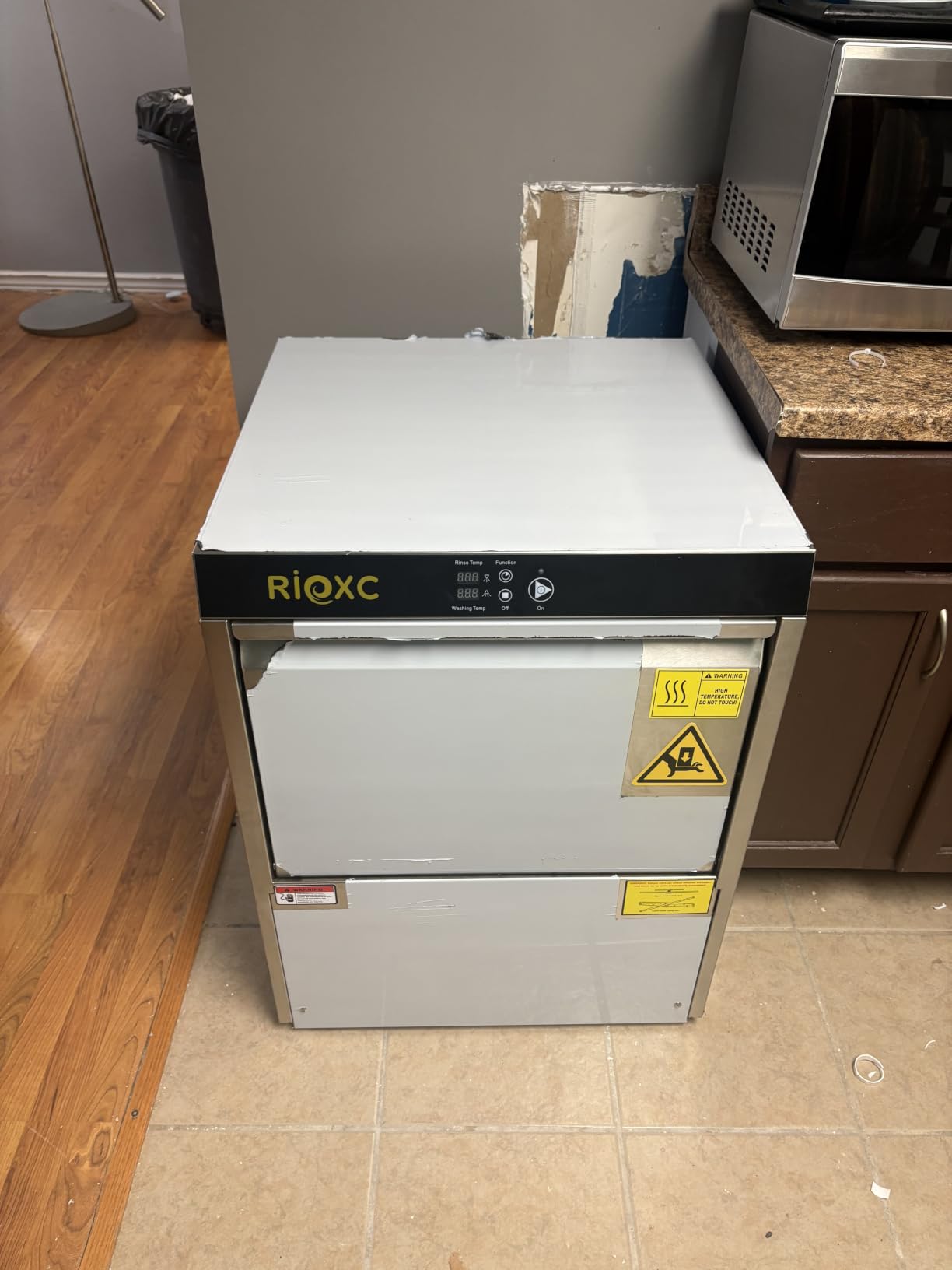
Water use is listed as 0.22 gallons per minute, which is not directly comparable with gallons per rack and should not be used as a total-water claim without cycle data. Its energy listing of 8,700 watts likewise describes the electrical system, not an operating-cost forecast.
The H50-ST’s strongest advantage is throughput per footprint. It can be a smart choice for a small kitchen that needs more than 30 racks per hour but cannot justify a full hood or door machine.
Best fit and installation checks for the RIOXC H50-ST
This machine is best for small restaurants, bars, cafes, and caterers with limited floor area and a real need for up to 40 racks per hour. I would also consider it for a prep kitchen that cycles bowls, cups, and small pans separately from larger cookware.
Use a licensed installer to inspect 208-240V service, the booster, drain route, water pressure, and ventilation. Undercounter does not mean utility-free, and a failed connection can erase the benefit of its compact size.
Where the RIOXC H50-ST falls short
Its 185-pound weight is substantial, and the lack of a large public review base makes after-sales support a material buying factor. The 3-4 day dispatch can also be too slow when a machine failure has already stopped service.
It is not the right choice for a quiet open kitchen without checking the listed 45 dB figure in context. Nor is it the best answer for a very small bar that washes mostly glasses; the DSP3’s dedicated format is easier to justify there.
4. Hobart LXEH-2 — Lowest Water Claim in the Roundup
Hobart LXEH-2 Undercounter Dishwasher – High Temp Sanitizing Unit
32 racks per hour
109-second cycle
0.74 gallons per rack
120/240 volts
Pros
- Lowest listed water use
- Built-in booster
- Automatic cycle
- Automatic pumped drain
Cons
- Only two reviews
- 120V and 208/240V connections
- Premium equipment budget
The Hobart LXEH-2 stands out for efficiency: the product data lists 0.74 gallons per rack, a 109-second cycle, 32 racks per hour, and a built-in booster heater. For a kitchen that washes thousands of racks each month, the water figure is more useful than a vague “eco” label.
I would expect straightforward operation from the automatic wash-and-rinse cycle and appreciate the pumped drain. The 17-inch door opening also gives staff a clear loading target, although operators should measure their largest rack or insert rather than relying on the nominal height.
The catch is infrastructure. The listing says it needs both 120V and 208/240V connections, so the electrical panel and electrician are part of the decision. The two-review sample averaging 4.0 is positive but too small to establish a long-term reliability record on its own.
Hobart’s broad service reputation is a practical advantage in a commercial kitchen, and user reports commonly treat the brand as a serviceable premium choice. That reputation does not remove the need to confirm a local technician, response time, and parts availability before purchase.
At the listed 0.74 gallons per rack, I would multiply by the monthly rack count to estimate water savings against another machine. The comparison is only fair when the same incoming temperature, wash quality, and rack-loading method are used.
Best fit and installation checks for the Hobart LXEH-2
Choose the LXEH-2 for a restaurant, hotel, or institutional kitchen that values water conservation and has a reliable service network. It is especially appealing where a 32-rack undercounter machine is enough but 40-rack output is unnecessary.
Get a written electrical plan for the 120V and 208/240V requirements, verify water temperature, and confirm the pumped drain can reach the approved drainage point. A professional installation is cheaper than discovering a power or drainage mismatch after delivery.
Where the Hobart LXEH-2 falls short
The listed price, dual-voltage requirement, and small review sample make it a less forgiving choice for a first-time operator. I would also not assume the 0.74-gallon claim means every site will achieve identical use; loading and maintenance affect actual consumption.
If your peak requirement approaches 40 racks per hour, the RIOXC H50-ST provides more listed output at a lower equipment level. The LXEH-2 earns its place through efficiency, support potential, and low-water design rather than maximum speed alone.
5. HYBOKITCH HYBO-302D — Fastest Claimed 60-Second Cycle
Commercial Dishwasher Undercounter High Temperature, Built-in Booster, Built-in Detergent & Rinse Aid Pumps, Stainless Steel, 20-40 Racks/Hr, 208~240V, 1 Phrase for Restaurant Bar Cafe
20-40 racks per hour
60/120/180-second cycles
0.67 gpm
240 volts
Pros
- 60-second cycle claim
- Built-in booster
- Detergent and rinse-aid pumps
- 20-40 rack range
Cons
- No reviews yet
- 2-3 week dispatch
- Freestanding listed format
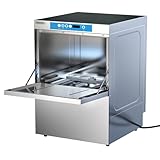
The HYBOKITCH HYBO-302D is the speed-focused experiment in this group. It lists an Italian FIR water pump, three cleaning durations of 60, 120, or 180 seconds, and a range of 20 to 40 racks per hour for a restaurant, bar, or cafe.
I would not treat the claimed 60-second cycle as an automatic performance win. Commercial ware still needs correct loading, rinse temperature, and chemical concentration, and a very fast cycle can produce disappointing results if staff use it for baked-on food.
The built-in booster, detergent pump, and rinse-aid pump reduce separate-equipment decisions, while the 0.67-gallon-per-minute water listing is useful for planning only after a technician checks pressure and cycle flow. Its 149-pound weight and 32-inch height need an honest floor plan.
This is also the least proven option in the roundup: the product data says there are no reviews, and dispatch is usually 2-3 weeks. I would seek written confirmation of the warranty, replacement parts, local support, and exact rack rate before paying a deposit.
For a new operator, the appeal is a compact machine with a fast claimed cycle and integrated chemistry. The risk is that “new” and “feature-rich” are not the same as field-tested, especially in a kitchen where downtime has an immediate service cost.
Best fit and installation checks for the HYBOKITCH
The HYBO-302D is best for a kitchen that wants a 60-second option and accepts a longer lead time. I would assign it to cups, glasses, and lightly soiled plates after staff have demonstrated consistent results with measured sanitation checks.
Confirm the 208-240V connection, water pressure, drain arrangement, and whether the freestanding form factor fits under the counter without blocking access. The specification’s 20-40 racks per hour range also needs a clear explanation of which cycle produces which rate.
Where the HYBOKITCH falls short
There is no customer-rating evidence, and the 2-3 week shipping estimate is not ideal for a replacement. I would not make it the only machine in a restaurant without a backup plan.
Its 19.81-gallon listed capacity is high relative to a compact undercounter, and the 45 dB claim needs on-site verification. If reliability and service evidence matter more than the shortest cycle, the Hobart or RIOXC is the safer shortlist.
6. Elite Kitchen Supply H60-S1 — Tall Hood-Type Capacity
NSF 1 or 3 phase Commercial Hood Type Dishwasher, 50 Racks/Hour, Digital Controls, High-Temp Sanitizing H60-S1 Need electrician to install
50 racks per hour
70/100/130-second cycles
208-240V
1HP wash pump
Pros
- 50-rack listed output
- 140F wash and 180F rinse
- Digital controls
- NSF certified
Cons
- 70 dB listed noise
- Hardwired three-phase requirement
- No customer reviews
The Elite Kitchen Supply H60-S1 is the tall hood-type option for kitchens that need listed output of 50 racks per hour. Its 18-inch opening and 54.5-inch height are closer to a compact hood machine than a standard undercounter, and that extra vertical clearance helps with larger plates and hotel pans.
Three digital cycles of 70, 100, and 130 seconds give the operator a clear trade-off between speed and soil level. The data lists a 140°F wash, 180°F rinse, rotating stainless arms, a 1HP pump, chemical dispensers, a fill hose, and a drain hose.
This is not a simple plug-in unit. It requires 208-240V, three-phase power, a hardwire connection, and likely an electrician, while the 70 dB rating is materially louder than several undercounter alternatives. A busy back-of-house line may accept that, but an open counter will not.
The lack of reviews makes field reliability uncertain, even though the machine carries NSF certification and a one-year parts-and-labor warranty. I would request commissioning support, a parts list, and a service response commitment from the seller.
Its water-use figures are inconsistent across the source fields, with both 0.66 and 0.74 gallons per cycle appearing. I would use the manufacturer’s installation sheet to confirm the actual figure before comparing total cost with the Hobart LXEH-2.
Best fit and installation checks for the Elite H60-S1
This model is best for restaurants, cafeterias, and hotels that need hood-type capacity but do not require a conveyor line. It is a strong throughput candidate when the 50-rack figure matches a measured peak with margin.
Before ordering, have a commercial-kitchen electrician verify three-phase availability, the hardwire route, amperage, disconnect, ventilation, and condensate handling. Do not place it near a customer conversation area until you have measured real operating noise.
Where the Elite H60-S1 falls short
The three-phase requirement can disqualify it in a small cafe with only standard service. Its 70 dB listing, 158-pound weight, and no customer reviews add planning and support risk.
I would not choose it for a home, food truck, boat, or island where the warranty exclusions or electrical requirements create a problem. In a properly equipped commercial kitchen, however, the listed 50-rack capacity is compelling.
7. Hobart CDL-1 — Door-Type Efficiency With Soft Start
Commercial Door Type Dishwasher, Centerline Series by Hobart
51 racks per hour
Chemical sanitizing
120 volts
ENERGY STAR certified
Pros
- 51-rack listed output
- Soft start for delicate ware
- Integrated chemical pumps
- NSF and ENERGY STAR certified
Cons
- One review only
- Commercial-address warranty condition
- Only four units shown in stock
The Hobart CDL-1 is the highest-listed-output conventional door type here at 51 racks per hour. Its 29 by 30 inch footprint and 63-inch height are much larger than an undercounter washer, but they provide a roomy working position for a kitchen that needs more rack throughput.
I particularly like the soft-start function because it reduces the shock of a wash arm hitting delicate items. Chemical sanitizing, recirculating design, integrated chemical pumps, a self-cleaning filter, delime notification, and service diagnostics make this a service-friendly machine on paper.
The 120-volt listing is a convenience for the machine itself, but the door-type installation still needs adequate drainage, ventilation, and working space. The warranty is stated for commercial business addresses only, and the available stock signal is limited, so I would confirm both in writing.
There is one verified review averaging 5.0, with the customer saying it “Works great.” That is useful testimony, but a single review cannot tell us about five years of deliming, pump service, or part availability.
At 44.06 gallons per hour, the listed water figure is higher in absolute terms than a low-water undercounter, but the machine processes more racks. I would judge it on cost per clean rack and labor saved, not on gallons per hour alone.
Best fit and installation checks for the Hobart CDL-1
Choose the CDL-1 for a busy restaurant, hotel, cafeteria, or institution with room for a 51-rack door machine. It makes sense when staff can keep it loaded continuously enough to recover the larger capital and utility commitment.
Verify the commercial-address warranty, chemical-delivery system, drain, ventilation, and service access. The door opening should be measured against your largest rack, and the floor needs to support the machine and operator movement safely.
Where the Hobart CDL-1 falls short
The 51-rack figure is the major attraction, but the one-review sample is the weakest evidence base in the list. Limited stock and a warranty restriction for residential or outdoor use can complicate ownership.
I would not install it in a compact cafe where 30 to 40 racks per hour already covers demand. Its size and water-throughput profile belong to a kitchen that will use the extra capacity every day.
8. CMA Dishmachines UC65E — Established High-Temp Undercounter Platform
CMA UC65E High Temp 14-1/2″ Opening Undercounter Dishwasher | 30 Racks/Hr
30 racks per hour
4.0 kW booster
Rapid/SaniWash/Intensive/Normal
148 pounds
Pros
- Four cycle options
- Built-in 4.0 kW booster
- Chemical pumps and pump drain
- Triple filtering
Cons
- 75 dB listed noise
- Only one review
- Professional undercounter setup
The CMA UC65E is a high-temp undercounter dishwasher for a kitchen that values a known commercial platform more than the quietest listed sound level. It processes 30 racks per hour, uses a 1HP wash pump, and includes a built-in 4.0 kW booster.
Rapid, SaniWash, Intensive, and Normal cycle choices let staff match the program to the load. Built-in detergent and rinse chemical pumps, a pump drain, upper and lower stainless arms, and triple filtering support a complete installation package.
The strongest real-world signal in the source is a verified customer review saying it worked for six years before the owner ordered a second one. That is meaningful testimony, even though one review cannot represent every service history.
Noise is listed at 75 dB, and the machine is 148 pounds. I would place it behind a service partition, protect staff from excessive exposure, and confirm the undercounter cutout and floor drain before delivery.
The listing has a relatively small review sample, no stated warranty, and no weight or dimensions in the specification fields. Those omissions make a pre-purchase document review essential, especially for a business replacing a critical machine.
Best fit and installation checks for the CMA UC65E
The UC65E fits restaurants, hotels, and institutional kitchens that need 30 racks per hour, high-temp sanitizing, and multiple cycle choices. It is a particularly sensible candidate when a service team can support a CMA platform locally.
Ask for written confirmation of the warranty, booster, drain, voltage, and all included hoses before purchase. Measure the 25 by 24 by 33.5 inch listed body and keep access open for removing filters, washing arms, and the control components.
Where the CMA UC65E falls short
The 75 dB listing is a real disadvantage in an open kitchen, bar, or office-adjacent prep area. A single five-star review is encouraging but not enough to establish universal reliability.
It also cannot match the 40- to 51-rack output of the RIOXC, Elite, or Hobart door type. I would choose it for durable high-temp washing and cycle flexibility, not for maximum speed in the smallest package.
How to Choose the Best Commercial Dishwasher for Your Kitchen?
The best commercial dishwasher is the one that meets your peak demand with reliable sanitation, not the one with the largest number on a product page. Use the following decision sequence to avoid buying a machine that is too small, too large, or incompatible with the building.
1. Match dishwasher type to the workflow
An undercounter dishwasher fits small restaurants, bars, cafes, and caterers with roughly 20 to 40 racks per hour of demand. It is compact, but it requires an undercounter opening, utility access, and staff to load and unload at the same station.
A door type dishwasher suits higher-volume kitchens that want up to 51 racks per hour without a conveyor. A hood type machine, such as the H60-S1, adds vertical clearance and listed 50-rack output for larger ware, while a conveyor system is the answer for continuous institutional or cafeteria volume.
A glasswasher is not a compromise if glasses are 80% or more of the load. Its smaller rack and focused cycle can reduce breakage, speed reset, and keep a bar from tying up an all-purpose machine.
2. Calculate racks per hour before comparing models
Count the racks your busiest period requires, then add 20% recovery margin. If a dinner service needs 35 racks in 60 minutes, a 30-rack machine is already short; a 40- or 50-rack model gives the team room for peaks and cleaning pauses.
Cycle time is not the same as rack rate. A two-minute fixed cycle is simple to understand, while the H50-ST’s 85-, 115-, and 175-second choices and the H60-S1’s 70-, 100-, and 130-second choices let staff choose between speed and soil load.
3. Decide between high-temperature and chemical sanitizing
High-temperature dishwashers use heated wash and rinse water, often with a booster heater, to reach sanitation requirements. They can be effective without relying on chemical sanitizing, but they use energy, release heat and steam, and need time for glassware to cool.
Low-temperature or chemical-sanitizing machines use water and approved chemical concentration to sanitize ware. They generally use less energy for heating, but they need reliable chemical dosing, staff training, water quality, and care with residue-sensitive materials.
Do not choose by temperature alone. Confirm the local health code, incoming water temperature, booster capacity, chemical system, ventilation, and the machine’s documented sanitation performance.
4. Check water, energy, and total cost of ownership
Water claims use different units, so compare gallons per rack or per cycle rather than mixing gallons, gallons per hour, and gallons per minute. The Hobart LXEH-2 lists 0.74 gallons per rack, while other products list consumption in different measures; obtain the installation sheet before making a cost claim.
Calculate monthly cost as equipment cost allocation, water, sewer, electricity, detergent, rinse aid, maintenance, and labor. A machine that saves 20 seconds per rack can justify itself quickly if it removes a person from manual washing, but the calculation must use your actual wage and rack count.
Energy Star certification, as listed for the Hobart CDL-1 and CMA UC65E, is a useful efficiency signal, not a guarantee of the lowest bill. A high-temp booster can increase energy use, while a chemical machine may shift more of the operating cost into chemicals and water control.
5. Plan the installation before selecting a model
Commercial dishwashers commonly need dedicated 120V, 208V, 240V, or three-phase power, plus hot water, a drain, and chemical connections. The Elite H60-S1 specifically requires 208-240V three-phase and a hardwire connection, while the Hobart LXEH-2 lists both 120V and 208/240V requirements.
Measure the body, door opening, service clearance, and floor drain rather than using a rounded product dimension. A hood or door machine also needs room for an operator to stand, load a wet rack, and open the door without blocking traffic.
Ventilation and heat recovery matter in small rooms. High-temp machines release heat and steam, so verify an approved hood or condensate strategy with the local inspector and the manufacturer; do not assume a residential range hood is enough.
6. Protect glassware and manage chemicals
Choose racks that support stems, bowls, and plates at the correct angle, and do not cram glasses into an oversized all-purpose rack. Forum users specifically identify poor rack selection and rapid temperature changes as causes of breakage or poor pours.
Pre-scrape plates and separate heavily soiled cookware from glassware. Commercial machines are sanitizers, not garbage disposals, and staff who use the fastest cycle for everything will eventually create rework, residue, or complaints.
Check whether detergent and rinse-aid pumps are built in, whether chemical containers fit the planned location, and how easy the machine is to delime. A removable control panel, self-cleaning filter, and service diagnostics can turn a difficult cleaning job into a scheduled task.
7. Choose brands by support, not just ratings
Hobart is frequently described by owners as a serviceable, premium choice, while Jackson, CMA, and Moyer Diebel also appear in the broader commercial market. RIOXC, Lamber, Elite Kitchen Supply, and HYBOKITCH offer compact or value-oriented alternatives, but their local support networks can differ substantially.
Ask who services the machine, how quickly a technician can attend, whether common pumps and controls are stocked, and whether the warranty covers the business location. A cheaper machine that waits two weeks for a part can cost more in lost service than a premium model with local coverage.
8. Do not ignore maintenance and safety
Clean filters, inspect wash arms, delime on schedule, and keep the door and floor area free of standing water. Verify the interlock, automatic shutoff, chemical alarms, temperature readouts, and emergency shutoff during commissioning.
Noise is a practical safety and comfort issue. The source data ranges from 44 dB on the Lamber DSP4DPS to 75 dB on the CMA UC65E, but those numbers are not directly comparable unless the test conditions match. Measure the installed machine during a full cycle near the operator’s position.
Used commercial dishwashers need extra scrutiny. Inspect the booster, wash pump, drain pump, door gasket, control board, chemical lines, racks, and hidden leaks, then have a technician commission the machine and confirm the parts model is still available.
9. Use this short selection rule
Choose a glasswasher for a glass-heavy bar, the RIOXC H50-ST for a compact all-purpose kitchen needing up to 40 racks per hour, the Hobart LXEH-2 for low-water efficiency, the Elite H60-S1 for a properly equipped hood-type station, and the Hobart CDL-1 or CMA UC65E for higher-volume or service-focused operations. Validate utilities and health-code requirements before placing an order.
Frequently Asked Questions
What brand of dishwasher is the most reliable?
Hobart and CMA are often cited for serviceable commercial platforms, while Lamber, RIOXC, Elite Kitchen Supply, and HYBOKITCH can fit smaller budgets. Reliability depends more on local technician access, preventive maintenance, water quality, and correct installation than on a brand name alone.
What are the top five dishwashers to buy?
For a broad shortlist, start with the RIOXC H50-ST for 40-rack undercounter output, Hobart LXEH-2 for low-water use, Hobart CDL-1 for 51-rack door-type capacity, CMA UC65E for high-temp cycles and filtering, and Elite H60-S1 for 50-rack hood-type operation. Match the choice to rack demand, utilities, and glassware.
What brand dishwasher to stay away from?
Avoid any brand you cannot have serviced locally, regardless of its listing price. A machine with no nearby technician, unavailable pumps, or an unclear warranty can create expensive downtime; verify parts, support, and installation before choosing a model.
What is the average lifespan of a commercial dishwasher?
A well-maintained commercial dishwasher commonly lasts around 7 to 12 years, though heavy use, hard water, poor maintenance, and delayed service can shorten that range. Treat a six-year owner report for the CMA UC65E as encouraging field evidence, not a universal lifespan promise.
Which brand of commercial dishwasher is considered the best?
Hobart is frequently considered a leading commercial dishwasher brand because of its reputation, service ecosystem, and efficiency-focused models. The best brand for your kitchen is the one that provides the required capacity and a dependable local technician within your budget.
What are some common problems with commercial dishwashers?
Common problems include clogged filters, blocked wash arms, weak water pressure, failed booster heaters, drain or chemical-pump faults, residue from incorrect dosing, leaks, and worn door interlocks. Regular cleaning, correct chemistry, and prompt service prevent many of these failures.
What are the downsides of using a commercial dishwasher?
The downsides are high upfront cost, dedicated electrical and plumbing needs, heat or chemical requirements, operator training, and professional maintenance. Poor rack selection or inadequate installation can also cause breakage, sanitation failures, or downtime.
Do commercial dishwashers need a hood?
A hood or approved ventilation strategy is commonly required for heat and steam from high-temperature machines, but the exact rule depends on the model, local code, and kitchen layout. Ask the manufacturer and health authority to approve the ventilation plan before installation.
Conclusion: Pick Capacity, Utilities, and Service Together
The best commercial dishwashers for 2026 are the models that fit your actual rack demand, glassware, and building services. The RIOXC H50-ST is the strongest all-purpose undercounter choice for listed output, the Hobart LXEH-2 is the efficiency pick, the Lamber DSP3 is the dedicated glasswasher, and the Elite H60-S1 or Hobart CDL-1 is the answer when a kitchen needs 50 or more racks per hour.
Before you order, measure the opening, verify voltage and water requirements, confirm ventilation, and name the technician who will service the machine. A clear installation plan protects the warranty, sanitation compliance, and the throughput that made the purchase worthwhile.