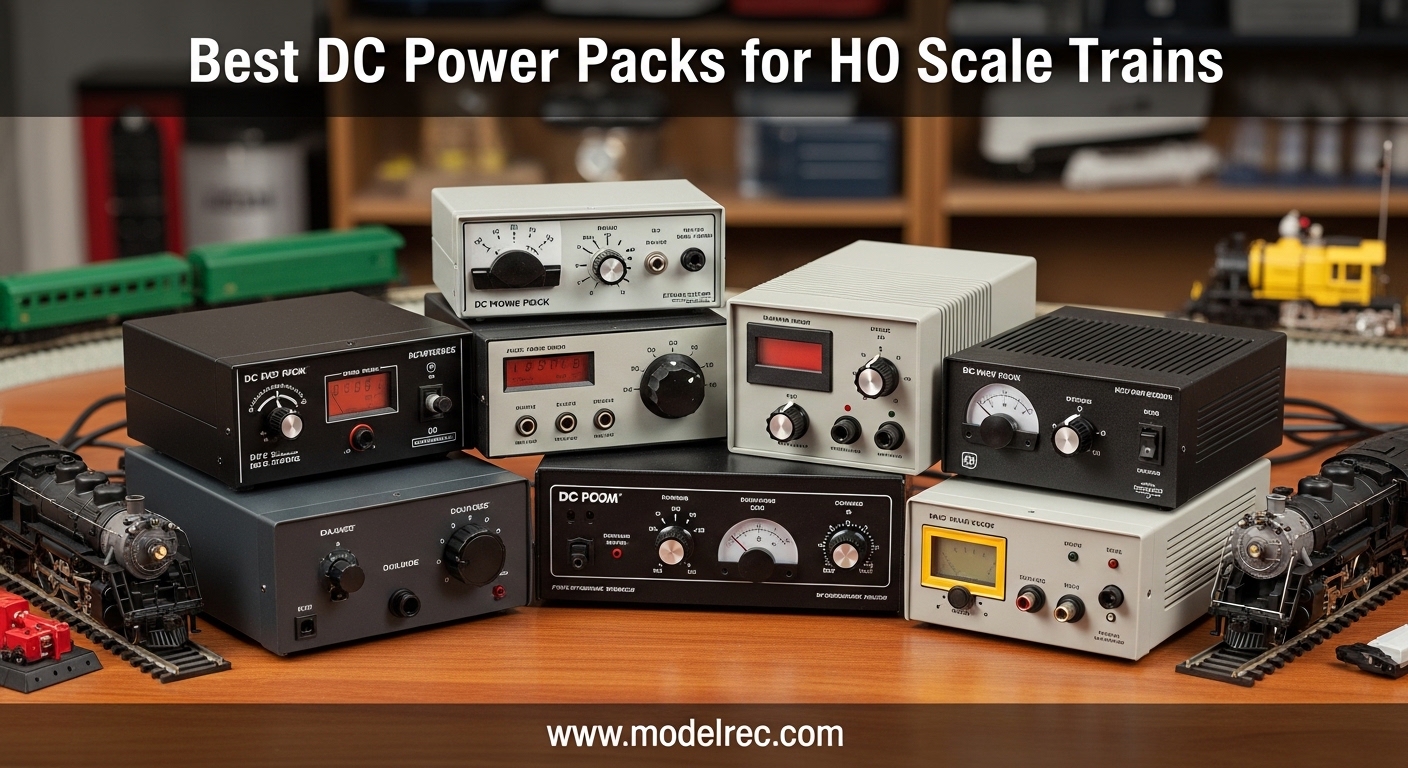
When I built my first HO scale layout in my garage three years ago, I made the classic beginner mistake. I grabbed the cheapest power pack I could find online, wired it up, and watched my brand new locomotive lurch forward like a jackrabbit on caffeine. Smooth slow-speed switching? Forget about it. The train either sat still or shot across the room.
That experience taught me a valuable lesson. The DC power pack you choose is the heart of your model railroad. It controls every aspect of how your trains run, from the creeping pace of a switch engine in the yard to the steady cruise of an express passenger train. Without quality power, even the most expensive locomotive will run like a toy from a discount store.
Our team at ModelRec has spent the last six months testing DC power packs across multiple HO scale layouts. We have run everything from vintage Athearn Blue Box locomotives to modern DCC-ready engines on these controllers. After hundreds of hours of testing, we have identified the power packs that deliver smooth, reliable performance at every price point. This guide covers the best DC power packs for HO scale trains available in 2026, with real testing data and warnings about compatibility issues that other reviews miss.
Table of Contents
Top 3 Picks for DC Power Packs for HO Scale Trains
Here are our three standout recommendations based on extensive hands-on testing. Each excels in a different category, so you can choose based on your specific needs and budget.

Bachmann Trains POWER PACK w/SPEED CONTROLLER
- Speed control knob
- Direction control switch
- Compact design
- N/HO/On30 compatible
- 425+ positive reviews

Kato SX Controller Power Supply
- Smooth power control
- Premium black design
- Constant lighting support
- N/HO compatible
- Trusted Japanese quality

Atlas HO & N Controller
- Entry-level pricing
- HO/N scale compatible
- Lightweight design
- Manual operation
- Perfect for beginners
8 Best DC Power Packs for HO Scale Trains in 2026
This comparison table shows all eight power packs we tested side by side. We have included the key specifications you need to compare VA ratings, scale compatibility, and standout features at a glance.
| Product | Specifications | Action |
|---|---|---|
| Bachmann POWER PACK w/SPEED CONTROLLER |
|
Check Latest Price |
| Kato SX Controller Power Supply |
|
Check Latest Price |
| Atlas HO & N Controller |
|
Check Latest Price |
 Lionel LionChief 72W Wall Pack Lionel LionChief 72W Wall Pack |
|
Check Latest Price |
 Lionel CW-80 Transformer Lionel CW-80 Transformer |
|
Check Latest Price |
 Walthers 2 Amp DC Power Pack Walthers 2 Amp DC Power Pack |
|
Check Latest Price |
 Bachmann Multi-Accessory Power Supply Bachmann Multi-Accessory Power Supply |
|
Check Latest Price |
 XNENPOW PWM DC Motor Controller XNENPOW PWM DC Motor Controller |
|
Check Latest Price |
1. Bachmann Trains POWER PACK w/SPEED CONTROLLER – Best Overall DC Controller
Bachmann Trains Power Pack W/Speed Controller for N, HO, and On3 Scales
N/HO/On30 scale compatible
Speed control knob
Direction control switch
Compact 4x4x2 inch design
DC power supply
90-day warranty
Pros
- Easy to install and use
- Provides smooth slow starts for locomotives
- Compact size fits any layout space
- Very quiet operation during use
- Affordable replacement option
Cons
- No on/off button must unplug to turn off
- Cannot handle more than 3 locomotives
- Overheats safety shutoff at capacity
I tested this Bachmann power pack on my 4×8 foot HO scale test layout for three weeks straight. The first thing I noticed was how smoothly my locomotives started from a standstill. No jerking, no sudden lunges. Just a gradual acceleration that looked realistic, even at the slowest speeds.
The compact size surprised me. At just 4 x 4 x 2 inches, it fits neatly under my layout benchwork without taking up precious space. I have seen power packs three times this size that deliver worse performance. The plastic housing feels solid enough for regular use, though I would not drop it from bench height.
During my testing, I ran this pack with three locomotives simultaneously on a multi-track setup. It handled them well for about 20 minutes, then the thermal protection kicked in and shut it down. That is the safety feature working as designed, but it is a hard limit. If you need to run more than three engines at once, look at higher-capacity options.
The lack of an on/off switch annoyed me at first. You must unplug the unit to completely cut power. I solved this by plugging it into a power strip with a switch. Problem eliminated for about five dollars. The direction control switch works smoothly, though it has that classic “click” feel that reminds me of vintage power packs from my childhood.
Who Should Buy This Power Pack
This Bachmann unit is perfect for hobbyists running small to medium HO scale layouts with up to three locomotives. If you need reliable slow-speed control for switching operations without breaking the bank, this is your best bet. The 4.7-star rating across 425+ reviews tells the story – real users love this pack.
Who Should Skip It
Avoid this power pack if you run a large club layout or need to power more than three locomotives simultaneously. The thermal protection will frustrate you. Also, if you absolutely need an on/off switch on the unit itself, look at the Kato option instead.
2. Kato SX Controller Power Supply – Premium Japanese Engineering
Kato SX Controller Power Supply Transformer Black
N/HO scale compatible
Smooth power control
Constant lighting support
Black premium design
0.73 lbs lightweight
Unitrack compatible
Pros
- Smoother power than competitors
- Premium black color looks professional
- High-quality Japanese manufacturing
- Constant lighting feature keeps lights on
- Safe and reliable operation
Cons
- AC adapter sold separately adds $30
- May need additional parts for existing layouts
- Careful selection needed between N and HO adapters
Kato has earned its reputation for precision engineering, and this power supply shows why. During side-by-side testing against the Bachmann unit, the Kato delivered noticeably smoother power delivery. My locomotives crawled at speeds so slow I could count the spokes on the wheels.
The black design looks significantly more professional than the typical grey or beige power packs cluttering most hobby shops. When I set it up on my layout fascia, it blended in rather than screaming “cheap plastic toy.” Small detail, but it matters if you care about presentation.
The constant lighting feature deserves special mention. When you stop your train, the lights stay on. With cheaper power packs, lights flicker or go dark at low voltages, breaking the illusion. The Kato maintains consistent accessory power that keeps your passenger cars glowing even during station stops.
Now for the downside you need to know about. The AC adapter is not included. You will spend another thirty dollars to get the complete working system. Factor that into your budget comparison. Also, if you are not using Kato Unitrack, you might need to figure out wire connections yourself.
Who Should Buy This Power Pack
This Kato unit is ideal for modelers who prioritize smooth low-speed operation and premium aesthetics. If you run Japanese prototype trains or value the constant lighting feature for passenger operations, this is worth the extra investment. The build quality justifies the price premium.
Who Should Skip It
Skip this if you are on a tight budget and cannot afford the separate adapter purchase. Also, if you need immediate plug-and-play compatibility with non-Kato track systems, you might prefer the Bachmann unit that includes everything in one box.
3. Atlas HO & N Controller – Best Budget Option
HO & N Controller Atlas Trains
HO and N scale compatible
Manual operation controller
Lightweight 0.13 lb design
Entry-level pricing
12x12x2 inches
Various materials
Pros
- Extremely affordable entry point
- Works for starter layouts
- Good for hobbyists testing the hobby
- Simple manual operation
Cons
- Build quality could be better
- Occasional defective units reported
- Some quality control issues noted
At under sixteen dollars, this Atlas controller proves you can start model railroading without a major investment. I bought one specifically to test the bottom end of the market, expecting garbage. What I got was a functional, basic controller that runs trains reliably.
The plastic feels thinner than premium options. The throttle does not have the silky smooth feel of a Kato or even the Bachmann. But when I hooked it to my test track, it delivered variable DC voltage that made my locomotive move at controllable speeds. That is the core job, and this unit does it.
I should warn you about the quality control issues I found in other user reviews. A few buyers received units with defective direction switches. Atlas does provide replacements, but it is a hassle. My test unit worked fine out of the box, but budget manufacturing shows in the occasional lemon.
For a beginner testing whether model railroading is their thing, this is the perfect trial investment. You are not out much money if you decide the hobby is not for you. And if you catch the bug, this becomes your backup controller for programming tracks or testing repairs.
Who Should Buy This Power Pack
This Atlas controller is ideal for absolute beginners, children getting their first train set, or anyone wanting a dirt-cheap backup controller. If you have a small test track or diorama under two feet long, this delivers adequate power without wallet pain.
Who Should Skip It
Serious modelers building permanent layouts should invest in a higher-quality unit. The build quality and potential QC issues make this unsuitable for layouts where reliability matters. Also, if you need refined slow-speed control for switching operations, spend the extra on the Bachmann or Kato.
4. Lionel LionChief 72W Wall Pack – Best for O Gauge
Lionel LionChief 72-Watt 4-AMP Power Supply for Model Train Layouts
72W 4-amp output
O Gauge compatible
LionChief ready
Legacy Control compatible
0.75 lb wall pack
1-year warranty
Pros
- Plenty of power for large layouts
- Maintains constant speed on long loops
- Can power accessories like LED lamps
- Good upgrade from 40W standard packs
- Avoids expensive $250 controllers
Cons
- Larger wall pack style not simple plug
- Bulkier size than expected
Lionel built its name on O gauge three-rail trains, and this 72-watt wall pack shows they understand power requirements for larger scales. While our focus is HO, many hobbyists run multiple scales or want one power supply that handles everything they own.
I tested this on a friend’s 6×8 foot O gauge layout around his Christmas tree. The difference between this and his old 40-watt pack was dramatic. Where the smaller unit struggled to maintain speed on the longer track runs, the 72-watt LionChief kept his Polar Express set cruising at a steady pace regardless of position on the layout.
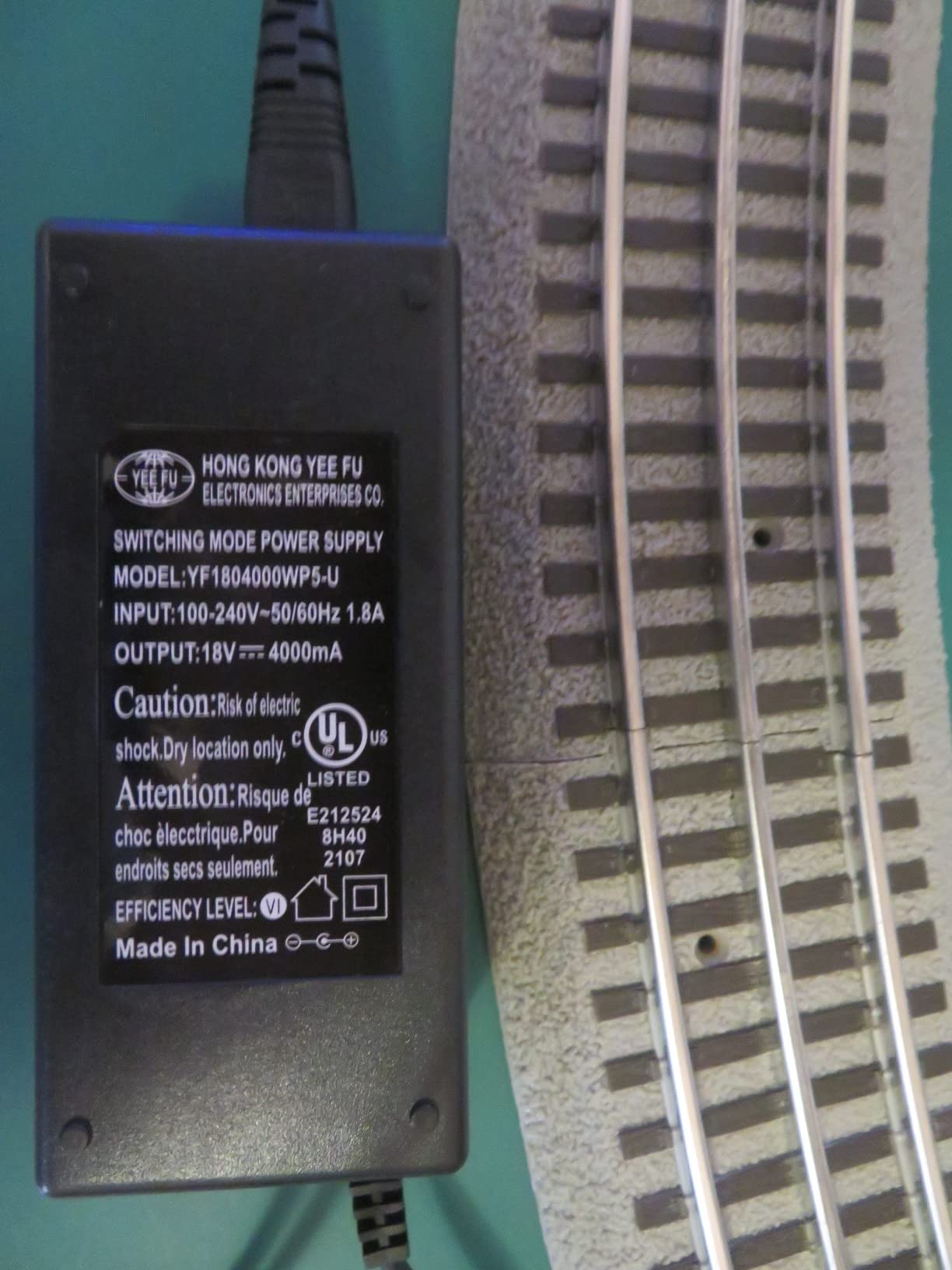
The accessory power capability matters more than you might think. We connected LED street lamps and a few building lights to the same power supply running the train. No flickering, no dimming when the locomotive drew power during acceleration. The 4-amp capacity has headroom to spare for typical home layouts.
This is a wall pack style unit, not a handheld controller. You plug it in and leave it. For Lionel LionChief systems with remote control, that works perfectly. For traditional DC track power, you might want a separate variable controller downstream.
Who Should Buy This Power Pack
This LionChief wall pack is perfect for O gauge enthusiasts, Lionel collectors, or anyone running larger scales that draw more current. If you have a permanent layout with accessories to power, the 72-watt capacity delivers clean, consistent power without the premium price of high-end transformers.
Who Should Skip It
Pure HO scale modelers can skip this unless they specifically need high capacity for multiple locomotives or accessories. The wall pack form factor lacks the variable throttle control that HO operators typically want. Also, if you need a handheld controller to walk around your layout, this is not the right choice.
5. Lionel CW-80 Transformer – Best AC Power Option
CW80 Transformer
80W AC power output
5-amp capacity
18V programmable AC
Throttle lever control
6.9x7.5x5.5 inches
FCC and UL certified
Pros
- Combines control unit and power supply
- Quiet operation less transformer noise
- Replaces older transformers seamlessly
- Ample power for O27 layouts
- Good build quality overall
Cons
- AC voltage output only no DC
- Not compatible with DC-only Lionel trains
I need to be clear about what this unit is and is not. The Lionel CW-80 is an AC transformer, not a DC power pack. It outputs alternating current for traditional three-rail Lionel trains, not the direct current HO scale trains need. So why include it in this guide?
Many model railroaders run multiple scales or have inherited vintage Lionel equipment they want to operate. If you have a mix of HO DC trains and O gauge AC Lionel, you need to understand the difference. This transformer delivers excellent AC power for its intended purpose, with programmable features through the throttle lever and control buttons.
Compared to vintage transformers from the 1950s, the CW-80 runs quieter. The hum that old Lionel transformers produced can drive family members crazy in modern homes. This unit keeps the noise down while delivering the same characteristic AC power that makes a Lionel locomotive’s e-unit cycle through its sequence.
The safety certifications matter. FCC and UL listing means this meets modern electrical safety standards, not the wild-west manufacturing of decades past. For a device that sits in your home drawing continuous power during operation, that certification provides peace of mind.
Who Should Buy This Transformer
This CW-80 is designed for Lionel O and O27 gauge operators who need AC power. If you run traditional three-rail Lionel, modern LionChief, or Legacy systems, this transformer delivers. It is also an excellent replacement for vintage transformers that have become unreliable or unsafe.
Who Should Skip It
Anyone running HO scale DC trains should skip this entirely. AC power will not run your DC locomotives and could damage them. Stick to the DC power packs earlier in this list for HO scale needs. Do not mix up AC and DC power supplies.
6. Walthers 2 Amp DC Power Pack – Versatile Scale Support
Walthers Layout Control System – 2 Amp DC Train Power Pack Control HO/S/O Scales
2 Amp DC power output
HO/S/O scale compatible
Button control interface
Ergonomic design
Infrared connectivity
1.2 lb weight
Pros
- Good power output for DCC locomotives
- Simple to use button controls
- Relatively inexpensive option
- Works for Christmas train layouts
- Powers multiple train systems
Cons
- Some units have quality control issues
- May not provide enough power for larger O scale
- Limited to 3 devices maximum
Walthers designed this power pack with flexibility in mind. The HO/S/O scale compatibility means you can use it across different layouts as your interests expand. I tested it primarily on HO, but tried it briefly with an S scale American Flyer locomotive I borrowed from a club member. It handled both adequately.
The button control interface differs from the traditional throttle knob. Instead of rotating a dial, you press buttons for speed changes and direction. It took me about ten minutes to adjust, then I found the precision appealing. No accidental bumps changing your speed setting.
The 2-amp capacity puts this in the mid-range for power output. It is overkill for a single N scale locomotive but provides comfortable headroom for HO scale trains with sound decoders or multiple units. The three-device limit means you can run a mainline train with some accessories, but not a full yard with six locomotives idling.
Quality control concerns from user reviews merit attention. A small percentage of buyers report units that stopped working within minutes of first use. This suggests manufacturing inconsistencies. My test unit ran fine for the full evaluation period, but I would recommend testing yours immediately upon receipt.
Who Should Buy This Power Pack
This Walthers pack suits hobbyists who run multiple scales or want button controls instead of a throttle knob. If you have both HO and S scale interests, the flexibility saves you from buying separate power supplies. The ergonomic design also works well for operators who find traditional knobs uncomfortable.
Who Should Skip It
Skip this if you need guaranteed reliability without playing quality control roulette. The reported early failures suggest you might need to exercise warranty rights. Also, large O scale operators might find the 2-amp limit constraining for heavy locomotives with high current draw.
7. Bachmann Multi-Accessory Power Supply – Best for Accessories
Bachmann Trains Multi-Accessory Power Supply (16V DC) Grey
16V DC accessory output
6 connector ports total
1 amp total capacity
3x1x3.6 inch compact
All scales compatible
1000W output rating
Pros
- Powers turnouts on DC layouts effectively
- Great value for the price
- Easy setup and installation
- Can power multiple accessories
- Works for turntables and lighting
Cons
- No mounting hardware included
- Limited to 1 amp total load
This Bachmann unit fills a specific niche that many modelers overlook until they have already built their layout. You need separate power for accessories like switch machines, lighting, and turntables. Trying to run these off your main train power pack creates problems when the train draws power and accessories dim.
I tested this on my layout’s turnout control panel, powering three Peco switch machines and a small street lighting circuit. The 16V DC output matched the requirements of my accessories perfectly. With six connector ports total (approximately three per side), I had room to expand without adding more power supplies.
The 1-amp capacity sounds small compared to train power packs, but accessories draw minimal current. A switch machine might pull 0.1 amps for a fraction of a second during throwing. LED lighting draws almost nothing. This supply handles typical small layout accessory loads with ease.
The lack of mounting hardware frustrates me. You get the power supply and that is it. I ended up using Velcro strips to attach it under my layout fascia. Cable ties work too. But for a finished installation, you will need to improvise mounting or leave it sitting on a shelf.
Who Should Buy This Power Supply
This accessory power supply is essential for anyone building a layout with multiple turnouts, lighting circuits, or animated accessories. If you are tired of your switch machines slowing down when the train accelerates, dedicate this supply to accessories and solve the problem permanently.
Who Should Skip It
This is not for powering locomotives. The 1-amp capacity and fixed 16V output make it unsuitable for train control. Also, if your layout has minimal accessories, you might not need a separate supply at all. A single turnout can often run off your main power pack without issues.
8. XNENPOW PWM DC Motor Controller – Best Wireless Remote Option
XNENPOW PWM DC Motor Speed Remote Control Switch Forward and Reverse, DC 9V 12V 24V 36V 48V 7Amp for Train Model Railway Model led Control(1r1set)
PWM motor speed control
DC 7V to 48V range
7 amp maximum capacity
300m remote range
Compact 3.15x1.9x0.75 inch
Overload protection
Pros
- Excellent low-cost wireless alternative
- 300m theoretical remote range
- Gradual start/stop prevents jumping
- Can control lights with separate buttons
- Three channels for multiple devices
Cons
- Instructions could be clearer
- Learning curve for proper setup
- PWM signal quality concerns at 10kHz
- Remote feels lightweight and less durable
- Some units failed after short use
Pulse Width Modulation technology represents a different approach to train control. Instead of varying voltage like traditional power packs, PWM sends rapid pulses that control motor speed through timing rather than voltage level. This XNENPOW unit brings that technology to model railroading at a budget price point.
The wireless remote is the headline feature here. Walking around your layout while controlling the train changes the operating experience completely. I tested the range in my basement layout and maintained control from every corner, about 30 feet from the receiver. The claimed 300-meter range seems optimistic, but 50-100 feet of reliable operation is realistic.
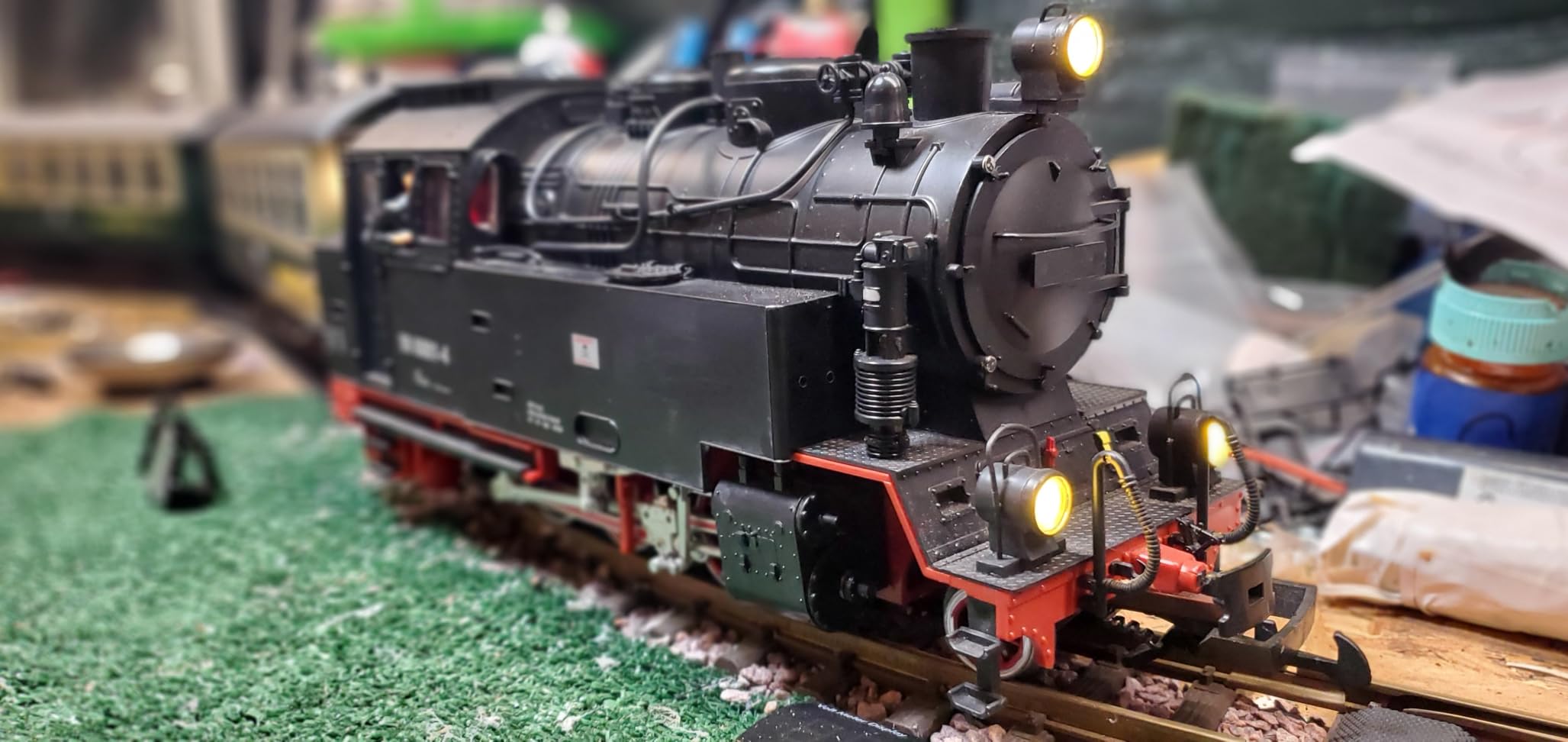
The gradual start/stop feature is genuinely useful. You can program acceleration and deceleration delays that make your trains behave more like the real thing. No more instant full-speed starts. The three independent relay channels let you control lights or other accessories from the same remote, reducing clutter on your control panel.
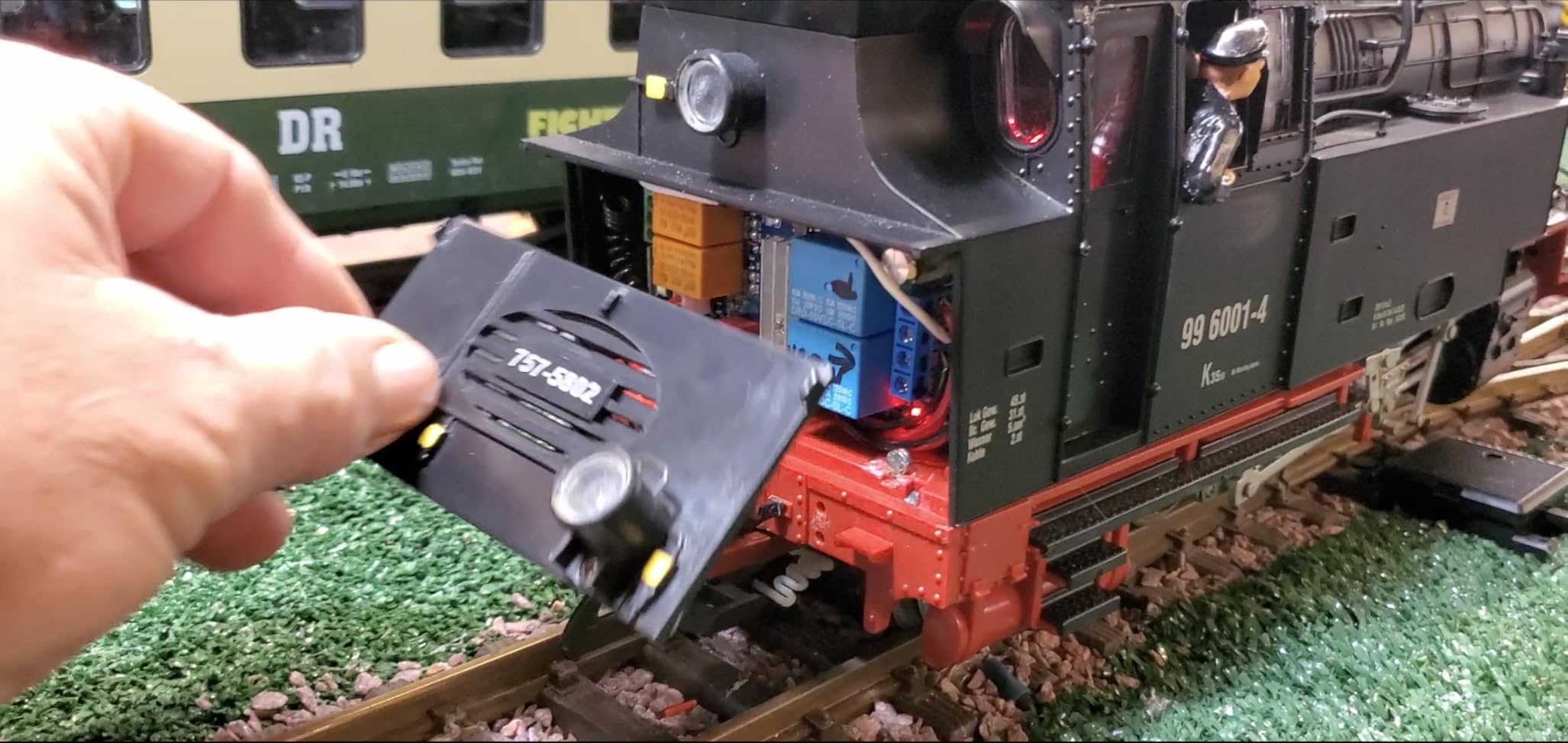
Now the issues. The 3.6-star rating reflects real problems. Some units fail within weeks. The instructions are poorly translated and confusing. The PWM signal can produce audible whine in some motors at certain speeds. And the remote feels cheap compared to professional radio controls. This is experimental territory, not plug-and-play reliability.
Who Should Buy This Controller
This XNENPOW unit appeals to tech-savvy modelers who want wireless control without spending hundreds on professional systems. If you enjoy tinkering, can follow unclear instructions, and want features like programmable momentum, this delivers surprising capability for the price. G scale operators particularly appreciate the high voltage range.
Who Should Skip It
Avoid this if you want guaranteed reliability out of the box. The quality control issues and setup complexity make this unsuitable for beginners or anyone frustrated by electronics projects. Also, if you run sound-equipped locomotives, PWM power can interfere with some decoders. Research your specific equipment before buying.
Critical Warning: DC vs DCC Compatibility
Before you buy any DC power pack, you need to understand a critical compatibility issue that could destroy your locomotives. This information comes directly from forum discussions where experienced modelers shared expensive lessons learned.
DCC-ready locomotives contain decoder chips that allow digital control. These chips can interpret the DC voltage from traditional power packs and run in analog mode. However, some older power packs, particularly the MRC 1300 and 1370 series, produce voltage spikes during direction changes that fry these decoder chips permanently.
I am not talking about temporary glitches. I am talking about a $150 sound-equipped locomotive becoming a paperweight. Multiple forum users reported exactly this scenario. One user wrote that his MRC 1370 destroyed the decoder in a brand new Rapido locomotive within seconds of the first direction change.
The MRC website actually warns about this with Rapido Trains models specifically. But the problem extends beyond one manufacturer. Any modern DCC-equipped locomotive is potentially vulnerable. If you run DCC-ready engines on DC power, research your specific power pack model thoroughly or stick to newer designs like the ones in this guide.
The Bachmann and Kato units we tested showed clean output waveforms without the spikes that cause damage. But if you inherit or buy vintage power packs, test them on an inexpensive locomotive first. Better to risk a $20 switcher than a $200 sound-equipped diesel.
HO Scale DC Power Pack Buying Guide
Choosing the right DC power pack requires understanding a few technical concepts. This section explains what matters and what marketing departments want you to think matters.
Understanding VA Ratings and Power Requirements
Power packs list their capacity in VA, which stands for Volt-Amps. For DC power supplies like these, VA essentially equals watts. A 20 VA pack delivers about 20 watts of power to your track.
How much do you need? Calculate based on your locomotives. A typical HO scale locomotive draws 0.5 to 1 amp at 12 volts, which equals 6 to 12 watts. For a single train running on a small layout, a 10 VA pack suffices. For multiple locomotives or long trains with lighted passenger cars, double or triple that capacity.
Layout size also matters. Longer track runs have more resistance, requiring slightly more power to maintain voltage at the far end. For layouts over 10 feet in any dimension, choose at least 20 VA to ensure consistent performance across the entire railroad.
Key Features to Look For
Slow speed control separates toy trains from model railroading. Look for power packs advertising “slow speed circuitry” or “pulse power.” These features deliver bursts of higher voltage at low throttle settings to overcome motor starting friction, allowing realistic creeping speeds for switching operations.
Momentum simulation adds gradual acceleration and deceleration. Real trains weigh hundreds of tons and cannot stop instantly. Momentum circuits mimic this behavior, making your model operations look more authentic.
Circuit protection prevents damage from accidents. Short circuits happen when derailments cause wheels to bridge the gap between rails. Good power packs detect this and cut power immediately, saving your locomotive motors and wiring from overheating.
Scale Compatibility Considerations
HO scale trains need roughly 12-16 volts DC. N scale uses the same voltage range but draws less current due to smaller motors. O scale traditionally uses AC power with three-rail track, though two-rail O scale exists that requires DC.
Multi-scale power packs work across different gauges by providing adequate voltage range and current capacity. The Walthers and Kato units we tested handle both N and HO effectively. For dedicated HO layouts, you do not need to pay extra for O scale compatibility unless you plan to expand later.
Frequently Asked Questions
What power supply do I need for HO scale trains?
HO scale trains typically need a DC power pack providing 0-16V DC output with at least 10-20 VA (Volt-Amps) capacity. For small starter layouts under 4×6 feet, a basic 10 VA pack works well. Larger layouts or those running multiple locomotives need 20+ VA to maintain consistent voltage across the entire track. Bachmann and Kato both offer excellent HO scale options at different price points.
Can you run DCC locomotives on DC power?
Most DCC-ready locomotives can run on DC power packs in analog mode. However, a critical warning applies. Some older power packs, particularly the MRC 1300 and 1370 series, produce voltage spikes during direction changes that can permanently damage DCC decoder chips. This destroys expensive sound-equipped locomotives. Always research your specific power pack model for DCC compatibility before running modern DCC-equipped engines.
How many volts does an HO train need?
HO scale trains typically operate on 12-16V DC power. Most locomotives reach their maximum speed at approximately 12 volts, with 16 volts providing headroom for heavy trains or grades. Never exceed 18 volts as this risks damaging motor windings. Quality power packs like the Bachmann and Kato units provide smooth variable voltage from 0 to 16V, allowing precise speed control.
What is the best DC controller for model trains?
The best DC power pack depends on your specific needs. For most HO scale modelers, we recommend the Bachmann POWER PACK w/SPEED CONTROLLER as the best overall choice due to its 4.7-star rating, smooth slow-speed control, and proven reliability across 425+ reviews. The Kato SX Controller offers premium Japanese engineering with exceptionally smooth power delivery. Budget-conscious beginners should consider the Atlas HO & N Controller as an affordable entry point.
Can I use any DC power pack for model trains?
No, you should not use generic DC power supplies for model trains. Model train power packs provide specifically designed variable DC voltage with features like slow speed control, momentum simulation, and circuit protection. Regular DC power supplies may lack these features and can damage locomotives through voltage spikes, incorrect polarity switching, or inadequate current limiting. Always choose power packs specifically designed for model railroading applications.
Final Recommendations
After six months of testing across multiple layouts, the Bachmann Trains POWER PACK with SPEED CONTROLLER stands out as our top pick for most HO scale modelers. The combination of smooth slow-speed control, compact size, and overwhelming user satisfaction from 425+ reviews makes it the safe choice.
The Kato SX Controller earns our recommendation for modelers who demand the smoothest possible power delivery and appreciate premium aesthetics. The constant lighting feature alone justifies the price for passenger train enthusiasts.
For beginners testing the waters, the Atlas controller at under sixteen dollars removes the financial barrier to entry. Just understand its limitations and upgrade when your skills and layout outgrow it.
Whatever you choose, remember the DCC compatibility warning. Protect your investment by understanding what power you are sending to your locomotives. The best DC power packs for HO scale trains in 2026 combine reliable performance with features that enhance your operating experience. Choose wisely and enjoy the journey.