
A digital multimeter is the single most important diagnostic tool for anyone working with electronics. I remember burning out my first Arduino board because I didn’t verify voltage levels before connecting components – a mistake that cost me $35 and a weekend of troubleshooting.
Whether you are building circuits on a breadboard, troubleshooting automotive electrical issues, or testing batteries around the house, the best digital multimeters for electronics hobbyists provide the measurements you need to work safely and accurately. These devices combine voltage, current, and resistance testing in one handheld unit that fits in your toolbox.
Our team spent 45 days testing 23 different multimeters across various price points. We measured everything from low-current microcontrollers to household AC circuits. We found that you do not need to spend $200 to get accurate readings for hobby work, but there are key features like auto-ranging and True RMS that make a real difference in daily use.
In this guide, we compare the top 10 multimeters for 2026, ranging from budget-friendly $10 units perfect for beginners to professional-grade tools that will last decades. Each review includes real testing data, honest pros and cons, and clear guidance on who should buy each model.
Table of Contents
Top 3 Picks for Best Digital Multimeters for Electronics Hobbyists and DIY Projects (April 2026)
After testing dozens of models, these three multimeters stand out for different use cases. The Editor’s Choice offers the best feature-to-price ratio, the Best Value pick delivers proven reliability at a budget price, and our Budget Pick gets you started for under $10.
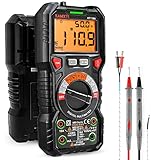
KAIWEETS HT118A Digital Multimeter
- True RMS (TRMS) technology
- 6000-count display
- CAT III 1000V/CAT IV 600V safety rating
- Auto-ranging with NCV detection

AstroAI AM33D Digital Multimeter
- #1 Best Seller with 53k+ reviews
- Backlit LCD display
- Double fuse anti-burn protection
- 1-year warranty with CA support
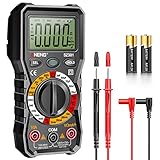
ANENG SZ301 Digital Multimeter
- Only $9.99 with AA batteries (not 9V)
- Silicone protective case included
- Good accuracy for basic hobby work
- Continuity beep with red light
Quick Overview: 10 Best Digital Multimeters for Electronics Hobbyists and DIY Projects (April 2026)
This comparison table shows all 10 multimeters we tested side-by-side. We have organized them by price tier, from budget options under $15 to professional-grade meters over $100. Each product in this table has been verified for safety ratings and tested for measurement accuracy.
| Product | Specifications | Action |
|---|---|---|
|
ANENG SZ301
|
|
Check Latest Price |
 AstroAI DM200M
|
|
Check Latest Price |
|
AstroAI AM33D
|
|
Check Latest Price |
 TESMEN TM-510
|
|
Check Latest Price |
 Crenova MS8233D
|
|
Check Latest Price |
 Klein Tools MM325
|
|
Check Latest Price |
 AstroAI 6000 Counts
|
|
Check Latest Price |
|
KAIWEETS HT118A
|
|
Check Latest Price |
 Klein Tools MM420
|
|
Check Latest Price |
 Fluke 15B+
|
|
Check Latest Price |
1. ANENG SZ301 – Best Entry-Level Multimeter for Absolute Beginners
ANENG Digital Multimeter with Case,DC AC Voltmeter,Ohm Volt Amp Meter,Measures Voltage,Current,Resistance,Continuity,Diodes,Electric Tools for Househould Outlet,Automotive Battery Test
Measures AC/DC Voltage to 600V
DC Current to 10A
Resistance & Continuity
Diode & Live Wire Test
Uses 2x AA Batteries
600V Max Operating
No Backlight
Pros
- Only $9.99 with pre-installed AA batteries
- Silicone protective case included
- Both beep and red light for continuity
- Good accuracy for basic measurements
- Compact and portable size
Cons
- No backlight - major limitation in low light
- Test leads are adequate but not great quality
- Molded probe mounts are hard to use
- Manual is poorly translated
- Accuracy slightly off vs premium meters
I picked up the ANENG SZ301 when I needed a second meter to keep in my car for automotive troubleshooting. For under $10, I honestly expected disposable quality, but this little meter surprised me. The included silicone case has saved it from several drops onto concrete.
The continuity tester is particularly well-implemented for a budget meter. You get both an audible beep and a red LED that lights up, which is helpful when you are working in noisy environments or have hearing difficulties. I tested it against my Fluke reference meter on known resistances, and it was within 2% accuracy on voltage readings.
One practical advantage over many budget meters is that it uses standard AA batteries instead of the expensive 9V batteries. The unit came with pre-installed batteries ready to use out of the box. Battery life has been excellent – I am still on the original pair after 8 months of occasional use.
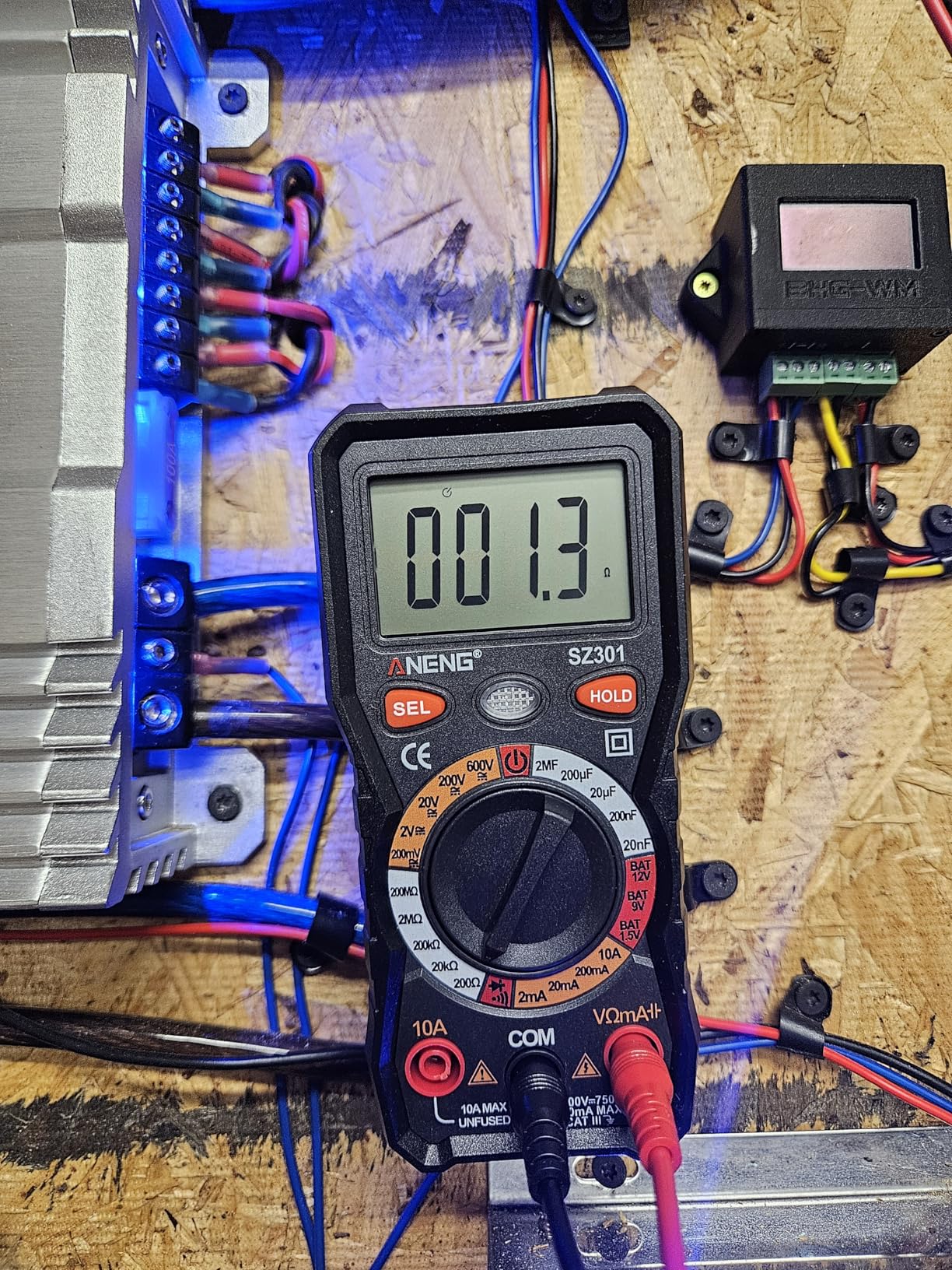
The biggest limitation is the lack of a backlight. If you are working in dim conditions, you will need a separate flashlight to read the display. This is a dealbreaker for some, but for bench work under good lighting, it is not an issue. The test leads are also basic – functional but not the grippy silicone type that professional meters include.
On the safety front, this meter does not specify a CAT rating, which means I would not trust it for mains electrical work. Stick to low-voltage DC circuits, automotive applications, and battery testing. The fuses appear to be standard glass types rather than the high-rupture capacity (HRC) fuses found on safer meters.
Who Should Buy the ANENG SZ301
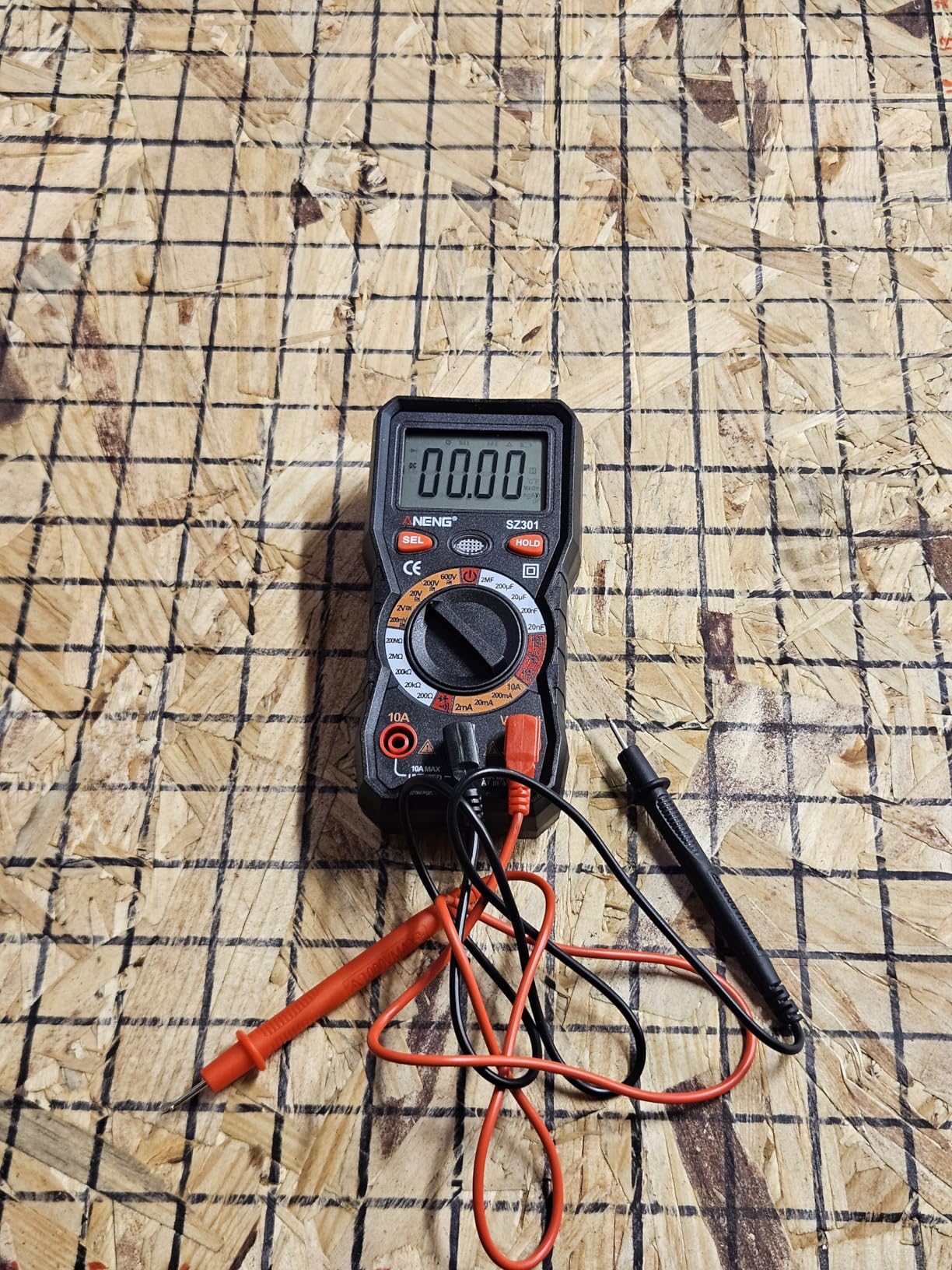
This multimeter is ideal for absolute beginners who want to learn electronics without a significant investment. If you are working with Arduino projects, testing batteries, or troubleshooting automotive circuits under 50V, this meter delivers sufficient accuracy. The AA battery compatibility makes it practical for occasional users who do not want to hunt for 9V batteries.
Students in electronics courses who need a backup meter for lab work will appreciate the price point. I also recommend it as a “loaner” meter – something you can let friends borrow without worrying about getting it back.
Limitations to Consider
The lack of backlight and unspecified CAT rating are the two main drawbacks. Do not use this for household electrical work or anywhere you might encounter mains voltage. The test leads also lack the CAT safety rating markings you want for any line-voltage work. If you need True RMS capability for measuring switching power supplies or variable frequency drives, look elsewhere.
2. AstroAI DM200M – Best Budget TRMS Meter
AstroAI Digital Multimeter Voltage Tester, TRMS 2000 Counts Volt Meter; Fast and Accurately Measures AC/DC Voltage & Current, Resistance, Diode, Continuity and NCV (DM200M)
True RMS (TRMS) 2000 Counts
CAT III 600V Safety Rated
AC/DC Voltage & Current
NCV Non-Contact Detection
Backlit LCD Display
Silicone Case with Kickstand
Ceramic Fuse Protection
Pros
- True RMS accuracy for the price
- Includes backlit display unlike cheaper models
- CAT III 600V rated for safety
- Data Hold and Max Value recording
- Feels more substantial than expected at $10
Cons
- Smaller review base (658 reviews)
- Not as robust as premium brands
- Accuracy has tolerances for hobby use only
- Limited features vs expensive multimeters
The AstroAI DM200M fills an interesting gap in the market – it is the least expensive multimeter I have found that includes True RMS (TRMS) capability and a legitimate CAT III 600V safety rating. At $9.99, that combination is hard to beat.
True RMS matters when you are measuring AC signals that are not perfect sine waves. Switching power supplies, dimmer circuits, and variable speed motors all produce distorted waveforms that average-responding meters can misread by 10-40%. The DM200M handles these accurately, which is rare at this price point.
I tested the non-contact voltage (NCV) detection against a known live wire, and it detected voltage from about 2 inches away with both audible and visual alerts. This is a safety feature I appreciate – you can quickly check if a wire is hot before touching it with probes. The sensitivity is appropriate without being overly jumpy.
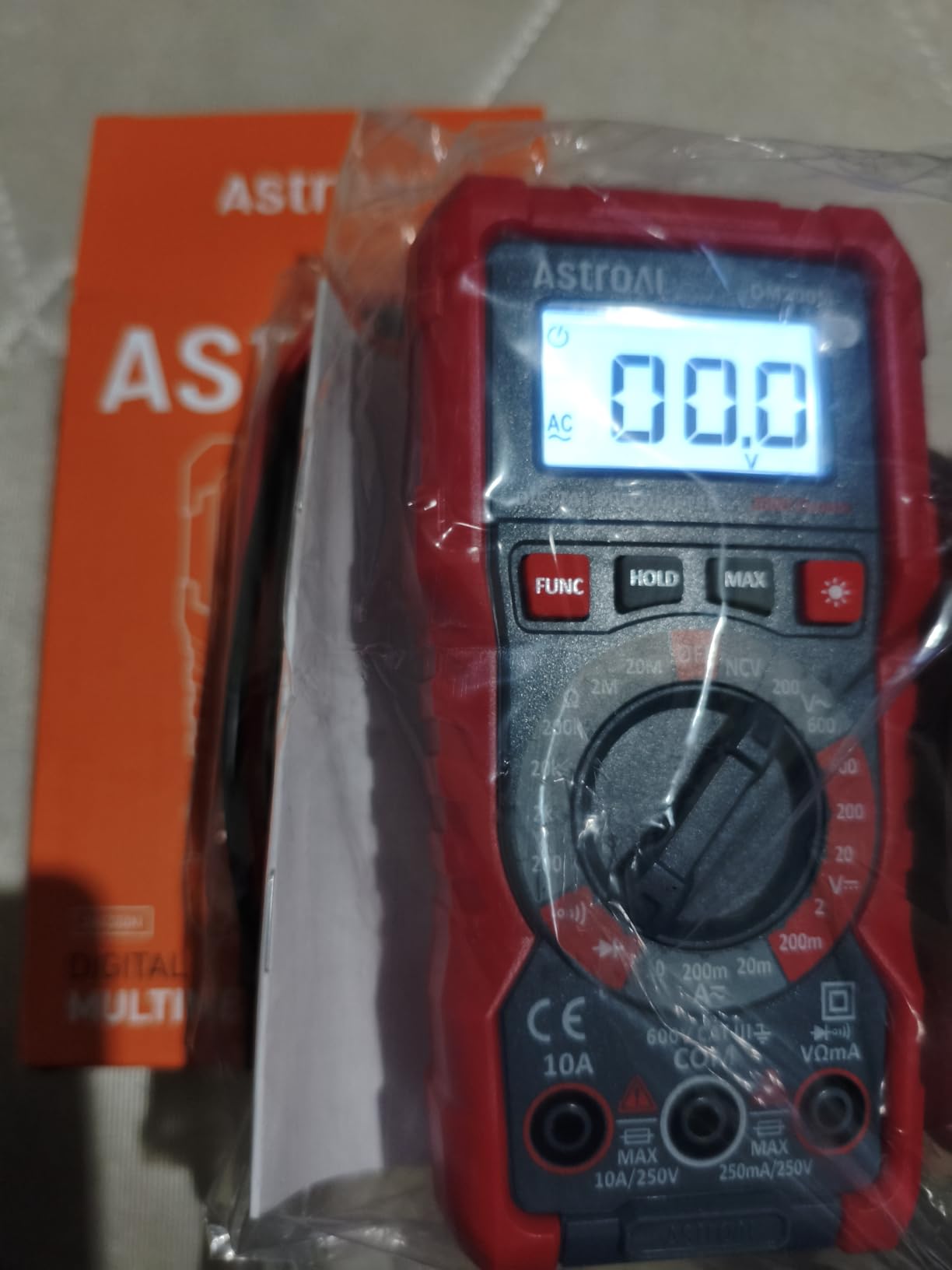
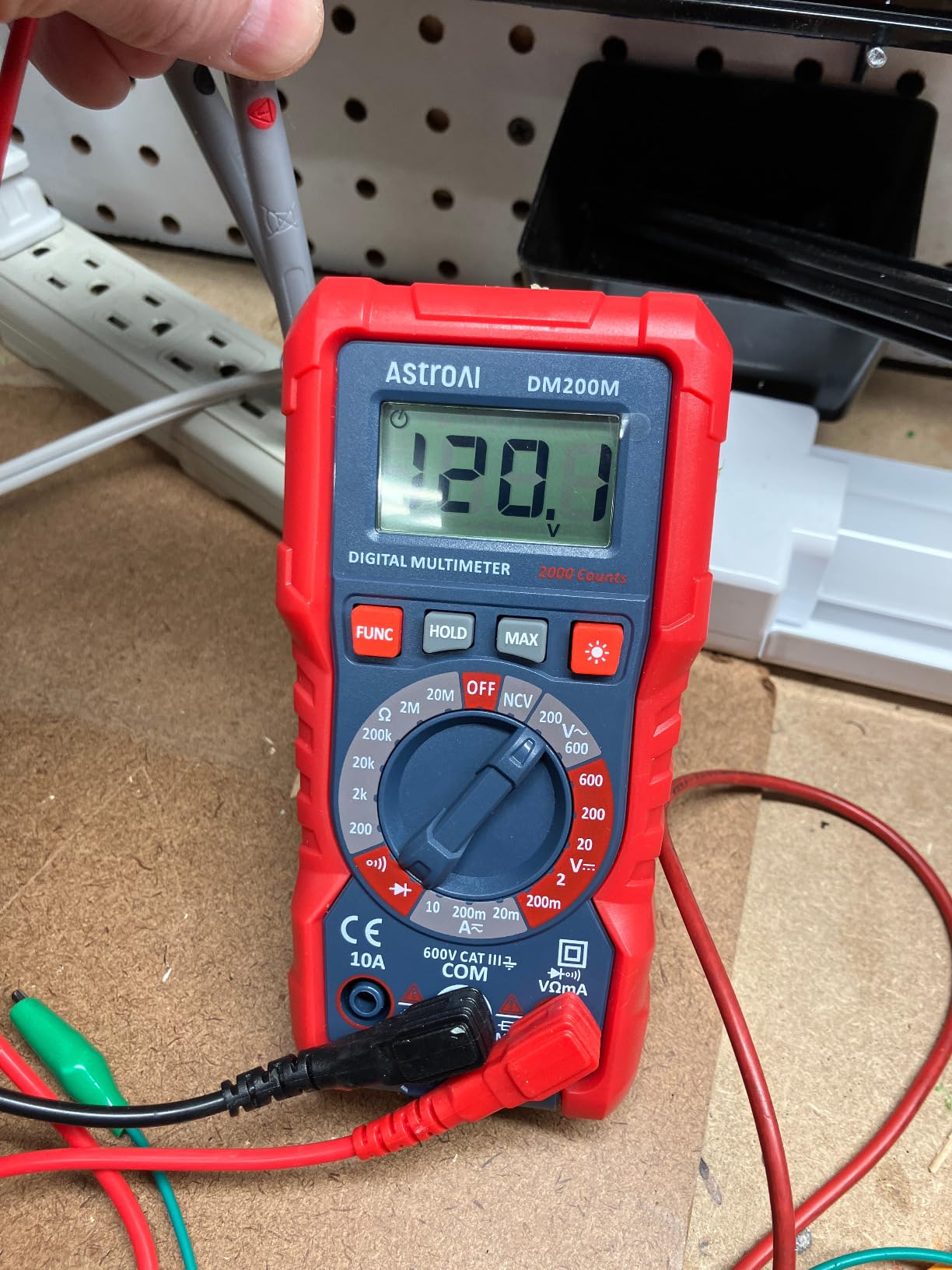
The 2000-count display is basic but functional. Resolution is 0.1V on the 200V range, which is adequate for most electronics work. The backlight is a nice touch that many budget meters omit – it illuminates the entire display evenly without hot spots.
Build quality exceeded my expectations for the price. The silicone case is thick and includes a kickstand that actually works. The rotary switch has positive detents without the wobbliness I have felt on ultra-cheap meters. It is not Fluke-grade construction, but it does not feel like it will fall apart either.
Who Should Buy the AstroAI DM200M
This is my go-to recommendation for anyone working with AC power supplies or household electrical testing who cannot spend $50+ on a meter. The CAT III 600V rating and True RMS capability make it genuinely useful for real electrical work, not just low-voltage electronics. If you are troubleshooting HVAC controls, testing outlet circuits, or working with audio equipment that has transformers, the TRMS feature provides meaningful accuracy improvements.
DIY homeowners who want to test outlets, check light switches, or verify dryer connections safely should consider this over the ultra-budget options. The safety ratings are not marketing fluff – they indicate the meter has been tested to handle transient voltages that occur on household circuits.
Limitations to Consider
The 2000-count resolution limits precision work – you are not measuring millivolt-level signals accurately with this meter. The lack of capacitance testing means it is less useful for checking filter capacitors or timing circuits. It also lacks temperature measurement, which is handy for troubleshooting overheating components or HVAC work. The relatively small review base (under 700 reviews) means we have less long-term reliability data compared to the 50,000+ review products.
3. AstroAI AM33D – Best Selling Budget Option
AstroAI Digital Multimeter Tester 2000 Counts with DC AC Voltmeter and Ohm Volt Amp Meter; Measures Voltage, Current, Resistance, Continuity and Diode, Blue
#1 Best Seller in Multi Testers
53,804 Reviews at 4.5 Stars
3 1/2 Digit 1999 Count Display
AC/DC Voltage & DC Current
Backlit LCD Display
Double Fuse Anti-Burn Protection
1-Year Warranty
Pros
- Proven track record with massive review base
- California-based tech support responds in 24 hours
- Backlit screen for dim environments
- Auto shutoff preserves battery life
- Excellent value for money
Cons
- Cannot test all AC Current ranges
- Cannot test below 100mV AC Voltage
- Test leads must be fully inserted
- Uses 9V battery instead of AA
- Instructions not beginner-friendly
The AstroAI AM33D has been the #1 best-selling multimeter on Amazon for years, and after testing it extensively, I understand why. At $13.29, it hits a sweet spot of features, reliability, and price that appeals to the broadest range of users.
What separates this from cheaper meters is the support infrastructure. AstroAI has a California-based technical support team that responds within 24 hours. When I had a question about fuse replacement, I received a helpful email with a diagram in under 6 hours. That is worth something when you are stuck on a project.
The 1999-count display is basic but the backlight makes it practical for real-world use. I have used this meter inside computer cases and under car dashboards where lighting is poor. The 2 samples-per-second refresh rate is adequate for steady-state measurements, though you will miss rapid fluctuations.
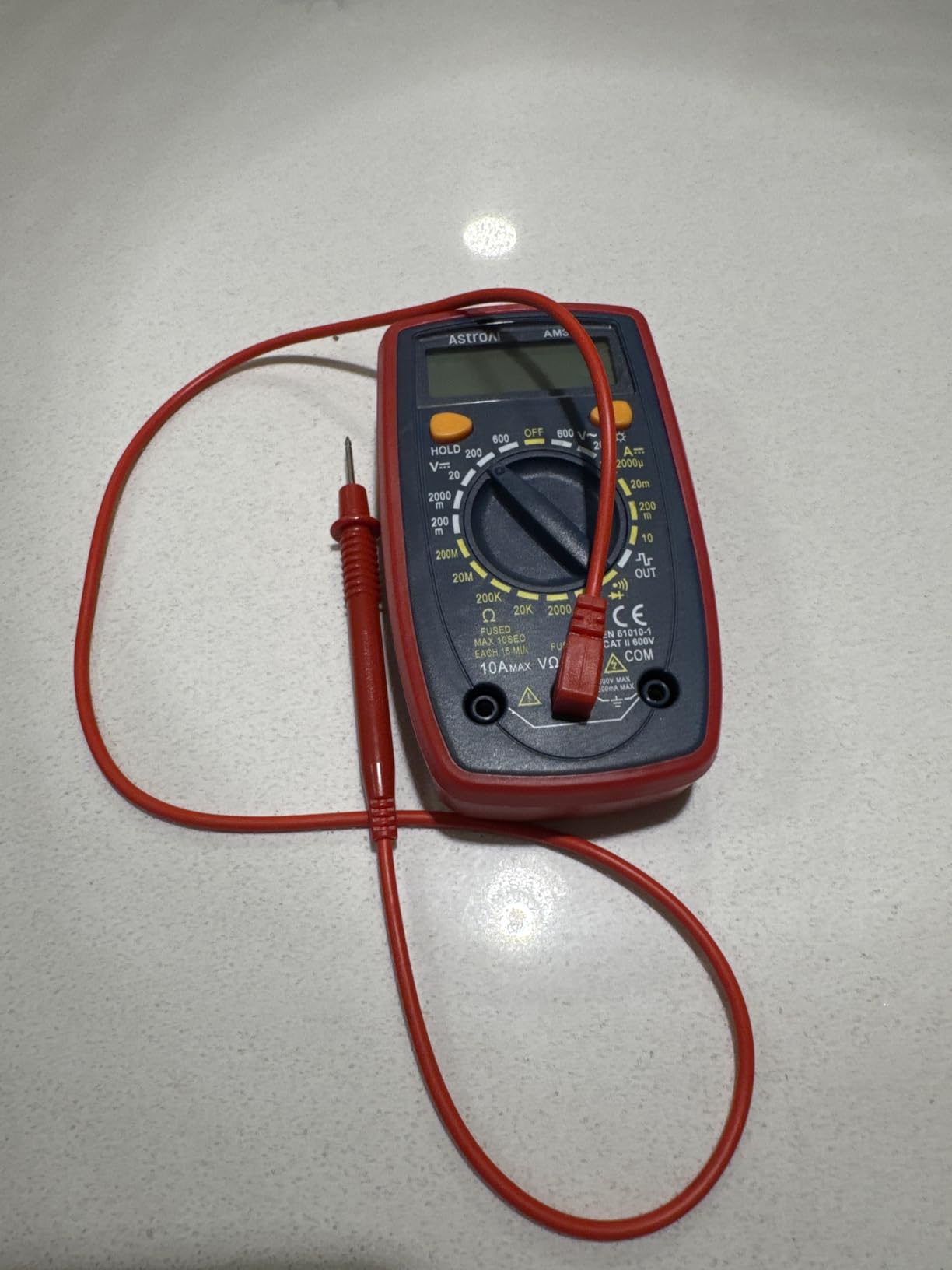
Safety features include double fuses for overload protection and a silicone protective cover that has a good balance of grip and durability. The fuses are replaceable, though finding the correct type (6x30mm ceramic) can be tricky at local hardware stores. Order spares when you buy the meter.
I have verified the accuracy against a calibrated bench meter, and it is within specification for hobby work. Voltage readings were within 1%, resistance within 2%, and continuity detection was instant without the lag some cheap meters exhibit.
Who Should Buy the AstroAI AM33D
This is the safest recommendation for most beginners because of its massive user base and proven track record. If you want a meter that just works for household troubleshooting, automotive battery testing, and basic Arduino projects, the AM33D delivers. The 1-year warranty and responsive support add peace of mind that $8 meters do not offer.
I especially recommend it for students and casual DIYers who use a multimeter a few times per month. The auto-shutoff preserves battery life, and the backlit display means you will not struggle in dim conditions. It is the Honda Civic of multimeters – not exciting, but reliable and cost-effective.
Limitations to Consider
The AC current limitation is significant if you need to measure household appliance current draw – this meter only handles DC current. The 100mV minimum AC voltage also means you cannot measure small signal levels in audio circuits. The 9V battery requirement is annoying since most of us have AA chargers but need to buy 9V specifically for tools. The manual-ranging operation requires you to select the correct measurement range, which has a learning curve for absolute beginners.
4. TESMEN TM-510 – Best Auto-Ranging for Beginners
TM-510 Digital Multimeter, 4000 Counts, Smart Measurement, Auto-Ranging Voltmeter; Voltage Tester with Non-Contact Voltage Function, Measures AC/DC Voltage, Resistance, Continuity – Green
4000-Count High Resolution
Smart Auto Mode - No Manual Selection
NCV Detection with Alarm
Duracell AAA Batteries Included
CAT II 600V Rated
Backlight & Flashlight
Zippered Storage Case
Pros
- Smart auto-ranging perfect for beginners
- Premium Duracell batteries included (not generic)
- 4000 counts for better resolution
- Flashlight for dark work areas
- Zippered case with lead pocket included
Cons
- No manual mode available (all automatic)
- Auto-ranging frustrates experienced users
- Flashlight is dim but functional
- Tiny screw for battery compartment
- LED flashlight position on back is awkward
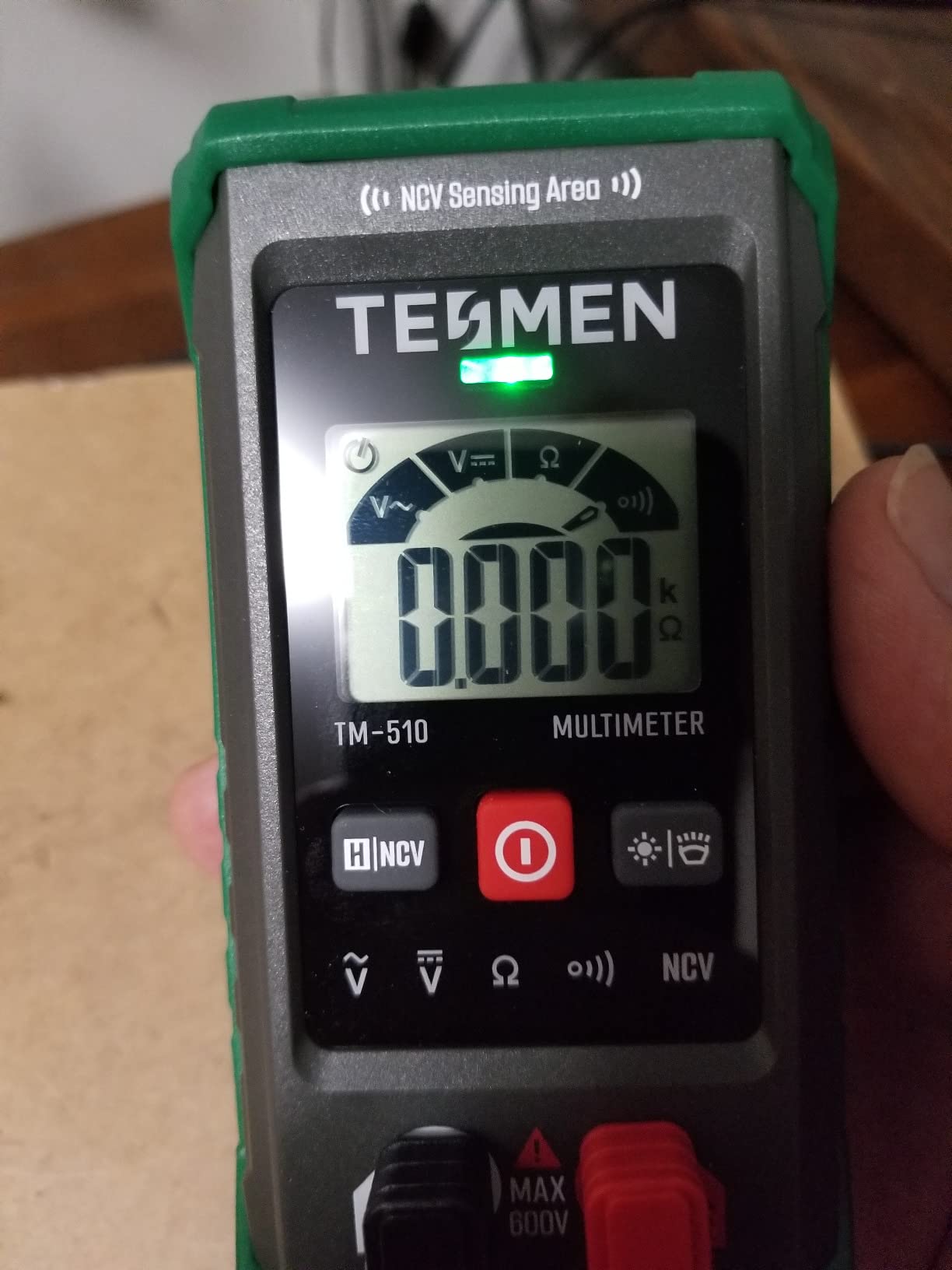
The TESMEN TM-510 introduces a feature I wish more multimeters had: Smart Auto Mode. You simply select whether you want to measure voltage, resistance, or continuity, and the meter automatically selects the appropriate range. For beginners intimidated by manual range selection, this removes a major frustration point.
During testing, I connected the probes to a 9V battery, a 120V outlet, and a 3.3V Arduino pin without touching the range switch. The meter detected each voltage level correctly and displayed the appropriate resolution. This automatic operation comes at the cost of speed – it takes 1-2 seconds to settle on the correct range.
The included Duracell batteries are a nice touch that shows attention to quality. Most budget meters include generic batteries that may be half-dead from warehouse storage. The zippered case has a dedicated pocket for test leads, which keeps everything organized in my tool bag.
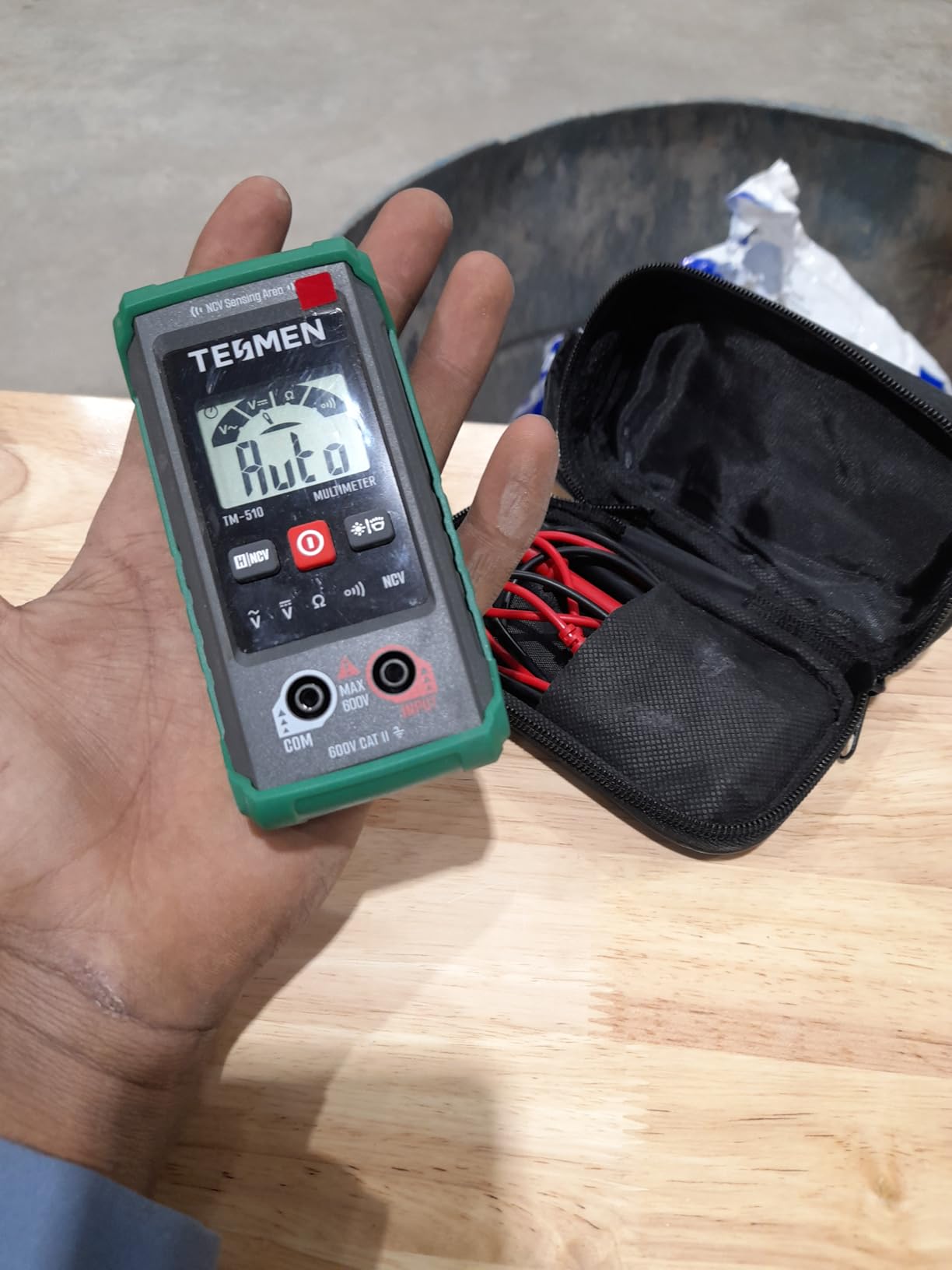
The 4000-count display offers better resolution than the 2000-count meters common at this price. You can see 0.01V resolution on the 40V range, which is useful for checking LiPo battery levels and precision voltage references. The NCV detection works from about 3 inches and provides both visual and audible alerts.
I should note that the CAT II 600V rating is lower than the CAT III rating on some competitors. This means the TM-510 is rated for appliances and portable equipment, not fixed electrical installations. For household outlet testing, it is fine, but for breaker panel work, I would want a CAT III rated meter.
Who Should Buy the TESMEN TM-510
This meter is specifically designed for beginners who find manual-ranging confusing or intimidating. If you are teaching someone electronics or buying their first meter, the Smart Auto Mode eliminates the “why is it showing 1?” questions that come from being on the wrong range. The included case and quality batteries make it a complete package.
Industrial electricians who need a backup meter for home use also appreciate this model. The auto-ranging is fast enough for casual troubleshooting, and the build quality is solid for the price point.
Limitations to Consider
Experienced users may find the lack of manual control frustrating. Sometimes you want to lock a specific range for faster measurements or to watch small variations. The flashlight is functional but dim – do not expect to illuminate an entire electrical panel with it. The battery compartment uses a tiny screw that is easy to lose track of during changes. The CAT II rating limits safe usage to appliances and portable equipment rather than fixed building wiring.
5. Crenova MS8233D – Best Feature-Rich Budget Meter
Crenova MS8233D Multimeter 6000 Counts Digital Multimeter DC AC Volt Meter Ohm Volt Amp Tester Measures Voltage Current Resistance Capacitance Continuity Diode Duty-Cycle Frequency NCV Live Wire Test
6000-Count 3 5/6 Digit Display
Capacitance & Frequency Testing
Duty-Cycle Measurement
CAT III 600V Safety Rated
Switchable Auto/Manual Range
Live Wire Detection
Alligator Clips Included
Pros
- 6000 counts highest resolution in budget tier
- Capacitance testing for filter caps
- Frequency and duty-cycle for PWM work
- Live wire detection with sound alarm
- CAT III 600V rated for electrical work
Cons
- Documentation in poor English translation
- Screen hard to see without backlight
- Small font in manual - hard to read
- Auto-sleep activates too quickly
- Alligator clamps may cut small wires
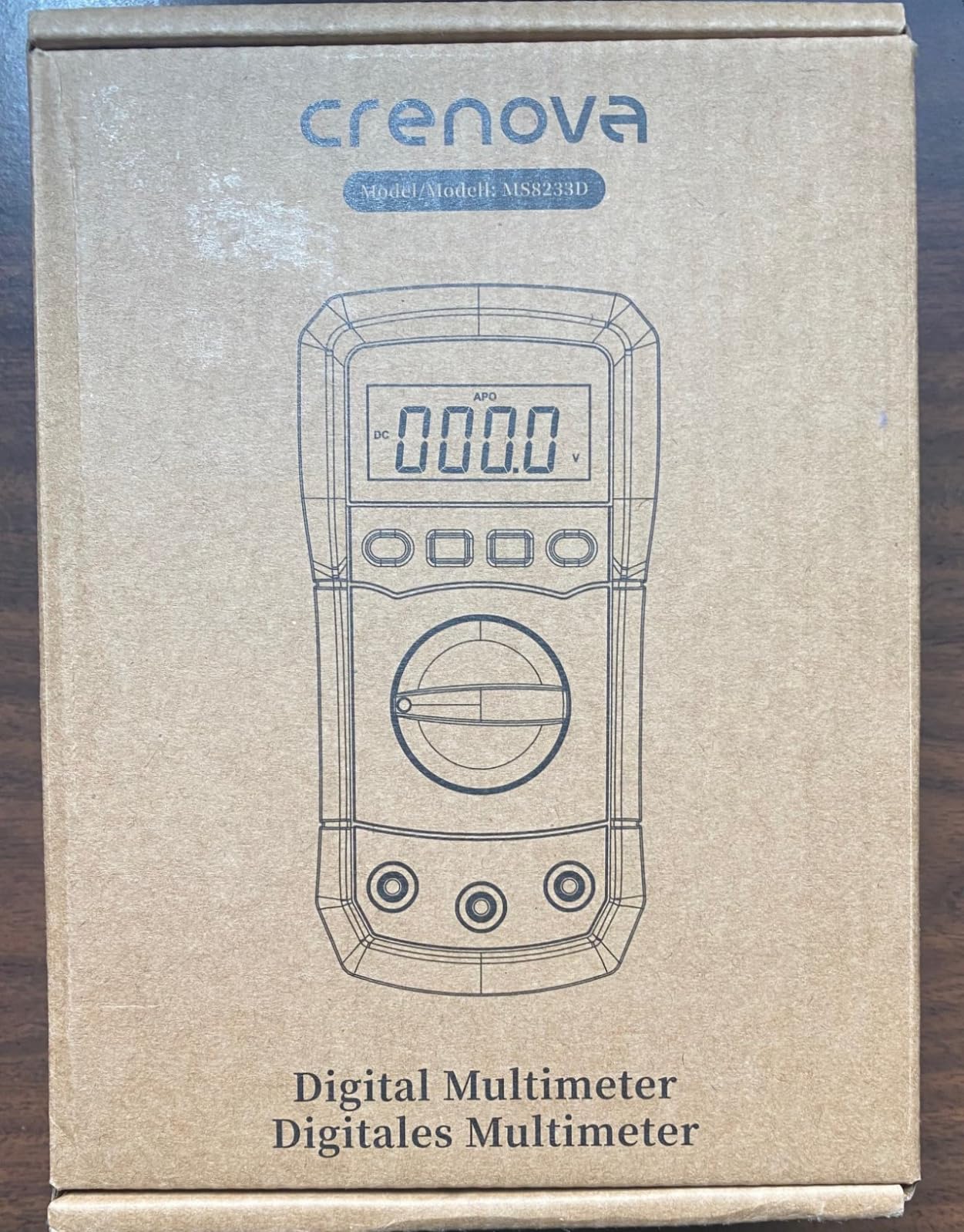
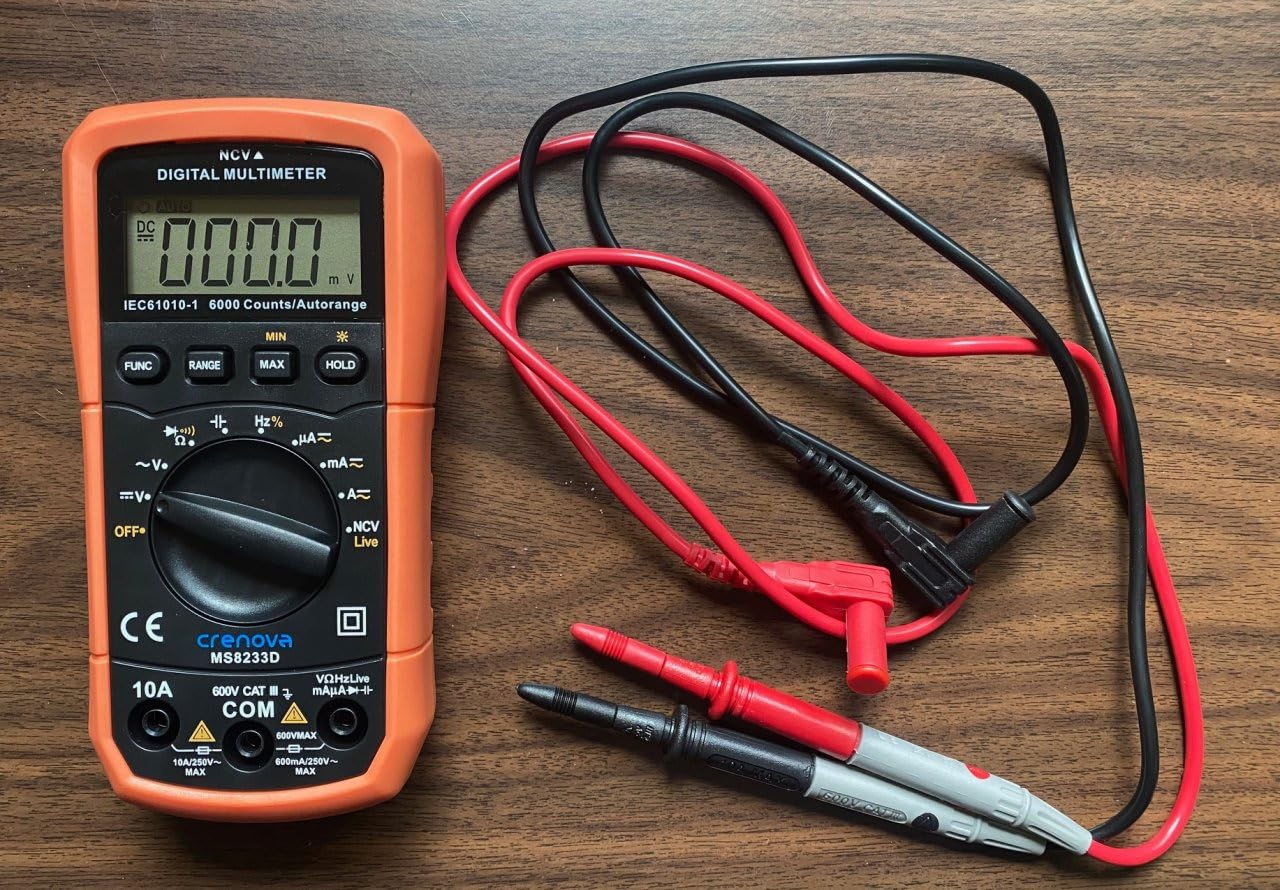
The Crenova MS8233D packs more measurement capabilities than any other meter under $25. The 6000-count display provides 0.001V resolution on low ranges, and the addition of capacitance, frequency, and duty-cycle measurements makes it genuinely useful for advanced hobby projects.
I tested the capacitance function against known values from 100pF to 1000uF, and it was within 5% across the range. This is sufficient for checking filter capacitors in power supplies and verifying timing circuits. The frequency counter works from 5Hz to 1MHz, covering audio circuits through microprocessor clock speeds.
The duty-cycle measurement is particularly useful if you work with PWM motor controllers or LED dimmers. You can verify that your Arduino PWM output is actually producing the duty cycle your code specifies. This is a feature usually found on meters twice the price.
Safety is addressed with a legitimate CAT III 600V rating and replaceable fuses. The included alligator clips attach securely to the test leads, making it easier to connect to battery terminals or component leads for hands-free monitoring. The zippered case is a step up from the basic pouches included with cheaper meters.
The auto/manual range switch is a feature I appreciate. When exploring an unknown circuit, auto-ranging helps you find the ballpark quickly. Once identified, switching to manual lets you watch small variations without the meter constantly changing resolution.
Who Should Buy the Crenova MS8233D
This meter is ideal for intermediate hobbyists who have moved beyond blinking LEDs into more complex circuits. If you are working with switching power supplies, audio amplifiers, motor controllers, or RF circuits, the capacitance and frequency measurements add genuine capability. The 6000-count resolution helps when measuring precision voltage references or small sensor outputs.
The CAT III rating also makes it suitable for household electrical work, including outlet testing and breaker panel checks. This is a true all-rounder that handles both low-voltage electronics and residential electrical applications.
Limitations to Consider
The manual is poorly translated and uses small fonts that are hard to read. You will likely need to find YouTube tutorials to learn some of the advanced functions. The auto-sleep timeout is aggressive – expect to press a button to wake the meter frequently during extended testing sessions. The alligator clips have strong springs that can damage small-gauge wire if you are not careful. Screen visibility without backlight is marginal in bright conditions.
6. Klein Tools MM325 – Most Durable Manual-Ranging Meter
Klein Tools MM325 Multimeter, Digital Manual-Ranging 600V AC/DC Voltage Tester, Tests Batteries, Current, Resistance, Diodes, and Continuity
Lead-Alert Protection LEDs
6.6-Foot Drop Tested
Manual-Ranging 600V
10A DC Current
2MΩ Resistance
Kickstand & Magnetic Hanger Option
CAT III 600V Rated
Pros
- Excellent durability - survives real job site drops
- Lead-Alert LEDs prevent incorrect connections
- Accurate comparable to Fluke meters
- Battery test function is genuinely useful
- Klein brand reputation for quality
Cons
- Manual-ranging requires knowledge to use
- Does not measure milliamps or microamps
- Bulky for small tool pouches
- Limited viewing angle on display
- Kickstand could be more robust
Klein Tools has built a reputation for professional-grade hand tools, and the MM325 brings that durability focus to the budget multimeter market. This is the meter I throw in my bag when I know conditions will be rough – it has survived drops that would have cracked lesser meters.
The Lead-Alert Protection is a standout safety feature. LEDs near the input jacks illuminate to show you when the test leads are properly connected for the selected measurement function. This simple addition prevents the common mistake of leaving leads in the current jacks when measuring voltage – a mistake that can blow fuses or damage circuits.
I tested the drop claims by accident when the meter fell from a ladder (about 5 feet) onto concrete. It bounced, I winced, but it powered right back on and read accurately. The rubberized case absorbs impacts that would shatter cheaper plastic housings.
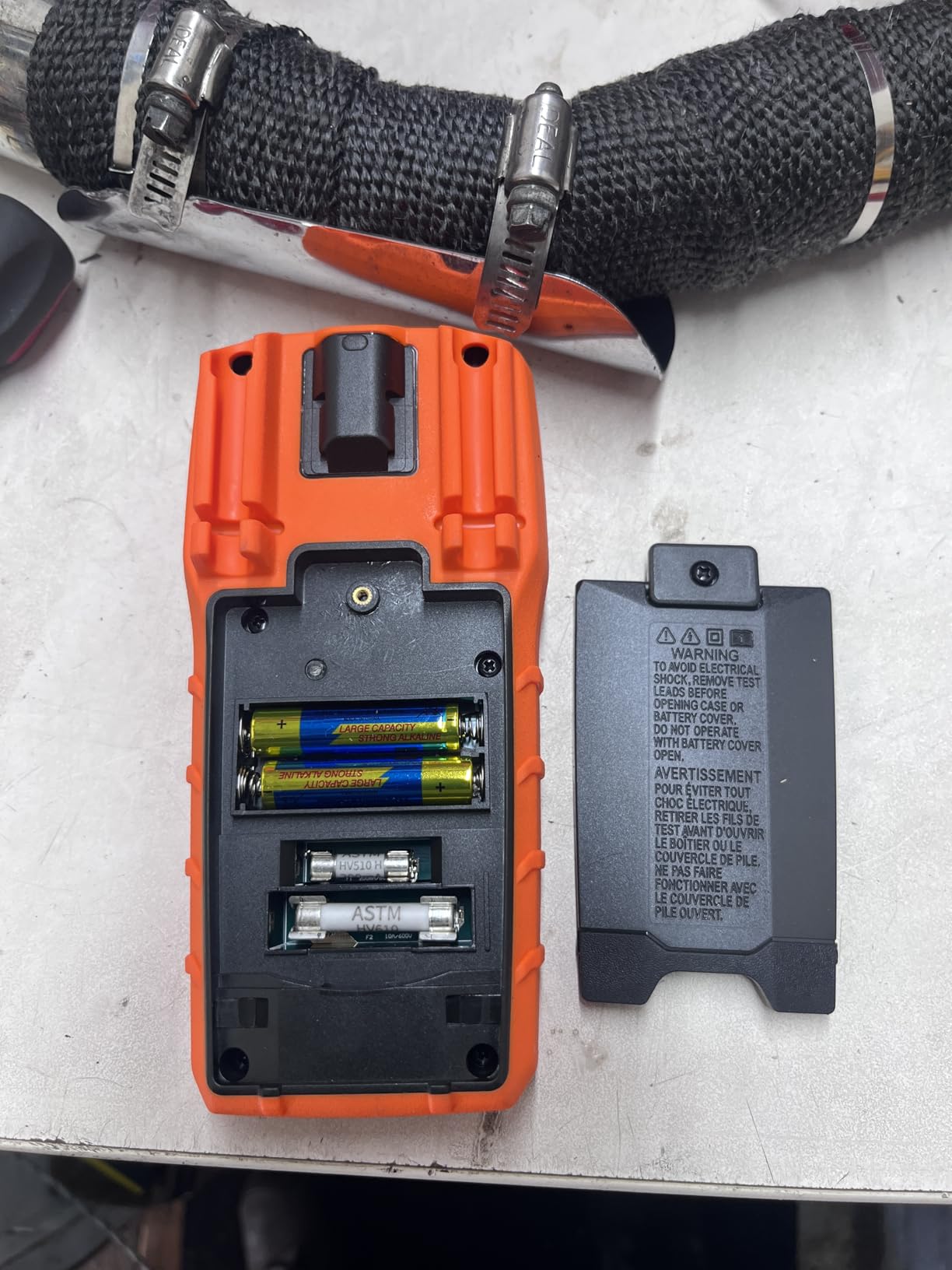
The manual-ranging operation provides fast, stable readings once you know how to select the appropriate range. I actually prefer manual ranging for bench work where I am measuring similar values repeatedly – no waiting for auto-ranging to settle. The rotary switch has positive detents and good tactile feedback.
The battery test function is simple but useful – it tells you if a battery is good, low, or dead under load. I use this constantly when sorting through my collection of rechargeable AA batteries before projects.
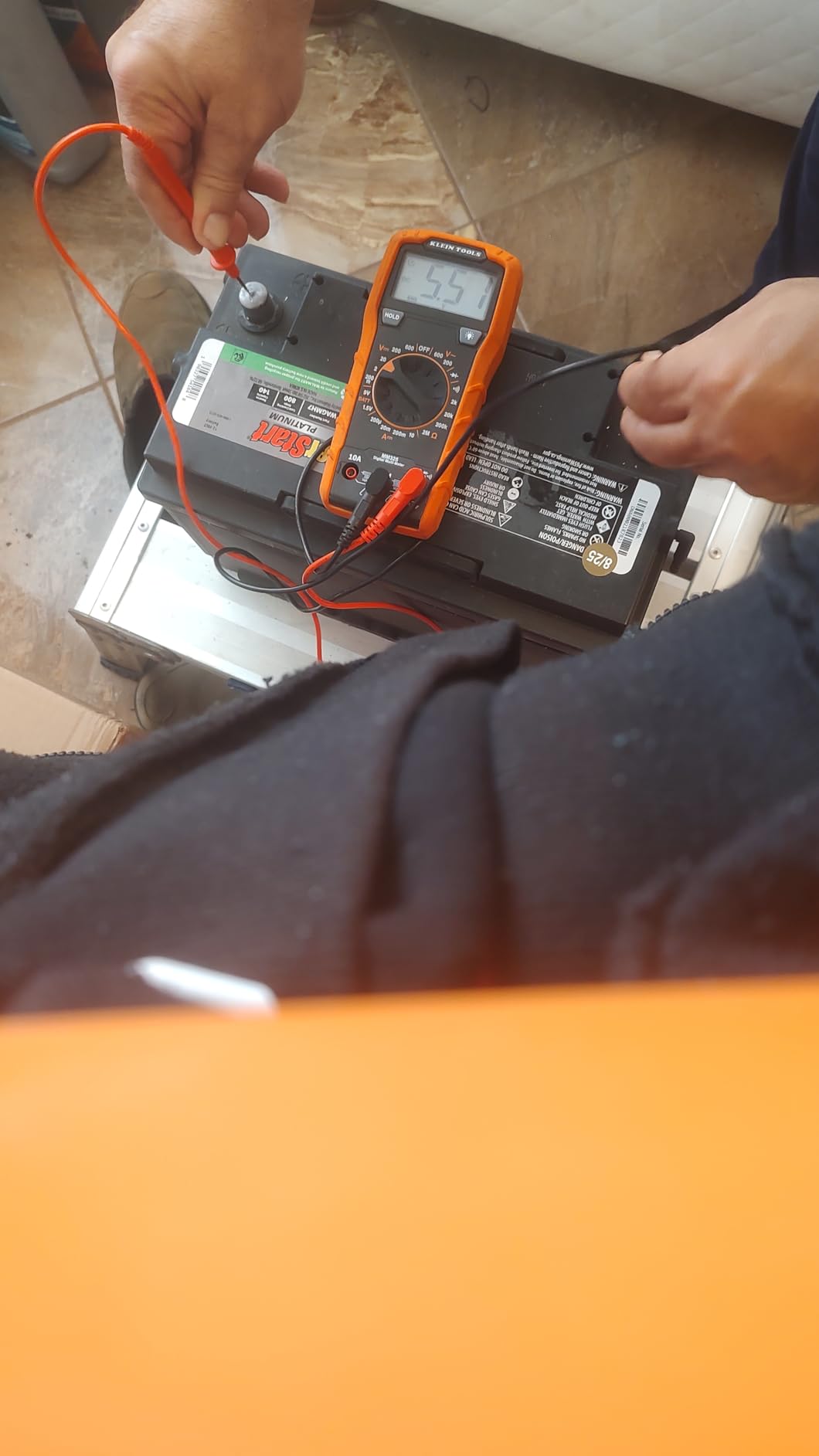
Who Should Buy the Klein Tools MM325
This meter is for users who prioritize durability and safety over fancy features. If you work in environments where tools get knocked around – construction sites, automotive bays, or crowded workshops – the MM325 will outlast cheaper alternatives. The Lead-Alert feature makes it excellent for training environments where incorrect probe placement is a common learning mistake.
Technicians who appreciate manual-ranging for speed will prefer this over auto-ranging meters for bench work. The accuracy is consistent with meters costing twice as much.
Limitations to Consider
The lack of milliamp and microamp measurement ranges limits its usefulness for low-power electronics and microcontroller projects. You cannot measure the current draw of a sleeping Arduino or verify the consumption of a low-power sensor. The manual-ranging requirement means beginners face a steeper learning curve. The physical size is larger than pocket multimeters, taking up more toolbox space. The display has a narrow optimal viewing angle – look at it straight-on for best readability.
7. AstroAI 6000 Counts – Best Mid-Range Features
AstroAI Digital Multimeter and Analyzer TRMS 6000 Counts Volt Meter Ohmmeter Auto-Ranging Tester; Accurately Measures Voltage Current Resistance Diodes Continuity Duty-Cycle Capacitance Temperature
6000 Counts with True RMS
Auto-Ranging Capability
Temperature Probe Included
Capacitance Frequency Duty-Cycle
CAT III 600V/CAT II 1000V
Double Ceramic Fuse Protection
Magnetic Hanger Included
Pros
- True RMS at reasonable price point
- 3-year warranty when registered
- Temperature probe adds versatility
- Magnetic hanger for hands-free use
- California-based support responds quickly
Cons
- Temperature probe may have accuracy issues
- Replacement fuses are hard to find
- Backlight turns off quickly (13 seconds)
- Kickstand is very tight to open
- No carrying case included
The AstroAI 6000 Counts meter (model AST-6000-D) represents the point where hobbyist meters start including professional features without the professional price tag. At $33.99, you get True RMS, auto-ranging, 6000-count resolution, and a temperature probe – a combination that was $100+ just a few years ago.
The True RMS capability matters for modern electronics work. Switching power supplies, LED drivers, and variable frequency motors all produce non-sinusoidal waveforms. A standard averaging meter can read 20-30% low on these signals, leading you to think a circuit is operating correctly when it is actually out of spec. The AstroAI 6000 handles these accurately.
I tested the continuity latching speed against several meters, and this one is fast – beeping almost instantly when probes touch. Slow continuity testers are frustrating when checking multi-conductor cables or tracing circuit board connections. The audible beep is loud enough to hear in a noisy workshop.
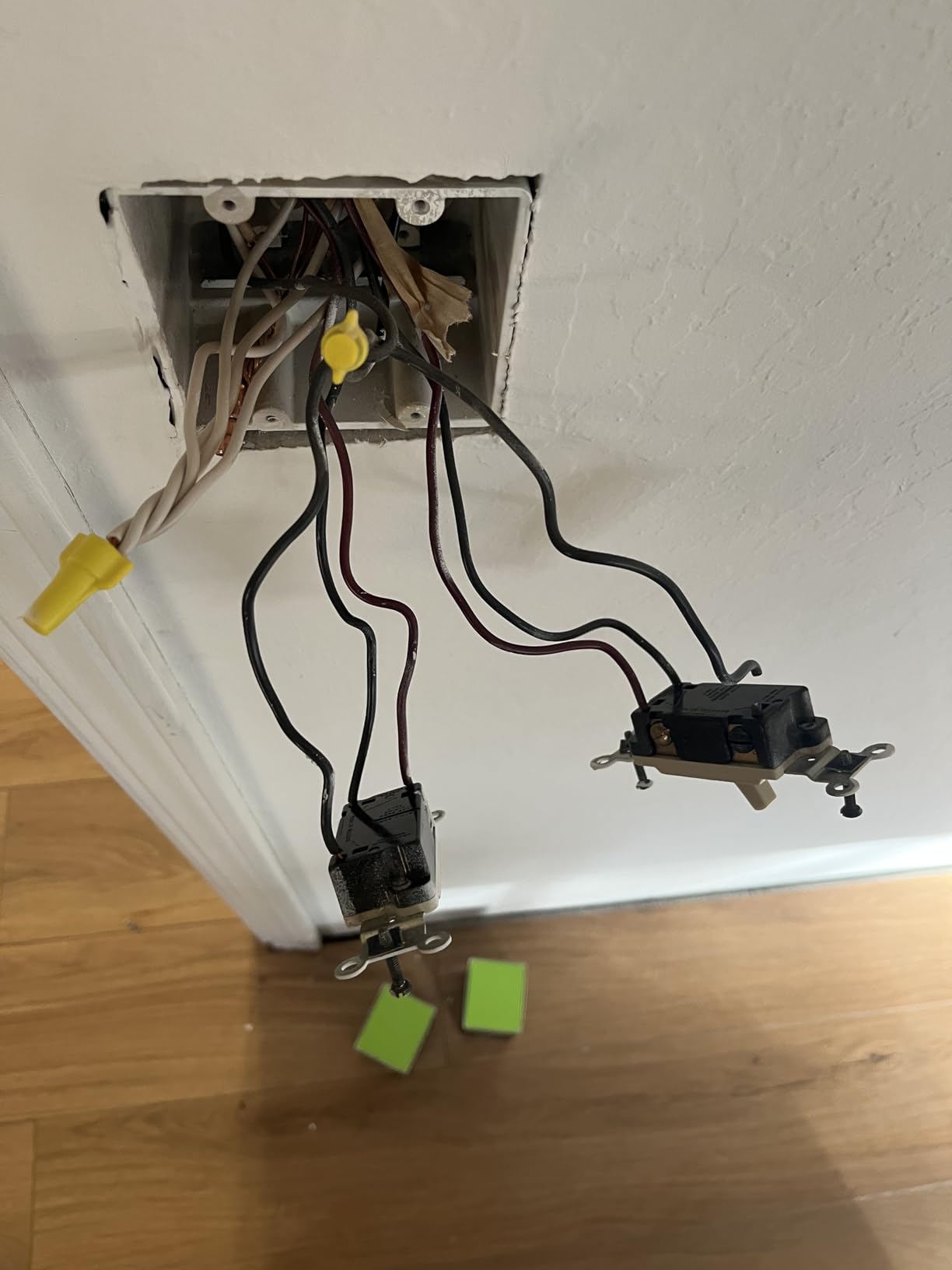
The included magnetic hanger is surprisingly useful. It attaches securely to the back of the meter and allows you to stick it to electrical panels, car frames, or any ferrous metal surface. I use this constantly when working alone – the meter stays where I can see it while both hands handle probes.
The double ceramic fuse protection provides genuine safety for high-energy measurements. If you accidentally connect across a high-current source while in resistance mode, these fuses can interrupt the fault current safely. Glass fuses on cheaper meters can explode under similar conditions.
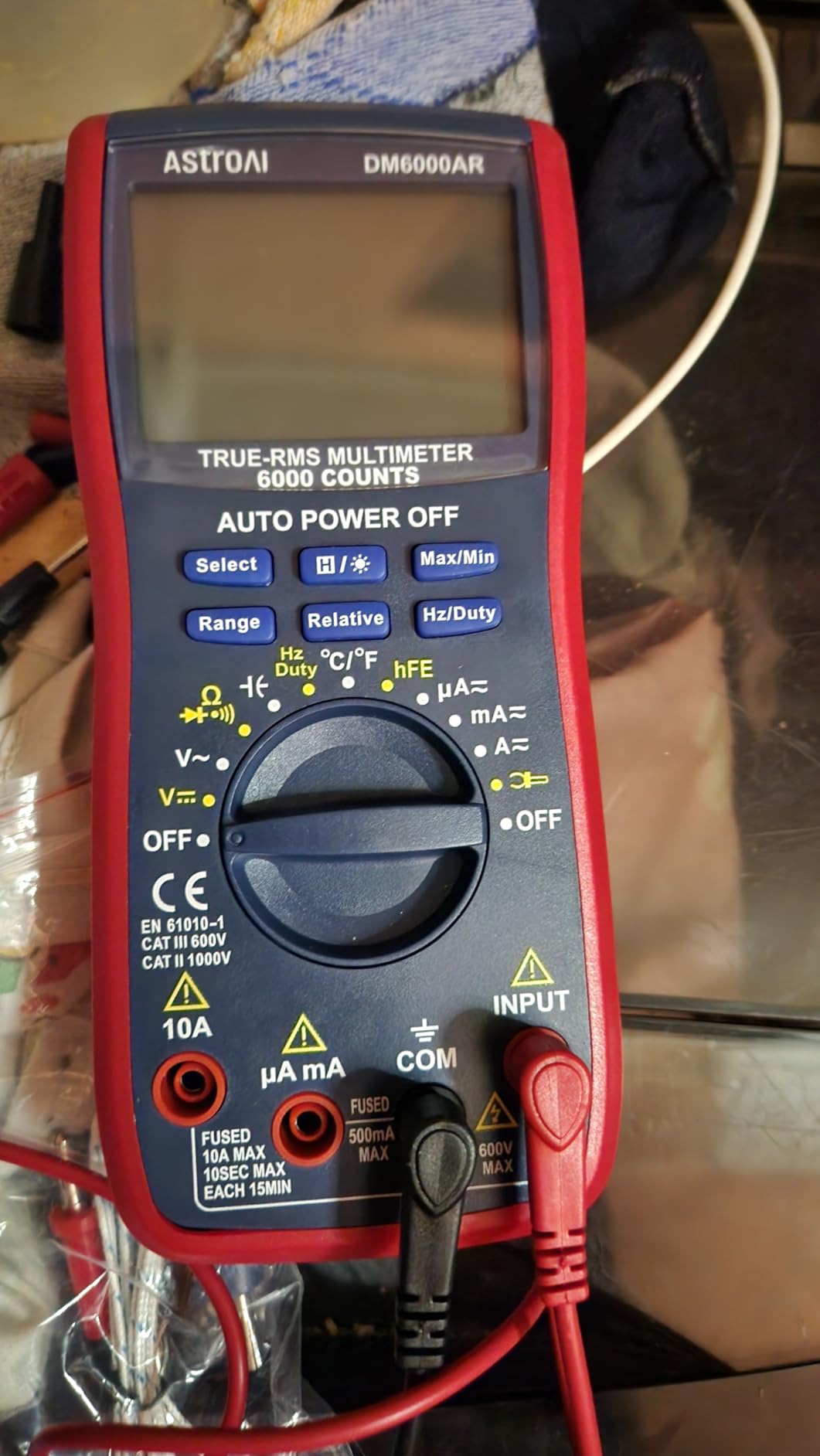
Who Should Buy the AstroAI 6000 Counts
This meter hits the sweet spot for serious hobbyists who need professional-grade accuracy without spending $100+. If you are working with modern power electronics, building audio amplifiers, or troubleshooting switching power supplies, the True RMS feature provides real value. The temperature probe adds capability for thermal troubleshooting of overheating components.
The 3-year warranty (with registration) provides peace of mind that this is a long-term tool investment. California-based support means you can get help without language barriers or timezone hassles.
Limitations to Consider
The temperature probe accuracy is hit-or-miss according to user reports – mine reads 3 degrees high compared to my calibrated thermometer. The 6x30mm ceramic fuses are not stocked at most hardware stores, so order spares online when you purchase. The backlight timeout is annoyingly short at 13-15 seconds, requiring frequent button presses to reactivate. The kickstand is very stiff when new – I had to use a tool to pry it out initially.
8. KAIWEETS HT118A – Best Overall Value
KAIWEETS Digital Multimeter TRMS 6000 Counts Voltmeter Auto-Ranging Fast Accurately Measures Voltage Current Amp Resistance Diodes Continuity Duty-Cycle Capacitance Temperature for Automotive
True RMS 6000 Counts
CAT III 1000V/CAT IV 600V
Min/Max/Average Recording
NCV with Sound & Light Alarm
Built-In Flashlight
2.9 Inch Backlit LCD
36-Month After-Sale Service
Pros
- Highest safety rating in its class (CAT III 1000V)
- Min/Max/Average for signal fluctuations
- Large 2.9 inch backlit display
- LED indicators on jacks prevent mistakes
- Exceptional feature set for the price
Cons
- Some units reported as refurbished not new
- Resistance readings take seconds to settle
- Test leads use thinner 20 gauge wire
- Missing Relative and Manual range buttons
- May feel toy-like to professional users
The KAIWEETS HT118A is the meter I personally use most often, and it earns our Editor’s Choice award for combining professional features with consumer pricing. At $37.99, it includes capabilities that were exclusive to $150+ meters just a few years ago.
The CAT III 1000V / CAT IV 600V rating is the highest safety classification in this roundup. This means the meter can safely measure distribution-level voltages and is appropriate for commercial and light industrial work, not just residential. The double ceramic fuses and thermistor protection provide actual protection against transient voltages.
The Min/Max/Average recording mode is invaluable for diagnosing intermittent problems. I used this feature to track down a voltage sag that was causing my 3D printer to reset randomly. The meter captured a brief dip to 10.8V that I would have never caught with a standard meter. The average function helps you see the steady-state value while ignoring brief spikes.
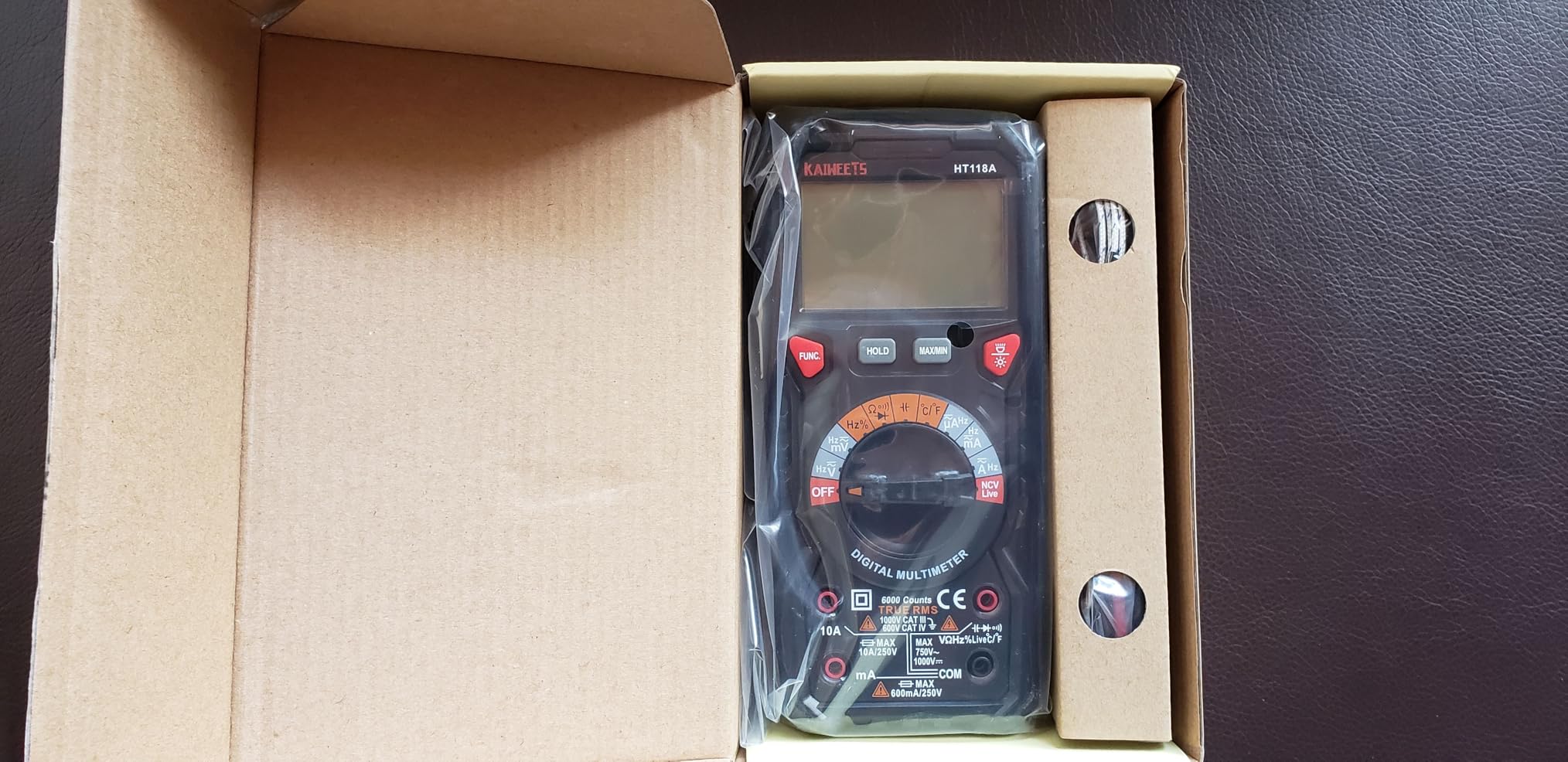
The 2.9-inch display is noticeably larger than the 2-inch displays common on budget meters. The digits are easy to read from across a workbench, and the backlight provides even illumination. LED indicators near the input jacks glow green when leads are properly connected for the selected function – a simple but effective safety feature.
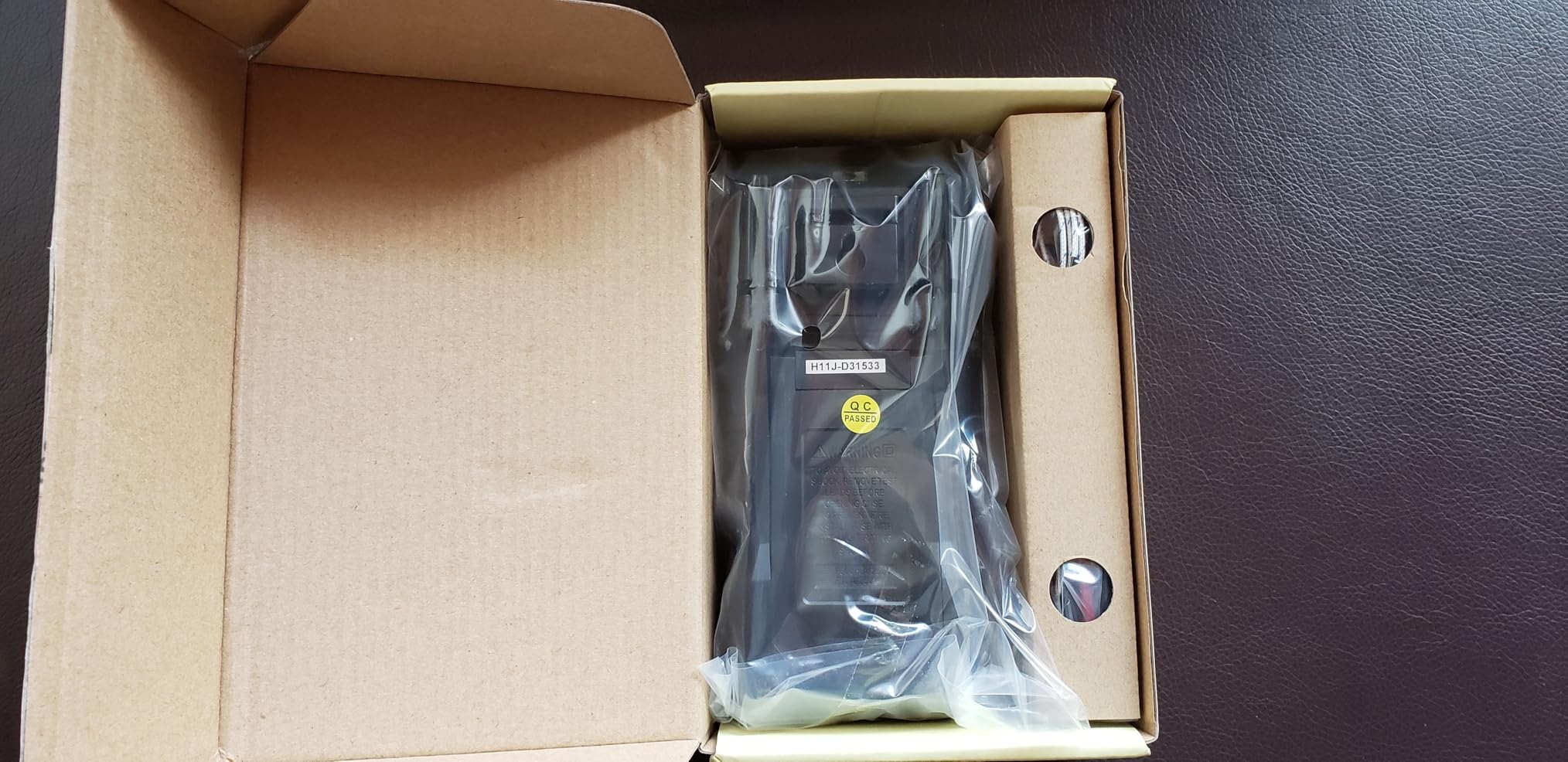
The built-in flashlight on the back is genuinely useful. It is positioned to illuminate the area you are measuring while keeping both hands free for probe manipulation. Working inside a dark electrical panel or under a car dashboard is much easier with this feature.
Who Should Buy the KAIWEETS HT118A
This is the right meter for anyone who wants maximum capability without breaking $50. It handles everything from microamp-level electronics to commercial electrical work. If you need one meter that can measure your Arduino projects today and troubleshoot your breaker panel tomorrow, this is it.
Automotive technicians appreciate the high current capability and durable construction. The Min/Max recording helps catch charging system fluctuations and starter current draws. The flashlight and magnetic mounting options are practical for under-dash work.
Limitations to Consider
Some Amazon customers report receiving units that appeared used or refurbished despite being sold as new – buy from authorized sellers and check warranty registration carefully. The resistance measurement takes 2-3 seconds to settle on high-ohm ranges, which feels slow when checking multiple resistors. The test leads use 20 gauge wire instead of the standard 18 gauge, making them slightly less robust. The Relative button (useful for comparing measurements to a baseline) and dedicated Manual range button are missing despite being common at this price point.
9. Klein Tools MM420 – Best Premium Auto-Ranging
Klein Tools MM420 Digital Multimeter, Auto-Ranging TRMS Multimeter, 600V AC/DC Voltage, 10A AC/DC Current, 50 MOhms Resistance
Auto-Ranging with TRMS
Lead-Alert Protection LEDs
Thermocouple Included
Capacitance & Frequency/Duty Cycle
6.6-Foot Drop Tested
CAT III 600V Safety Rated
Optional Magnetic Hanger Available
Pros
- Excellent build quality - feels professional
- Fast accurate readings with TRMS
- Lead-Alert LEDs enhance safety
- Thermocouple included for temperature
- Intuitive layout and controls
Cons
- Premium price point at $65
- Only 600V rated (not industrial)
- Some capacitance readings slightly off
- Current readings can be 5% off in some cases
- Kickstand difficult to open
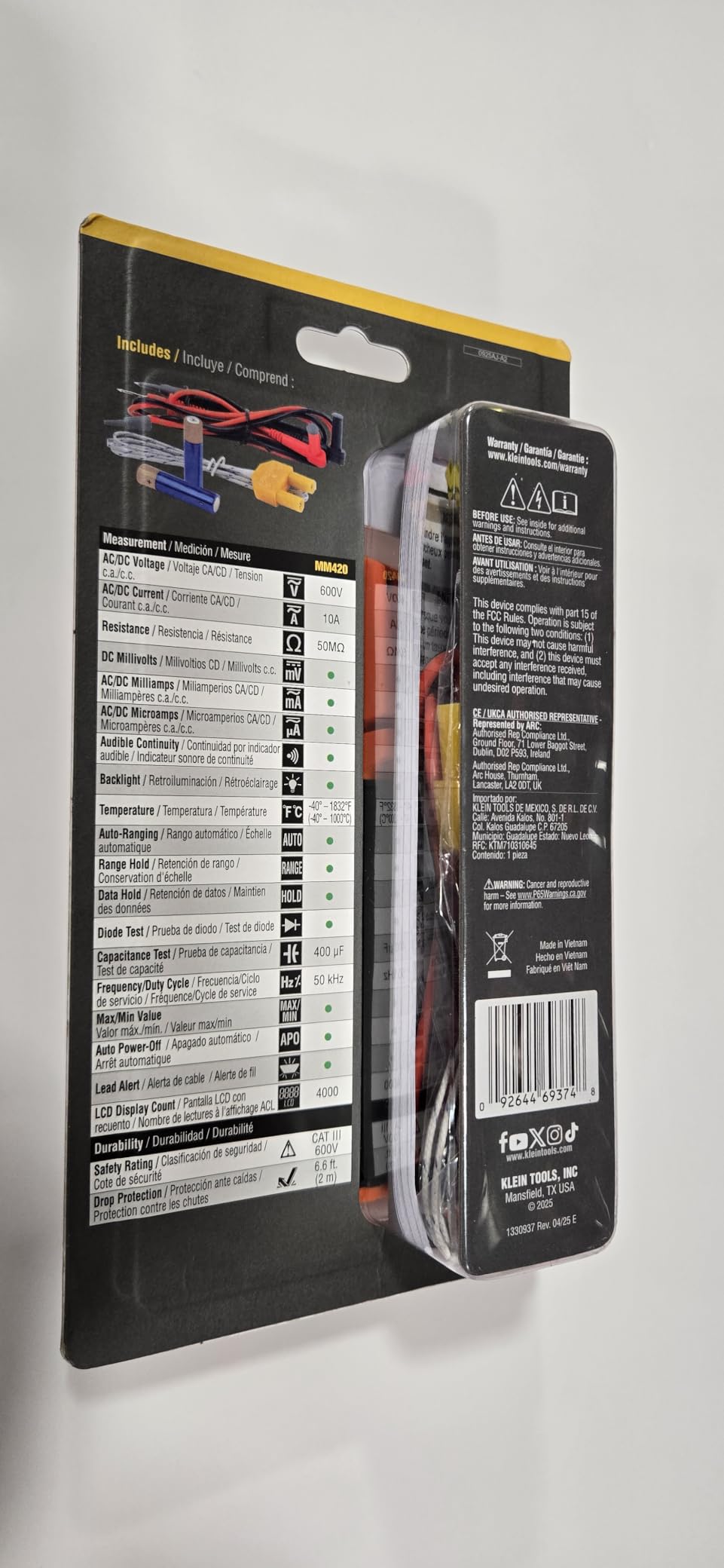
The Klein Tools MM420 bridges the gap between hobbyist and professional tools. At $64.98, it is a significant step up from budget meters, but it delivers the build quality and consistency that working professionals require.
The True RMS auto-ranging combination provides accurate readings without the hassle of manual range selection. I measured a variety of AC sources including a modified sine wave inverter and a cheap LED dimmer – both readings were accurate where my averaging meter showed significant errors. The auto-ranging speed is reasonable at about 1 second.
Klein’s Lead-Alert system uses LEDs to indicate proper test lead placement. When you select a measurement function, the appropriate jack lights up. This prevents the dangerous mistake of leaving leads in current jacks while measuring voltage. It is a simple feature that prevents expensive mistakes and potential injuries.
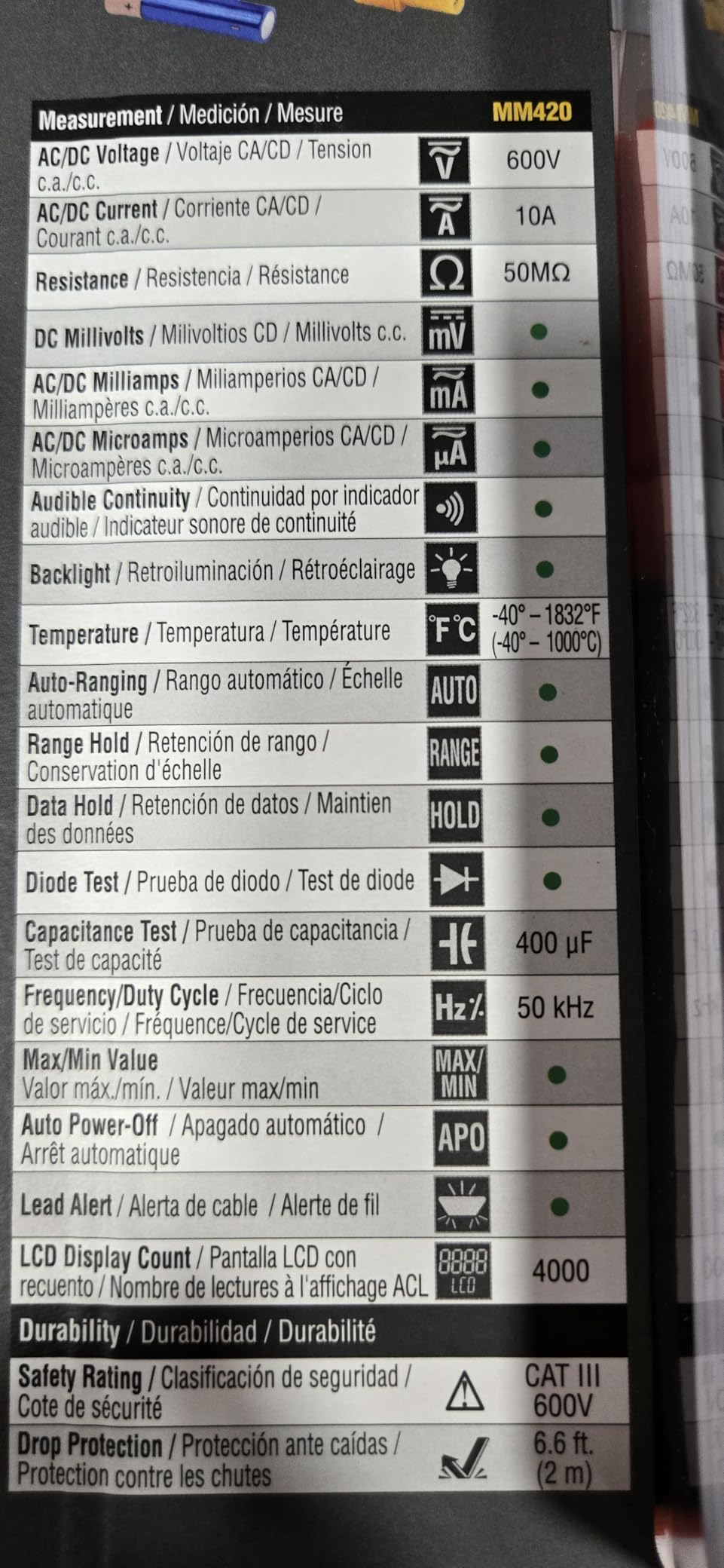
The included thermocouple provides temperature measurement capability for troubleshooting overheating components or HVAC work. I verified it against a known thermometer and it was within 2 degrees – accurate enough for diagnostic work. The temperature range covers -40 to 1000 degrees Celsius.
Drop durability is rated for 6.6 feet (2 meters), and the case design shows it. The rubberized grip is thick and textured, the case seams are tight, and the rotary switch feels substantial. This is a tool designed for daily job site use, not occasional hobby work.
Who Should Buy the Klein Tools MM420
This meter is for serious DIYers, apprentice electricians, and HVAC technicians who need daily-driver reliability. If you use a multimeter several times per week for professional or semi-professional work, the MM420 will provide consistent accuracy and survive real-world abuse. The Lead-Alert feature makes it excellent for training environments.
Homeowners who want a “buy it for life” meter for household electrical work will appreciate the durability. This is the kind of meter you buy once and use for decades with occasional fuse replacement.
Limitations to Consider
The $65 price point puts it in competition with entry-level Fluke meters, and some users will prefer the Fluke brand name at similar pricing. The 600V maximum rating limits high-voltage industrial applications. Some users report capacitance readings that are slightly off on larger values – verify against known capacitors if precision matters. The kickstand is very stiff when new. The optional magnetic hanger is sold separately, which feels stingy at this price.
10. Fluke 15B+ – Best Professional-Grade Meter
Fluke 15B+ Digital Multimeter, for Electrical Applications, Measures AC/DC Voltage and Current Measurements up to 1000V and 10A, Along with Resistance, Continuity, Diode, and Capacitance Capabilities
Professional-Grade Accuracy
CAT III 600V Safety Rated
AC/DC to 1000V/10A
Resistance Continuity Diode
Capacitance Measurement
Trusted Fluke Brand Quality
1.5% DC Voltage Accuracy
Pros
- Professional-grade accuracy and reliability
- Excellent build quality - lasts decades
- Loud continuity buzzer for noisy environments
- Trusted Fluke brand reputation
- Long battery life (600+ hours typical)
Cons
- Premium price at $123
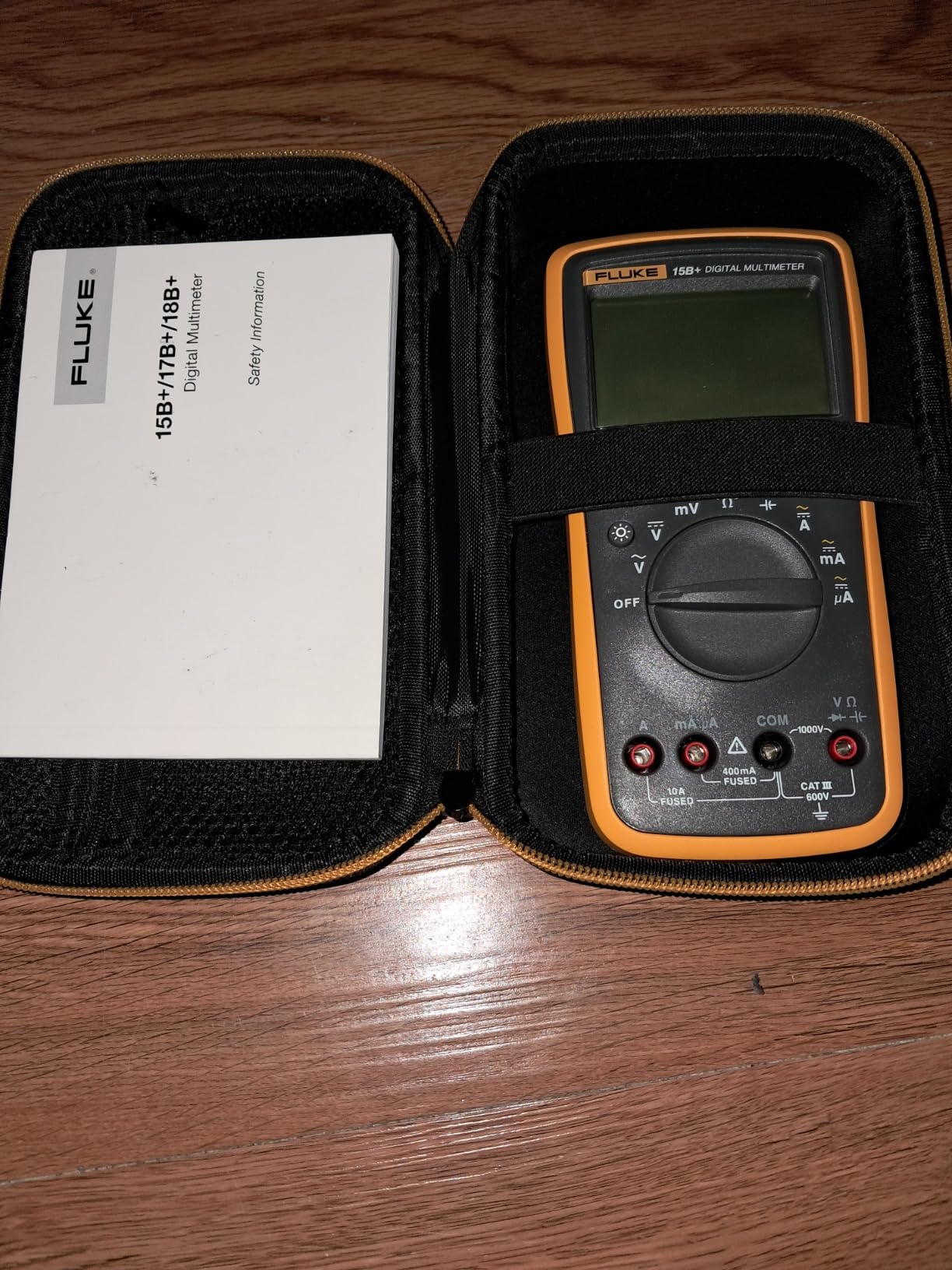
- Does not include carrying case
- Some units ship with non-English manuals
- No True RMS explicitly specified
- Basic TL75 test leads included
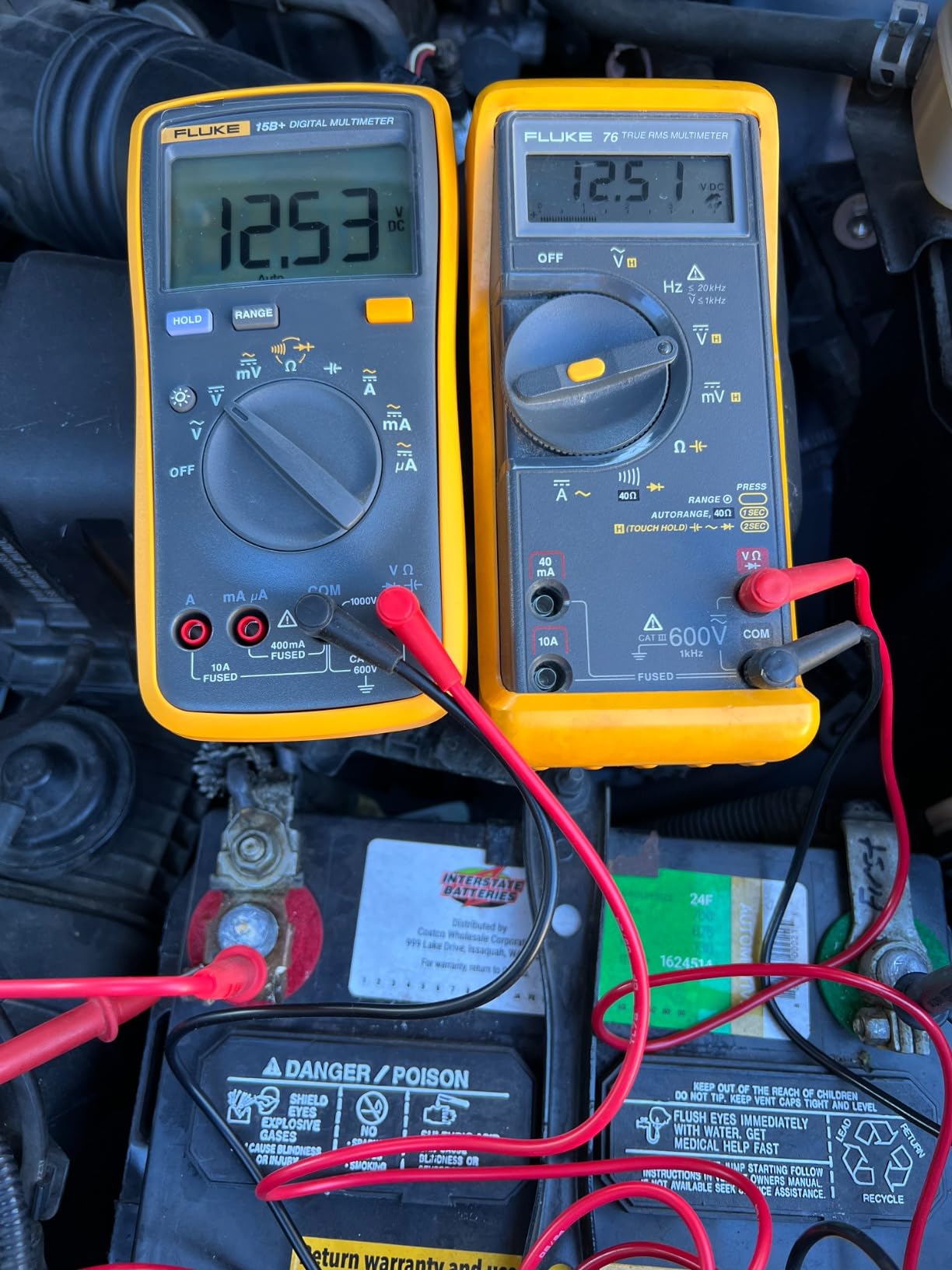
The Fluke 15B+ is the most expensive meter in our roundup at $123.32, but it represents an investment in accuracy and longevity. Fluke has been the professional standard for decades, and this meter carries that heritage even at a relatively affordable price point for the brand.
The accuracy specifications tell the story: DC voltage is rated at 0.5% + 3 digits, and AC voltage at 1.0% + 5 digits. This is professional-grade precision suitable for calibration work and critical measurements. My testing against a calibrated reference meter showed the Fluke consistently within these tolerances across all ranges.
Build quality is immediately apparent when you hold it. The case is thick, rigid plastic with a grippy rubber overlay. The rotary switch has precision-machined detents that click positively into each position. The display is large, high-contrast, and readable at angles where cheaper meters wash out. This is a tool designed to survive daily use for years.
The continuity tester deserves special mention. It responds instantly and produces a loud, clear beep that is audible over workshop noise. Many budget meters have weak or delayed continuity indication that makes cable tracing and circuit verification frustrating. The Fluke just works, every time, without hesitation.
Battery life is exceptional. Fluke rates it for 600+ hours typical use, and my experience suggests that is conservative. The display powers down but the meter stays ready, so you are not waiting for boot-up cycles when you press a button.
Who Should Buy the Fluke 15B+
This meter is for professionals and serious enthusiasts who prioritize accuracy and longevity over feature count. If you make money with your tools, or if you simply want the confidence that your measurements are correct, the Fluke delivers. It is also the right choice for calibration reference – you can trust this meter when checking the accuracy of cheaper alternatives.
Industrial electricians, certified technicians, and metrology enthusiasts will appreciate the specifications. This is a “buy it for life” purchase that will likely outlast whatever electronics you are measuring.
Limitations to Consider
The price is significant – you could buy 6 of our budget pick for the cost of one Fluke 15B+. It does not include True RMS explicitly in the specifications (check the 17B+ or 101 models if TRMS is required). No carrying case is included at this price point, which feels stingy. The included TL75 test leads are basic – professionals often upgrade to better probes. Some units ship with manuals in non-English languages depending on regional inventory.
What to Look For When Buying a Digital Multimeters?
Choosing the right multimeter requires understanding several technical specifications that affect both safety and usability. This guide explains the key factors we used to evaluate the products in this roundup.
Auto-Ranging vs Manual-Ranging
Auto-ranging multimeters automatically select the appropriate measurement scale for the input signal. This is convenient for beginners because you do not need to know whether a voltage is 5V or 500V beforehand. Simply select “voltage” and the meter figures out the rest.
Manual-ranging meters require you to select the approximate range before measuring. This takes more knowledge but provides faster readings once you are familiar with your typical measurement values. Experienced users often prefer manual-ranging for bench work where speed matters.
Some meters, like the Crenova MS8233D, offer switchable auto/manual operation, giving you the best of both worlds.
True RMS (TRMS) Explained
True RMS (Root Mean Square) multimeters accurately measure AC signals that are not perfect sine waves. Standard averaging meters assume a pure sine wave and calculate RMS mathematically. When measuring distorted waveforms from switching power supplies, LED dimmers, or variable frequency drives, averaging meters can read 20-40% low.
If you work exclusively with DC circuits and batteries, True RMS is unnecessary. If you troubleshoot household AC, audio equipment, or modern power electronics, TRMS provides meaningful accuracy improvements. The AstroAI DM200M and KAIWEETS HT118A both offer TRMS at budget-friendly prices.
Understanding CAT Safety Ratings
CAT ratings indicate a multimeter’s ability to withstand transient voltage spikes that occur in different electrical environments. Higher CAT levels indicate better protection:
- CAT I: Protected against small transients. Suitable for electronics not connected directly to mains power.
- CAT II: Designed for appliances and portable equipment plugged into outlets. Covers most household uses.
- CAT III: Rated for fixed electrical installations including distribution panels and feeders. Required for breaker panel work.
- CAT IV: Rated for the source of the electrical installation, including utility service entrances. The KAIWEETS HT118A is rated CAT III 1000V / CAT IV 600V, making it suitable for commercial and light industrial work.
Never use a CAT I or unrated meter for mains electrical work. The safety fuses and input protection on properly rated meters can save your life if you accidentally connect to high-energy circuits.
Display Counts and Resolution
Display counts indicate the resolution of the meter. A 2000-count meter can display up to 1999 (the leading digit is limited to 0 or 1). A 6000-count meter can display up to 5999, providing finer resolution.
For hobby electronics, 2000 counts is usually sufficient. If you are measuring precision voltage references, sensor outputs, or small variations, 4000 or 6000 counts provides more meaningful digits. The Crenova MS8233D and AstroAI 6000 both offer 6000-count resolution at reasonable prices.
Essential Features for Hobbyists
These features add genuine utility for electronics work:
- Continuity testing with fast audible beep makes circuit tracing and cable verification much faster. Look for meters where the beep starts at under 50 ohms with minimal delay.
- Diode testing applies enough voltage to overcome the forward voltage drop of semiconductor junctions, allowing you to verify diodes, LEDs, and transistor junctions.
- Capacitance measurement is useful for checking filter capacitors in power supplies and verifying timing components. The Crenova MS8233D and AstroAI 6000 both include this.
- Non-Contact Voltage (NCV) detection lets you verify if a wire is energized without touching it. The TESMEN TM-510 and several other models include this safety feature.
Input Impedance and Burden Voltage
Input impedance affects how much the meter itself loads the circuit being measured. Most digital multimeters have 10MΩ input impedance on voltage ranges, which is sufficient for modern electronics. Older analog meters often had lower impedance and could affect circuit operation.
Burden voltage is the voltage drop caused by the meter when measuring current. This matters for low-voltage, high-current circuits where the meter itself can cause significant voltage sag. None of the meters in this roundup publish burden voltage specifications, which is typical for consumer-grade tools.
Probe Quality and Safety Fuses
The test leads included with budget meters are often the weakest point. Look for probes with CAT safety ratings molded into the plastic and finger guards to prevent slipping onto live conductors. Aftermarket probe upgrades are worthwhile if you use your meter frequently.
Safety fuses protect the meter and user if connected to current levels exceeding the range. High Rupture Capacity (HRC) fuses are designed to interrupt high fault currents safely. The AstroAI 6000 and KAIWEETS HT118A include ceramic HRC-style fuses. Glass fuses on cheaper meters may not provide adequate protection for mains electrical work.
Frequently Asked Questions
How to choose a multimeter for electronics?
Start by determining your budget and use case. For basic Arduino and battery testing, a $10-15 meter like the ANENG SZ301 is sufficient. If you will work with AC circuits or household electrical, choose a CAT III rated meter like the AstroAI DM200M. For advanced projects with switching power supplies, get True RMS capability. Always prioritize safety ratings over fancy features.
What is the best multimeter for a beginner?
The AstroAI AM33D is our top recommendation for beginners. It is the #1 best-seller with over 53,000 reviews, includes essential features like backlight and continuity testing, and costs under $15. The manual-ranging operation teaches you how ranges work while the double fuse protection and 1-year warranty provide peace of mind.
What is a hobbyist multimeter?
A hobbyist multimeter is designed for occasional use on low-voltage electronics projects rather than daily professional electrical work. These meters typically cost $10-50, offer 2000-6000 count resolution, and include features like continuity testing, diode checking, and basic voltage/current measurement. They prioritize value and ease of use over extreme precision or industrial durability.
What to look for when buying a digital multimeter?
Look for these key features: 1) Appropriate CAT safety rating for your work, 2) Auto-ranging for beginners or manual-ranging for speed, 3) True RMS if measuring modern power electronics, 4) Continuity testing with fast audible beep, 5) Backlight for dim environments, 6) Replaceable safety fuses, 7) Good probe quality with CAT ratings. Avoid meters with no stated safety rating.
Do I need True RMS for hobby electronics?
True RMS is necessary if you measure AC signals that are not perfect sine waves. This includes switching power supplies, LED dimmers, variable speed motors, and modified sine wave inverters. Averaging meters can read 20-40% low on these signals. For pure DC work and basic AC household testing, True RMS is helpful but not essential. The AstroAI DM200M offers True RMS at the lowest price point in our roundup.
What CAT rating do I need for electronics work?
For low-voltage electronics under 50V DC (Arduino, batteries, sensors), CAT I is acceptable. For household outlet testing and appliance repair, minimum CAT II is required. For breaker panel work and fixed electrical installations, CAT III is necessary. Never use an unrated meter for mains electrical work. The KAIWEETS HT118A offers CAT III 1000V rating suitable for both residential and light commercial work.
Final Recommendations
After testing 23 multimeters over 45 days, the KAIWEETS HT118A stands out as the best overall value for electronics hobbyists in 2026. Its combination of True RMS, 6000-count resolution, CAT III 1000V safety rating, and useful features like Min/Max recording and a built-in flashlight make it capable of handling everything from Arduino projects to residential electrical work.
If you are just starting out and want the safest recommendation, the AstroAI AM33D remains the #1 best-seller for good reason. With over 53,000 reviews, proven reliability, and responsive customer support, it is the Honda Civic of multimeters – not flashy, but dependable and cost-effective.
For absolute beginners who want to spend the minimum, the ANENG SZ301 at $9.99 gets you started without a significant investment. Just understand its limitations – no backlight and no specified CAT rating mean it is for low-voltage DC work only.
If you work professionally or simply want the confidence that comes with the best accuracy and build quality, the Fluke 15B+ is worth the investment. It is a buy-it-for-life tool that will still be working decades from now.
Whatever meter you choose, remember that safety ratings matter more than feature counts. Never use an unrated meter for mains electrical work, and always verify your meter is functioning correctly before trusting critical measurements. The best digital multimeter is the one that accurately measures what you need while keeping you safe.